ENEnglish
 VITiếng Việt
 ZH中文
 KO한국어
 JA日本語
 FRFrançais
 ITItaliano
 PTPortuguês
 ESEspañol
 HEעברית
 ARالعربية

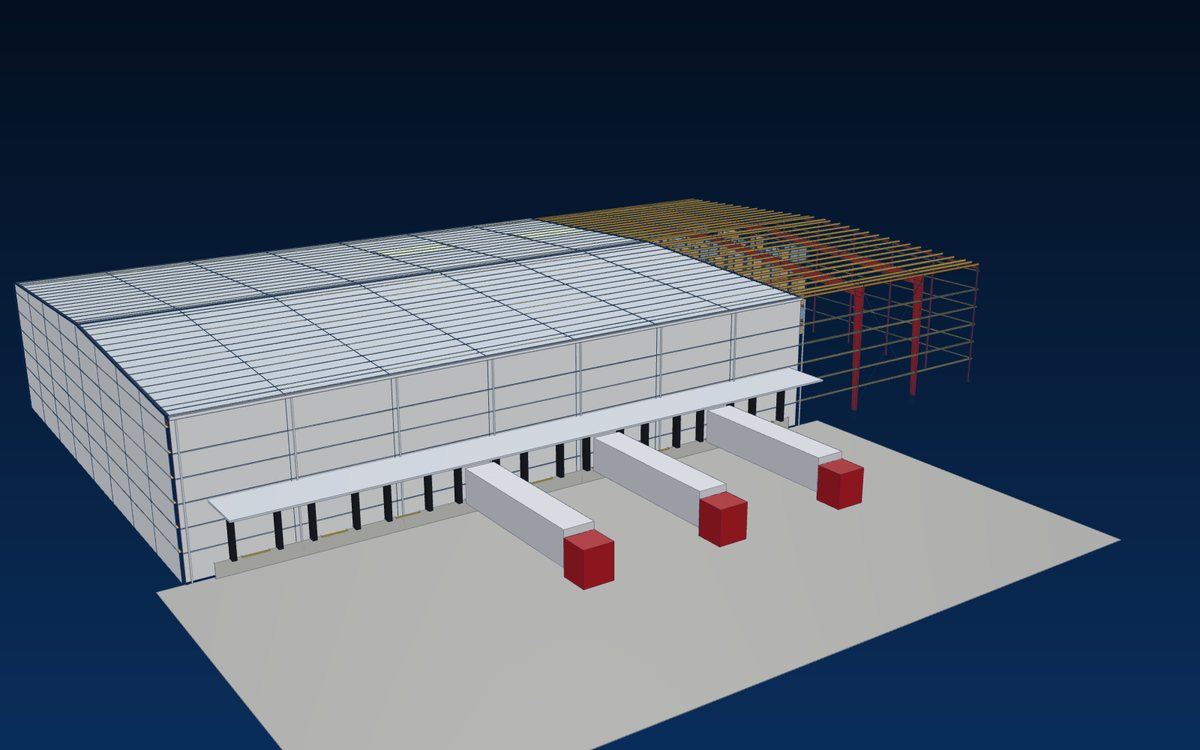 industrial · long span · fast track
Structural steel
Warehouses, factories, hangars, data centres, multi-storey commercial, crane buildings, bridges and export projects.
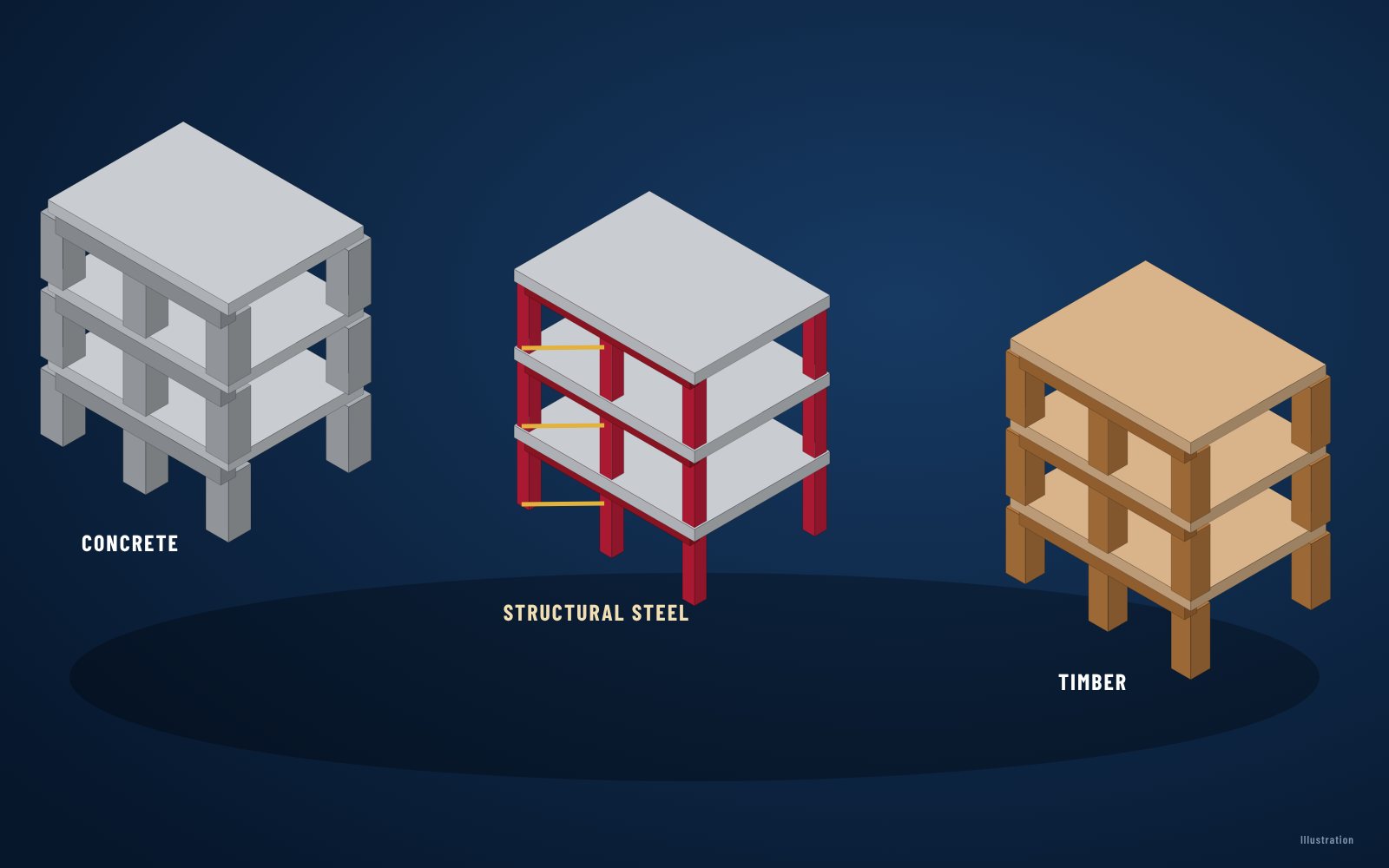
Guide · Structural systems compared
The structural system decides how fast a building rises, how far it spans, how heavy its foundations are, what it costs over its life and how easily it can change. Here is how structural steel compares with cast-in-place concrete, precast concrete and mass timber – including where steel is not the best answer.
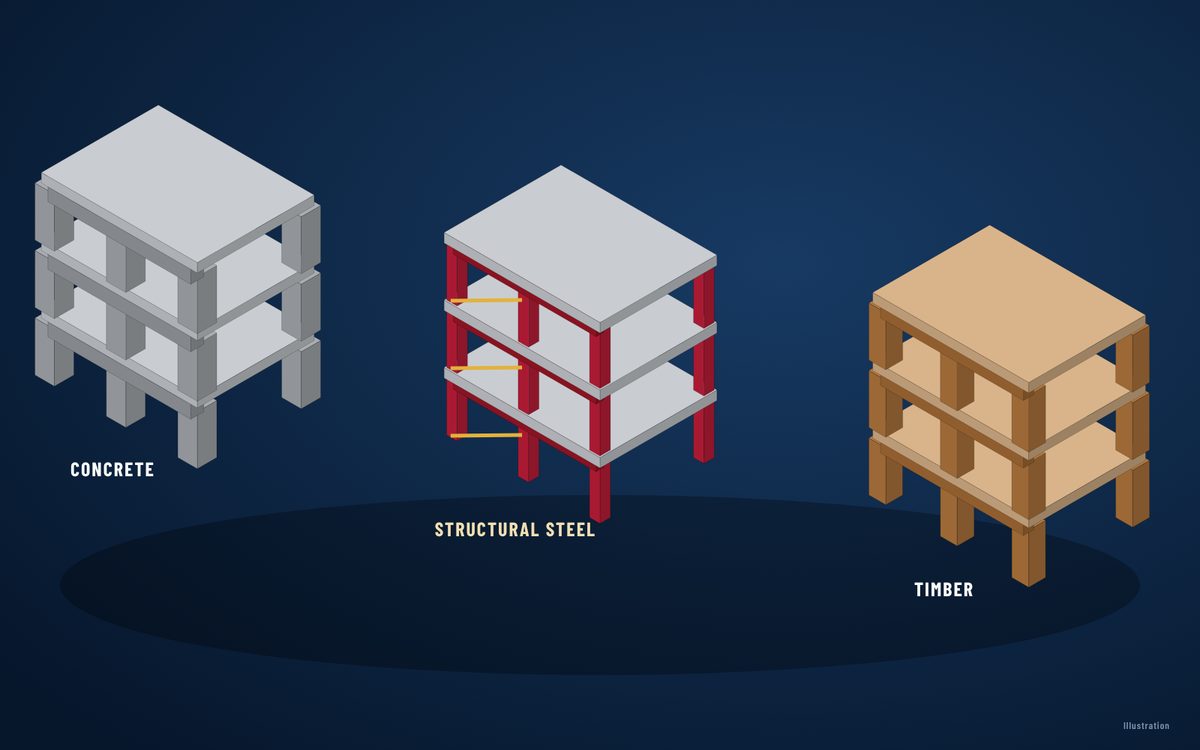
Structural steel is fabricated in a factory and bolted together on site – frames, trusses and girders with high strength for their weight. Cast-in-place reinforced concrete is formed, reinforced and poured on site – massive, fire-resistant and locally sourced. Precast concrete moves concrete production into a factory and lifts finished elements into place. Mass timber – glulam and cross-laminated timber (CLT) – uses engineered wood for low-carbon, light structures of moderate height and span.
Most modern buildings combine systems: steel frames with composite concrete floors, concrete cores with steel floors, or steel roofs on concrete podiums. The question is which system carries which part best.
Best fit
Rules of thumb – every project deserves its own comparison.
industrial · long span · fast track
Warehouses, factories, hangars, data centres, multi-storey commercial, crane buildings, bridges and export projects.
 cores · basements · local
Basements, cores, water-retaining structures and residential towers where local concrete is cheap.
repetitive elements
Car parks, repetitive residential and infrastructure elements close to the precast plant.
low carbon · mid-rise
Low- and mid-rise offices, schools and housing where carbon targets lead and timber supply is local.
The best of both
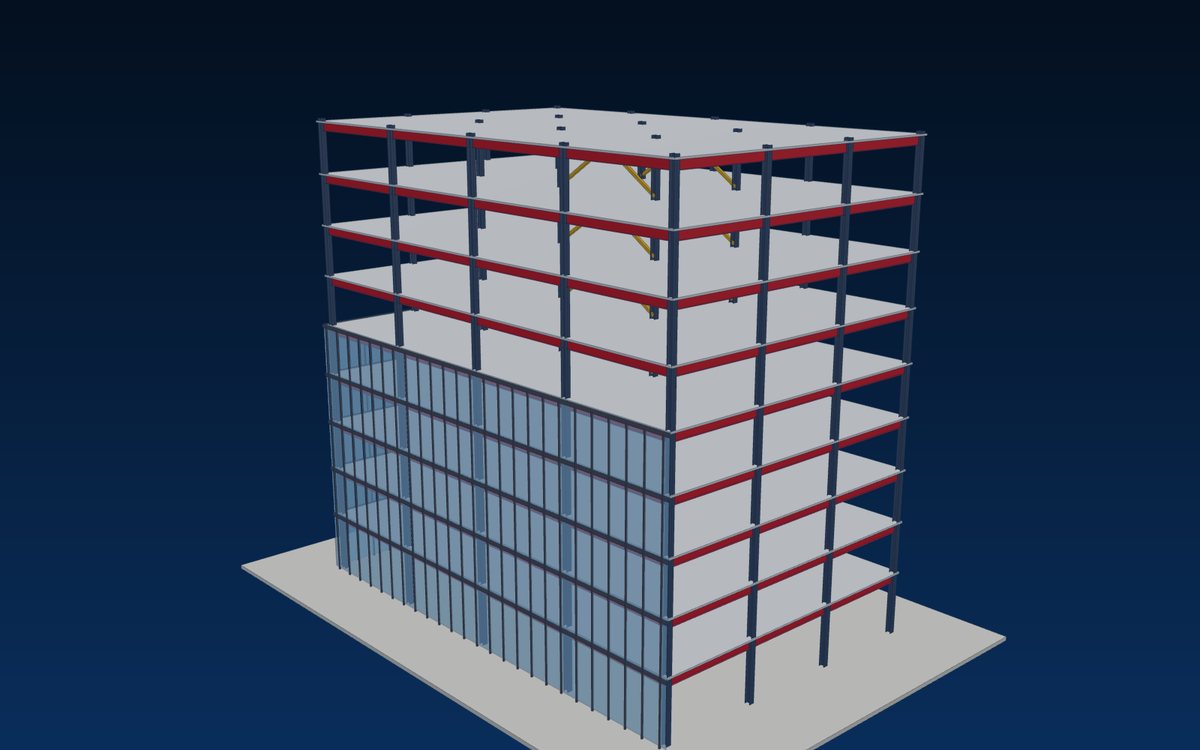
Composite construction puts each material where it performs best: steel beams and columns carry the loads and span far, while a concrete slab on steel decking adds stiffness, mass for acoustics and fire separation. See our multi-storey steel buildings, the comparison of built-up and hot-rolled members and our fire protection coatings.
Side by side
Typical behaviour for commercial, industrial and multi-storey buildings – local prices, codes and skills shift the balance in each market.
| Criterion | Structural steel | Cast-in-place concrete | Precast concrete | Mass timber |
|---|---|---|---|---|
| Construction speed | Very fast – fabricated off site, erected while foundations cure | Slow – formwork, reinforcement, curing per floor | Fast erection; long factory lead time | Fast – prefabricated panels |
| Frame weight & foundations | Light frame – smaller foundations | Heaviest – largest foundations | Heavy – large cranes and foundations | Lightest |
| Clear spans | Longest – portal frames, trusses and plate girders | Short to medium; post-tensioning for more | Medium; prestressed elements for longer | Medium; glulam arches and trusses for longer |
| Height | Low-rise to tallest towers | Low-rise to tall | Low to medium-rise | Low to medium-rise (codes vary) |
| Quality control | Factory-controlled, certified welding, traceable | Depends on site workmanship and weather | Factory-controlled elements, site joints | Factory-controlled elements |
| Fire | Needs protection (coatings, boards, sprays) where ratings apply | Inherently fire resistant | Inherently fire resistant; joints to detail | Chars predictably; protection or sacrificial depth |
| Durability & maintenance | Paint or galvanizing; inspect in aggressive environments | Durable; reinforcement corrosion if cover fails | Durable; joints and bearings to maintain | Must be kept dry; moisture and insects to manage |
| Seismic behaviour | Ductile, light – low seismic mass | Heavy – high seismic forces; ductile detailing needed | Connections are critical | Light; ductile connections needed |
| Acoustics & vibration | Needs composite floors or linings | Good mass for sound | Good mass; joints to detail | Needs added mass or linings |
| Adaptability | Easy to extend, strengthen or dismantle and reuse | Difficult to modify | Limited | Possible, with care |
| Sustainability | Recyclable and reusable; embodied carbon falling with recycled and low-carbon steel | High cement carbon; recycled as aggregate | As concrete, less waste | Lowest embodied carbon; sustainably sourced wood needed |
| Export / remote sites | Ideal – compact, containerised, bolted | Built locally only | Heavy to transport far | Possible; protect from moisture in transit |
Structural steel
A fair view – so you can plan the measures that make steel work best.
| Advantage | What it means for the project |
|---|---|
| Speed | Fabrication runs in parallel with foundations; earlier handover and revenue |
| Strength-to-weight | Long spans, fewer columns, lighter foundations |
| Factory quality | Certified welding, dimensional control and full traceability |
| Predictable cost | Less exposure to site weather and labour productivity |
| Adaptability | Extend, add mezzanines, strengthen or dismantle and relocate |
| Ductility | Good performance in earthquakes and cyclones when detailed correctly |
| Circularity | Members can be reused; steel is recycled without loss of quality |
| Disadvantage | Measure |
|---|---|
| Loses strength in fire | Fire protection to the required rating – intumescent coatings, boards or sprays |
| Corrosion | Paint systems to ISO 12944 or hot-dip galvanizing, chosen for the environment |
| Material price volatility | Lock prices with the order; optimise tonnage with built-up members |
| Acoustics and floor vibration | Composite floors, linings and vibration checks in design |
| Requires skilled fabrication and design | Certified fabricator, Tekla modelling and approved shop drawings |
| Thermal bridging in envelopes | Insulated panels and thermal breaks at connections |
FAQ
It depends on span, height, location and programme. Steel usually wins for long spans, industrial buildings, fast-track and remote or export projects; concrete often wins for basements, cores and short-span residential work where local concrete is cheap. Compare the total cost including foundations and time.
Yes, when designed to the code: where a fire rating is required, steel is protected with intumescent coatings, boards or sprays so it stays below its critical temperature for the rated time.
Unprotected steel corrodes, so structures are painted or galvanized with a system selected for the environment – from dry interiors to coastal and industrial sites.
Steel frames are light and ductile, so they attract lower seismic forces and deform without sudden failure when properly detailed. Concrete can also perform well with ductile detailing.
Steel is recyclable and members can be reused; its embodied carbon depends on how it is produced. Timber has the lowest embodied carbon; concrete the highest per tonne of structure because of cement.
Send us the project brief – our engineers compare options and quote the steel solution.