ENEnglish
 VITiếng Việt
 ZH中文
 KO한국어
 JA日本語
 FRFrançais
 ITItaliano
 PTPortuguês
 ESEspañol
 HEעברית
 ARالعربية

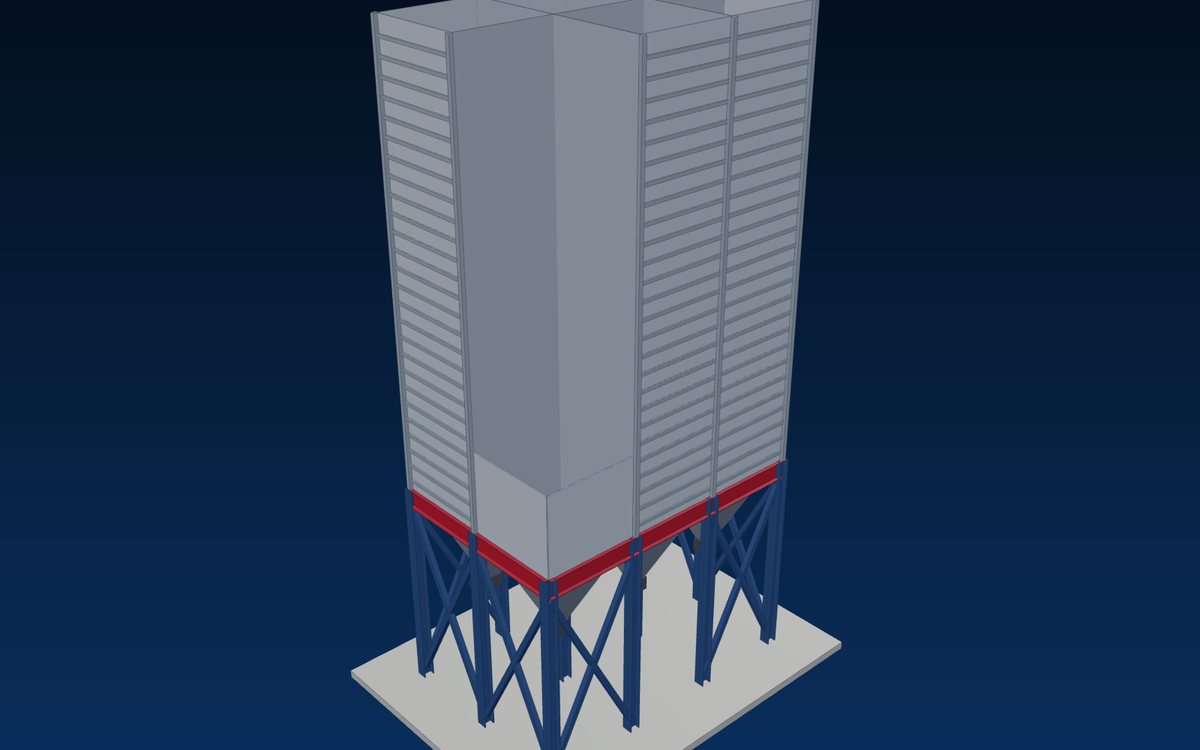 large cells, economical
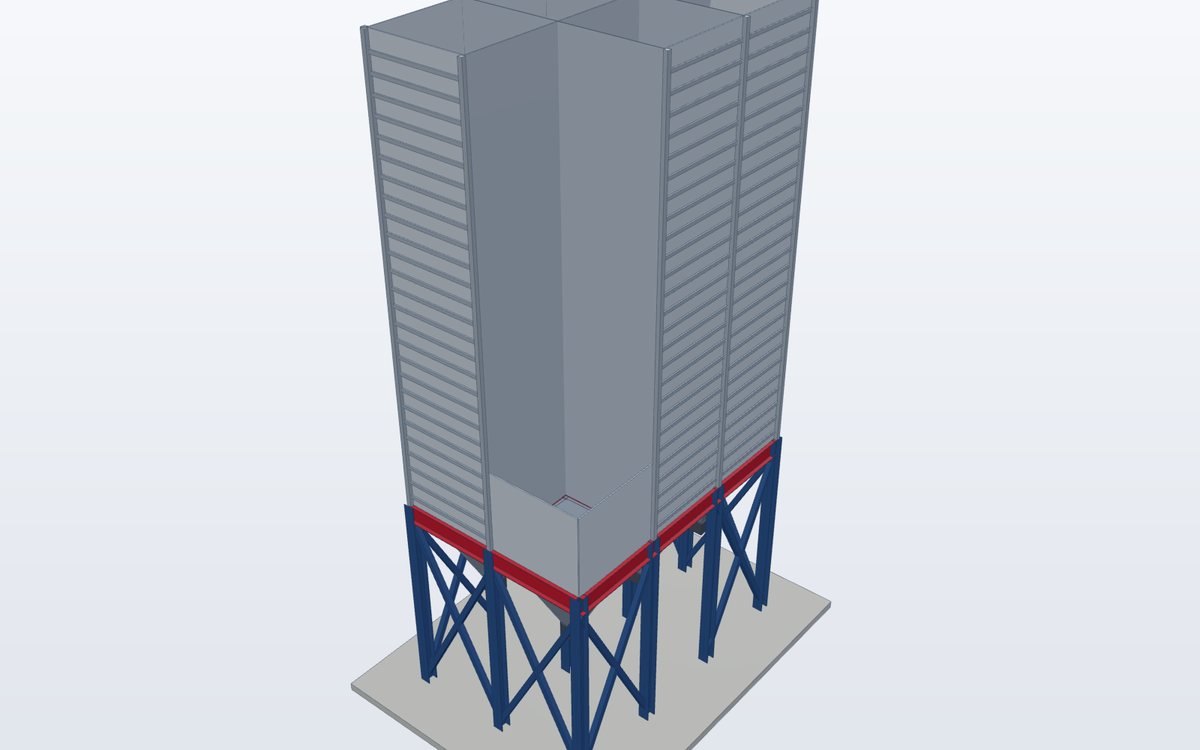
Profiled-wall silos
Single-skin profiled walls stiffened by the profile – economical for large capacities per cell, galvanized or coated.
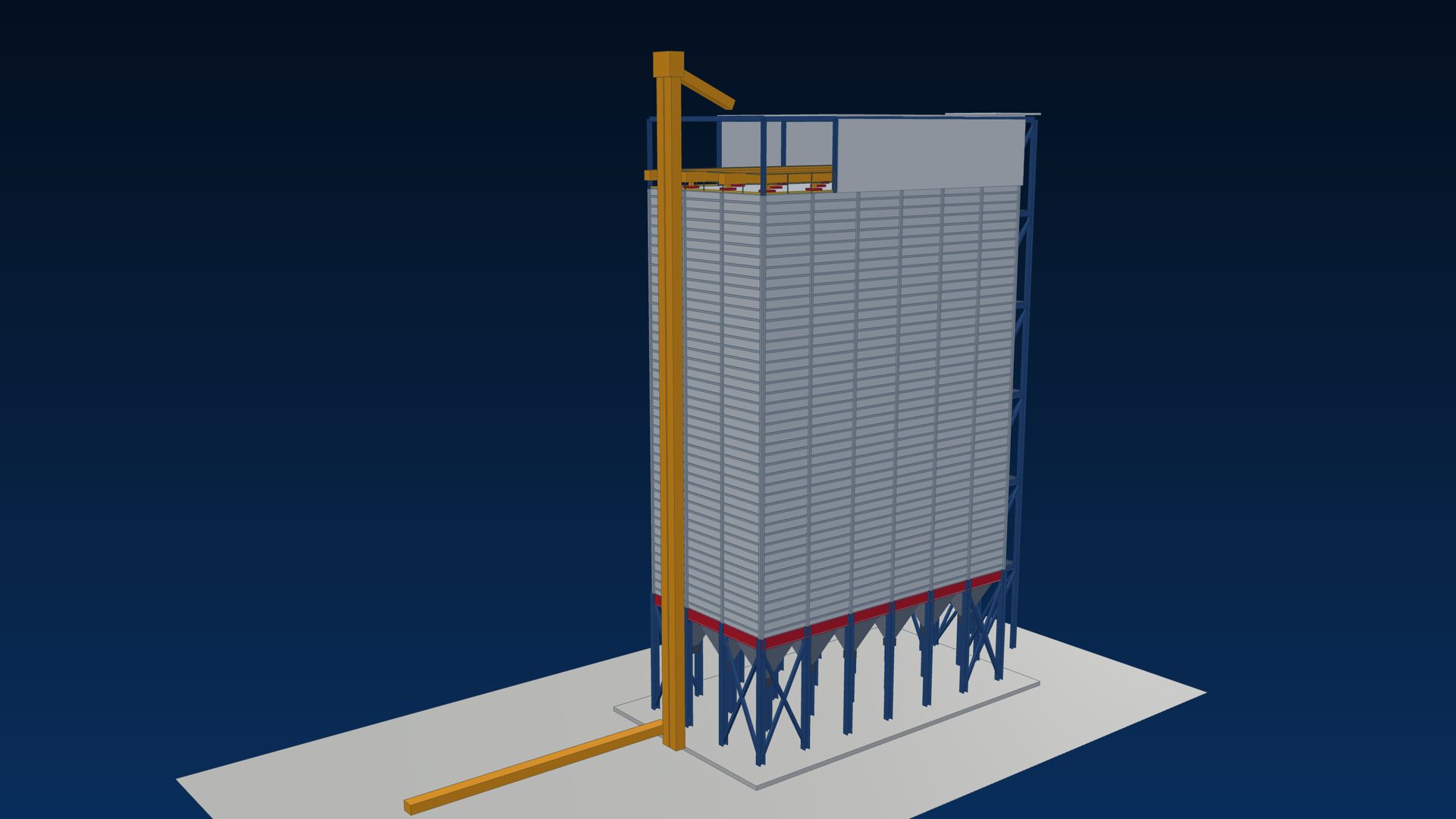
Solution · Square steel silos
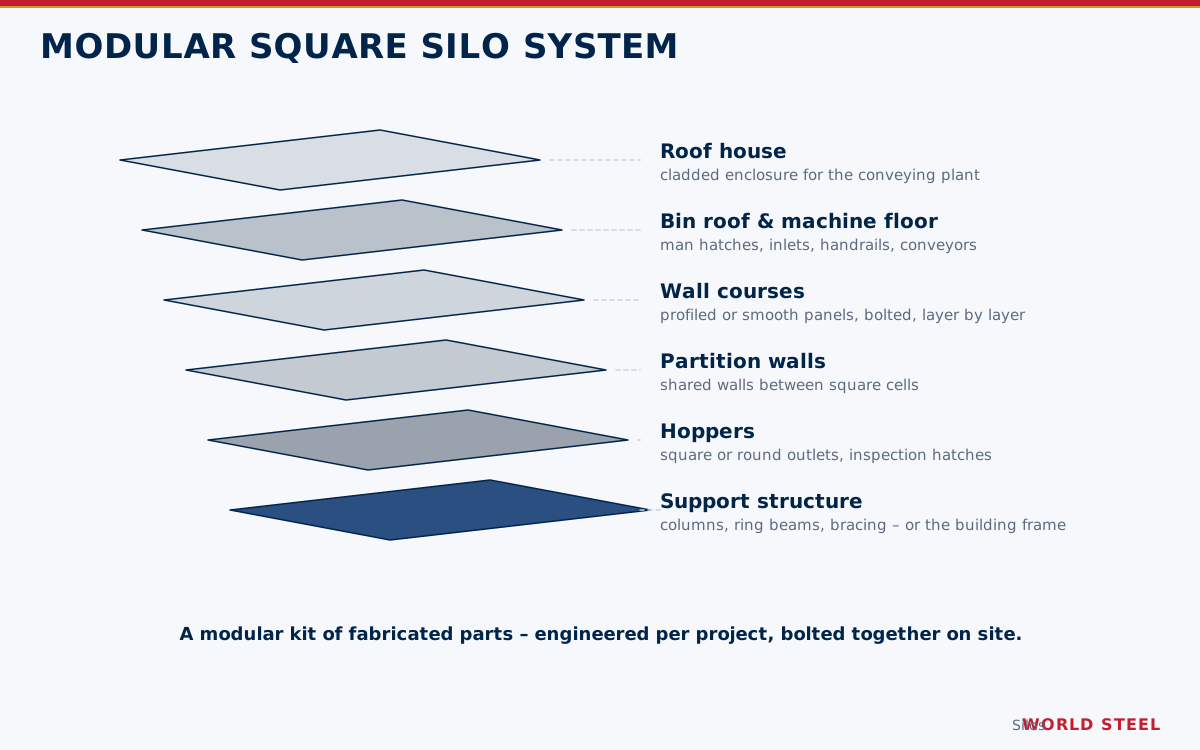
Modular square and rectangular silo blocks for dry and granular bulk solids – profiled or smooth walls, hoppers, bin roofs, roof houses and support structures – engineered to EN 1991-4 and EN 1993-4-1, fabricated under EN 1090 EXC3 and assembled layer by layer on site.
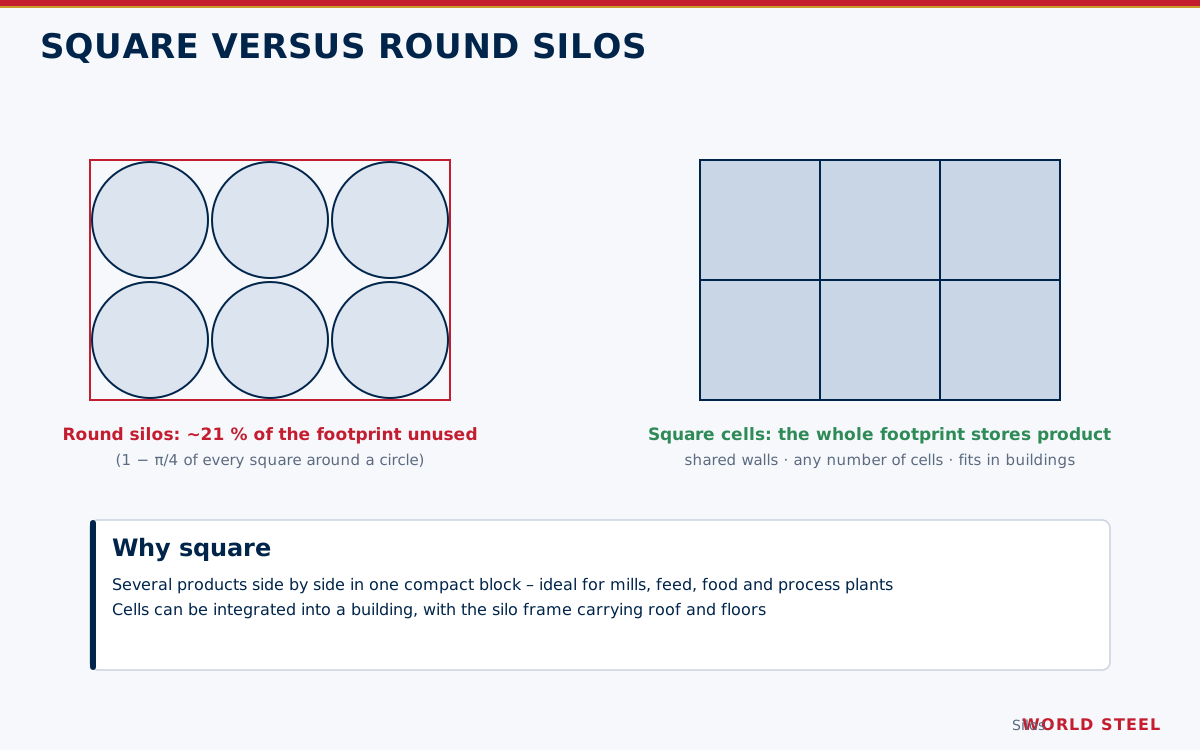
Round silos leave empty corners between them – about a fifth of the footprint inside a building or a plot. Square cells share their walls, so a silo block uses the whole area, holds many different products side by side and fits neatly into mills, feed plants and process buildings. The silo frame can even carry the building's roof and floors.
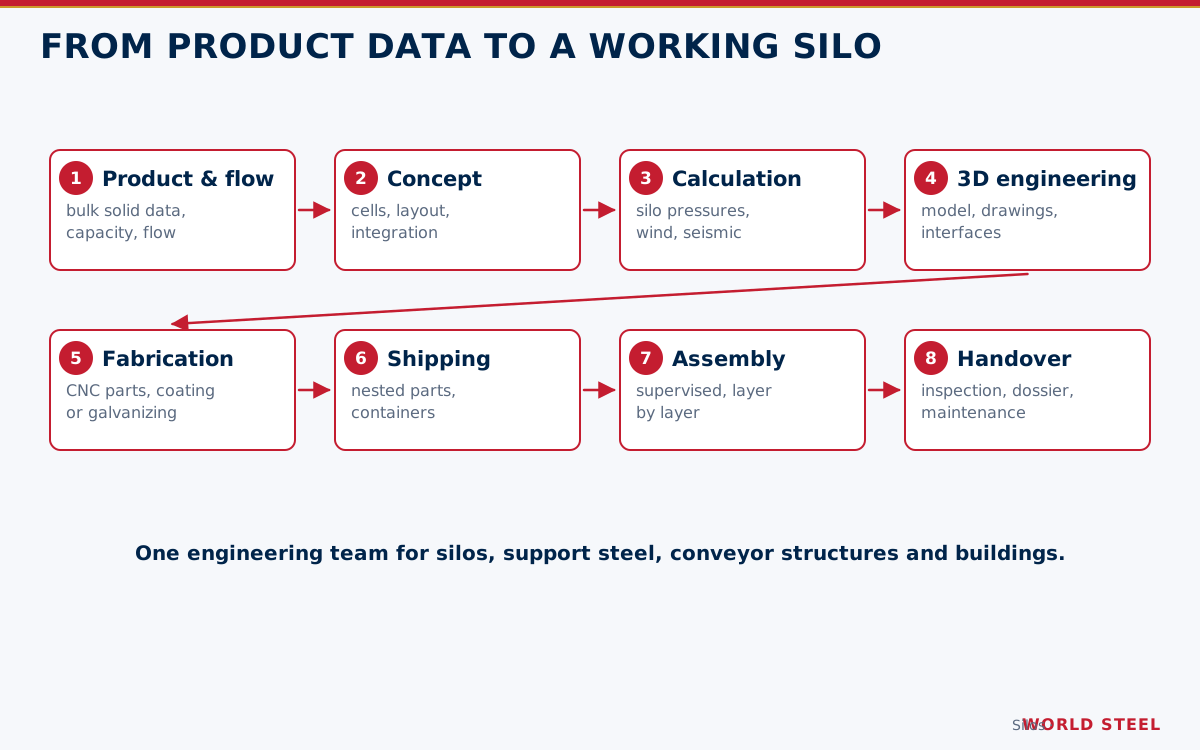
World Steel engineers the complete system: silo pressures and structure, cells, hoppers, bin roof and machine floor, roof house, stair towers and the support structure – then fabricates every part on CNC lines in our certified plant, coats or galvanizes it, ships it nested in containers and supervises the assembly on site.
Silo system
A modular kit of engineered parts – combined to suit your product, capacity and building.
large cells, economical
Single-skin profiled walls stiffened by the profile – economical for large capacities per cell, galvanized or coated.
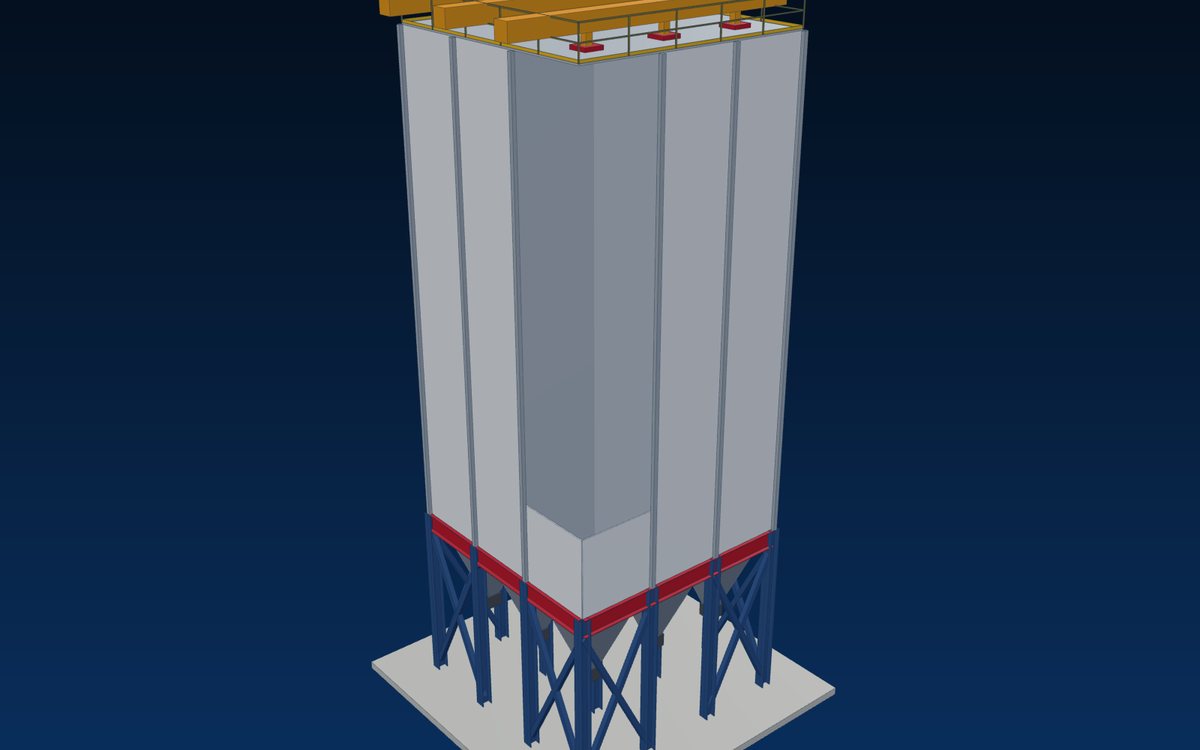 clean discharge
Smooth inner surfaces with external stiffeners – no residue, no mixing between cells, coated or stainless steel for food and sensitive products.
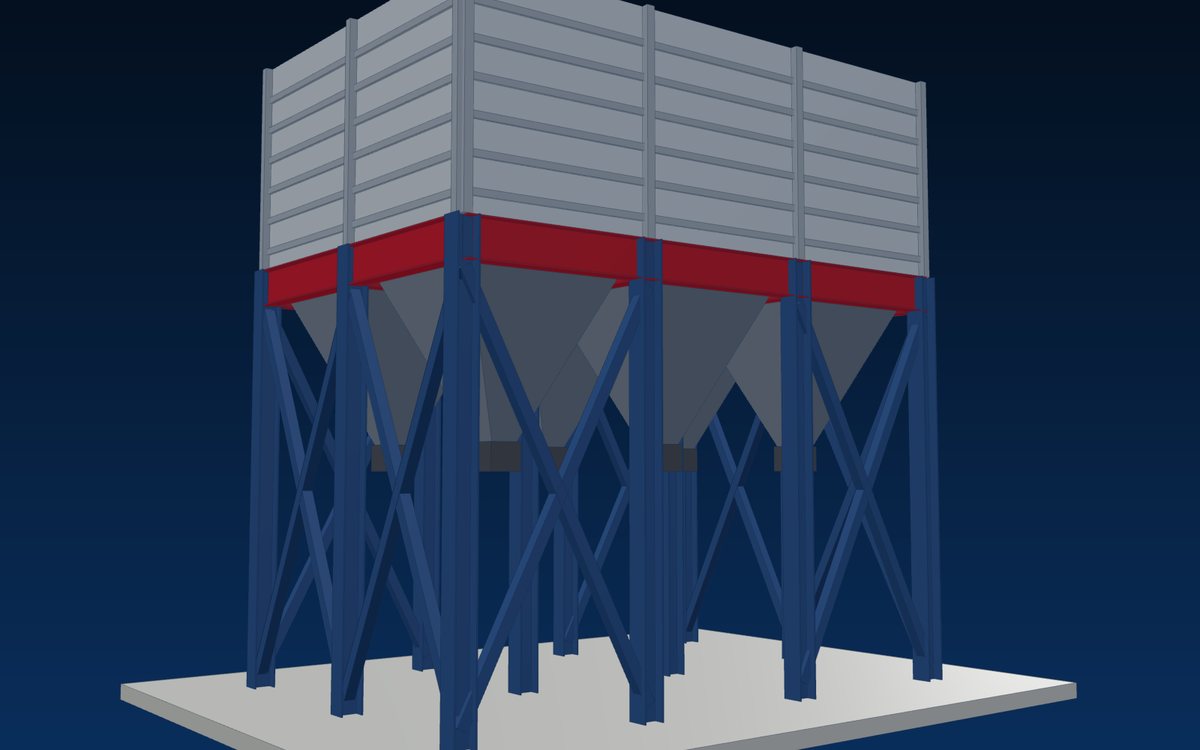 mass flow by design
Square or round outlets with inspection hatches, on braced steel supports or integrated into the building frame.
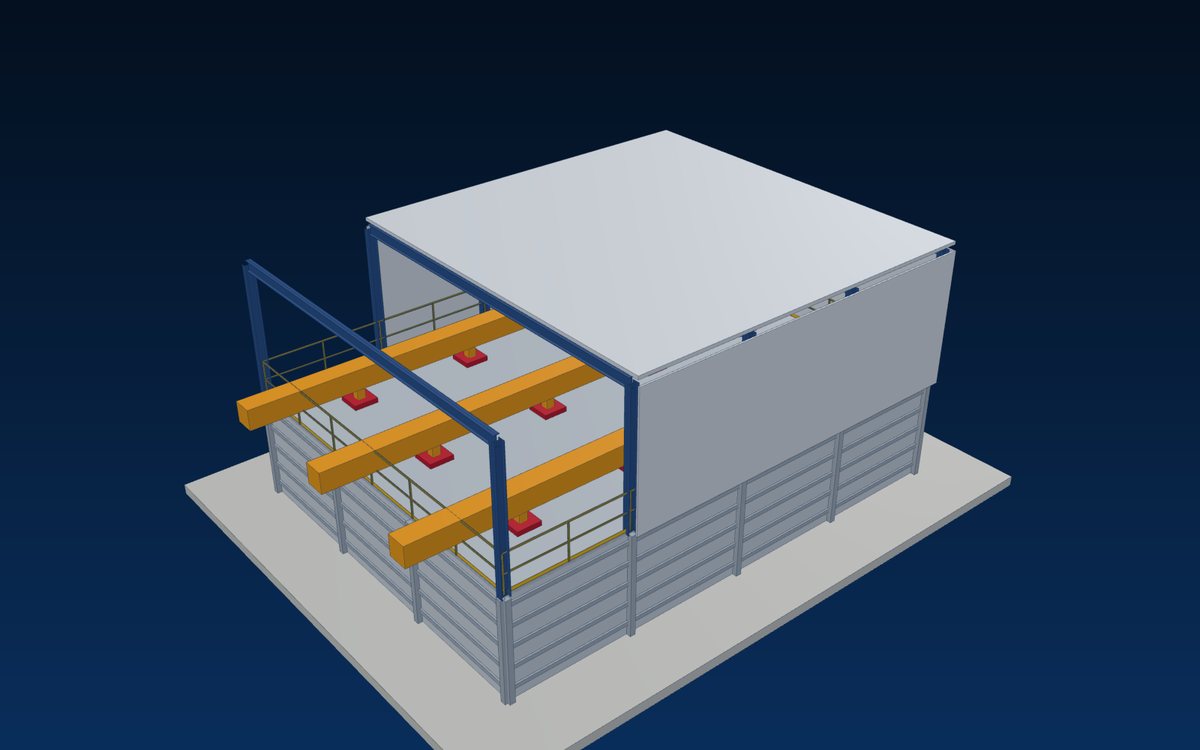 machine floor
Walkable bin roofs with man hatches, inlets, handrails and conveyors, enclosed by an insulated or single-skin roof house.
Aplicaciones
Raw-material, premix and finished-product cells.
Wheat conditioning, flour and by-product silos.
Sugar, malt, coffee, cocoa and ingredients.
Granulates, powders and blending silos.
Pellets, wood chips and recycled materials.
Sand, lime, cement additives and dosing silos.
Normas y cumplimiento
Silo pressures depend on the bulk solid and the code. Key references:
 Europe
 Australia / NZ
 United States
 Asia & Middle East
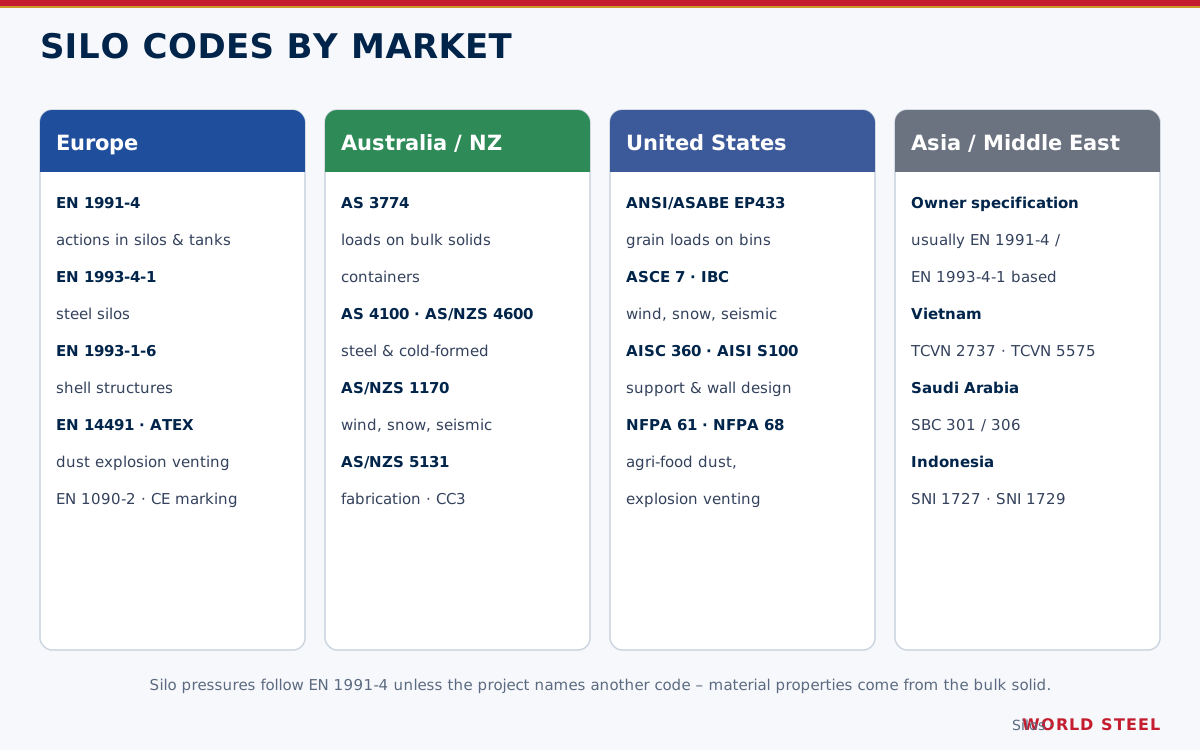
Resumen solo orientativo: prevalecen la especificación del proyecto, la edición del código adoptada y la autoridad competente.
Ingeniería
A circle uses only π/4 – about 79 % – of the square around it. Square cells recover the remaining 21 %, share their walls and can be grouped in any number and size, so several products stay separate in one compact block.
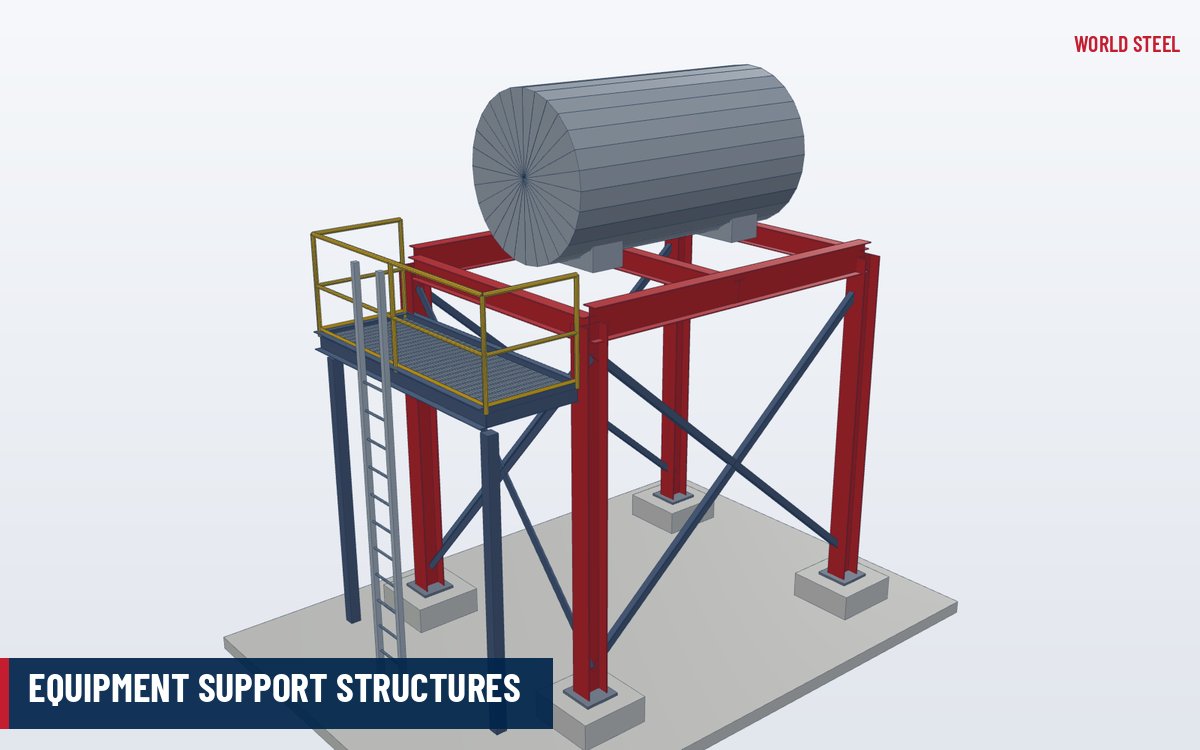
Square silos integrate easily with grinding, pelleting, dosing and bulk load-out, and fit inside or alongside the plant building – the silo structure can carry the roof, floors and conveying equipment.
Ingeniería
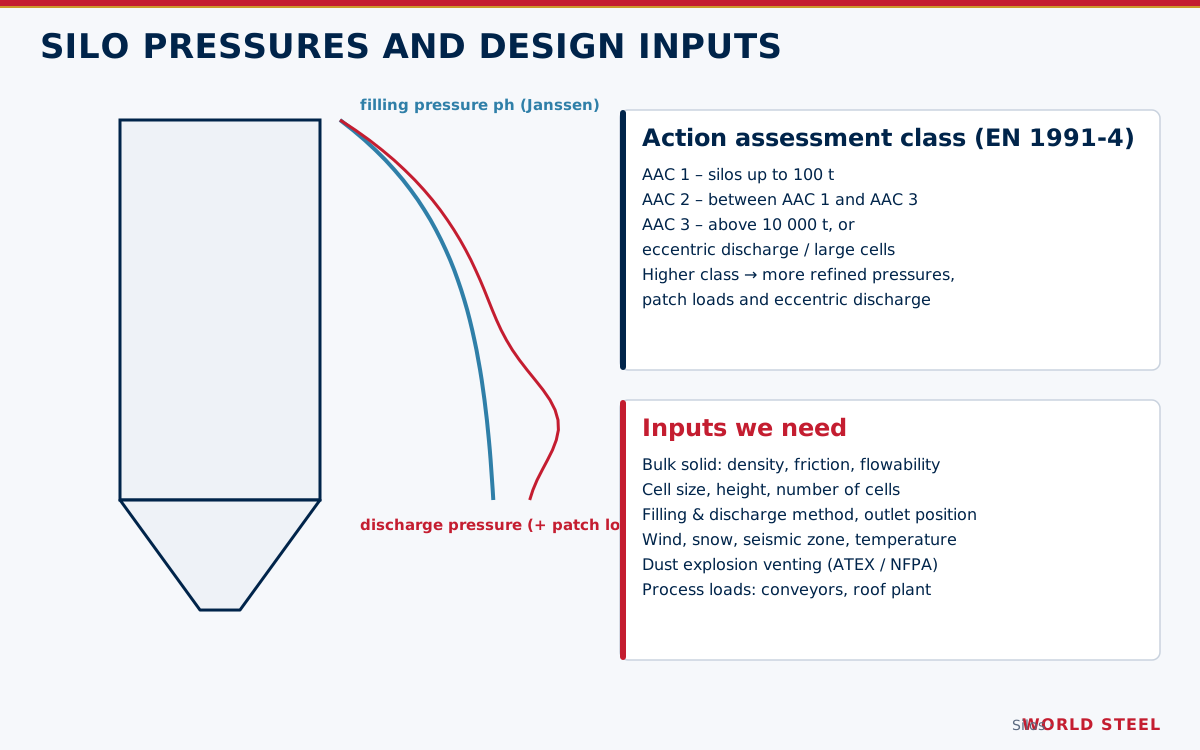
Silo walls and hoppers are designed from the properties of your bulk solid – density, wall friction and flowability – and from the filling and discharge method. We calculate filling and discharge pressures, patch loads and eccentric discharge to EN 1991-4 or AS 3774, with wind, snow, seismic and process loads on top.
Hopper geometry follows the flow behaviour you need, and explosion venting is coordinated with the process designer where dust zones apply.
Ingeniería
One engineering team covers silos, support steel, conveyor structures and the surrounding building. Parts are CNC-cut, punched and folded, coated or galvanized, nested for shipping and marked for assembly layer by layer.
Our supervisors guide the site team through assembly, alignment and sealing, and hand over the silo with a complete dossier.
Especificaciones
Proceso
Bulk solids, capacities, filling and discharge.
Cell layout, integration with process and building.
Silo pressures, structure, wind, snow and seismic.
3D model, drawings and interfaces with equipment.
CNC parts, coating or galvanizing, nested packing.
Layer-by-layer assembly, inspection and handover.
Certificación independiente
FAQ
Square cells use the whole footprint (a circle uses only about 79 % of its surrounding square), share walls, keep many products separate in one compact block and integrate easily into buildings and process plants.
Profiled walls are stiffened by their own profile and are economical for large cells. Smooth walls have stiffeners outside, so the inside is flat – better discharge, no residue and no mixing between cells, ideal for food and sensitive products.
Silo actions to EN 1991-4 and steel design to EN 1993-4-1 and EN 1993-1-6 as standard; AS 3774 for Australia and ANSI/ASABE EP433 for grain in the US where specified – with wind, snow and seismic loads to the local code.
The bulk solids and their properties, required capacity and number of cells, available footprint and height, filling and discharge equipment, site location (wind, snow, seismic) and any dust-explosion requirements.
Silos are delivered as numbered kits and assembled layer by layer by a local crew under the supervision of World Steel supervisors, or by our erection partners where available.
Send us your products, capacities and layout – our engineers return a silo concept, calculation basis and a delivered price.
Condiciones de entrega · Incoterms® 2020
World Steel cotiza en fábrica, franco a bordo o entregado en su puerto u obra. El embalaje de exportación, los documentos y el embarque desde Ciudad Ho Chi Minh forman parte del servicio.
Comparar los Incoterms® 2020 →También por proyecto o bajo pedido: EXW · FAS · DAP · DPU · DDP
 EN 1090 EXC3 · CE
 AS/NZS 5131 CC3
 Netherlands
 Germany
 Cambodia
 Philippines