ENEnglish
 VITiếng Việt
 ZH中文
 KO한국어
 JA日本語
 FRFrançais
 ITItaliano
 PTPortuguês
 ESEspañol
 HEעברית
 ARالعربية

The US framework
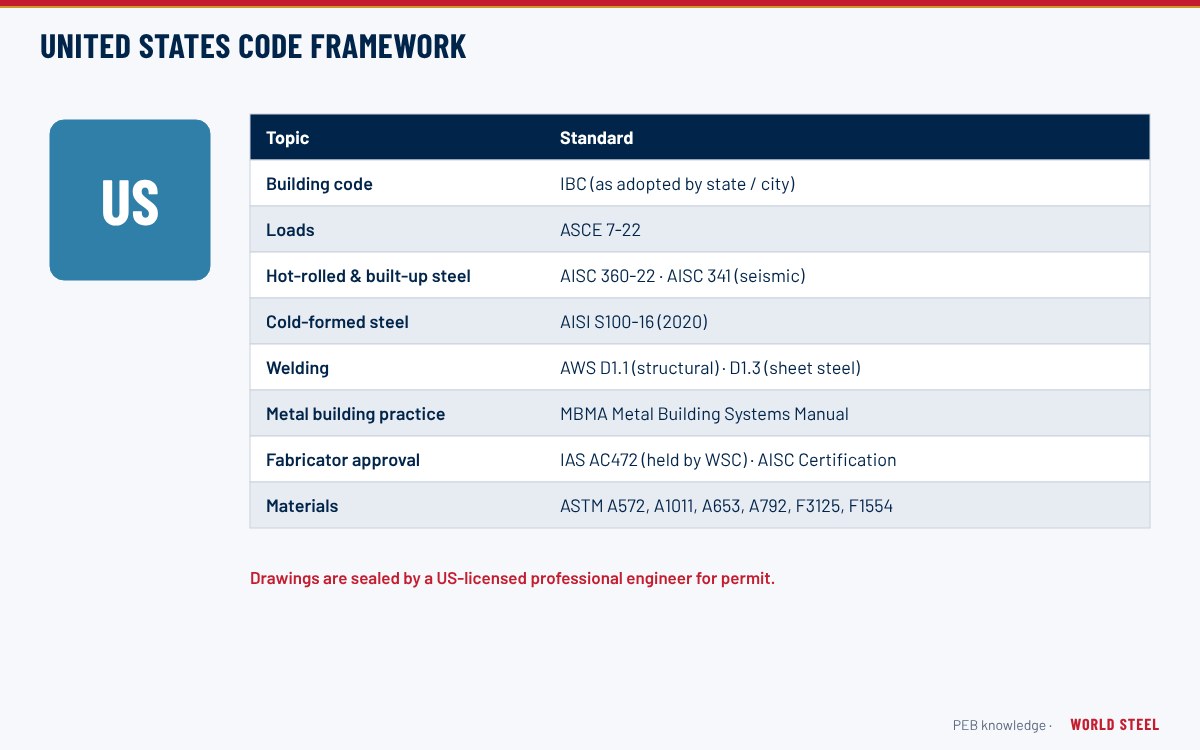
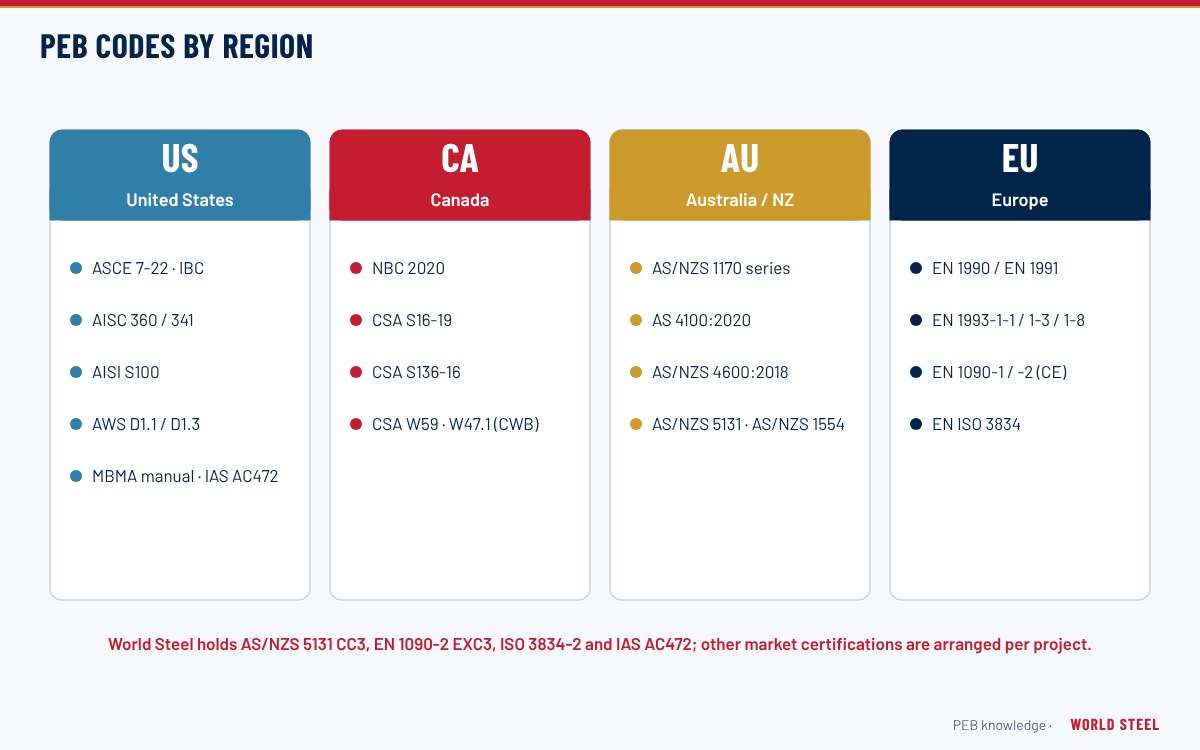
The United States is the birthplace of the metal building system and has the most mature set of standards for it. Building regulation is set by states and local jurisdictions, almost all of which adopt the International Building Code (IBC) – the 2021 and 2024 editions are the most common, with some jurisdictions still on earlier editions and many with local amendments. The IBC references the load standard ASCE 7 and the material standards for steel design, welding and materials. The Metal Building Manufacturers Association (MBMA) Metal Building Systems Manual (2018) supplements these with industry practice for loads, design and responsibilities.
Code mapping
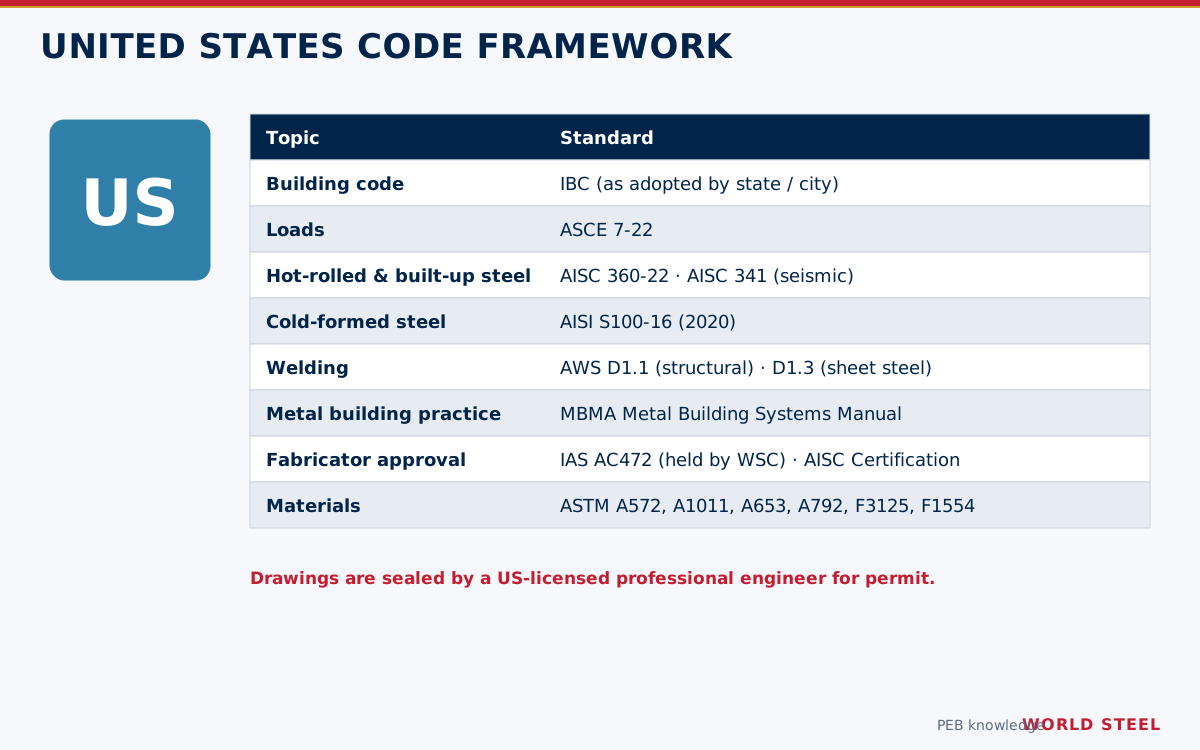
| Topic | Standard | Notes |
|---|---|---|
| Building approval | IBC 2021 / 2024 (as adopted locally) | Permit drawings sealed by an engineer licensed in the state |
| Loads | ASCE 7-22 | Wind, snow, seismic, rain, live loads; ASCE 7-22 added tornado loads for Risk Category III and IV buildings |
| Steel design | AISC 360-22; AISC Design Guide 25 | Tapered (nonprismatic) frame design |
| Seismic detailing | AISC 341-22 | Required in higher Seismic Design Categories |
| Cold-formed design | AISI S100-16 (2020) | Purlins, girts, eave struts; AISI S310 for panel diaphragms |
| Welding | AWS D1.1 (structural steel), AWS D1.3 (sheet steel) | Procedure and welder qualification |
| Fabrication / practice | AISC 303-22; MBMA Manual 2018 | Tolerances, responsibilities, common industry practice |
| Materials | ASTM A572 Gr 50, A36, A1011, A653, A792, F3125, F1554 | Plate, strip, coated sheet, bolts, anchor rods |
| Serviceability | AISC Design Guide 3; IBC Table 1604.3 | Drift, deflection and vibration guidance |
| Crane runways | AISC Design Guide 7; CMAA 70 / 74 | Runway design, crane service classes |
| Fabricator approval | IBC Chapter 17; IAS AC472 or AISC Certification | Approved fabricators avoid in-plant special inspection |
Loads and design
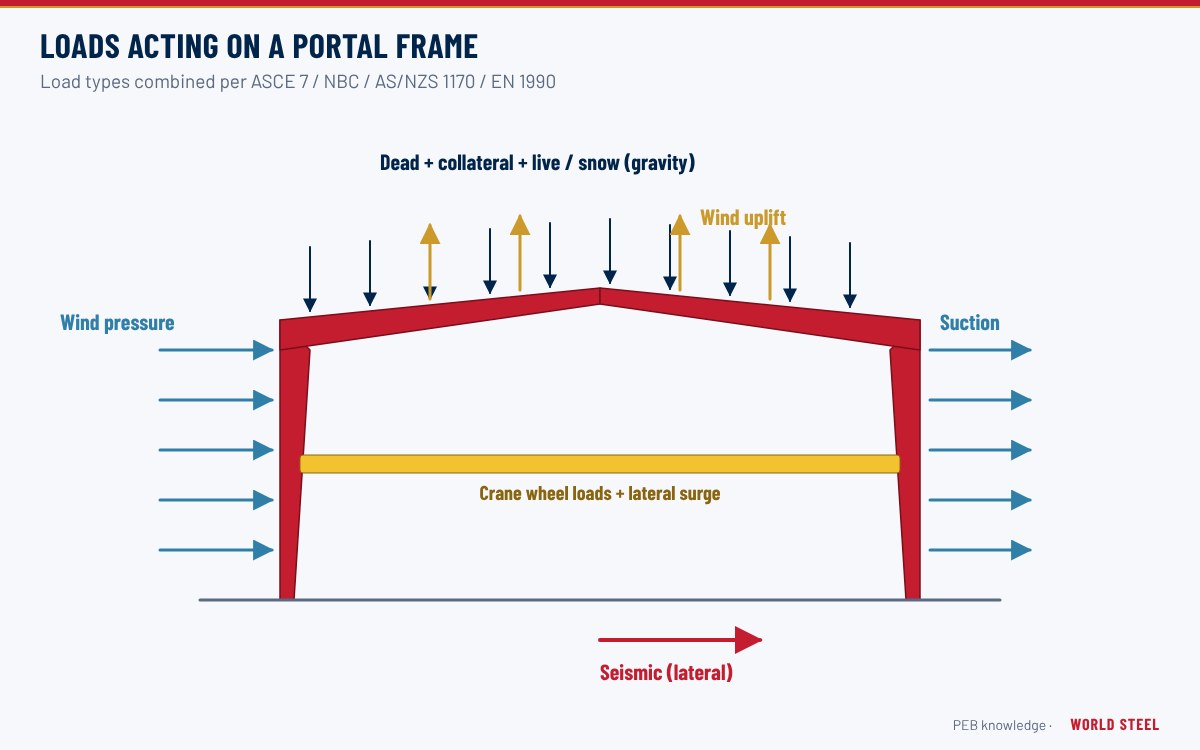
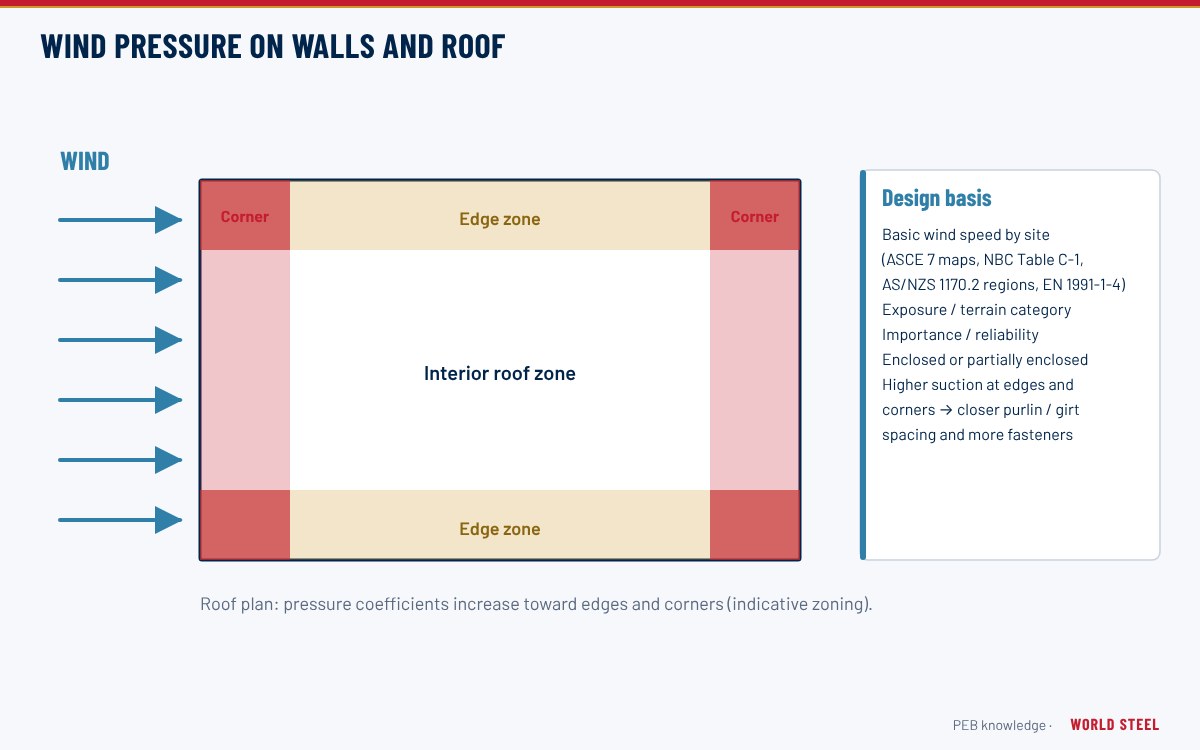
ASCE 7-22 defines dead, live, roof live, snow, rain, wind, seismic and – new in this edition – tornado loads for Risk Category III and IV buildings in tornado-prone regions. It also introduced reliability-targeted ground snow loads. The MBMA manual gives guidance on collateral loads and on applying ASCE 7 to low-rise metal buildings; see design loads for PEB.
- Frames: AISC 360-22 with the direct analysis or effective length method; AISC Design Guide 25 gives procedures for web-tapered members.
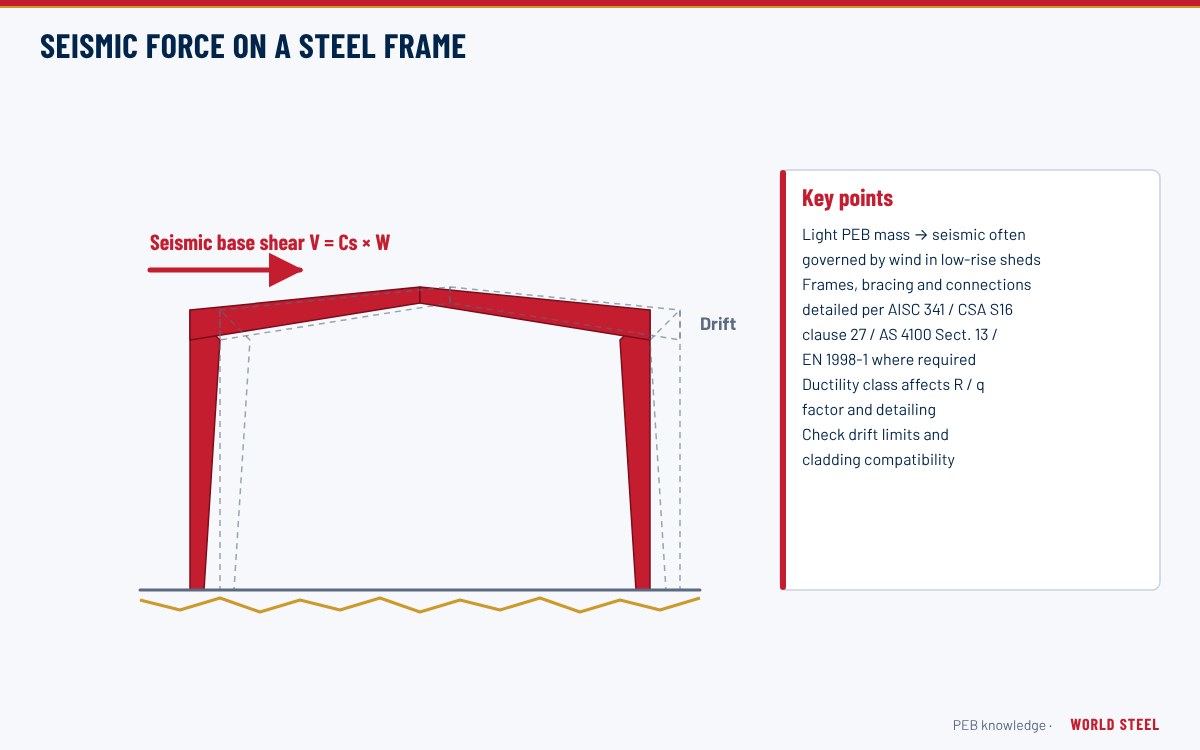
- Seismic: in lower Seismic Design Categories, ASCE 7 permits steel systems not specifically detailed for seismic resistance; in higher categories the frames must meet AISC 341-22 detailing for the selected system.
- Secondary members: AISI S100 covers Z and C purlins, including lapped continuous purlins and through-fastened or standing seam roof restraint.
What the MBMA manual adds
The codes tell the designer how to calculate; the Metal Building Systems Manual explains how metal buildings are actually specified, designed and delivered in the US. Its main contributions are:
- Roles and responsibilities – the manufacturer designs the metal building system as a specialty engineer; the end customer, through the engineer of record, specifies the design criteria and is responsible for foundations and items not supplied by the manufacturer.
- Load guidance – definitions of collateral load, crane loads and their combination, and commentary on applying ASCE 7 wind, snow and seismic provisions to low-rise metal buildings.
- Serviceability – recommended frame drift and member deflection criteria by building type and cladding.
- Common industry practices – what is normally included in a metal building order, fabrication and erection tolerances, and how to handle changes and claims.
- Documentation – the letter of design certification, order documents and drawings expected from the manufacturer; see design deliverables.
IAS AC472 and the approved fabricator route
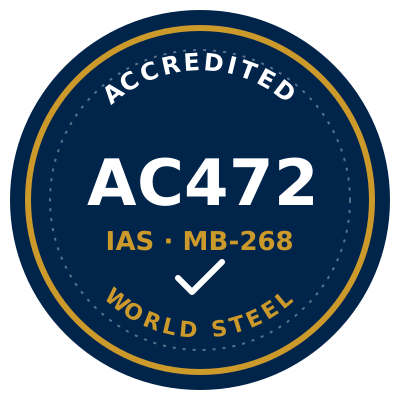
IBC Chapter 17 requires special inspection of fabricated structural elements unless the work is done by an approved fabricator with a recognised quality programme. For metal building systems, accreditation by the International Accreditation Service under AC472 (inspection programs for manufacturers of metal building systems) is a widely accepted route. Accreditation covers design, engineering personnel, material traceability, welding, fabrication and quality control, with periodic audits. AISC Certification is the corresponding route for structural steel fabricators in general and is specified by some owners and agencies.
Federally funded projects may also carry domestic-content requirements such as Buy America or the Build America, Buy America Act (BABA), and imported steel is subject to trade measures including Section 232; these must be checked for each project before procurement.
World Steel in the US market
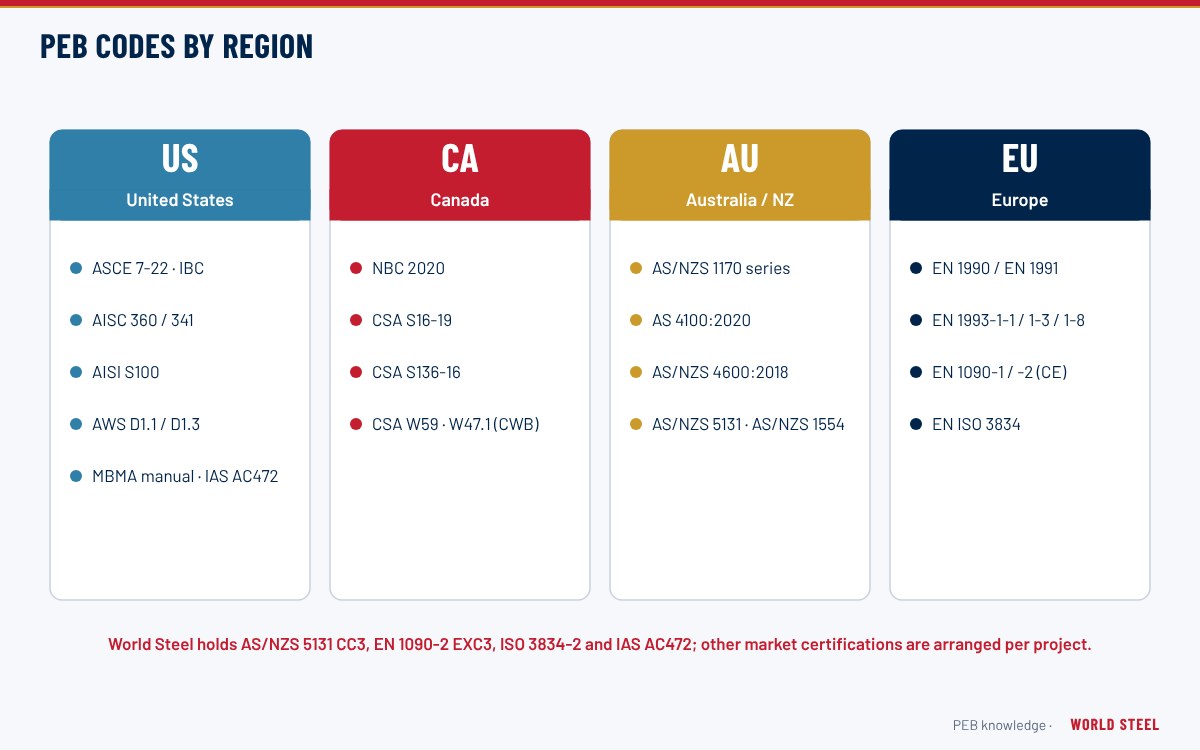
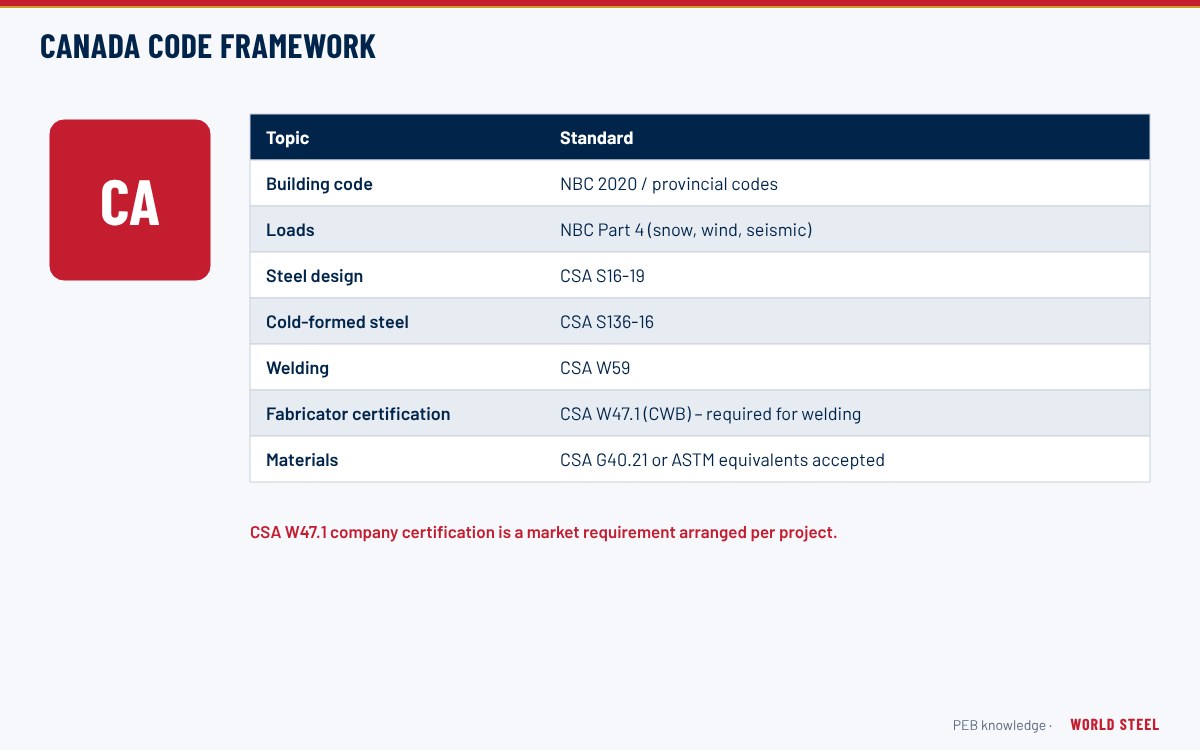
World Steel Construction holds IAS AC472 accreditation and was the first company in Asia to be accredited. Its plant works under ISO 3834-2, and welding for US projects follows AWS D1.1 and D1.3 as specified. WSC is not AISC-certified; where a project specification requires AISC Certification, the compliance route must be agreed for that project. Designs are prepared to ASCE 7, AISC 360 and AISI S100, with sealing by a US-licensed engineer arranged as the jurisdiction requires. See market compliance and certification, the global standards overview and Canadian standards for cross-border projects.
Normas por región
| Región | Norma | Alcance |
|---|---|---|
 United States |
IBC 2024 | International Building Code |
| United States |
ASCE 7-22 | Minimum design loads and associated criteria |
| United States |
AISC 360-22 / AISC 341-22 | Structural steel buildings; seismic provisions |
| United States |
AISI S100-16 (2020) | North American Specification for cold-formed steel |
| United States |
AWS D1.1 / AWS D1.3 | Structural welding – steel and sheet steel |
| United States |
IAS AC472 | Accreditation criteria for metal building system manufacturers |
| International | ISO 3834-2 | Comprehensive quality requirements for fusion welding |
Preguntas frecuentes
What is IAS AC472?
It is the International Accreditation Service's accreditation criteria for inspection programmes of metal building system manufacturers. Accredited manufacturers are recognised as approved fabricators under the IBC.
Is the MBMA manual a building code?
No. It is an industry manual that explains how codes such as ASCE 7 and AISC 360 are applied to metal buildings and defines common industry practice. The legal requirements come from the adopted IBC and its referenced standards.
Do US metal building drawings need a local engineer's seal?
Yes. Permit drawings and calculations are normally sealed by a professional engineer licensed in the state where the building is erected.
 IAS AC472