ENEnglish
 VITiếng Việt
 ZH中文
 KO한국어
 JA日本語
 FRFrançais
 ITItaliano
 PTPortuguês
 ESEspañol
 HEעברית
 ARالعربية

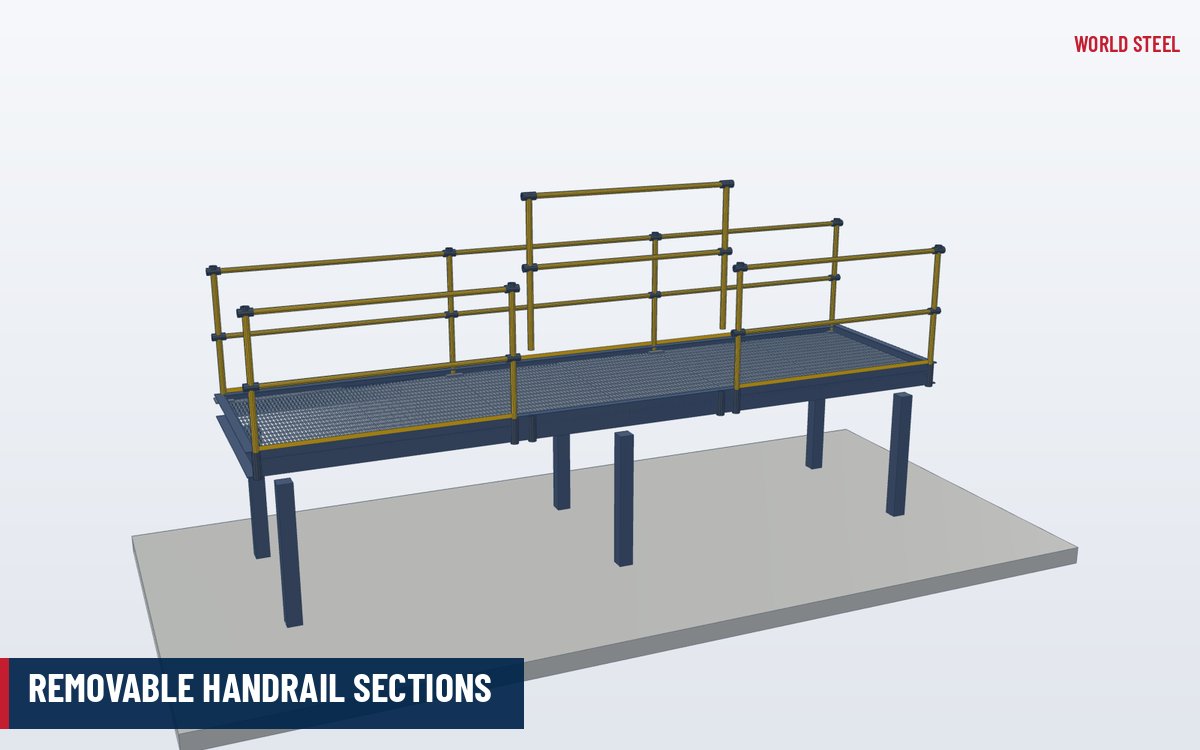
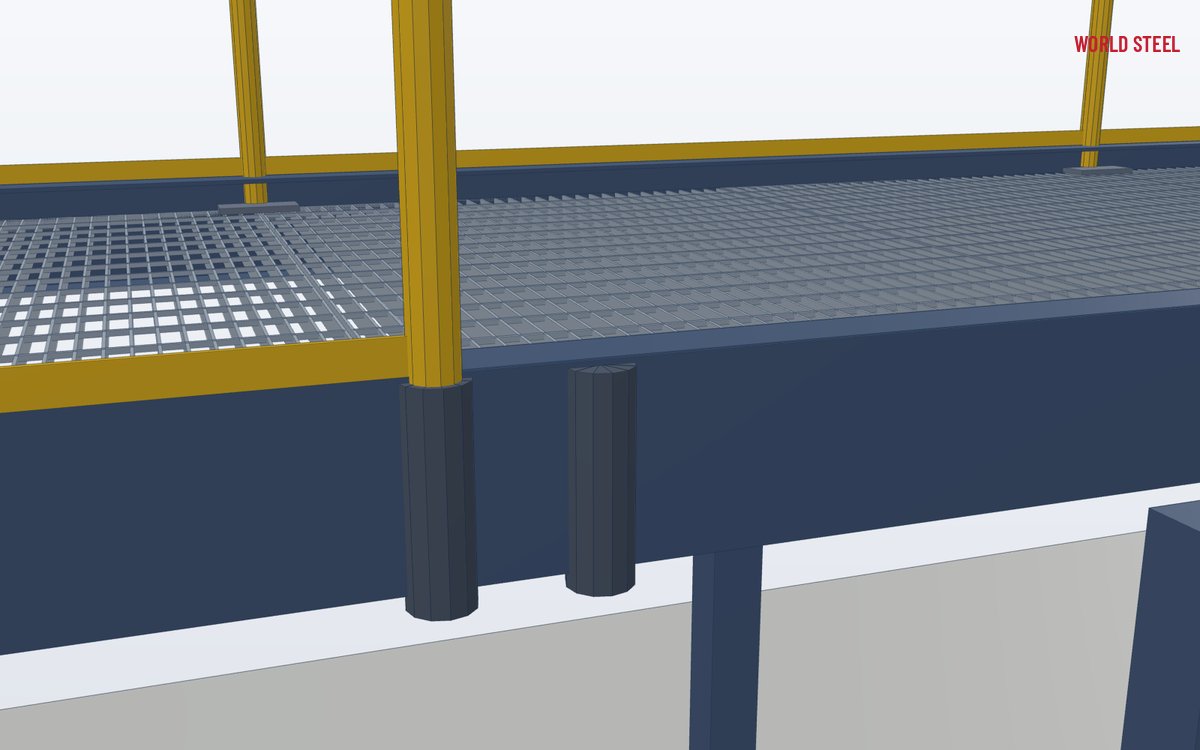
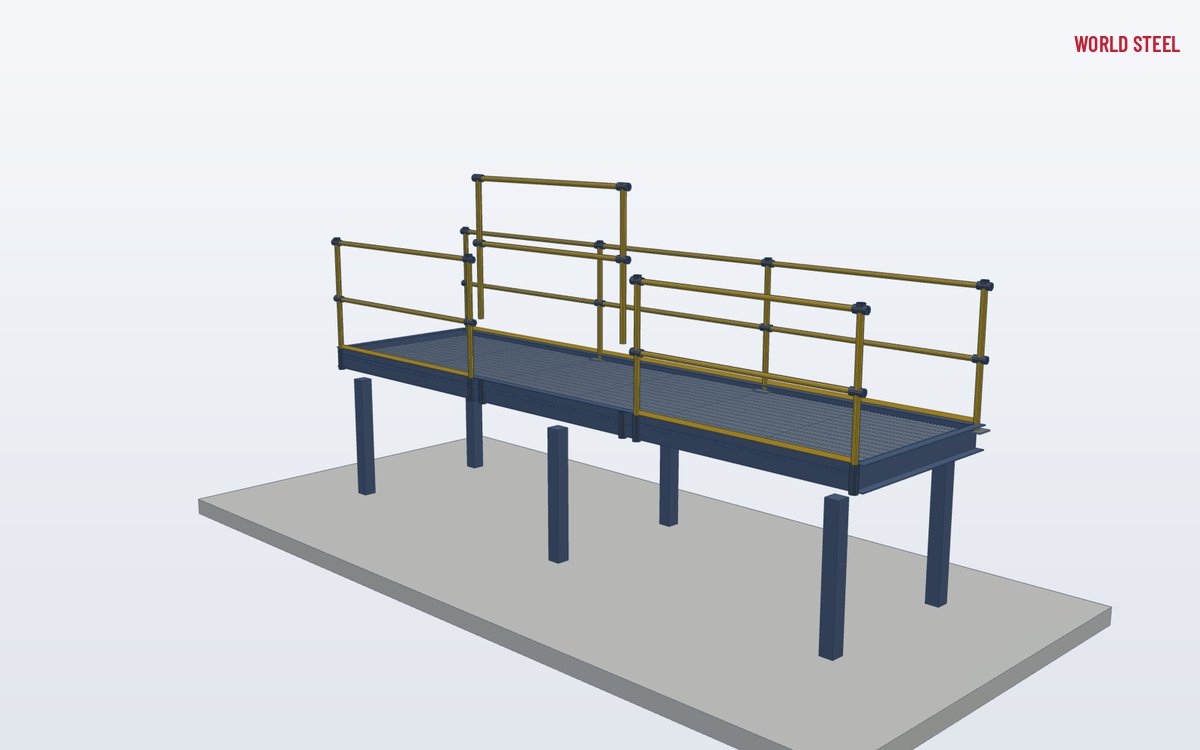
- Complete bays lift out of sockets
- Locking pins prevent accidental removal
- Sockets welded to the platform steel in the shop
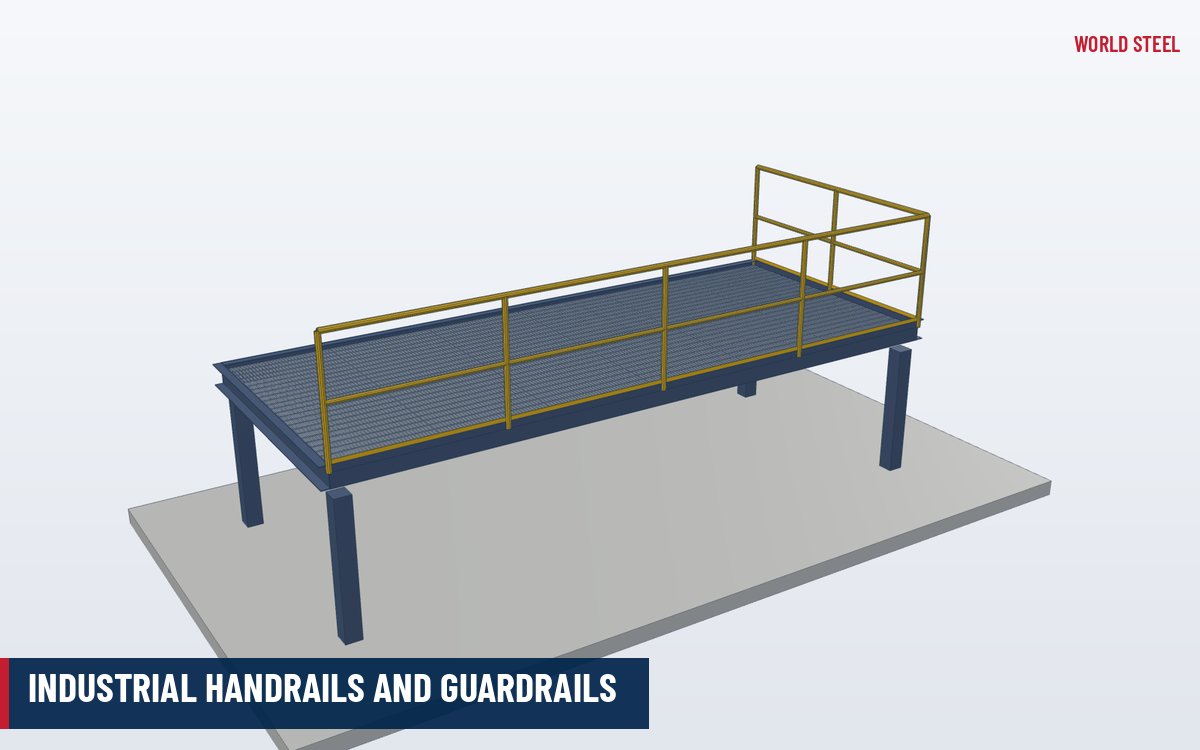
- Interchangeable with fixed WS bays
- Galvanized
What it is
Removable sections let a platform edge open for a forklift, a crane lift or equipment removal and close again afterwards. A complete bay – two socket stanchions with their rails – drops into sockets fixed to the edge steel and is secured with locking pins so it cannot be lifted out by accident.
Range
| Code | Item | Use |
|---|---|---|
| WS-MH-R1 | Removable bay, 2 rails | Loading edges, equipment access |
| WS-MH-R2 | Single removable stanchion | Temporary gaps |
| WS-MH-R3 | Socket, weld-on | Shop-welded to new steel |
| WS-MH-R4 | Socket, bolt-on / cast-in | Existing steel or concrete |
Design and compliance
When in place, a removable bay must meet the same guardrail requirements as the fixed run, so sockets, pins and stanchions are sized for the barrier load. While the bay is out, temporary protection or a controlled work area is required – the site procedure should say who may remove a section.
Installation and selection
- Sockets are welded to new platform steel in our shop or bolted to existing steel.
- Drop the bay into the sockets and insert the locking pins.
- Specify the removable bay locations on the layout.
Fabrication and finishing at World Steel
Every WS modular handrail component is made in the World Steel plant in Vietnam: tube and bar are cut on saws to the component schedule, stanchions are welded to base plates, brackets or socket spigots on jigs so that rail heights repeat exactly, and fittings are fabricated from heavy-wall tube and plate, drilled and tapped for their locking screws. Welding follows qualified procedures under ISO 3834-2 and the AS/NZS 5131 and EN 1090-2 systems our certifications cover.
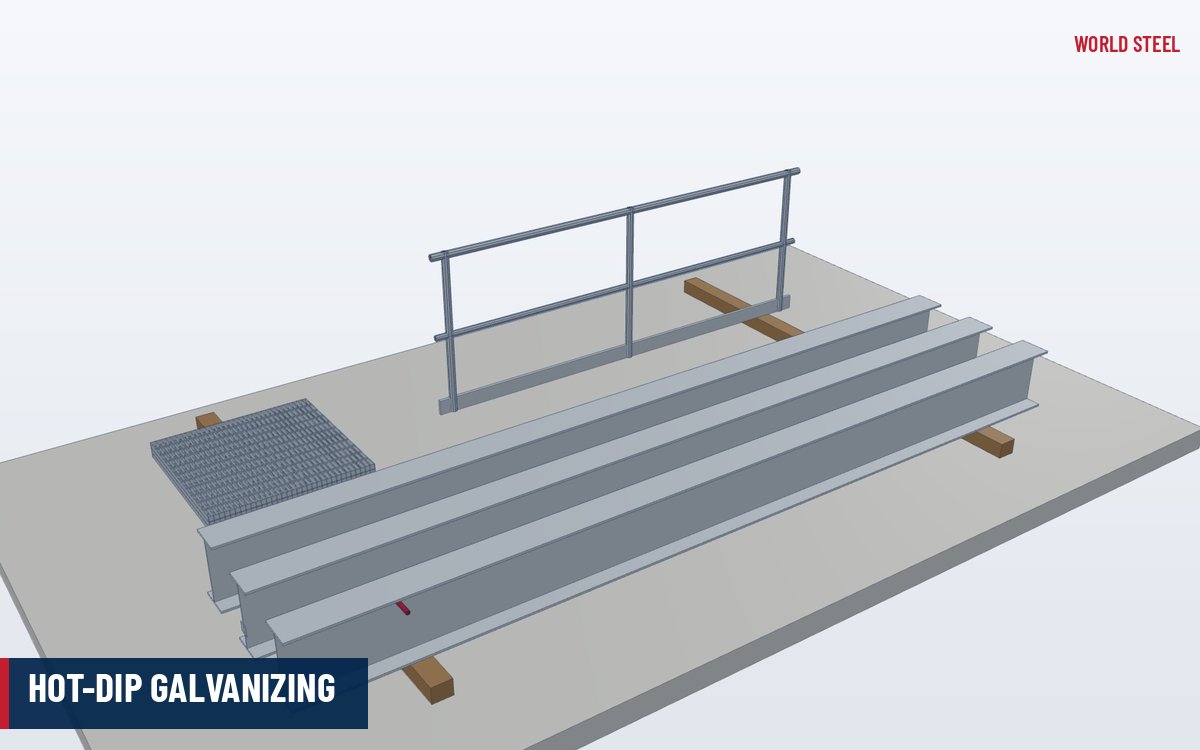
Components are then hot-dip galvanized as single pieces – which is only possible because the system is modular – giving full internal and external zinc coverage with no site welds to repair afterwards. A safety-yellow or architectural topcoat can follow. Parts are marked with their WS code, bagged by type and packed by area for export shipping, together with the structural steel or on their own.
Normas y requisitos por mercado
Códigos con los que World Steel diseña, fabrica y documenta este producto, y los principales requisitos geométricos y de carga en cada mercado.
 Estados Unidos
- OSHA 29 CFR 1910.29Fall protection systems – guardrails
- ASCE 7Minimum design loads – guard systems
- IBCInternational Building Code – guards
- ASTM A123Hot-dip galvanized coatings
- Top rail height
- 42 in ± 3 in (OSHA 1910.29(b))
- Rail loads
- Top 200 lbf, mid 150 lbf (OSHA 1910.29(b))
- Max opening
- 19 in (OSHA 1910.29(b))
 Australia / NZ
- AS 1657-2018Fixed platforms, walkways, stairways and ladders
- AS/NZS 1170.1Imposed actions – barrier loads
- AS/NZS 5131 Certificación WSCFabrication and erection of structural steelwork
- AS/NZS 4680Hot-dip galvanized coatings
- Guardrail height
- 900–1100 mm (AS 1657)
- Toe board
- ≥ 100 mm where required (AS 1657)
 Europa
- EN ISO 14122-3Stairs, stepladders and guard-rails
- EN 1991-1-1Imposed loads – barriers
- EN 1090-2 Certificación WSCExecution of steel structures
- EN ISO 1461Hot-dip galvanized coatings
- Guard-rail height
- ≥ 1100 mm (EN ISO 14122-3)
- Rail gaps
- ≤ 500 mm (EN ISO 14122-3)
- Toe-plate
- ≥ 100 mm (EN ISO 14122-3)
Resumen solo orientativo: prevalecen la especificación del proyecto, la edición del código adoptada y la autoridad competente.
Acabados
| Acabado | Normas / notas |
|---|---|
| Hot-dip galvanized (standard) | ASTM A123 / A153 · AS/NZS 4680 · EN ISO 1461 |
| Duplex – HDG + safety-yellow topcoat | ASTM A123 + topcoat · AS/NZS 4680 + AS/NZS 2312.1 · EN ISO 1461 + EN ISO 12944 |
| HDG + powder coat (architectural colours) | Galvanized, then polyester powder coat for visible public areas |
Preguntas frecuentes
Can a removable bay fall out by itself?
No – locking pins secure the stanchions in the sockets.
Can sockets be added to existing platforms?
Yes, as bolt-on sockets on existing steel or cast-in sockets in concrete.
 AS/NZS 5131 CC3
 EN 1090 EXC3 · CE