ENEnglish
 VITiếng Việt
 ZH中文
 KO한국어
 JA日本語
 FRFrançais
 ITItaliano
 PTPortuguês
 ESEspañol
 HEעברית
 ARالعربية

Why maintenance pays
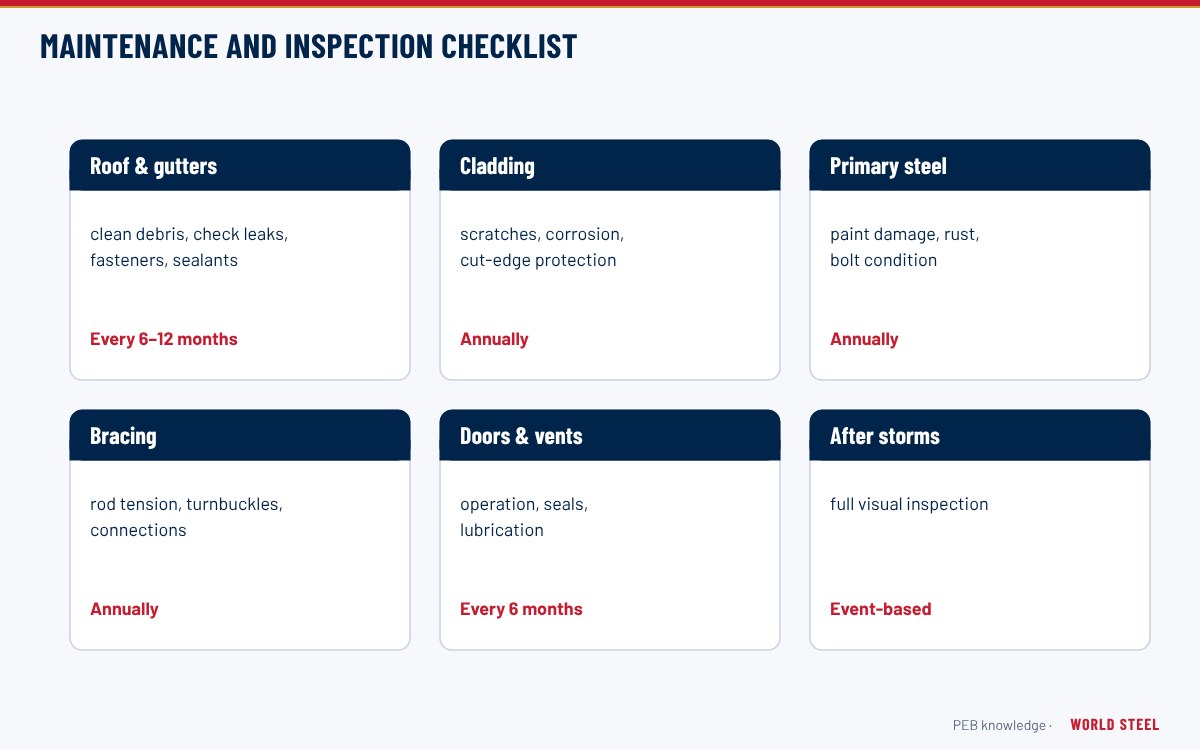
A well-designed pre-engineered building needs little maintenance, but not none. Most service problems in steel buildings – leaks, corrosion, wind damage and premature coating failure – start small and are cheap to fix if found early. Coating warranties for pre-painted sheet and design-life assumptions for paint systems typically depend on regular washing and inspection, so a documented maintenance programme also protects the owner's warranty position.
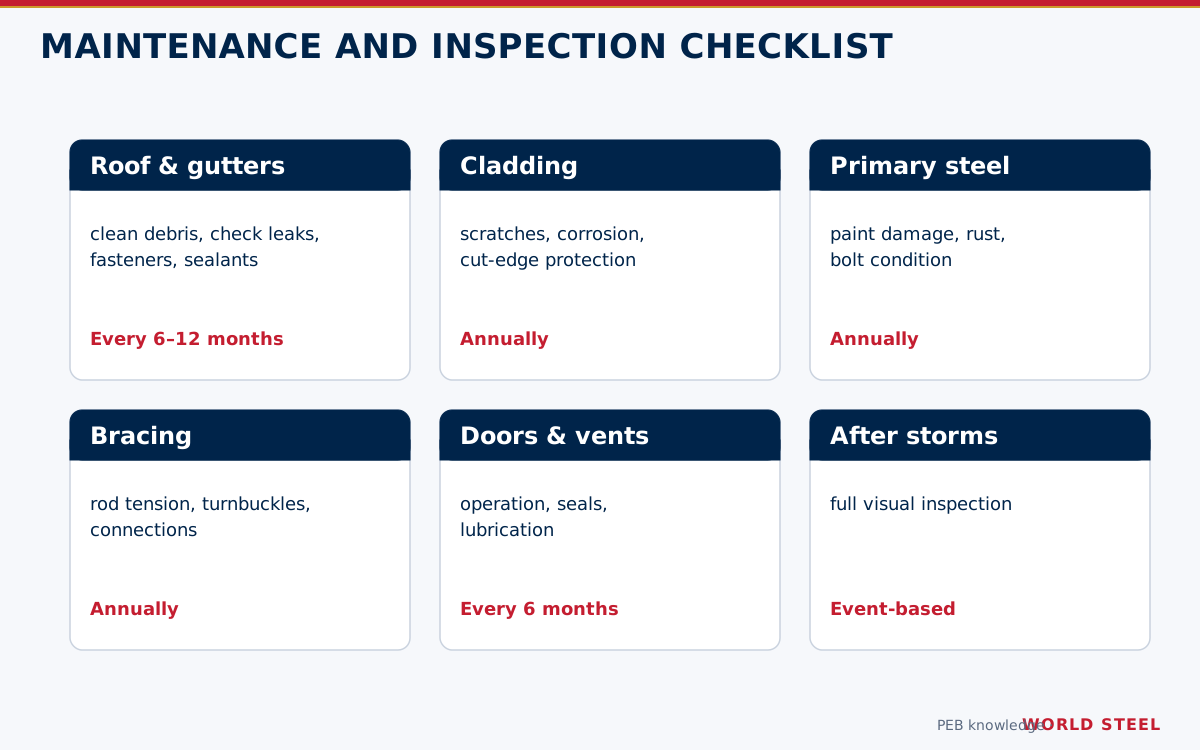
Inspection frequency
| Interval | Scope |
|---|---|
| After handover (first year) | Full walk-down: roof, sheeting, sealants, bolts, bracing, doors |
| Every 6–12 months | Roof and gutters, downspouts, skylights, flashings, visible coatings |
| Annually | Frames, bracing, base plates, door operation, crane runway visual |
| Every 3–5 years | Detailed condition survey, coating assessment, fastener sampling |
| After severe events | Cyclone, hurricane, earthquake, heavy snow, fire, vehicle impact |
Buildings in coastal, industrial, chemical or agricultural environments (ISO 12944-2 categories C4–C5) and buildings with cranes need shorter intervals.
Checklist
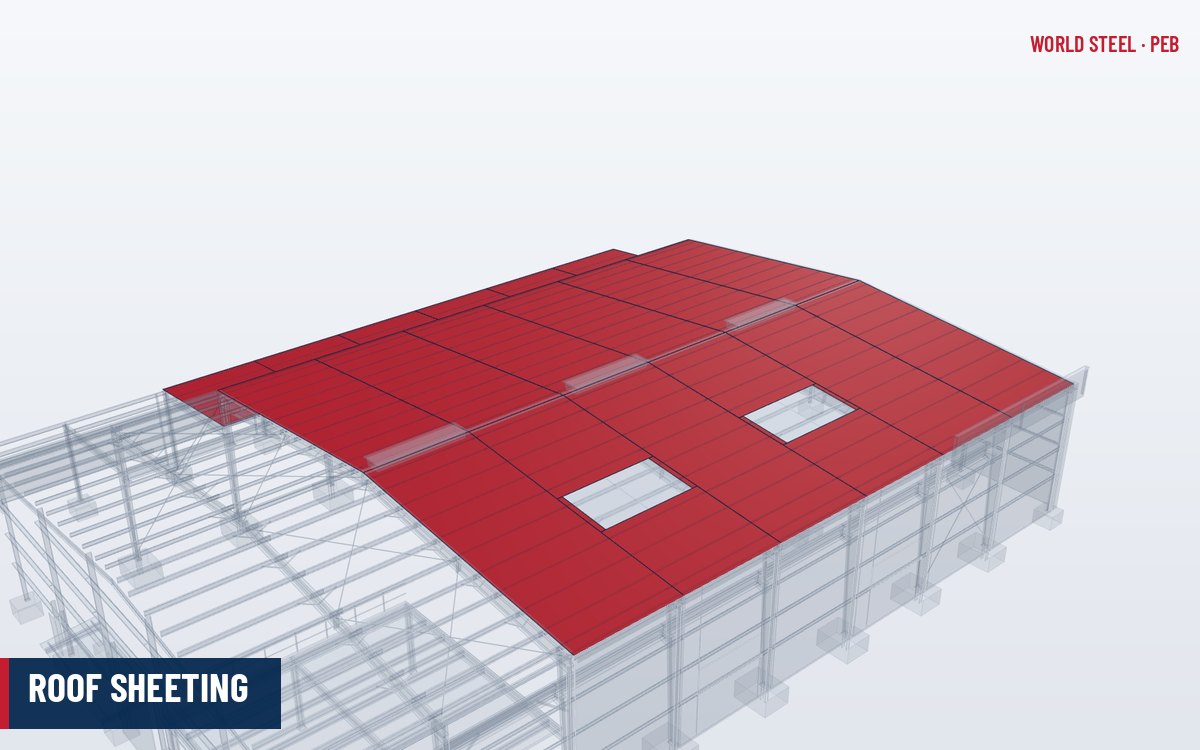
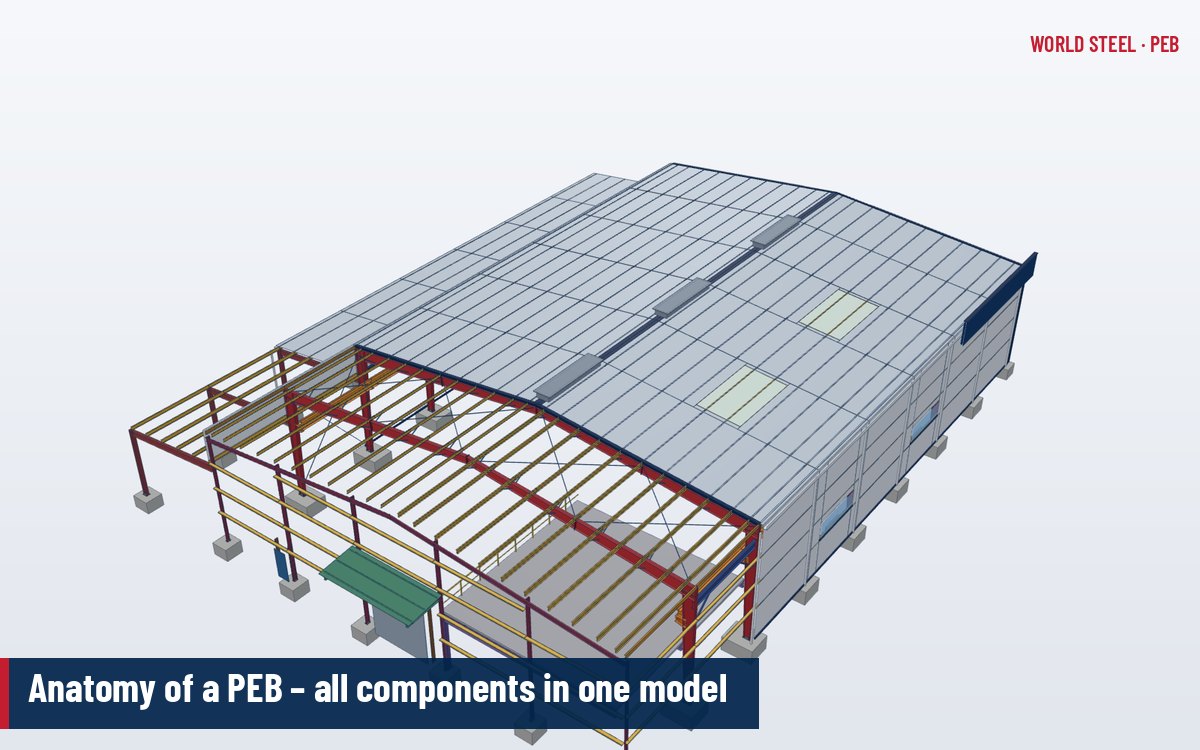
- Roof sheeting – loose, missing or corroded fasteners; damaged washers; foot traffic dents; lap and end-lap sealant; standing seam clips. See roof sheeting.
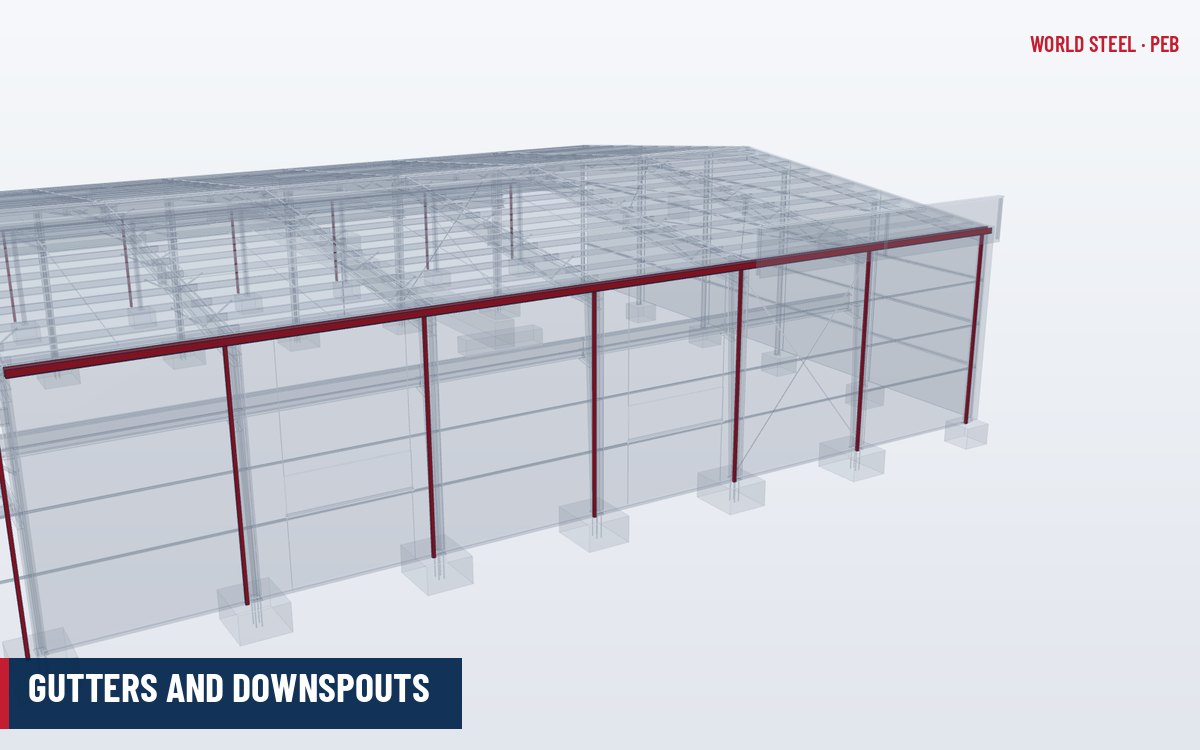
- Gutters and downspouts – debris, ponding, blocked outlets, corrosion at joints and overflow paths. See gutters and downspouts.
- Skylights – UV degradation, cracking, fixings and safety mesh.
- Flashings, trims and sealants – cracked or debonded sealant at ridge, eave, openings and penetrations.
- Wall sheeting – impact damage, base corrosion where sheeting meets soil, grass or stored materials.
- Primary frames – coating breakdown at knees, bases and splices; any distortion or impact damage from vehicles.
- Bolted connections – missing or loose bolts at end plates and splices; corrosion staining.
- Bracing – slack or damaged rods and cables; missing nuts.
- Base plates and anchor bolts – grout cracking, corrosion at the concrete interface, water ponding at column bases.
- Doors and openings – roller door guides, seals, framed opening jambs and impact protection.
- Crane runways – rail clips, stops, bolts at brackets, runway alignment as required by the crane maintenance regime.
Cleaning and coating care
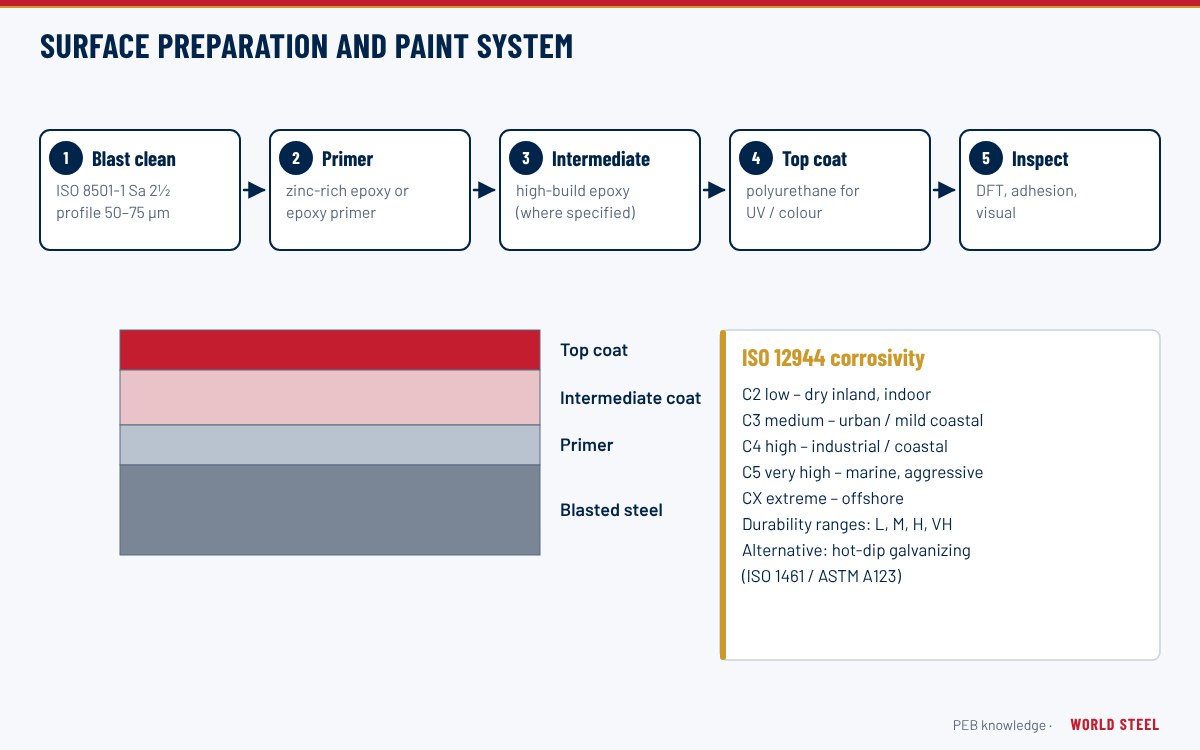
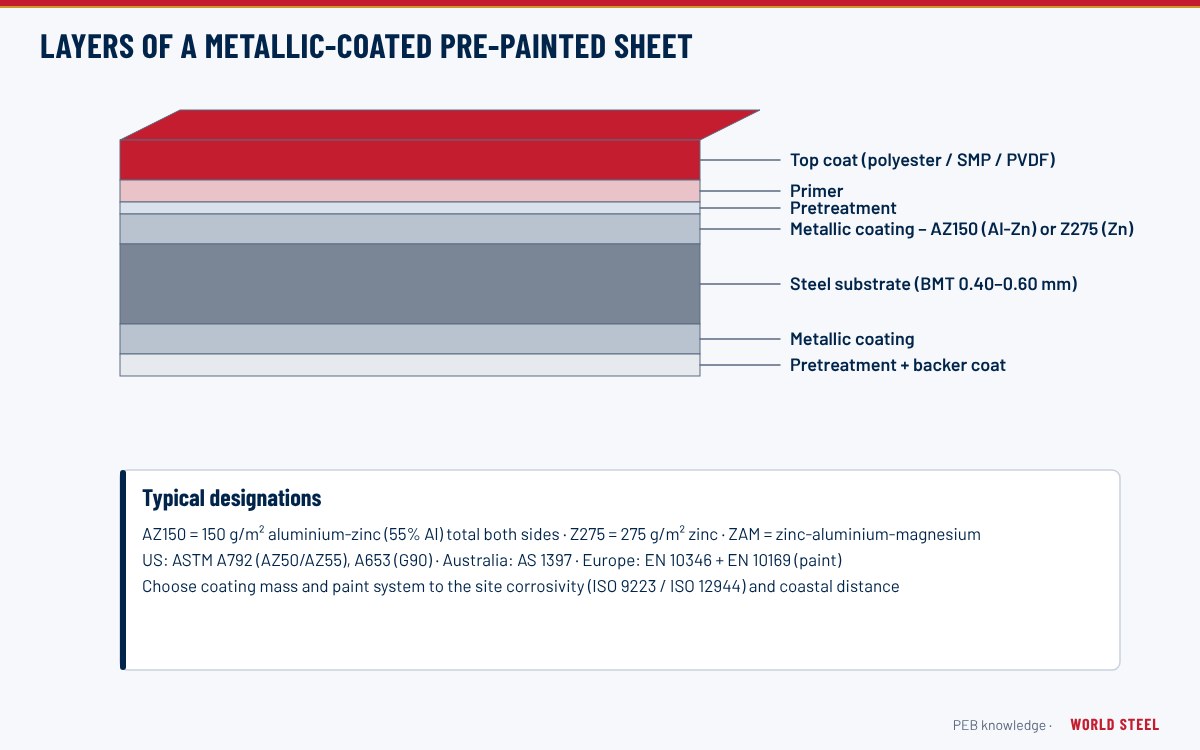
Pre-painted and metallic-coated sheet should be washed with clean fresh water in areas not rain-washed – under eaves, canopies and in sheltered wall zones – because salt and pollutants accumulate there. Remove swarf, debris and incompatible materials such as copper, lead, green timber or wet concrete from contact with coated steel. Inspect primary steel paint for breakdown at edges and bolts, and repair locally by cleaning to the paint maker's requirements and applying a compatible system. ISO 12944-9 / ISO 4628 rating methods help record coating condition objectively; see paint and coating systems.
Do not add loads such as solar panels, HVAC units, hoists or hanging services without checking with a structural engineer – PEB frames are optimised for the loads stated on the design.
Assessing and renewing corrosion protection
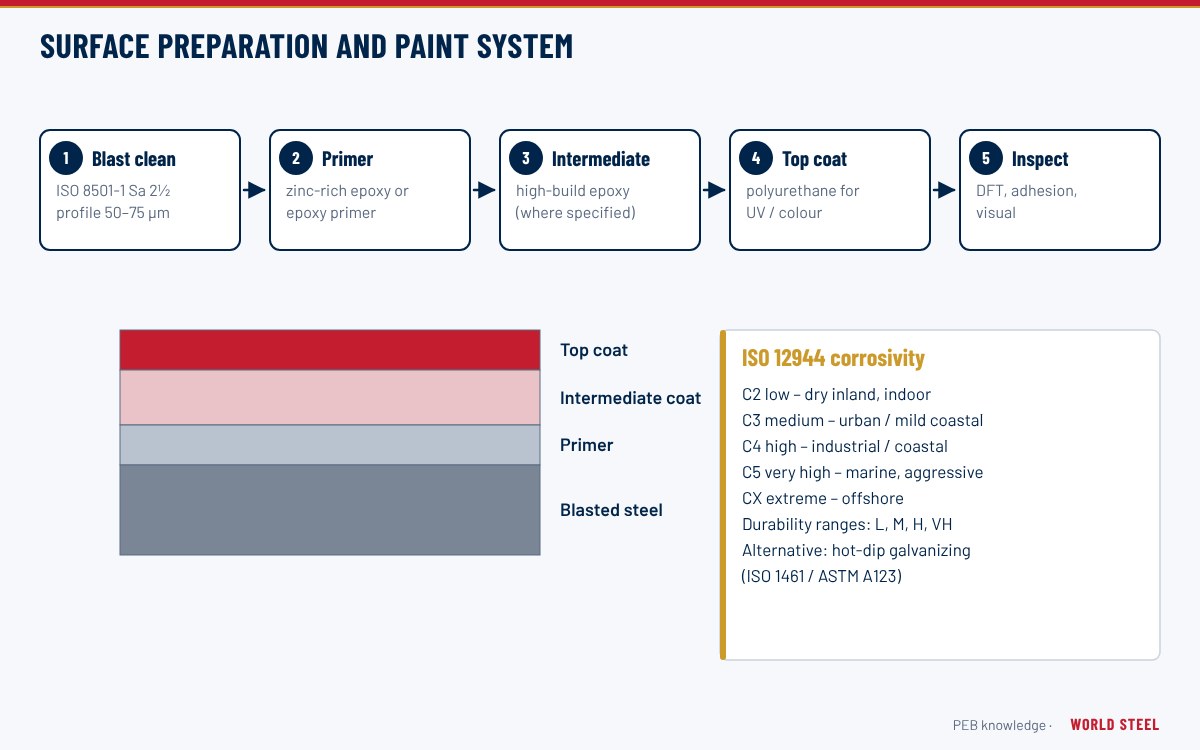
A planned approach to coating maintenance avoids both premature repainting and the much higher cost of letting steel corrode past the point of simple repair. Condition is assessed with recognised scales – for example ISO 4628 for blistering, rusting, cracking and flaking of paint – and recorded with photographs so that change can be tracked between inspections.
| Observed condition | Typical action |
|---|---|
| Chalking or fading only; no rust | Wash; plan overcoating of pre-painted sheet with a compatible system when appearance requires |
| Isolated rust spots or edge rust on primary steel (small fraction of area) | Spot repair: power-tool clean to St 3, prime and finish with the original or a compatible system |
| Rust at cut edges or laps of sheeting | Clean, treat and seal edges; check for trapped water or incompatible run-off and remove the cause |
| Widespread breakdown of paint | Full maintenance painting specified to ISO 12944-8 (or SSPC/AMPP guides), with surface preparation appropriate to the condition |
| Corroded fasteners on sheeting | Replace with oversize screws of an equal or better corrosion class |
| Loss of section on members or bases | Engineering assessment before repair; possible plating or member replacement |
The most corrosion-prone areas in PEB are column bases at slab level, the bottom of wall sheeting, internal gutters, the underside of canopies and anywhere dirt and moisture collect. Improving drainage and removing debris at these spots often extends coating life more than any repainting.
Modifications and support
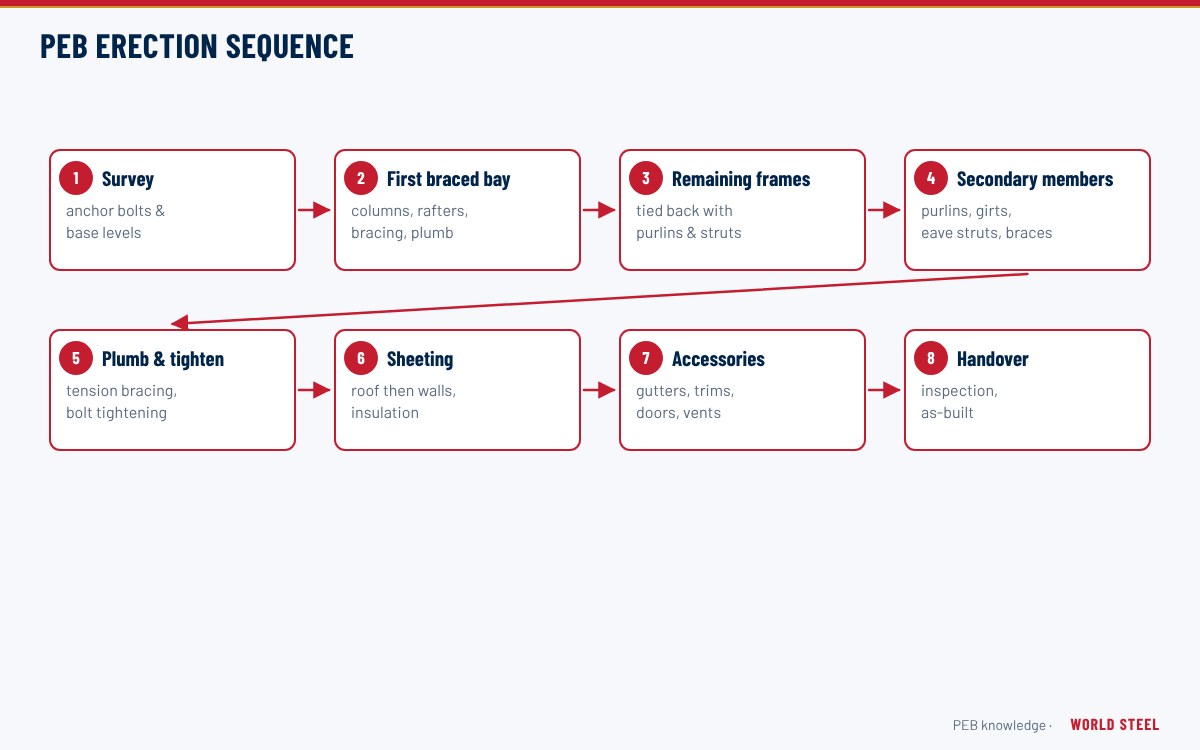
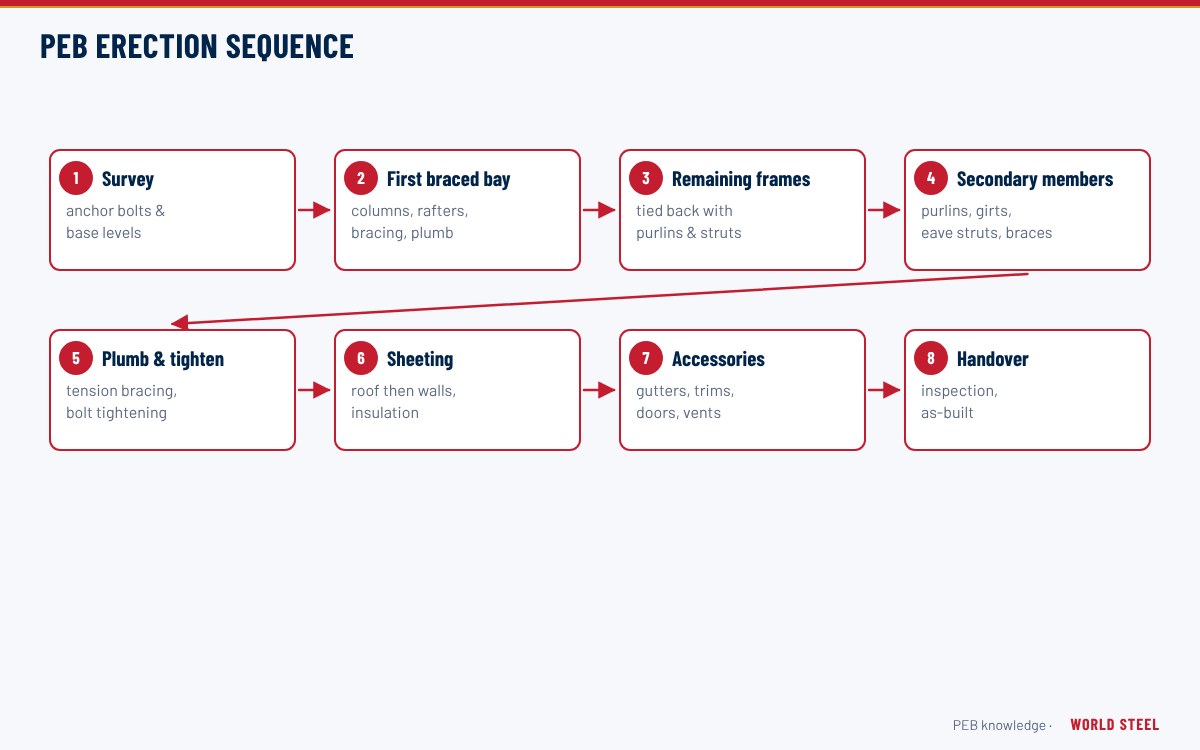
Changes such as new openings, removal of bracing, mezzanine additions or extensions must be reviewed against the original design. Because PEB members are tailored, an unchecked change can overload frames, purlins or bracing. World Steel keeps design records for the buildings it supplies and can assess modifications, expansions and lean-to extensions, and supply replacement parts via its accessories and cladding lines. For installation context, see erection sequence.
Normas por región
| Región | Norma | Alcance |
|---|---|---|
 United States |
MBMA MBSM 2018 | Metal building systems manual – owner responsibilities and maintenance guidance |
 Australia / NZ |
AS/NZS 2312.1 / AS 1562.1 | Protective coating maintenance; design and installation of sheet roof and wall cladding |
 Europe |
EN ISO 12944-9 / EN ISO 4628 | Protective paint systems; evaluation of coating degradation |
| International | ISO 12944-2 | Classification of environments (corrosivity categories) |
Preguntas frecuentes
How often should a steel building roof be inspected?
Typically every 6–12 months and after every severe storm. Buildings in coastal or industrial environments benefit from more frequent checks of fasteners, gutters and sheltered areas.
Do pre-painted roof sheets need washing?
Areas that are not washed by rain, such as under eaves and canopies, should be washed periodically with fresh water. This is often a condition of coating warranties.
Can I add solar panels to a PEB roof?
Often yes, but the purlins, frames and roof sheeting must be checked for the added dead load, wind effects and attachment method before installation.