ENEnglish
 VITiếng Việt
 ZH中文
 KO한국어
 JA日本語
 FRFrançais
 ITItaliano
 PTPortuguês
 ESEspañol
 HEעברית
 ARالعربية

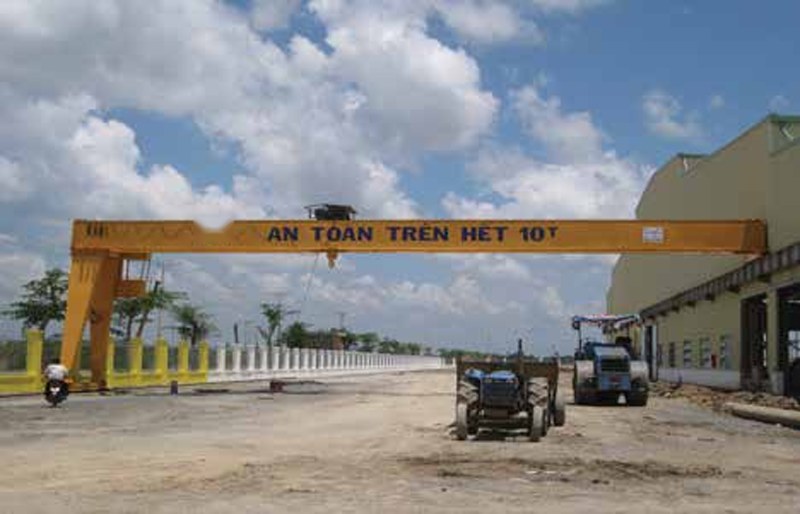
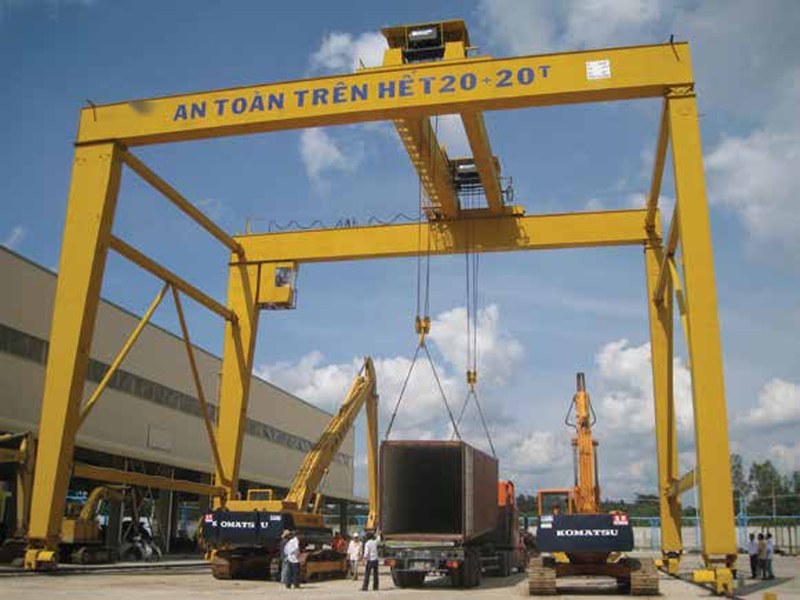
- One leg on a ground rail, one end on a runway
- Uses the building column line
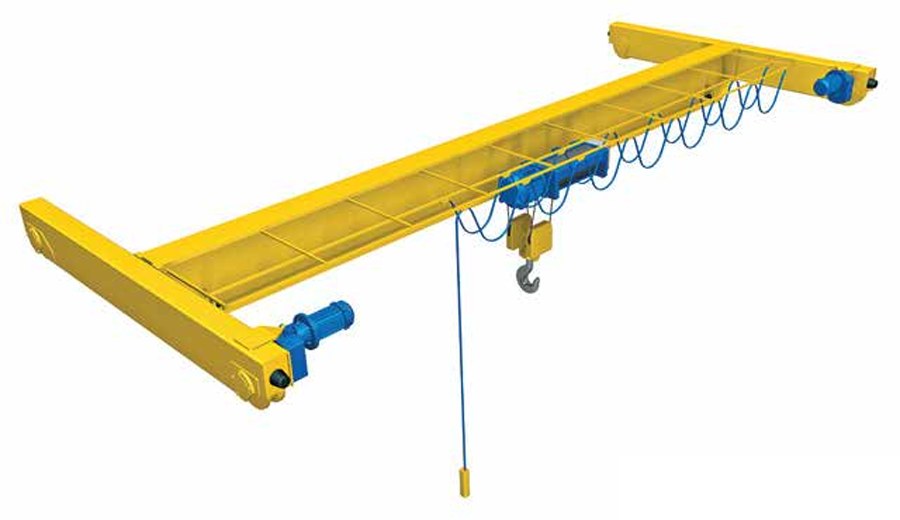
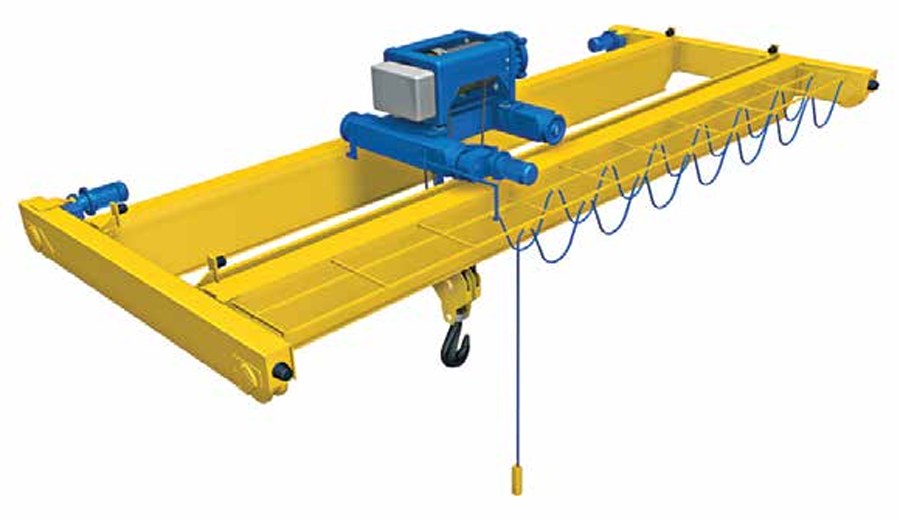
- Single or double girder
- Indoor or outdoor
What it is
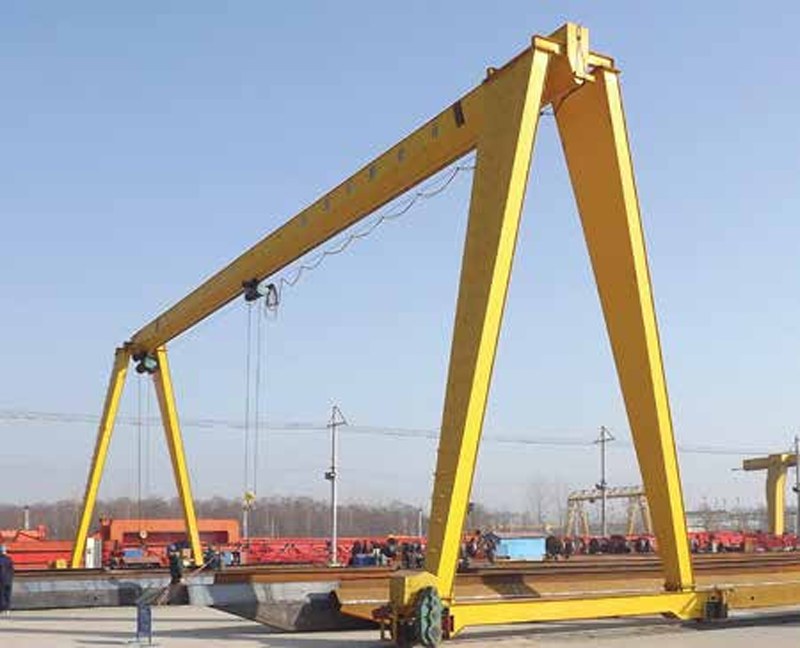
A semi-gantry combines a gantry leg on one side with an overhead runway on the other – usually the column line of a building. It serves a strip along the wall inside or outside the building without a second runway, a common solution for loading areas and lean-to bays.
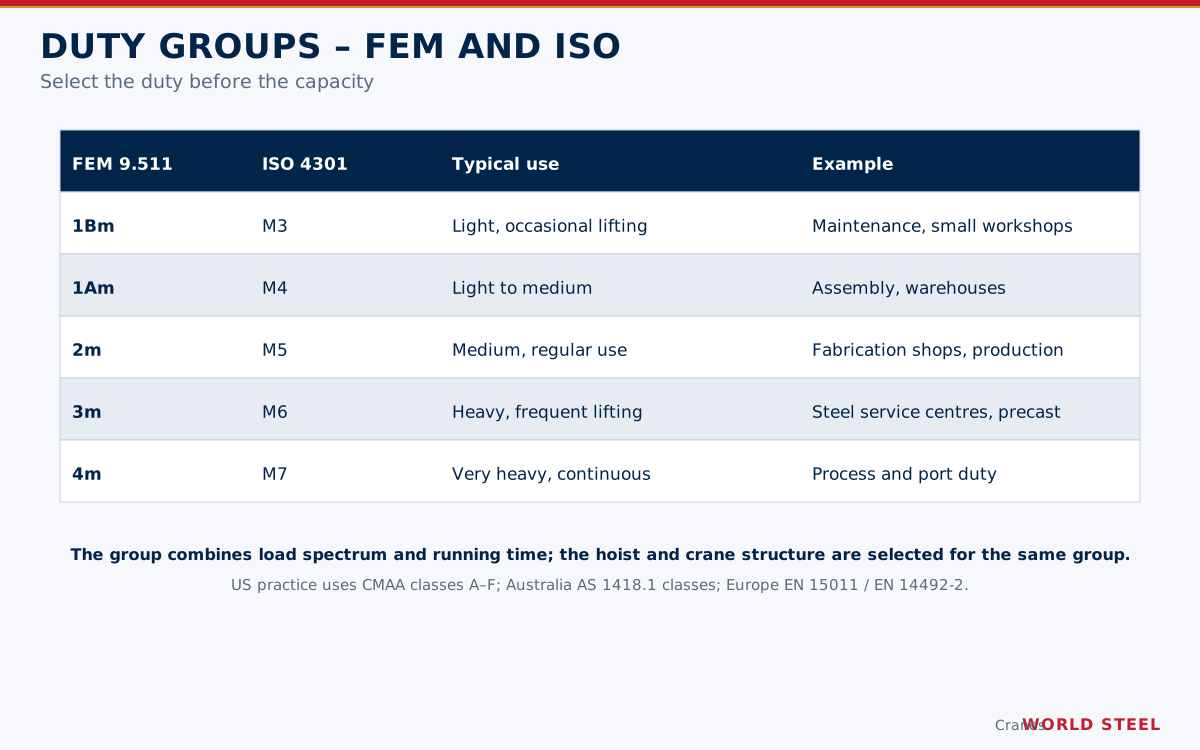
Duty group
Vietnam: cranes are designed, manufactured and inspected to TCVN 4244:2005 and the lifting-equipment safety regulation QCVN 07:2012/BLĐTBXH, with technical inspection before use.
Normas y requisitos por mercado
Códigos con los que World Steel diseña, fabrica y documenta este producto, y los principales requisitos geométricos y de carga en cada mercado.
 Estados Unidos
- CMAA 70 / CMAA 74Top-running and single girder crane specifications
- ASME B30.2 · B30.17Overhead and gantry cranes – safety
- ASME B30.16 · ASME HST-4Overhead hoists
- OSHA 1910.179Overhead and gantry cranes
- Load test
- 125 % of rated load (ASME B30.2)
 Australia / NZ
- AS 1418.1Cranes – general requirements
- AS 1418.18Crane runways and monorails
- AS 2550.1Cranes – safe use
- AS 4100 · AS/NZS 1554.1Steel design and welding
- Registration
- Design and item registration per state WHS rules
 Europa
- EN 15011Bridge and gantry cranes
- EN 14492-2Power-driven hoists
- EN 13001 seriesCrane design – general, actions, limit states
- Machinery DirectiveCE marking of the complete crane
- Load test
- Static 125 % and dynamic 110 % per EN 15011 / EN 14492-2
Resumen solo orientativo: prevalecen la especificación del proyecto, la edición del código adoptada y la autoridad competente.
Acabados
| Acabado | Normas / notas |
|---|---|
| Paint | Blast cleaned, epoxy primer + polyurethane topcoat in safety yellow or project colour |
| Marking | Rated capacity and safety slogans on the girder in the client's language |
| Environment | Tropical, cold, high-temperature or chemical execution for hoists |
Preguntas frecuentes
When is a semi-gantry used?
Where one side can use an existing building runway and the other side needs a ground rail – for example along a building wall.
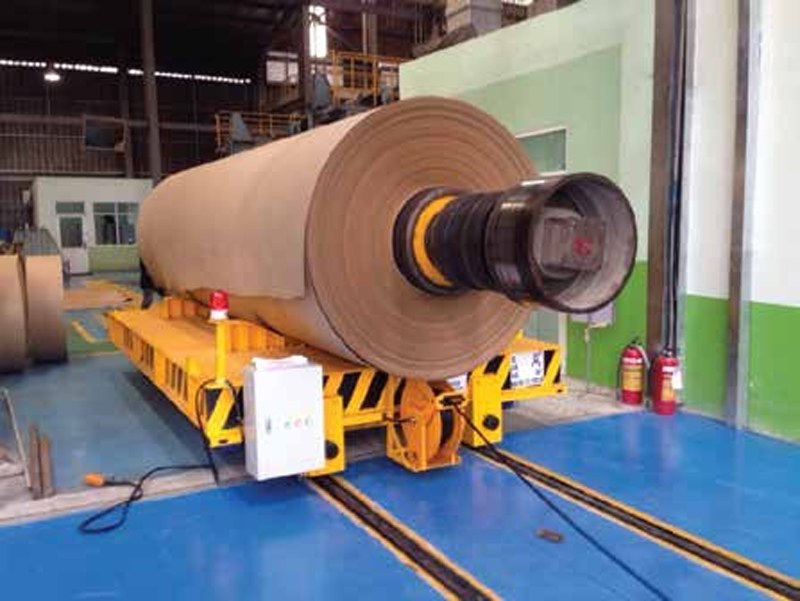
 Cambodia
 AS/NZS 5131 CC3
 EN 1090 EXC3 · CE