 ENEnglish
 VITiếng Việt
 ZH中文
 KO한국어
 JA日本語
 FRFrançais
 ITItaliano
 PTPortuguês
 ESEspañol
 HEעברית
 ARالعربية

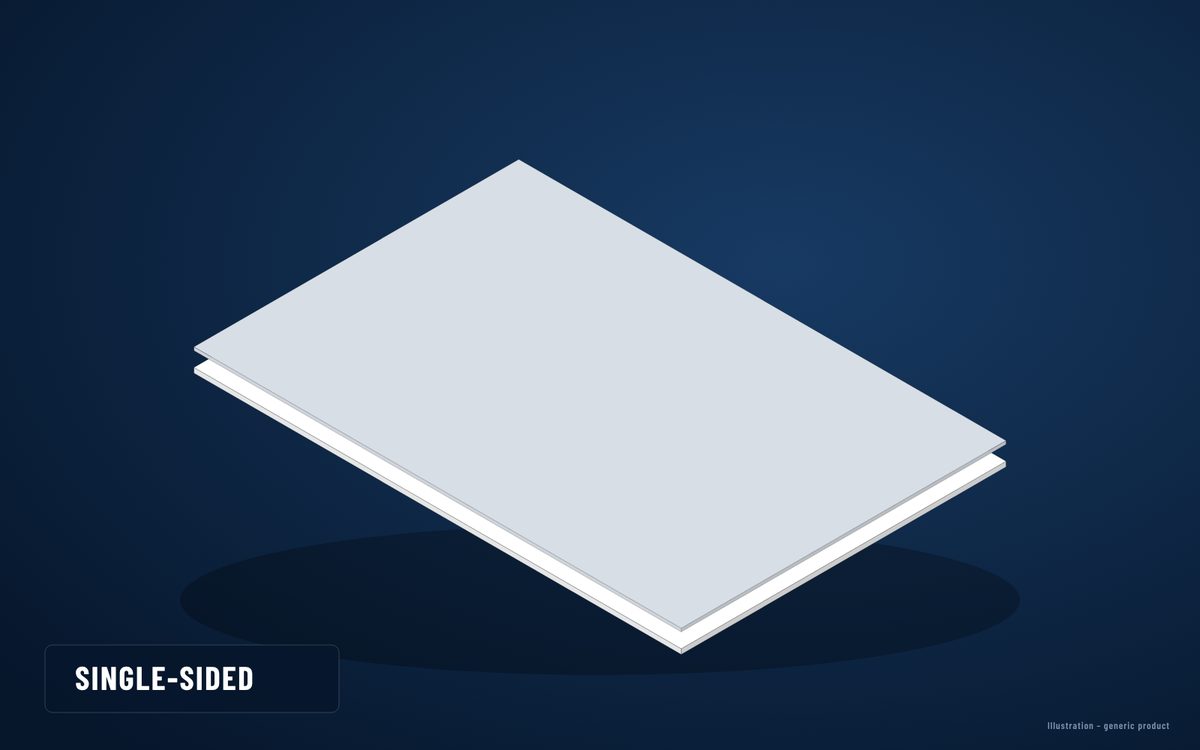 foil + bubble + film
Single-sided (A1)
Foil on one face only – the foil faces the air gap under the roof.
Building materials · Reflective insulation
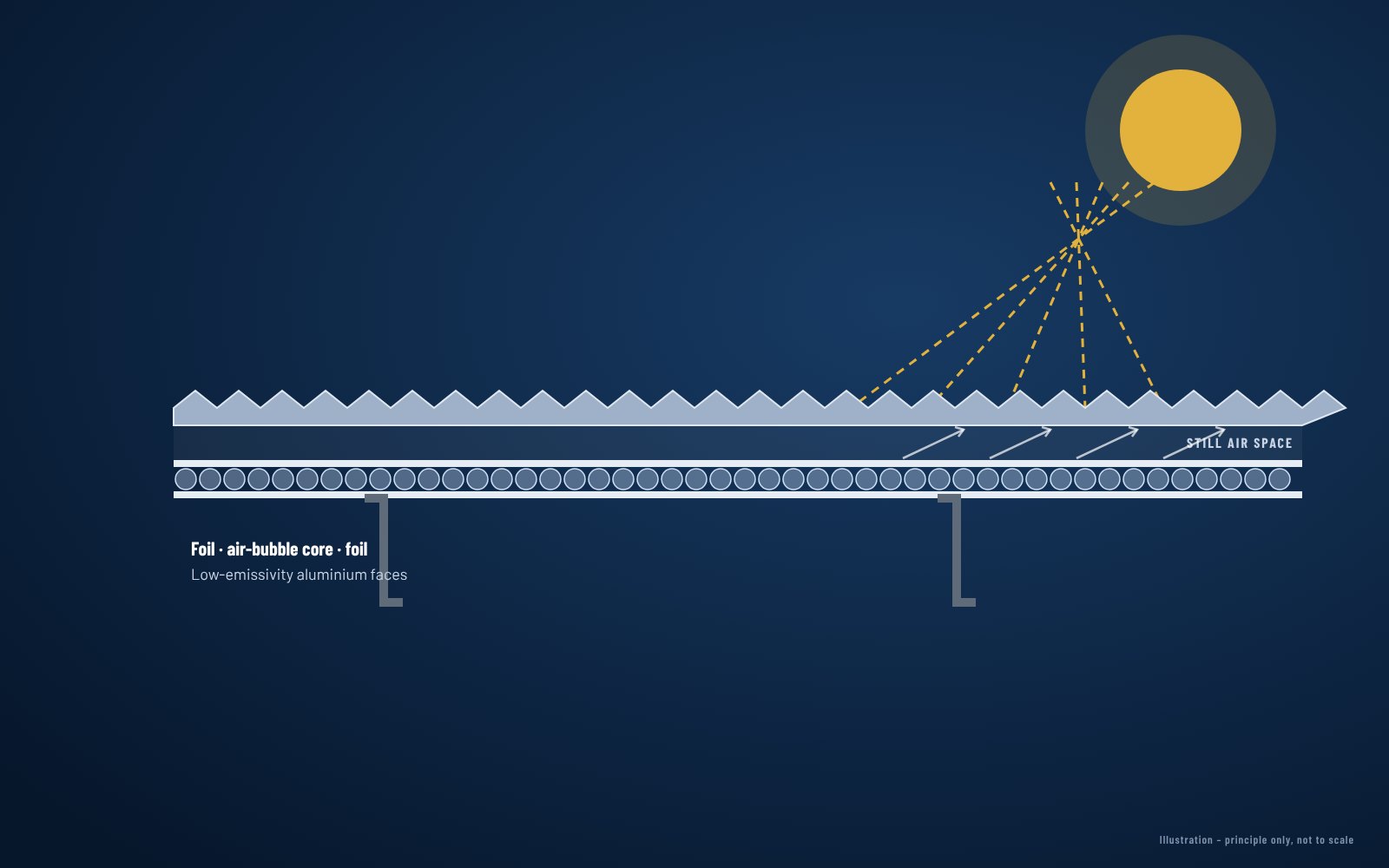
Air-bubble insulation (cách nhiệt túi khí) is a thin reflective sheet: one or two low-emissivity aluminium foils bonded to a polyethylene air-bubble core. Under a hot metal roof it reflects most of the radiant heat – light, cheap and fast to install, and at its best when combined with an air space or mineral wool.
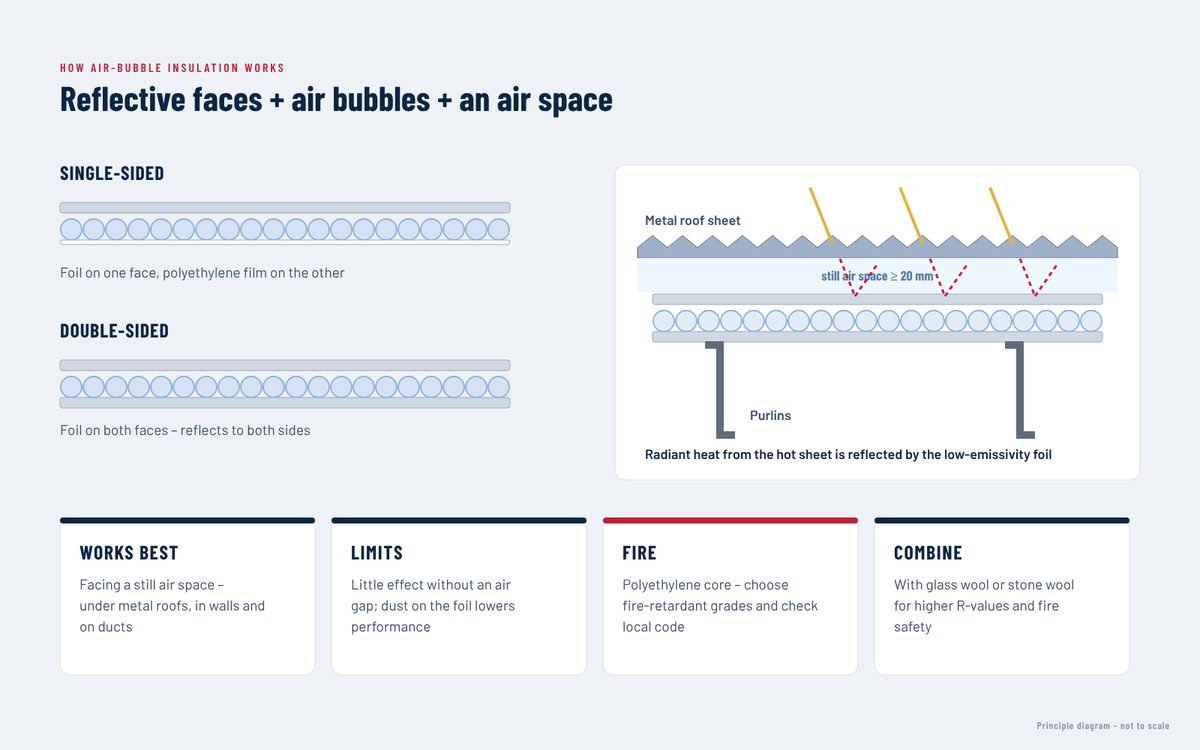
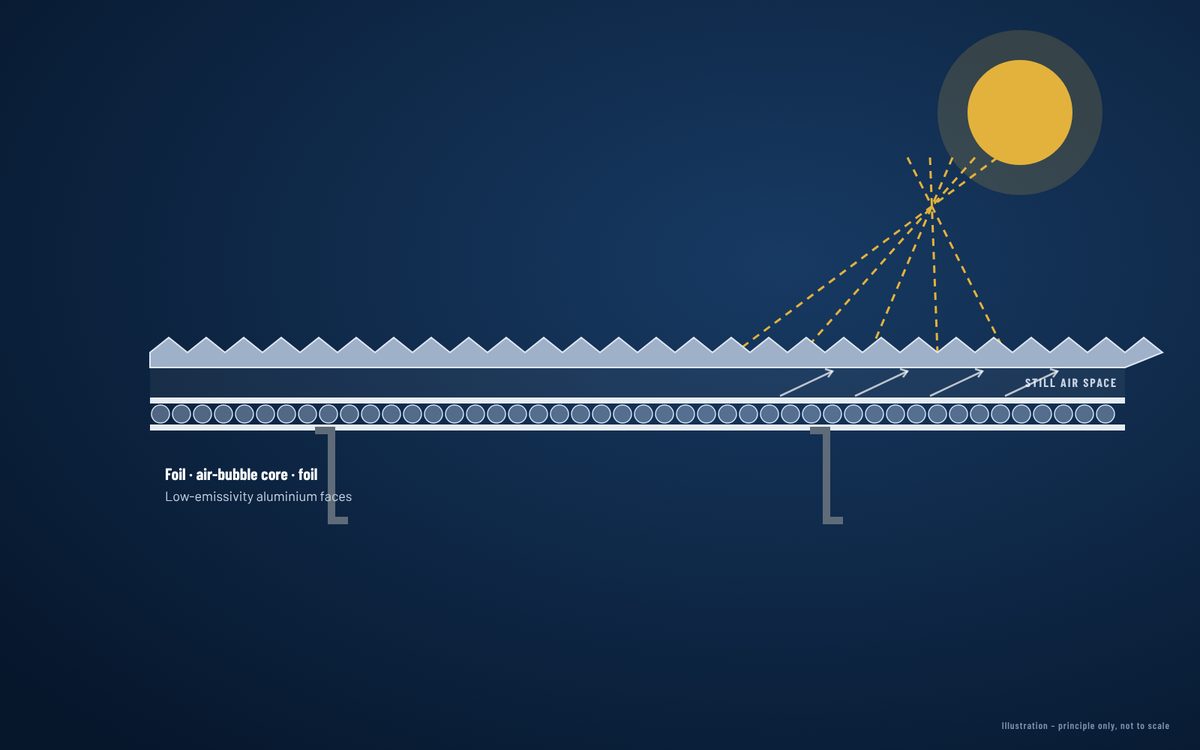
Heat reaches the inside of a metal building mostly as radiation from the hot roof sheet. Air-bubble insulation fights that radiation: its aluminium foil has a very low emissivity, so it reflects most radiant heat and emits very little itself. The polyethylene bubbles in between hold still air, add a little thermal resistance and give the sheet stiffness.
The key condition: the foil must face a still air space. Pressed directly against the hot sheet, the foil conducts heat instead of reflecting it. That is why it is installed on the purlins with a gap below the roof sheet – or combined with a mineral wool blanket.
Types
Typical configurations – choose by where the heat comes from and the fire rating needed.
foil + bubble + film
Foil on one face only – the foil faces the air gap under the roof.
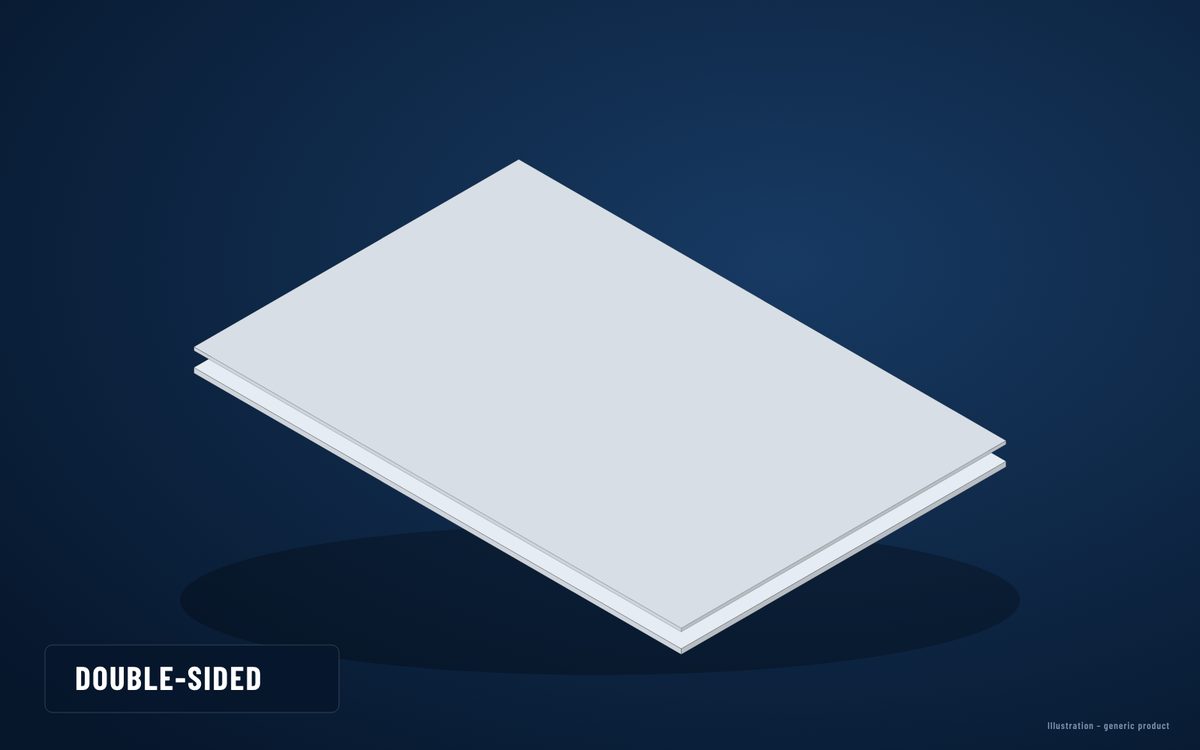 foil + bubble + foil
Foil on both faces – reflects to both sides, e.g. walls and ceilings.
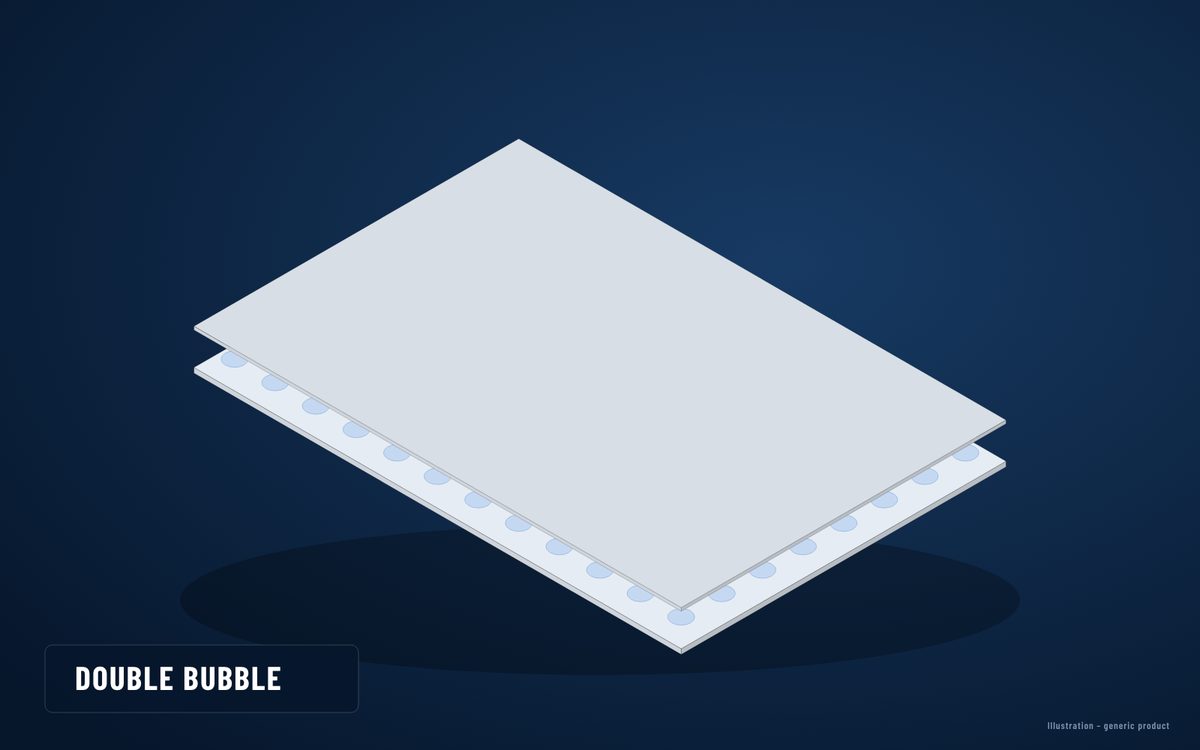 two bubble layers
Two bubble layers for slightly higher resistance and stiffness.
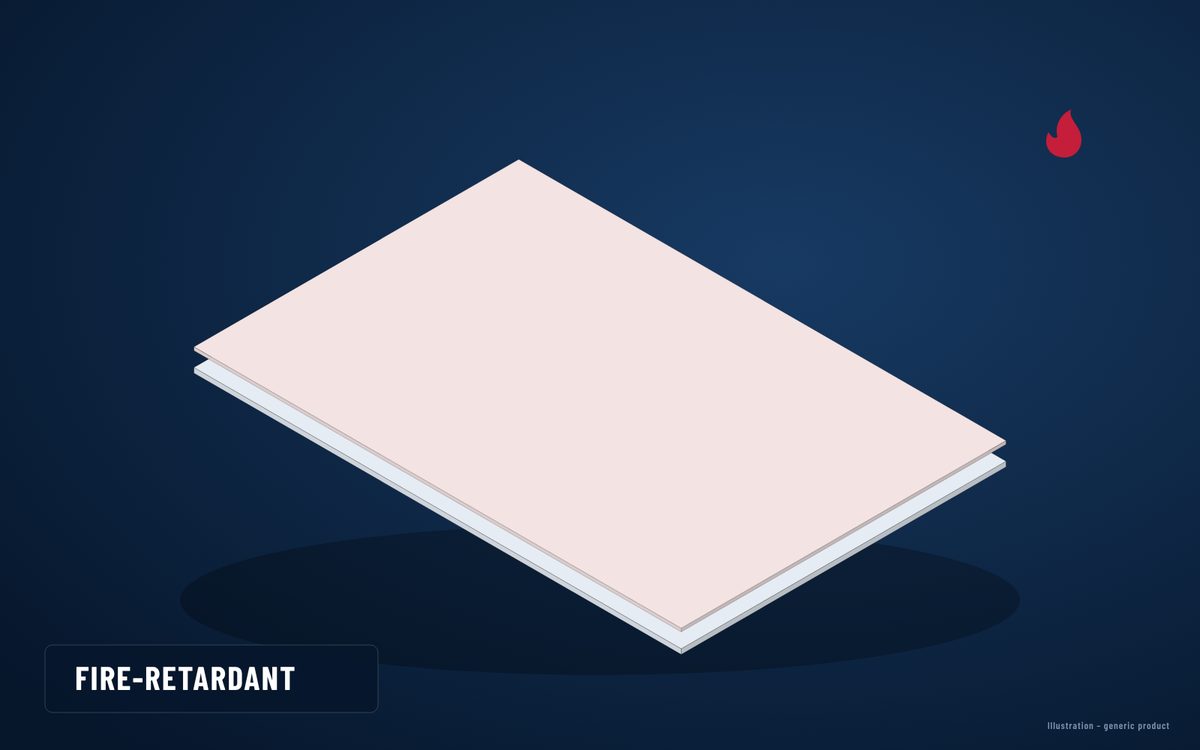 treated core
Fire-retardant polyethylene – for buildings where the code limits combustible materials.
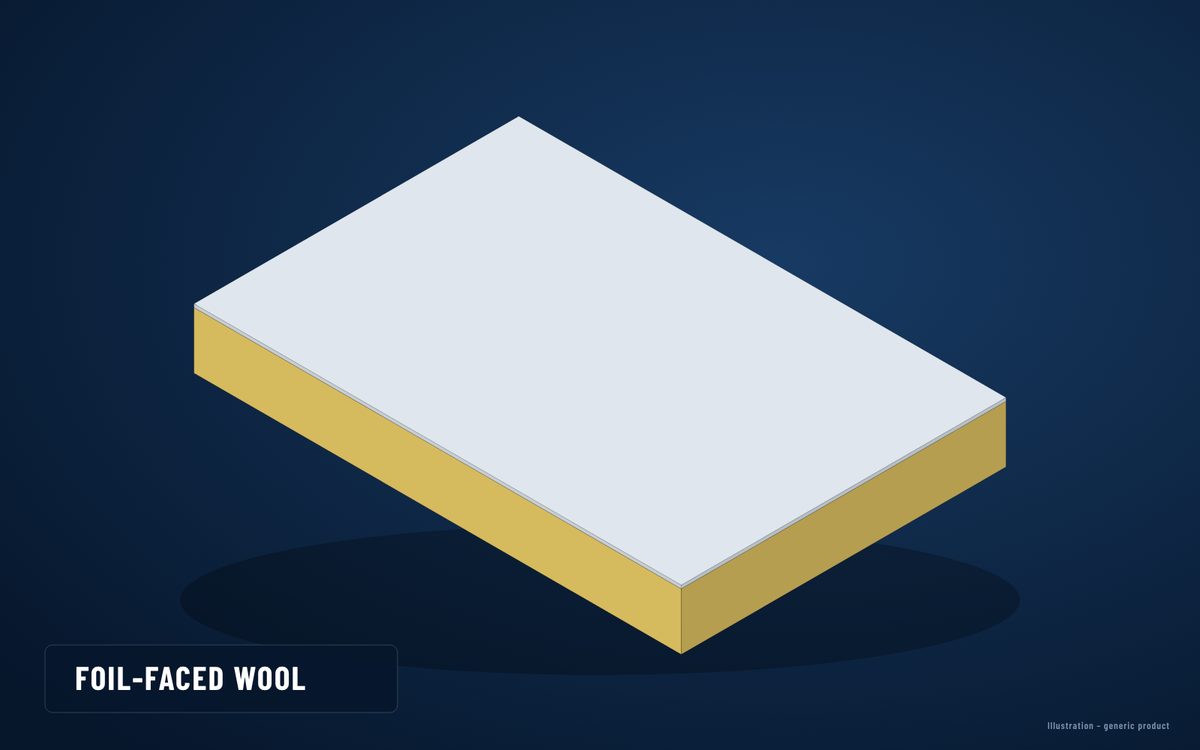 foil-faced blanket
A foil-faced glass wool or stone wool blanket gives both reflection and bulk insulation.
기준 및 규정 준수
Commonly referenced standards – check the requirements of your market and building type.
 United States
 Australia & New Zealand
 Europe
참고용 요약입니다 – 프로젝트 시방서, 채택된 기준 판본 및 관할 기관의 요구가 우선합니다.
In steel buildings
Lay the air-bubble sheet over the purlins with the foil facing the air space under the roof sheet, support it with wire mesh on wide purlin spacings, overlap and tape the joints and seal the edges. In air-conditioned buildings or where rain noise matters, use it as the vapour barrier and reflective layer on top of a glass wool or ROCKWOOL blanket. World Steel specifies the system with the roof and ships it with the steel.
Pros and cons
Reflective insulation is effective against radiant heat – but it is not a replacement for bulk insulation everywhere.
| Advantage | Why it matters |
|---|---|
| Reflects radiant heat | Large reduction of heat from hot metal roofs in tropical climates |
| Very light and thin | No extra load on purlins; no headroom lost |
| Vapour barrier | Foil and polyethylene stop condensation moisture reaching the roof |
| Fast to install | Rolled out over purlins, taped at the laps |
| Low cost | An economical upgrade for warehouses, farms and workshops |
| Limitation | What to do |
|---|---|
| Needs an air space | Install with a gap under the roof sheet, foil facing the gap |
| Little effect against conducted heat and cold | Add glass wool or stone wool for air-conditioned or cold buildings |
| Polyethylene is combustible | Use fire-retardant grades; check the code for the building type |
| Dust lowers reflection | Foil facing down stays cleaner than foil facing up |
| Limited acoustic benefit | For rain noise, combine with mineral wool |
FAQ
Yes, against radiant heat – the main source of heat from a hot metal roof – provided the foil faces a still air space. It does little against conducted heat, so combine it with mineral wool where needed.
Single-sided under roofs with the foil facing the air gap; double-sided where reflection is needed on both sides, such as walls and ceilings with air spaces on both faces.
No. The polyethylene core is combustible; fire-retardant grades reduce flame spread. Where non-combustible insulation is required, use stone wool.
Not in air-conditioned, cold or noise-sensitive buildings – there it works best together with a mineral wool blanket.
Send us the roof area and building use – we propose air-bubble, mineral wool or a combined system and quote it with the steel.