ENEnglish
 VITiếng Việt
 ZH中文
 KO한국어
 JA日本語
 FRFrançais
 ITItaliano
 PTPortuguês
 ESEspañol
 HEעברית
 ARالعربية

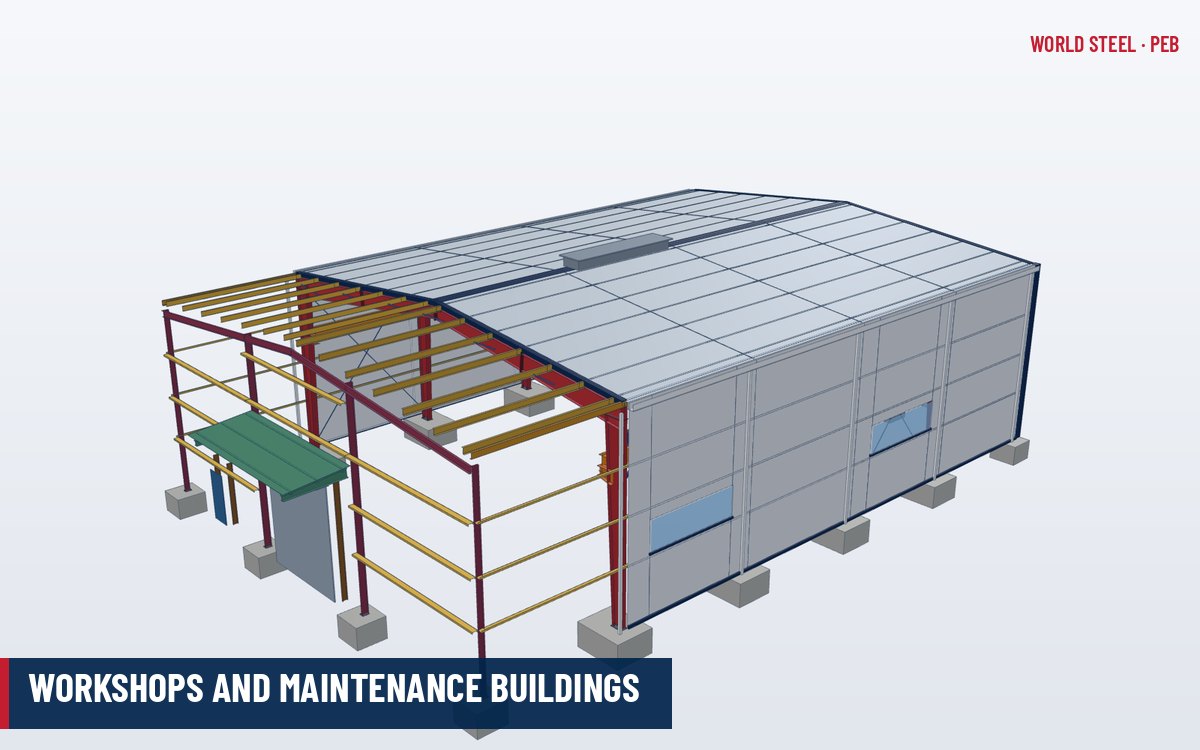
Why PEB fits workshops
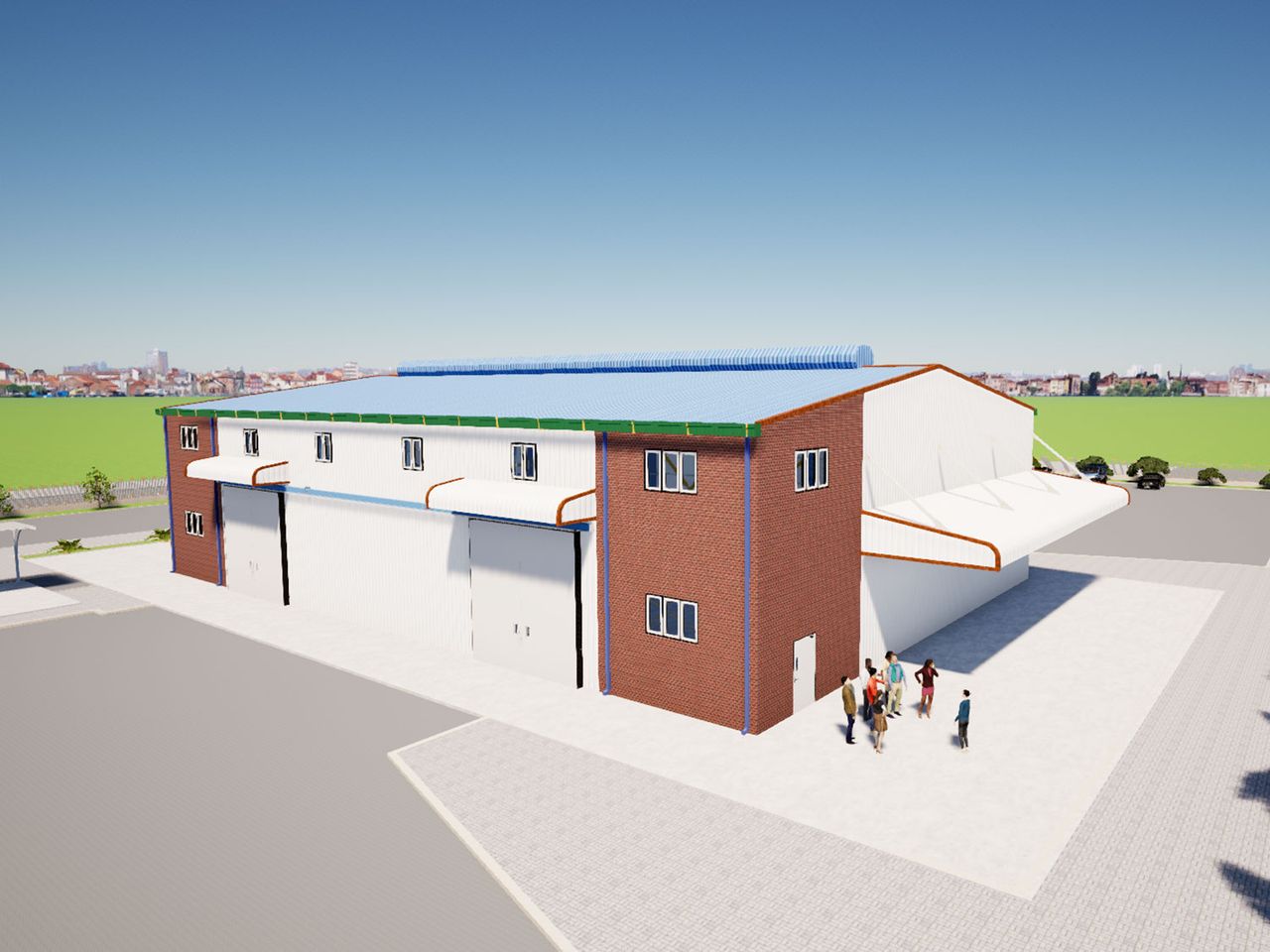
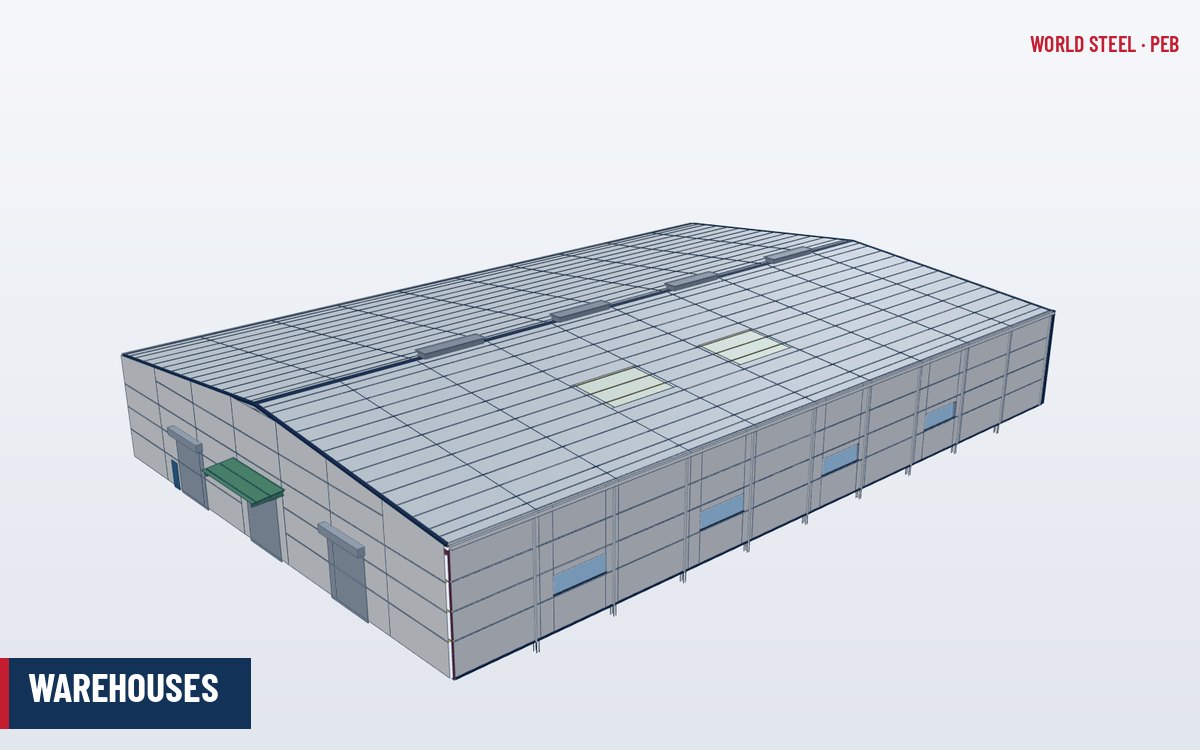
Maintenance workshops for truck and bus fleets, mining equipment, rail rolling stock, port machinery, power plants and industrial sites have a common pattern: tall, wide doors to bring equipment in, an overhead crane to lift components, service pits or wash bays in the floor, and an annex for stores, tool rooms and offices. A pre-engineered steel building integrates all of these in one engineered package – crane runways designed with the frames, framed openings for the doors, and lean-to or mezzanine space for support functions. It is also easily transported to remote mine and port sites as a kit.
Typical configurations
| Workshop type | Typical width | Typical eave height | Typical crane |
|---|---|---|---|
| Light vehicle / fleet | 15–25 m | 6–8 m | None or 2–5 t |
| Truck and bus | 20–35 m | 8–10 m | 5–10 t |
| Mining heavy equipment | 25–40 m | 12–18 m | 20–50 t or more |
| Rail / port machinery | 20–40 m | 10–15 m | 10–32 t |
Mining truck workshops are among the largest: haul trucks and their dump bodies require very tall doors and high crane hook heights, and the crane capacity is set by the heaviest component to be lifted. These buildings sit at the boundary between standard PEB and heavier conventional steel and are often designed as hybrid structures with built-up columns – see crane buildings.
Special requirements
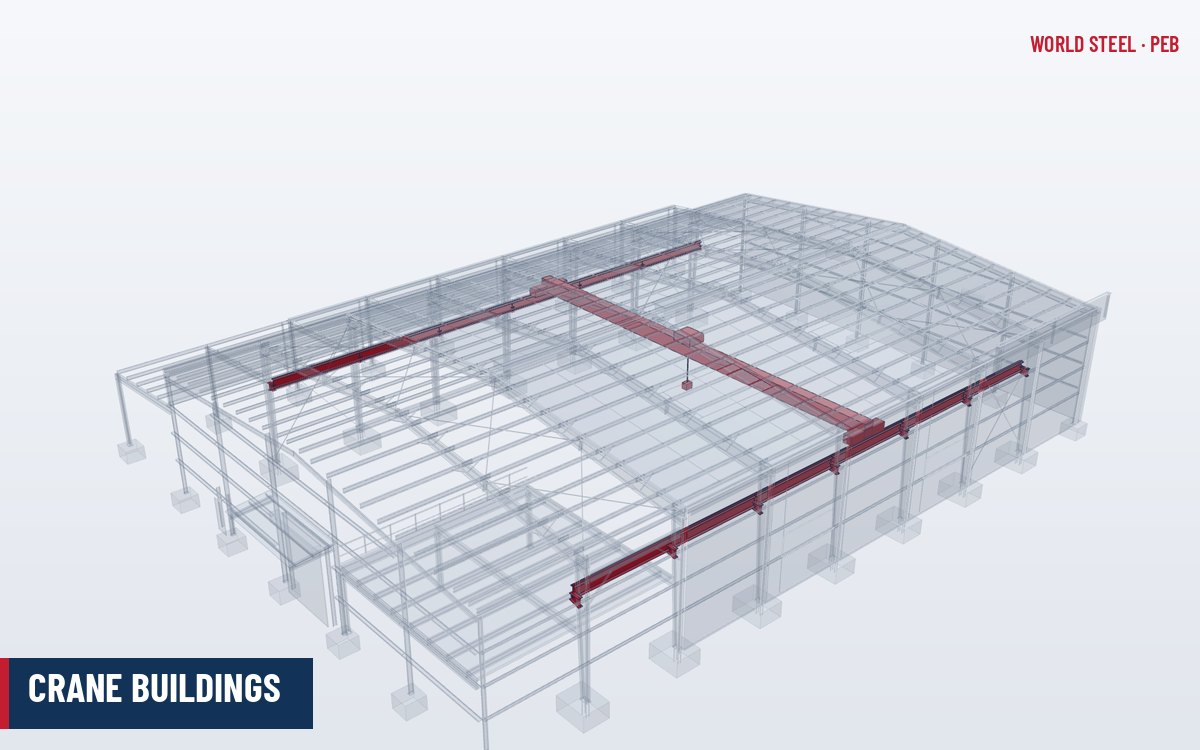
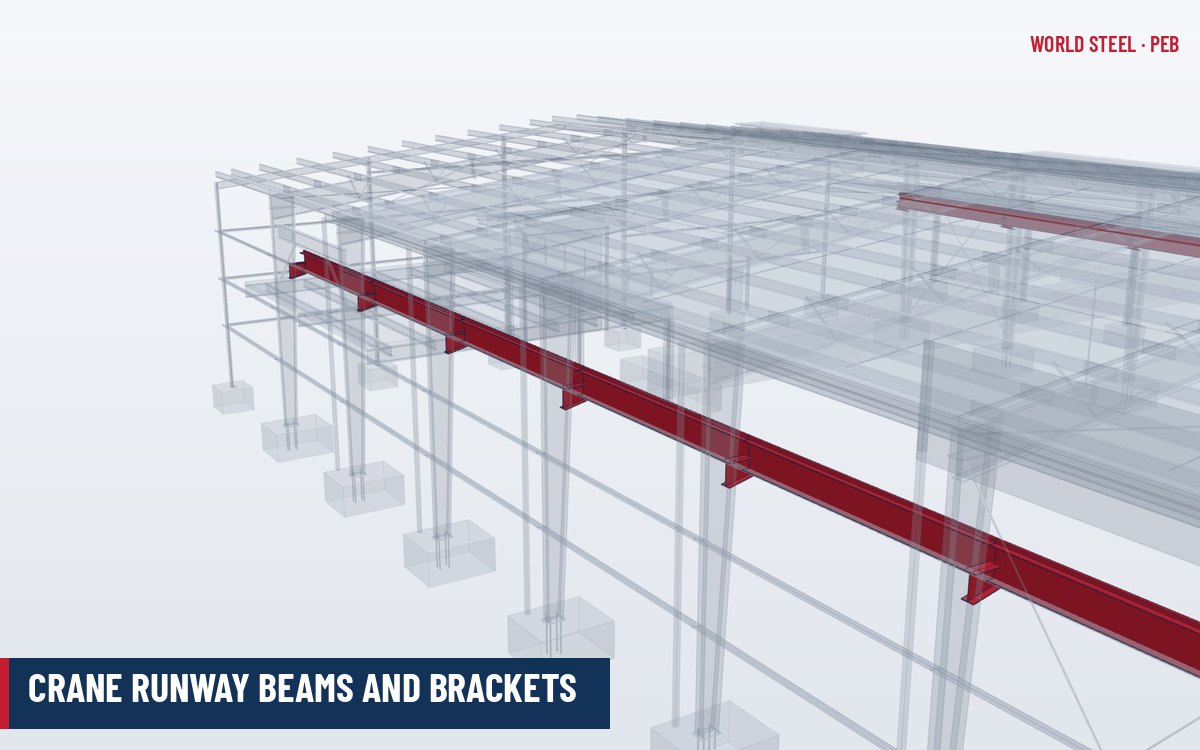
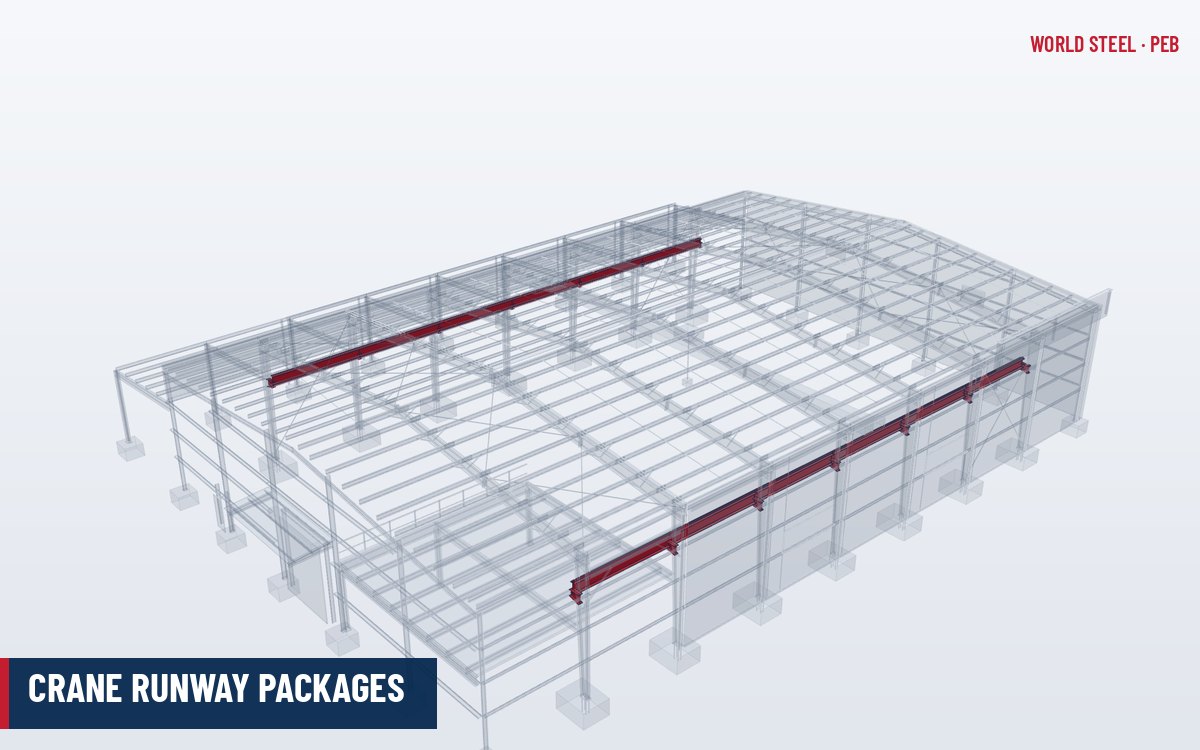
- Cranes – crane capacity, span, hook height and duty class determine column size, runway girders and frame stiffness. See crane runway beams and brackets.
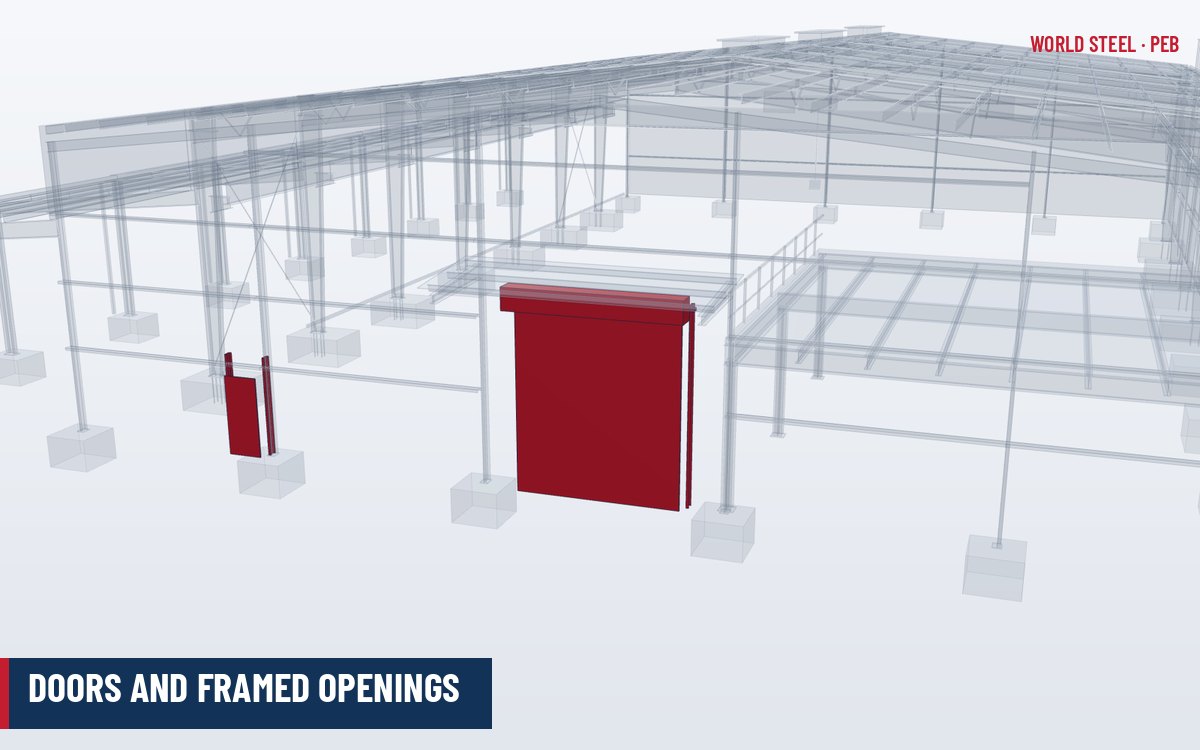
- Large doors – roll-up, sectional or sliding doors in framed openings designed for wind; door jambs and headers sized for door weight and wind reactions. See doors and framed openings.
- Pits and wash bays – service pits, wash bays and oil interceptors affect foundations and column locations; wash bays need corrosion-resistant finishes and drainage.
- Exhaust and ventilation – vehicle exhaust extraction, welding fume extraction and general ventilation through louvers and ridge ventilators.
- Services loads – compressed air, lubrication reels, lighting and fans hung from rafters.
- Impact protection – bollards at door jambs and columns, and steel or concrete dado walls.
- Fire and hazardous materials – fuel, oil and gas cylinders require segregated stores and code-compliant fire separation.
Recommended components
Tapered or prismatic frames with crane brackets and runway beams, overhead travelling crane by a specialist supplier, roll-up or sliding doors in framed openings, ridge ventilators and louvers, translucent sheets for daylight, mezzanine for offices and stores, lean-to for wash bays and compressor rooms, and gutters sized for the site rainfall. Coatings are selected to the environment – coastal port and mining sites often need ISO 12944 C4 or C5 systems.
Fix the crane specification (capacity, span, hook height, duty, supplier wheel loads) before the frames are designed. Changing the crane later usually means changing the columns.
Workshops on mine and port sites often follow tight shutdown or fleet-arrival schedules and may be erected far from established supply chains. Packing the building in erection sequence, including complete bolt kits per connection and spare fasteners, and clearly marking crane girders and brackets reduces dependency on local fabrication. Where cyclones or high winds occur, large doors are a critical design case and should be specified with their wind rating and operating limits so that the framed openings and headers are designed to match.
Cranes and doors for workshop operations
Most workshops combine more than one lifting device and more than one door type. Choosing them together with the frame avoids later strengthening.
| Equipment | Typical use | Effect on the building |
|---|---|---|
| Top-running double-girder crane | Heavy components, high hook height, mining and rail workshops | Crane columns or heavy brackets, built-up runway girders, tight drift limits |
| Top-running single-girder crane | Truck, bus and general maintenance up to moderate capacities | Brackets on frame columns; runway beams on brackets |
| Underhung crane or monorail | Light lifts in bays, tyre and wash bays, workshops without brackets | Loads hung from rafters; local flange checks |
| Jib crane | Workbenches, machine shops | Moment and torsion in the supporting column, or a free-standing pillar |
| Door | Strengths | Watch-outs |
|---|---|---|
| Roll-up door | Economical, little headroom needed | Wind rating and windlocks for large openings |
| Sectional overhead door | Good seal and insulation | Tracks must clear the crane envelope |
| Sliding door | Very wide openings, no headroom | Track header design and wall space for open leaves |
| Bi-fold or vertical-lift fabric | Very tall openings for mining equipment | Header loads and supplier interface data |
Check that the crane hook approach and the door head height work together: a crane cannot pick a component through a door whose header sits below the crane girder. See crane runway beams and brackets and doors and framed openings.
World Steel workshop buildings
World Steel supplies workshops as pre-engineered buildings and, for heavy crane duty, as steel frames with built-up crane girders, for industrial and infrastructure owners in mining and port markets such as Australia and Papua New Guinea. See crane runway packages.
Norme per regione
| Regione | Norma | Ambito |
|---|---|---|
 United States |
AISC Design Guide 7 / CMAA 70 | Industrial buildings and crane runways; overhead travelling crane specification |
 Canada |
CSA S16-19 / CSA B167 | Crane-supporting structures; overhead travelling cranes |
 Australia / NZ |
AS 1418.18 / AS 4100:2020 | Crane runways and monorails; steel structures |
 Europe |
EN 1991-3 / EN 1993-6 | Actions induced by cranes; crane supporting structures |
Domande frequenti
What crane capacity does a vehicle workshop need?
Light fleet workshops may need none or a 2–5 t crane, truck and bus workshops 5–10 t, and mining equipment workshops 20–50 t or more. The heaviest component to be lifted sets the capacity.
Can a PEB handle very large mining workshop doors?
Yes, with framed openings and heavy door headers designed for the door weight and wind loads. Very tall, heavy crane workshops are often designed as hybrid structures with built-up columns.
Should wash bays be inside the main workshop?
They are often placed in a separate bay or lean-to with corrosion-resistant finishes and drainage, to keep water and chemicals away from the main frames and equipment.
 Papua New Guinea