ENEnglish
 VITiếng Việt
 ZH中文
 KO한국어
 JA日本語
 FRFrançais
 ITItaliano
 PTPortuguês
 ESEspañol
 HEעברית
 ARالعربية

 Norme per mercato
How the US system works
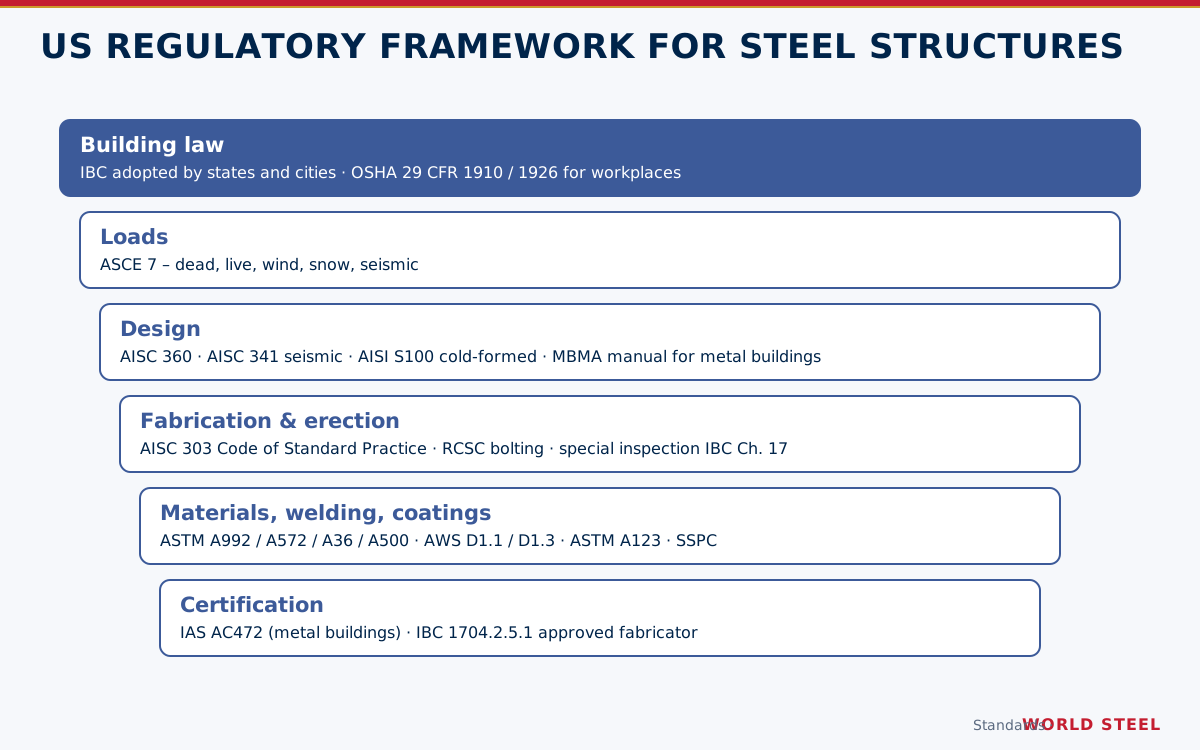
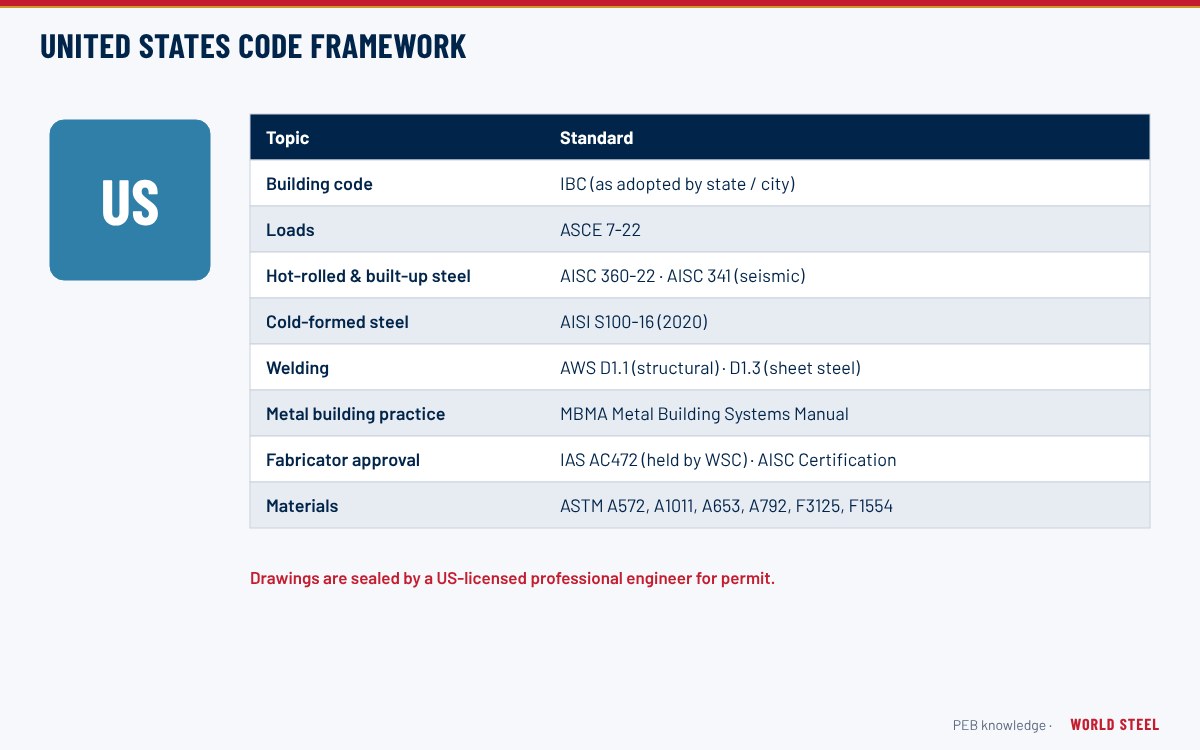
The United States has no single national building code. Building regulation is a state and local matter: states, counties and cities adopt a model code – almost always the International Building Code (IBC) published by the International Code Council – often with local amendments and on different edition cycles. The 2021 and 2024 editions are the most widely adopted today, but some jurisdictions still enforce earlier editions, so the governing edition must be confirmed for every project at the permit stage.
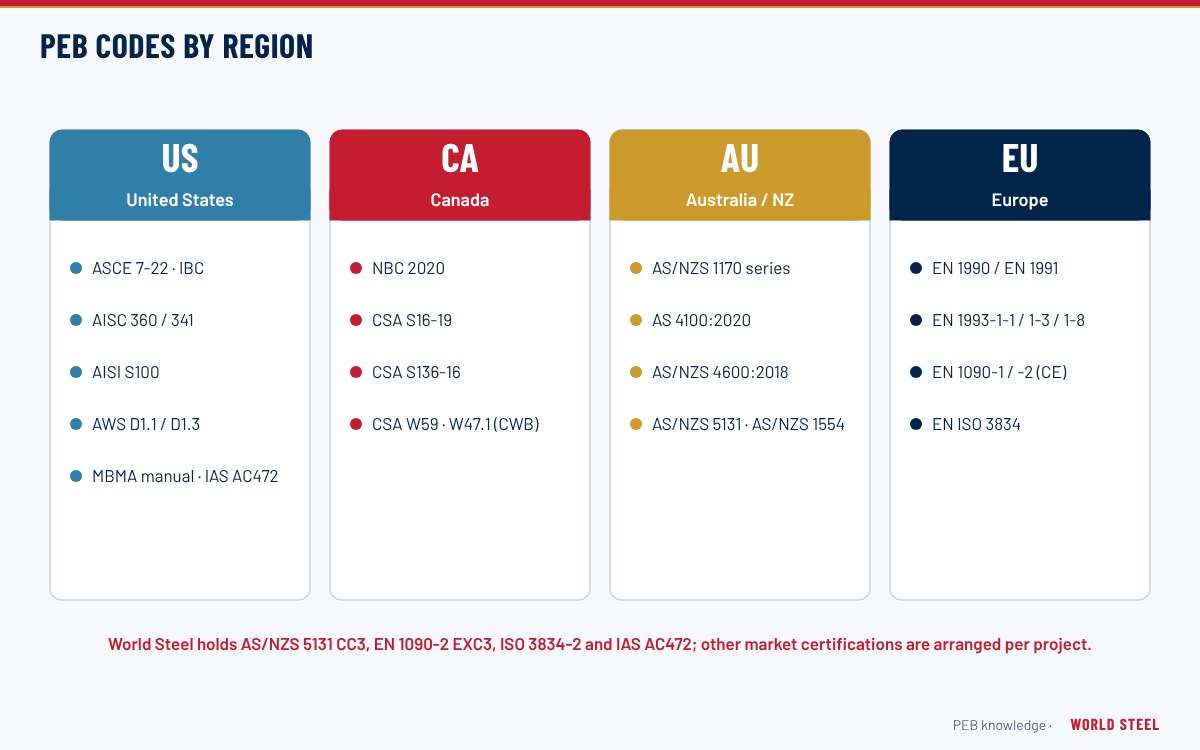
The IBC sets the rules for occupancy, fire resistance, means of egress and structural safety, and then refers to standards for the technical detail. Loads come from ASCE 7 (Minimum Design Loads and Associated Criteria for Buildings and Other Structures). Hot-rolled and built-up steel is designed to AISC 360, with AISC 341 seismic detailing where the Seismic Design Category requires it. Cold-formed members such as purlins and girts are designed to AISI S100. Welding follows the AWS D1 codes, high-strength bolting follows the RCSC Specification, and materials are specified by ASTM standards. The AISC 303 Code of Standard Practice and, for metal building systems, the MBMA Metal Building Systems Manual describe trade practice and responsibilities.
Compliance is checked through the permit and inspection process. Construction drawings are sealed by a design professional licensed in the state where the building is located, reviewed by the building official, and verified during construction. IBC Chapter 17 requires special inspection of structural steel work, including work carried out in the fabricator's shop. Under the fabricator approval provision (IBC Section 1704.2.5.1), special inspection of shop fabrication can be waived by the building official when the fabricator is approved – typically through a recognised accreditation or certification programme with periodic third-party audits. For metal building systems this is the role of IAS AC472 accreditation.
Two further layers apply to imported steel. Federally funded projects may carry domestic-content rules – Buy America provisions of individual agencies and the Build America, Buy America Act (BABA) – which can restrict the use of foreign-made steel; they do not apply to privately funded work. Imported steel articles are also subject to US trade measures, including Section 232. Both must be reviewed for each project before procurement; World Steel supplies the origin documentation US customs and owners require.
IAS AC472 – World Steel as an approved fabricator for metal building systems
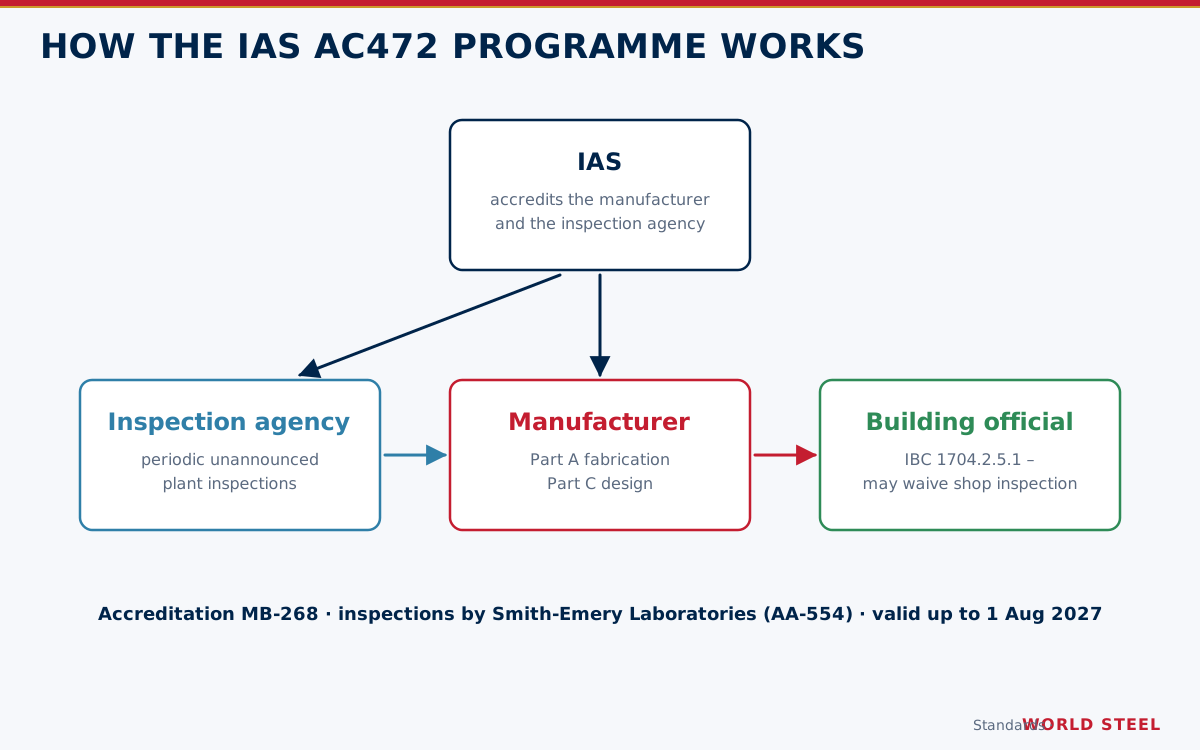
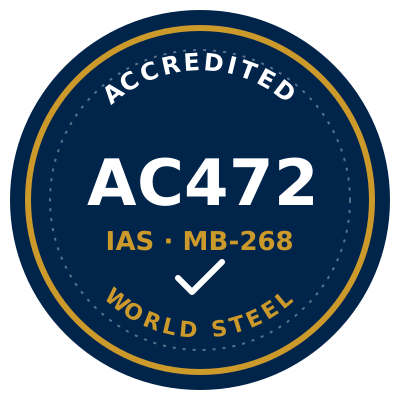
World Steel holds accreditation from the International Accreditation Service (IAS) under AC472, the IAS Accreditation Criteria for Inspection Programs for Manufacturers of Metal Building Systems, under programme number MB-268. The accreditation has two parts:
- Part A – Fabrication of structural weldments and cold-formed products requiring welding, covering World Steel's plant at Hai Son Industrial Park, Duc Hoa (formerly Long An Province, now Tay Ninh Province), Vietnam.
- Part C – Design of metal building systems, covering World Steel's engineering office in Ho Chi Minh City.
Compliance is verified by periodic plant inspections carried out by Smith-Emery Laboratories, Inc., an IAS-accredited inspection agency (AA-554). The in-plant inspection programme is structured to meet IBC Section 1704.2.5.1, so on US metal building projects the building official can accept World Steel as an approved fabricator and waive special inspection of shop fabrication. The current certificate is valid up to 1 August 2027 and is renewed periodically; a copy is supplied with every US tender. World Steel reports being the first company in Asia to achieve AC472 accreditation.
AC472 covers metal building systems. For conventional structural steel outside a metal building system, the owner, engineer of record and building official decide how shop inspection is handled – by special inspection, by acceptance of World Steel's documented quality system, or both. World Steel supports either route with full records.
How World Steel complies – design to dossier
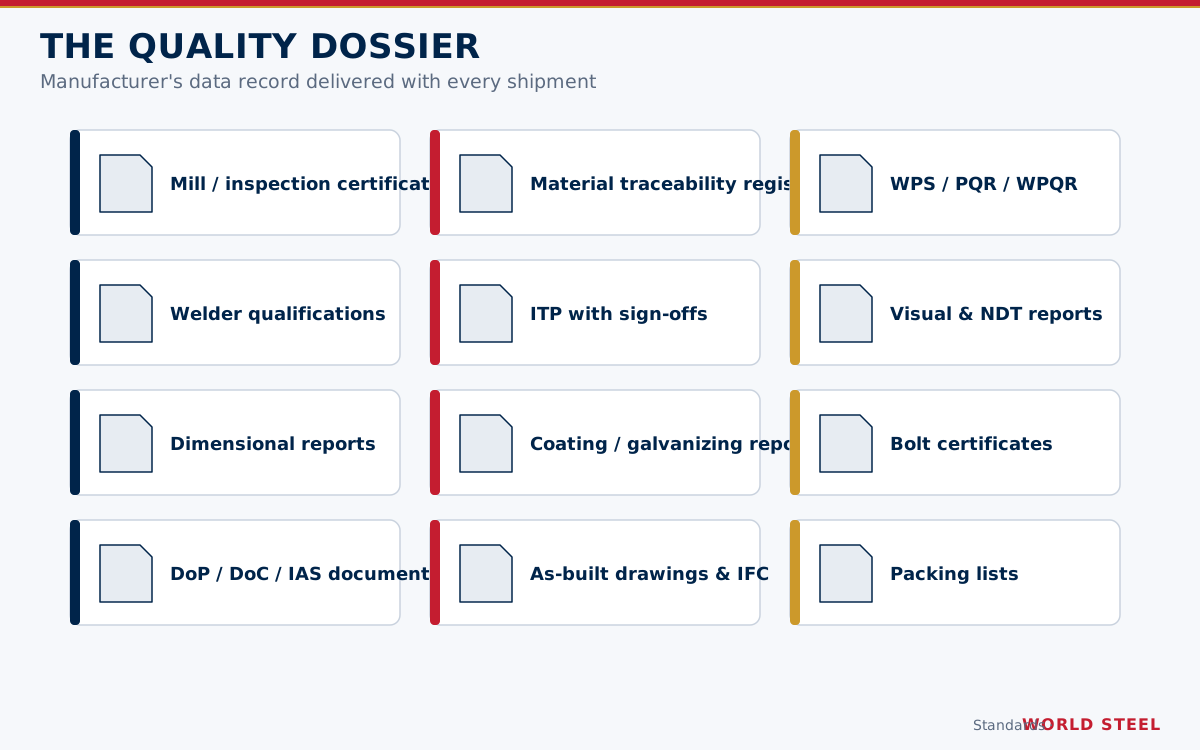
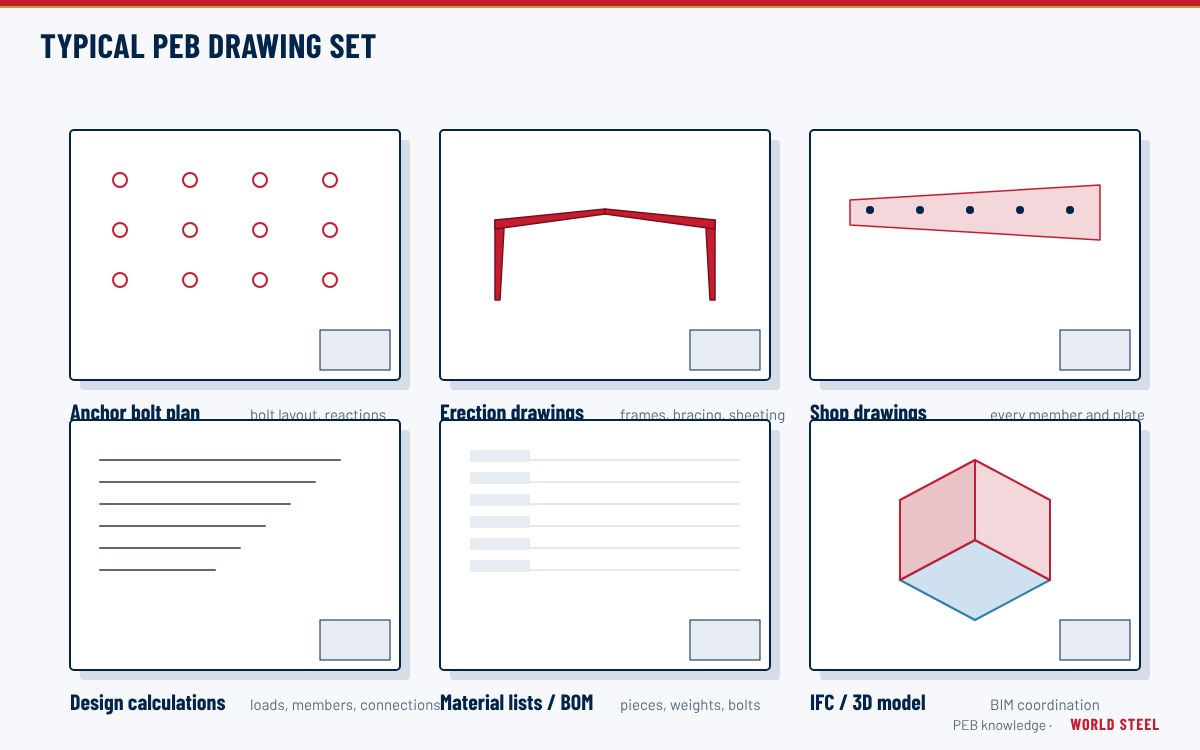
For pre-engineered metal buildings, World Steel acts as the metal building manufacturer: it designs the primary and secondary framing to ASCE 7, AISC 360 and AISI S100 using the loads and criteria set by the engineer of record, and delivers calculations, drawings and a letter of design certification sealed by an engineer licensed in the project state, arranged per project. For structural steel designed by others, World Steel works from the issued-for-construction drawings and produces shop drawings and IFC models for approval.
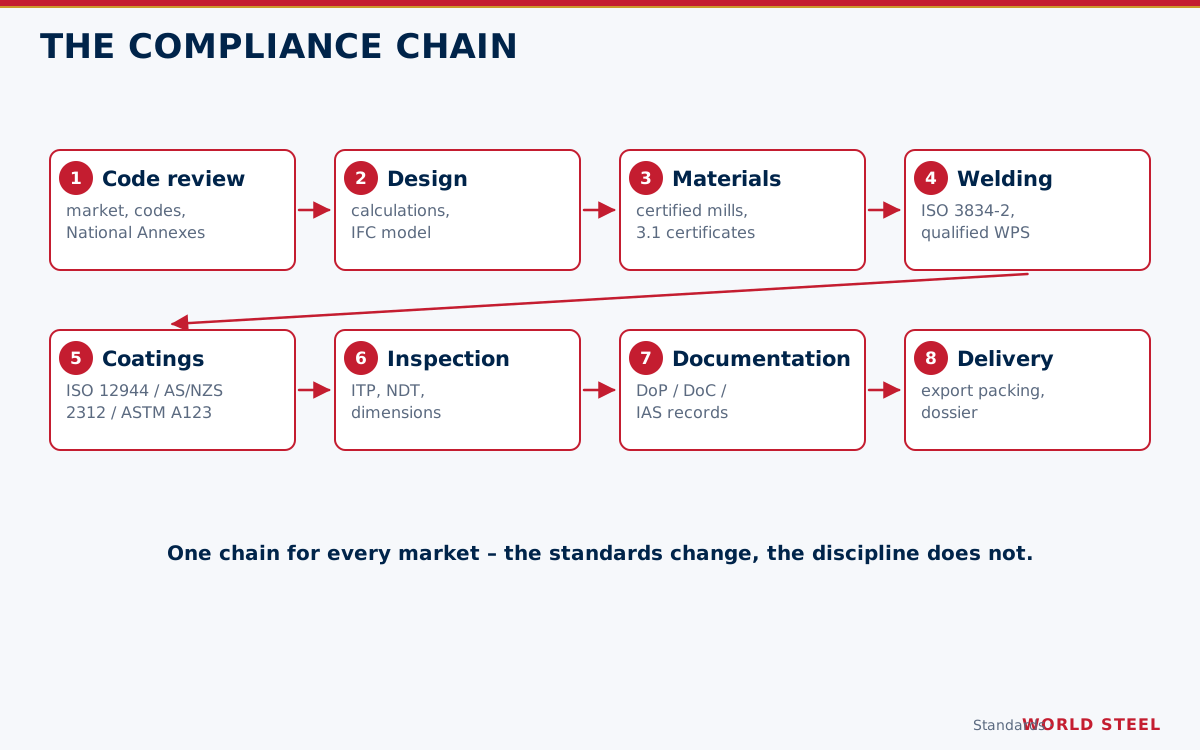
- Materials – ASTM A572 Gr 50, A36 and A992 plate and sections, A500/A1085 hollow sections, A1011 strip for cold-formed members and A653/A792 coated sheet, each traceable to mill test reports.
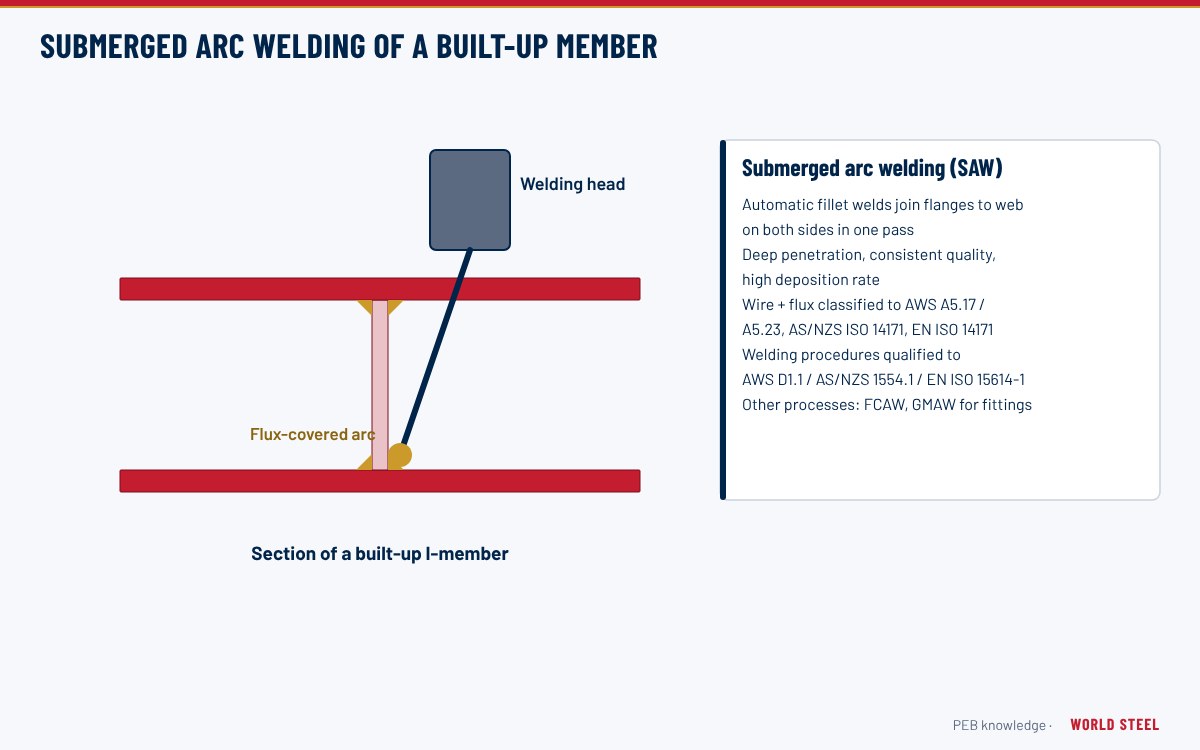
- Welding – SAW, FCAW and GMAW to AWS D1.1 (and D1.3 for sheet steel), with written WPS, qualified procedures and qualified welders; see welding consumables.
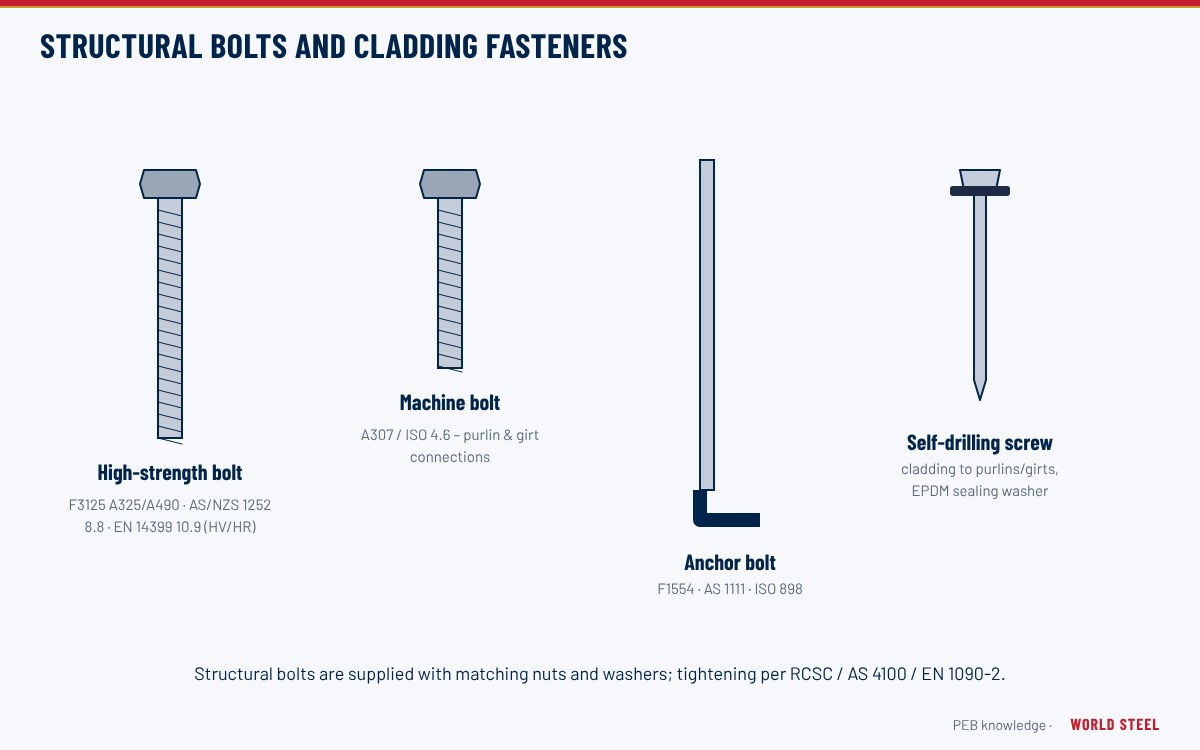
- Bolting – ASTM F3125 bolts with A563 nuts and F436 washers, installed and inspected to the RCSC Specification; anchor rods to ASTM F1554.
- Coatings – surface preparation to SSPC standards and shop primer or multi-coat systems; hot-dip galvanizing to ASTM A123 by qualified galvanizers. See paint and coating systems.
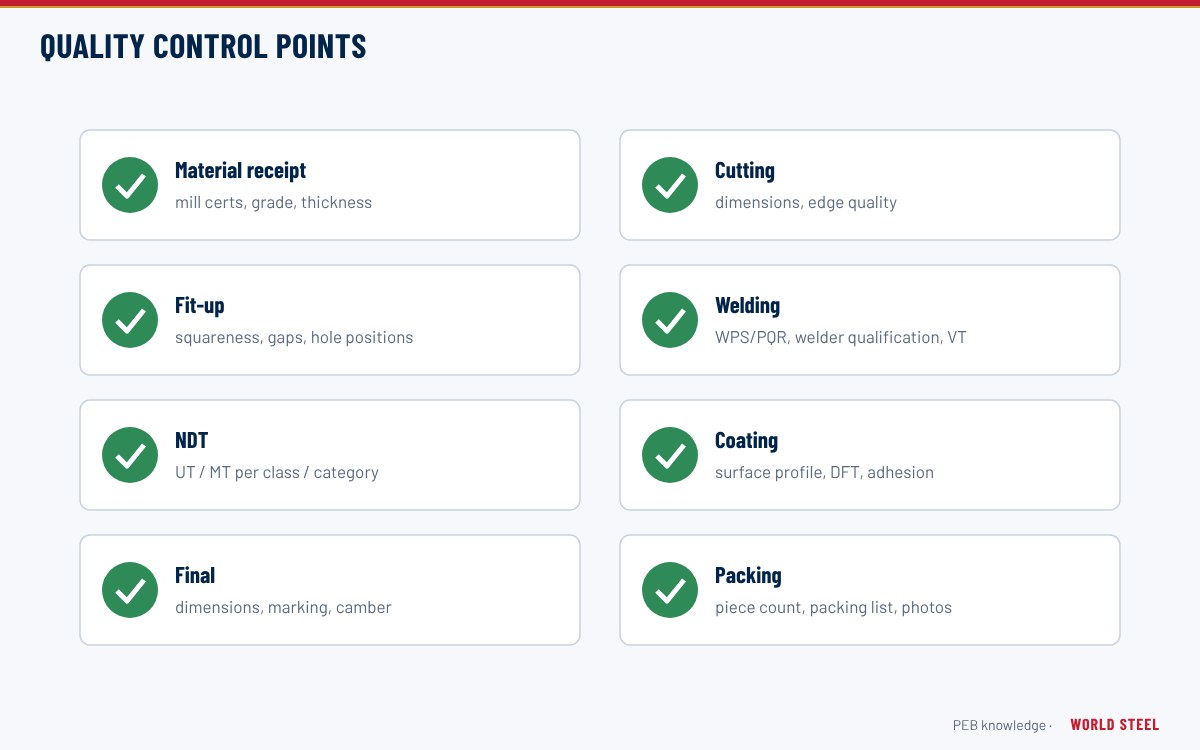
- Inspection and testing – visual inspection by qualified inspectors, NDT by personnel qualified to ASNT SNT-TC-1A, dimensional checks against AISC 303 and MBMA tolerances, and coating thickness measurement.
Steel products and miscellaneous metals
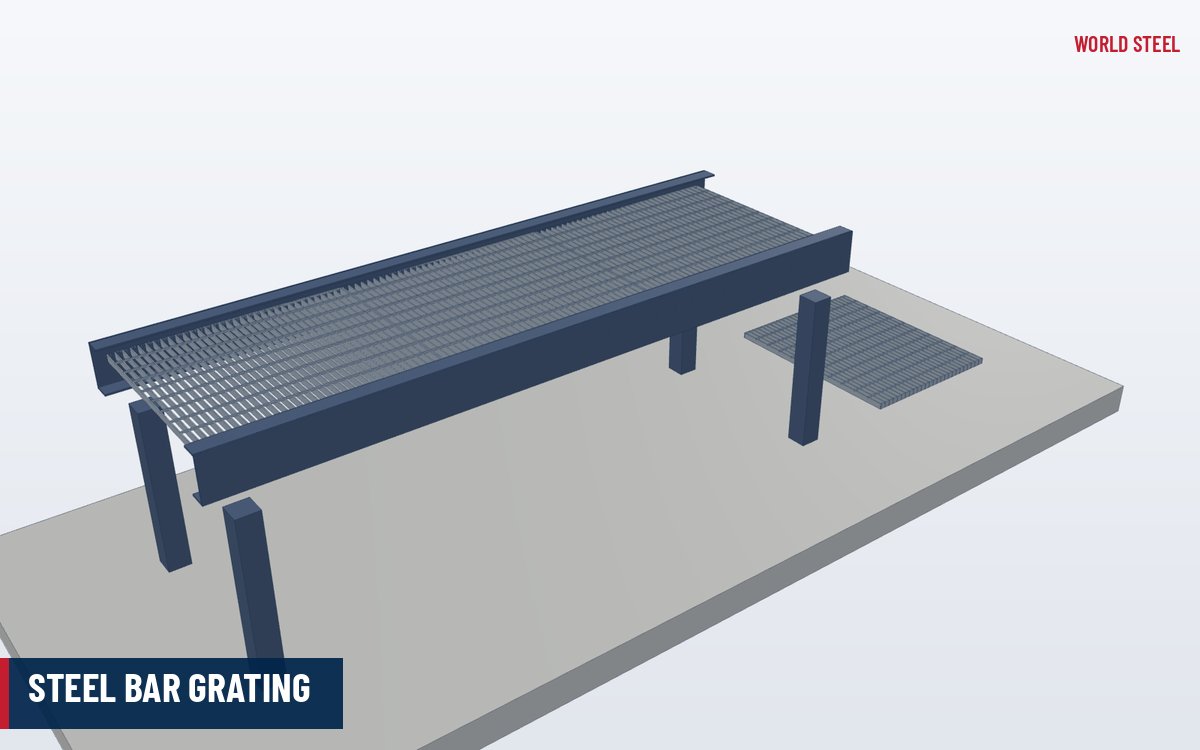
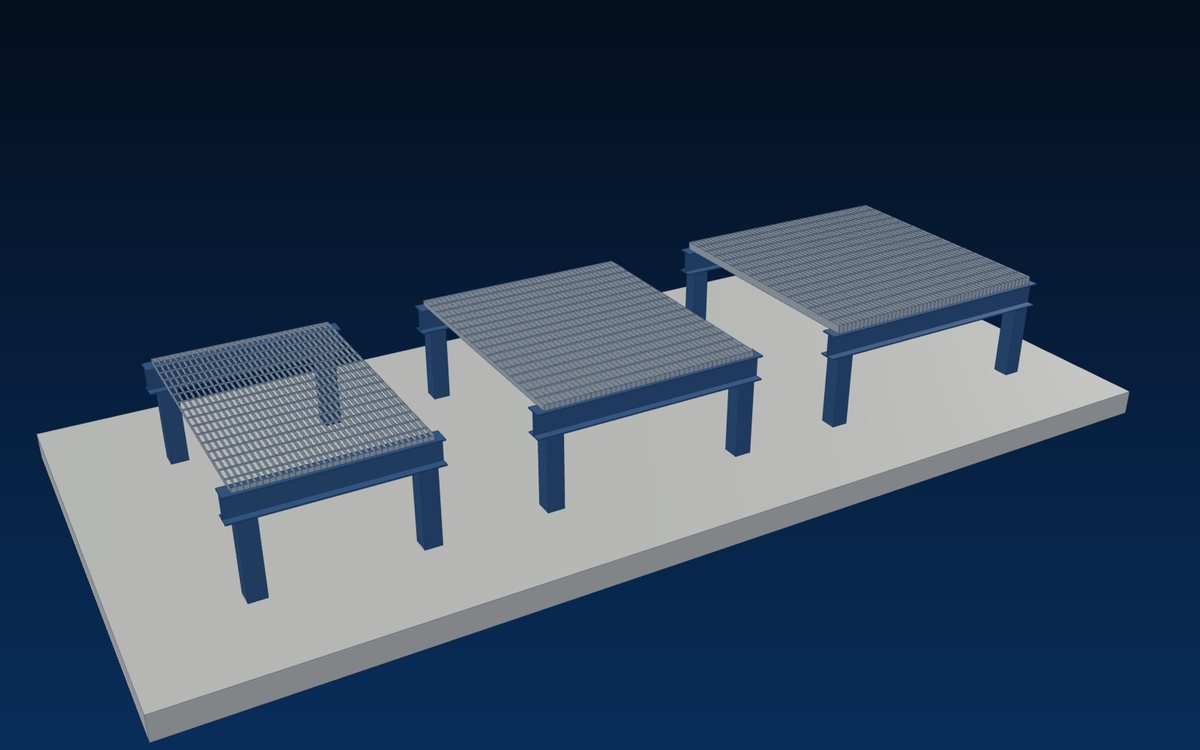
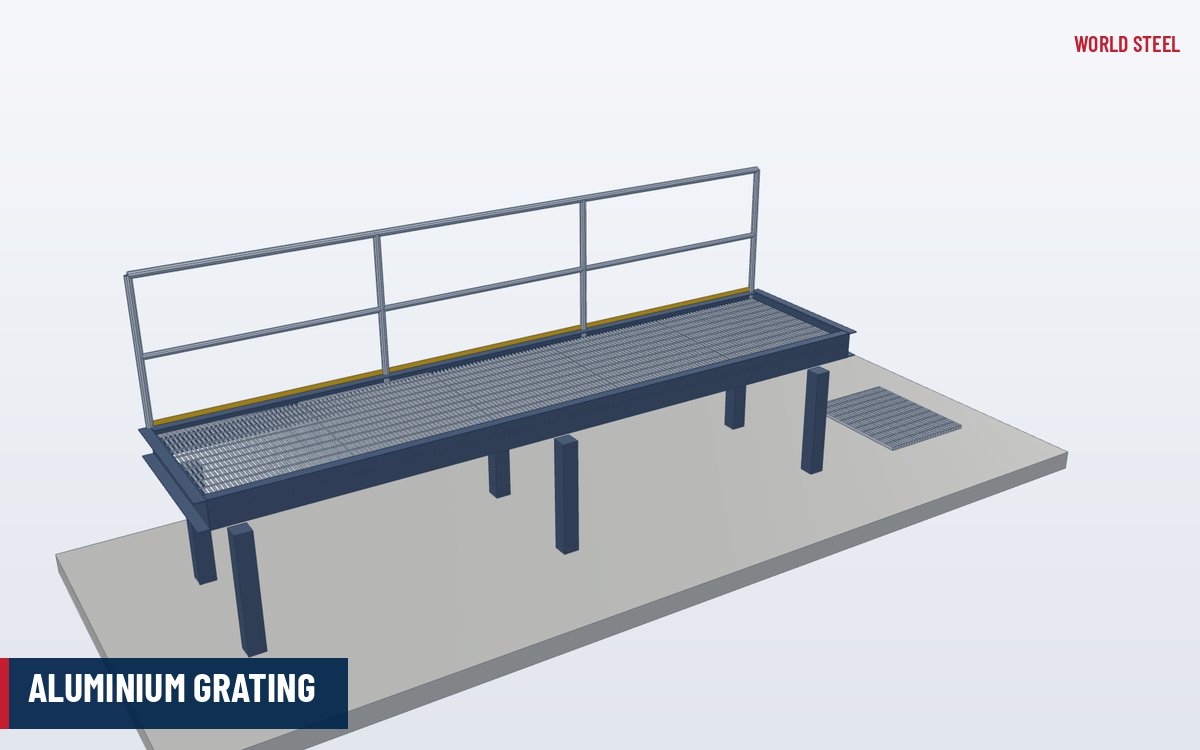
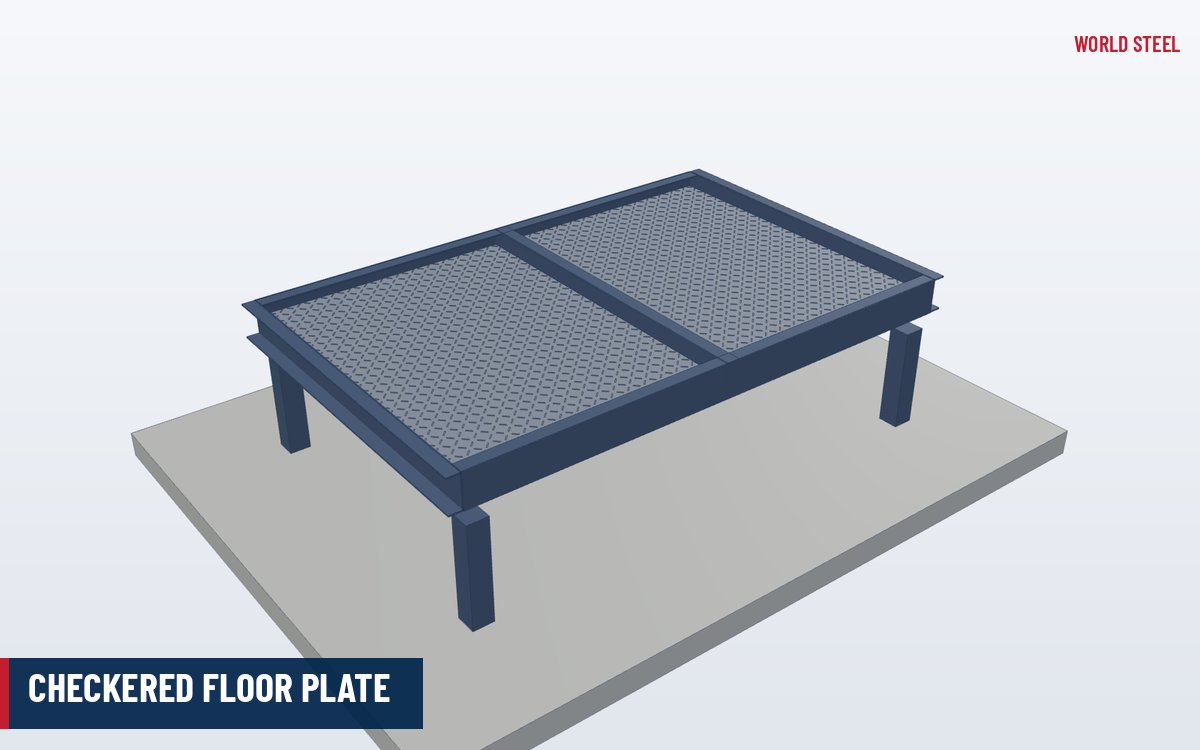
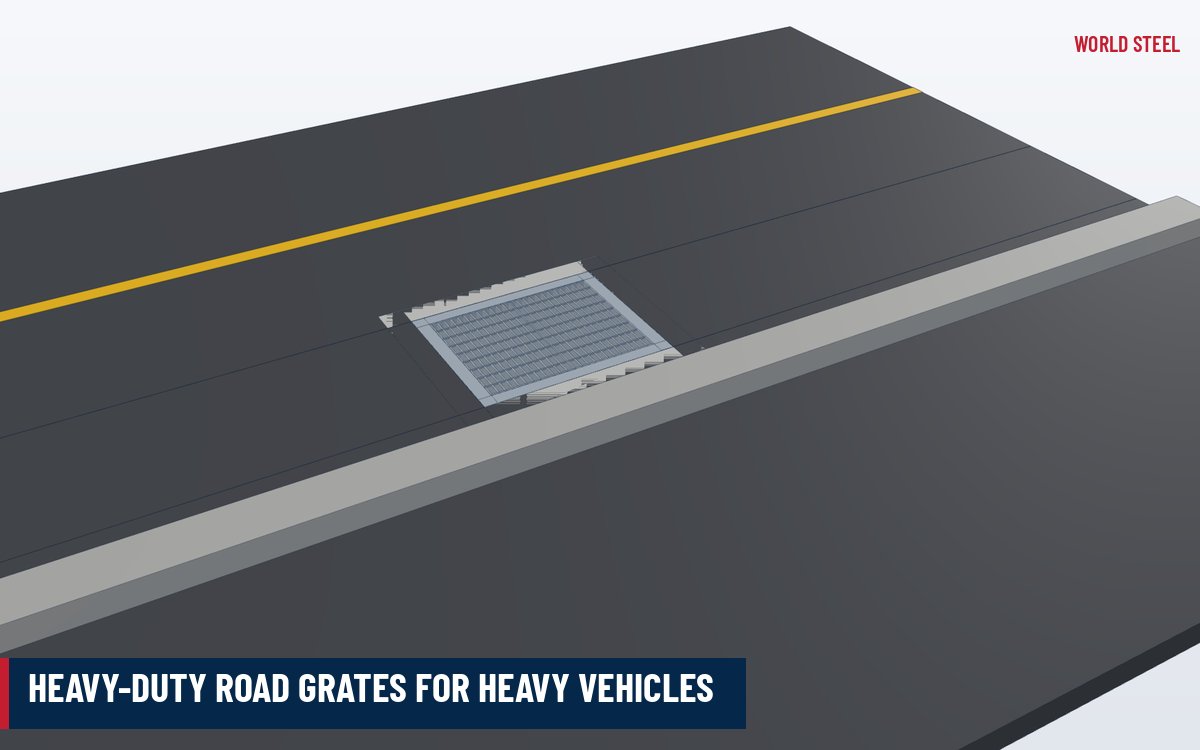
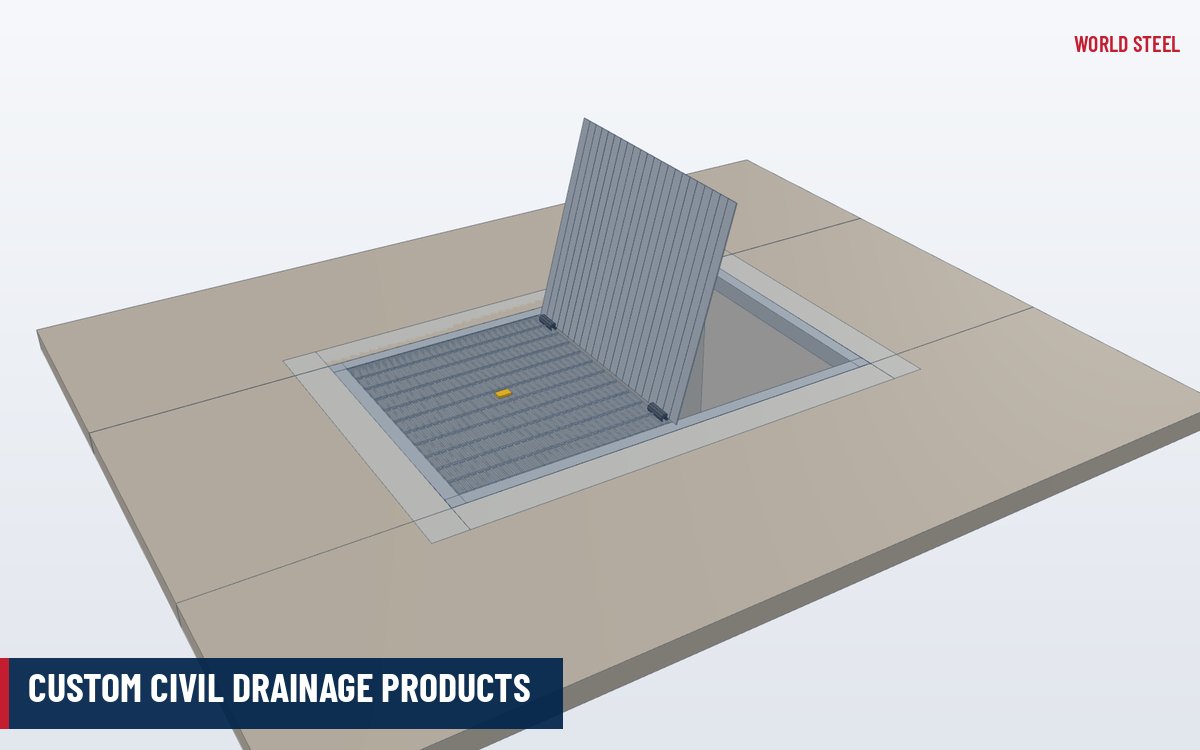
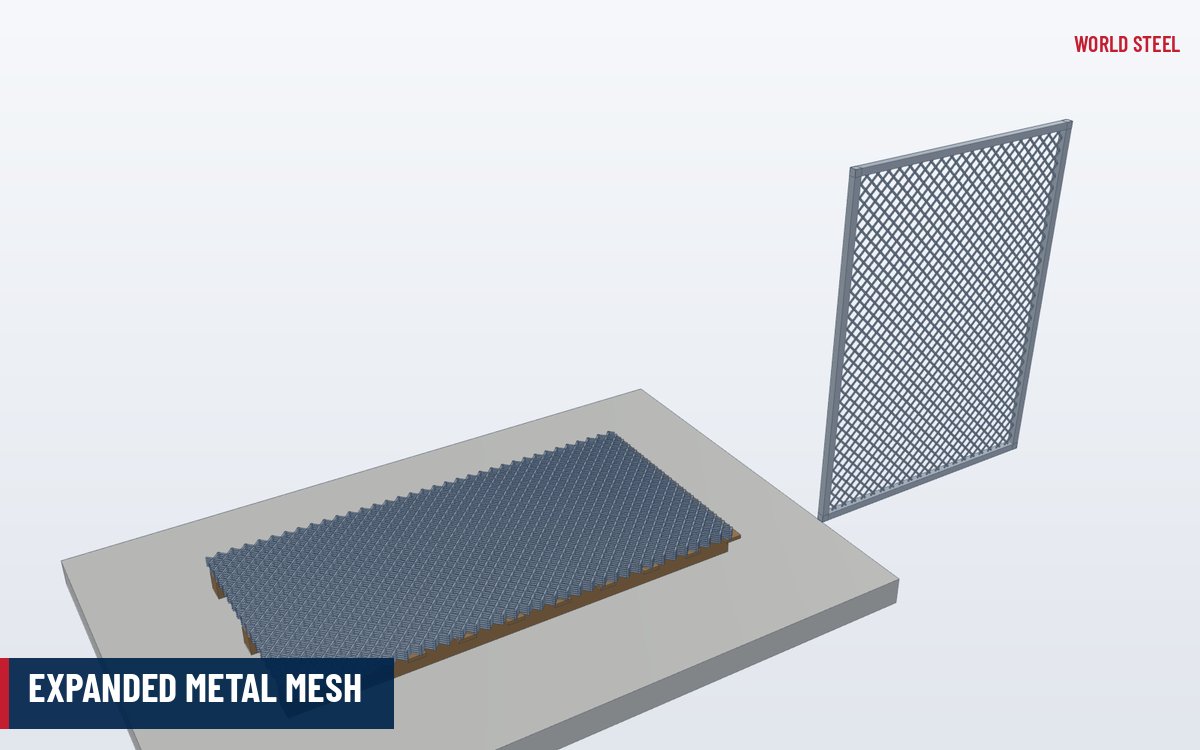
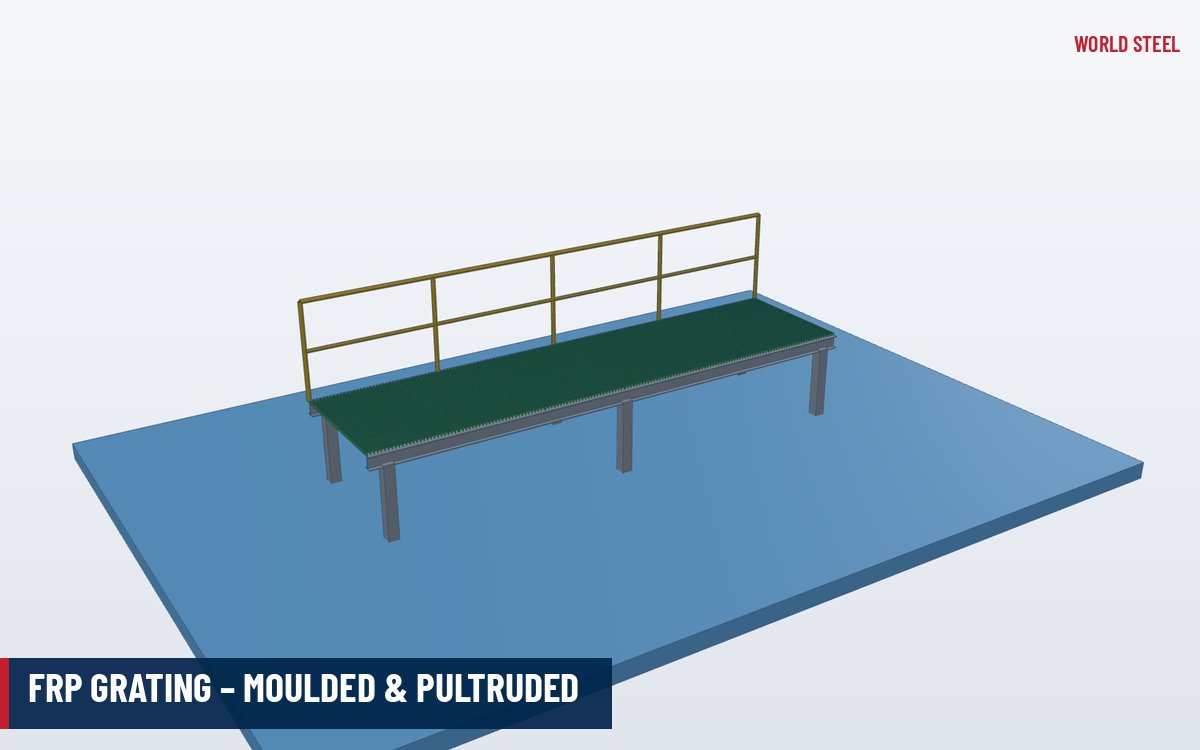
Stairs, railings, grating and ladders are usually specified under CSI MasterFormat Division 05 50 00 Metal Fabrications and are treated by AISC 303 as items other than structural steel unless the contract documents say otherwise. Their geometry and strength come from two sources: the IBC for buildings and areas used by the public, and OSHA 29 CFR 1910 Subpart D for walking-working surfaces in general industry workplaces. Loads on guards and handrails come from ASCE 7, and industry manuals from NAAMM cover grating, stairs and pipe railings.
| Item | Workplace (OSHA 1910 Subpart D) | Building (IBC 2021) |
|---|---|---|
| Guard / guardrail height | 42 in ± 3 in; 200 lbf top-rail load | At least 42 in; openings reject a 4 in sphere (21 in in some industrial areas) |
| Handrail height | 30–38 in above tread nosing | 34–38 in; Type I circular OD 1¼–2 in |
| Standard stairs | 30°–50°, riser ≤ 9.5 in, tread ≥ 9.5 in | Riser 4–7 in, tread ≥ 11 in |
| Fixed ladders | Rungs 10–14 in apart; ladder safety or fall arrest system on new ladders over 24 ft | Generally limited to service access |
| Grating | Rated for the working loads | ANSI/NAAMM MBG 531 / MBG 532 load tables |
World Steel fabricates steel stairs, industrial handrails, bar grating and fixed ladders to these rules, using the code edition and criteria named in the contract documents. Where items are part of a metal building delivery – mezzanines, platforms and canopies – they are designed and fabricated within the AC472 programme.
How to specify World Steel in US tender documents
Specifications can name World Steel's credentials directly so that bidders and reviewers apply the same basis:
- State the governing IBC edition, ASCE 7 edition, Risk Category and design criteria (wind, snow, seismic, collateral loads, serviceability limits).
- For metal building systems, require a manufacturer accredited under IAS AC472 and a letter of design certification sealed by an engineer licensed in the project state.
- Specify AWS D1.1 / D1.3 welding, RCSC bolting, the required inspection and NDT extent, and ASTM material grades.
- Define the coating system (surface preparation standard, primer, dry film thickness) or galvanizing to ASTM A123.
- State whether Buy America or BABA applies – these rules depend on the funding source, not on the fabricator.
World Steel's design, manufacturing and export supply services cover the whole chain; see also the United States market page and the US metal building standards article.
 IAS AC472
 Australia & New Zealand
 Europe