ENEnglish
 VITiếng Việt
 ZH中文
 KO한국어
 JA日本語
 FRFrançais
 ITItaliano
 PTPortuguês
 ESEspañol
 HEעברית
 ARالعربية

 Norme per mercato
How the European system works
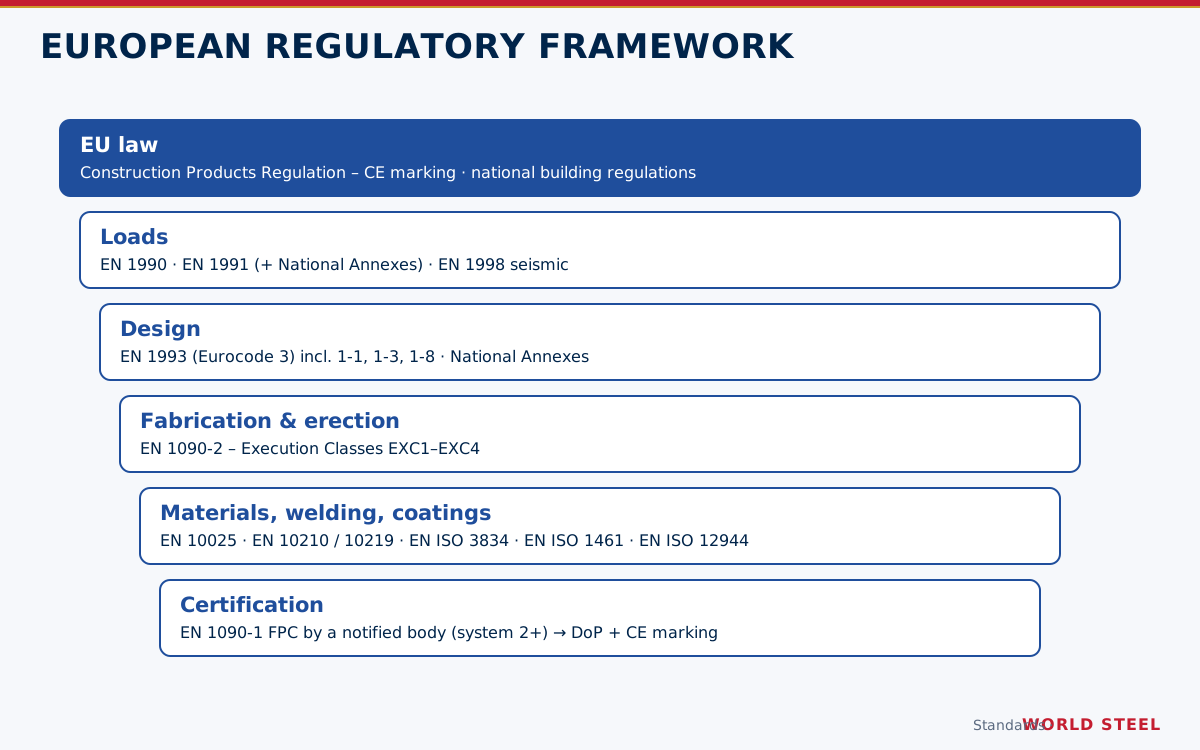
Europe regulates steel structures through two layers that work side by side. The first is the Construction Products Regulation (CPR), which governs how construction products are placed on the market across the European Economic Area. Fabricated structural steel components are covered by the harmonised standard EN 1090-1, so load-bearing steel components supplied to the EU must carry CE marking and be accompanied by a Declaration of Performance (DoP). The second layer is national building law: each country keeps its own building regulations and approval procedures, and decides how the structure as a whole is designed and checked.
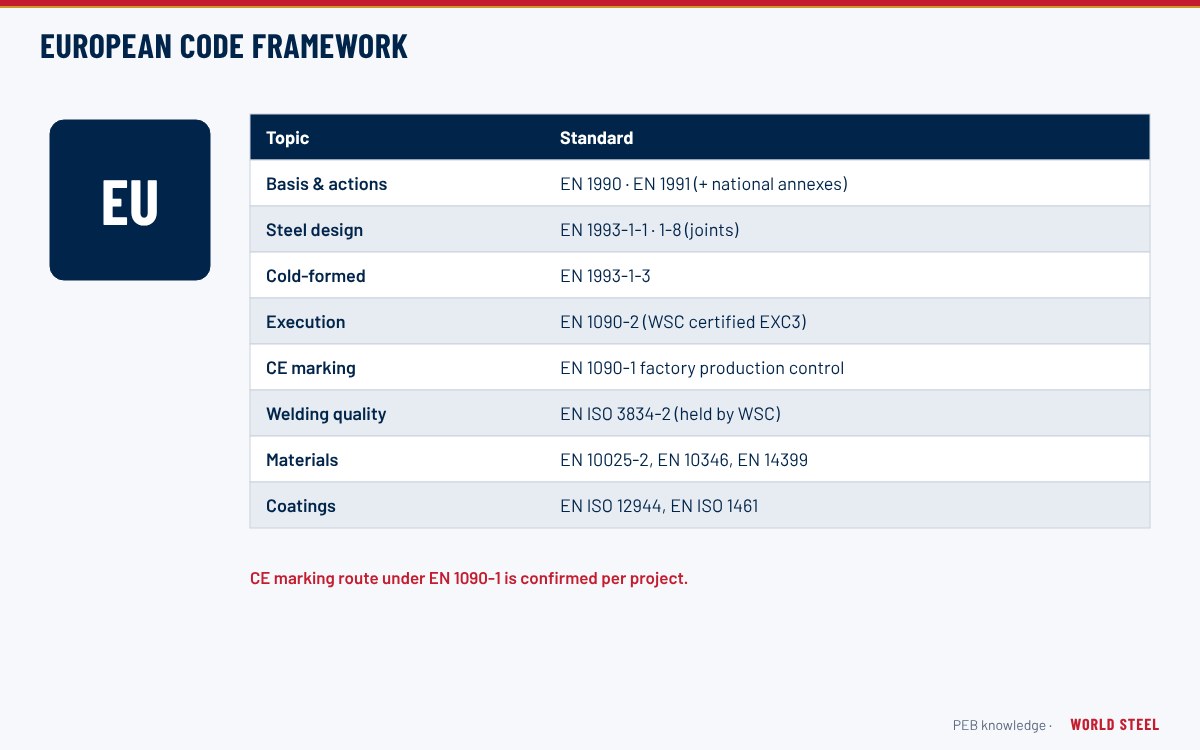
Design is carried out to the Eurocodes – EN 1990 for the basis of design, EN 1991 for actions, EN 1993 for steel and EN 1998 for earthquake resistance – each applied together with the National Annex of the country where the structure is built. National Annexes set Nationally Determined Parameters such as partial factors, snow and wind maps and, in many countries, guidance on execution classes, so the same building can have different design inputs in Germany, Sweden or Spain. The second generation of Eurocodes is being published by CEN and will be introduced nationally over the coming years; the edition to use is set by each country.
Fabrication and erection follow EN 1090-2, which defines four execution classes, EXC1 to EXC4. The designer selects the execution class from the consequence class of the structure and the service and production conditions, and states it in the execution specification. The class drives almost every fabrication requirement: welding quality system, welder and procedure qualification, weld quality level, extent of NDT, traceability and tolerances.
The CPR itself is being replaced. The new Construction Products Regulation, Regulation (EU) 2024/3110, applies from 8 January 2026. During a transition period, harmonised standards adopted under the previous Regulation (EU) No 305/2011 – including EN 1090-1 – continue to be used for CE marking until new harmonised technical specifications are adopted for each product family. In practice, CE marking of steel components under EN 1090-1 with a DoP remains the route today, and World Steel follows the transition as new specifications are published.
CE marking under EN 1090-1 – World Steel's route
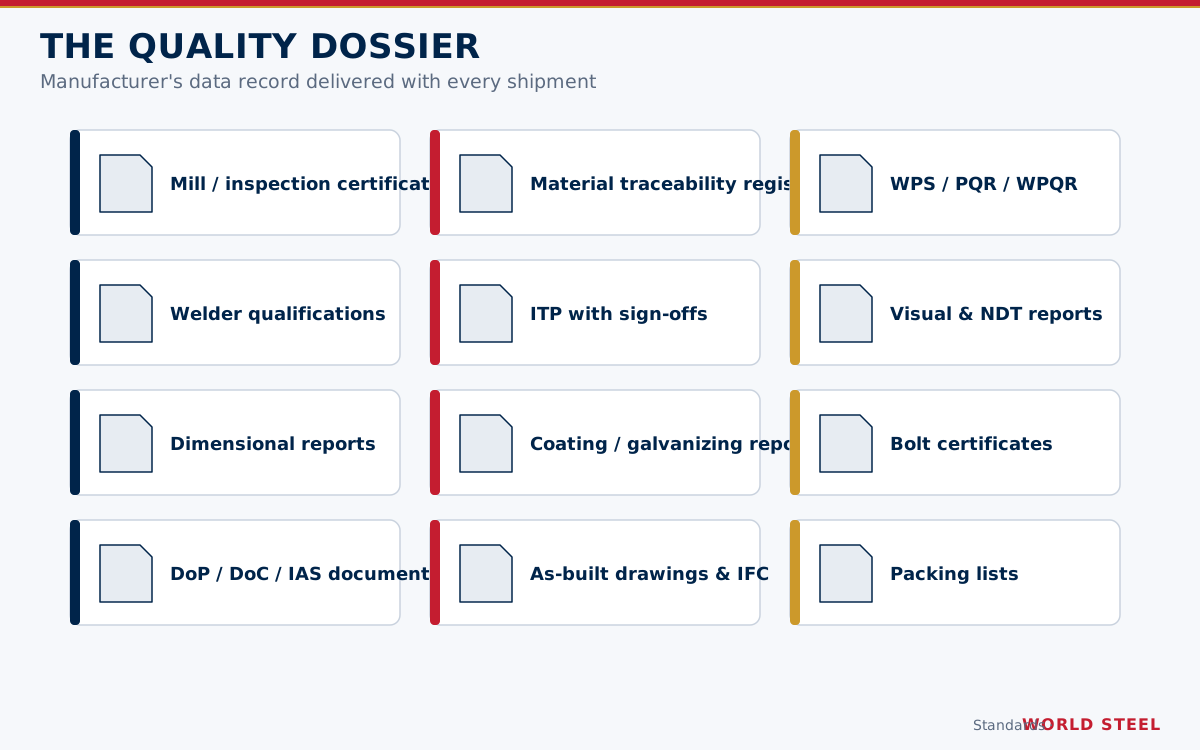
EN 1090-1 uses attestation system 2+. The manufacturer is responsible for determining the product characteristics, operating a factory production control (FPC) system and issuing the DoP. A notified body carries out the initial inspection of the plant and its FPC, issues the FPC certificate, and continues surveillance of the FPC through periodic audits. The certificate states the execution class up to which the manufacturer may CE mark components.
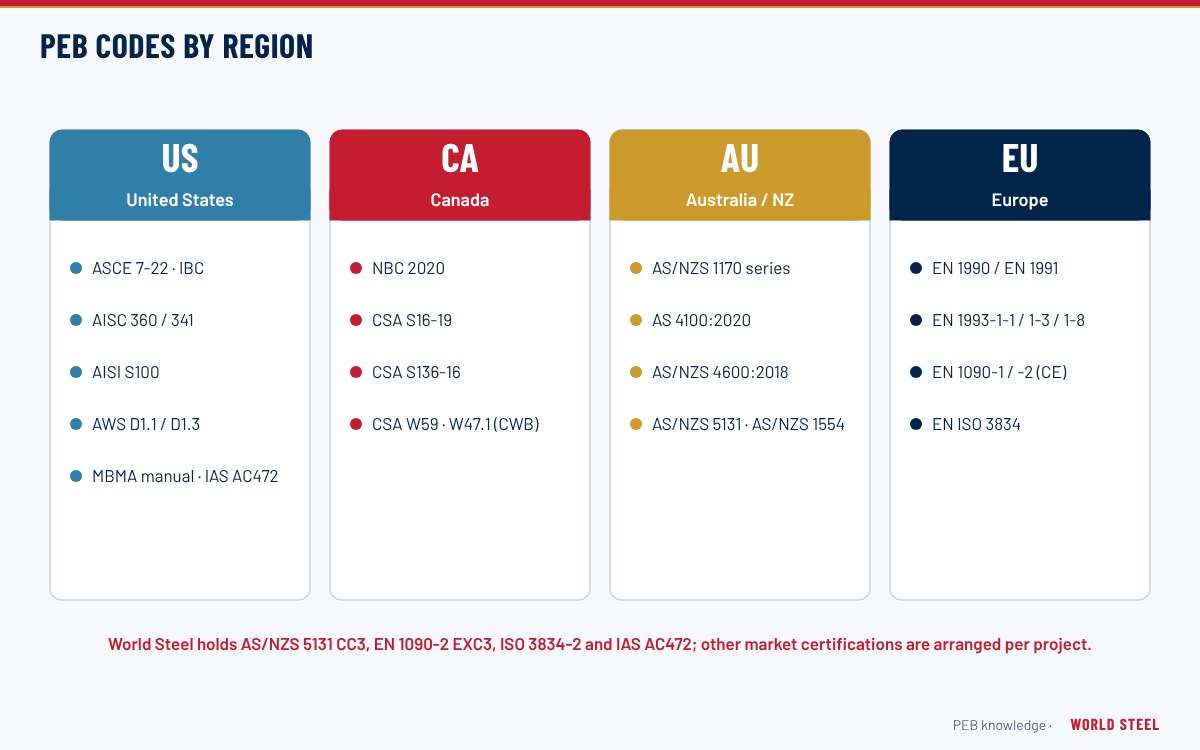
World Steel holds EN 1090-2 certification up to EXC3 with CE marking under EN 1090-1, together with ISO 3834-2 for comprehensive welding quality – the welding quality level EN 1090-2 calls for at EXC3 and EXC4. World Steel can therefore supply CE-marked components for structures specified from EXC1 to EXC3, issuing a DoP and CE marking label for each delivery.
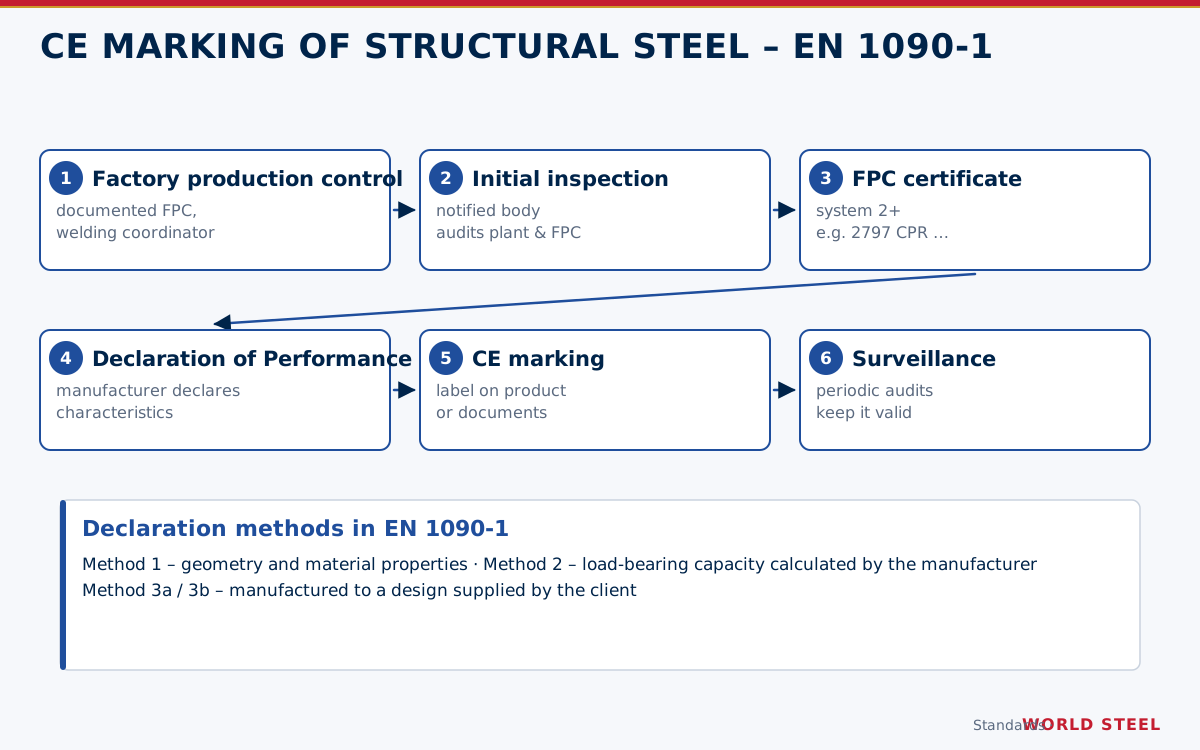
World Steel's FPC certificate is 2797 CPR 827443, issued by BSI Group The Netherlands B.V. (Notified Body 2797) for design, manufacture and installation up to and including EXC3. Confirm with the client at tender stage which items are inside the CE scope – load-bearing components such as frames, stairs and platforms normally are; the status of gratings and guard-rails depends on the product and the governing standard.
Execution classes and how World Steel complies
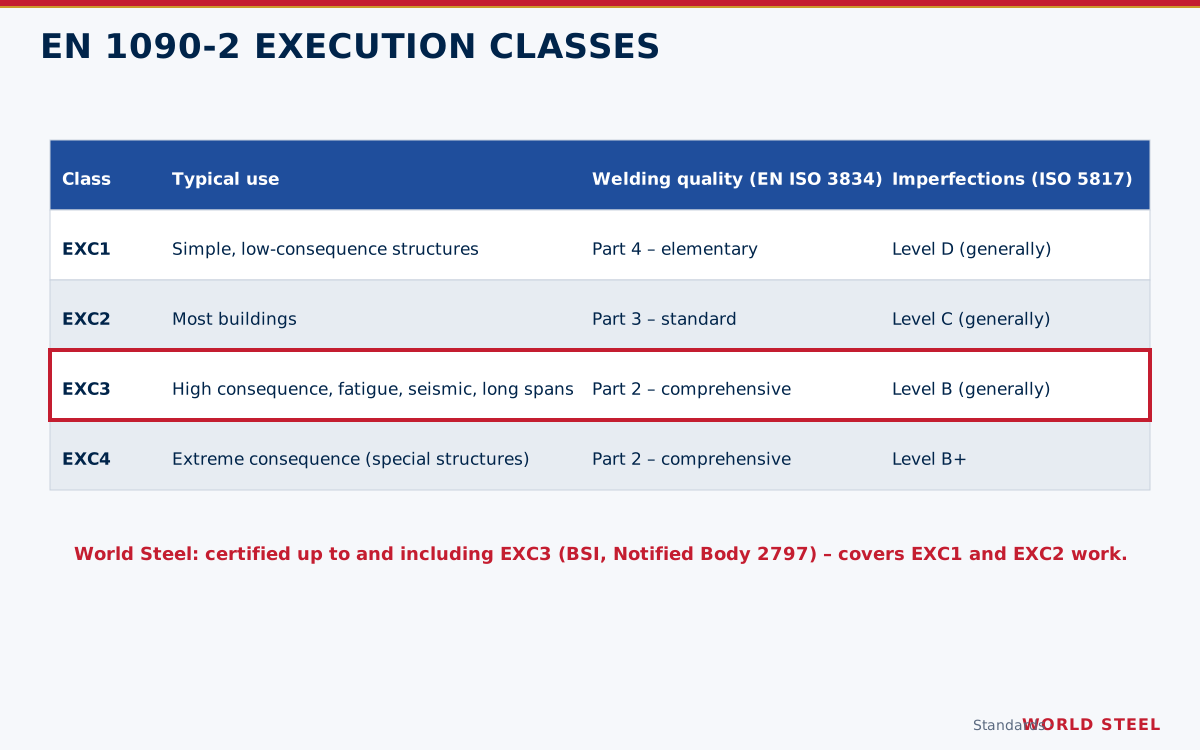
| Class | Typical application | Welding quality requirements | World Steel |
|---|---|---|---|
| EXC1 | Simple structures with low consequences of failure | EN ISO 3834-4 | Covered |
| EXC2 | Most buildings, industrial halls and PEB | EN ISO 3834-3 | Covered |
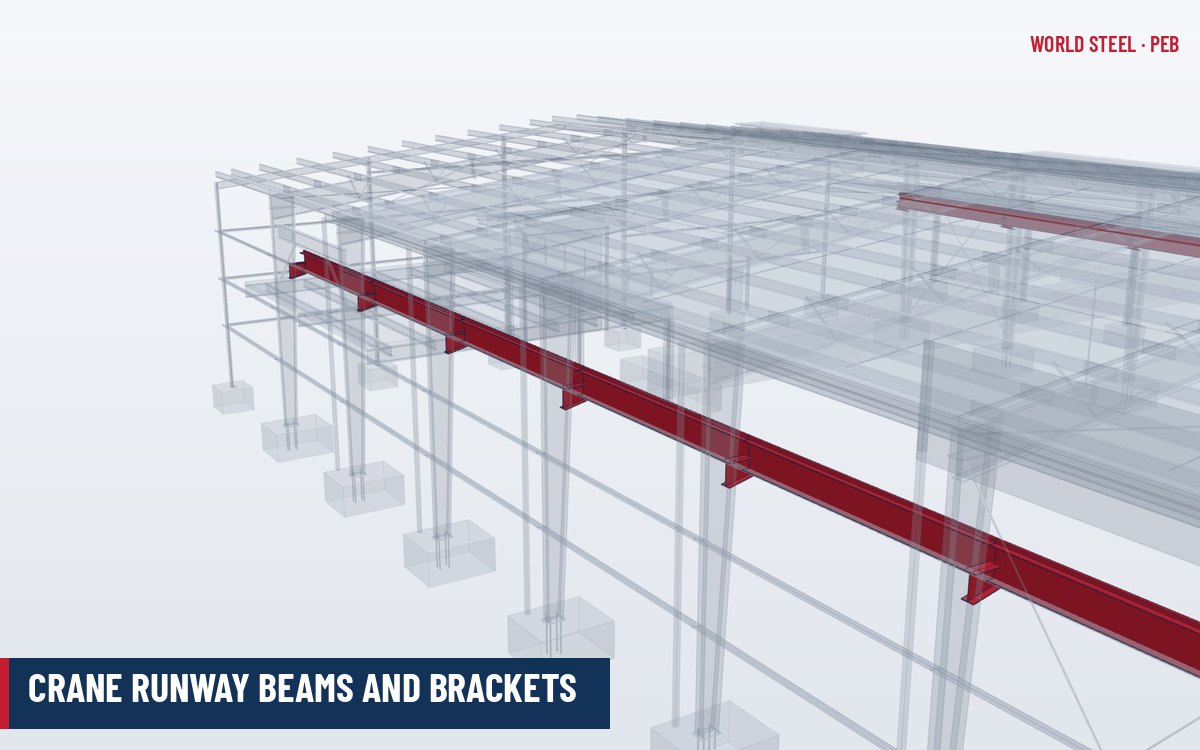
| EXC3 | Higher-consequence structures, large spans, fatigue-loaded members such as crane runways | EN ISO 3834-2 | Certified |
| EXC4 | Structures with extreme consequences of failure | EN ISO 3834-2 | Not offered |
- Design – pre-engineered buildings are designed by World Steel to EN 1993 with the National Annex of the project country; for structural steel designed by others, World Steel produces shop drawings and IFC models from the execution specification.
- Materials – EN 10025-2 S235, S275 and S355 plate and sections, EN 10210 and EN 10219 hollow sections, with inspection documents to EN 10204 (type 3.1 as standard) and traceability as required by the execution class.
- Welding – SAW, FCAW and GMAW under procedures qualified to EN ISO 15614-1, welders qualified to EN ISO 9606-1 and operators to EN ISO 14732, with responsible welding coordination to EN ISO 14731 and acceptance to the EN ISO 5817 quality level set by the class.
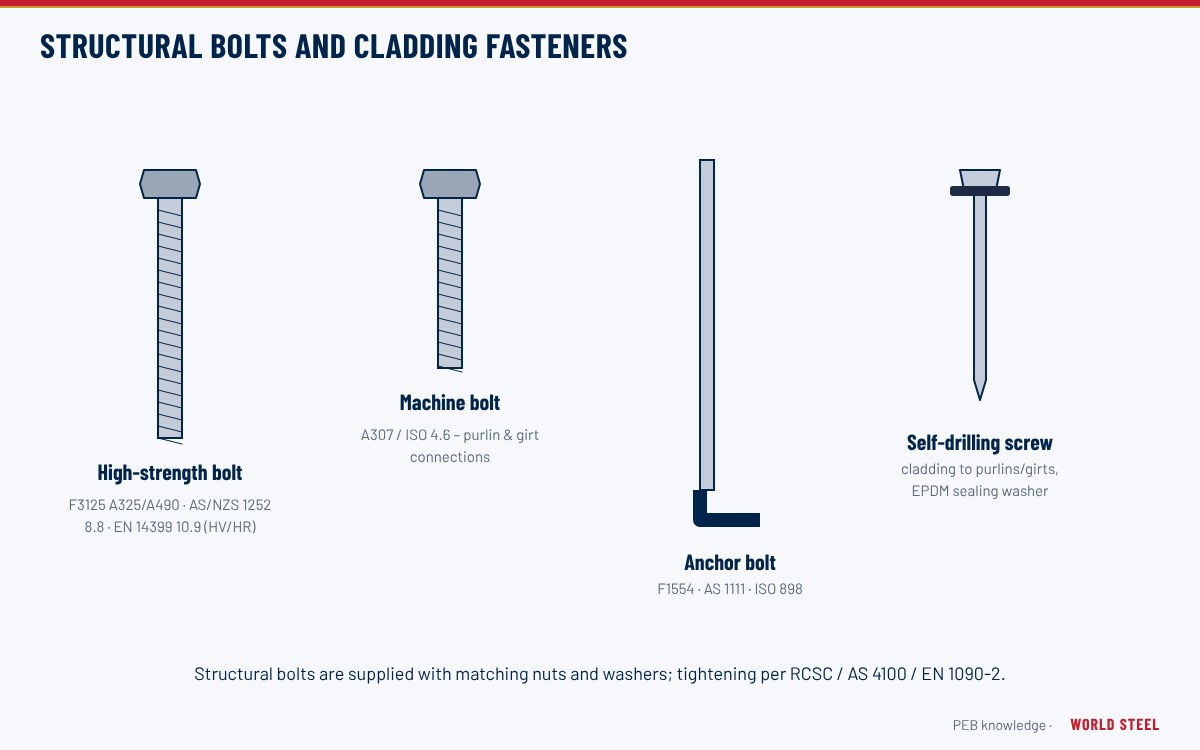
- Bolting – preloaded assemblies to EN 14399 and non-preloaded assemblies to EN 15048, tightened and inspected to EN 1090-2.
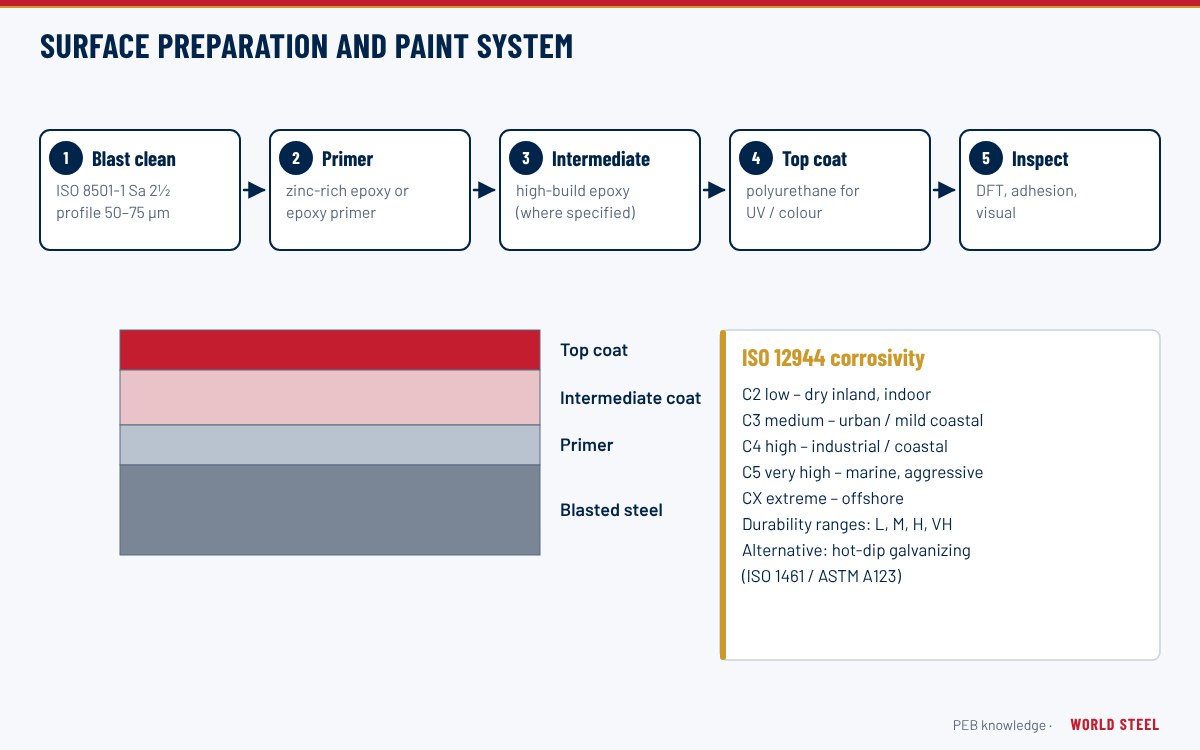
- Coatings – surface preparation to EN ISO 8501-1 (typically Sa 2½) and paint systems to EN ISO 12944 for the corrosivity category C1 to CX; hot-dip galvanizing to EN ISO 1461 by qualified galvanizers. See paint and coating systems.
- Inspection – visual inspection of all welds and NDT to the extent required by the class, by personnel qualified to EN ISO 9712, plus dimensional checks against EN 1090-2 tolerances.
Steel products and permanent means of access
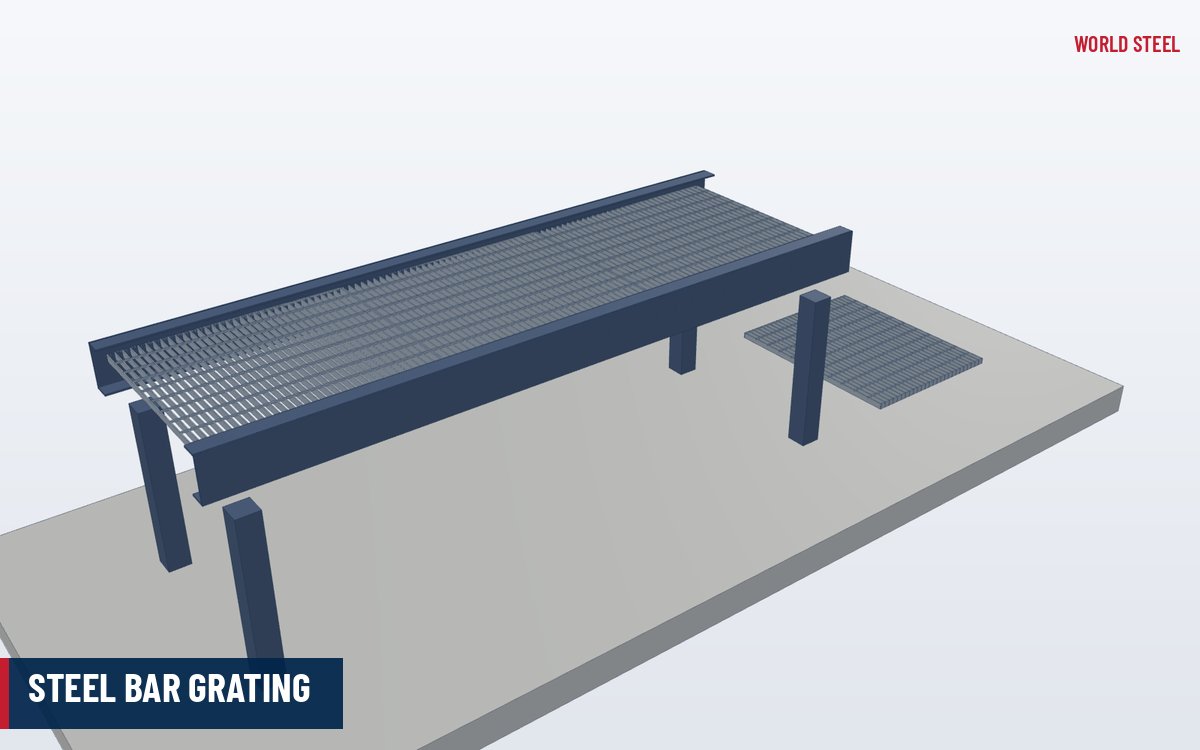
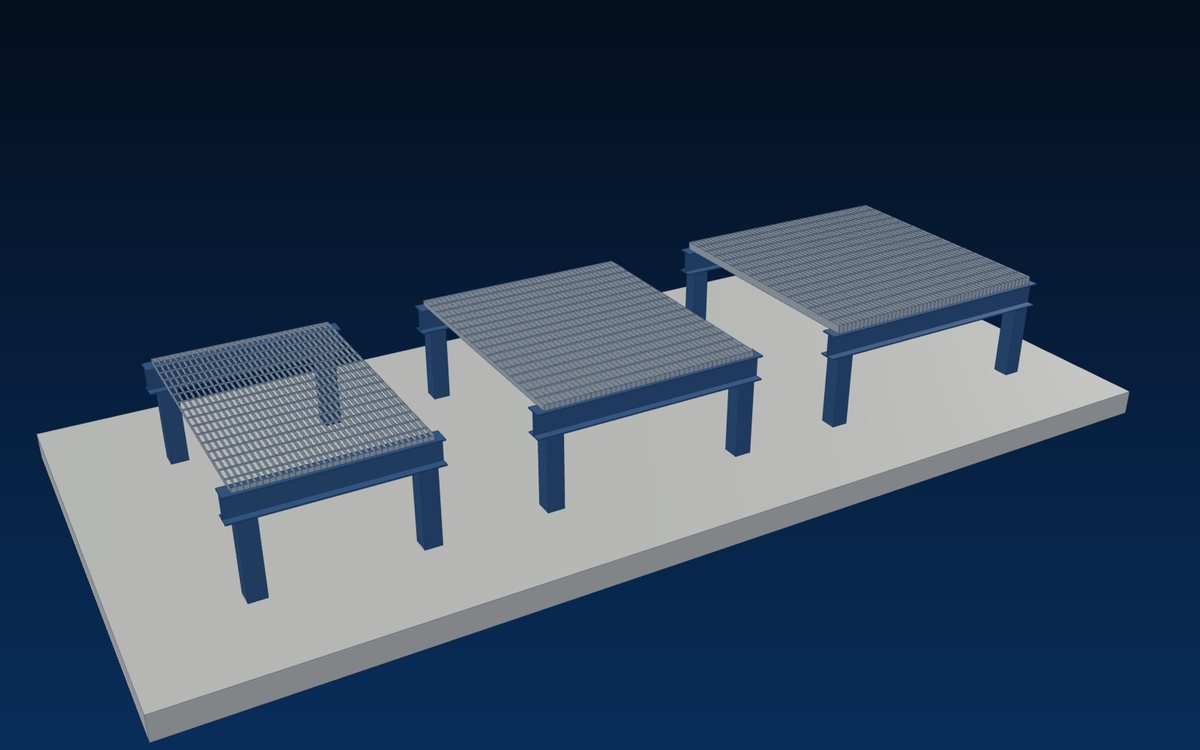
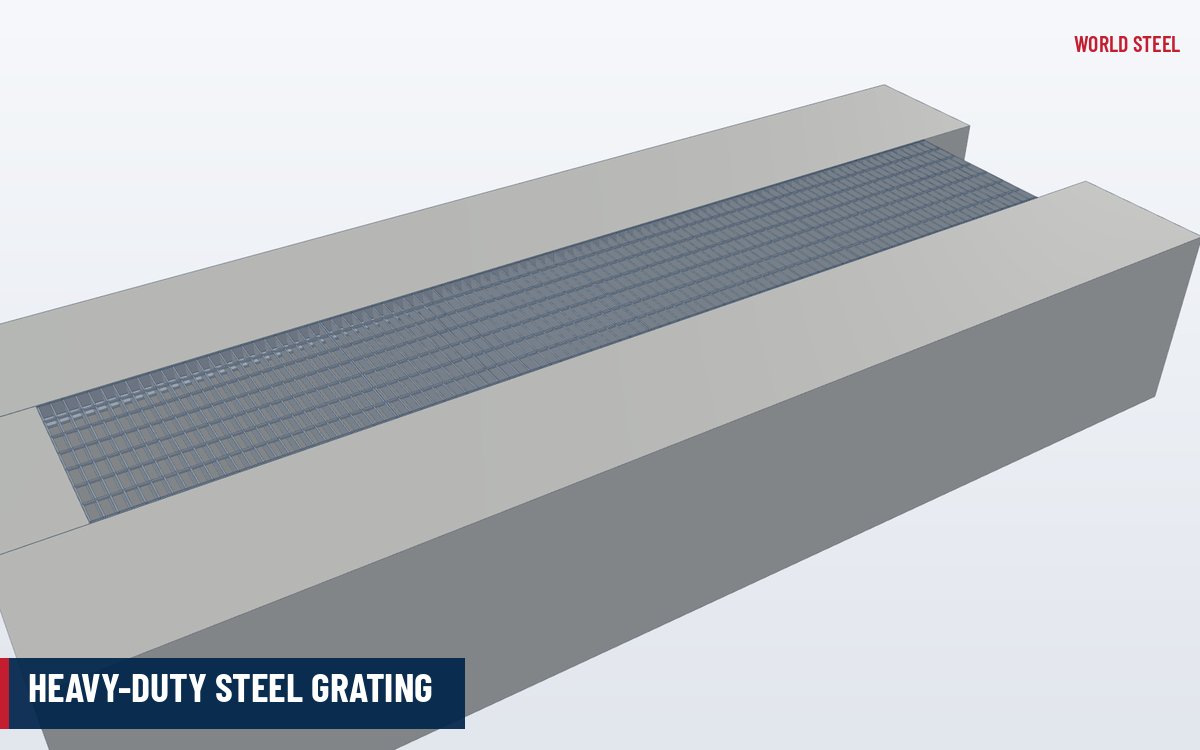
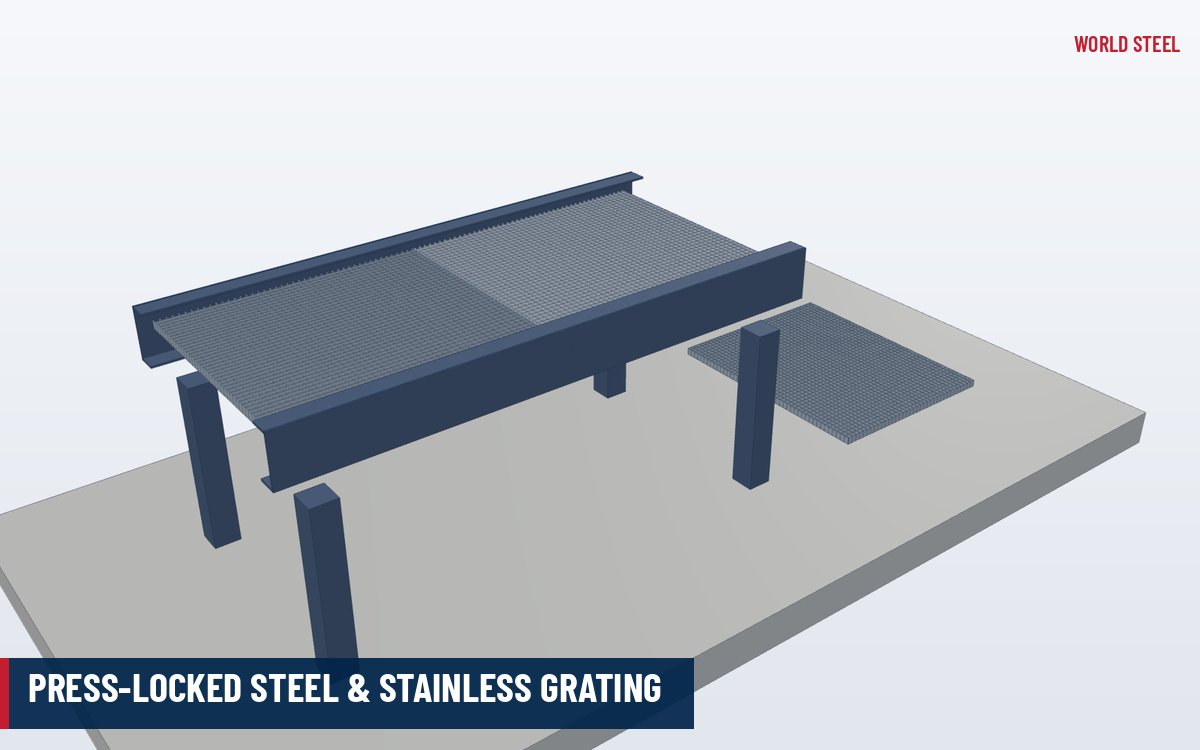
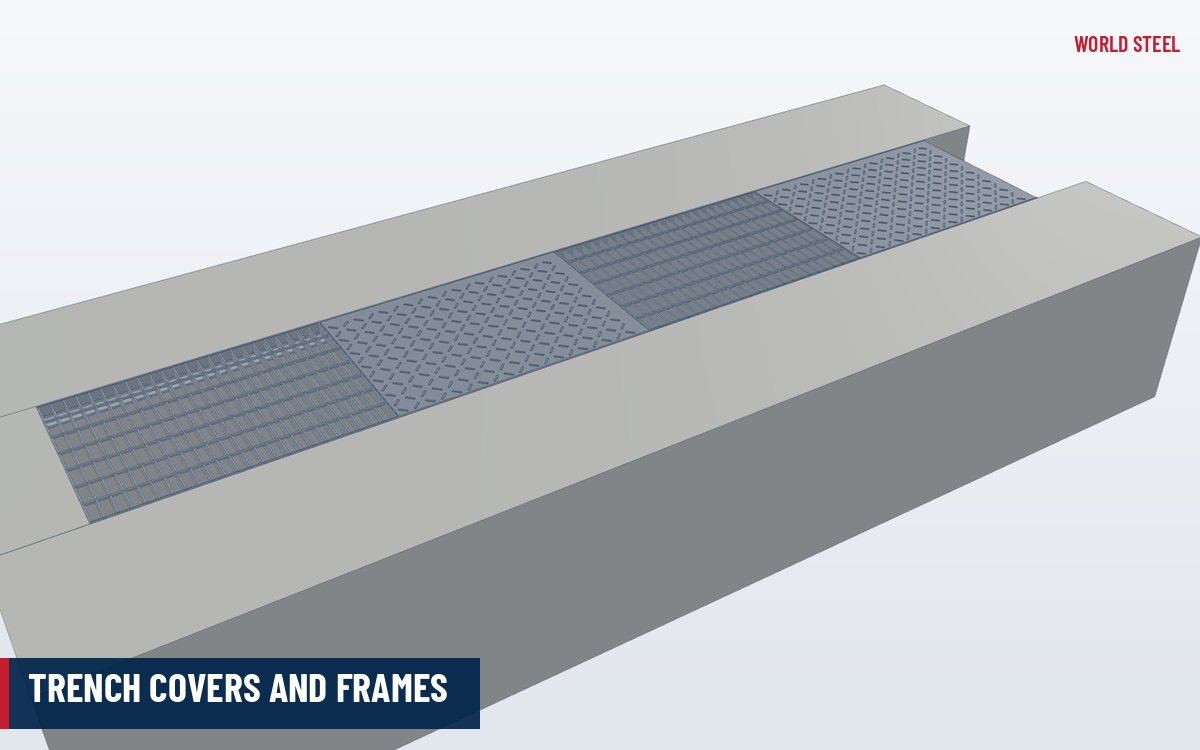
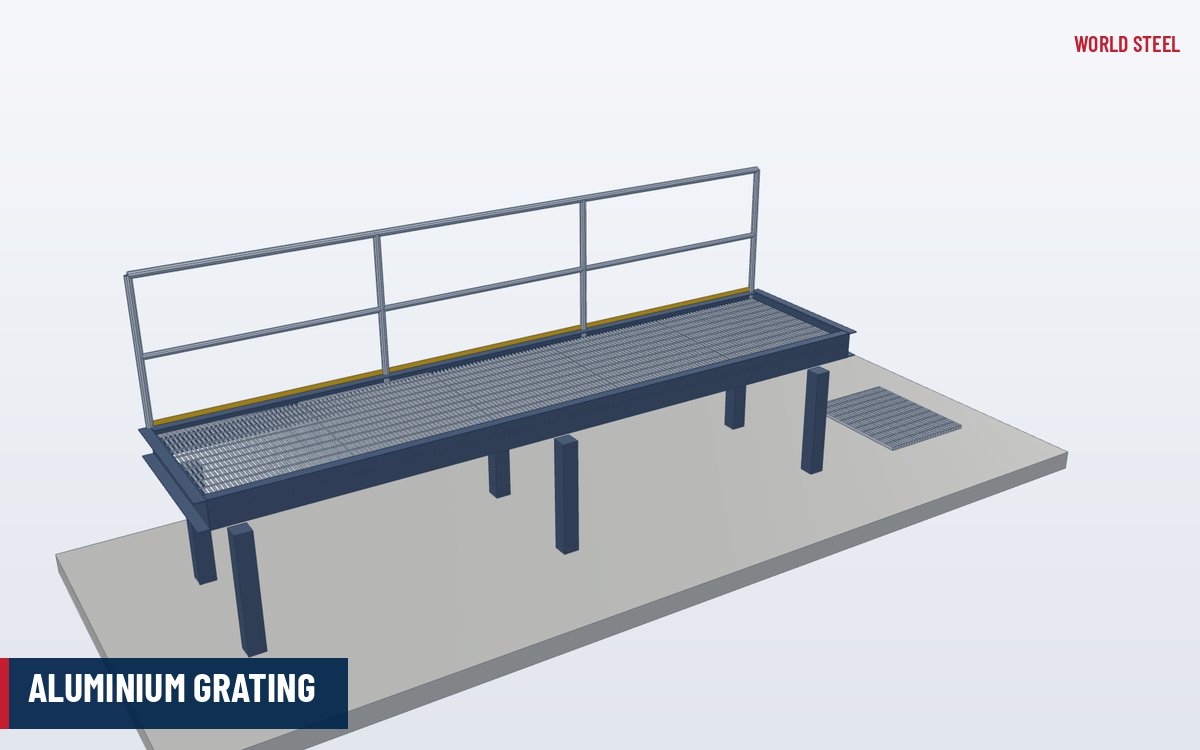
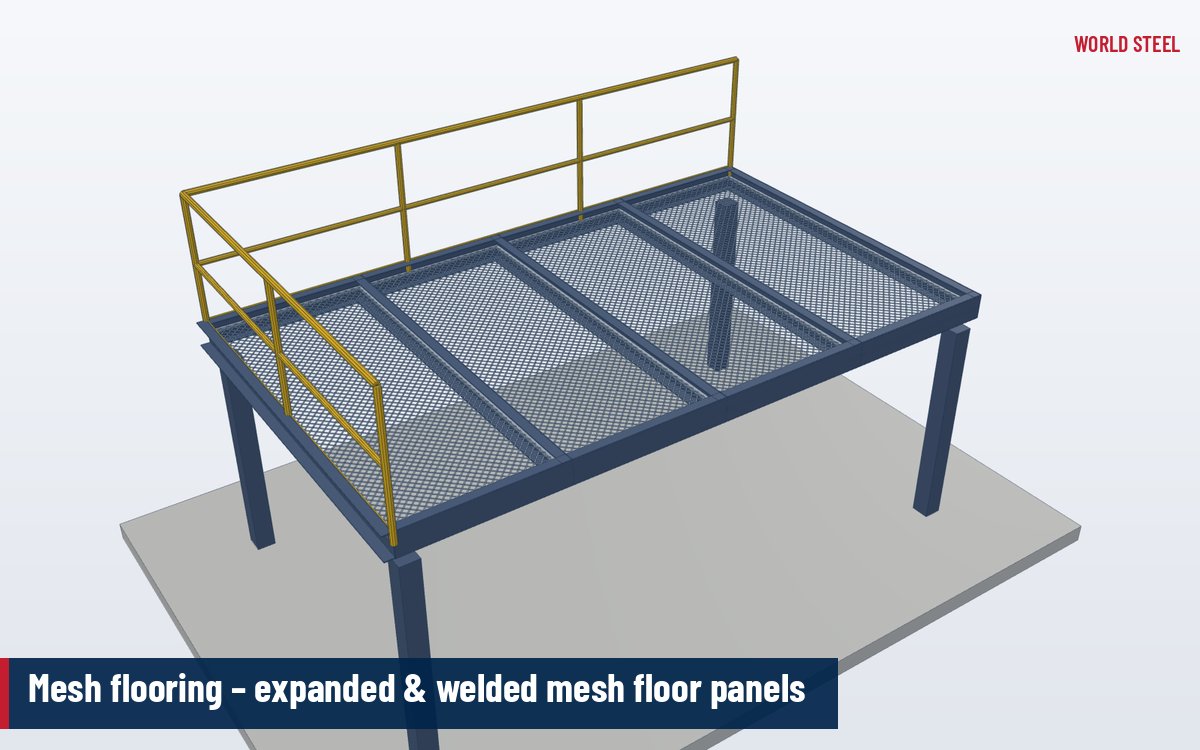
Platforms, stairs, ladders and guard-rails that give access to machinery and plant are designed to EN ISO 14122 parts 1 to 4, the harmonised standard series under the Machinery Directive 2006/42/EC, which is replaced by the Machinery Regulation (EU) 2023/1230 from January 2027. Stairs and balustrades in buildings follow national building regulations, with horizontal loads on barriers from EN 1991-1-1 and the National Annex. Gratings are commonly specified to DIN 24537-1 and RAL-GZ 638, and covers and gratings in traffic areas to the EN 124 classes.
| Item | Requirement |
|---|---|
| Guard-rail | Height at least 1100 mm, at least one knee-rail, gaps no more than 500 mm, toe-plate at least 100 mm |
| Stairs | 20°–45° (preferably 30°–38°); 600 mm ≤ g + 2h ≤ 660 mm; width at least 600 mm, preferably 800 mm |
| Walkways and platforms | Clear width at least 600 mm, preferably 800 mm; clear height at least 2100 mm |
| Fixed ladders | Rungs 225–300 mm apart; fall protection where the climbing height exceeds 3 m |
World Steel supplies crossover platforms, egress stairs, industrial handrails and heavy-duty grating for European projects, fabricated within the EN 1090-2 system and CE marked where they fall within the EN 1090-1 scope.
United Kingdom, EEA and national differences
Norway, as an EEA member, applies the CPR and CE marking in the same way as EU member states. In Great Britain, construction products fall under the UK's own Construction Products Regulation with UKCA marking, designated standards (BS EN 1090-1) and UK National Annexes to the Eurocodes; the UK Government has extended acceptance of CE-marked construction products, so the marking required should be confirmed for each project. Northern Ireland follows EU rules. UK specifications often also reference the National Structural Steelwork Specification for Building Construction. See the United Kingdom and Germany market pages for country notes.
Specifying World Steel in European tenders
- State the execution class for each part of the works (for example EXC2 for the hall, EXC3 for crane runways) and the National Annex to be used.
- Require CE marking to EN 1090-1 with a DoP, and a fabricator certified to EN 1090-2 at or above the specified class with EN ISO 3834-2 welding quality.
- Give the corrosivity category and durability range to EN ISO 12944, or galvanizing to EN ISO 1461, and any fire protection requirement.
- For access items, state whether EN ISO 14122 or national building rules apply in each area.
World Steel's export supply service and the European metal building standards article give further detail; compare the Australian and US frameworks.
 Germany
 Netherlands
 Belgium
 Ireland
 Sweden
 Norway
 Poland
 Turkey
 Switzerland
 EN 1090 EXC3 · CE
 United States
 Australia & New Zealand