ENEnglish
 VITiếng Việt
 ZH中文
 KO한국어
 JA日本語
 FRFrançais
 ITItaliano
 PTPortuguês
 ESEspañol
 HEעברית
 ARالعربية

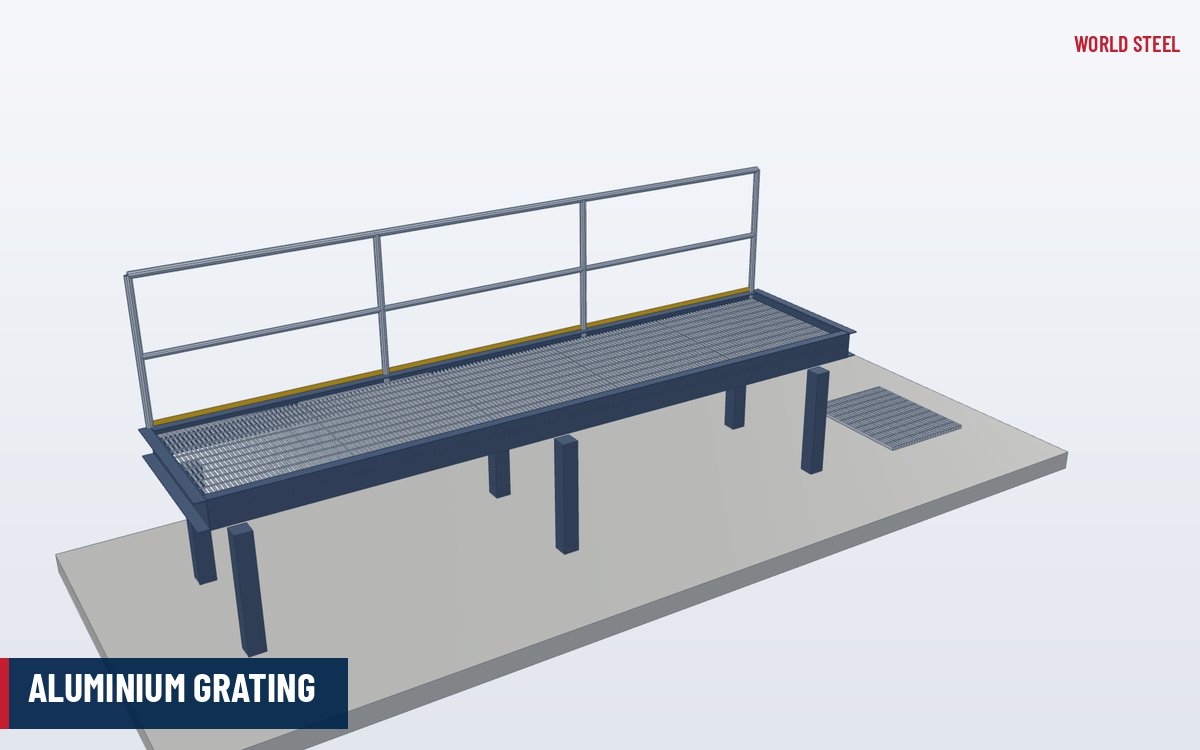
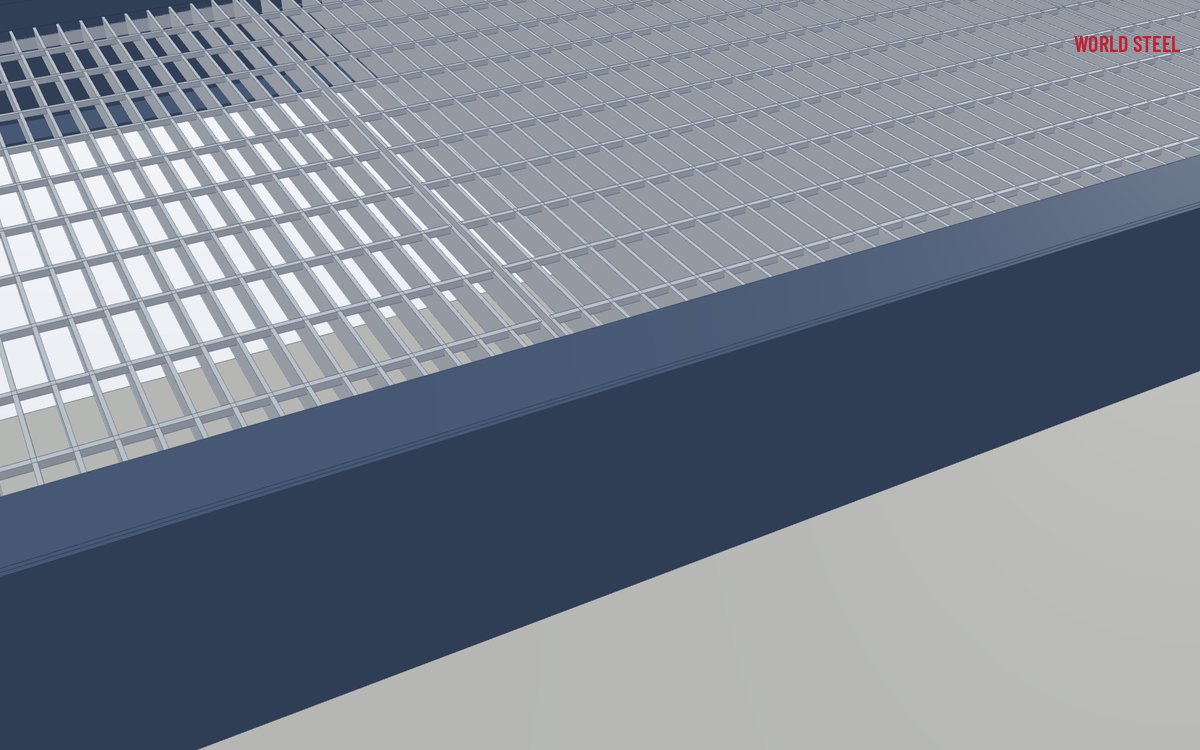
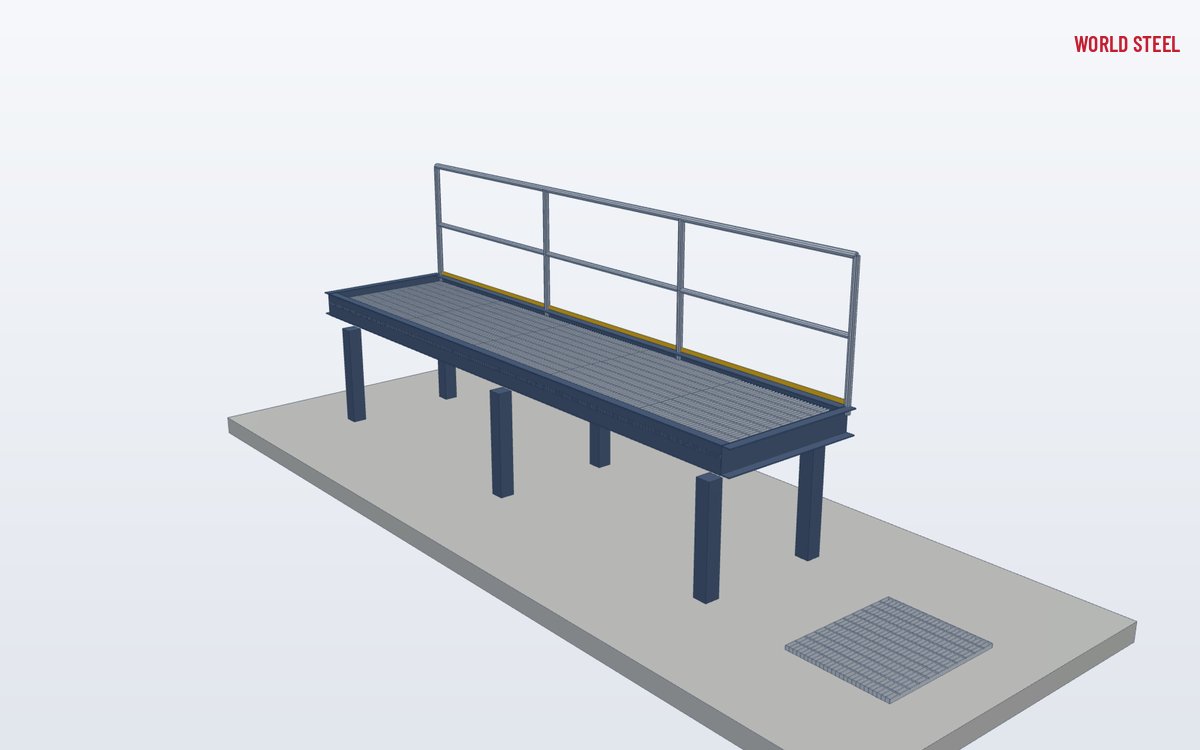
- About one third of the weight of an equivalent steel panel
- Pressure-locked (swaged) or riveted construction
- Alloys 6063-T5 / T6 and 6061-T6 for bars
- Plain or serrated top; mill finish or anodised
- No galvanising or painting needed in most environments
- Supplied with World Steel platforms, frames and fixings
What it is
Aluminium grating is bar grating made from extruded aluminium bearing bars and cross bars. Its main advantages are low weight – roughly one third of a steel panel of similar size – and natural corrosion resistance from the oxide film that forms on the surface. Panels can be lifted by hand, removed for maintenance access without cranes and installed on light structures where every kilogram counts.
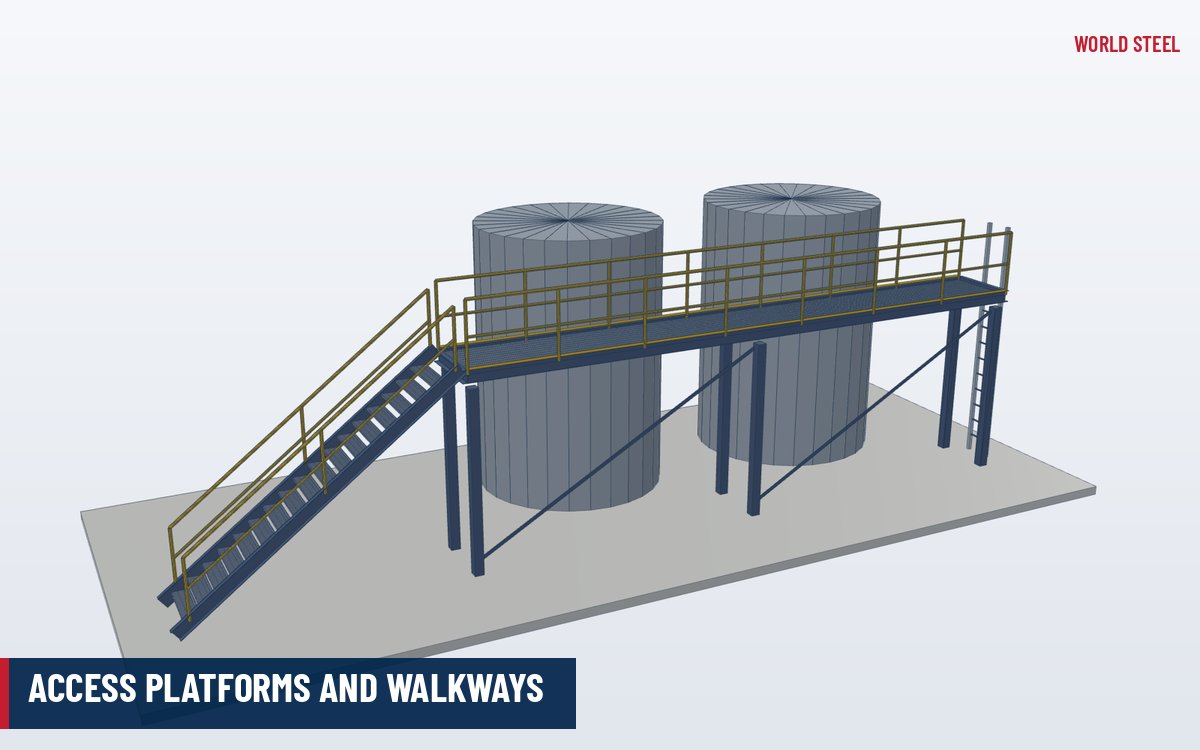
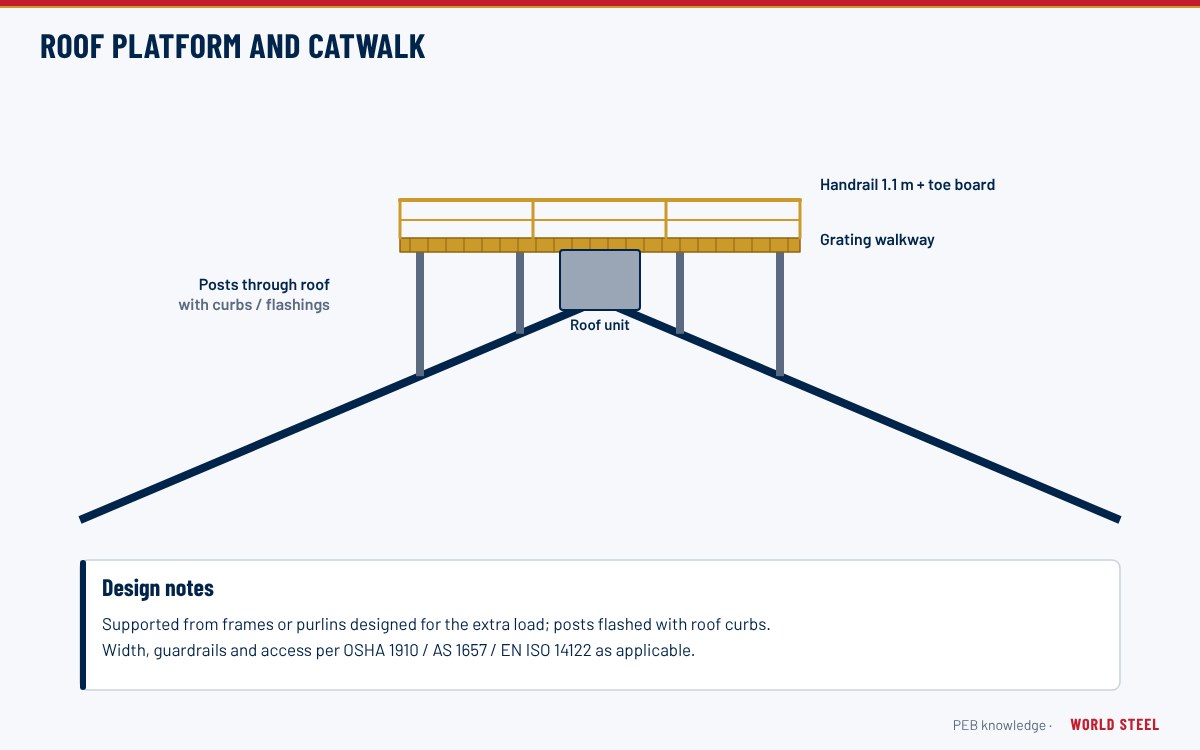
Typical uses include marine and offshore walkways, wastewater and water treatment channels, food and beverage plants, chemical areas where zinc would be attacked, cooling tower decks, roof access walkways, and floating or removable covers. World Steel supplies aluminium grating as part of a project package together with the platforms and walkways, support frames, handrails and fixings that it fabricates. Panels are produced on specialist aluminium grating lines; World Steel details the layout, coordinates the panel schedule with the steelwork, inspects, marks and packs everything for one delivery.
Types and options
| Option | Description | Typical use |
|---|---|---|
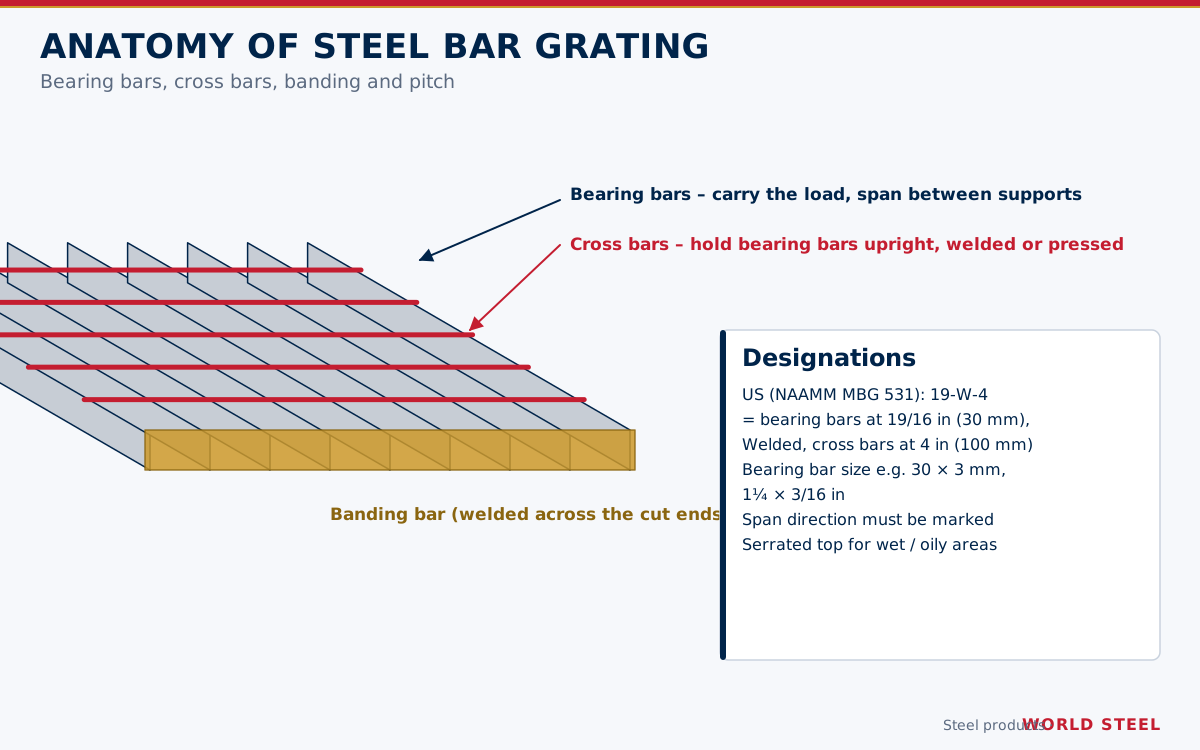
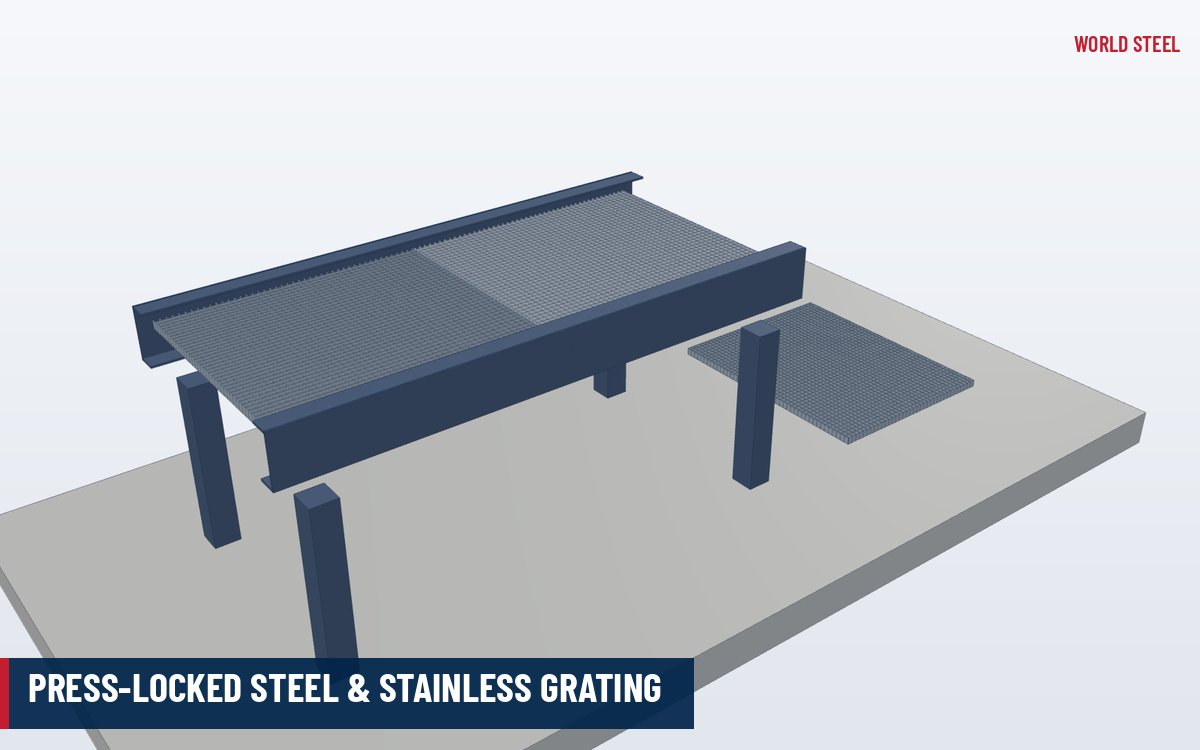
| Pressure-locked / swaged | Cross bars pressed or swaged into slotted bearing bars, flush top | Walkways, platforms, architectural floors |
| Riveted | Bent connecting bars riveted between straight bearing bars, reticulated pattern | Heavier rolling loads, trench covers |
| Plain top | Smooth bearing bars | Dry interior and architectural areas |
| Serrated or grooved top | Notched or I-bar profiles with grooved top | Wet, oily and sloping walkways |
| Mill finish | Natural oxide film | Most industrial and marine uses |
| Anodised | Controlled oxide layer, clear or coloured | Architectural and visible areas |
Bearing bars are usually extruded in 6063-T5 / T6 or 6061-T6 alloy, with I-bar profiles that save weight while keeping the depth needed for stiffness. Bar depth and pitch are selected from the design load, span and deflection limit in the same way as for steel bar grating.
Design and compliance
Aluminium has about one third of the elastic modulus of steel, so deflection rather than strength usually governs the span. Panels are designed to AS/NZS 1664.1 in Australia and New Zealand, the Aluminum Design Manual (ADM) of the Aluminum Association in the US, and EN 1999-1-1 in Europe, using imposed loads from AS/NZS 1170.1, ASCE 7 or EN 1991-1-1. Access platforms must meet AS 1657, OSHA 29 CFR 1910 Subpart D or EN ISO 14122-2 for clear width, edge protection and toeboards, and the NAAMM grating manuals give guidance on aluminium types for US projects.
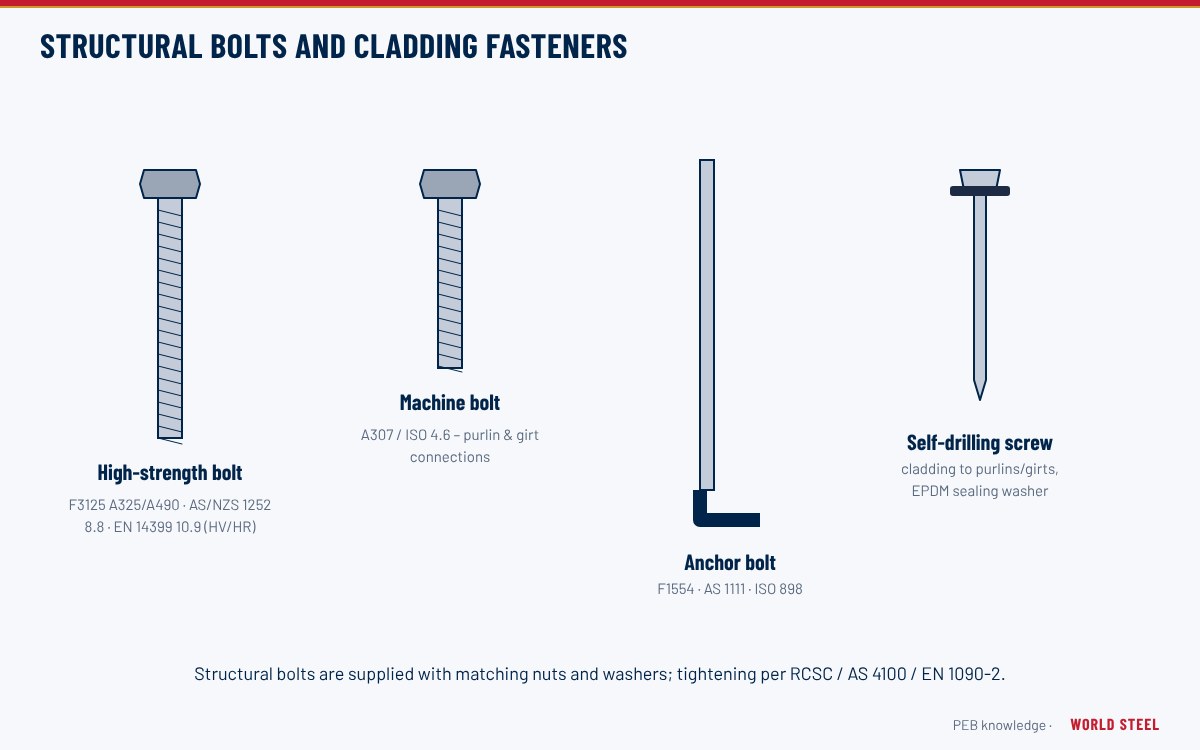
Galvanic isolation is essential: where aluminium panels sit on carbon steel or galvanised supports, use isolation pads, sleeves and washers (for example neoprene or nylon) and stainless or suitably coated fasteners, especially in wet or marine environments. Aluminium should not be in direct contact with wet concrete or mortar. Fire behaviour should also be considered – aluminium loses strength at much lower temperatures than steel, so check the fire strategy for escape routes. See design loads and bolts and fasteners.
Fabrication, finishing and supply
The grating panels themselves are manufactured by specialist aluminium grating producers and supplied by World Steel with the project package. World Steel produces the layout and panel schedule from the Tekla model, cuts and bands panels where required, inspects dimensions and marks each panel with its layout reference and span direction. Any welding of aluminium is carried out only by qualified welders to the applicable aluminium welding standard and is kept to a minimum; bolted banding and clips are often preferred.
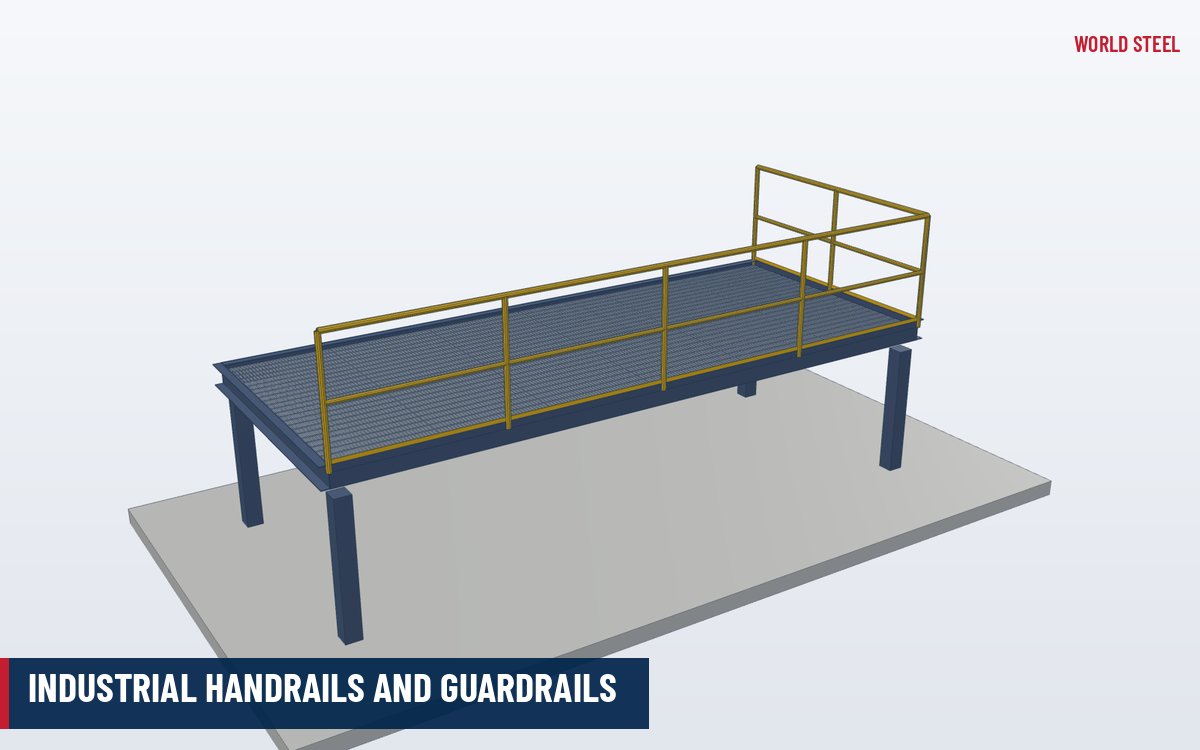
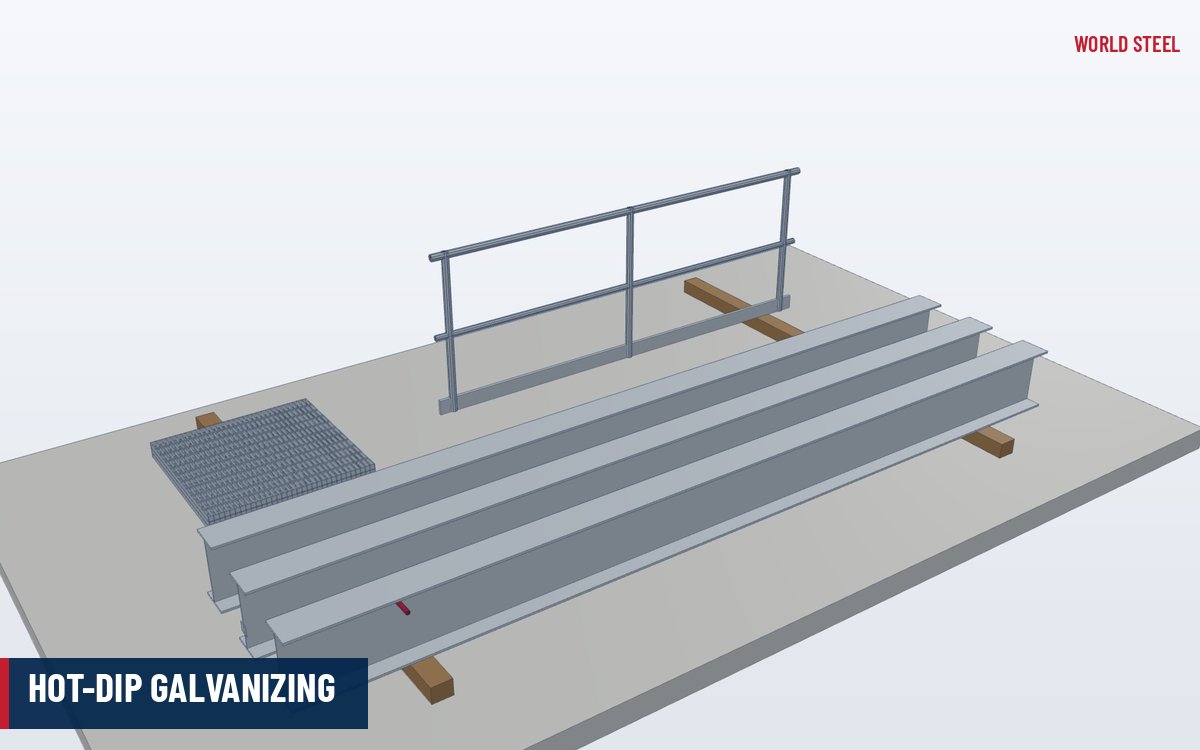
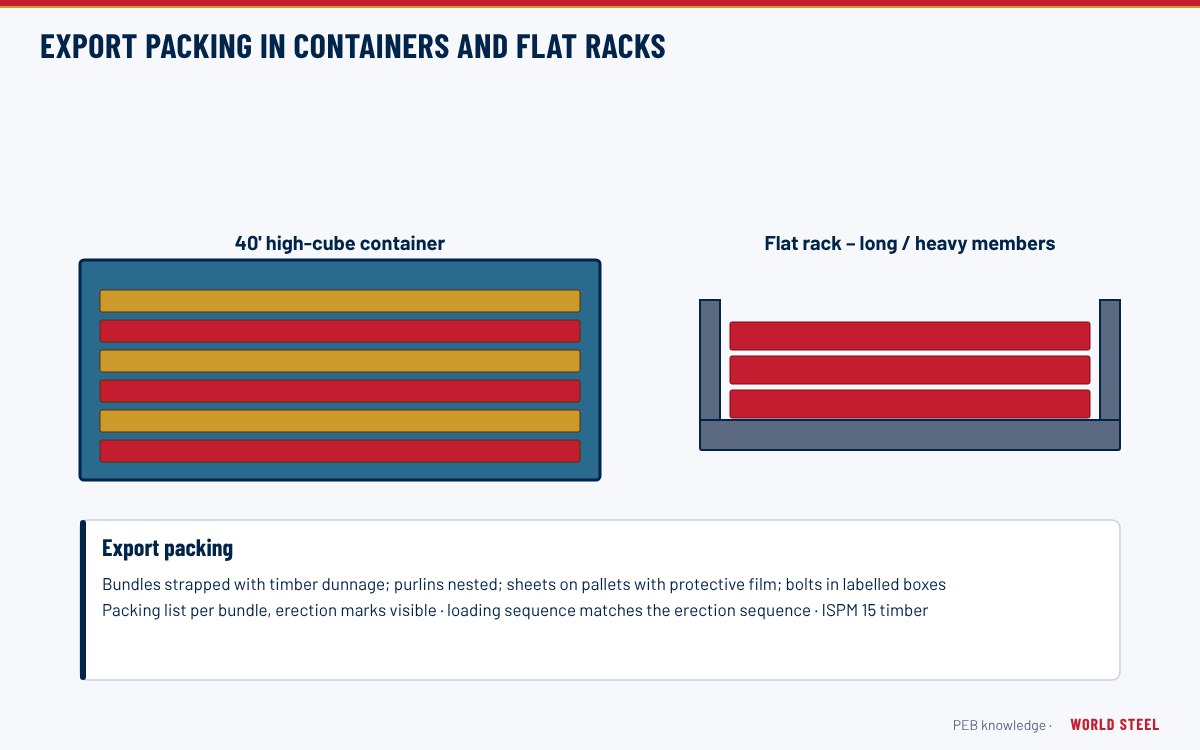
The steel supports, frames, clips and fasteners and handrails are fabricated in the World Steel plant under its AS/NZS 5131 and EN 1090-2 systems, then hot-dip galvanised or painted. Everything is packed by area for export shipping so the site receives matching frames, panels and isolation kits together.
Installation and selecting
- Choose aluminium where weight, corrosion resistance, removability or the absence of zinc matter; choose steel where loads are high, spans are long or cost is the driver.
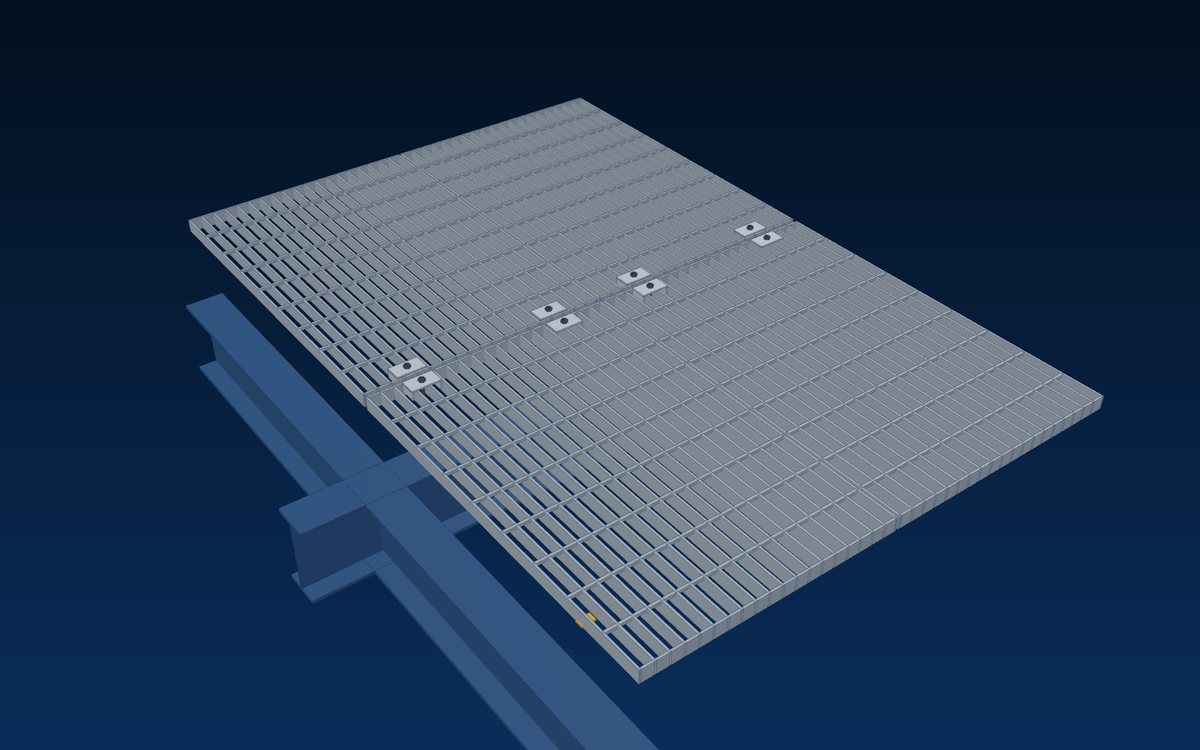
- Fix panels with stainless clips or saddle clamps over isolation pads; avoid drilling or cutting panels on site without re-banding.
- Keep a small expansion gap between panels – aluminium expands about twice as much as steel with temperature.
- Check with the client whether caustic cleaning chemicals are used, as strong alkalis attack aluminium.
Norme e requisiti per mercato
I codici secondo cui World Steel progetta, fabbrica e documenta questo prodotto, con i principali requisiti geometrici e di carico in ciascun mercato.
 Stati Uniti
- Aluminum Design ManualAluminum Association – design of aluminium structures
- ANSI/NAAMM MBG 531Metal Bar Grating Manual
- ASCE 7Minimum design loads
- OSHA 29 CFR 1910 Subpart DWalking-working surfaces
- AWS D1.2Structural welding code – aluminum
- Light manufacturing live load
- 125 psf (ASCE 7 Table 4.3-1)
- Toeboard at open edges
- ≥ 3.5 in (90 mm) high (OSHA 1910.29(k))
 Australia / NZ
- AS/NZS 1664.1Aluminium structures – limit state design
- AS 1657-2018Fixed platforms, walkways, stairways and ladders
- AS/NZS 1170.1Imposed actions
- AS/NZS 1665Welding of aluminium structures
- AS 4586Slip resistance classification of pedestrian surfaces
- Walkway clear width
- ≥ 600 mm (AS 1657)
- Toeboard
- ≥ 100 mm where required (AS 1657)
 Europa
- EN 1999-1-1Design of aluminium structures
- EN 1090-3Technical requirements for aluminium structures
- EN ISO 14122-2Working platforms and walkways
- EN 1991-1-1Imposed loads on buildings
- EN ISO 7599Anodizing of aluminium and its alloys
- Walkway clear width
- ≥ 600 mm, preferably 800 mm (EN ISO 14122-2)
- Toe-plate
- ≥ 100 mm high (EN ISO 14122-3)
Sintesi solo orientativa: prevalgono il capitolato di progetto, l'edizione del codice adottata e l'autorità competente.
Finiture
| Finitura | Norme / note |
|---|---|
| Mill finish | Natural oxide film – no coating needed in most environments |
| Anodised | AAMA 611 · AS 1231 · EN ISO 7599 |
| Supports: hot-dip galvanised steel | ASTM A123 · AS/NZS 4680 · EN ISO 1461 |
Domande frequenti
How much lighter is aluminium grating than steel?
Roughly one third of the weight of a steel panel of similar size, which makes manual handling and removable covers much easier.
Does aluminium grating need galvanising or paint?
No. It is normally supplied in mill finish; anodising is an option for architectural areas. The steel supports are galvanised or painted.
Can aluminium grating sit directly on steel beams?
Not in wet or marine areas. Use isolation pads and washers and suitable fasteners to prevent galvanic corrosion between the two metals.
Does World Steel manufacture the aluminium panels?
The panels are produced by specialist aluminium grating manufacturers and supplied by World Steel with the steel frames, handrails and fixings it fabricates, detailed and packed as one package.
 New Zealand
 AS/NZS 5131 CC3
 EN 1090 EXC3 · CE