ENEnglish
 VITiếng Việt
 ZH中文
 KO한국어
 JA日本語
 FRFrançais
 ITItaliano
 PTPortuguês
 ESEspañol
 HEעברית
 ARالعربية

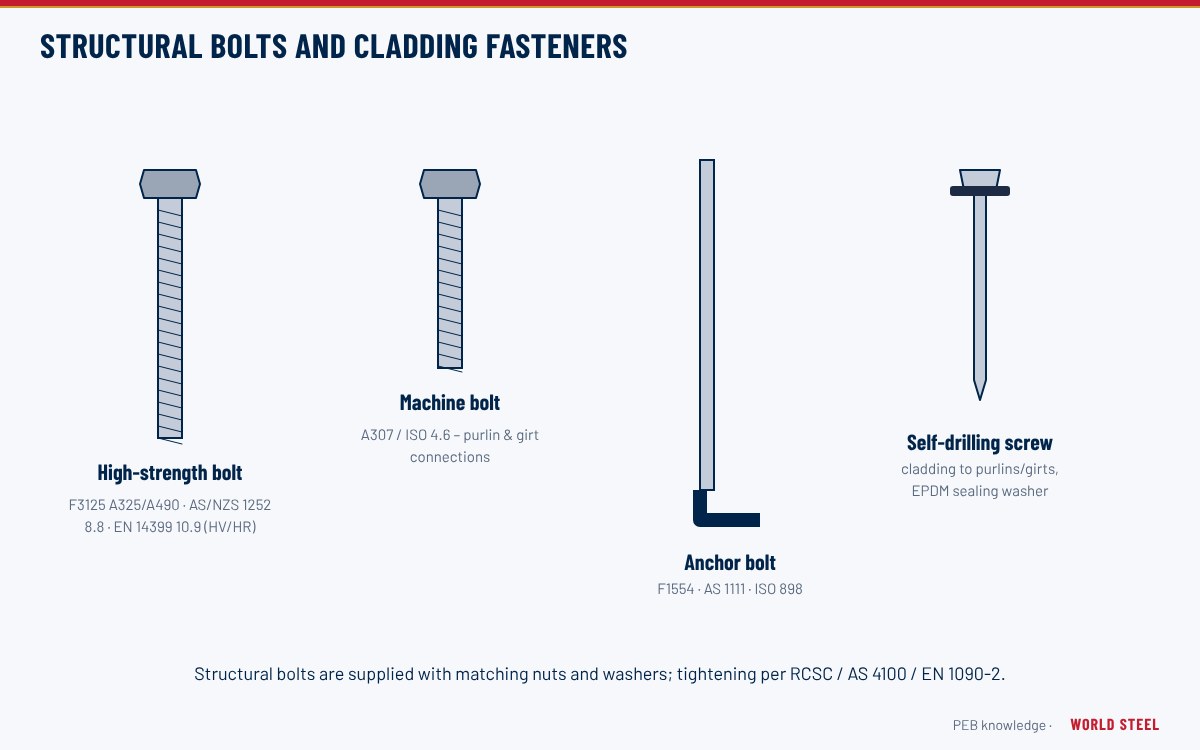
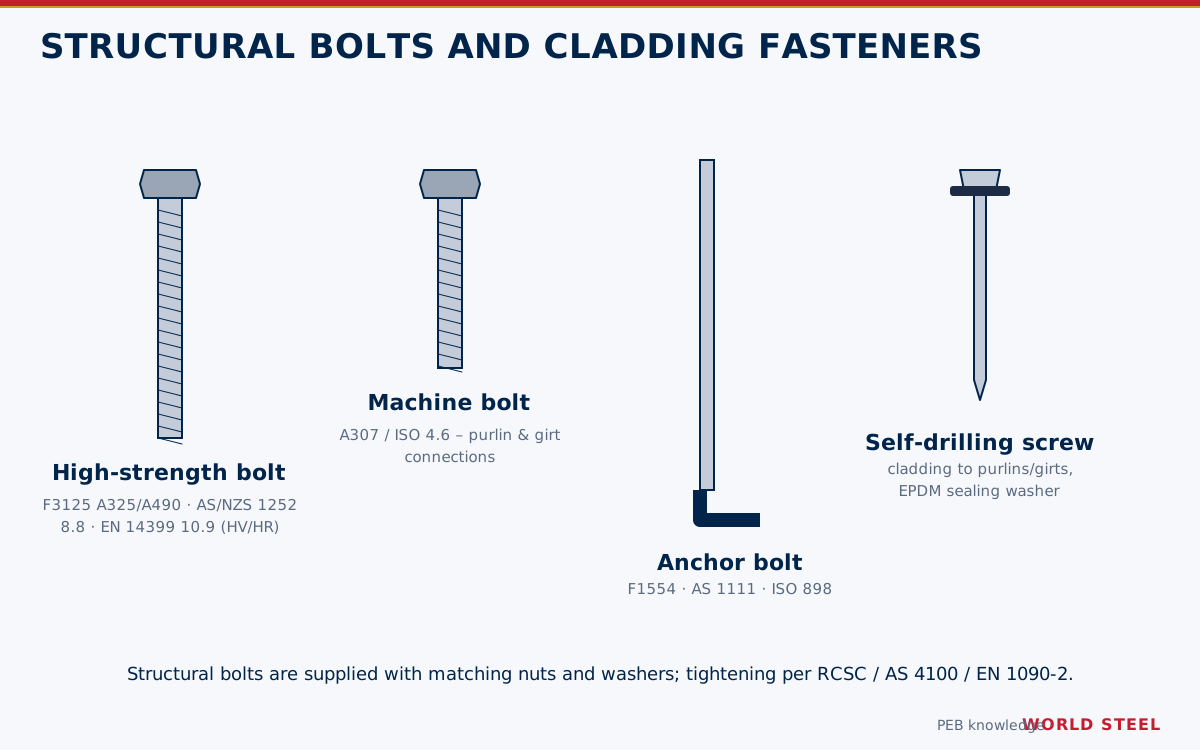
Fasteners in a PEB
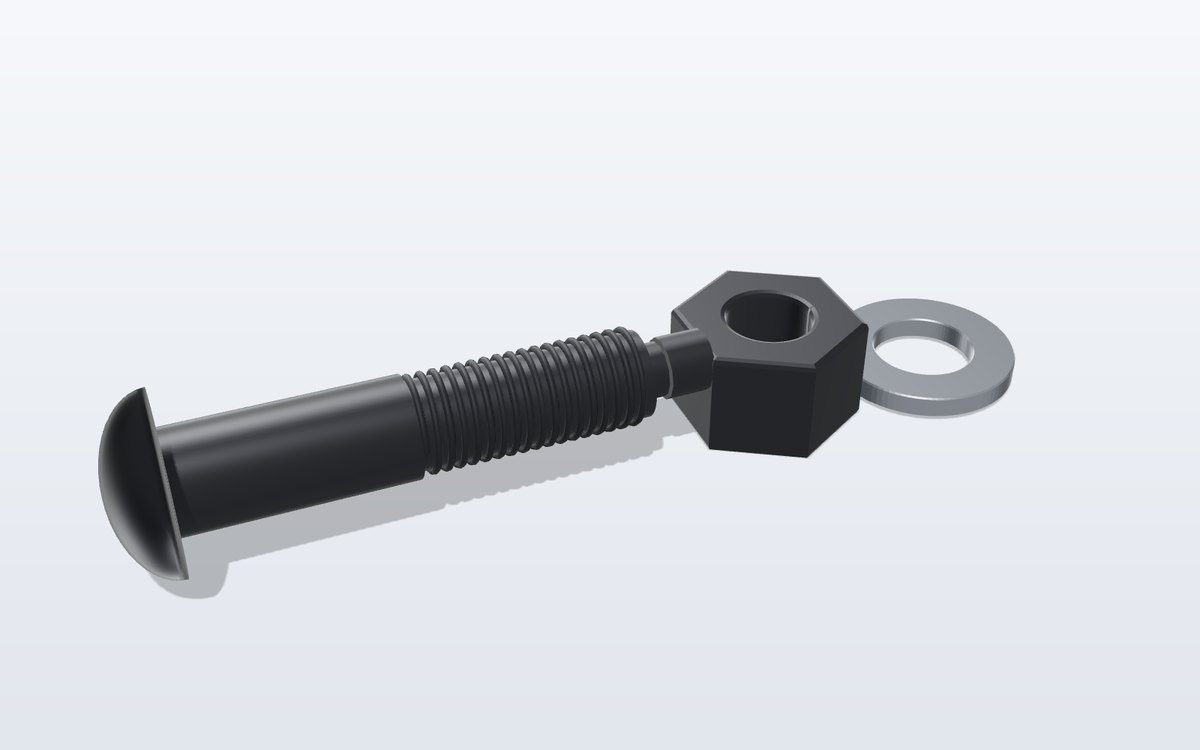
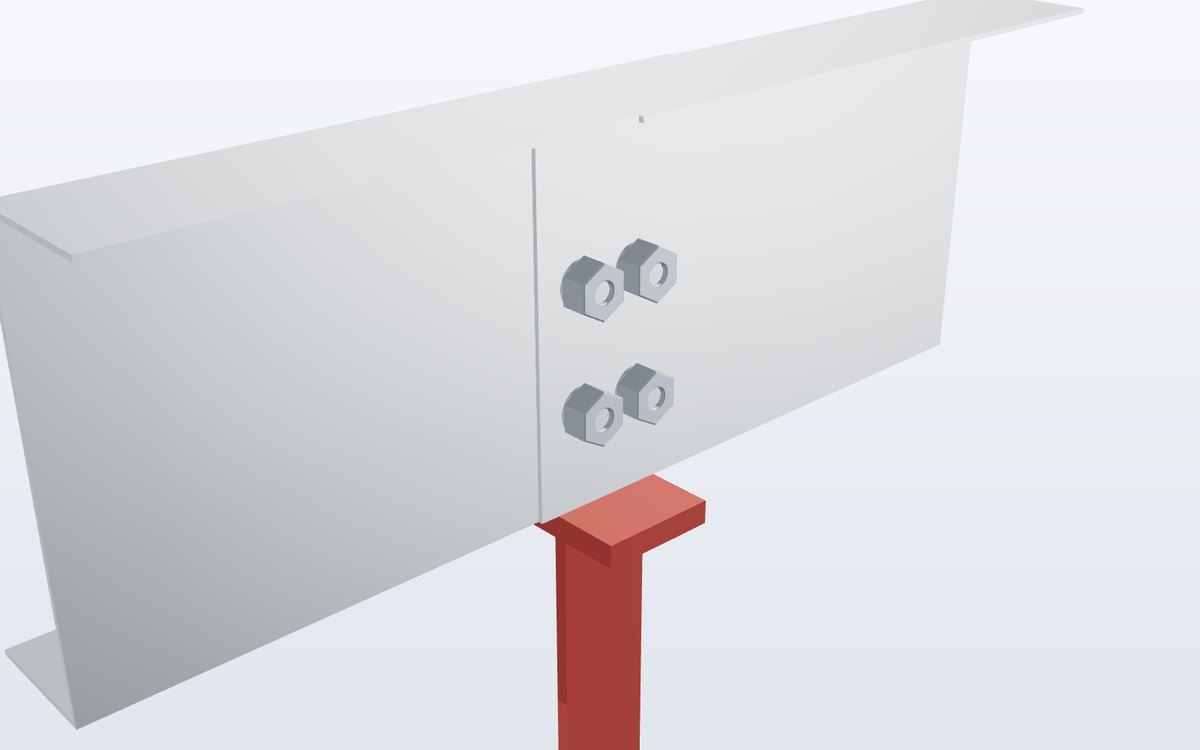
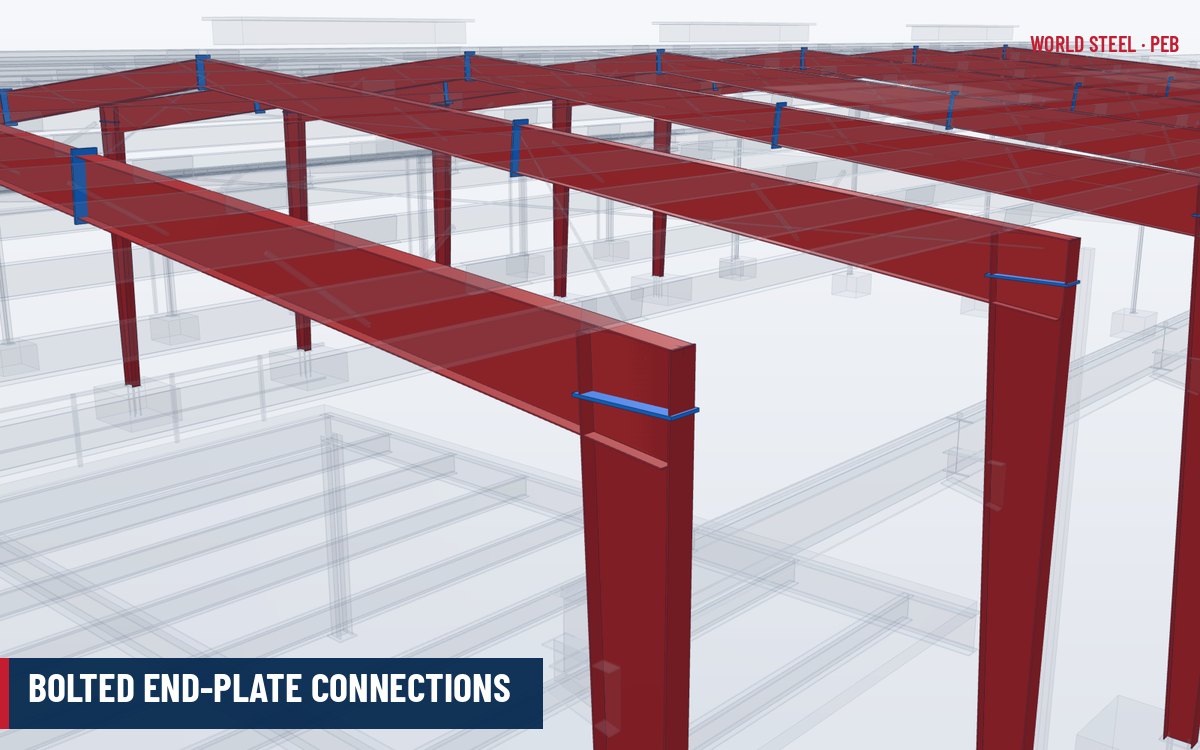
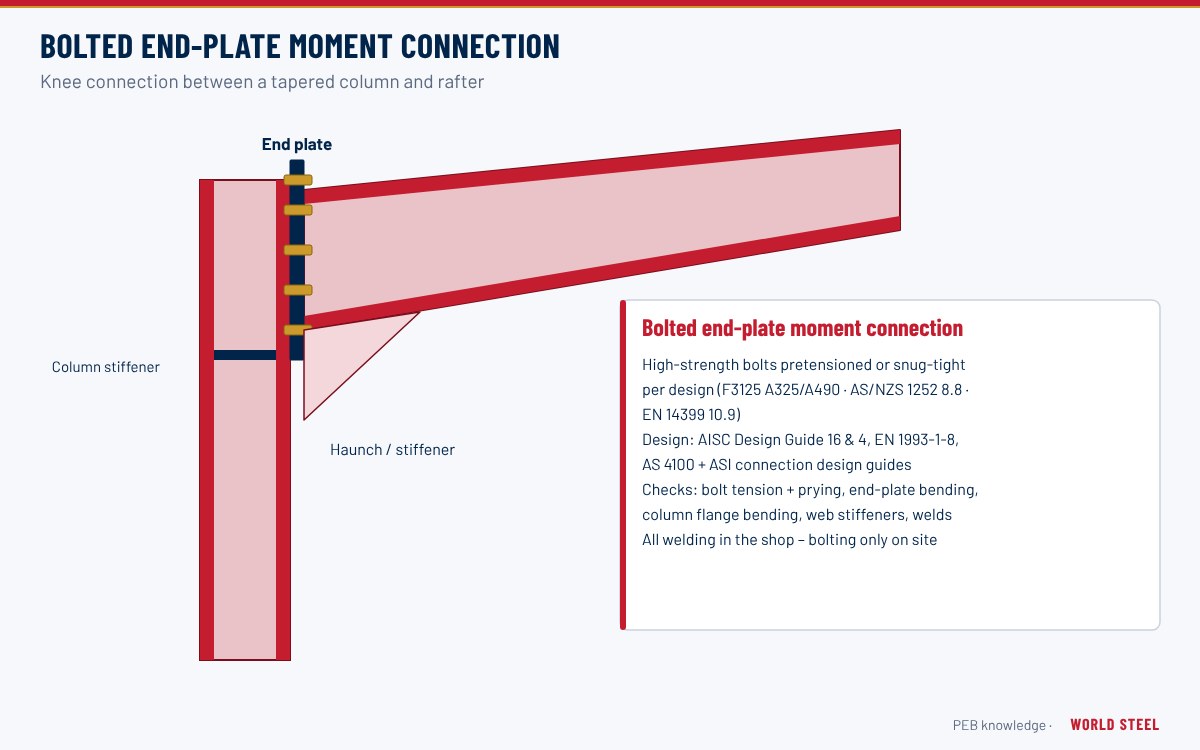
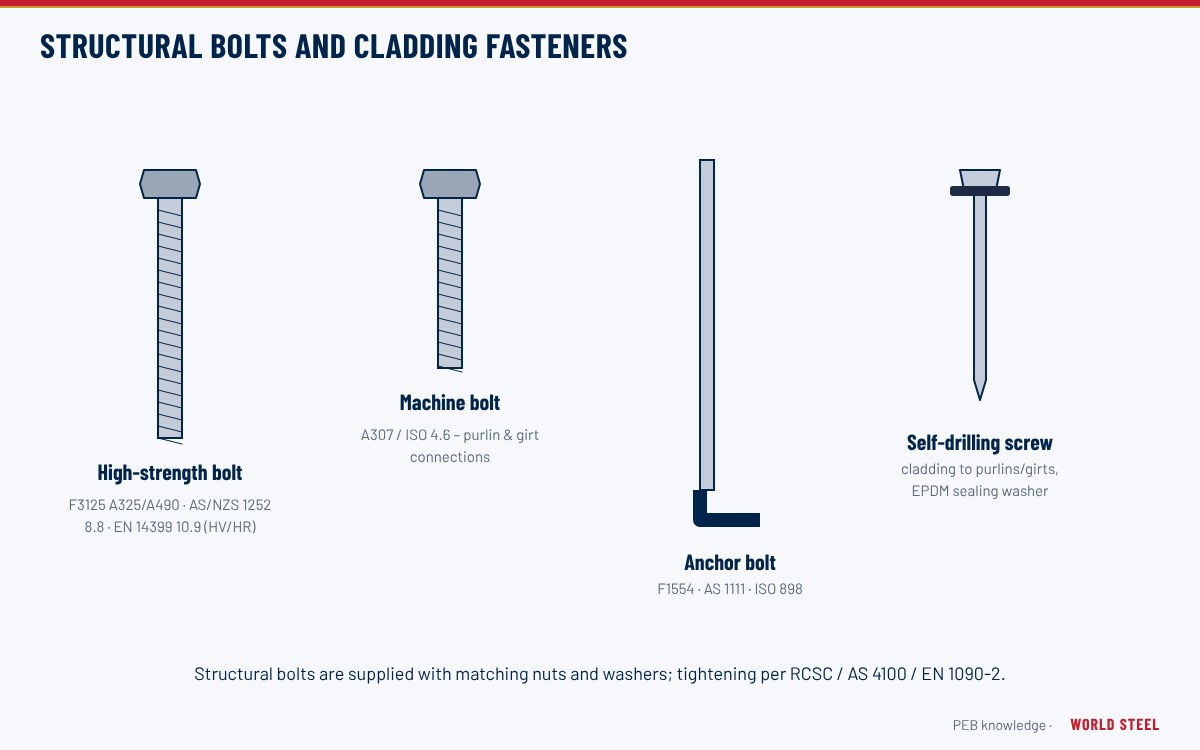
A pre-engineered building is assembled entirely with mechanical fasteners. High-strength structural bolts join primary frame members at end-plate and splice connections; commercial-grade bolts fix purlins, girts and bracing; anchor rods connect columns to foundations; and self-drilling screws and rivets fix the cladding, trims and accessories. Each type has its own standards, grades and installation rules, and mixing grades or using the wrong tightening method is a common site error.
Structural bolt grades by region
| Region | Standard and grade | Minimum tensile strength | Notes |
|---|---|---|---|
| USA / Canada | ASTM F3125 Grade A325 (and twist-off F1852) | 120 ksi (830 MPa) | Heavy hex; inch sizes; A325M metric variant |
| USA / Canada | ASTM F3125 Grade A490 (and twist-off F2280) | 150 ksi (1,040 MPa), max 173 ksi | Not galvanized; higher hydrogen-embrittlement sensitivity |
| Australia / NZ | AS/NZS 1252.1, property class 8.8 | 830 MPa | Bolting categories 8.8/S, 8.8/TB, 8.8/TF |
| Australia / NZ | AS 1111 property class 4.6 | 400 MPa | Commercial bolts for secondary connections (4.6/S) |
| Europe | EN 14399-3 (HR) / -4 (HV), class 8.8 or 10.9 | 800 / 1,000 MPa | Preloadable assemblies; EN 15048 for non-preloaded |
| International | ISO 898-1 property classes 4.6, 8.8, 10.9 | 400 / 800 / 1,000 MPa | Mechanical property basis for metric bolts |
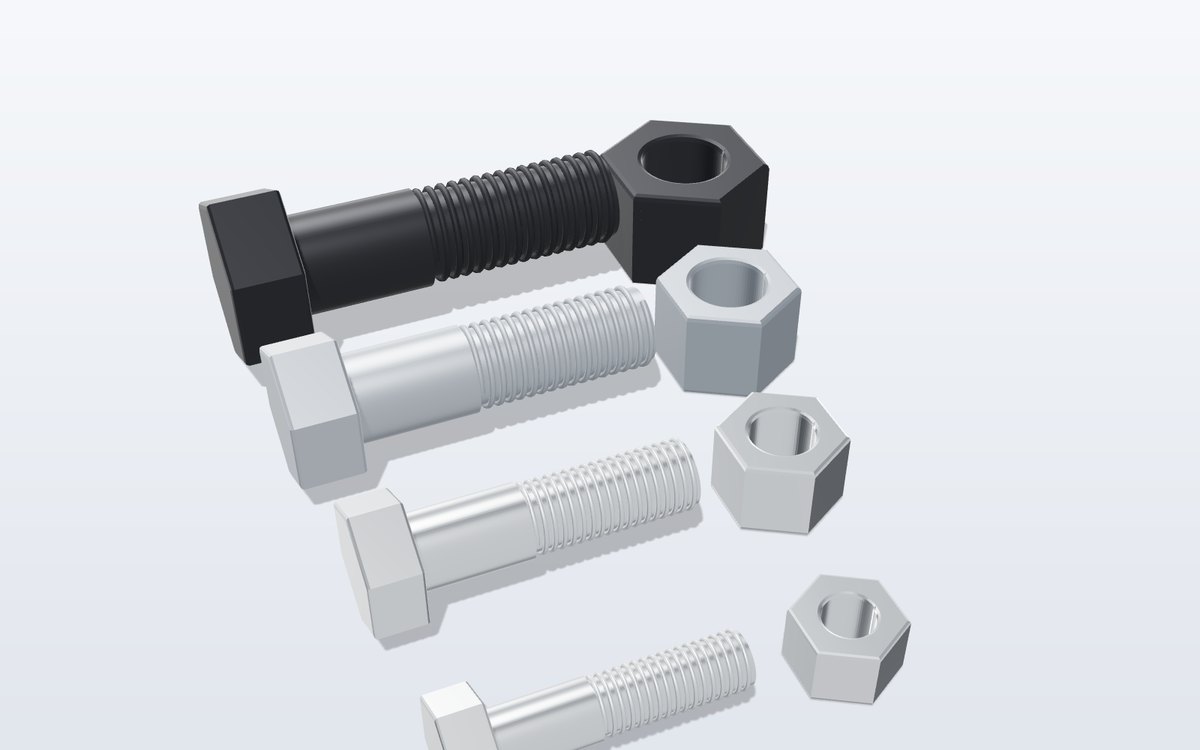
Bolts, nuts and washers should be supplied as matched assemblies from one manufacturer with lot traceability, particularly for pretensioned joints. Hot-dip galvanized high-strength bolts must have galvanized, lubricated nuts tested with the bolt.
Tightening methods
- Snug-tight: full contact of plies by an ironworker's effort with a spud wrench; used where pretension is not required.
- Turn-of-nut / part-turn: snug, then a specified rotation (RCSC 2020, AS 4100 / AS/NZS 5131, EN 1090-2).
- Calibrated wrench / torque method: torque calibrated daily on the actual assemblies.
- Direct tension indicators: ASTM F959 washers or EN 14399-9 DTIs show when tension is reached.
- Twist-off (tension control) bolts: spline shears at the specified tension (F3125 F1852 / F2280; EN 14399-10 HRC).
Anchor rods and cladding fasteners
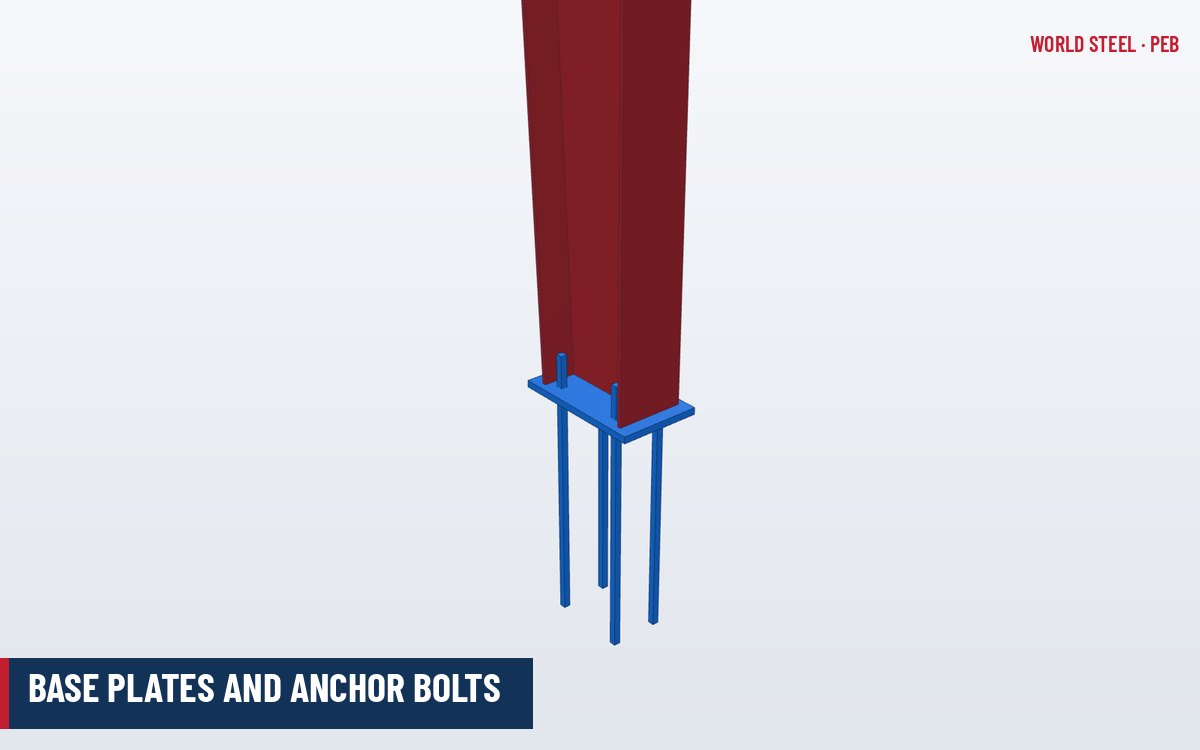
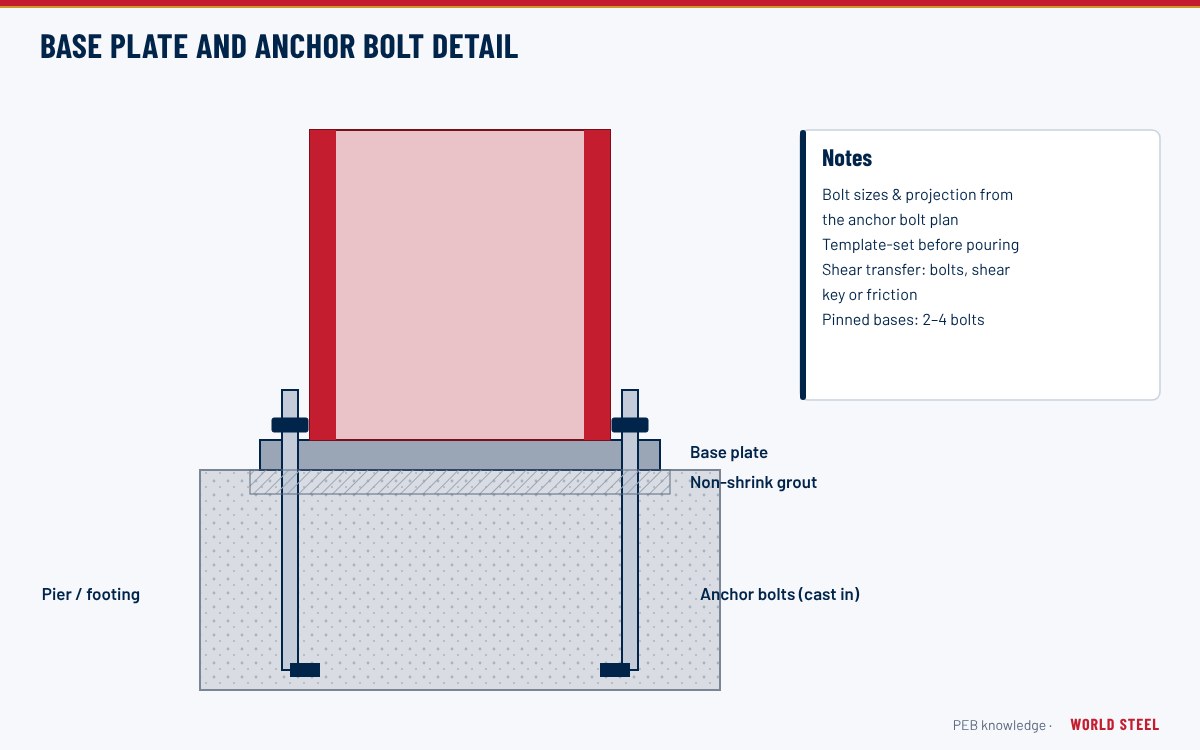
Anchor rods are typically ASTM F1554 Grade 36, 55 or 105 in the US, AS/NZS 1252 or 4.6 / 8.8 rods in Australia, and property class 4.6–8.8 rods per ISO 898-1 in Europe – see base plates and anchor bolts and anchor bolts and embeds.
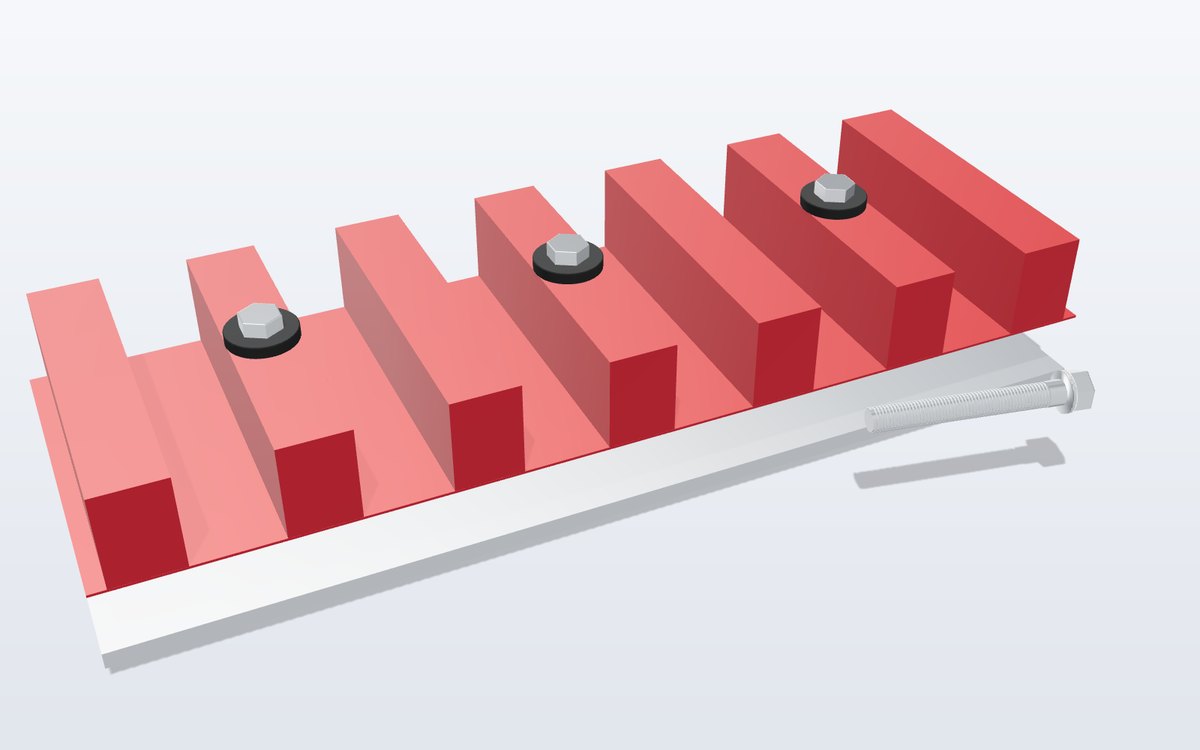
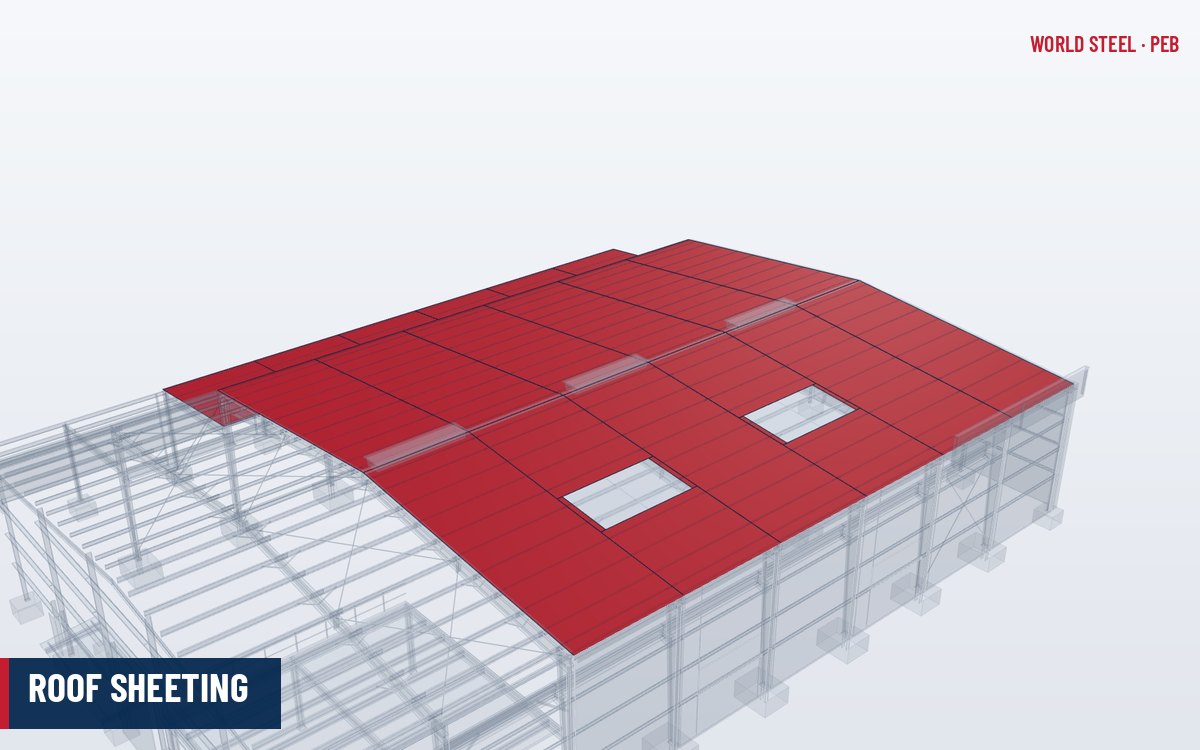
Cladding fasteners are self-drilling, self-tapping screws with EPDM sealing washers, sized to the steel thickness (e.g. 12-14 for purlins up to about 3 mm, 12-24 or heavy-section screws for hot-rolled steel). Durability classes are defined by AS 3566.2 (Class 3 and 4 for coastal and industrial exposure) and by ISO 12944 / ISO 9223 categories elsewhere. Stitching screws and sealed rivets fix side laps and trims. Fastener coatings must match or exceed the durability of the cladding; stainless or bi-metal fasteners are used for severe exposure and aluminium sheet.
| Use | Typical fastener |
|---|---|
| Sheet to cold-formed purlin / girt | Self-drilling screw with EPDM washer, crest or valley fixed per manufacturer |
| Sheet to hot-rolled steel | Heavy-section self-drilling screw with longer drill point |
| Side laps and trims | Stitch screws or sealed blind rivets |
| Standing seam clips | Screws specified by the roof system manufacturer |
Secondary bolts, screws, rivets and anchors
Besides the high-strength bolts in the frame connections, a PEB uses thousands of smaller fasteners. They are low in cost but numerous, and missing or wrong items delay erection more than almost anything else.
| Item | Typical specification | Use |
|---|---|---|
| Purlin and girt bolts | M12–M16 property class 4.6 or 8.8 (ISO 4016/4014), or ASTM A307 Grade A / F3125 A325, hot-dip or zinc plated | Purlin-to-cleat, lap and girt connections |
| Bracing and flange-brace bolts | M12–M20 class 4.6 or 8.8 | Rod bracing brackets, flange braces, sag rod connections |
| Self-drilling screws | No. 12 (about 5.5 mm) or No. 14 (about 6.3 mm) diameters; thread pitch to suit steel thickness; to ISO 15480 / SAE J78 or manufacturer specification | Sheet to purlin and girt, trims, stitching |
| Stitch screws | Short No. 12–14 screws with sealing washer | Side laps and trim laps |
| Blind rivets | About 4.0–4.8 mm aluminium or stainless, sealed (closed-end) for weather exposure | Gutter laps, flashings, light trims |
| Concrete anchors | Expansion or bonded (chemical) anchors with product approvals | Base angles, door jambs, retrofit fixings |
- Corrosion classes: AS 3566.2 Class 3 coated screws are typical for general exposure and Class 4 for severe coastal or industrial sites; stainless steel (304 or 316) or bi-metal screws with a hardened carbon drill tip are used with aluminium sheet and in very aggressive environments.
- Approvals: post-installed concrete anchors should be qualified under ACI 355.2 / ACI 355.4 and designed to ACI 318 Chapter 17 (US), to an EAD / ETA under EN 1992-4 (Europe), or to AS 5216 (Australia).
- Isolation: use EPDM or nylon isolating washers where dissimilar metals meet, for example aluminium trims on steel girts.
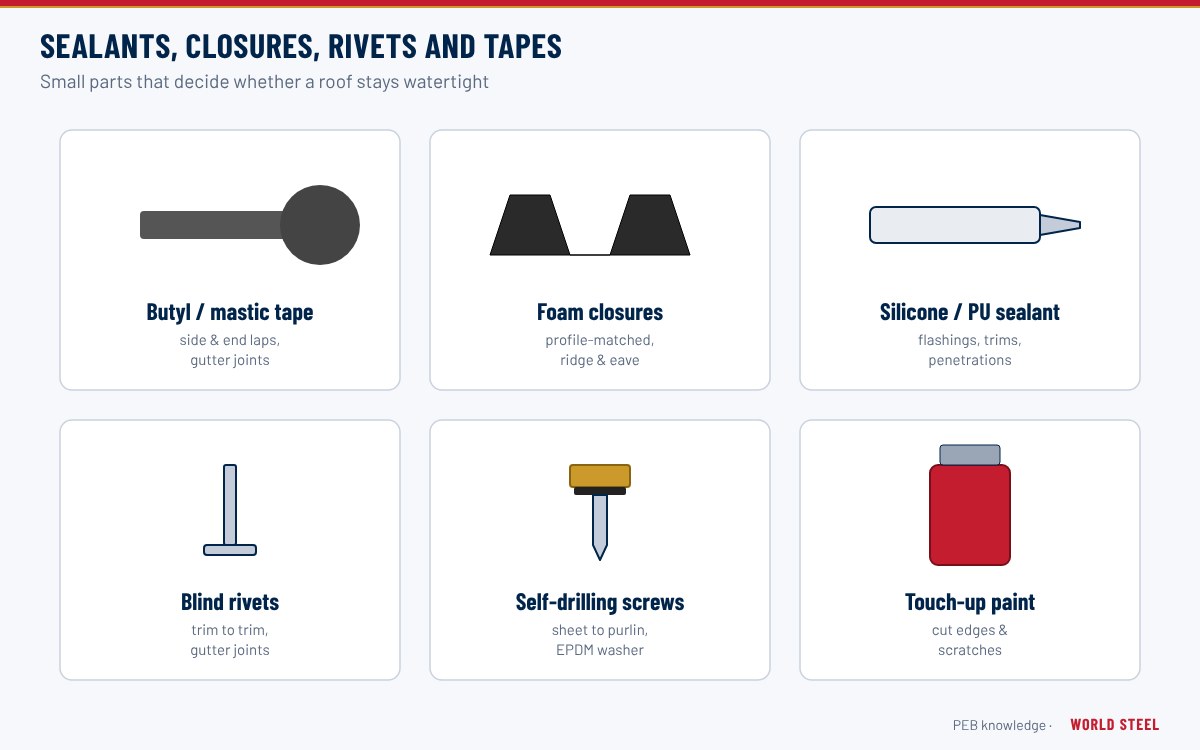
Sealants, foam closures and tapes that complete the cladding are covered in sundries: sealants, closures, rivets and tapes.
Supply and quality at WSC
World Steel supplies all structural bolts, anchor rods and cladding fasteners for its buildings, specified to the project code and listed by connection on the erection drawings, with mill certificates for high-strength assemblies. Fasteners are packed by connection type to simplify site sorting. See structural bolts and fasteners package, connection design and accessories.
Norme per regione
| Regione | Norma | Ambito |
|---|---|---|
 United States |
ASTM F3125 | High-strength structural bolts – Grades A325, A490, F1852, F2280 |
| United States |
RCSC 2020 | Specification for structural joints using high-strength bolts |
| United States |
ASTM F1554 | Anchor bolts, steel, 36, 55 and 105 ksi yield |
 Canada |
CSA S16-19 / ASTM F3125 | Bolted connections in Canada |
 Australia / NZ |
AS/NZS 1252.1 | High-strength steel fastener assemblies for structural engineering |
| Australia / NZ |
AS 3566 | Self-drilling screws for the building and construction industries |
 Europe |
EN 14399 | High-strength structural bolting assemblies for preloading |
| International | ISO 898-1 | Mechanical properties of carbon and alloy steel bolts |
Domande frequenti
Is an A325 bolt the same as a class 8.8 bolt?
They have similar minimum tensile strength (about 830 MPa) but differ in thread standards, head dimensions, sizes and assembly requirements, so they are not directly interchangeable on drawings without approval.
Can A490 bolts be galvanized?
No. ASTM F3125 does not permit hot-dip galvanizing of Grade A490 bolts because of hydrogen embrittlement risk; other corrosion protection is used where needed.
Why do cladding screws have EPDM washers?
The bonded EPDM washer seals the hole in the sheet against water and accommodates small thermal movements, keeping the fixing weather-tight.