ENEnglish
 VITiếng Việt
 ZH中文
 KO한국어
 JA日本語
 FRFrançais
 ITItaliano
 PTPortuguês
 ESEspañol
 HEעברית
 ARالعربية

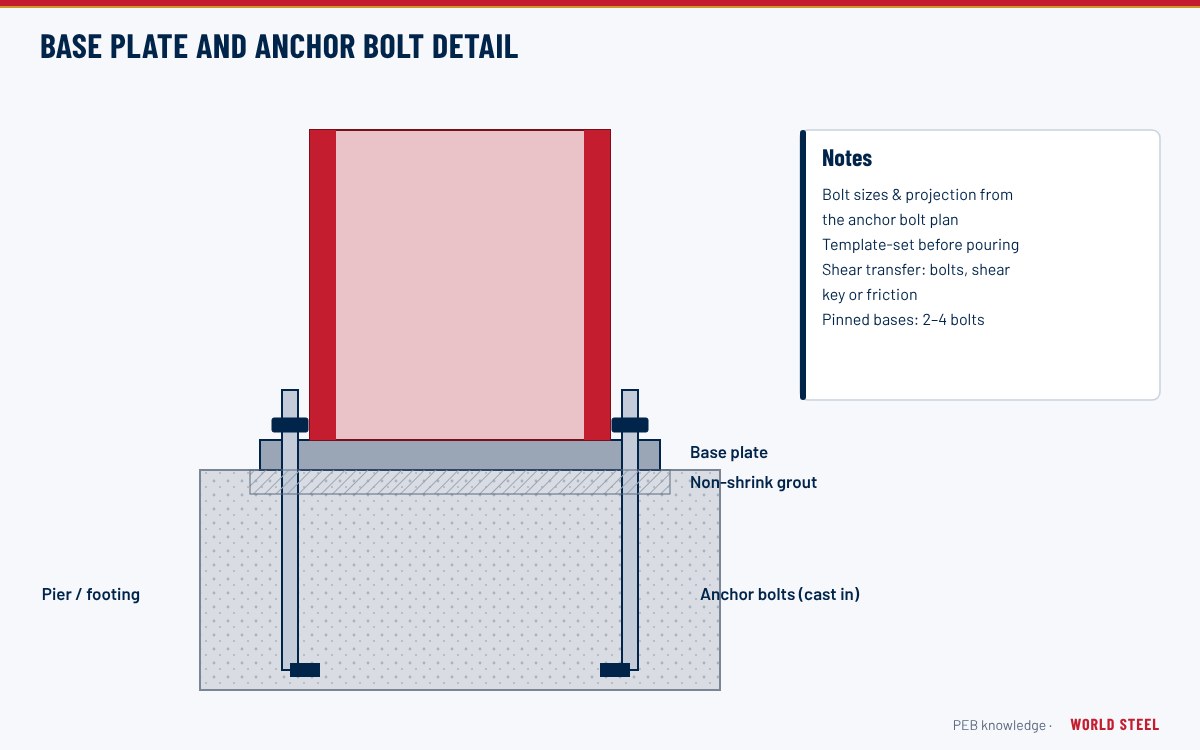
Scope of supply
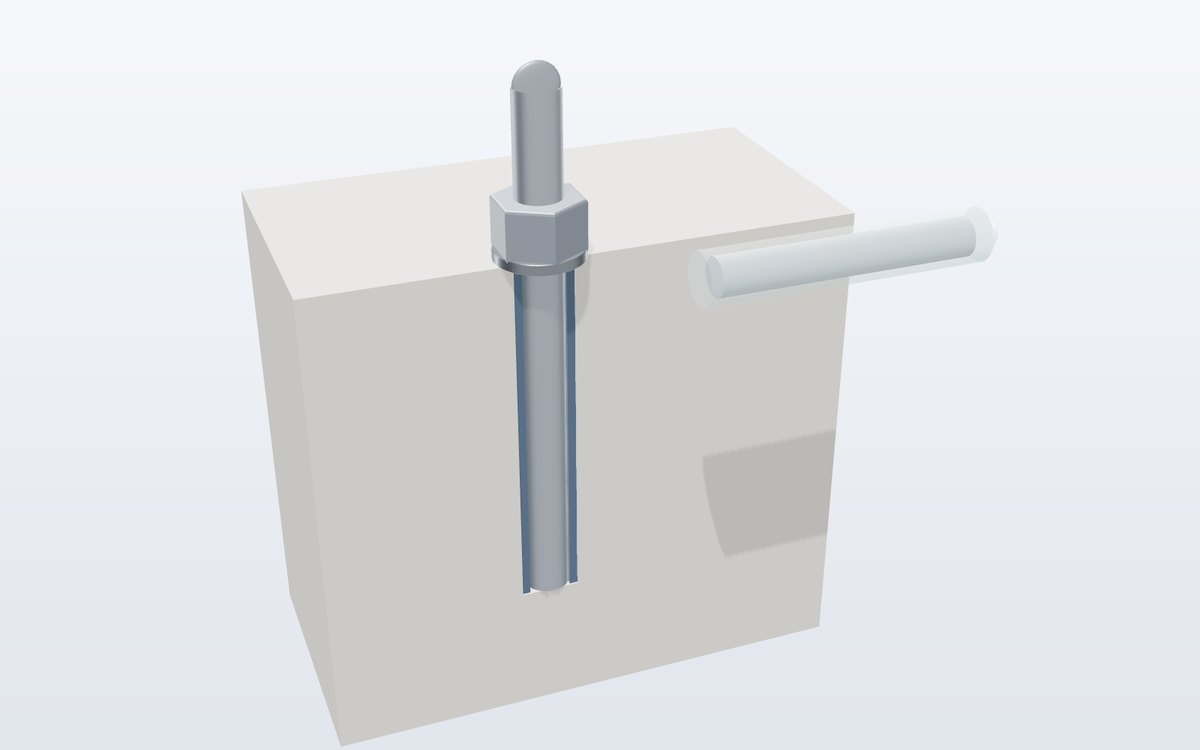
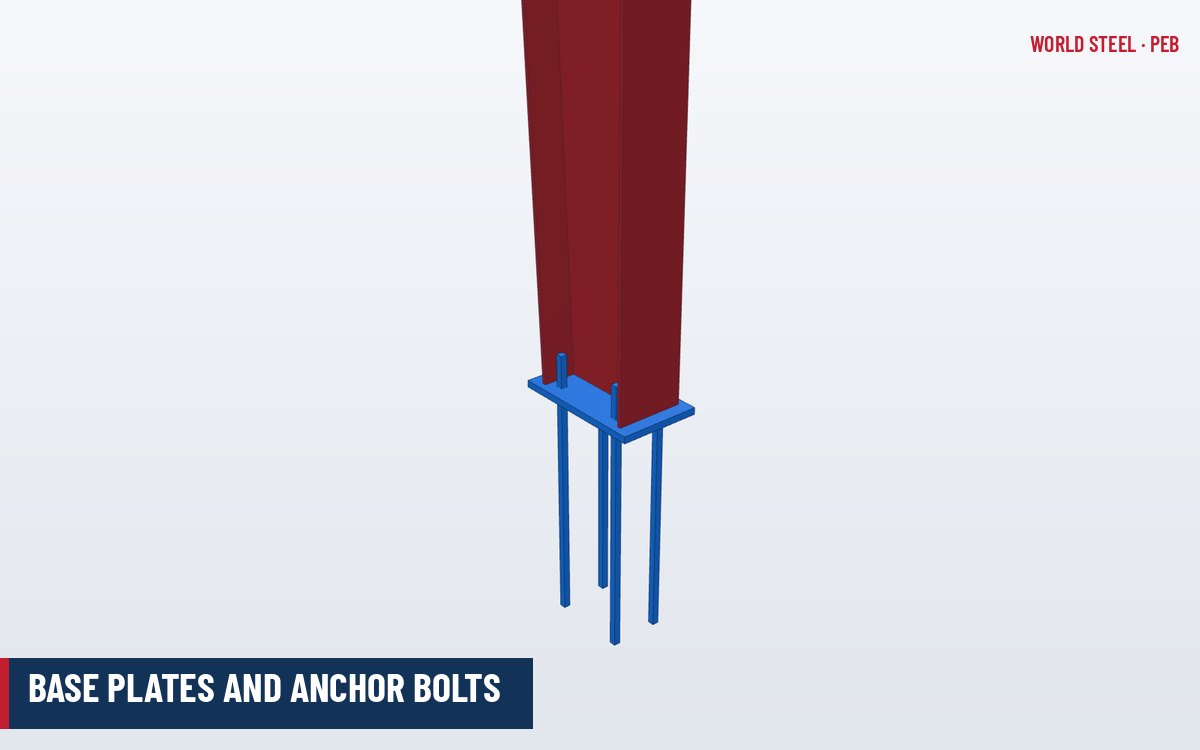
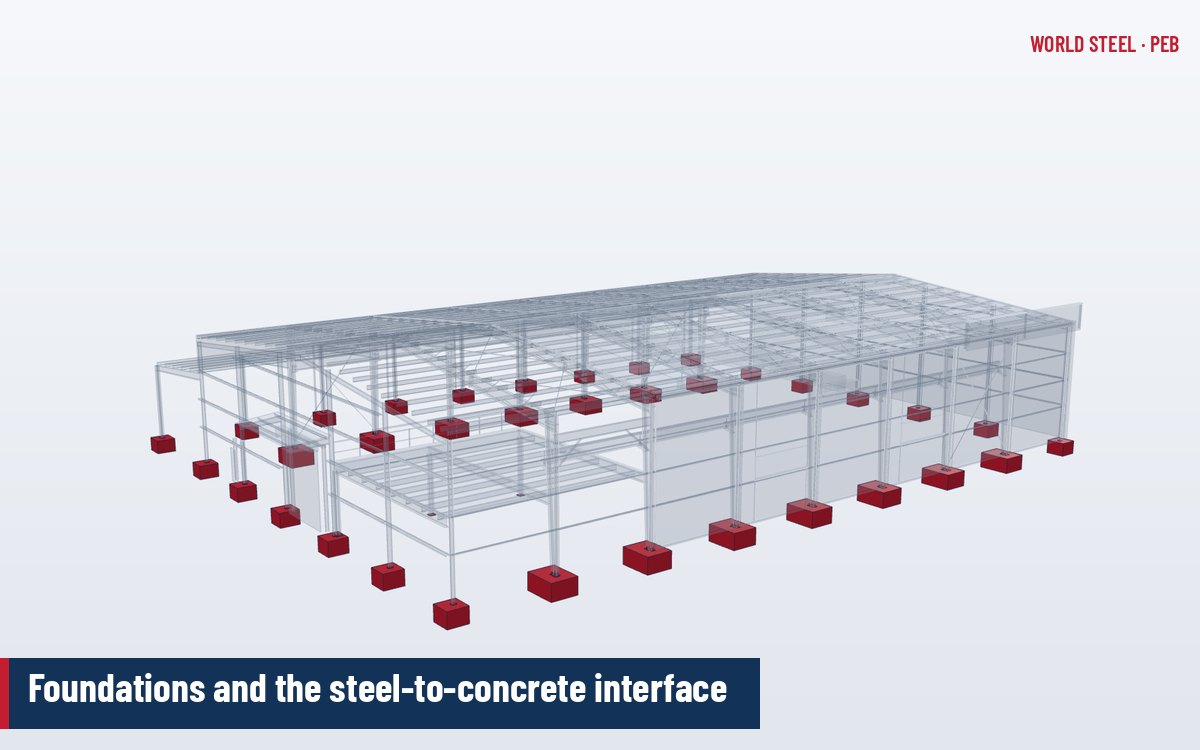
Anchor bolts connect the steel building to its foundations and must be in the concrete before any frame arrives. World Steel supplies them as an early shipment, together with the anchor bolt plan and base reactions, so that the foundation contractor can work while frames are fabricated. The detailing principles are described in base plates and anchor bolts and foundations and the steel-to-concrete interface.
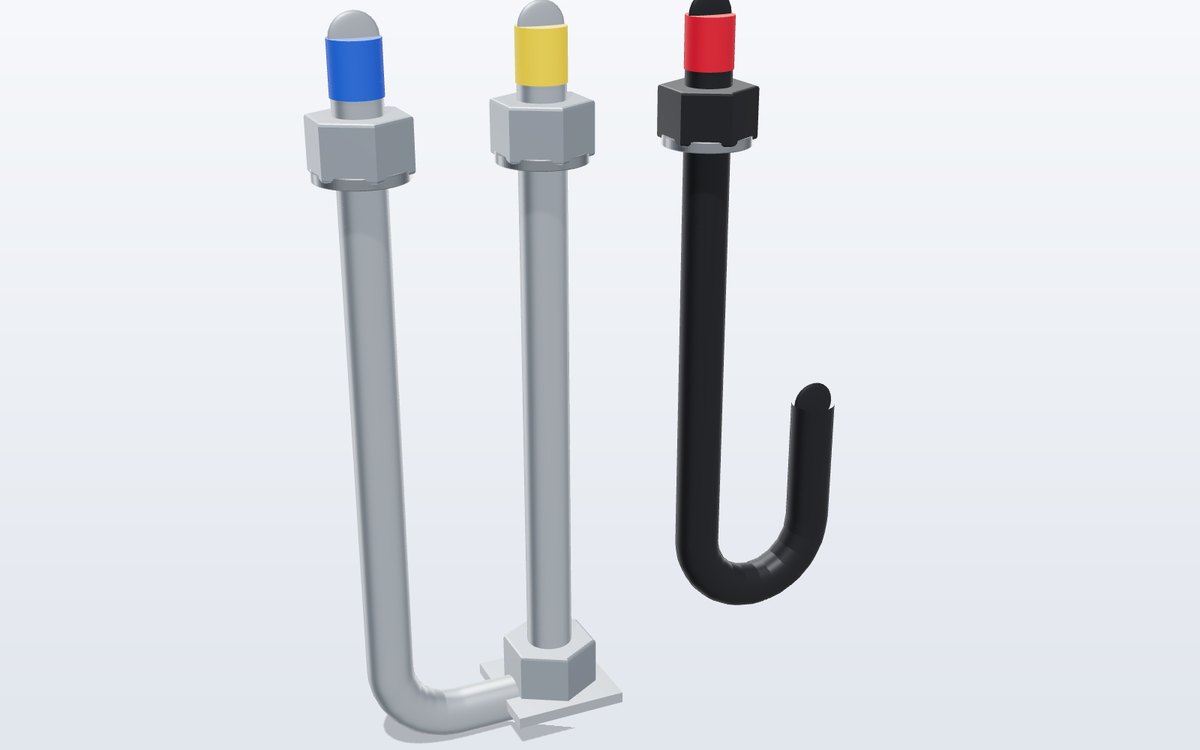
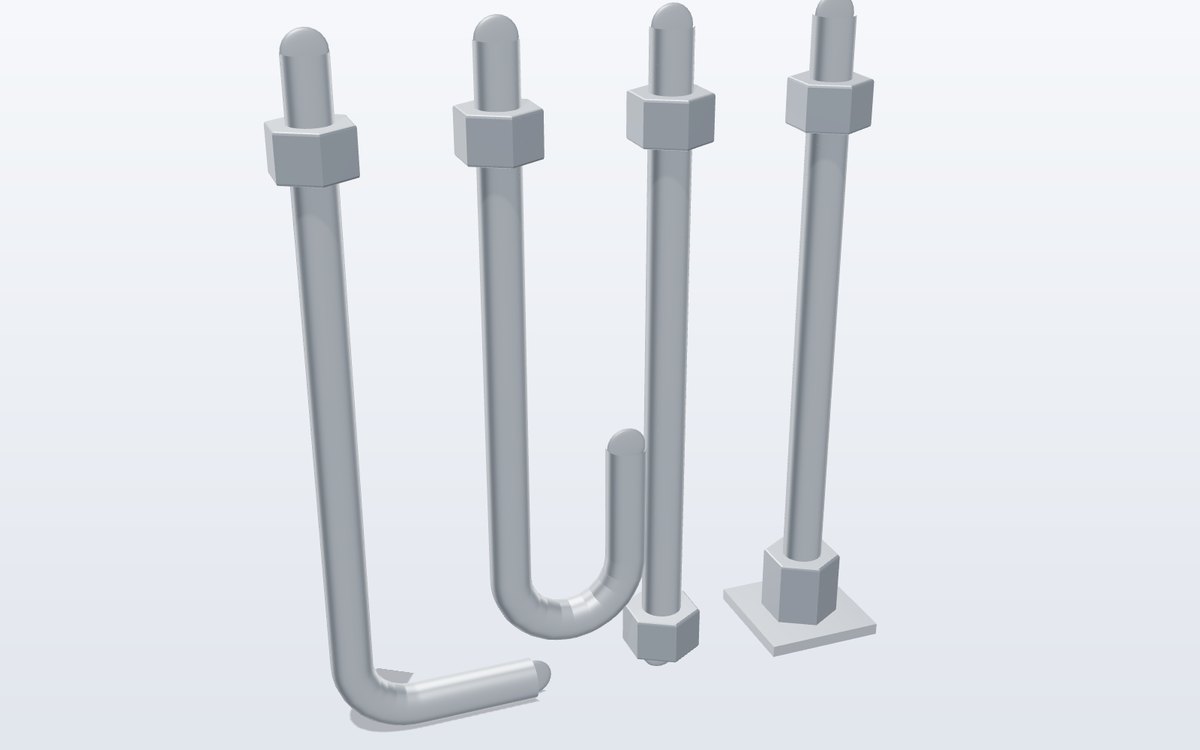
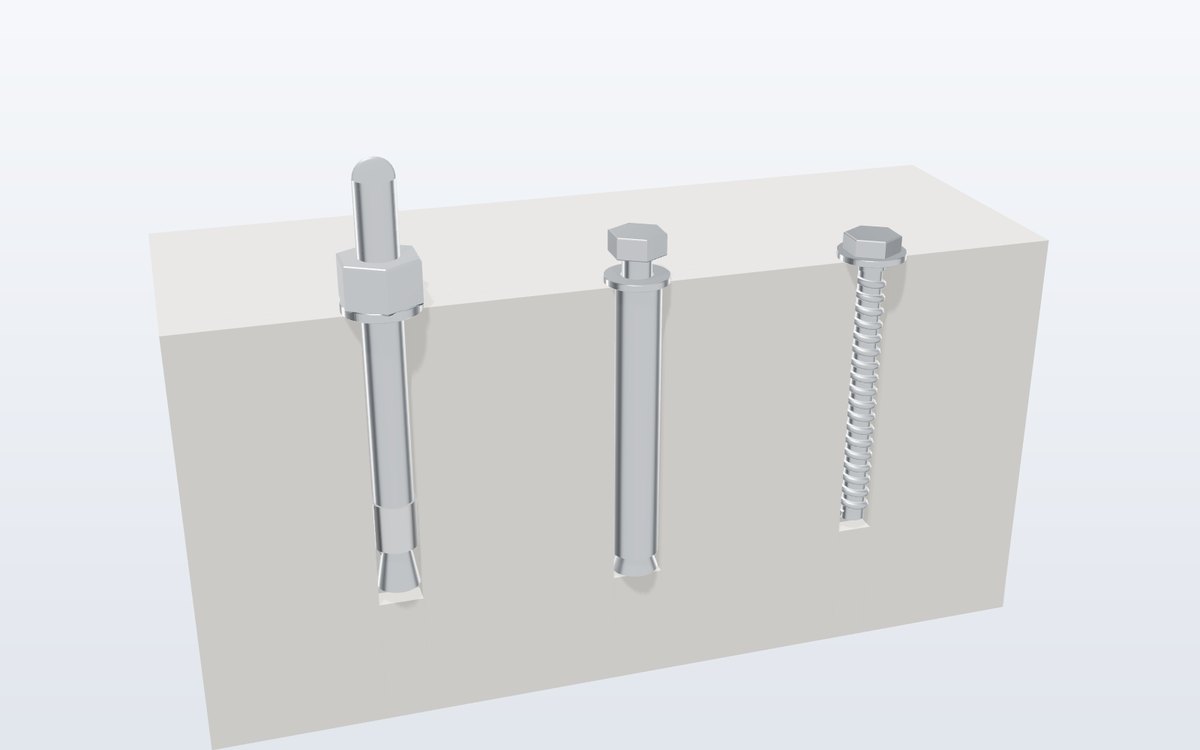
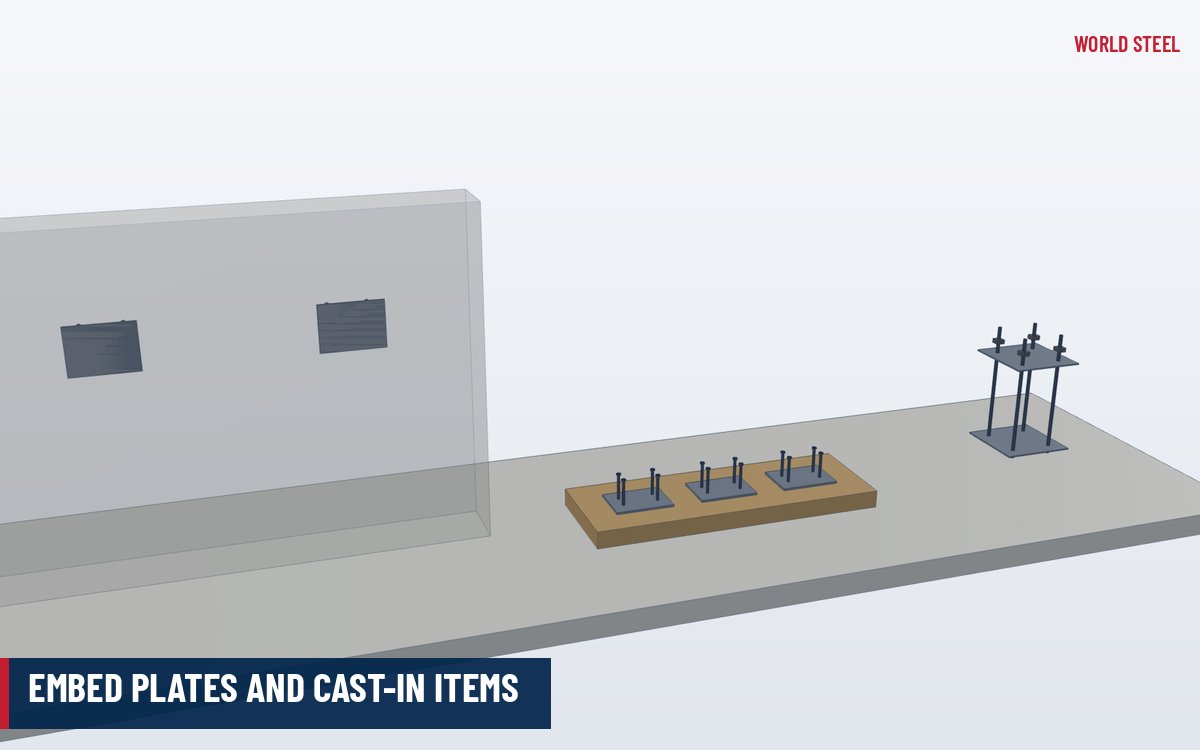
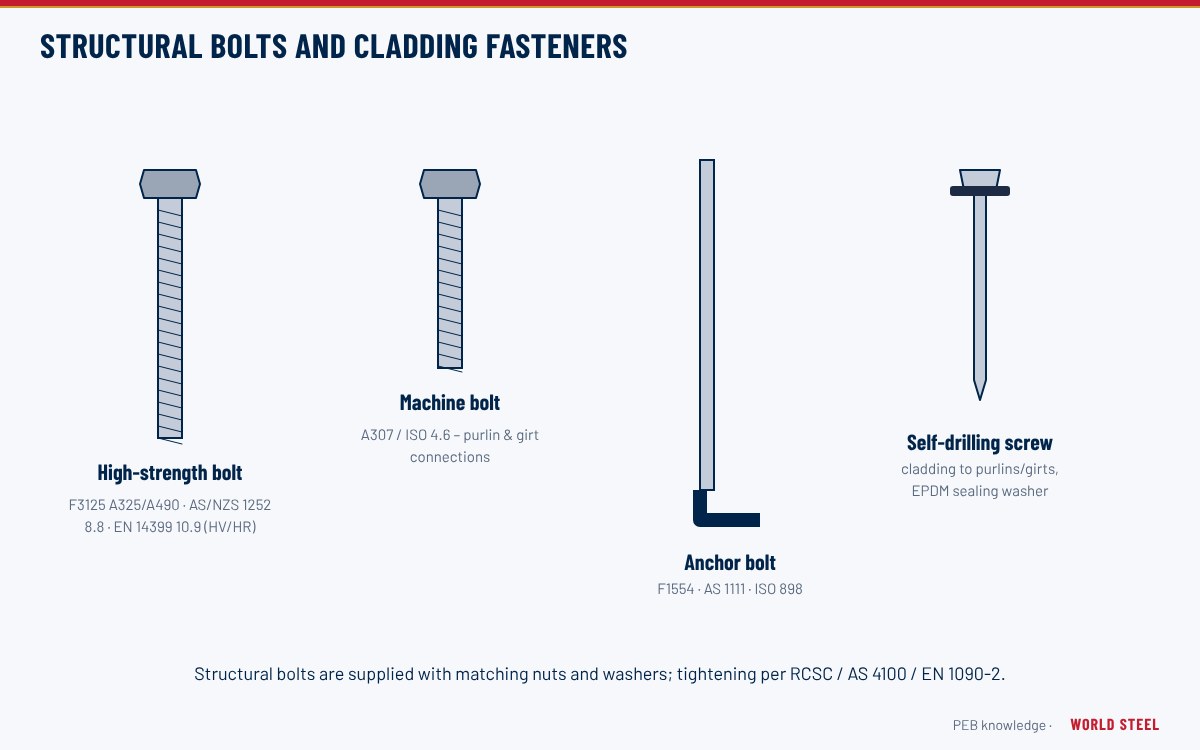
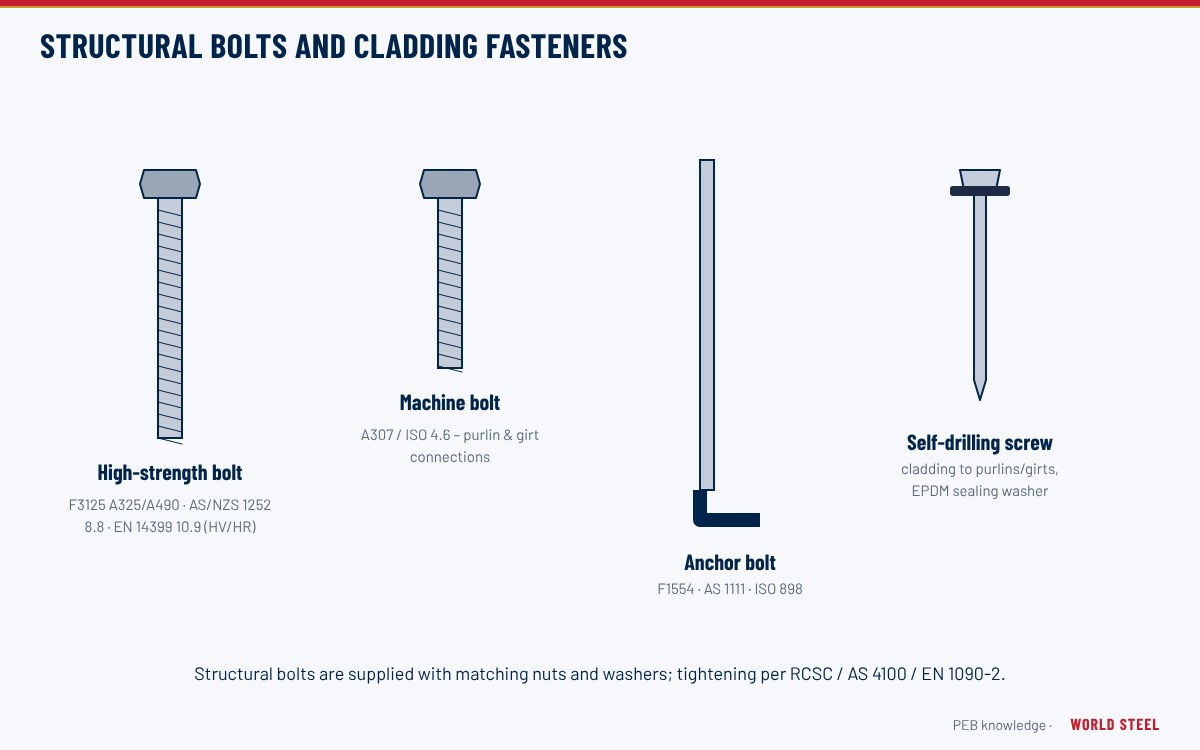
- Anchor rods: L-bolts, J-bolts or straight rods with plate washers or headed nuts.
- Nuts, washers and levelling nuts, galvanized where specified.
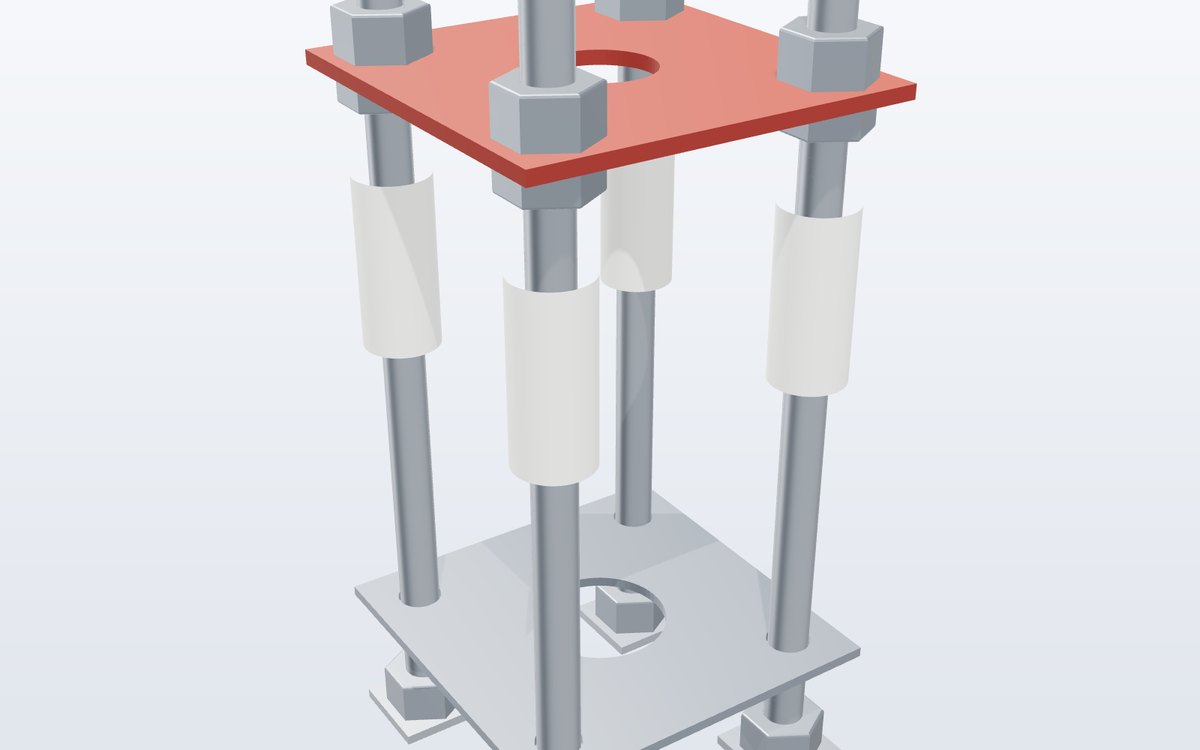
- Setting templates to hold bolt groups in position during the pour.
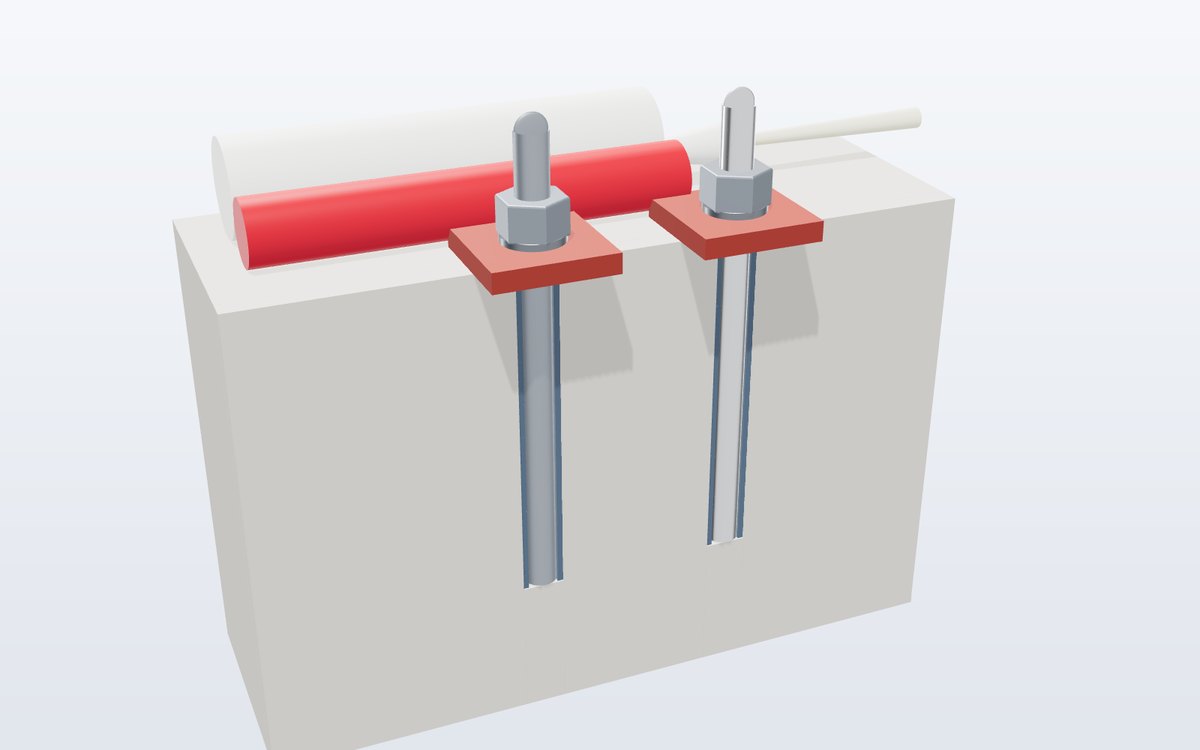
- Embedded plates with headed studs for wall connections, canopies and equipment.
- Shear keys (shear lugs) where horizontal reactions require them.
Options and variants
| Market | Grade | Notes |
|---|---|---|
| United States | ASTM F1554 Grade 36, 55 (with S1 weldability) or 105 | Grade 36 is most common for PEB |
| Canada | ASTM F1554 or CSA G40.21 rod | As specified by the engineer |
| Australia / NZ | Property class 4.6 or 8.8 rods and bolts | Galvanized to AS/NZS 4680 where specified |
| Europe | Property class 4.6, 5.6 or 8.8 to EN ISO 898-1 | Design to EN 1992-4 / EN 1993-1-8 |
Typical diameters range from about M16 to M36 (5/8 to 1-1/2 in) for standard PEB columns, with larger rods for crane and moment-base columns. Bolts are supplied black, hot-dip galvanized or with galvanized threaded ends only.
Materials, documentation and packing
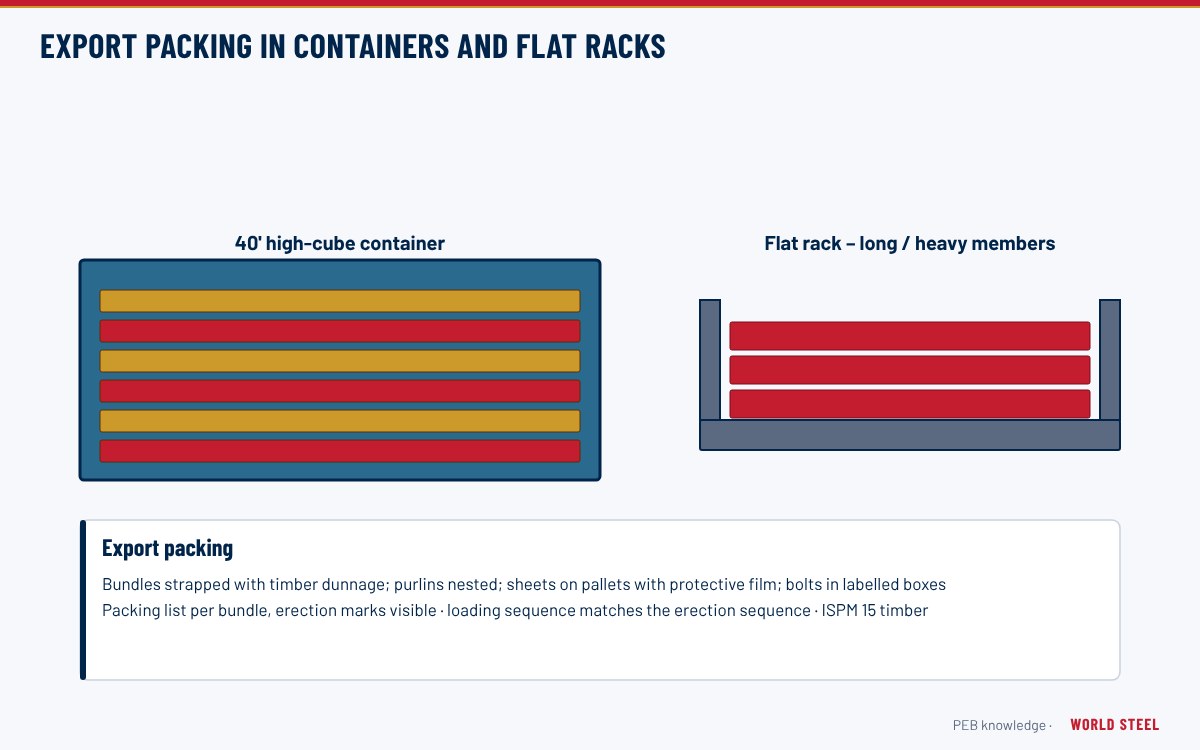
Rods are cut, threaded and bent in the plant or sourced from qualified bolt makers with mill certificates. Each bolt group is tagged with its grid reference. Documentation includes the anchor bolt plan with projections and thread lengths, base reactions for the foundation designer, template drawings and material certificates. Anchor bolts are packed in labelled crates and usually sent by the first available vessel or by air for urgent starts.
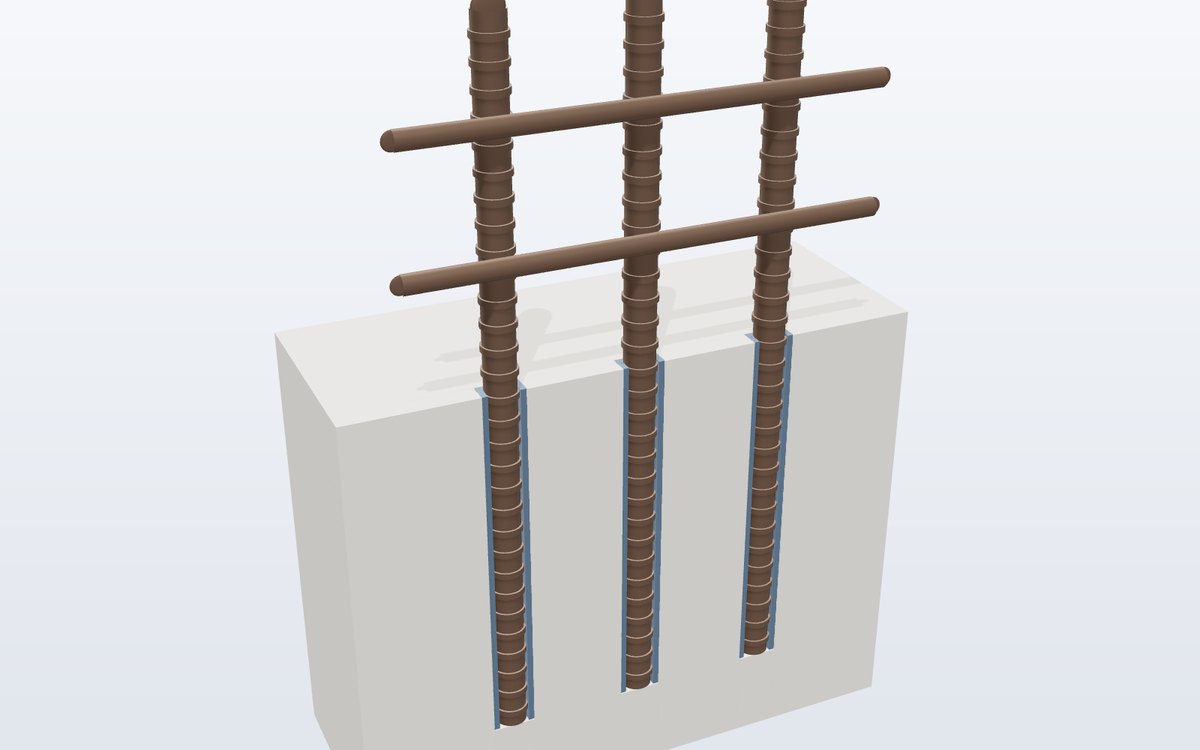
The anchorage of the bolts in concrete (embedment, edge distance, reinforcement) is the responsibility of the foundation engineer; World Steel provides the forces and the steel details.
Compliance by market
| Market | Design code | Fabrication / welding | Materials | Certification notes |
|---|---|---|---|---|
| United States | ACI 318-19 Chapter 17 anchoring, AISC 360-22, AISC Design Guide 1 | AWS D1.1 incl. stud welding for embeds | ASTM F1554, A563 nuts, F436 washers | WSC holds IAS AC472 accreditation for metal building systems; welding qualified to AWS D1.1 (structural) and AWS D1.3 (sheet steel). AISC Certification is not held – confirm acceptance if specified. |
| Canada | CSA A23.3 Annex D anchorage, CSA S16-19 | CSA W59 incl. stud welding | ASTM F1554 / CSA G40.21 | Designed to CSA S16 / CSA S136 by WSC or the engineer of record. CSA W47.1 (CWB) company certification is a market requirement, arranged per project. |
| Australia / New Zealand | AS 5216:2021 fastenings in concrete, AS 4100:2020 | AS/NZS 5131, AS/NZS 1554.1 | AS 4291.1 / ISO 898-1 property classes | WSC is certified to AS/NZS 5131 Construction Category CC3; welding to AS/NZS 1554.1. For New Zealand, SFC certification is not held – confirm acceptance per project. |
| Europe | EN 1992-4 fastenings, EN 1993-1-8 | EN 1090-2, EN ISO 14555 stud welding | EN ISO 898-1, EN 10025-2 embed plates | WSC is certified to EN 1090-2 Execution Class EXC3 and ISO 3834-2. CE marking via EN 1090-1 factory production control to be confirmed per project. |
Design references, corrosion protection and tolerances
| Topic | United States / Canada | Australia / NZ | Europe |
|---|---|---|---|
| Anchorage to concrete | ACI 318 Chapter 17; CSA A23.3 Annex D; AISC Design Guide 1 | AS 5216 (fastenings in concrete), AS 3600 | EN 1992-4 |
| Base plate and rod design | AISC 360-22; CSA S16-19 | AS 4100:2020 | EN 1993-1-8 |
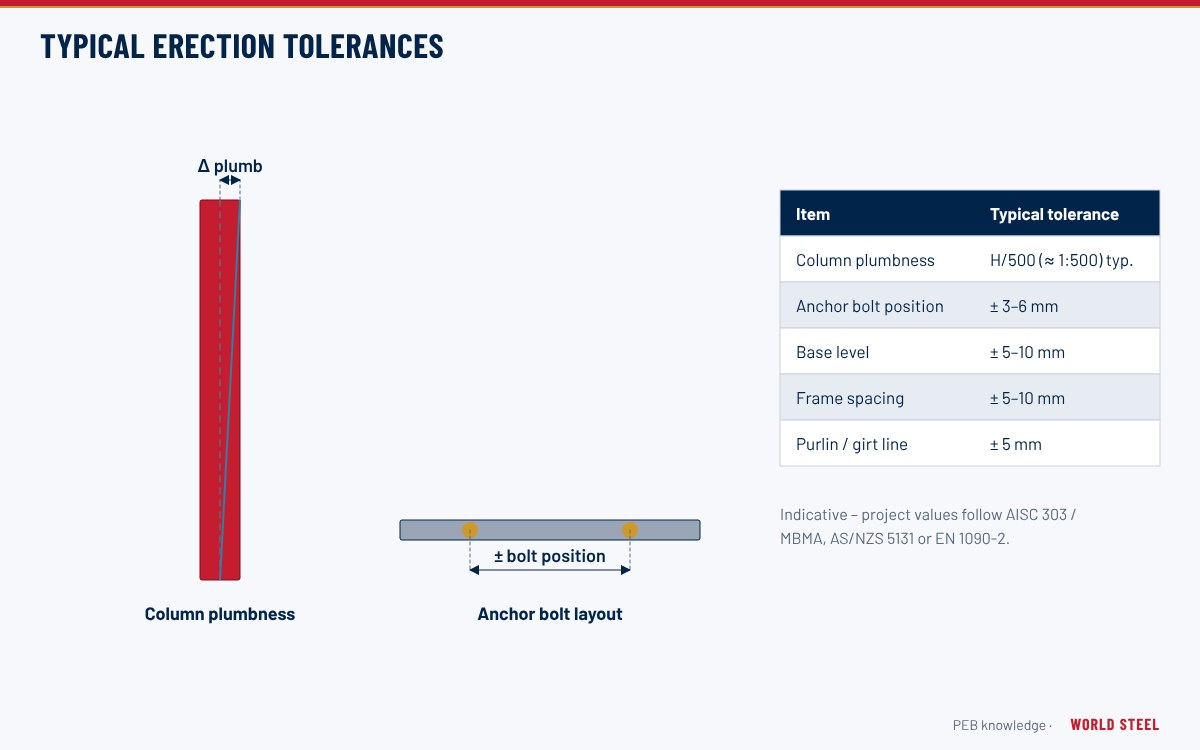
| Placement tolerances | AISC 303 Code of Standard Practice | AS/NZS 5131 | EN 1090-2 |
| Galvanizing | ASTM F2329 / A153 | AS/NZS 4680; AS/NZS 1214 for threaded fasteners | ISO 10684 / EN ISO 1461 |
In corrosive or wet environments the exposed part of the rod and the nut are the weak point: hot-dip galvanized rods, sealed grout pockets and column bases raised above washdown floors all extend life. Projection above concrete is set to allow for levelling nuts, grout, base plate, washer and full nut engagement. See erection tolerances.
How to request a quotation
A quotation can be prepared quickly when the enquiry states the project location and the code to be used. Please send:
- Column base reactions or the frame design, if by others.
- Bolt grade, diameter and finish required by the foundation engineer.
- Number of bolt groups, embed plates and shear keys.
- Required delivery date ahead of the main steel.
Anchor bolts can be quoted alone or as the first item of a full PEB kit under the primary frame scope; enquiries are handled by the export supply team.
Norme per regione
| Regione | Norma | Ambito |
|---|---|---|
 United States |
ASTM F1554 | Anchor bolts, steel, 36, 55 and 105 ksi yield strength |
| United States |
ACI 318-19 | Chapter 17 – anchoring to concrete |
 Canada |
CSA A23.3 | Design of concrete structures, Annex D |
 Australia / NZ |
AS 5216 | Design of post-installed and cast-in fastenings in concrete |
 Europe |
EN 1992-4 | Design of fastenings for use in concrete |
Domande frequenti
Why are anchor bolts shipped before the steel?
The foundations must be cast and cured before erection starts, so the bolts are sent first to avoid delaying the site.
Who designs the anchorage in concrete?
The foundation engineer designs embedment and reinforcement; World Steel provides the base reactions and bolt details.
Are galvanized anchor bolts needed?
Galvanizing is recommended where bases are exposed to moisture or corrosive conditions; inside dry buildings black bolts with grout cover are common.