ENEnglish
 VITiếng Việt
 ZH中文
 KO한국어
 JA日本語
 FRFrançais
 ITItaliano
 PTPortuguês
 ESEspañol
 HEעברית
 ARالعربية

Scope of supply
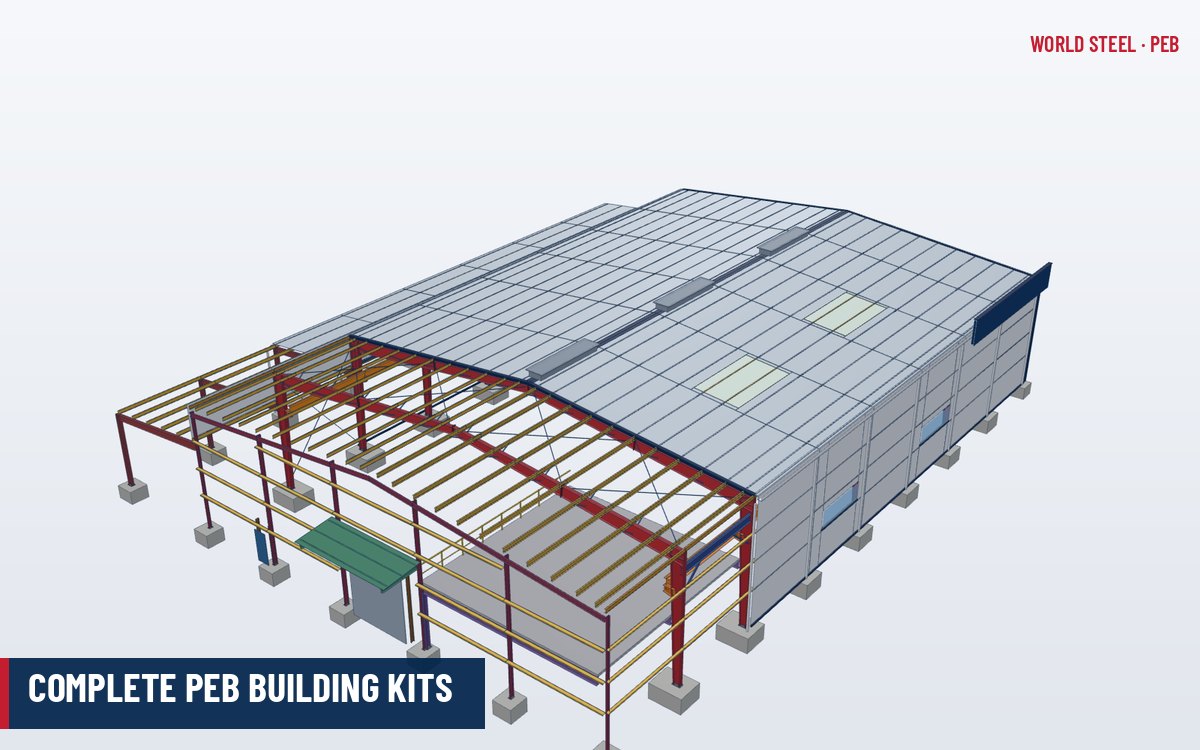
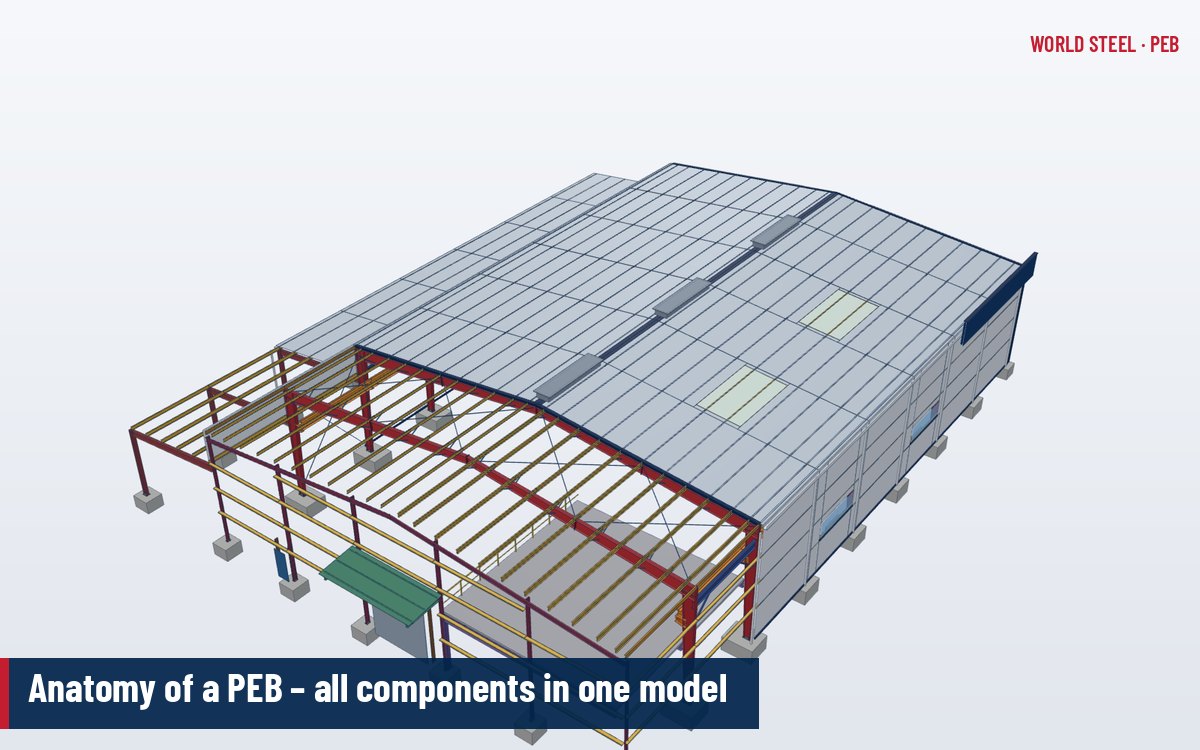
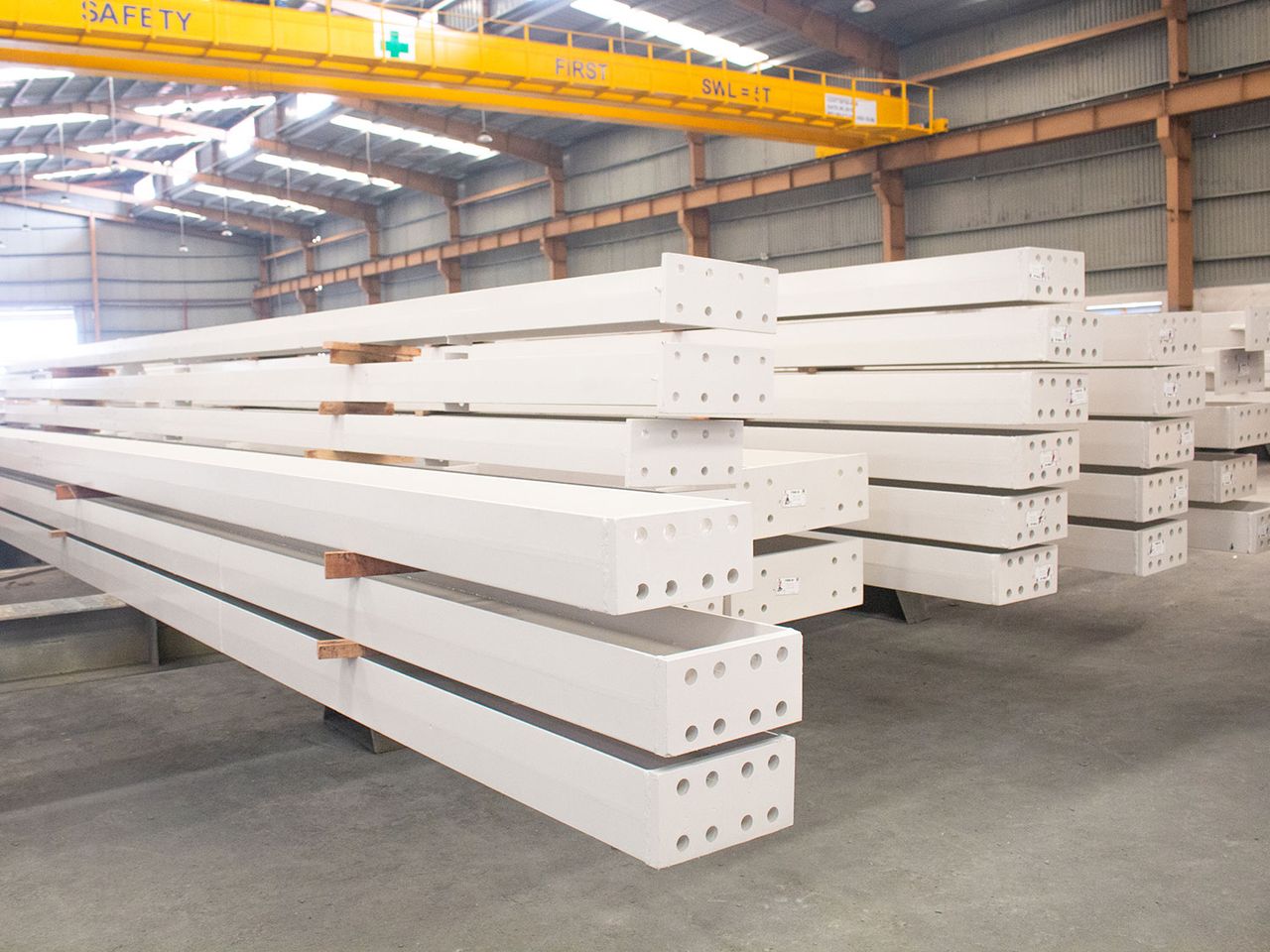
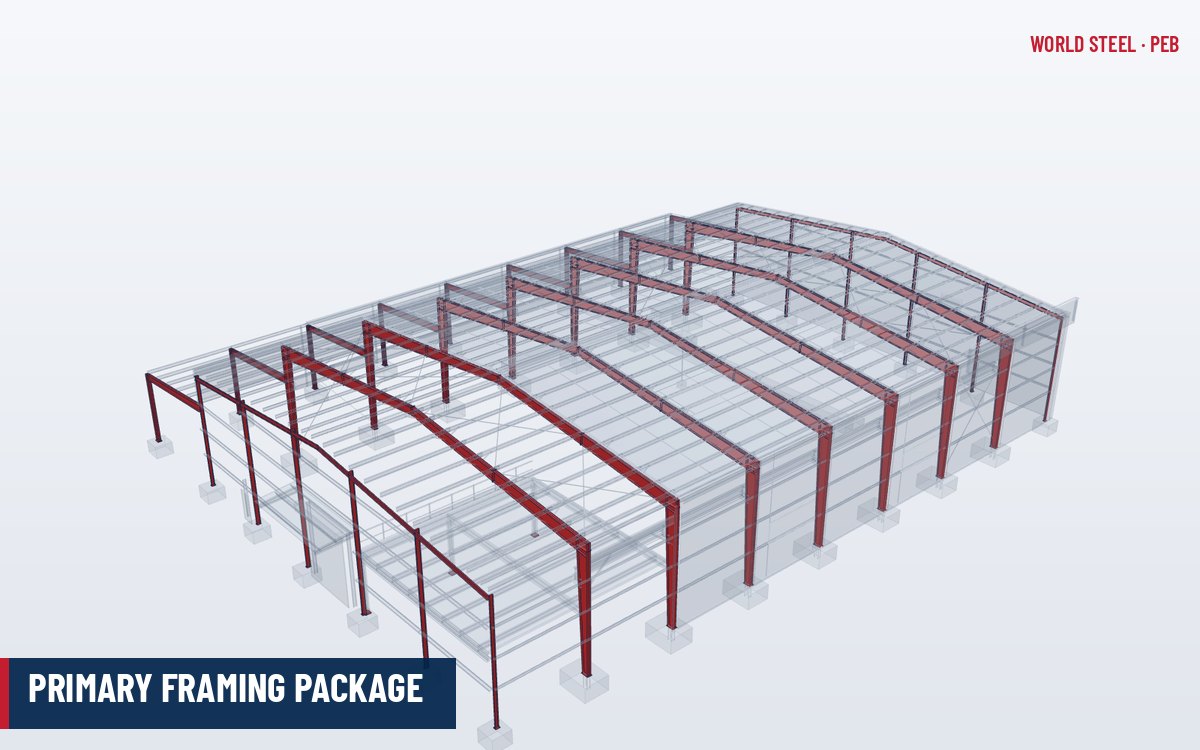
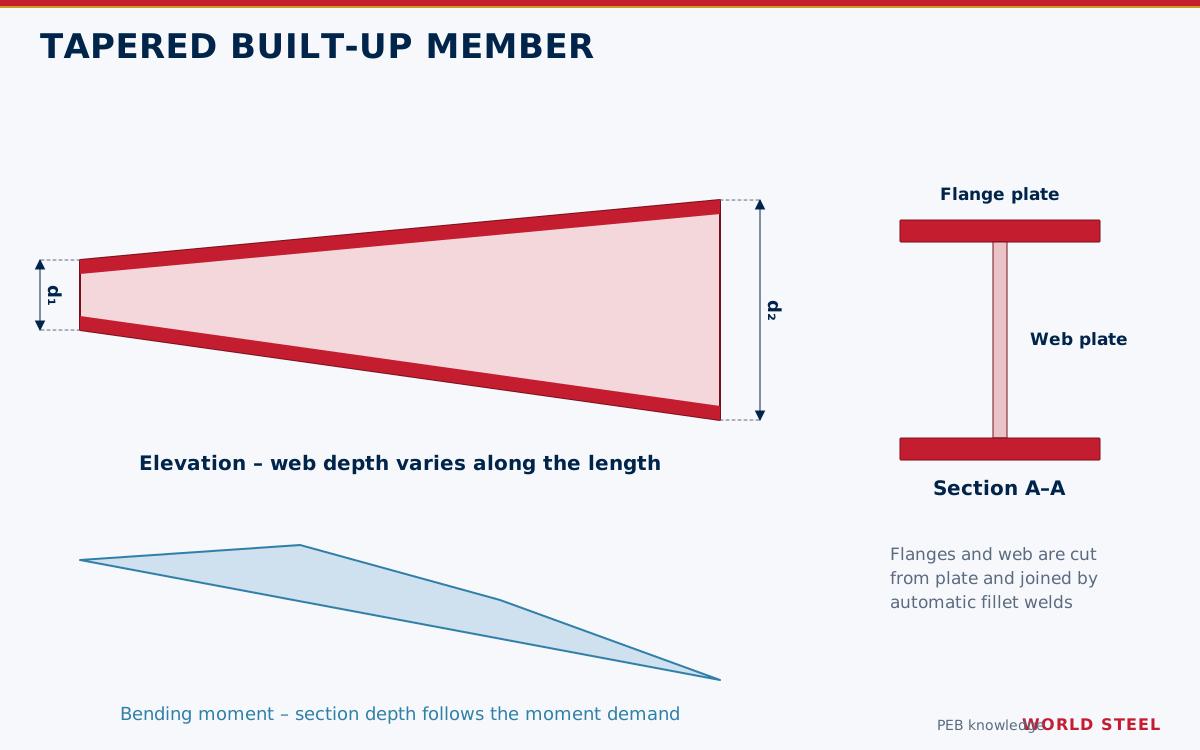
The primary framing package is the main load-carrying steel of a pre-engineered building. It is supplied either as part of a complete PEB building kit or on its own, for example when a local contractor supplies cladding and purlins. World Steel designs, details and fabricates the package from plate in its own welding lines, and it is offered under the primary frame and steel frames product lines.
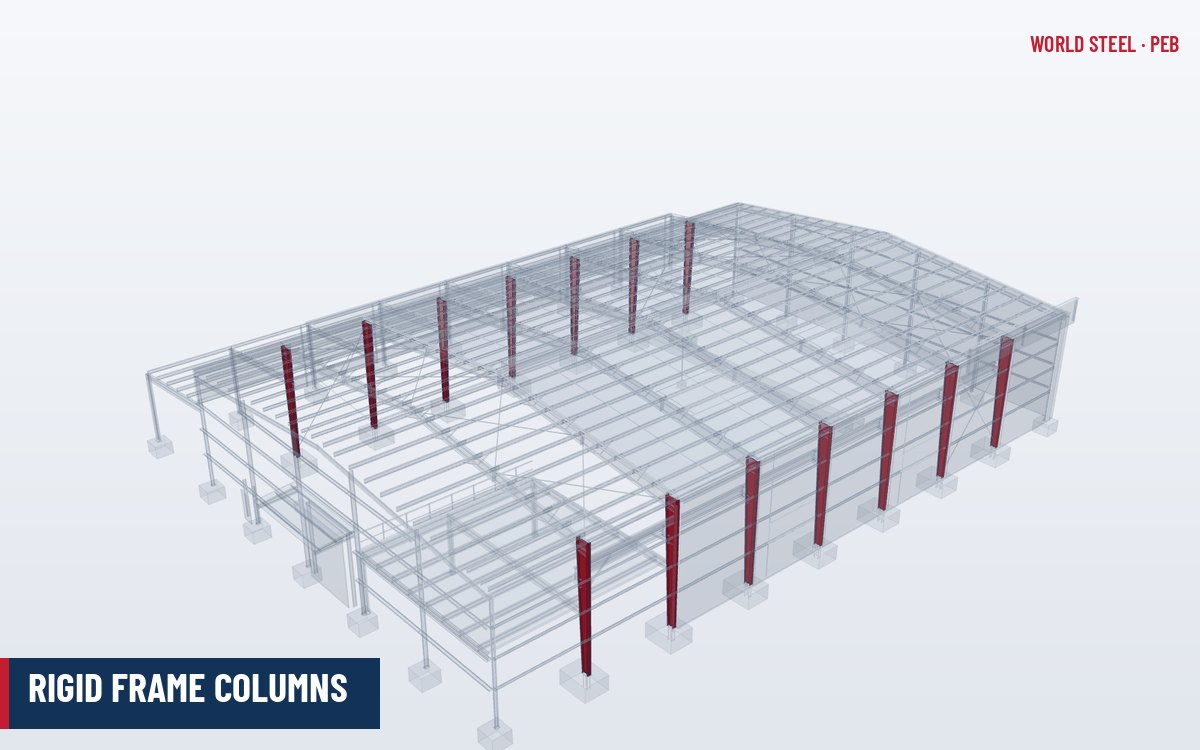
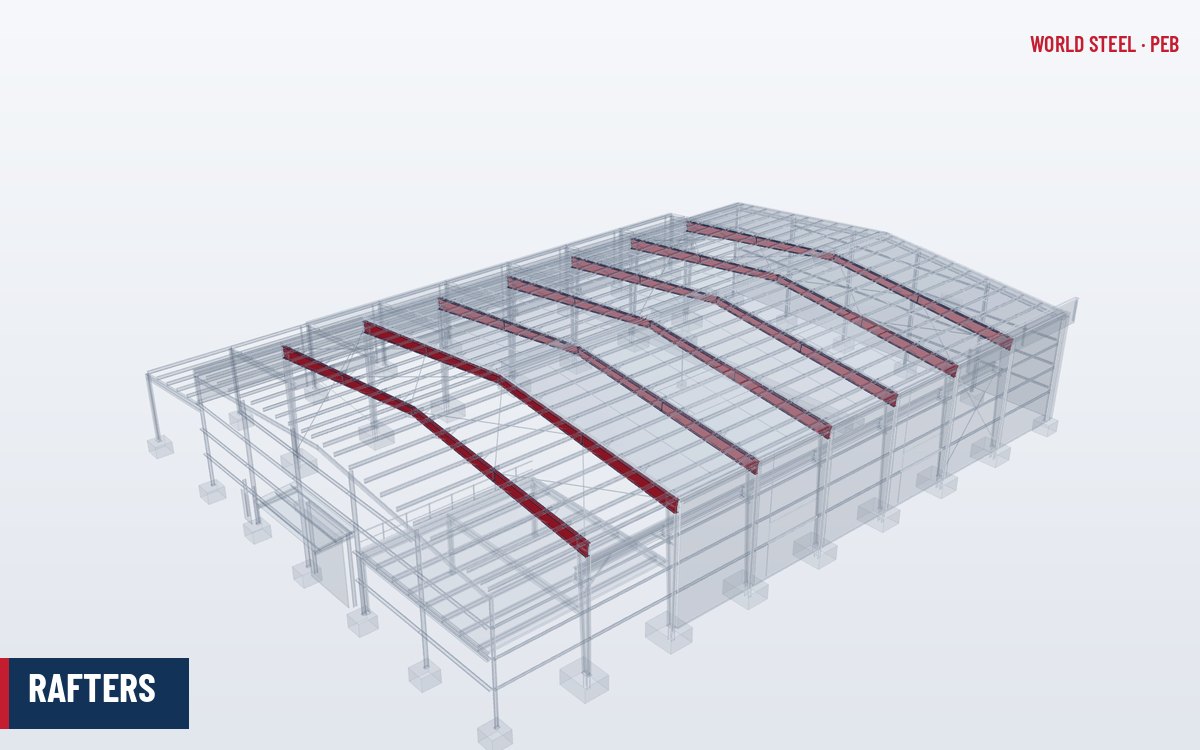
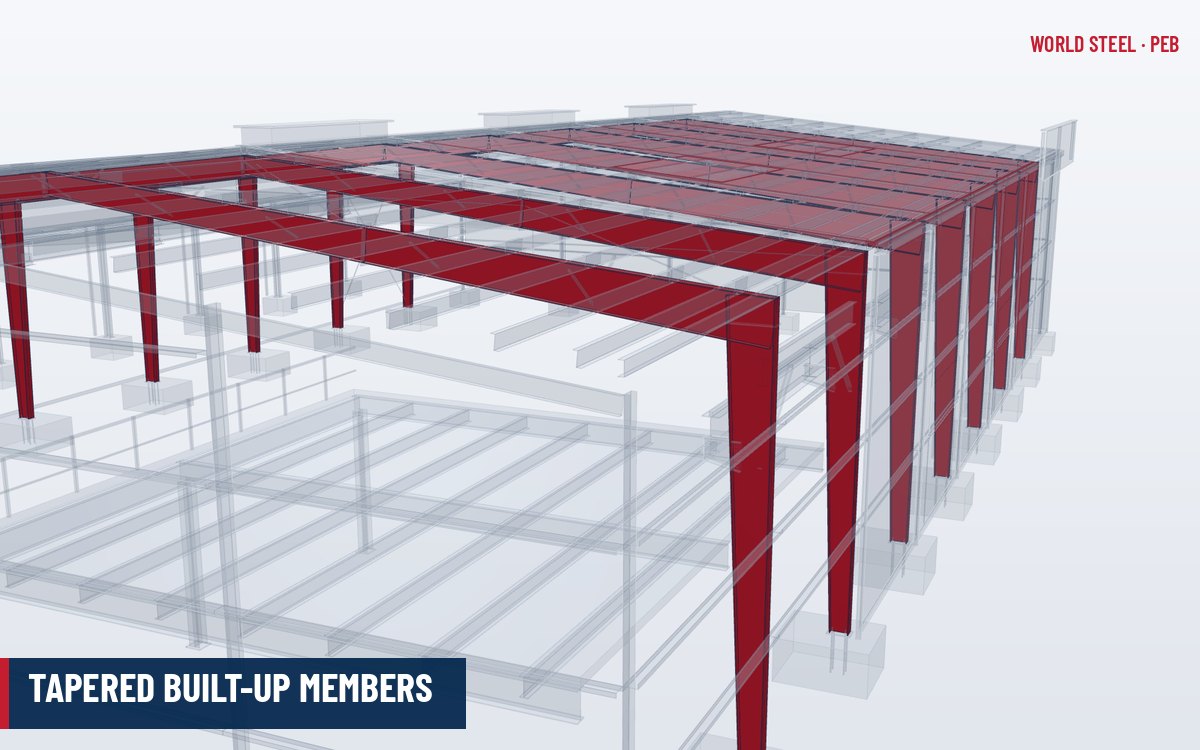
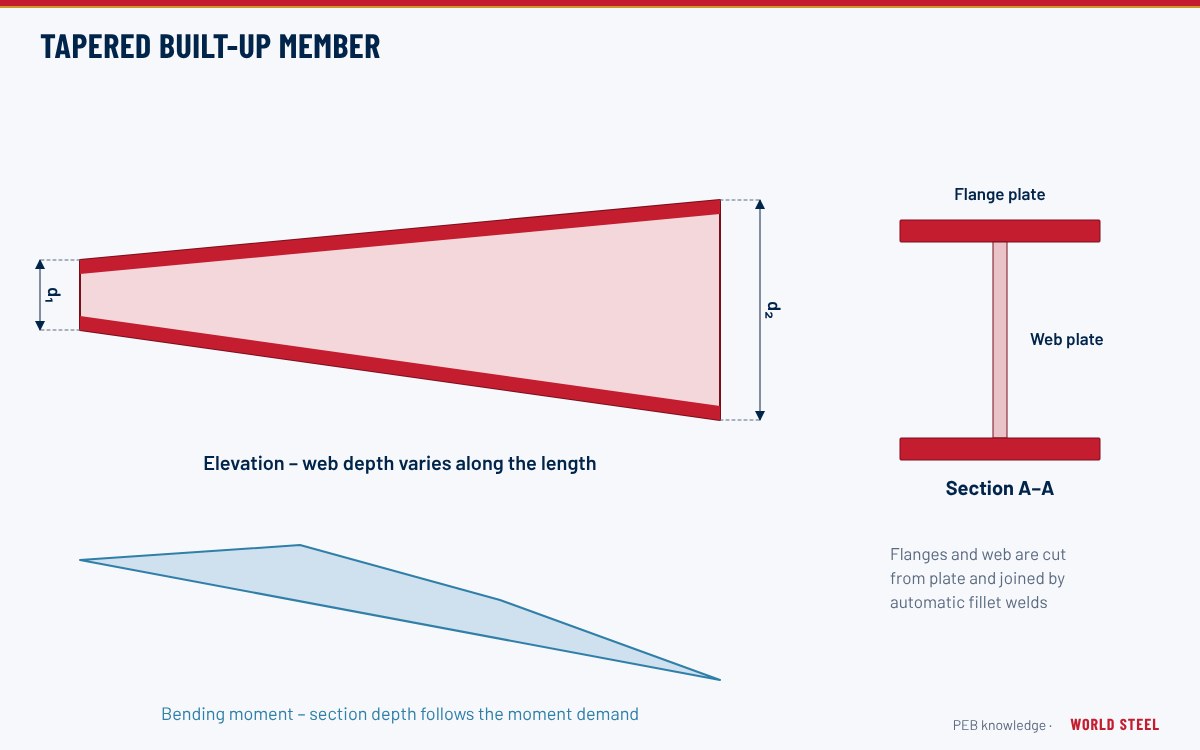
- Rigid frame columns and rafters as tapered or prismatic welded I-sections.
- Endwall columns and rafters, or full rigid endwall frames where future expansion is planned.
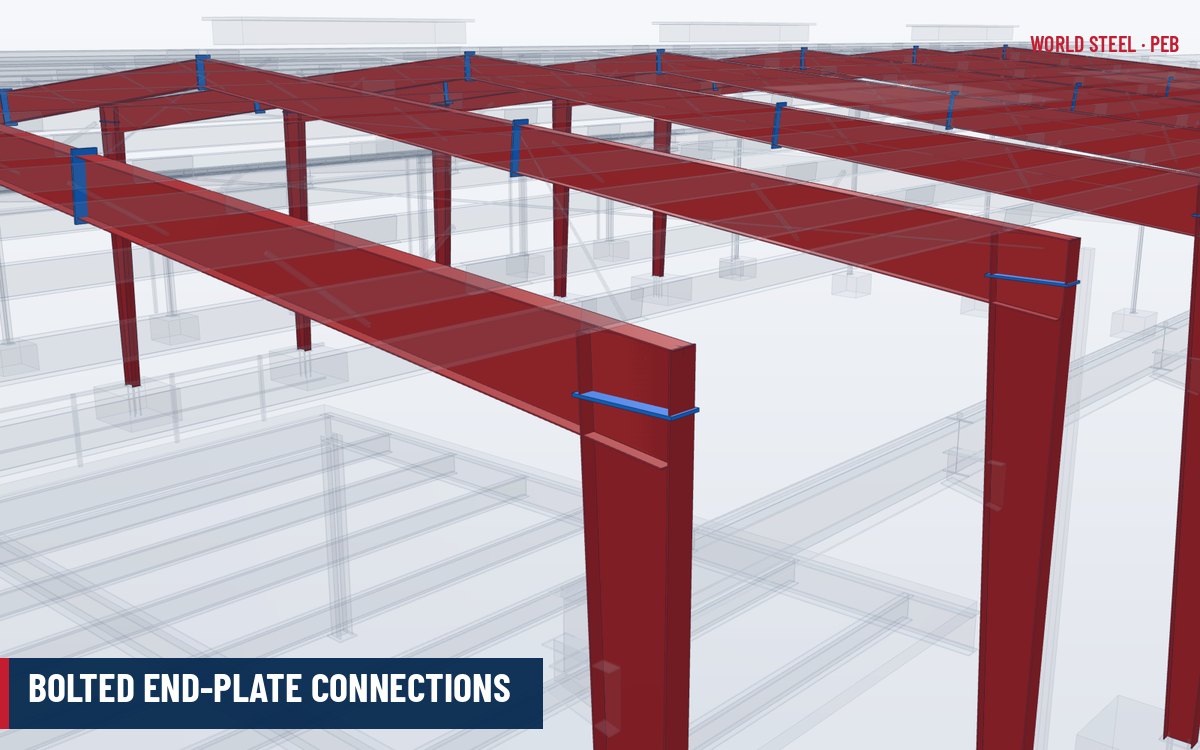
- Base plates, end plates, splice plates, haunches, stiffeners and cleats for purlins, girts and bracing.
- Interior columns for multi-span frames, lean-to rafters, crane brackets and canopy brackets where specified.
- High-strength bolts for all frame connections, and anchor bolts when ordered.
How the frames are made
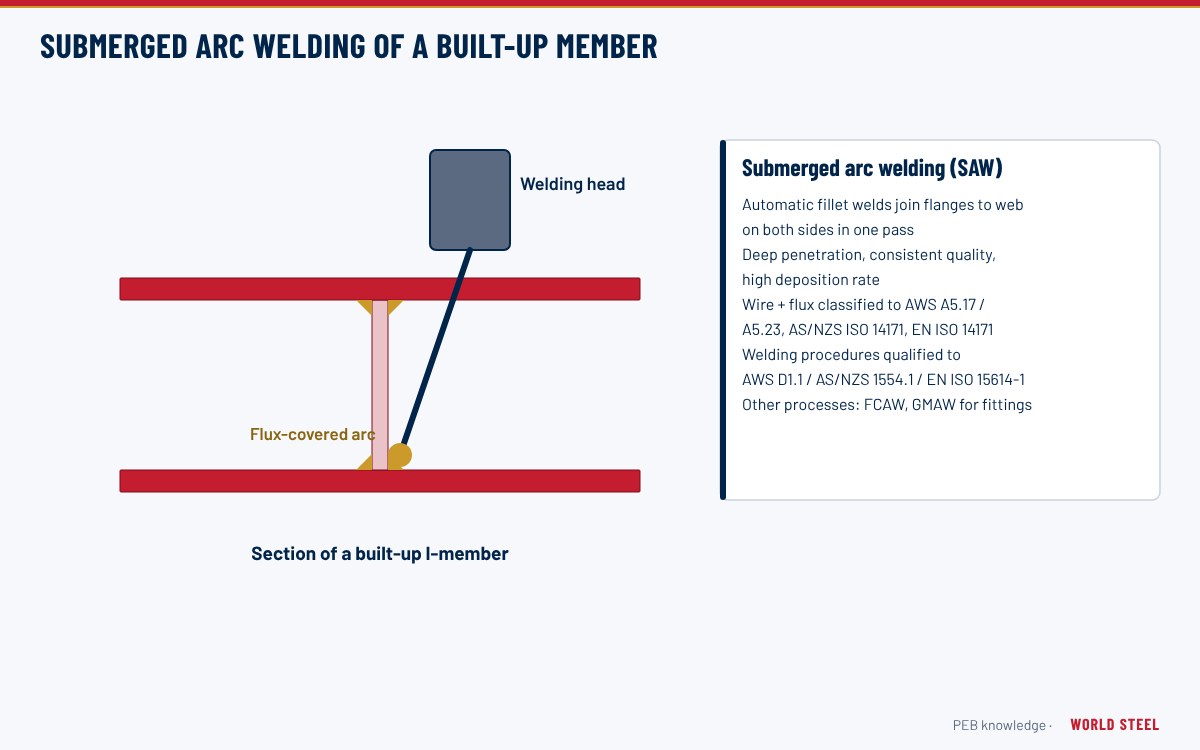
Web and flange plates are cut on CNC plasma and oxy-fuel machines, with tapered webs nested to minimise scrap. Members are assembled and welded with automatic submerged arc welding (SAW) for the flange-to-web joints and gas-shielded FCAW or GMAW for fittings. End plates are drilled on CNC lines so that bolt patterns match between members without site rework. Quality control follows a written inspection and test plan covering dimensional checks, visual inspection of all welds and NDT of complete-penetration welds at the frequency required by the applicable code.
Options include rolled sections for small frames, hot-dip galvanizing in lieu of paint, and heavier connection details for crane or seismic frames where special detailing is required.
Materials and finishes
| Market | Plate grade | Typical yield |
|---|---|---|
| United States | ASTM A572 Grade 50 / A1011 HSLAS | 345 MPa (50 ksi) |
| Canada | CSA G40.21 350W or accepted ASTM equivalent | 350 MPa |
| Australia / NZ | AS/NZS 3678 Grade 350 | 340–360 MPa depending on thickness |
| Europe | EN 10025-2 S355J2 / S355JR | 355 MPa (nominal, t ≤ 16 mm) |
Standard surface preparation is abrasive blasting to ISO 8501-1 Sa 2½ followed by a shop primer or a full paint system selected to the ISO 12944 corrosivity category of the site. Hot-dip galvanizing to ASTM A123, AS/NZS 4680 or EN ISO 1461 is available for aggressive environments. See paint and coating systems.
Compliance by market
| Market | Design code | Fabrication / welding | Materials | Certification notes |
|---|---|---|---|---|
| United States | AISC 360-22, ASCE 7-22, AISC 341-22 where seismic detailing applies | AWS D1.1 | ASTM A572 / A1011, F3125 bolts | WSC holds IAS AC472 accreditation for metal building systems; welding qualified to AWS D1.1 (structural) and AWS D1.3 (sheet steel). AISC Certification is not held – confirm acceptance if specified. |
| Canada | CSA S16-19, NBC 2020 | CSA W59 | CSA G40.21 350W or accepted ASTM | Designed to CSA S16 / CSA S136 by WSC or the engineer of record. CSA W47.1 (CWB) company certification is a market requirement, arranged per project. |
| Australia / New Zealand | AS 4100:2020, AS/NZS 1170 | AS/NZS 5131 CC3, AS/NZS 1554.1 | AS/NZS 3678 / 3679.1 | WSC is certified to AS/NZS 5131 Construction Category CC3; welding to AS/NZS 1554.1. For New Zealand, SFC certification is not held – confirm acceptance per project. |
| Europe | EN 1993-1-1, EN 1993-1-8 | EN 1090-2 EXC2/EXC3 | EN 10025-2 S355 | WSC is certified to EN 1090-2 Execution Class EXC3 and ISO 3834-2. CE marking via EN 1090-1 factory production control to be confirmed per project. |
Corrosion protection options
The finish of the primary frames is chosen from the corrosivity of the environment and the required durability under ISO 12944, or the equivalent national guidance (AS 4312 and AS 2312.1 in Australia, SSPC/AMPP practice in North America). Typical options:
| Option | Typical build-up | Suitable for |
|---|---|---|
| Shop primer | Blast to Sa 2½, one coat of alkyd or epoxy primer, about 60–100 µm | Dry, enclosed buildings (C1–C2) or where the client paints on site |
| Two-coat system | Epoxy primer plus polyurethane finish, about 120–200 µm | C2–C3, visible steel, colour required |
| Three-coat system | Zinc-rich epoxy primer, epoxy intermediate, polyurethane finish, about 240–320 µm | C4–C5 coastal or industrial sites |
| Hot-dip galvanizing | ISO 1461, ASTM A123 or AS/NZS 4680 coating thickness by steel thickness | Agricultural, open or humid buildings; members sized to the galvanizing bath |
| Duplex | Galvanizing plus paint system over a prepared zinc surface | Longest life in severe environments |
Slip-critical faying surfaces, field-weld zones and embedded areas are masked or coated only as the design allows. See paint and coating systems.
Documentation, packing and quotation
Deliverables include frame design calculations, anchor bolt plan with base reactions, erection drawings, shop drawings, mill test certificates to EN 10204 3.1 traceable to piece marks, weld inspection records and, on request, an IFC model. Frames are packed with timber dunnage and lashing in 40 ft high-cube containers or on flat racks for members longer than about 12 m.
A quotation can be prepared quickly when the enquiry states the project location and the code to be used. Please send:
- Frame geometry: span, eave height, roof slope, bay spacing and frame type.
- Loads and code, including any crane, mezzanine or collateral loads.
- Connection philosophy (pinned or fixed bases) and anchor bolt preferences.
- Required finish and the interface with the secondary framing supplier, if not WSC.
World Steel returns a priced scope with a clear inclusions and exclusions list, the design basis assumed and a typical lead time. Enquiries go through the export supply team in Ho Chi Minh City.
Norme per regione
| Regione | Norma | Ambito |
|---|---|---|
 United States |
AISC 360-22 | Specification for structural steel buildings |
 Canada |
CSA S16-19 | Design of steel structures |
 Australia / NZ |
AS 4100:2020 | Steel structures |
 Europe |
EN 1993-1-1 | Eurocode 3 general rules |
| International | ISO 8501-1 | Visual assessment of surface cleanliness |
Domande frequenti
Can the primary frame be supplied without purlins and cladding?
Yes. The package is often supplied on its own, with the interface loads and cleat positions coordinated with the local secondary framing supplier.
Are frames galvanized or painted?
Both are available. Most frames are blasted and painted; hot-dip galvanizing is chosen for coastal, agricultural or high-humidity sites.
Which steel grade is used?
The grade follows the design code of the destination, for example ASTM A572 Grade 50 for US projects or AS/NZS 3678 Grade 350 for Australia.