ENEnglish
 VITiếng Việt
 ZH中文
 KO한국어
 JA日本語
 FRFrançais
 ITItaliano
 PTPortuguês
 ESEspañol
 HEעברית
 ARالعربية

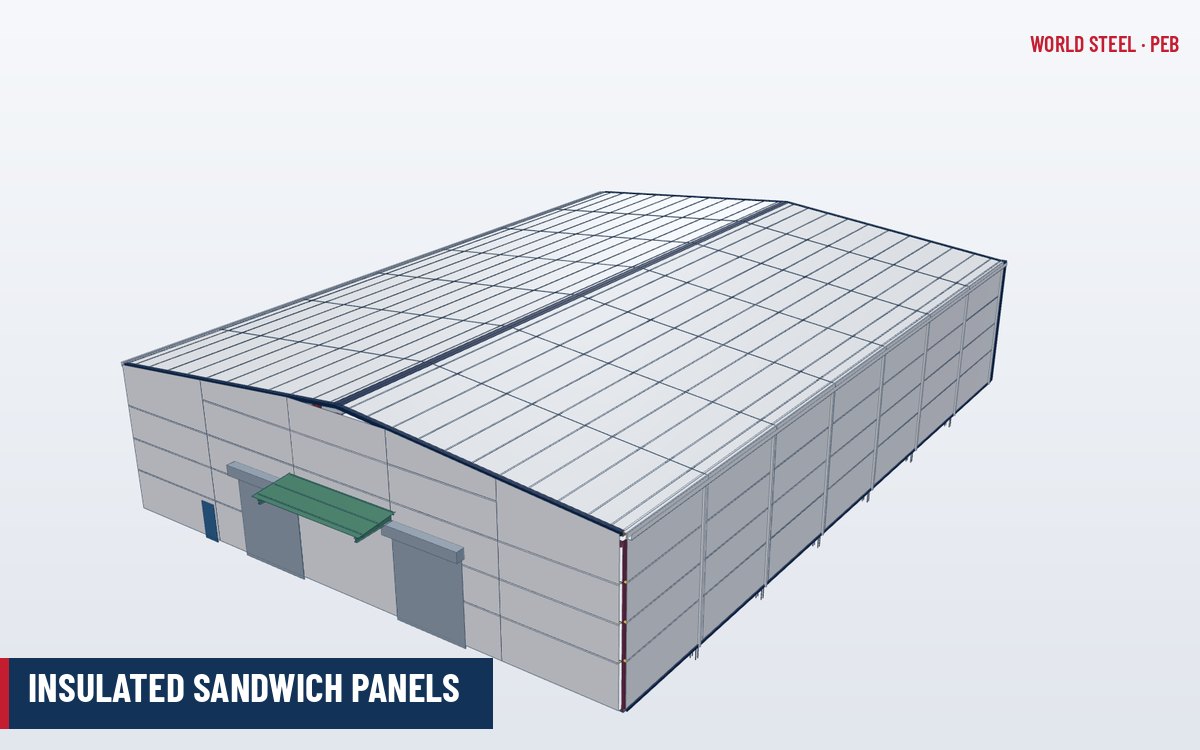
Scope of supply
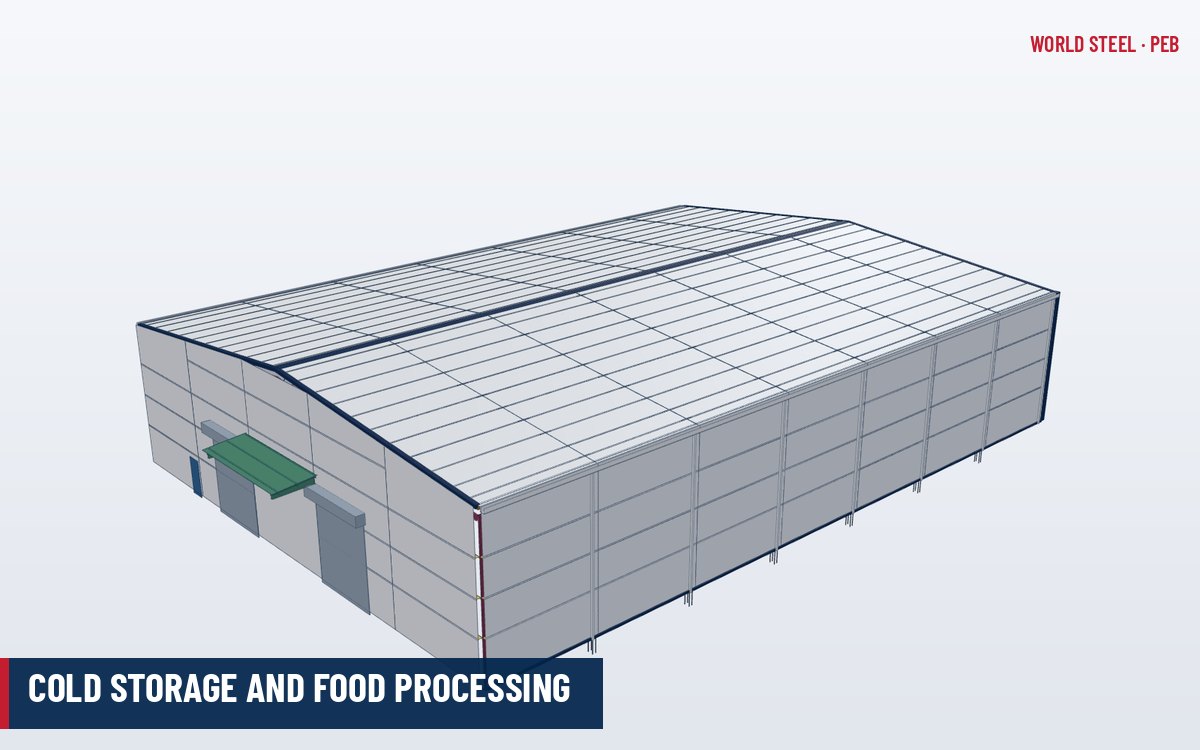
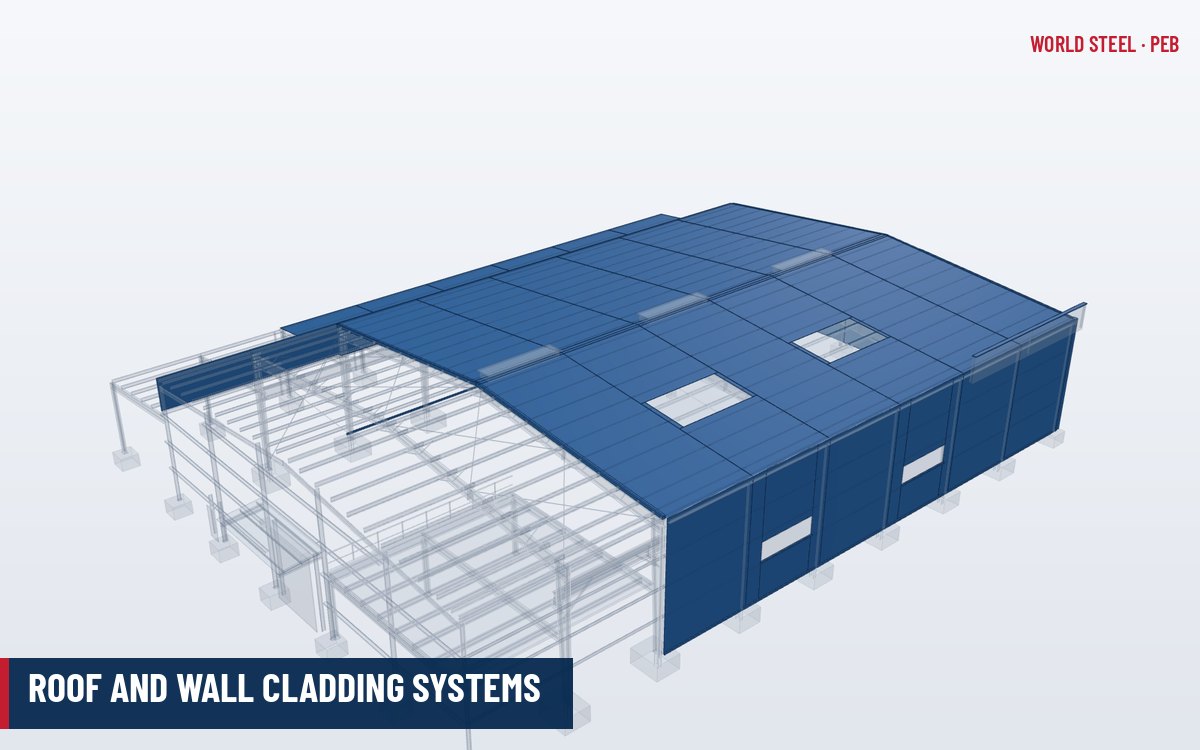
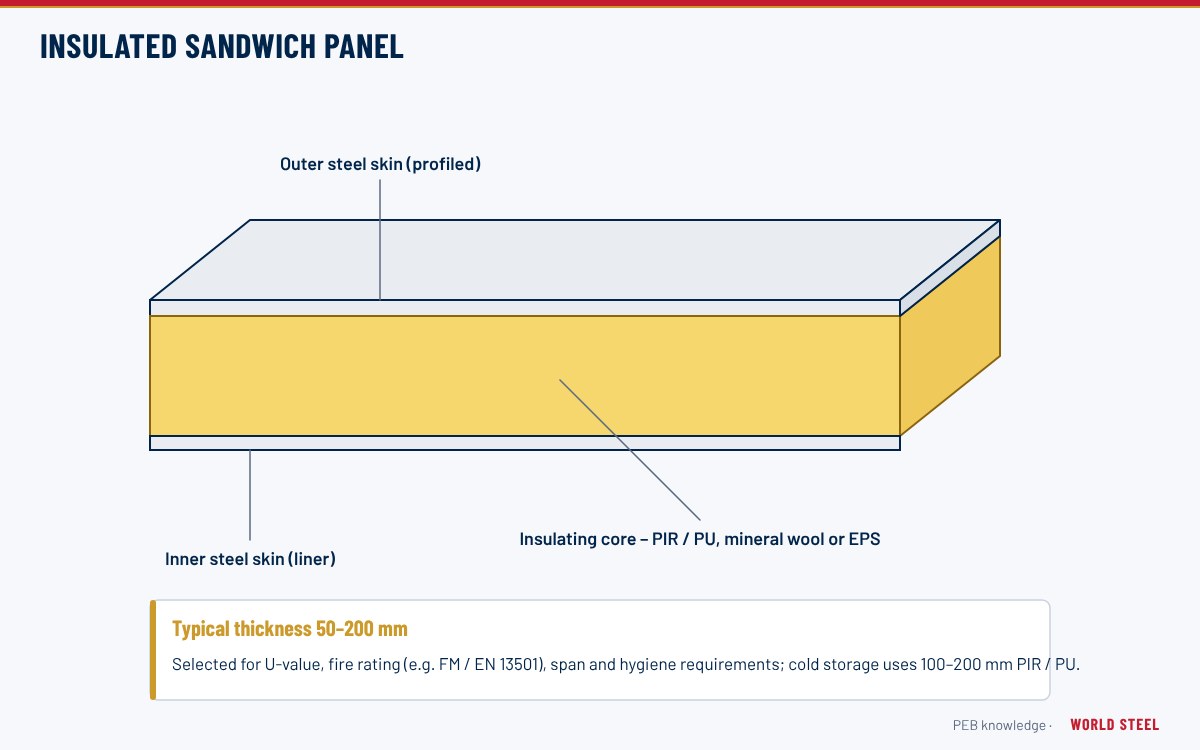
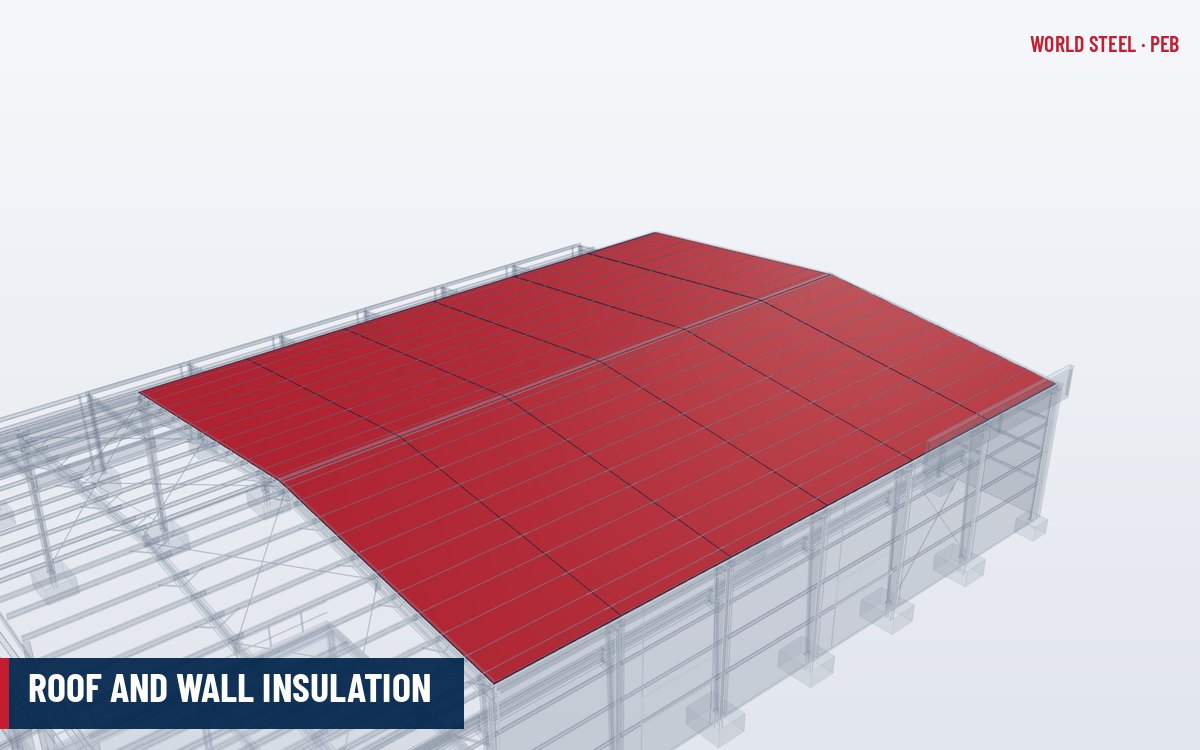
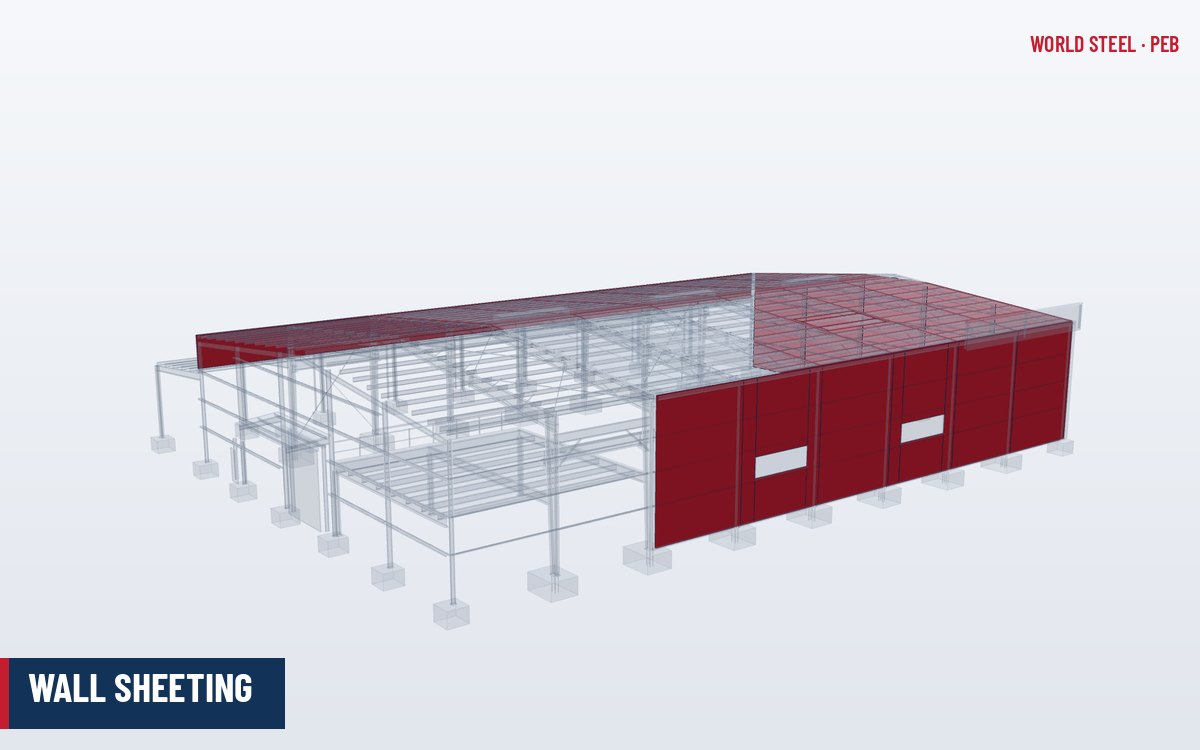
Insulated sandwich panels are factory-made elements with two steel facings bonded to an insulating core. They are used where a building needs a defined thermal performance, a clean internal finish or hygiene-grade surfaces, such as cold storage, food processing and climate-controlled warehouses. World Steel sources panels from qualified panel manufacturers and integrates them into the building design, so that girt and purlin spacing, panel span tables, fixing and trims are coordinated within one cladding package.
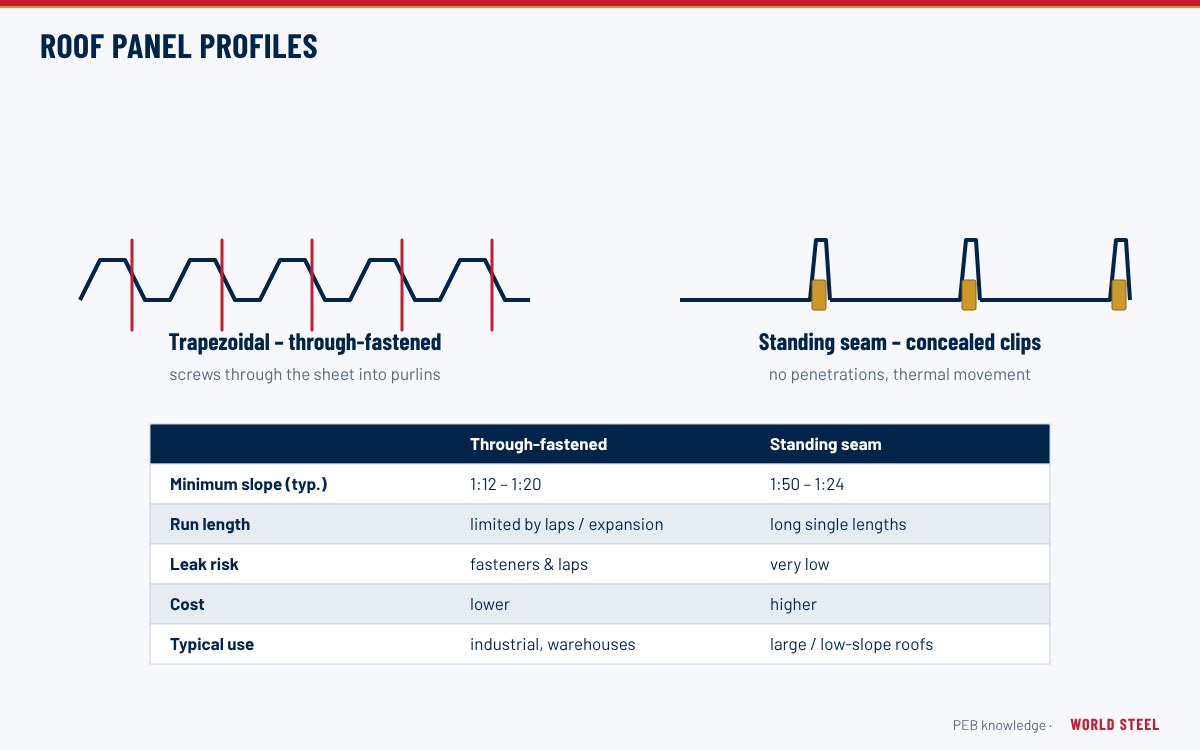
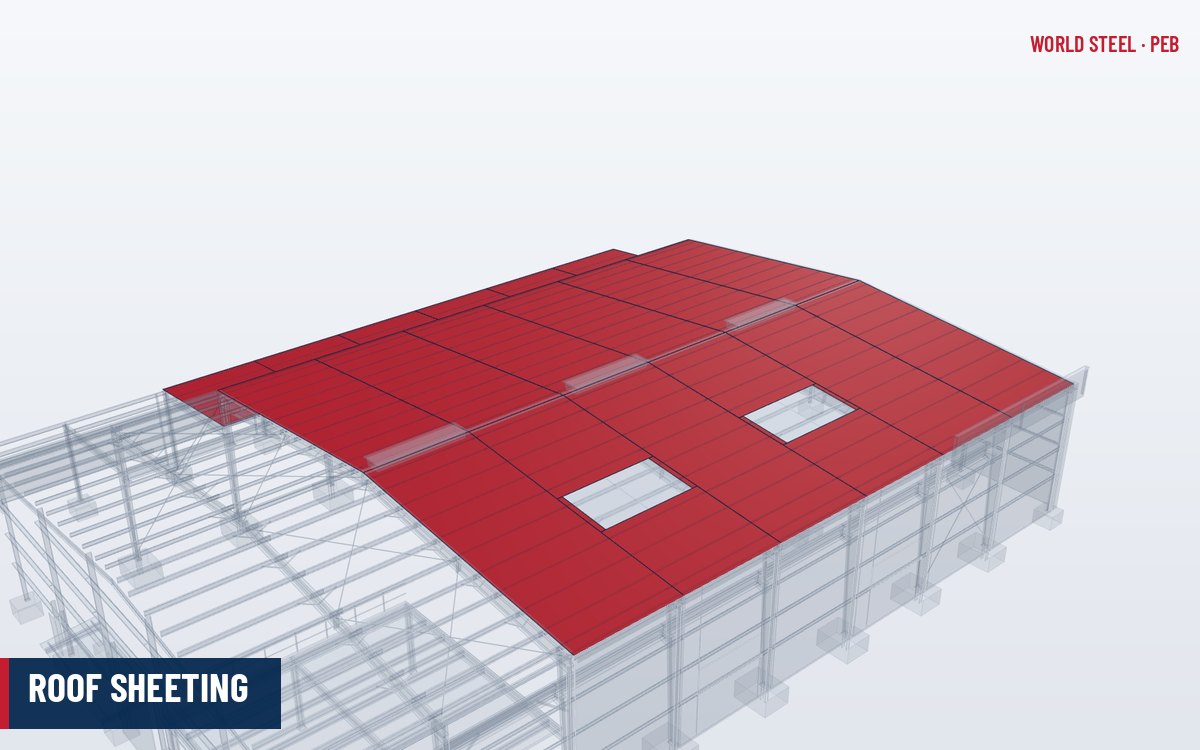
- Roof panels with trapezoidal outer face, and wall panels with flat, micro-rib or lined faces.
- Concealed-fix or through-fix fasteners matched to panel thickness.
- Panel trims, internal and external corners, closures, sealants and vapour-tight joint tapes.
- For cold rooms: floor-to-wall and ceiling connection profiles and hygienic coved trims, as specified.
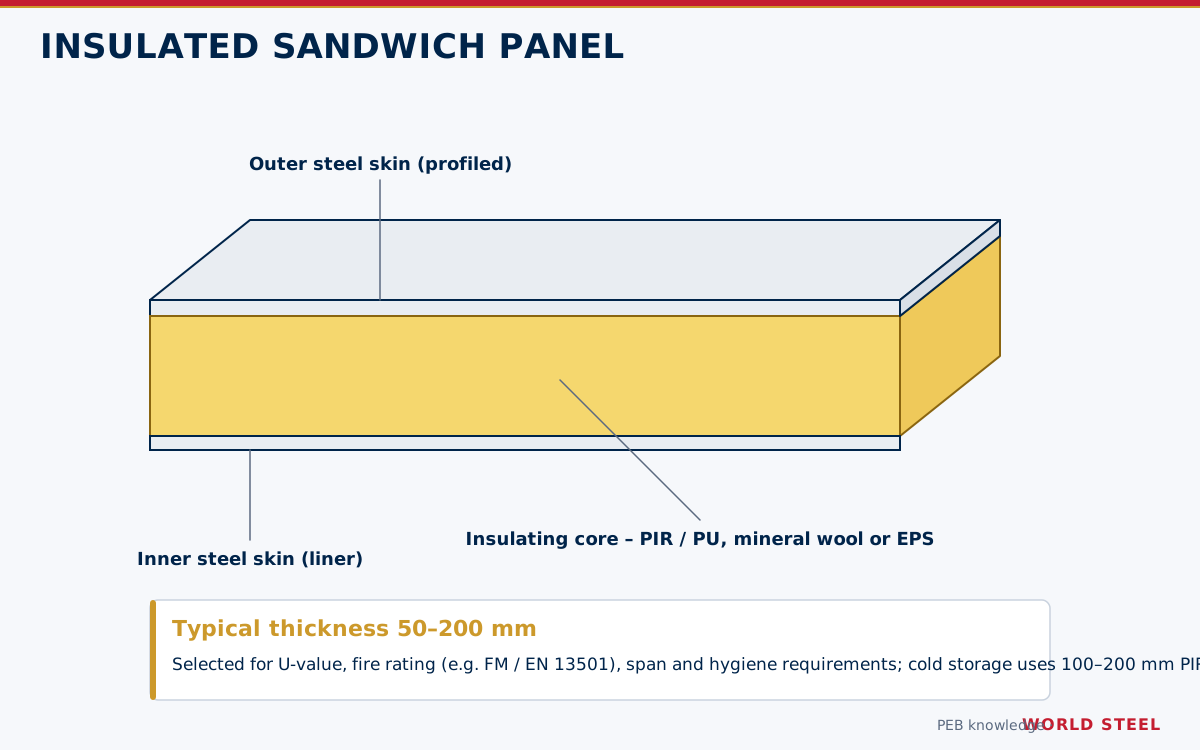
Core options
| Core | Typical thickness | Main use and notes |
|---|---|---|
| PIR (polyisocyanurate) | 50–200 mm | Good thermal performance; improved fire behaviour versus PUR; industrial and cold storage |
| PUR (polyurethane) | 50–200 mm | Thermal efficiency; check local fire requirements |
| EPS (expanded polystyrene) | 50–250 mm | Economical; restricted in many markets for fire reasons |
| Mineral wool (MW) | 50–200 mm | Non-combustible core; fire walls and fire-rated compartments |
Panel width is typically about 1,000–1,200 mm. Thermal transmittance falls with thickness; the U-value of the assembly, including joints and fixings, should be confirmed with the manufacturer's data for the specific panel.
Materials and finishes
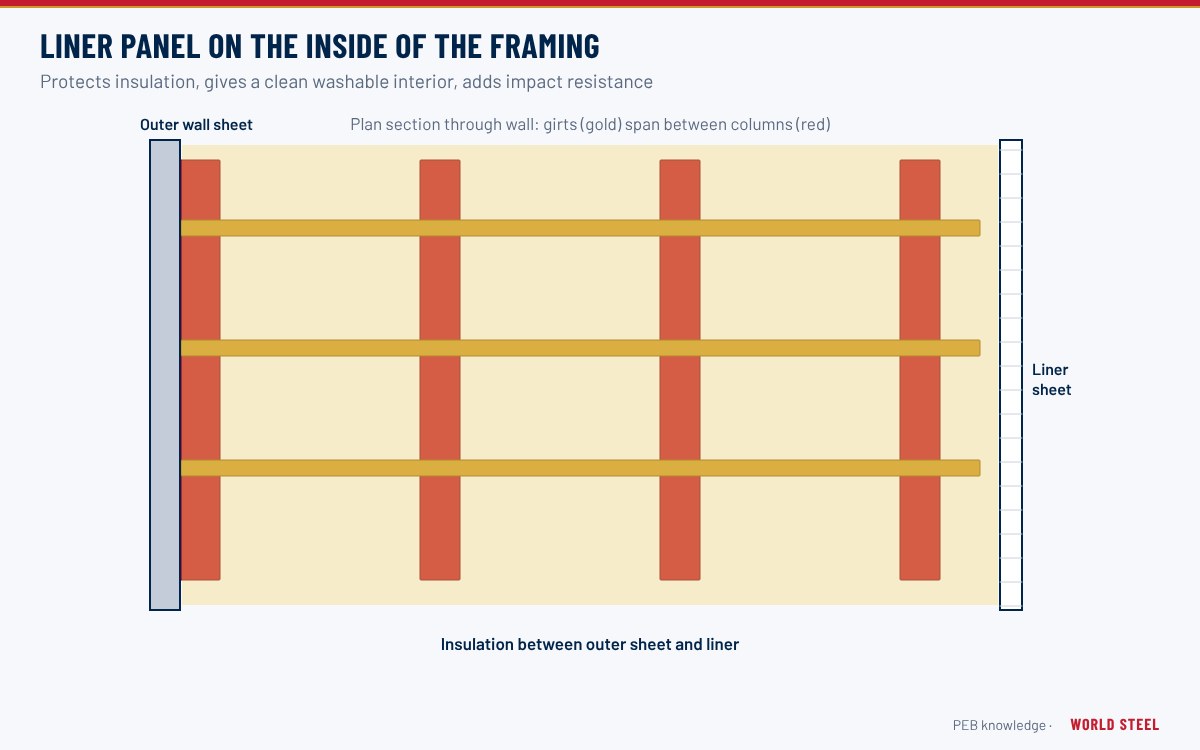
Facings are aluminium-zinc or zinc coated steel, typically 0.40–0.60 mm, pre-painted in polyester, PVDF or food-safe coatings for hygienic interiors. Where condensation or chemical exposure is expected, the interior facing coating is selected separately from the exterior. Panel brands available include products from Kingspan and regional manufacturers, chosen according to the fire and thermal approvals required in the destination market. See roof and wall insulation for alternatives using blanket insulation.
Compliance by market
Panels are manufactured products with their own approvals; WSC is responsible for the steel structure supporting them and for coordinating the panel supplier's certifications.
| Market | Design code | Fabrication / welding | Materials | Certification notes |
|---|---|---|---|---|
| United States | IBC Chapter 26 foam plastic provisions, ASTM E84, NFPA 285 for walls where applicable; FM 4880/4881 where insurers require | AWS D1.1 / D1.3 for supporting steel | ASTM A792 / A653 facings | WSC holds IAS AC472 accreditation for metal building systems; welding qualified to AWS D1.1 (structural) and AWS D1.3 (sheet steel). AISC Certification is not held – confirm acceptance if specified. |
| Canada | NBC 2020 fire and energy provisions, CAN/ULC-S102 / S134 where applicable | CSA W59 for supporting steel | Facings per CSA S136 accepted grades | Designed to CSA S16 / CSA S136 by WSC or the engineer of record. CSA W47.1 (CWB) company certification is a market requirement, arranged per project. |
| Australia / New Zealand | NCC with AS 5637.1 group number and AS 1530 series fire tests; AS/NZS 1170.2 span design | AS/NZS 5131 CC3 for supporting steel | AS 1397 facings | WSC is certified to AS/NZS 5131 Construction Category CC3; welding to AS/NZS 1554.1. For New Zealand, SFC certification is not held – confirm acceptance per project. |
| Europe | EN 14509 (CE-marked product), EN 13501-1 reaction to fire, EN 1993-1-3 | EN 1090-2 for supporting steel | EN 10346 facings, EN 10169 coating | WSC is certified to EN 1090-2 Execution Class EXC3 and ISO 3834-2. CE marking via EN 1090-1 factory production control to be confirmed per project. CE marking of the panels is the panel manufacturer's responsibility under EN 14509. |
Factory-made panels, built-up systems and test data
Insulated envelopes can be supplied either as factory-made composite panels or as field-assembled double-skin systems. Composite panels give faster enclosure and consistent airtightness; built-up systems are easier to ship and adapt on site. For cold rooms below 0 °C, composite panels are the normal choice.
| Aspect | United States / Canada | Australia / NZ | Europe |
|---|---|---|---|
| Product standard | Manufacturer evaluation reports (for example ICC-ES / CCMC) | Manufacturer data and NCC compliance pathway | EN 14509 (self-supporting double-skin metal-faced panels) |
| Reaction to fire | ASTM E84 surface burning; NFPA 285 for exterior walls where applicable; FM 4880 / 4881 for insurers | AS 5637.1 group number; NCC deemed-to-satisfy limits | EN 13501-1 classification |
| Fire resistance | ASTM E119 / CAN/ULC-S101 rated assemblies | AS 1530.4 | EN 1364 tests, EN 13501-2 classification |
| Thermal performance | ASTM C518 / C1363 | AS/NZS 4859.1 | EN 14509 declared U-value |
Mineral wool panels are selected where non-combustible construction or fire separation is required; PIR panels where thermal performance dominates and the fire classification is accepted by the authority and the insurer. See insulated sandwich panels for design background.
Documentation, packing and quotation
Deliverables include panel layouts, span and load tables for the selected panel, fixing schedules, thermal and fire test certificates from the manufacturer, and trim details. Panels are packed in film-wrapped packs with foam spacers on timber or EPS bearers and shipped in containers with protection against crushing of the edges.
A quotation can be prepared quickly when the enquiry states the project location and the code to be used. Please send:
- Building use and internal temperature or humidity class.
- Required U-value or R-value and fire classification.
- Roof and wall areas, panel orientation and colour.
- Any hygienic, insurer (FM) or local approval requirement.
World Steel returns a priced scope with a clear inclusions and exclusions list, the design basis assumed and a typical lead time. Enquiries go through the export supply team in Ho Chi Minh City.
Norme per regione
| Regione | Norma | Ambito |
|---|---|---|
 Europe |
EN 14509 | Self-supporting double skin metal faced insulating panels |
| Europe |
EN 13501-1 | Fire classification of construction products |
 United States |
FM 4880 / ASTM E84 | Fire performance of insulated panels / surface burning |
 Australia / NZ |
AS 5637.1 | Group number for wall and ceiling linings |
 Canada |
CAN/ULC-S102 | Surface burning characteristics |
Domande frequenti
Which core is best for cold storage?
PIR or PUR panels are most common for cold rooms because of their low thermal conductivity; thickness depends on the room temperature and the required U-value.
When should mineral wool panels be used?
Where a non-combustible core is required, for example on fire walls, near boundaries or where the insurer or code demands it.
Can sandwich panels span directly between frames?
Panels span between purlins or girts; the span depends on thickness and load and is checked with the manufacturer's load tables.