ENEnglish
 VITiếng Việt
 ZH中文
 KO한국어
 JA日本語
 FRFrançais
 ITItaliano
 PTPortuguês
 ESEspañol
 HEעברית
 ARالعربية

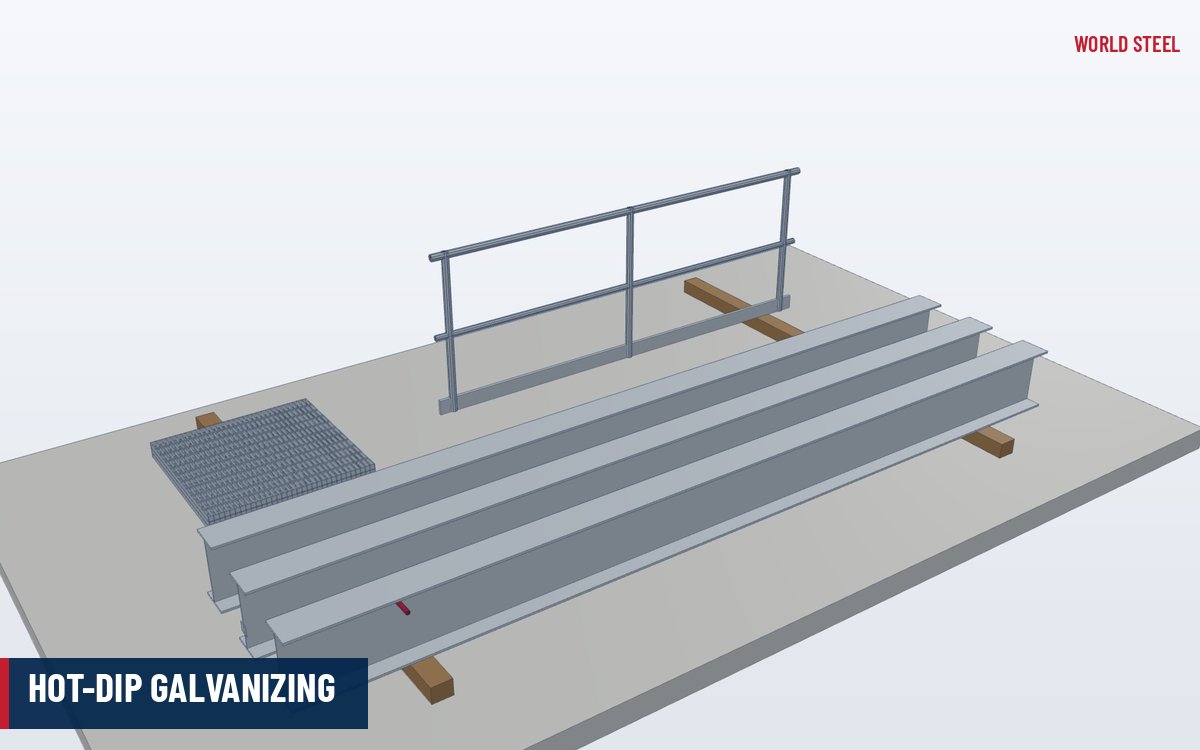
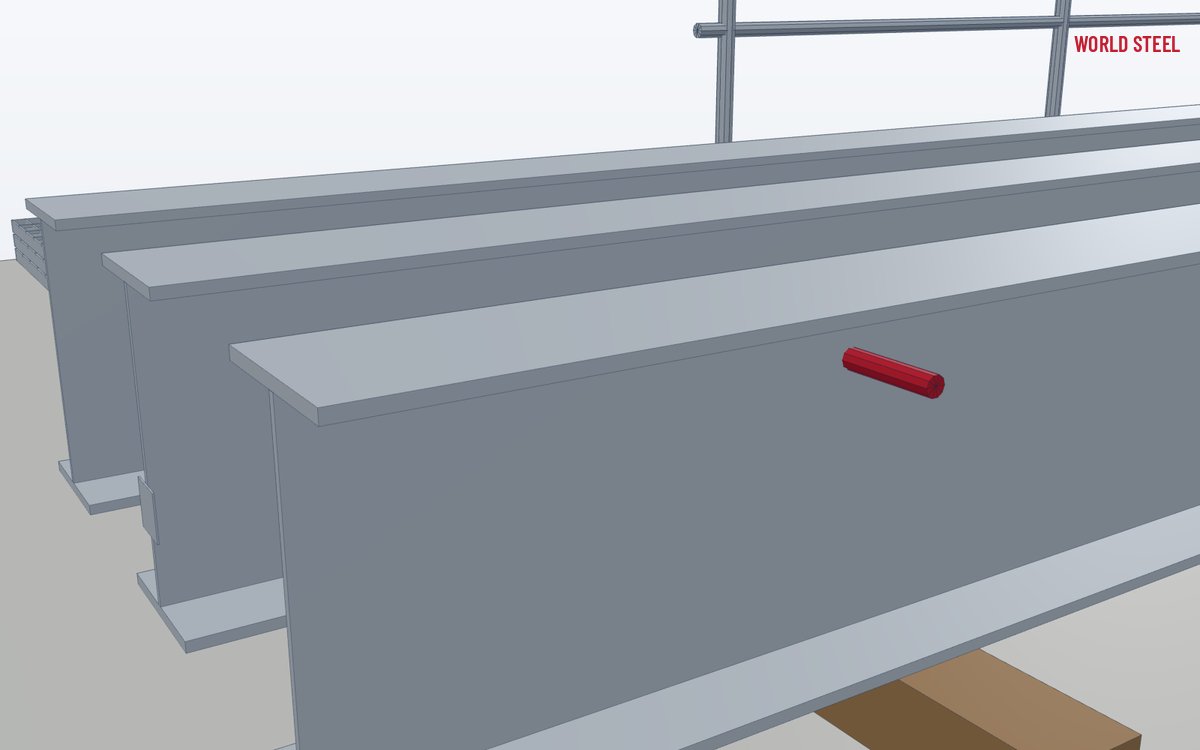
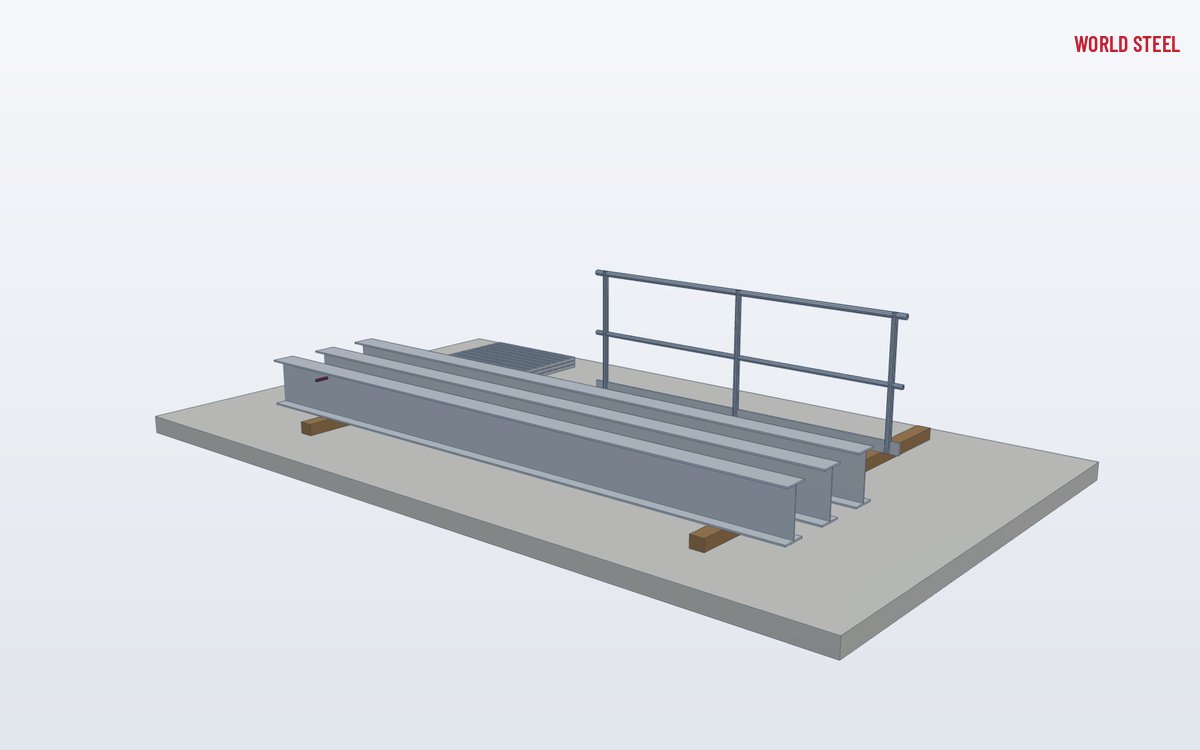
- Galvanized after fabrication by qualified galvanizers
- To ASTM A123, AS/NZS 4680 and EN ISO 1461
- Metallurgically bonded zinc–iron alloy layers
- Vent and drain holes detailed in the shop drawings
- Ideal for grating, handrails, ladders and lintels
- Coating thickness checked and certified per lot
What hot-dip galvanizing is
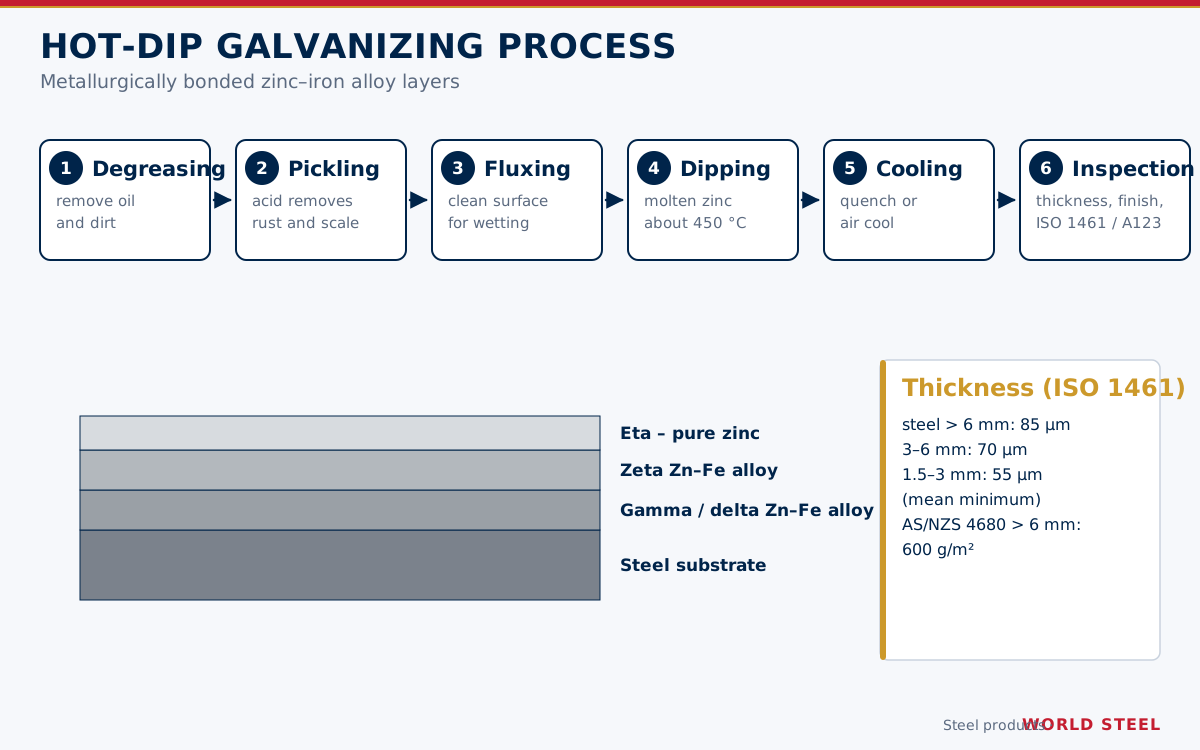
Hot-dip galvanizing (HDG) coats fabricated steel by immersing it in molten zinc at about 450 °C. The zinc reacts with the steel to form a series of zinc–iron alloy layers that are metallurgically bonded to the base metal, covered by an outer layer of almost pure zinc (the eta layer). Because the whole article is dipped, the coating reaches inside hollow sections, into corners and along edges where paint is thinnest. Zinc protects steel in two ways: as a barrier, and cathodically – it corrodes preferentially, so small scratches and cut edges are protected by the surrounding zinc.
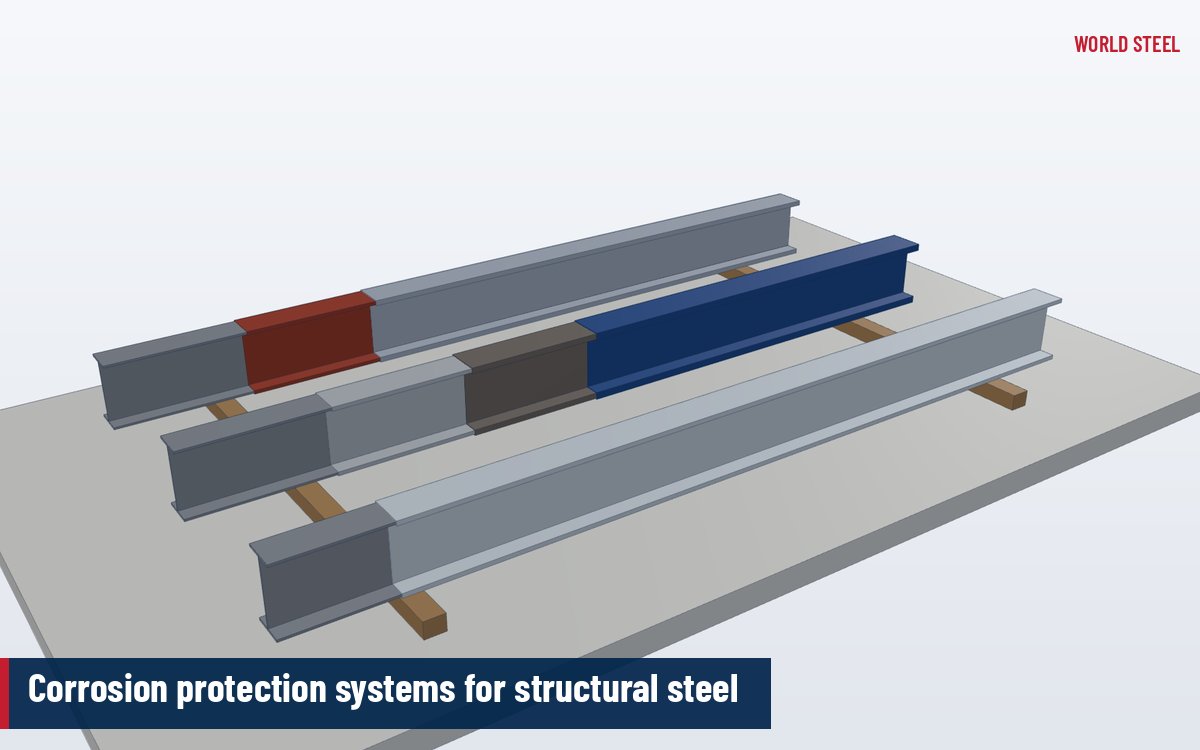
World Steel fabricates, blasts where required and then sends steel to qualified galvanizers working to ASTM A123, AS/NZS 4680 or EN ISO 1461; World Steel does not operate its own galvanizing kettle, but plans the work, inspects the coated steel and supplies the galvanizing certificate with the package. For the overall selection logic see corrosion protection systems.
The process
- Degreasing in a hot alkaline or acid solution to remove oil, cutting fluids and marking paint, followed by rinsing.
- Pickling in dilute acid to remove mill scale and rust, followed by rinsing. Weld slag and paint are not removed by pickling and must be cleaned off in the fabrication shop.
- Fluxing to keep the cleaned surface free of oxide and help the zinc wet the steel.
- Dipping in molten zinc at about 450 °C until the steel reaches bath temperature and the alloy layers form.
- Cooling or quenching, then inspection of appearance, coverage and coating thickness.
Coating thickness by standard
Minimum coating thickness rises with steel thickness because thicker steel stays in the bath longer and reacts more. The values below are the minimums of EN ISO 1461 and AS/NZS 4680; ASTM A123 sets its required coating grade from the material category and thickness in its Table 1, so the US value is taken from the standard for each item.
| Steel thickness | EN ISO 1461 – local / mean | AS/NZS 4680 |
|---|---|---|
| > 6 mm | 70 µm / 85 µm | 600 g/m² (85 µm) average |
| 3–6 mm | 55 µm / 70 µm | Per AS/NZS 4680 table |
| 1.5–3 mm | 45 µm / 55 µm | Per AS/NZS 4680 table |
| US projects | ASTM A123 Table 1 grade by category and thickness | Bolts and hardware to ASTM A153 |
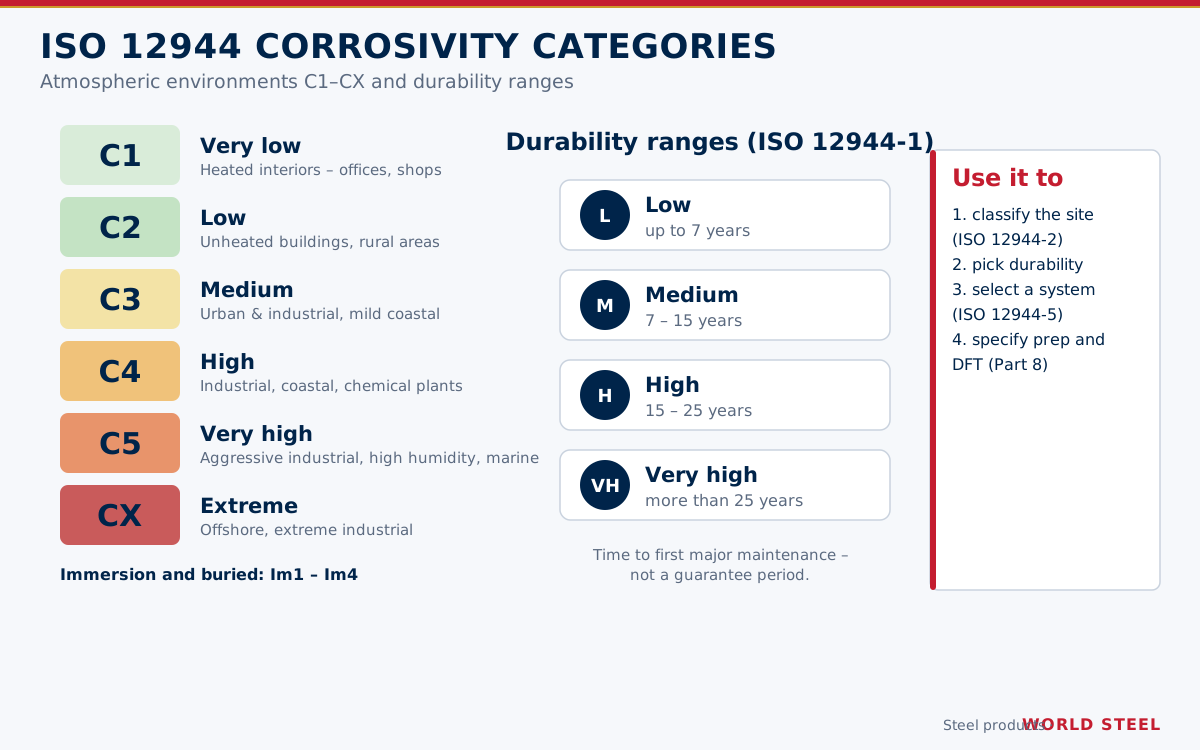
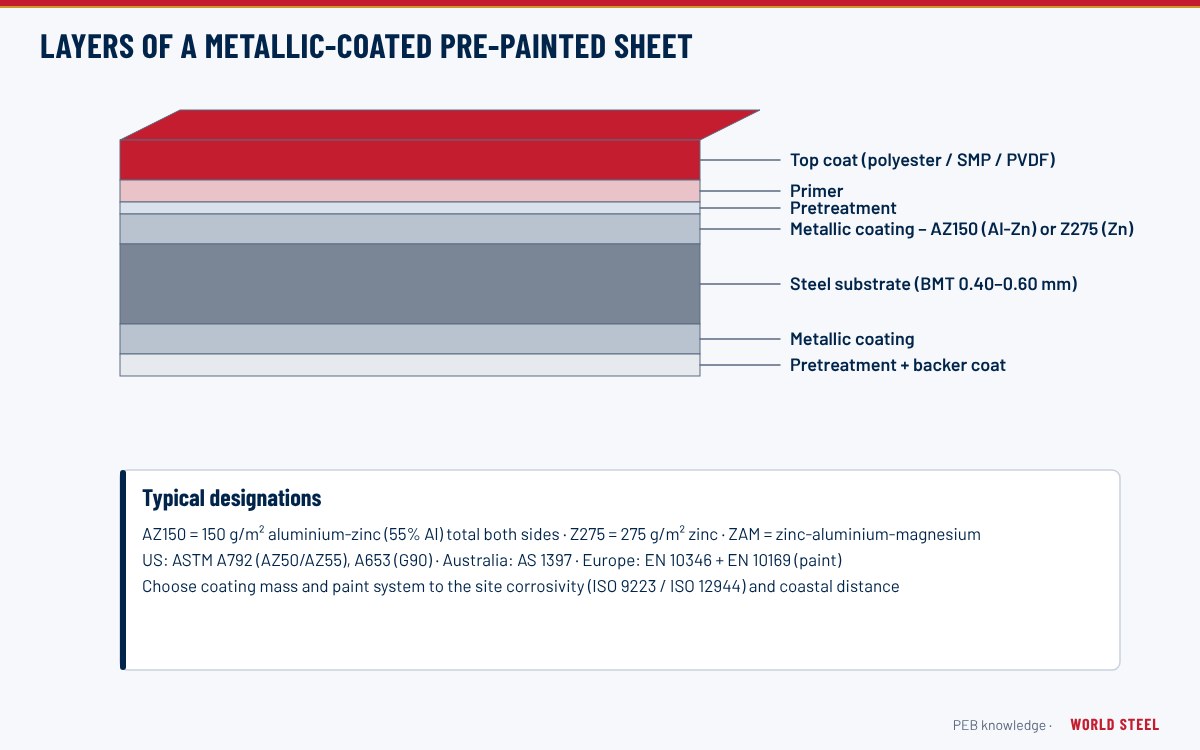
Reactive steels – with higher silicon or phosphorus content – can produce thicker, duller grey coatings. Differences in spangle, colour or brightness are a normal result of the steel chemistry and are not defects. Expected life in a given environment can be estimated with ISO 14713-1 or AS/NZS 2312.2 and the corrosivity category; see the metallic-coated sheet article for how continuous coatings on sheet differ from batch galvanizing.
Design for galvanizing
Galvanizing affects design detailing, so World Steel adds the required features in the shop drawings following ISO 14713-2, ASTM A385 and AS/NZS 2312.2:
- Vent and drain holes in hollow sections, closed boxes and at end plates so that air escapes and zinc drains freely; fully sealed sections are not galvanized because trapped air or moisture can cause explosive failure.
- Corner copes on stiffeners and gussets so zinc does not pool.
- Avoid large flat thin plates and unbalanced welding that can distort at 450 °C; very long members are checked against the galvanizer's bath size, otherwise they are double-dipped or spliced.
- Overlapping surfaces are either fully seal-welded (with a vent) or left with a gap so pickling acid cannot be trapped.
- High-strength and heavily cold-worked steel is reviewed for hydrogen embrittlement and liquid metal assisted cracking risk before galvanizing.
- Threads on bolts and anchor rods are galvanized to ASTM A153 or equivalent and nuts are tapped oversize as required.
Inspection, repair and typical products
Galvanized items are inspected for coverage, bare spots, ash or flux inclusions and runs that affect fit or safety, and thickness is measured with a magnetic gauge on a sample of each lot. Uncoated areas from the bath, welding on site or handling damage are repaired with zinc-rich paint or thermal-sprayed zinc: EN ISO 1461 limits repair to a total of 0.5 % of the surface and 10 cm² per area, and ASTM A780 describes the US repair methods.
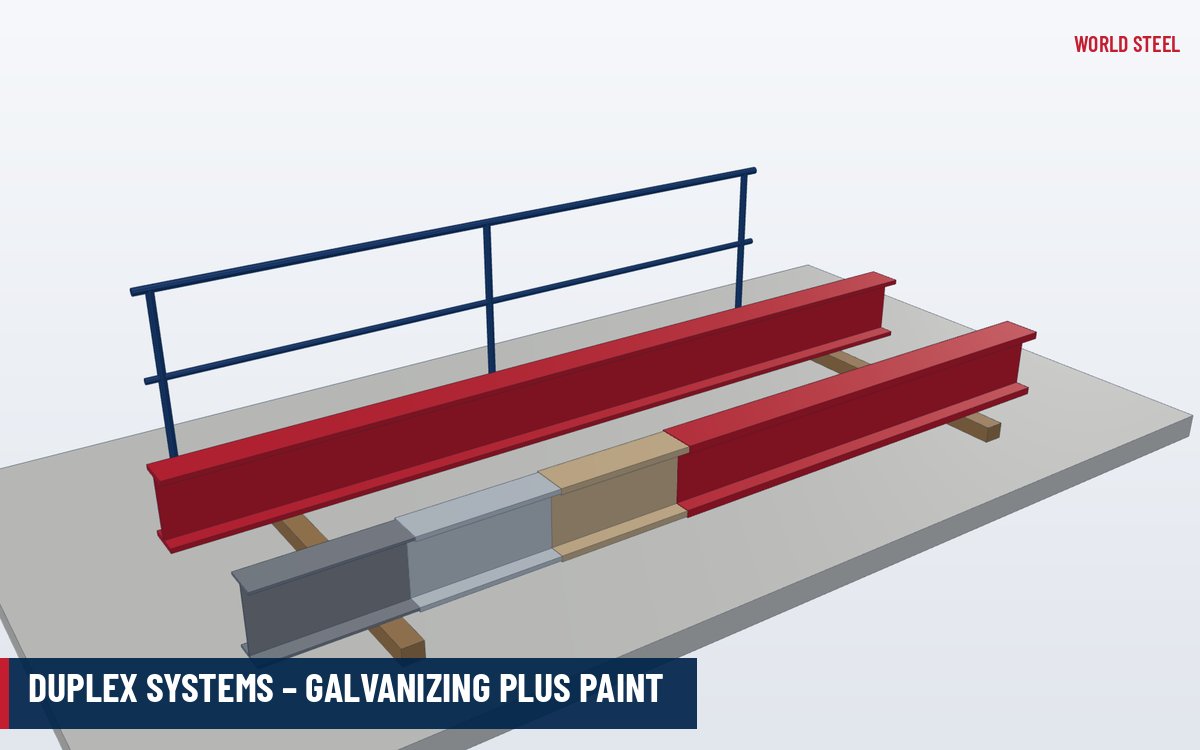
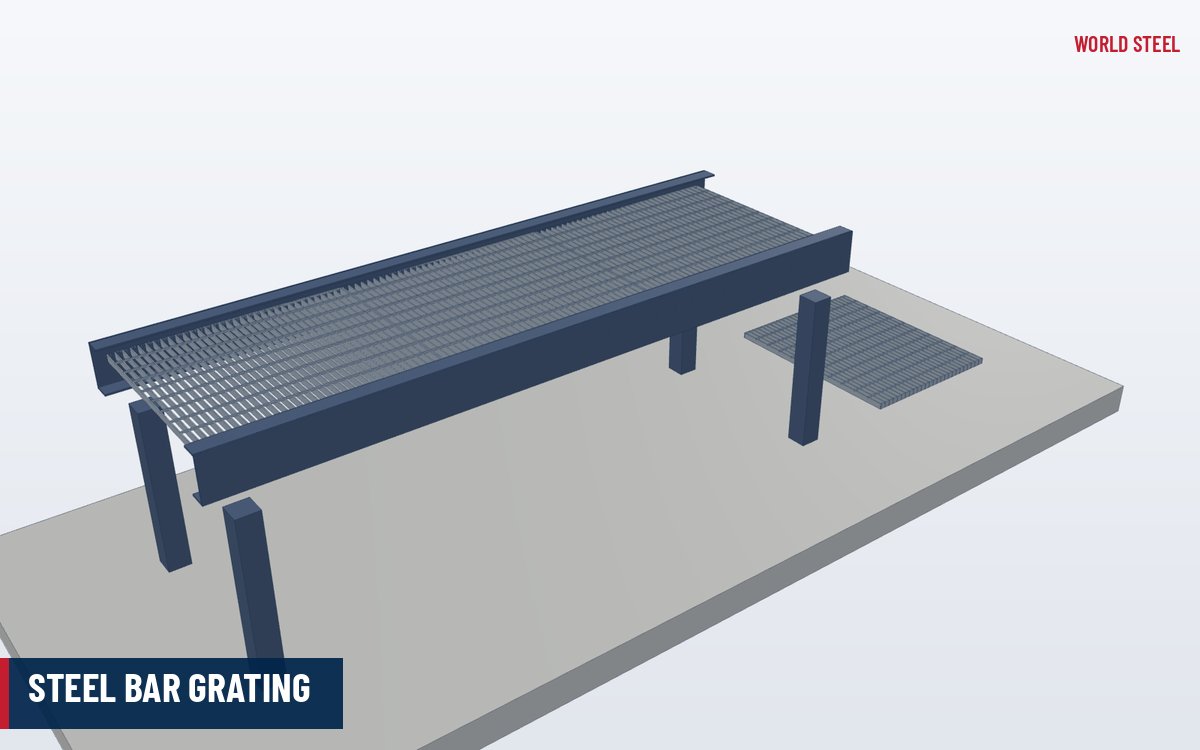
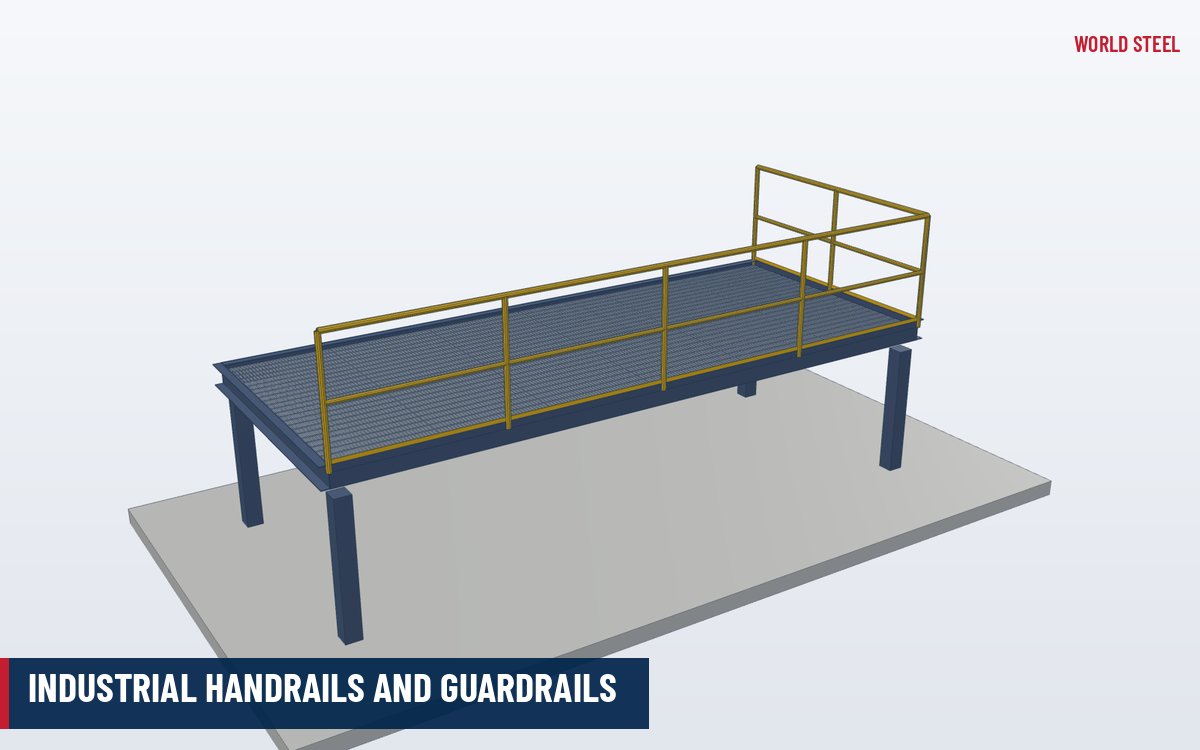
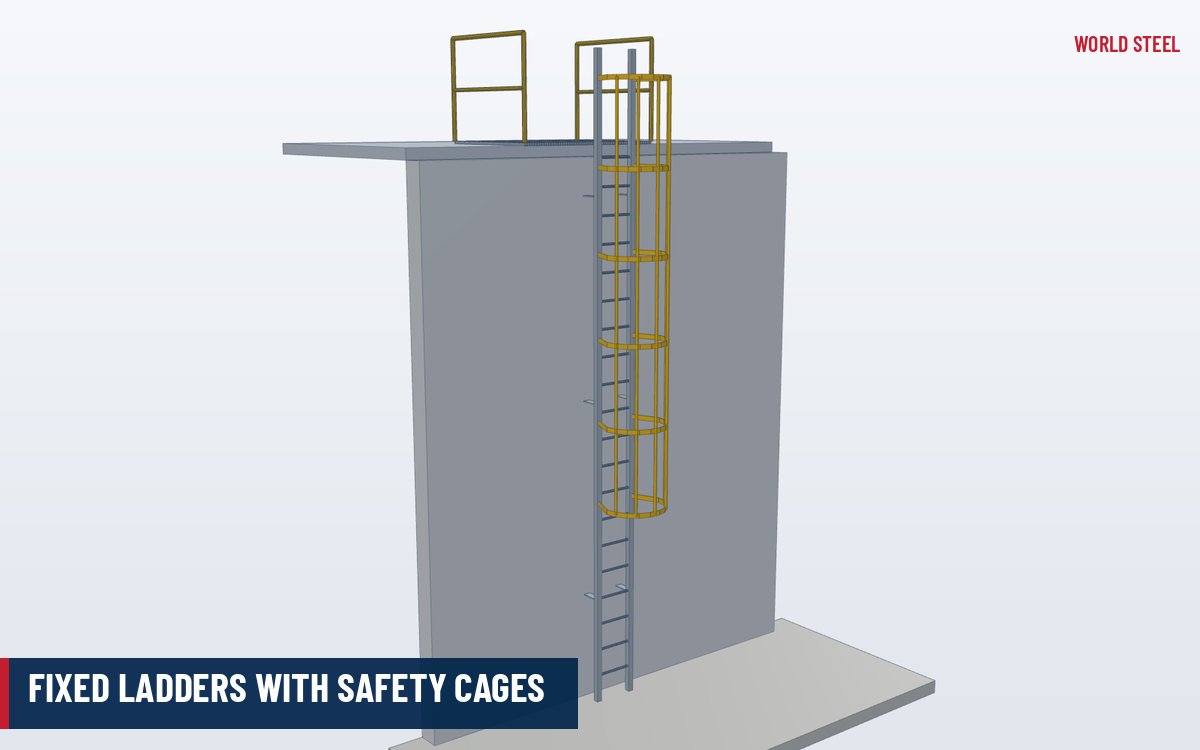
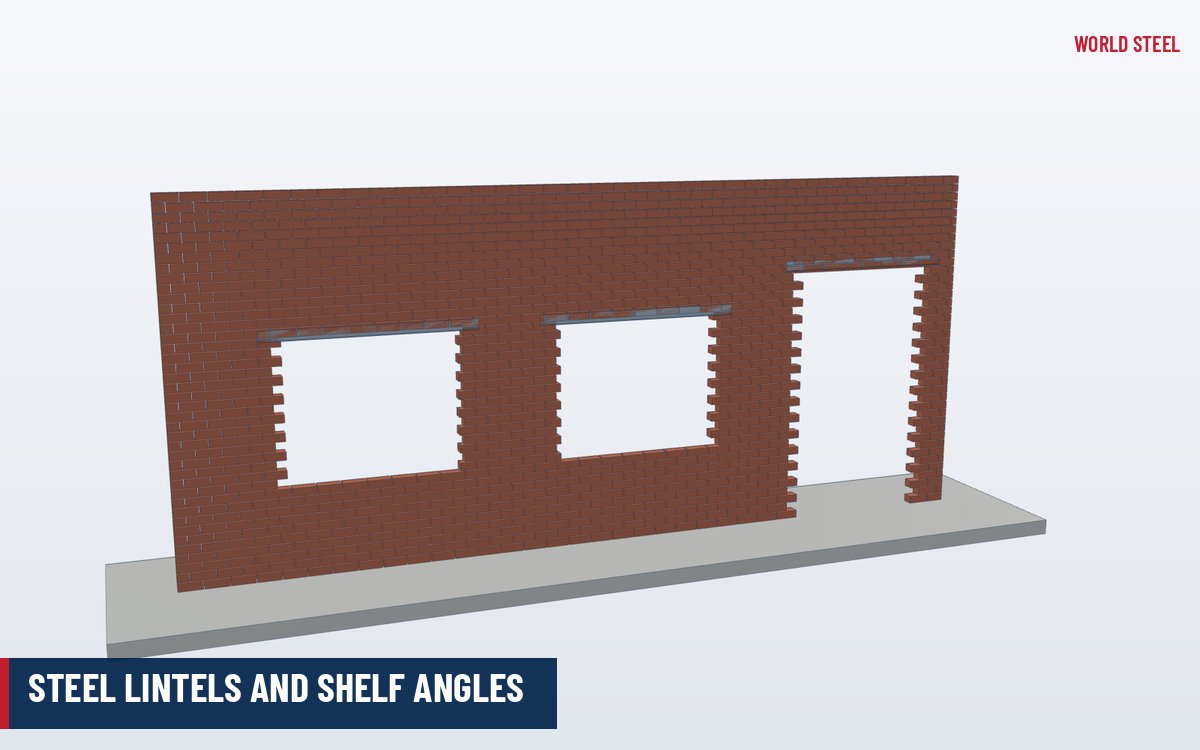
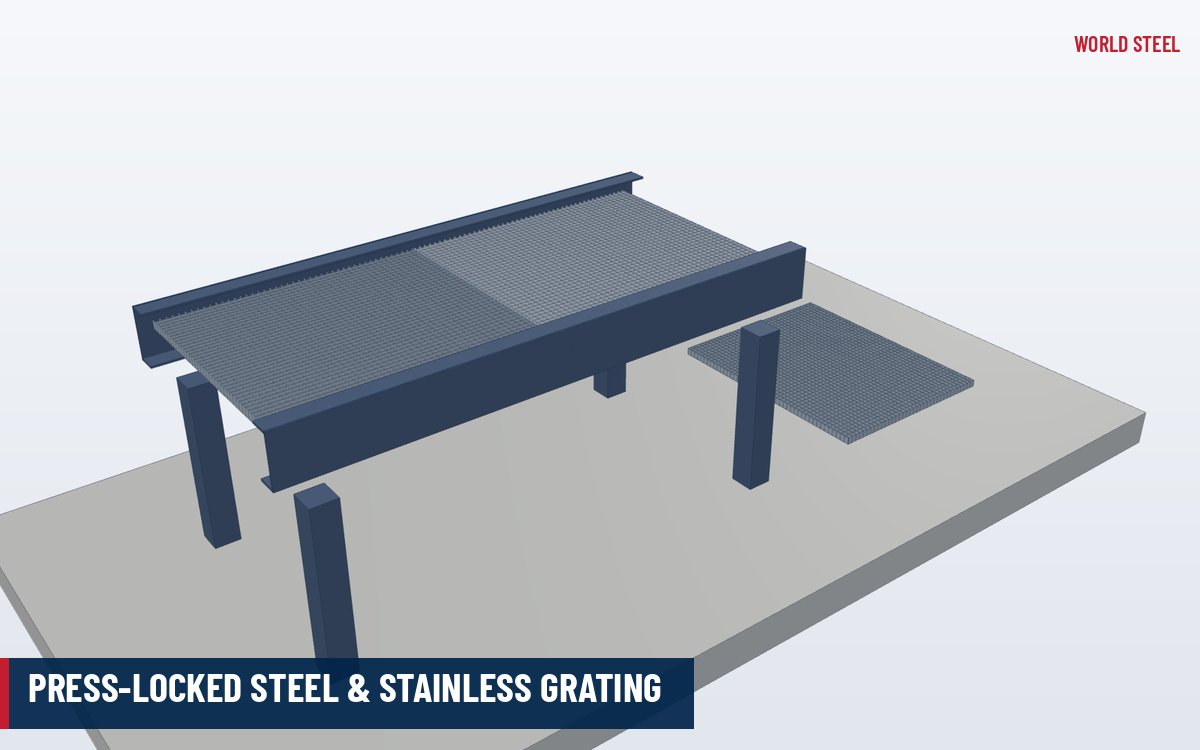
Galvanizing is the normal finish for steel bar grating, industrial handrails, fixed ladders, steel lintels and many embeds and platform frames. Where colour is also required, the galvanized steel can be over-painted as a duplex system.
Norme e requisiti per mercato
I codici secondo cui World Steel progetta, fabbrica e documenta questo prodotto, con i principali requisiti geometrici e di carico in ciascun mercato.
 Stati Uniti
- ASTM A123Zinc (hot-dip galvanized) coatings on iron and steel products
- ASTM A153Zinc coating (hot-dip) on iron and steel hardware
- ASTM A385Providing high-quality zinc coatings (hot-dip)
- ASTM A780Repair of damaged and uncoated areas of hot-dip galvanized coatings
- Coating grade
- Per ASTM A123 Table 1 by material category and thickness
- Repair
- Zinc-rich paint, zinc spray or solder per ASTM A780
 Australia / NZ
- AS/NZS 4680Hot-dip galvanized coatings on fabricated ferrous articles
- AS/NZS 2312.2Guide to the protection of structural steel – hot-dip galvanizing
- AS 4312Atmospheric corrosivity zones in Australia
- AS/NZS 5131 Certificata WSCFabrication and erection of structural steelwork
- HDG on steel > 6 mm
- 600 g/m² (85 µm) average (AS/NZS 4680)
- Design for galvanizing
- Venting, draining and detailing per AS/NZS 2312.2
 Europa
- EN ISO 1461Hot-dip galvanized coatings on fabricated iron and steel articles
- EN ISO 14713-1Zinc coatings – general principles and corrosion resistance
- EN ISO 14713-2Zinc coatings – hot-dip galvanizing
- EN 1090-2 Certificata WSCExecution of steel structures – technical requirements
- Min. HDG thickness > 6 mm steel
- 85 µm mean, 70 µm local (EN ISO 1461)
- Min. HDG thickness 3–6 mm steel
- 70 µm mean, 55 µm local (EN ISO 1461)
- Repair of uncoated areas
- ≤ 0.5 % of surface in total, ≤ 10 cm² each (EN ISO 1461)
Sintesi solo orientativa: prevalgono il capitolato di progetto, l'edizione del codice adottata e l'autorità competente.
Finiture
| Finitura | Norme / note |
|---|---|
| Hot-dip galvanized | ASTM A123 · AS/NZS 4680 · EN ISO 1461 |
| Galvanized fasteners | ASTM A153 · AS/NZS 1214 · EN ISO 10684 |
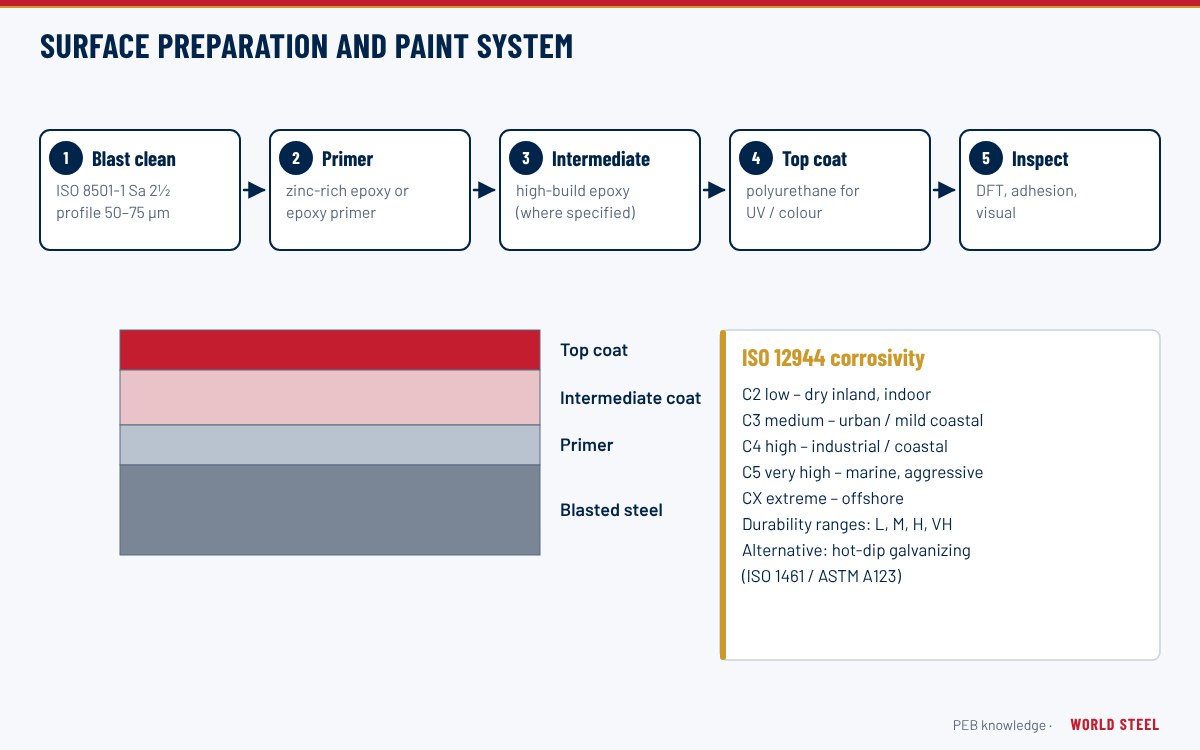
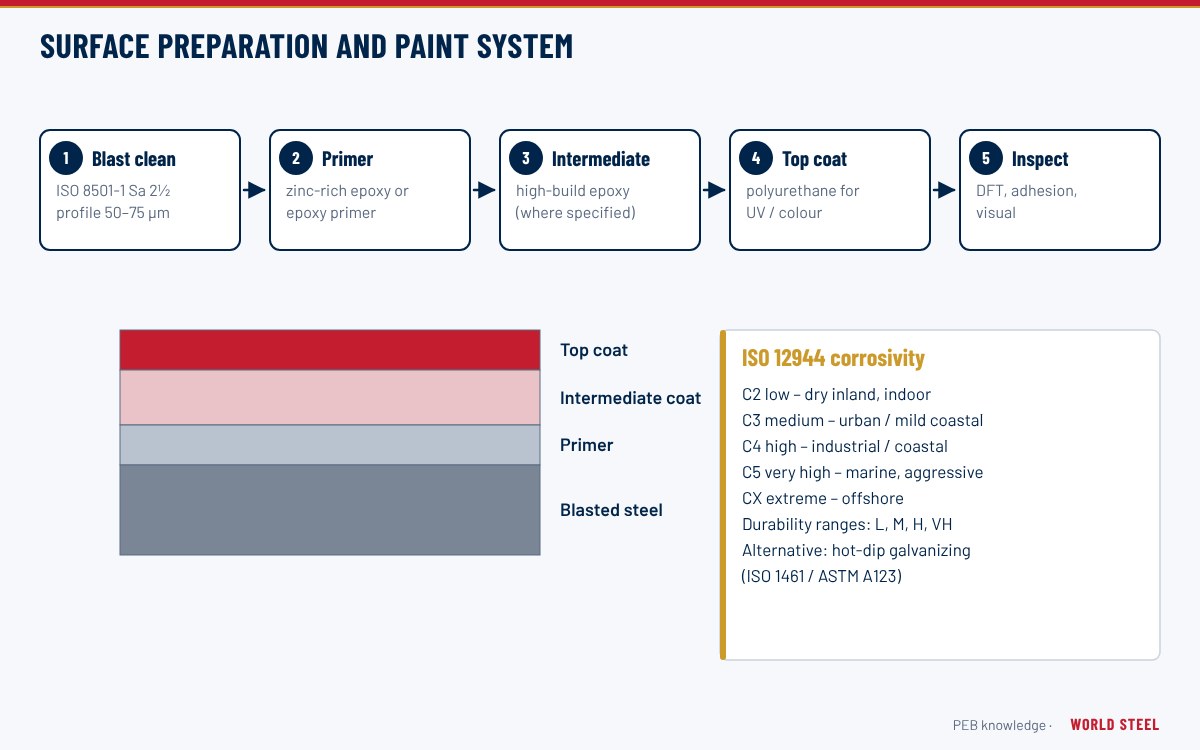
| Duplex (galvanized + paint or powder) | ASTM D6386 / D7803 · AS/NZS 2312.1 · EN ISO 12944 / EN 15773 |
Domande frequenti
Does World Steel galvanize in its own plant?
No. Galvanizing is carried out by qualified galvanizers to ASTM A123, AS/NZS 4680 or EN ISO 1461. World Steel details the steel for galvanizing, inspects the coated items and supplies the galvanizing certificate.
How thick is the zinc coating?
It depends on the standard and the steel thickness. Under EN ISO 1461, steel over 6 mm needs at least 85 µm mean (70 µm local); AS/NZS 4680 requires 600 g/m² (85 µm) average for the same thickness. ASTM A123 sets grades by material category and thickness.
Why are there holes in my hollow sections?
Vent and drain holes let air out and zinc flow in and out during dipping. They are required for safe, complete galvanizing and are shown on the shop drawings for approval.
Some galvanized parts look dull grey – is that a defect?
No. A dull grey or uneven appearance usually comes from reactive steel chemistry and often means a thicker coating. Appearance differences are not defects as long as the coating is continuous and meets the thickness requirement.
Can galvanized steel be painted?
Yes, as a duplex system, after the zinc surface is prepared by sweep blasting or chemical treatment and a compatible primer is used. Alkyd paint must never be applied directly to zinc.
 New Zealand
 AS/NZS 5131 CC3
 EN 1090 EXC3 · CE