ENEnglish
 VITiếng Việt
 ZH中文
 KO한국어
 JA日本語
 FRFrançais
 ITItaliano
 PTPortuguês
 ESEspañol
 HEעברית
 ARالعربية

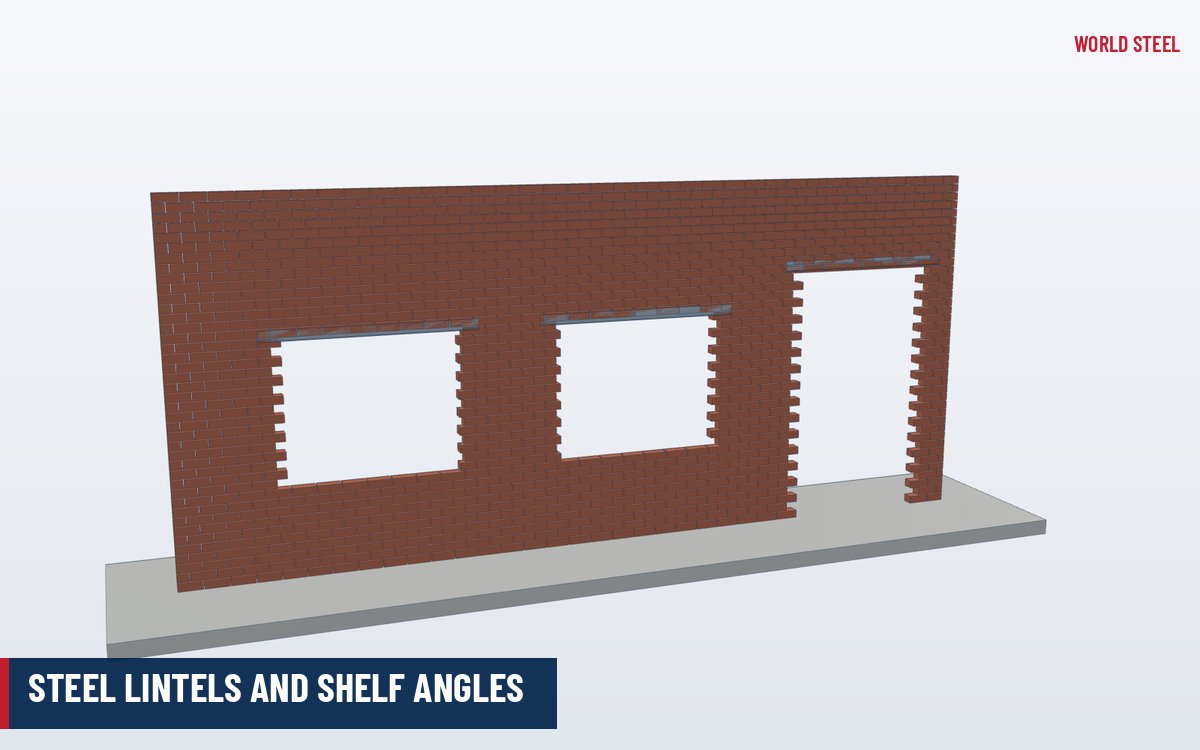
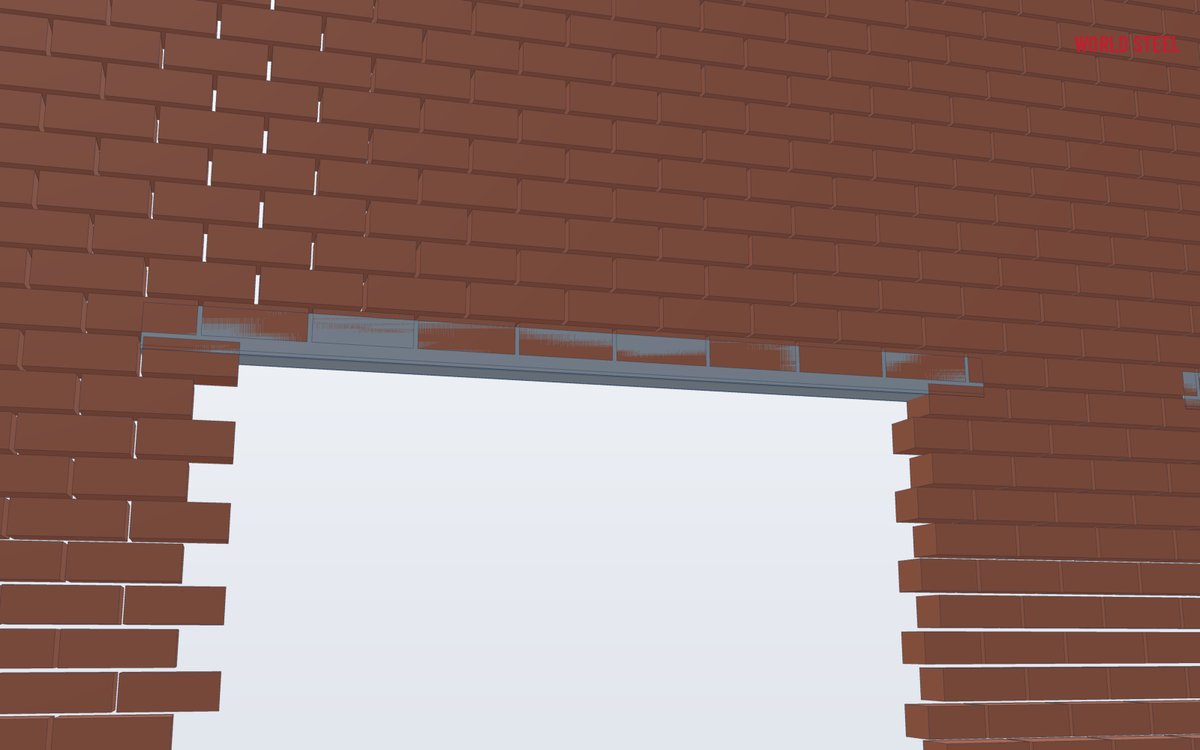
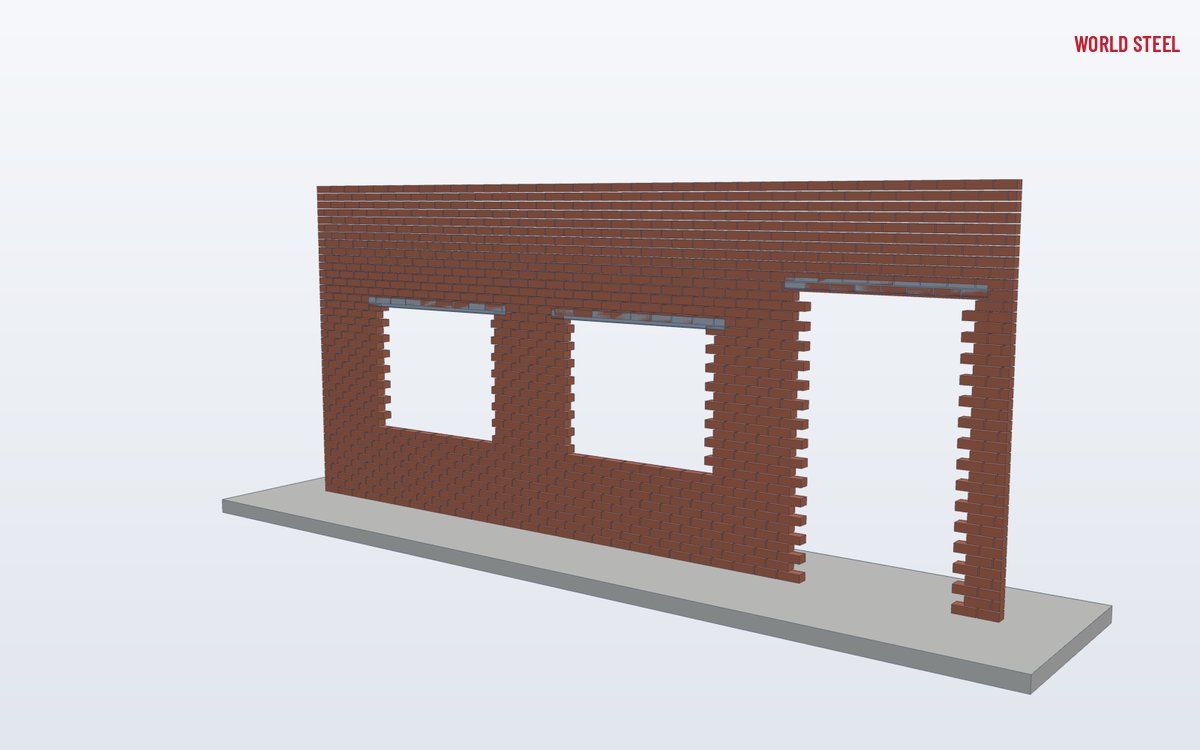
- Loose angle lintels, built-up and plate lintels
- Shelf angles with slotted holes for adjustment
- Cut, drilled and marked to the opening schedule
- Hot-dip galvanized for masonry durability requirements
- Durability per AS/NZS 2699.3; lintels for the EU per EN 845-2
What it is
A steel lintel carries the masonry above a window, door or service opening and transfers the load to the wall on either side. The simplest is a loose angle lintel: one or two hot-rolled angles that sit in the wall with bearing at each end. Wider or heavier openings use back-to-back angles, a plate welded to a beam flange, or a built-up section that supports both leaves of a cavity wall. Shelf angles are related items: continuous angles bolted to the building frame or slab edge that support brick veneer at each floor and allow for movement.
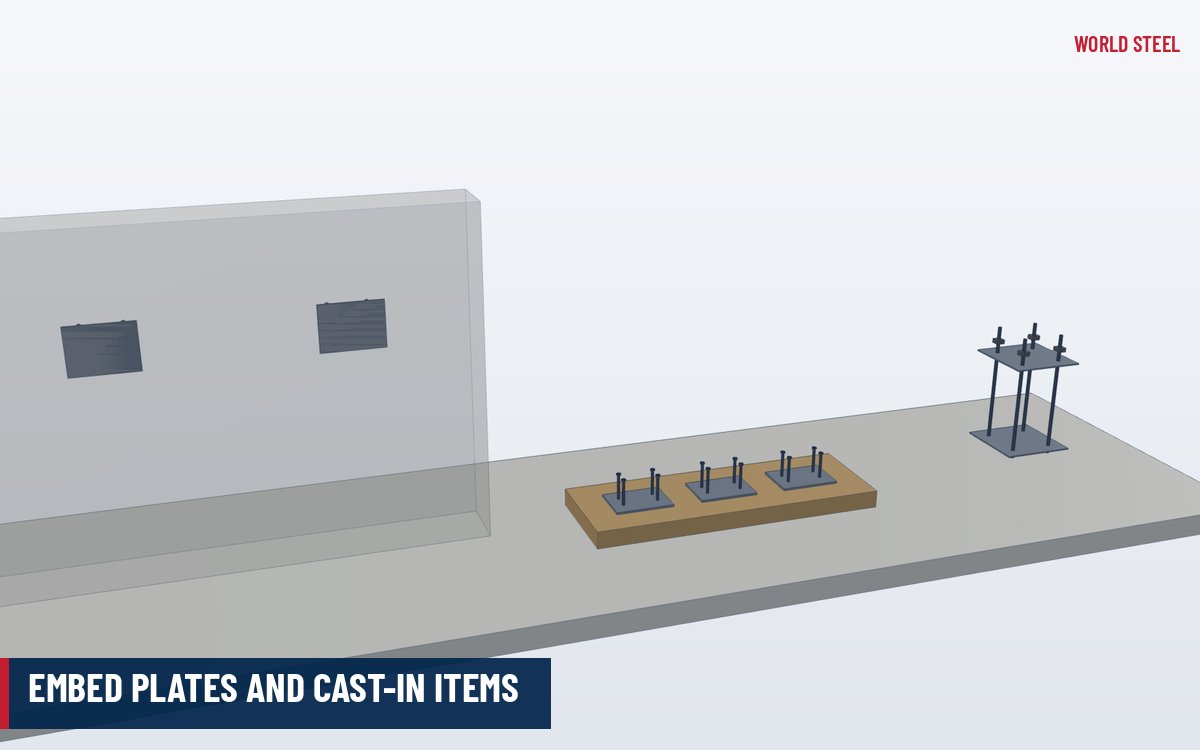
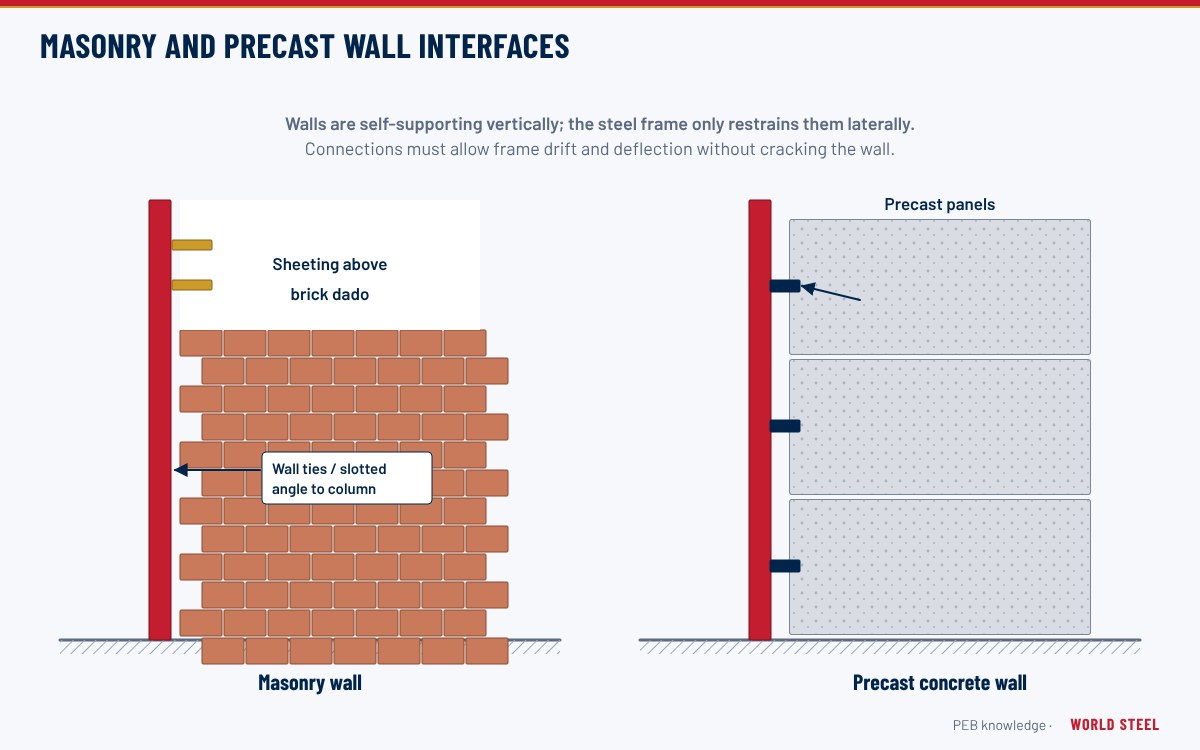
World Steel supplies lintels and shelf angles as part of misc. metals packages for buildings with masonry walls, often together with embed plates and the steel frame itself. Interfaces between steel, masonry and precast are described in masonry and precast interfaces.
Types and options
| Type | Construction | Typical use |
|---|---|---|
| Single loose angle | One equal or unequal angle, leg up | Small openings in a single masonry leaf or veneer |
| Double / back-to-back angles | Two angles, bolted or separated with spacers | Thicker walls, both faces of an opening |
| Beam-and-plate lintel | Rolled beam or channel with welded bottom plate | Wide openings, cavity walls, heavy masonry above |
| Hung lintel | Angle suspended from the structure above | Openings where the wall cannot provide end bearing |
| Shelf angle | Continuous angle with slotted holes and shims | Brick veneer support at floor lines on frame buildings |
Options include pre-cut lengths with end bearing allowances, holes for wall ties or fixings, welded end stops, horizontal and vertical slots for adjustment on shelf angles, and stainless steel for high-durability façades.
Design and compliance
Lintels are sized by the designer for the opening width, the masonry load above (allowing for arching where the code permits), any floor or roof loads, and deflection limits that protect the masonry from cracking. In the US, masonry lintels are designed to TMS 402/602 with steel members to AISC 360. In Australia, AS 4100 governs the steel design, AS 3700 the masonry, and AS/NZS 2699.3 sets the durability (coating) requirements for lintels and shelf angles according to exposure. In Europe, lintels for masonry are covered by the harmonised standard EN 845-2, so lintels placed on the EU market carry CE marking; steel design follows EN 1993-1-1.
Corrosion is the main long-term risk, because lintels are hidden inside the wall and are hard to inspect or replace. That is why galvanizing, or galvanizing plus paint, is the normal specification for external walls.
Fabrication and finishing at World Steel
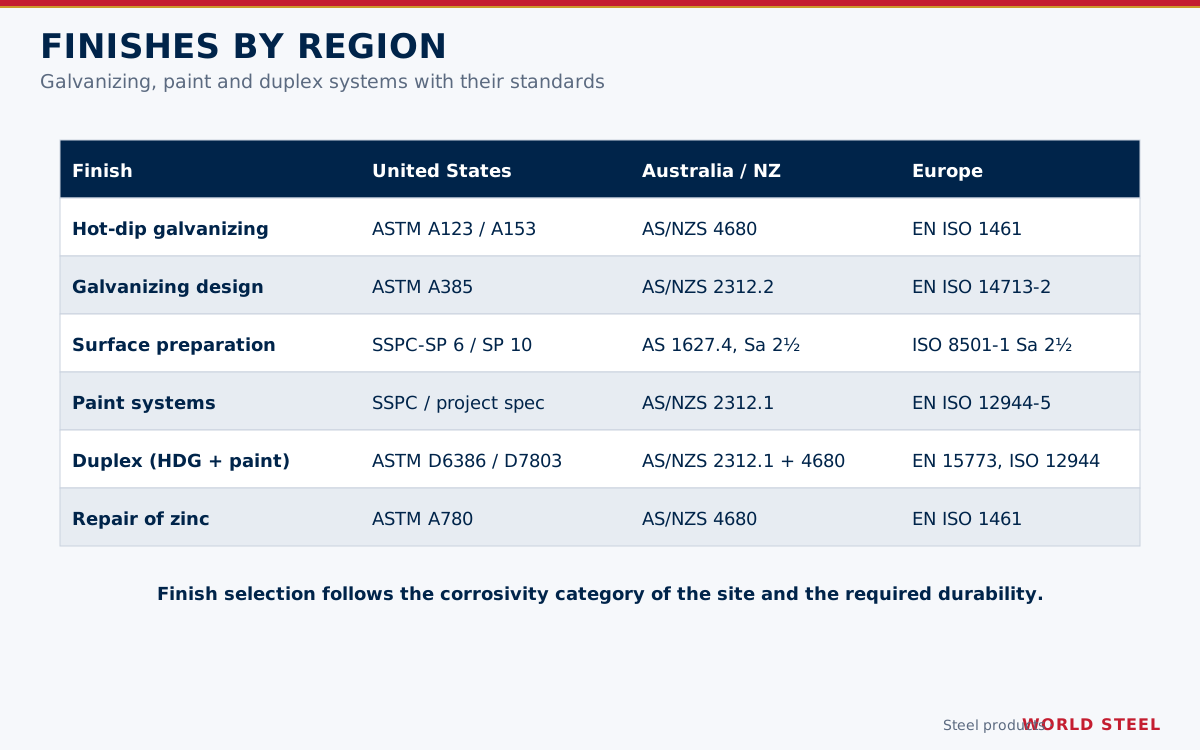
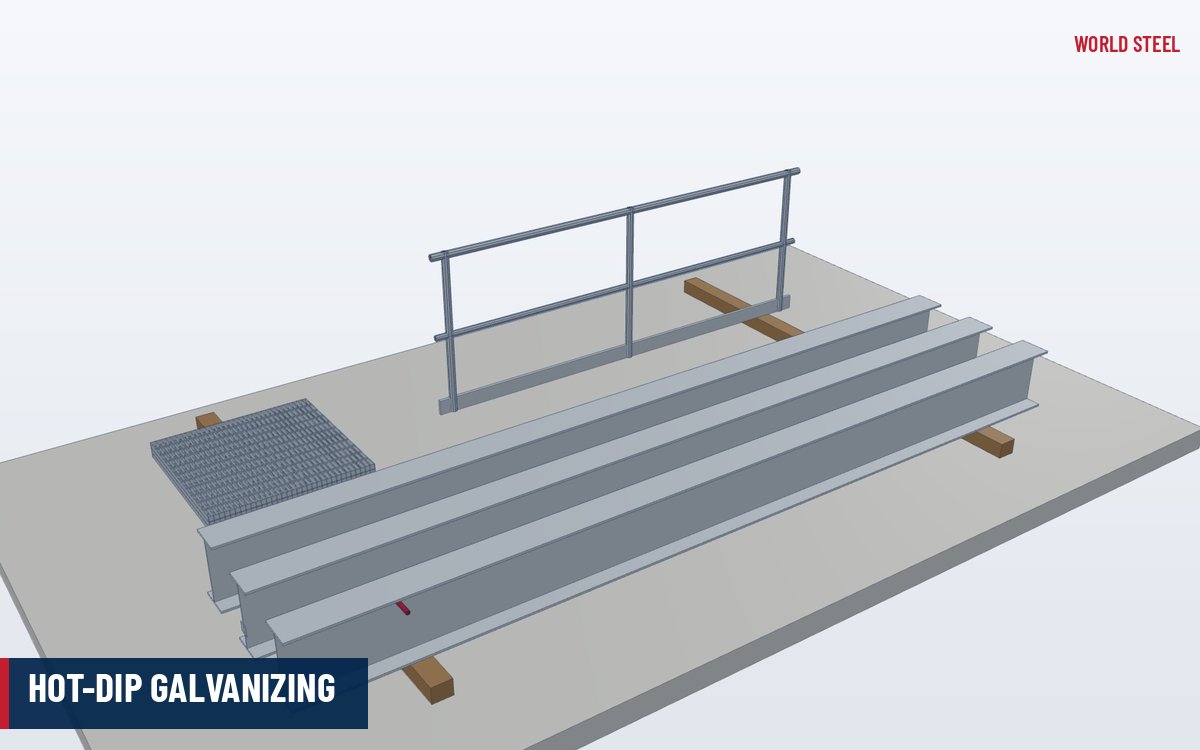
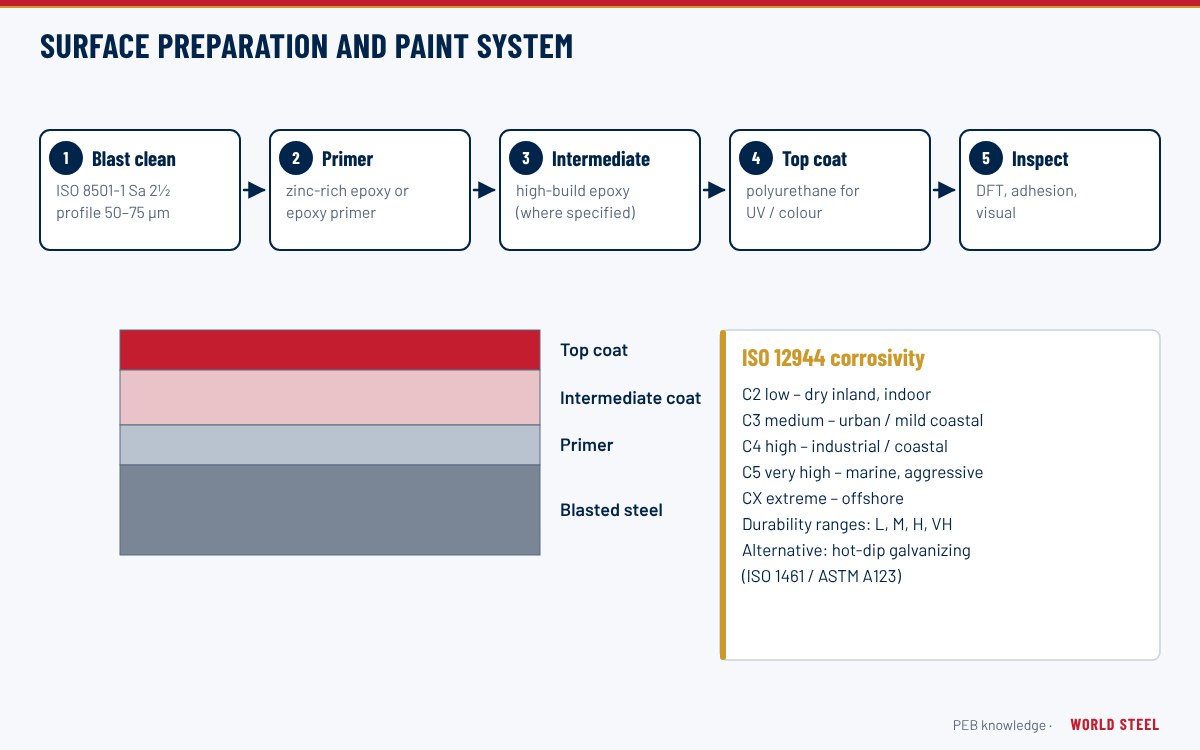
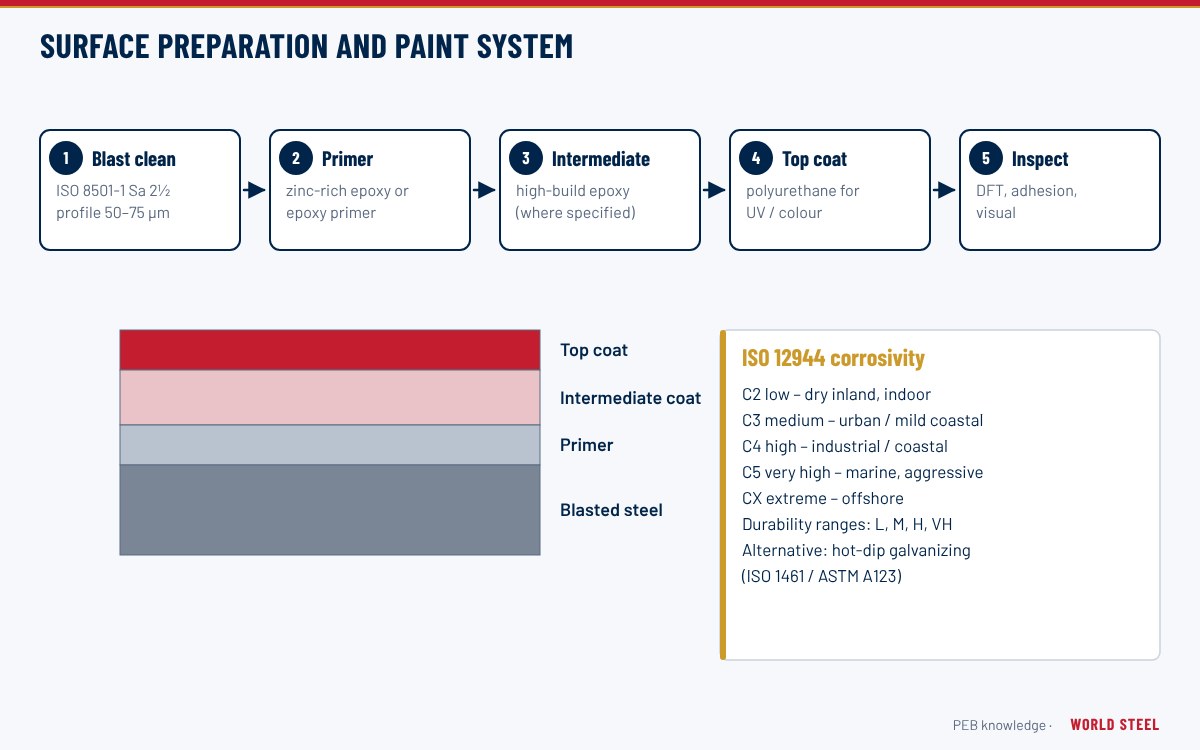
Angles, channels and plates are cut and drilled on CNC lines to the opening schedule; built-up lintels are welded by qualified welders to AWS D1.1, AS/NZS 1554.1 or EN ISO 3834-2 procedures. Each lintel is marked with its opening reference so site crews can place it without measuring. After shot blasting, lintels are hot-dip galvanized by qualified galvanizers to ASTM A123 / AS/NZS 4680 / EN ISO 1461; a paint topcoat can be added as a duplex system in severe exposures. See paint and coating systems and surface preparation.
Installation and site notes
- Lintels are bedded level on mortar with the end bearing shown on the drawings; the vertical leg faces up.
- Flashing or a damp-proof course is placed over the lintel to drain water out of the cavity.
- Shelf angles are bolted to cast-in channels, embeds or the steel frame and shimmed to line and level, leaving the movement joint below.
- Damaged galvanizing from handling or site cutting is repaired to ASTM A780 or the regional equivalent.
Selecting and specifying
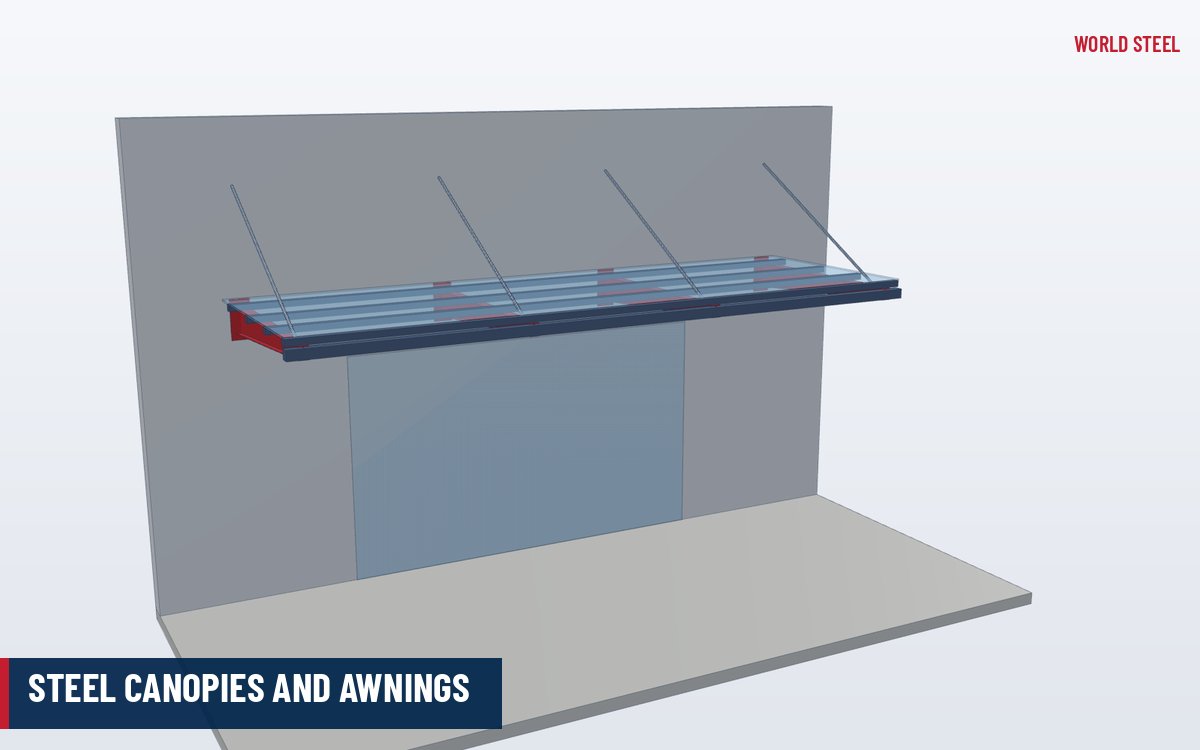
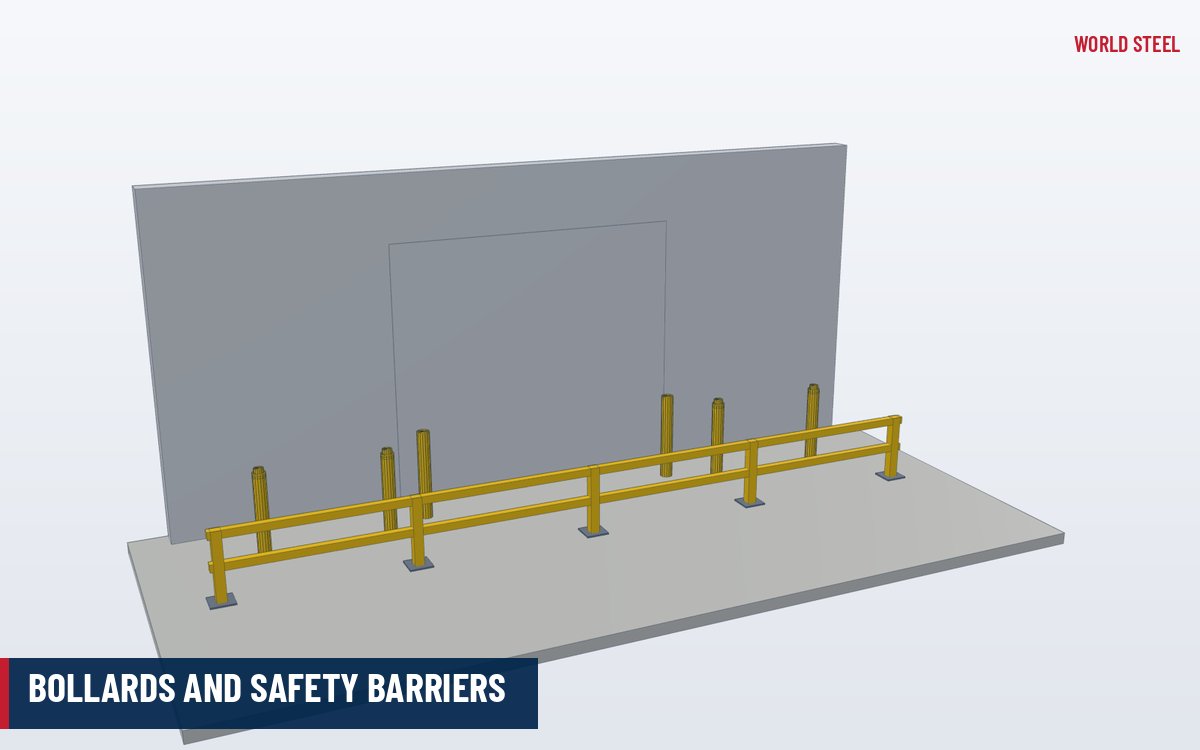
Send an opening schedule listing each opening width, wall type and thickness, the lintel section (or loads if World Steel is to propose sizes for approval), bearing length, finish and quantity. For shelf angles, include the slab edge or frame details, the fixing type and the brick module. Lintels and shelf angles fit naturally into a combined package with canopies, bollards and other building accessories.
Norme e requisiti per mercato
I codici secondo cui World Steel progetta, fabbrica e documenta questo prodotto, con i principali requisiti geometrici e di carico in ciascun mercato.
 Stati Uniti
- TMS 402/602Building code and specification for masonry structures
- AISC 360Specification for structural steel buildings
- ASTM A36Carbon structural steel
- ASTM A123Zinc (hot-dip galvanized) coatings
- CSI 05 50 00Metal Fabrications
- Lintel design
- Per TMS 402 and AISC 360 by the designer
- Galvanizing repair
- ASTM A780
 Australia / NZ
- AS/NZS 2699.3Built-in components for masonry – lintels and shelf angles (durability)
- AS 3700Masonry structures
- AS 4100Steel structures
- AS/NZS 4680Hot-dip galvanized coatings
- AS/NZS 2312.2Hot-dip galvanizing – design guidance
- Durability
- Coating by exposure class (AS/NZS 2699.3)
- Masonry design
- Per AS 3700
 Europa
- EN 845-2Ancillary components for masonry – lintels
- EN 1993-1-1Design of steel structures
- EN 1996Design of masonry structures
- EN ISO 1461Hot-dip galvanized coatings
- EN ISO 14713Zinc coatings – guidance
- CE marking
- Lintels CE-marked under harmonised EN 845-2
- Corrosion protection
- Per EN ISO 14713 / EN ISO 12944 for the exposure
Sintesi solo orientativa: prevalgono il capitolato di progetto, l'edizione del codice adottata e l'autorità competente.
Finiture
| Finitura | Norme / note |
|---|---|
| Hot-dip galvanized | ASTM A123 · AS/NZS 4680 · EN ISO 1461 |
| Duplex (galvanized + paint) | ASTM A123 + topcoat · AS/NZS 4680 + AS/NZS 2312.1 · EN ISO 1461 + EN ISO 12944 |
| Stainless steel | ASTM A240 / A276 · AS 1449 · EN 10088 |
Domande frequenti
Are steel lintels always galvanized?
For external masonry, yes in most specifications, because lintels are hidden and hard to maintain. AS/NZS 2699.3 sets the coating by exposure in Australia; elsewhere the project specification governs.
Do lintels for Europe need CE marking?
Yes. Lintels for masonry fall under the harmonised standard EN 845-2, so a Declaration of Performance and CE marking are required when they are placed on the EU market.
Can you size the lintels for us?
Lintels are normally sized by the project designer. If loads and wall details are provided, we can propose sections for the designer's approval.
How are shelf angles adjusted on site?
Shelf angles are supplied with slotted holes and shims so they can be set to line and level after the frame or slab is built.
 AS/NZS 5131 CC3
 EN 1090 EXC3 · CE