ENEnglish
 VITiếng Việt
 ZH中文
 KO한국어
 JA日本語
 FRFrançais
 ITItaliano
 PTPortuguês
 ESEspañol
 HEעברית
 ARالعربية

Why surface preparation decides coating life
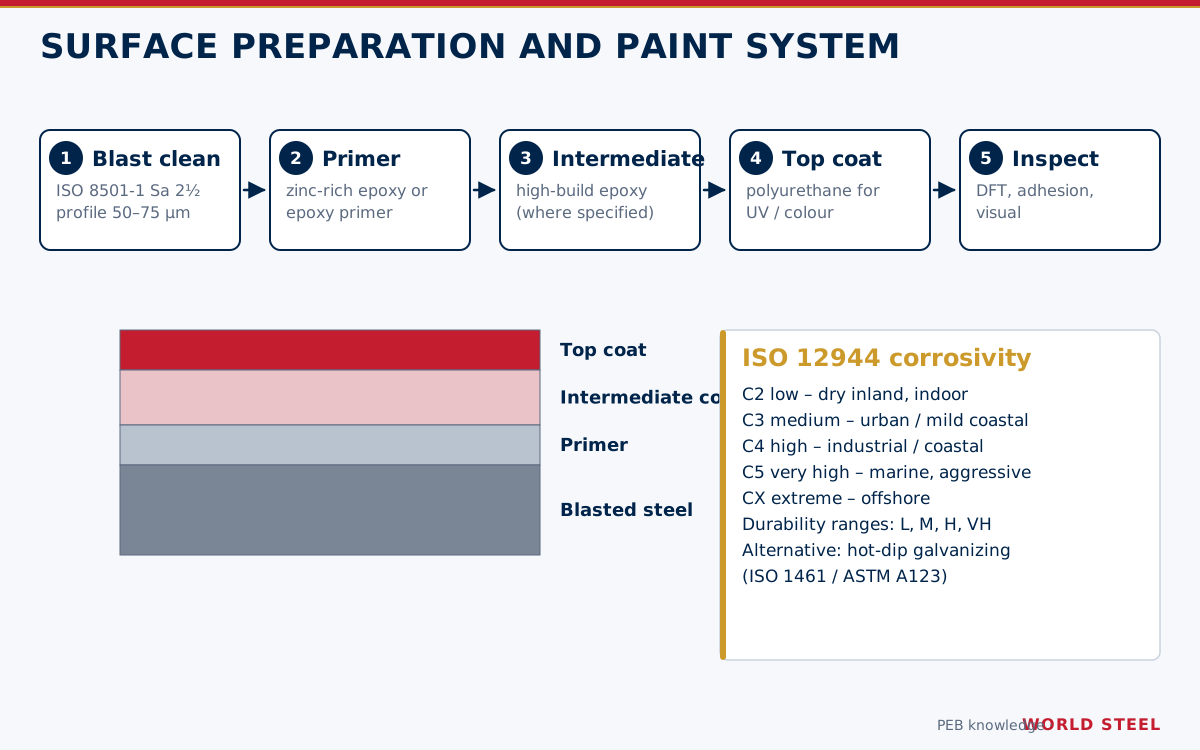
Most premature coating failures on steel buildings trace back to surface preparation, not to the paint itself. Hot-rolled plate carries mill scale, rust and contaminants; welds leave spatter and flux residue; cut edges are sharp. Removing these and creating a clean, roughened surface is what allows a primer to bond and the system to reach its design life. The paint system is specified separately – see paint and coating systems – but it only performs if the steel underneath is properly prepared.
Shop blasting
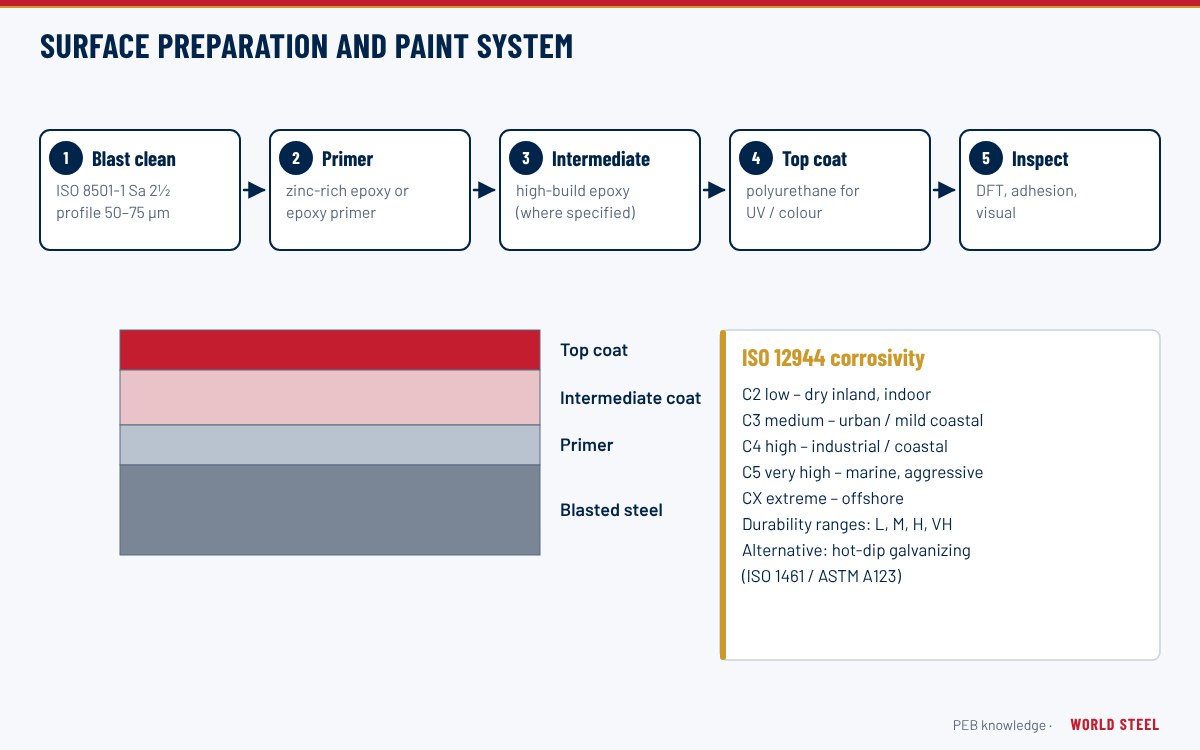
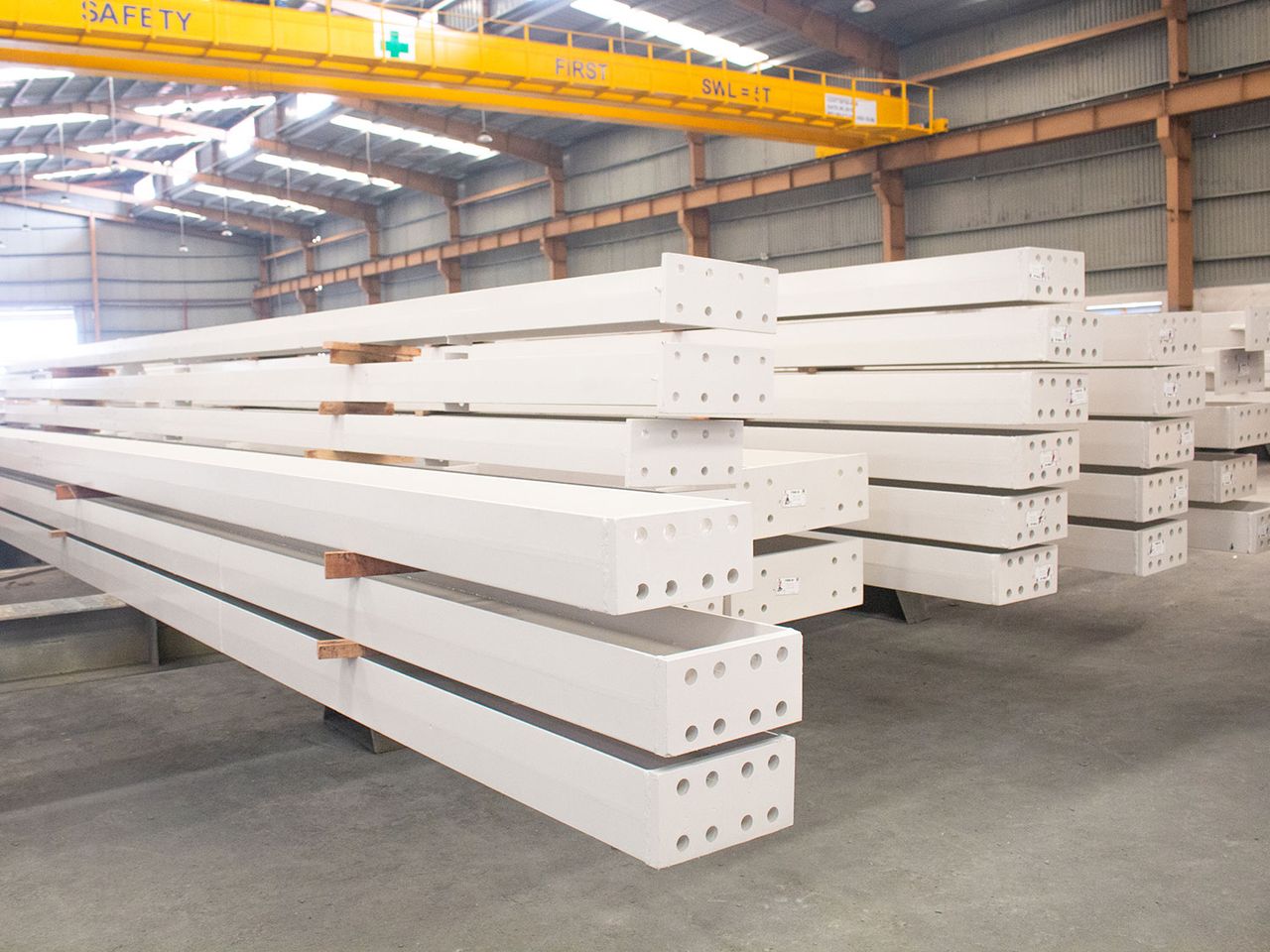
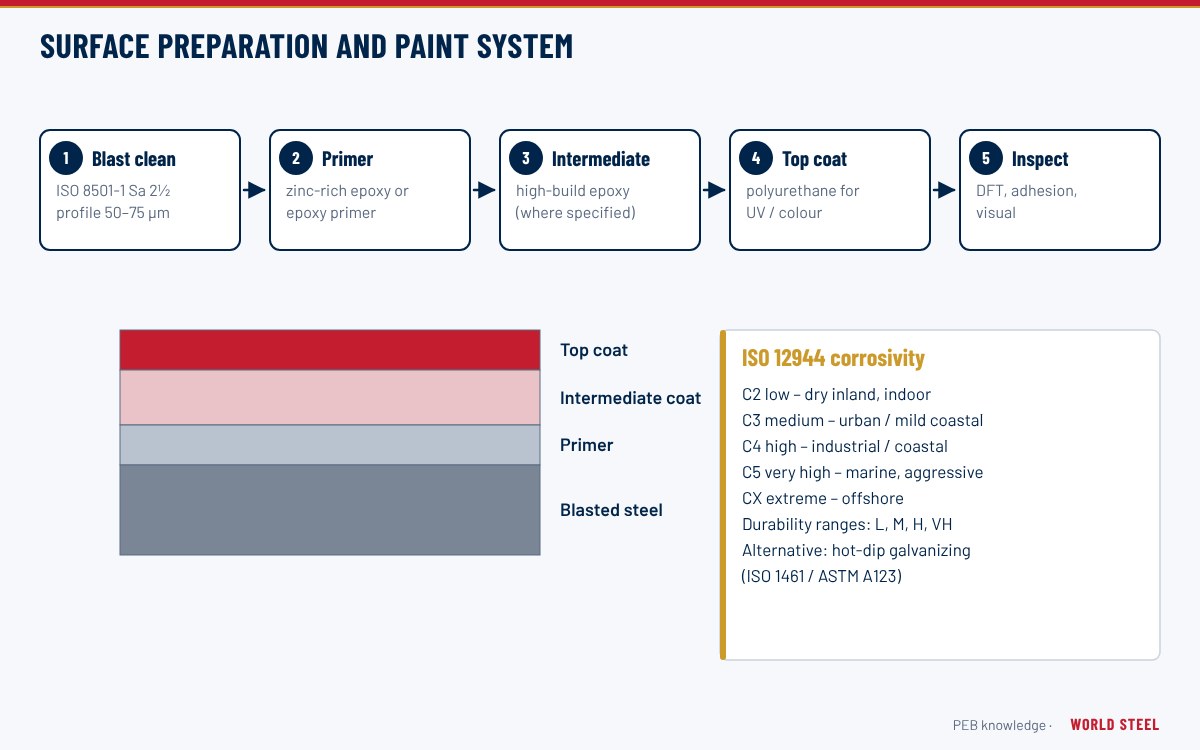
Primary PEB members are cleaned in automatic wheel-blast (shot blasting) machines: turbines throw steel shot or grit at the member as it passes through on a roller conveyor. Before blasting, welds are dressed, spatter removed and sharp edges rounded. The standard grade for paint systems on structural steel is Sa 2½ ("very thorough blast cleaning") to ISO 8501-1, equivalent to SSPC-SP 10 / NACE No. 2 near-white blast in North America. Lower grades such as Sa 2 may be accepted for mild internal environments where the specification allows; Sa 3 is reserved for special coatings such as thermal spray.
- Cleanliness – visual comparison with ISO 8501-1 photographs.
- Surface profile – typically medium grade, around 40–75 µm Rz depending on the primer; measured by comparator (ISO 8503) or replica tape.
- Dust and soluble salts – dust to ISO 8502-3, chlorides to ISO 8502-6/-9 where the specification calls for it.
- Climate – steel temperature at least 3 °C above dew point and relative humidity within the paint maker's limits.
Paint application
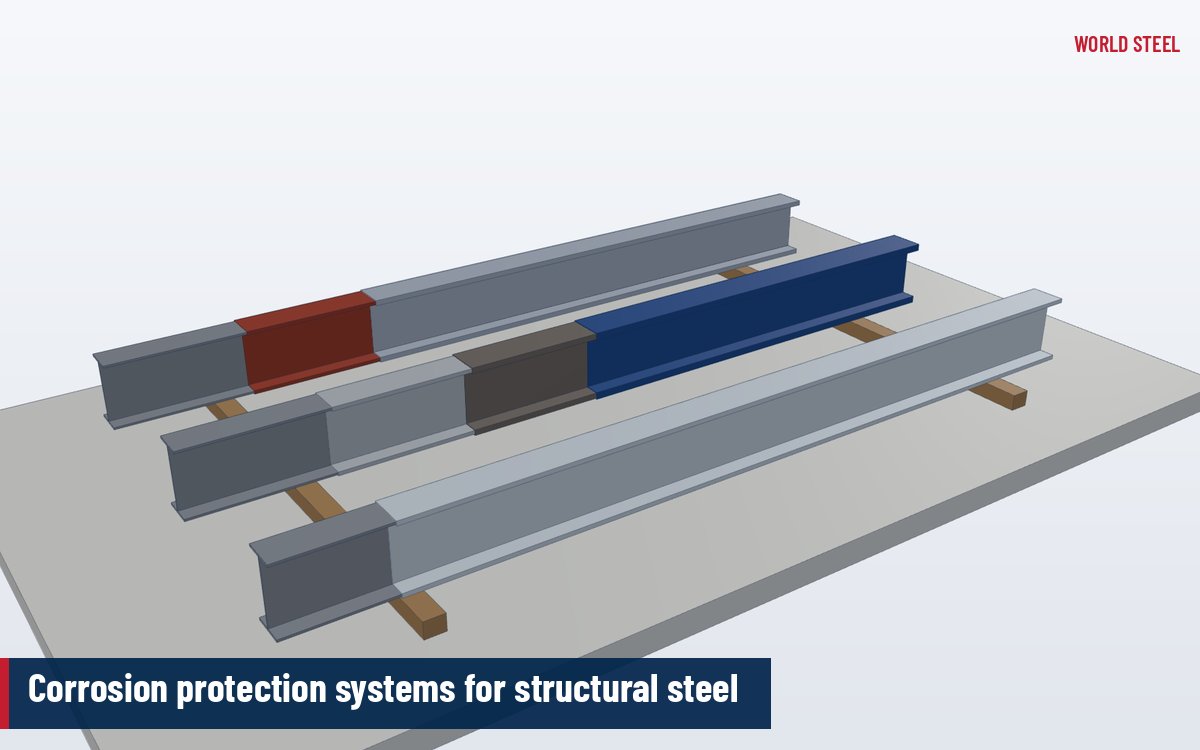
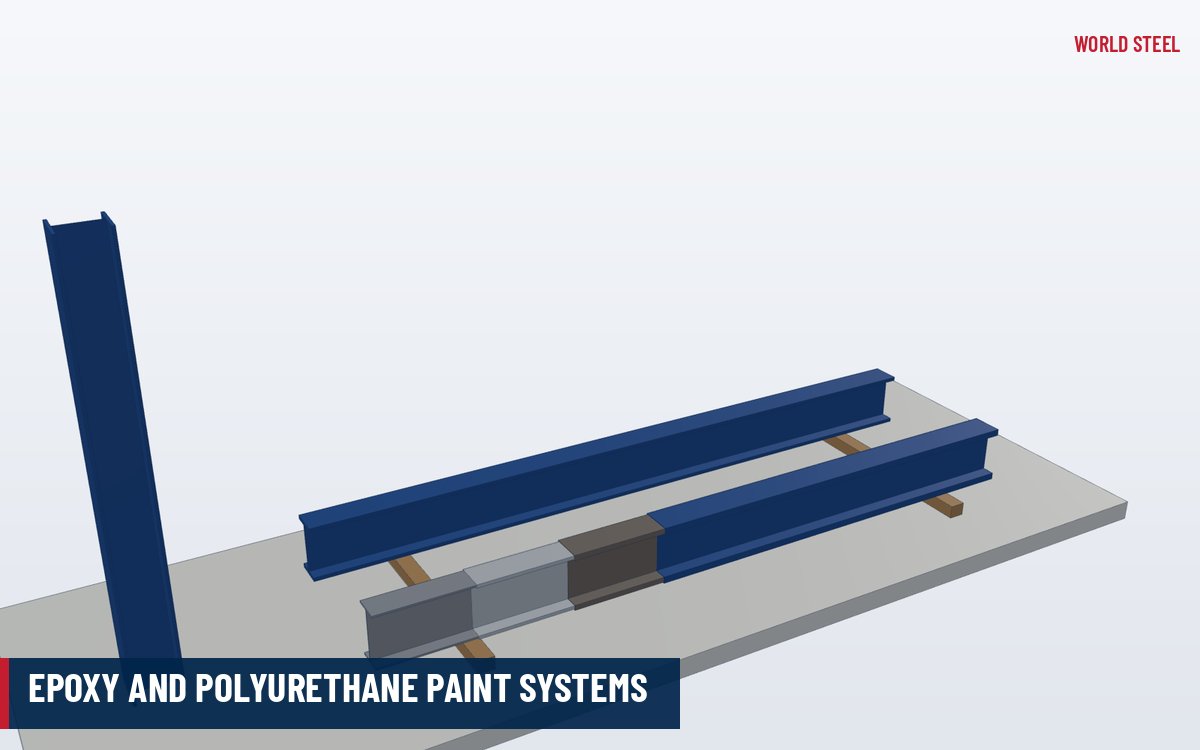
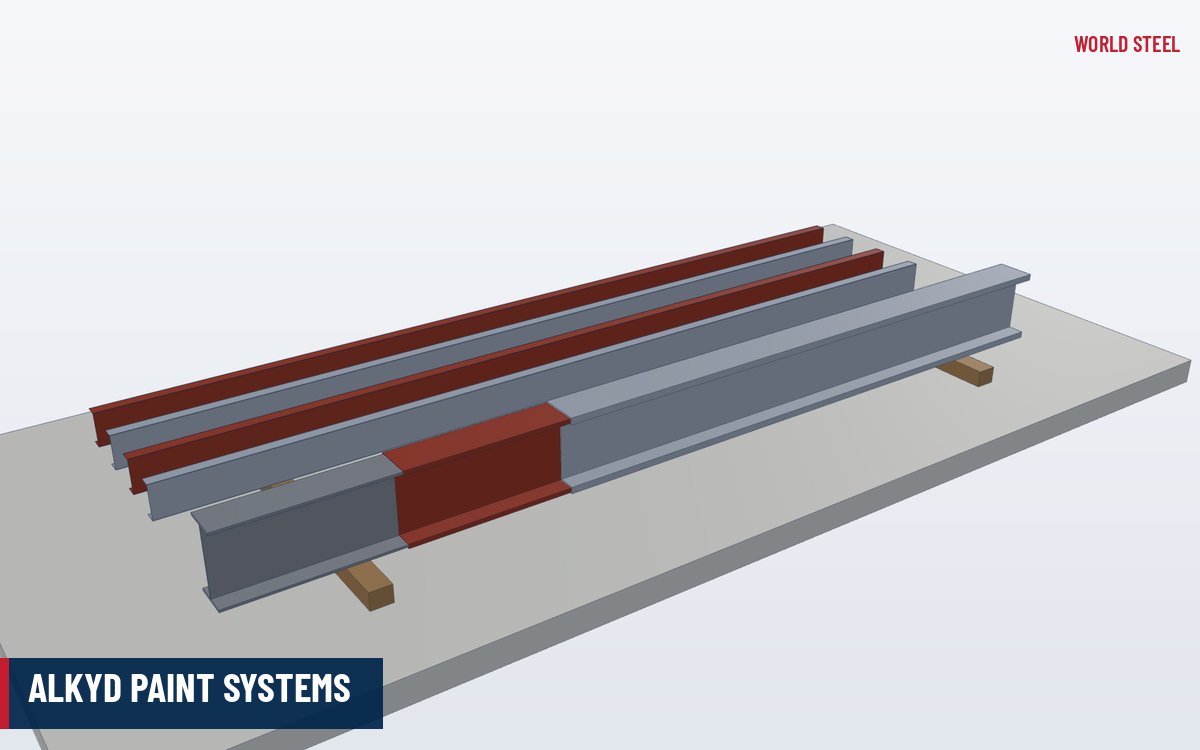
Paint is applied by airless spray in a booth as soon as possible after blasting to avoid flash rust. Edges, welds and bolt holes are stripe-coated by brush so that sharp corners receive full film thickness. A typical PEB shop system ranges from a single coat of alkyd or epoxy primer for enclosed, dry interiors to a three-coat zinc-rich epoxy / epoxy MIO / polyurethane system for coastal or industrial atmospheres.
| Category | Typical environment | Indicative system | Nominal DFT |
|---|---|---|---|
| C2 | Dry, heated interiors; rural | Alkyd or epoxy primer + finish | ~80–120 µm |
| C3 | Urban, light industrial, humid interiors | Epoxy primer + polyurethane | ~120–200 µm |
| C4 | Industrial, coastal with moderate salinity | Zinc-rich epoxy + epoxy + polyurethane | ~200–280 µm |
| C5 | Severe industrial or marine | Zinc-rich epoxy + high-build epoxy + polyurethane, or HDG + paint (duplex) | ~280–320 µm and above |
Faying surfaces of slip-critical connections are masked or coated only with a primer qualified for the required slip coefficient (RCSC Specification in the US, EN 1090-2 Annex G in Europe). Areas to be welded on site and anchor zones embedded in concrete are left uncoated as detailed.
Hot-dip galvanizing as an alternative
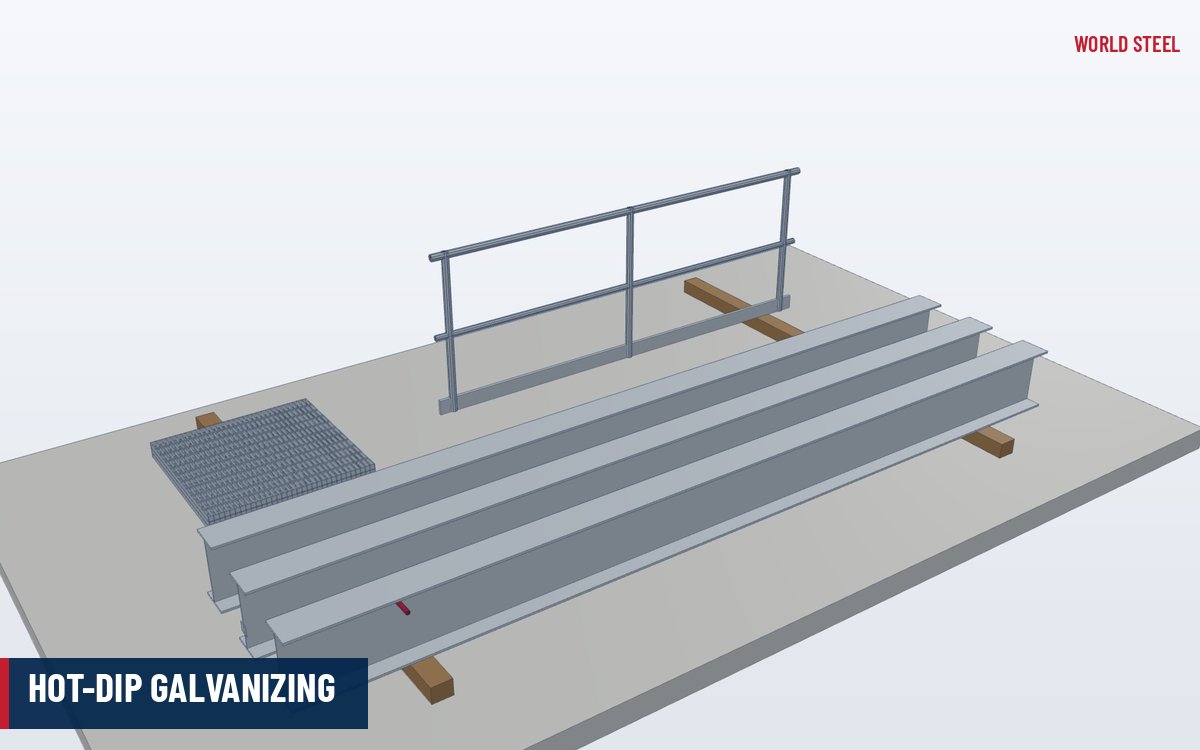
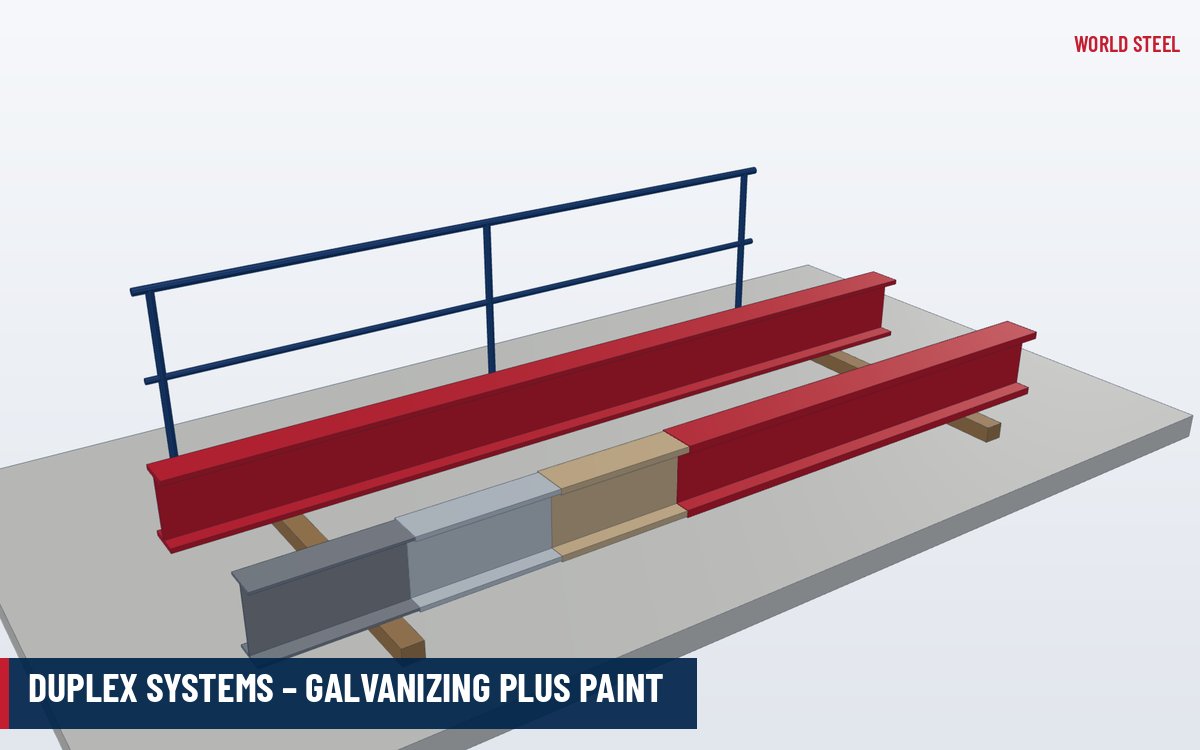
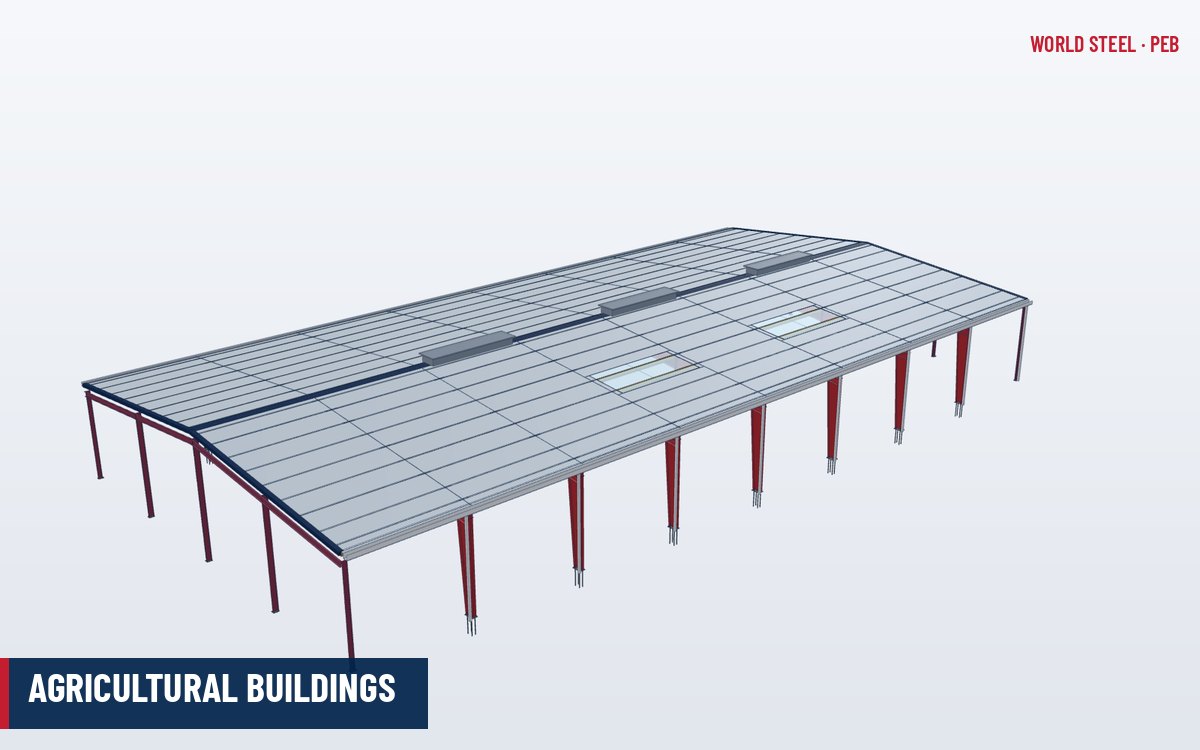
For agricultural buildings, coastal sites and exposed canopies, hot-dip galvanizing to ISO 1461, ASTM A123 or AS/NZS 4680 gives a metallurgically bonded zinc coating that protects edges and inside faces equally. Members must be detailed for galvanizing (vent and drain holes, limits on bath size) and large tapered members may need to be split. A duplex system of galvanizing plus paint offers the longest life in C5 conditions. See agricultural buildings for a typical use.
Touch-up, repairs and painting galvanized steel
Coating damage during handling, transport and erection is normal; what matters is that it is repaired with a compatible system. Typical rules:
| Situation | Typical repair | Reference examples |
|---|---|---|
| Damaged shop paint on primary steel | Clean to St 3 (power tool) or spot blast, feather edges, apply primer and finish of the original system to full DFT | ISO 8501-1 / SSPC-SP 3 or SP 11; paint maker data |
| Damaged hot-dip galvanizing | Zinc-rich paint, zinc spray or zinc-based solder, to a thickness exceeding the surrounding coating; repair area limits apply | ISO 1461 repair clauses; ASTM A780 |
| Field welds | Remove slag and spatter, clean, then apply the full shop system | Project specification |
| Bolts and nuts after tightening | Touch up to match surrounding coating where specified | Project specification |
Painting over galvanizing. New zinc surfaces are smooth and reactive, so paint needs a prepared surface: light sweep blasting with non-metallic abrasive or chemical pretreatment, followed by a primer suited to zinc (for example an epoxy tie coat). Guidance is given in ASTM D6386 and ISO 12944-4. Alkyd paints applied directly to zinc are prone to peeling and should be avoided.
| Defect | Likely cause |
|---|---|
| Runs and sags | Excessive wet film thickness in one pass |
| Dry spray | Gun too far from surface, high air movement or temperature |
| Pinholes and blistering | Solvent entrapment, contaminated or porous surface, application too thick |
| Amine blush on epoxies | Application or cure in cold, humid conditions |
| Poor adhesion | Inadequate blast profile, dust or salts left on surface, overcoat window exceeded |
Inspection and records
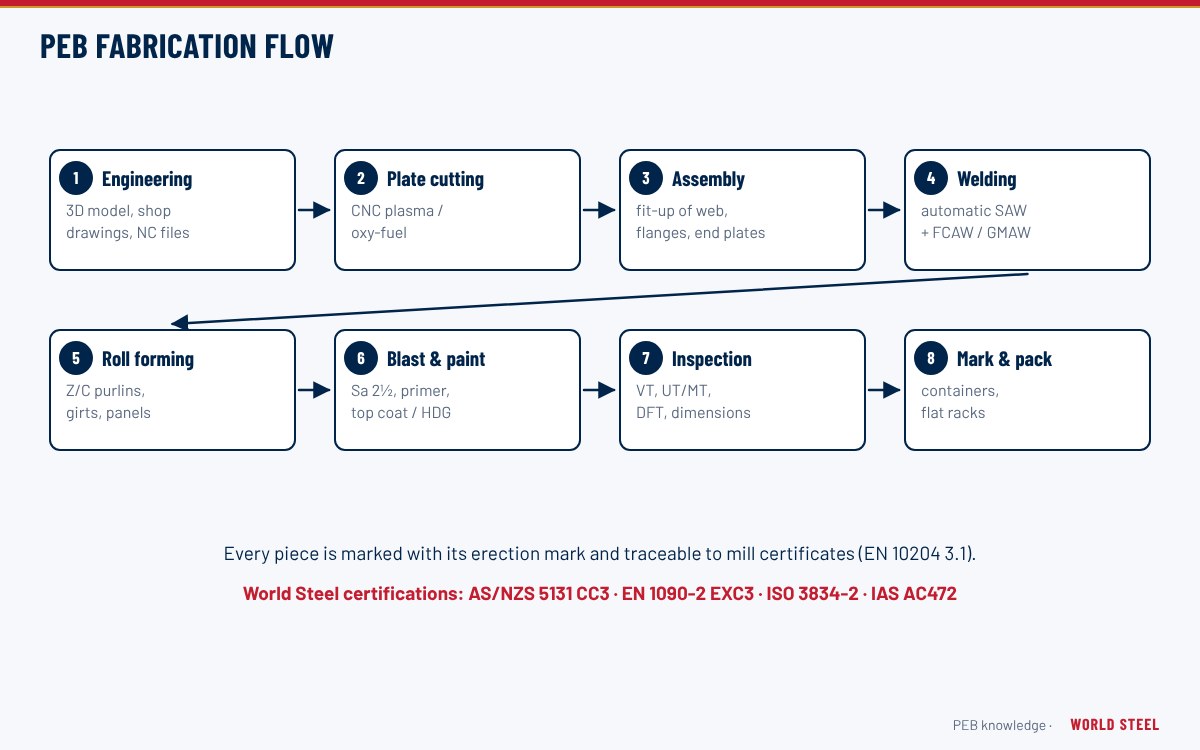
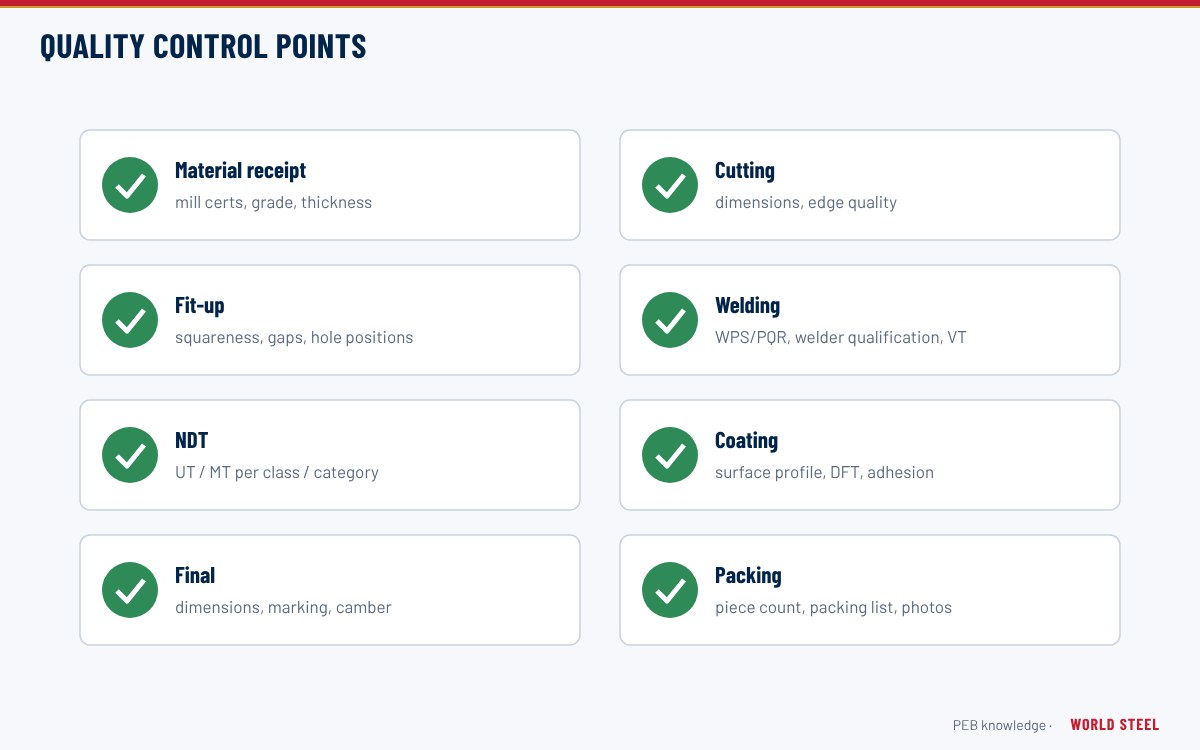
Wet film thickness is checked during spraying and dry film thickness (DFT) is measured with magnetic or eddy-current gauges after curing, using the sampling and acceptance rules of ISO 19840 or SSPC-PA 2. Adhesion may be tested by pull-off (ISO 4624) or cross-cut (ISO 2409) on test panels. Results are recorded in the coating report included in the shipment dossier – see quality control and inspection. World Steel blasts primary members to Sa 2½ on automatic lines and applies paint systems from suppliers such as Jotun, International Paint and Hempel as specified for each project.
Norme per regione
| Regione | Norma | Ambito |
|---|---|---|
 United States |
SSPC-SP 10 / SSPC-PA 2 | Near-white blast cleaning; measurement of dry coating thickness |
 Canada |
CSA S16-19 / SSPC | Fabrication requirements referencing SSPC surface preparation |
 Australia / NZ |
AS/NZS 2312.1 / AS/NZS 5131 | Protection of structural steel by paint coatings; fabrication requirements |
 Europe |
EN ISO 12944 / EN 1090-2 Annex F | Paint systems; corrosion protection in execution |
| International | ISO 8501-1 / ISO 8503 / ISO 19840 | Blast cleanliness, surface profile and DFT measurement |
Domande frequenti
What does Sa 2½ mean?
It is the ISO 8501-1 grade for very thorough blast cleaning: mill scale, rust and coatings are removed and only slight staining remains. It is the usual minimum for epoxy and zinc-rich primers.
Is galvanizing better than painting for PEB frames?
Galvanizing gives excellent, low-maintenance protection in humid, agricultural and coastal settings, but adds detailing constraints and can limit member size. Painting offers colour flexibility and suits most enclosed buildings.
How is paint thickness verified?
Dry film thickness is measured with calibrated gauges at defined sampling points, and acceptance follows ISO 19840 or SSPC-PA 2. Results are recorded in the coating inspection report.