ENEnglish
 VITiếng Việt
 ZH中文
 KO한국어
 JA日本語
 FRFrançais
 ITItaliano
 PTPortuguês
 ESEspañol
 HEעברית
 ARالعربية

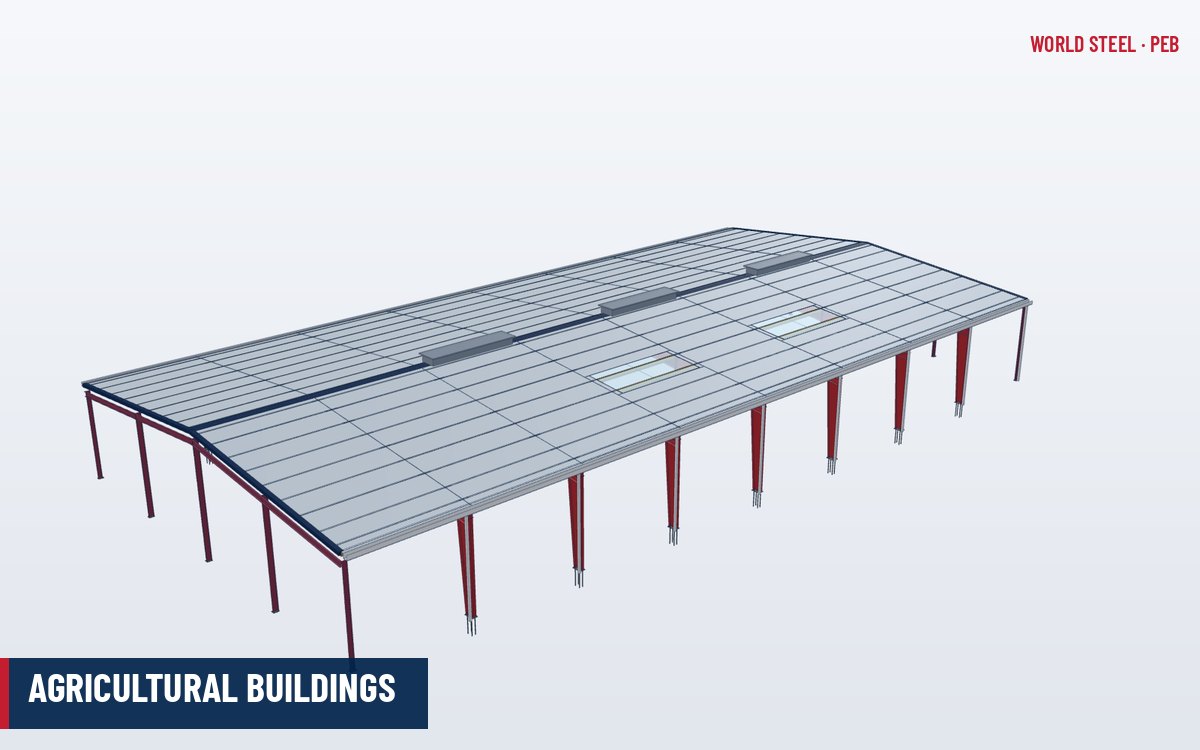
Why PEB fits agriculture
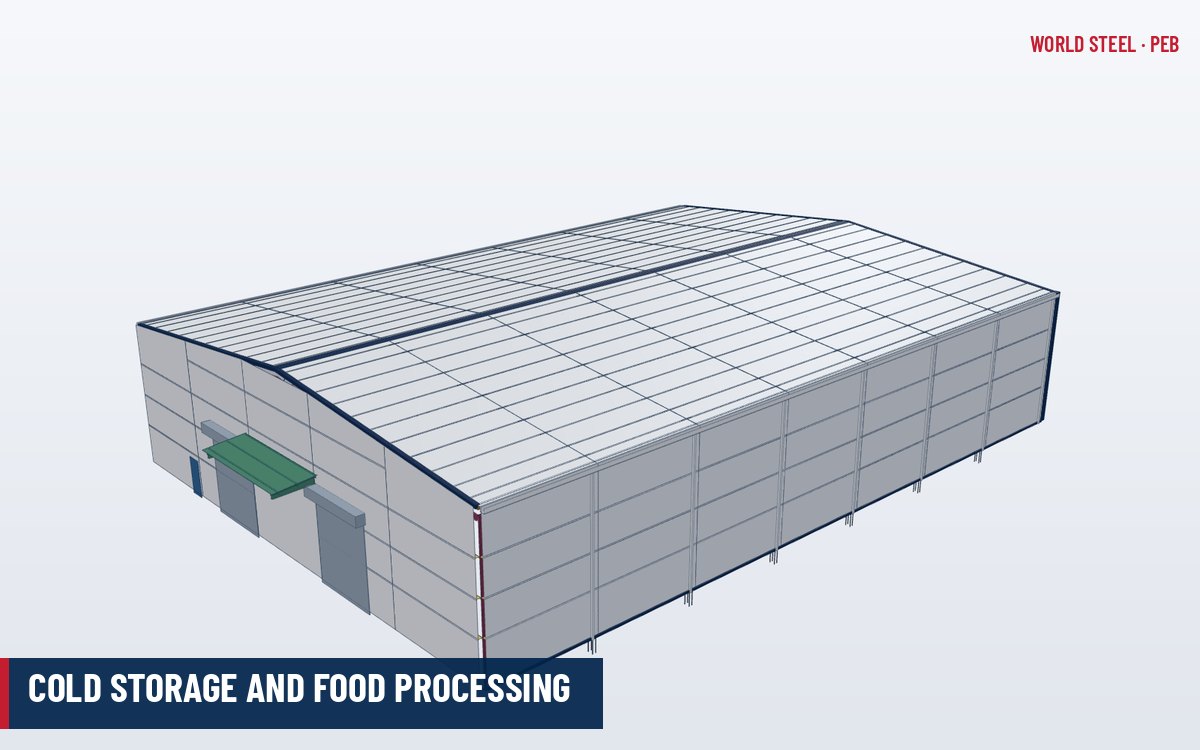
Farm and agri-industrial buildings – machinery sheds, hay and grain stores, livestock and dairy barns, poultry houses, packing sheds and fertiliser warehouses – need large, simple, clear-span spaces at low cost. Pre-engineered steel buildings provide wide openings for machinery, are quick to erect in remote locations and can be shipped as compact kits. For agri-processing companies the same system scales from farm sheds to large warehouses and cold stores.
Typical configurations
| Building | Typical width | Typical eave height | Notes |
|---|---|---|---|
| Machinery / implement shed | 12–30 m | 5–7 m | Wide sidewall openings, often open-sided |
| Hay and grain storage | 18–40 m | 6–9 m | Bulk grain walls need specific design for lateral pressure |
| Dairy and livestock barns | 20–40 m | 4–6 m | Natural ventilation, ridge openings, curtain sidewalls |
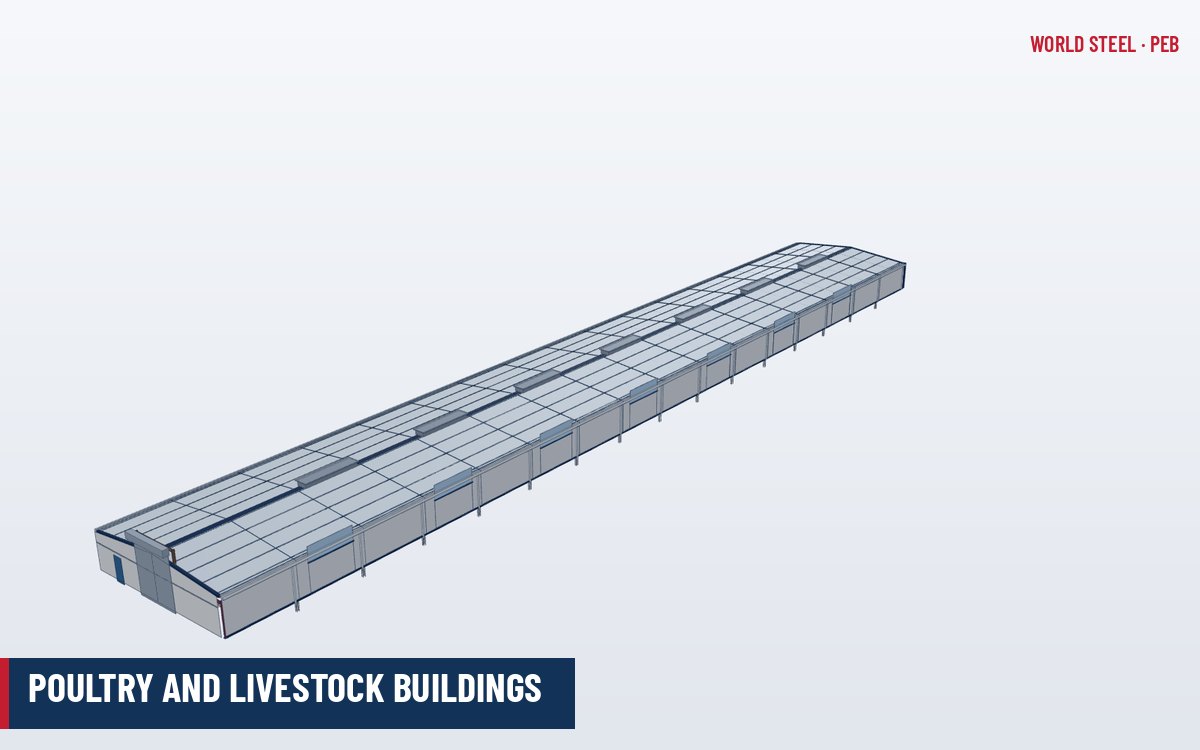
| Poultry houses | 12–20 m | 2.5–4 m | Long buildings (often 100 m+), tunnel ventilation, insulated roof |
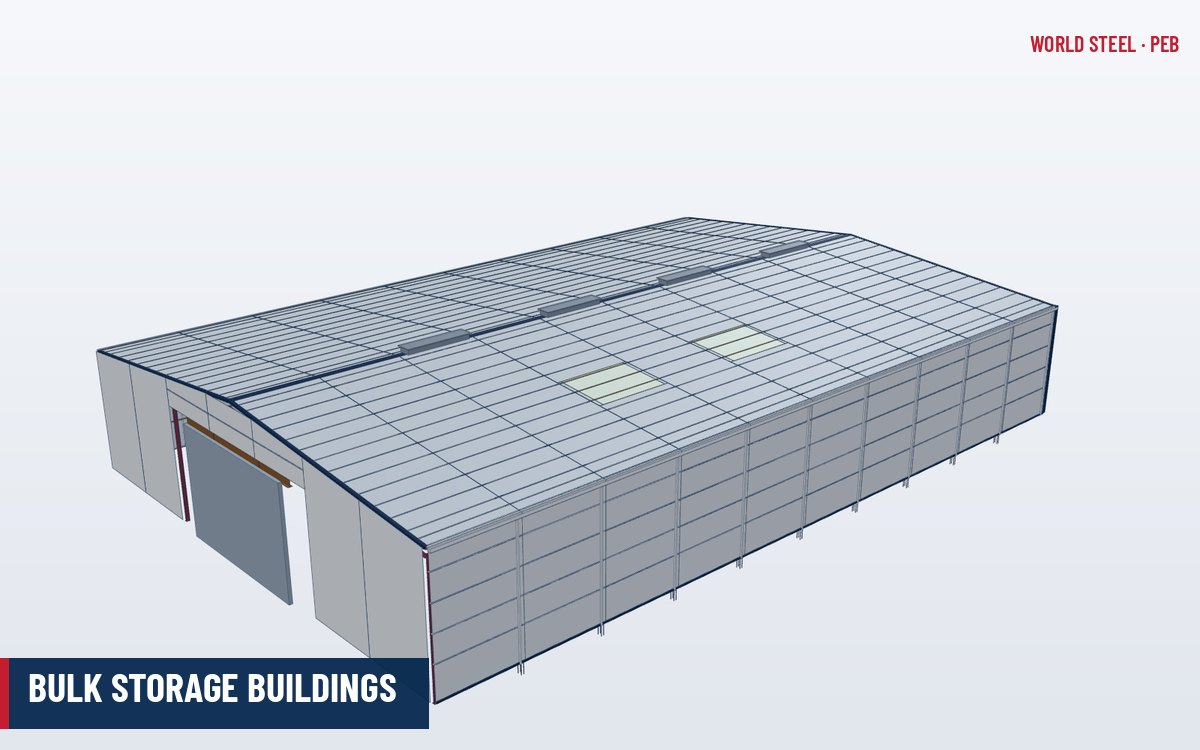
| Fertiliser / bulk storage | 30–60 m | 8–15 m | Highly corrosive; push walls for loaders |
Special requirements
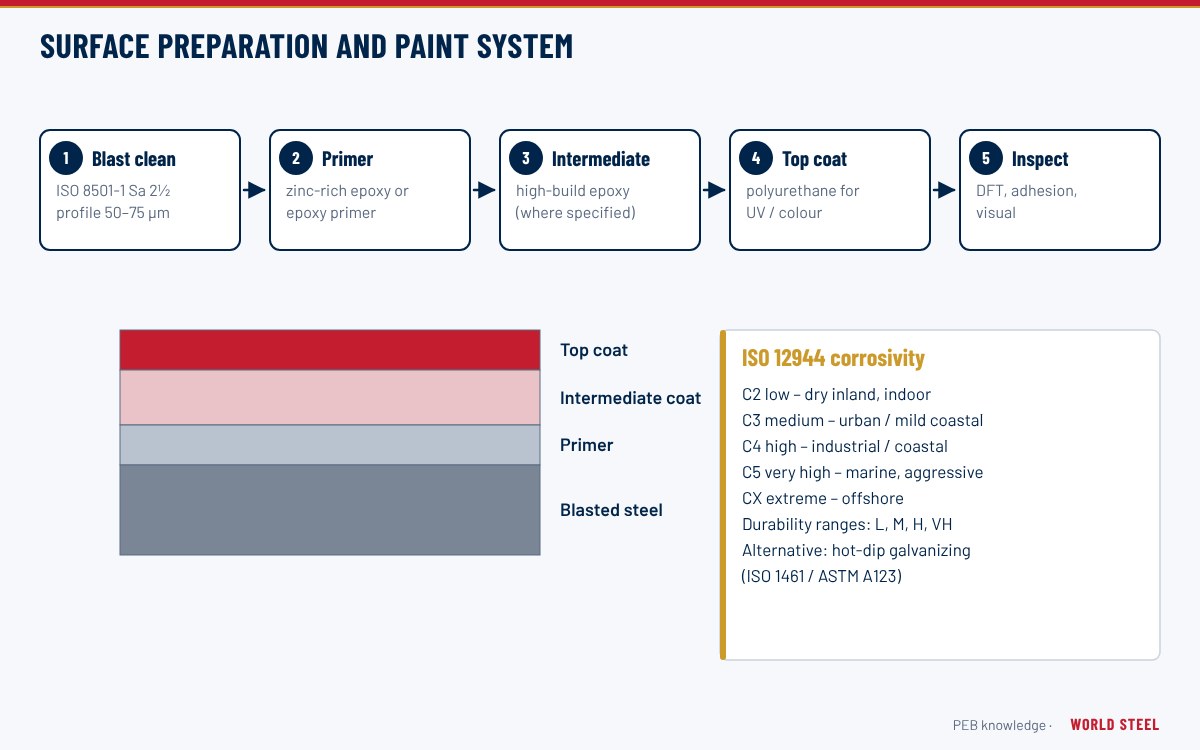
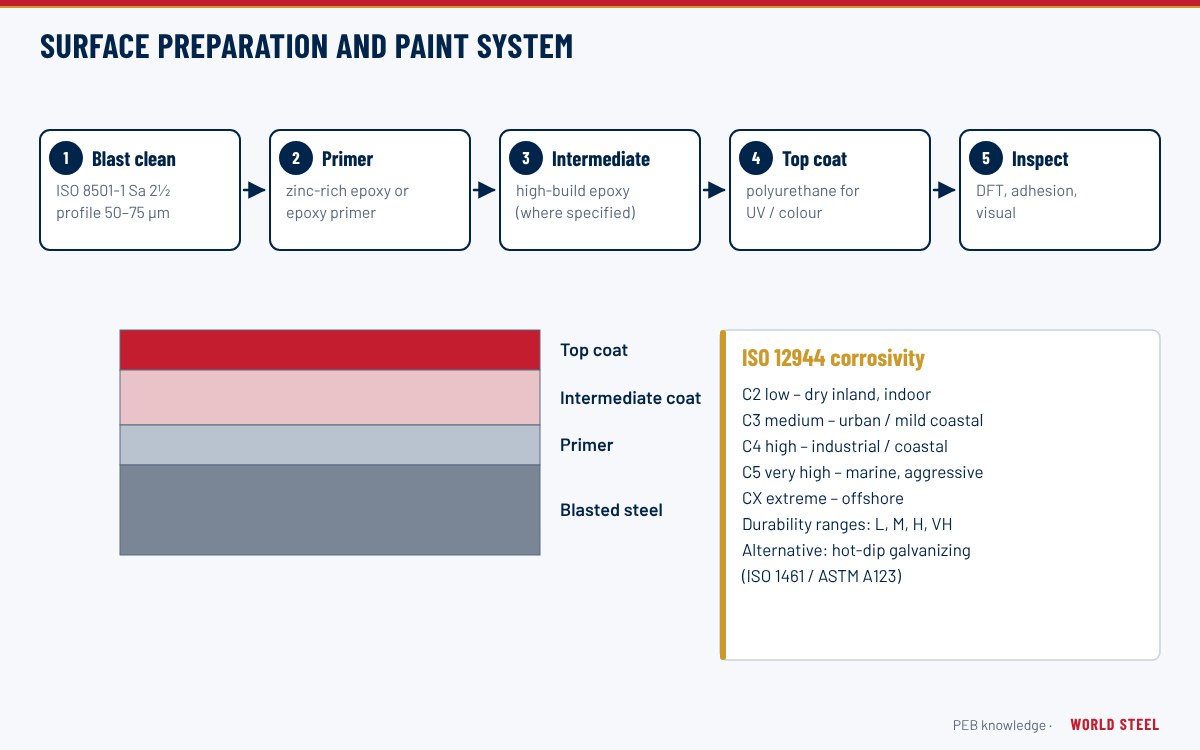
- Corrosion – ammonia from manure, fertilisers, humidity and washdown create aggressive environments (often ISO 12944-2 C4 or worse locally). Hot-dip galvanizing or duplex systems for frames, and higher coating classes for sheeting, are recommended; avoid details that trap manure and moisture.
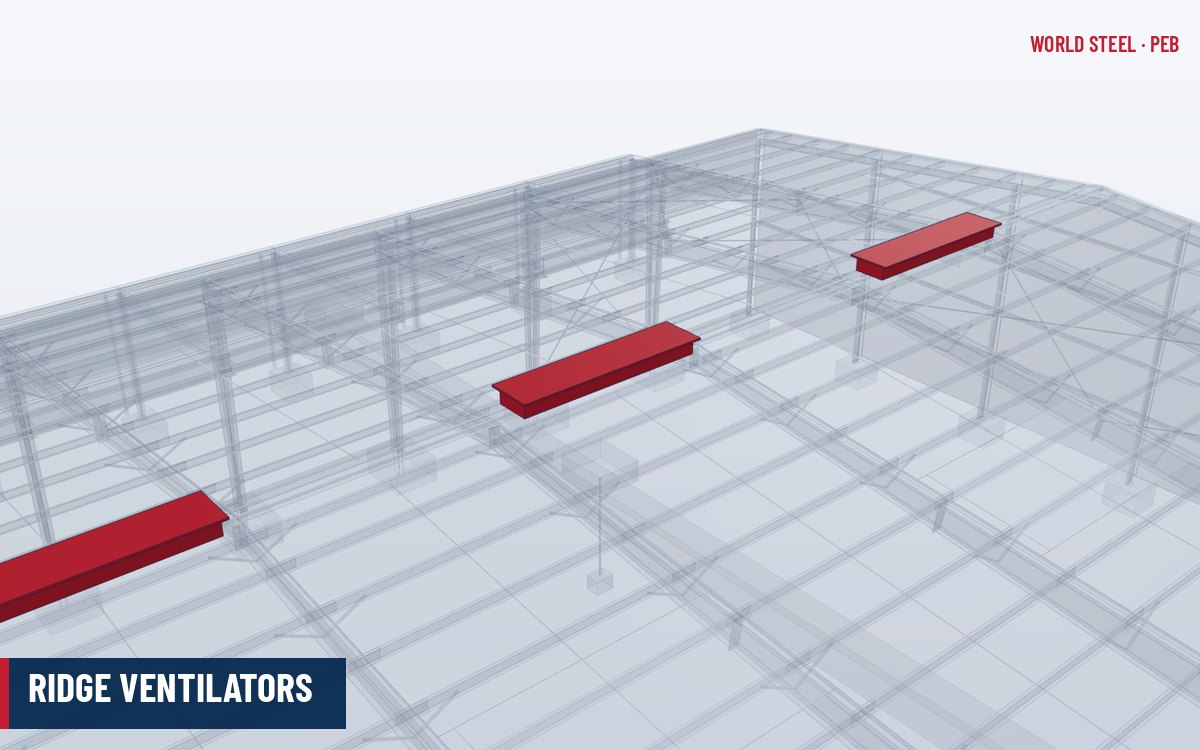
- Ventilation – natural ventilation through open ridges, ridge ventilators, curtain walls and louvers, or mechanical tunnel ventilation in poultry houses, drives roof geometry and opening sizes.
- Bulk material pressure – walls retaining grain, fertiliser or sand must be designed for lateral pressure; standard girts and sheeting cannot resist it without push walls or retaining panels (see bulk storage buildings).
- Low importance level – many farm buildings with low human occupancy qualify for reduced design loads, such as Risk Category I under ASCE 7 or Importance Level 1 under AS/NZS 1170.0, where the local authority accepts it.
- Condensation – insulation or anti-condensation membranes under roof sheeting protect stored produce and animals from drip.
- Animal welfare and hygiene – smooth, cleanable surfaces and good daylight via translucent panels.
Recommended components
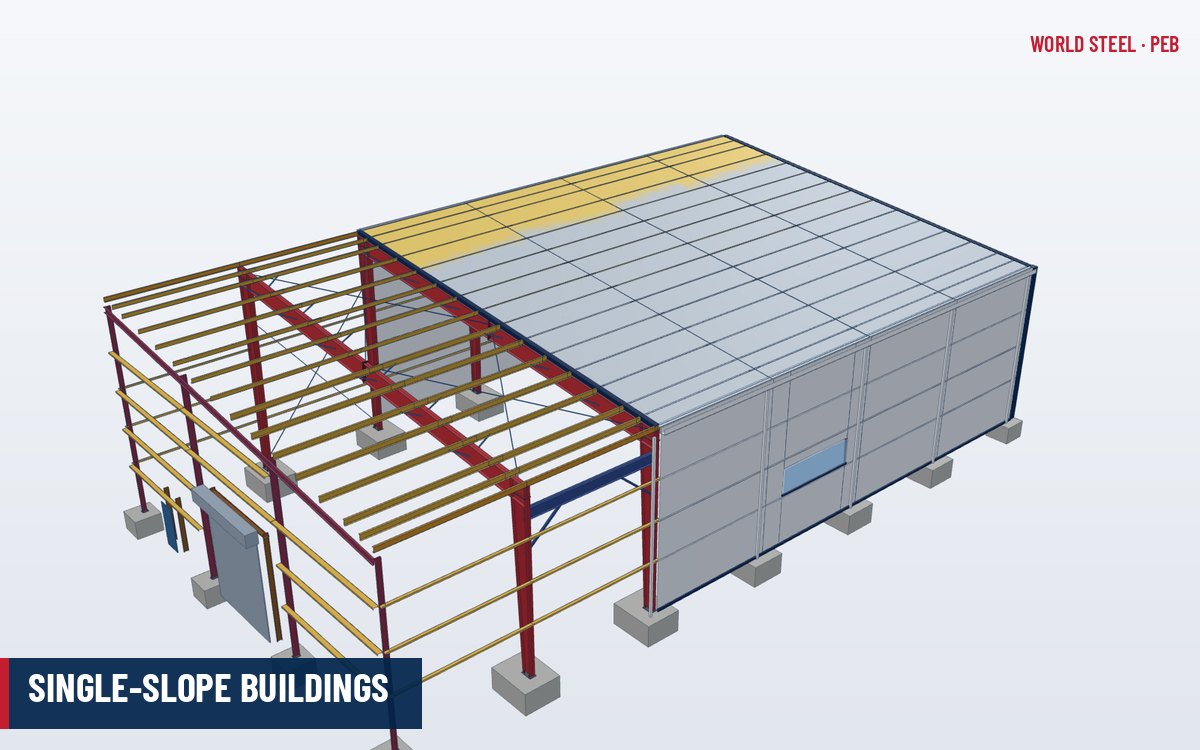
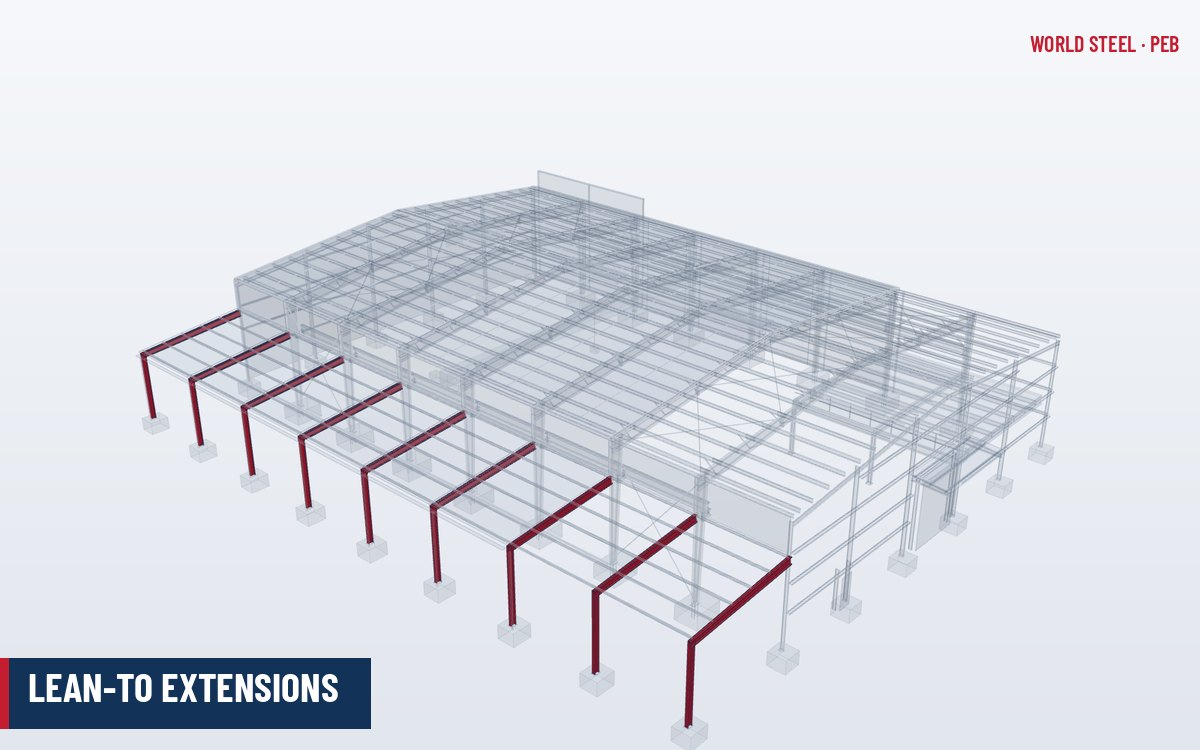
Galvanized or duplex-coated primary frames, galvanized purlins and girts, high-durability coated roof sheeting with anti-condensation membrane, translucent sheets, ridge ventilators, sliding or roll-up doors sized for machinery, gutters for rainwater harvesting and single-slope or lean-to extensions for open shelters.
Fertiliser and salt stores are among the most corrosive building environments. Ask for a coating and detailing review specific to the stored product.
Agricultural sites are often remote, with limited cranes, skilled labour and access roads. Members can be kept light enough for small mobile cranes or telehandlers, frames split into short segments, and kits packed so that each container holds a logical part of the building. Clear erection drawings with piece marks help local builders assemble the structure. For export to islands and rural regions, bundling, moisture protection of cladding and a small allowance of spare fasteners save time when replacements are far away. Rainwater from large roofs can also be collected through gutters and downspouts for livestock or irrigation use.
Corrosion protection and cladding for farm environments
Agricultural buildings combine low budgets with some of the most aggressive interior environments in construction. Typical choices by building use:
| Building use | Main corrosion agents | Frame and secondary steel | Cladding and fasteners |
|---|---|---|---|
| Machinery and hay sheds | Weather, dust; open sides | Painted or galvanized frames; galvanized purlins | Standard AZ or Z coated sheet; Class 3 fasteners |
| Livestock and dairy barns | Ammonia, humidity, manure, washdown | Hot-dip galvanized or duplex frames; heavier-coated purlins | Sheet with high-durability or plastisol paint, aluminium in severe cases; Class 4 or stainless fasteners |
| Poultry houses | Ammonia, dust, high humidity, frequent cleaning | Galvanized frames and purlins | Insulated roof or sandwich panels with hygienic liner; sealed details |
| Fertiliser and salt stores | Hygroscopic salts, high chloride and nitrate levels | Duplex systems, concrete push walls to above stockpile height | Aluminium, GRP or specialist coatings; stainless fasteners |
Translucent sheets in livestock buildings should be of a grade resistant to ammonia and UV, and isolated from direct contact with treated timber. Base details deserve special care: columns standing in manure or washdown water corrode fastest, so they are best set on concrete plinths above the floor. See poultry and livestock buildings and bulk storage buildings.
World Steel agricultural buildings
World Steel supplies agricultural and agri-processing buildings as pre-engineered buildings with galvanized options, packed for export supply to farming regions and island markets such as Guyana and Papua New Guinea. See the agriculture industry page.
지역별 기준
| 지역 | 기준 | 범위 |
|---|---|---|
 United States |
ASCE 7-22 / ASABE EP378 | Loads and risk category; floor and suspended loads on agricultural structures |
 Canada |
National Farm Building Code of Canada / NBC 2020 | Farm building requirements; building code |
 Australia / NZ |
AS/NZS 1170.0 / AS/NZS 4680 | Importance levels; hot-dip galvanized coatings |
 Europe |
EN 1991 / EN ISO 1461 | Actions; hot-dip galvanized coatings |
| International | ISO 12944-2 | Corrosivity categories |
자주 묻는 질문
Should agricultural steel buildings be galvanized?
In livestock, fertiliser and humid environments, hot-dip galvanizing or a duplex system is strongly recommended because ammonia, moisture and washdown attack ordinary paint systems.
Can a PEB store bulk grain against its walls?
Not with standard girts and sheeting. Walls retaining bulk materials need designed retaining or push walls, and the frames must be designed for the lateral pressure.
Can farm buildings use lower design loads?
Many codes allow a lower risk category or importance level for low-occupancy agricultural buildings, but this must be accepted by the local authority and agreed with the owner.
 Guyana
 Papua New Guinea