ENEnglish
 VITiếng Việt
 ZH中文
 KO한국어
 JA日本語
 FRFrançais
 ITItaliano
 PTPortuguês
 ESEspañol
 HEעברית
 ARالعربية

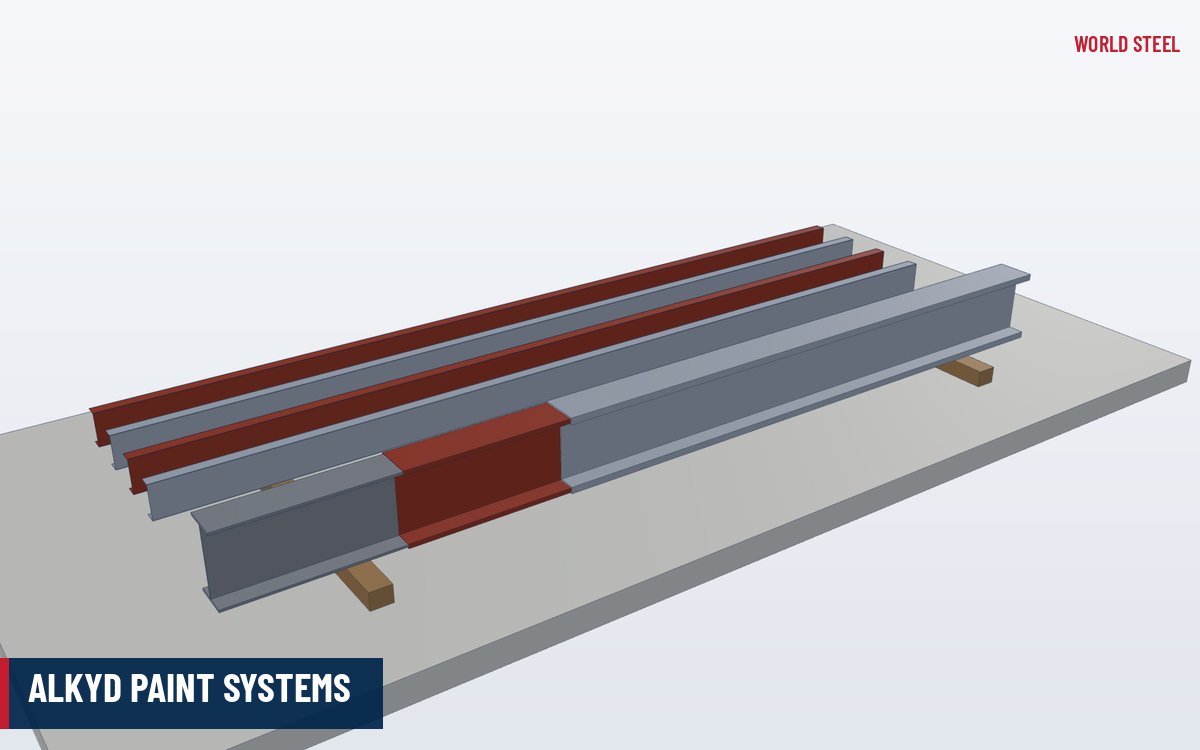
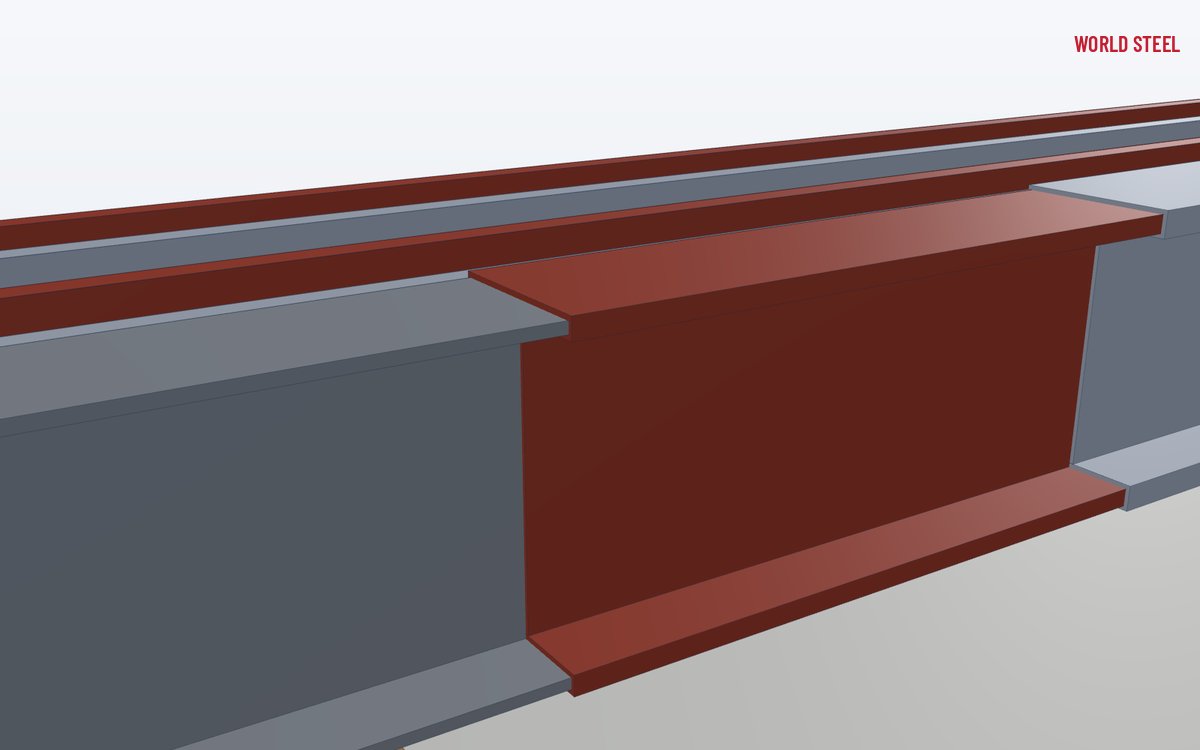
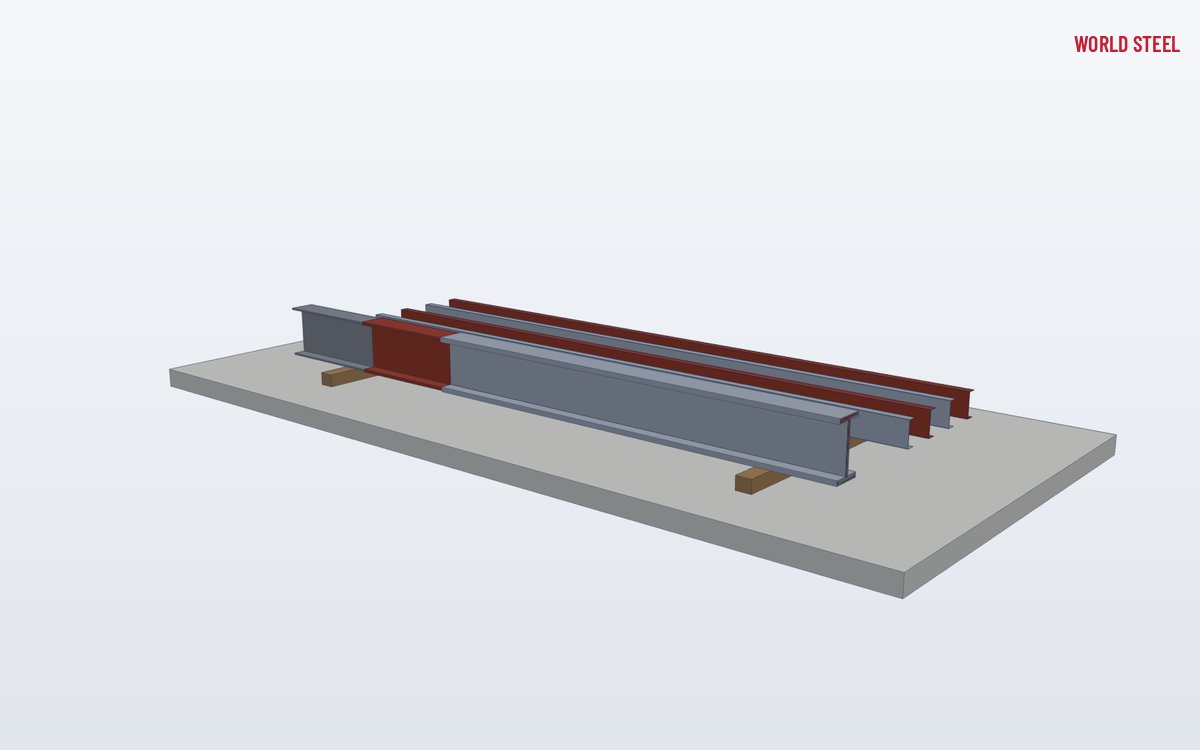
- Single-pack, easy to apply, touch up and repair
- Economical for C1–C3 and building interiors
- Typical primer system for PEB frames behind cladding
- Applied over blast-cleaned steel in the factory
- Not for immersion, alkali, solvents or direct on zinc
What an alkyd system is
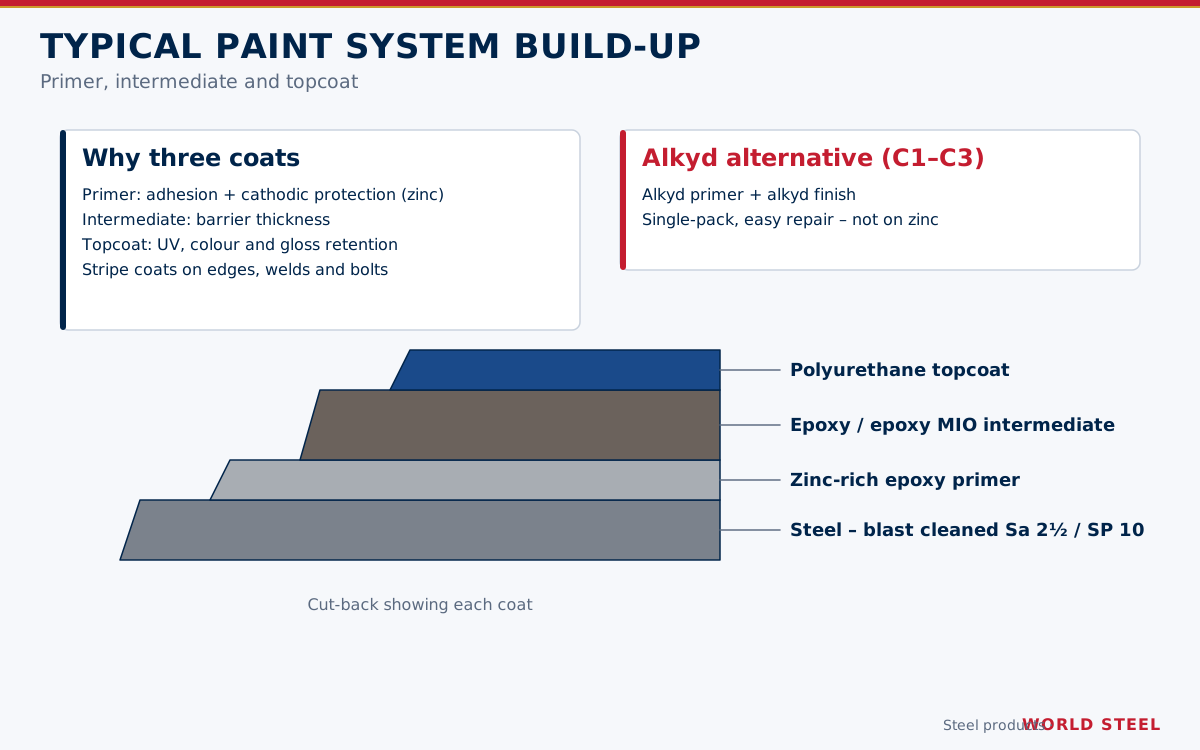
Alkyd paints are single-pack coatings based on oil-modified polyester resins. They dry first by solvent evaporation and then cure by reaction with oxygen in the air (oxidation). No mixing is needed, pot life is not an issue and the paint is tolerant of application conditions, so alkyds are quick to apply in the factory, easy to touch up on site and simple to overcoat during maintenance. Their low cost makes them the standard shop primer for many pre-engineered buildings where the frames sit inside dry, enclosed buildings.
The trade-off is durability. Alkyd films are thinner and less dense than two-component epoxies and are softened by alkalis, solvents and constant moisture. They belong in the lower corrosivity categories; for harsher environments see epoxy systems, hot-dip galvanizing or the overall corrosion protection guide.
Where alkyd is appropriate
| Application | Corrosivity / durability | Suitability |
|---|---|---|
| PEB primary frames and purlins inside heated or dry buildings | C1–C2, low to medium | Well suited – single alkyd primer or primer + finish |
| Unheated warehouses, factories with occasional condensation | C2–C3, low to medium | Suitable with a two-coat system of adequate build |
| Exterior steel in rural or urban areas | C3, low | Possible for short durability; epoxy / PU preferred |
| Coastal, industrial, chemical or wet areas | C4–C5, CX, Im | Not recommended |
| Over galvanized steel | Any | Not permitted – alkyd saponifies on zinc |
| Under intumescent fire coatings | Interior | Only where the intumescent manufacturer approves the primer |
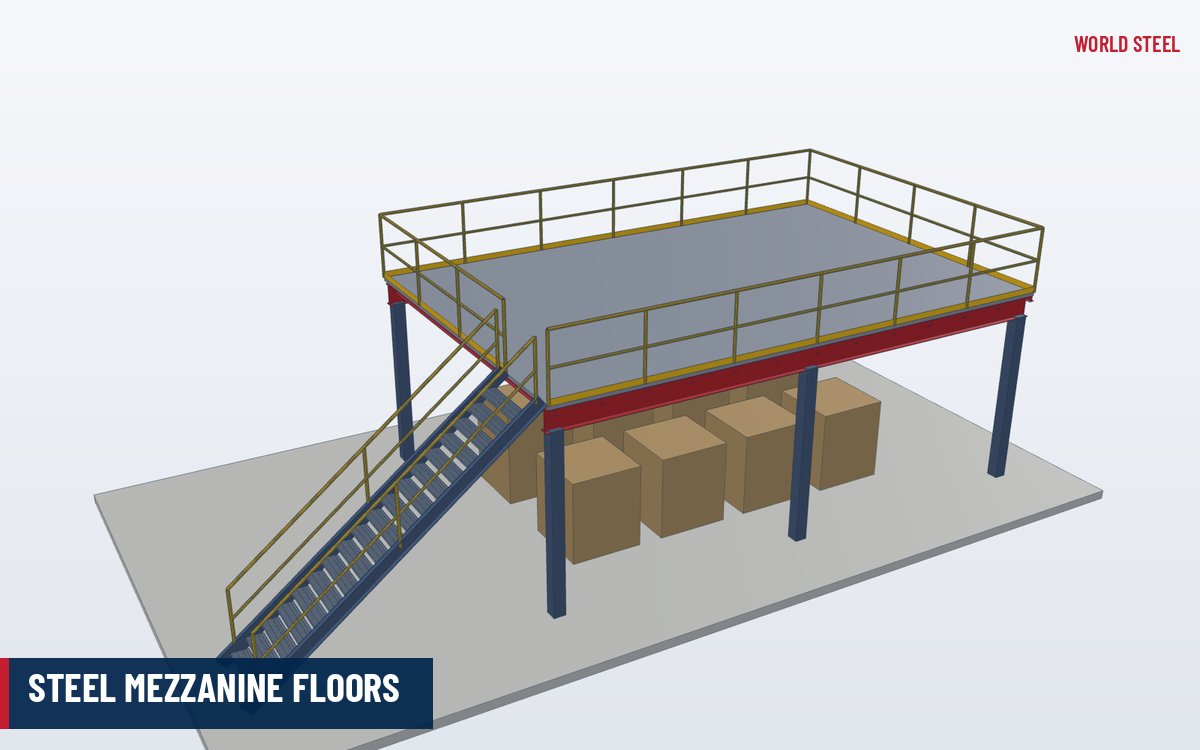
Typical uses are warehouses, factories and interior mezzanine steel, as well as misc. metals hidden behind finishes. Choosing the corrosivity category correctly matters most: an interior that is unheated, poorly ventilated or near the coast may be C3 or higher, and then alkyd is no longer the economical choice over the life of the building.
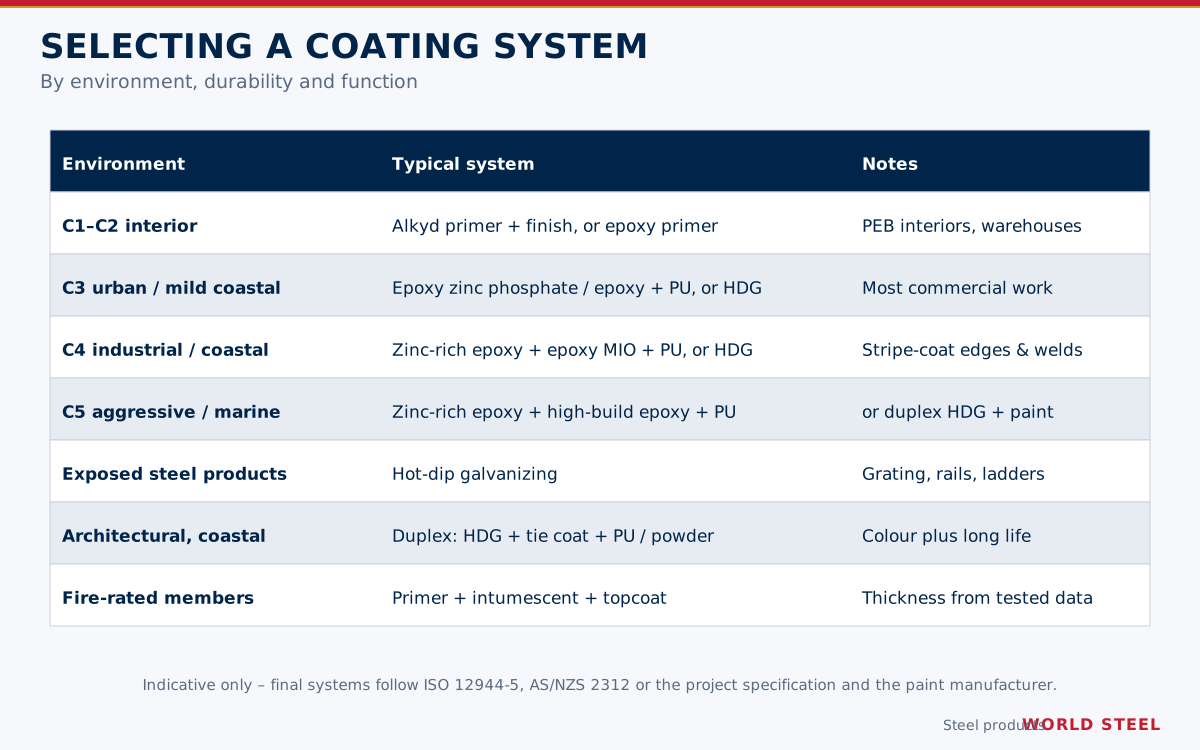
Typical build-ups and application
- Single alkyd primer – for steel that will be hidden in a dry, heated building, or that will be finish-painted on site by others.
- Alkyd primer + alkyd finish – a two-coat system where the frames remain visible inside the building and a colour finish is required.
- Zinc phosphate alkyd primer – an anti-corrosive pigment variant used as a primer in many specifications.
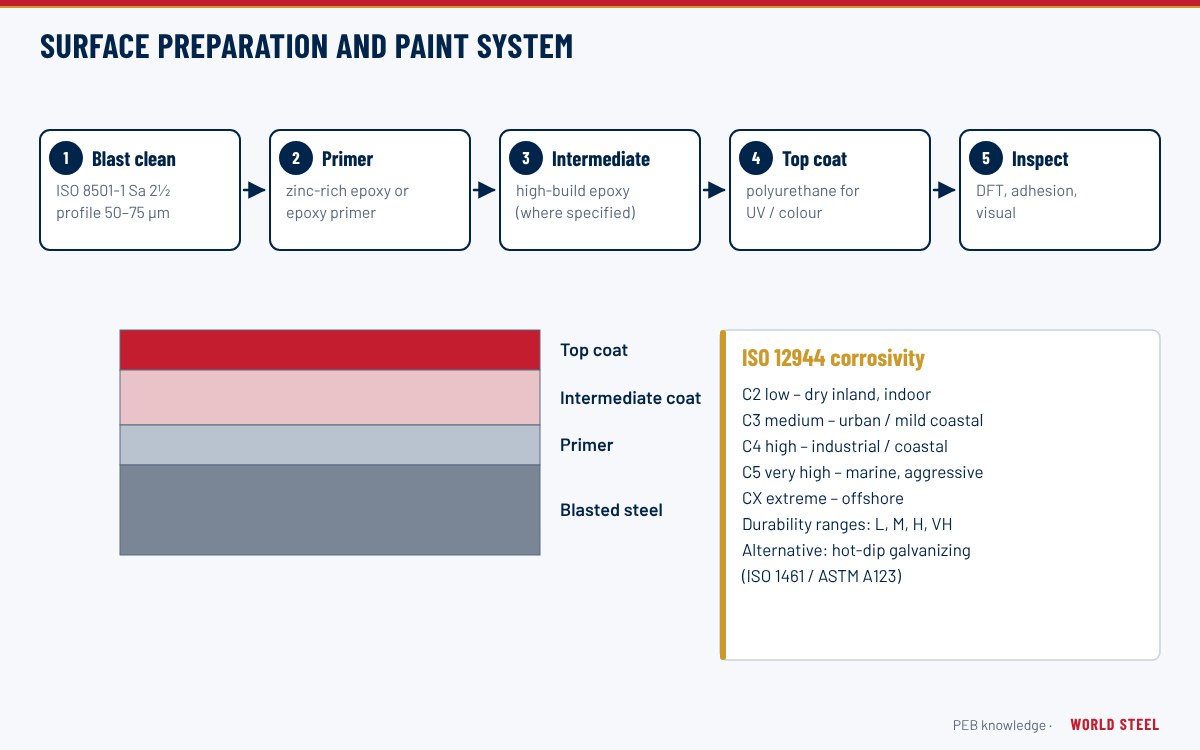
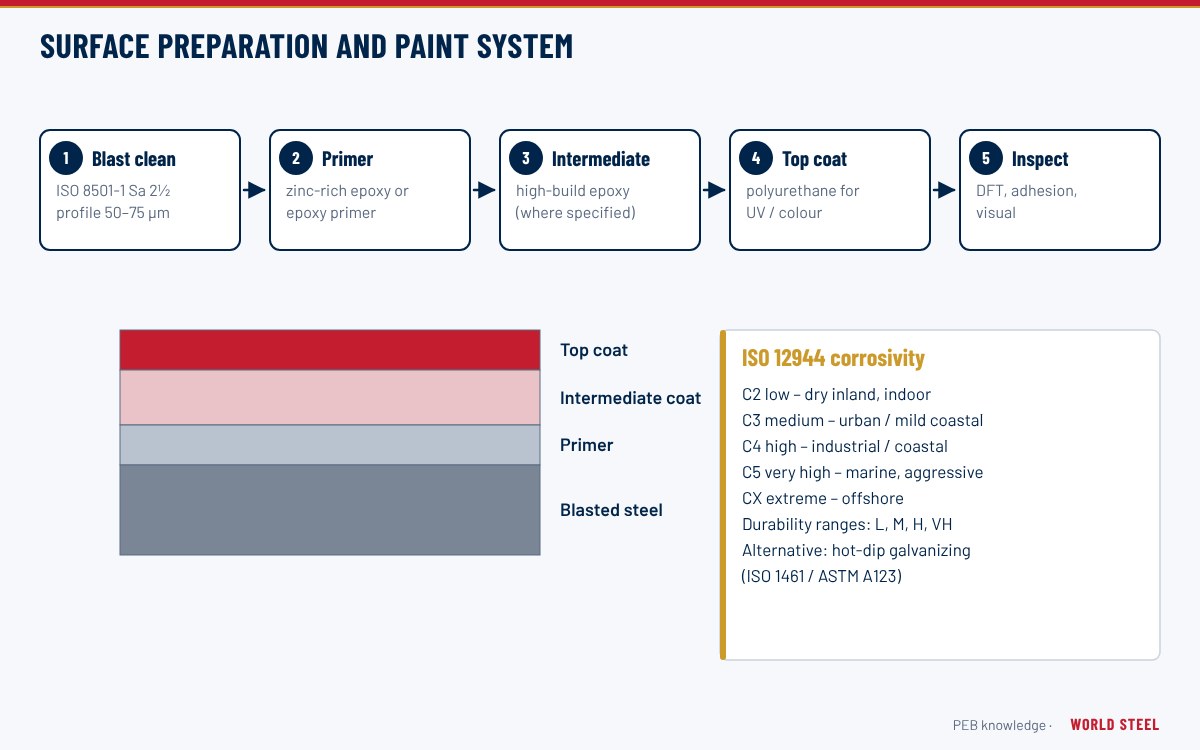
World Steel abrasive blast cleans the steel before priming – typically to Sa 2 or Sa 2½ (ISO 8501-1), or SSPC-SP 6 / SP 10, as the specification and data sheet require – and applies the paint by airless spray, with brushed stripe coats on edges and welds. Film thickness per coat and drying times follow the manufacturer's data sheet; thick alkyd films dry slowly and can wrinkle, so build is achieved in coats rather than one heavy application. Total system thickness and the number of coats for each category and durability are taken from EN ISO 12944-5 or AS/NZS 2312.1 and confirmed with the manufacturer. Background on shop painting is in the PEB articles on paint and coating systems and surface preparation.
Limitations and compatibility
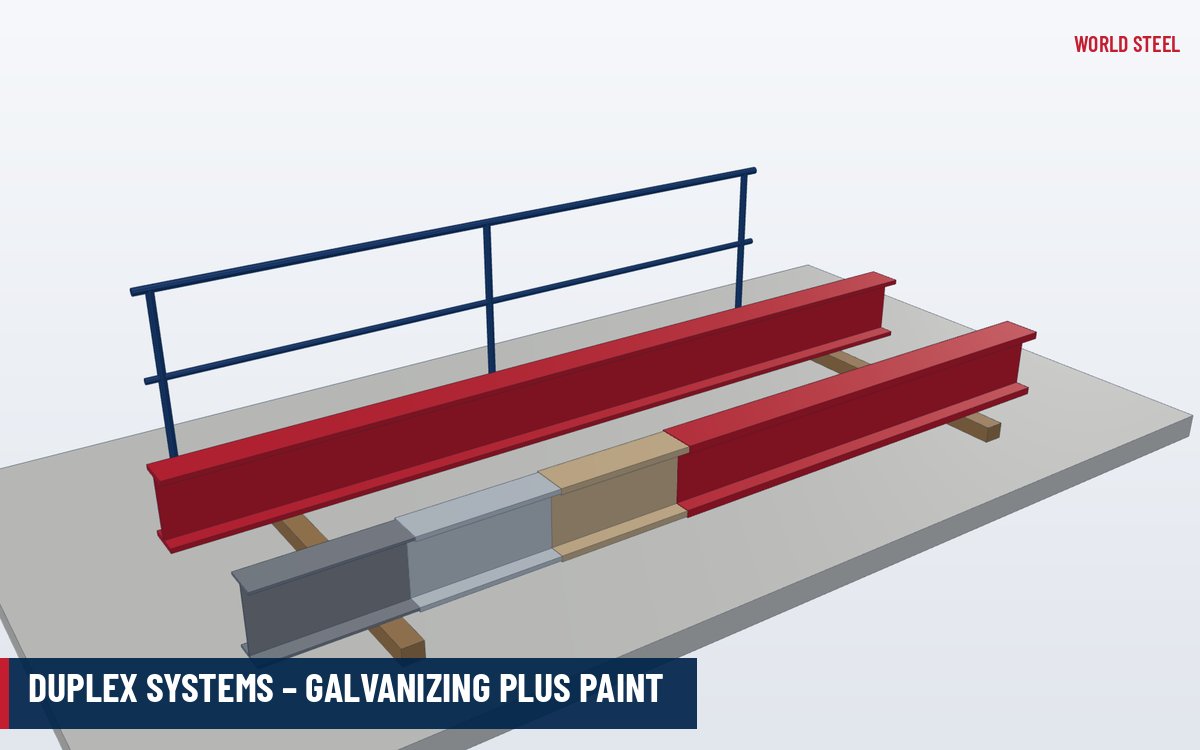
- Zinc surfaces: alkyd must never be applied directly to galvanized or zinc-rich surfaces – the alkaline zinc products saponify the binder and the paint peels. Use a duplex system with a compatible primer instead.
- Overcoating with stronger coatings: two-component epoxies and polyurethanes contain strong solvents that can lift an alkyd film; overcoating an alkyd with them requires the manufacturer's confirmation.
- Concrete contact and immersion: alkyd is attacked by alkali from wet concrete and is not suitable for immersion or buried steel.
- Fire protection: an alkyd primer may sit under an intumescent coating only when the fire-protection manufacturer has tested and approved that primer for the product.
- Handling: alkyd cures slowly in thick films and in cool weather, so packing is scheduled after adequate drying to avoid sticking and damage in transit.
Selecting and specifying
Specify the corrosivity category, durability and whether the steel is visible. State the colour (RAL, AMS-STD-595 or AS 2700) where a finish coat is needed, identify any members to be galvanized or fire-protected, and confirm whether site touch-up and finish painting are in or out of World Steel's scope. Where the client has a preferred manufacturer, World Steel applies that manufacturer's alkyd system according to its data sheet and the project specification.
시장별 표준 및 요구사항
World Steel이 본 제품의 설계, 제작, 문서화에 적용하는 기준 – 그리고 각 시장의 주요 형상 및 하중 요구사항.
 미국
- SSPC-SP 6 / NACE No. 3Commercial blast cleaning
- SSPC-SP 10 / NACE No. 2Near-white metal blast cleaning
- SSPC-PA 2Measurement of dry coating thickness
- AMS-STD-595Colours (formerly Federal Standard 595)
- Surface preparation
- SSPC-SP 6 or SP 10 per specification and data sheet (typical)
- DFT acceptance
- Per SSPC-PA 2 and the specified range
 호주 / 뉴질랜드
- AS/NZS 2312.1Guide to the protection of structural steel – paint coatings
- AS 1627.4Abrasive blast cleaning of steel
- AS 4312Atmospheric corrosivity zones in Australia
- AS 2700Colour standards for general purposes
- System selection
- By corrosivity category and life per AS/NZS 2312.1
- Use on zinc
- Not permitted directly on galvanized steel (saponification)
 유럽
- EN ISO 12944-2Classification of environments
- EN ISO 12944-5Protective paint systems
- EN ISO 8501-1Preparation grades of uncoated steel
- EN ISO 19840DFT on rough surfaces
- EN 1090-2 WSC 인증 보유Execution of steel structures – technical requirements
- Typical use
- C1–C3, low to medium durability (EN ISO 12944-2 / -5)
- Durability
- L ≤ 7 y, M 7–15 y to first major maintenance (EN ISO 12944-1)
참고용 요약입니다 – 프로젝트 시방서, 채택된 기준 판본 및 관할 기관의 요구가 우선합니다.
표면 처리
| 표면 처리 | 표준 / 비고 |
|---|---|
| Alkyd primer | SSPC-SP 6 / SP 10 · AS/NZS 2312.1 · EN ISO 12944-5 (C1–C2) |
| Alkyd primer + finish | SSPC-SP 6 / SP 10 · AS/NZS 2312.1 · EN ISO 12944-5 (C2–C3) |
자주 묻는 질문
Is an alkyd primer enough for a PEB warehouse?
For frames inside a dry, enclosed and ventilated building (typically C1–C2) an alkyd primer or primer + finish is common and economical. If the building is unheated with condensation, coastal or industrial, a higher category applies and an epoxy system or galvanizing may be better value.
Can alkyd paint be applied over galvanizing?
No. Alkyd binders react with zinc (saponification) and lose adhesion. Galvanized steel needs a duplex system with a primer approved for zinc.
Can intumescent fire protection go over an alkyd primer?
Only if the intumescent manufacturer has approved that primer for its product. Otherwise an epoxy primer listed by the fire-protection manufacturer is used.
How is an alkyd system repaired on site?
Damaged areas are cleaned by hand or power tool, feathered and touched up with the same alkyd primer and finish – one of the main advantages of single-pack alkyd systems.
 Philippines
 Papua New Guinea
 AS/NZS 5131 CC3
 EN 1090 EXC3 · CE
 IAS AC472