ENEnglish
 VITiếng Việt
 ZH中文
 KO한국어
 JA日本語
 FRFrançais
 ITItaliano
 PTPortuguês
 ESEspañol
 HEעברית
 ARالعربية

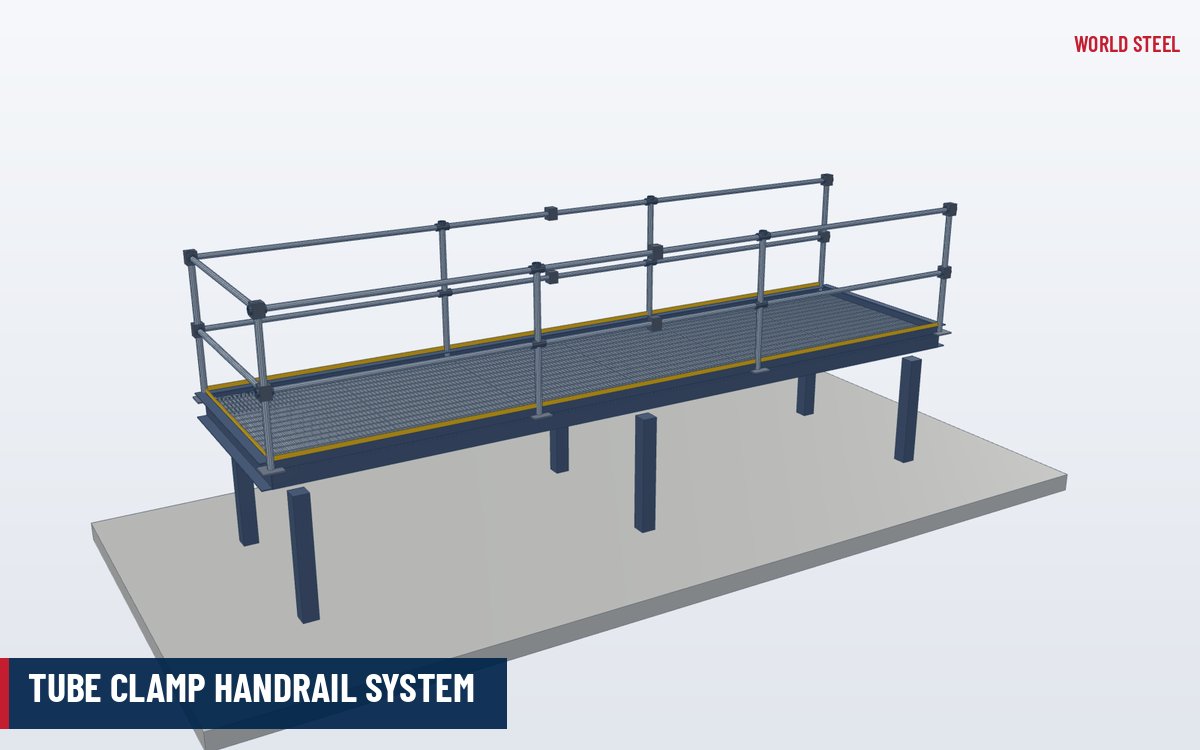
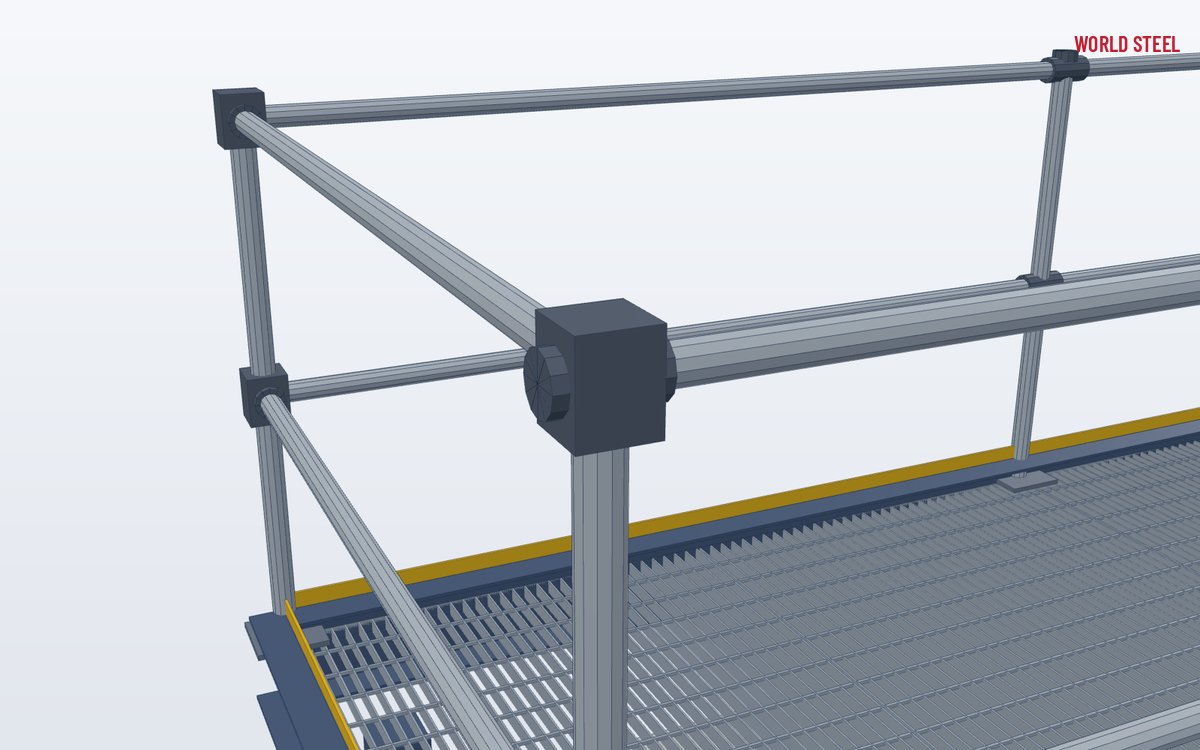
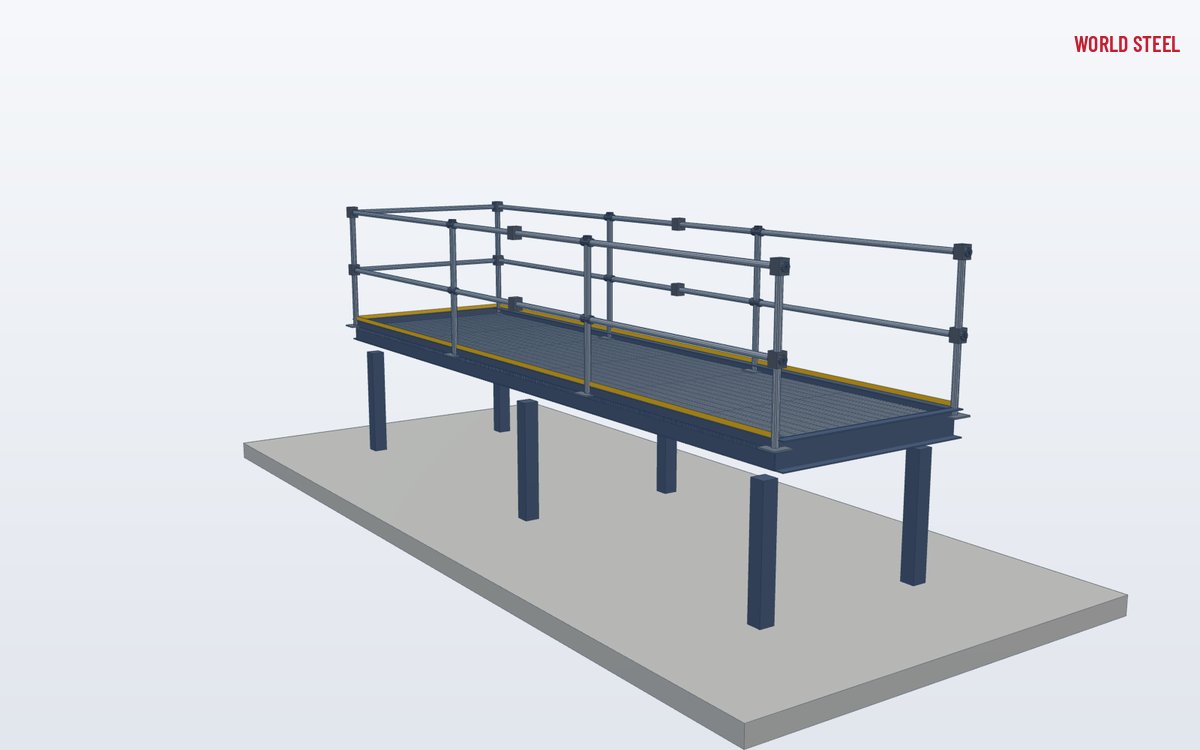
- Slip-on fittings locked with grub screws – no welding
- Assembled on site with an Allen key
- Tube sizes 33.7, 42.4 and 48.3 mm OD
- Handrails, barriers, roof access and frames
- Loads verified by test or calculation per combination
- Tube cut, galvanised and kitted by World Steel
What it is
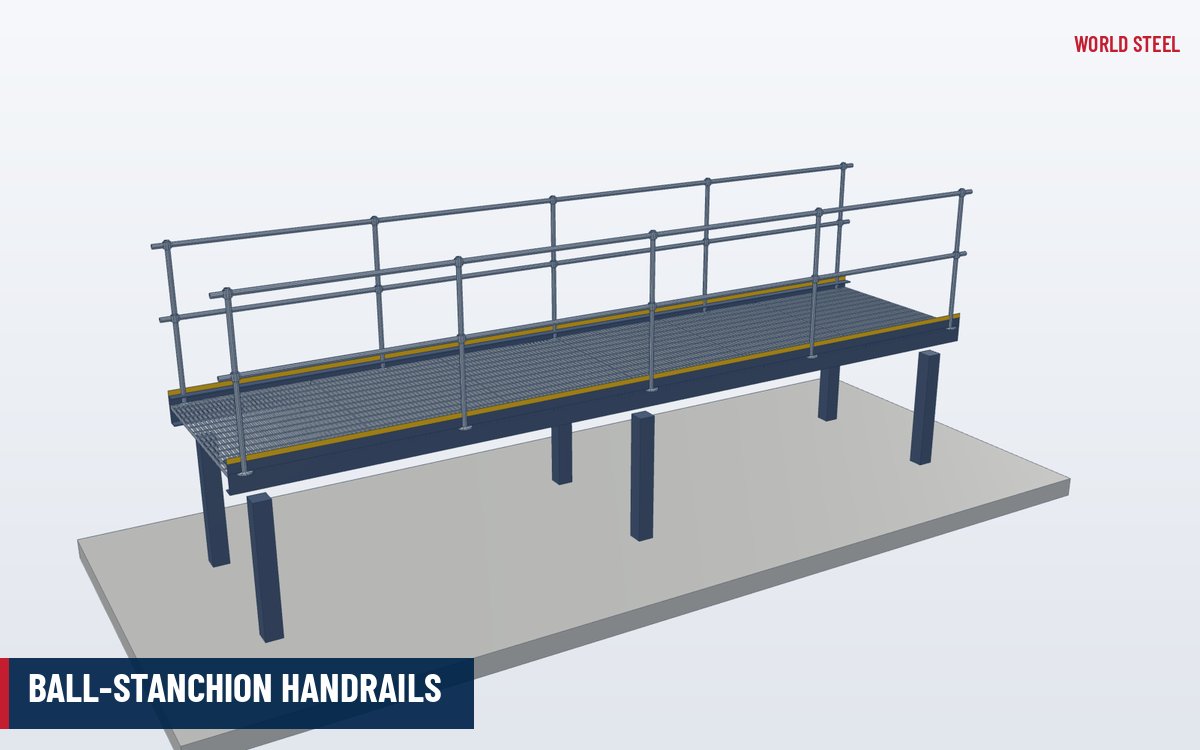
A tube clamp handrail is built from galvanised steel tube and a family of slip-on fittings – tees, elbows, crosses, base flanges, wall flanges and swivels – each locked to the tube by one or more hexagon socket grub screws. Nothing is welded and nothing is threaded on site: the installer cuts or receives the tube to length, slides the fittings on, aligns the run and tightens the screws with an Allen key. The same parts can be dismantled and reused.
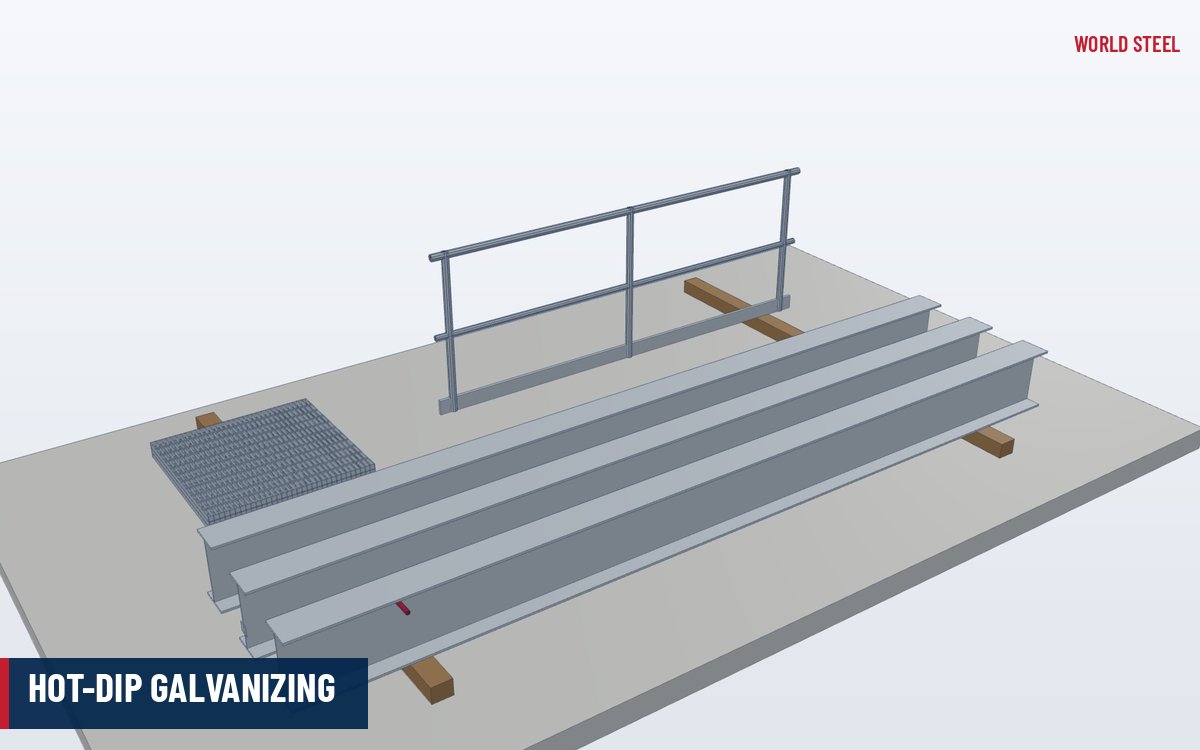
That flexibility is the main reason to choose the system. Runs can be altered when plant is moved, sections can be taken down for maintenance and put back the same day, and a damaged length is replaced by loosening two screws. Because the tube is galvanised before assembly and no heat is applied on site, the zinc coating stays intact along the whole run.
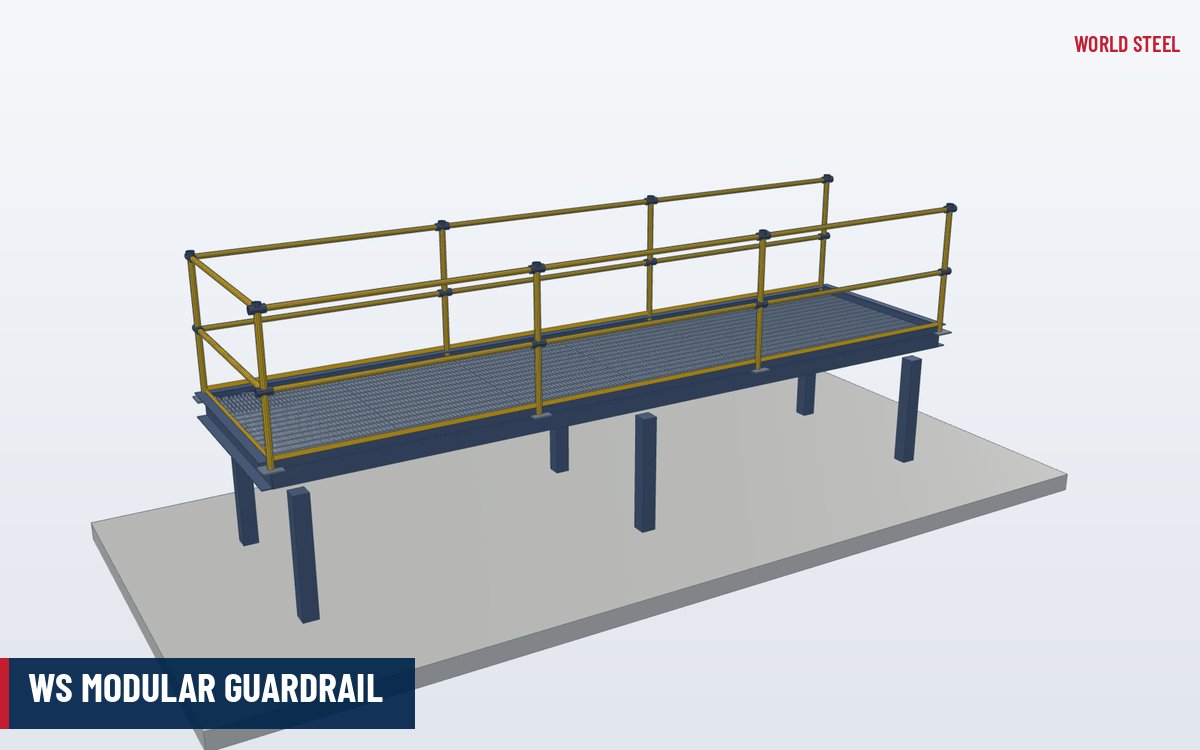
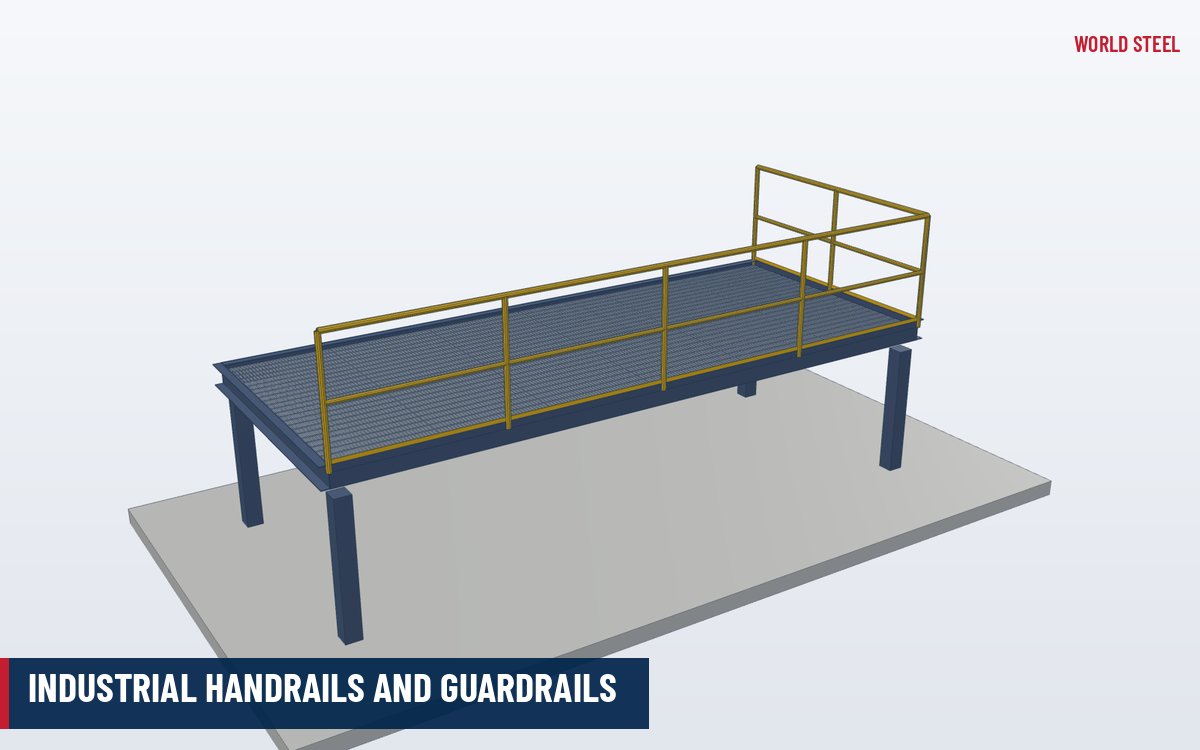
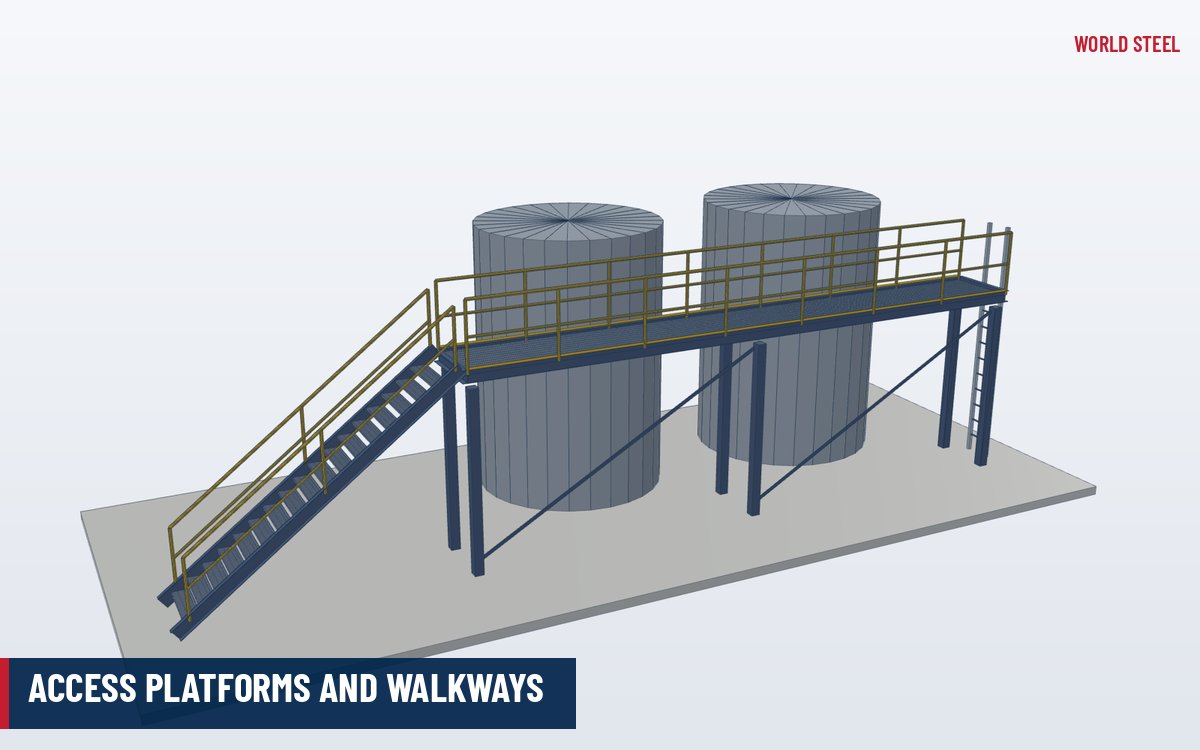
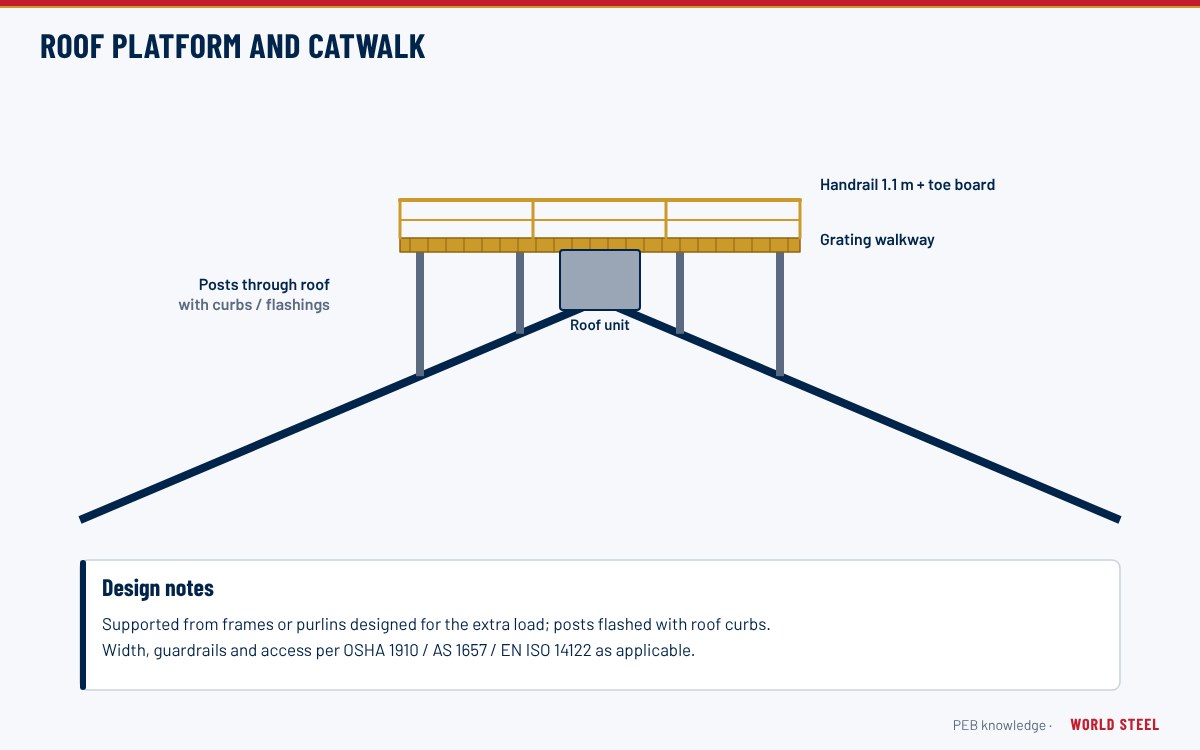
The system suits light-duty access and protection: roof access walkways, plant room handrails, barriers around equipment, temporary and permanent rails on construction sites, and simple frames for shelving, signage and guards. For heavier industrial edges World Steel recommends the fabricated WS modular guardrail or a welded industrial handrail.
Types and options
| Configuration | Main fittings | Typical use |
|---|---|---|
| Two-rail guardrail, top-mounted | Base flanges, tees, elbows | Platforms, walkways, plant areas |
| Side-mounted guardrail | Side-fixing flanges, tees | Slab and beam edges where deck space is limited |
| Stair and ramp rail | Adjustable swivel tees and elbows | Sloping runs at variable pitch |
| Wall-mounted handrail | Wall brackets, end caps | Single handrails beside stairs and corridors |
| Frames and barriers | Crosses, corners, feet | Equipment guards, racks, temporary barriers |
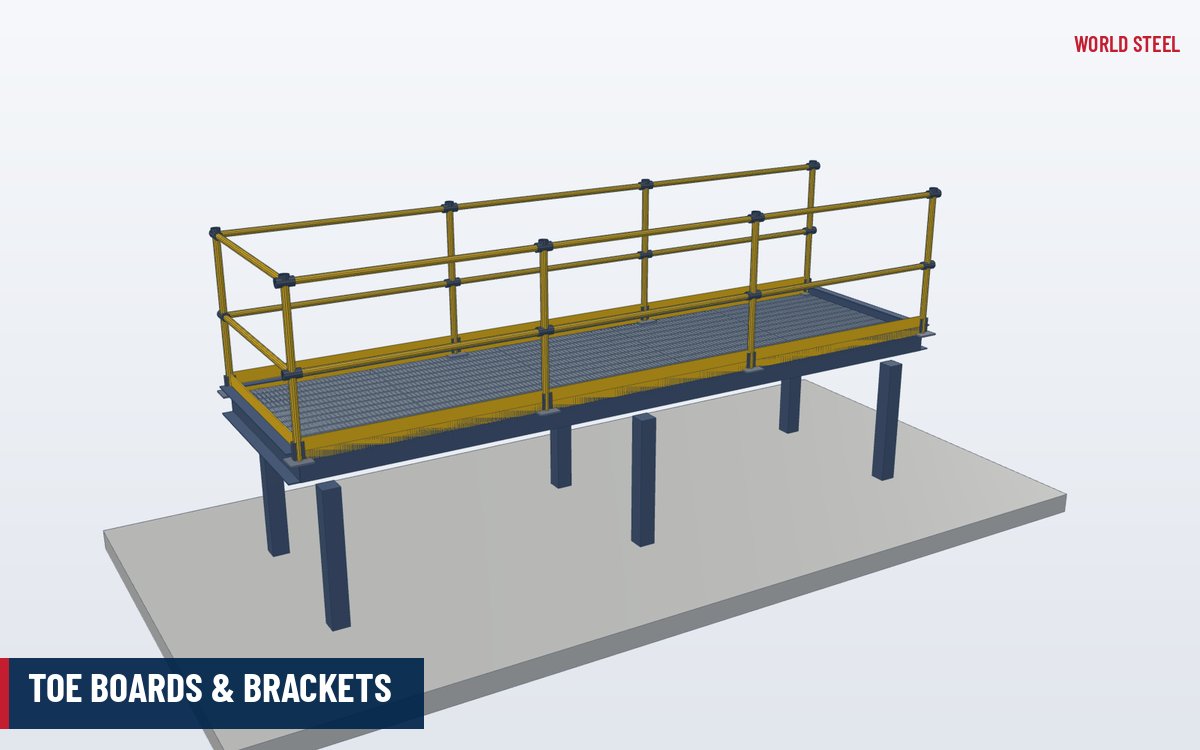
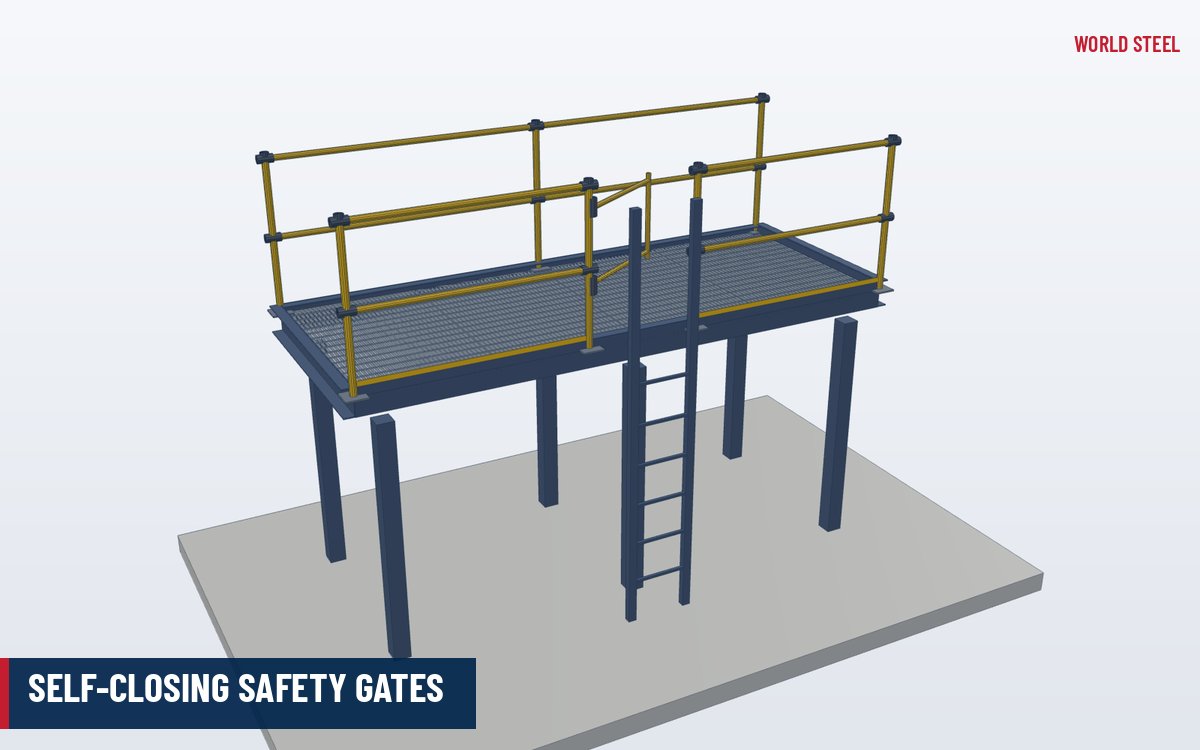
Tube is supplied in 33.7 mm, 42.4 mm and 48.3 mm outside diameter to EN 10255, AS 1074 or ASTM A53 – the fitting bore must match the tube size and wall used. Toe boards, mesh infill and self-closing gates can be added with the fittings from our toe board and gate ranges.
Design and compliance
A tube clamp joint relies on grub screw friction and bearing, so its capacity depends on the specific fitting, tube wall, screw torque and upright spacing. The load the barrier must resist comes from AS/NZS 1170.1 Table 3.3 in Australia, ASCE 7 (50 lb/ft on the top rail and a 200 lb point load) and OSHA 1910.29 in the US, and EN 1991-1-1 in Europe. World Steel verifies each fitting and tube combination by the manufacturer's test data or by calculation, and sets the maximum upright spacing from that check – never from a generic table.
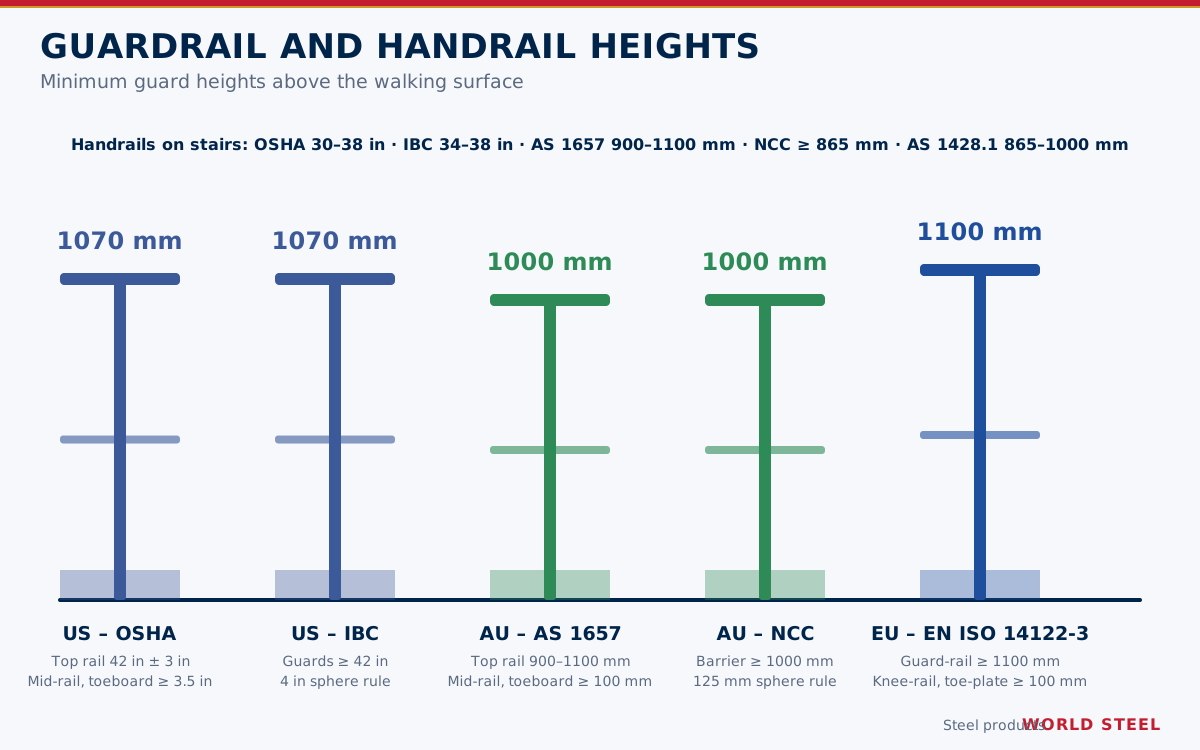
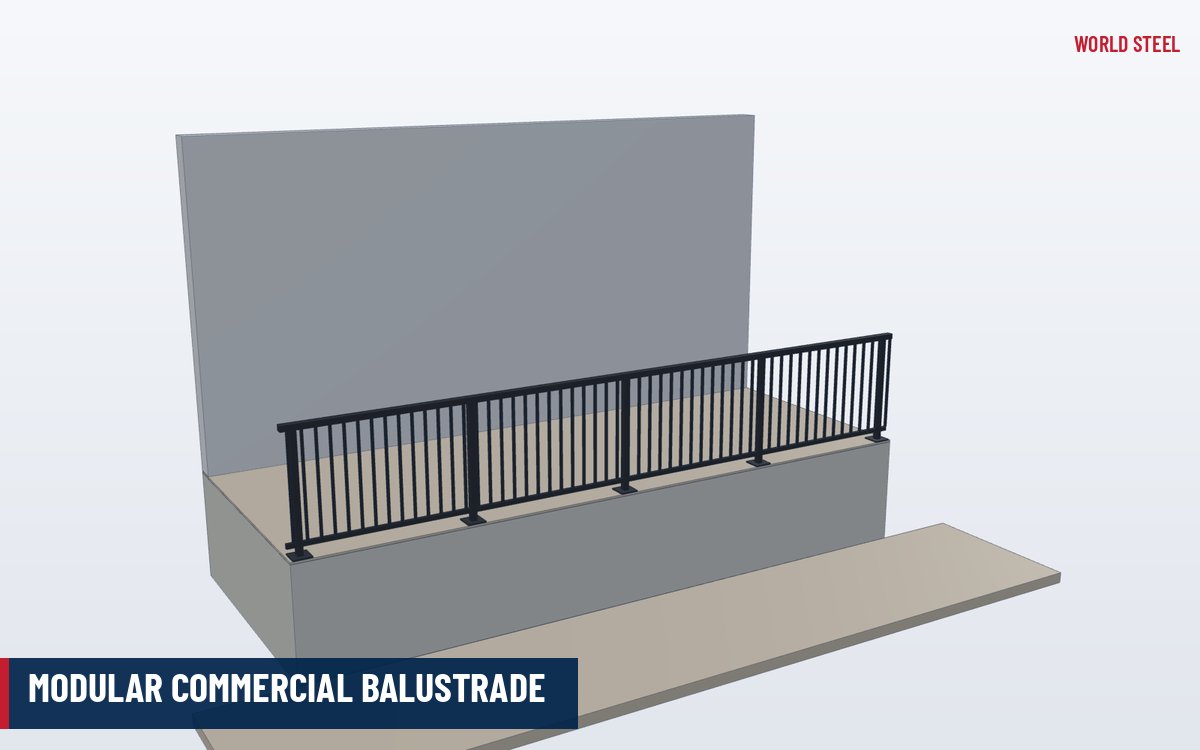
Heights follow the code: 900–1100 mm under AS 1657, 42 in ± 3 in under OSHA, and at least 1100 mm under EN ISO 14122-3. In public buildings, where the NCC or IBC applies and small-sphere opening rules govern, a picket commercial balustrade is usually more suitable than an open two-rail system.
Fabrication and supply at World Steel
The cast fittings – malleable iron or steel, hot-dip galvanised – are produced by specialist foundries and sourced by World Steel to the project's size and load requirements; we do not cast them. What World Steel does is the work that makes a kit install quickly: tube is cut to the layout, deburred, hot-dip galvanised by qualified galvanisers, marked by run, and packed with the correct fittings, grub screws, anchors and end caps. Kits are checked against the layout before packing and can travel in the same container as the roof platforms and catwalks they protect.
Installation and selecting
- Fix base or side flanges with the anchors specified for the substrate, then fit uprights and rails.
- Align the run, then tighten all grub screws to the fitting supplier's recommended torque.
- Re-check screw tightness at handover and during periodic inspection.
- Specify the layout, governing code, tube size, mounting type, finish and any gates or toe boards.
תקנים ודרישות לפי שוק
התקנים שלפיהם World Steel מתכננת, מייצרת ומתעדת מוצר זה – ודרישות הגיאומטריה והעומס העיקריות בכל שוק.
 ארצות הברית
- OSHA 29 CFR 1910.29Fall protection systems – guardrails and handrails
- ASCE 7Minimum design loads – guard and handrail systems
- ASTM A53Steel pipe, welded and seamless
- ASTM A123 / A153Hot-dip galvanizing of products and hardware
- Top rail height
- 42 in ± 3 in (OSHA 1910.29(b))
- Rail loads
- Top 200 lbf, mid 150 lbf (OSHA 1910.29(b))
- Guard design load
- 50 lb/ft and 200 lb concentrated (ASCE 7)
 אוסטרליה / ניו זילנד
- AS 1657-2018Fixed platforms, walkways, stairways and ladders
- AS/NZS 1170.1Imposed actions – barrier loads (Table 3.3)
- AS 1074Steel tubes and tubulars for ordinary service
- AS/NZS 4680Hot-dip galvanized coatings
- Guardrail height
- 900–1100 mm (AS 1657)
- Toe board
- ≥ 100 mm where required (AS 1657)
 אירופה
- EN ISO 14122-3Stairs, stepladders and guard-rails
- EN 1991-1-1Imposed loads – barriers
- EN 10255Non-alloy steel tubes suitable for welding and threading
- EN ISO 1461Hot-dip galvanized coatings
- Guard-rail height
- ≥ 1100 mm (EN ISO 14122-3)
- Rail gaps
- ≤ 500 mm (EN ISO 14122-3)
סיכום להתמצאות בלבד – מפרט הפרויקט, מהדורת התקן שאומצה והרשות המוסמכת הם הקובעים.
גימורים
| גימור | תקנים / הערות |
|---|---|
| Hot-dip galvanised (standard) | Tube: AS/NZS 4680 · EN ISO 1461 · ASTM A123 – fittings: galvanised by the manufacturer |
| Galvanised + powder coat | Colour for visible or public areas |
| Galvanised + safety yellow | Industrial and roof access areas |
שאלות נפוצות
Does a tube clamp handrail need welding?
No. Fittings slide onto the tube and are locked with grub screws using an Allen key; uprights are fixed with base, side or wall flanges.
How far apart can the uprights be?
It depends on the fitting, tube wall and code load. World Steel sets the spacing from the fitting manufacturer's test data or by calculation for each project.
Does World Steel make the fittings?
No. The cast fittings come from specialist manufacturers; World Steel sources them, cuts and galvanises the tube, and packs complete kits.
Is it suitable for public balustrades?
Usually not on its own, because open two-rail layouts do not meet the small-sphere opening rules of the NCC or IBC. A picket balustrade is used there.
 New Zealand
 AS/NZS 5131 CC3
 EN 1090 EXC3 · CE