ENEnglish
 ZH中文
 KO한국어
 JA日本語
 FRFrançais
 ITItaliano
 PTPortuguês
 ESEspañol
 HEעברית
 ARالعربية

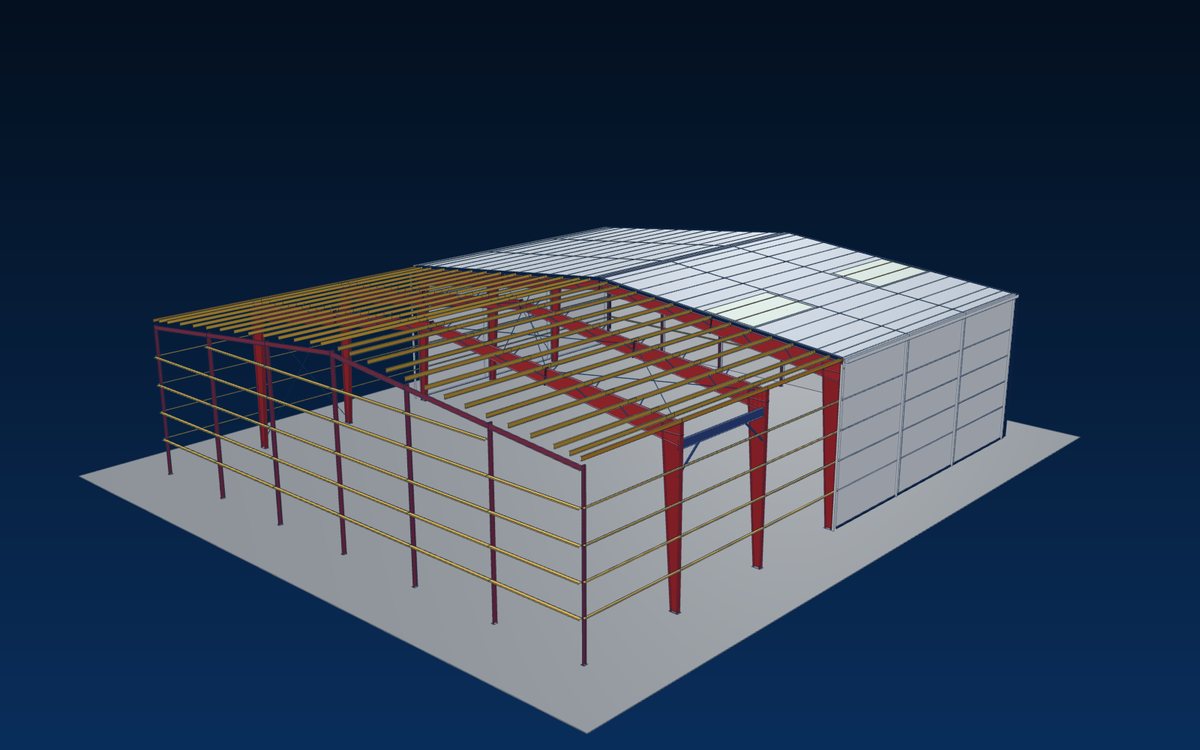 spans 20–90 m
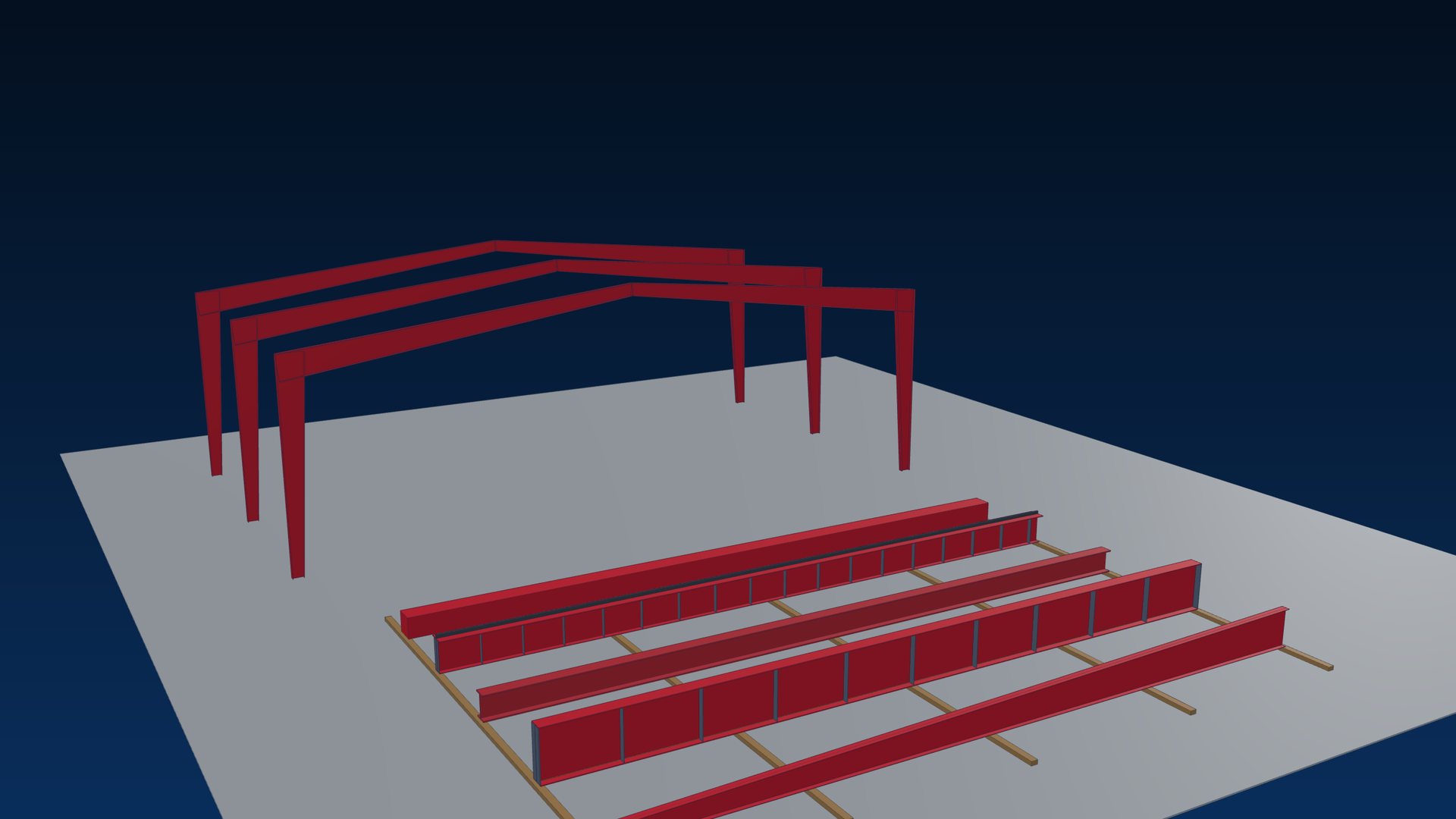
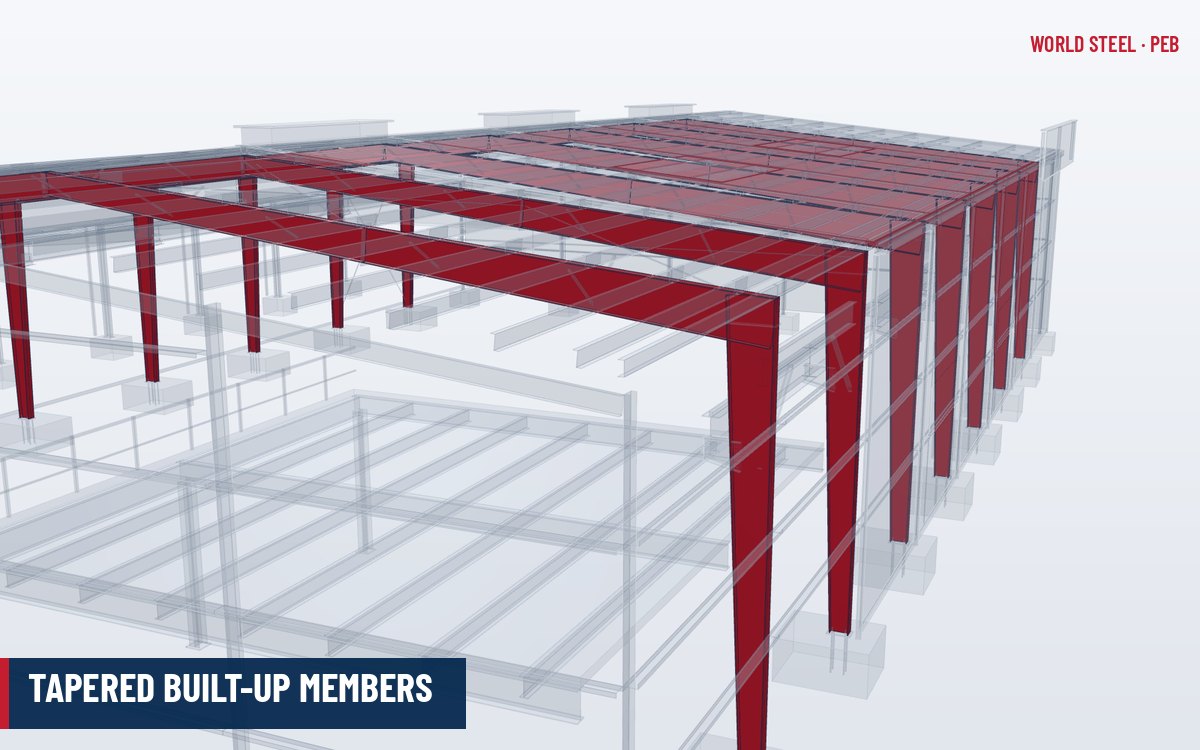
Tapered portal frames
Columns and rafters whose depth follows the bending moment – the core of every efficient pre-engineered building.
Solution · Built-up steel members
Welded plate I-sections, tapered portal frames, plate girders, box columns and crane runway girders – shaped to the forces in each member instead of a mill catalogue. Here is how built-up compares with hot-rolled, and when each one is the right choice.
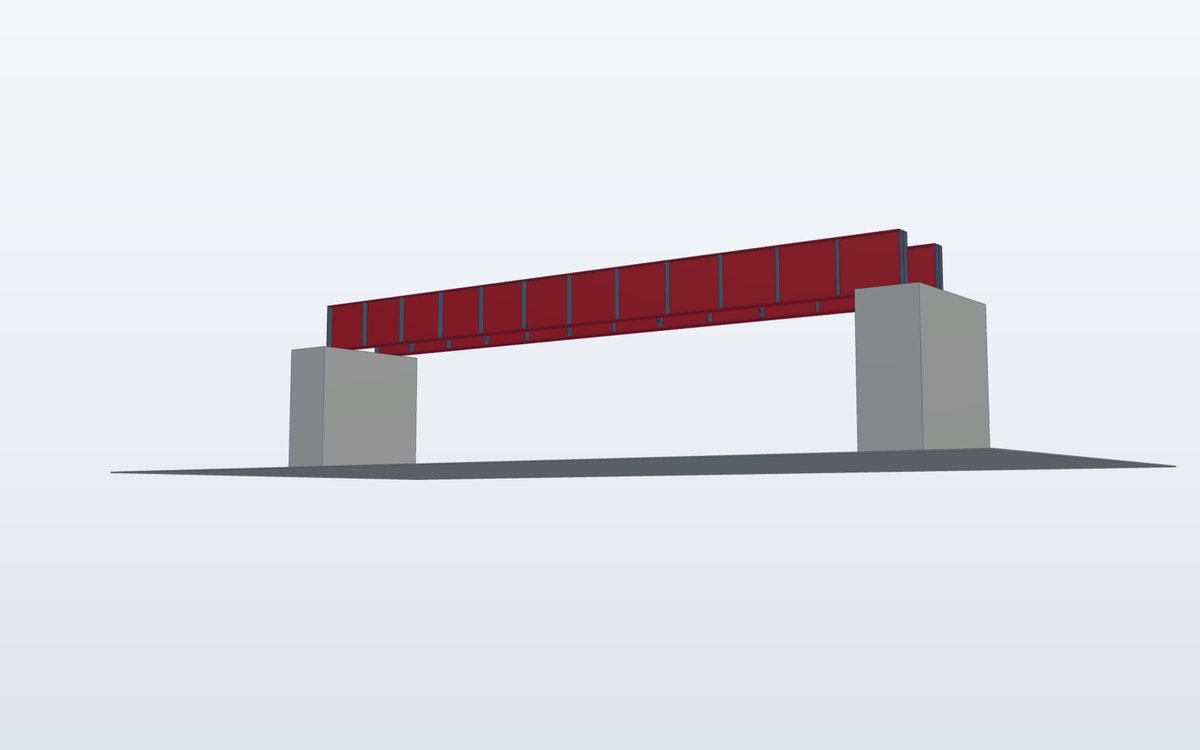
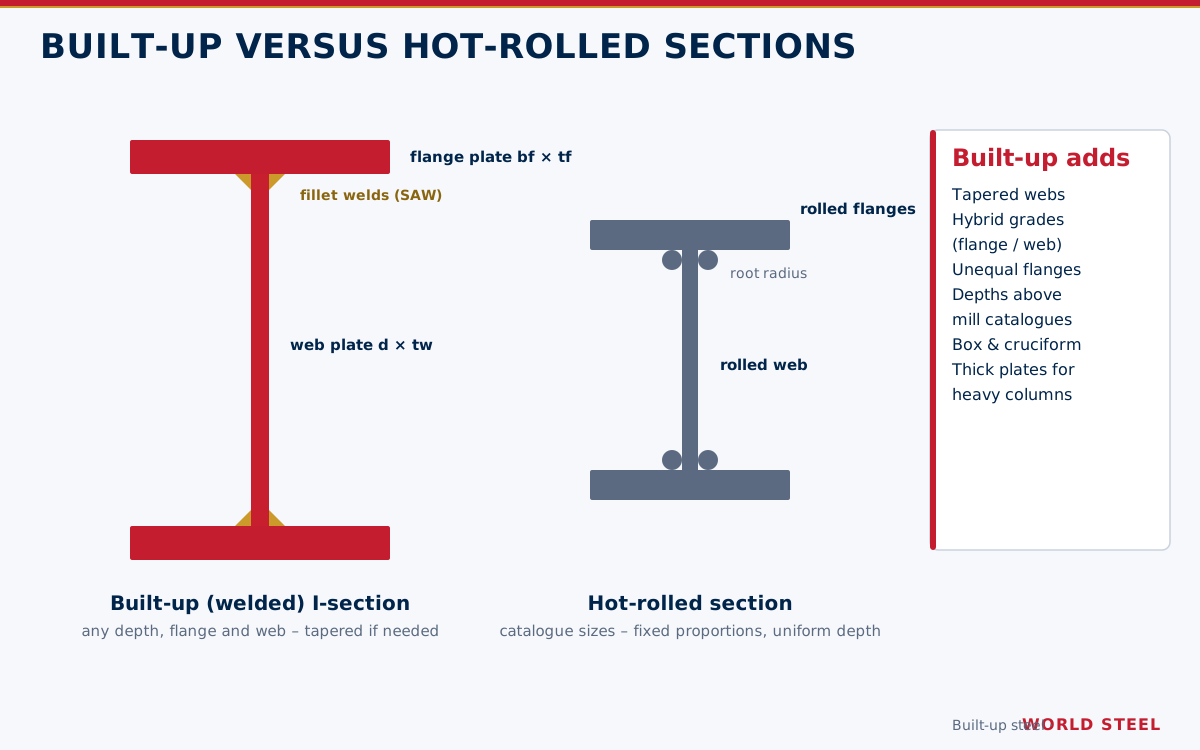
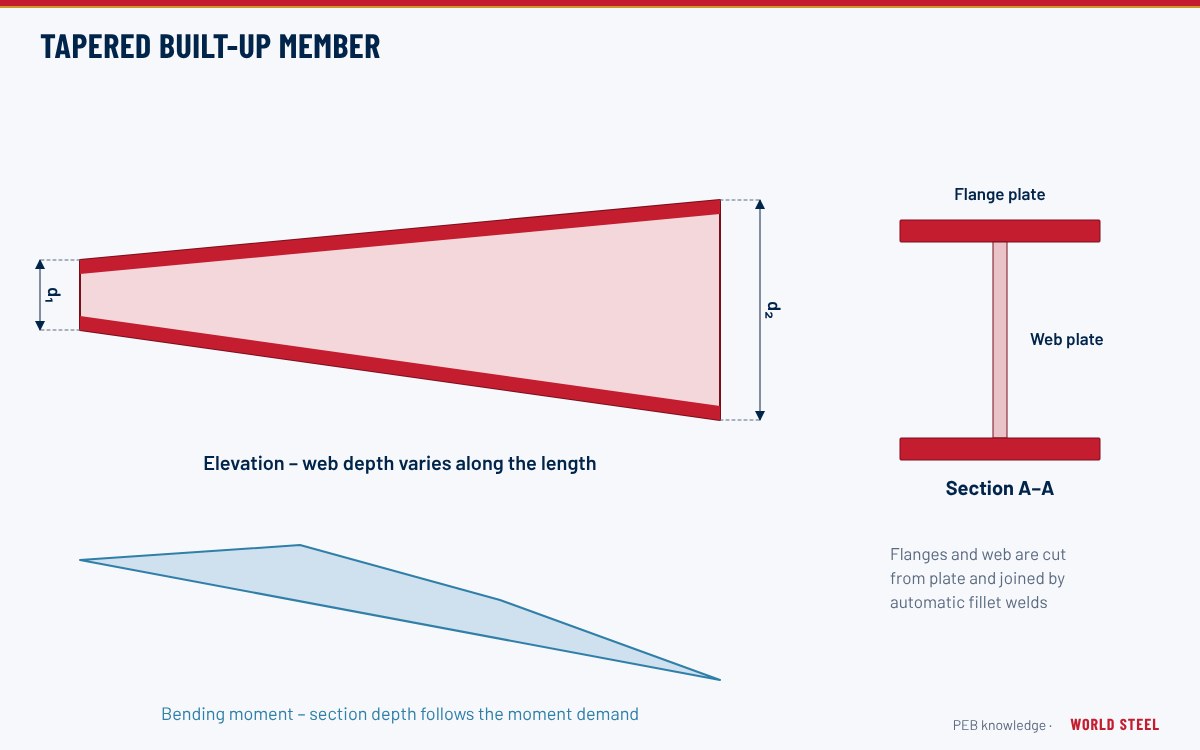
A hot-rolled section – W, UB, UC, IPE, HEA/HEB or H-beam – comes from the steel mill in fixed catalogue sizes. Its depth, flange and web are linked, and the section is the same over its full length. A built-up section is made in the fabrication shop from steel plate: a web and two flanges, cut to size and joined with continuous fillet welds. Every dimension can be chosen freely and can change along the member.
Neither is better in general. Hot-rolled sections are efficient for short spans and standard framing; built-up members win where spans are long, forces vary along the member, or the section needed is deeper, heavier or more special than any mill rolls. World Steel produces both – and most of our pre-engineered buildings and structural steel frames combine built-up primary members with hot-rolled and cold-formed secondary steel. This page explains the trade-offs so you can choose with confidence.
Built-up members
Built-up fabrication covers the members that carry the largest forces in a structure.
spans 20–90 m
Columns and rafters whose depth follows the bending moment – the core of every efficient pre-engineered building.
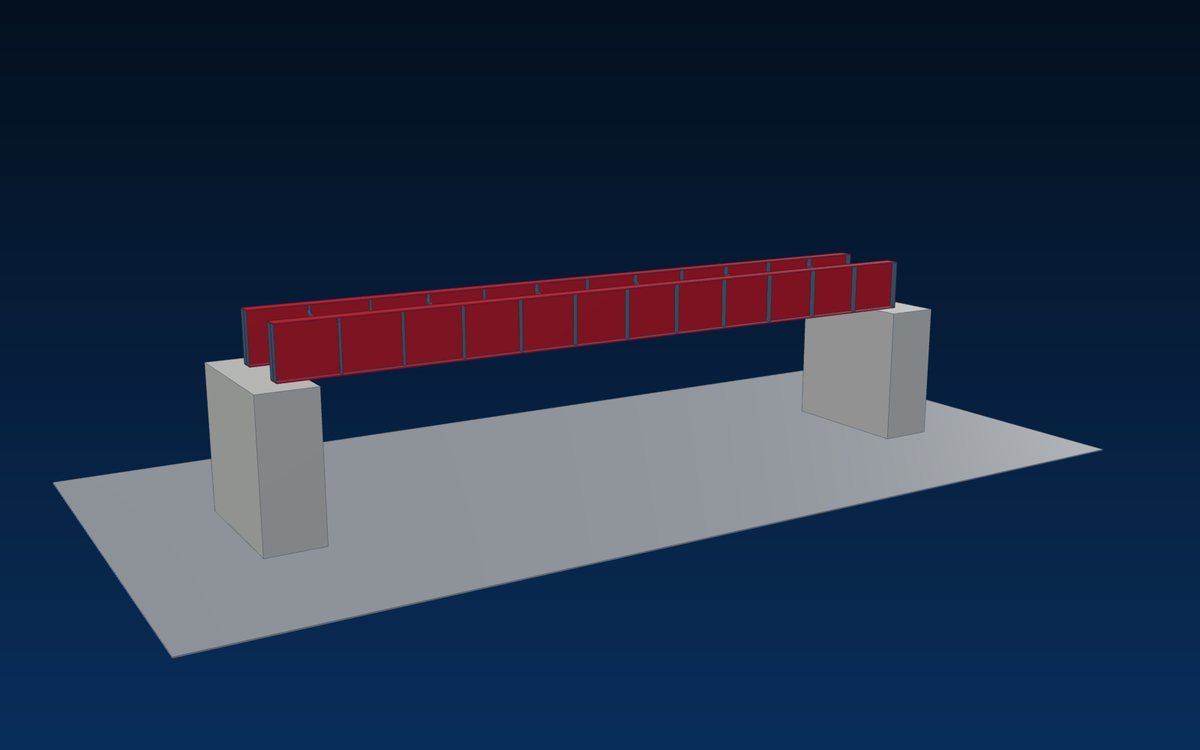 deep & long
Deep welded girders with stiffeners for transfer beams, long-span floors, platforms and bridge girders.
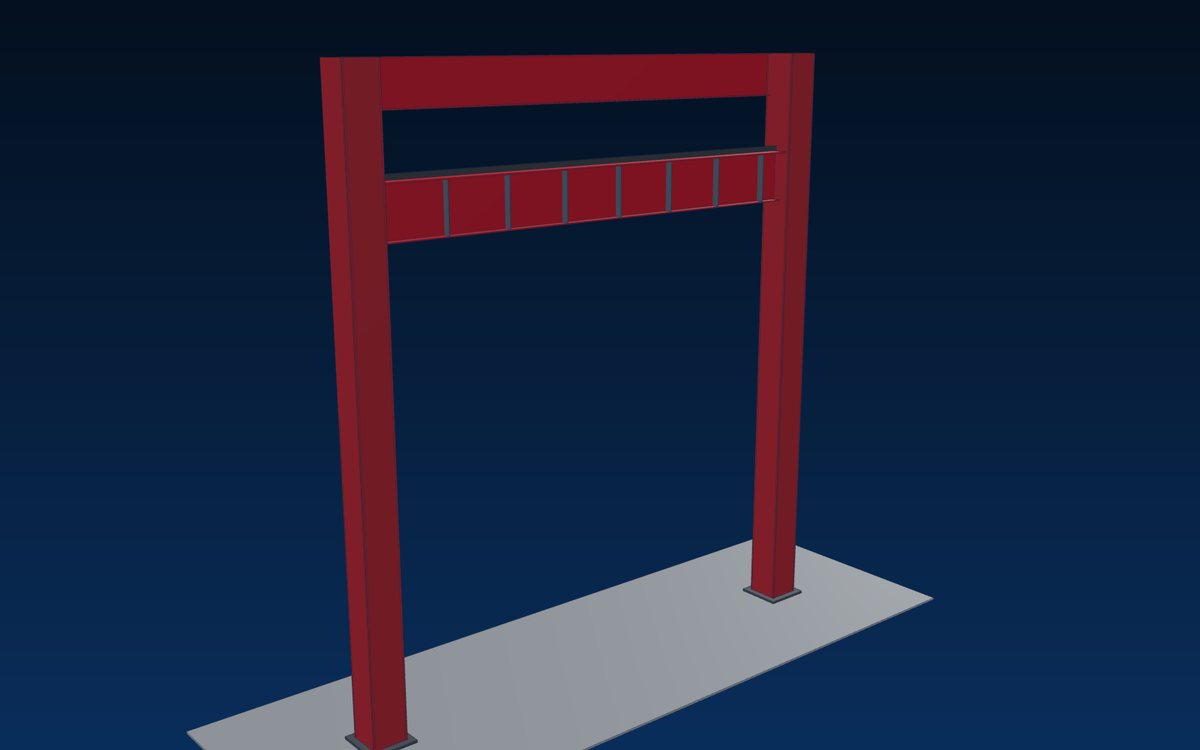 heavy duty
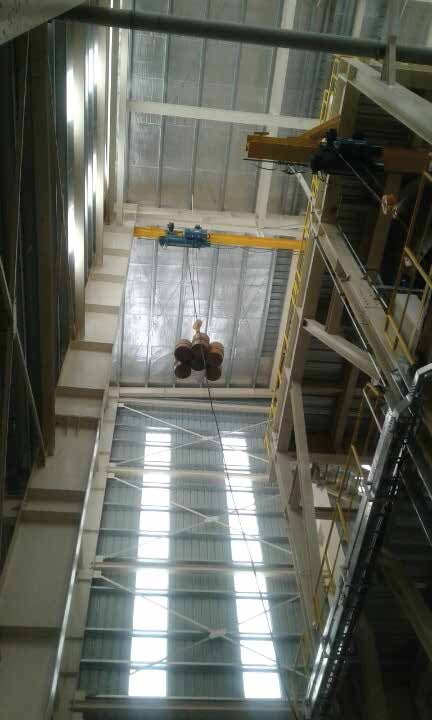
Box and heavy welded columns, crane runway girders with wide top flanges and stiffeners for crane buildings.
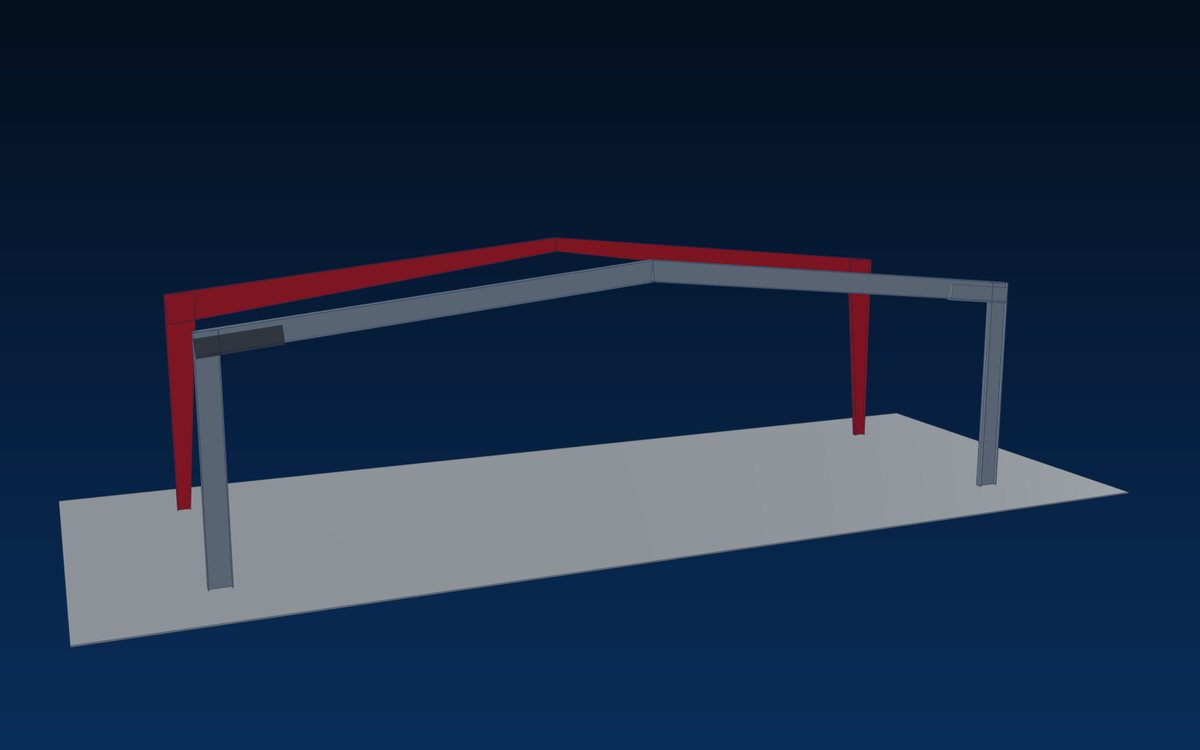 same 30 m span
A uniform hot-rolled frame (grey) beside a tapered built-up frame (red) for the same span and load.
יישומים
Factories, warehouses, hangars and sports halls with clear spans.
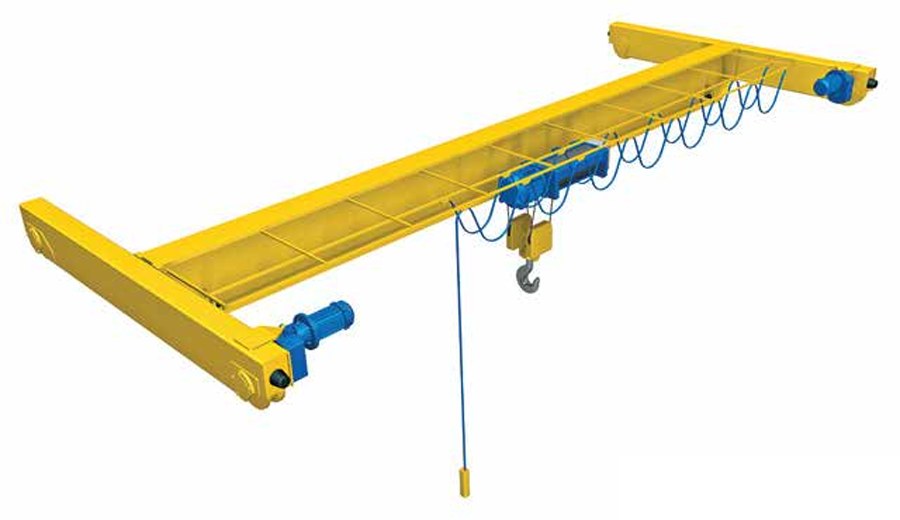
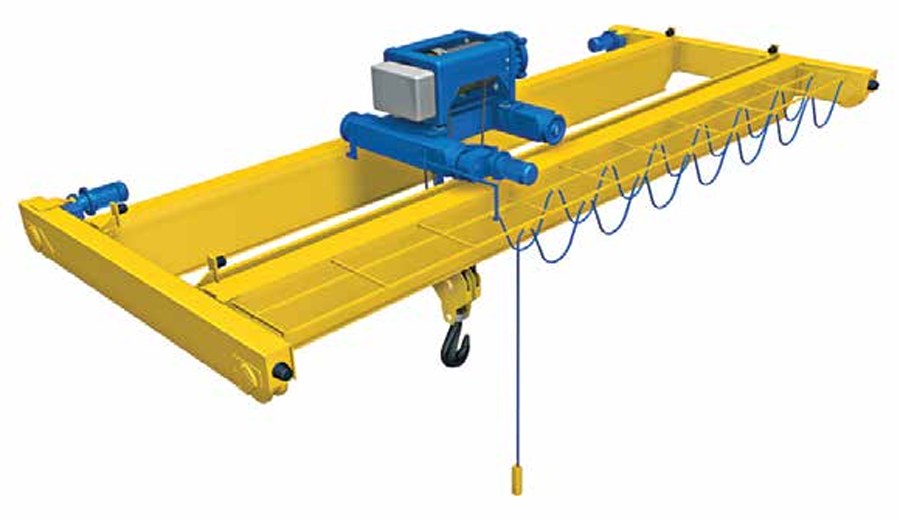
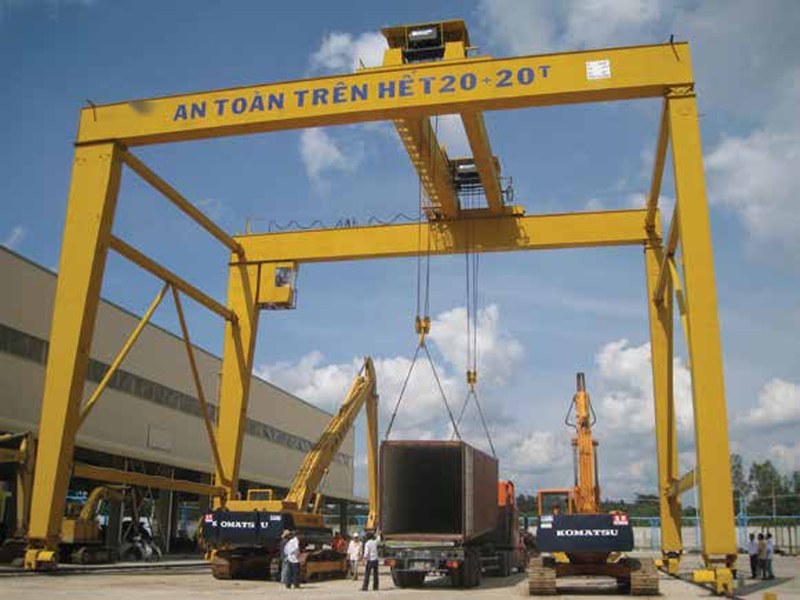
Heavy columns and runway girders for overhead cranes.
Plate girders carrying columns over open floors.
Girders for footbridges, pipe bridges and conveyor supports.
Mill buildings, power and process plants, mining structures.
Heavy columns, box columns and special moment-frame members.
הנדסה
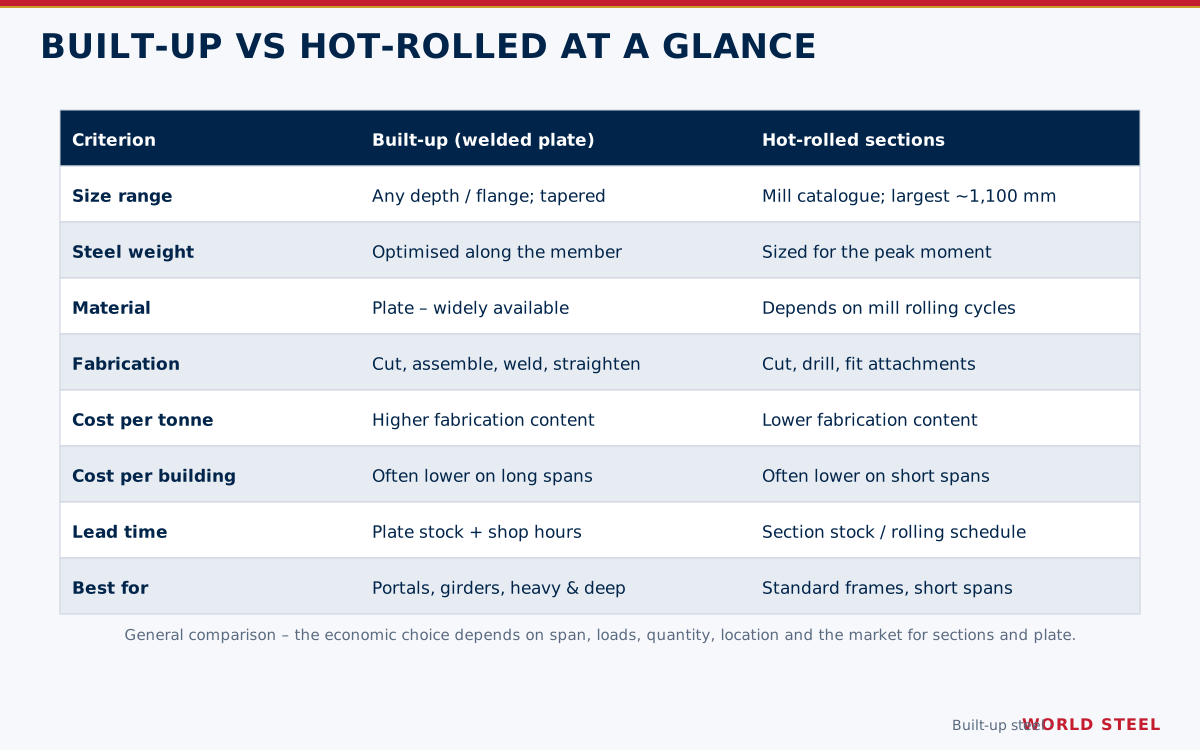
Built-up members cost more per tonne to make – plate must be cut, assembled, welded and straightened – but they usually need fewer tonnes. Hot-rolled sections cost less per tonne to fabricate but are sized for the peak force along their whole length.
That is why the comparison that matters is cost per building, not cost per tonne: on long-span portal frames built-up is usually lower; on short spans and simple framing hot-rolled often wins. Availability matters too – in many markets plate is easier to source than large rolled sections.
הנדסה
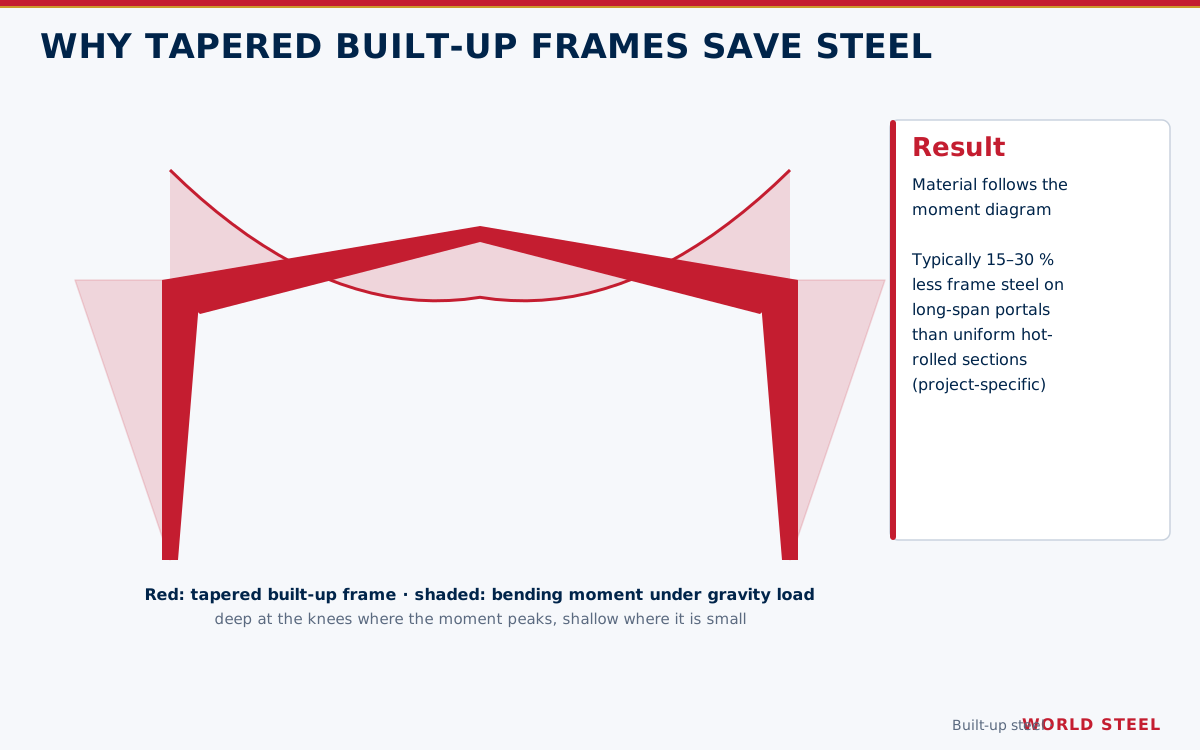
In a portal frame the bending moment peaks at the knees and drops towards the apex and the column bases. A tapered built-up frame is deep where the moment is high and shallow where it is low, with flanges and webs sized segment by segment – our engineers optimise every frame for weight.
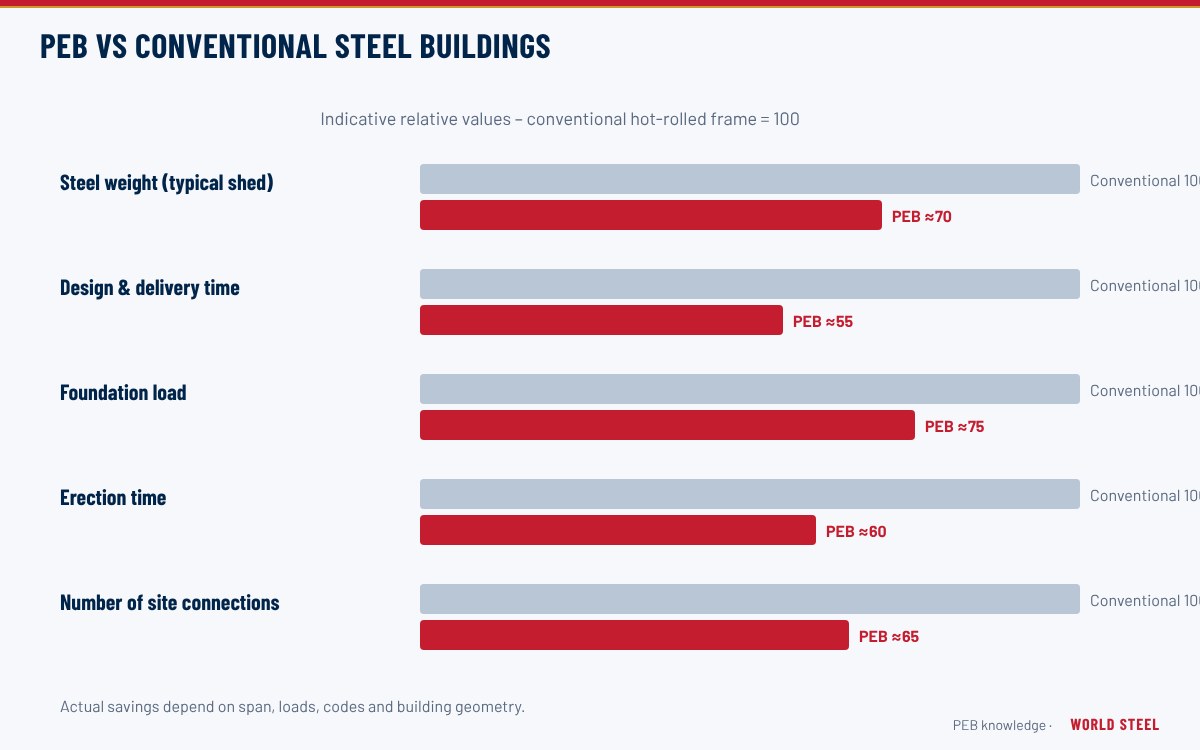
For long-span portals this typically saves 15–30 % of frame steel compared with uniform hot-rolled sections, and reduces foundation loads and shipping weight. The actual saving depends on the span, loads and code.
תקנים ותאימות
Design and fabrication standards treat welded and rolled sections differently – for tolerances, residual stresses and buckling. Key references:
 United States
 Australia / NZ
 Europe
 Vietnam
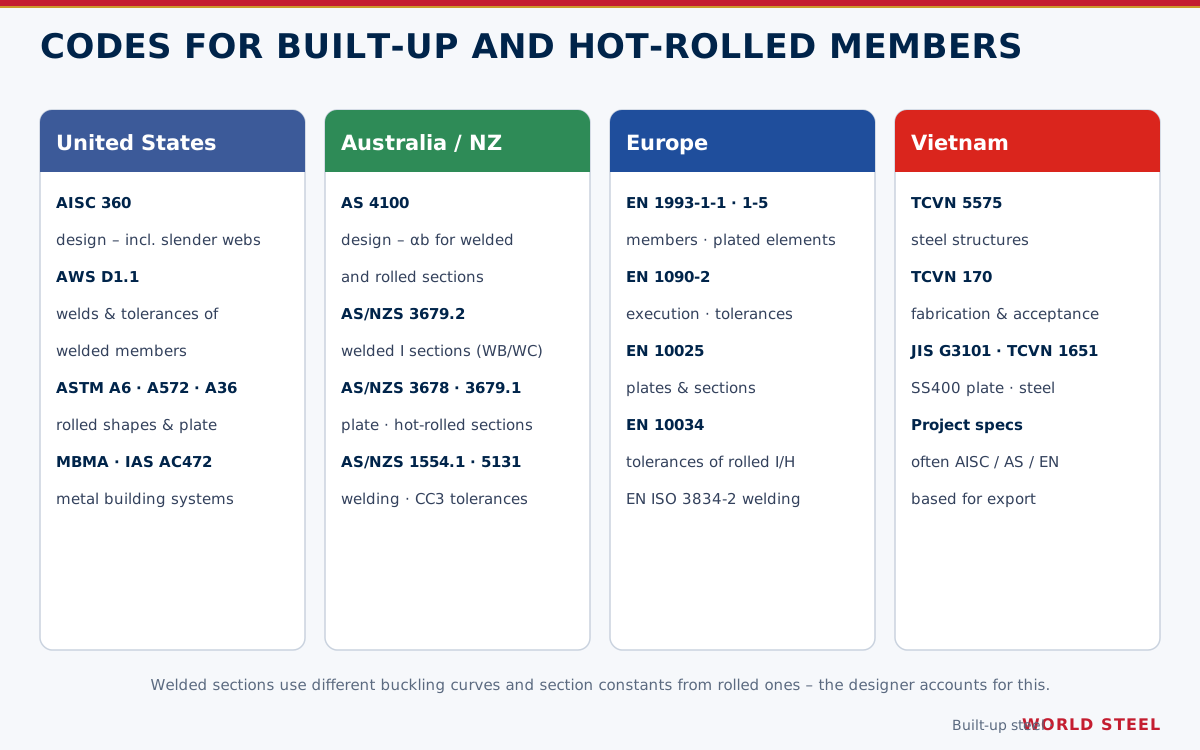
סיכום להתמצאות בלבד – מפרט הפרויקט, מהדורת התקן שאומצה והרשות המוסמכת הם הקובעים.
הנדסה
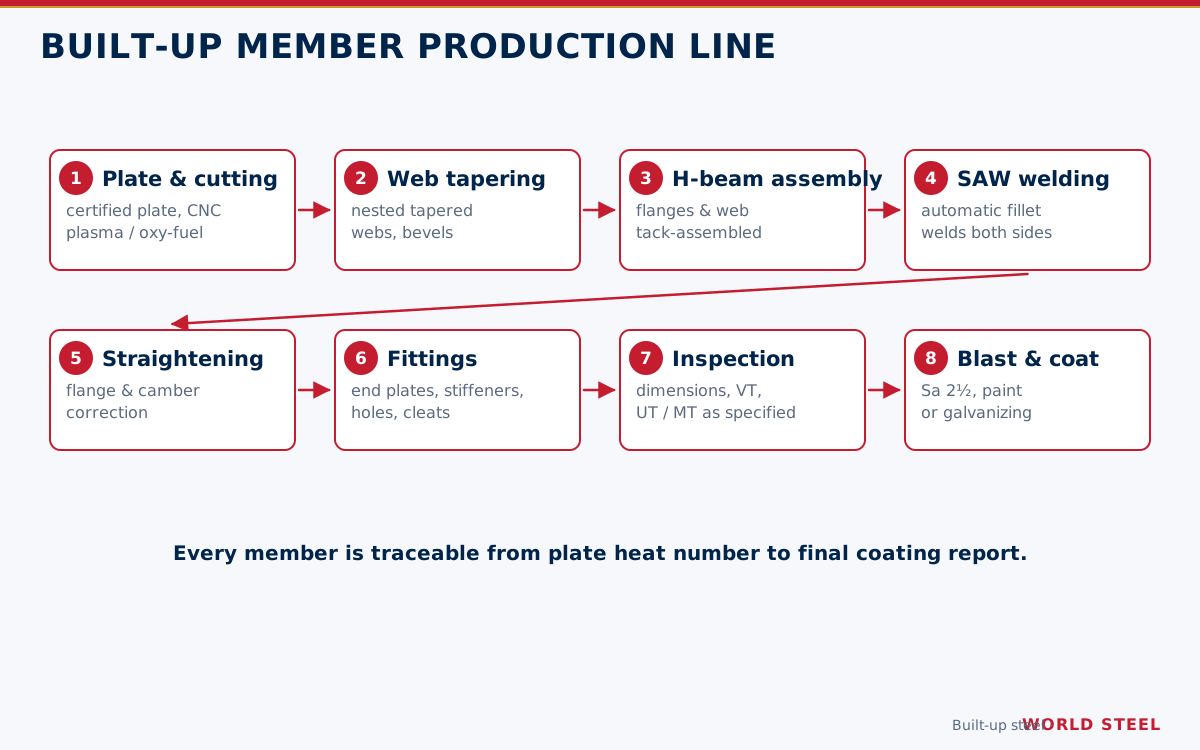
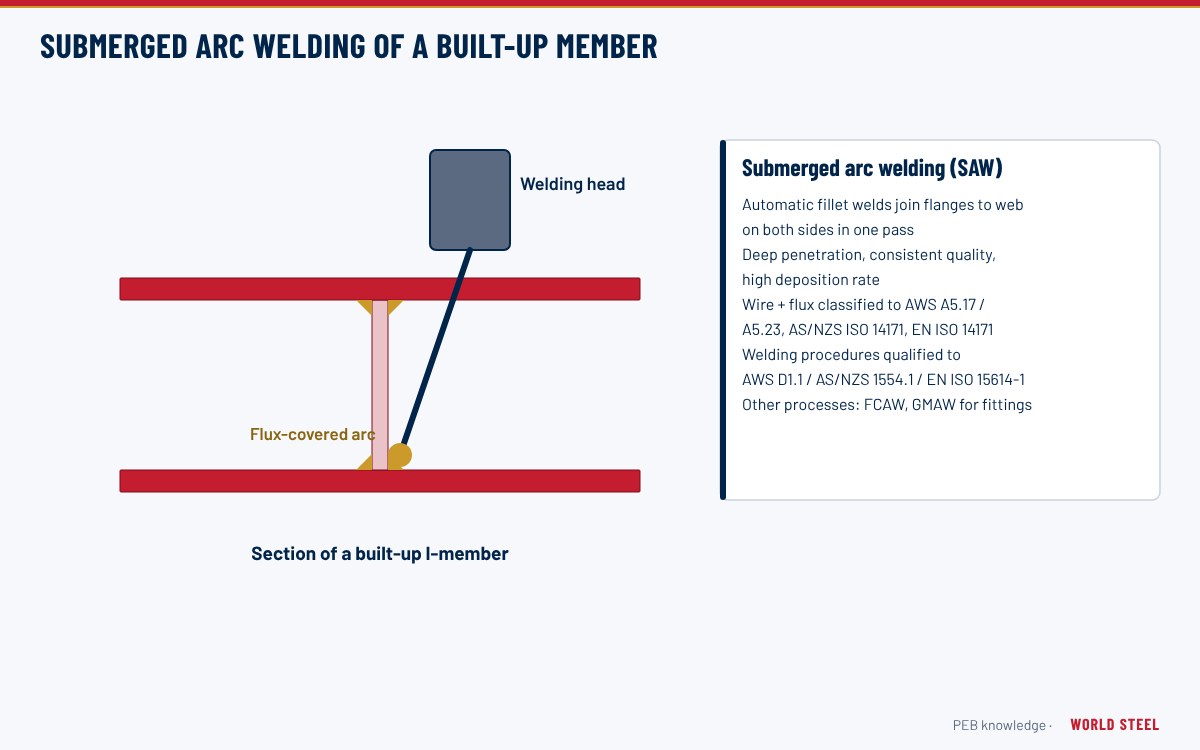
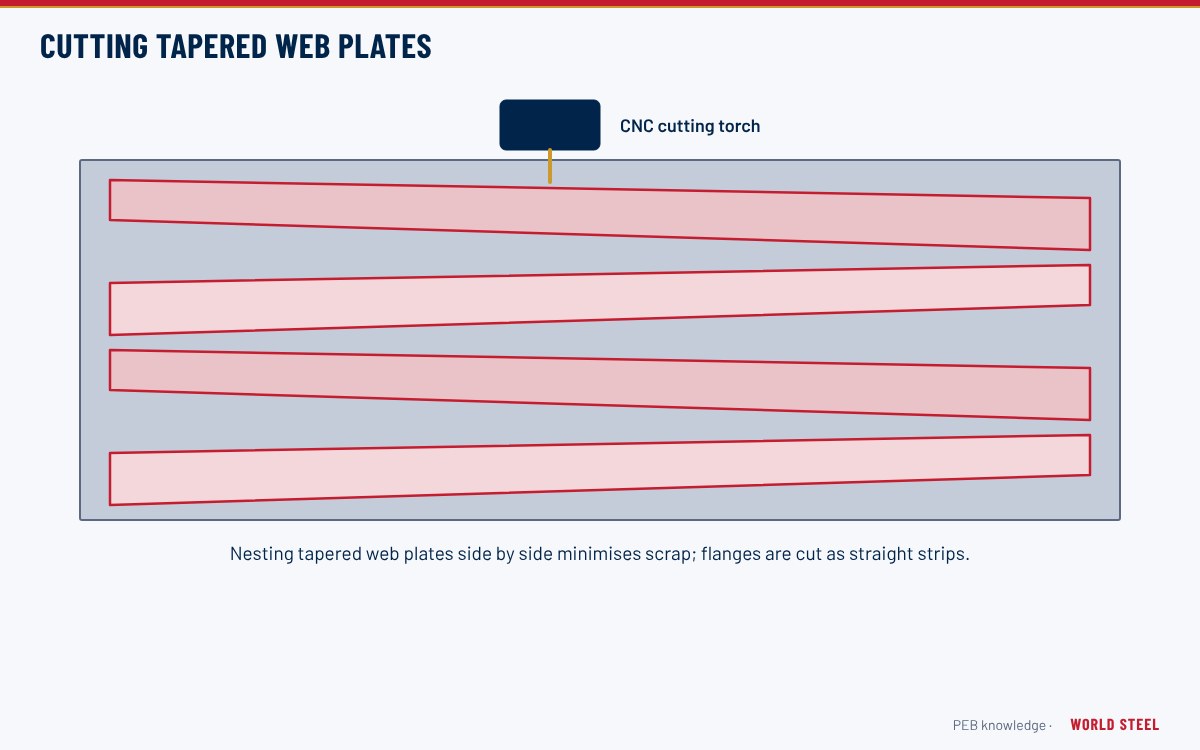
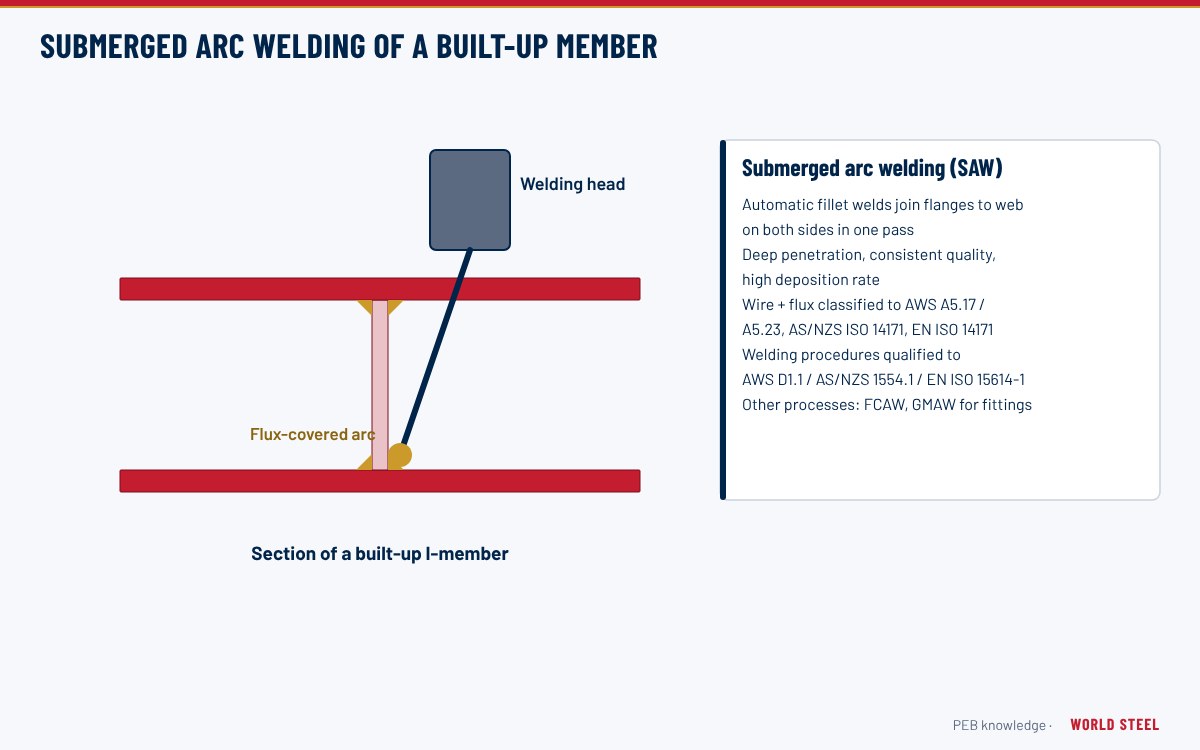
Plates from certified mills are CNC-cut, tapered webs nested to minimise scrap, and flanges and web assembled on an H-beam line. Continuous fillet welds are made with automatic submerged-arc welding, then flanges are straightened and end plates, stiffeners and holes added.
Members are inspected for dimensions and welds to AWS D1.1, AS/NZS 5131 or EN 1090-2 tolerances, shot-blasted and coated, with full traceability from plate heat number to coating report.
הנדסה
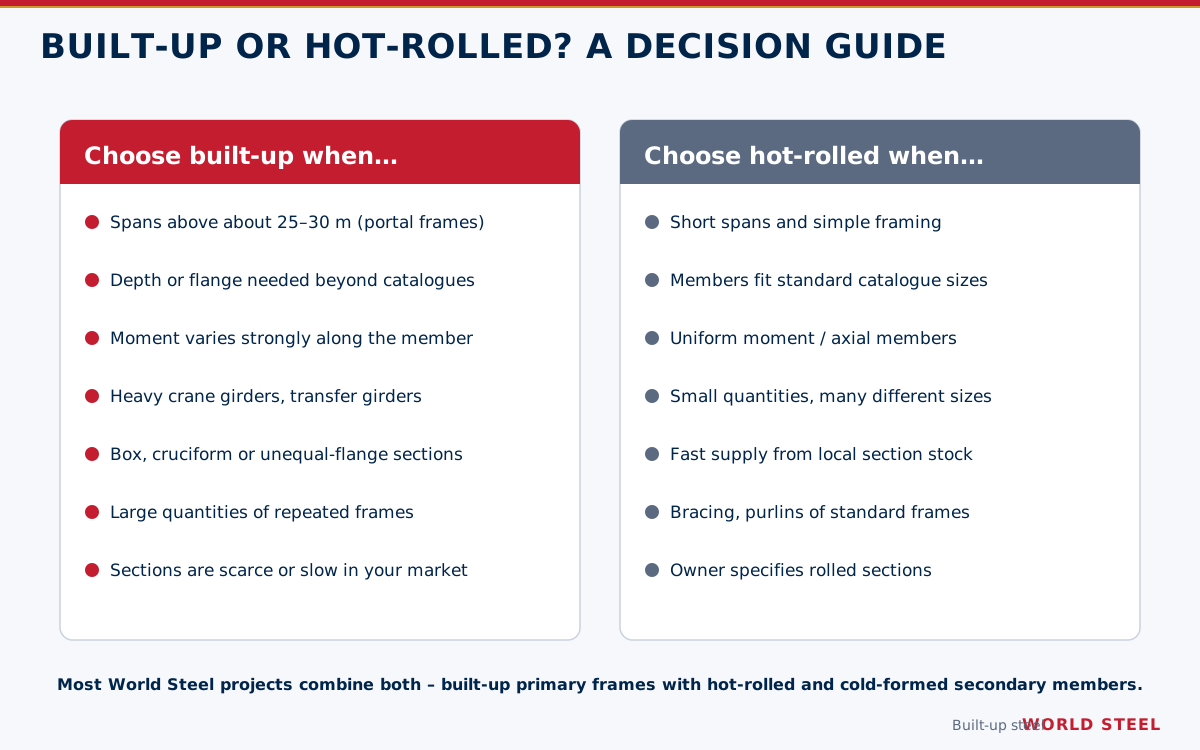
Choose built-up for long spans, varying forces, heavy or deep members, crane girders, box sections and large numbers of repeated frames. Choose hot-rolled for short spans, uniform members, small quantities of many sizes and when rolled sections are readily available.
Not sure? Send us your drawings: our engineers compare both options for weight, cost and delivery and recommend the best mix for your project.
מפרט
תהליך
Built-up and hot-rolled schemes compared for weight, cost and lead time.
Member-by-member optimisation and connection design to your code.
Certified plate from approved mills with full traceability.
CNC cutting, H-beam assembly, SAW welding and straightening.
Dimensional and weld inspection, blasting and coating or galvanizing.
Marked, bundled and shipped with erection drawings and dossier.
FAQ
A member made in the fabrication shop from steel plates – usually a web and two flanges joined with continuous fillet welds. Unlike hot-rolled sections, its depth, flange width and plate thicknesses can be chosen freely and can vary along the member.
No. Both are designed to the same codes and strengths. The codes account for differences such as welding residual stresses – for example, welded sections use specific buckling curves in EN 1993 and section constants in AS 4100 – and the designer sizes the member accordingly.
Per tonne, hot-rolled is usually cheaper to fabricate. Per building, built-up often costs less on long spans and heavy structures because it needs less steel. The answer depends on span, loads, quantities and local availability – we compare both for your project.
For long-span portal frames, typically about 15–30 % of frame steel compared with uniform hot-rolled sections. Short spans save less; the exact figure comes from the design of your building.
With automatic submerged-arc welding (SAW) on an H-beam line, using qualified procedures and consumables, followed by straightening and visual and dimensional inspection – plus UT or MT where the specification requires it.
Yes. We use hot-rolled sections where they are the better choice – for example bracing, short beams and secondary framing – and supply them in the same package as the built-up members.
Send us your drawings or building data – our engineers compare both options and return the most economical scheme with a delivered price.
Full comparison
Typical behaviour for building and industrial structures. The cheapest solution is usually a mix: rolled sections where catalogue sizes fit, built-up members where forces or spans call for them.
| Criterion | Built-up (welded plate) | Hot-rolled (UB · UC · IPE · HE · W) |
|---|---|---|
| Section sizes | Any depth, flange and web – tapered, haunched, asymmetric | Fixed catalogue sizes, constant section |
| Steel weight | Lower on long spans and heavy loads – material placed where the forces are | Higher when the nearest catalogue size is oversized |
| Fabrication cost per tonne | Higher – cutting and welding of flanges and webs | Lower – cut, drill and connect |
| Total cost | Lowest for long spans, deep girders, crane and transfer beams | Lowest for short and medium spans, columns, secondary beams |
| Depth range | From ≈ 200 mm to 2,000 mm and beyond | Up to ≈ 610 mm (AU UB), 600 mm (IPE), 1,000 mm (HE), ≈ 1,100 mm (W) |
| Availability & lead time | Plate is widely available in all grades; lead time = fabrication | Depends on mill rolling cycles and stock of the exact size and grade |
| Grades | Any plate grade incl. S460, weathering, Z-quality | Limited by what is rolled in each size |
| Residual stress & buckling | Welding residual stresses – own buckling curves and slenderness limits | Rolling residual stresses – standard buckling curves |
| Tolerances & quality control | Fabrication tolerances (EN 1090-2, AS/NZS 5131, AWS D1.1); weld inspection | Mill tolerances (EN 10034, ASTM A6, AS/NZS 3679.1) |
| Fire & corrosion | Thin webs raise the section factor – more protection per tonne | Compact sections – lower section factor |
| Shipping | Tapered members nest well; long members split with bolted splices | Standard lengths 12 – 18 m |
תנאי אספקה · Incoterms® 2020
World Steel מתמחרת ממפעל, חופשי על סיפון או עד הנמל או האתר שלכם. אריזת יצוא, מסמכים ומשלוח מהו צ'י מין סיטי הם חלק מהשירות שלנו.
השוואת כל כללי Incoterms® 2020 → EN 1090 EXC3 · CE
 AS/NZS 5131 CC3
 IAS AC472
 New Zealand
 Philippines