ENEnglish
 ZH中文
 KO한국어
 JA日本語
 FRFrançais
 ITItaliano
 PTPortuguês
 ESEspañol
 HEעברית
 ARالعربية

Epoxy · vinylester · hybrid
Chemical anchors – injection mortars
Injection mortars with threaded rods – the flexible, high-load solution.
פרטים וטבלאות →
Solution · Chemical anchors
Bonded anchors and post-installed rebar in epoxy, vinylester and hybrid mortars – for base plates on existing slabs, retrofits, starter bars and anchors close to edges – designed to EN 1992-4, ACI 318 and AS 5216 with approved systems.
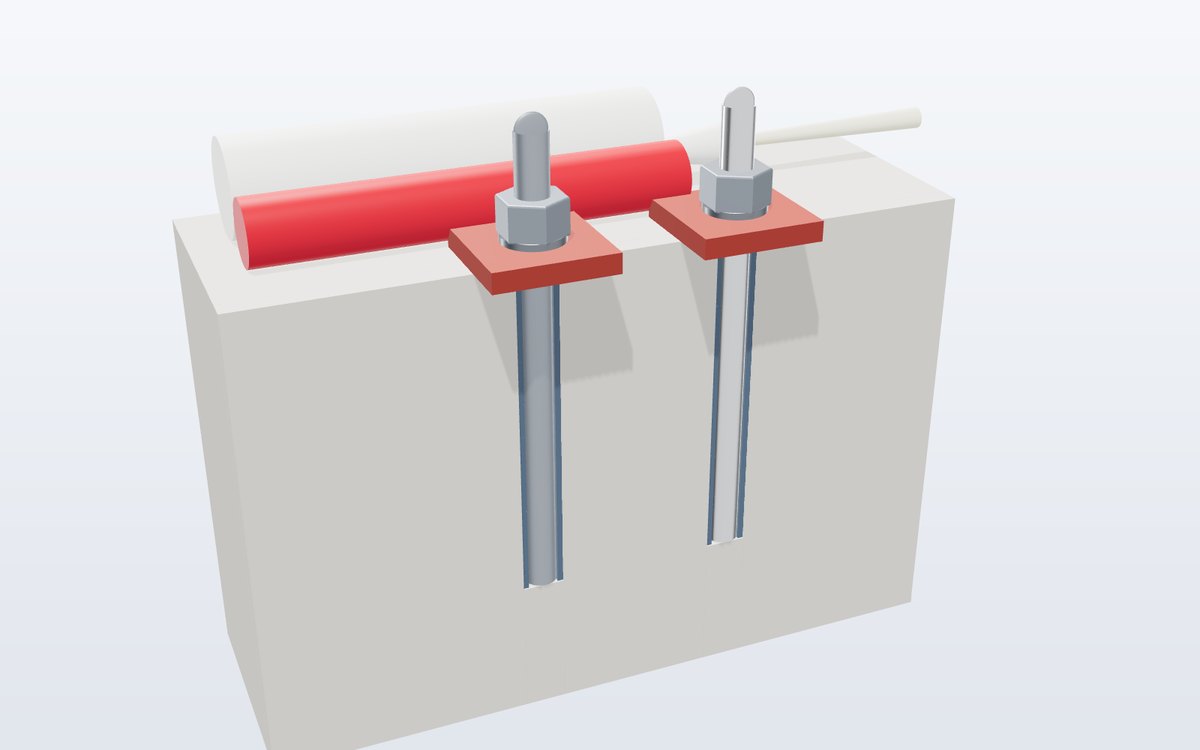
A chemical anchor is a threaded rod or reinforcing bar set in a drilled hole filled with a two-part resin mortar. Once cured, the mortar bonds the steel to the concrete along the whole embedment depth. Because nothing expands in the hole, the anchor does not push the concrete apart – so it can sit close to an edge or to another anchor, and it seals the hole against water.
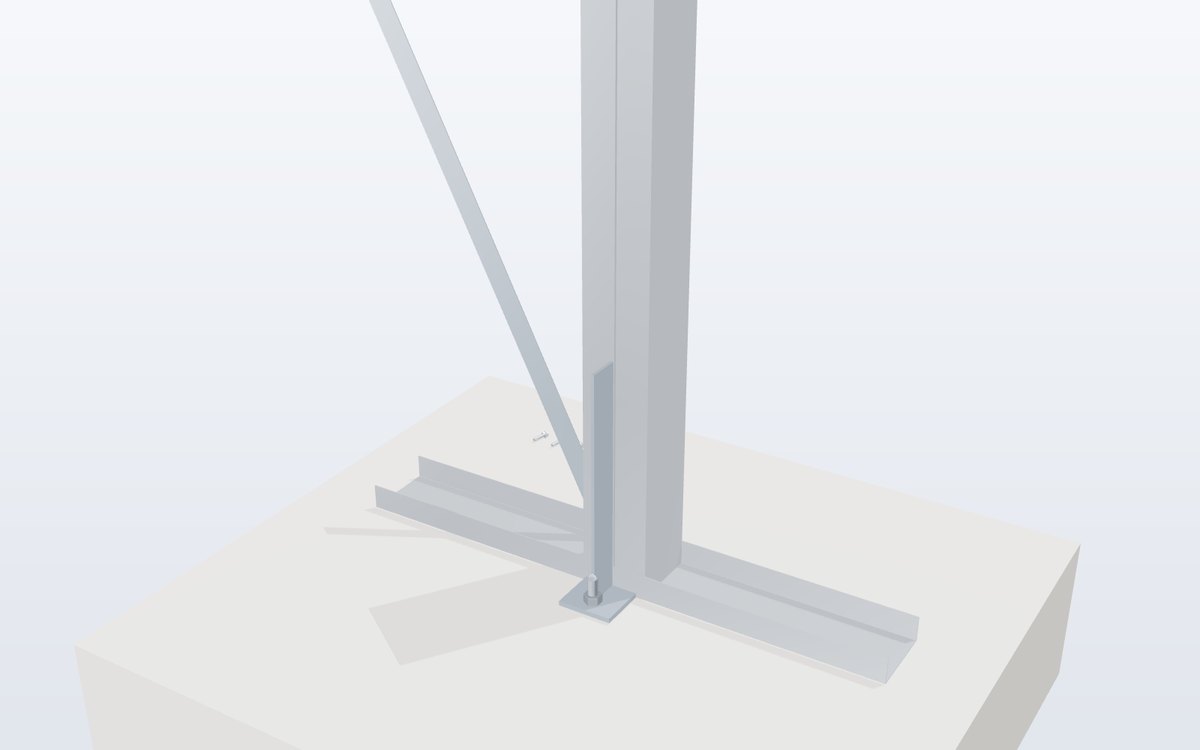
That makes chemical anchors the standard answer whenever steel has to be fixed to concrete that is already hardened: a new column on an existing slab, a cast-in bolt that was missed or set in the wrong place, a starter bar for an extension, a heavy machine or a seismic retrofit. World Steel designs, supplies and installs approved systems with the bolts and anchor bolts of our steel packages.
Post-installed range
Each system has its own page with types, approvals and ordering data.
Injection mortars with threaded rods – the flexible, high-load solution.
פרטים וטבלאות →Pre-measured capsules for repetitive anchors at a fixed depth.
פרטים וטבלאות →Anchor rods and internally threaded sleeves matched to the approval.
פרטים וטבלאות →Starter bars and lap splices bonded into existing concrete.
פרטים וטבלאות →For loads needed now – no cure time.
פרטים וטבלאות →For new foundations – cast-in anchor rods and cages.
פרטים וטבלאות →When to use them
Hardened concrete, a steel member to fix and no cast-in bolt – the classic chemical anchor situation.
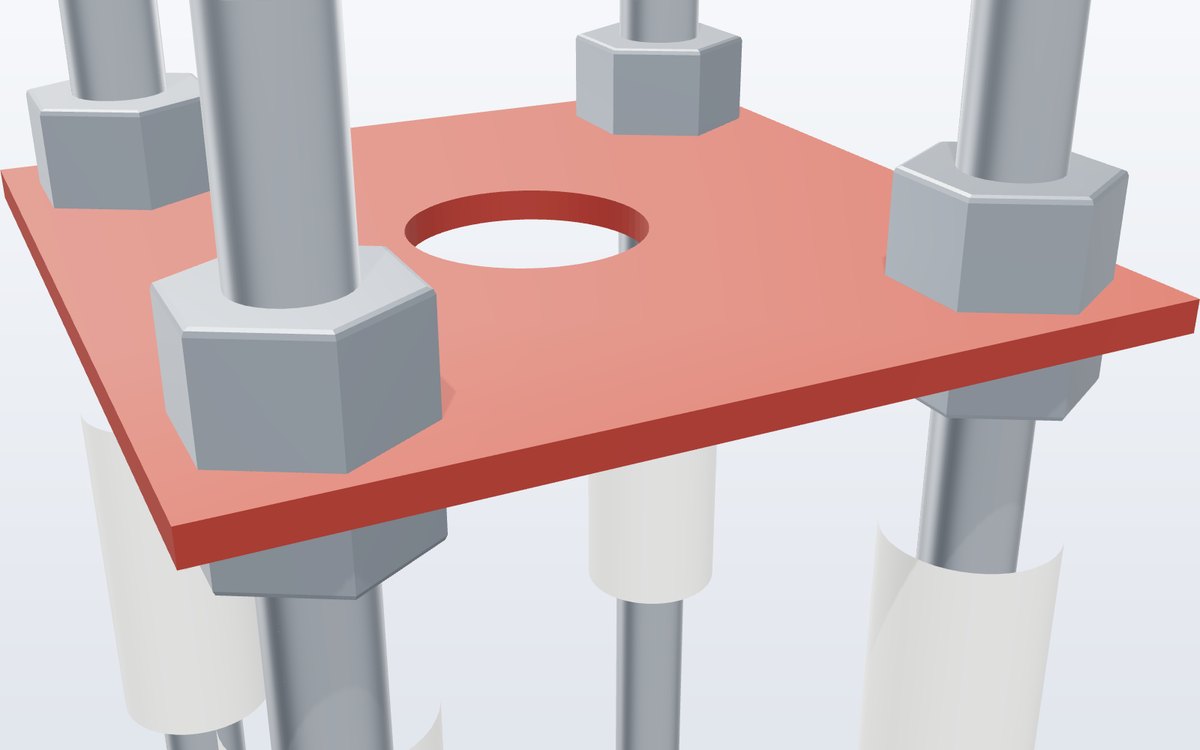
base plates
Mezzanines, canopies, extensions and racking on a finished floor.
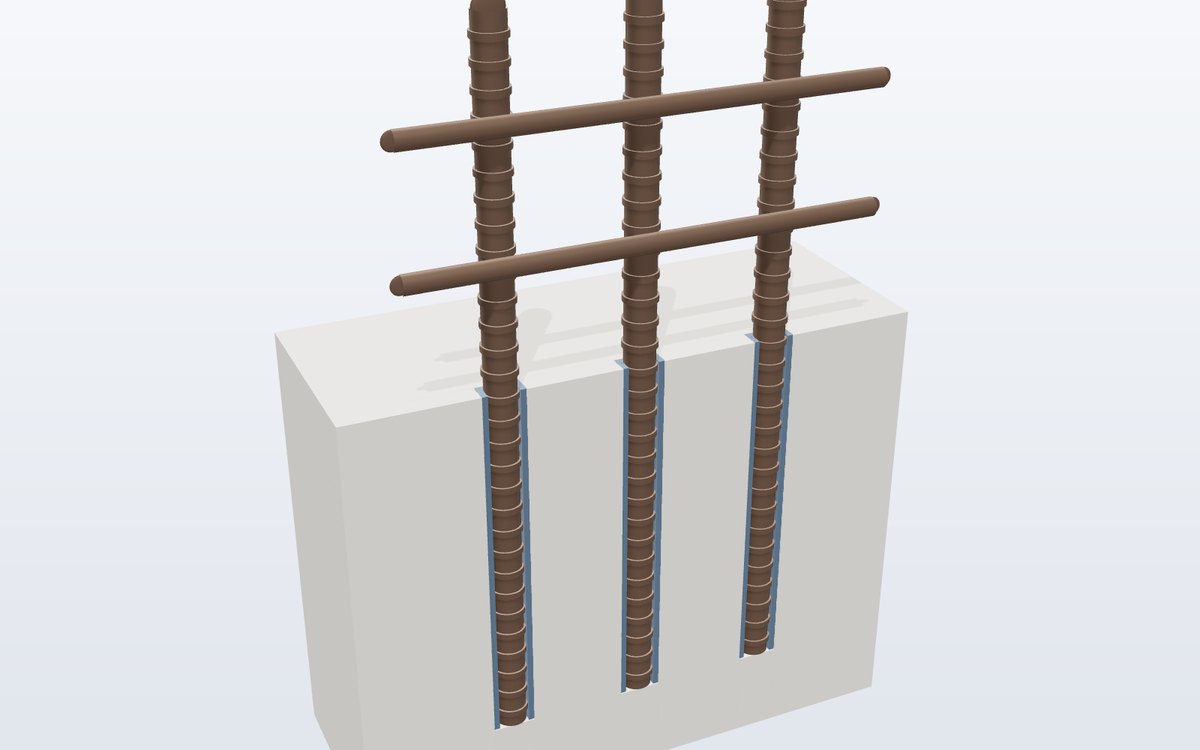 rebar
New walls, slabs and stairs connected to existing concrete.
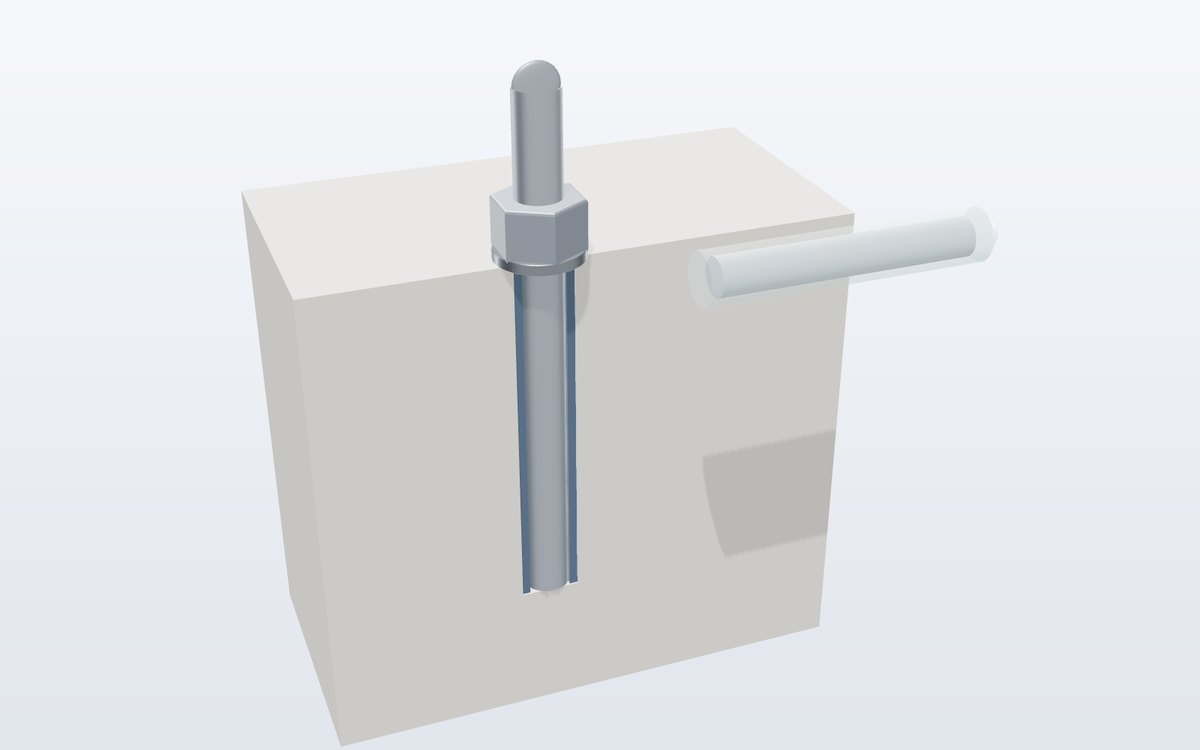 repair
Replacing cast-in anchors that were forgotten, cut or set out of position.
 heavy duty
Vibrating plant, cranes rails and tanks with high or dynamic loads.
 close spacing
Parapets, beams and narrow piers where expansion anchors would split the concrete.
 C1 / C2
Strengthening of existing buildings with approved seismic systems.
יישומים
No expansion stress – anchors fit where mechanical anchors would split the concrete.
Bond along the full depth; embedment can be increased for more capacity.
Mortar fills the gap – water cannot reach the rod.
Drill through the base plate after the steel is set – holes always line up.
Post-installed bars designed like cast-in reinforcement.
Approved products qualified for cracks and earthquake loading.
תקנים ותאימות
Chemical anchors are designed with the characteristic values in the product approval:
 Vietnam & Asia
 United States
 Australia / NZ
 Europe
סיכום להתמצאות בלבד – מפרט הפרויקט, מהדורת התקן שאומצה והרשות המוסמכת הם הקובעים.
הנדסה
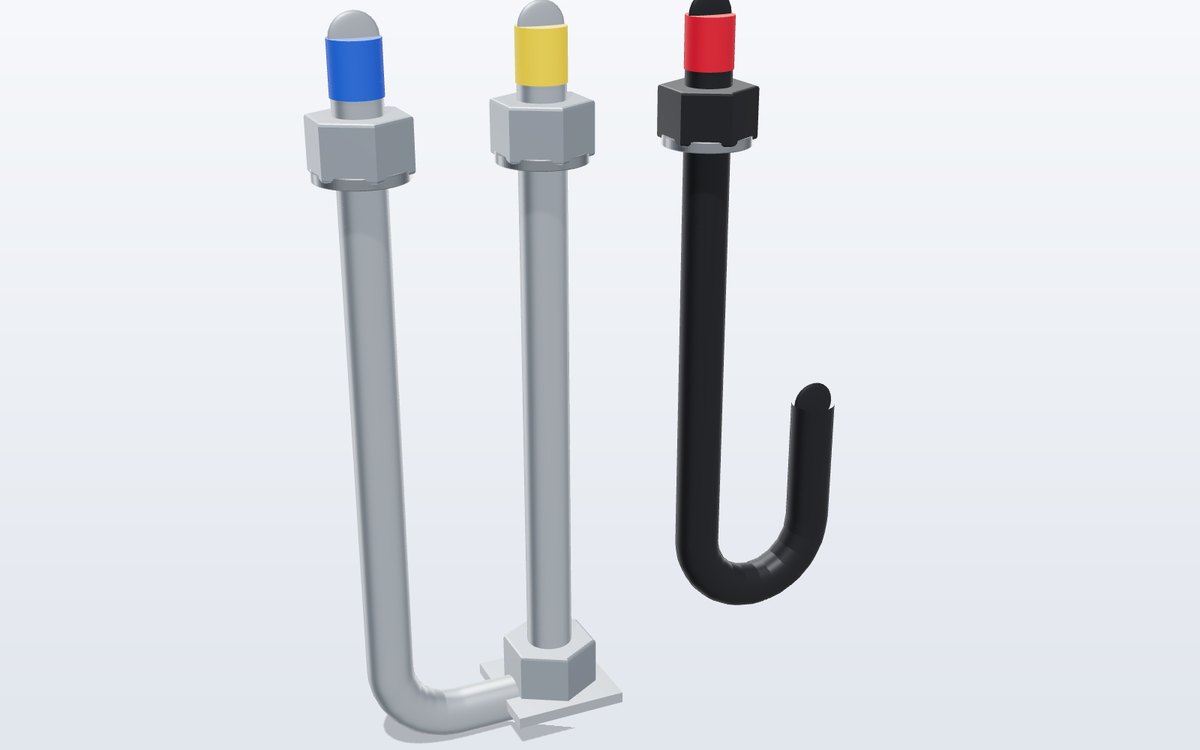
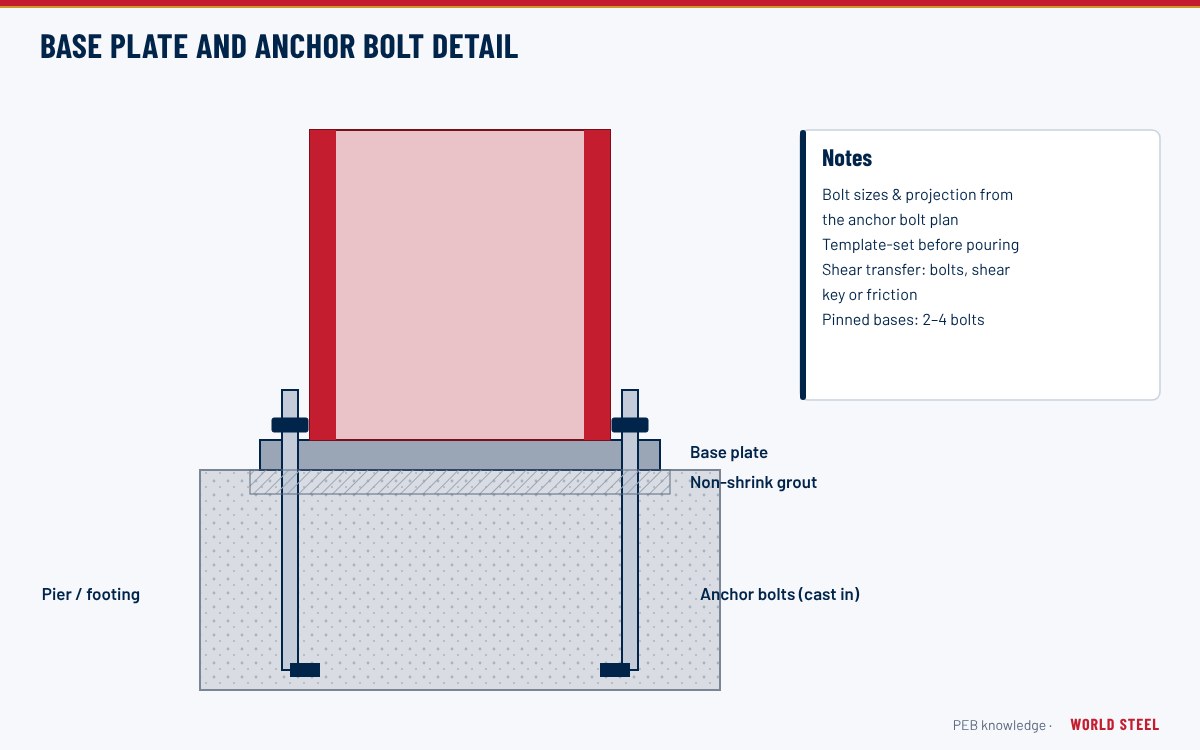
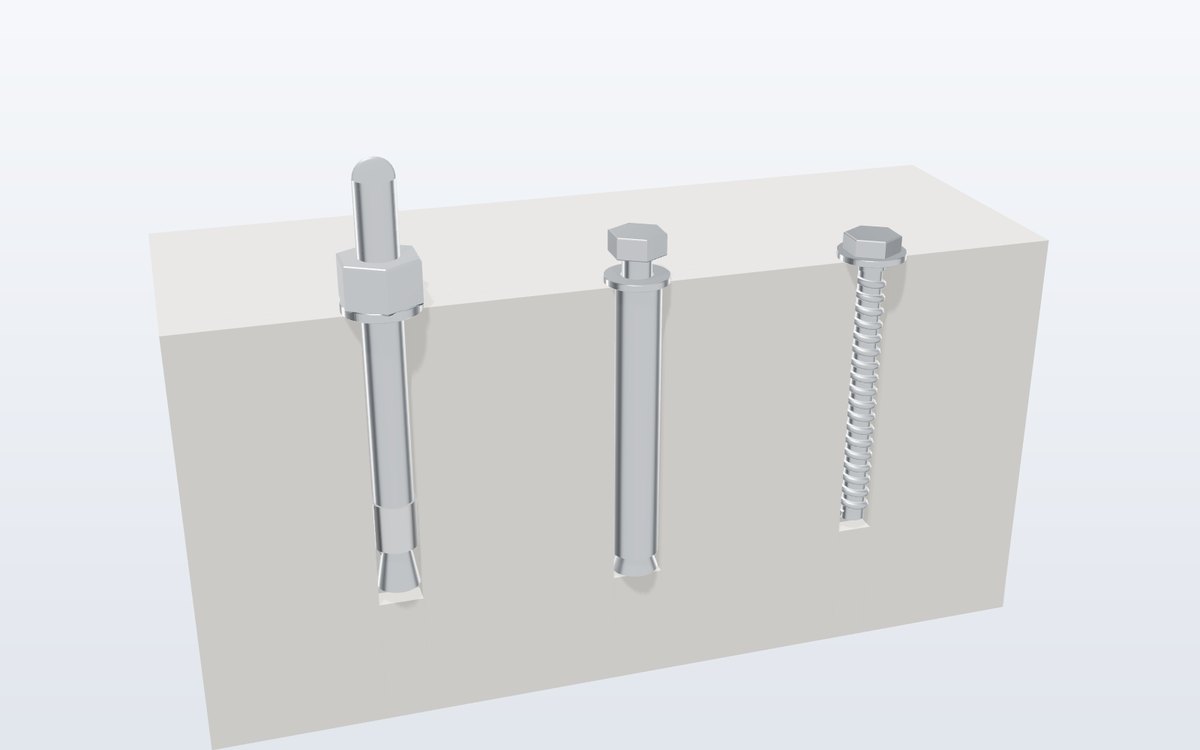
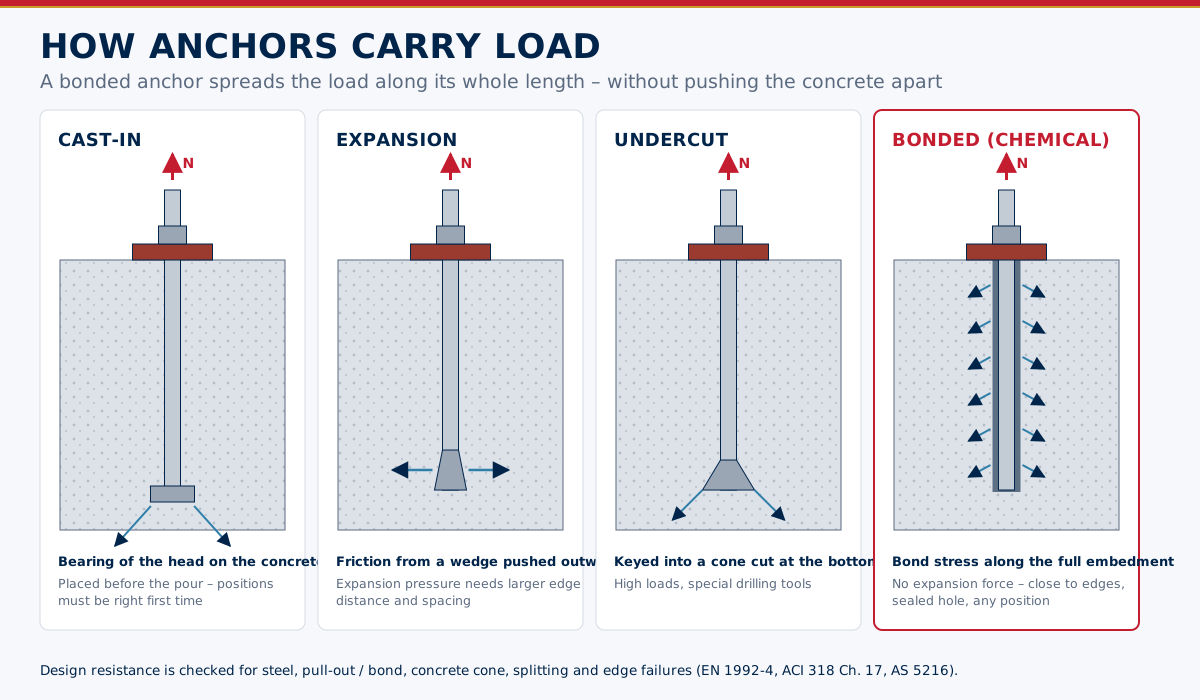
Cast-in anchors bear on their head; expansion anchors wedge against the hole; undercut anchors key into a cone. A bonded anchor transfers load by bond stress along its full embedment – which is why it works close to edges and other anchors, and why its capacity grows with depth.
הנדסה
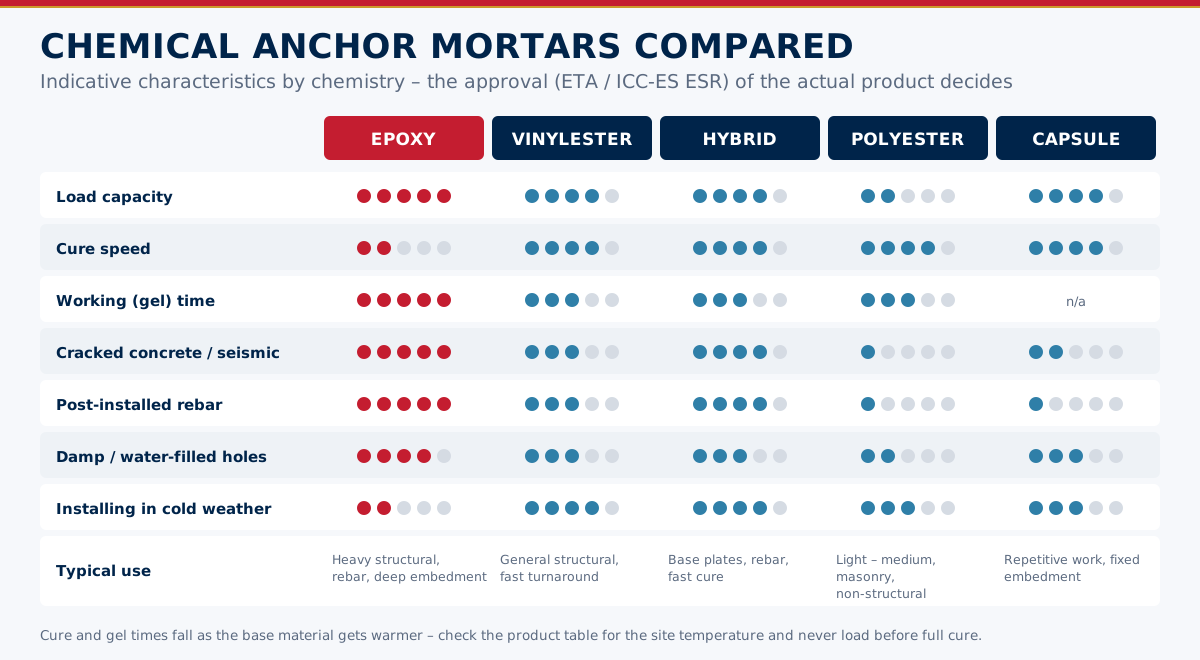
Epoxy mortars give the highest bond, long working time and the broadest approvals for rebar and seismic use, but cure slowly in the cold. Vinylester and hybrid mortars cure fast and handle a wide temperature range; polyester is an economical choice for light, non-structural fixings and masonry. Capsules pre-measure the resin for repetitive work.
הנדסה
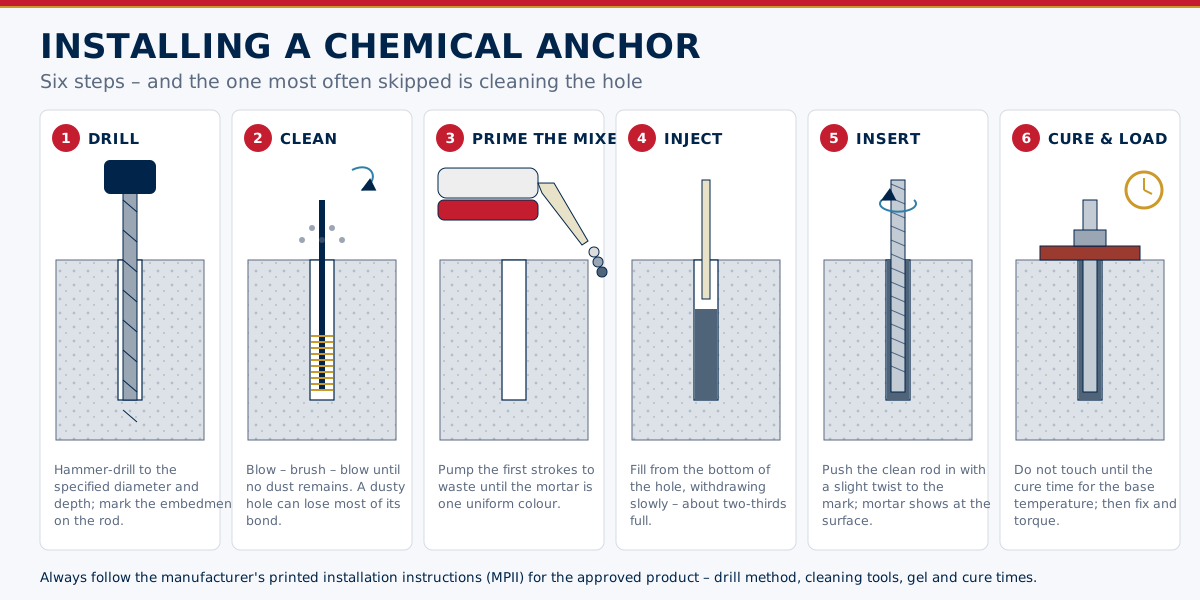
Drill, clean, prime the mixer, inject from the bottom, insert the rod, wait for the cure. Hole cleaning – blow, brush, blow – is the step that most often goes wrong: dust left in the hole acts like a release agent and can take away most of the bond.
Our crews install to the manufacturer's printed instructions, record every anchor and carry out proof-load tests where the specification asks for them.
הנדסה
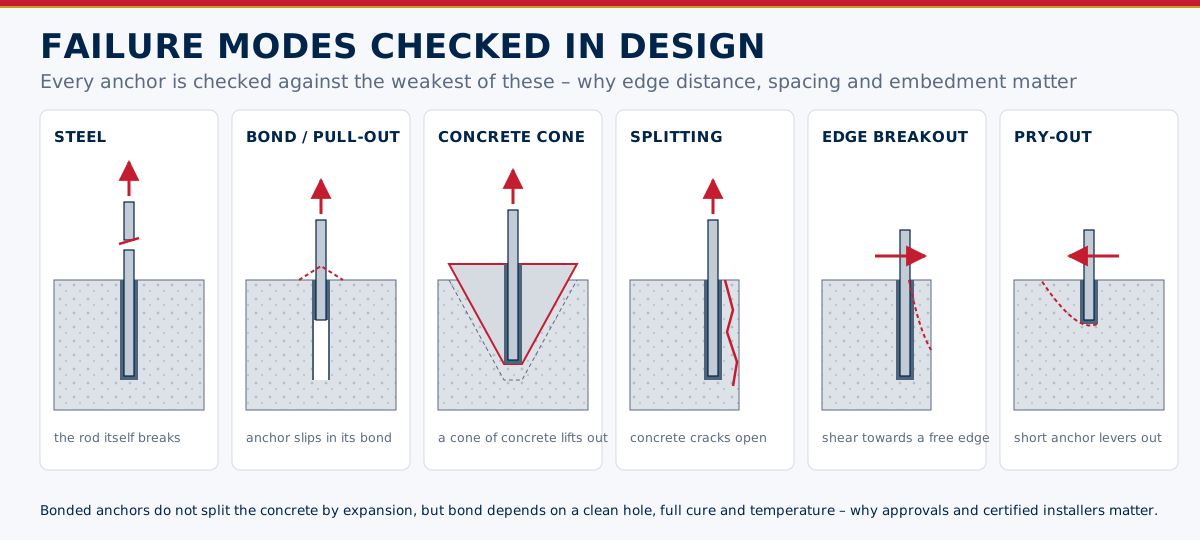
Steel failure, bond pull-out, concrete cone, splitting, edge breakout and pry-out are all checked to EN 1992-4, ACI 318 Chapter 17 or AS 5216 using the characteristic bond strengths, edge distances and factors in the product approval – never a generic value from a catalogue.
הנדסה
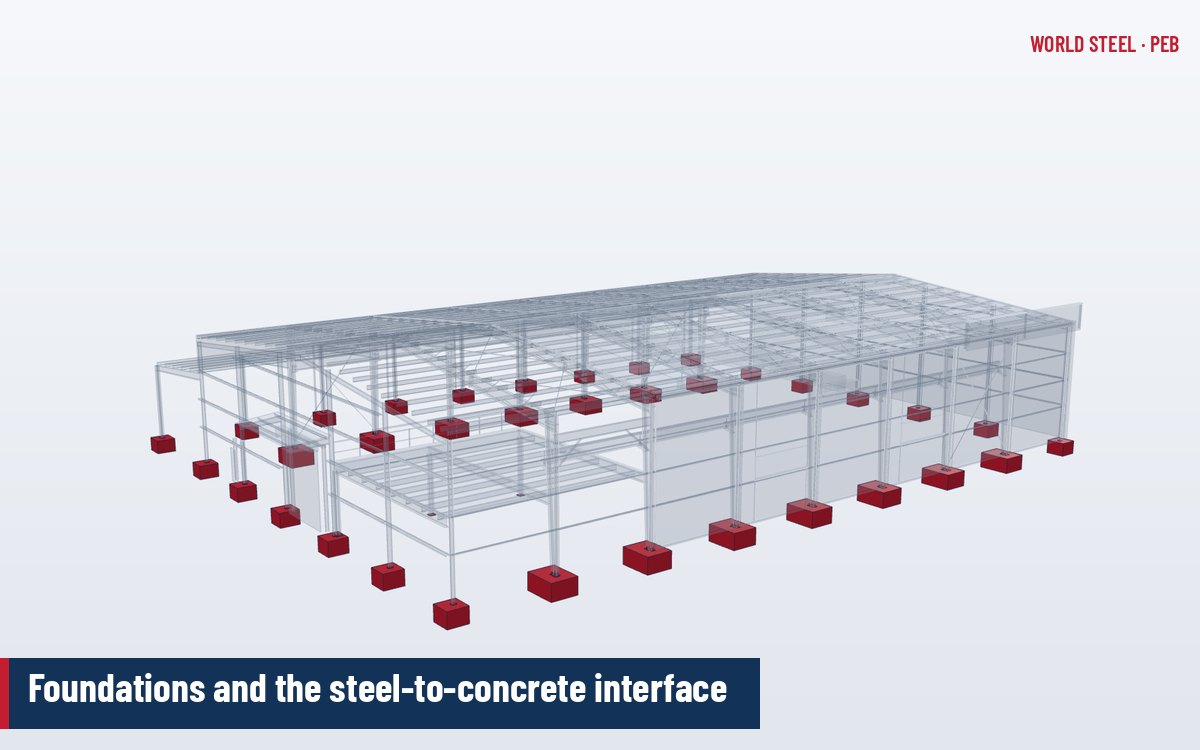
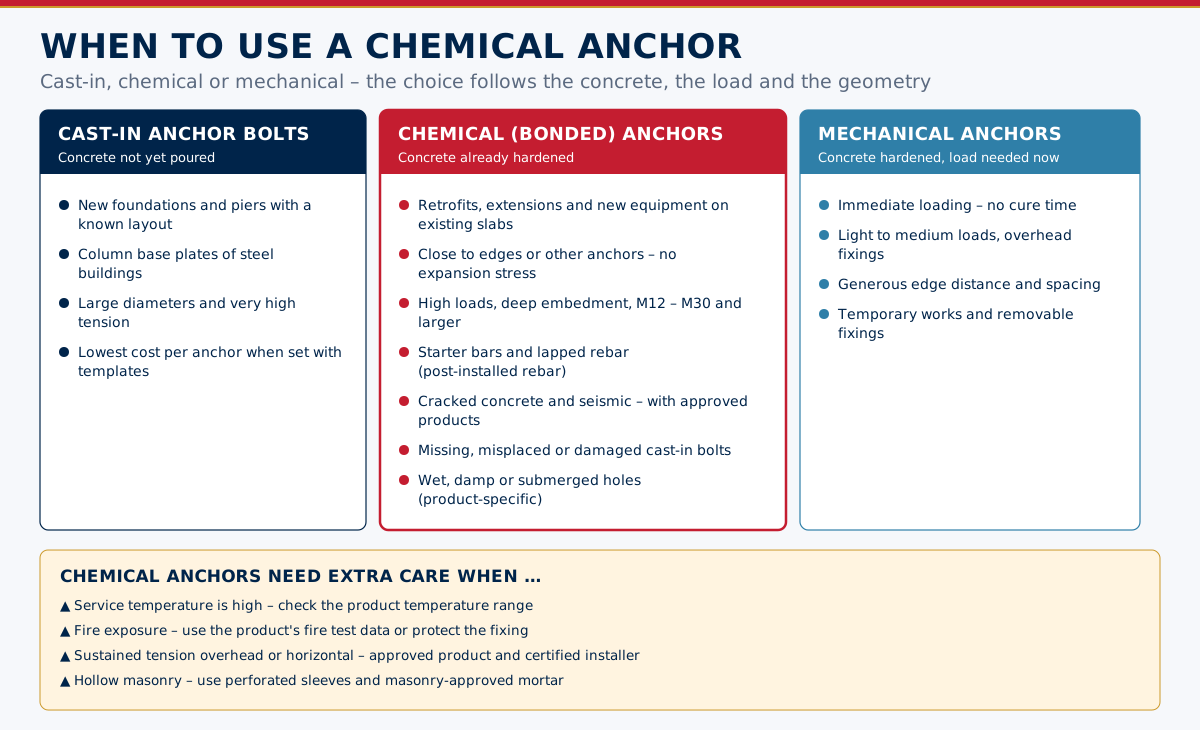
Pour new foundations with cast-in anchor bolts. Fix to hardened concrete with chemical anchors when loads are high, edges close or rebar is involved. Use mechanical anchors where the load is needed immediately and space allows.
Take extra care with high service temperatures, fire exposure, sustained overhead tension and hollow masonry – approved products, certified installers and the right sleeves are required.
Reference data
Product names below are trademarks of their owners and are listed for reference only. World Steel is not affiliated with these manufacturers; we supply and install the approved system specified by the engineer, or propose an approved equivalent. Always check the current ETA or ICC-ES report.
| Type | Cure | Load level | Approvals typically available | Best for |
|---|---|---|---|---|
| Epoxy | Slow (hours – days, temperature-dependent) | Highest | Cracked concrete, seismic C1 / C2, rebar, sustained load | Heavy structural anchors, deep embedment, rebar |
| Vinylester (styrene-free) | Fast (minutes – hours) | High | Uncracked and, for some products, cracked concrete | General structural work with quick turnaround |
| Hybrid (vinylester / cement, acrylic) | Fast | High | Cracked concrete, rebar (product-specific) | Base plates, rebar, cold or damp sites |
| Polyester | Fast | Light – medium | Mostly uncracked concrete and masonry | Non-structural fixings, masonry with sleeves |
| Capsule (glass / foil) | Fast | High | Per capsule system | Repetitive anchors at fixed depth |
| Cementitious mortar | Slow | High | Fire-resistant rebar connections (product-specific) | Rebar where fire resistance governs |
| Brand | Product | Type | Typical use |
|---|---|---|---|
| Hilti | HIT-RE 500 V4 | Epoxy | Heavy-duty anchoring and rebar, seismic |
| Hilti | HIT-HY 200-R V3 | Hybrid | Rebar connections and structural base plates |
| Hilti | HIT-RE 100 · HIT-HY 170 · HVU2 | Epoxy · hybrid · foil capsule | Anchoring in concrete and masonry; capsule anchoring |
| fischer | FIS EM Plus | Epoxy | High loads, rebar, cracked concrete |
| fischer | FIS V · FIS HB / FHB II | Vinylester · Highbond system | General anchoring; high-performance anchors and capsules |
| Simpson Strong-Tie | SET-3G · ET-3G | Epoxy | Threaded rod and rebar in cracked / uncracked concrete |
| Simpson Strong-Tie | AT-3G | Hybrid acrylic | Fast cure, cold and wet concrete |
| DEWALT | Pure110+ · Pure220+ | Epoxy | ICC-ES ESR-3298 / ESR-5144 anchoring and rebar |
| DEWALT | AC100+ Gold · AC200+ | Fast-cure adhesive | ICC-ES ESR-2582 / ESR-4027 general anchoring |
| Sika | Sika AnchorFix-3001 · AnchorFix-3+ | Epoxy-based | Structural anchoring and rebar |
| Ramset (AU / NZ) | ChemSet Reo 502 Plus | Epoxy | Anchor studs and rebar to AS 5216 |
| Würth | WIT-PE 500 · WIT-VM 250 | Epoxy · vinylester | Rebar and heavy anchoring · general anchoring |
| Rawlplug | R-KEX II · R-KER II | Epoxy · vinylester | Heavy-duty and general anchoring |
| Question | Why it matters |
|---|---|
| Cracked or uncracked concrete? | Tension zones and seismic design need a product qualified for cracked concrete. |
| Loads, edge distances, spacing? | Decide rod size, embedment and whether bonded anchors are needed at all. |
| Rebar or anchor? | Post-installed rebar needs an EAD 330087 / ACI 318 rebar approval. |
| Hole condition? | Dry, damp, water-filled or diamond-cored holes change the approved capacity. |
| Base and service temperature? | Sets gel and cure time, and the long-term temperature range. |
| Sustained tension, overhead? | Creep-qualified product and, under ACI 318, a certified installer. |
| Fire resistance? | Use the product's fire test data or protect the fixing. |
מפרט
תהליך
Concrete class, cracks, edges, reinforcement scan.
Anchor layout to EN 1992-4 / ACI 318 / AS 5216.
Approved mortar and rods for the conditions.
Drill, clean, inject and set to the MPII.
Cure time, torque, proof-load tests.
Anchor log, approvals and test reports.
תנאי אספקה · Incoterms® 2020
World Steel מתמחרת ממפעל, חופשי על סיפון או עד הנמל או האתר שלכם. אריזת יצוא, מסמכים ומשלוח מהו צ'י מין סיטי הם חלק מהשירות שלנו.
השוואת כל כללי Incoterms® 2020 →FAQ
A threaded rod or rebar bonded into a drilled hole in hardened concrete with a two-part resin mortar. The bond along the whole embedment carries the load without expanding against the concrete.
When loads are high, anchors are close to edges or each other, rebar has to be connected, the concrete may be cracked or seismic, or the hole must be sealed. Mechanical anchors are better when the load is needed immediately.
Until the full cure time in the product table for the base temperature – from under an hour for fast mortars in warm concrete to a day or more for epoxies in cold concrete.
Resins lose strength at high temperature. Where fire resistance is required, use the product's fire test data, a fire-rated mortar or protect the fixing.
The best system is the one approved for your conditions – cracked or uncracked concrete, rebar, seismic, hole condition and temperature. We work with the system the engineer specifies, or propose an approved equivalent.
Yes, with mortars approved for masonry and perforated sleeves in hollow units – capacities are much lower than in concrete.
Send the loads, the anchor layout and photos of the concrete – we return the anchor design, approved system and an installed price.