ENEnglish
 VITiếng Việt
 ZH中文
 KO한국어
 JA日本語
 FRFrançais
 ITItaliano
 PTPortuguês
 ESEspañol
 HEעברית
 ARالعربية

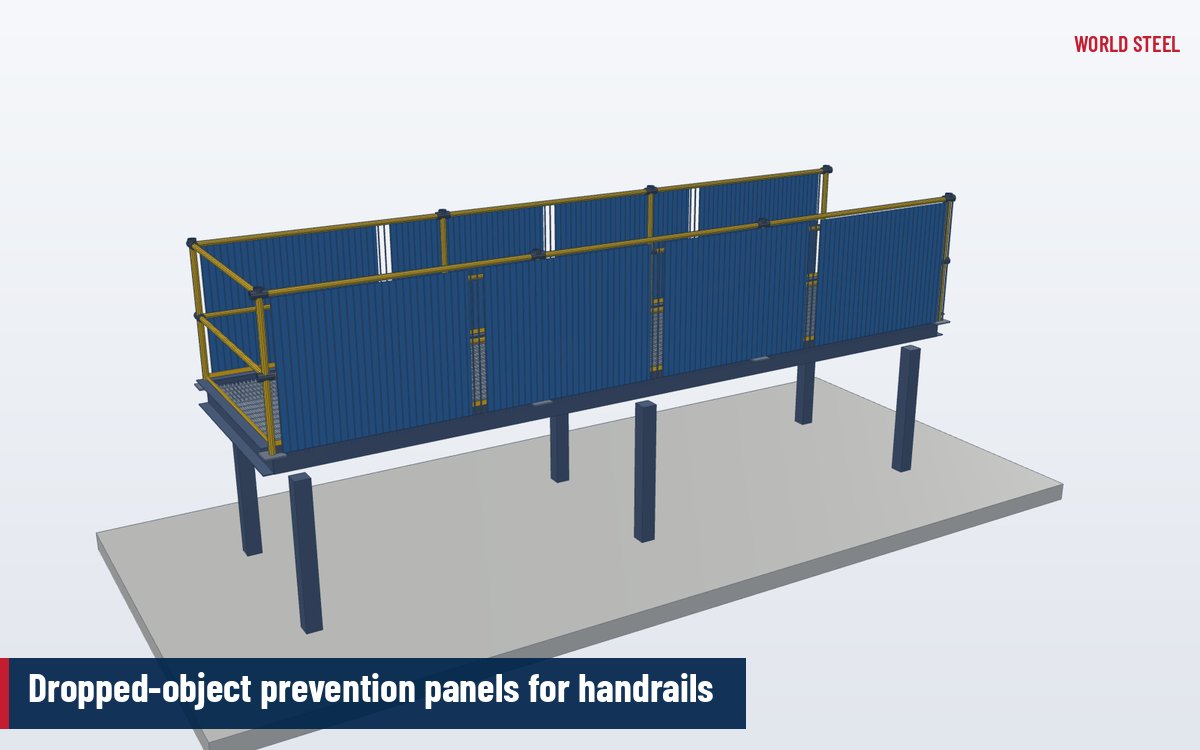
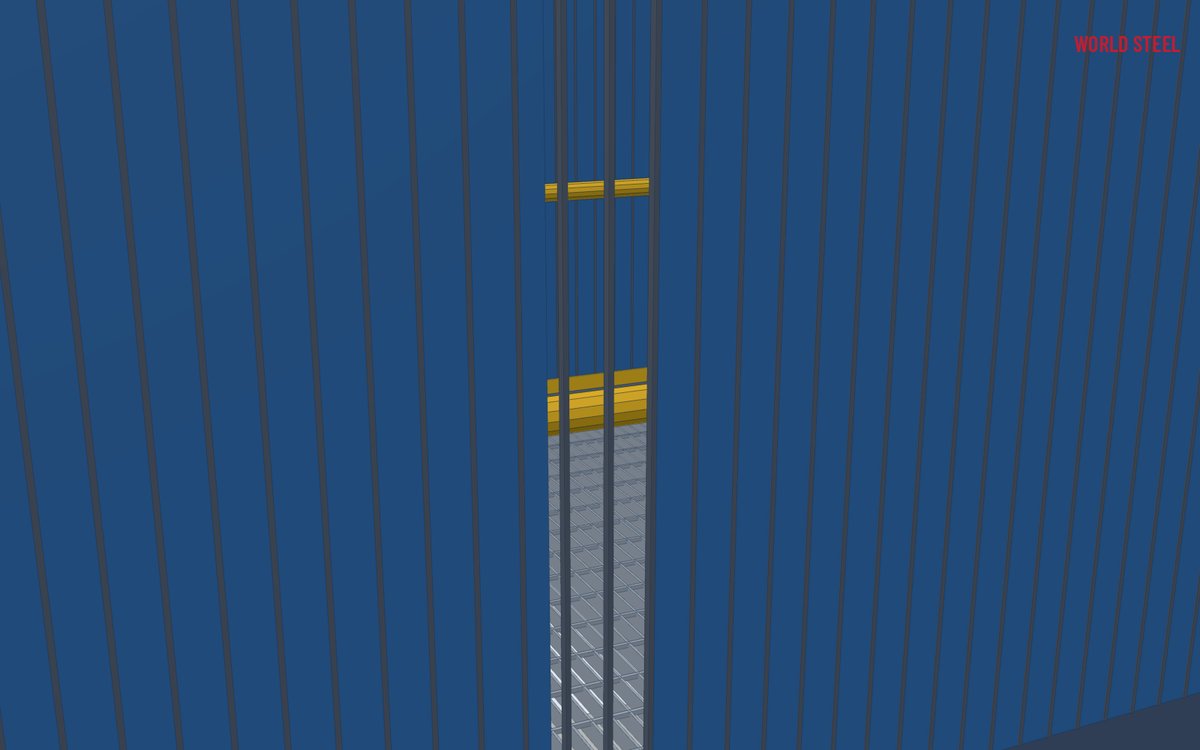
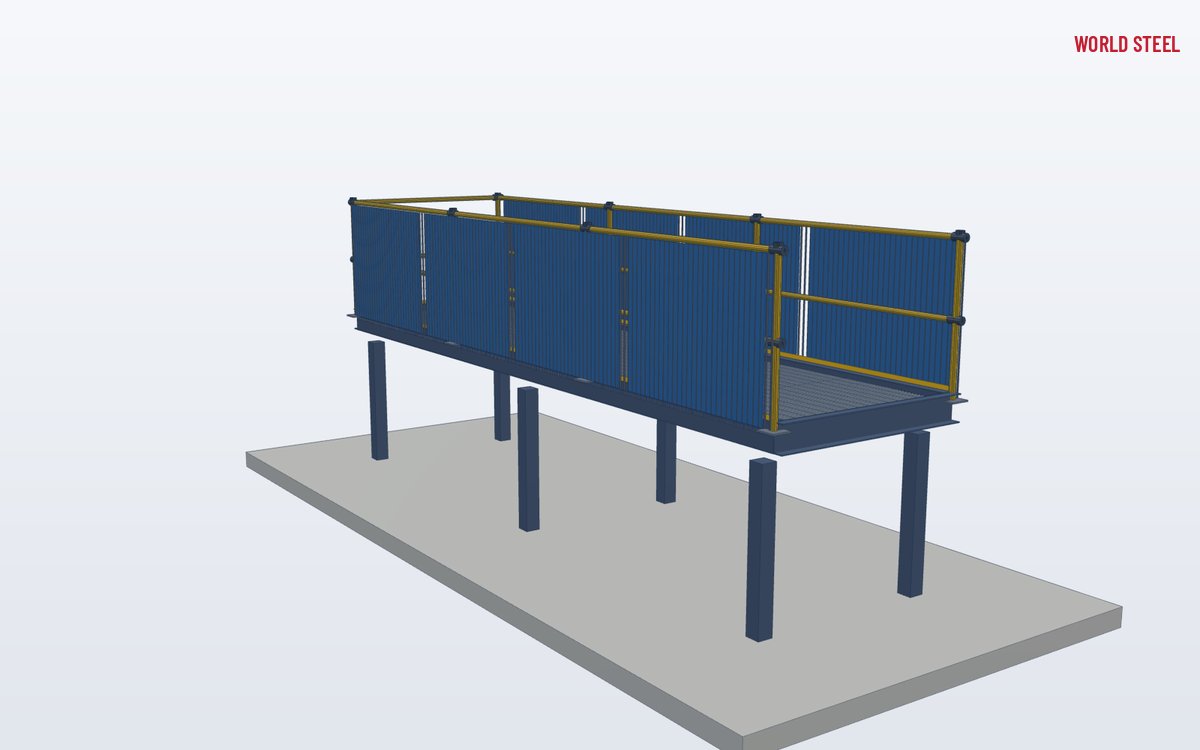
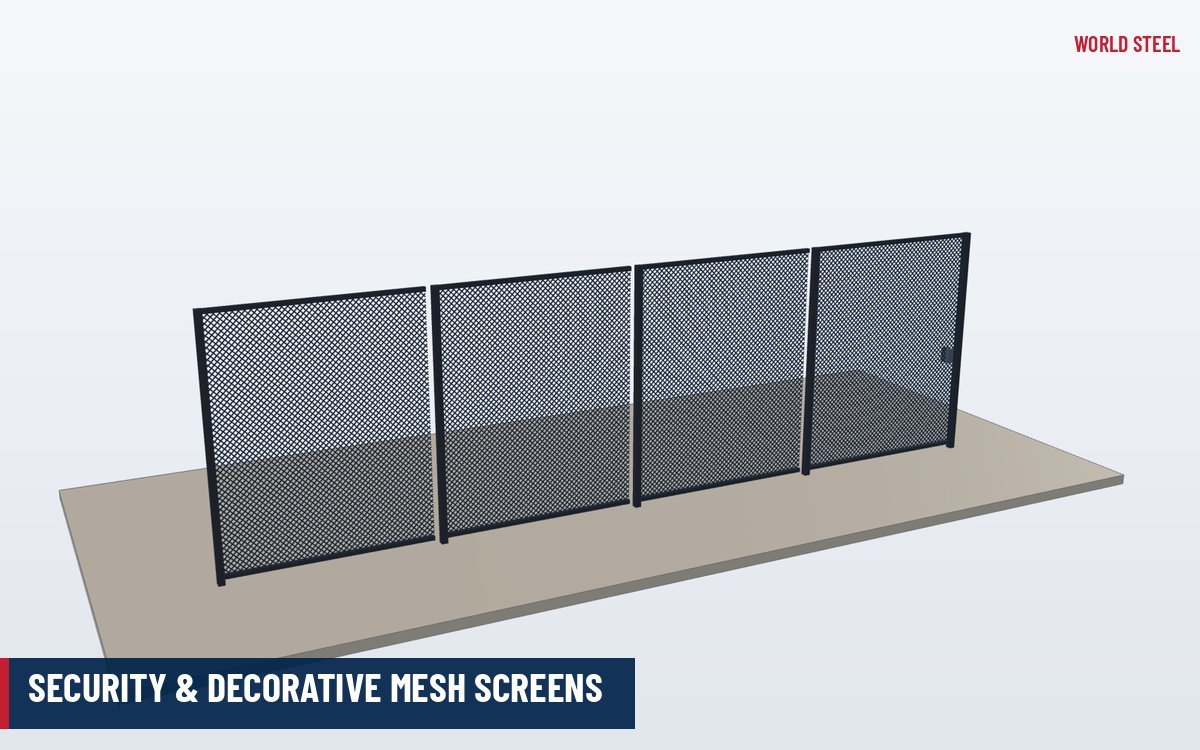
- Closes handrail bays from deck to top rail
- Clamped to existing rails – no hot work on live plant
- Made to a site survey of the actual rail geometry
- Mesh opening chosen to the site dropped-object criterion
- Galvanised, powder-coated or duplex frames
What it is
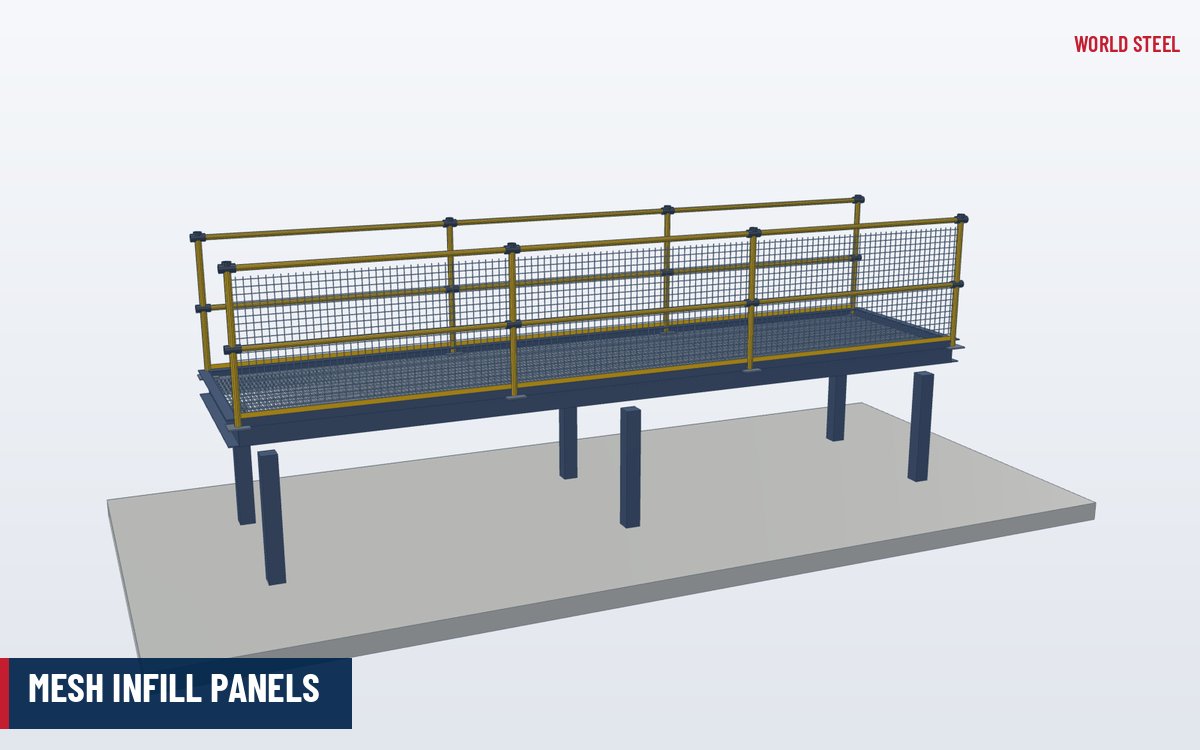
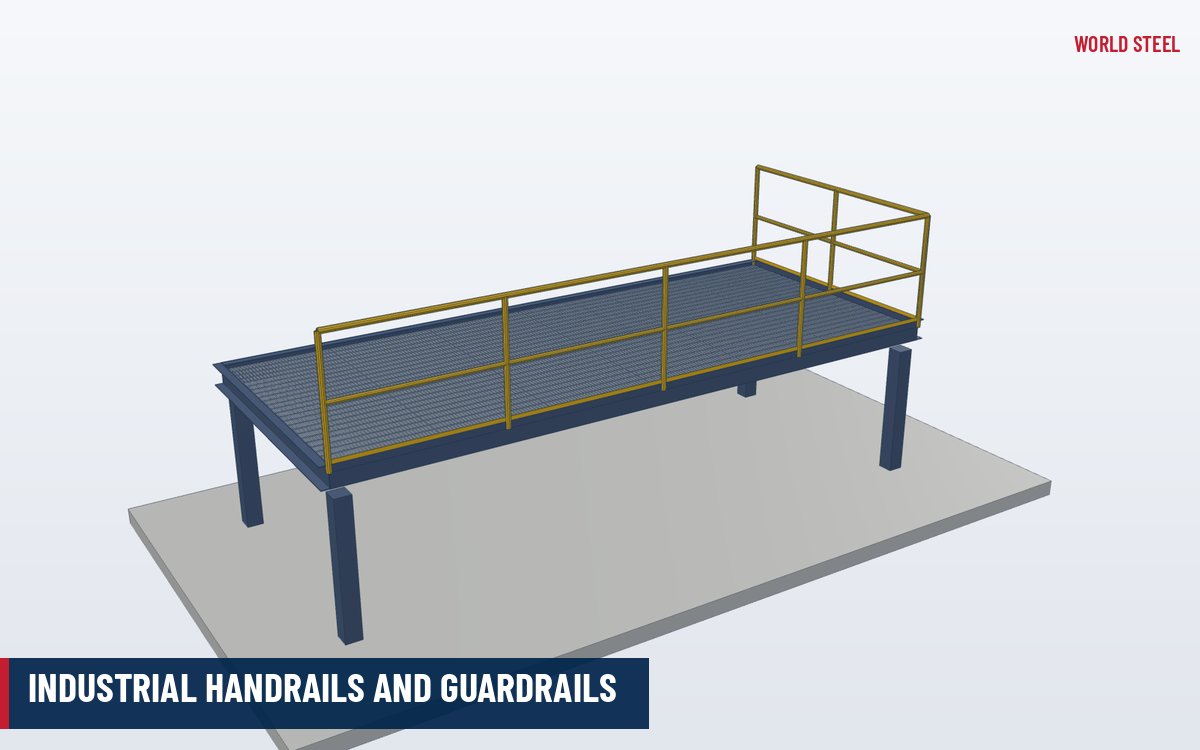
Most platforms, walkways and stairs on older mining, oil and gas and processing sites were built with a two-rail handrail and, at best, a low toe board. That stops a person falling over the edge, but leaves open gaps through which spanners, bolts, grating clips, scaffold fittings and loose material can fall onto people and equipment below. Dropped-object prevention panels are framed mesh panels clamped into the existing handrail bays, closing the opening between the deck and the top rail without replacing the handrail itself.
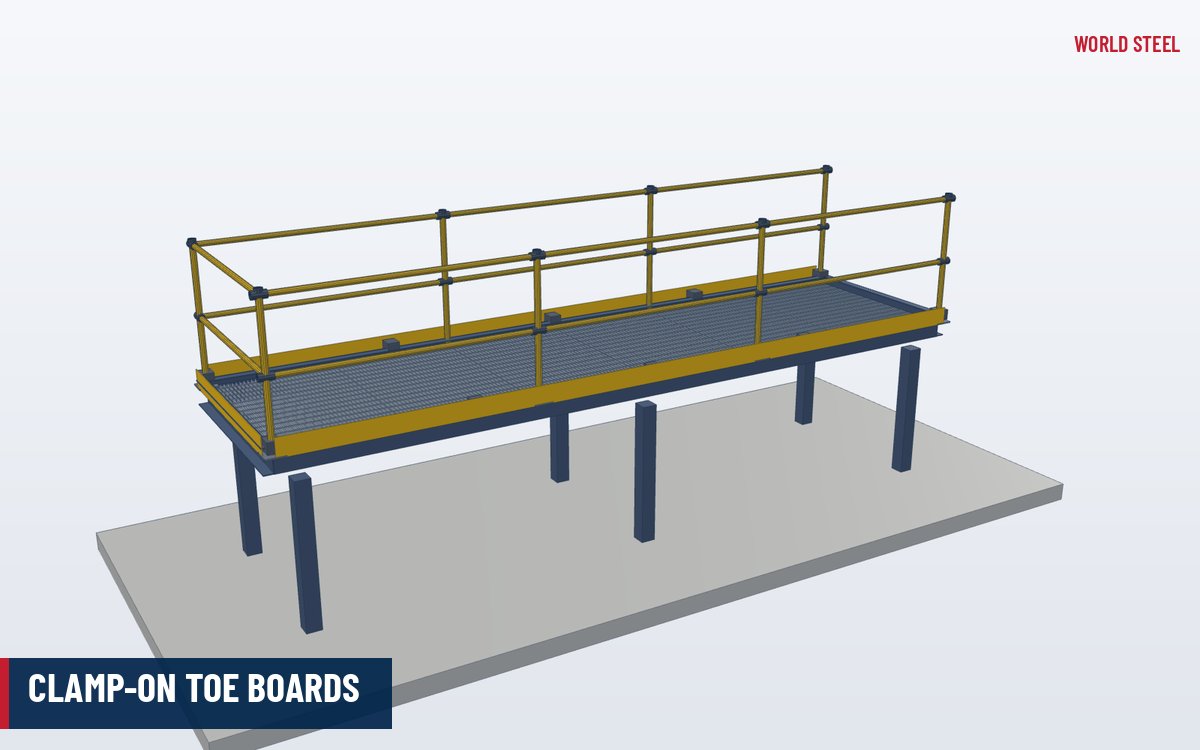
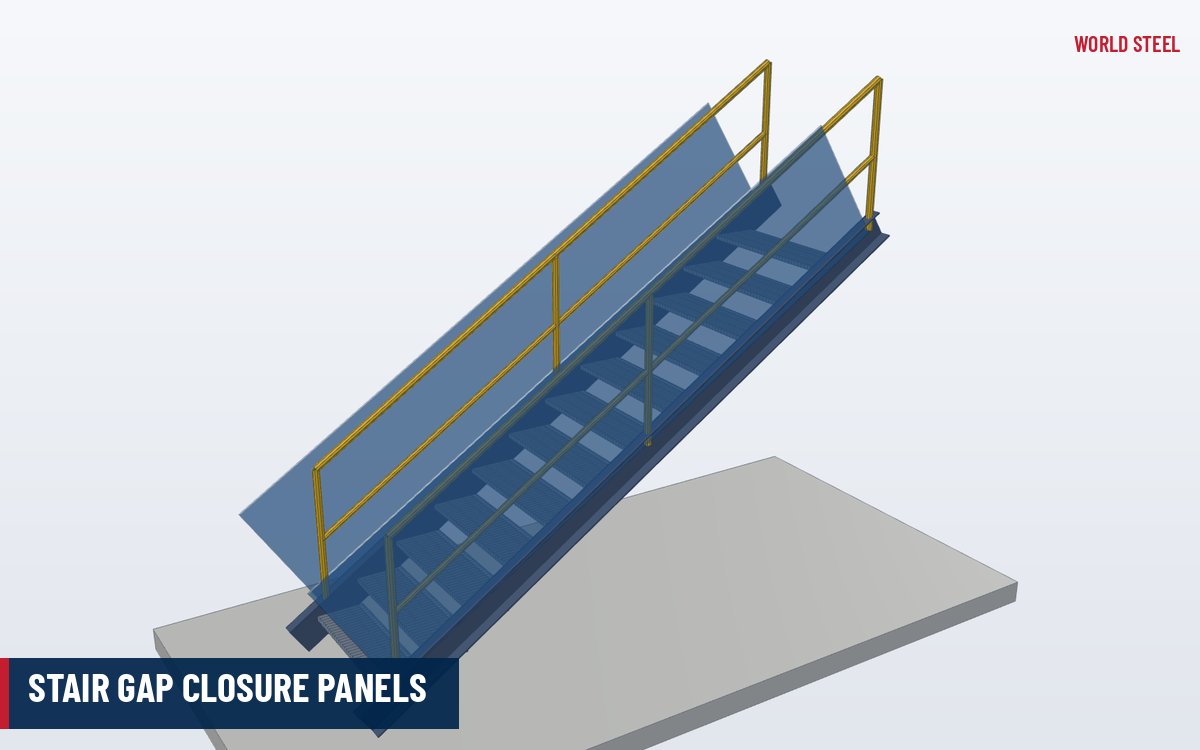
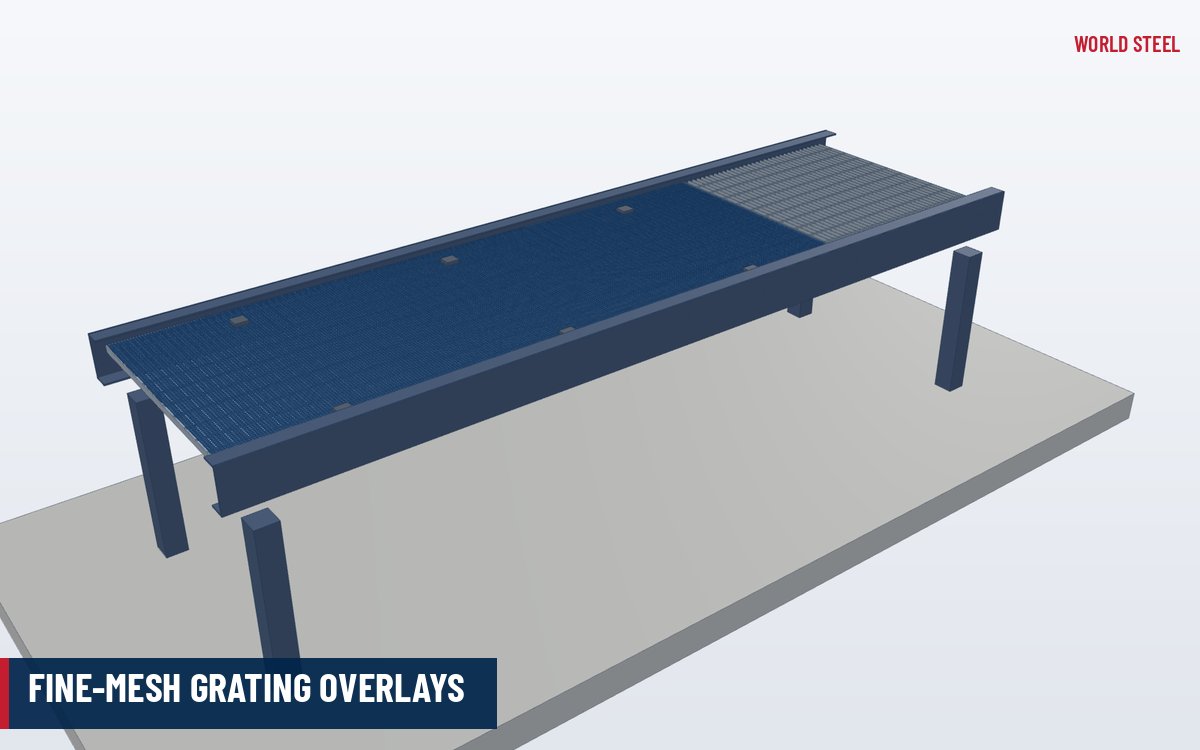
World Steel fabricates the panels in its plant in Vietnam to the dimensions recorded in a site survey, so each panel fits the real stanchion spacing, rail heights and deck edge rather than a nominal drawing. Panels are fixed with bolted clamps, which means no welding, grinding or cutting is needed on a live plant and installation can usually proceed under a standard work permit rather than a hot-work permit. They are often supplied together with clamp-on toe boards, fine-mesh grating overlays and stair gap closure panels as part of a site's dropped-object programme, the DROPS-style workgroups common in mining and offshore operations.
Types and options
| Option | Description | Typical use |
|---|---|---|
| Full-height mesh panel | Framed mesh from deck or toe board to top rail | Platforms above walkways, roads or occupied areas |
| Lower-zone panel | Mesh from deck to mid-rail only | Where the main risk is rolling or kicked objects |
| Fine-mesh panel | Smaller aperture welded mesh or perforated sheet | Sites with a strict small-object criterion |
| Hinged or removable panel | Panel on lift-off hinges or quick-release clamps | Lifting points, maintenance access, valve reach-through |
| Raked panel | Parallelogram panel to the stair pitch | Stair handrails, used with stair gap panels |
| Corner and filler pieces | Short or angled panels | Bends, end posts, uneven bays |
Frames are typically flat bar or light angle with welded mesh or perforated sheet infill. The mesh aperture is not a catalogue choice: it is set by the site owner's dropped-object criterion, commonly expressed as a test object or ball of a stated size that must not pass through the barrier. World Steel selects a mesh that satisfies the stated criterion and records it on the drawings.
Design and compliance
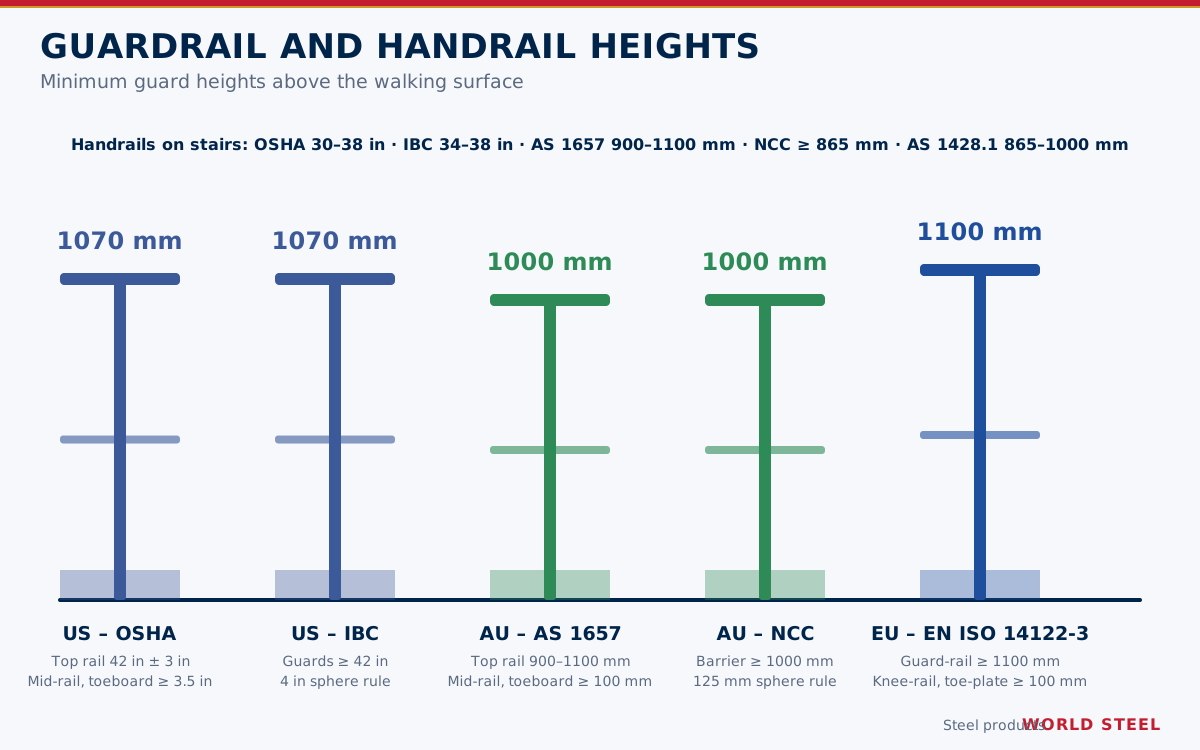
The panels add to, but do not replace, the edge protection required by the governing code. In the US, OSHA 29 CFR 1910.29 requires that where tools, equipment or materials are piled higher than the toeboard, paneling or screening is erected from the walking surface up to the top rail or mid-rail; guardrails themselves have a top rail of 42 in ± 3 in and must resist 200 lbf. In Australia, AS 1657-2018 sets the guardrail at 900–1100 mm, and the WHS Regulations require the risk of falling objects to be managed. In Europe, EN ISO 14122-3 governs guard-rails on plant (height at least 1100 mm, toe-plate at least 100 mm).
Because the panels add weight and wind area to an existing rail, the stanchions and their fixings should be checked before installation, particularly on exposed or corroded structures. World Steel can carry out that check for the panel loads on request or work to the client engineer's assessment; panels are not fitted to rails that are already damaged. No test rating is claimed for the panels: the acceptance criterion and any site verification test are defined by the site owner.
Fabrication and finishing at World Steel
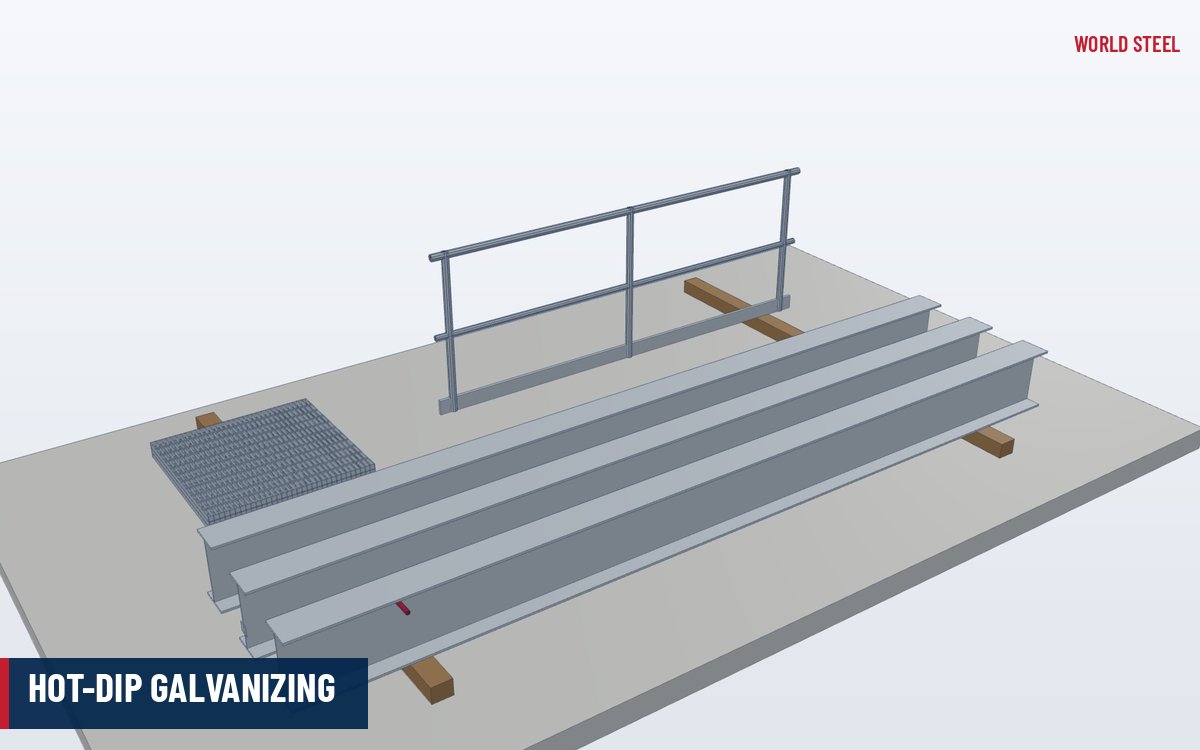
Frames are cut on CNC saws and welded on jigs under qualified procedures to AWS D1.1, AS/NZS 1554.1 or EN ISO 3834-2 practice, then the mesh is welded or fastened in. Clamps are fabricated from plate and bar and drilled for galvanised or stainless bolts. Components are hot-dip galvanised by qualified galvanisers to AS/NZS 4680, ASTM A123 or EN ISO 1461, with powder coat or a safety-yellow duplex topcoat where specified. Each panel is marked with its survey bay number and packed by area for export shipping.
Installation and site notes
- Survey: record stanchion centres, rail heights and diameters, deck edge detail and obstructions for every bay.
- Install from the platform side, attaching each panel to the rails before releasing it; tether tools and parts during fitting.
- Tighten clamps to the stated torque and inspect after the first weeks of service on vibrating structures.
- Keep removable panels locked in place except during planned maintenance.
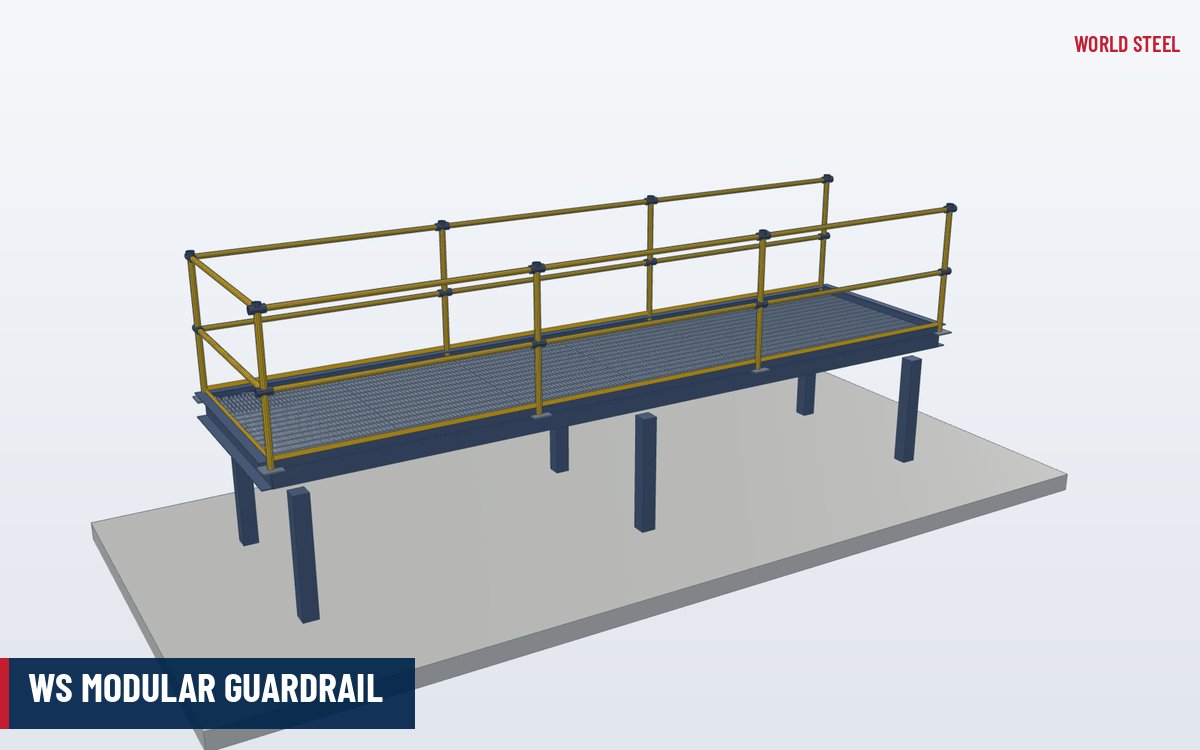
Where the handrail itself is due for replacement, a new WS modular guardrail with mesh infill may be the better long-term choice. See also modular handrail solutions.
תקנים ודרישות לפי שוק
התקנים שלפיהם World Steel מתכננת, מייצרת ומתעדת מוצר זה – ודרישות הגיאומטריה והעומס העיקריות בכל שוק.
 ארצות הברית
- OSHA 29 CFR 1910.29Fall protection systems – guardrails, toeboards and screens
- 30 CFR 56.11002MSHA – handrails and toeboards on elevated walkways (surface mines)
- ASCE 7Minimum design loads – guard systems
- ASTM A123Hot-dip galvanized coatings on fabricated products
- Top rail height
- 42 in ± 3 in (OSHA 1910.29(b))
- Top rail load
- 200 lbf (OSHA 1910.29(b))
- Screen loads
- Infill 50 lb on 1 ft² (ASCE 7)
 אוסטרליה / ניו זילנד
- AS 1657-2018Fixed platforms, walkways, stairways and ladders
- Model WHS RegulationsManaging the risk of falling objects
- AS/NZS 1170.1Imposed actions – barrier loads
- AS/NZS 4680Hot-dip galvanized coatings
- Guardrail height
- 900–1100 mm (AS 1657)
- Toe board
- ≥ 100 mm where required (AS 1657)
 אירופה
- EN ISO 14122-3Stairs, stepladders and guard-rails
- EN 1991-1-1Imposed loads – barriers
- EN 1090-2 הסמכת WSCExecution of steel structures
- EN ISO 1461Hot-dip galvanized coatings
- Guard-rail height
- ≥ 1100 mm (EN ISO 14122-3)
- Toe-plate
- ≥ 100 mm (EN ISO 14122-3)
סיכום להתמצאות בלבד – מפרט הפרויקט, מהדורת התקן שאומצה והרשות המוסמכת הם הקובעים.
גימורים
| גימור | תקנים / הערות |
|---|---|
| Hot-dip galvanised (standard) | ASTM A123 / A153 · AS/NZS 4680 · EN ISO 1461 |
| HDG + safety-yellow topcoat | ASTM A123 + topcoat · AS/NZS 4680 + AS/NZS 2312.1 · EN ISO 1461 + EN ISO 12944 |
| HDG + powder coat | Galvanised, then polyester powder coat in a site colour |
שאלות נפוצות
Do the panels need welding on site?
No. Panels are clamped to the existing rails and stanchions with bolted clamps, so no hot work is needed on the plant.
What mesh opening do you use?
The opening is chosen to the site owner's dropped-object criterion, usually a test object or ball of a stated size that must not pass. Send us the criterion and we select and document a mesh to suit.
Are the panels certified or test-rated?
No rating is claimed. Panels are fabricated to the survey and specification; any acceptance test is defined and witnessed by the site owner.
Can you survey the site?
Yes, survey can be arranged, or we work from the client's own measurements recorded on our survey template.
 Papua New Guinea
 AS/NZS 5131 CC3
 EN 1090 EXC3 · CE