ENEnglish
 VITiếng Việt
 ZH中文
 KO한국어
 JA日本語
 FRFrançais
 ITItaliano
 PTPortuguês
 ESEspañol
 HEעברית
 ARالعربية

What the service covers
A steel building is only useful if it arrives complete, undamaged and in the order the erector needs it. World Steel's export supply service plans packing and shipment from the Tay Ninh plant through Ho Chi Minh City area ports (such as Cat Lai and Cai Mep) to the destination. The steps are:
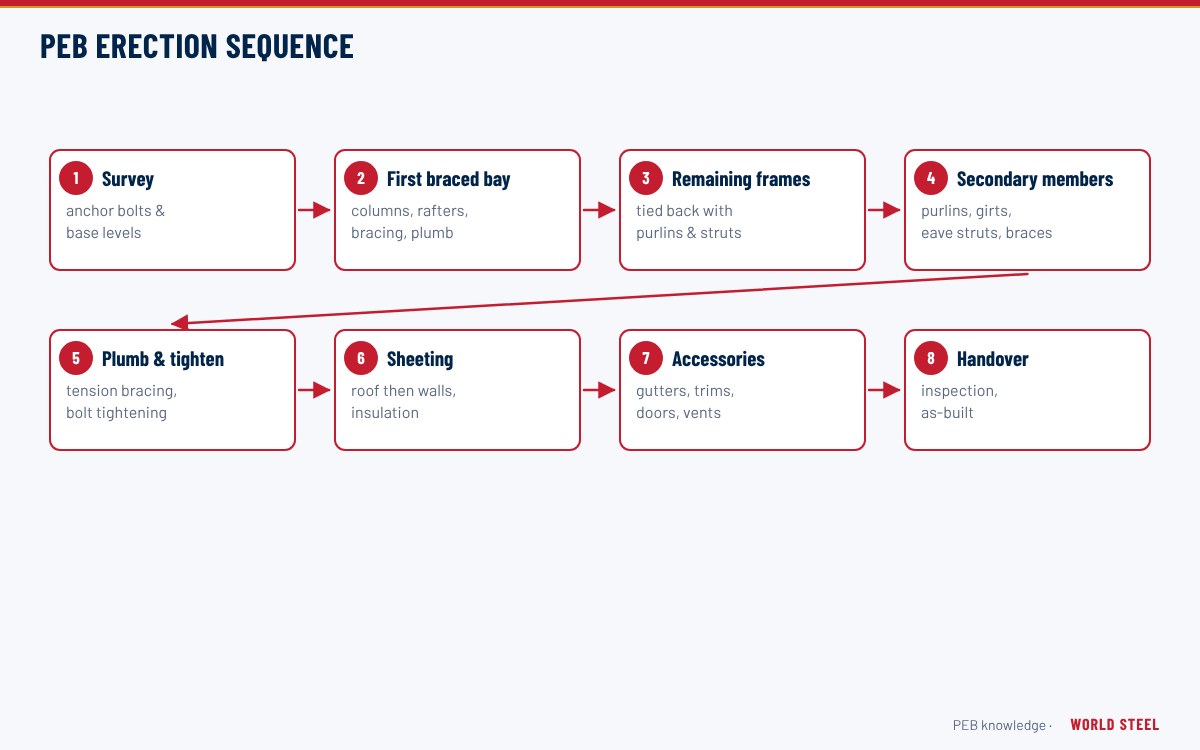
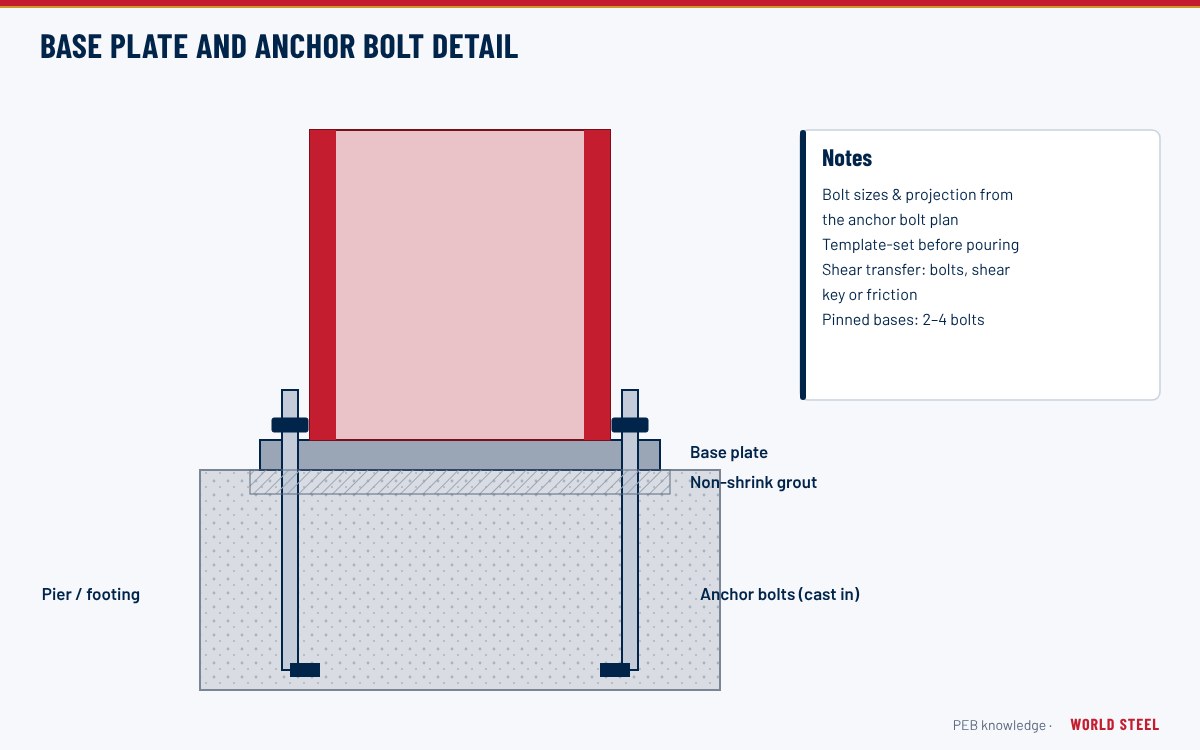
- Shipment planning: split the building into lots that match the erection sequence, with anchor bolts first.
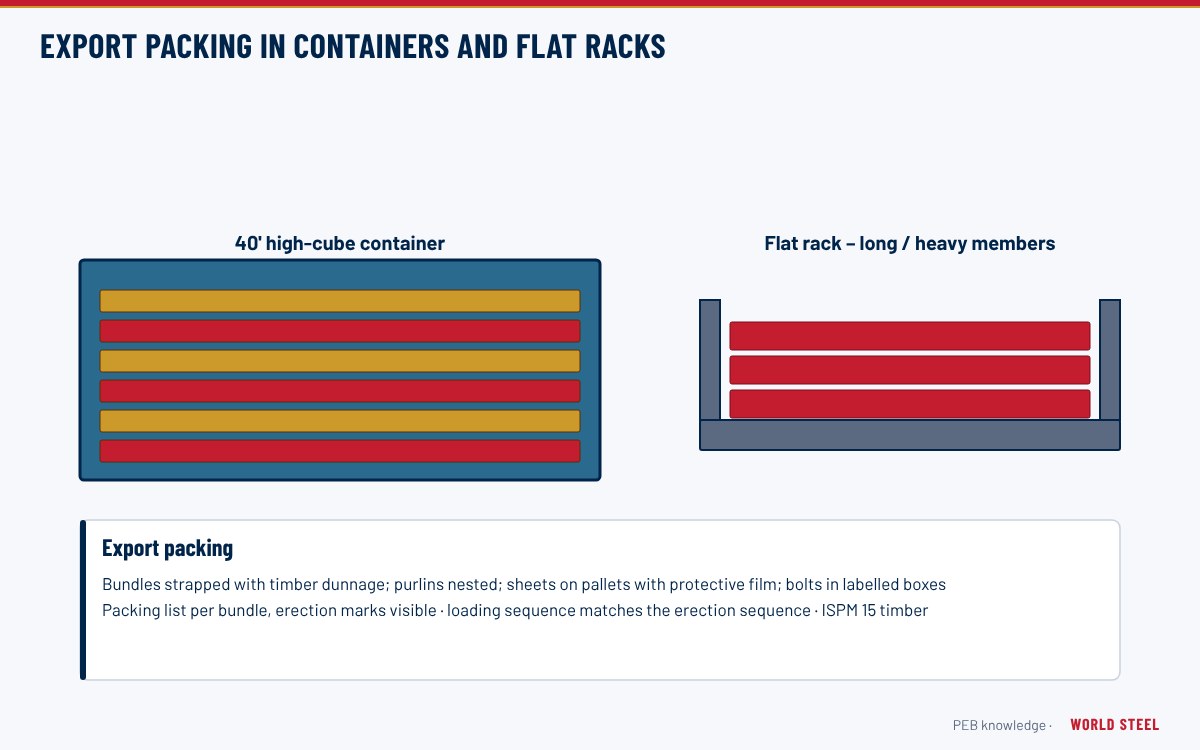
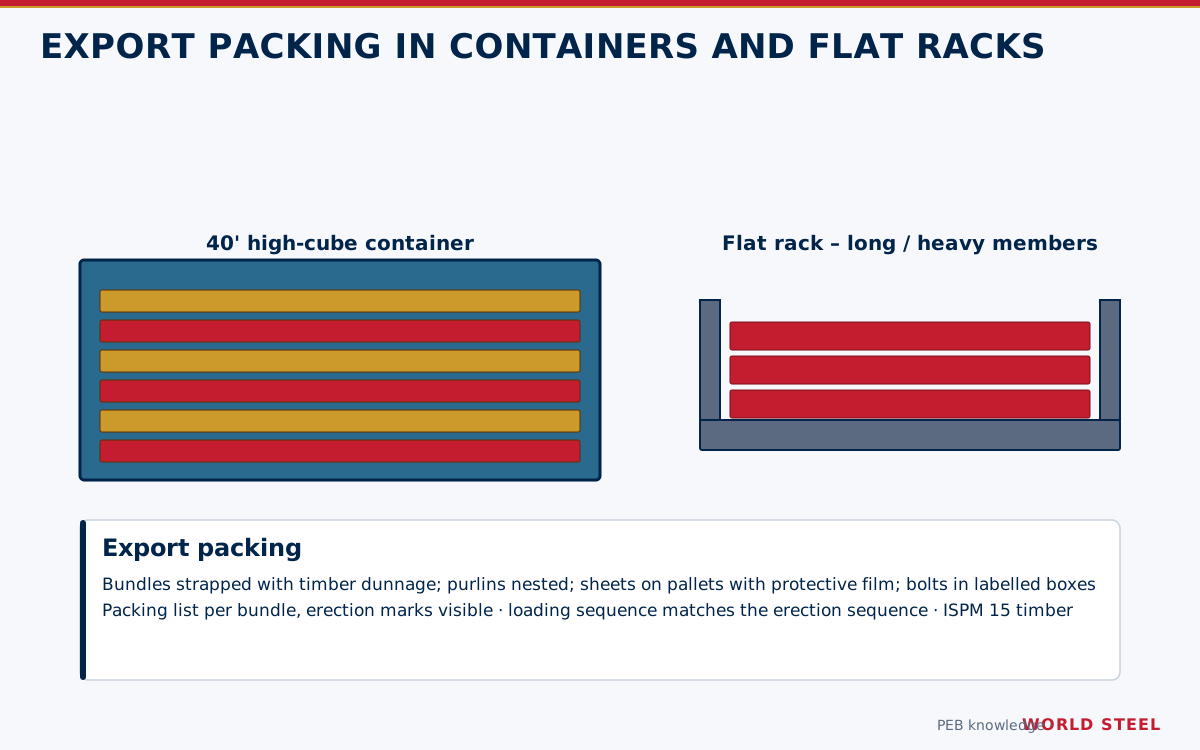
- Packing design: choose 20 ft / 40 ft high-cube containers, flat racks, open tops or break-bulk for each lot.
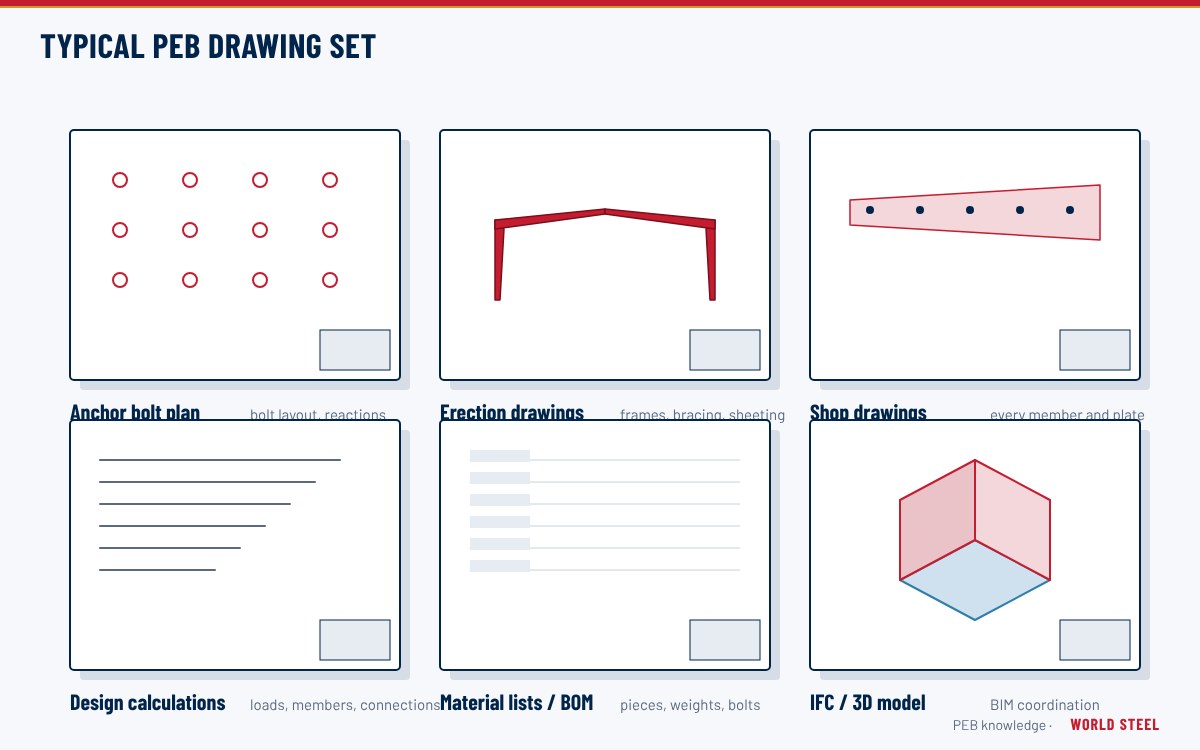
- Marking: piece marks on every member and bundle tags matching the packing list and erection drawings.
- Loading: lashing, dunnage and load plans; photos of each container before sealing.
- Documentation: commercial invoice, packing list, bill of lading, certificate of origin and any certificates required for customs.
- Freight and insurance arranged according to the agreed Incoterm.
Inputs needed from the client
- Delivery port or site address and the agreed Incoterm (for example FOB, CIF, CFR or DAP under Incoterms 2020).
- Site access restrictions, crane capacity for unloading and storage space.
- Required shipment sequence and dates.
- Destination import requirements: certificate of origin form for FTA preference, fumigation or heat-treatment of timber, country-of-origin marking.
Deliverables
| Document | Purpose |
|---|---|
| Commercial invoice and packing list | Customs clearance and site receipt |
| Bill of lading | Title and release of cargo |
| Certificate of origin (e.g. CPTPP, AANZFTA, EVFTA, RCEP forms) | Claiming preferential tariff where eligible |
| Mill test certificates and quality dossier | Compliance and traceability |
| ISPM 15 marked timber or treatment certificate | Phytosanitary requirements for wood packaging |
| Insurance certificate (CIF / CIP) | Cover in transit |
See packing and shipping for export for packing details.
Quality and compliance
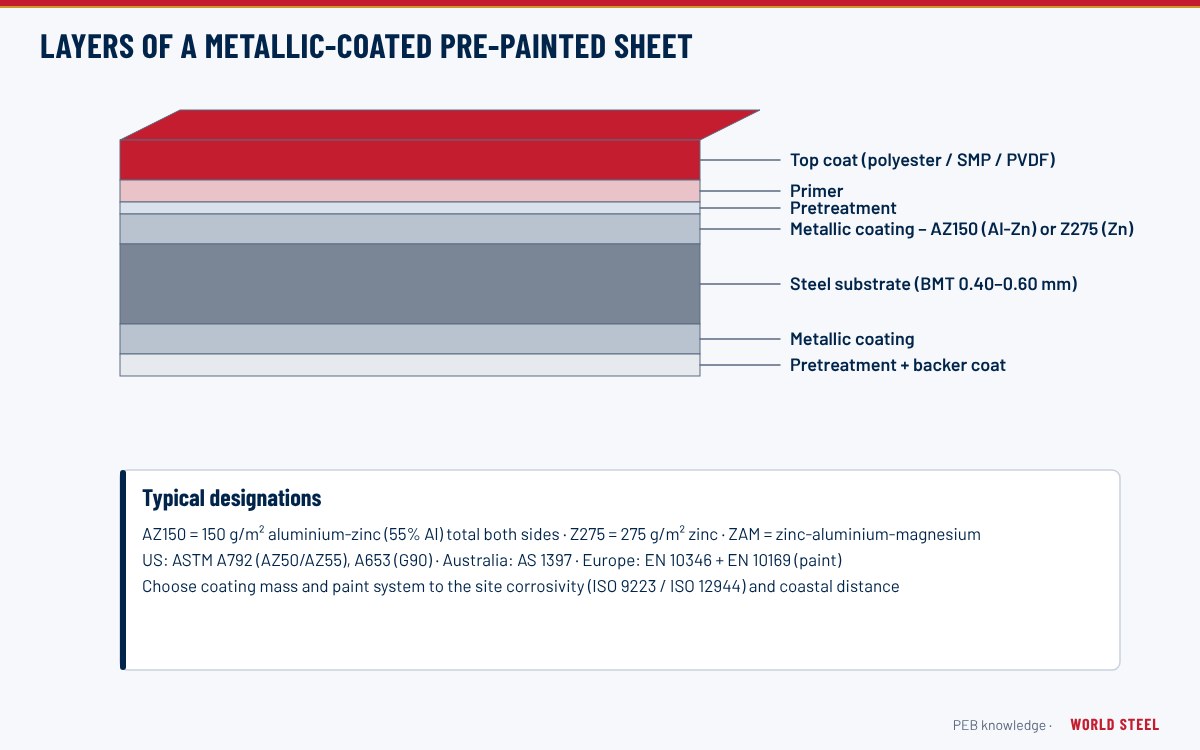
Wood packaging is treated and marked to ISPM 15. For Australia and New Zealand, biosecurity rules require clean cargo free of soil, seeds and insects, so steel is cleaned and inspected before loading. For the United States, steel articles may be subject to Section 232 duties and origin documentation; the client's customs broker confirms the applicable duty before order. Preferential tariff under Vietnam's free trade agreements depends on the product meeting the rules of origin and on the correct certificate. Packing is designed to protect coatings, with spacers between painted members and film on pre-painted sheets.
Receiving the cargo on site
Good logistics continues after the vessel arrives. The packing list groups items by container and by erection lot, so the site team can check deliveries quickly and store members close to where they will be erected. Recommended practice is:
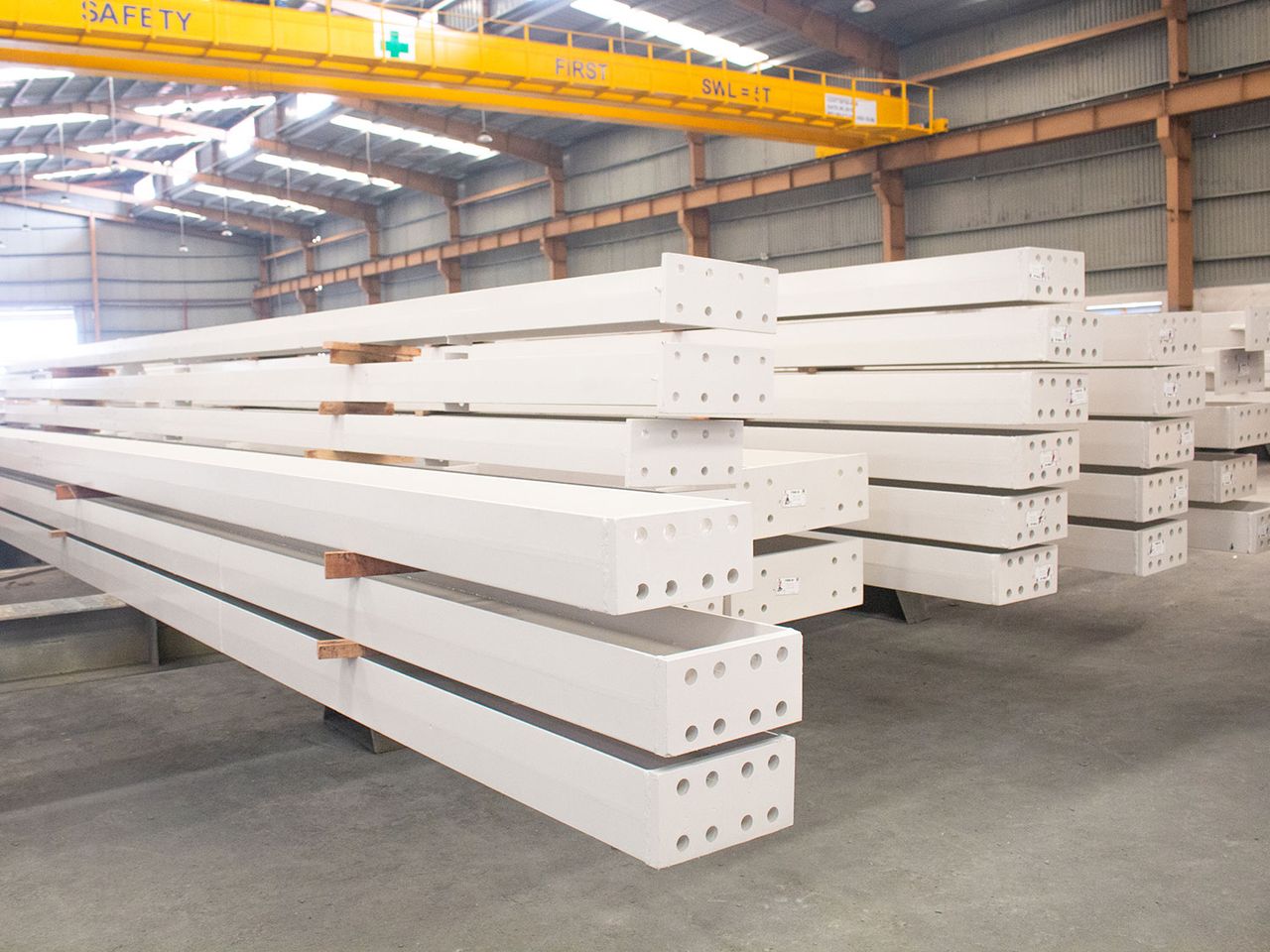
- Unload with spreader beams or soft slings to protect coatings and avoid bending long members.
- Store members off the ground on timber, sloped to drain, and keep sheet bundles dry and ventilated to prevent wet-storage stain.
- Check counts against the packing list within the period agreed in the contract and report any shortage or damage with photographs.
- Keep bolts and small parts in a locked, dry store.
Different parts of the kit need different storage on arrival. A short storage briefing for the site team prevents most damage claims:
| Item | Storage guidance |
|---|---|
| Primary members | On timber bearers clear of the ground, webs vertical, away from standing water |
| Purlins and girts | Bundles inclined so water drains; loosen and ventilate if wet to avoid white rust |
| Coated roof and wall sheets | Under cover or tarpaulin with ventilation, inclined on skids; open and dry any wet bundles promptly |
| Sandwich panels | Flat on bearers at close spacing, protected from sun to avoid film bonding |
| Insulation, sealants, closures | Dry, shaded store; sealants used within shelf life |
| Bolts and fasteners | Secure, dry store, boxes kept closed and labelled |
See packing and shipping for export, metallic-coated sheet and insulated sandwich panels for background on how these materials behave.
Typical schedule
| Destination | Typical sea transit |
|---|---|
| Singapore, Southeast Asia | About 3–10 days |
| Australia east coast | About 2–3 weeks |
| Europe (North Sea ports) | About 4–6 weeks |
| US West Coast | About 3–4 weeks |
| US East Coast / Caribbean | About 5–7 weeks |
Transit times vary with carrier, routing and transhipment, and are confirmed at booking.
지역별 기준
| 지역 | 기준 | 범위 |
|---|---|---|
| International | Incoterms 2020 | ICC rules for delivery terms |
| International | ISPM 15 | Regulation of wood packaging in international trade |
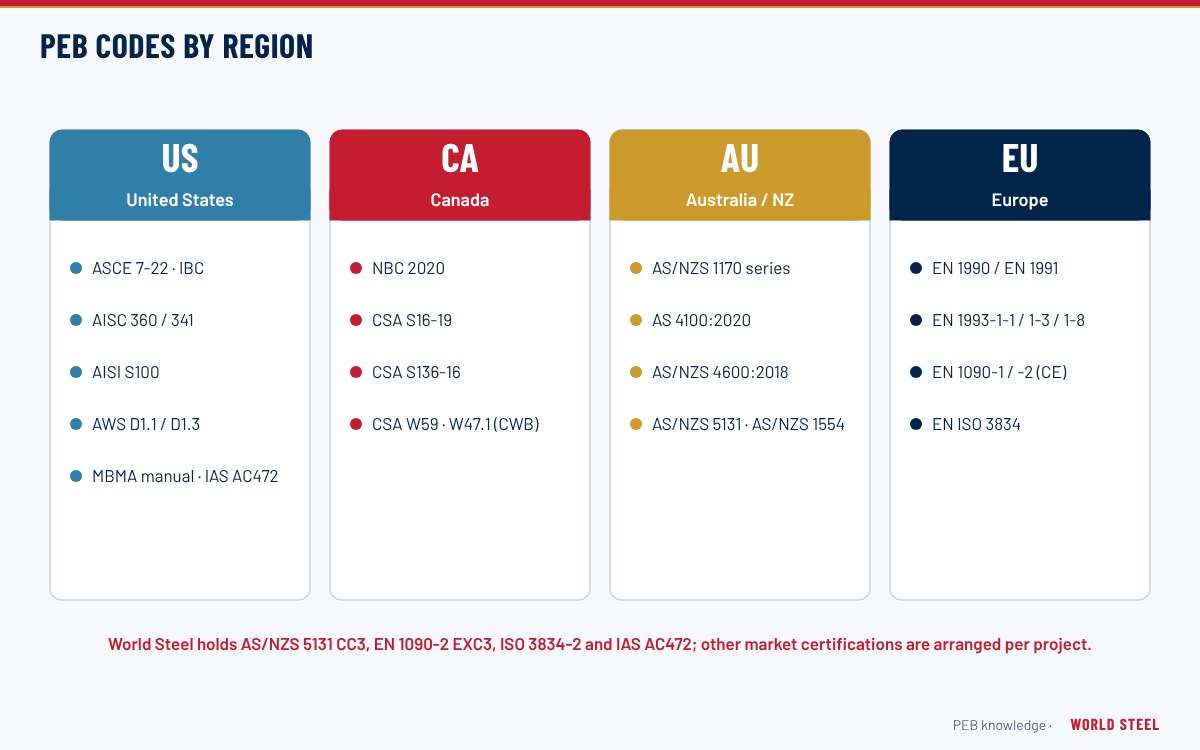
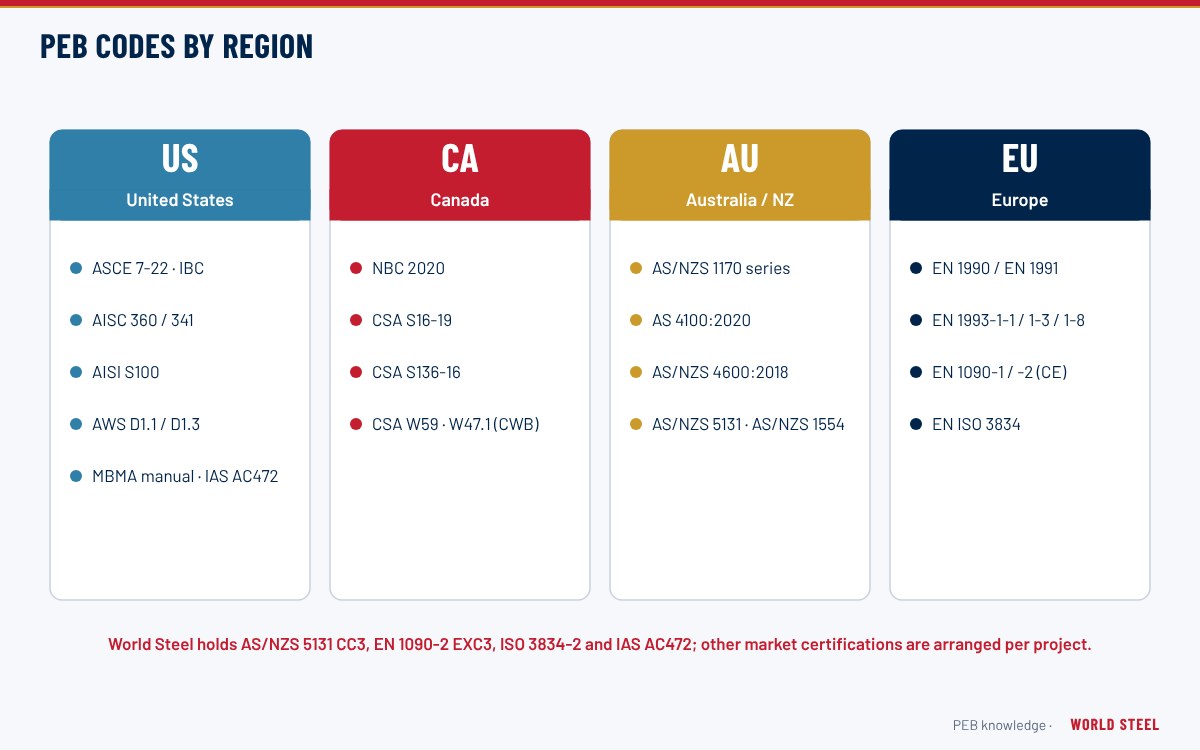
 United States |
Section 232 | US tariff measures on steel – confirm per shipment |
 Australia / NZ |
DAFF biosecurity | Import conditions for cargo cleanliness |
 Europe |
EN 1090-2 | Handling and storage of steel components |
자주 묻는 질문
Why are anchor bolts shipped first?
So foundations can be cast and cured before the frames arrive, avoiding idle time on site.
Can long rafters fit in containers?
Members up to about 11.8 m fit in a 40 ft container; longer members are spliced by design or shipped on flat racks.
Does World Steel arrange freight?
Yes, under CFR, CIF or DAP terms; under FOB the buyer's forwarder arranges the main carriage.
 New Zealand