ENEnglish
 VITiếng Việt
 ZH中文
 KO한국어
 JA日本語
 FRFrançais
 ITItaliano
 PTPortuguês
 ESEspañol
 HEעברית
 ARالعربية

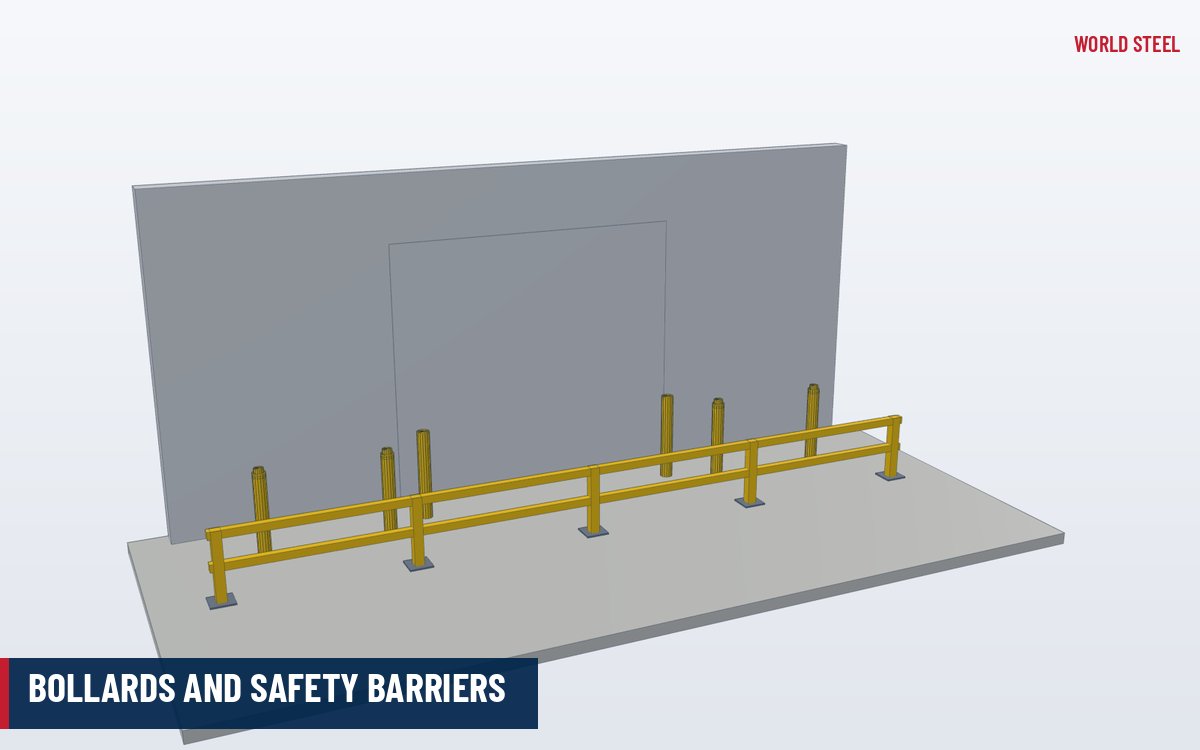
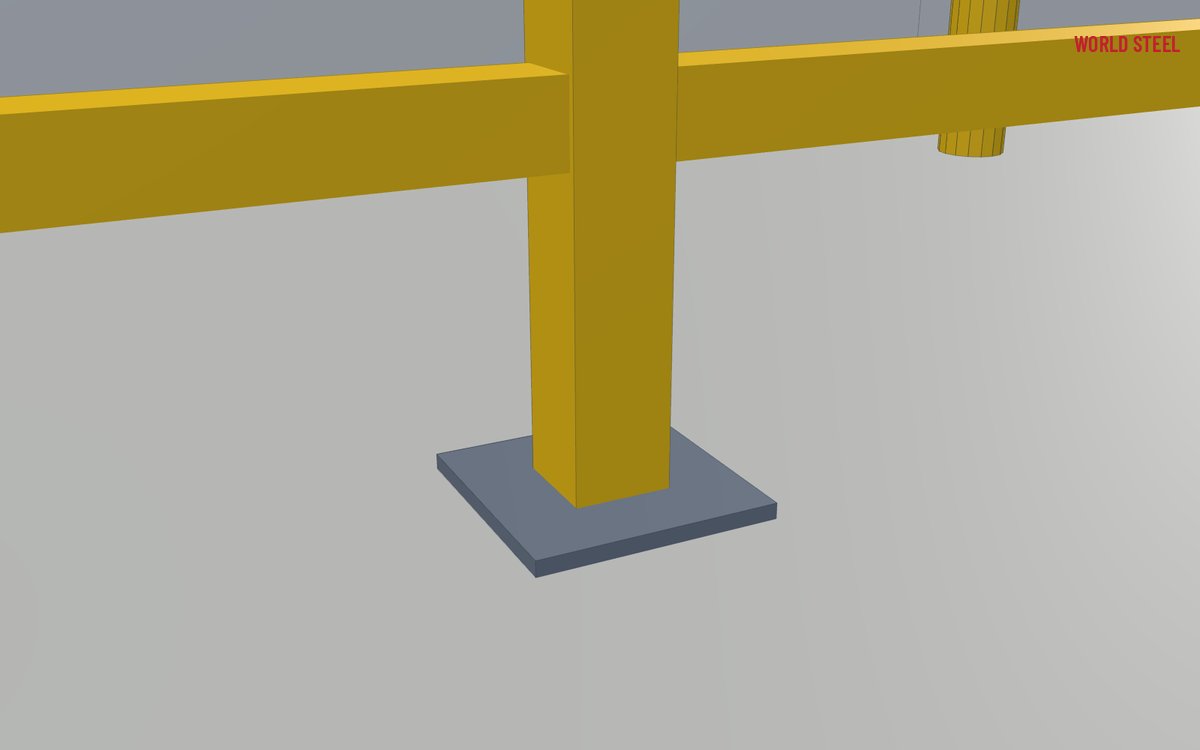
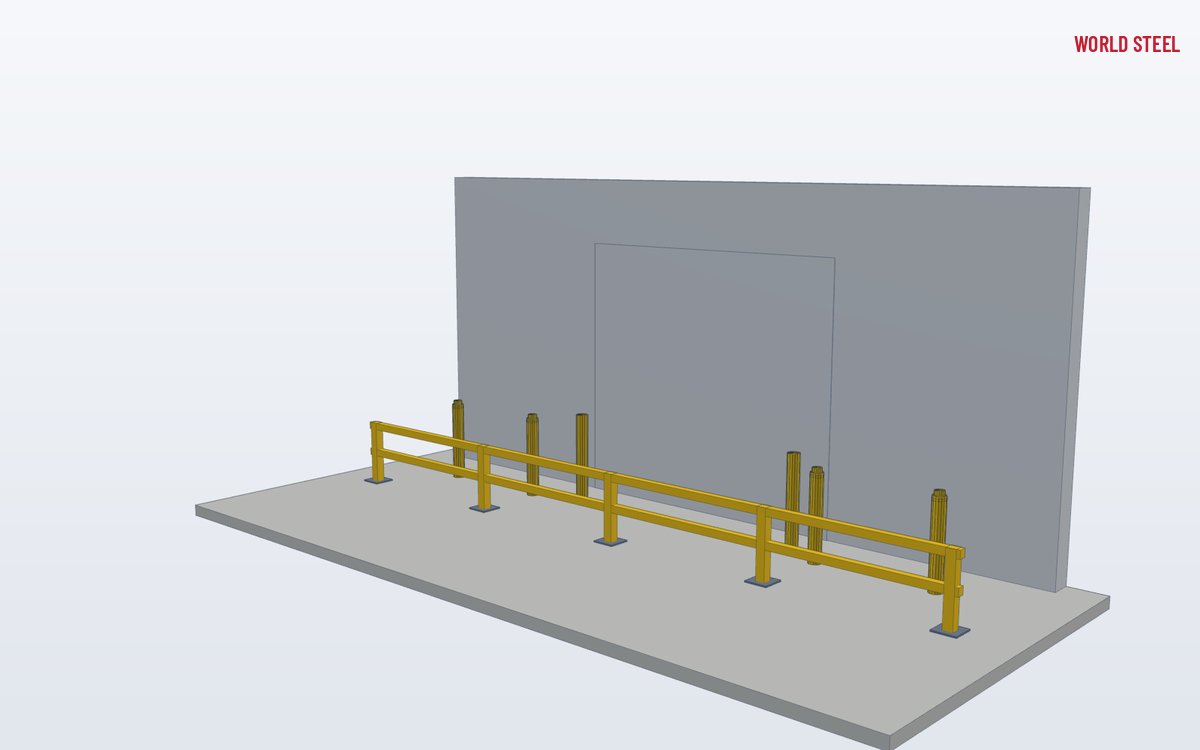
- Embedded and surface-mounted pipe bollards
- Column guards, rack-end protectors and rail barriers
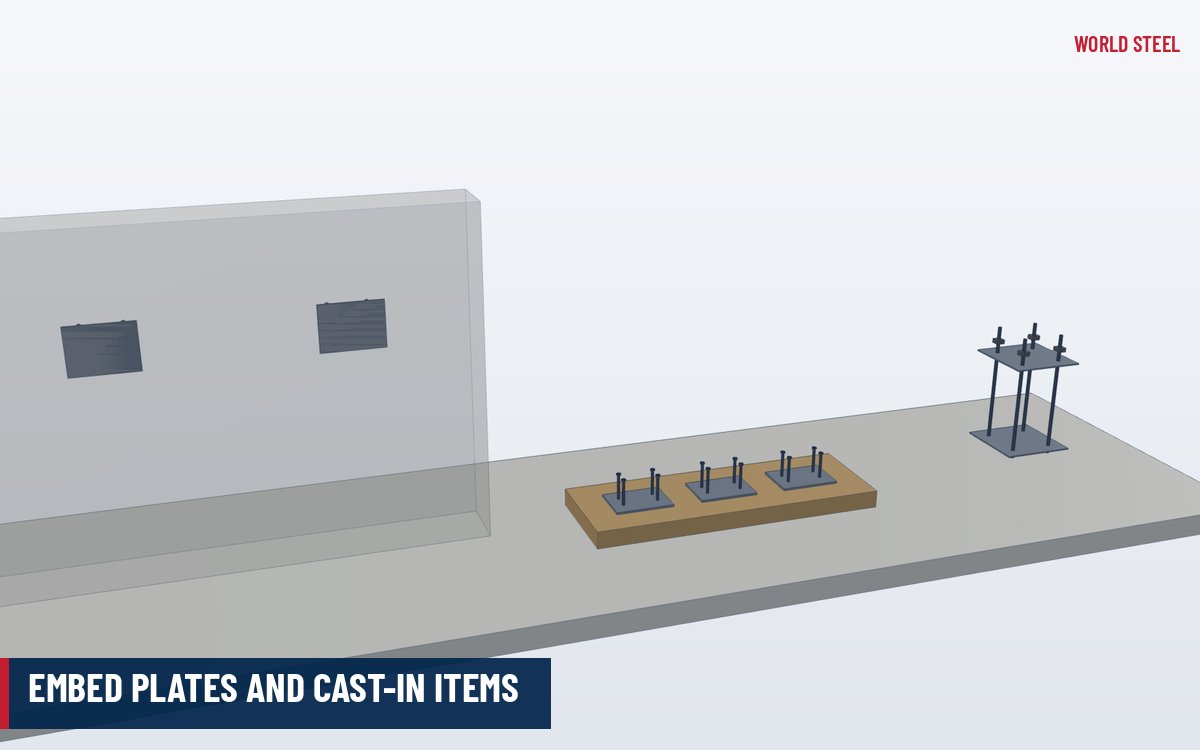
- Removable bollards with cast-in sleeves
- Crash-rated units fabricated only to a tested system design
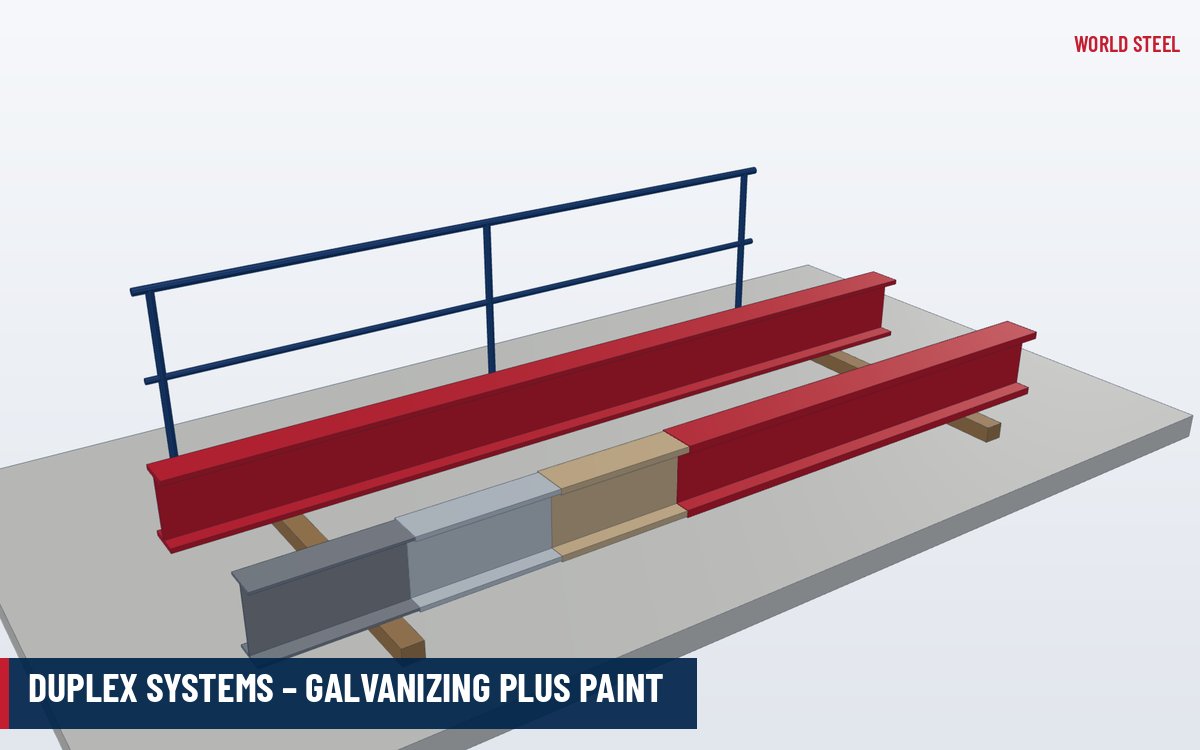
- Galvanized with safety-yellow topcoat (duplex)
What it is
Bollards and safety barriers protect buildings, people and equipment from vehicle impact. In industrial buildings they guard door jambs, columns, racking, fire equipment, gas meters and pedestrian routes from forklifts and trucks. Outside, they protect shopfronts, fuel dispensers, loading docks and car park edges. The common workhorse is a steel pipe bollard, either embedded in a concrete footing and filled with concrete, or welded to a base plate and anchored to the slab.
World Steel fabricates bollards and barriers as part of misc. metals packages for warehouses, logistics centres, fuel stations and factories, often alongside canopies and industrial guardrails.
Types and options
| Type | Construction | Typical use |
|---|---|---|
| Embedded pipe bollard | Pipe set in a concrete footing, concrete-filled, domed top | Building corners, doors, dock aprons, fuel islands |
| Surface-mounted bollard | Pipe welded to a stiffened base plate, anchored to slab | Existing slabs, interior traffic routes |
| Removable bollard | Bollard in a cast-in sleeve with lock or pin | Access lanes, maintenance routes |
| Column and rack guards | Angle, channel or plate guards around columns and uprights | Warehouses, racking ends |
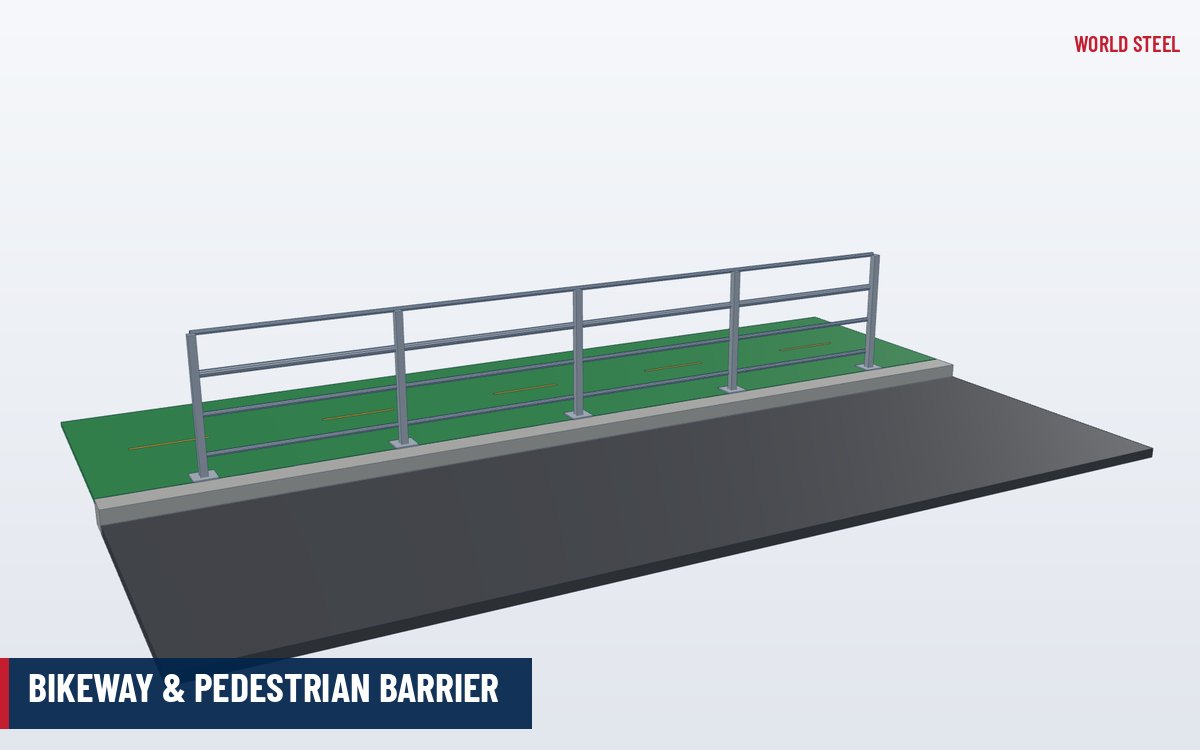
| Rail / pedestrian barrier | Pipe or rolled-section rails on posts | Walkway separation, dock edges, equipment zones |
| Security (crash-rated) bollards | Steel components of a tested system, to the system owner's design | Hostile vehicle mitigation at sensitive sites |
Common pipe sizes range from about 100 to 200 mm (4 to 8 in) diameter in standard or heavy wall thickness, with heights typically around 900–1,200 mm (36–48 in) above grade. Options include reflective bands, plastic sleeves, chain eyes, sign brackets and caps.
Design and compliance
Ordinary traffic bollards and barriers are designed for the vehicle and impact the owner expects; the building code loads for vehicle barriers in parking structures (ASCE 7 in the US, AS/NZS 1170.1 in Australia, EN 1991-1-1 in Europe) are often used as a reference, together with the anchorage design for the slab or footing (ACI 318 Chapter 17, AS 5216 or EN 1992-4). Footings, embedment depth and concrete fill are as important as the steel section: most bollard failures are foundation failures.
Security bollards are different. A crash rating under ASTM F2656 (for example M30, M40 or M50 with P1–P4 penetration) or IWA 14-1 belongs to a specific system that has been impact-tested as installed, including its foundation. World Steel does not claim crash ratings: we fabricate the steel components to the tested design supplied by the client or the system owner, under that owner's inspection requirements, and the rating remains the system owner's responsibility.
If a project requires a certified road restraint or crash-rated product, the test reports and certification must come from the owner of the tested system, not from the fabricator.
Fabrication and finishing at World Steel
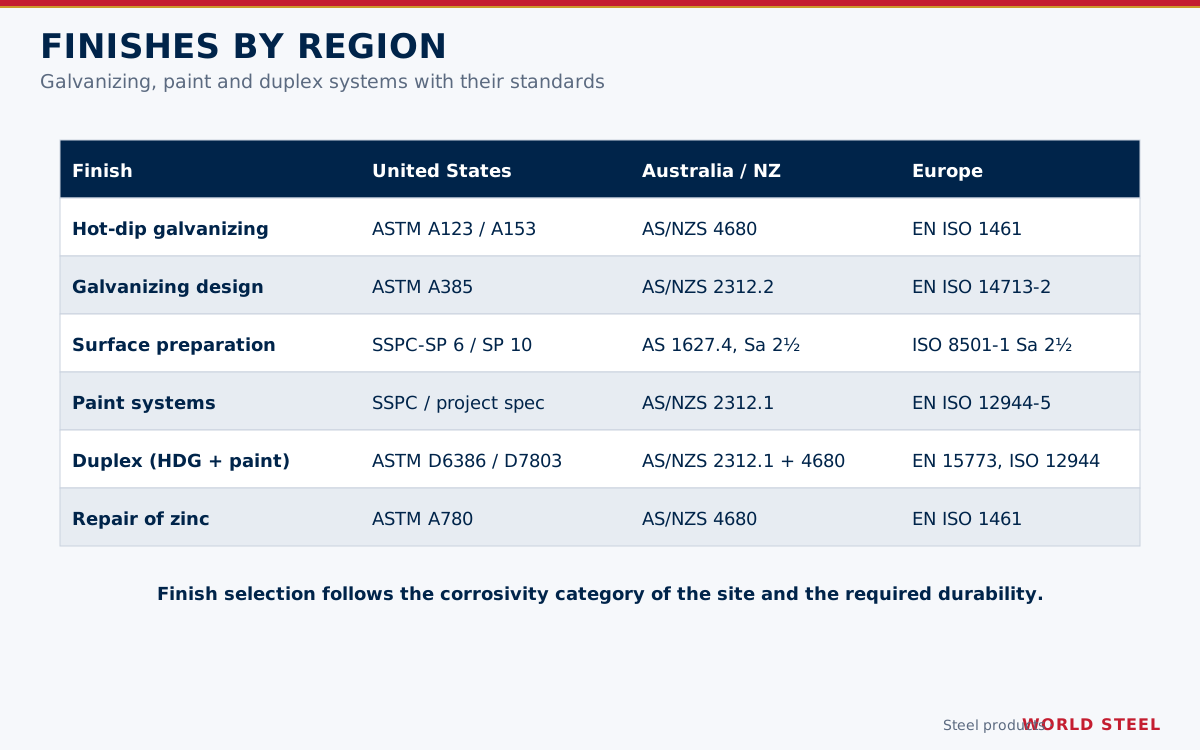
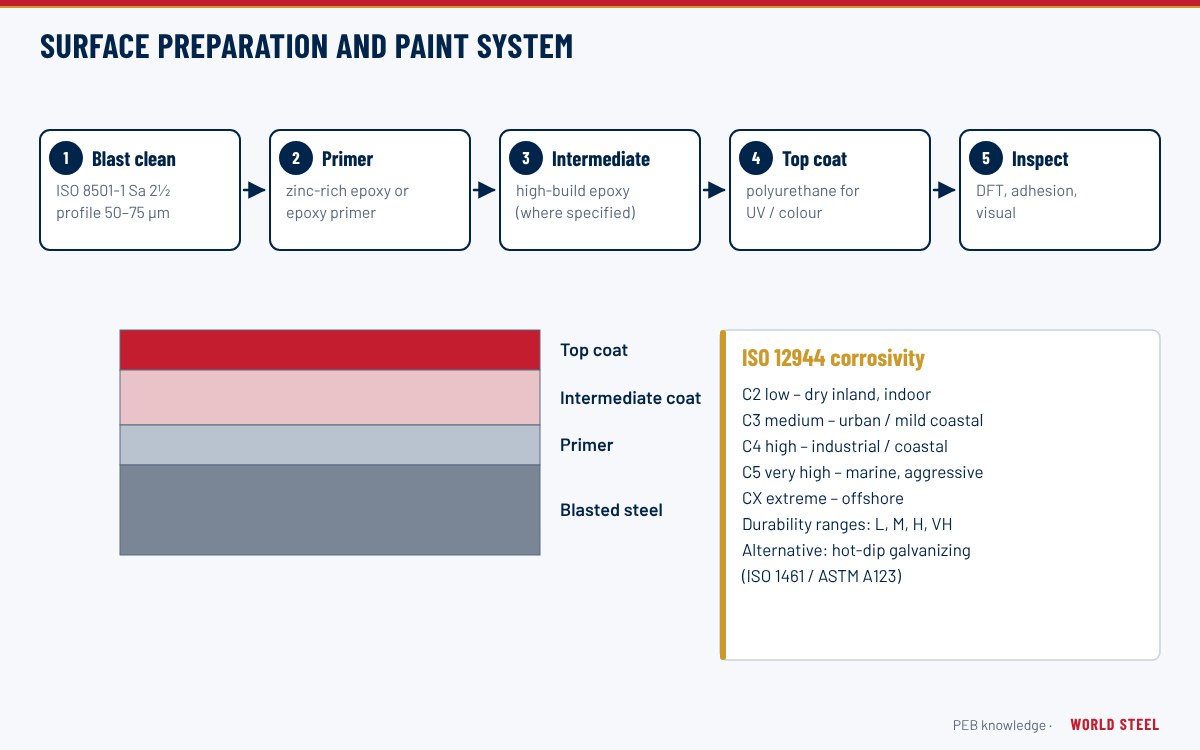
Pipes are cut to length, base plates and stiffeners are CNC-cut and drilled, and welding is carried out by qualified welders to AWS D1.1, AS/NZS 1554.1 or EN ISO 3834-2 procedures. Embedded bollards are supplied with vent holes and domed or capped tops as detailed. After shot blasting, items are hot-dip galvanized by qualified galvanizers to ASTM A123 / AS/NZS 4680 / EN ISO 1461 and, where specified, finished with a safety-yellow or black-and-yellow paint system. See paint and coating systems.
Installation and site notes
- Embedded bollards are set plumb in the footing excavation, braced, then concreted and filled.
- Surface-mounted bollards are anchored with the anchor type and embedment shown on the drawings; check slab thickness and edge distances first.
- Removable bollards need sleeves cast in at the correct level, kept clean and drained.
- Touch up damaged coatings to ASTM A780 or the regional equivalent and re-apply reflective bands.
Selecting and specifying
Send a site plan with bollard positions, the type (embedded, surface-mounted, removable), pipe size, height and finish, plus footing or slab details. For security bollards, provide the tested system drawings, material and welding requirements and the system owner's inspection plan. Bollards fit easily into a combined package with cast-in items and building accessories.
시장별 표준 및 요구사항
World Steel이 본 제품의 설계, 제작, 문서화에 적용하는 기준 – 그리고 각 시장의 주요 형상 및 하중 요구사항.
 미국
- ASTM F2656Crash testing of vehicle security barriers (tested systems only)
- ASCE 7Minimum design loads, incl. vehicle barriers
- ACI 318 Ch. 17Anchoring to concrete
- ASTM A53 / A500Steel pipe and hollow sections
- ASTM A123Zinc (hot-dip galvanized) coatings
- Crash rating
- e.g. M30/M40/M50, P1–P4 – tested system only (ASTM F2656)
- Anchorage
- Designed per ACI 318 Chapter 17
 호주 / 뉴질랜드
- AS/NZS 1170.1Imposed actions, incl. vehicle barriers
- AS 4100Steel structures
- AS 5216Fastenings in concrete
- AS/NZS 1163Cold-formed structural hollow sections
- AS/NZS 4680Hot-dip galvanized coatings
- Barrier actions
- Per AS/NZS 1170.1 where used as building barriers
- Security rating
- IWA 14-1 or ASTM F2656 – tested system only
 유럽
- IWA 14-1Vehicle security barriers – performance (tested systems only)
- EN 1991-1-1Imposed loads, incl. barriers in car parks
- EN 1993-1-1Design of steel structures
- EN 1992-4Fastenings in concrete
- EN ISO 1461Hot-dip galvanized coatings
- Security rating
- IWA 14-1 – tested system only
- Anchorage
- Designed per EN 1992-4
참고용 요약입니다 – 프로젝트 시방서, 채택된 기준 판본 및 관할 기관의 요구가 우선합니다.
표면 처리
| 표면 처리 | 표준 / 비고 |
|---|---|
| Hot-dip galvanized | ASTM A123 · AS/NZS 4680 · EN ISO 1461 |
| Duplex (galvanized + safety yellow) | ASTM A123 + topcoat · AS/NZS 4680 + AS/NZS 2312.1 · EN ISO 1461 + EN ISO 12944 |
| Paint system | SSPC-SP 6 + epoxy/PU · AS/NZS 2312.1 · EN ISO 12944 |
자주 묻는 질문
Are your bollards crash-rated?
Not by themselves. Crash ratings under ASTM F2656 or IWA 14-1 apply only to a tested system including its foundation. We fabricate steel components to the tested design supplied by the client or system owner.
Embedded or surface-mounted – which is better?
Embedded, concrete-filled bollards resist much higher impacts and are preferred outdoors. Surface-mounted bollards suit existing slabs and lower-speed interior traffic, provided the slab and anchors are adequate.
What finish do bollards usually have?
Hot-dip galvanizing by qualified galvanizers, with a safety-yellow topcoat for visibility. This duplex system resists both corrosion and minor impact damage.
What sizes do you make?
Typically 100–200 mm (4–8 in) diameter pipe with heights around 900–1,200 mm (36–48 in), but sizes follow the project drawings.
 AS/NZS 5131 CC3
 EN 1090 EXC3 · CE