ENEnglish
 VITiếng Việt
 ZH中文
 KO한국어
 JA日本語
 FRFrançais
 ITItaliano
 PTPortuguês
 ESEspañol
 HEעברית
 ARالعربية

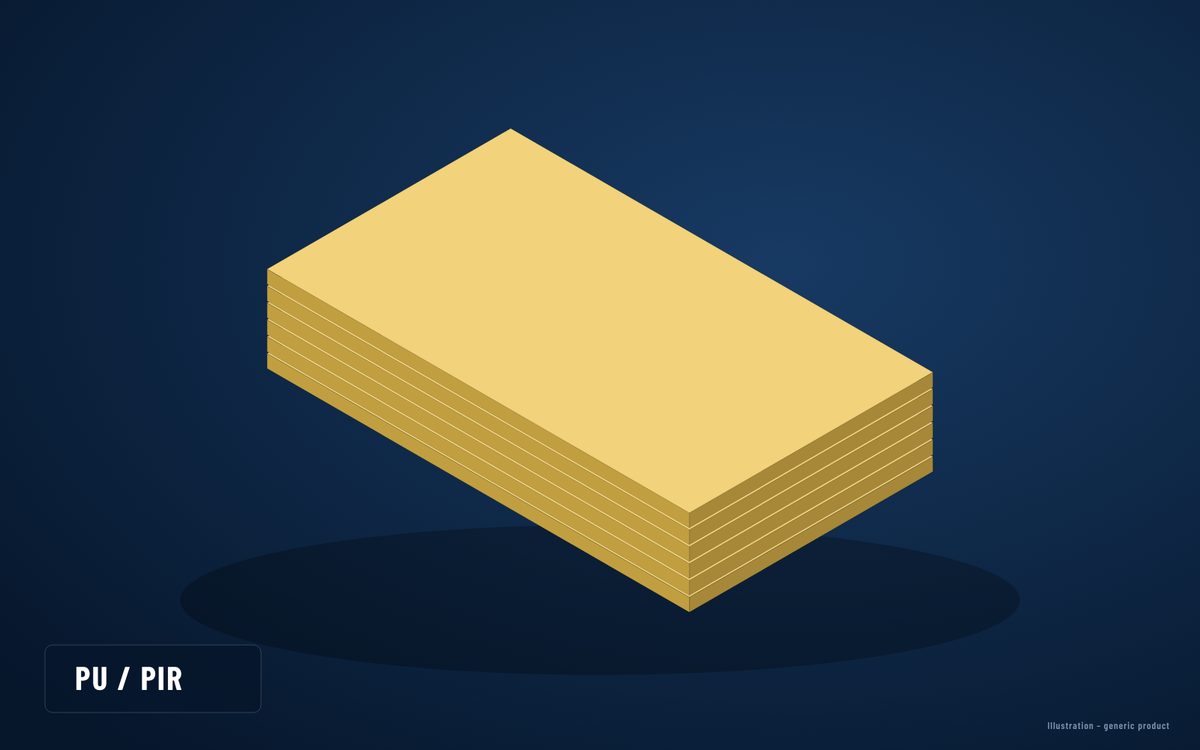 polyurethane · polyisocyanurate
PU / PIR
Lowest λ of the common foams. Core of insulated wall and roof panels and cold store panels; PIR has better fire behaviour than PUR.
Building materials · Foam insulation
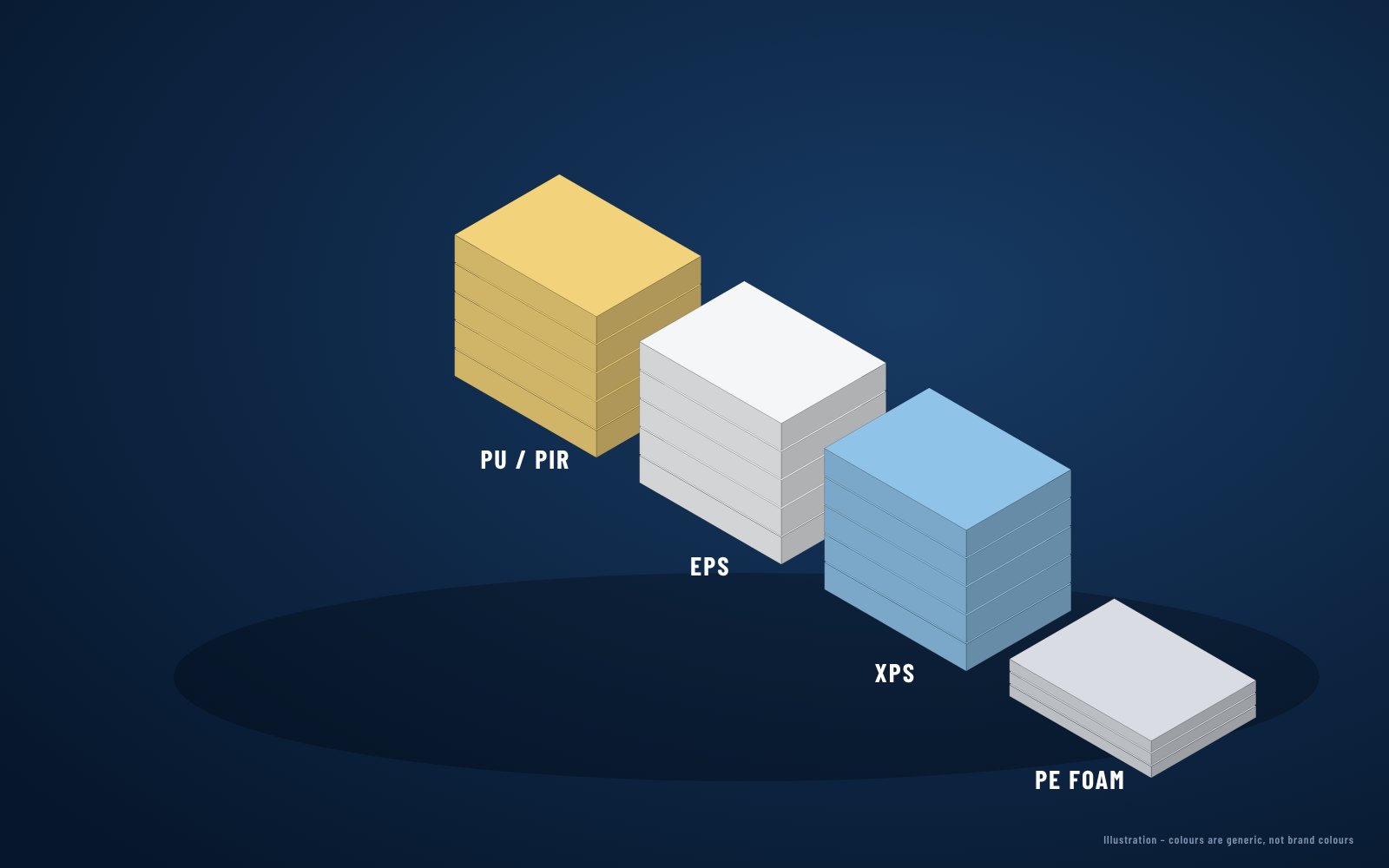
Foam insulations reach low thermal conductivity at very low weight. They are the core of most sandwich panels and cold stores and the standard under floors and foundations – each with its own strengths and fire behaviour. This guide explains them and shows where mineral wool is the better choice.
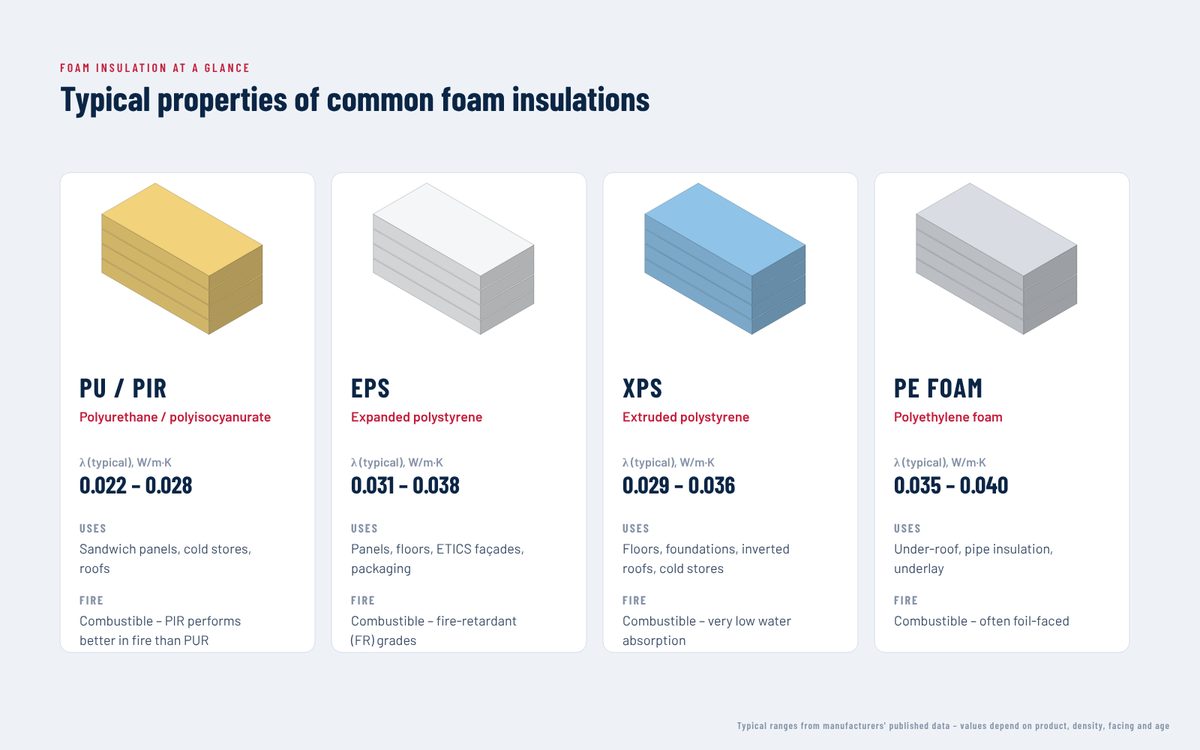
Foam insulations are plastics expanded into millions of closed cells. Their gas-filled cells give very low thermal conductivity, so the same R-value needs less thickness than mineral wool. In steel buildings they appear mostly as the core of sandwich panels for walls, roofs and cold rooms, as boards under floors and foundations, and as thin PE foam underlays below roofs.
All foam plastics are combustible. Their fire performance depends on the type – PIR behaves better than PUR, fire-retardant grades exist for EPS – and on the protection around them. Where a building needs non-combustible insulation, choose stone wool.
تشكيلة المنتجات
2 منتجاً في 1 عائلات – لكل منها صفحة خاصة وبيانات فنية وصحيفة بيانات.
Ceramic and low-biopersistence fibre insulation and tested fire-resistant duct wraps for plant, ducts and services.
 High-temperature insulationCeramic and high-temperature fibre insulationInsulation for heat far beyond building fires – furnaces, hot ducts and equipment in industrial plants.Process heat, equipmentUseBlanket, board, paper, moduleFormsاعرض المنتج →
 Fire insulation · ducts and servicesFire-resistant insulation blankets and duct wrapsDucts that pass through fire compartments must keep fire and heat in – wrap systems make them fire-rated.Ducts, grease ducts, servicesUseStone wool or fibre blanket, foil-facedMaterialاعرض المنتج →
Types
Typical properties and uses – compare actual product data sheets before you specify.
polyurethane · polyisocyanurate
Lowest λ of the common foams. Core of insulated wall and roof panels and cold store panels; PIR has better fire behaviour than PUR.
 expanded polystyrene
Light, economical and versatile – panels, floors, external insulation systems. Use fire-retardant (FR) grades in buildings.
 extruded polystyrene
Closed-cell, strong and almost waterproof – floors, slabs on grade, cold store floors, inverted roofs and foundations.
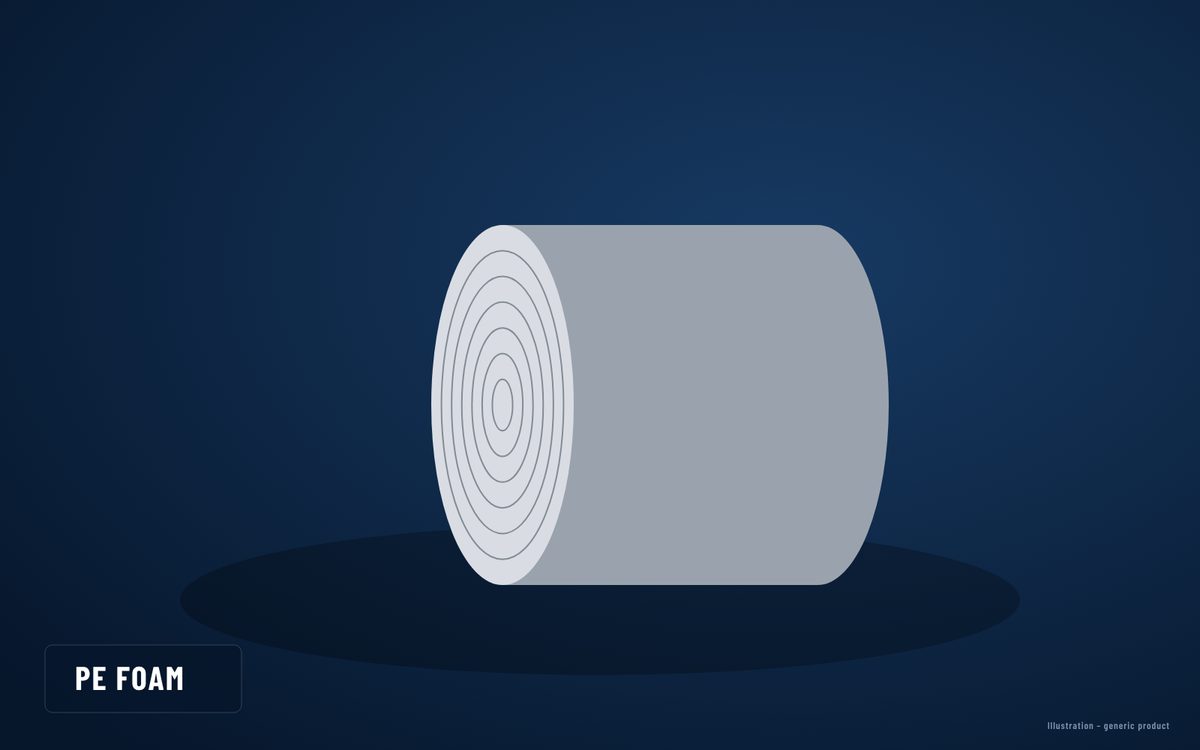 polyethylene foam
Thin, flexible, often foil-faced – under-roof insulation, pipe insulation and underlays.
المعايير والامتثال
Product standards commonly specified in our export markets.
 Europe
 United States
 Australia & New Zealand
ملخص للاسترشاد فقط – تسري مواصفات المشروع وإصدار المعيار المعتمد والجهة المختصة.
Fire safety first
Building codes in many markets limit combustible insulation in external walls, high-rise buildings and escape routes, and insurers often require non-combustible or approved panels for warehouses and factories. World Steel checks the fire requirements of your market and building type and proposes foam, mineral wool or stone-wool-core panels accordingly.
Compare
Typical behaviour – a quick guide for early design.
| Property | PU / PIR | EPS | XPS | Stone wool |
|---|---|---|---|---|
| Thermal conductivity λ, W/m·K | 0.022 – 0.028 | 0.031 – 0.038 | 0.029 – 0.036 | 0.033 – 0.042 |
| Reaction to fire | Combustible (PIR better) | Combustible (FR grades) | Combustible | Non-combustible (A1) |
| Water absorption | Low | Moderate | Very low | Water-repellent grades |
| Compressive strength | Good | Moderate | High | Good in board grades |
| Max. service temperature | ≈ 100 – 120 °C | ≈ 75 – 80 °C | ≈ 75 °C | Up to ≈ 750 °C |
| Acoustic absorption | Low | Low | Low | High |
| Typical use | Sandwich panels, cold stores | Panels, floors, ETICS | Floors, foundations, inverted roofs | Fire-safe panels, façades, roofs |
FAQ
Both are polyurethane-family foams. PIR (polyisocyanurate) has a different chemistry that gives better fire behaviour and temperature resistance than standard PUR.
EPS is lighter and cheaper; XPS is stronger and absorbs almost no water, so it is preferred under floors, in foundations and in inverted roofs.
Only in tested and approved systems. Where non-combustible insulation is required, use stone wool or stone-wool-core panels.
Usually PU/PIR sandwich panels for walls and ceilings and XPS under the floor slab – see our cold storage warehouse solution.
Tell us the building use, climate and fire requirements – we propose the insulation and quote it with the steel.