 ENEnglish
 VITiếng Việt
 ZH中文
 KO한국어
 JA日本語
 FRFrançais
 ITItaliano
 PTPortuguês
 ESEspañol
 HEעברית
 ARالعربية

 either · often glass wool
Warehouse & factory roofs
Glass wool blankets are economical; choose stone wool where insurers or codes require non-combustible roofs or better rain-noise control.
Building materials · Insulation guide
Stone wool (ROCKWOOL) and glass wool are both mineral wools with similar thermal performance – but they are made from different raw materials and behave very differently in fire, at high temperature and under load. This guide compares them point by point and tells you which one to choose for each part of a building.
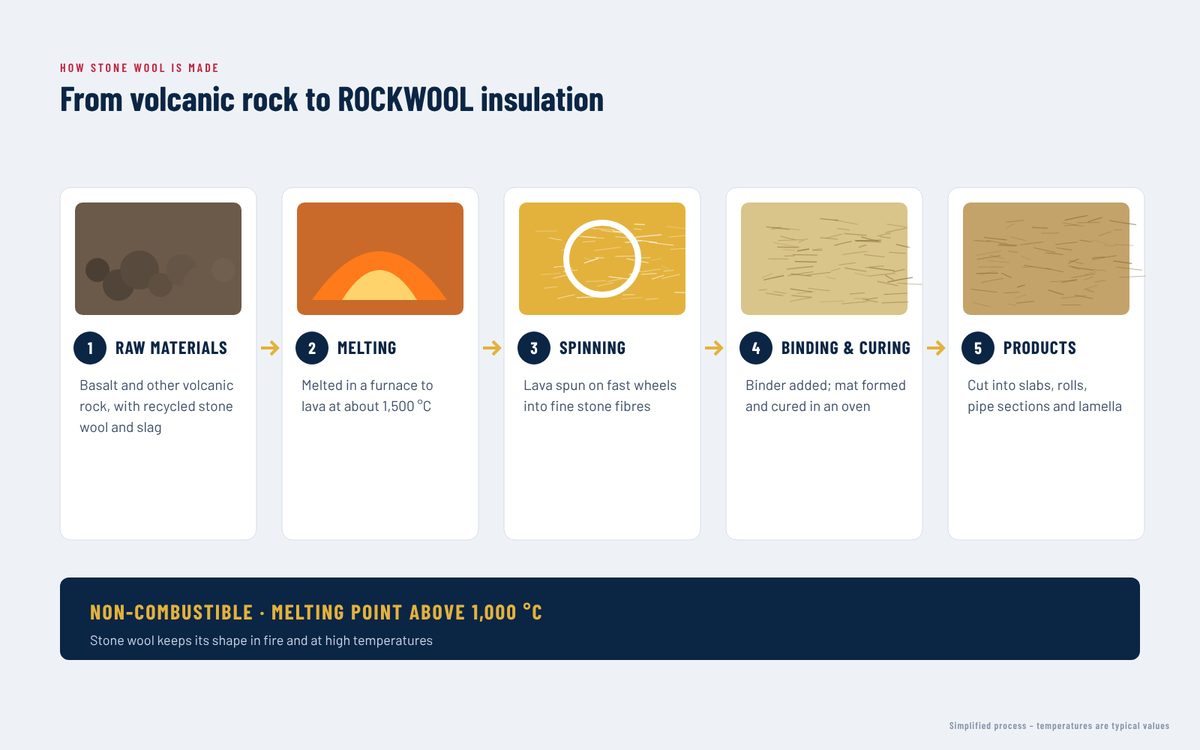
Stone wool – ROCKWOOL is the best-known brand – is spun from molten volcanic rock such as basalt. Glass wool is spun from molten glass made of sand and recycled glass. Both trap air between fine fibres, so both insulate well against heat and sound and both are classed as mineral wool under standards such as EN 13162.
The difference is in the fibre. Rock fibres withstand far higher temperatures and stone wool products are generally denser and stiffer; glass fibres are finer and more elastic, so glass wool is lighter and compressible. Those two facts drive almost every difference in the table below.
Decision guide
Our recommendation by application – your fire engineer and code have the final word.
either · often glass wool
Glass wool blankets are economical; choose stone wool where insurers or codes require non-combustible roofs or better rain-noise control.
 stone wool
Non-combustible A1 stone wool and curtain-wall fire stops between floors.
 stone wool
Stone wool in fire walls, shafts and penetration seals.
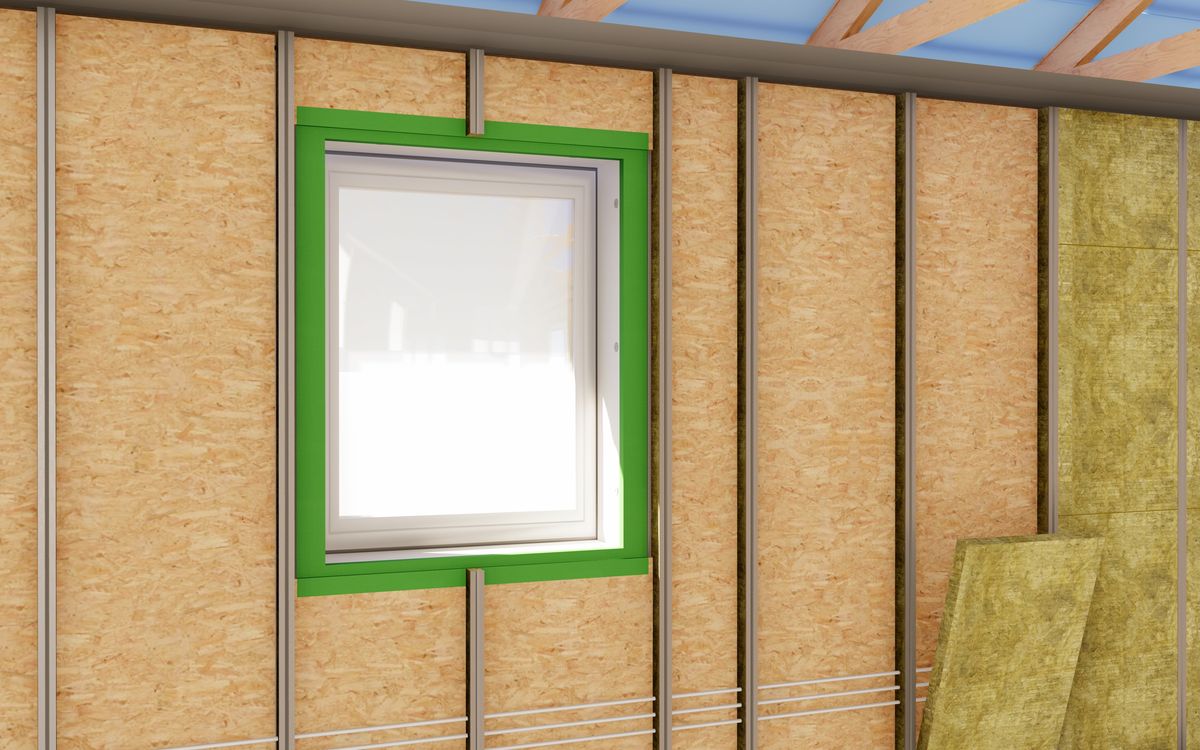 either
Glass wool is light and absorbs sound well; stone wool adds fire rating and mass.
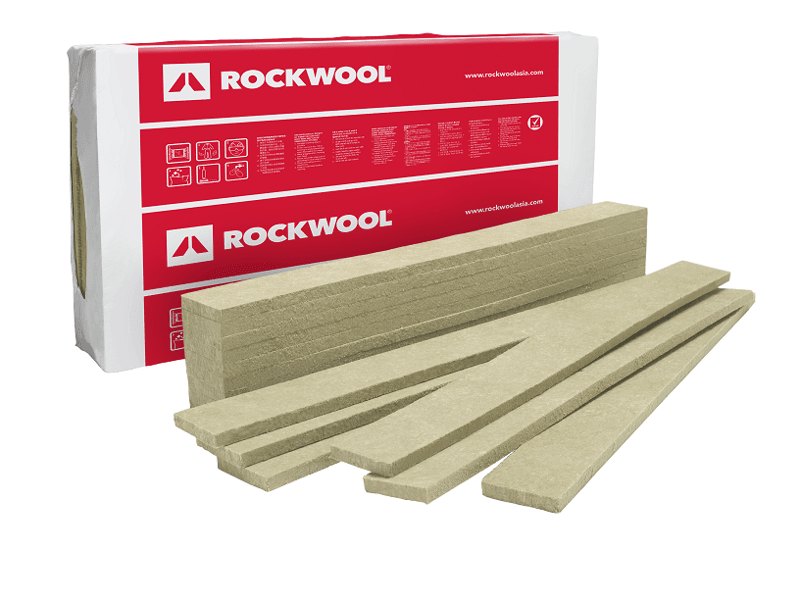 stone wool
Stone wool lamella cores for non-combustible, structural panels.
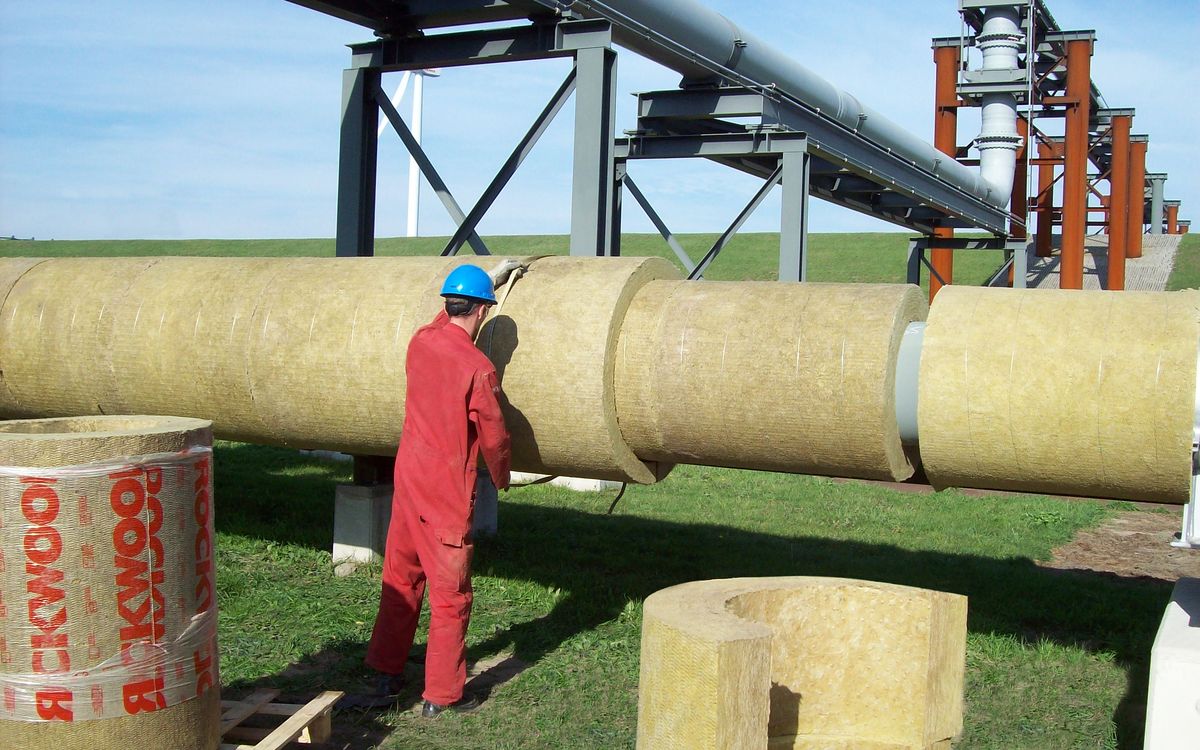 stone wool
ProRox® stone wool for operating temperatures far above the glass wool limit.
Fire
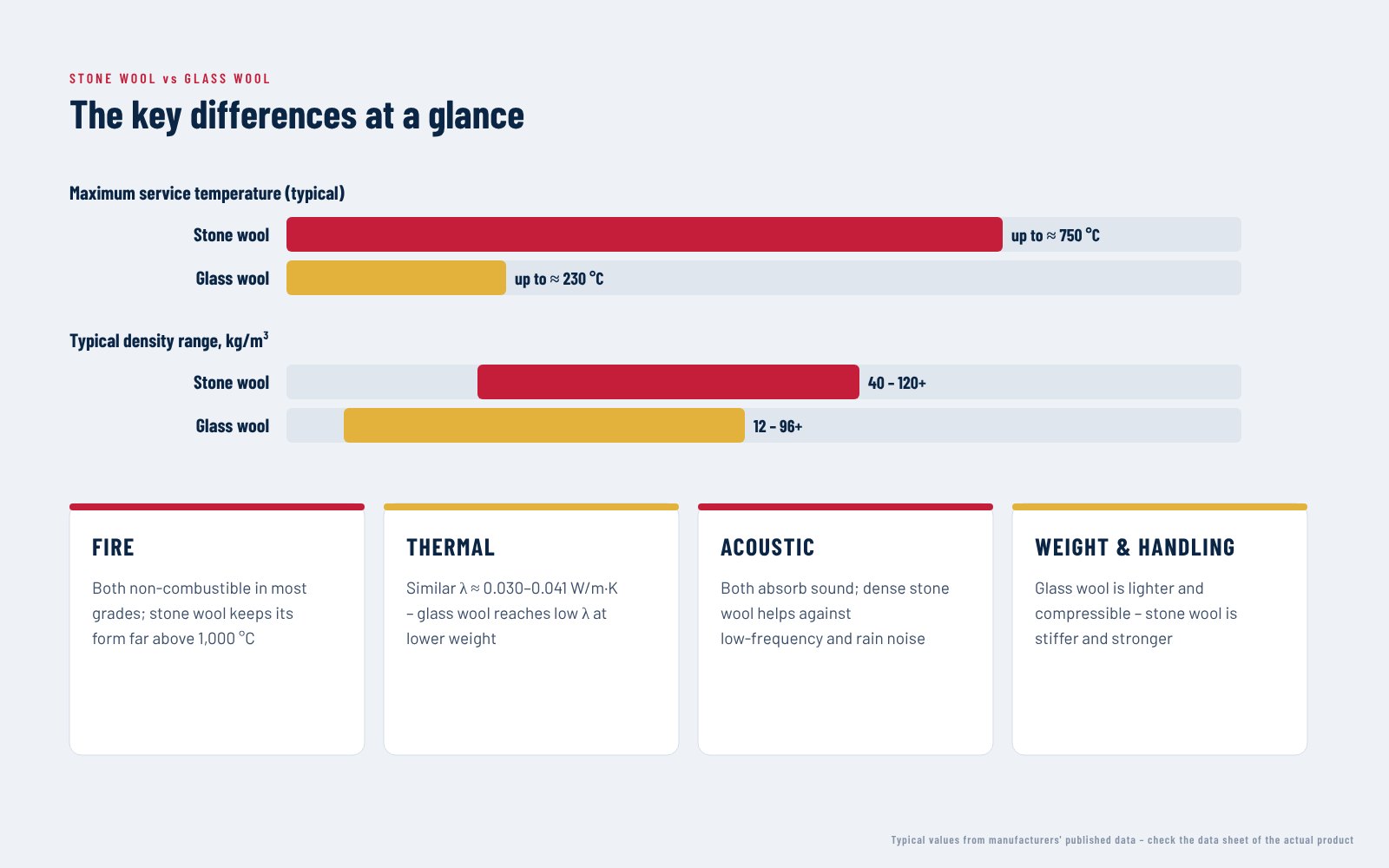
Both materials are classed as non-combustible in most unfaced grades – neither feeds a fire. But a building fire quickly reaches 800–1,000 °C. Stone wool fibres survive these temperatures and keep the insulation in place, which is why stone wool is used in fire-rated walls, floors and fire stops. Glass wool fibres melt far lower, so glass wool is not used where the insulation itself must resist fire.
Weight & cost
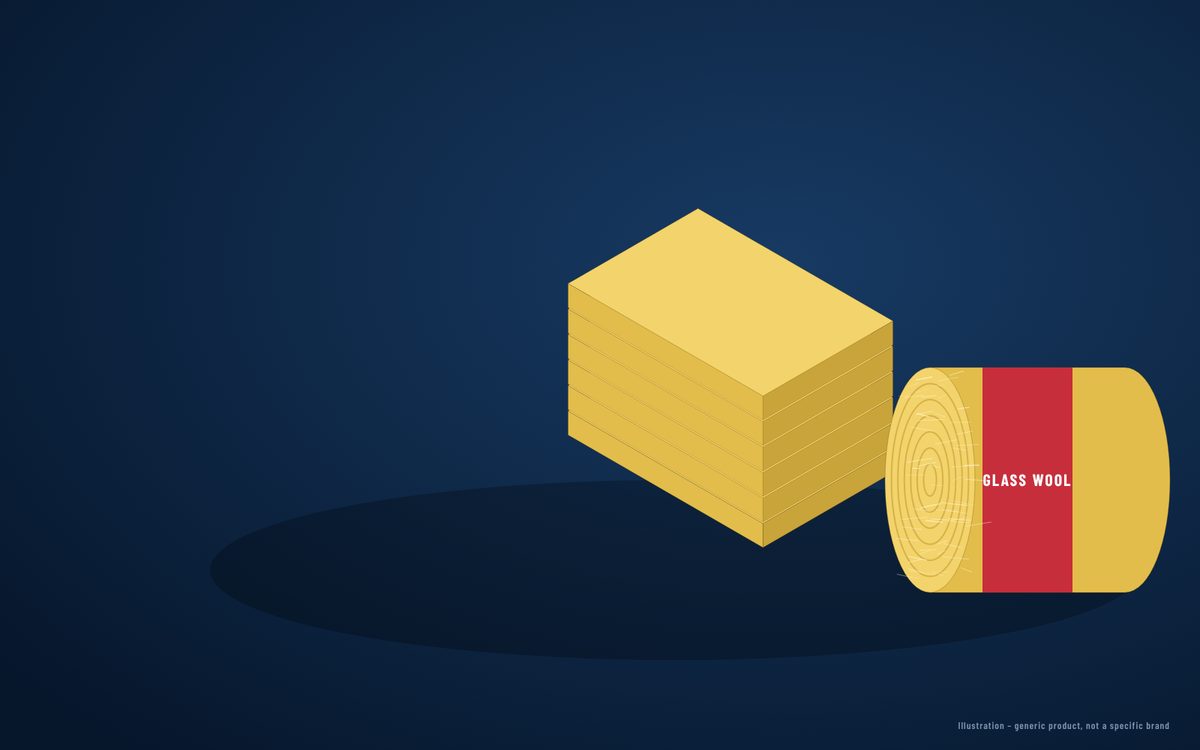
Glass wool reaches the same thermal value with less material: it is lighter on purlins and ceilings, compresses to a fraction of its volume in packing and is usually cheaper per R-value. For large metal roofs and walls of low-rise warehouses and factories – where the code does not require non-combustible insulation in the fire design – it is often the economical choice.
Side by side
Typical values and behaviour – always compare the data sheets of the actual products.
| Criterion | Stone wool (ROCKWOOL) | Glass wool |
|---|---|---|
| Raw materials | Volcanic rock (basalt), recycled stone wool, slag | Sand, soda ash, limestone, recycled glass |
| Melting / fibre behaviour in fire | Melting point above 1,000 °C – keeps its form in fire | Fibres soften and melt at much lower temperatures |
| Max. service temperature (typical) | Up to ≈ 750 °C (industrial grades) | Up to ≈ 230 °C |
| Reaction to fire | Euroclass A1 / A1L for most products | A1 or A2 unfaced; facings can lower the class |
| Fire barriers & fire stops | Yes – used in fire-rated walls, curtain-wall fire stops, Conlit® seals | Limited – not for high-temperature barriers |
| Thermal conductivity λ | ≈ 0.033 – 0.042 W/m·K | ≈ 0.030 – 0.041 W/m·K |
| Density (typical) | 40 – 120+ kg/m³ (boards up to ≈ 200) | 12 – 96 kg/m³ |
| Weight on structure | Heavier | Lighter |
| Compressive strength | High in board grades – roof boards carry foot traffic | Low – not for load-bearing layers |
| Acoustic performance | Excellent; density helps against low-frequency and rain noise | Very good sound absorption, especially in light partitions |
| Moisture | Water-repellent grades; vapour-open | Water-repellent grades; vapour-open; protect from water |
| Packing & freight | Less compressible – more volume per R-value | Highly compressible rolls – less freight volume |
| Cost per R-value | Usually higher | Usually lower |
| Best for | Fire safety, façades, high-rise, sandwich panel cores, hot equipment, flat roofs | Metal roofs and walls of low-rise buildings, partitions, ceilings, HVAC ducts |
FAQ
Neither is better everywhere. Stone wool (ROCKWOOL) is the choice for fire safety, high temperatures and load-bearing boards; glass wool is lighter and usually cheaper for general roof, wall and ceiling insulation.
Thermal conductivity is similar – roughly 0.030 to 0.042 W/m·K for both. Compare the λ of the actual products and the thickness you can fit.
Both absorb sound well. Denser stone wool helps more against low-frequency noise and rain on metal roofs; light glass wool works very well in partitions and ceilings.
Only where the tested wall system allows it. Fire-rated walls, fire stops and high-rise façades usually require stone wool because it withstands far higher temperatures.
Usually yes per R-value, because it is denser. The difference is often justified where fire safety, strength or durability matter.
Send us the building type, location and fire requirements – we recommend stone wool or glass wool and quote it with the steel.