ENEnglish
 VITiếng Việt
 ZH中文
 KO한국어
 JA日本語
 FRFrançais
 ITItaliano
 PTPortuguês
 ESEspañol
 HEעברית
 ARالعربية

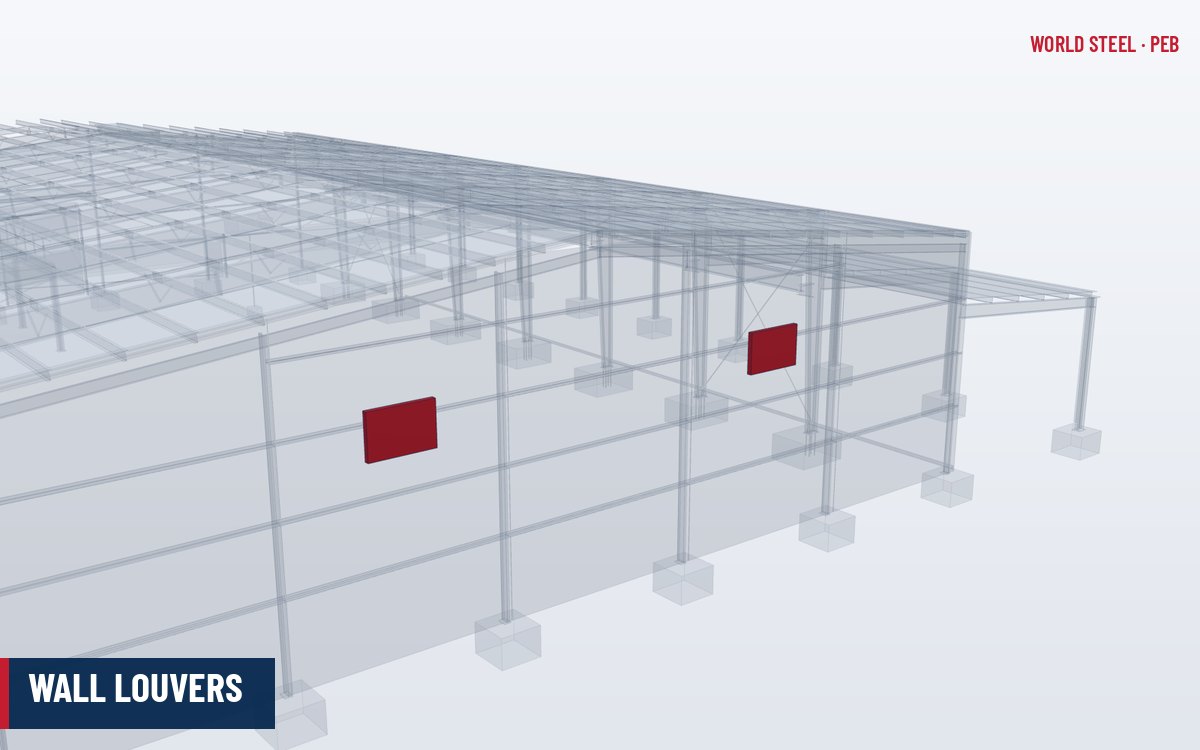
Purpose of wall louvers
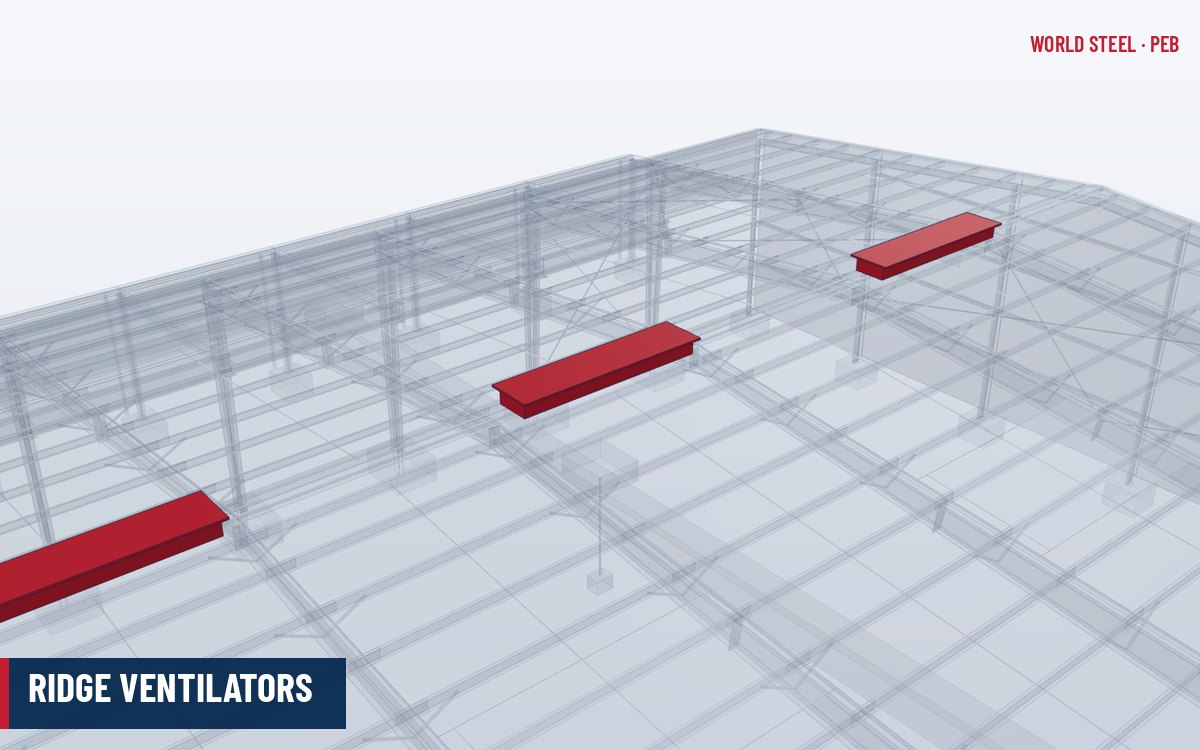
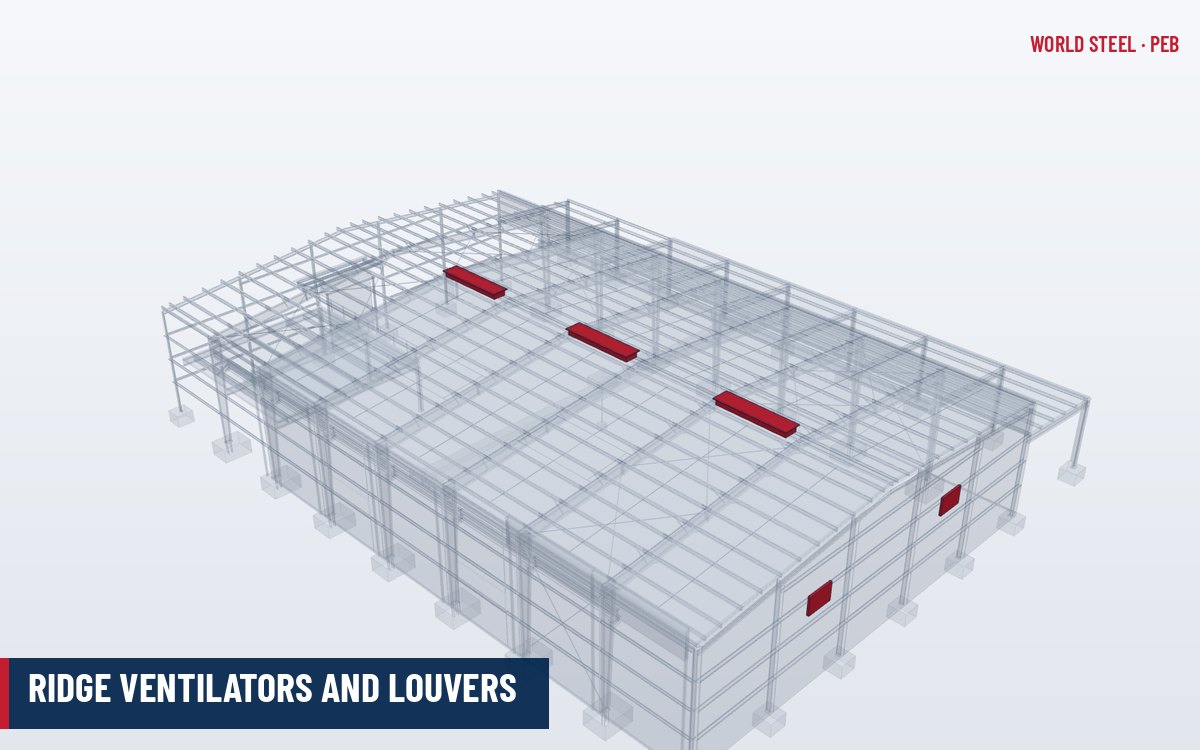
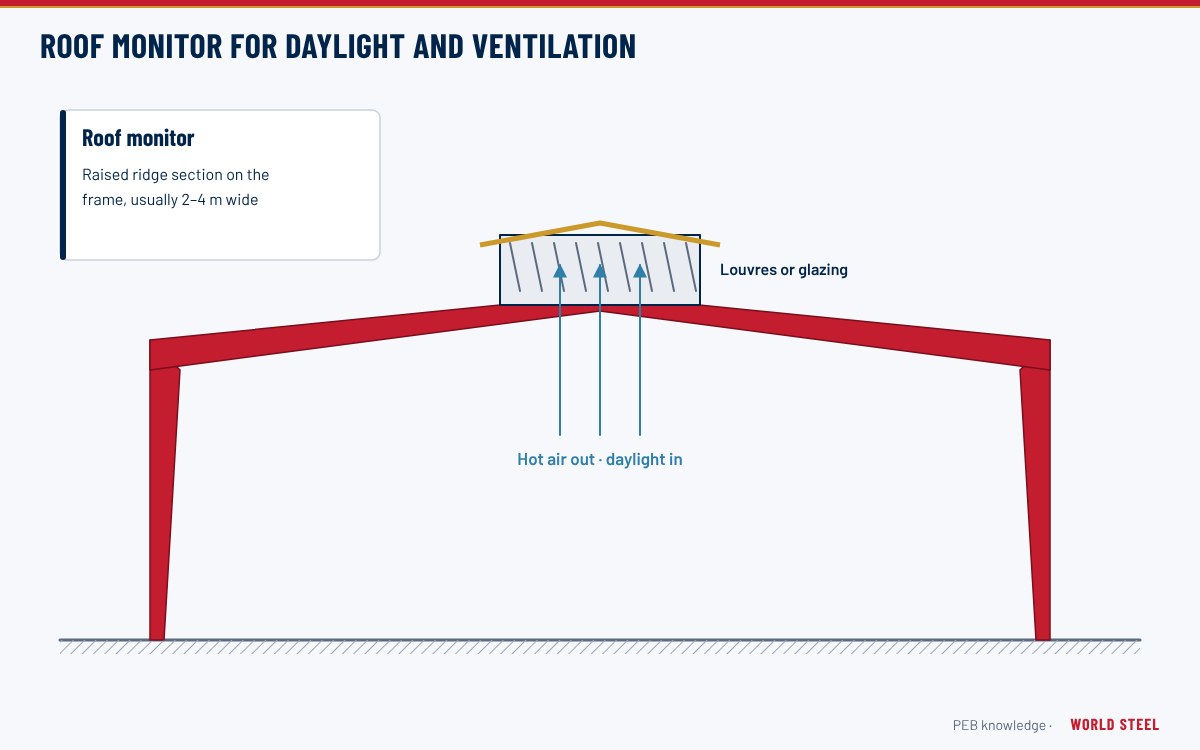
A wall louver is a framed assembly of inclined blades installed in an opening in the wall cladding. It admits air for natural or mechanical ventilation while keeping out most rain, birds and direct sunlight. In a pre-engineered steel building louvers are typically placed low in the sidewalls and endwalls to act as inlets, working together with ridge ventilators at the roof that serve as outlets. They are also used for generator rooms, compressor and pump houses, electrical rooms and around process equipment that needs combustion or cooling air.
Types and options
| Type | Description | Typical application |
|---|---|---|
| Fixed-blade louver | Stationary formed or extruded blades in a channel frame | General ventilation inlets, plant rooms |
| Adjustable (operable) louver | Blades linked to a manual or motorised operator | Buildings that close up in cold weather or at night |
| Drainable / storm-resistant louver | Blades with gutters and downspouts in the jambs; often tested for wind-driven rain | Coastal, monsoon and tropical sites; air intakes to sensitive equipment |
| Acoustic louver | Deep blades with sound-absorbing infill | Generator and compressor rooms near boundaries |
| Impact-rated louver | Tested for wind-borne debris | Hurricane-prone regions where the building code requires it |
Common accessories are bird screens and insect screens on the inside face, blank-off panels, sill flashing and internal dampers. Blades are commonly roll-formed from pre-painted metallic-coated steel to match the cladding, or extruded aluminium for higher performance and corrosion resistance.
Sizing: free area and pressure drop
Louvers are selected on free area – the unobstructed area through which air can pass – usually 35–55 % of the gross face area depending on blade depth and spacing. The key rules:
- Required free area = required airflow ÷ allowable face velocity through the free area. Lower velocities reduce rain penetration and noise.
- For rain-sensitive intakes, keep free-area velocity below the "beginning point of water penetration" published by the manufacturer from standardised tests.
- Screens reduce free area further; include them in the calculation.
- Match louver widths to girt spacing and wall panel modules wherever possible to avoid extra framing.
In North America, louver performance (free area, pressure drop, water penetration and wind-driven rain) is commonly rated by AMCA test methods; impact resistance for hurricane regions is tested separately. Other markets accept equivalent manufacturer test data.
Blade profiles and performance classes
The blade shape decides how much air passes and how much rain is stopped. Deeper blades and more changes of direction reject more water but increase pressure drop and cost.
| Blade profile | Typical depth | Behaviour |
|---|---|---|
| Z-blade or plain inclined blade | 50–100 mm | Economical, good free area, limited rain defence; standard for PEB walls |
| J or K blade (hooked lip) | 75–150 mm | Lip catches water running down the blade; better rain performance |
| Drainable blade with gutter | 100–150 mm | Integral gutter carries water to the jamb downspouts |
| Vertical-blade or chevron storm louver | 100–200 mm | Several changes of direction; high resistance to wind-driven rain |
| Acoustic blade | 200–300 mm or more | Perforated blades with mineral wool infill reduce transmitted noise |
Independent ratings help to compare products from different suppliers:
- North America: AMCA 500-L laboratory methods for free area, pressure drop and water penetration; AMCA 550 for high-velocity wind-driven rain in hurricane regions; AMCA 540 for missile impact; certified ratings published under AMCA 511.
- Europe and international: EN 13030 classifies rain-resistant louvers by the effectiveness of rain rejection from Class A (at least 99%) to Class D (below 80%), and by discharge coefficient, which describes airflow resistance.
- Australia: louvers are designed for the AS/NZS 1170.2 cladding pressure for the wall zone, and in cyclonic regions for debris impact where the building envelope must remain closed.
Where a louver protects electrical rooms or equipment intakes, a storm-class (Class A or AMCA 550 tested) louver is worth its extra cost; for general warehouse ventilation a Z-blade louver with a bird screen and a well-detailed sill usually performs adequately.
Framing, flashing and installation
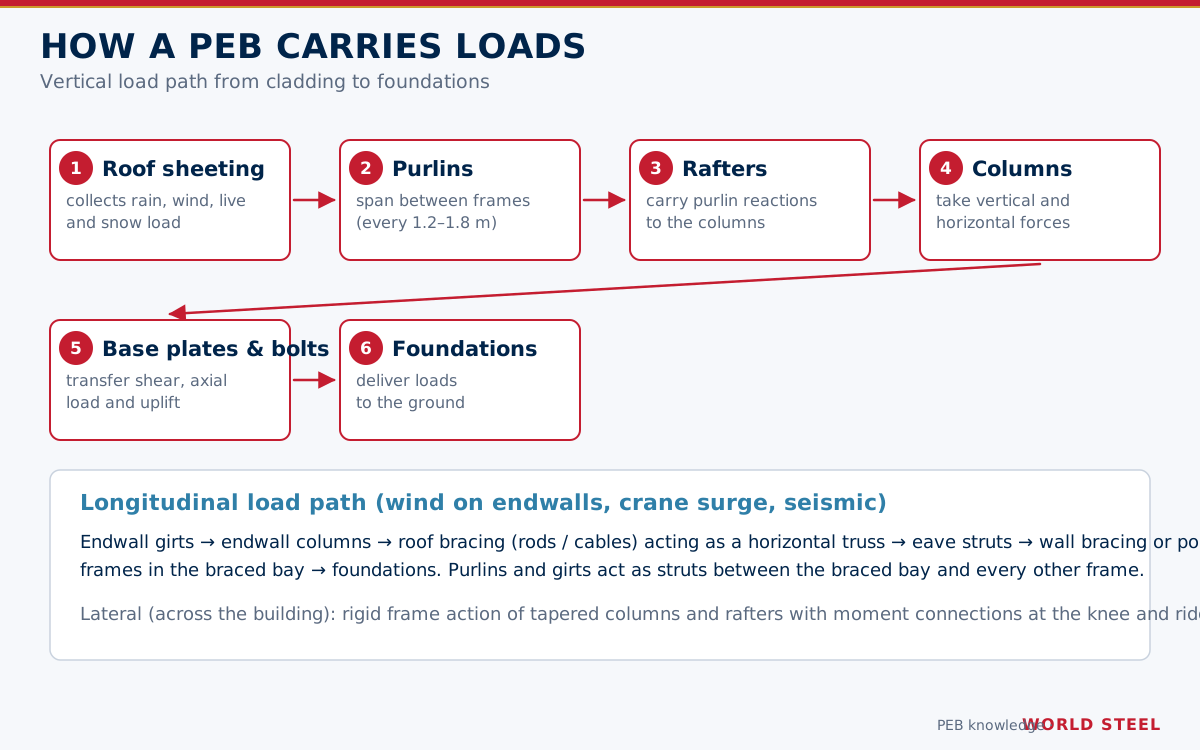
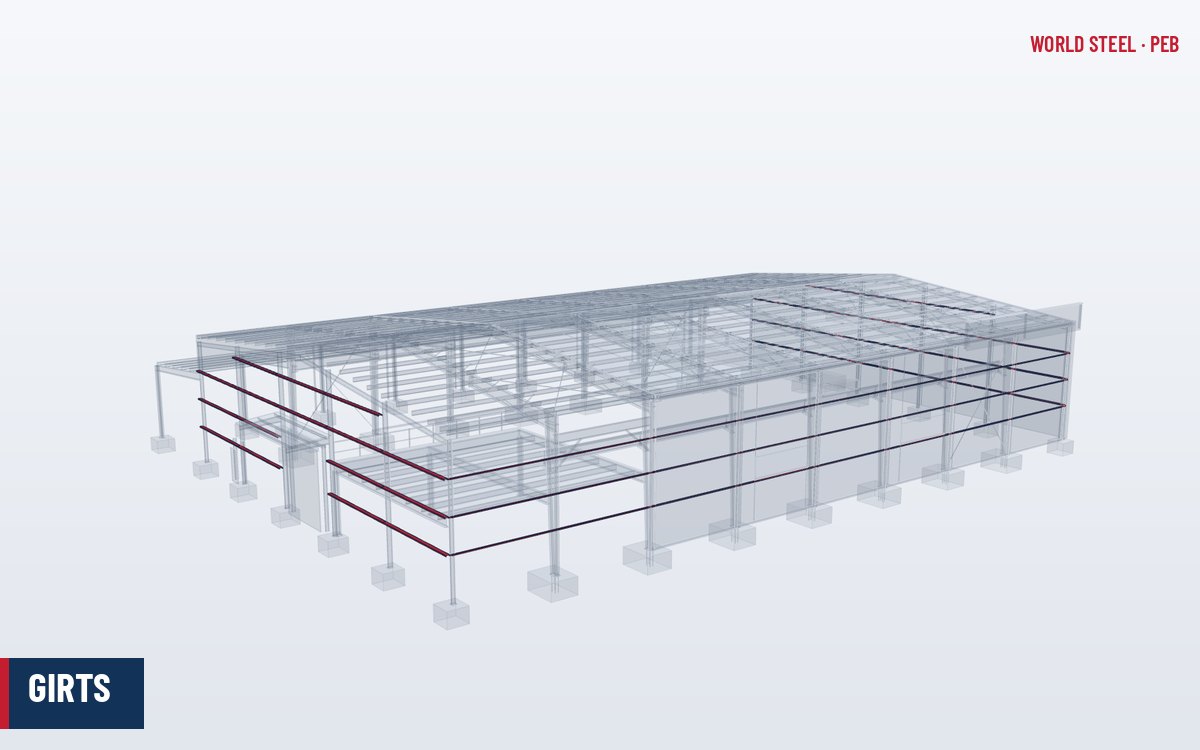
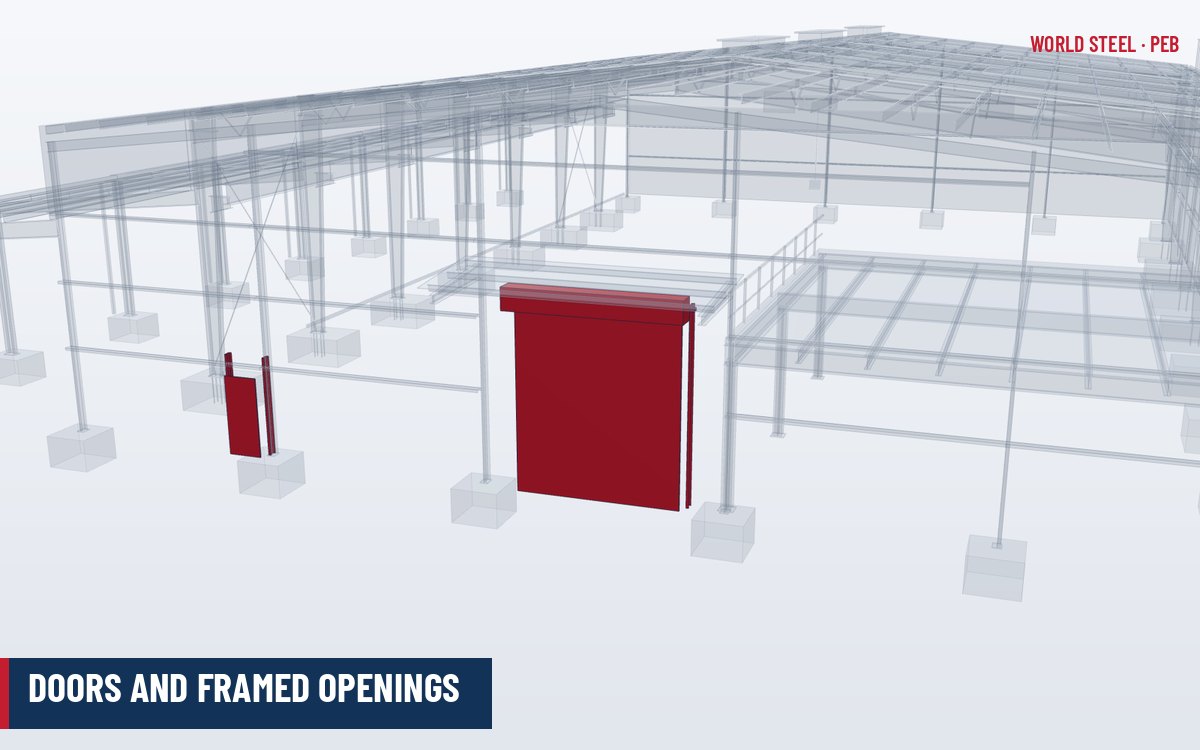
Louvers are not self-supporting in the wall plane. The opening is framed with jamb members and a header and sill, which are usually cold-formed channels connected to the girts. This framing is shown on the wall framing drawings in the same way as a framed opening for a door. Good practice:
- Design the louver blades and frame for components-and-cladding wind pressure for the actual wall zone (corners are higher).
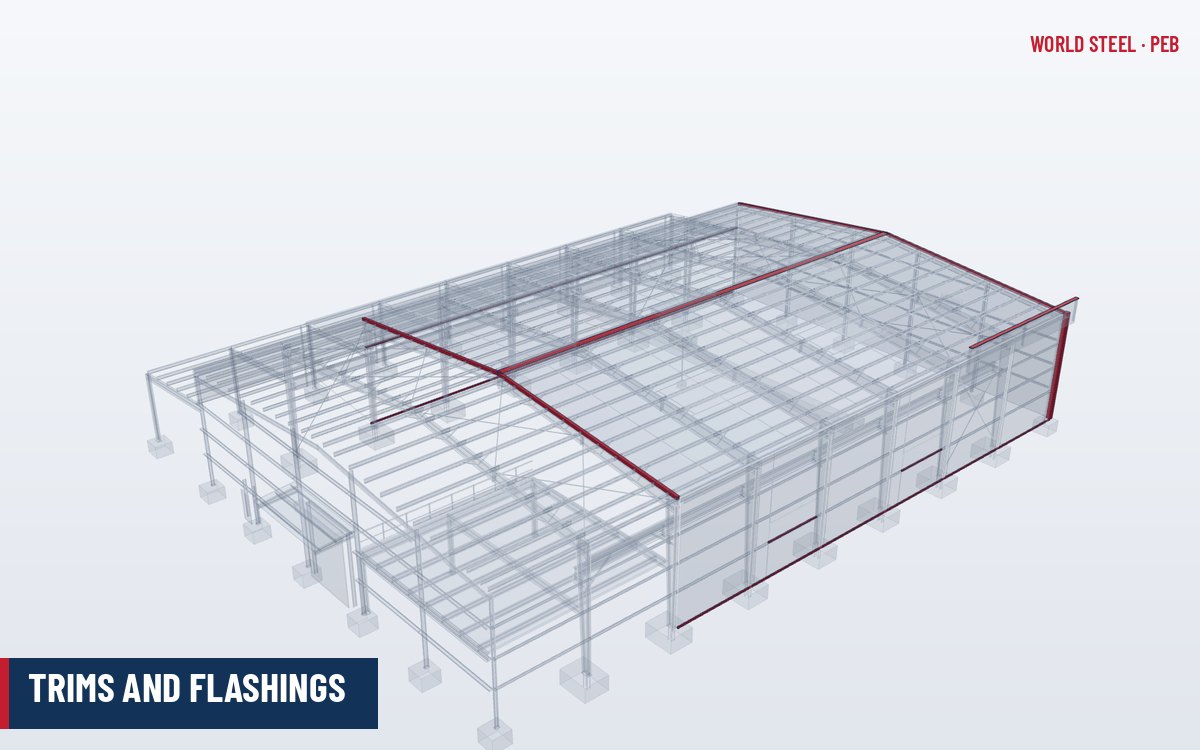
- Fit a head flashing that laps behind the wall sheet above, and a sill flashing that kicks water out beyond the cladding below.
- Seal jamb trims to the sheet ribs with closures and sealant.
- Isolate dissimilar metals (aluminium louver, steel framing) with tapes or washers.
Maintenance
Inspect louvers at least annually and after storms: clear debris and nests from screens, check blade fixings and operators, clean drainage paths on storm louvers, and touch up damaged paint. Blocked louvers reduce ventilation and can create negative internal pressure that affects doors and cladding. See maintenance and inspection for a full building checklist.
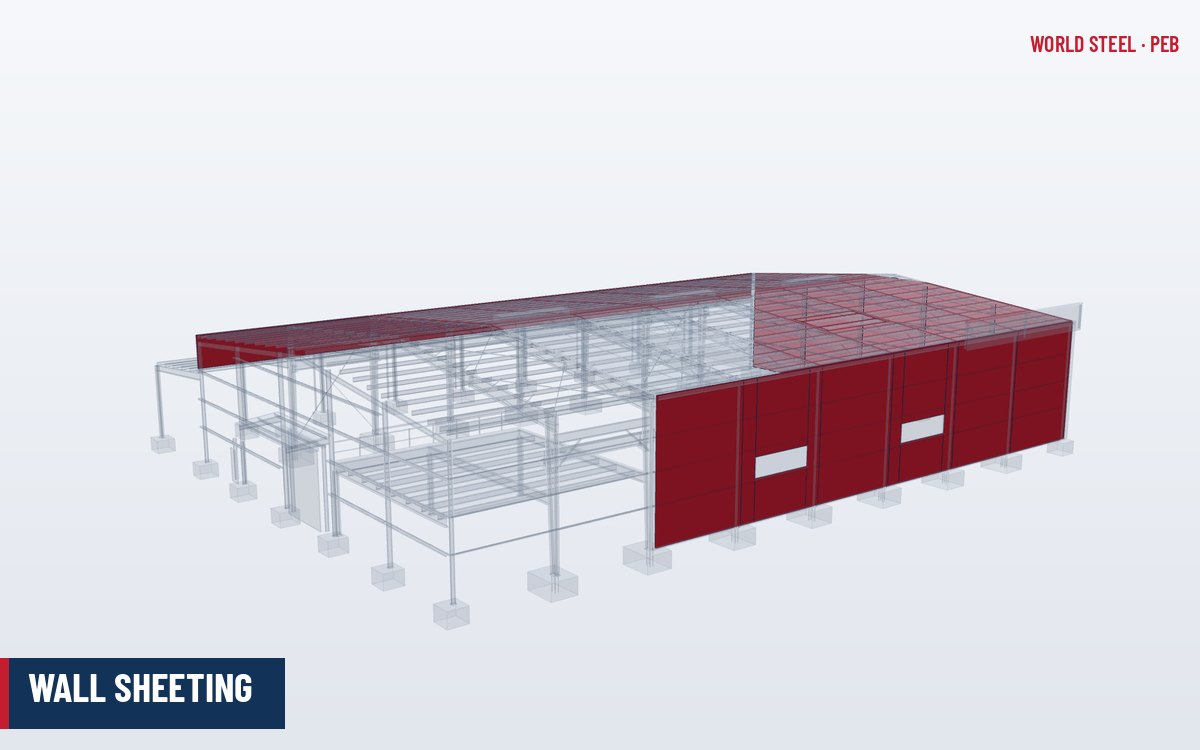
World Steel supplies fixed and adjustable louvers with their opening framing and trims as part of the accessories scope, detailed on the same wall drawings as the wall sheeting.
Normas por região
| Região | Norma | Escopo |
|---|---|---|
 United States |
AMCA 500-L | Laboratory methods of testing louvers for rating |
| United States |
ASCE 7-22 Ch. 30 | Wind pressures on wall components and cladding |
 Canada |
NBC 2020 Part 4 | Wind loads on building envelope components |
 Australia / NZ |
AS/NZS 1170.2:2021 | Wind actions on wall elements |
 Europe |
EN 13030 | Ventilation – terminals – performance testing of louvres subjected to simulated rain |
Perguntas frequentes
What is louver free area?
Free area is the minimum open area through the louver after blades, frame and screens are accounted for. It, not the gross size, determines how much air can pass at a given velocity.
Do wall louvers keep out all rain?
Standard fixed louvers shed most rain but some wind-driven rain can enter at high velocities. Drainable or storm-resistant louvers tested for water penetration should be used where interiors or equipment must stay dry.
Can louvers be added to an existing PEB wall?
Yes, but the wall sheet must be cut and a new framed opening installed between girts, with jamb, head and sill members and new flashings. The girt layout and wind design should be checked by an engineer.