ENEnglish
 VITiếng Việt
 ZH中文
 KO한국어
 JA日本語
 FRFrançais
 ITItaliano
 PTPortuguês
 ESEspañol
 HEעברית
 ARالعربية

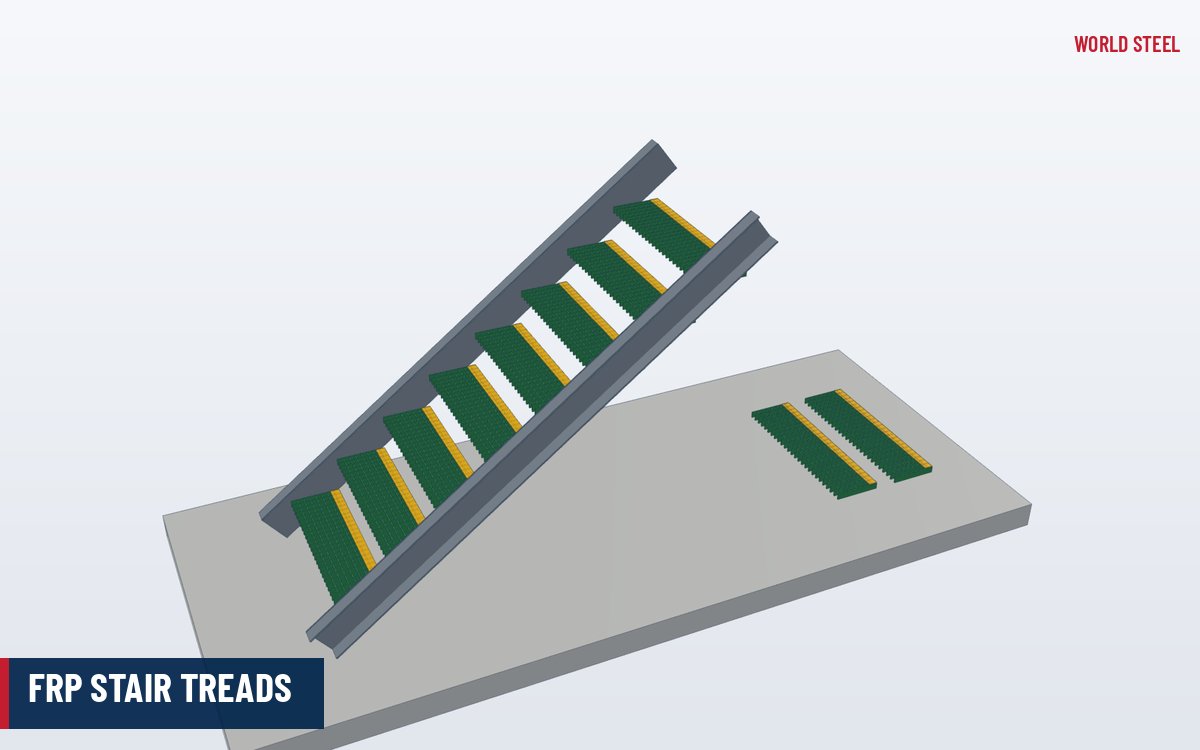
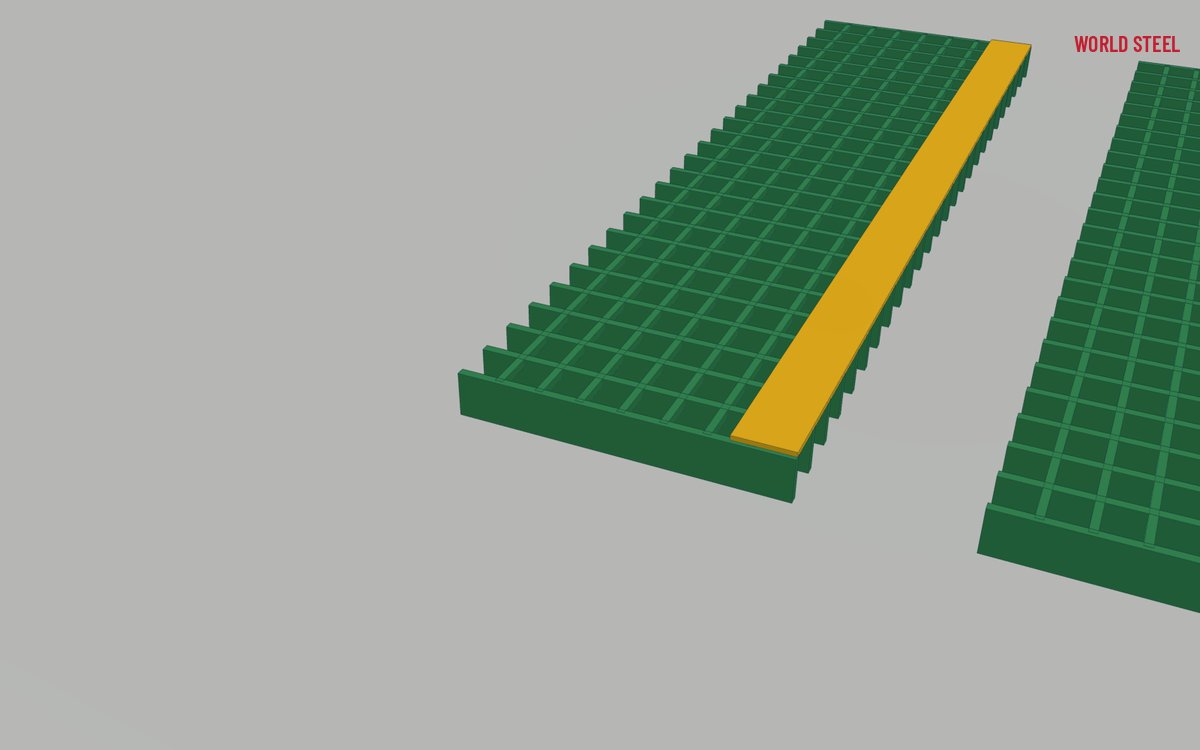
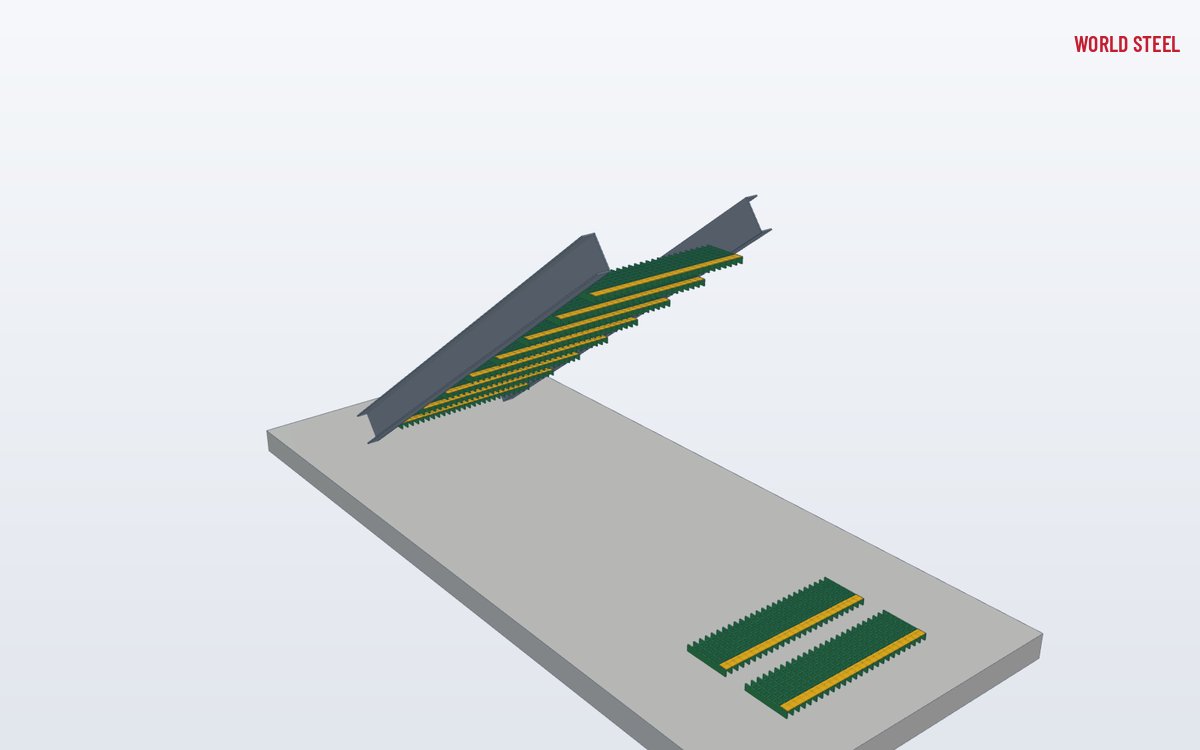
- Grating or solid FRP treads with anti-slip grit
- Contrasting nosing for a clearly visible step edge
- For World Steel steel stringers or FRP stringers
- Going and nosing to AS 1657, OSHA and EN ISO 14122-3
- Supplied from specialist FRP manufacturers – not made by WSC
What it is
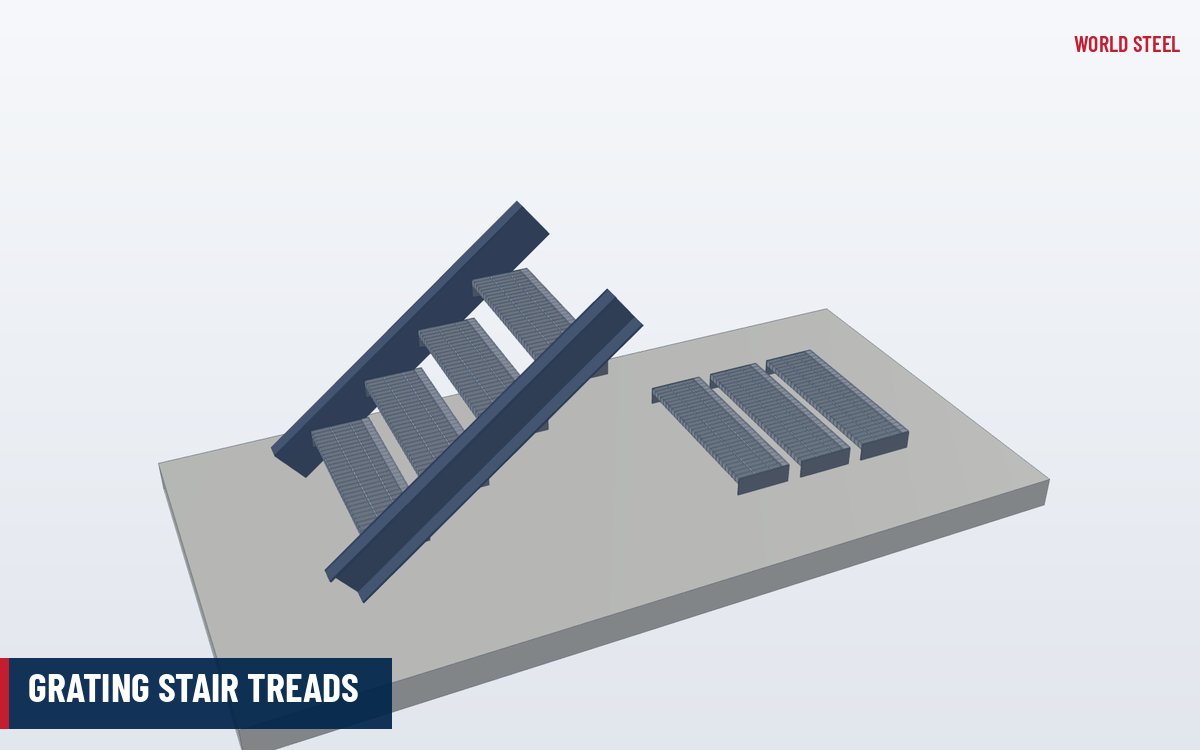
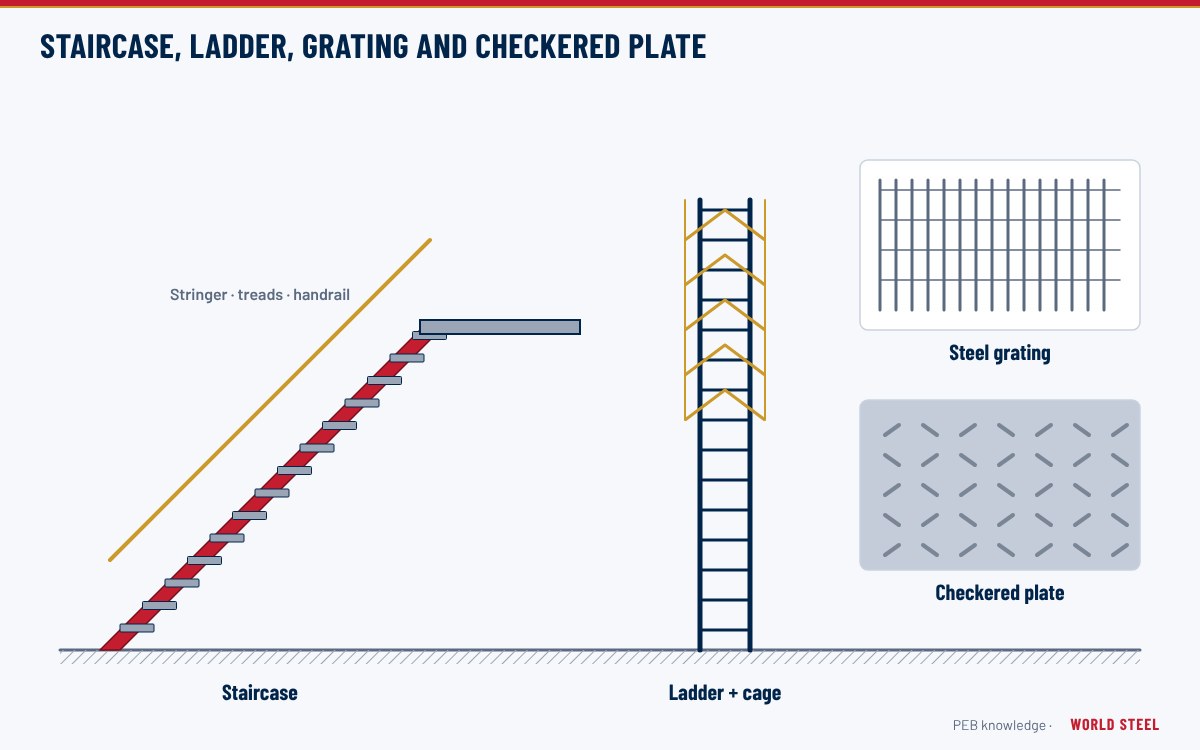
FRP stair treads are steps made from fibreglass reinforced plastic – either cut from FRP grating with a bonded nosing, or moulded as solid treads – that replace steel treads where corrosion, chemicals, salt spray or electrical safety make steel a poor choice. They are common on access stairs in water and wastewater plants, chemical plants, wharves and marine structures, cooling towers and switchyards.
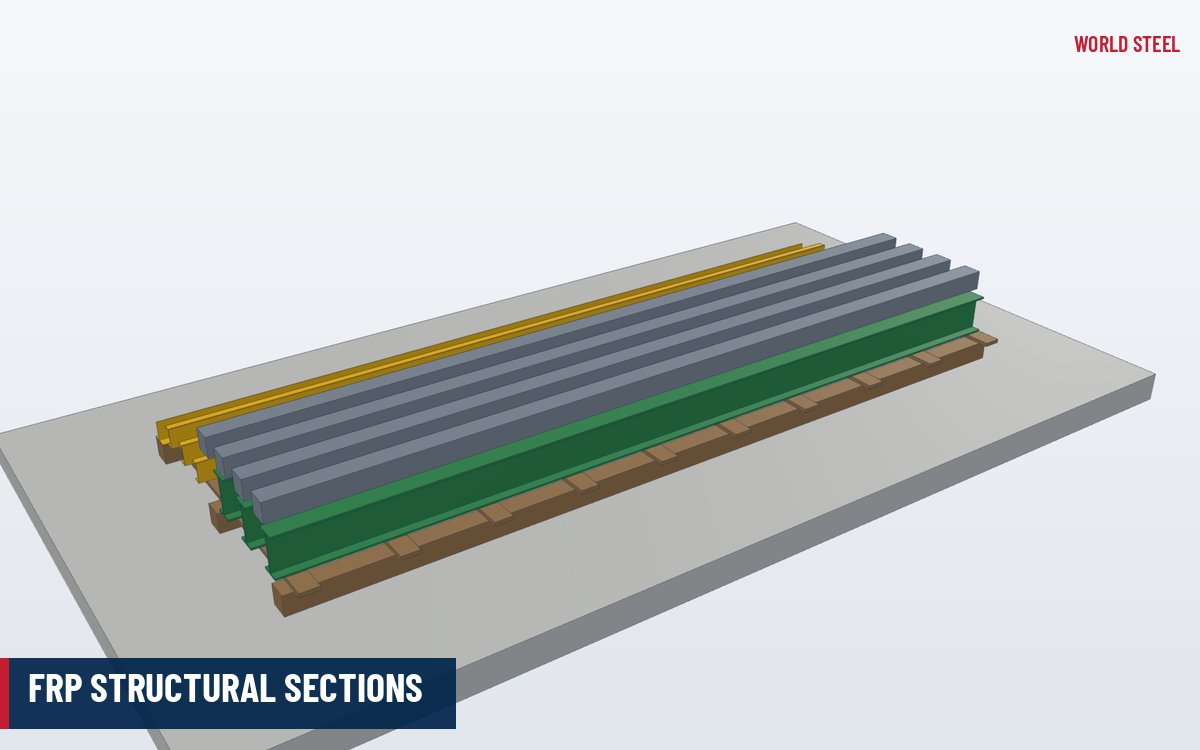
World Steel does not manufacture FRP. We supply FRP treads from specialist FRP manufacturers together with the steel stairs we fabricate: we set out the tread size and fixing points in the stair shop drawings, order treads to suit, fit them to the stringers, check them and pack each flight as a set. Where an all-composite stair is needed, the treads can also be used with stringers made from FRP sections.
Types and options
| Type | Construction | Typical use |
|---|---|---|
| Grating tread | Moulded or pultruded FRP grating with a bonded solid nosing | Outdoor and wet stairs – water drains through |
| Solid tread | Moulded or plate FRP with a grit top | Where nothing may fall through, or for a closed surface |
| Tread cover | Thin FRP plate or nosing fixed over an existing tread | Refurbishing worn or slippery steel treads |
- Nosing: grit-bonded nosing in a contrasting colour (typically yellow) so the step edge stands out.
- Fixing: end plates or angle brackets bolted to the stringer, or stainless clips to carrier angles.
- Resin: polyester for general use, vinyl ester for chemical areas, phenolic where better fire behaviour is required.
Design and compliance
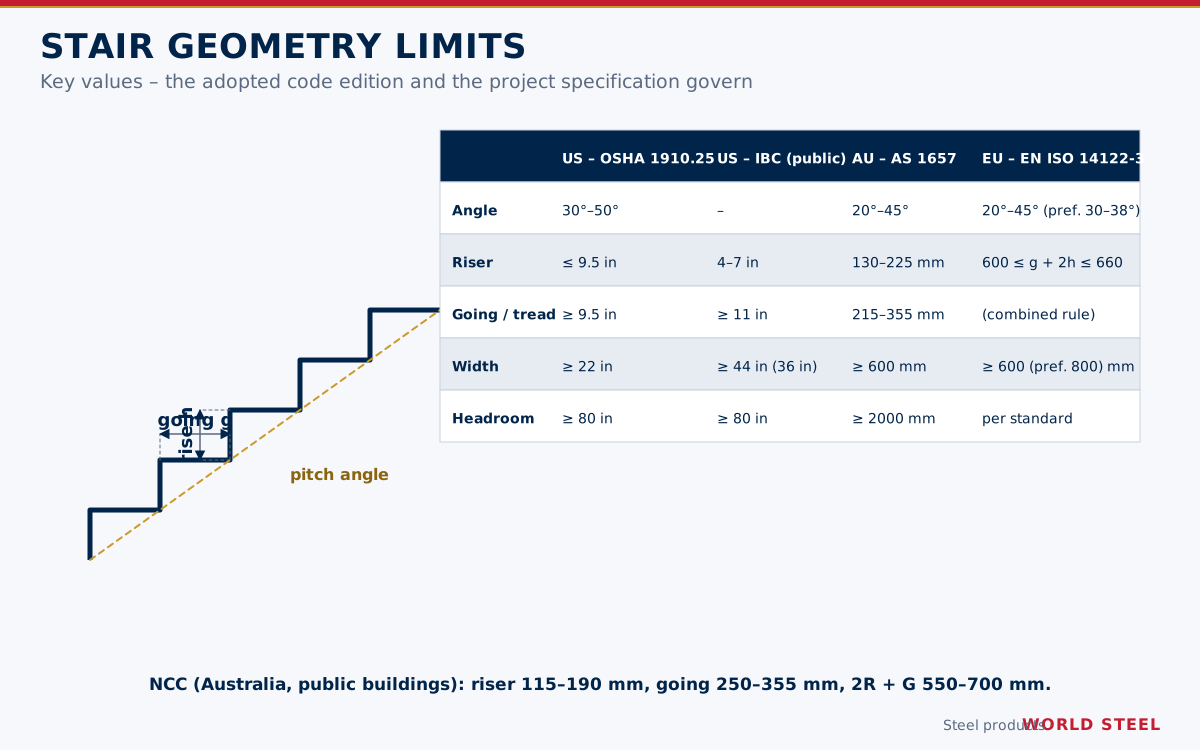
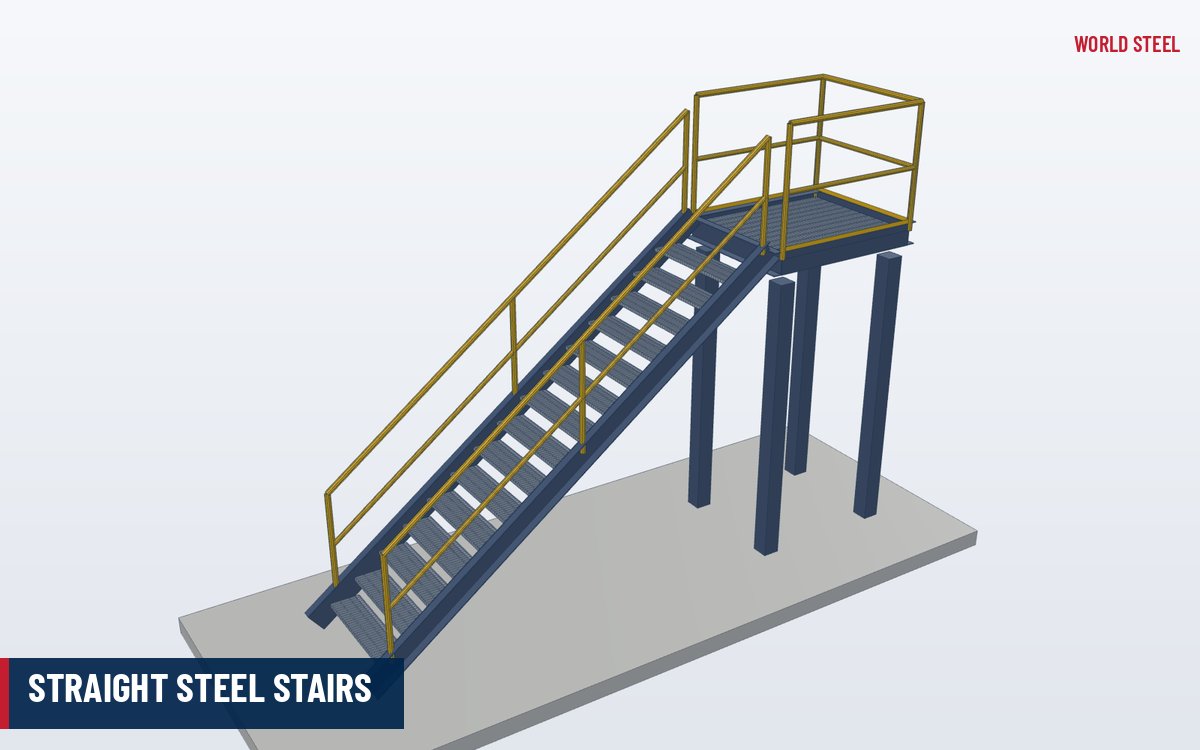
Stair geometry is set by the governing code, not by the tread material. Under OSHA 29 CFR 1910.25 standard stairs have an angle of 30°–50°, riser no more than 9.5 in and tread depth of at least 9.5 in; AS 1657-2018 allows 20°–45°, risers of 130–225 mm and goings of 215–355 mm; EN ISO 14122-3 sets 20°–45° and 600 mm ≤ g + 2h ≤ 660 mm. The tread depth and nosing are chosen so that each flight meets these limits and the overlap rules of the code.
The load per tread is checked against the manufacturer's data for the tread size and span – OSHA requires stairs to carry five times the anticipated live load and not less than a 1,000 lb concentrated load, and AS/NZS 1170.1 or EN 1991-1-1 imposed loads apply elsewhere. Because FRP is much more flexible than steel, deflection under the point load is usually the deciding check. Slip resistance (for example AS 4586 classification) and fire behaviour are product-specific and must be shown in the manufacturer's test reports; World Steel does not test or certify FRP.
Supply and fitting by World Steel
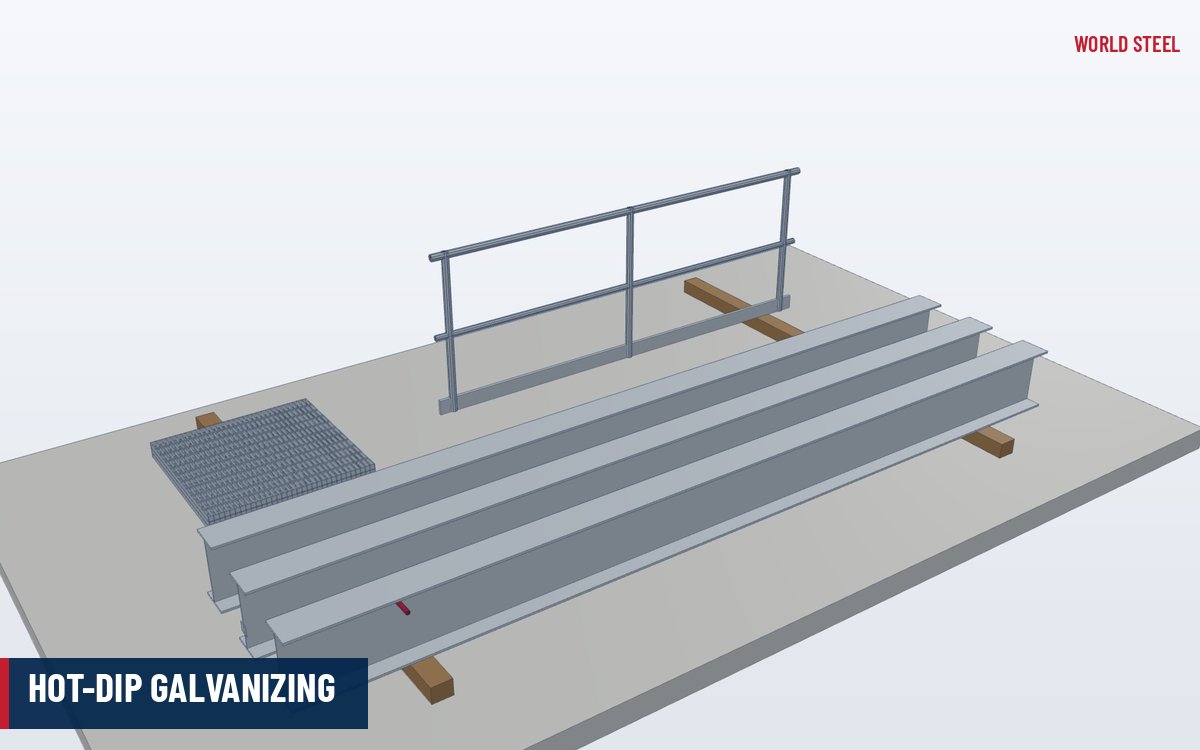
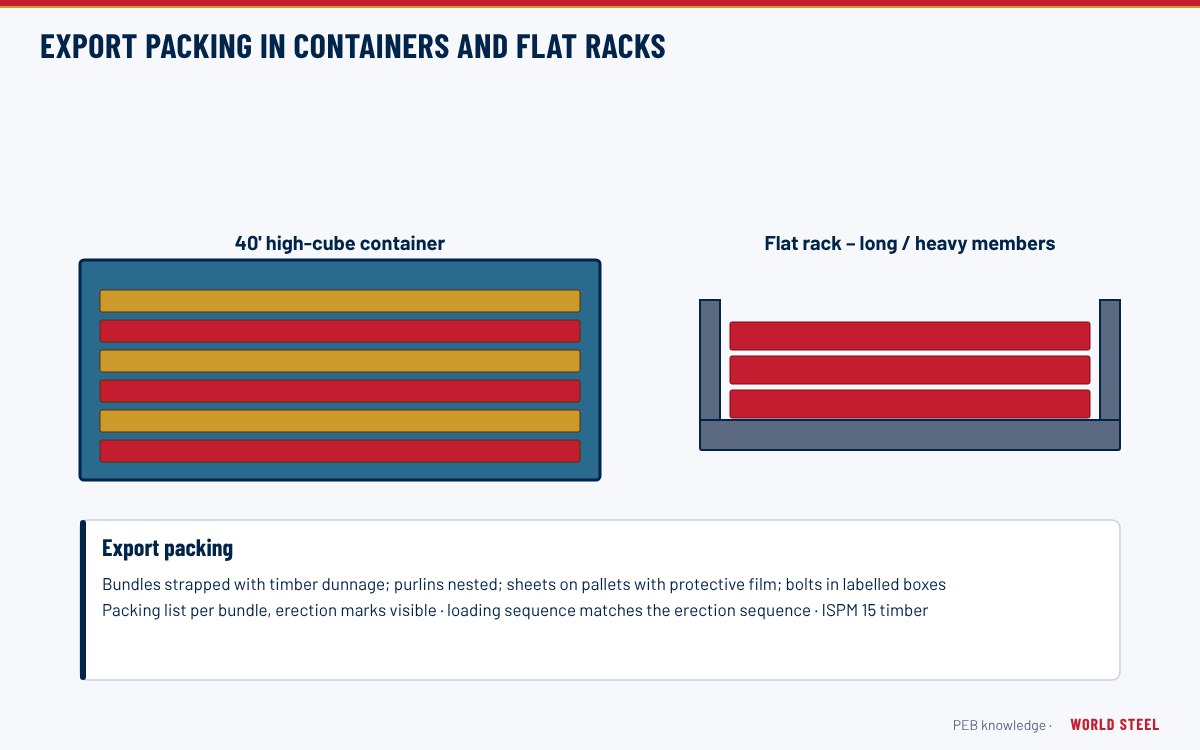
Stringers, landings and stair handrails are fabricated in our plant and finished by hot-dip galvanising or stainless steel. FRP treads are ordered to the shop drawing sizes, cut where needed with every cut edge sealed in compatible resin, and trial-fitted to the stringers when specified. Each flight is labelled and packed with its treads, fixings and touch-up resin for export shipping.
Installation and selecting
- Fix treads with stainless steel bolts and the end plates or clips provided; do not drill extra holes through bearing bars.
- Check that every nosing lines up and the rise is uniform over the flight.
- Seal any site cuts straight away.
- Specify stair width, rise, going, code, type of tread, resin, nosing colour and fire or slip requirement. See also PEB stairs and gratings.
Tiêu chuẩn và yêu cầu theo thị trường
Các quy chuẩn mà World Steel áp dụng để thiết kế, gia công và lập hồ sơ cho sản phẩm này – cùng các yêu cầu chính về hình học và tải trọng tại từng thị trường.
 Hoa Kỳ
- OSHA 29 CFR 1910.25Stairways
- IBCInternational Building Code – stairways
- ASTM E84Surface burning characteristics
- Stair angle
- 30°–50° (OSHA 1910.25(c))
- Riser / tread
- Riser ≤ 9.5 in, tread ≥ 9.5 in (OSHA 1910.25(c))
- Stair load
- 5 × live load, ≥ 1,000 lb point load (OSHA 1910.25)
 Úc / NZ
- AS 1657-2018Fixed platforms, walkways, stairways and ladders
- AS 4586Slip resistance classification
- AS/NZS 1170.1Imposed actions
- Stair angle
- 20°–45° (AS 1657)
- Riser / going
- 130–225 mm / 215–355 mm (AS 1657)
- 2R + G
- 540–700 mm (AS 1657)
 Châu Âu
- EN ISO 14122-3Stairs, stepladders and guard-rails
- EN 1991-1-1Imposed loads
- EN 13501-1Reaction to fire classification
- Stair angle
- 20°–45°, preferably 30°–38° (EN ISO 14122-3)
- Step rule
- 600 mm ≤ g + 2h ≤ 660 mm (EN ISO 14122-3)
Nội dung chỉ mang tính tham khảo – chỉ dẫn kỹ thuật của dự án, phiên bản quy chuẩn được áp dụng và cơ quan có thẩm quyền là căn cứ quyết định.
Hoàn thiện bề mặt
| Hoàn thiện bề mặt | Tiêu chuẩn / ghi chú |
|---|---|
| Pigmented FRP with grit top | Colour through the resin; grit-bonded surface by the manufacturer |
| Contrasting nosing | Typically safety yellow on a grey or green tread |
| Stringers and landings | Hot-dip galvanised to ASTM A123 · AS/NZS 4680 · EN ISO 1461, or stainless steel |
Câu hỏi thường gặp
Does World Steel make FRP treads?
No. The treads come from specialist FRP manufacturers. World Steel supplies them with the stairs, fits them to the stringers, inspects them and ships each flight as a set.
Can FRP treads go on steel stringers?
Yes – that is the most common arrangement. Galvanised or stainless stringers from our plant carry FRP treads fixed with end plates or clips and stainless bolts.
How do you check the tread strength?
Against the manufacturer's load data for the tread size and span, using the stair load of the governing code. Deflection under the point load usually decides.
Are the treads slip or fire rated?
Slip and fire performance are product-specific. Where required, the manufacturer's test reports for the exact product are supplied.
 New Zealand
 AS/NZS 5131 CC3
 EN 1090 EXC3 · CE