ENEnglish
 VITiếng Việt
 ZH中文
 KO한국어
 JA日本語
 FRFrançais
 ITItaliano
 PTPortuguês
 ESEspañol
 HEעברית
 ARالعربية

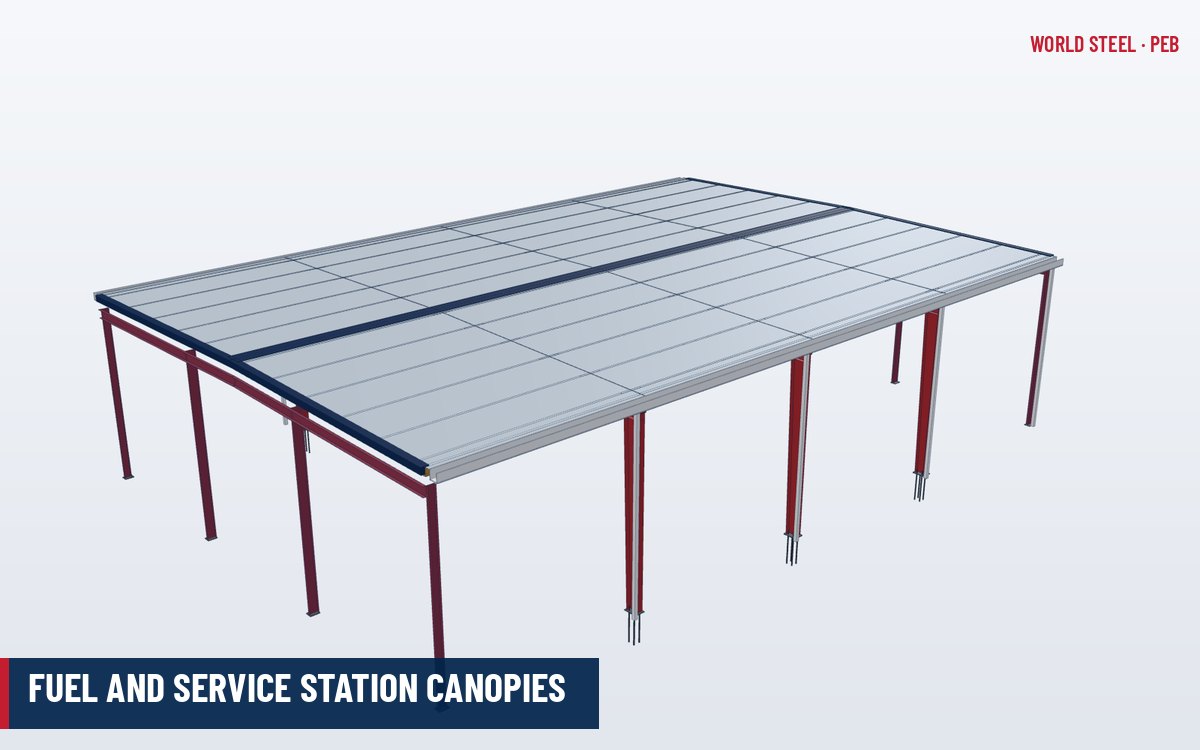
What a fuel station project includes
A modern fuel or service station is a small campus of steel structures: the forecourt canopy over the dispenser islands, a convenience store or sales building, and often a car wash, lubrication or service bays, a truck canopy for diesel lanes and EV charging shelters. Fuel retailers build many similar sites, so they value repeatable, branded designs that can be fabricated as kits and erected quickly with minimal disruption to an operating site. Pre-engineered steel suits both the canopy and the enclosed buildings, which are typically small clear-span or low-rise structures.
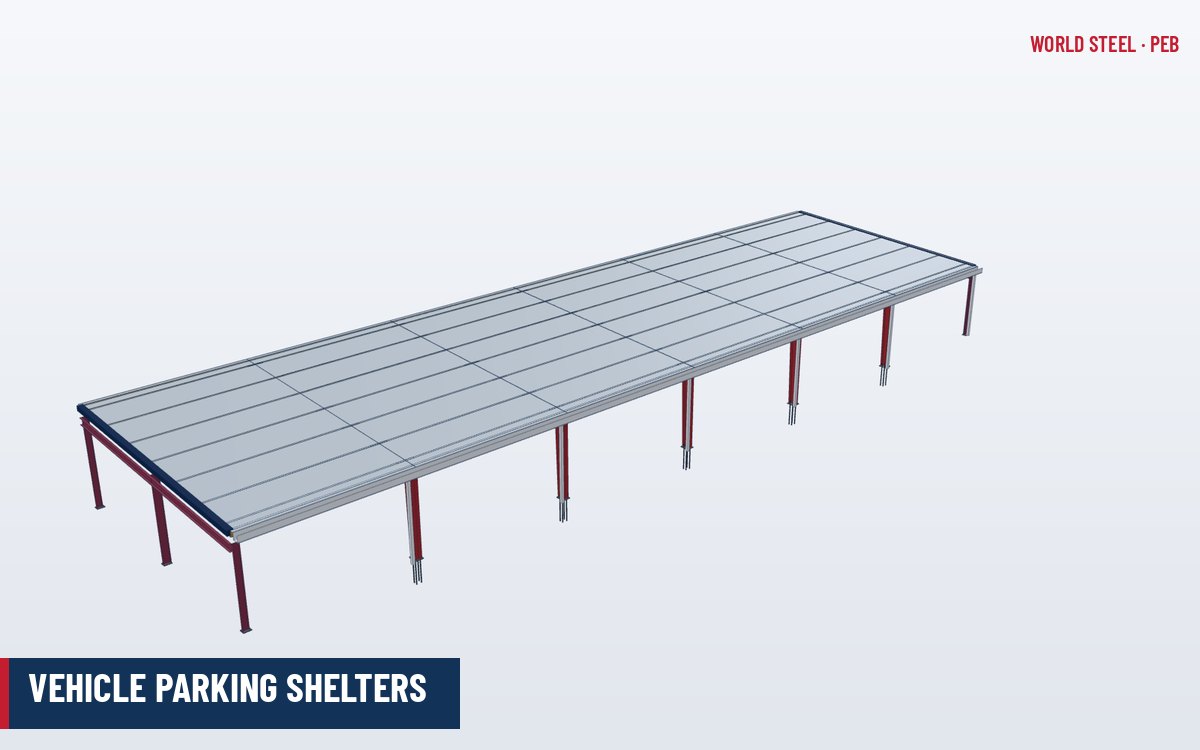
Forecourt canopy configuration
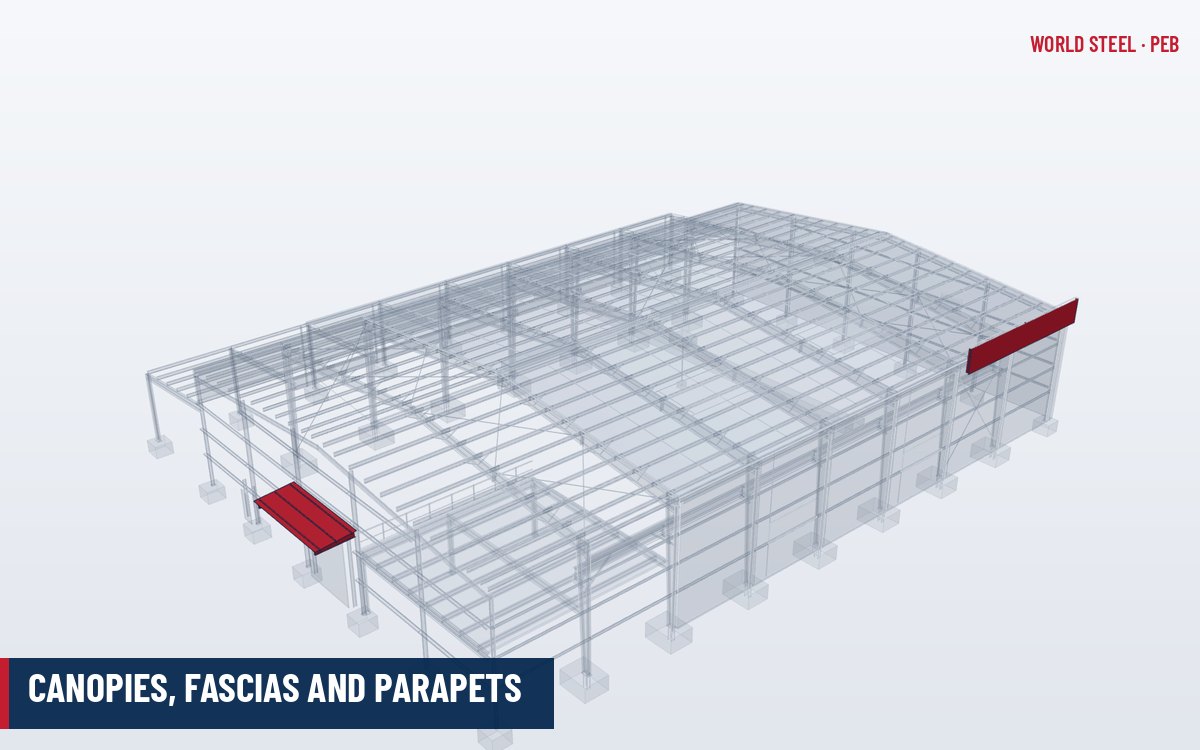
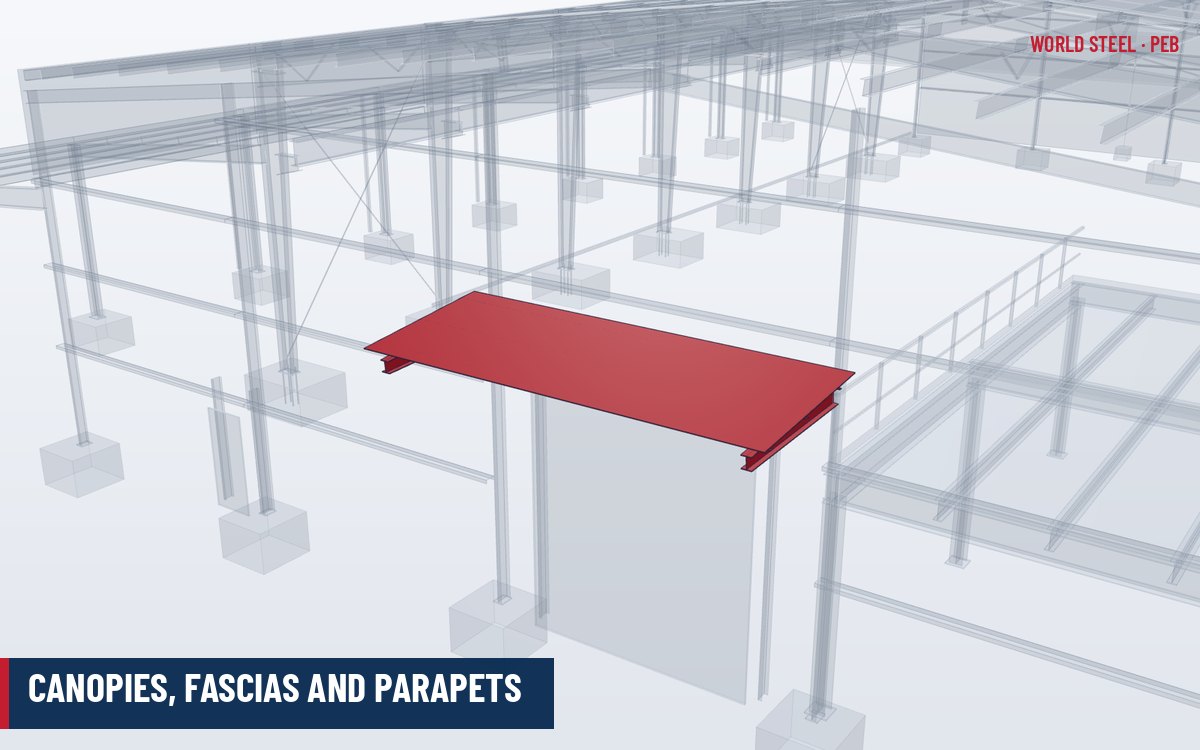
Canopies are usually flat-looking boxes: a structural steel grid of main beams and secondary members, a low-slope roof hidden behind a deep perimeter fascia, and a flat soffit with recessed lighting. Columns stand within the dispenser islands, protected by the island kerb, and are clad with branded column covers.
| Parameter | Typical range | Notes |
|---|---|---|
| Clear height – car lanes | 4.5–5.0 m | Allows vans and fuel delivery clearance |
| Clear height – truck / diesel lanes | 5.0–6.0 m | Check local vehicle height limits |
| Column spacing along islands | 6–12 m | Set by dispenser layout |
| Cantilever beyond columns | 3–6 m | Covers lanes on both sides of islands |
| Fascia depth | 0.9–1.5 m | Carries brand graphics and lighting |
| Roof slope | 1–3° (concealed) | Drains to internal gutters |
Design and safety considerations
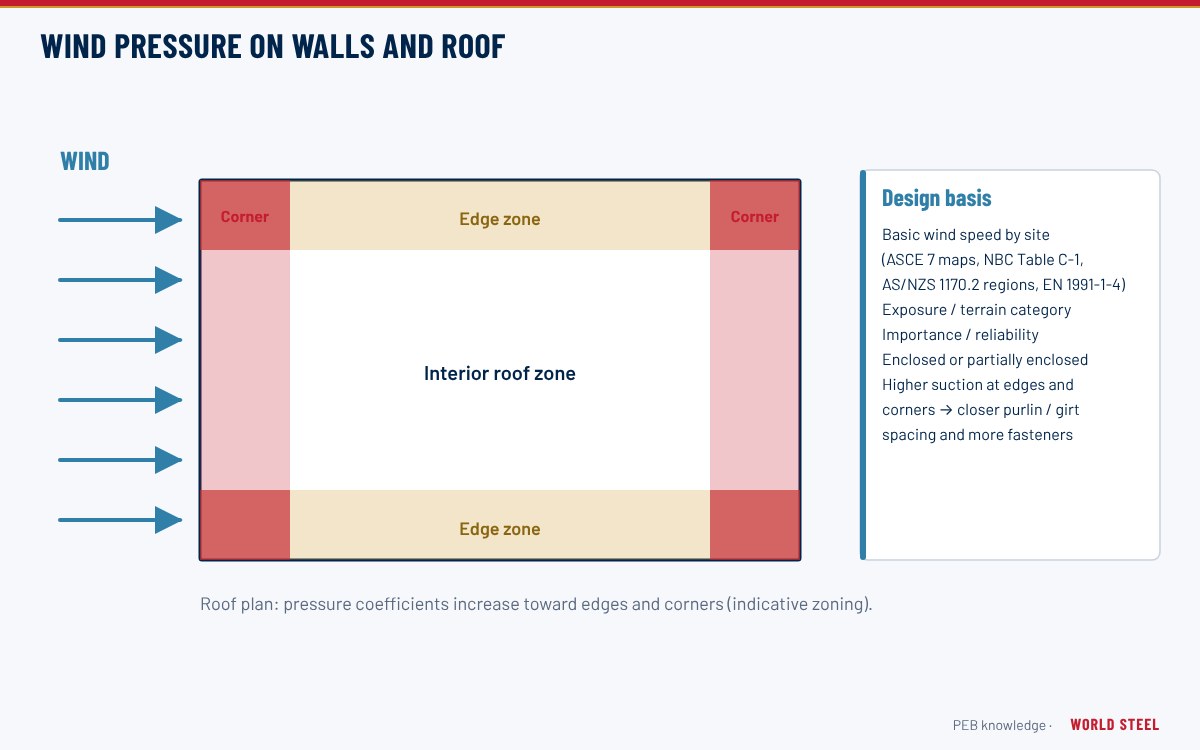
- Wind – the canopy is an open free roof with a deep fascia that catches wind on both faces; uplift, lateral load on the fascia and column base moments govern. See wind design.
- Drainage – roof water is collected in internal gutters and carried down inside the columns to the stormwater system, which must stay separate from the forecourt's oil-contaminated drainage.
- Hazardous areas – fuel vapour zones around dispensers and vents are classified under the electrical codes, which affects canopy lighting, cable routing and any equipment within the zone. Canopy materials should be non-combustible; fascia panels such as aluminium composite should have fire-rated cores.
- Vehicle impact – columns sit inside raised islands or behind bollards and must tolerate occasional impact.
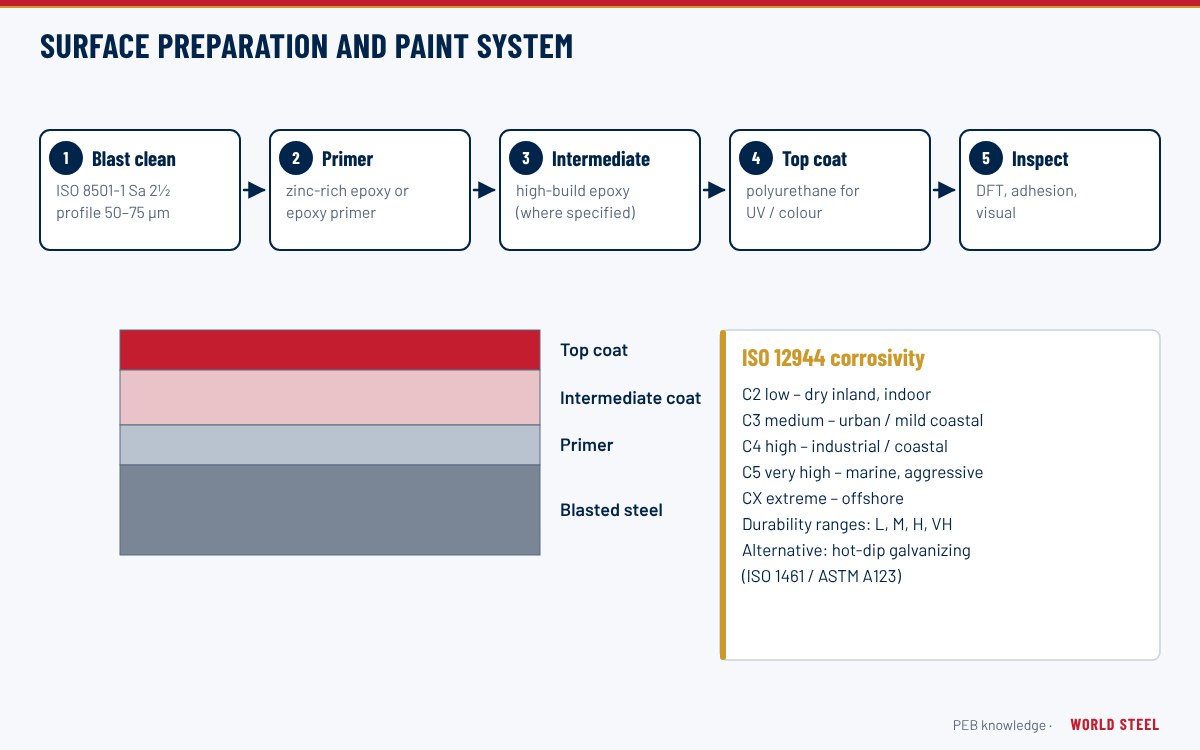
- Corrosion and appearance – exposure to rain, fuel splash and car-wash spray calls for a good paint system or galvanizing, plus a clean, bright soffit finish that reflects light.
- Services coordination – lighting, CCTV, fire suppression nozzles, signage power and EV charger cabling must be built into the canopy before erection.
Sales buildings, car washes and service bays
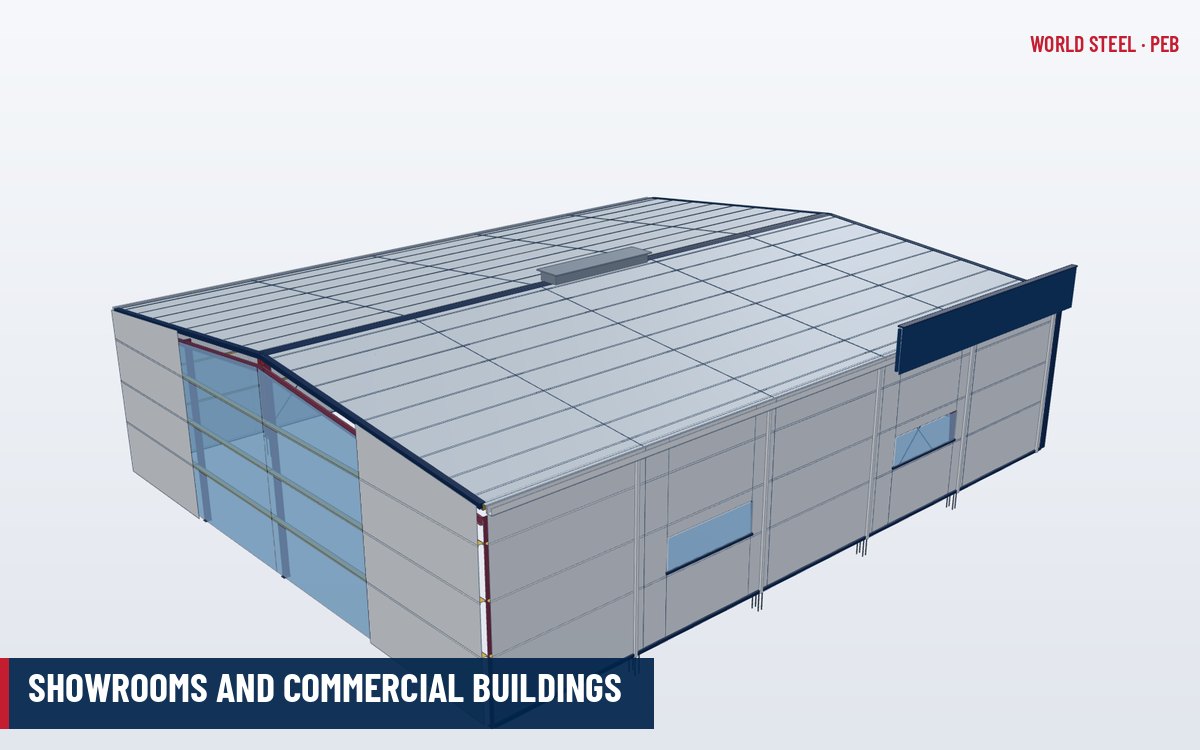
The station building is typically a single-storey steel frame of 10–25 m span with insulated wall and roof panels, glazed shopfronts and a canopy linking it to the forecourt. Car-wash halls need corrosion-resistant framing and cladding, often sandwich panels with hygienic liners. Service and lube bays need wide framed door openings, pits and sometimes light lifting beams. Because these buildings are repeated across a network, a standardised steel kit with fixed piece marks speeds up approvals, procurement and erection on each new site.
Many networks are now adding EV charging hubs beside or within the forecourt. Charging bays use canopy structures similar to parking shelters, often with roof-mounted solar panels, and need cable routes, transformer and switchboard enclosures and impact protection for chargers. Planning the canopy grid so that future chargers and solar modules can be added avoids later strengthening and keeps the forecourt operating during upgrades.
World Steel fuel station structures
World Steel fabricates forecourt canopy frames, fascia framing, support steel for column covers and complete station buildings as PEB buildings and steel frames, with painting or galvanizing to the retailer's specification. Repeat designs can be held as standard drawing sets, so each new commercial site needs only the site-specific checks for wind, seismic and foundations before release to fabrication.
المعايير حسب المنطقة
| المنطقة | الرمز | النطاق |
|---|---|---|
 United States |
NFPA 30A / NFPA 70 / ASCE 7-22 | Motor fuel dispensing facilities; hazardous location wiring; wind on canopies |
 Canada |
NFCC 2020 / CSA C22.1 / NBC 2020 | Fire code for dispensing stations; electrical code; structural loads |
 Australia / NZ |
AS 1940 / AS/NZS 60079.10.1 / AS/NZS 1170.2 | Flammable liquids storage; hazardous area classification; wind actions |
 Europe |
EN IEC 60079-10-1 / ATEX 2014/34/EU / EN 1991-1-4 | Hazardous areas; equipment for explosive atmospheres; wind on canopies |
الأسئلة المتكررة
How high should a fuel station canopy be?
Clear heights of 4.5–5.0 m are typical for car forecourts and 5.0–6.0 m for truck and diesel lanes, but local vehicle height limits and the fuel company's standards decide the final value.
Where does rainwater from the canopy go?
Usually into concealed gutters and down pipes inside the columns, discharging to the clean stormwater system, kept separate from the forecourt drainage that passes through oil separators.
Can the same canopy design be reused at many sites?
Yes. A standard canopy kit can be reused, but each site still needs checks for local wind, seismic and soil conditions, and the foundations are designed per site.