 ENEnglish
 VITiếng Việt
 ZH中文
 KO한국어
 JA日本語
 FRFrançais
 ITItaliano
 PTPortuguês
 ESEspañol
 HEעברית
 ARالعربية

 interior · low odour
Water-based
Low VOC, for dry interiors and occupied buildings – offices, schools, retail.
Fire protection · Intumescent coatings
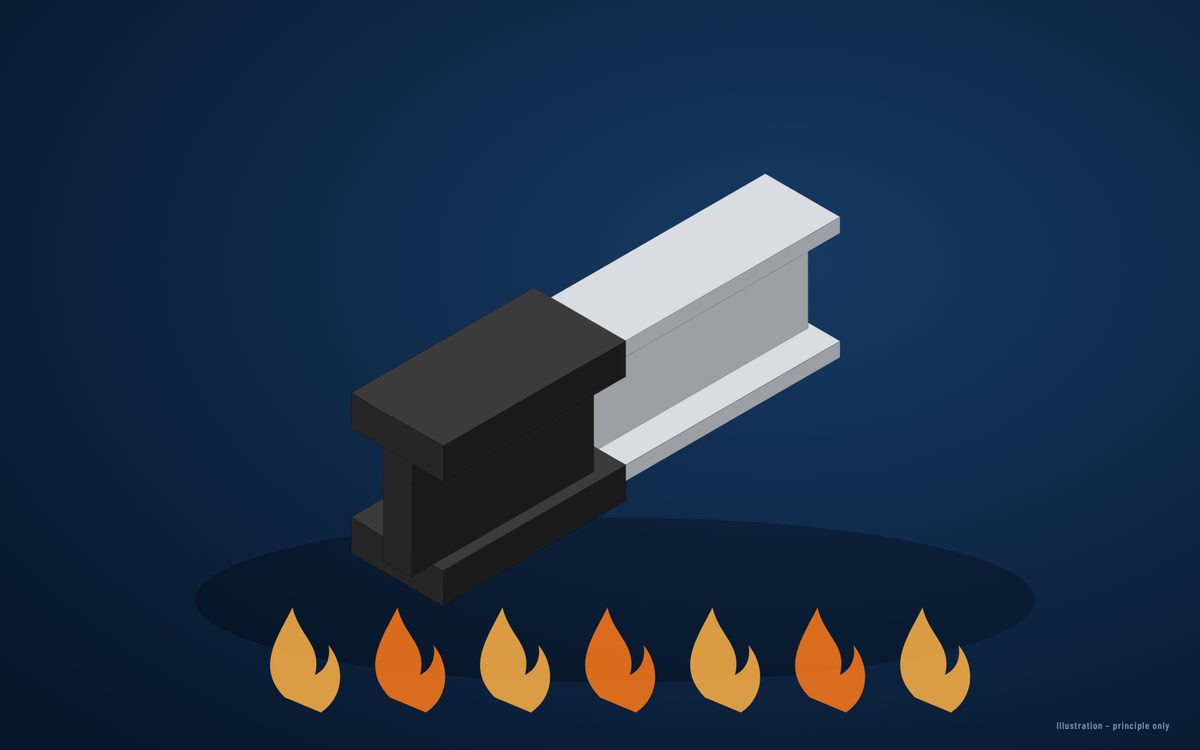
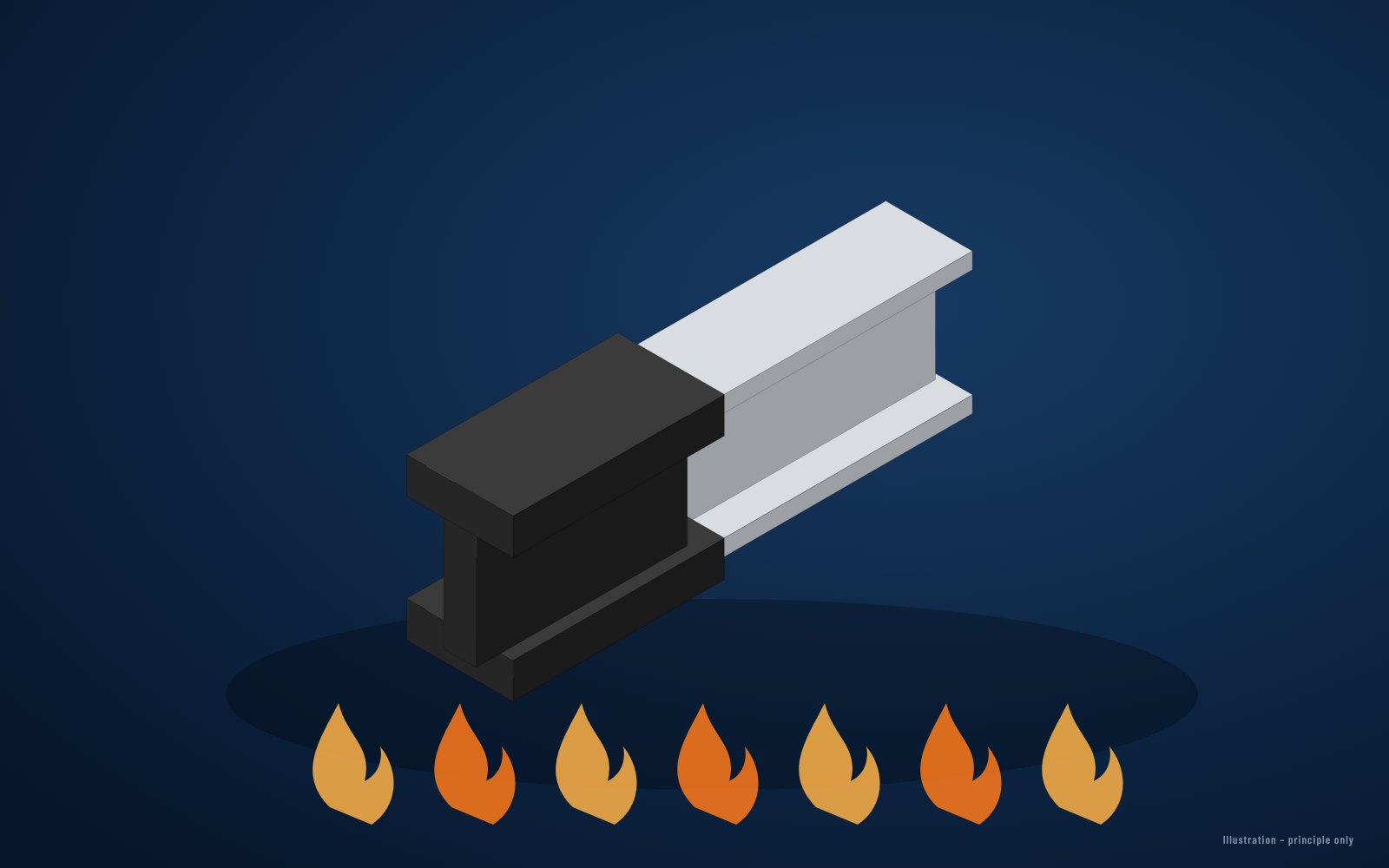
An intumescent coating looks like paint, but in a fire it swells up to dozens of times its thickness into a carbon char that insulates the steel. It is the preferred fire protection for exposed and architectural steel – and it can be applied in the factory, so steel arrives on site ready to erect.
The coating system has three layers: an anti-corrosion primer, the intumescent basecoat and a topcoat for colour and protection. When the coating is heated, chemical reactions release gases that blow the softened binder into a thick, foamed char. The char has very low thermal conductivity and slows the rise of steel temperature.
The required dry film thickness (DFT) is taken from the product's tested and assessed data for each member – using its section factor, the critical temperature and the required fire rating. Thin-film products cover cellulosic (building) fires; thick-film epoxy systems are made for the faster, hotter hydrocarbon fires of oil, gas and petrochemical plants.
Gamme de produits
Product-type pages with typical data – brand and listed system per specification.
Thin-film water-based and solvent-based coatings for steel in buildings – ratings typically R30 to R120.
Thin-film · cellulosicWater-based intumescent coatingA low-odour, water-borne thin-film coating for steel in dry interiors – offices, schools, shopping centres and car parks with a protective topcoat.Cellulosic (building)Fire typeR30 – R120Typical ratingVoir le produit →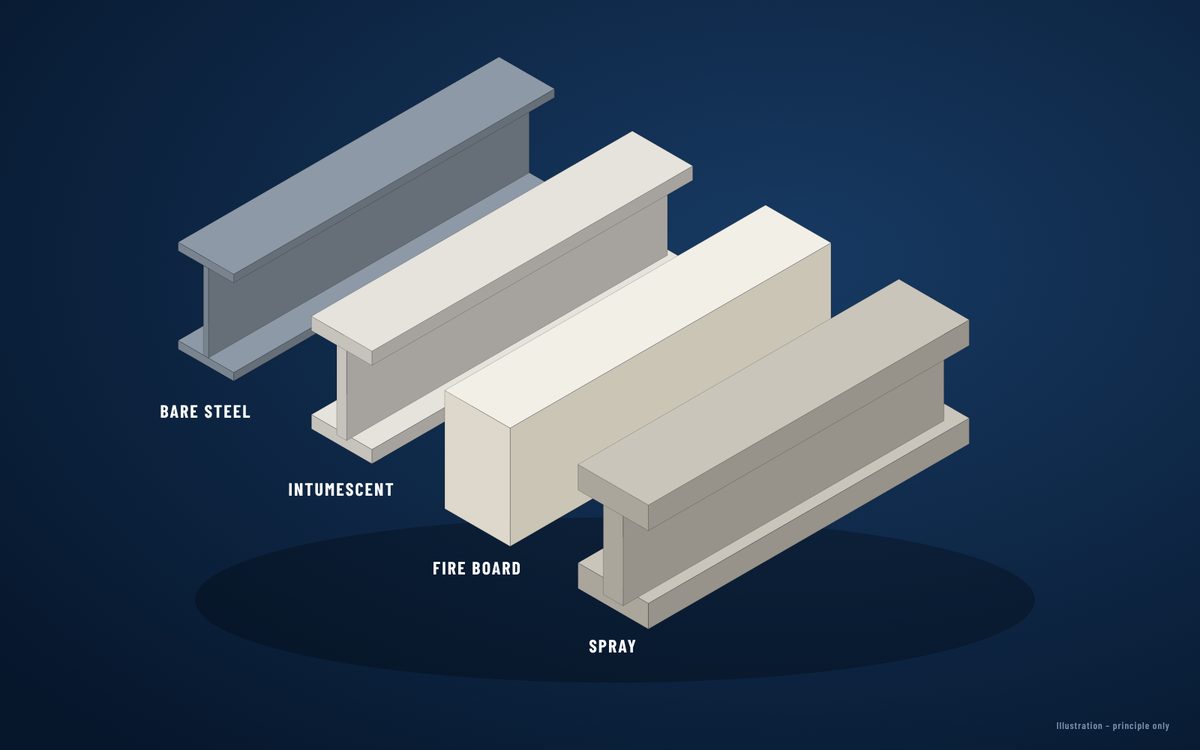 Thin-film · cellulosicSolvent-based intumescent coatingA fast-drying, humidity-tolerant thin-film coating – the usual choice for shop-applied fire protection on export projects.Cellulosic (building)Fire typeR30 – R120Typical ratingVoir le produit →Intumescent · exterior exposureExterior-grade intumescent systemsSteel outside the building envelope needs an intumescent system proven to keep its fire performance after weathering.Exterior / semi-exposedExposureEAD 350402 type X or YDurabilityVoir le produit →
Thick-film epoxy systems for oil & gas, petrochemical and offshore steel – hydrocarbon and jet-fire scenarios.
Types
Typical properties – each brand's assessed data defines the actual thickness.
interior · low odour
Low VOC, for dry interiors and occupied buildings – offices, schools, retail.
shop-applied · fast drying
Faster drying and more humidity-tolerant – the usual choice for off-site application.
hydrocarbon · C5
Hard, durable systems for oil & gas, LNG and offshore steel – hydrocarbon and jet fire.
Normes et conformité
Most often specified in our export markets.
 Europe
 United States
 Australia & New Zealand
Synthèse fournie à titre indicatif – le cahier des charges du projet, l'édition du code adoptée et l'autorité compétente prévalent.
World Steel painting shop
World Steel blasts the steel to the specified surface grade, applies a compatible primer and the intumescent basecoat to the fire engineer's thickness schedule, then records the dry film thickness of each member in the coating report. Members are packed with protection at lifting points and supports; a touch-up kit and procedure travel with the shipment. See fire protection for structural steel.
Advantages and limitations
| Advantage | Why it matters |
|---|---|
| Slim and decorative | The steel's shape stays visible – ideal for architectural steel |
| Off-site application | Fewer site trades; steel arrives protected |
| Light weight | No extra load on the structure |
| Covers complex details | Connections, cellular beams and hollow sections |
| Limitation | What to do |
|---|---|
| Cost rises at long ratings | Above ≈ 90–120 min compare boards or sprays |
| Damage in transport | Careful packing, touch-up procedure on site |
| Humidity and exposure | Choose the right type and an approved topcoat |
| Thickness is critical | Measure and record DFT for every member |
FAQ
Typically from a few tenths of a millimetre to a few millimetres of dry film for building fires – set member by member from the product's assessed data.
Some products are approved for exterior or semi-exposed use with a specific topcoat; epoxy systems are made for harsh exterior and offshore conditions.
Both are possible. Factory application gives better control of thickness and saves site time; damaged areas are touched up after erection.
Dry film thickness is measured on each member and recorded against the schedule; the inspector compares it with the required thickness.
Send the member schedule and fire ratings – we quote steel and intumescent coating together.