ENEnglish
 ZH中文
 KO한국어
 JA日本語
 FRFrançais
 ITItaliano
 PTPortuguês
 ESEspañol
 HEעברית
 ARالعربية

 timber · straps · PE
Structural steel components
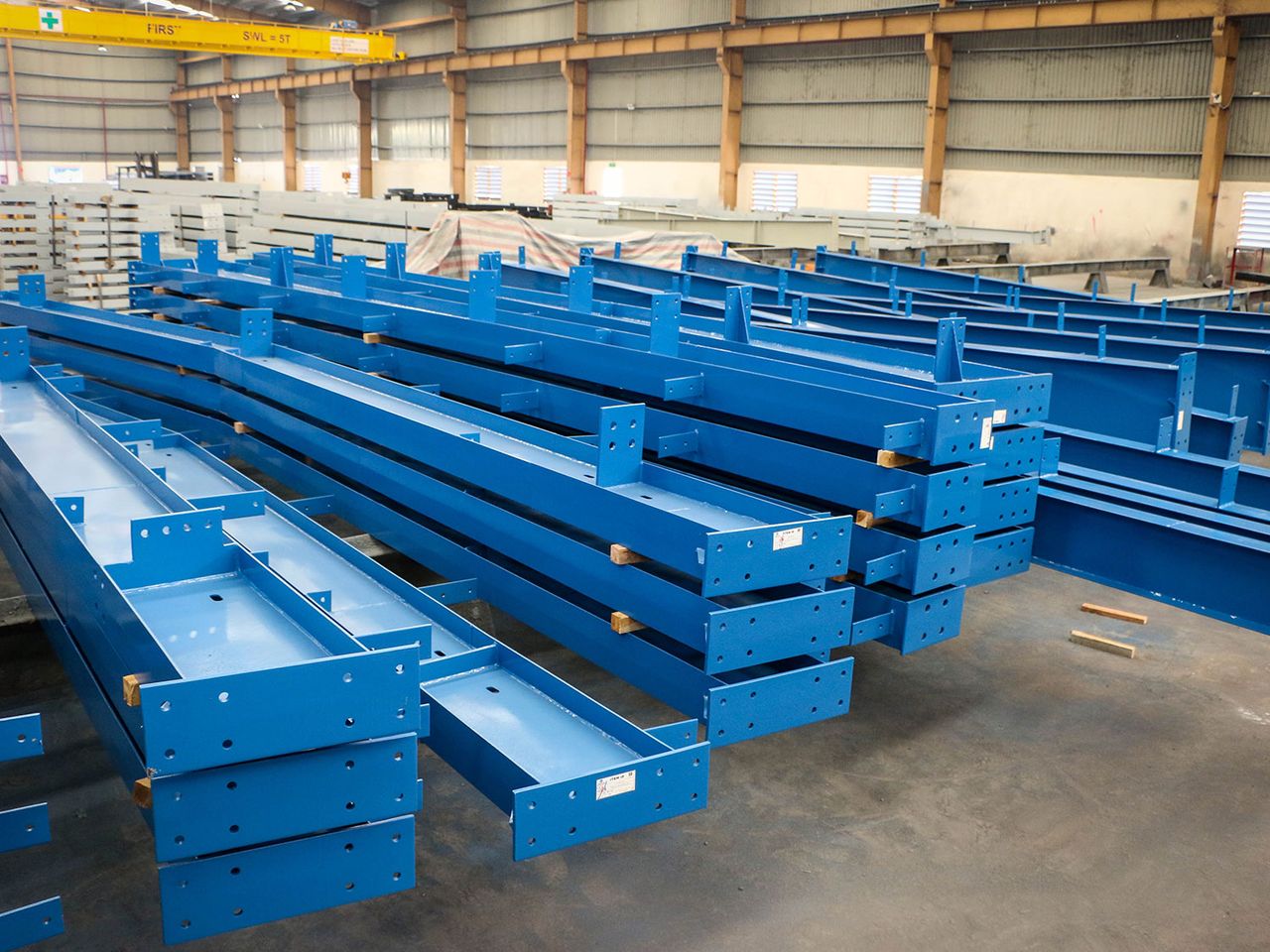
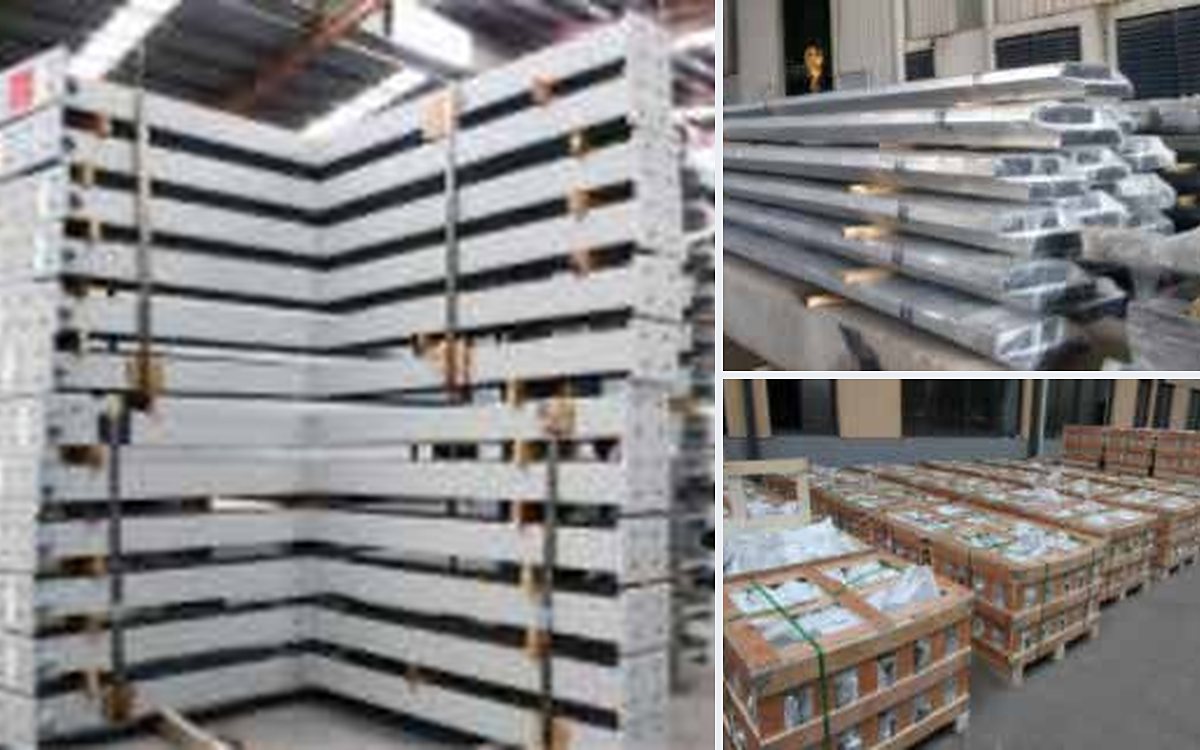
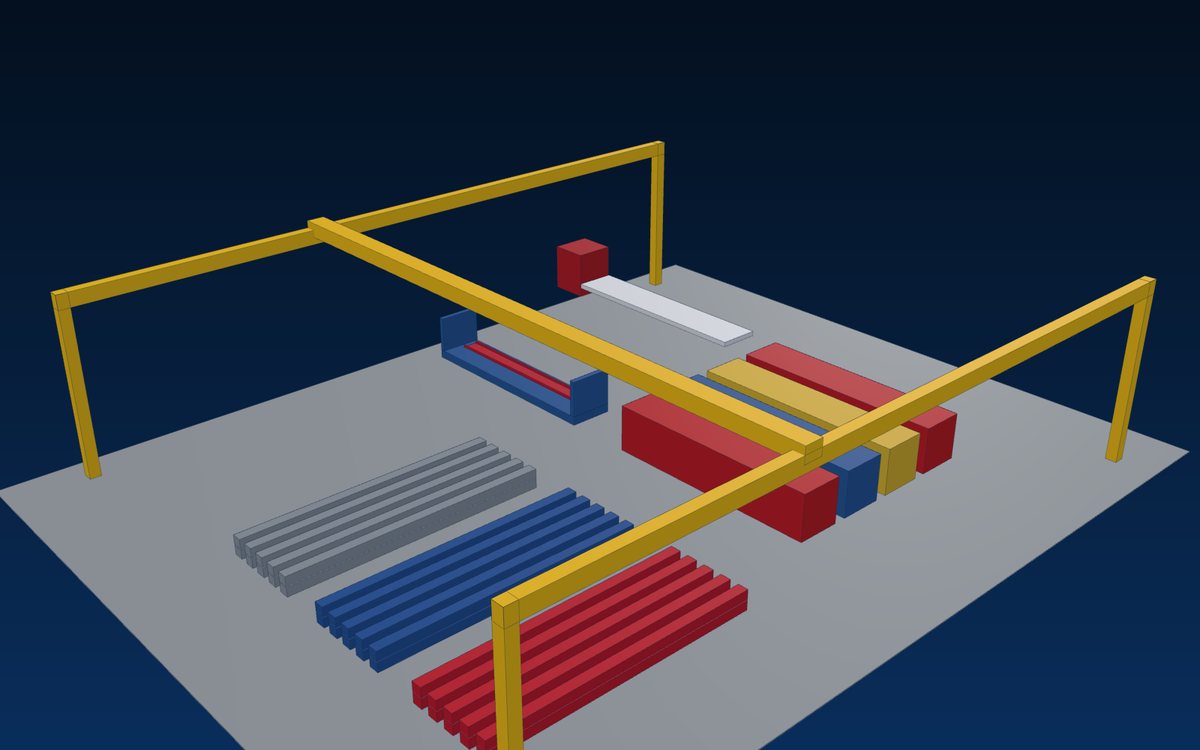
Small, uniform members laid on 20×80 / 40×80 timber, strapped in bundles, PE-wrapped when required, with packing list attached.
Solution · Export packing
A documented 11-step packing procedure protects every member from our factory to your site: goods packed by type, loaded in layers on steel support frames, braced, inspected by QA/QC, sealed and recorded with photos – for containers, flatbed trucks and break-bulk shipments.
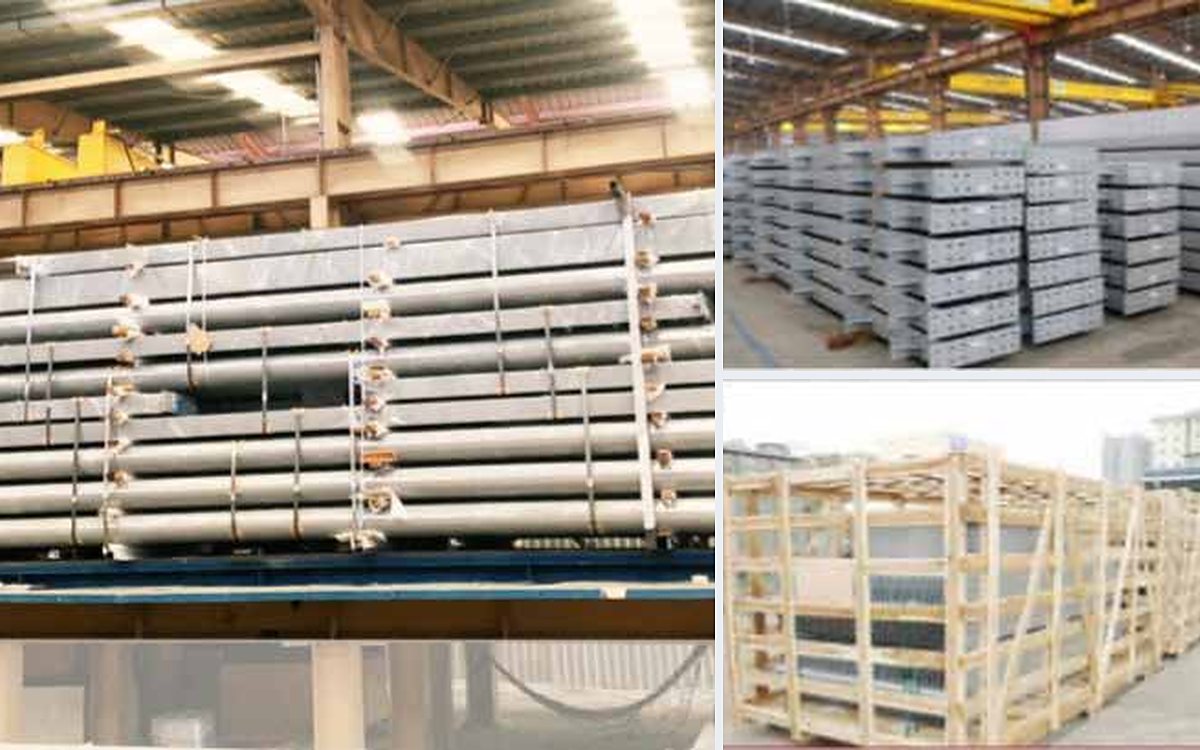
A steel structure is only as good as the condition it arrives in. Paint damage, bent flanges, scratched sheeting or a missing box of bolts cost time and money on site – far more than careful packing in the factory.
That is why packing at World Steel is a production step of its own, with a written procedure, trained crews, specified packing materials and a QA/QC release before any container or truck leaves the factory. Every package carries its packing list, every load is photographed, and every shipment is documented for the export supply and customs process.
Packed by type of goods
Goods are collected, checked and classified by shape, size and weight, then packed with the method that protects them best.
timber · straps · PE
Small, uniform members laid on 20×80 / 40×80 timber, strapped in bundles, PE-wrapped when required, with packing list attached.
 pallets
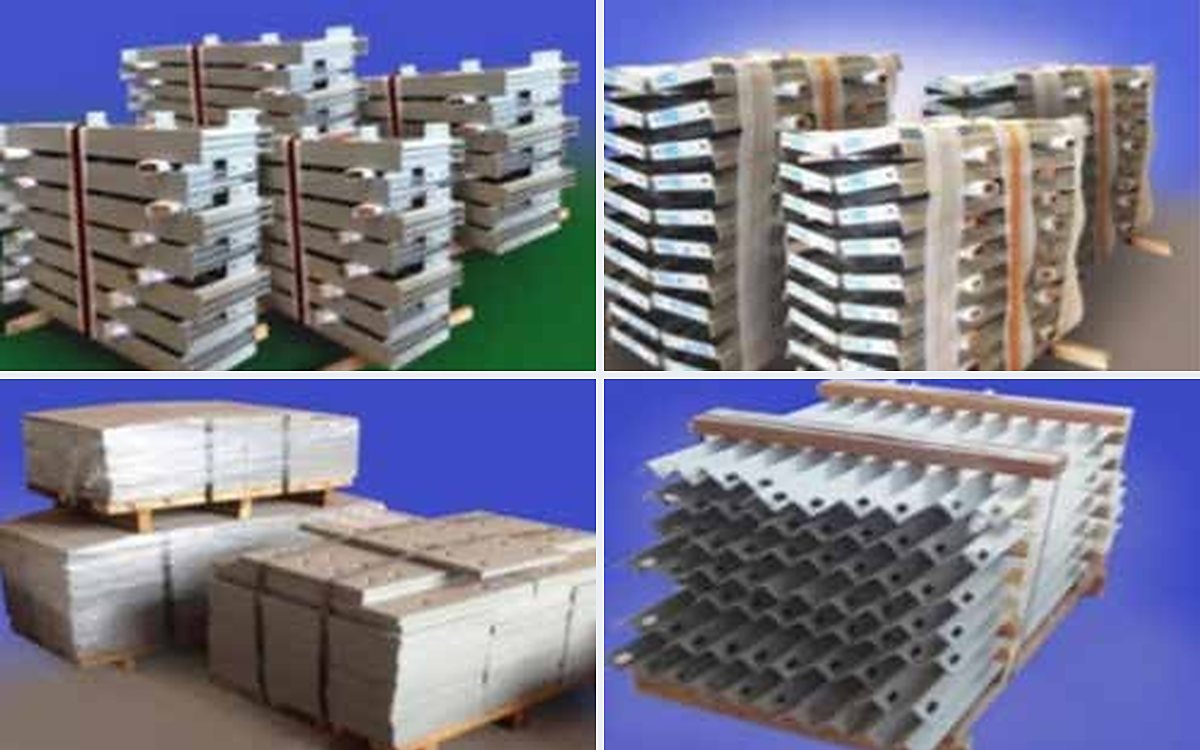
Plates, clips, bracing and anchor bolts bundled on timber and loaded on wooden pallets.
 profiled bundles
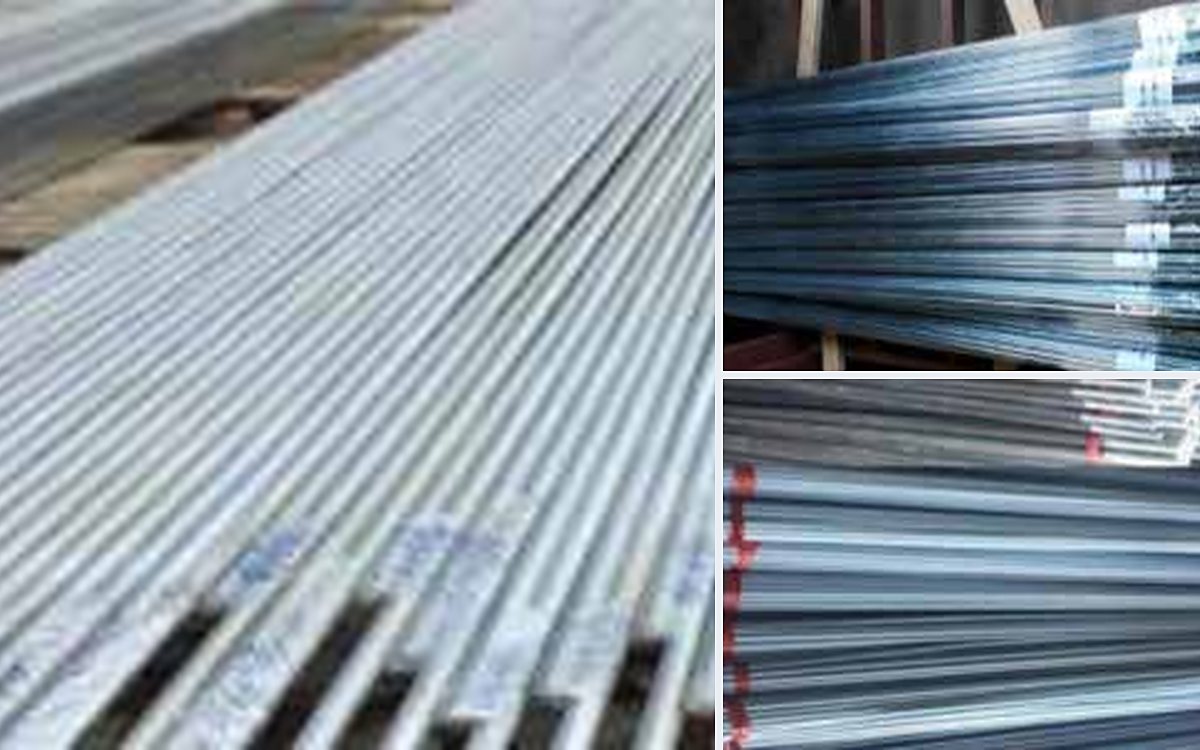
Rods strapped in profiled timber bundles, PE-wrapped when required.
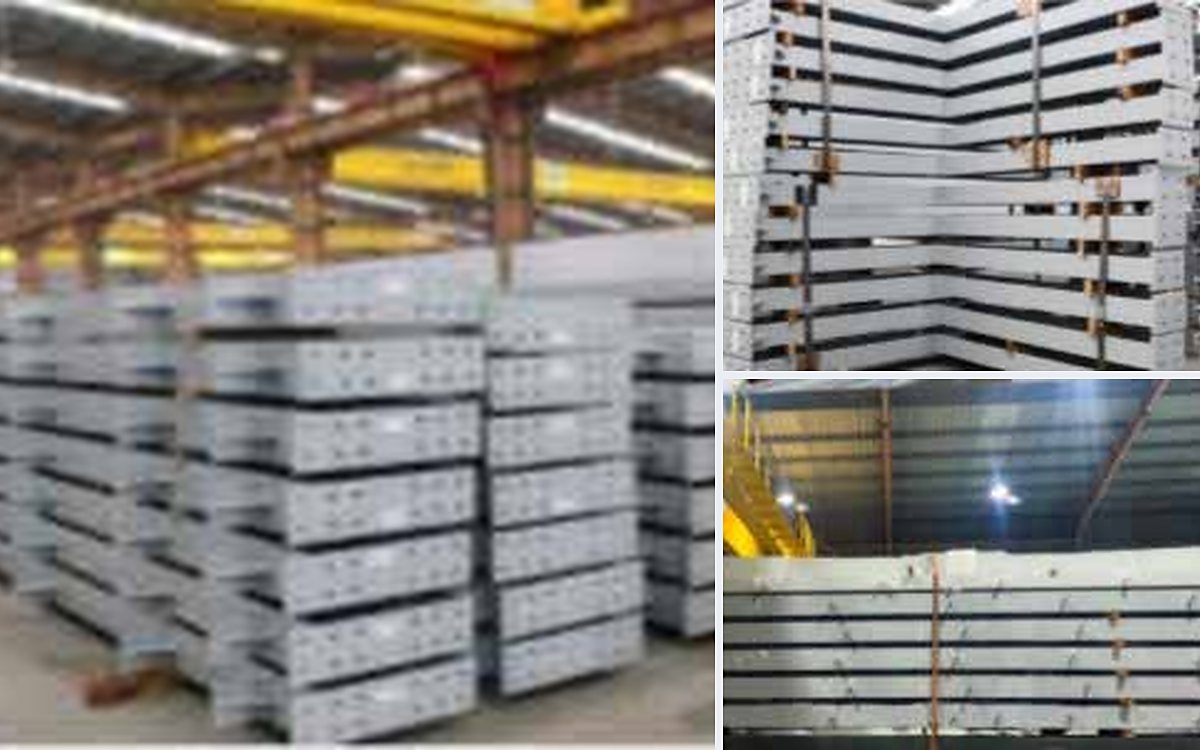 timber dunnage
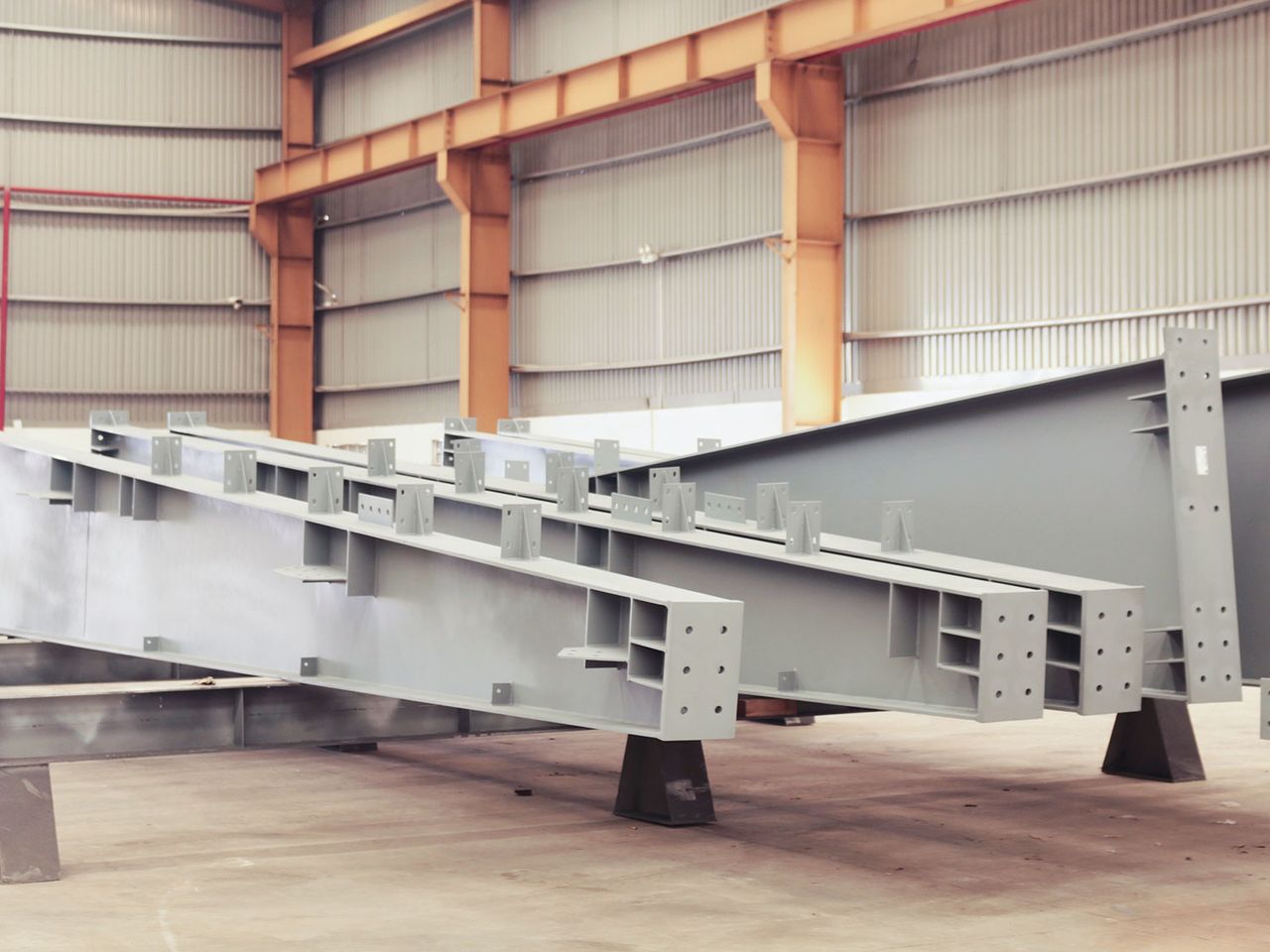
Columns and rafters on 20×80 / 40×80 timber with PE wrap where required.
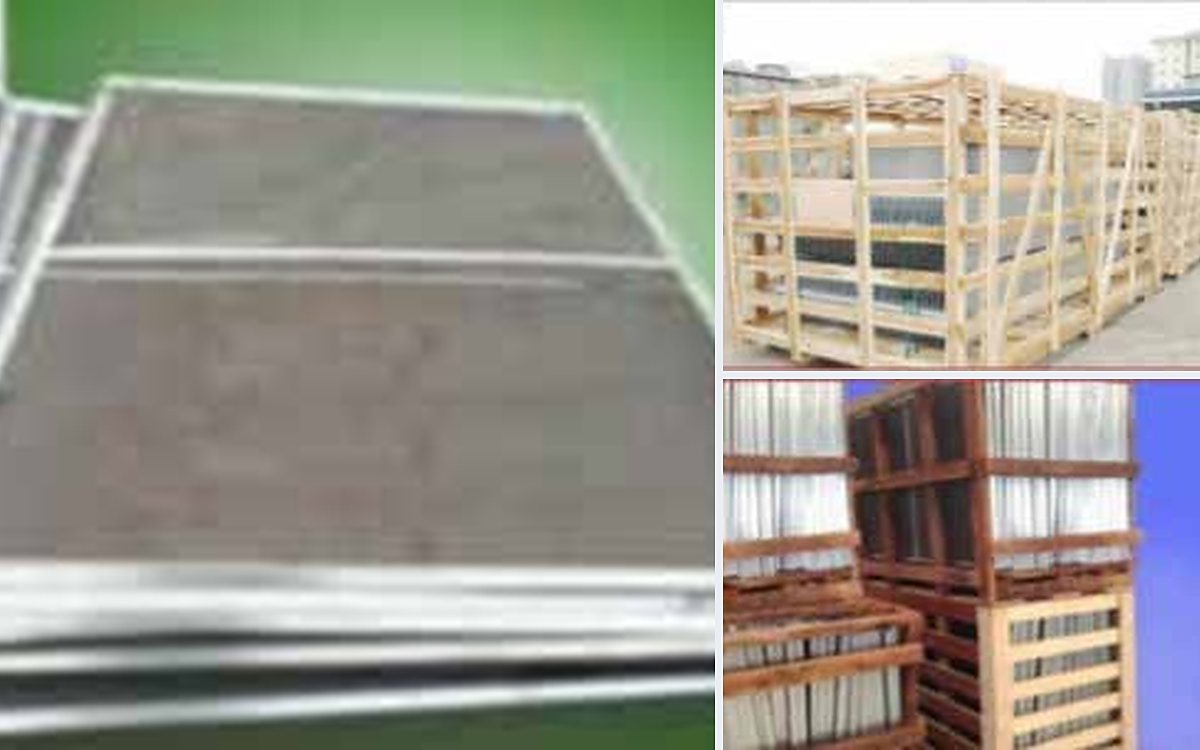 wooden frames
Insect nets, louvres and insulation mesh packed in wooden bale frames.
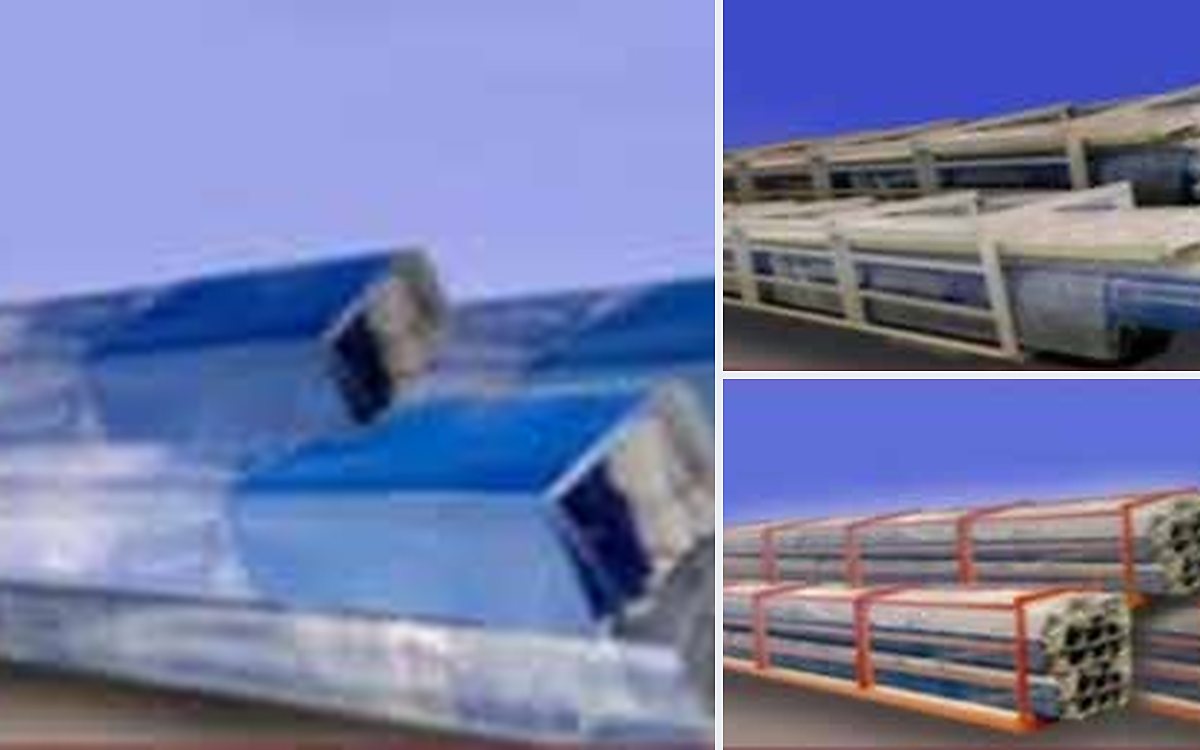 steel frames
Thin, easily scratched trims and gutters packed in steel bale frames, PE-wrapped when required.
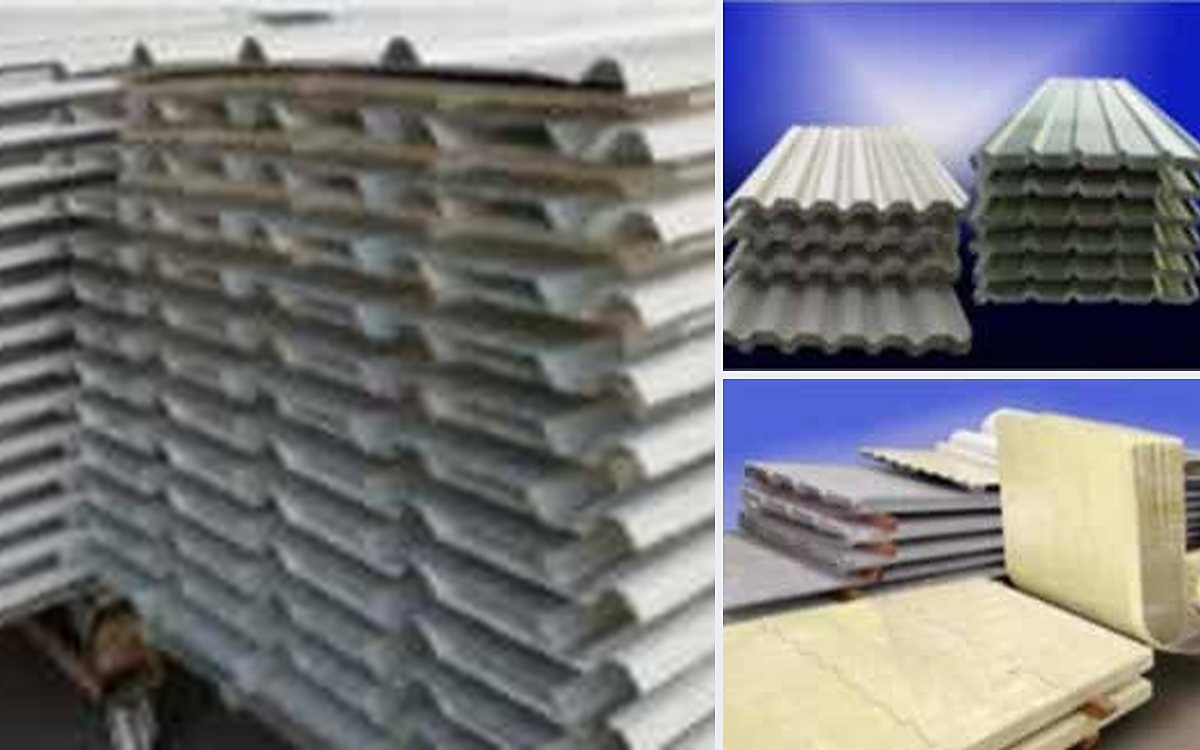 1–2 t bundles
Packed during production, stacked sheet by sheet in bundles of 1–2 tonnes.
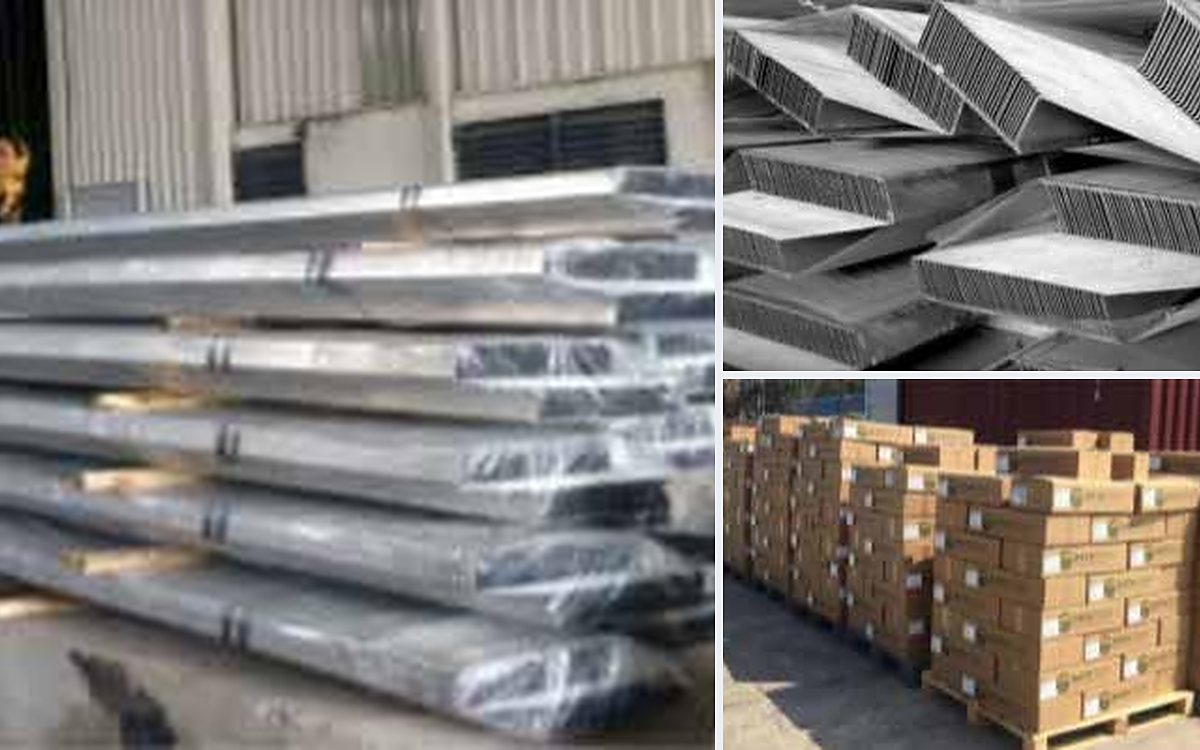 1–2 t bundles
Strapped into 1–2 tonne bundles directly at the roll-former.
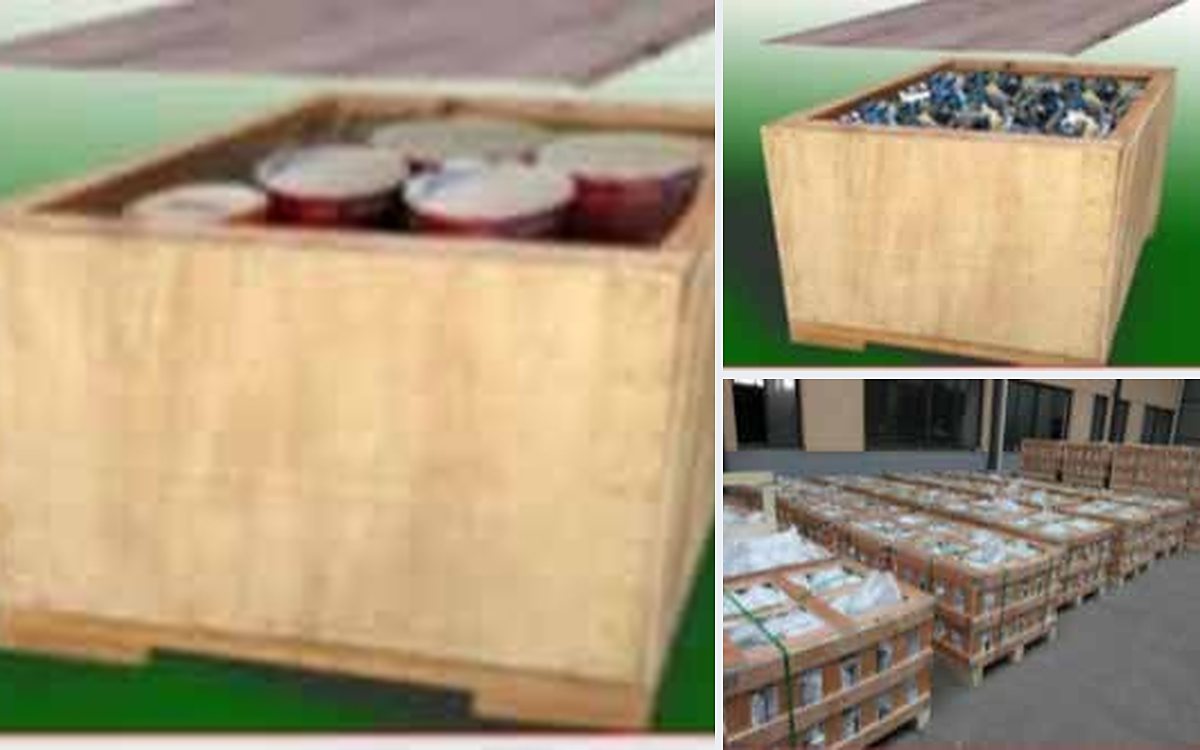 sealed crates
Paints and solvents in sealed wooden crates; small bulk and fragile items (chemical anchors, fasteners) also crated.
Quality rules
From our packing procedure – what we avoid, and how we do it right.
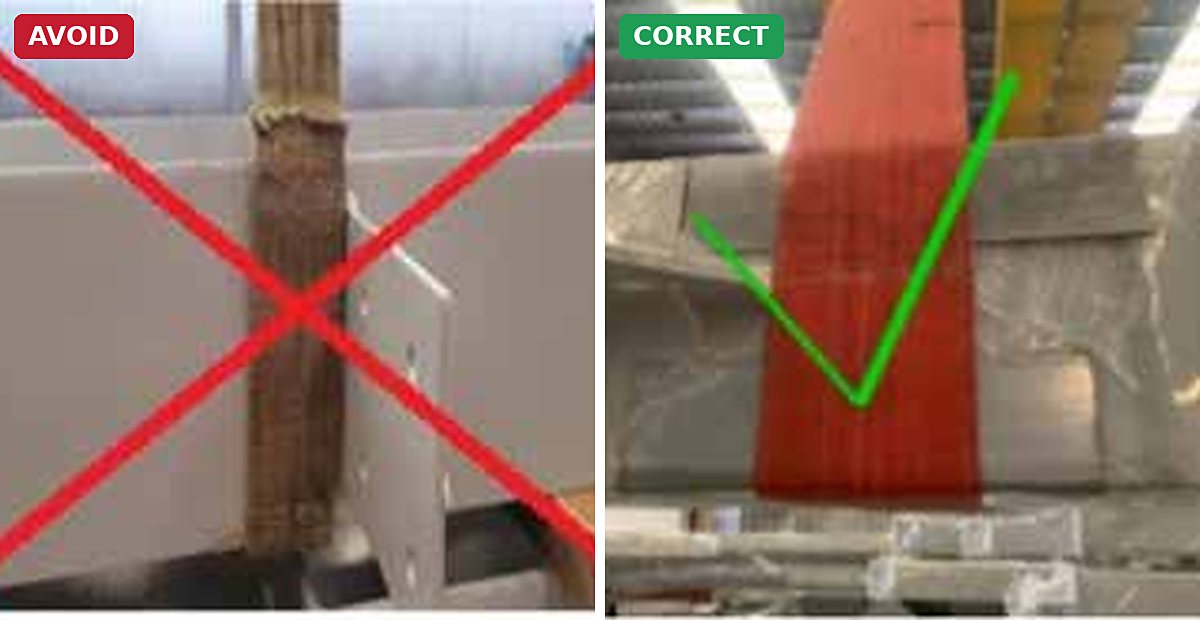
Lifting slings never touch a painted surface without protection.
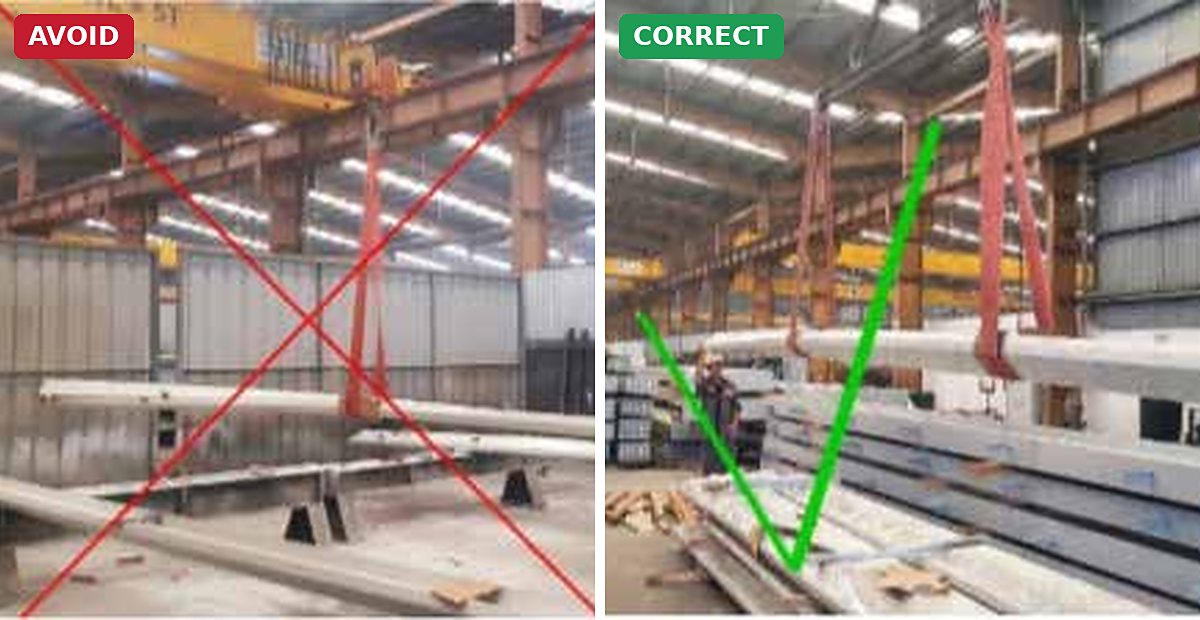
Members over 5 m – rod and angle bracing, purlins – are lifted with a spreader bar and protection.
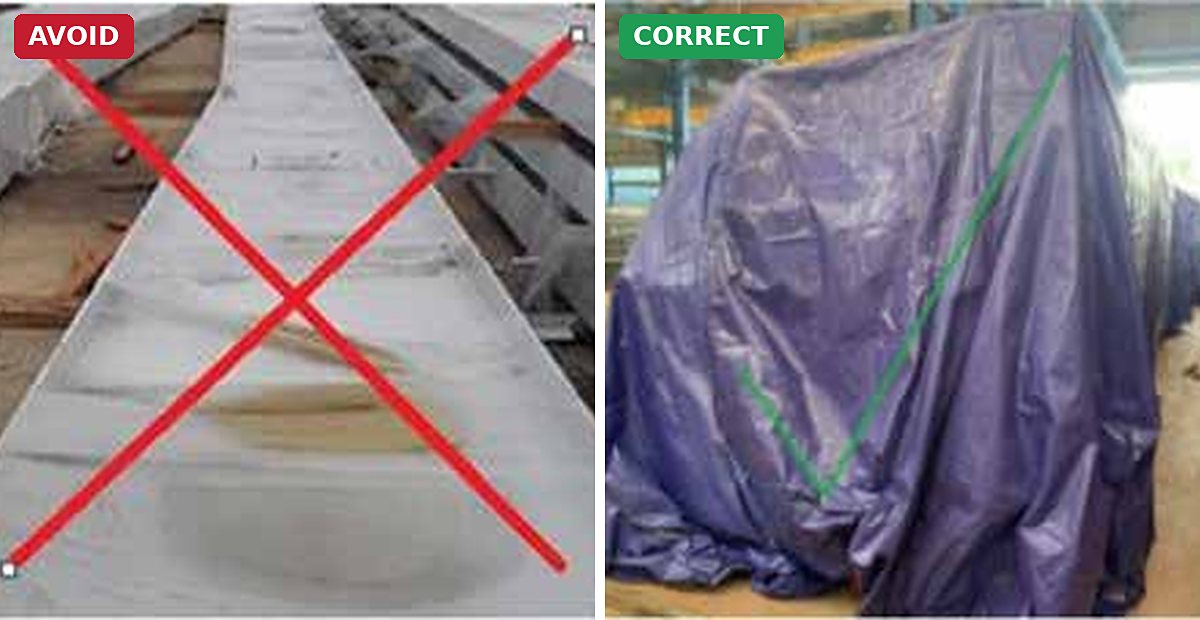
Finished goods are fully covered with tarpaulin against dust and water.
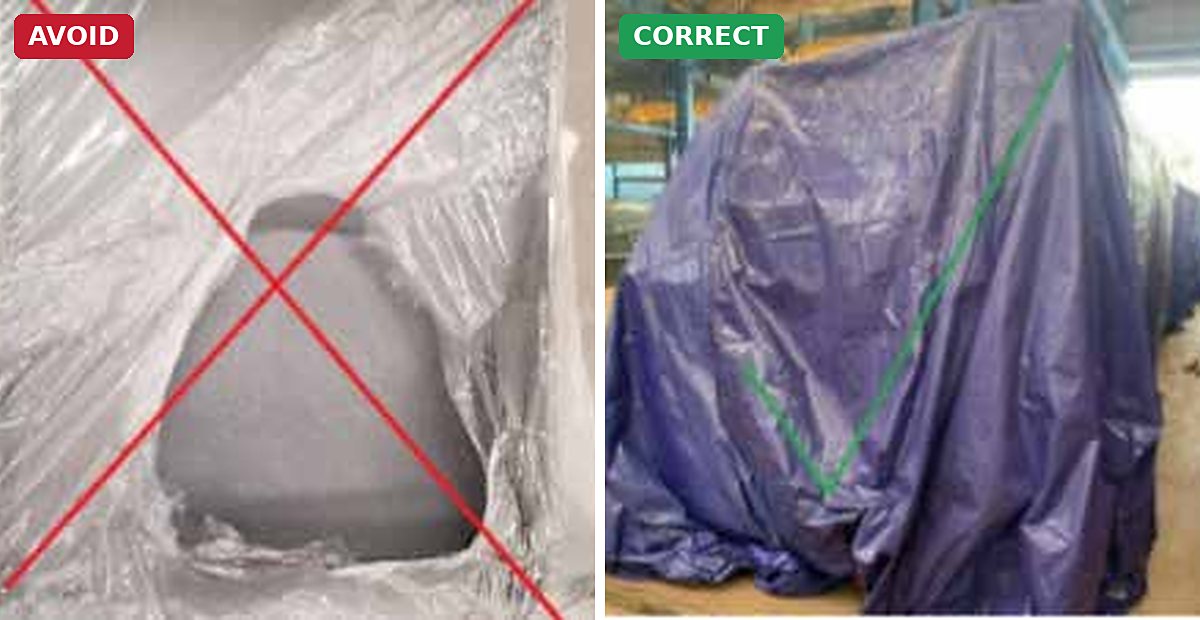
Finished products stay covered while painting continues nearby.
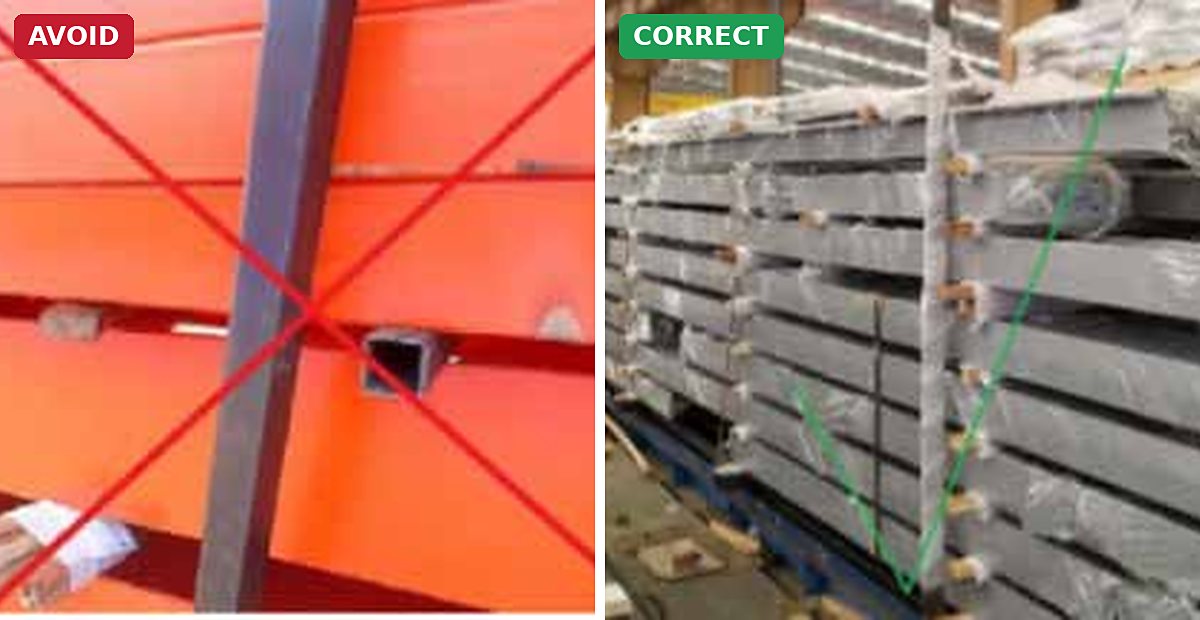
Support bars are covered with foam so they never touch the coating.
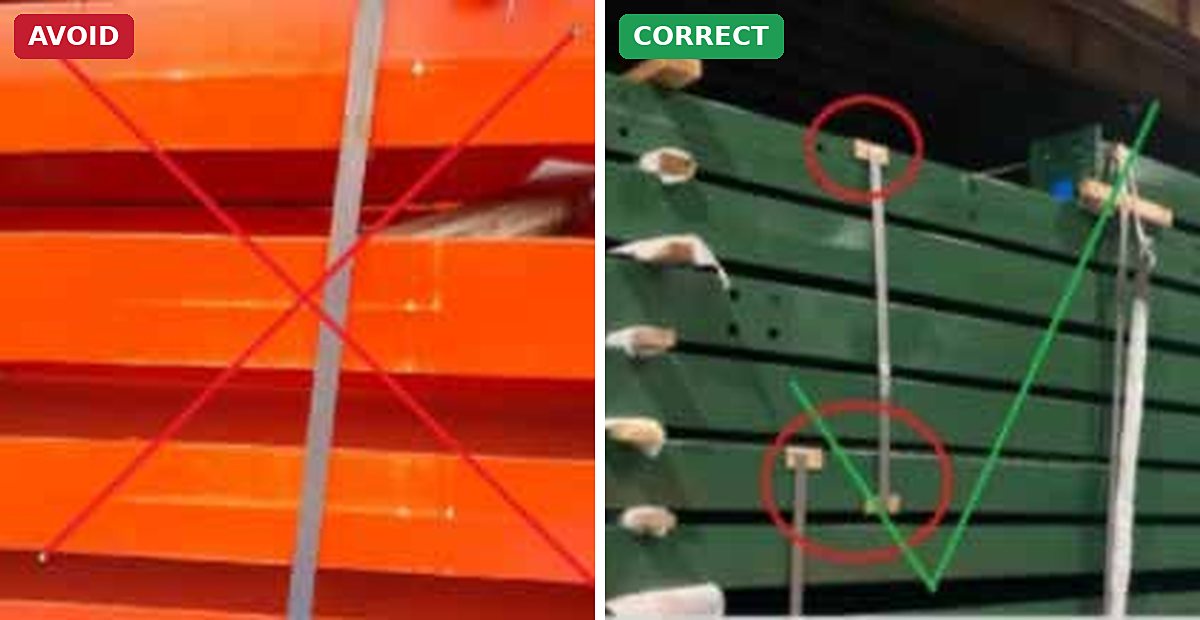
Strap positions are lined with foam or hard carton.
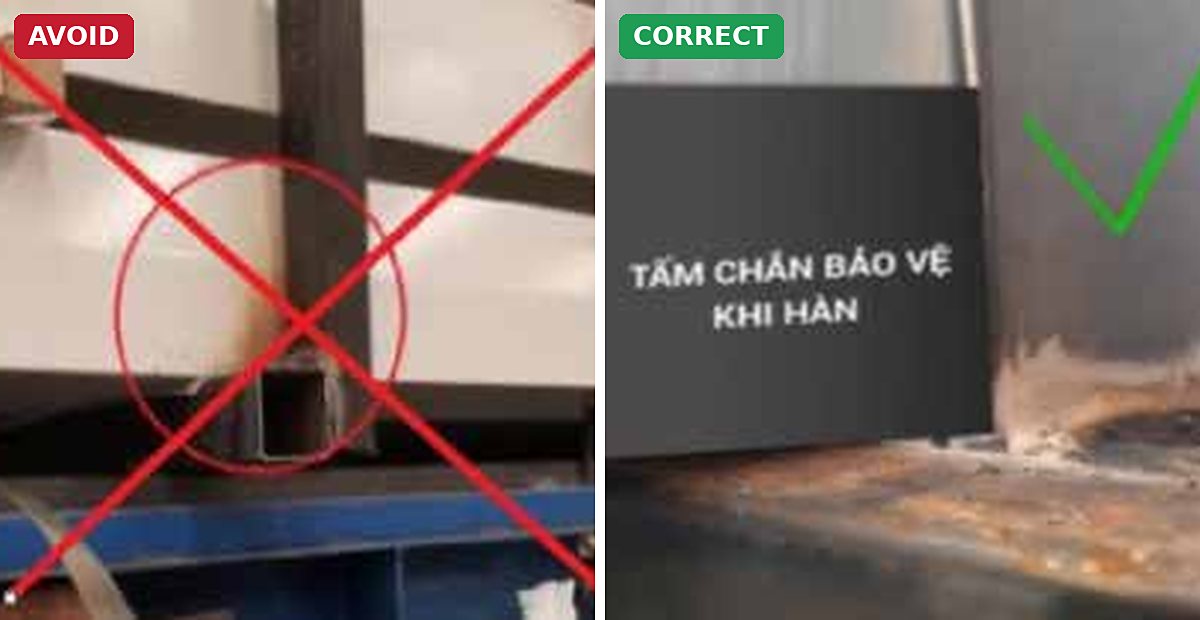
Fire blankets protect goods when stoppers are welded to the loading skid.
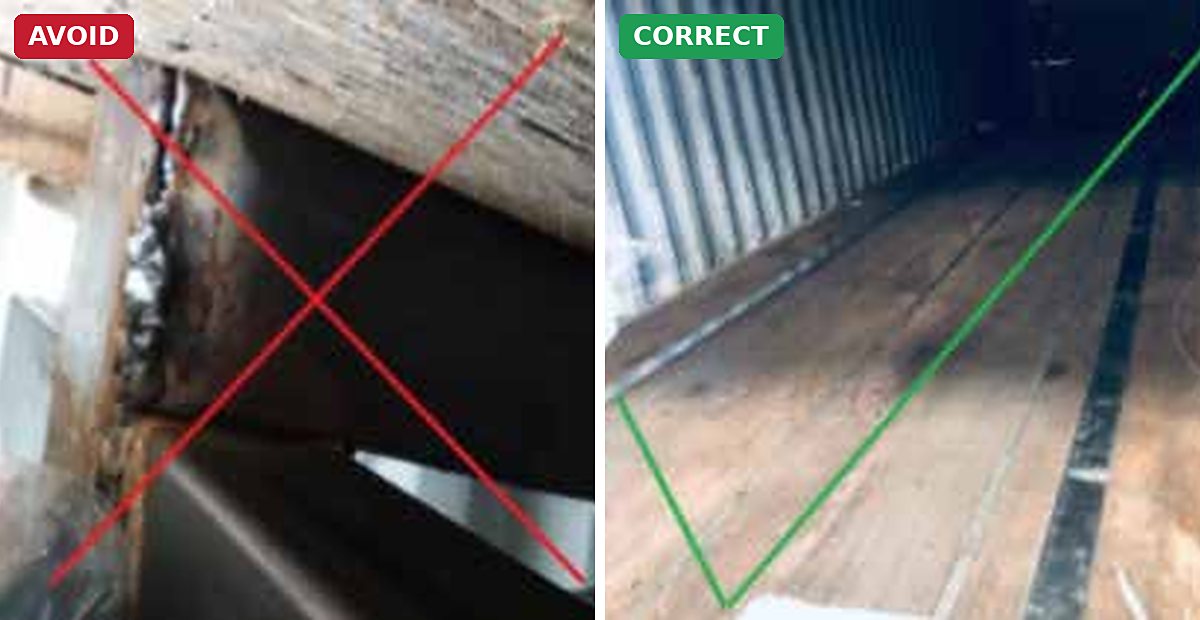
Skid plates are fixed to the container floor so the timber floor is not damaged in transit.
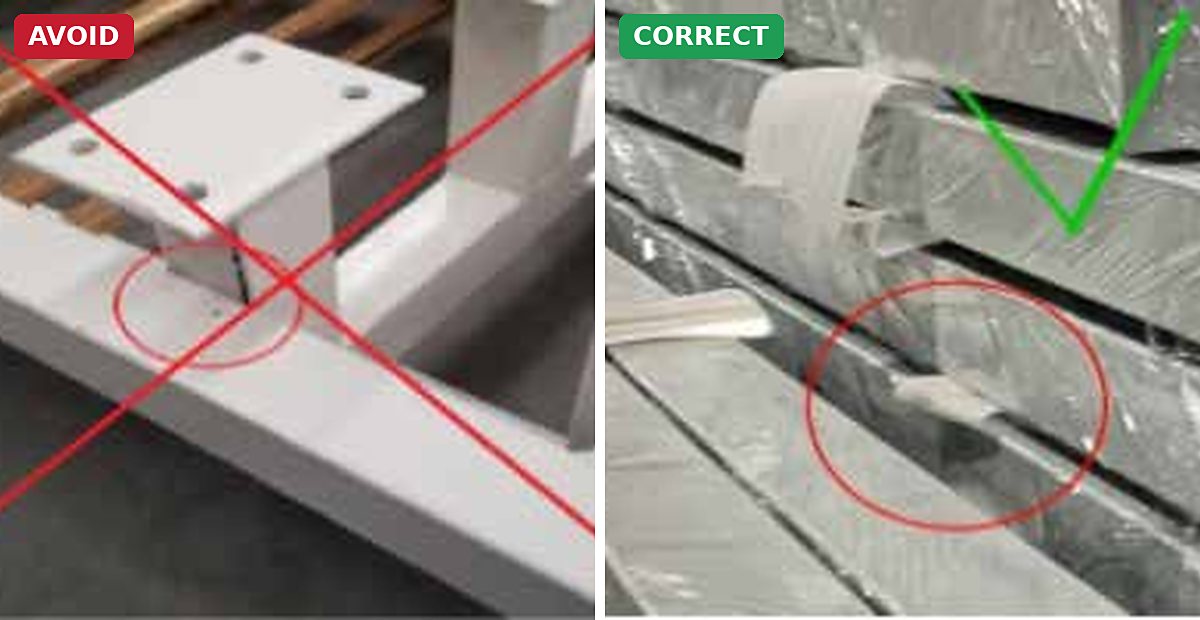
No direct contact between components.
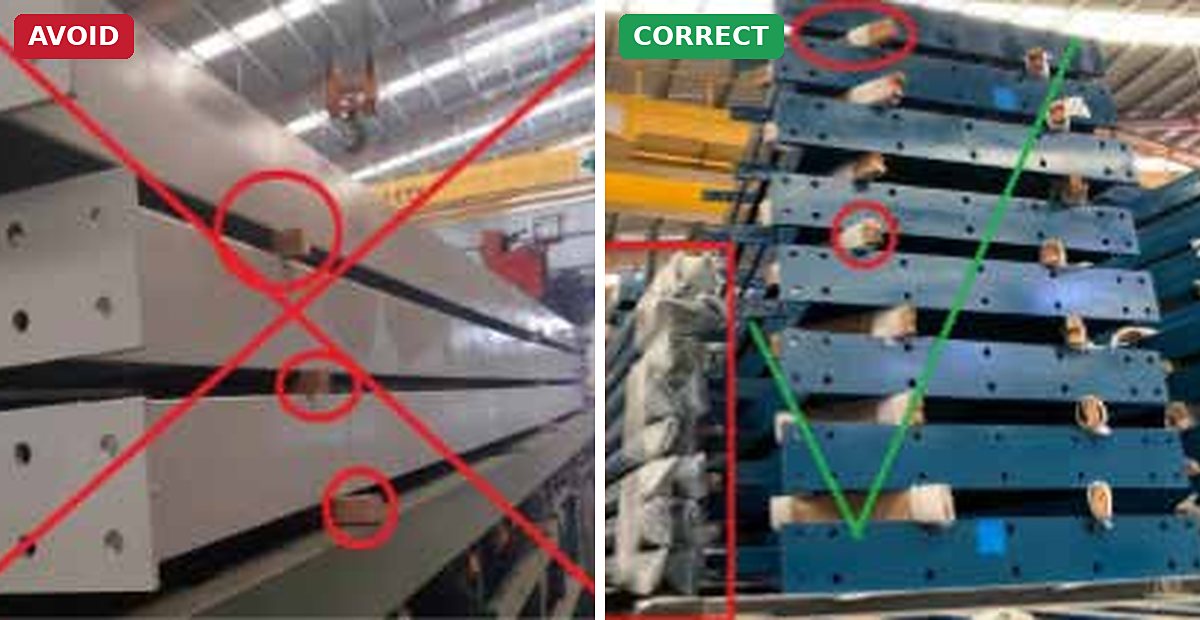
Timber supports are wrapped with foam closures.
Applications
Foam and fabric at every contact point – no paint damage from straps, frames or other members.
Timber dunnage and spreader bars keep long members straight during lifting and transit.
Packing lists on every package, sequence numbers on every frame and a final packing list per container.
Finished products covered with tarpaulin against dust, water and overspray.
Chains, cables and welded stoppers turn each load into one solid block.
Photos and videos of every stage, stored with the shipment records.
Normes et conformité
Solid timber in dunnage, pallets, crates and bale frames is regulated wood packaging material. We pack to the international rules below and to the import conditions of the destination – so containers clear biosecurity and customs without treatment, re-export or delay.
 International – every shipment
 Vietnam – country of treatment
 Australia
 New Zealand
 United States
 Canada
 European Union
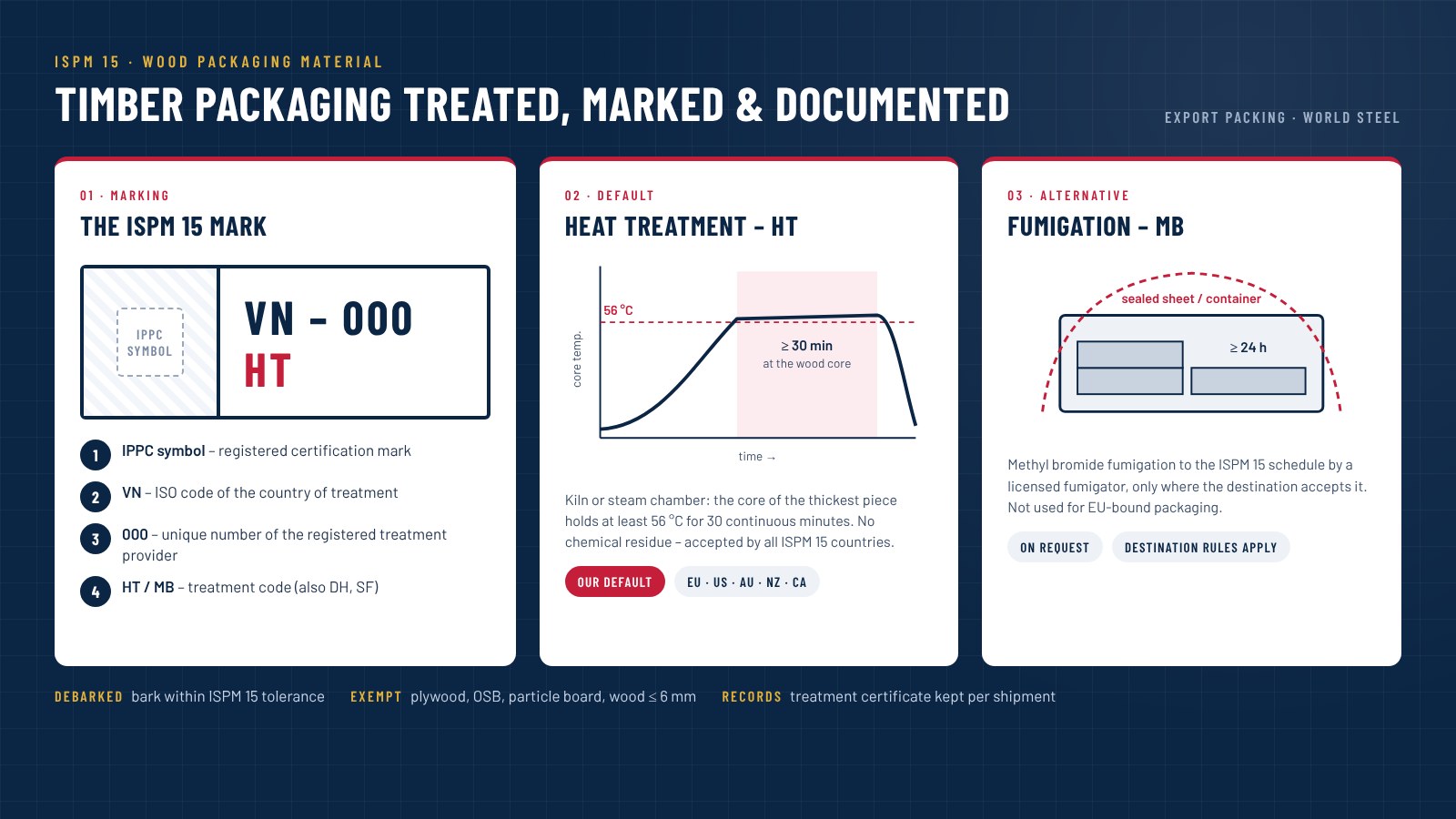
Treatment certificates are issued by the registered treatment provider; phytosanitary certificates by Vietnam's Plant Protection Department. Import conditions change – the current rules of the importing country govern.
Synthèse fournie à titre indicatif – le cahier des charges du projet, l'édition du code adoptée et l'autorité compétente prévalent.
Customs & biosecurity clearance
Packing documents are prepared with the shipping set, so your broker can lodge the entry before the vessel arrives.
Registered treatment provider
Heat-treatment (HT) or fumigation (MB) certificate covering the dunnage, pallets, crates and frames in the shipment – matching the mark on the timber.
Plant Protection Department · on request
Arranged when the importing country, the letter of credit or the client requires it.
World Steel · on company letterhead
Australian format: timber and bamboo packaging and its ISPM 15 status, unacceptable materials, and container cleanliness for FCL – endorsed by a named employee.
World Steel
For shipments packed only on steel frames, plywood or other exempt materials – states that no solid timber packaging is used.
World Steel
Per package and container: piece marks, quantities, dimensions, net and gross weights, container and seal numbers.
Shipper · SOLAS VI/2
Verified gross mass of each container, sent to the carrier before vessel loading.
World Steel QA/QC
Photos of packing, bracing, ISPM 15 marks, container number and seal, with the signed release.
Export team · per contract
Commercial invoice, bill of lading and certificate of origin under the applicable FTA – see export supply.
Certificates come from the issuing bodies named on each card; we collect them and send copies with the shipping documents, and keep the records with each project.
Step 1 – 3 · Preparation
The Planning – Production department issues the packing plan ten days before shipment, so timber, steel strapping, PE film, foam, fabric, cables, pallets, crates and container support frames are in stock – or purchased in time.
Solid timber for dunnage, pallets, crates and frames is debarked, treated and marked to ISPM 15 by a registered treatment provider before it reaches the packing area – heat treatment by default – and the treatment certificate is filed with the shipment.
Packing crews are trained and internally certified for crane operation, and every crane, forklift and container pusher is checked before work starts, under our occupational safety rules.
Step 4 – 7 · Loading
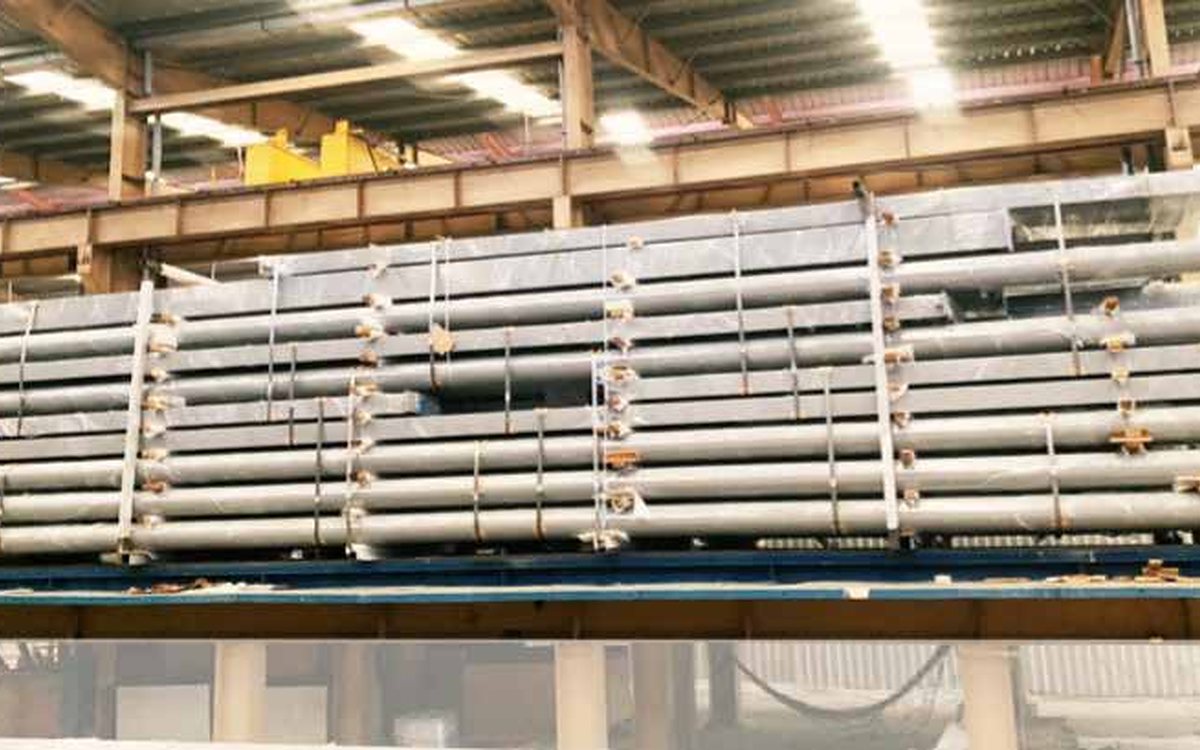
For containers, goods are loaded outside the container on numbered steel support frames sized for 20' and 40' boxes. Timber, foam and fabric are fixed to the cross-bars so no member touches steel.
Members are placed in the shipment sequence, layer by layer, with liners between pieces and against the frame – then tied with cables, straps or wires so nothing moves. Every stage is photographed.
Step 8 – 9 · Inspection
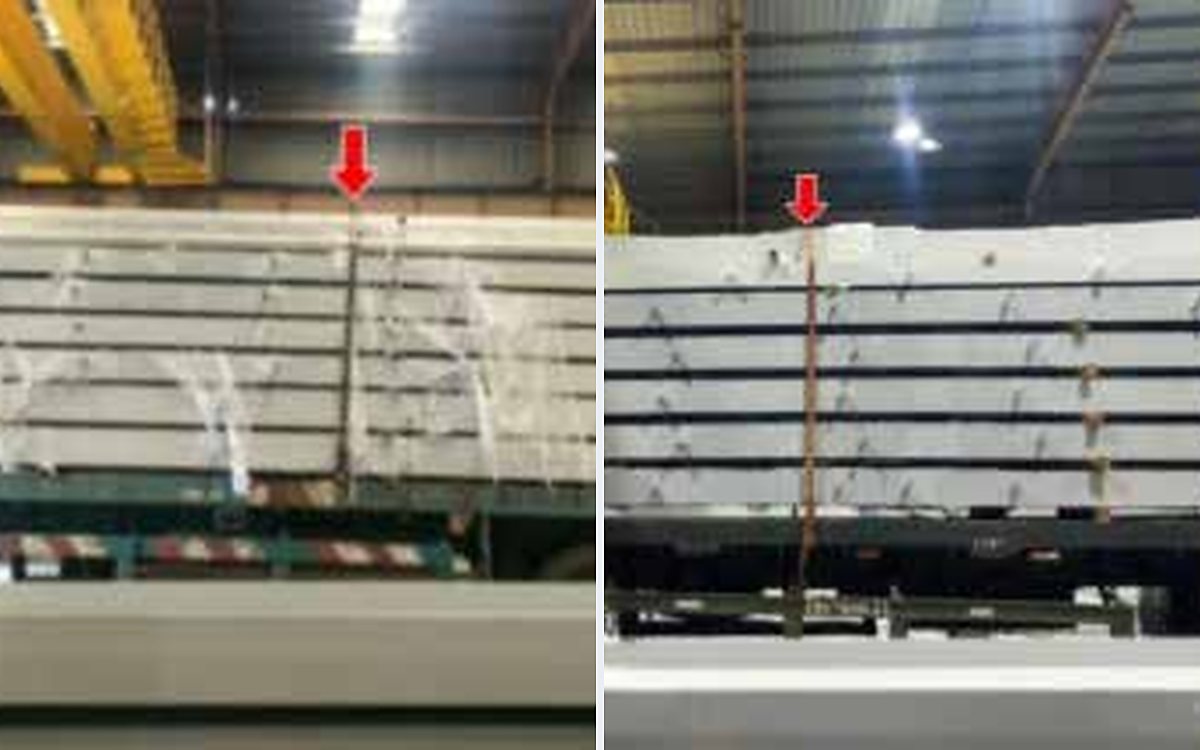
Loads on flatbed trucks are secured with 2–4 chains at the ends and fabric straps in the middle; for export containers, stoppers are welded to the support frame so the cargo forms one solid block.
QA/QC inspects every load before it leaves. If anything is not secure, the crew fixes it and QA/QC signs the release – or raises an NCR and stops the shipment until the issue is resolved.
Step 10 – 11 · Shipment
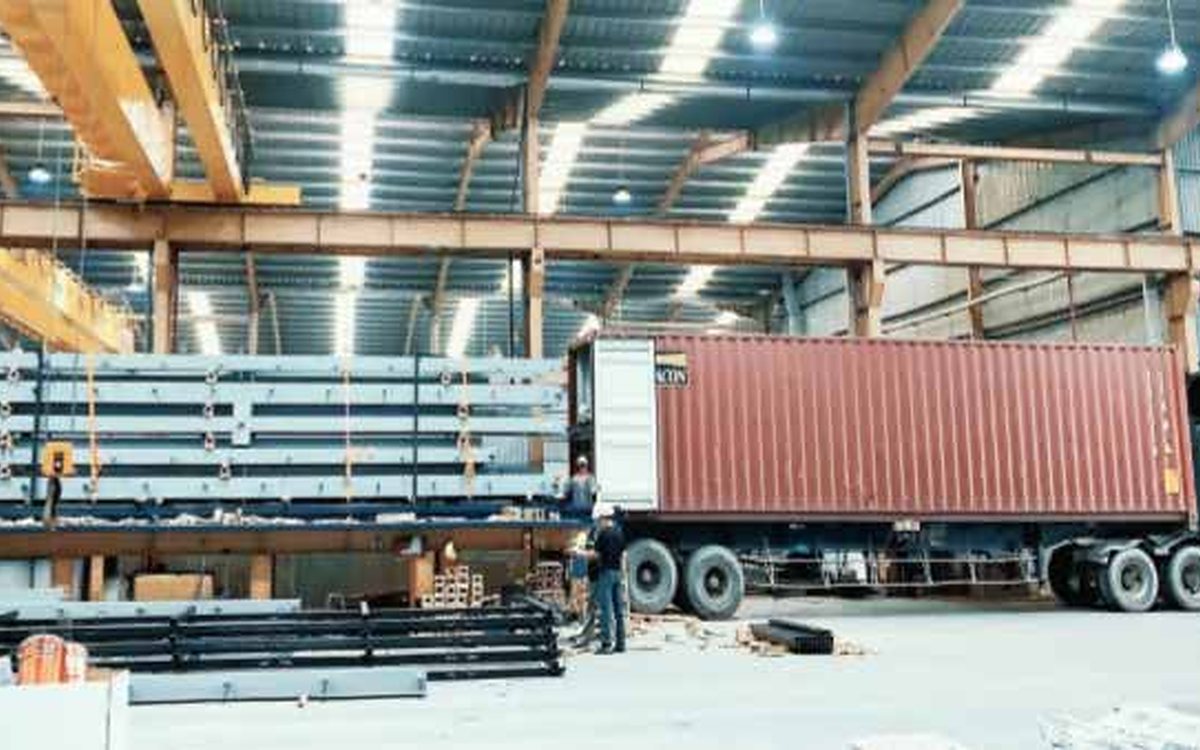
The loaded frame is pushed into the container only when it is centred and clear of both walls. The delivery note goes on top, the container is sealed and the seal photographed.
The final packing list goes to our export team for the shipping documents, and the original records, scans and photos are archived – so any package can be traced long after delivery.
Reference data
Materials and dimensions from our packing procedure; final packing is agreed per project and destination.
| Material | Specification | Used for |
|---|---|---|
| Timber dunnage | 20 × 80 and 40 × 80 mm, solid wood, debarked, ISPM 15 treated and marked | Bundles, layers, spacers |
| Steel strapping | Black steel strap, rust-free | Bundling members, sheeting and purlins |
| Protection | PE wrap film, 2 mm foam, fabric | Coating protection at contact points |
| Lashing | Rope, plastic-coated cable D10 or larger, chains, fabric straps | Securing loads |
| Wooden pallets | 400 × 800, 600 × 1,000, 1,000 × 1,200 mm, termite-free, ISPM 15 marked | Small and heavy items |
| Wooden crates | 600 × 600 × 600, 800 × 800 × 1,200 mm, termite-free, ISPM 15 marked | Liquids, fasteners, fragile items |
| Container support frames | 2,000 × 5,500 mm (20') and 2,000 × 11,000 mm (40'), box steel 80 × 80 × 2.5 | Loading outside the container, then pushing in |
| Cargo jigs & stoppers | V5 angles, 60 × 60 × 2.5 box sections | Fixing the cargo block |
| Goods | Packing | Protection |
|---|---|---|
| Small, uniform structural members | Timber-laid, strapped bundles | PE wrap when required, packing list |
| Small, heavy items (clips, bracing, anchor bolts) | Strapped bundles on wooden pallets | PE wrap when required, packing list |
| Rods | Profiled timber bundles | PE wrap when required |
| Large, heavy members | On 20 × 80 / 40 × 80 timber | PE wrap when required |
| Nets, louvres, insulation mesh | Wooden bale frames | Packing list |
| Flashings, trims, gutters | Steel bale frames | PE wrap when required |
| Roof & wall sheeting | Bundles of 1–2 t, packed at production | PE wrap when required |
| Purlins & girts | Strapped bundles of 1–2 t | PE wrap when required |
| Paints, solvents | Sealed wooden crates | Packing list |
| Small bulk & fragile items | Sealed wooden crates | Packing list |
Spécifications
Processus
Packing plan issued 10 days ahead; materials checked and purchased.
Packing materials, cranes and pushers checked; certified crews assigned.
Goods gathered by list, checked for quality and quantity, classified by size and weight.
Bundles, pallets, frames and crates – each with its packing list.
Numbered frame placed in the pushing direction.
No member touches the steel frame.
Shipment sequence, liners between pieces, lashed and photographed.
Chains, cables, welded stoppers – load becomes one solid block.
Release signed – or NCR and shipment stopped.
Centred, clear of walls, delivery note on top, sealed.
Packing list to export team; photos, scans and seal records archived.
Livraison · Incoterms® 2020
World Steel cote départ usine, franco à bord ou rendu à votre port ou chantier. L'emballage export, les documents et l'expédition depuis Hô Chi Minh-Ville font partie du service.
Comparer les Incoterms® 2020 →Aussi selon le projet ou sur demande : EXW · FAS · DAP · DPU · DDP
FAQ
Members longer than 5 m are lifted with a spreader bar, and every lifting point is protected so slings never touch the paint.
Goods are loaded in layers on a steel support frame outside the container, separated with timber and foam, lashed, and fixed with welded stoppers into one block before the frame is pushed in.
Yes. Every package carries its packing list, support frames carry sequence numbers, and you receive the final packing list, seal photos and loading photos for each container.
Yes. Solid timber used for dunnage, pallets, crates and frames is debarked, treated by a registered treatment provider and marked with the ISPM 15 mark (IPPC symbol, VN, provider number, treatment code). Plywood, OSB and other processed wood are exempt.
Heat treatment (HT) – at least 56 °C at the wood core for 30 minutes – is our default and is accepted by every ISPM 15 country. Methyl bromide fumigation (MB) is used only where the destination accepts it and never for EU-bound packaging.
The ISPM 15 treatment certificate, a packing declaration (Australian format where required), the packing and weight list, the VGM declaration and the loading photo report – plus a phytosanitary certificate from Vietnam's Plant Protection Department when your country or L/C requires it.
Authorities can order treatment, re-export or destruction at the importer's cost, or refuse entry. That is why treatment, marking and certificates are checked by QA/QC before the container is sealed.
Yes – send your requirements with the enquiry; we agree the packing, marking and documents for each project and destination.
Our QA/QC department. It inspects every load and signs the release; if a load is not secure, it raises a non-conformance report and the shipment stays until the issue is fixed.
Tell us the destination, delivery term and site constraints – we plan packing, loading and documents to match.