 ENEnglish
 VITiếng Việt
 ZH中文
 KO한국어
 JA日本語
 FRFrançais
 ITItaliano
 PTPortuguês
 ESEspañol
 HEעברית
 ARالعربية

World Steel · Structural steel for Australian mining
Mining Australia
Certified structural steel for one of the world's most demanding mining industries
Australian mines run 24 hours a day in remote country, cyclone coasts and 45 °C heat, on structures loaded by vibrating equipment and moving ore for decades. World Steel engineers, fabricates and documents mining steel to Australian standards in its AS/NZS 5131 CC3 certified plant – conveyors, transfer towers, plant structures, sheds and platforms that fit first time and keep the operation running.
AS/NZS 5131 CC3 certified fabricationISO 3834-2 welding qualityAS 4100 · AS/NZS 1170 design basisFatigue, corrosion & cyclone aware
Request a quotationWhy quality steel mattersSee the structures we supply

- A$405 bn
- Resources & energy exports 2025–26 · REQ June 2026
- > 25 %
- Iron ore share of resources & energy exports
- 43 %
- World lithium production Australia, 2024 · Geoscience Australia
- CC3
- AS/NZS 5131 certified structural steel fabrication
Australia's position in world mining
An economy built on what comes out of the ground
Mining is Australia's largest export industry. The Australian Government's Resources and Energy Quarterly (June 2026) puts resources and energy export earnings at about A$405 billion in 2025–26 and forecasts around A$416 billion for 2026–27. Iron ore alone makes up more than a quarter of those exports, and gold earnings are forecast to peak at about A$73 billion in 2026–27.
Australia is also central to the energy transition. Geoscience Australia reports that Australia remained the world's leading lithium producer in 2024 with 43 % of world production, and a top-five supplier of gold, cobalt, iron ore, uranium and zinc. It holds the world's largest identified ilmenite resources, the second largest of bauxite, copper and tin, and the third largest of rare earth elements – and the Government has committed A$1.2 billion to a Critical Minerals Strategic Reserve to support new supply chains.
Every tonne of that output moves over steel: conveyors, transfer towers, crushing and screening plants, process buildings, stockpile sheds, train loadouts and port facilities. As operations expand, sustain and decarbonise, the demand for reliable structural steel follows.
IllustrationCommodities & regions
Where Australian mining needs steel
Each commodity and region brings its own process, climate and logistics – and its own steel packages.
Industry and regional descriptions are general. Project scope, owner specifications and standards are confirmed for every enquiry.
The nature of the mining industry
What makes mining structures different
Mining steel works harder than almost any other building structure – and failure costs far more than the steel itself.
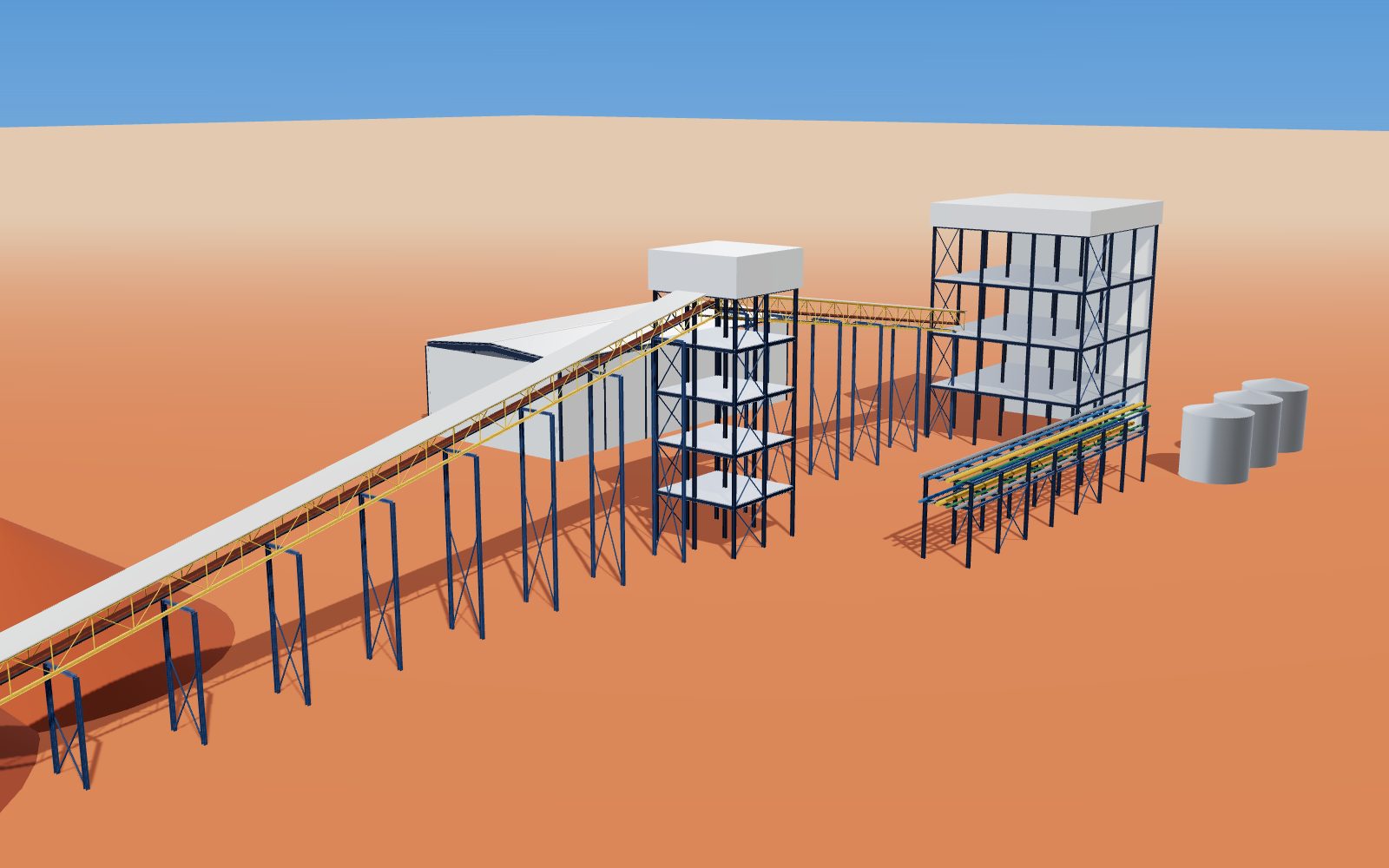
 Illustration
Why high-quality structural steel
In mining, cheap steel is the most expensive steel
The cost of a structural problem on a mine is not the price of the steel – it is lost production, remote rework with FIFO crews and cranes, and safety risk to people working at height around moving plant. A cracked weld on a vibrating screen support or a misaligned conveyor stringer can stop a value chain whose daily output is worth far more than the steel itself.
That is why mining steel is specified to a higher construction category, inspected more intensively and documented in detail. Quality is decided in the fabrication shop: in the welding procedures and welders' qualifications, in non-destructive testing, in dimensional accuracy, in surface preparation and coating – and in the records that prove each of these was done.
Total cost of ownership
Where poor steel costs the operator
Typical consequences of quality shortfalls in mining steel – and how they are prevented in the fabrication shop.
| Quality shortfall | Consequence on site | Prevention in fabrication |
|---|---|---|
| Weld defects in dynamically loaded members | Fatigue cracking, unplanned shutdowns, repairs at height | Qualified procedures and welders, appropriate weld category, NDT to the ITP |
| Dimensional errors and hole misalignment | Rework with FIFO crews, cranes on standby, delayed commissioning | CNC fabrication, dimensional inspection, trial assembly where specified |
| Inadequate surface preparation or coating | Early corrosion at ports and process areas, costly maintenance painting | Blast profile and cleanliness checks, DFT records, galvanizing where suited |
| Missing or wrong material | Lower capacity than designed, non-conformance with owner standards | Mill certificates, heat-number traceability, positive material identification where required |
| Incomplete documentation | Steel quarantined on site, handover delayed | Manufacturing data record compiled during fabrication, not after |
Construction category, weld categories, inspection extent and coating systems are set by the project designer and the owner's specification; we fabricate and inspect to them.
Mining steel we fabricate
Structural steel from pit to port
Complete fabricated steel packages for mining, processing and materials-handling projects.
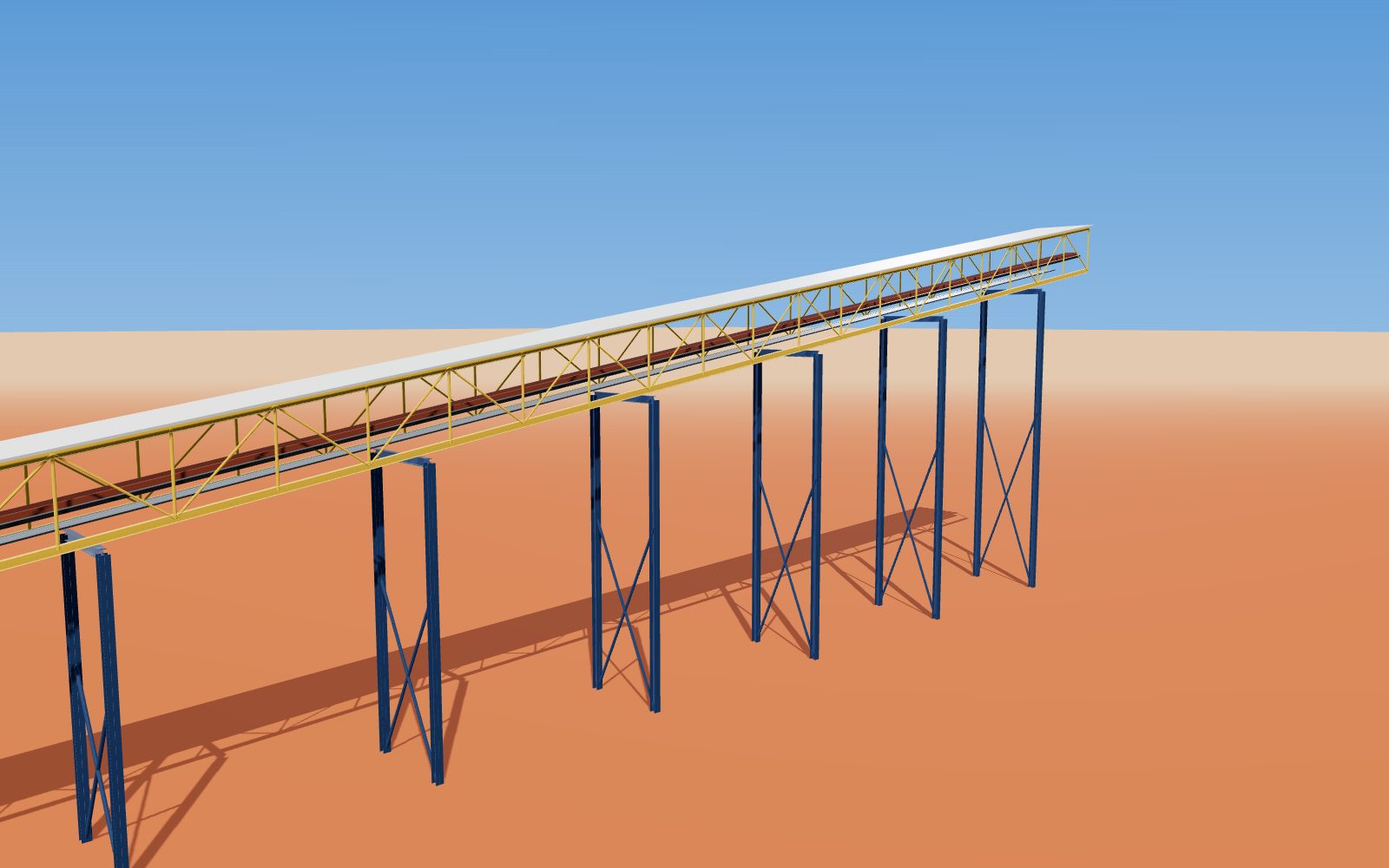
IllustrationConveyor galleries & trestlesTruss galleries, stringers, walkways, hoods, trestles and bents for overland and in-plant conveyors.En savoir plus →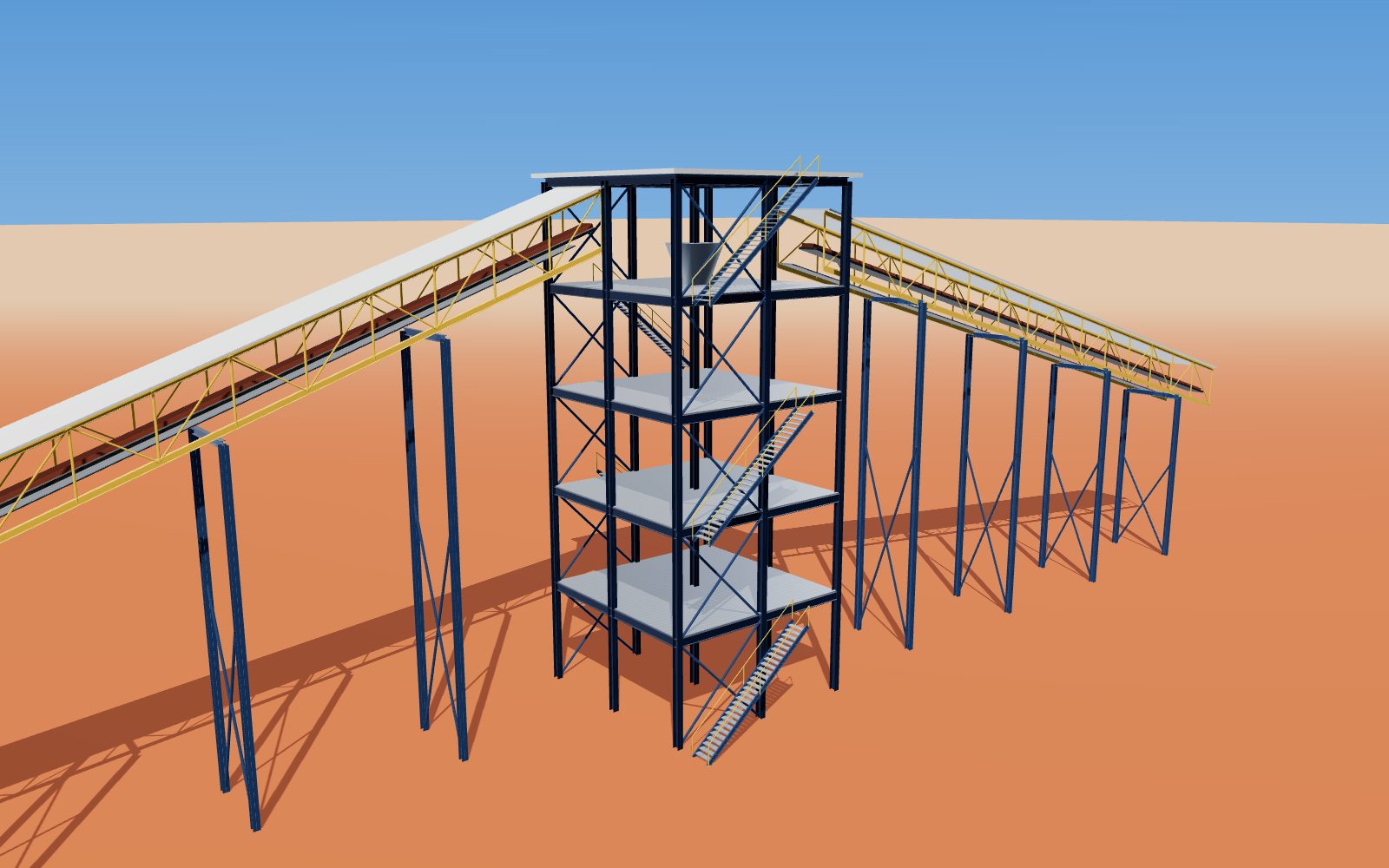 IllustrationTransfer towersMulti-level braced towers with chute supports, floors, stairs, ladders and roof – designed for impact and vibration.En savoir plus →
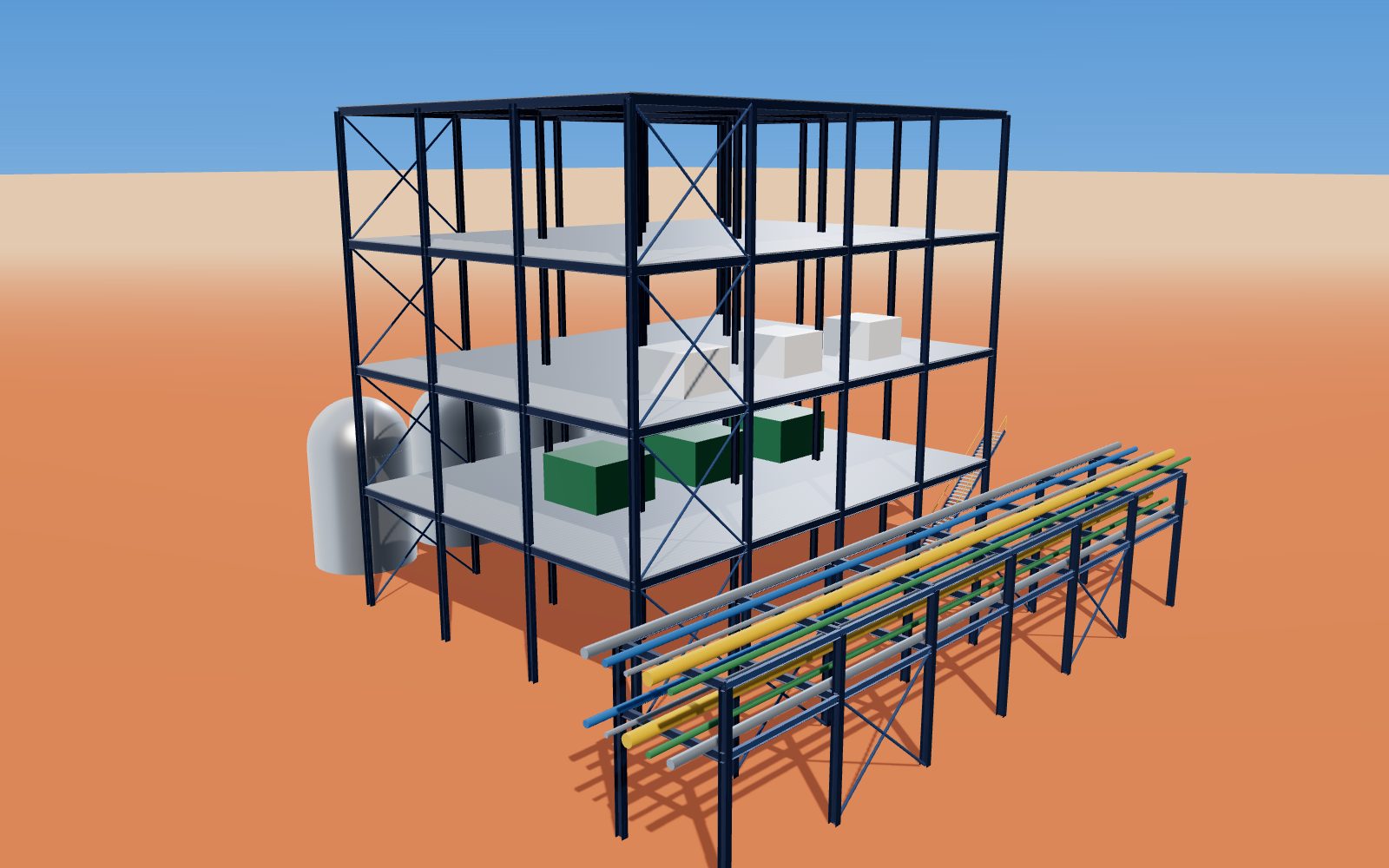 IllustrationProcess plant structuresCrusher, screen and mill buildings, flotation and concentrator structures, equipment supports and platforms.En savoir plus →
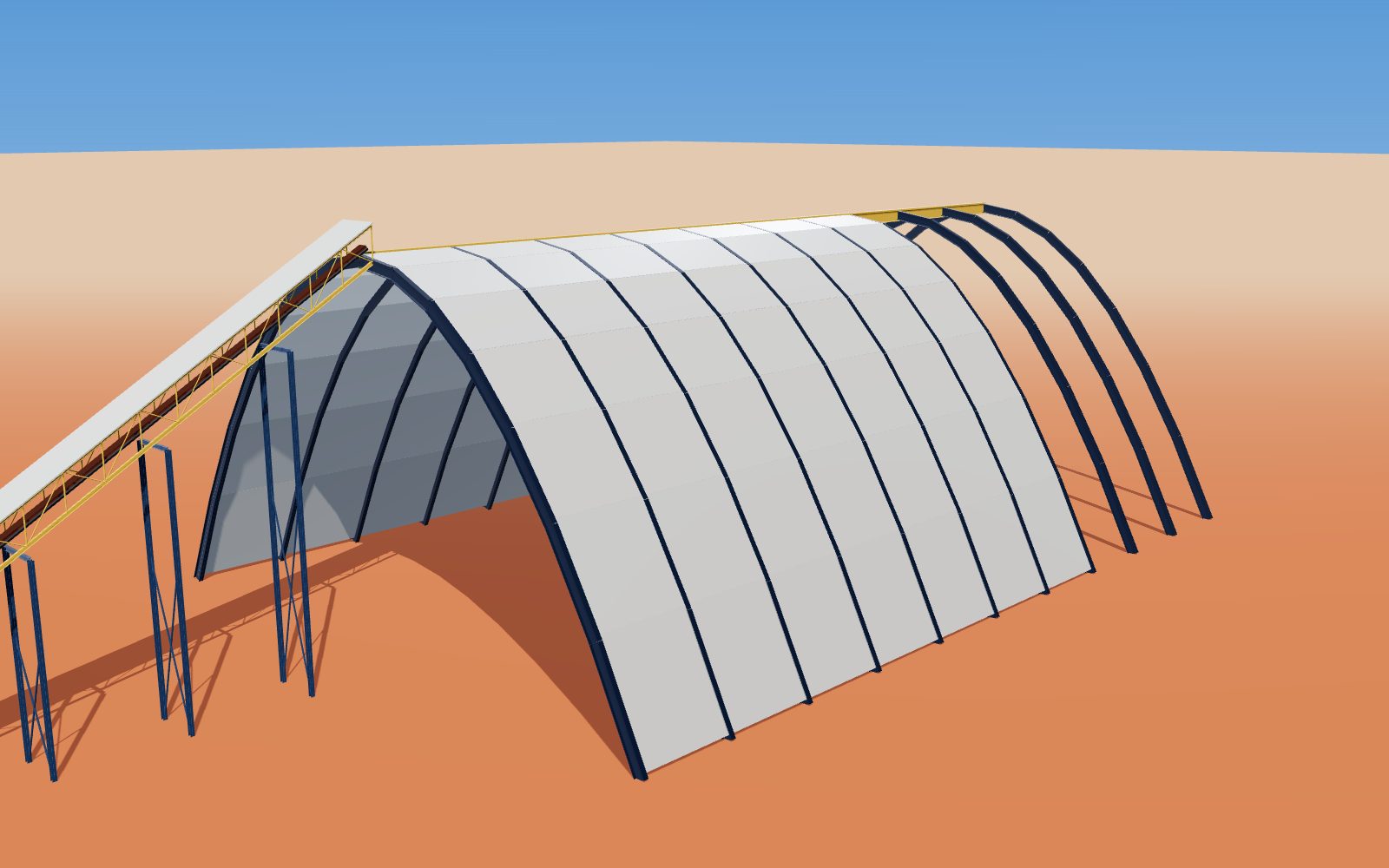 IllustrationStockpile & storage shedsLarge-span arched and portal sheds over stockpiles and product storage, with tripper and conveyor steel.En savoir plus →
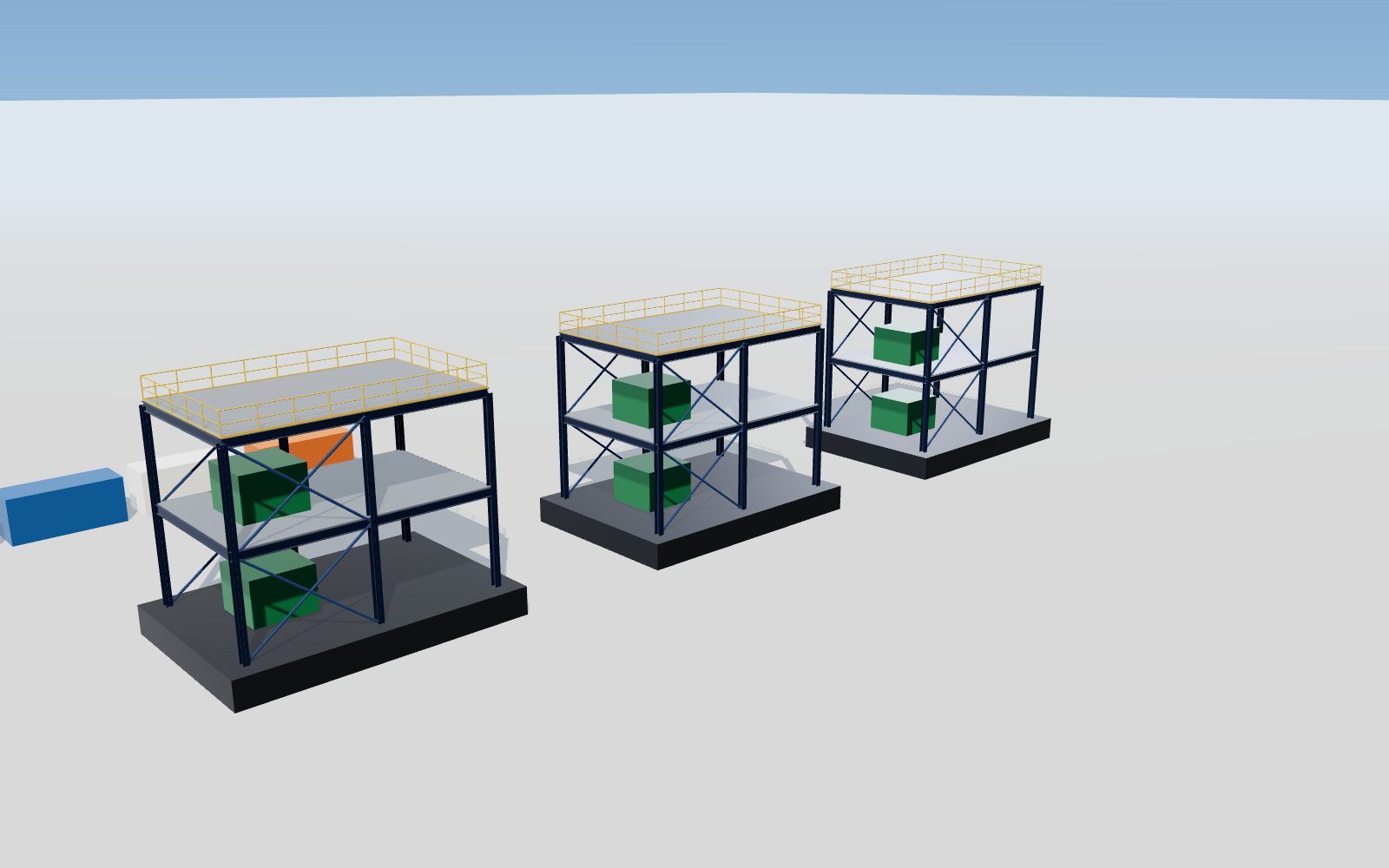 IllustrationPre-assembled modulesModularised structures and platforms assembled and tested in the shop to cut remote site hours.En savoir plus →IllustrationBins, hoppers, chutes & pipe racksSurge bins, hoppers, chute supports, tank structures and pipe racks for process and tailings lines.En savoir plus →
Images are 3D illustrations of typical structures, not completed World Steel projects in Australia.
Australian standards & owner specifications
Engineered and fabricated to the Australian framework
Design to the project's Australian design basis; fabrication, welding, coating and inspection to the specified Australian Standards and the owner's engineering standards.
Design
- AS 4100Steel structures
- AS/NZS 1170 seriesStructural design actions – including wind (cyclonic regions) and earthquake
- AS 4324.1Mobile equipment for continuous handling of bulk materials (where applicable)
- AS 3990Mechanical equipment – steelwork (where applicable)
Fabrication & welding
- AS/NZS 5131 Certifié WSCStructural steelwork – fabrication and erection, construction category
- AS/NZS 1554 seriesStructural steel welding
- ISO 3834-2 Certifié WSCComprehensive welding quality requirements
- AS/NZS 3678 · 3679.1Structural plate and sections, or approved equivalents
Protection & access
- AS/NZS 2312 seriesProtection of structural steel by coatings
- AS/NZS 4680Hot-dip galvanized coatings
- AS 1657Fixed platforms, walkways, stairways and ladders
- AS 1418 seriesCranes, hoists and winches (crane structures)
Project framework
- Owner specificationsEngineering, quality and documentation standards of the mine owner
- ITP & MDRInspection and test plan, manufacturing data record
- Engineer of recordAustralian design engineer approves design and changes
- WHS (Mines)State mine safety legislation applies on site
Orientation only. The applicable standards, editions and construction category are set by the project specification and the engineer of record.
Independent assurance
Third-party certified steel fabrication
 AS/NZS 5131 CC3
 EN 1090 EXC3 · CE
 IAS AC472
Why World Steel for Australian mining
A certified offshore fabricator that thinks like a site
We fabricate for remote sites – so we plan for fit, sequence, packing and documentation before the first cut.
How we deliver
From specification to site – the World Steel mining workflow
- 01
Specification review
Owner standards, design basis, construction category, coating and inspection requirements reviewed and clarified.
- 02
Quotation & ITP
Scope, programme, ITP and MDR structure agreed before contract.
- 03
Modelling & shop drawings
Tekla model, shop and erection drawings submitted for the engineer's approval.
- 04
Procurement
Certified plate and sections, traceable to heat numbers; bolts and consumables to specification.
- 05
Fabrication & NDT
Qualified welders and procedures; NDT, dimensional and visual inspection at hold points.
- 06
Coating & galvanizing
Surface preparation and coating or galvanizing to the specified system, with DFT records.
- 07
Trial assembly & modules
Where specified, trial-assembled or pre-assembled to reduce site risk.
- 08
Packing & shipment
Sequenced, marked and packed for sea freight to the nominated Australian port.
Logistics to site
Planned for Australian ports and remote roads
Ports of entry
- Western AustraliaPort Hedland, Dampier, Geraldton, Fremantle
- QueenslandMackay, Gladstone, Townsville, Brisbane
- NSW · SA · NTNewcastle, Port Kembla, Adelaide, Darwin
Packing for the route
- ContainersLight steel, bolts, grating and handrails
- Flat racks · break-bulkLong and heavy members, galleries, modules
- Road limitsPiece sizes planned for oversize road permits
Import & compliance
- BiosecurityPacking and dunnage to Australian import conditions
- Asbestos-freeNo asbestos-containing materials in any supplied item
- DocumentsPacking lists, certificates and MDR with the shipment
Incoterms, route and packing are agreed per contract; import clearance and site transport are arranged with the Australian project team.
Experience
Our Australian steel experience
Published World Steel structural steel projects in Australia, and the certification behind our mining offer.
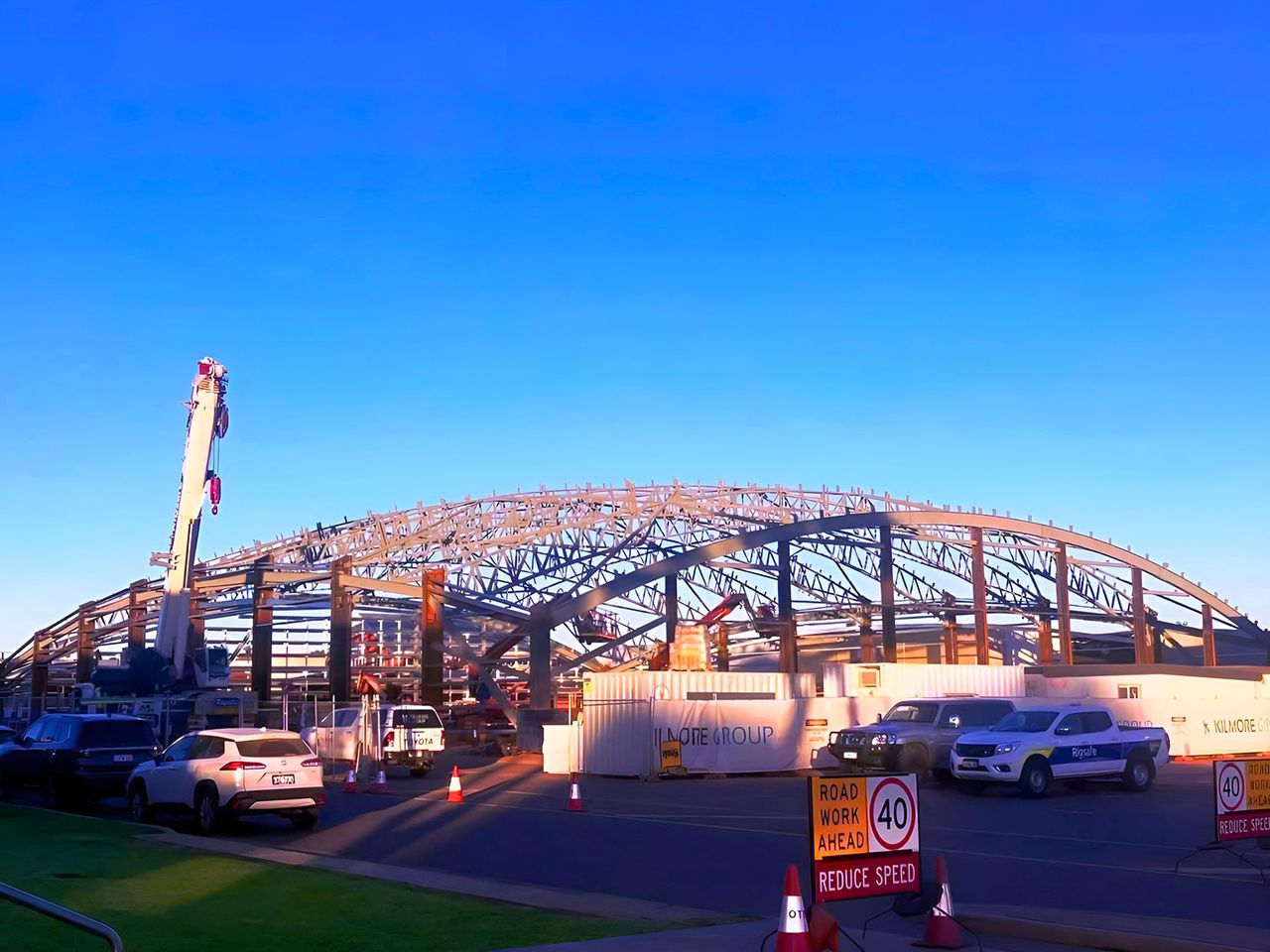
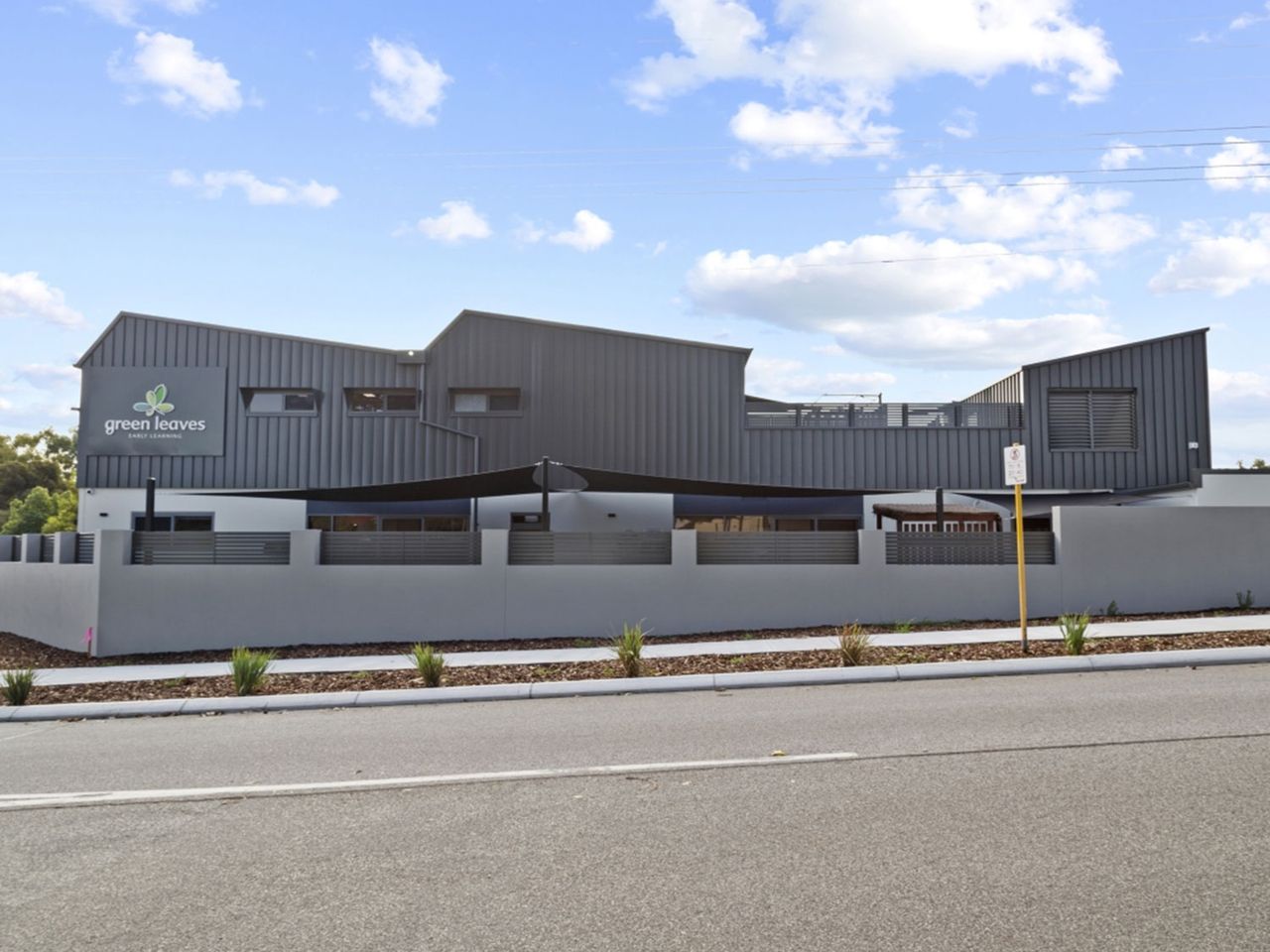
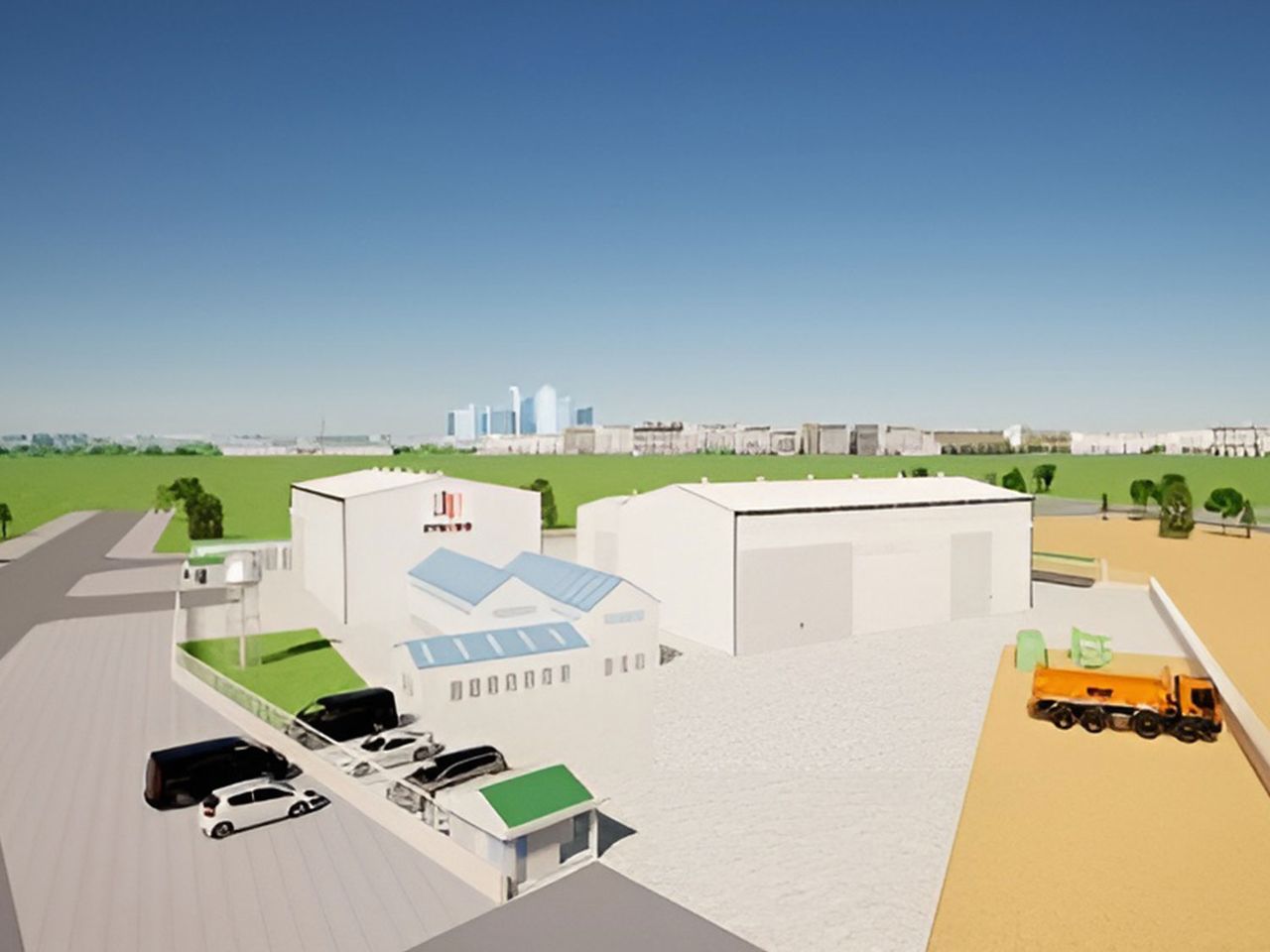
AS/NZS 5131 CC3 certifiedThird-party certification of our structural steel fabrication for Construction Category 3.En savoir plus →Mining steel structuresConveyors, towers, sheds and plant steel for mining and materials handling.En savoir plus →Export fabrication, 30+ countriesAround 40,000 tonnes of steel fabrication capacity a year, delivered to export markets.En savoir plus →
The Australian projects shown are published structural steel projects; mining structures on this page are illustrations.
FAQ
Questions fréquentes
Why does the Australian mining industry need high-quality structural steel?
Mining structures run 24/7 under vibration, impact and fatigue loading, in corrosive, abrasive and often cyclonic environments, on remote sites where rework is very expensive. Certified fabrication, qualified welding, NDT, correct coating and complete records reduce the risk of downtime and safety incidents.
What is AS/NZS 5131 and why does CC3 matter?
AS/NZS 5131 is the Australian and New Zealand standard for the fabrication and erection of structural steelwork. It defines construction categories CC1 to CC4 with increasing requirements; CC3 covers demanding structures such as many dynamically loaded and high-consequence industrial structures. World Steel's fabrication is third-party certified for CC3.
Can you fabricate to mine owners' engineering standards?
Yes. We review the owner's specifications with the design basis and include their requirements – inspection extent, coating systems, documentation and approvals – in the ITP and the manufacturing data record.
Do you design mining structures?
We produce the Tekla model, shop and erection drawings and connection design where included in scope. The structural design and its approval sit with the project's Australian engineer of record.
How do you protect steel for coastal and process environments?
With a coating system or hot-dip galvanizing selected for the exposure and the maintenance plan – to AS/NZS 2312 and AS/NZS 4680 – applied after blast cleaning, with surface profile and DFT records.
Can you supply pre-assembled modules?
Yes, where they reduce site hours: platforms, tower sections and structural modules can be assembled, checked and shipped as units within transport limits.
How is steel shipped to remote Australian sites?
By container, flat rack or break-bulk to the nominated port, packed and marked in erection sequence; road transport to site is planned with the Australian project team, including oversize permits where needed.
Is World Steel an Australian contractor?
No. World Steel is an offshore fabricator in Vietnam. We supply fabricated, coated, documented steel; installation and site works are carried out by the Australian project team and licensed contractors.
Request a quotation
Send us your mining steel package
Specification, drawings or model, tonnage, construction category, coating system and delivery port – we reply with questions or a fabrication proposal.
Planning a mine, plant or port expansion in Australia?
Send us the specification and drawings – we review the construction category, inspection and coating requirements and propose a fabrication plan that gets certified steel to site, on time and ready to fit.