ENEnglish
 VITiếng Việt
 ZH中文
 KO한국어
 JA日本語
 FRFrançais
 ITItaliano
 PTPortuguês
 ESEspañol
 HEעברית
 ARالعربية

What is cold roll formed in a PEB
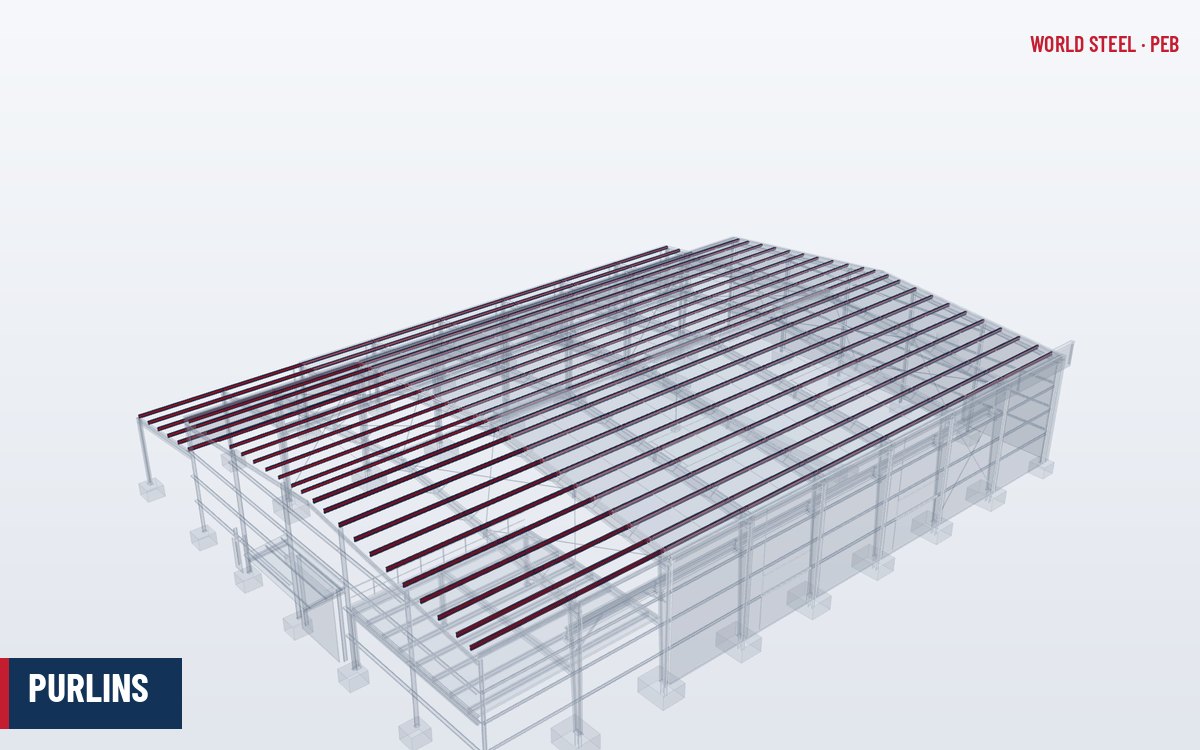
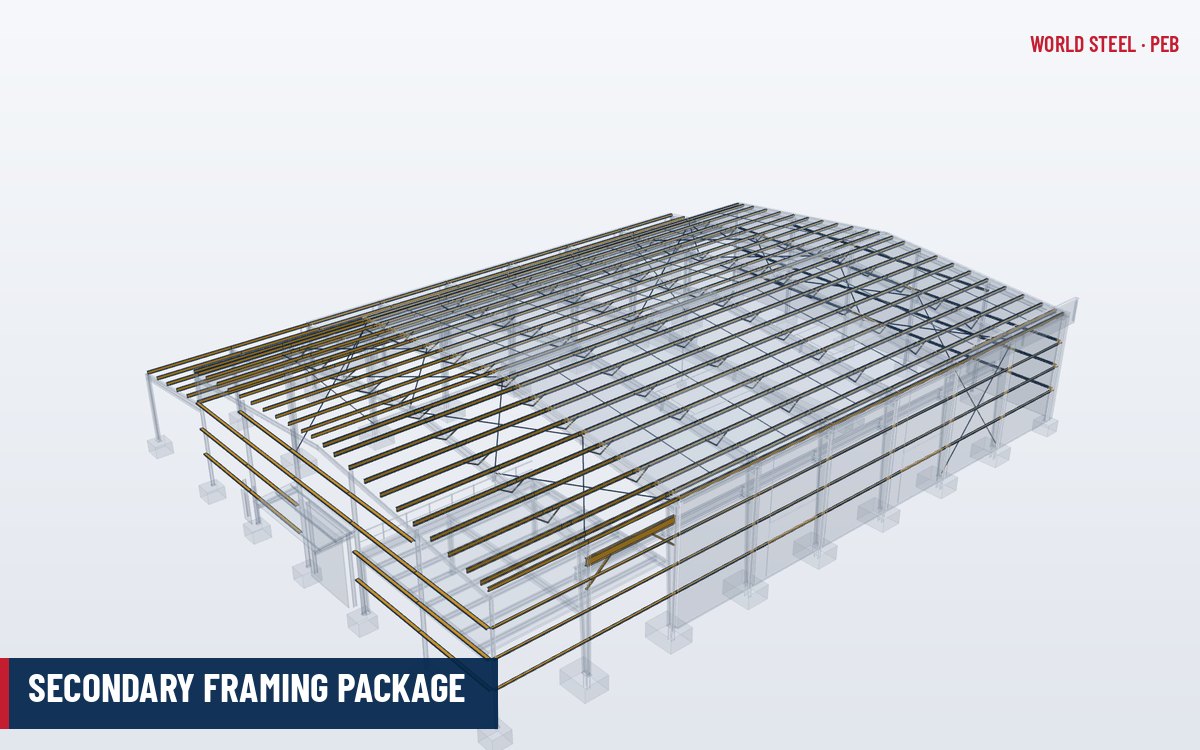
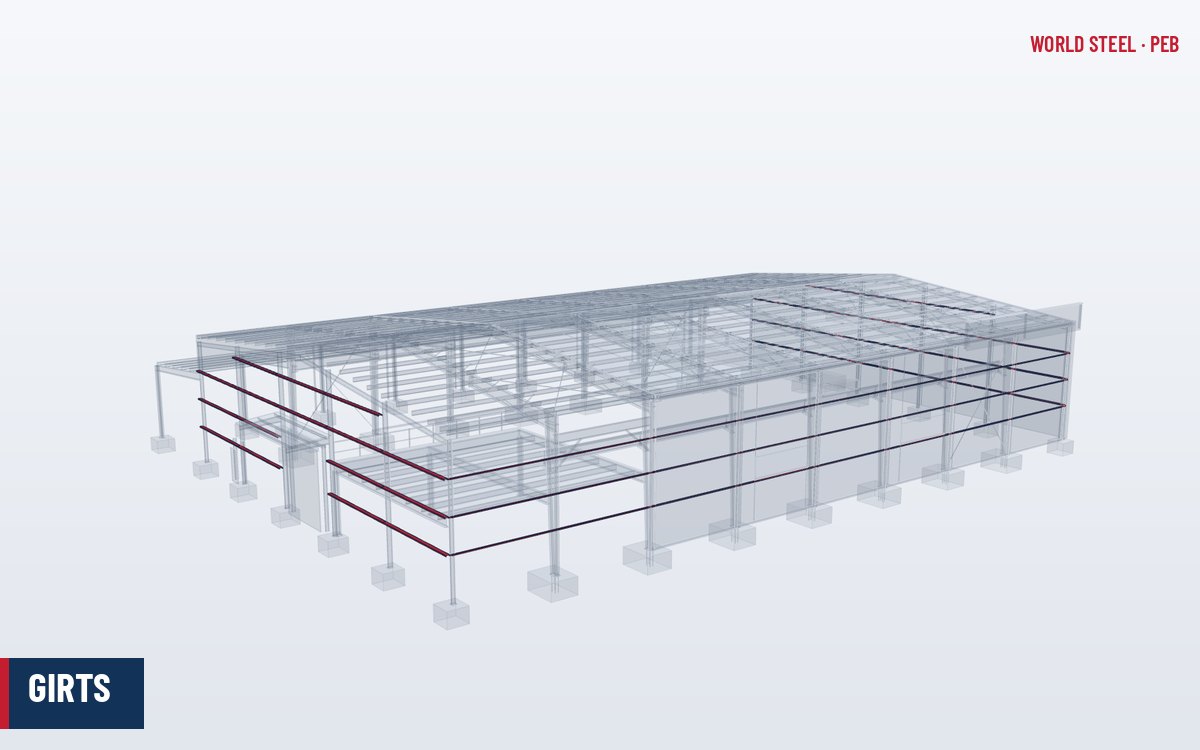
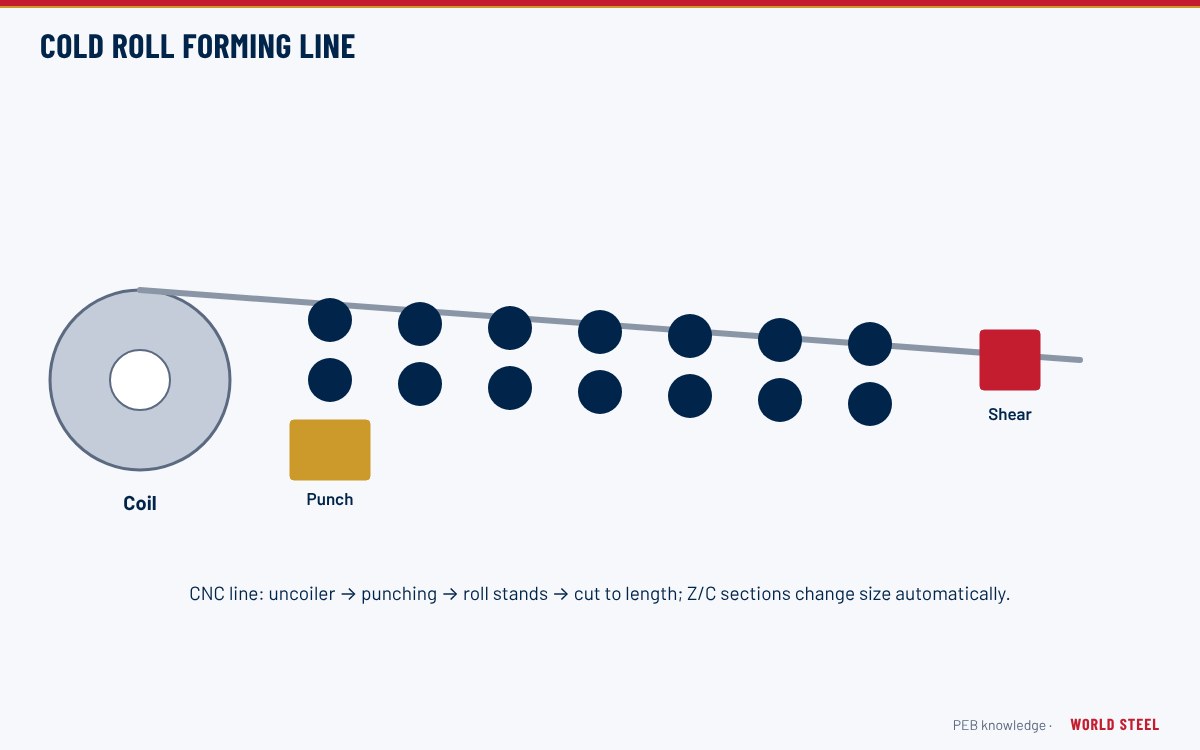
All secondary members and most cladding of a pre-engineered building are made by cold roll forming: purlins, girts, eave struts, roof and wall sheeting, standing seam panels, trims and flashings. Coil is passed through a series of roll stands, each of which bends the strip a little further until the final profile is reached. Because forming is done at room temperature, the steel keeps its coating and gains some strength at the corners from work hardening.
The purlin line
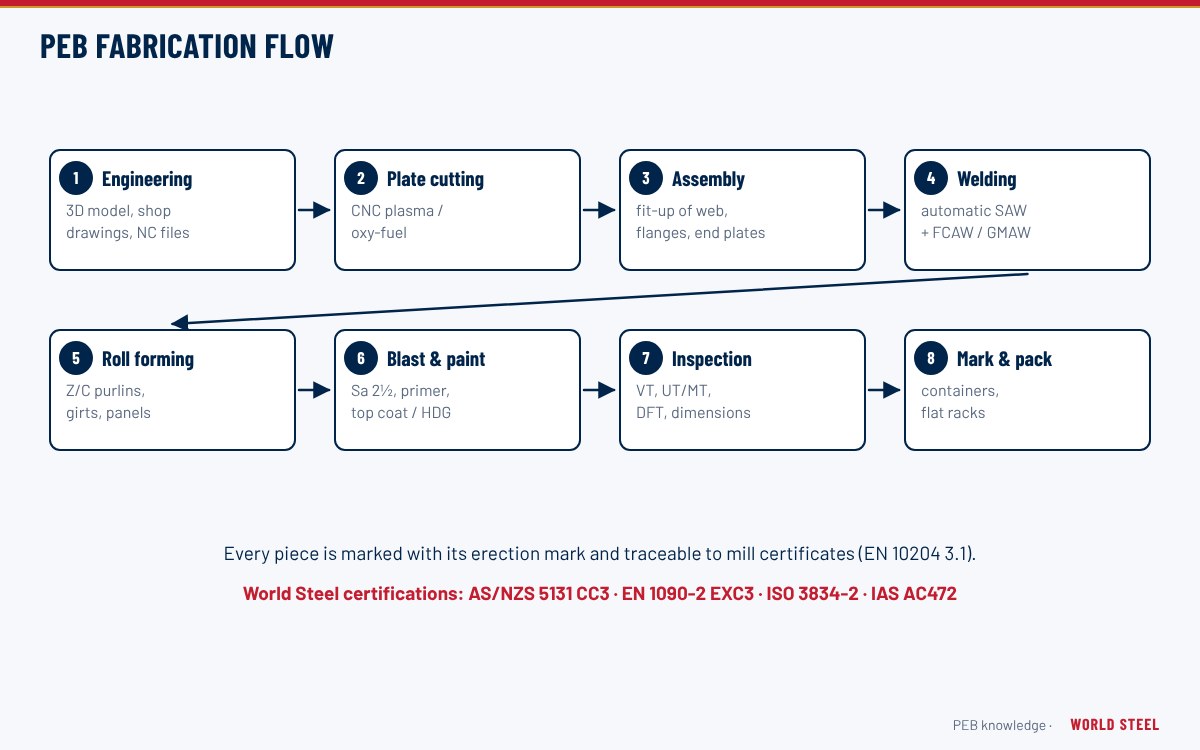
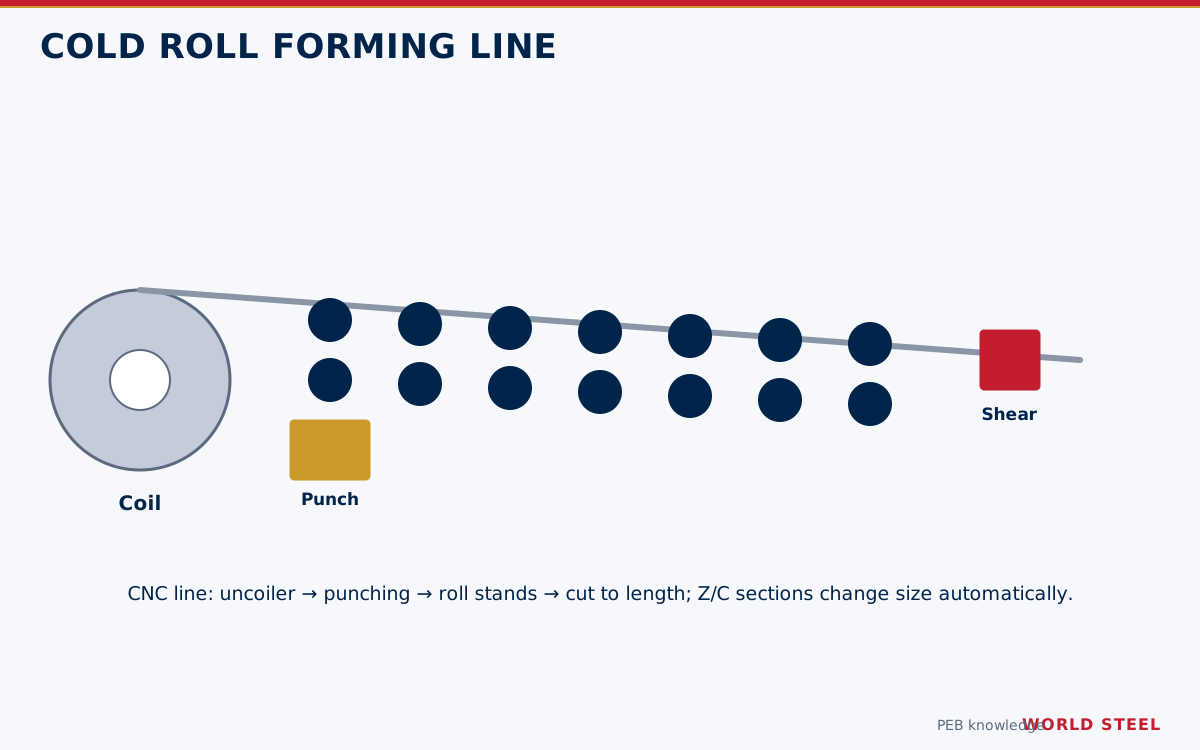
- Decoiling and levelling – slit coil of the specified width, grade and coating is uncoiled and flattened.
- Inline punching – bolt holes for laps and frame connections, sag rod holes and service holes are punched by CNC press units driven from the detailing data.
- Forming – typically 12–20 roll stands form the web, flanges and lips. Quick-change or automatic size adjustment allows different depths and flange widths on one line; convertible lines produce both Z and C sections.
- Cut to length – a flying or stop-and-cut shear cuts each member to its exact length; each piece is marked with its piece number.
- Bundling – members are stacked and strapped by mark for shipping.
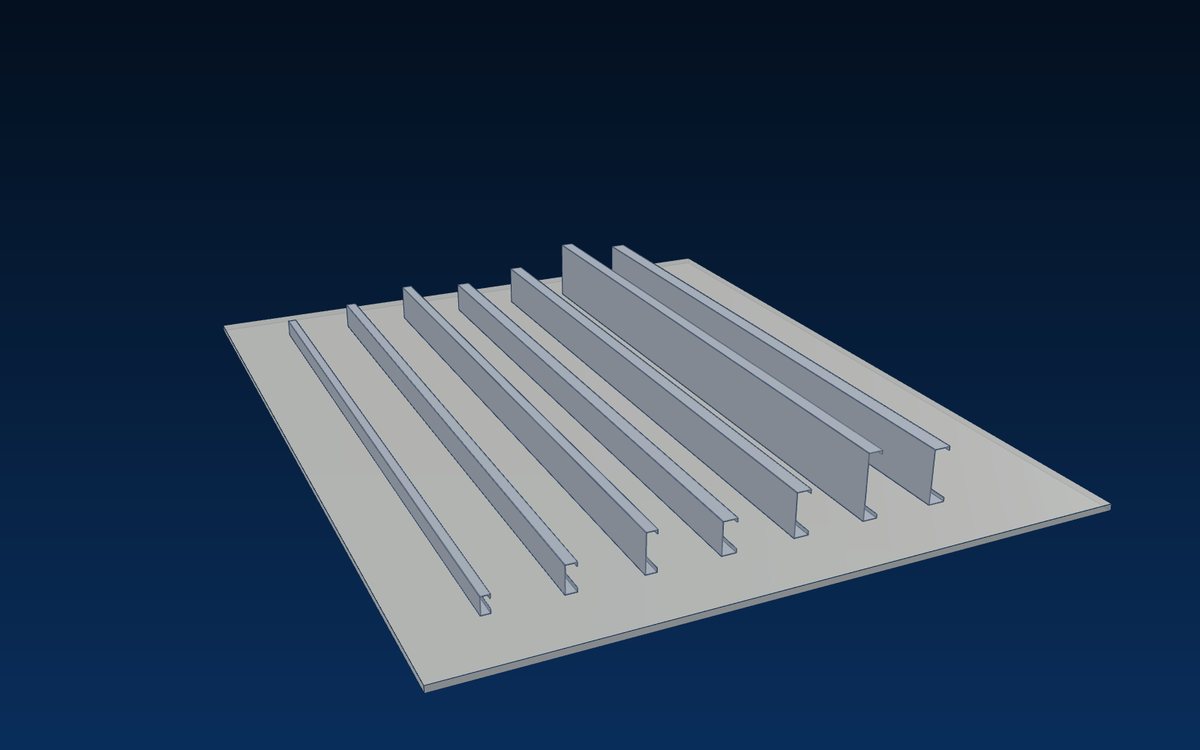
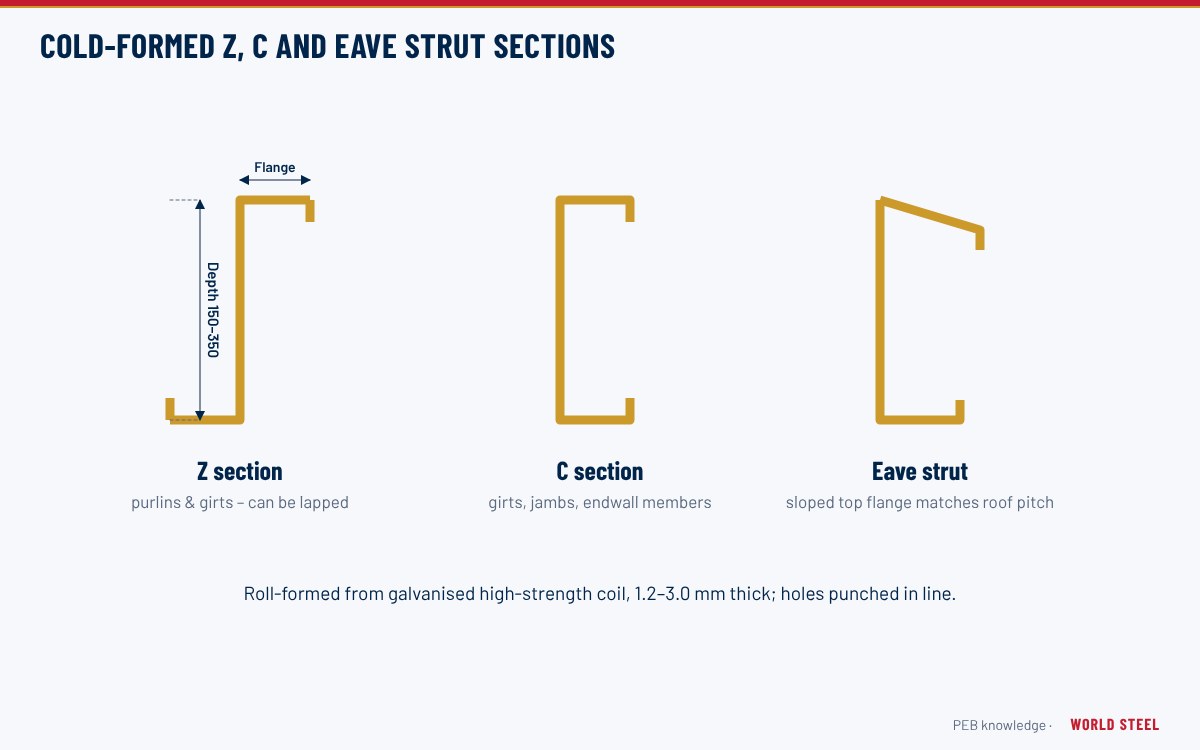
Z sections have unequal flanges so that they can nest and be lapped over the frames, giving continuity and lower deflection; C sections are used where laps are not required, for example at openings and endwalls. See cold-formed steel for material and design details.
| Member | Typical depth | Typical thickness | Typical material |
|---|---|---|---|
| Z / C purlins and girts | 150–350 mm | 1.5–3.0 mm | Z275 / G90 galvanized, yield 345–450 MPa |
| Eave strut | ~200–250 mm | 1.5–2.5 mm | As purlins |
| Roof and wall sheeting | Rib height ~25–40 mm | 0.4–0.6 mm BMT | AZ150 / AZ50–AZ55 metallic-coated, often pre-painted, G550 |
| Standing seam panels | Seam height ~50–65 mm | 0.5–0.7 mm BMT | Metallic-coated, pre-painted |
Panel lines
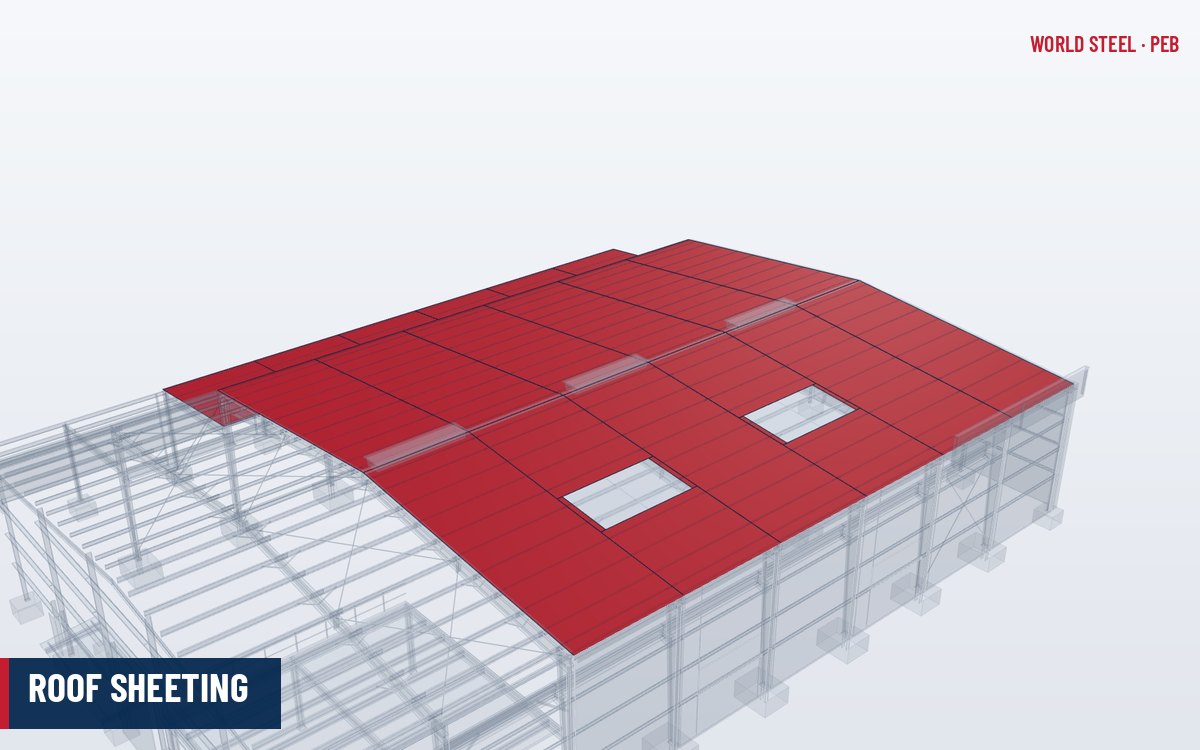
Roof and wall sheeting lines form trapezoidal or corrugated profiles from pre-painted metallic-coated coil. Rolls must be kept clean and polished so that the paint film is not scratched, and strippable film may be applied for premium colours. Standing seam panels are often formed on site from portable machines when panel lengths exceed transport limits – a 60–100 m single-length roof panel eliminates end laps entirely. Panel length, straightness, rib height and cover width are checked at the start of each run and periodically during production.
| Profile family | Typical rib or seam height | Typical BMT | Use |
|---|---|---|---|
| Trapezoidal roof and wall sheet | 25–40 mm | 0.40–0.60 mm | Through-fastened roofs and walls |
| Corrugated sheet | About 16–19 mm | 0.35–0.48 mm | Agricultural buildings, traditional walls |
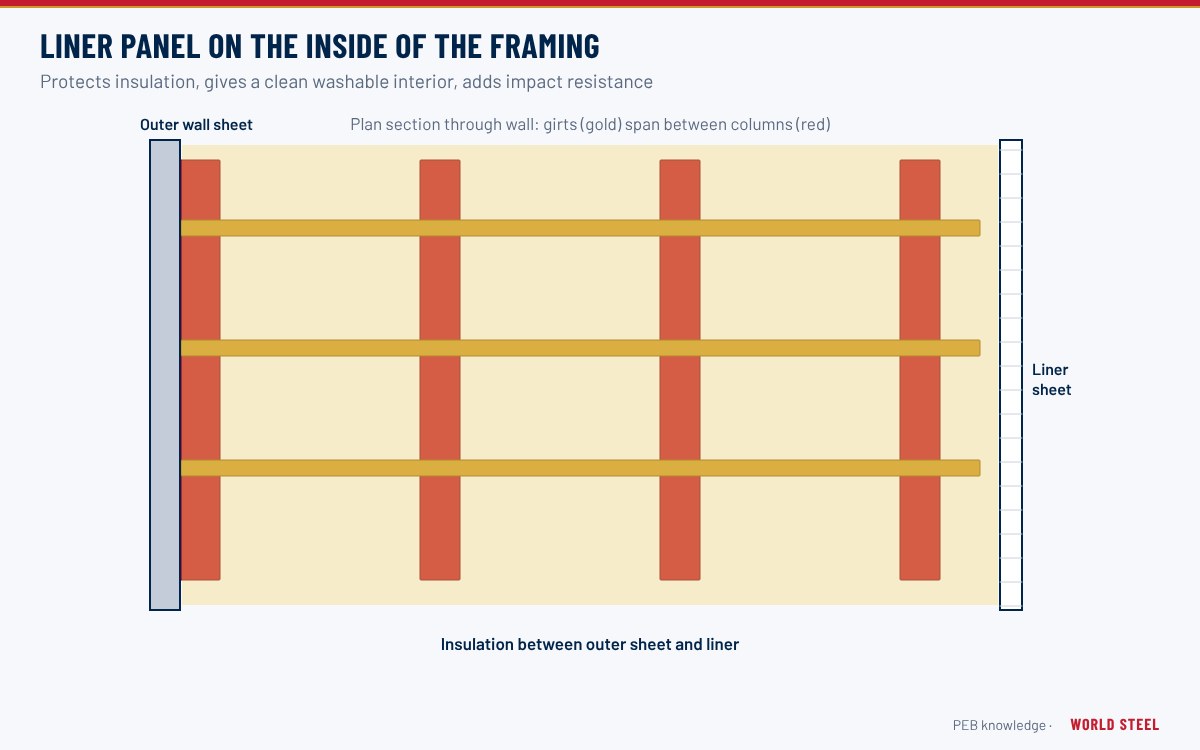
| Liner and soffit panels | Shallow ribs, about 5–20 mm | 0.35–0.50 mm | Interior faces, canopy soffits |
| Concealed-fix wall panel | About 25–40 mm | 0.50–0.70 mm | Architectural walls |
| Standing seam panel | 40–75 mm | 0.45–0.70 mm | Low-slope roofs |
| Composite floor deck | 50–75 mm | 0.75–1.2 mm | Mezzanine floors |
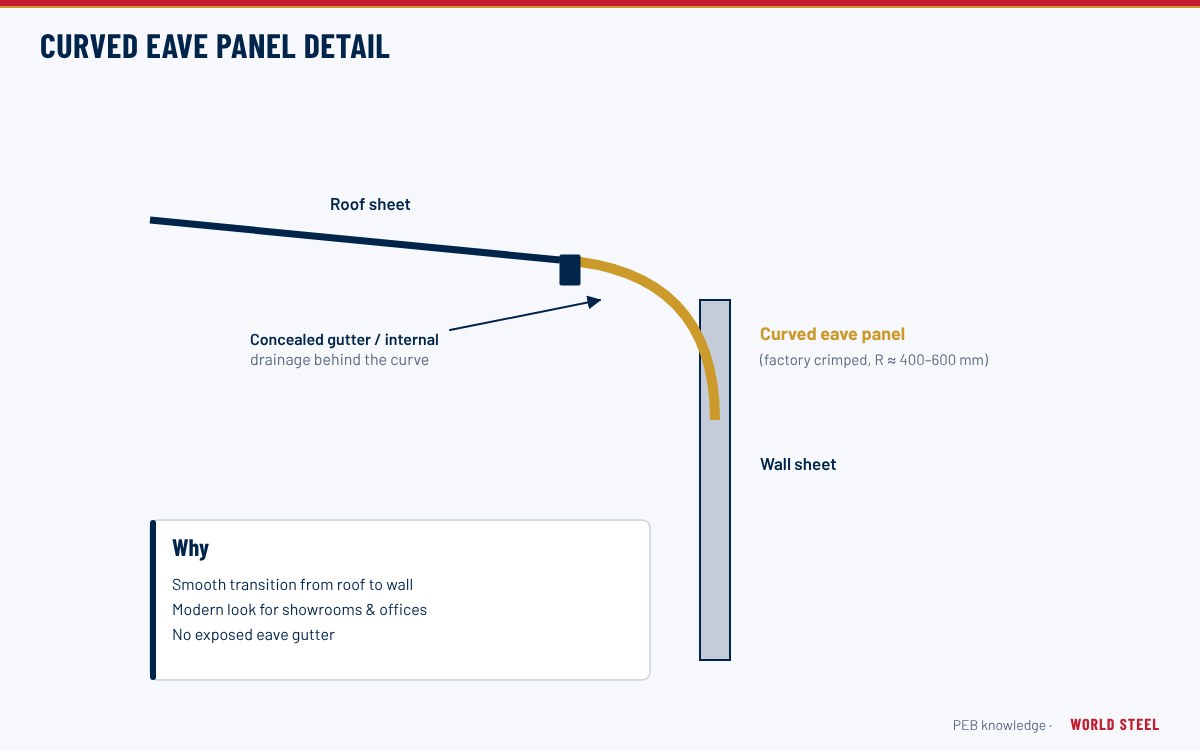
Forming coated and aluminium coil. Pre-painted coil must pass the T-bend flexibility requirement of its paint system (ASTM D4145) for the tightest bend radius on the profile; cold coil in winter or old stock can crack at the ribs. Aluminium coil forms easily but scratches and marks more readily, so rolls are cleaned when changing from steel. Curved eave panels and curved roofs are produced from straight panels by crimp-curving or smooth-curving machines, with the minimum radius depending on profile and thickness.
Material and tolerance control
Coil is checked on receipt for grade, base metal thickness and coating mass against the mill certificate – for example ASTM A653 / A1011 in North America, AS 1397 in Australia, EN 10346 in Europe. Key in-process checks are profile depth and flange width, lip length and angle, hole position and length. Tolerances follow the purchaser's specification or the MBMA Metal Building Systems Manual, AS/NZS 4600 and EN 1090-4, which covers execution of cold-formed thin-gauge structural elements and sheeting in Europe. See metallic-coated and pre-painted sheet for coatings.
Galvanized secondary members are cut and punched after coating; small cut edges are protected by the sacrificial action of the zinc and normally need no touch-up in a dry internal environment.
WSC supply
World Steel roll-forms purlins, girts, eave struts and cladding profiles as part of its secondary members and cladding packages, sourcing coated coil from established mills such as NS BlueScope Vietnam, Hoa Sen and Ton Dong A according to the market specification.
المعايير حسب المنطقة
| المنطقة | الرمز | النطاق |
|---|---|---|
 United States |
AISI S100-16 (2020) / ASTM A653, A1011 | Cold-formed steel design; sheet steel specifications |
 Canada |
CSA S136-16 | North American specification for cold-formed steel – Canadian edition |
 Australia / NZ |
AS/NZS 4600:2018 / AS 1397 | Cold-formed steel structures; metallic-coated sheet steel |
 Europe |
EN 1090-4 / EN 1993-1-3 / EN 10346 | Execution and design of cold-formed members; continuously hot-dip coated steel |
الأسئلة المتكررة
What is the difference between Z and C purlins in fabrication?
Both are formed on similar lines, often the same convertible line. Z purlins have offset flanges so they can be nested and lapped over frames for continuity; C purlins are symmetric and used as simple spans or at openings.
Can roof panels be roll formed on site?
Yes. Portable roll formers are used for standing seam roofs when panels are too long to transport, allowing single-length panels from eave to ridge without end laps.
Are purlins galvanized before or after forming?
They are normally formed from pre-galvanized coil (for example Z275 or G90). Hot-dip galvanizing after forming is possible for very corrosive environments but is less common.