ENEnglish
 VITiếng Việt
 ZH中文
 KO한국어
 JA日本語
 FRFrançais
 ITItaliano
 PTPortuguês
 ESEspañol
 HEעברית
 ARالعربية

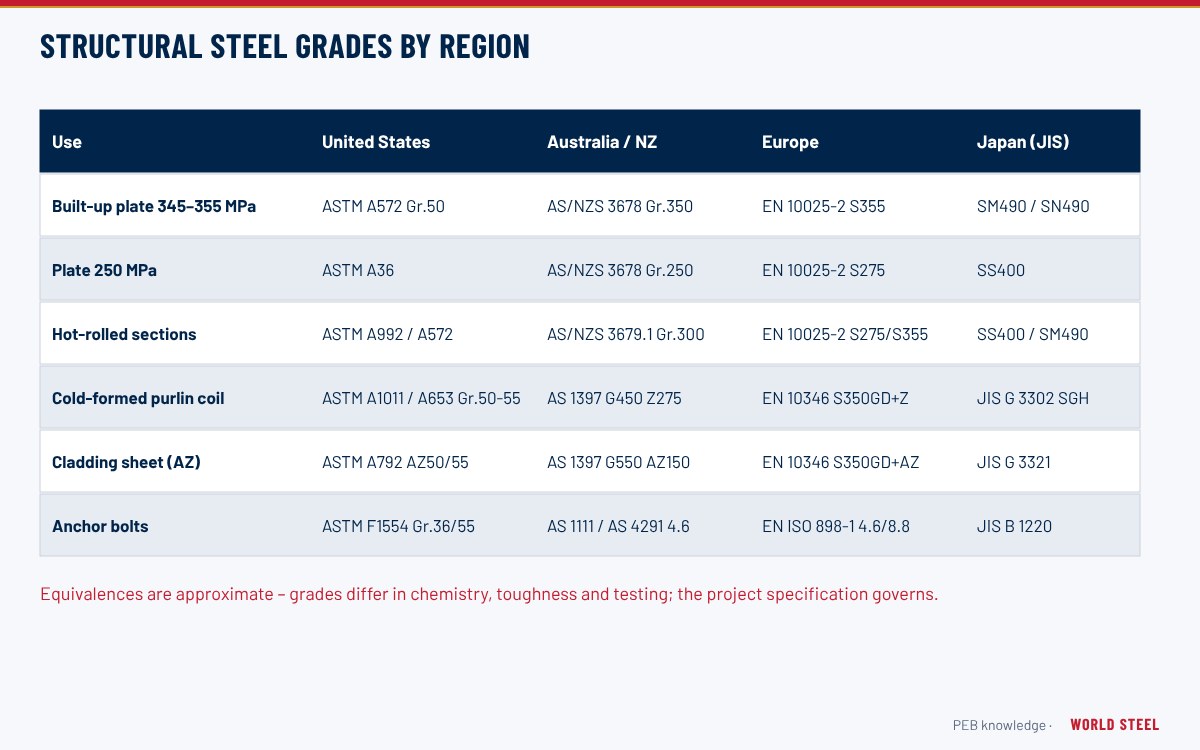
Plate in pre-engineered buildings
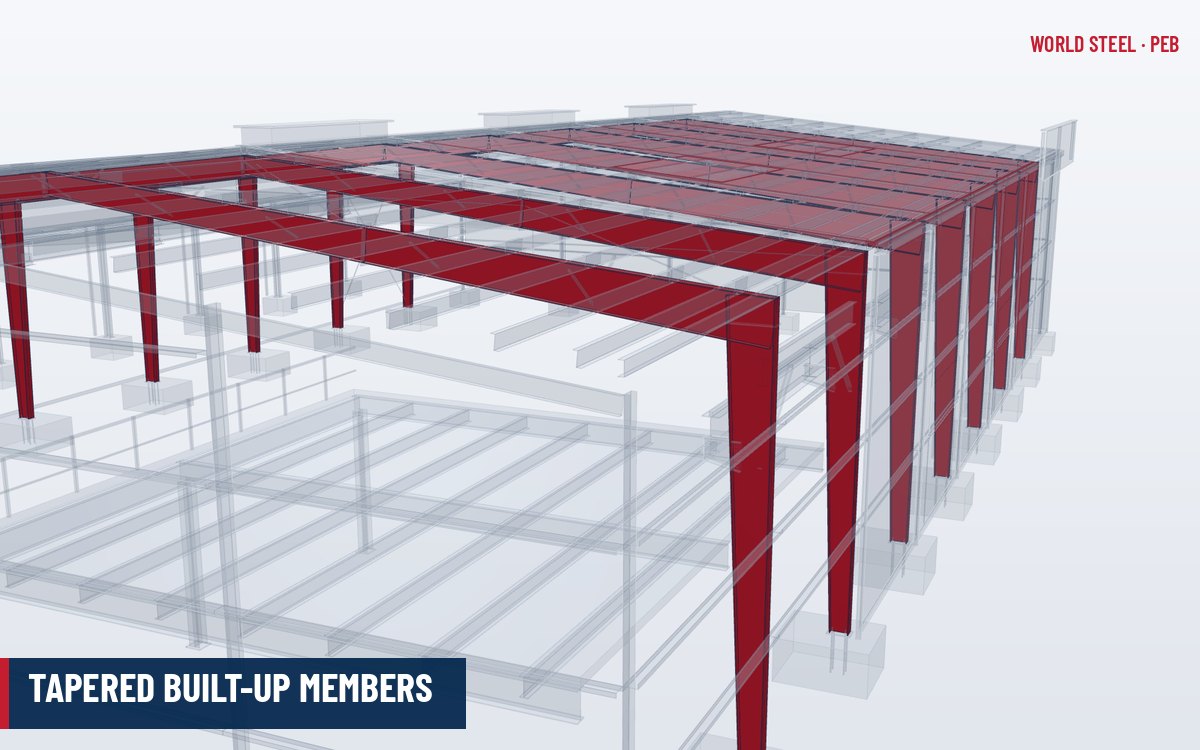
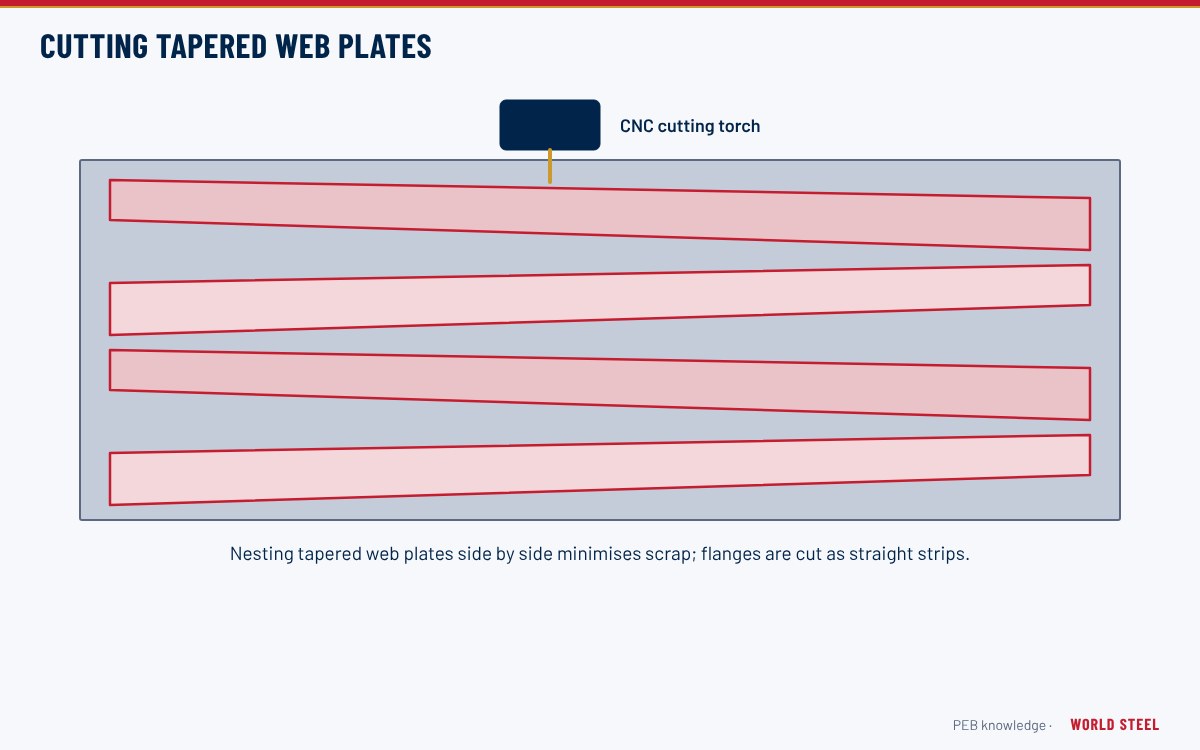
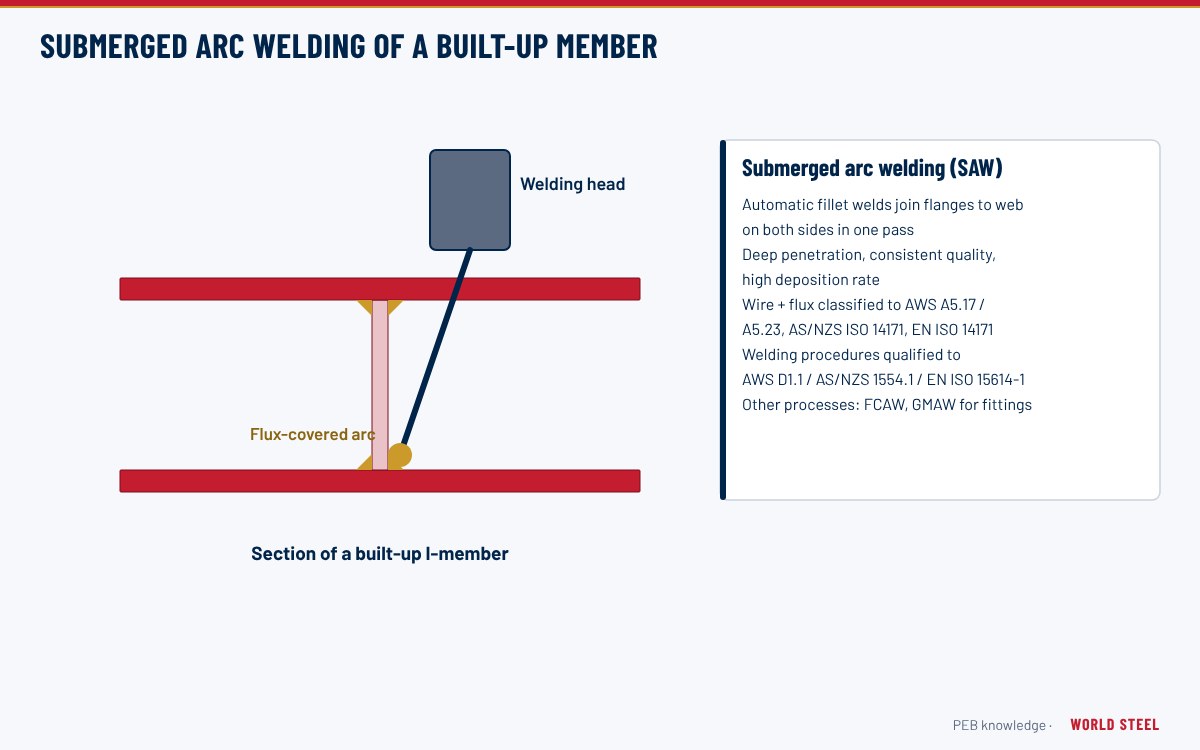
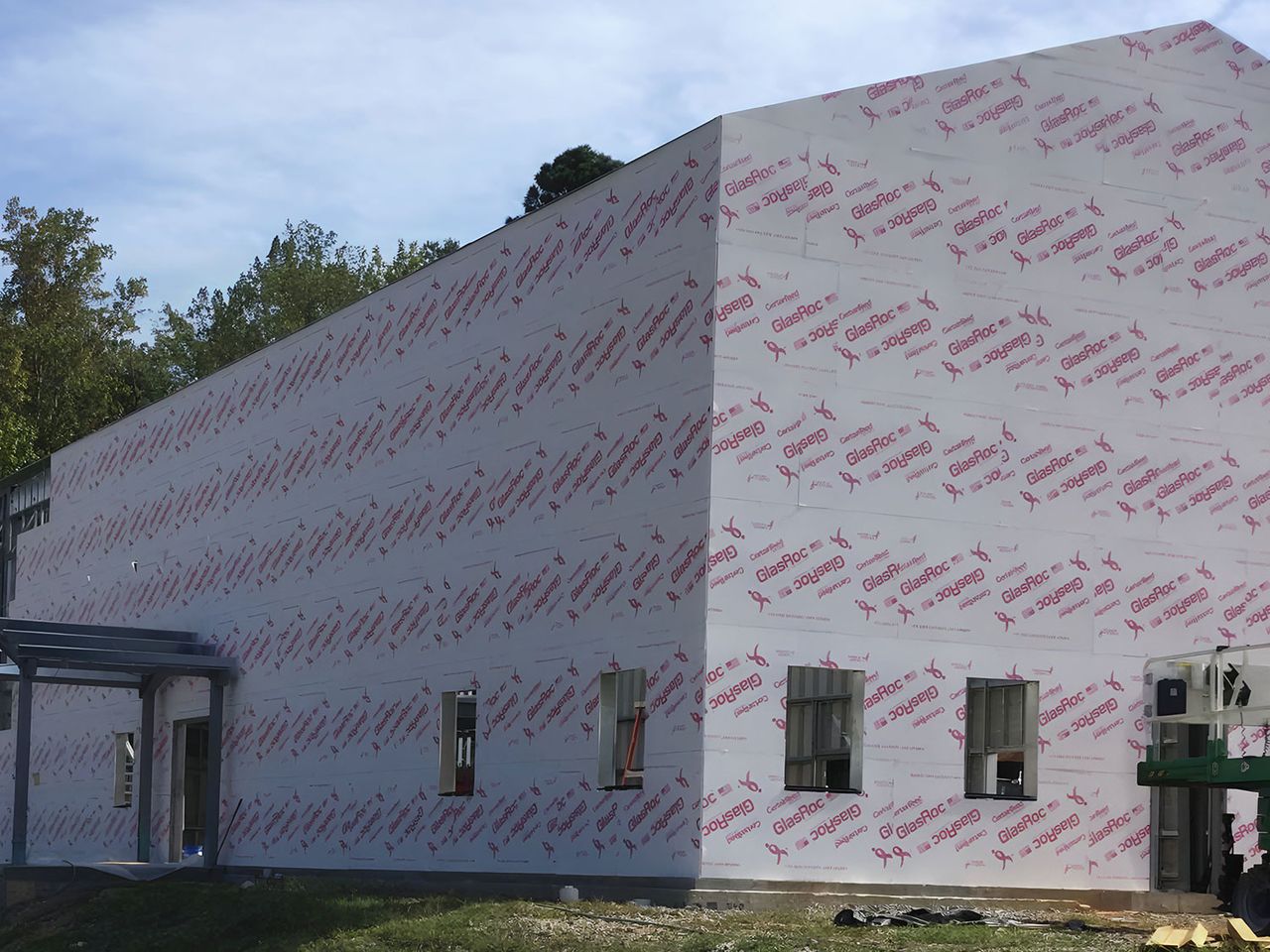
The primary frames of a pre-engineered building – columns, rafters, end plates, base plates and stiffeners – are made from hot-rolled structural steel plate cut into strips and welded into tapered built-up members. PEB design relies on higher-strength steel, typically with a minimum yield of about 345–355 MPa, to keep frames light. Plate thickness for webs is often 4–12 mm and for flanges 6–25 mm or more, with heavier plates for base plates, crane girders and connection plates. Selecting a grade that matches the design code of the project, and documenting it with traceable mill test certificates, is a basic compliance requirement in every export market.
Grade equivalence table
The table compares commonly used grades. Values are minimum yield strength for thin plate and the tensile range, and are approximate: each standard has its own thickness bands, chemistry limits and test rules, so grades are similar but not interchangeable without engineering review.
| Strength class | USA (ASTM) | Australia / NZ | Europe (EN 10025-2) | Japan (JIS) |
|---|---|---|---|---|
| ~250 MPa | A36: Fy 250 MPa, Fu 400–550 MPa | AS/NZS 3678 Grade 250: fy 250–280 MPa, fu 410 MPa | S235: fy 235 MPa, fu 360–510 MPa | SS400 / SM400: fy 245 MPa (t ≤ 16 mm), fu 400–510 MPa |
| ~300 MPa | – | AS/NZS 3678 Grade 300: fy 300–320 MPa, fu 430 MPa | S275 (closest): fy 275 MPa, fu 410–560 MPa | – |
| ~350 MPa (typical PEB) | A572 Grade 50: Fy 345 MPa, Fu 450 MPa min; A992 for shapes | AS/NZS 3678 Grade 350: fy 340–360 MPa, fu 450 MPa | S355JR / J0 / J2: fy 355 MPa (t ≤ 16 mm), fu 470–630 MPa | SM490 / SN490B: fy 325 MPa (t ≤ 16 mm), fu 490–610 MPa |
| ~450 MPa | A572 Grade 65: Fy 450 MPa | AS/NZS 3678 Grade 450 | S460 (EN 10025-3/-4) | SM570 |
Chinese grades Q235B and Q355B (GB/T 700 / GB/T 1591-2018) are also widely produced in Asia and are broadly comparable to S235 and S355; their acceptance in a destination market depends on the project specification.
Toughness, thickness and weldability
- Impact toughness: EN grades carry a Charpy suffix – JR (27 J at +20 °C), J0 (0 °C), J2 (−20 °C). AS/NZS 3678 uses L0 or L15 suffixes. ASTM A572 has optional supplementary Charpy testing. Cold climates and fatigue-loaded members (crane girders) need specified toughness.
- Through-thickness properties: Z-grades (EN 10164) for heavily loaded T-joints in thick plate.
- Weldability: controlled by carbon equivalent (CEV or CE); low CE allows welding without preheat in thin PEB plates.
- Thickness bands: minimum yield reduces with thickness in most standards – always check the band for the actual plate.
Hot-rolled sections, hollow sections and plate tolerances
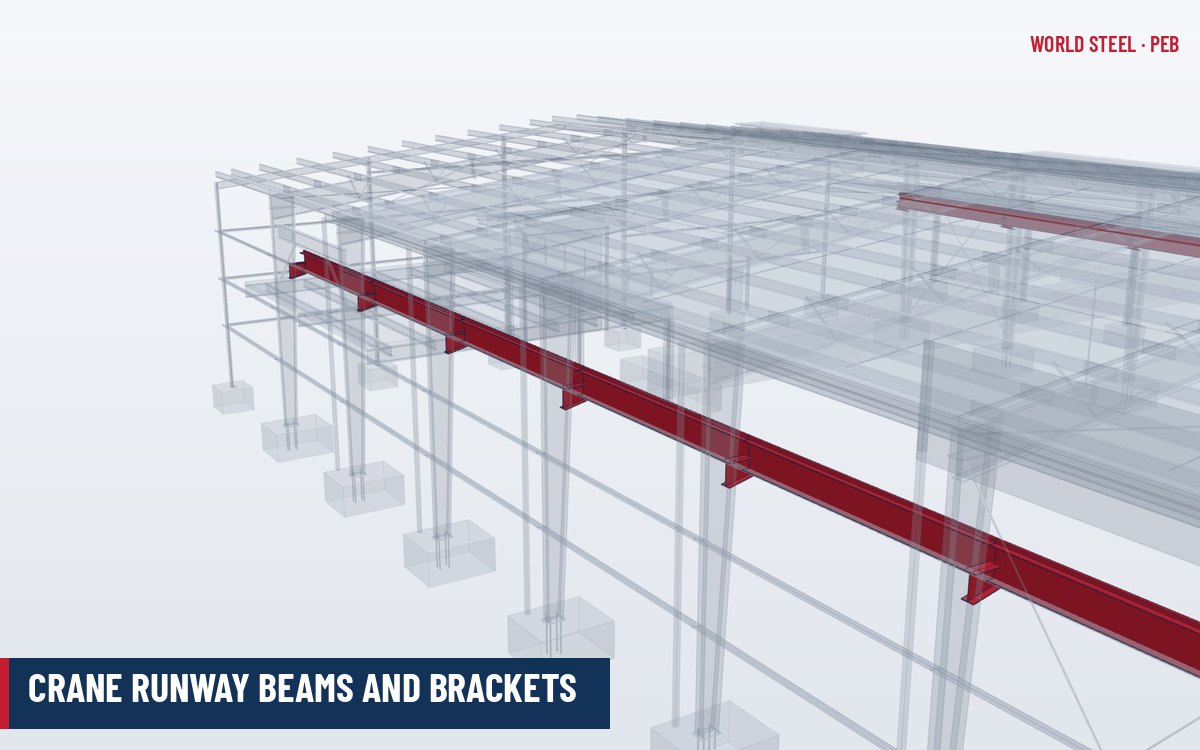
Although PEB frames are mostly built up from plate, many buildings also use hot-rolled sections for mezzanine beams, crane runways, bracing struts, canopy members and endwall columns, and hollow sections for posts and trusses. These are covered by separate product standards with their own grades:
| Product | USA / Canada | Australia / NZ | Europe |
|---|---|---|---|
| Wide-flange and I sections | ASTM A992 (345 MPa); CSA G40.21 350W in Canada | AS/NZS 3679.1 Grade 300 or 350 | EN 10025-2 S275 / S355 |
| Angles and channels | ASTM A36 or A572 Grade 50 | AS/NZS 3679.1 Grade 300 | EN 10025-2 S275 / S355 |
| Cold-formed hollow sections | ASTM A500 Grade C (or A1085) | AS/NZS 1163 C350L0 / C450L0 | EN 10219 S355J2H |
| Hot-finished hollow sections | ASTM A501 | – | EN 10210 S355J2H |
| Welded plate girders (heavy) | ASTM A572 Grade 50 plate | AS/NZS 3678 Grade 350 (L0 / L15) | EN 10025-2 S355J2 (+N or +M per EN 10025-3/-4) |
Plate tolerances on thickness, flatness and width are set by ASTM A6 (US), AS/NZS 1365 (Australia) and EN 10029 (Europe). Thickness tolerances matter for thin web plates, because design is based on nominal thickness: a plate rolled at the lower limit of tolerance may need checking if the specification requires it. For crane girders and fatigue-loaded members, also consider internal soundness – ultrasonic plate testing to ASTM A578 or EN 10160 where specified.
Weathering steel (ASTM A588 / A606, EN 10025-5 S355J2W) is rarely used in PEB because the cladding hides the frame and the building interior is often humid without the wet–dry cycles needed to form a stable patina.
Mill certificates and traceability
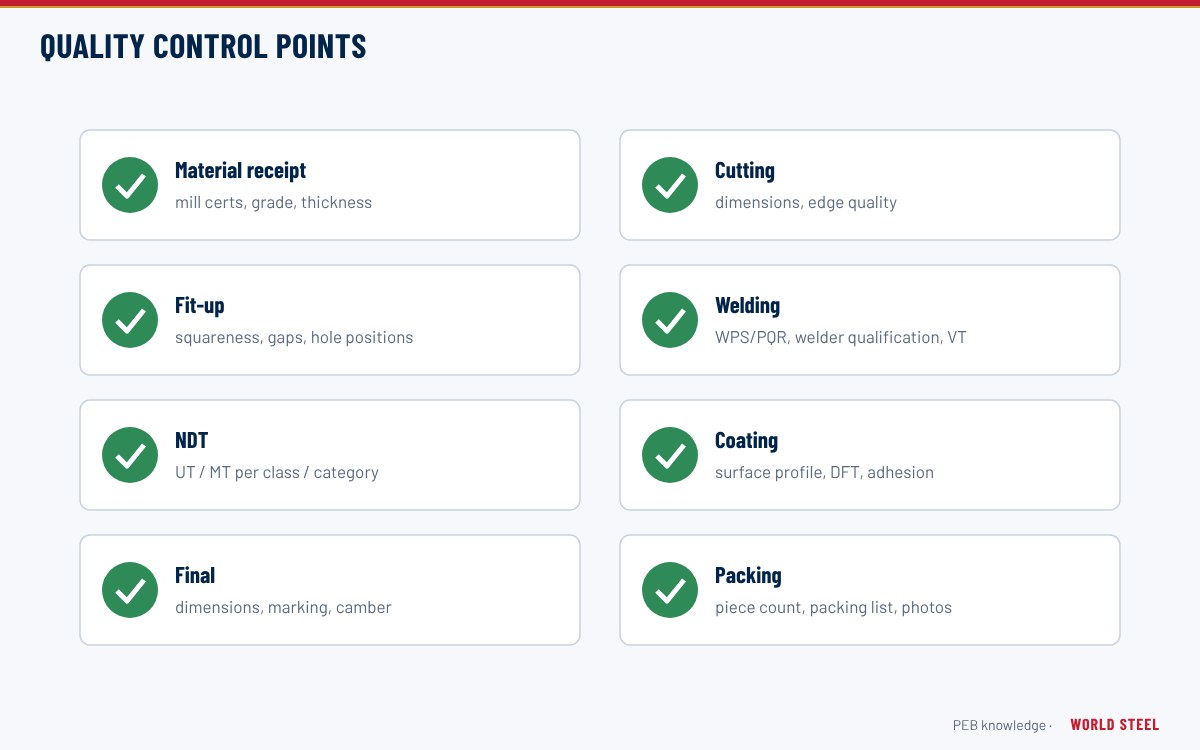
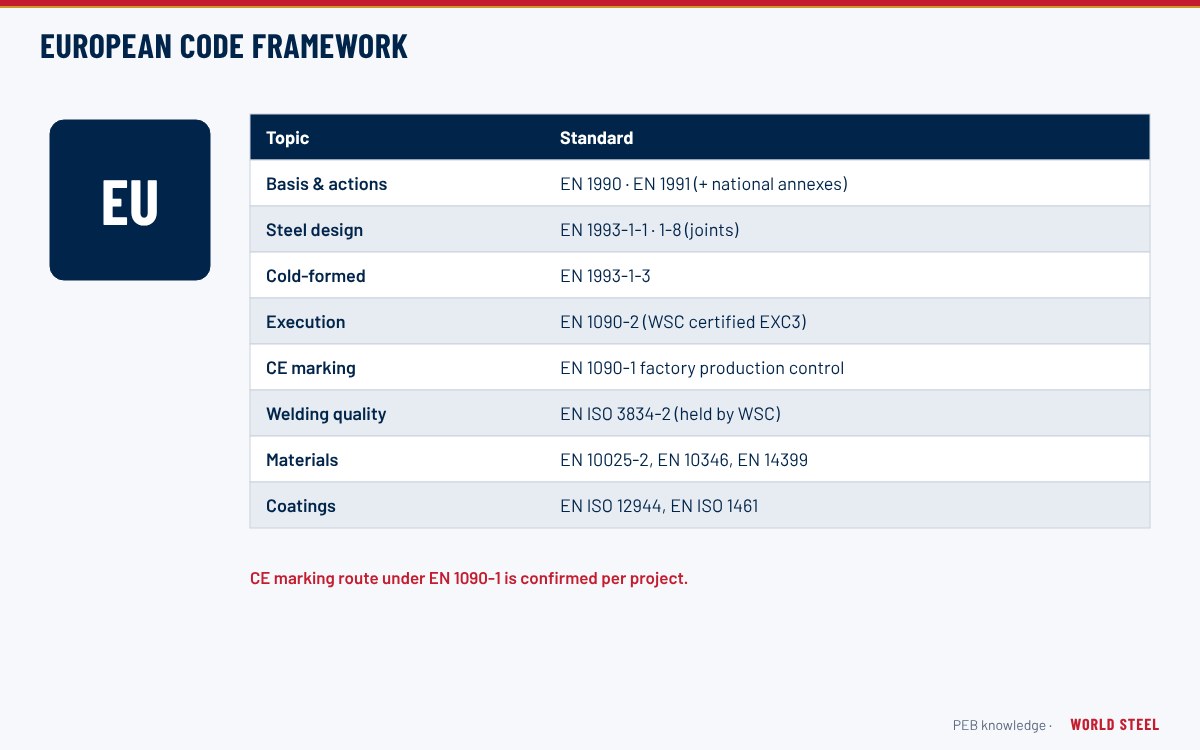
Every plate should be supplied with an inspection document – in Europe and many export markets a type 3.1 certificate to EN 10204 – stating heat number, chemistry and mechanical test results. Fabricators transfer heat numbers to cut parts so each member can be traced to its certificate, a requirement of EN 1090-2 (EXC2 and above) and AS/NZS 5131 (CC2 and above). In the US, AISC 360-22 and the project specification require certified mill test reports, and some public projects require domestic steel (for example Buy America / BABA provisions), which must be checked before procurement.
Sources and WSC practice
Structural plate in Vietnam is supplied by domestic integrated mills and by imports; heavy plate and hot-rolled coil are available from mills such as Hoa Phat and Formosa Ha Tinh, while hot-rolled sections come from producers such as POSCO Yamato Vina. World Steel selects grades to match the destination code (ASTM, AS/NZS, EN or JIS), verifies mill certificates on receipt and maintains heat-number traceability through cutting and welding, in line with its AS/NZS 5131 CC3, EN 1090-2 EXC3 and ISO 3834-2 certifications. See also plate cutting and web tapering and quality control, and WSC's structural steel capability.
المعايير حسب المنطقة
| المنطقة | الرمز | النطاق |
|---|---|---|
 United States |
ASTM A572 / A36 / A992 | High-strength low-alloy and carbon structural steel |
 Canada |
CSA G40.20/G40.21 | Structural quality steel – e.g. 350W |
 Australia / NZ |
AS/NZS 3678 | Structural steel – hot-rolled plates, floorplates and slabs |
| Australia / NZ |
AS/NZS 3679.1 | Structural steel – hot-rolled bars and sections |
 Europe |
EN 10025-2 | Non-alloy structural steels – S235, S275, S355 |
| International | EN 10204 | Metallic products – types of inspection documents |
| International | JIS G3101 / G3106 / G3136 | SS, SM and SN structural steels |
الأسئلة المتكررة
Is S355 the same as ASTM A572 Grade 50?
They are similar in strength (about 345–355 MPa yield) but differ in chemistry limits, thickness bands, toughness designations and testing. Substitution needs engineering approval and the right certificates.
What does J2 mean in S355J2?
It indicates the Charpy impact test: at least 27 J at −20 °C. JR is tested at +20 °C and J0 at 0 °C.
Why are mill certificates important?
They prove the steel meets the specified grade. Codes such as EN 1090-2 and AS/NZS 5131 require traceability from certificate to fabricated member for most execution classes.