ENEnglish
 VITiếng Việt
 ZH中文
 KO한국어
 JA日本語
 FRFrançais
 ITItaliano
 PTPortuguês
 ESEspañol
 HEעברית
 ARالعربية

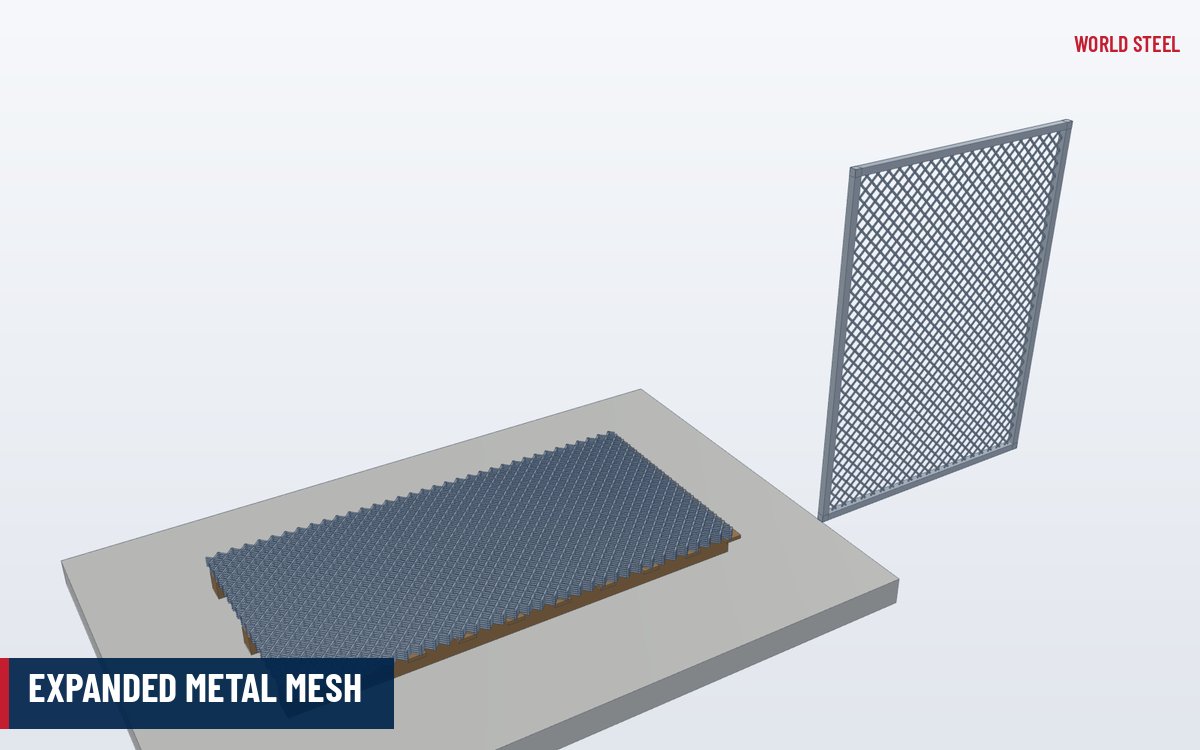
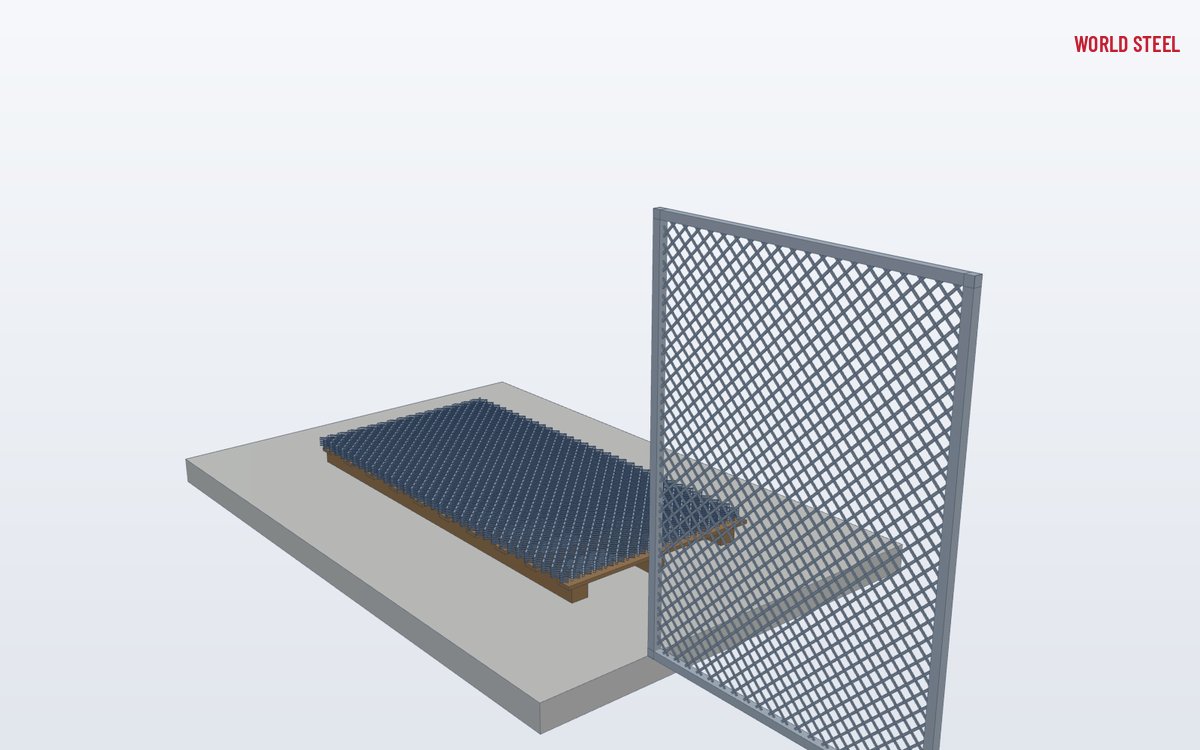
- One-piece mesh – slit and stretched, no welds or joints
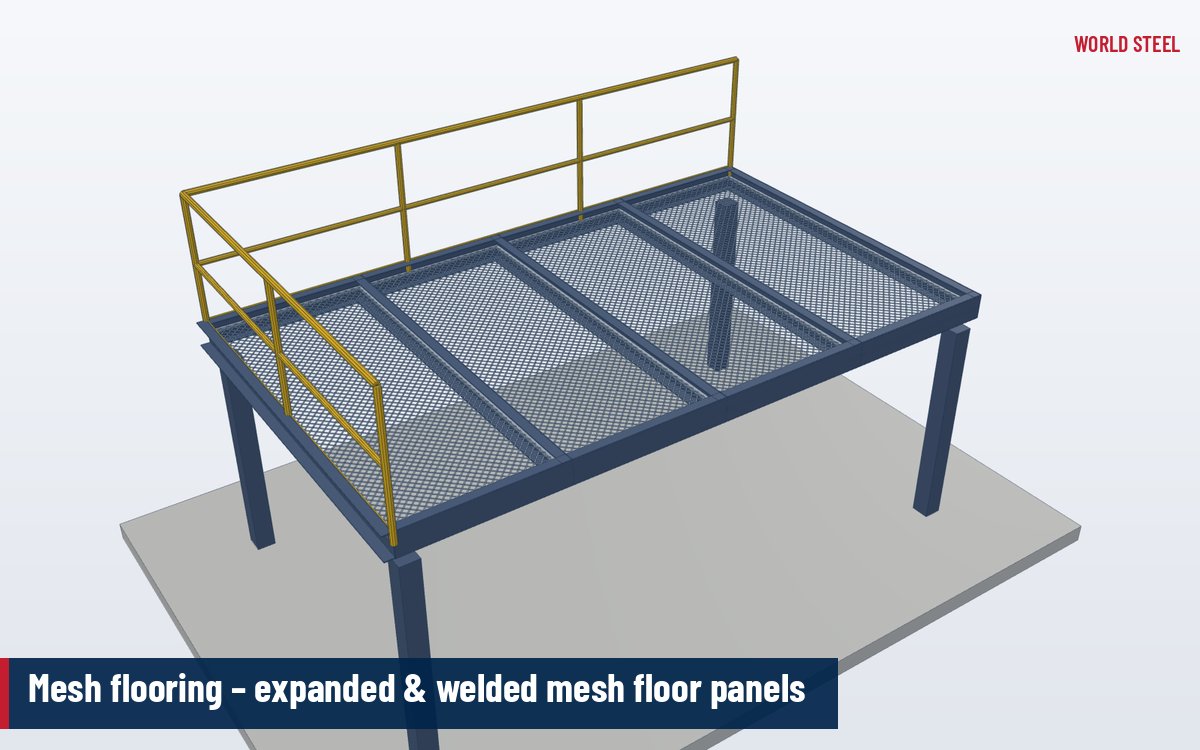
- Raised or flattened, light to heavy walkway patterns
- Mild steel, galvanised, stainless or aluminium
- Cut to size or framed into panels in the WS plant
- Supplied with the steel package or on its own
What it is
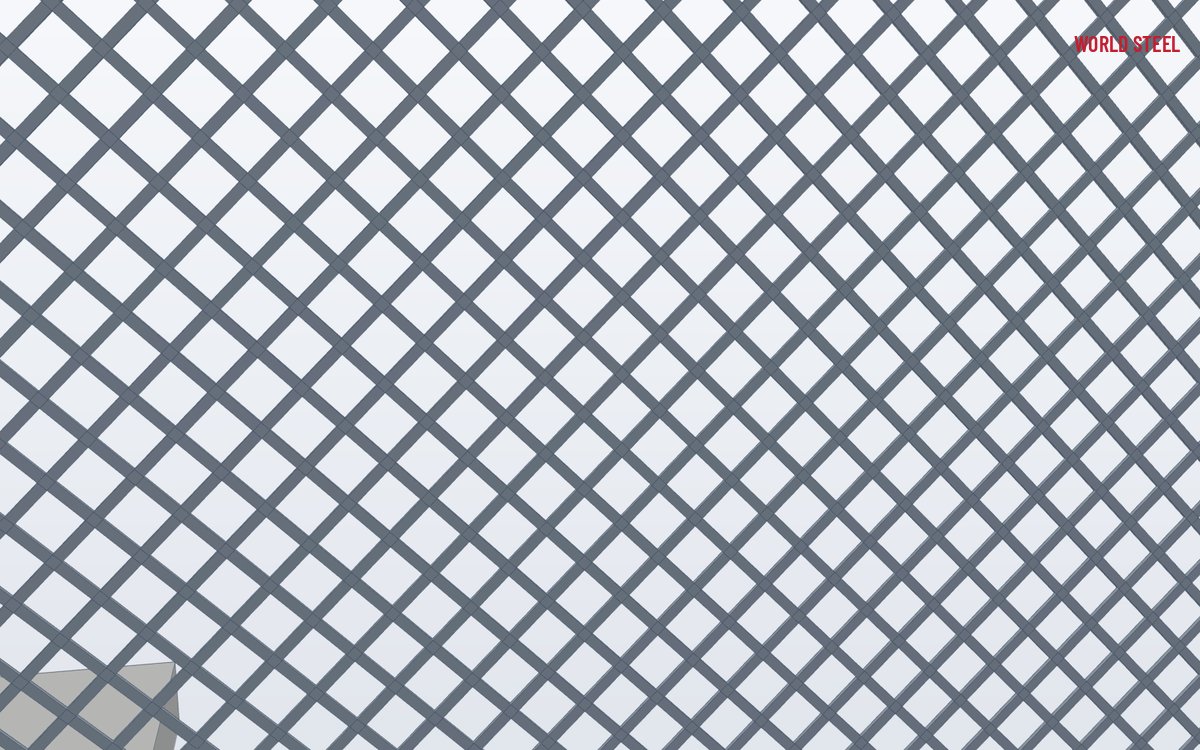
Expanded metal is made by slitting a solid sheet or plate in staggered rows and stretching it, so that each slit opens into a diamond. Nothing is punched out and nothing is welded: the mesh is one continuous piece, lighter per square metre than the sheet it came from, with strands and bonds that stay connected even when a strand is cut. In its as-made, raised form the strands sit at an angle, giving a rigid, grippy surface; passed through a rolling mill it becomes flattened mesh with a smooth face.
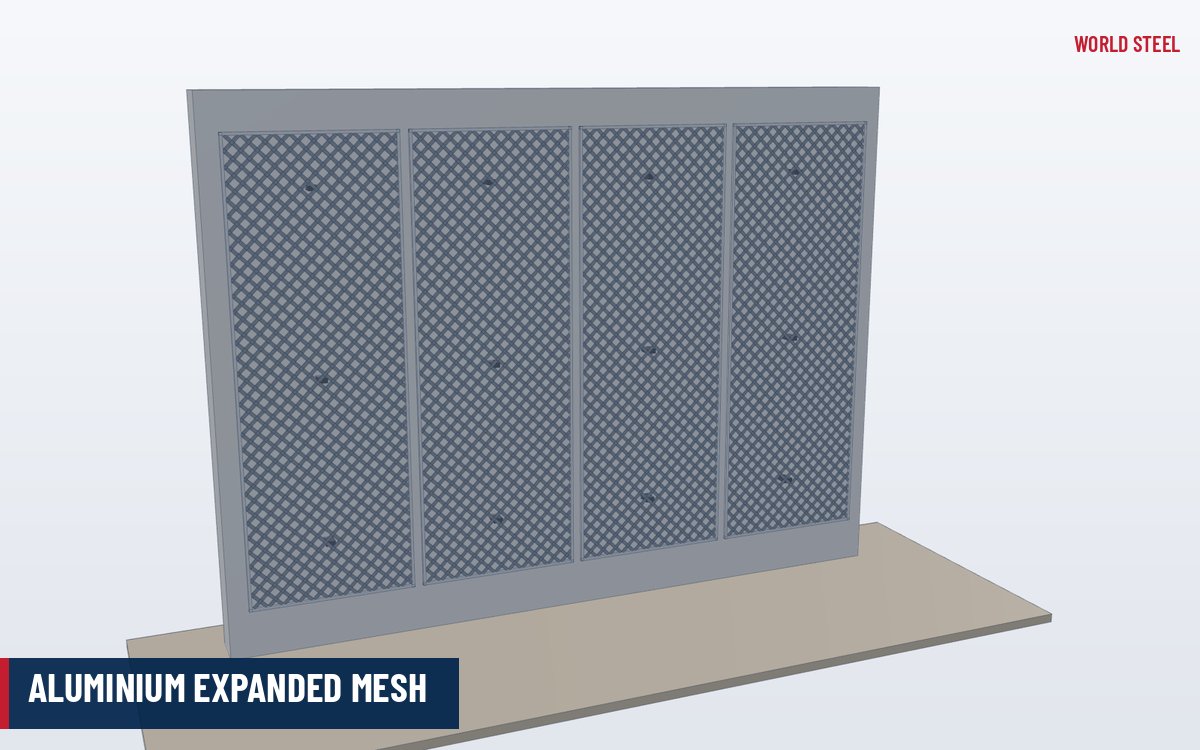
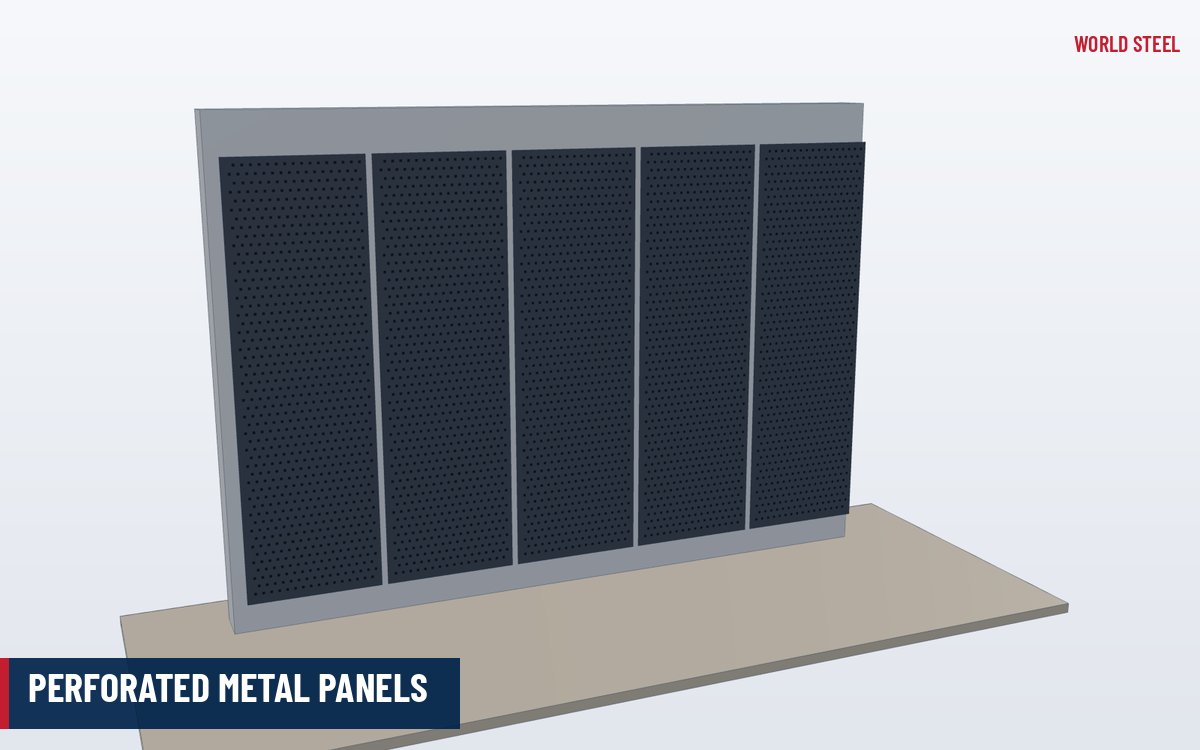
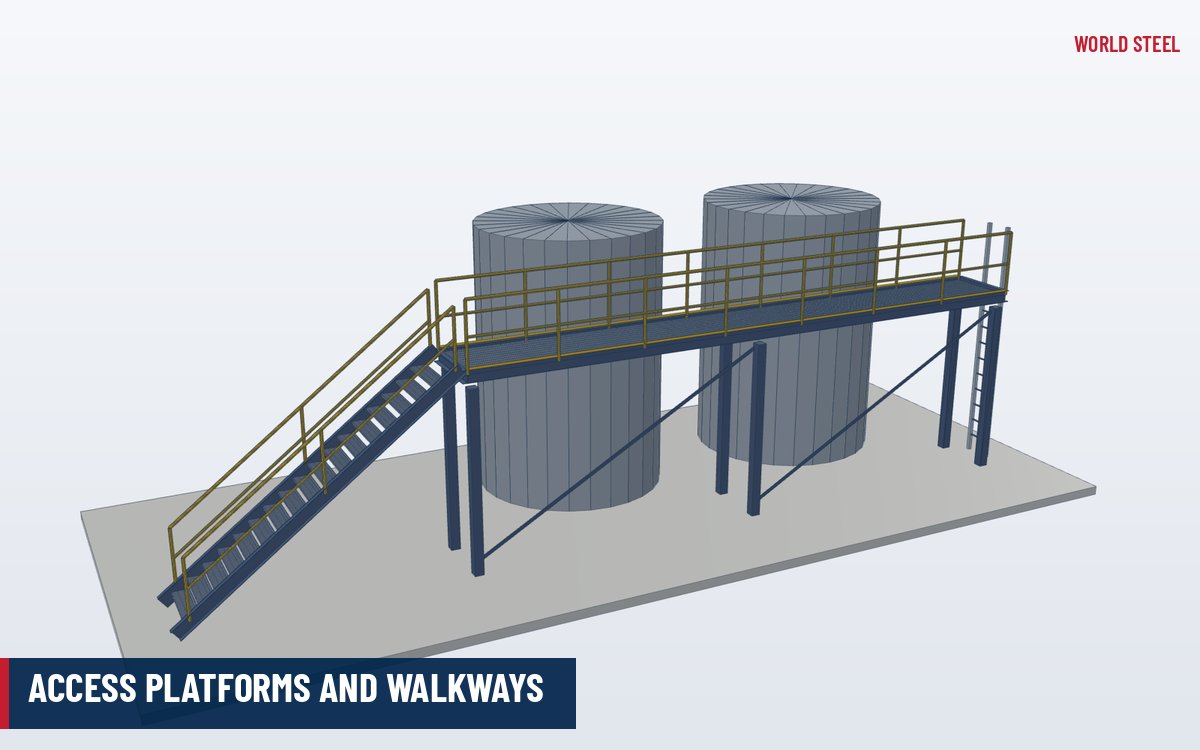
Expanded mesh is used wherever light, air, drainage or visibility must pass but people, hands, tools or debris must not: walkways and platform decks in heavy patterns, machine guards, fencing and enclosures, ceilings, facades and sunscreens, balustrade infill, and plaster lath. It is a close relative of perforated panels and mesh flooring; for aluminium patterns see aluminium expanded mesh.
Types and options
Every pattern is described by the short way of the diamond (SWD), the long way of the diamond (LWD), the strand width and the thickness of the base metal. Together they set weight, open area, stiffness and how the mesh feels underfoot.
| Family | Form | Typical use |
|---|---|---|
| Light patterns | Small diamonds, thin sheet, raised or flattened | Ceilings, screens, plaster lath, filters |
| Medium patterns | Medium diamonds, sheet or light plate | Machine guards, fencing, storage partitions |
| Heavy (walkway) patterns | Large diamonds, plate, raised for grip | Walkways, platform decks, ramps, trailer floors |
| Architectural patterns | Steel, stainless or aluminium, often flattened | Facades, sunscreens, balustrade infill |
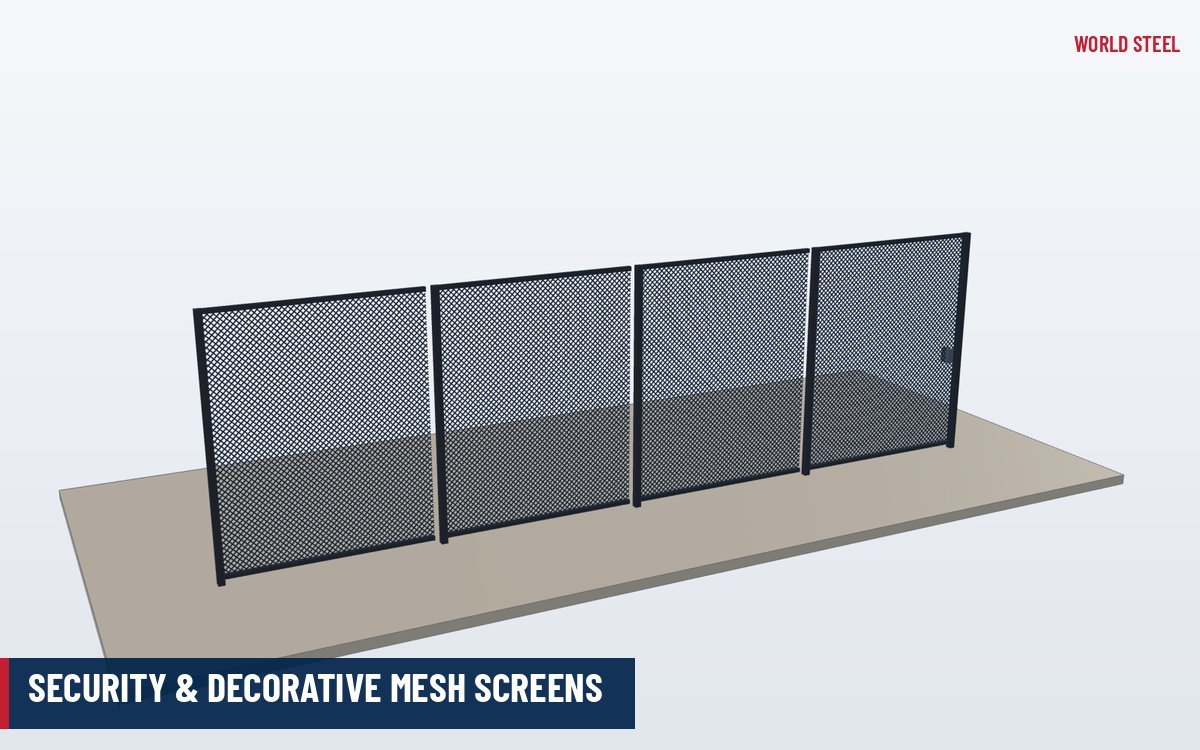
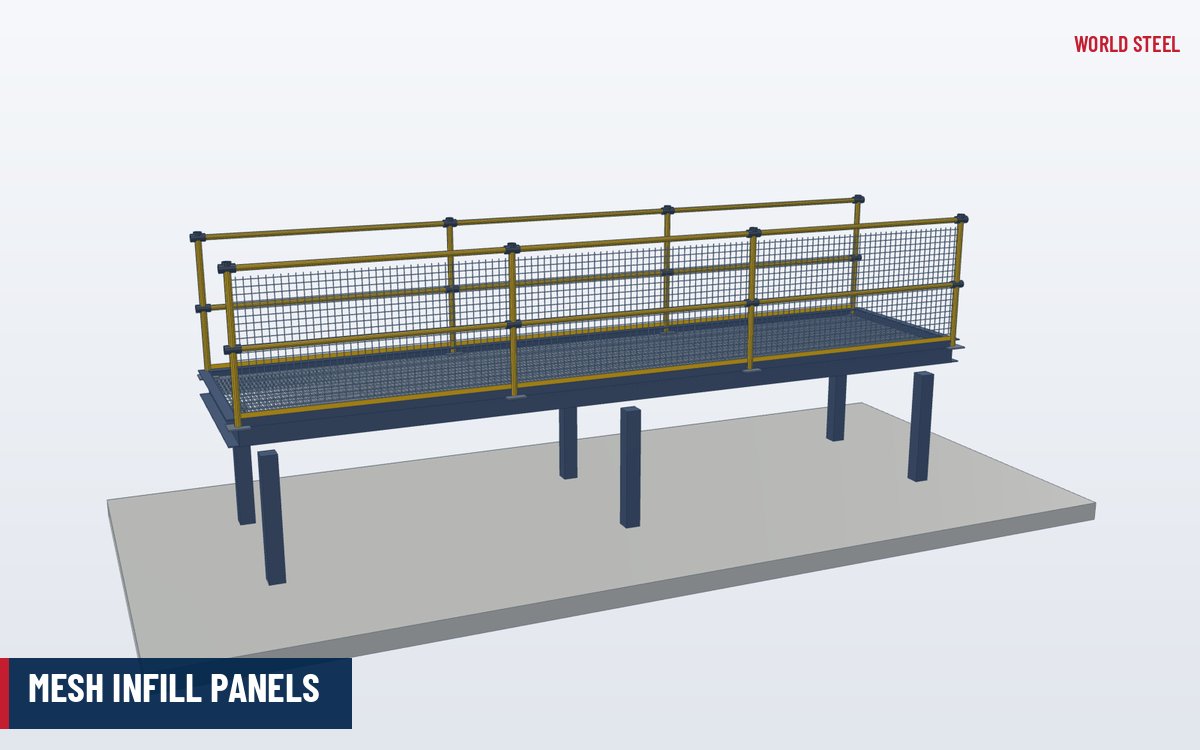
Mesh is supplied as standard sheets, cut to size, or framed: World Steel welds or bolts it into angle, flat bar or channel frames to make removable panels, guard sections, handrail infill panels and security screens.
Design and compliance
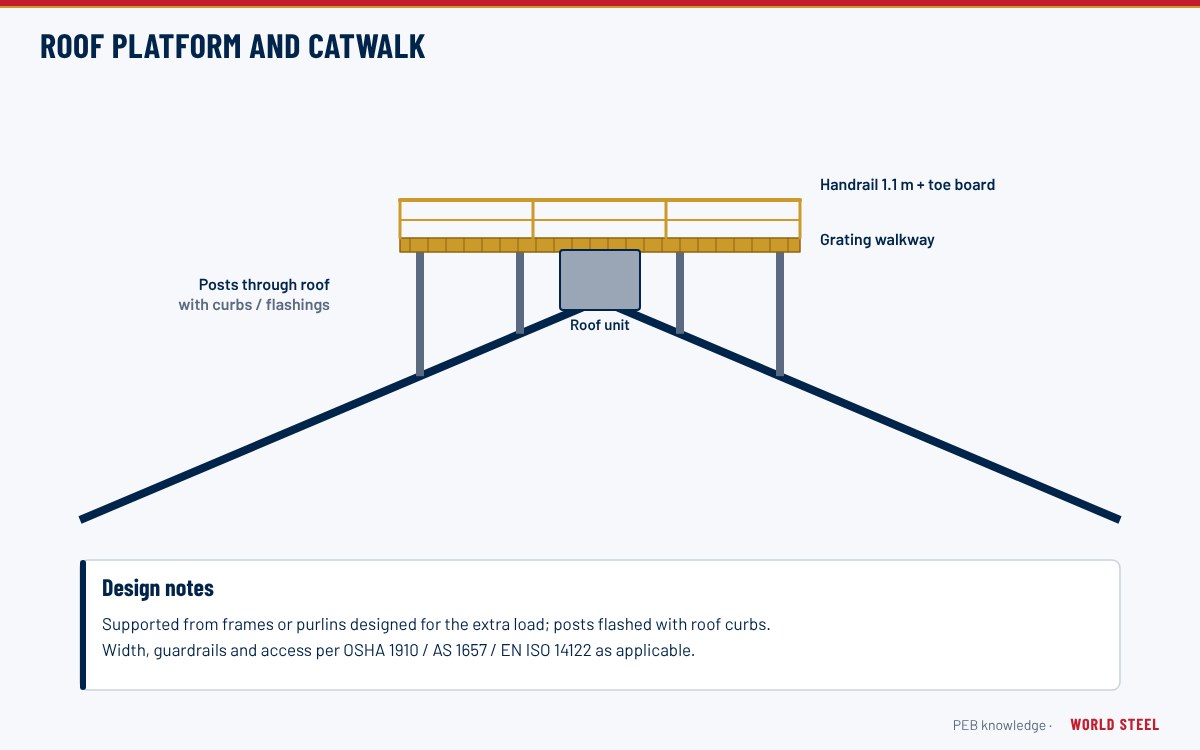
Expanded metal has no single product standard that every market uses. In the US, ASTM F1267 covers expanded steel mesh and the expanded metal manufacturers' standards published through NAAMM describe patterns and tolerances; elsewhere the mesh is specified by pattern, base material and finish, with the base sheet to its own standard. Walkway mesh is checked for the imposed load and span like any floor – AS 1657, EN ISO 14122-2 or OSHA 1910 Subpart D set the access rules, and the loads come from AS/NZS 1170.1, EN 1991-1-1 or ASCE 7. Mesh used as a machine guard must keep fingers and hands out of the danger zone: opening size and distance follow EN ISO 13857, AS 4024.1 or OSHA 1910.212.
Load and span values for a given pattern come from the mill's published data or a project calculation; World Steel does not publish generic load tables for mesh.
Fabrication and finishing at World Steel
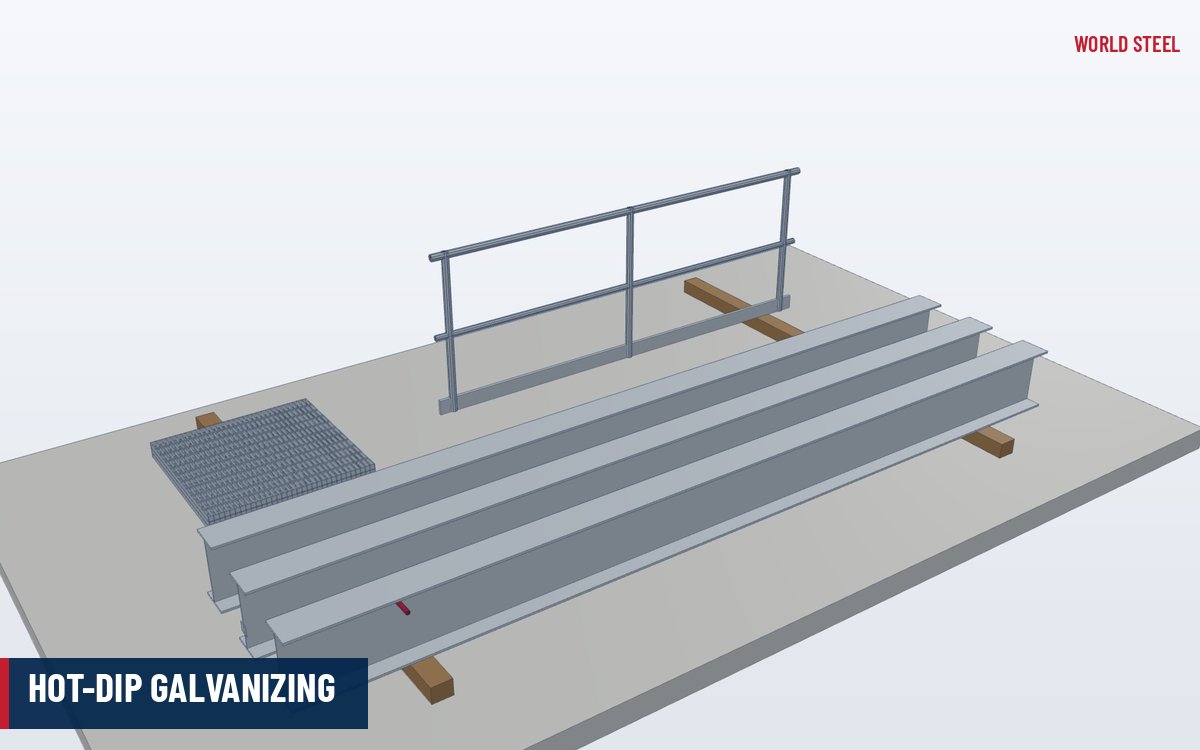
Expanded mesh stock is produced on expanding presses by specialist mills and supplied by World Steel with the project package. In the World Steel plant in Vietnam we cut the mesh to size, trim the strands at the edges, and weld or bolt it into steel frames on jigs, using qualified procedures under ISO 3834-2 and our AS/NZS 5131 and EN 1090-2 systems. Framed mild steel panels are hot-dip galvanised after fabrication by qualified galvanisers or painted to the project specification; pre-galvanised or stainless mesh can be used where welding is limited and touch-up is acceptable.
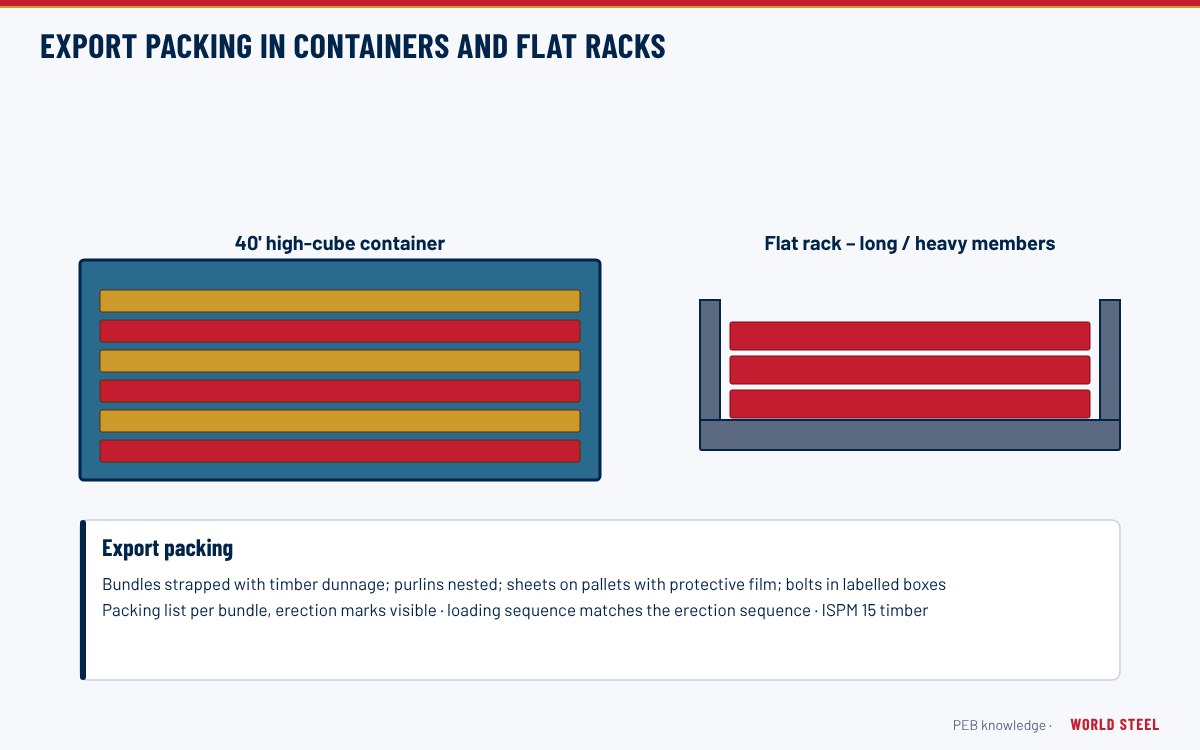
Panels are marked to the layout drawing and packed flat on timber skids for export shipping, usually with the platforms or enclosures they belong to.
Selecting and specifying
- Name the use first – walkway, guard, screen or facade – because it decides the pattern weight and orientation.
- Give SWD, LWD, strand width, thickness, raised or flattened, and the base material, or ask us to propose a pattern for the duty.
- For walkways, state the imposed load, span and slip-resistance requirement; for guards, the reach distance to the hazard.
- State the direction of the LWD relative to the span or panel length, frame type and finish.
Normes et exigences par marché
Les codes selon lesquels World Steel conçoit, fabrique et documente ce produit – et les principales exigences géométriques et de charge sur chaque marché.
 États-Unis
- ASTM F1267Metal, expanded, steel
- OSHA 29 CFR 1910.212Machine guarding – general requirements
- ASCE 7Minimum design loads – floor live loads
- ASTM A123Hot-dip galvanized coatings
- Walkway platforms
- Per OSHA 1910 Subpart D
- Floor live load
- By occupancy, e.g. 125 psf light manufacturing (ASCE 7 Table 4.3-1)
 Australie / NZ
- AS 1657-2018Fixed platforms, walkways, stairways and ladders
- AS 4024.1Safety of machinery – guarding
- AS/NZS 1170.1Imposed actions
- AS/NZS 4680Hot-dip galvanized coatings
- Walkway clear width
- ≥ 600 mm (AS 1657)
- Slip resistance
- Assessed to AS 4586 where specified
 Europe
- EN ISO 14122-2Working platforms and walkways
- EN ISO 13857Safety distances to prevent reaching danger zones
- EN ISO 14120Guards – general requirements
- EN ISO 1461Hot-dip galvanized coatings
- Walkway clear width
- ≥ 600 mm, preferably 800 mm (EN ISO 14122-2)
- Guard openings
- Opening vs reach distance (EN ISO 13857)
Synthèse fournie à titre indicatif – le cahier des charges du projet, l'édition du code adoptée et l'autorité compétente prévalent.
Finitions
| Finition | Normes / remarques |
|---|---|
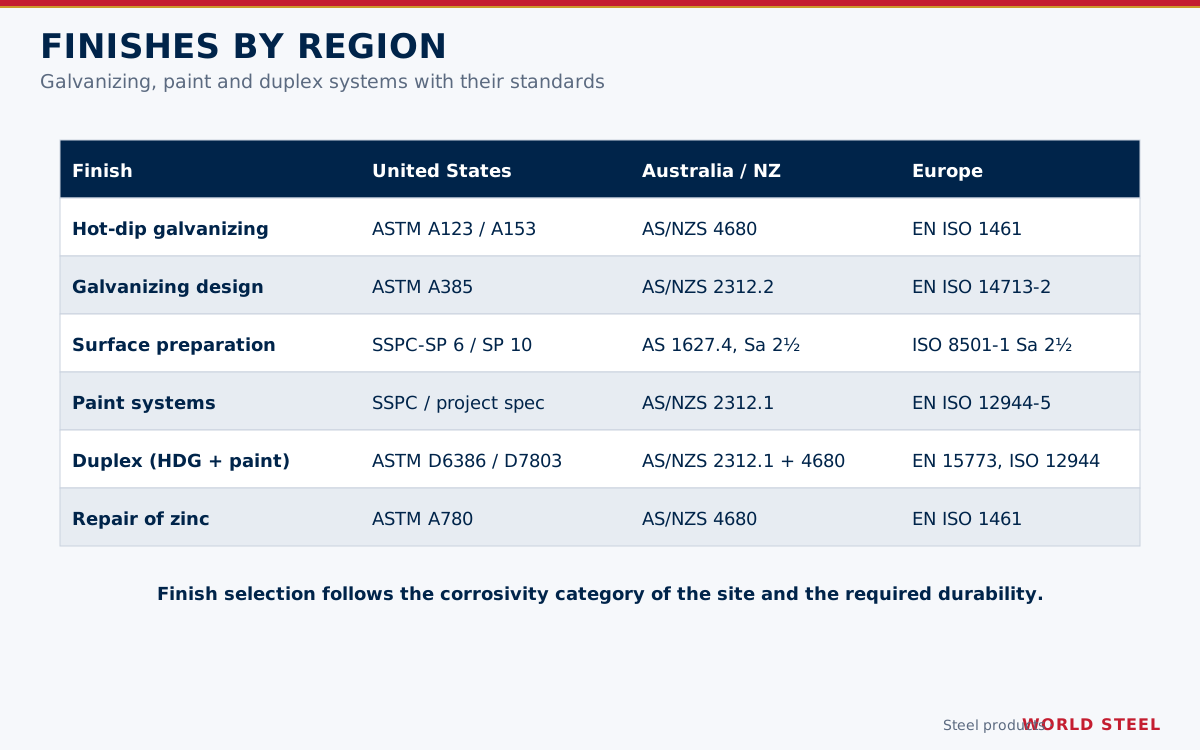
| Hot-dip galvanised after fabrication | AS/NZS 4680 · ASTM A123 · EN ISO 1461 |
| Paint or powder coat | AS/NZS 2312.1 · EN ISO 12944 · SSPC preparation |
| Stainless steel (no coating) | EN 10088 · ASTM A240 – 304 or 316 for coastal sites |
Questions fréquentes
What is the difference between raised and flattened expanded metal?
Raised mesh is the as-expanded form with strands at an angle – stiffer and more slip-resistant, used for walkways and guards. Flattened mesh is rolled smooth after expanding, used for screens, facades and where a flat face is wanted.
How do I specify a pattern?
By SWD × LWD (short and long way of the diamond), strand width and thickness, plus material and raised or flattened. If you only know the duty, tell us and we will propose a pattern from mill data.
Can expanded mesh be used as a walkway?
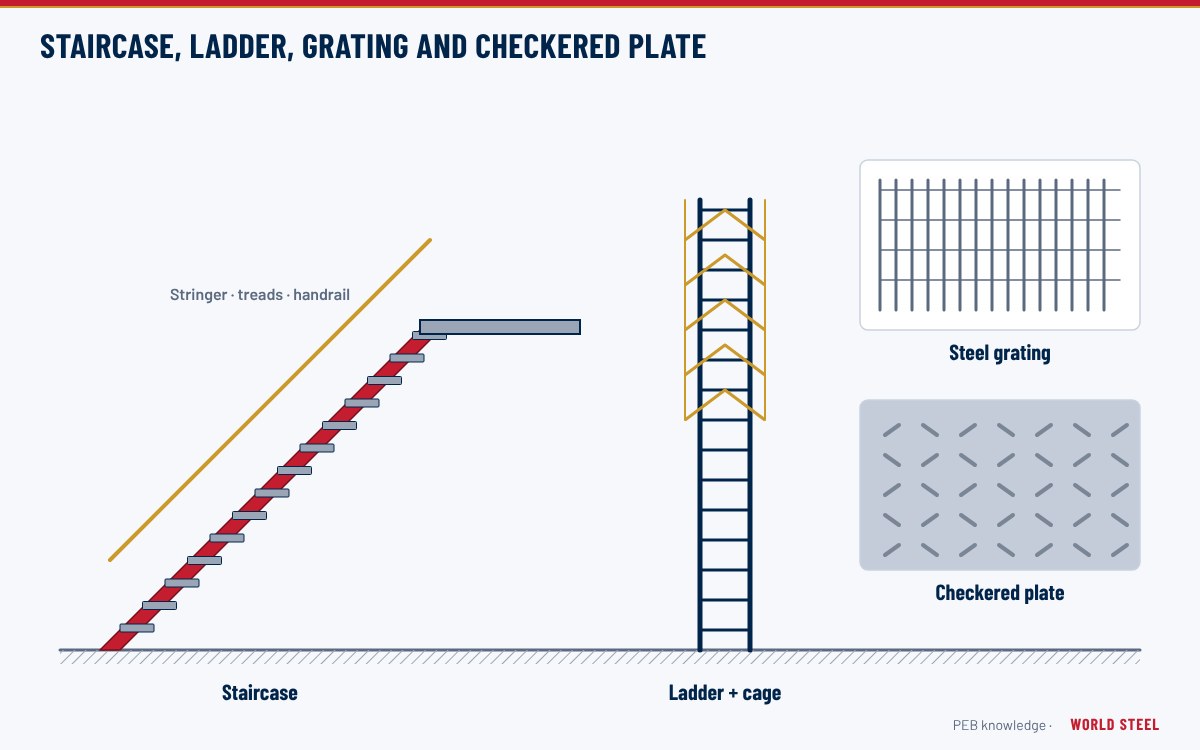
Yes, in heavy patterns, checked for the load and span. For heavier duties, steel bar grating is usually more economical.
Is it galvanised before or after framing?
For framed mild steel panels we galvanise after fabrication so the frame welds and cut edges are coated too.
 New Zealand
 AS/NZS 5131 CC3
 EN 1090 EXC3 · CE