ENEnglish
 VITiếng Việt
 ZH中文
 KO한국어
 JA日本語
 FRFrançais
 ITItaliano
 PTPortuguês
 ESEspañol
 HEעברית
 ARالعربية

Corrosion protection of primary steel
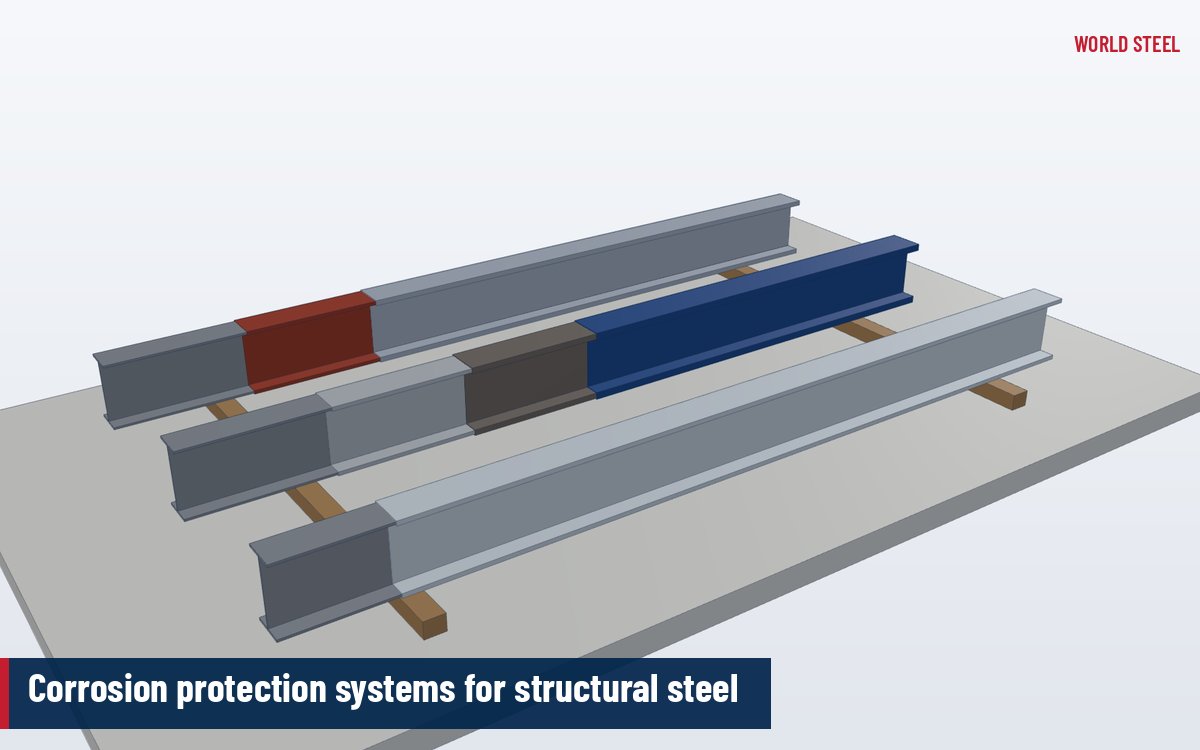
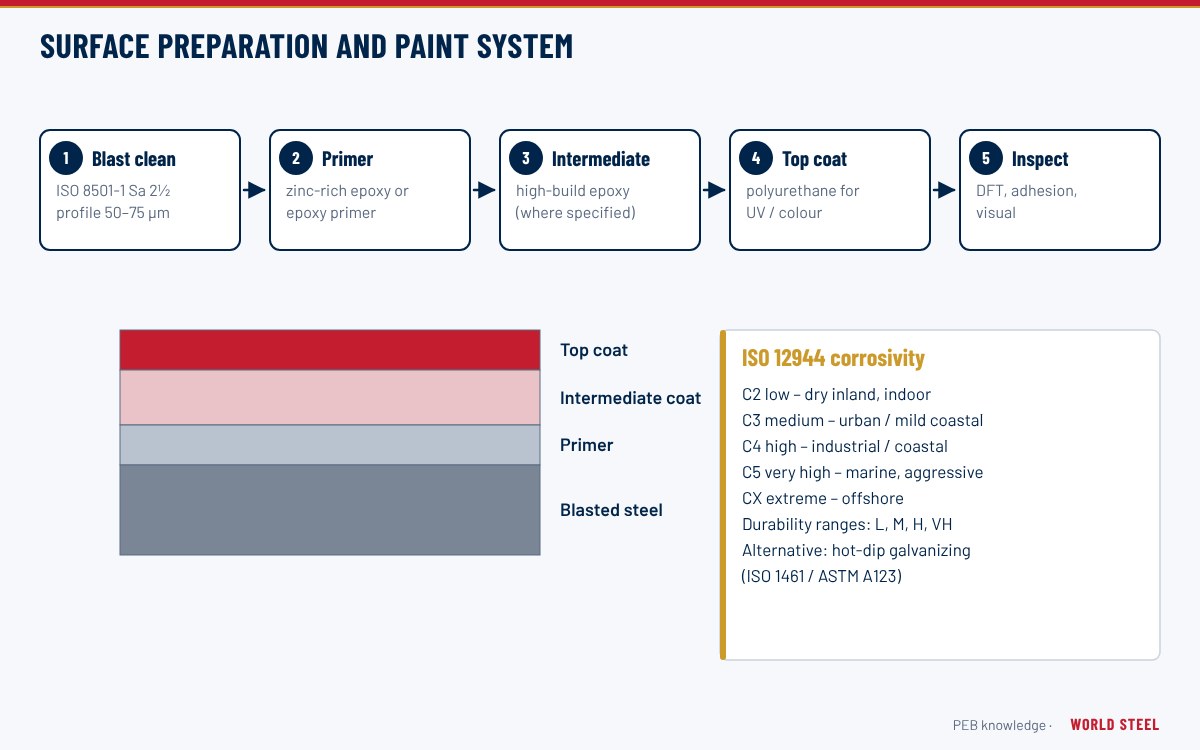
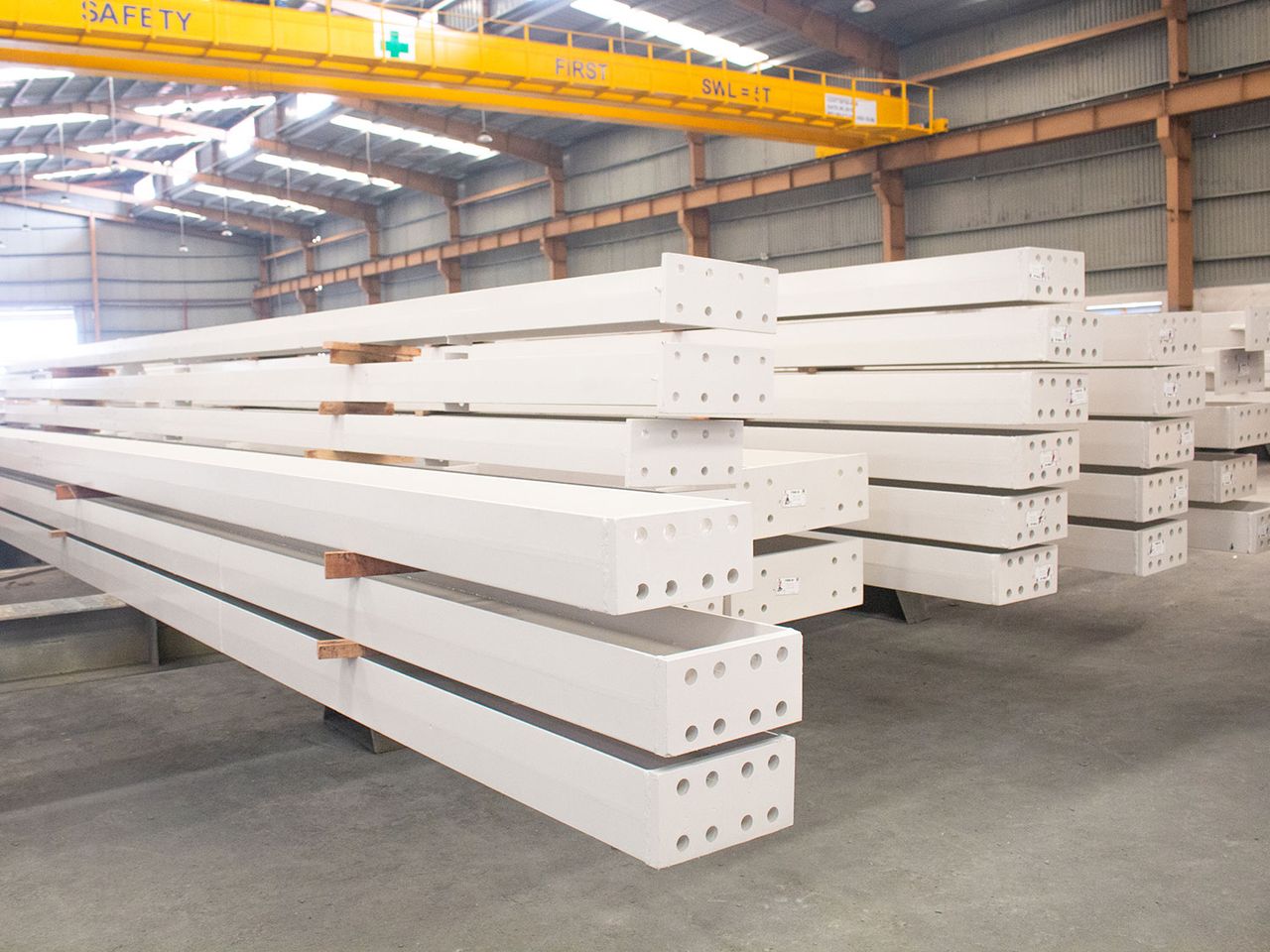
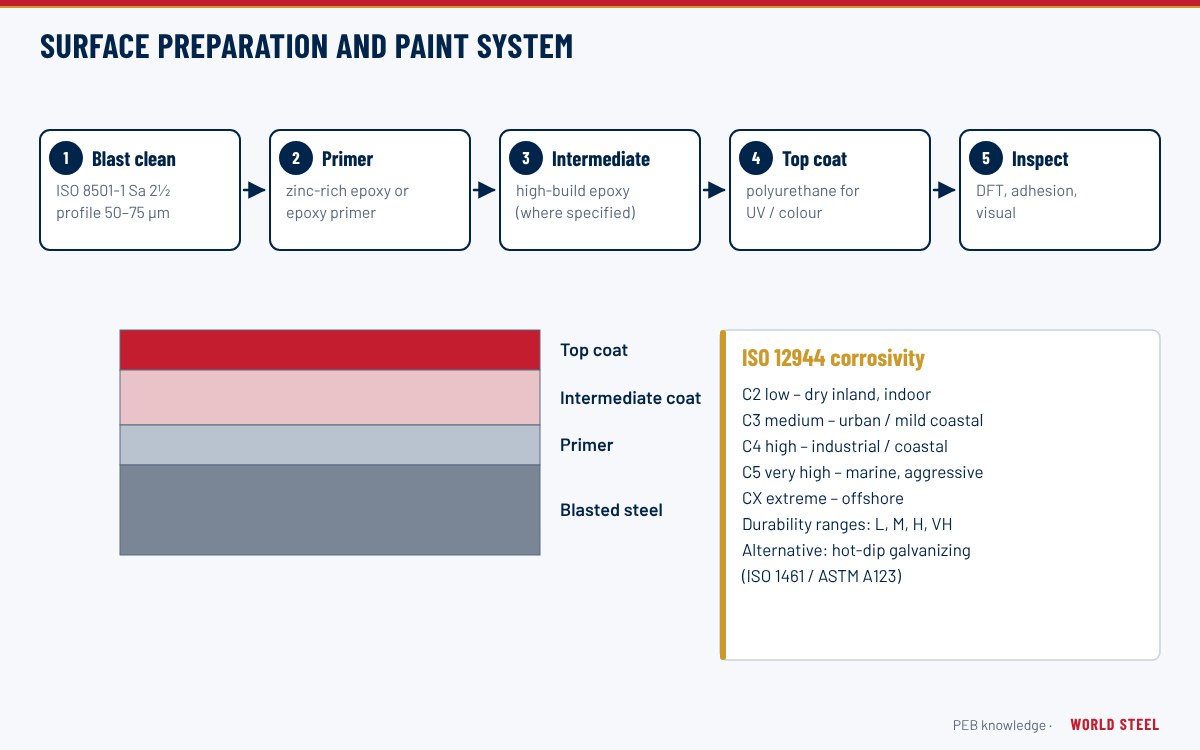
Primary frames of pre-engineered buildings are usually protected by a shop-applied paint system, and in some cases by hot-dip galvanizing. The right system depends on three things: the corrosivity of the environment, the required durability before first major maintenance, and practical issues such as handling, export shipping and site touch-up. The international reference for paint systems on structural steel is the ISO 12944 series, used directly in Europe and Asia and widely referenced by specifiers in Australia and North America (alongside AS 4312 / AS 2312.1 in Australia and SSPC/AMPP standards in the US).
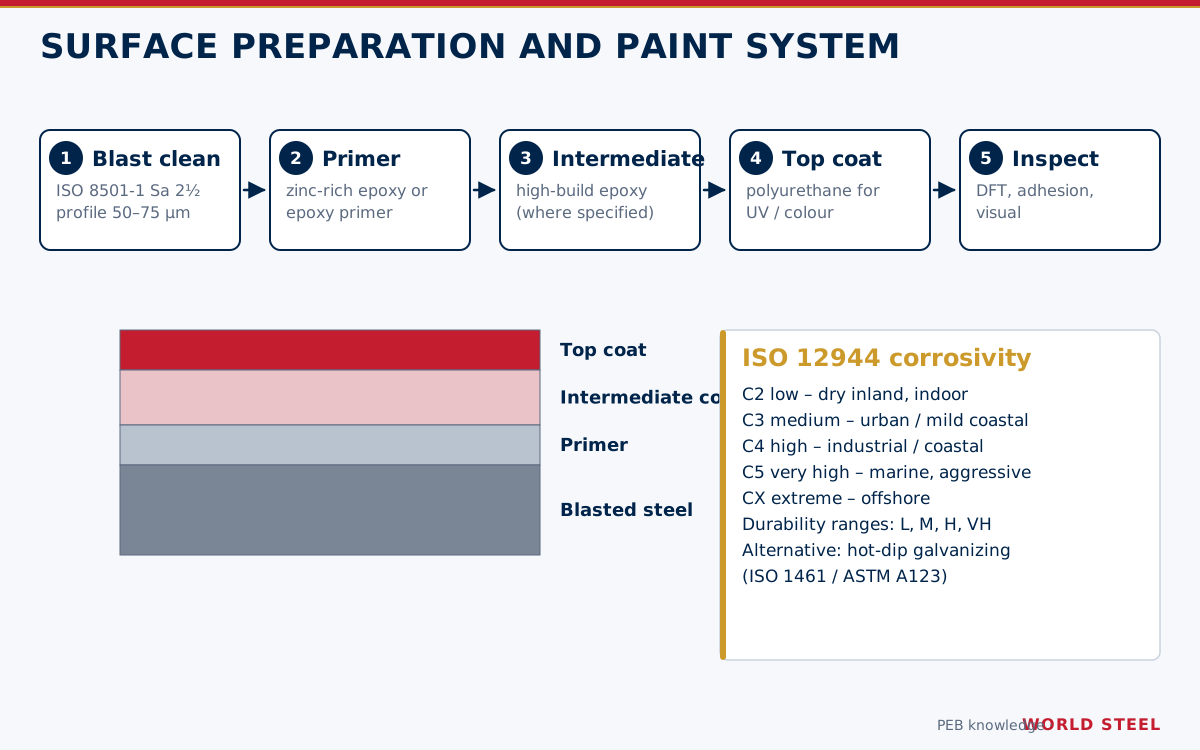
ISO 12944 corrosivity and durability
| Category | Corrosivity | Typical exterior / interior examples |
|---|---|---|
| C1 | Very low | Heated interiors with clean atmosphere (offices, shops) |
| C2 | Low | Rural areas; unheated buildings where condensation may occur (warehouses, sports halls) |
| C3 | Medium | Urban and industrial atmospheres, low-salinity coastal; production rooms with humidity |
| C4 | High | Industrial areas, moderate-salinity coastal; chemical plants, swimming pools |
| C5 | Very high | Industrial with high humidity, high-salinity coastal |
| CX | Extreme | Offshore, extreme industrial; tropical high-humidity marine |
Durability ranges in ISO 12944-1:2017 are L (up to 7 years), M (7–15 years), H (15–25 years) and VH (more than 25 years) to first major maintenance. Durability is a technical planning parameter, not a guarantee period.
Surface preparation
- Remove oil and grease, then abrasive blast clean to Sa 2½ (ISO 8501-1) for most systems; Sa 2 may be accepted for lower categories.
- Surface profile typically "medium (G)" per ISO 8503, roughly 50–85 µm, to suit the primer.
- Check dust (ISO 8502-3) and soluble salts where required, and apply primer before rust bloom forms.
- Weld spatter, sharp edges and laminations are dressed per ISO 8501-3 grade (P1–P3) as specified.
Typical paint systems
The systems below illustrate common practice. Exact systems must follow ISO 12944-5 tables or the paint manufacturer's certified specification; thicknesses are nominal dry film thickness (NDFT).
| Environment / durability | Typical system | Indicative total NDFT |
|---|---|---|
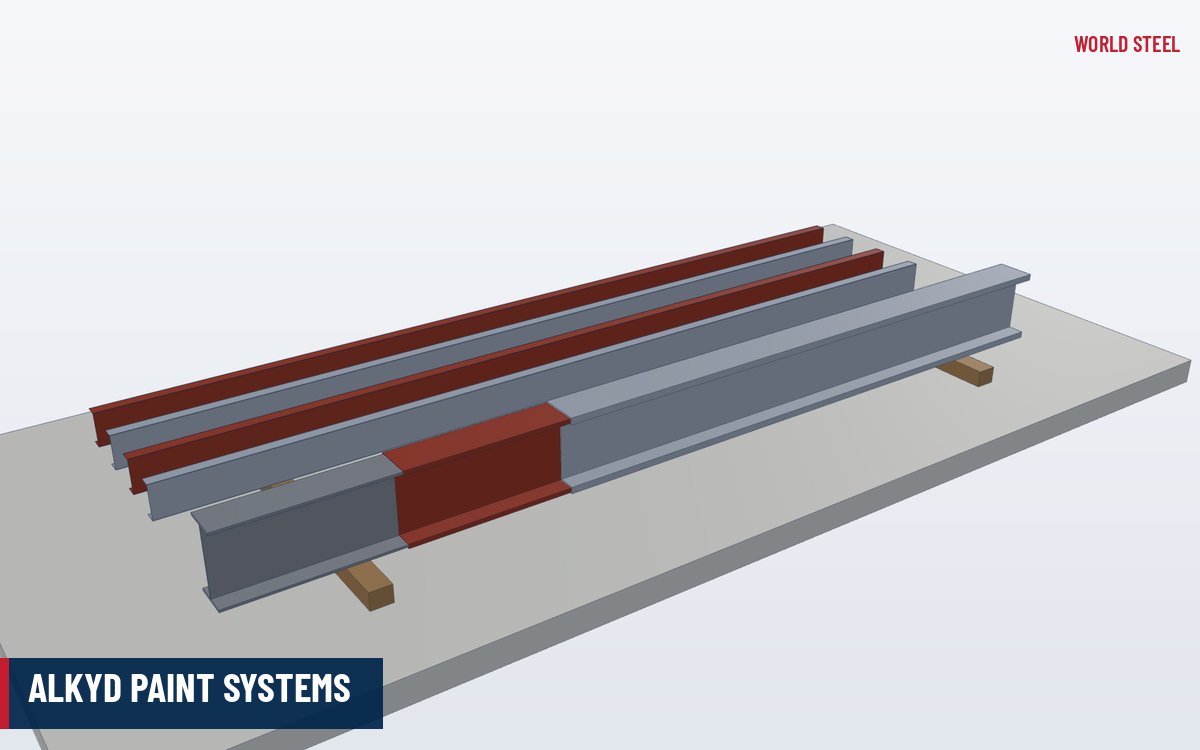
| C2 – enclosed warehouse, M | Alkyd or epoxy primer, one or two coats | About 80–120 µm |
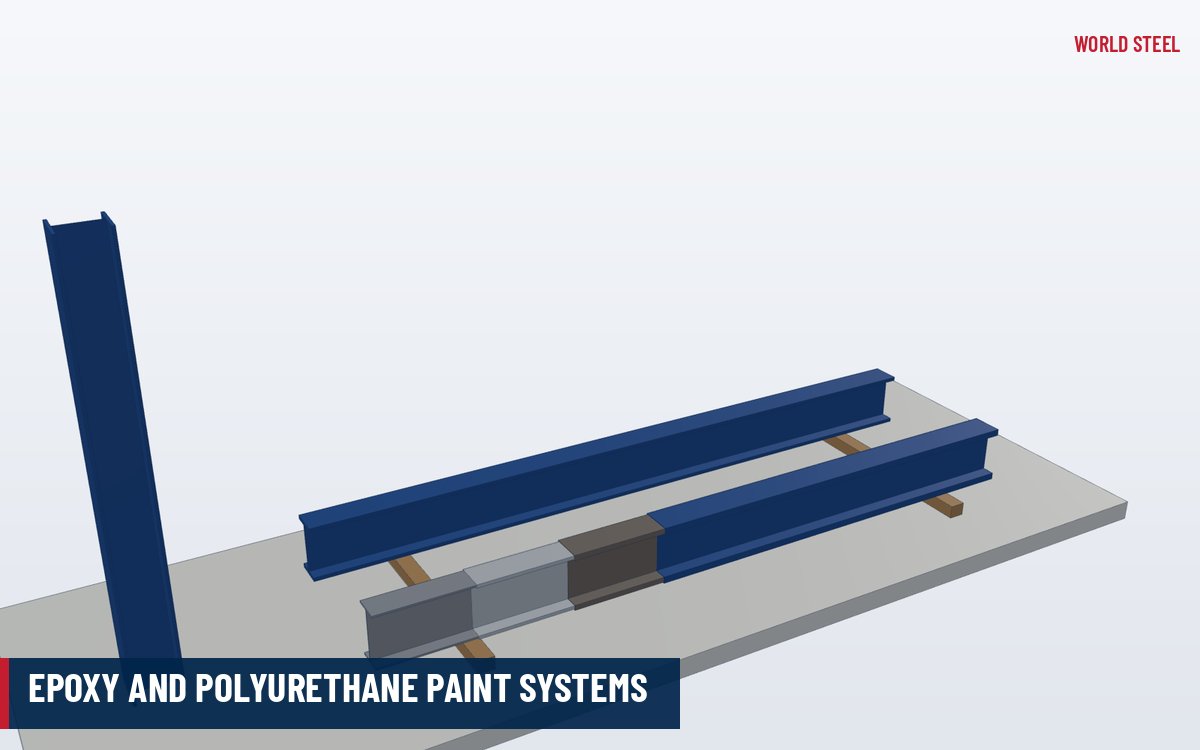
| C3 – M / H | Epoxy zinc phosphate primer + epoxy or polyurethane topcoat | About 160–200 µm |
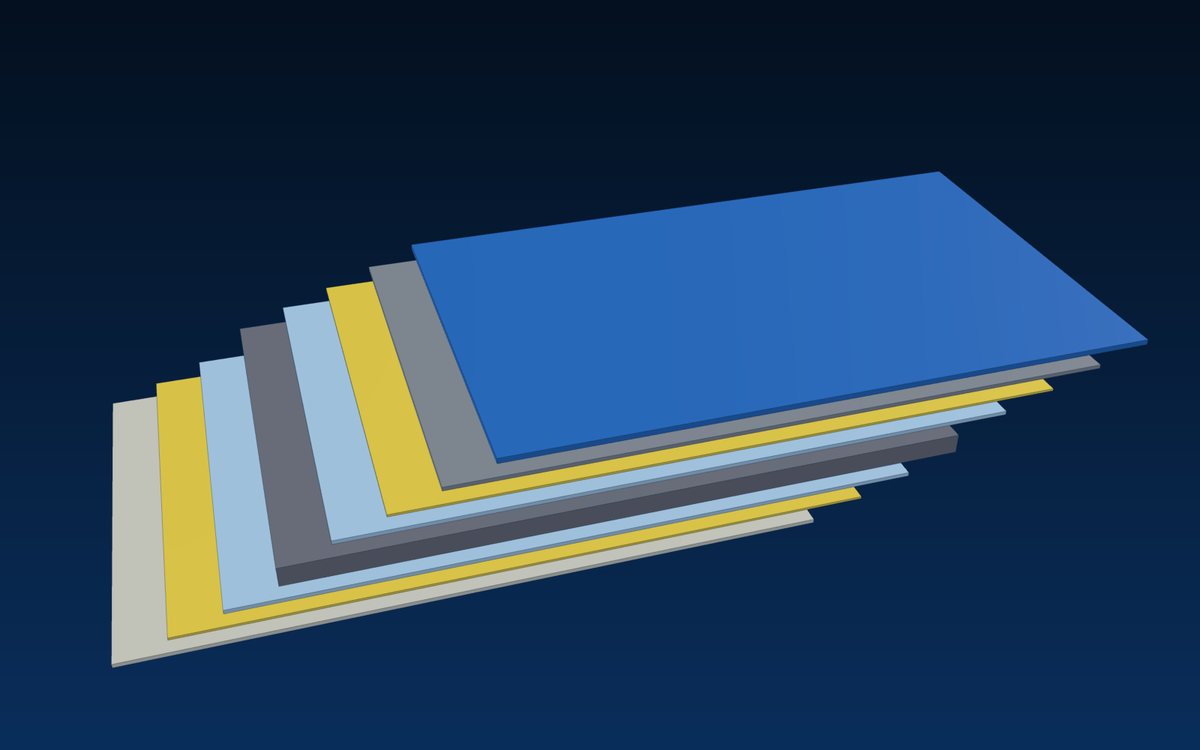
| C4 – H | Zinc-rich epoxy primer + epoxy (MIO) intermediate + polyurethane topcoat | About 240–280 µm |
| C5 – H | Zinc-rich primer + high-build epoxy + polyurethane | About 300–320 µm or more |
Where welded or bolted connections are made on site, faying surfaces of slip-critical joints must be masked or coated with a slip-tested primer (e.g. Class A/B per RCSC, or tested per EN 1090-2 Annex G).
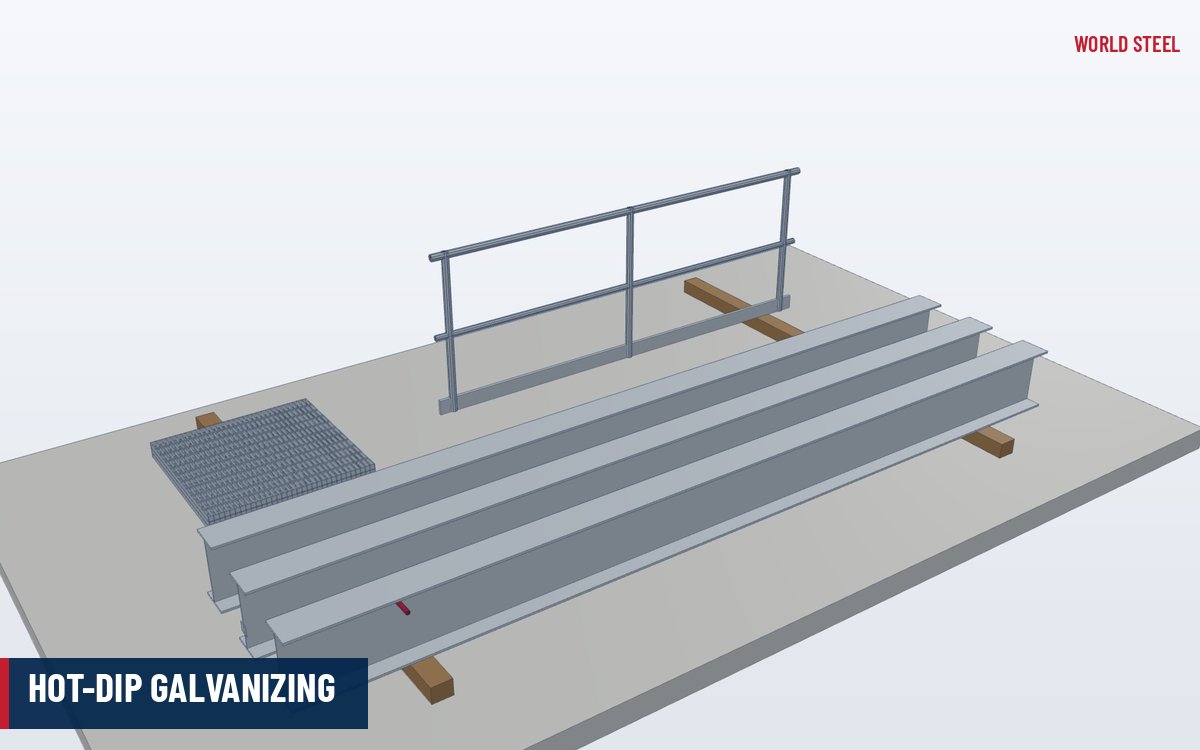
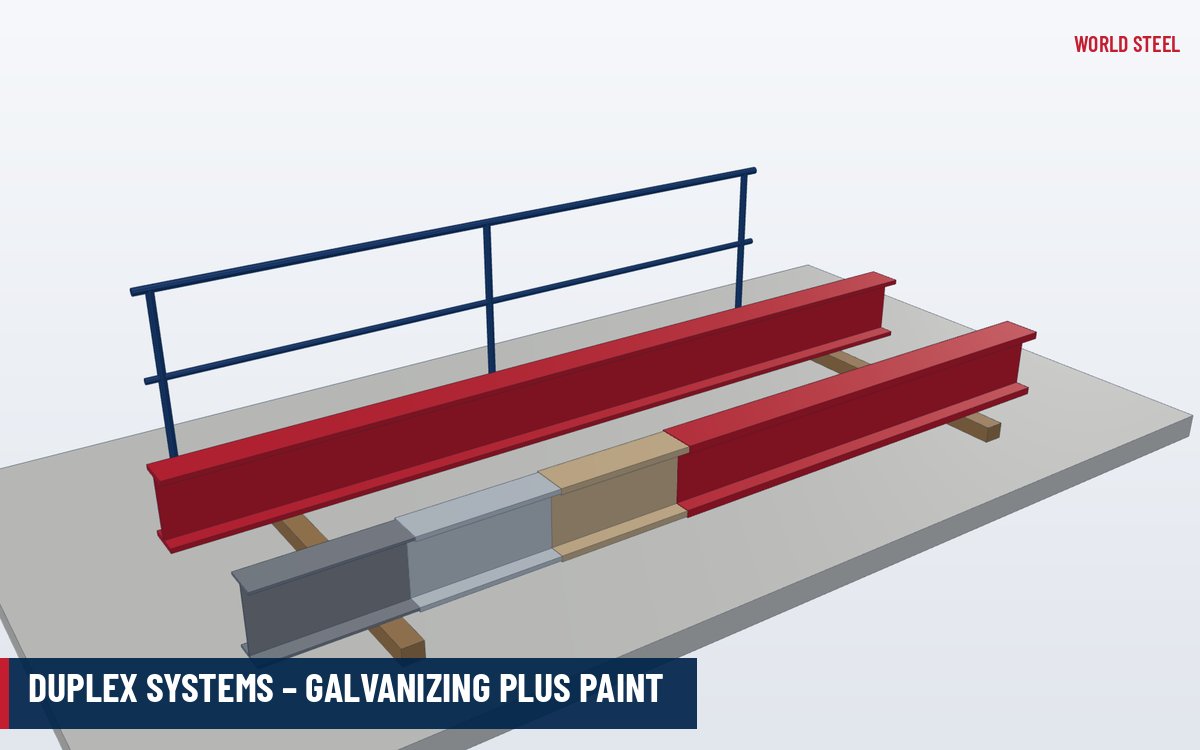
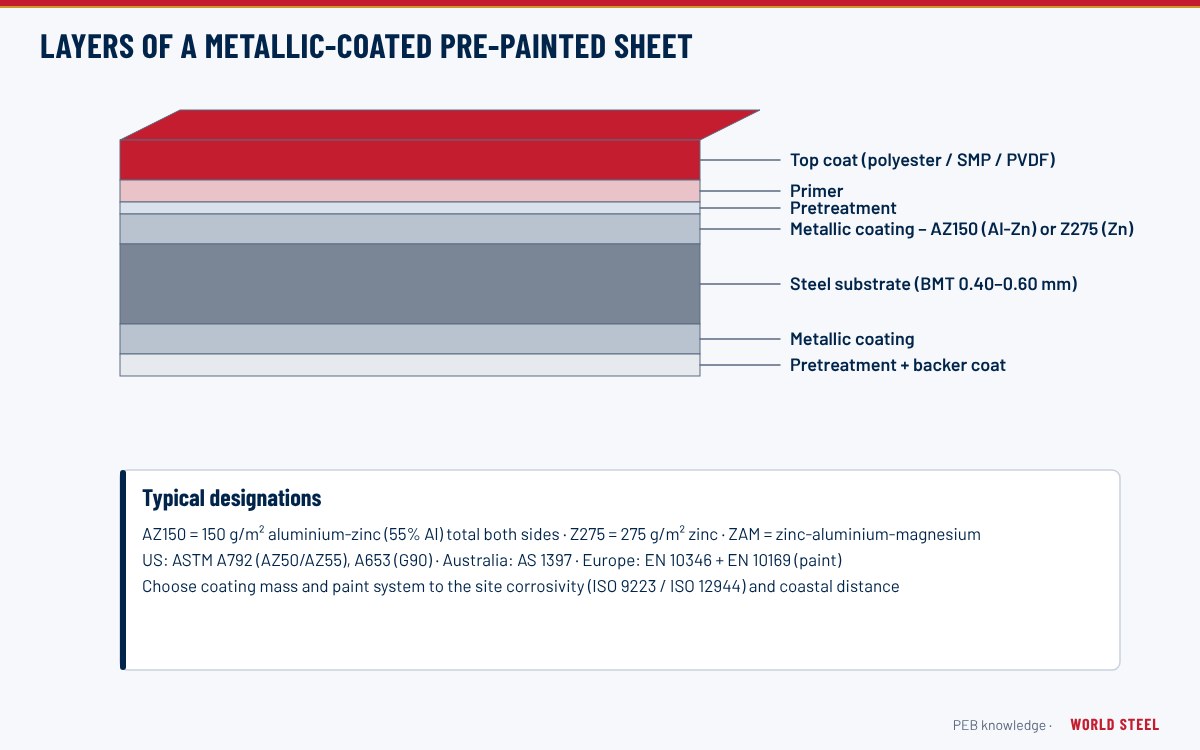
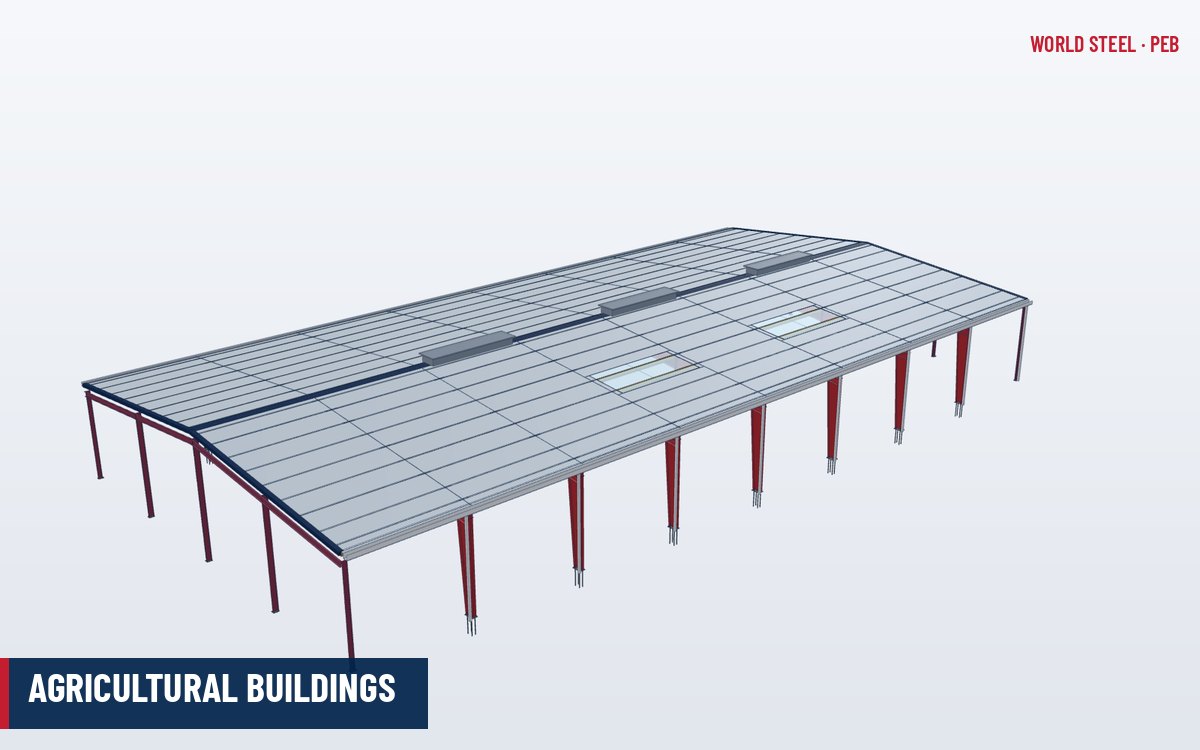
Hot-dip galvanizing (ISO 1461, ASTM A123, AS/NZS 4680) is an alternative for C4–C5 or agricultural buildings; duplex systems (galvanizing plus paint) give the longest life.
Qualification tests and corrosion-protective design
Paint systems listed in ISO 12944-5 are expected to pass the laboratory performance tests of ISO 12944-6. The required exposure duration increases with corrosivity and durability; for example, the high (H) durability level calls for roughly:
| Corrosivity category | Condensation (ISO 6270-1) | Neutral salt spray (ISO 9227) |
|---|---|---|
| C3 | 240 h | 480 h |
| C4 | 480 h | 720 h |
| C5 | 720 h | 1,440 h |
CX and offshore systems are qualified by cyclic ageing under ISO 12944-9. In North American specifications the equivalent tests are often cited as ASTM B117 (salt spray), ASTM D2247 (humidity), ASTM G154 (UV/condensation weathering), ASTM D4541 (pull-off adhesion) and ASTM D3359 (cross-cut adhesion); for thin coil coatings, ASTM D2794 impact and ASTM D4145 T-bend tests are added.
| ISO 8501-1 | SSPC / AMPP (US) | Description |
|---|---|---|
| Sa 3 | SSPC-SP 5 / NACE No. 1 | White metal blast |
| Sa 2½ | SSPC-SP 10 / NACE No. 2 | Near-white metal blast – normal for PEB primary steel |
| Sa 2 | SSPC-SP 6 / NACE No. 3 | Commercial blast |
| St 2 / St 3 | SSPC-SP 2 / SP 3 | Hand or power tool cleaning – touch-up only |
Design for corrosion protection (ISO 12944-3) matters as much as the paint: avoid pockets that trap water and dirt, provide drain holes in base details and closed sections, round sharp edges so paint can build full thickness, seal-weld or caulk narrow gaps, and leave enough access for maintenance painting. Secondary members are normally protected by their pre-galvanized coating, and bolts by hot-dip galvanizing (ISO 10684, ASTM F2329) or by a zinc-flake or electroplated finish matched to the exposure.
Inspection, transport and WSC practice
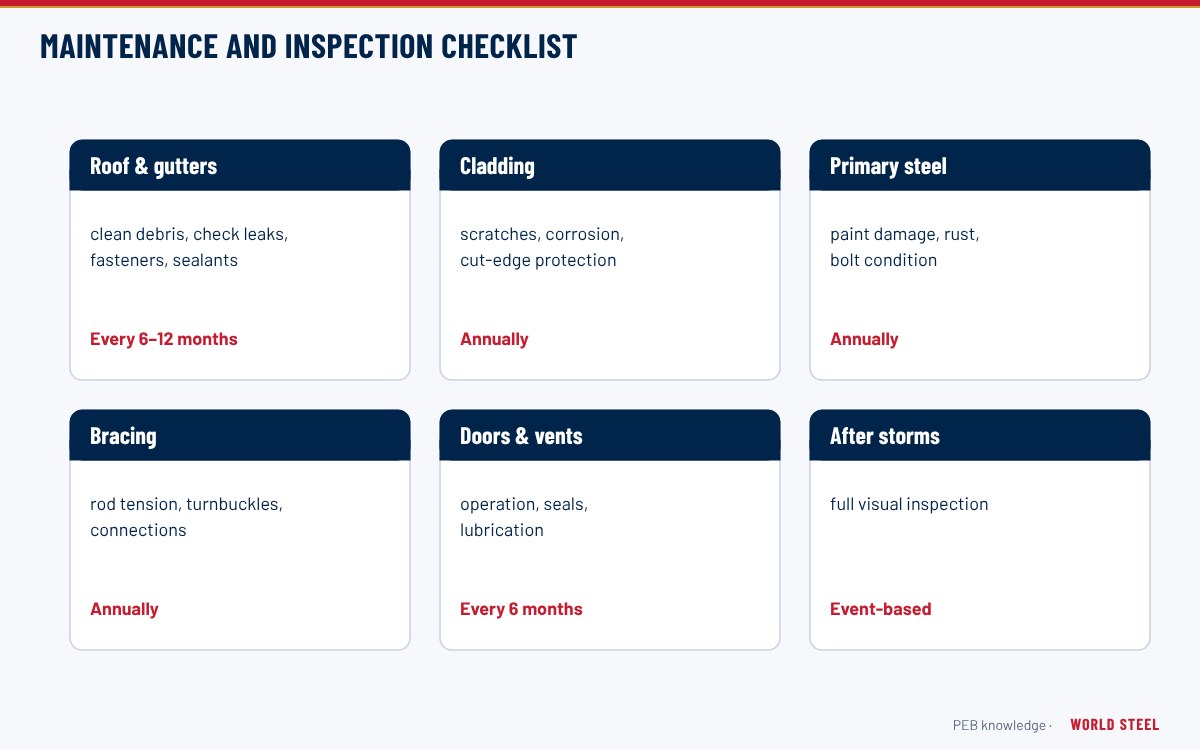
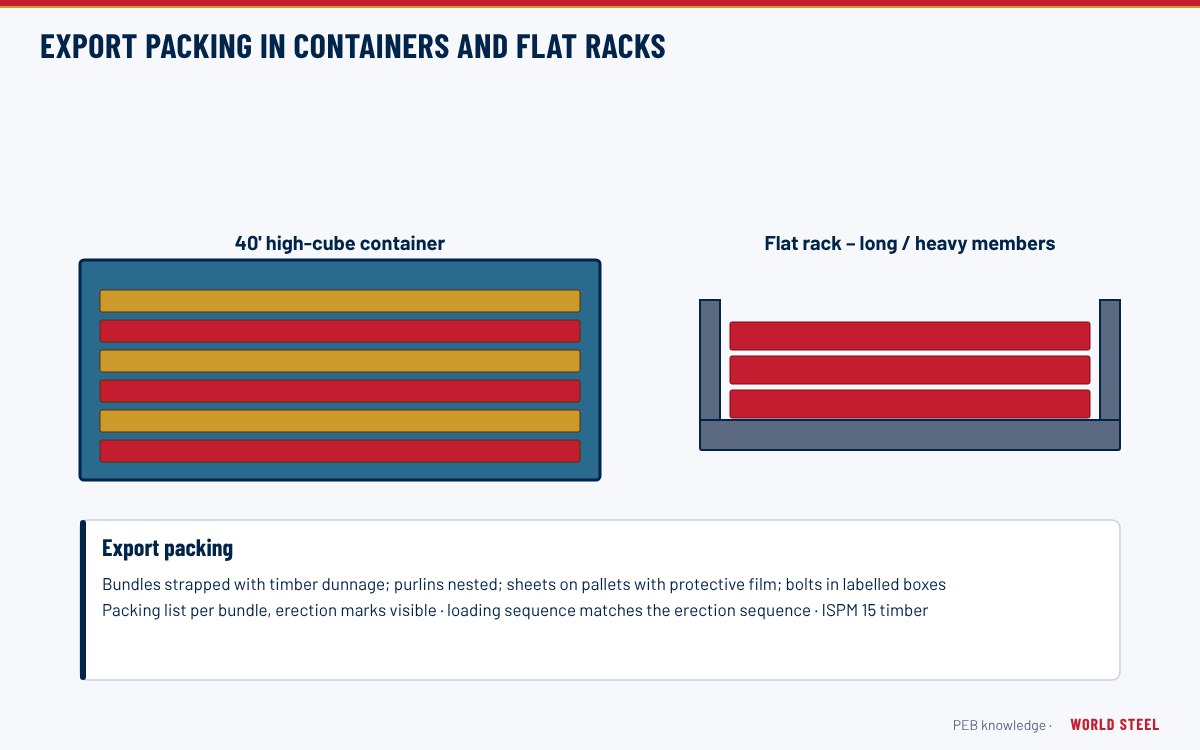
Coating inspection covers ambient conditions (temperature, humidity, dew point), DFT measurement per ISO 19840 or SSPC-PA 2, adhesion tests where specified, and visual checks. Export members must be packed so coatings are not damaged in containers and flat racks; site touch-up of damaged areas follows the same system. World Steel blasts and paints primary members in-house to the project specification and works with established coating suppliers; see surface preparation and painting, packing and shipping, and maintenance. Painting is part of WSC's manufacturing scope.
各地区标准
| 地区 | 规范 | 范围 |
|---|---|---|
| International | ISO 12944-1 to -9 | Corrosion protection of steel structures by protective paint systems |
| International | ISO 8501-1 | Visual assessment of surface cleanliness |
 United States |
SSPC-SP 10 / SP 6 | Near-white and commercial blast cleaning |
| United States |
ASTM A123 | Zinc (hot-dip galvanized) coatings on iron and steel products |
 Canada |
CSA S16-19 / CISC | Coatings per project specification; SSPC references |
 Australia / NZ |
AS 4312 / AS 2312.1 | Atmospheric corrosivity zones; paint coatings for steel |
| Australia / NZ |
AS/NZS 4680 | Hot-dip galvanized coatings on fabricated articles |
 Europe |
EN ISO 12944 / EN ISO 1461 | Paint systems; hot-dip galvanizing |
常见问题
Which ISO 12944 category applies to a closed warehouse?
Unheated enclosed buildings where condensation can occur are typically C2; heated, clean interiors are C1. The exterior environment and any process humidity must also be considered.
Is ISO 12944 durability a warranty?
No. Durability (L, M, H, VH) is the expected time to first major maintenance used for planning; warranty terms are agreed separately.
When is galvanizing better than paint?
Galvanizing suits aggressive (C4–C5), agricultural and hard-to-maintain structures. It provides robust protection at edges and inside members, and can be top-coated for a duplex system.