ENEnglish
 VITiếng Việt
 ZH中文
 KO한국어
 JA日本語
 FRFrançais
 ITItaliano
 PTPortuguês
 ESEspañol
 HEעברית
 ARالعربية

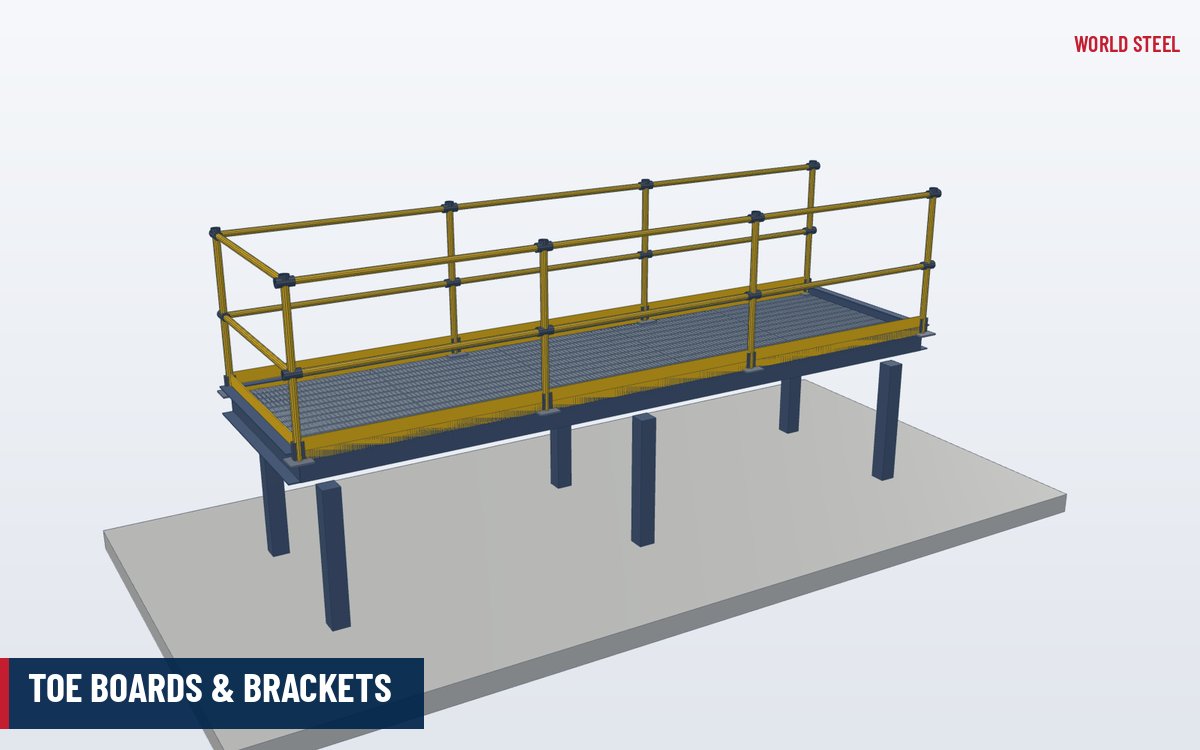
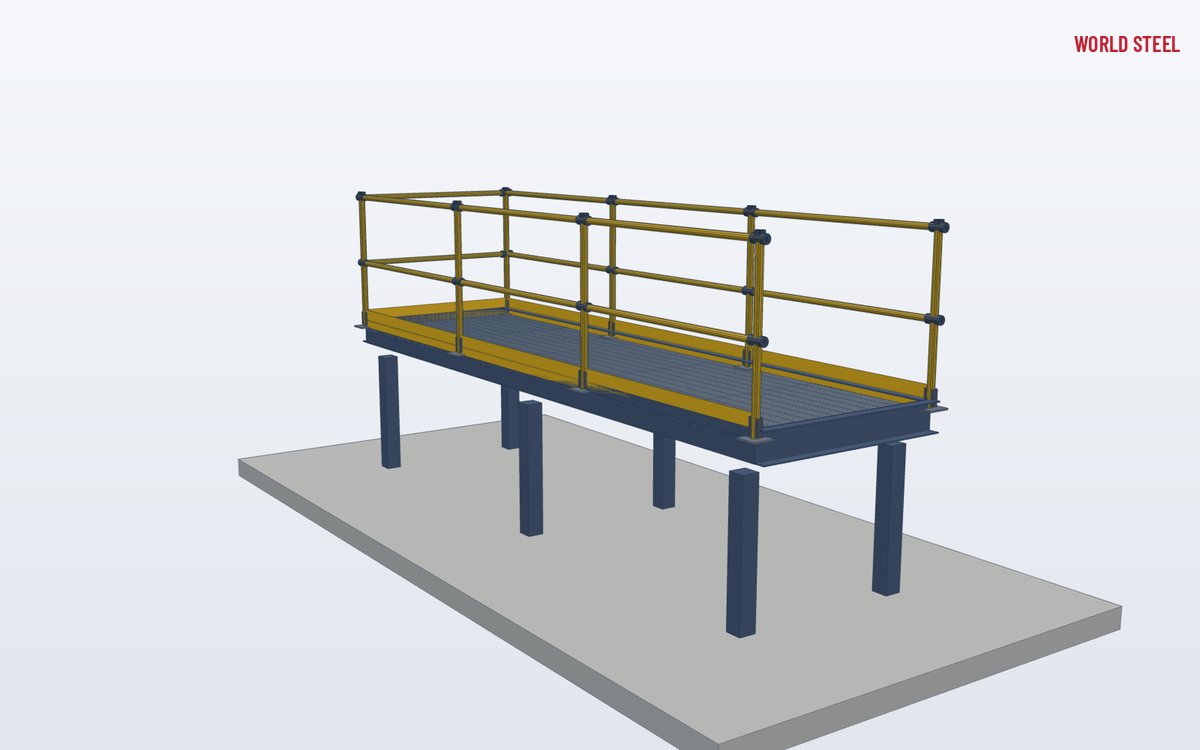
- 100 mm and 150 mm heights
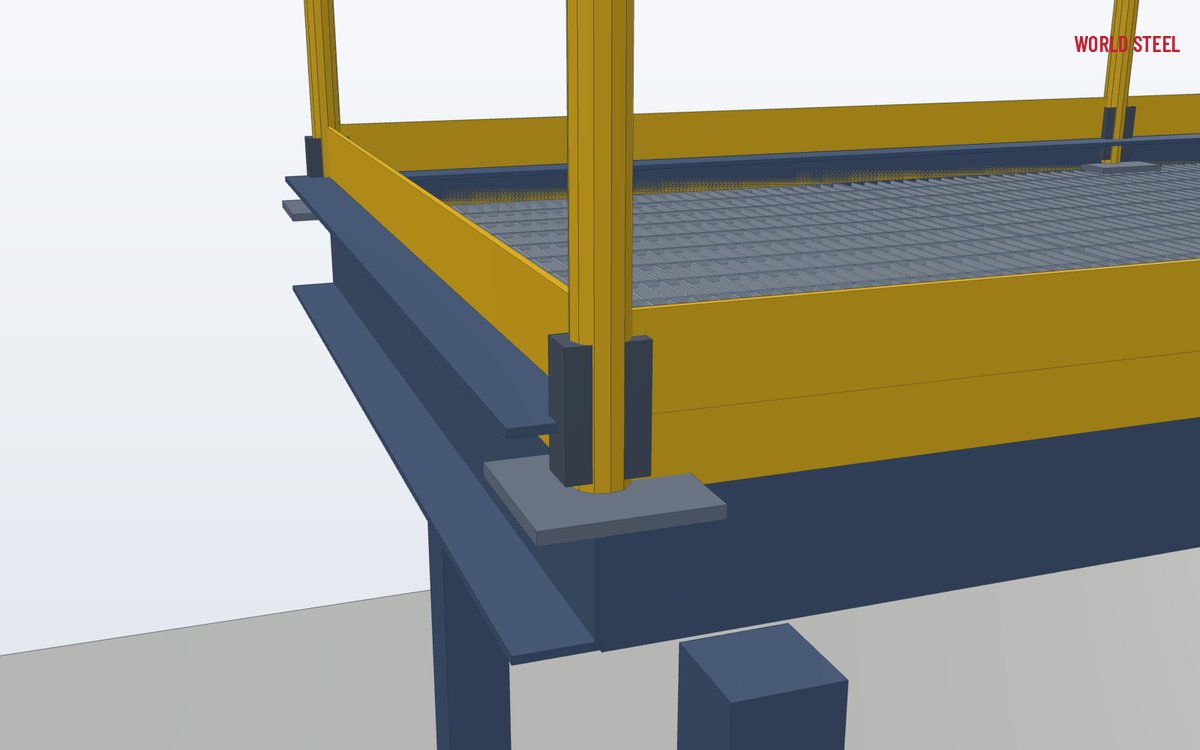
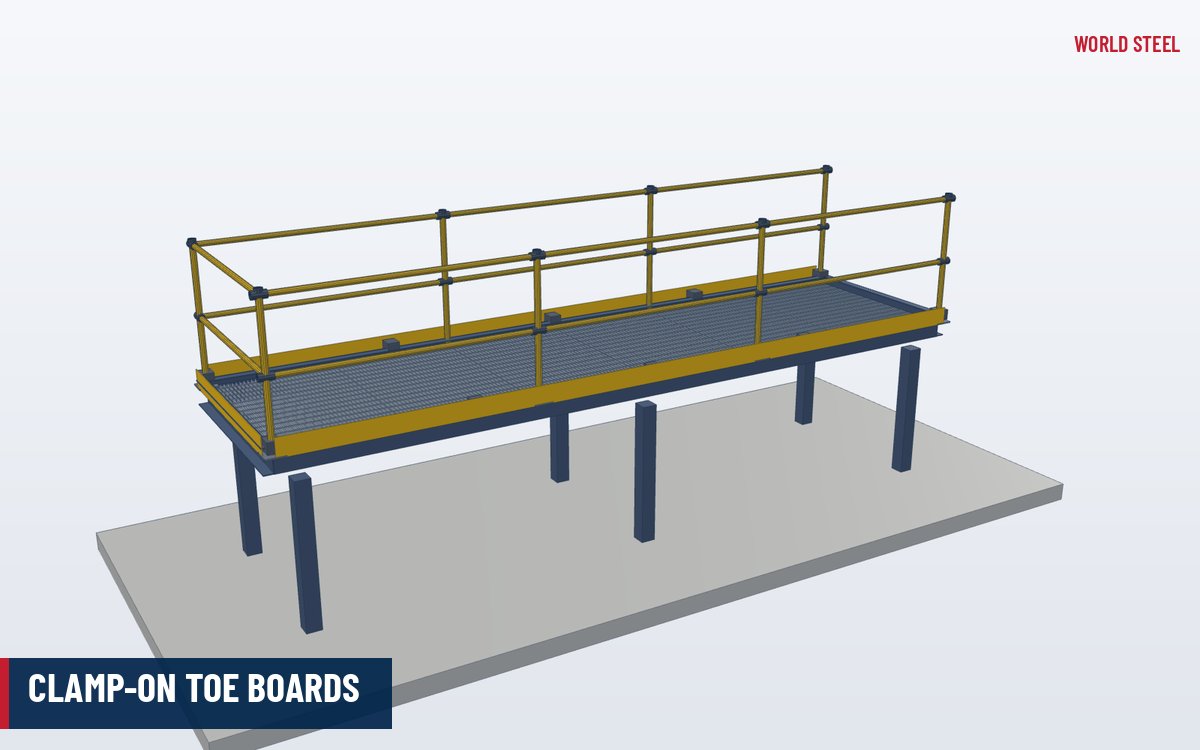
- Clamp-on brackets – no welding
- Corner and splice pieces
- Galvanized or safety yellow
- Fits top- and side-mounted runs
What it is
A toe board (kick plate) runs along the deck edge to stop tools, parts and feet slipping under the guardrail. WS toe boards are galvanized flat plate, bolted to clamp-on brackets on each stanchion, with corner pieces and splices so they follow the guardrail around the platform.
Range
| Code | Item | Note |
|---|---|---|
| WS-MH-T100 | Toe board 100 mm | Minimum for AS 1657 and EN ISO 14122-3 |
| WS-MH-T150 | Toe board 150 mm | Heavier-duty and public areas |
| WS-MH-TB | Clamp-on bracket | One per stanchion |
| WS-MH-TC | Corner and splice pieces | Corners and long runs |
Design and compliance
AS 1657 and EN ISO 14122-3 require a toe board of at least 100 mm where people work or pass below, and OSHA 1910.29(k) requires at least 3.5 in where falling objects are a hazard; the gap between deck and toe board is kept within the code limit.
Installation and selection
- Clamp the brackets to the stanchions at deck level.
- Bolt the toe boards to the brackets and join them at corners and splices.
- Specify height, run length and finish.
Fabrication and finishing at World Steel
Every WS modular handrail component is made in the World Steel plant in Vietnam: tube and bar are cut on saws to the component schedule, stanchions are welded to base plates, brackets or socket spigots on jigs so that rail heights repeat exactly, and fittings are fabricated from heavy-wall tube and plate, drilled and tapped for their locking screws. Welding follows qualified procedures under ISO 3834-2 and the AS/NZS 5131 and EN 1090-2 systems our certifications cover.
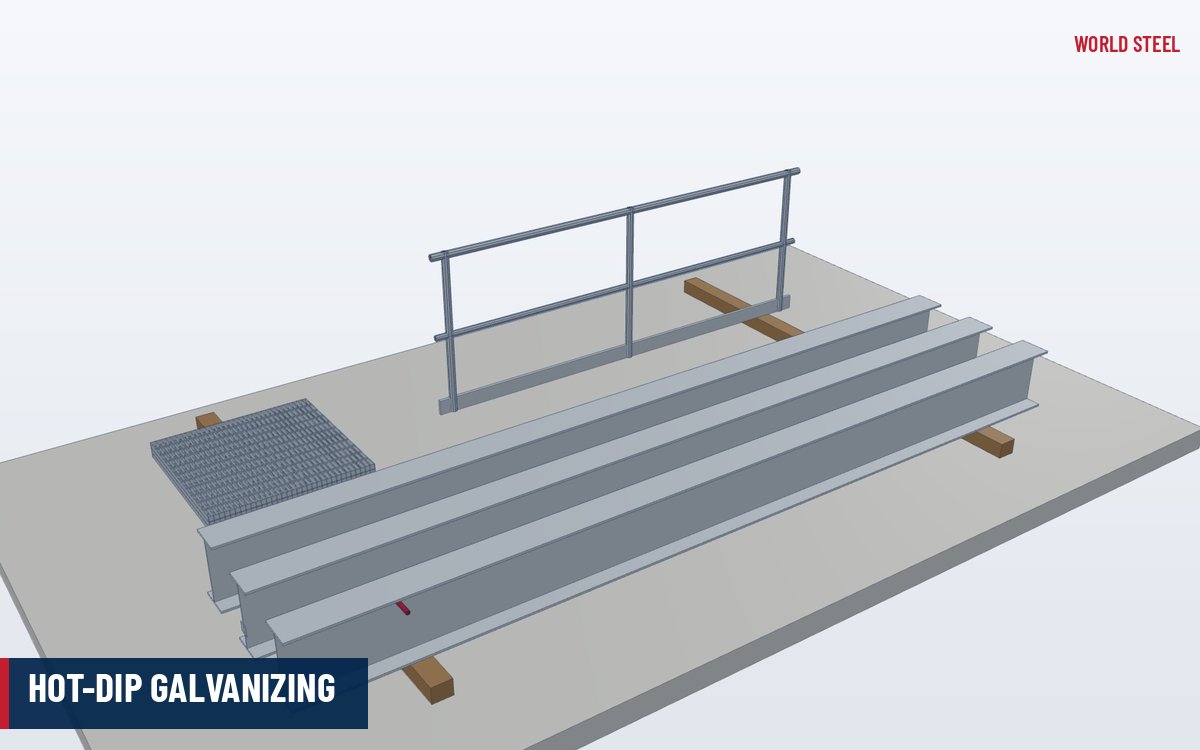
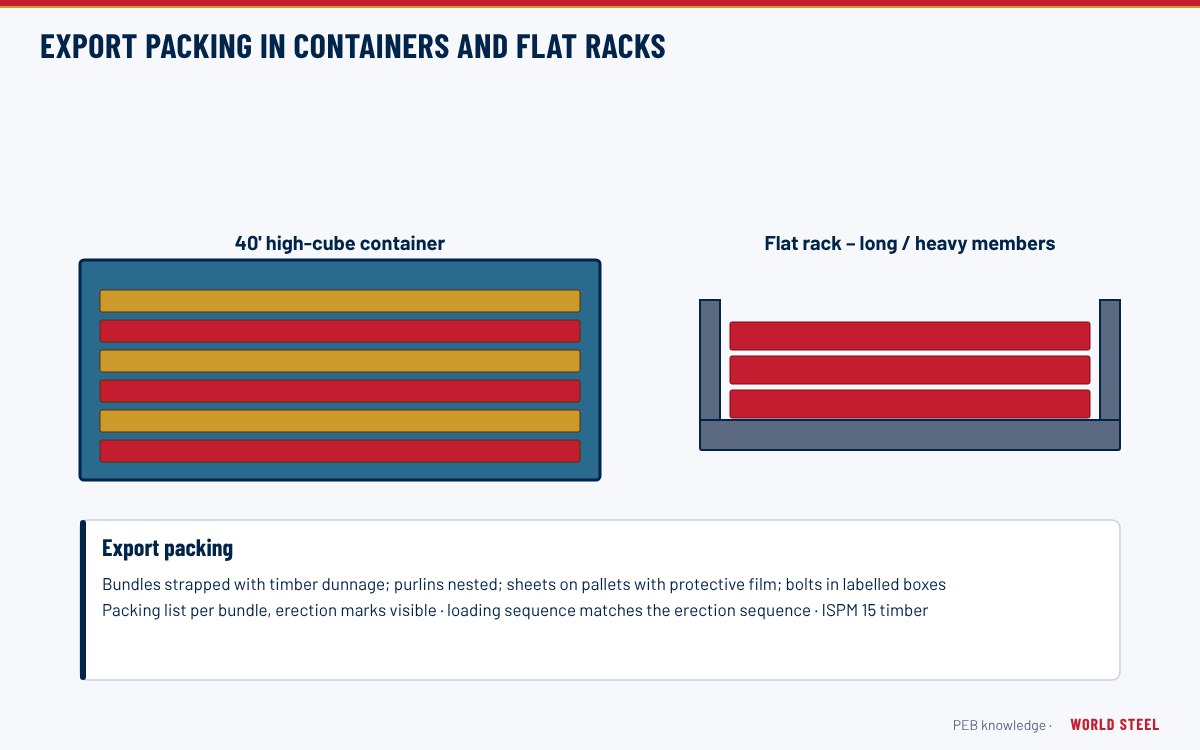
Components are then hot-dip galvanized as single pieces – which is only possible because the system is modular – giving full internal and external zinc coverage with no site welds to repair afterwards. A safety-yellow or architectural topcoat can follow. Parts are marked with their WS code, bagged by type and packed by area for export shipping, together with the structural steel or on their own.
各市场标准与要求
World Steel 设计、加工本产品及编制文件所依据的规范——以及各市场的主要几何与荷载要求。
 美国
- OSHA 29 CFR 1910.29Fall protection systems – guardrails
- ASCE 7Minimum design loads – guard systems
- IBCInternational Building Code – guards
- ASTM A123Hot-dip galvanized coatings
- Top rail height
- 42 in ± 3 in (OSHA 1910.29(b))
- Rail loads
- Top 200 lbf, mid 150 lbf (OSHA 1910.29(b))
- Max opening
- 19 in (OSHA 1910.29(b))
 澳大利亚 / 新西兰
- AS 1657-2018Fixed platforms, walkways, stairways and ladders
- AS/NZS 1170.1Imposed actions – barrier loads
- AS/NZS 5131 WSC 已认证Fabrication and erection of structural steelwork
- AS/NZS 4680Hot-dip galvanized coatings
- Guardrail height
- 900–1100 mm (AS 1657)
- Toe board
- ≥ 100 mm where required (AS 1657)
 欧洲
- EN ISO 14122-3Stairs, stepladders and guard-rails
- EN 1991-1-1Imposed loads – barriers
- EN 1090-2 WSC 已认证Execution of steel structures
- EN ISO 1461Hot-dip galvanized coatings
- Guard-rail height
- ≥ 1100 mm (EN ISO 14122-3)
- Rail gaps
- ≤ 500 mm (EN ISO 14122-3)
- Toe-plate
- ≥ 100 mm (EN ISO 14122-3)
摘要仅供参考——以项目技术规格书、所采用的规范版本及主管机构要求为准。
表面处理
| 表面处理 | 标准 / 备注 |
|---|---|
| Hot-dip galvanized (standard) | ASTM A123 / A153 · AS/NZS 4680 · EN ISO 1461 |
| Duplex – HDG + safety-yellow topcoat | ASTM A123 + topcoat · AS/NZS 4680 + AS/NZS 2312.1 · EN ISO 1461 + EN ISO 12944 |
| HDG + powder coat (architectural colours) | Galvanized, then polyester powder coat for visible public areas |
常见问题
Is a toe board always required?
Where people work or pass below or objects could fall, yes – the codes set minimum heights. We include them by default on platforms.
Can toe boards be added to an existing guardrail?
Yes, the clamp-on brackets fit existing WS stanchions.
 AS/NZS 5131 CC3
 EN 1090 EXC3 · CE