ENEnglish
 VITiếng Việt
 ZH中文
 KO한국어
 JA日本語
 FRFrançais
 ITItaliano
 PTPortuguês
 ESEspañol
 HEעברית
 ARالعربية

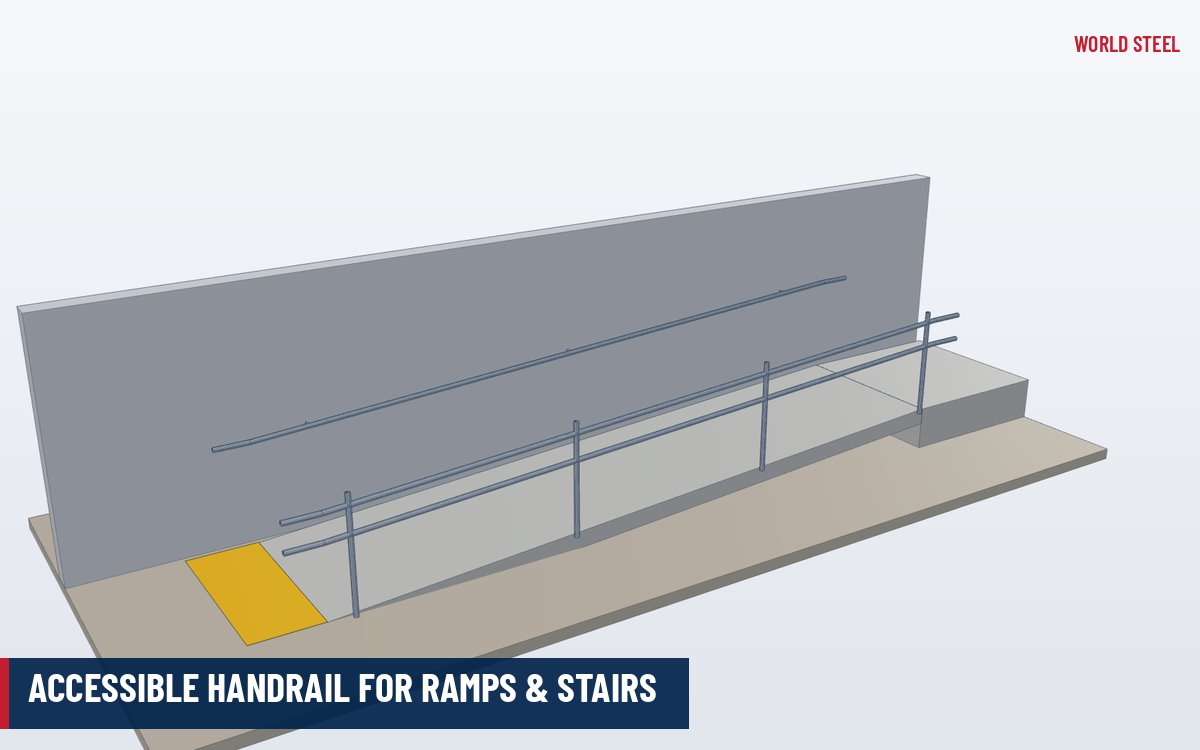
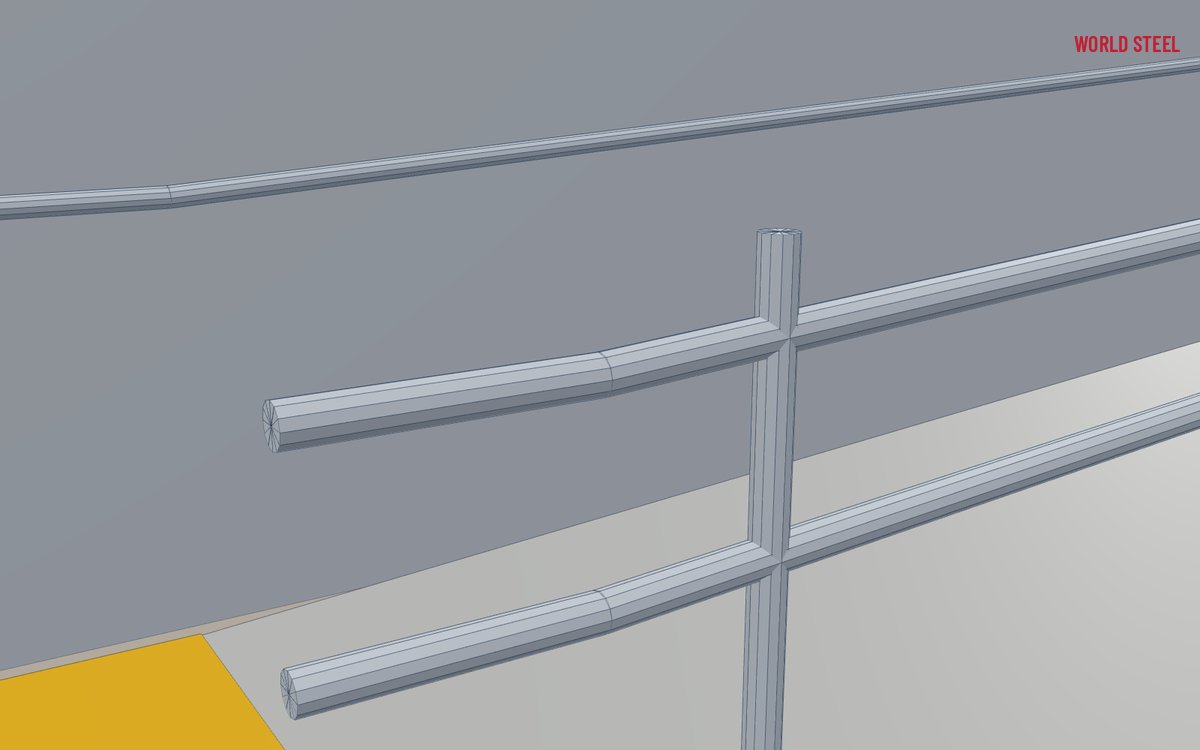
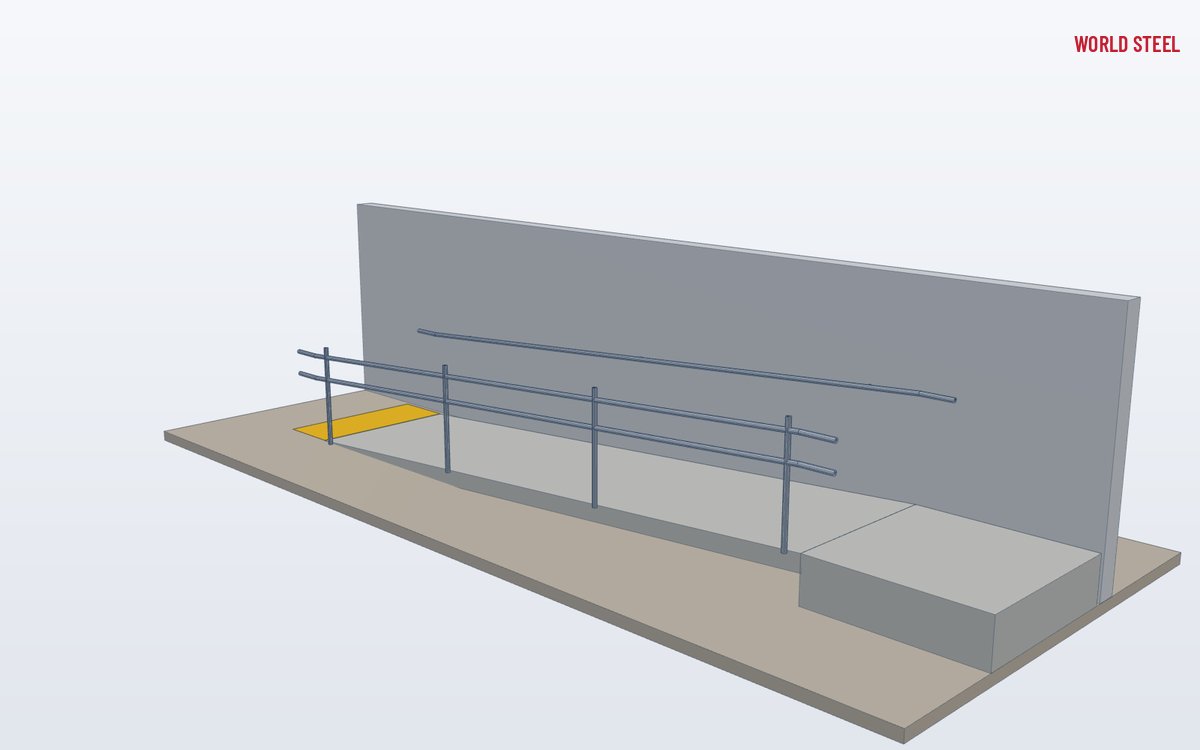
- Round grip rail sized for a full hand grasp
- Continuous over landings, extended past each end
- Heights and clearances to AS 1428.1, ADA or EN 17210
- Post-mounted, wall-bracket or dual-height options
- Stainless, galvanised or powder-coated steel
What it is
The WS-MH-800 accessible handrail is a handrail system for ramps, stairs and walkways that people with limited mobility, vision or strength must be able to use safely: public buildings, schools, hospitals, transport interchanges, car parks and the public parts of industrial sites. Compared with an industrial guardrail it is a gripping rail first and a barrier second. It is round, smooth and continuous, sits at a defined height with clear space for the hand, runs without breaks over landings and turns, and extends past the top and bottom of each flight so a person is steady before the slope begins.
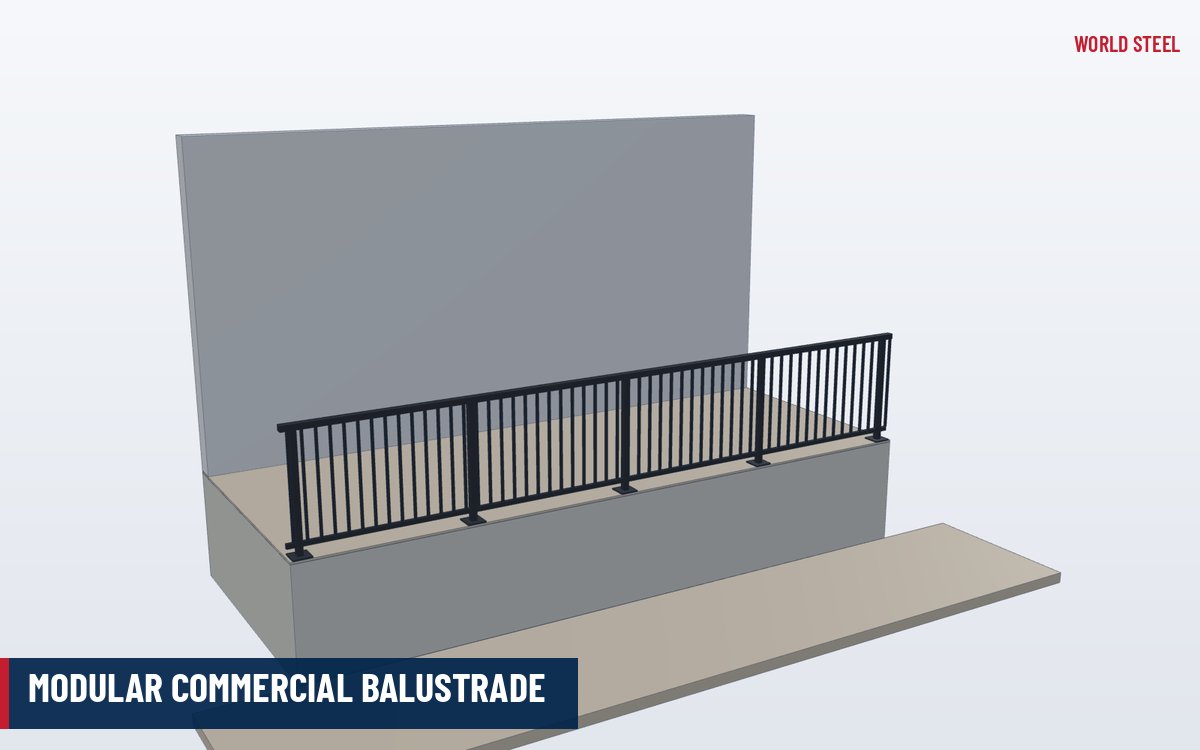
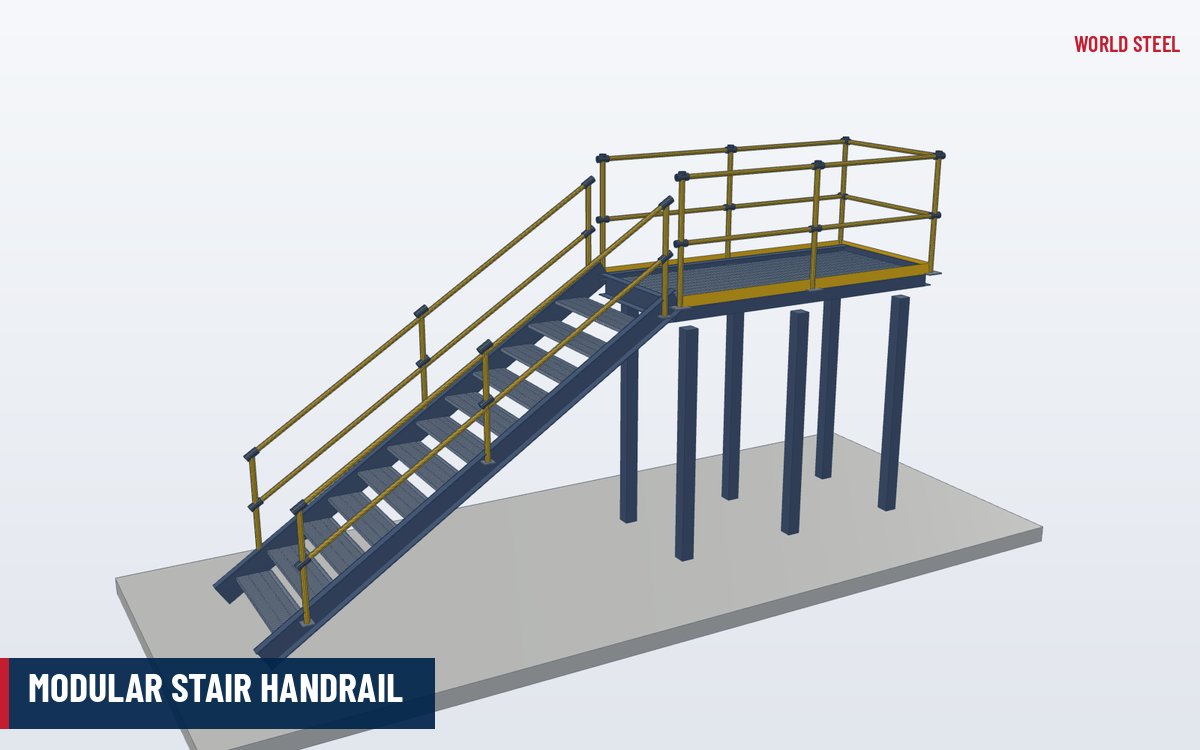
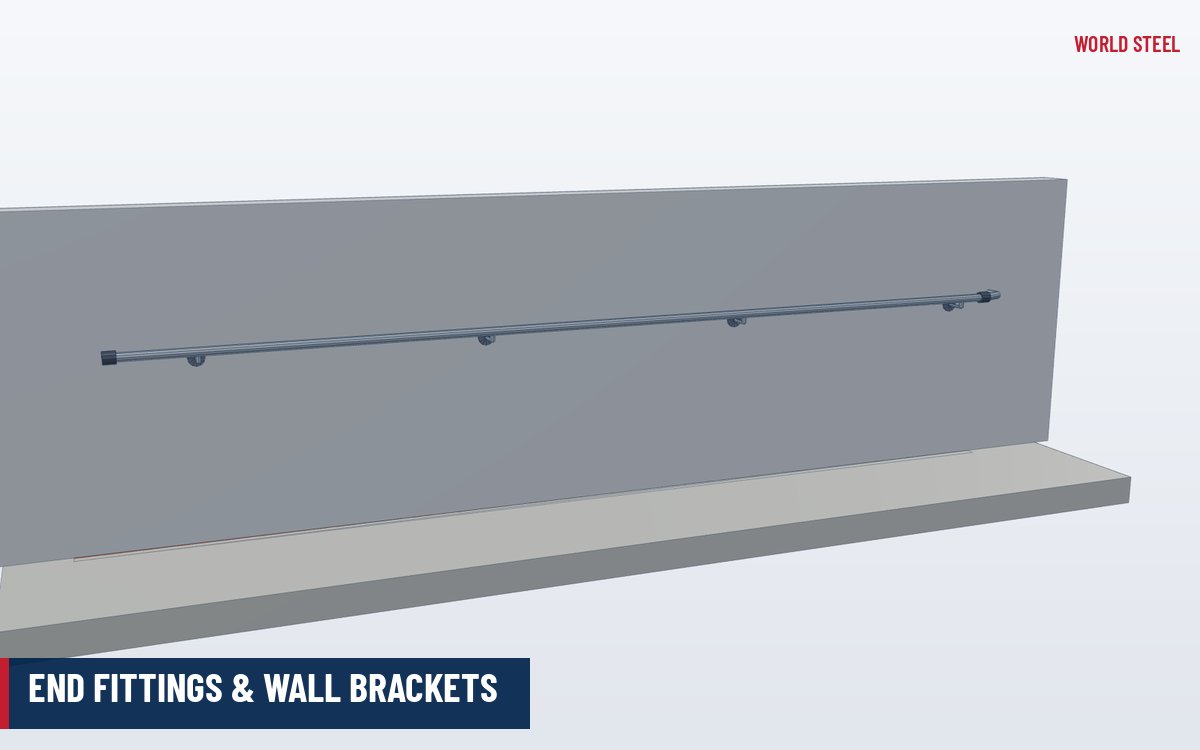
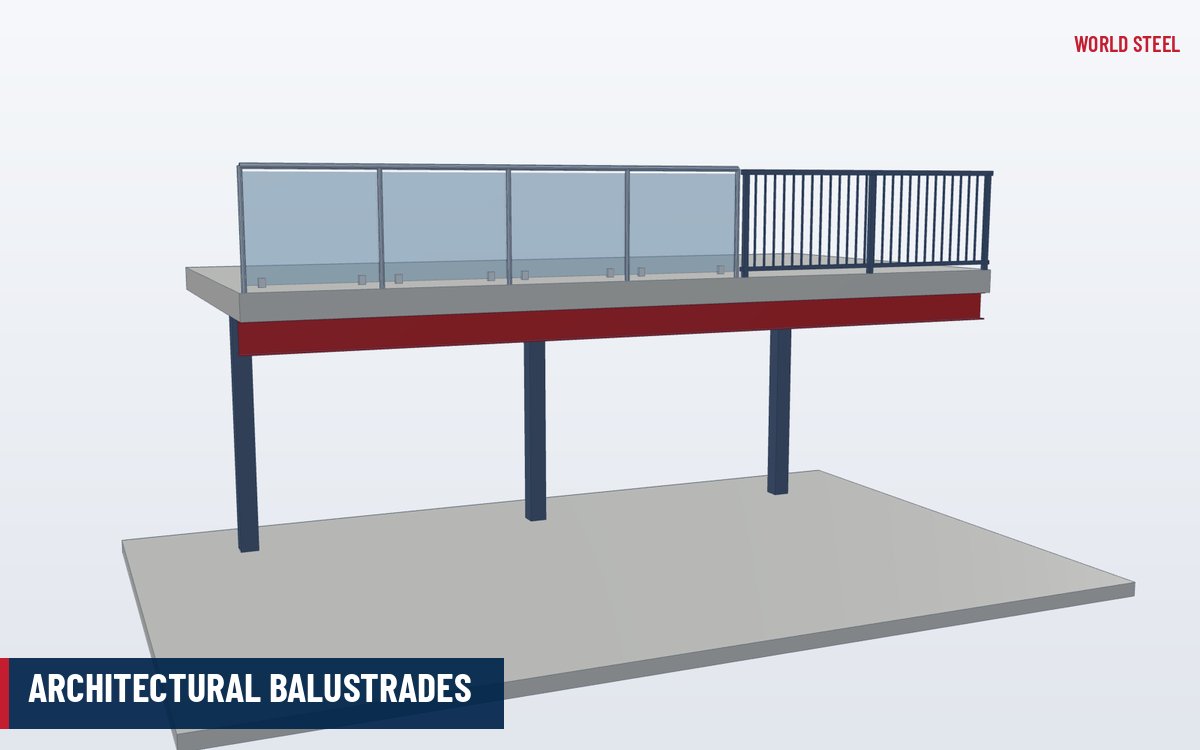
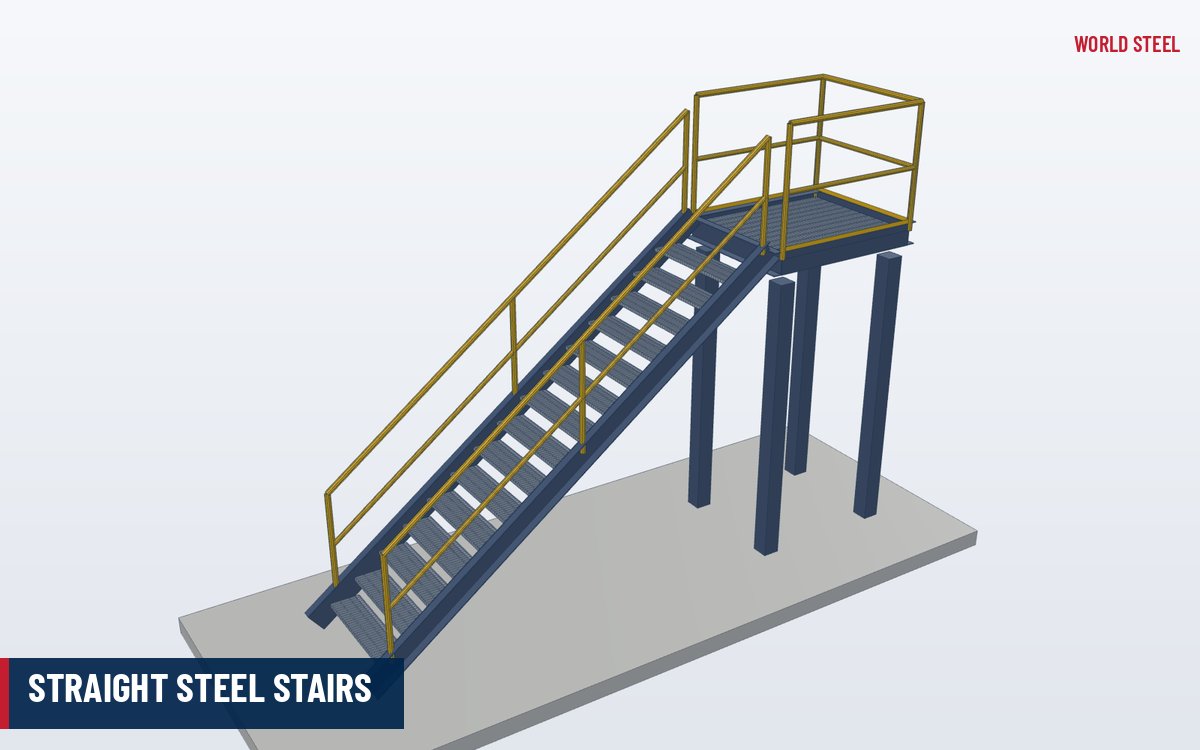
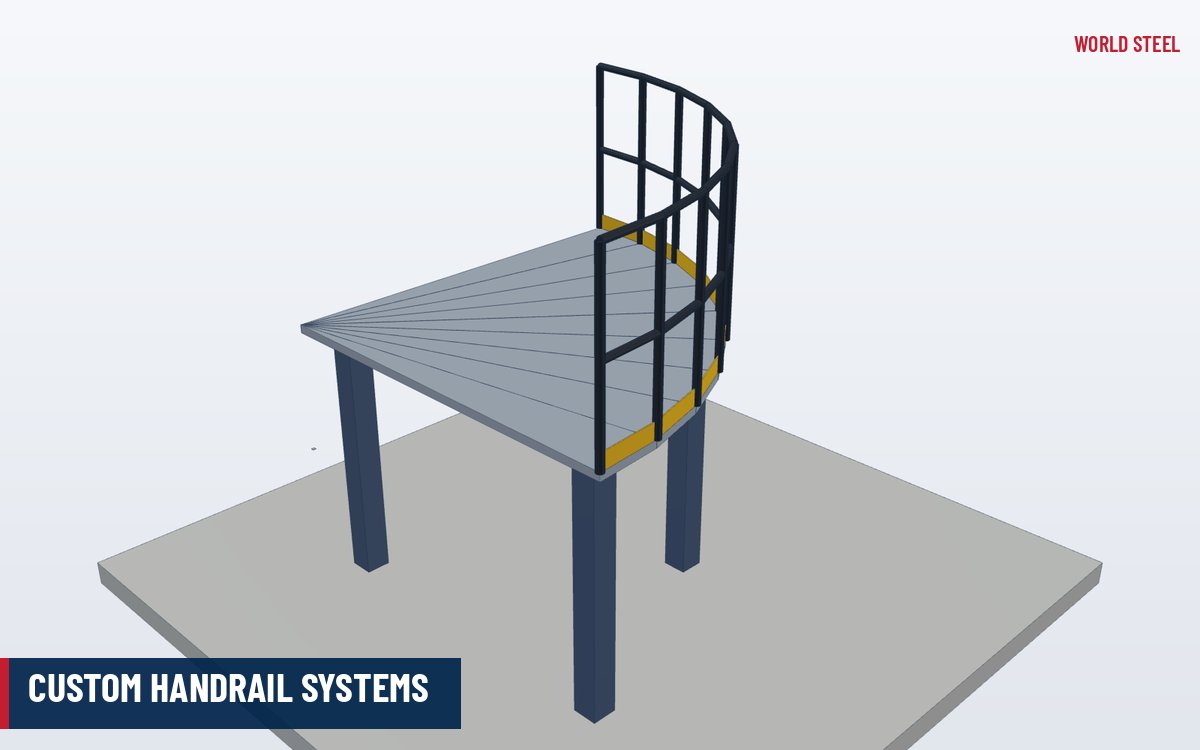
The handrail can be mounted on posts along an open edge – often combined with a commercial balustrade or architectural balustrade that provides the barrier – or carried on wall brackets along a wall. Stair runs use the same parts as the WS modular stair handrail.
Key dimensions by region
Each market defines the rail in similar but not identical terms. World Steel sets the post fittings, brackets and extensions to the code named in the contract documents.
| Item | Australia – AS 1428.1 | United States – ADA 2010 |
|---|---|---|
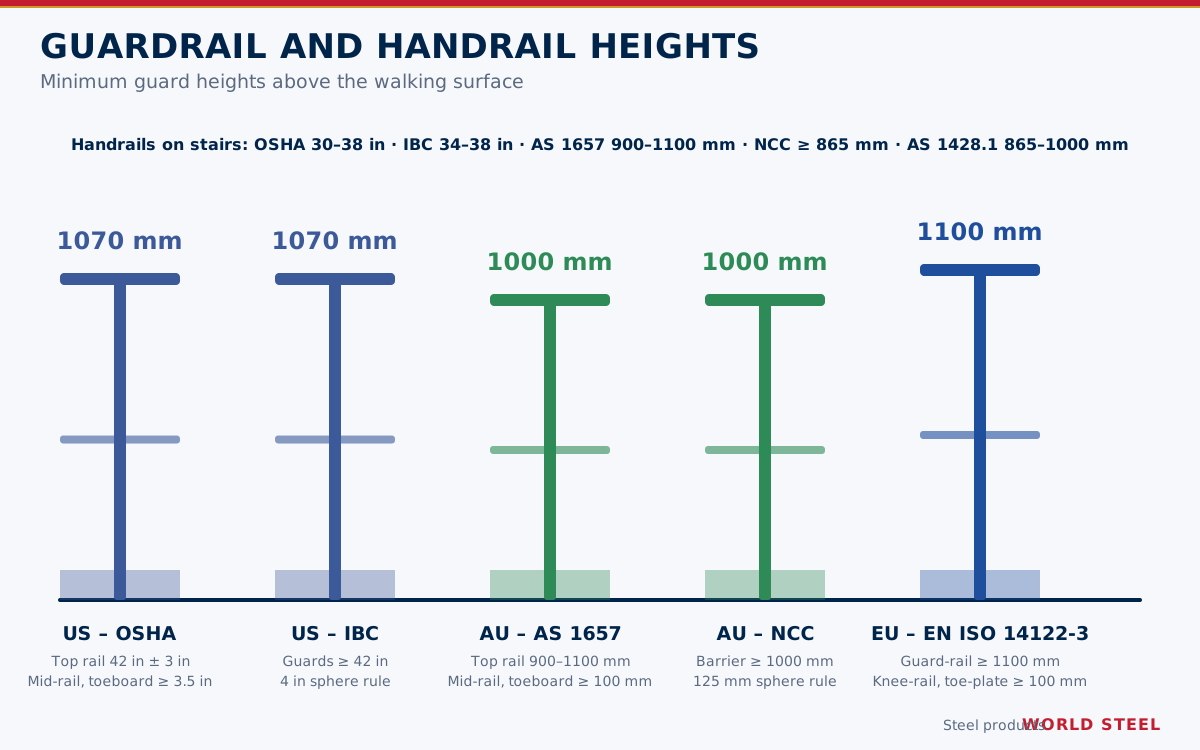
| Height | 865–1000 mm above ramp surface or stair nosings | 34–38 in (865–965 mm) above walking surface or nosings |
| Rail size | 30–50 mm diameter, circular | 1¼–2 in (32–51 mm) outside diameter, circular |
| Clearance to wall | 50–60 mm | 1½ in (38 mm) minimum |
| Continuity | Continuous, with end extensions and returns | Continuous, with end extensions and returns |
In Europe, EN 17210 sets functional accessibility requirements, including handrails on both sides of stairs and ramps, and national building rules give the exact heights. Where a second, lower rail is wanted for children or people of short stature, a dual-height arrangement is fitted on the same posts.
Design and compliance
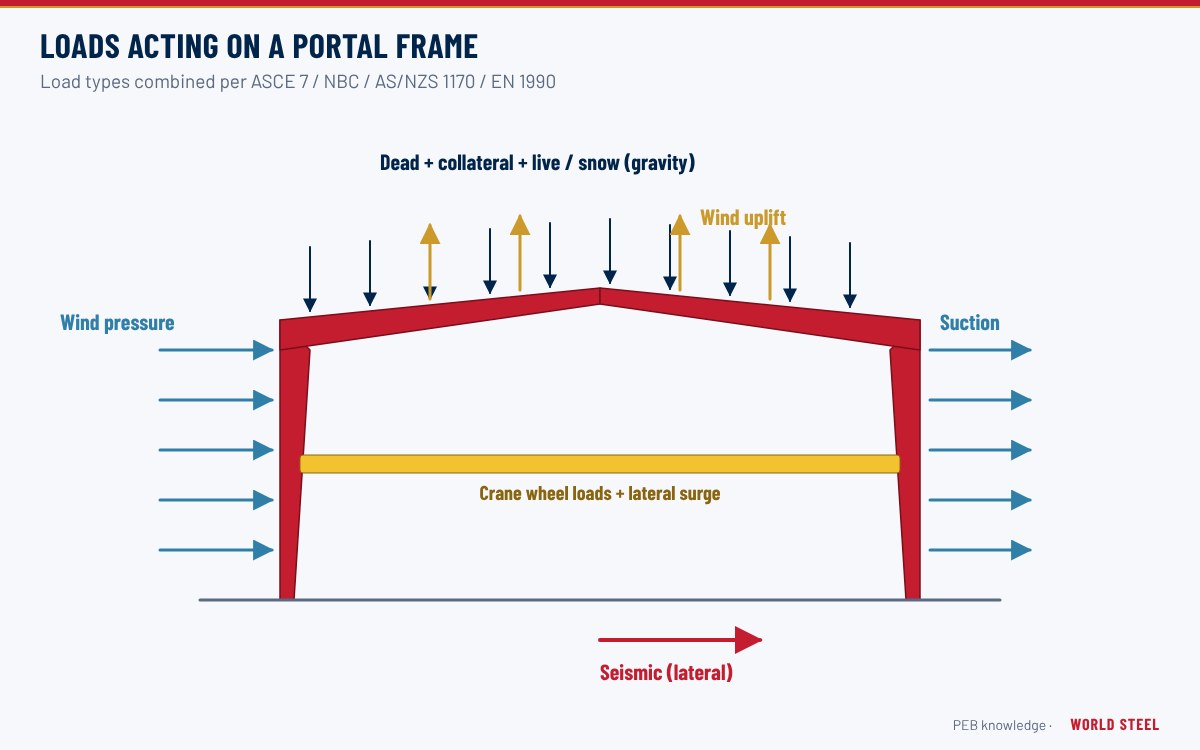
Accessibility codes set geometry; structural codes set strength. The rail, posts, brackets and fixings are designed for the handrail loads of AS/NZS 1170.1, EN 1991-1-1 or ASCE 7 (50 lb/ft and a 200 lb concentrated load in the US). In Australia the NCC calls up AS 1428.1 for accessible ramps and stairs; in the US the 2010 ADA Standards apply together with IBC Section 1014 handrail rules; in Europe national regulations implement accessibility in line with EN 17210.
Details matter to users: brackets attach to the underside of the rail so the hand can slide along without obstruction, ends return to the wall, post or floor so clothing cannot catch, and joints are flush. Where the handrail sits beside an edge that needs a barrier, the barrier height and openings are checked separately – see design loads.
Fabrication and finishing at World Steel
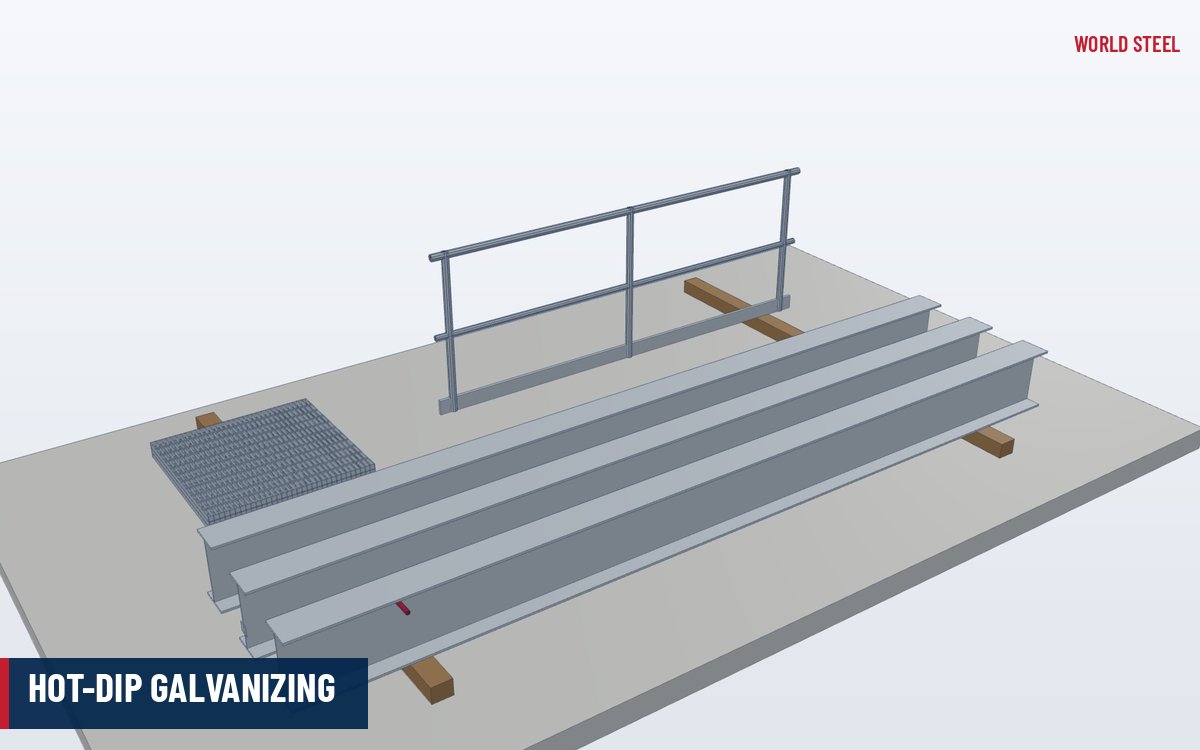
World Steel bends rails, extensions and returns from tube on mandrel benders, cuts and drills posts, base plates and brackets, and welds them on jigs so that rail heights and bracket offsets repeat along every flight. Stainless rails are welded to qualified procedures under AS/NZS 1554.6, EN ISO 3834-2 and AWS D1.6, then ground and polished to a smooth, continuous grip surface; carbon steel parts are hot-dip galvanised by qualified galvanisers and can be powder coated in a colour that contrasts with the wall behind. Our AS/NZS 5131 CC3 and EN 1090-2 certifications cover the welded steelwork.
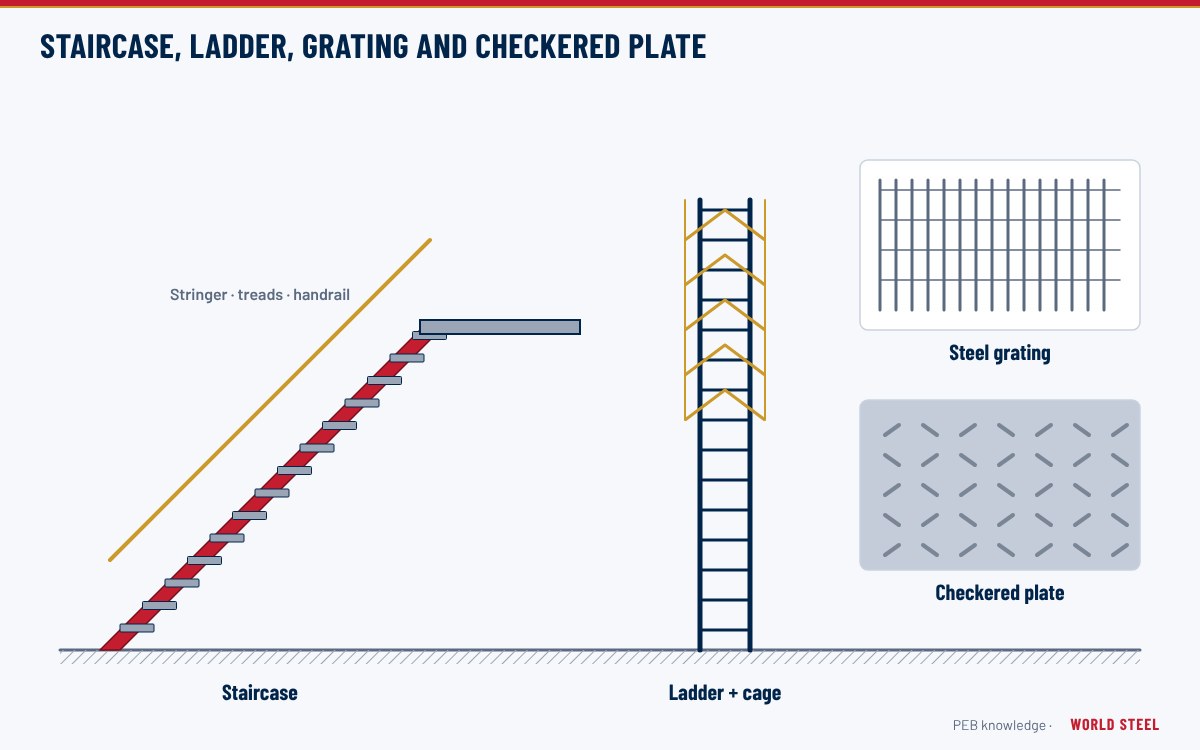
Handrails can be packed with the stairs and ramps they serve – for example with steel stairs – or shipped on their own, marked by flight and level.
Installation and specifying
- Fix posts or wall brackets to structure that can take the handrail loads; hollow walls need backing or through-bolts.
- Fit the rails, extensions and returns, then check height and clearance at every nosing and landing before the final tightening.
- Specify the governing code, sides (one or both), single or dual height, mounting, material, finish and colour contrast.
المعايير والمتطلبات حسب السوق
المعايير التي تصمم World Steel هذا المنتج وتصنّعه وتوثّقه وفقها – والمتطلبات الهندسية الرئيسية ومتطلبات الأحمال في كل سوق.
 الولايات المتحدة
- 2010 ADA StandardsAccessible design – handrails (Section 505)
- IBCInternational Building Code – handrails (Section 1014)
- ASCE 7Minimum design loads – handrail systems
- AWS D1.6Structural welding code – stainless steel
- Height
- 34–38 in (ADA 2010 / IBC 1014.2)
- Rail diameter
- 1¼–2 in circular (ADA 2010 / IBC 1014.3.1)
- Loads
- 50 lb/ft and 200 lb (ASCE 7)
 أستراليا / نيوزيلندا
- AS 1428.1Design for access and mobility
- NCC 2022National Construction Code – access for people with a disability
- AS/NZS 1170.1Imposed actions – barrier and handrail loads
- AS/NZS 1554.6Welding stainless steels for structural purposes
- AS/NZS 4680Hot-dip galvanized coatings
- Height
- 865–1000 mm (AS 1428.1)
- Diameter
- 30–50 mm (AS 1428.1)
- Wall clearance
- 50–60 mm (AS 1428.1)
 أوروبا
- EN 17210Accessibility and usability of the built environment
- EN 1991-1-1Imposed loads – barriers and handrails
- EN 1090-2 معتمد لدى WSCExecution of steel structures
- EN 1993-1-4Design of stainless steel structures
- Handrails
- Both sides of stairs and ramps (EN 17210)
- Heights
- Per national building regulations
ملخص للاسترشاد فقط – تسري مواصفات المشروع وإصدار المعيار المعتمد والجهة المختصة.
التشطيبات
| التشطيب | المعايير / ملاحظات |
|---|---|
| Stainless steel, polished or satin | EN 10088 grades 1.4301 / 1.4404 (304 / 316) · ASTM A554 |
| Hot-dip galvanised | AS/NZS 4680 · ASTM A123 · EN ISO 1461 |
| HDG + powder coat (contrast colour) | Galvanised, then polyester powder coat |
الأسئلة المتكررة
What diameter should an accessible handrail be?
30–50 mm under AS 1428.1 and 1¼–2 in outside diameter under the 2010 ADA Standards. A rail of about 40–42 mm OD suits both and is a common choice for export projects.
Does the handrail also act as the barrier?
Not by itself in most cases. Where the ramp or stair has an open edge, a barrier of the required height is fitted as well, and the accessible rail is mounted on its posts or on separate brackets.
Stainless or galvanised?
Stainless is preferred where people touch the rail all day and appearance matters; galvanised and powder-coated steel is economical and lets you choose a contrast colour. Grade 316 stainless suits coastal sites.
Can you supply it with the stairs?
Yes. Handrails are usually detailed in the same model as the stairs and ramps and shipped in the same package, or ordered separately.
 New Zealand
 AS/NZS 5131 CC3
 EN 1090 EXC3 · CE