ENEnglish
 VITiếng Việt
 ZH中文
 KO한국어
 JA日本語
 FRFrançais
 ITItaliano
 PTPortuguês
 ESEspañol
 HEעברית
 ARالعربية

Access elements in a steel building
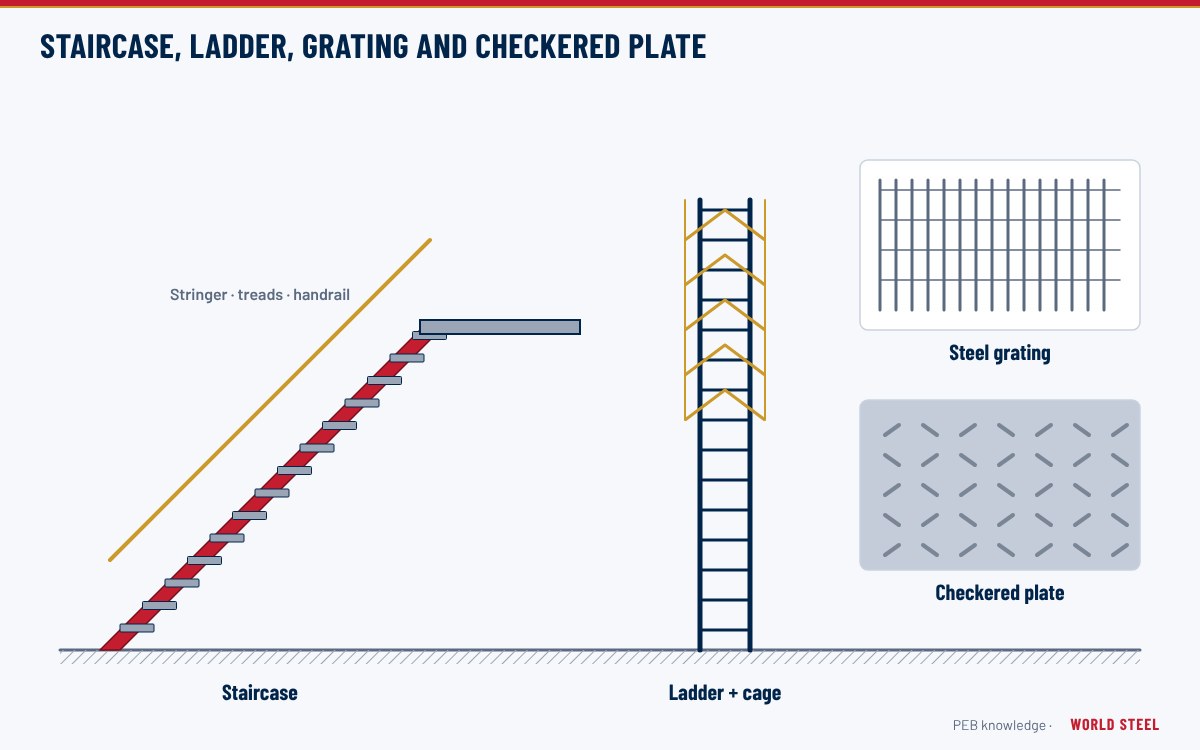
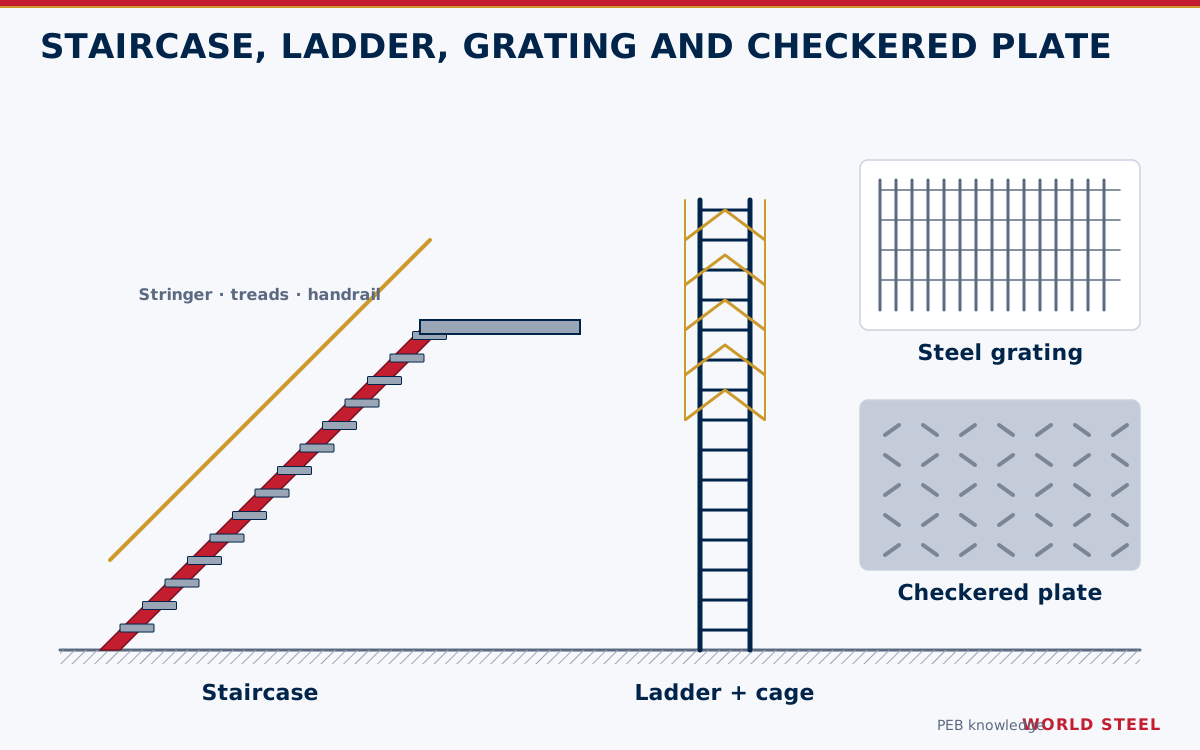
Every mezzanine, platform and roof needs a safe way up. In pre-engineered buildings the access elements are usually supplied in steel with the structure: staircases to mezzanines and offices, fixed ladders to roofs and crane platforms, and floor surfaces of grating or checkered plate. They are small in tonnage but closely regulated, because they are where people walk, climb and can fall.
Staircases
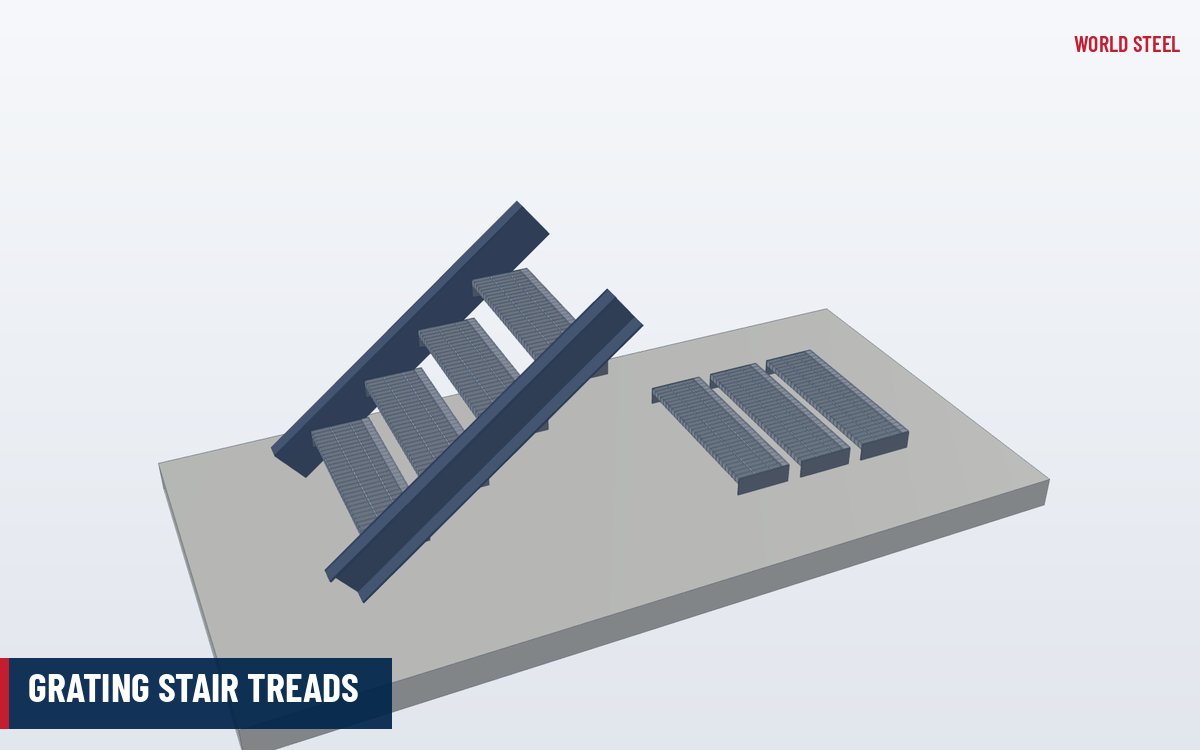
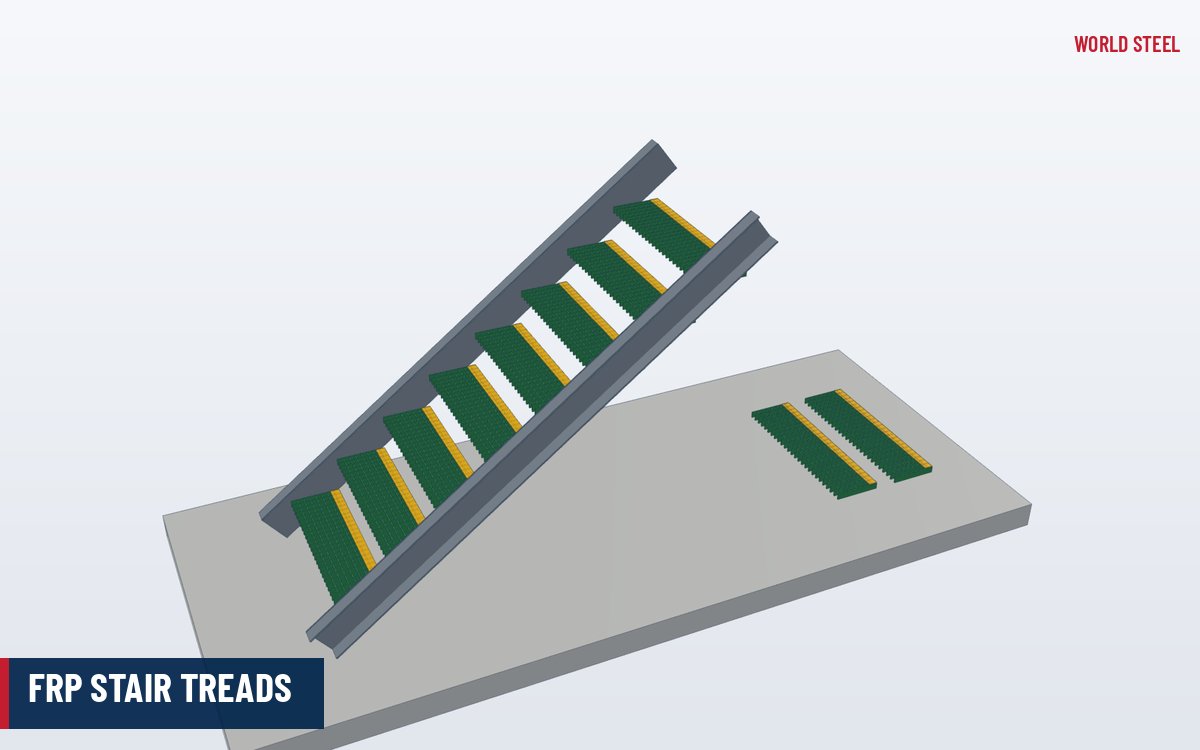
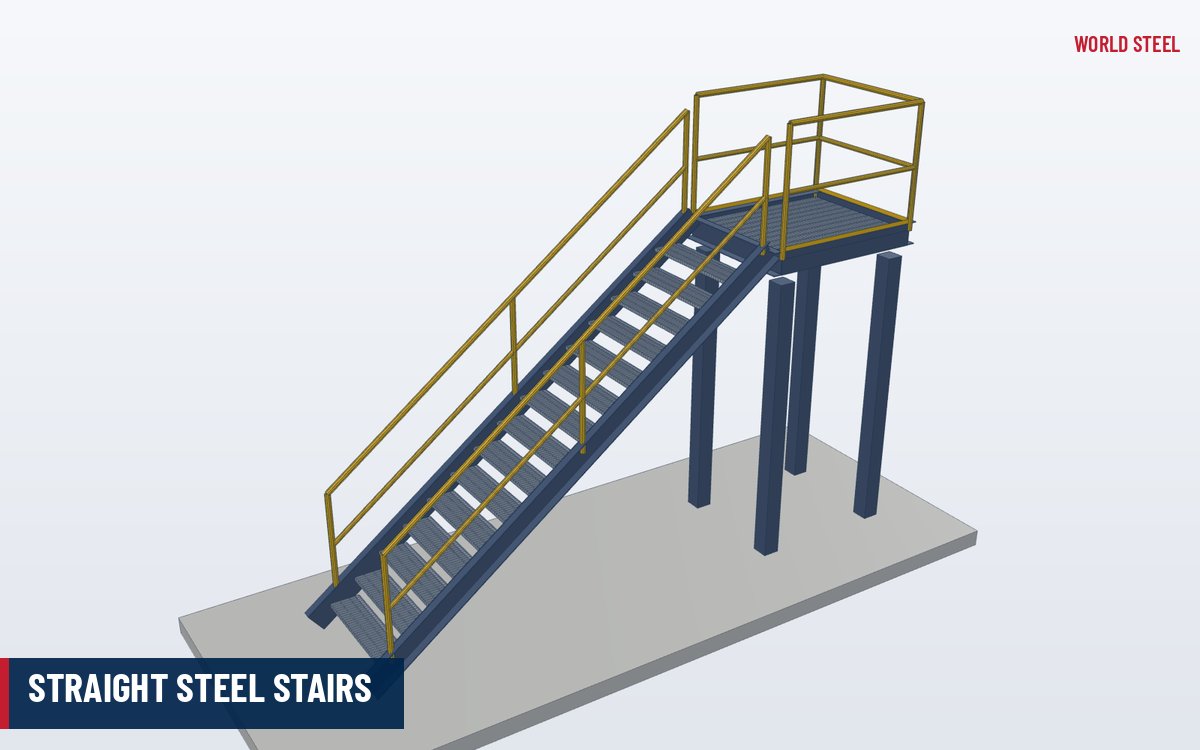
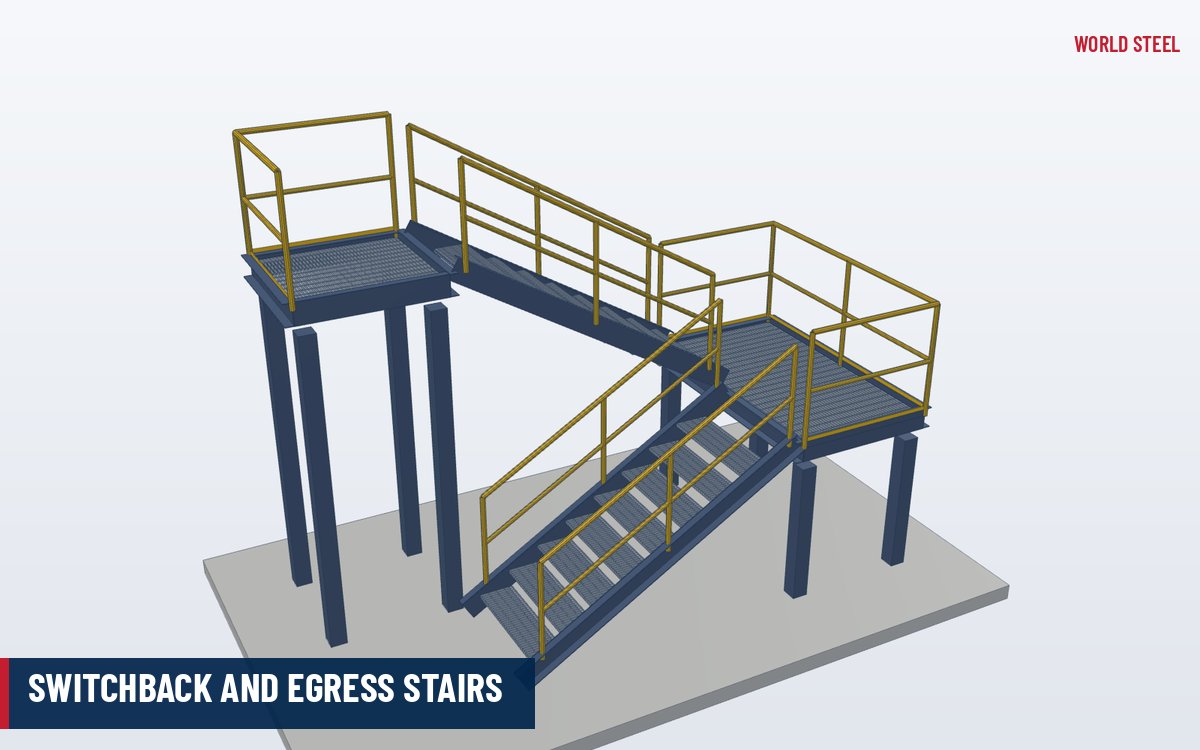
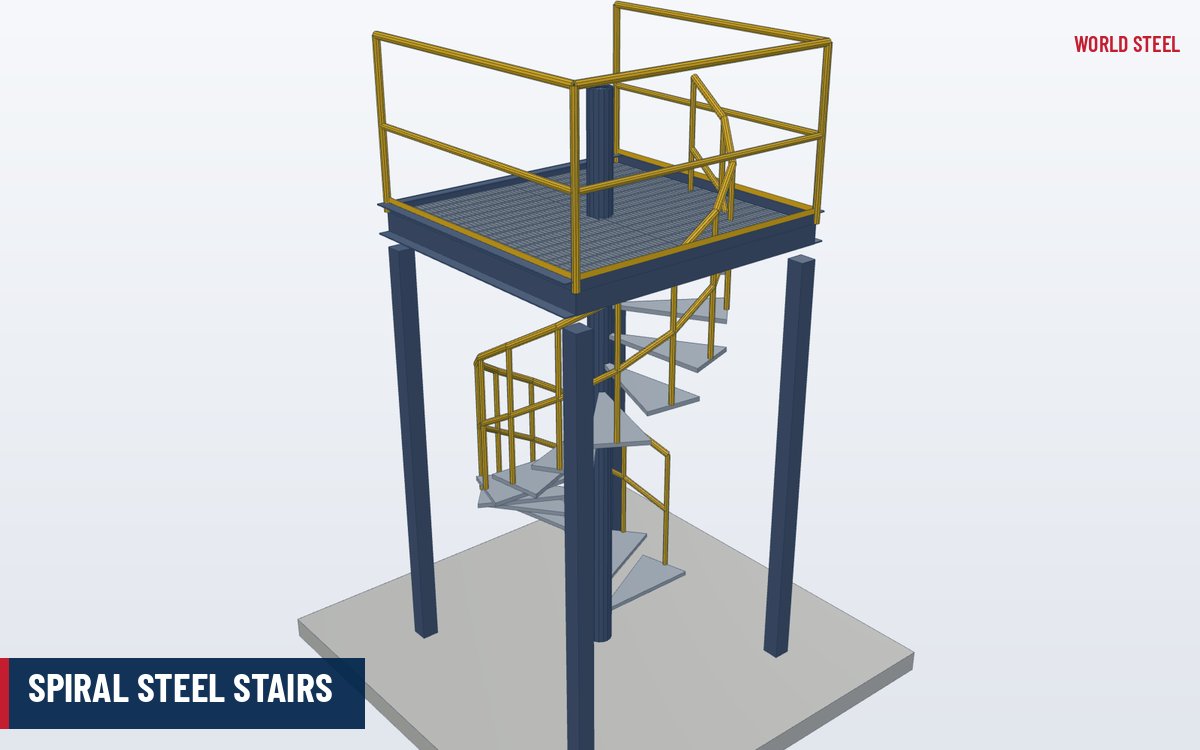
Steel stairs consist of two stringers – channels, plates or hollow sections – with treads of grating, checkered plate or folded plate for a concrete or tile infill, plus landings, guards and handrails. The choice between a general building stair and an industrial stair depends on who uses it: stairs used by the public or office staff follow the building code, while stairs serving plant and equipment may follow industrial access rules.
| Requirement | Building stairs (e.g. IBC 2021/2024) | Industrial access (e.g. OSHA, AS 1657, EN ISO 14122-3) |
|---|---|---|
| Riser height | Max about 178 mm (7 in) | Max about 240 mm (OSHA 9.5 in); AS 1657 130–225 mm |
| Tread depth | Min about 279 mm (11 in) | Min about 240 mm (OSHA 9.5 in) |
| Stair angle | About 30–35° | About 30–50° (OSHA); 20–45° (AS 1657) |
| Handrail height | 865–965 mm (34–38 in) | About 860–1,100 mm depending on code |
| Guard height | Min 1,067 mm (42 in) | About 1,070 mm (OSHA), 900–1,100 mm (AS 1657), 1,100 mm (EN ISO 14122-3) |
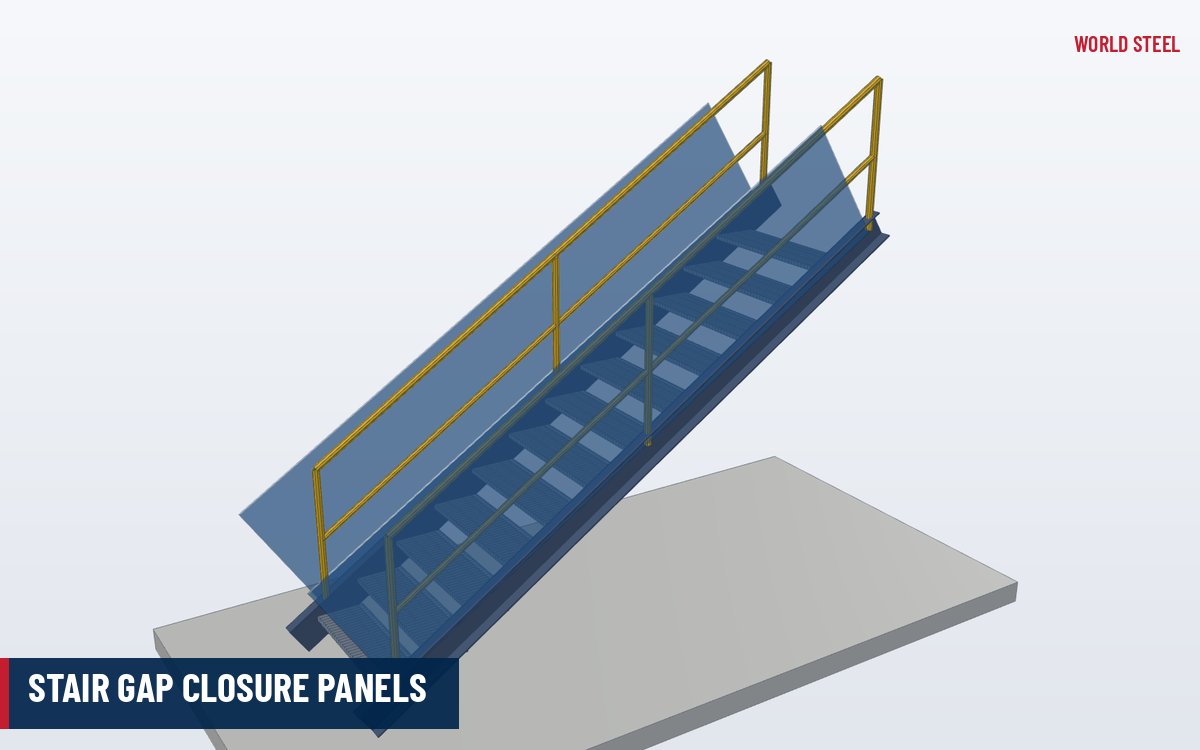
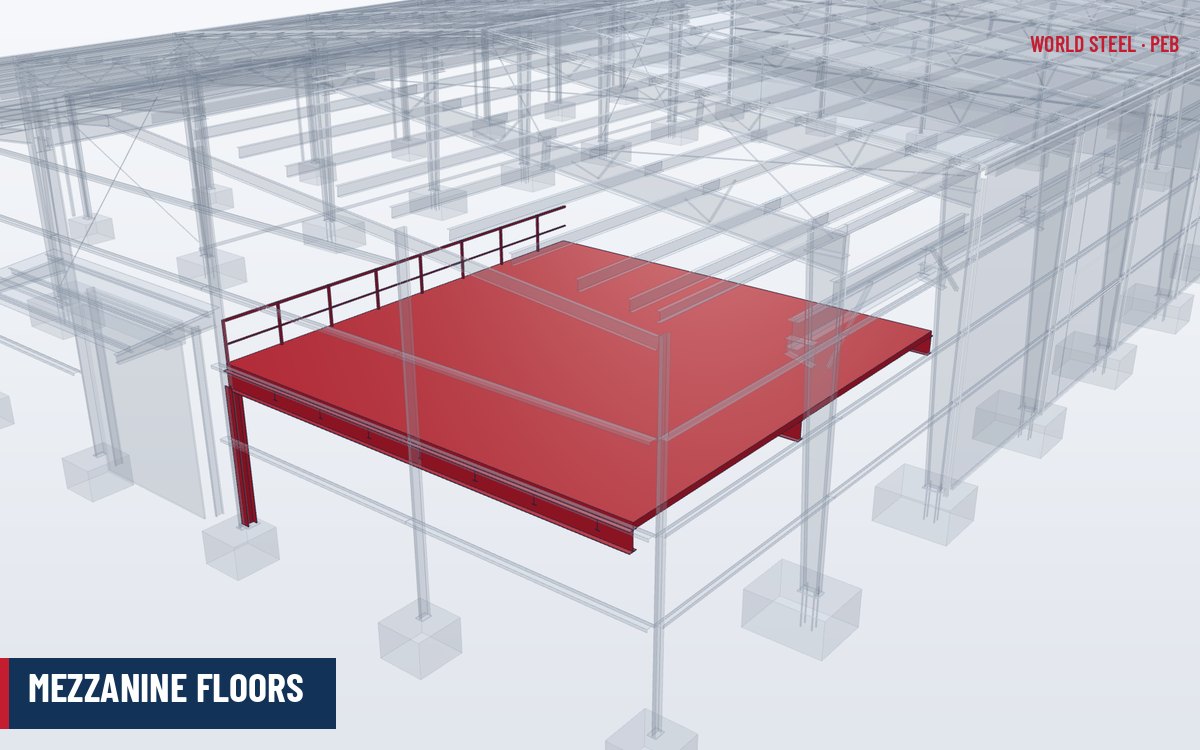
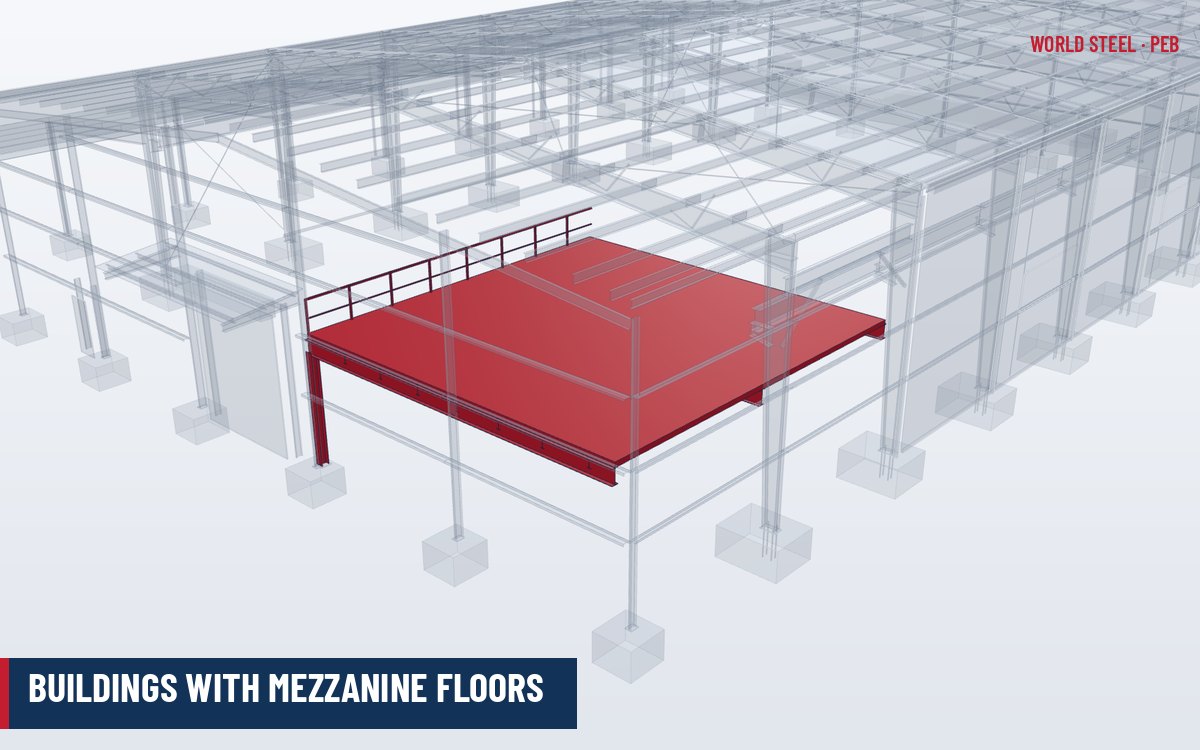
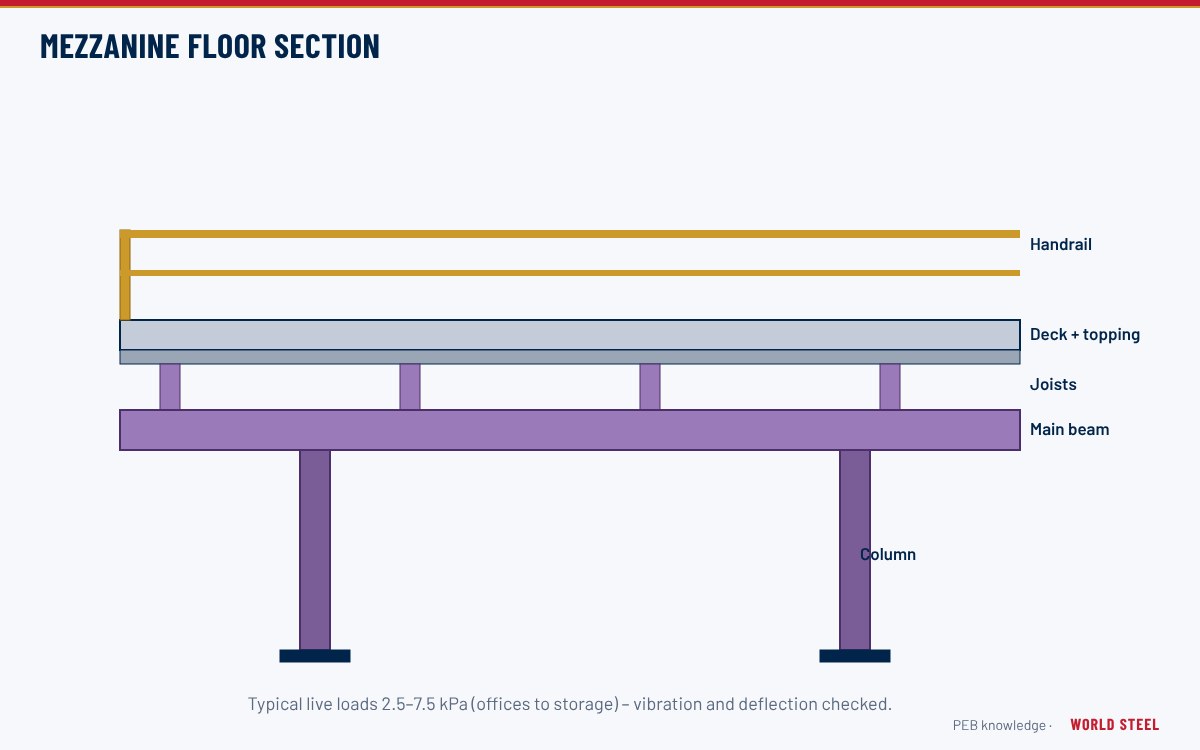
Guards typically need intermediate rails or infill so that a 100 mm (4 in) sphere cannot pass in public areas, and toe boards on industrial platforms. Mezzanine stair layouts and egress are discussed in mezzanine floors.
Fixed ladders and fall protection
Fixed ladders are used where a stair is impractical – roof access, crane cabins, tanks and high platforms. Rungs are usually round or square bars at about 250–300 mm spacing between flat or channel stringers, with a clear width of around 400–600 mm.
- United States: under OSHA 29 CFR 1910.28, new fixed ladders over 7.3 m (24 ft) need a personal fall arrest or ladder safety system; cages and wells alone are no longer accepted for new installations.
- Australia: AS 1657:2018 limits ladder heights between landings and specifies cages or fall-arrest systems above set heights.
- Europe: EN ISO 14122-4 covers fixed ladders, safety cages and landing intervals for machinery access.
- Canada: provincial OHS regulations apply, alongside the NBC 2020 for building access.
Ladder fall-protection rules have changed in recent years. Always check the current local regulation rather than reusing an older standard detail.
Grating and checkered plate
| Type | Typical form | Best use |
|---|---|---|
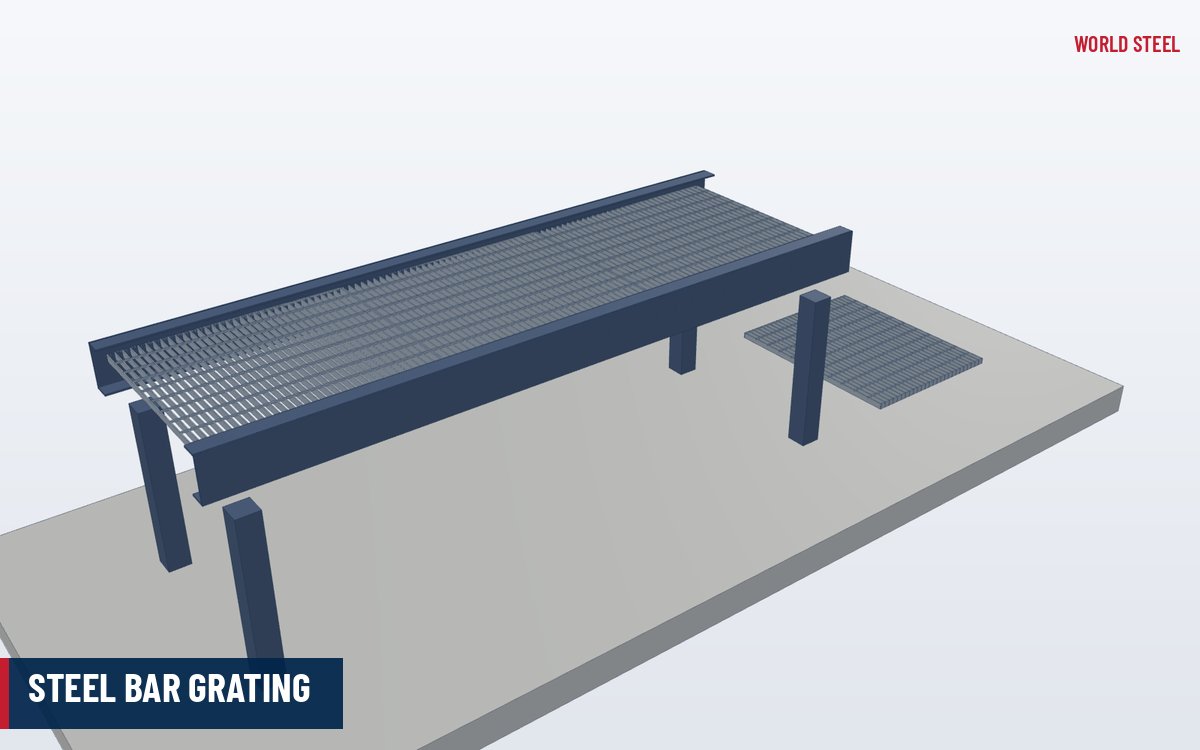
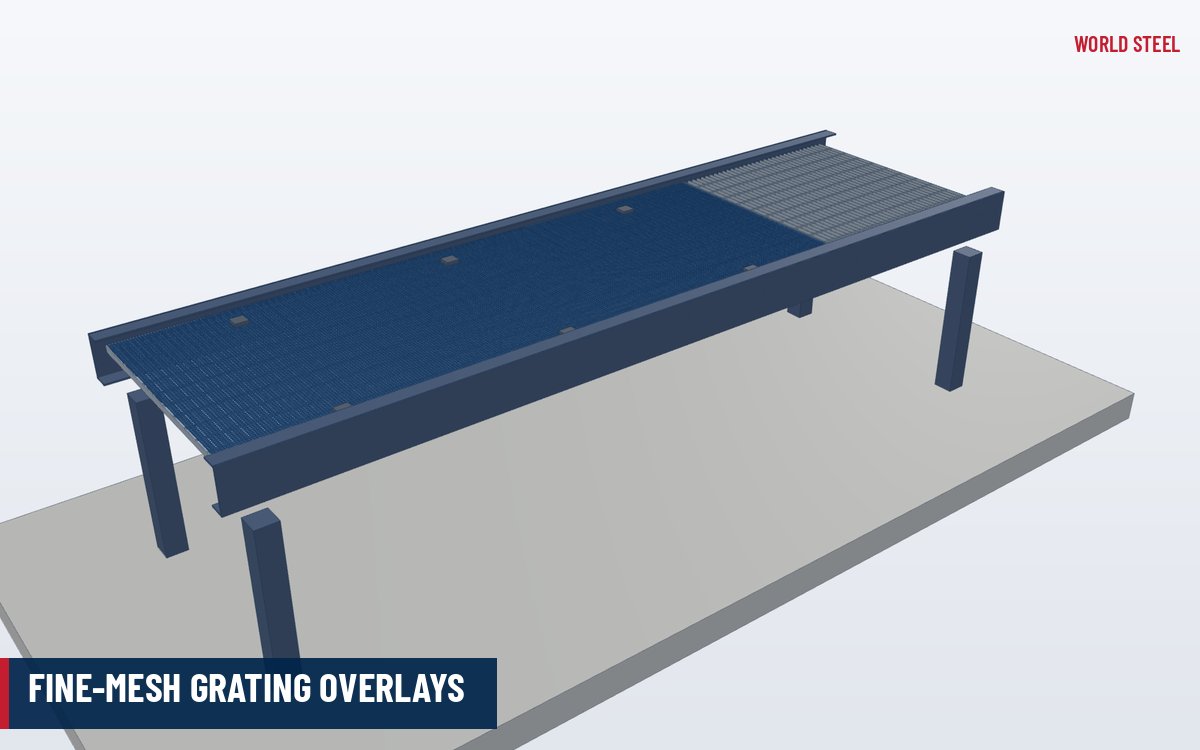
| Welded steel bar grating | Bearing bars 25–50 mm deep at about 30 mm centres, cross bars at about 100 mm; often hot-dip galvanized | Platforms, catwalks, stair treads, outdoor areas |
| Serrated grating | Notched bearing bars for extra slip resistance | Wet, oily or sloping surfaces |
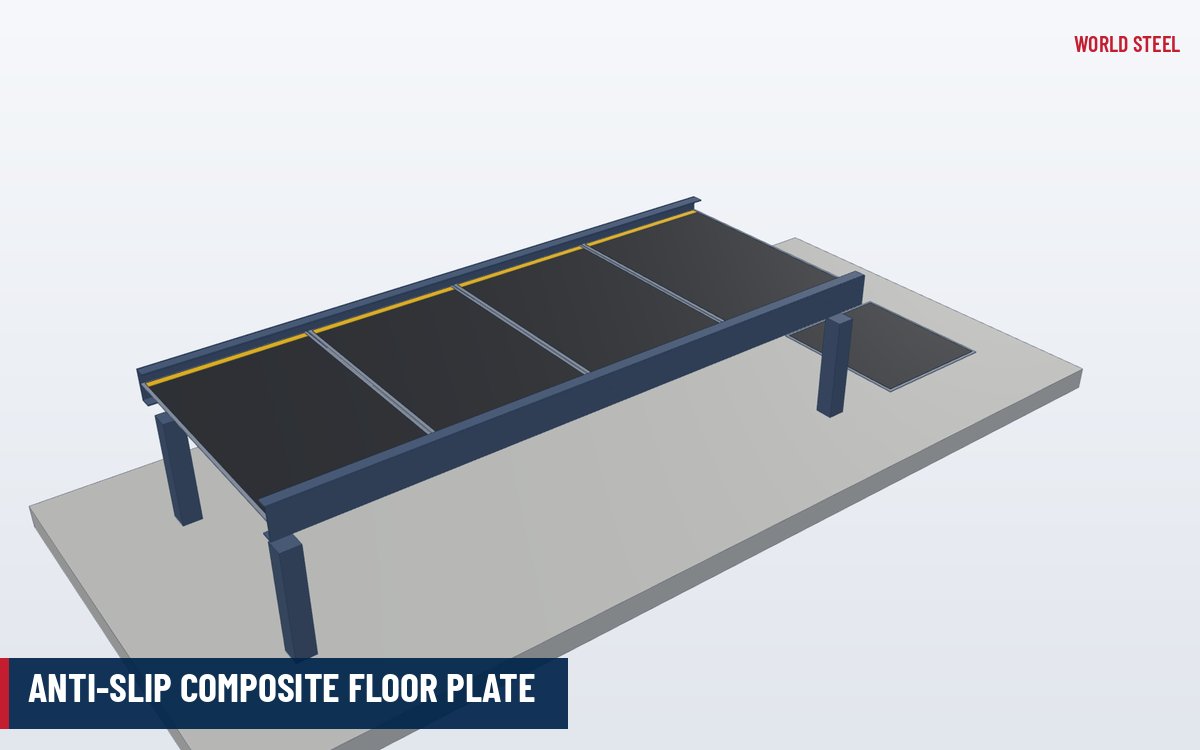
| Checkered (tread) plate | Raised-pattern plate, about 4.5–10 mm thick | Covers, landings, areas where items must not fall through |
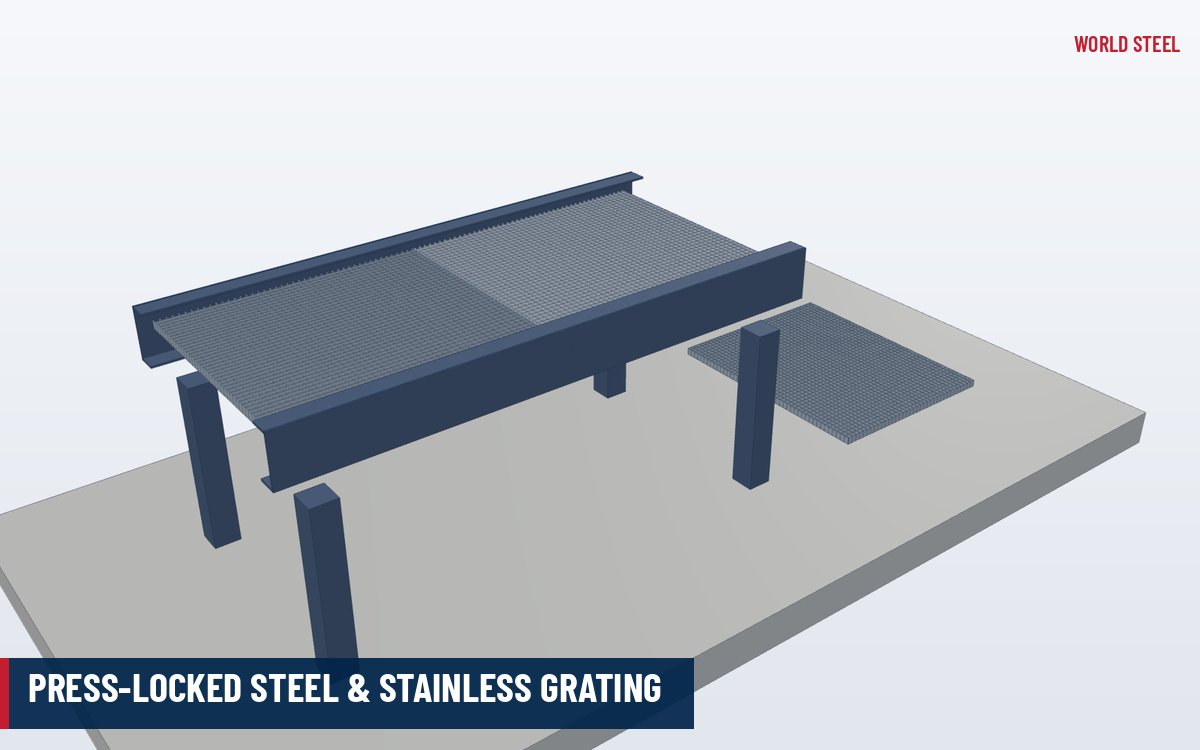
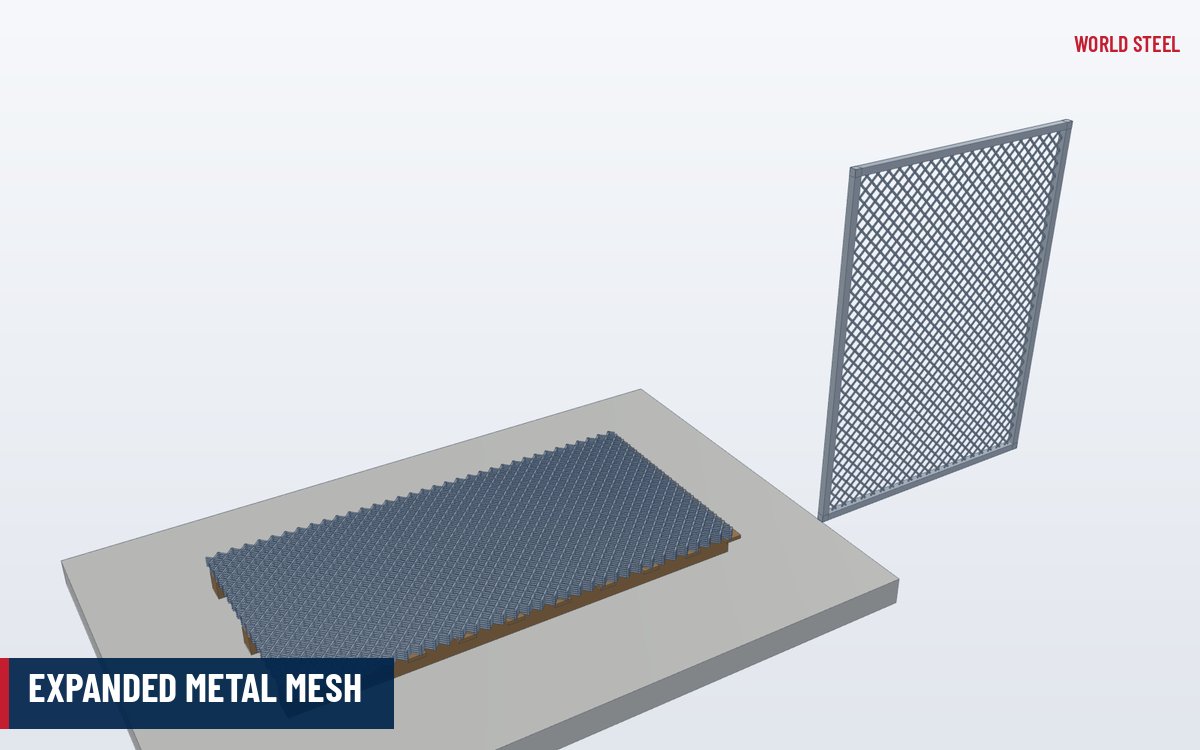
| Expanded or perforated plank | Pressed slip-resistant planks | Light walkways, roof access |
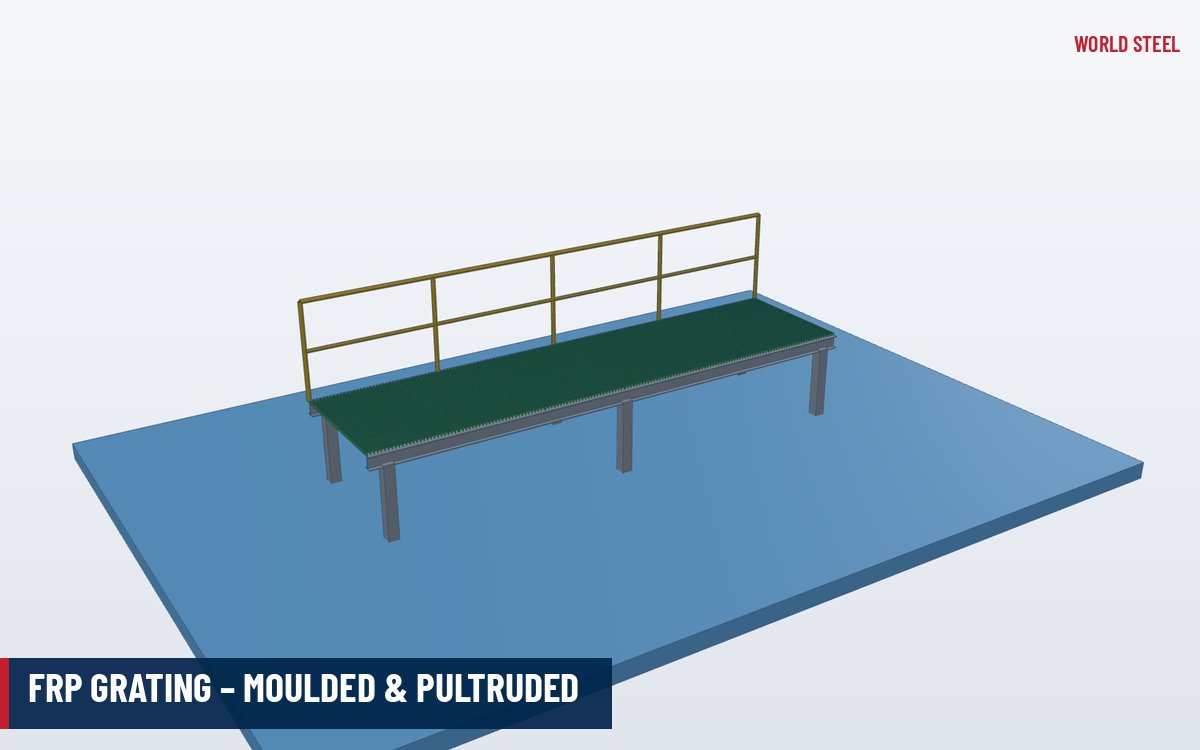
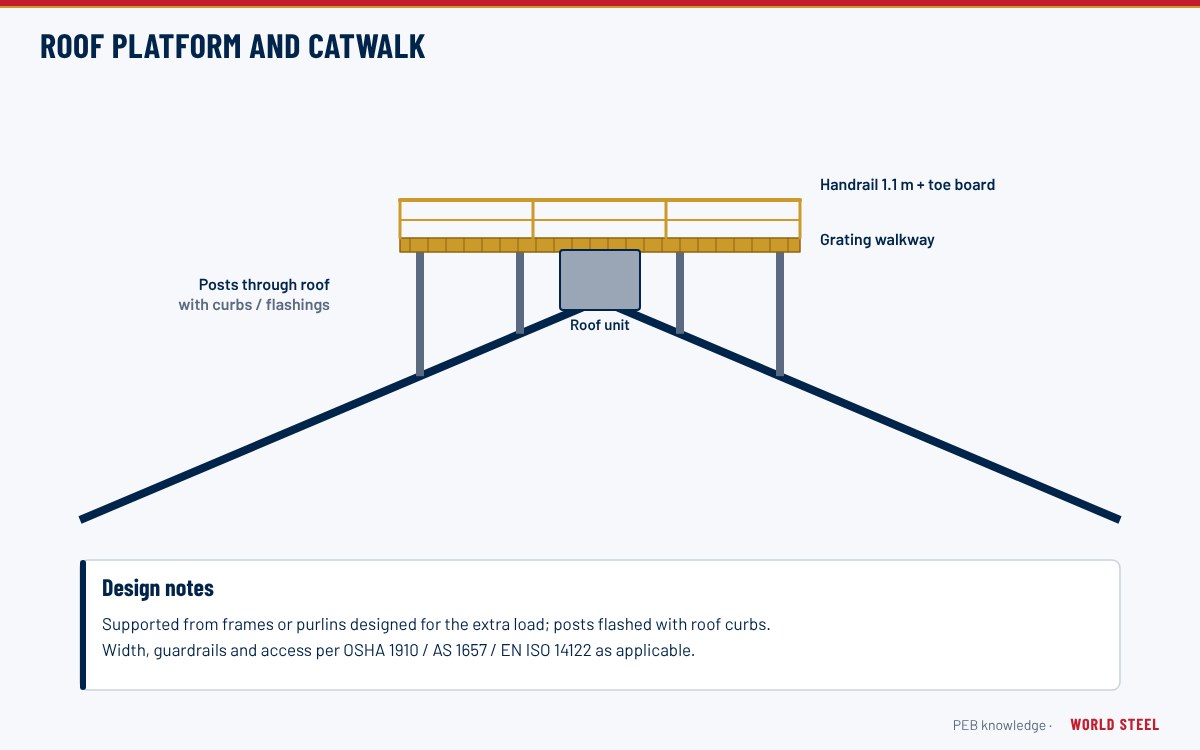
Grating panels are fixed with saddle clips or welded, and must be supported at the bearing-bar ends with the span checked for the design load and deflection. Checkered plate needs stiffeners for larger spans. For platform applications see roof platforms and catwalks.
Stairs and access steel from World Steel
World Steel designs and fabricates stairs, landings, ladders, handrails, grating and checkered plate as part of its accessories and mezzanine floor systems, hot-dip galvanized or painted per coating system requirements, and detailed to the access code of the destination market.
Normas por región
| Región | Norma | Alcance |
|---|---|---|
 United States |
IBC 2024 Ch. 10 / OSHA 29 CFR 1910.23–.29 | Means of egress, stairs, guards; ladders and fall protection |
| United States |
ANSI/NAAMM MBG 531 / ASTM A786 | Metal bar grating; rolled steel floor plates |
 Canada |
NBC 2020 Parts 3 and 9 | Stairs, handrails and guards |
 Australia / NZ |
AS 1657:2018 | Fixed platforms, walkways, stairways and ladders |
 Europe |
EN ISO 14122-1 to -4 | Permanent means of access to machinery |
Preguntas frecuentes
Are ladder cages still allowed?
It depends on the country. In the US, new fixed ladders over 24 ft require a fall arrest or ladder safety system rather than a cage alone; other markets still accept cages under set conditions.
Should stair treads be grating or checkered plate?
Grating treads with a nosing are common for industrial stairs because they drain and resist slipping. Checkered plate or concrete-filled pans are used where a solid surface is preferred.
What guard height is required on a mezzanine?
Typically 1,067 mm (42 in) under the IBC and NBC, 900–1,100 mm under AS 1657 for industrial platforms, and 1,100 mm under EN ISO 14122-3.