ENEnglish
 VITiếng Việt
 ZH中文
 KO한국어
 JA日本語
 FRFrançais
 ITItaliano
 PTPortuguês
 ESEspañol
 HEעברית
 ARالعربية

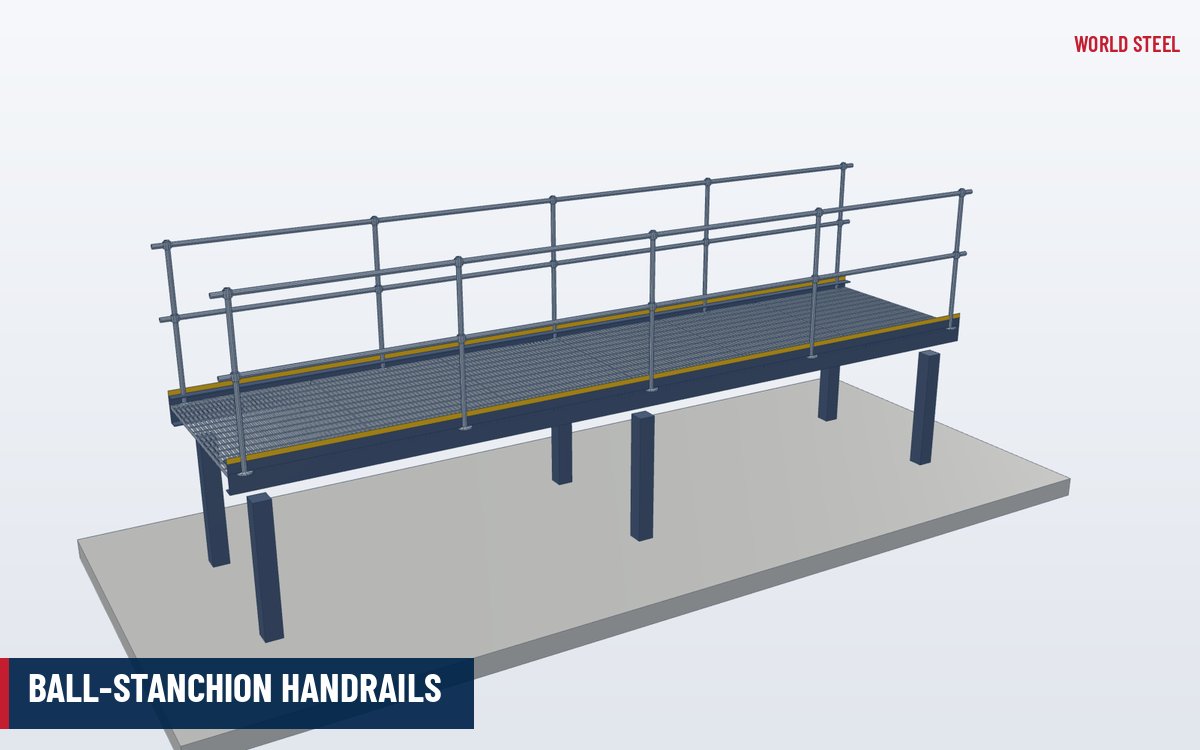
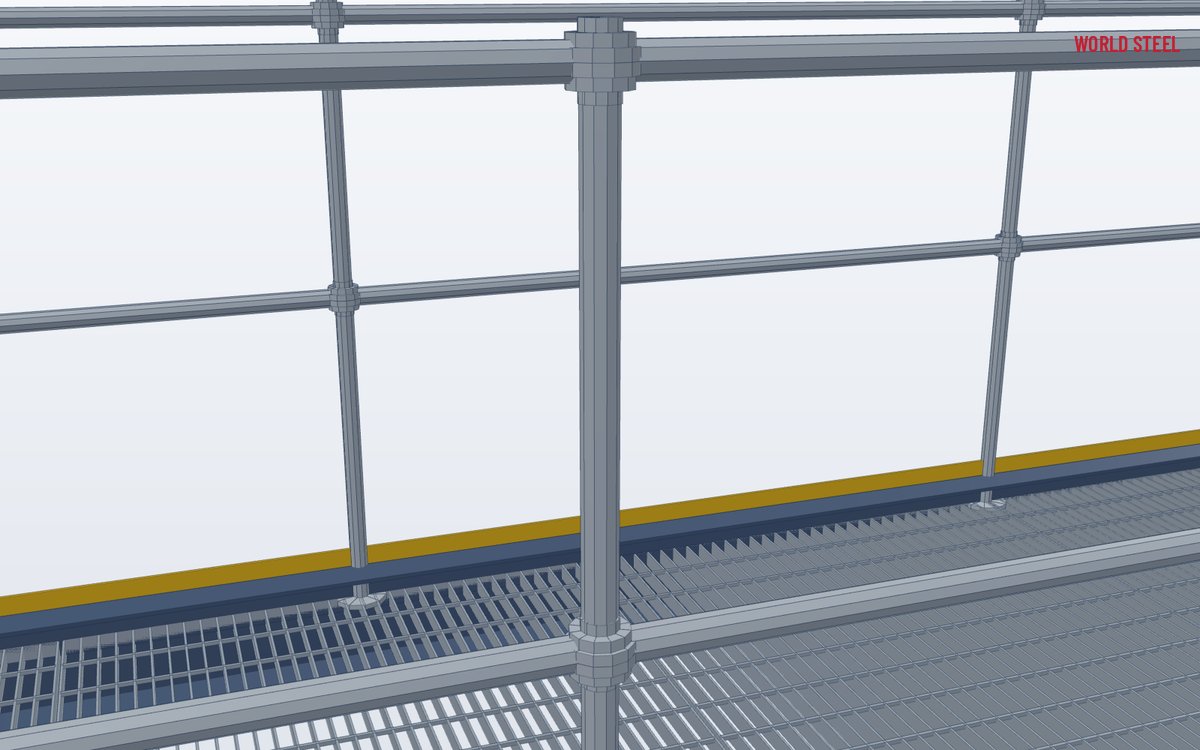
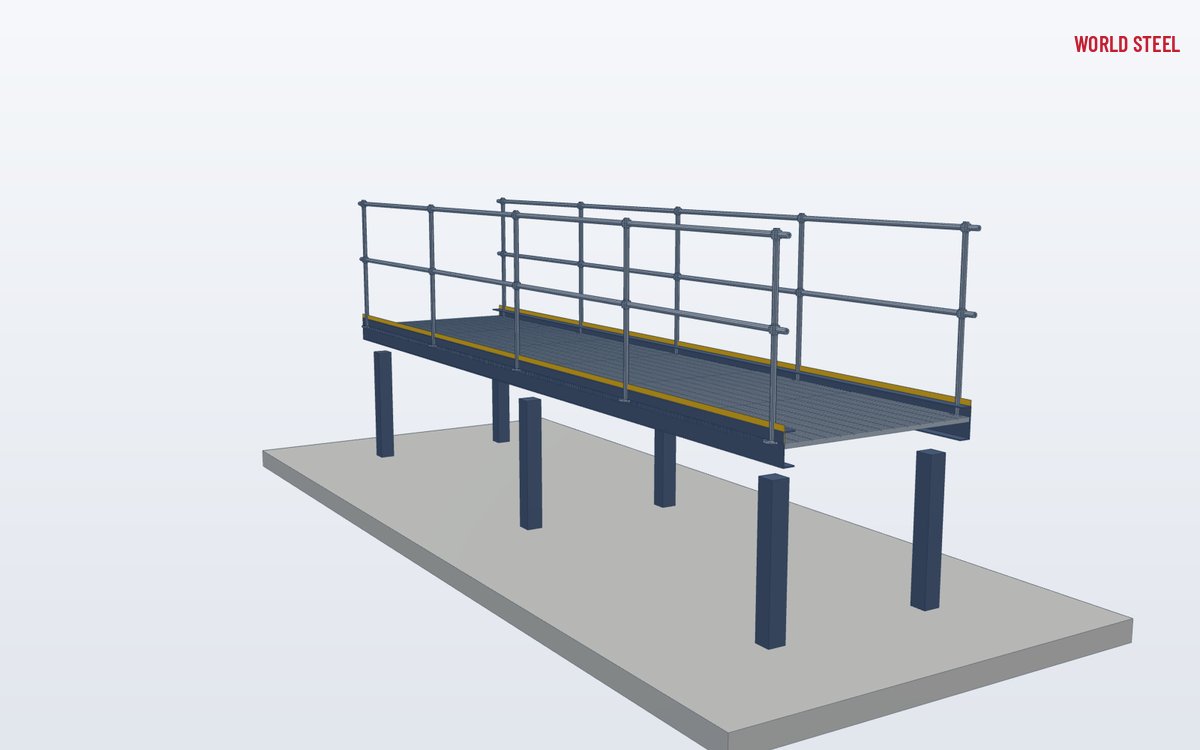
- Continuous tube rails through forged or fabricated ball fittings
- Fixed, side-mounted or removable socket stanchions
- Fast to install on long runs and curved edges
- Chain or gate closures at ladder and loading openings
- Galvanised steel, aluminium or stainless steel 304 / 316
- Galvanized to ASTM A123, AS/NZS 4680 or EN ISO 1461
What it is
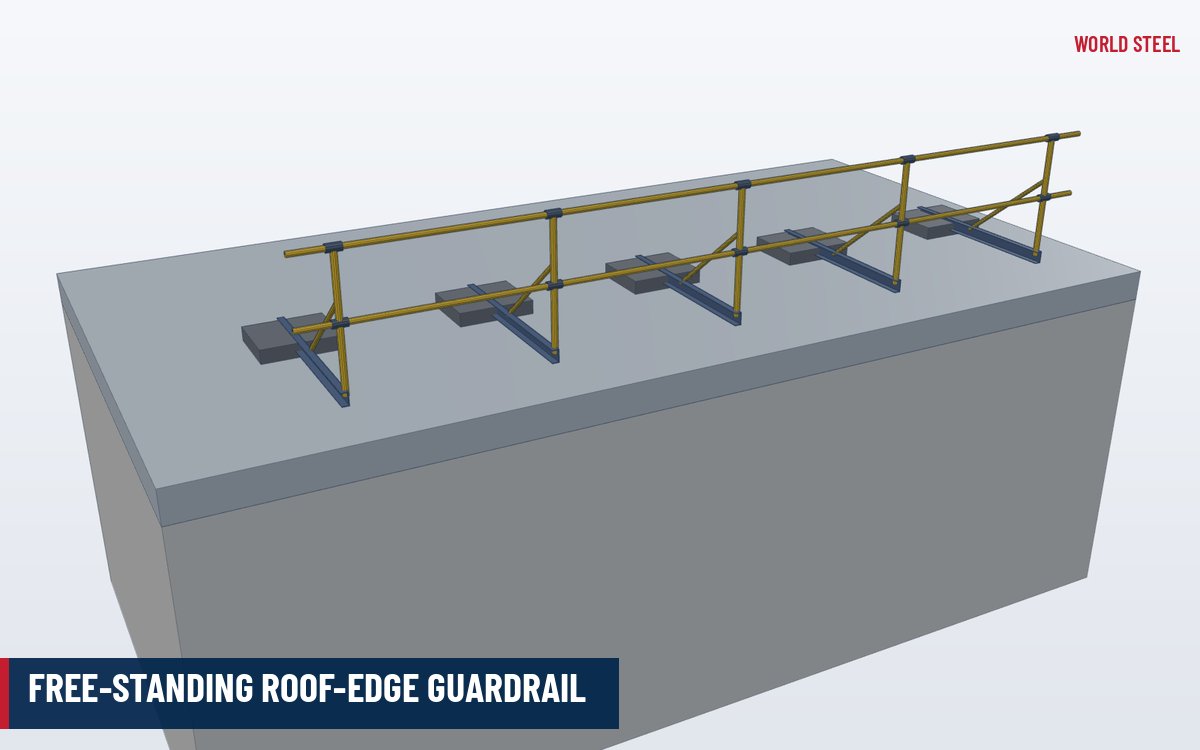
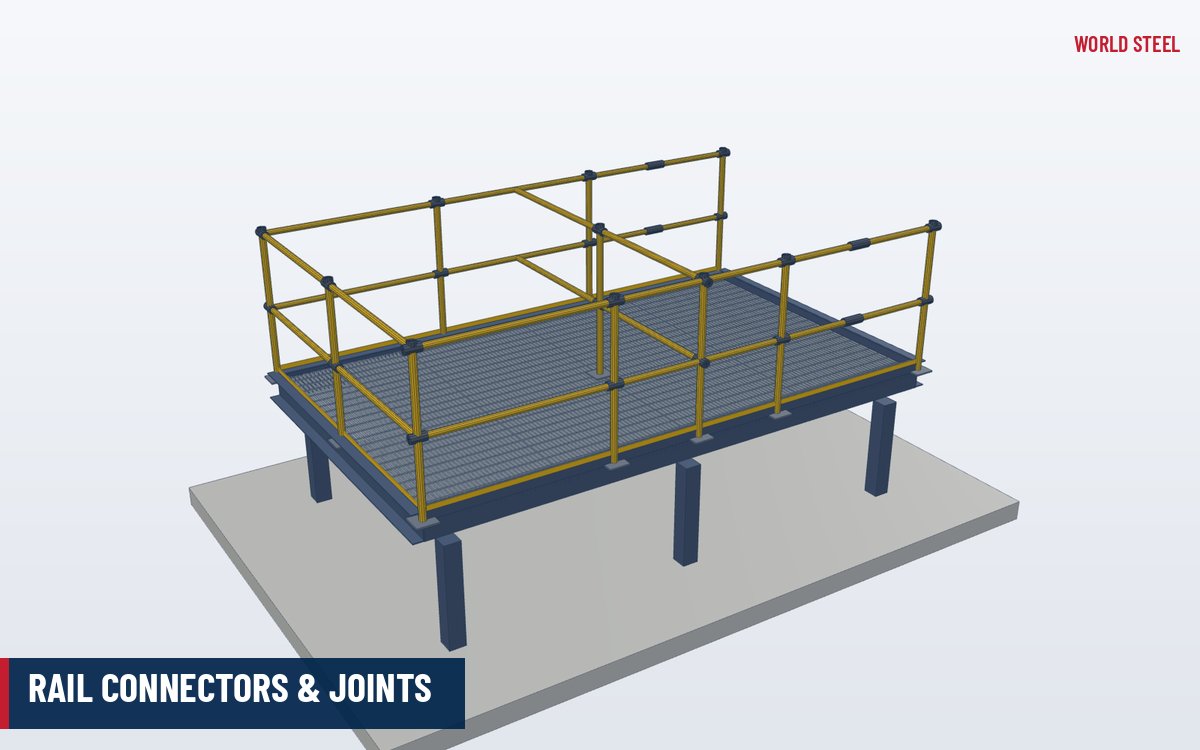
A ball-stanchion handrail is an edge-protection system in which each post (stanchion) carries two or three ball fittings, and continuous tube rails are threaded through the balls. The balls act as the rail-to-post joint, so the rails run unbroken past each post and can follow gentle curves and changes of level. The system is widely used on marine and port structures, water and wastewater plants, bulk-handling conveyors, bridges, access platforms and walkways and on loading edges where sections must be removed for lifting.
Compared with a welded industrial guardrail, a ball-stanchion rail has fewer site welds and is easier to adjust on uneven structures, at the cost of a slightly higher unit price for the fittings. World Steel supplies the complete system – stanchions, base plates or sockets, rails, end caps, closures and toe boards – coordinated with the supporting steel in the same model.
Types and options
| Option | Description | Typical use |
|---|---|---|
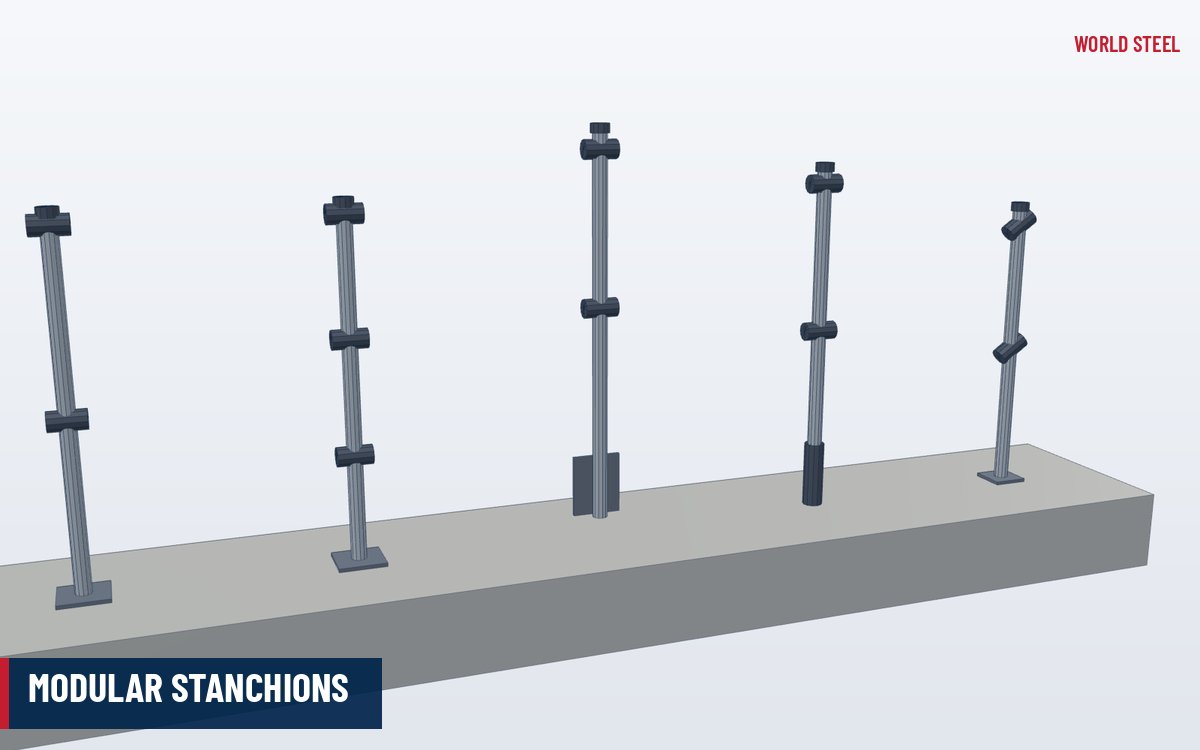
| Two-ball stanchion | Top rail and one knee or mid rail | Standard platform and walkway edges |
| Three-ball stanchion | Top rail and two intermediate rails | Higher guards or where opening sizes must be reduced |
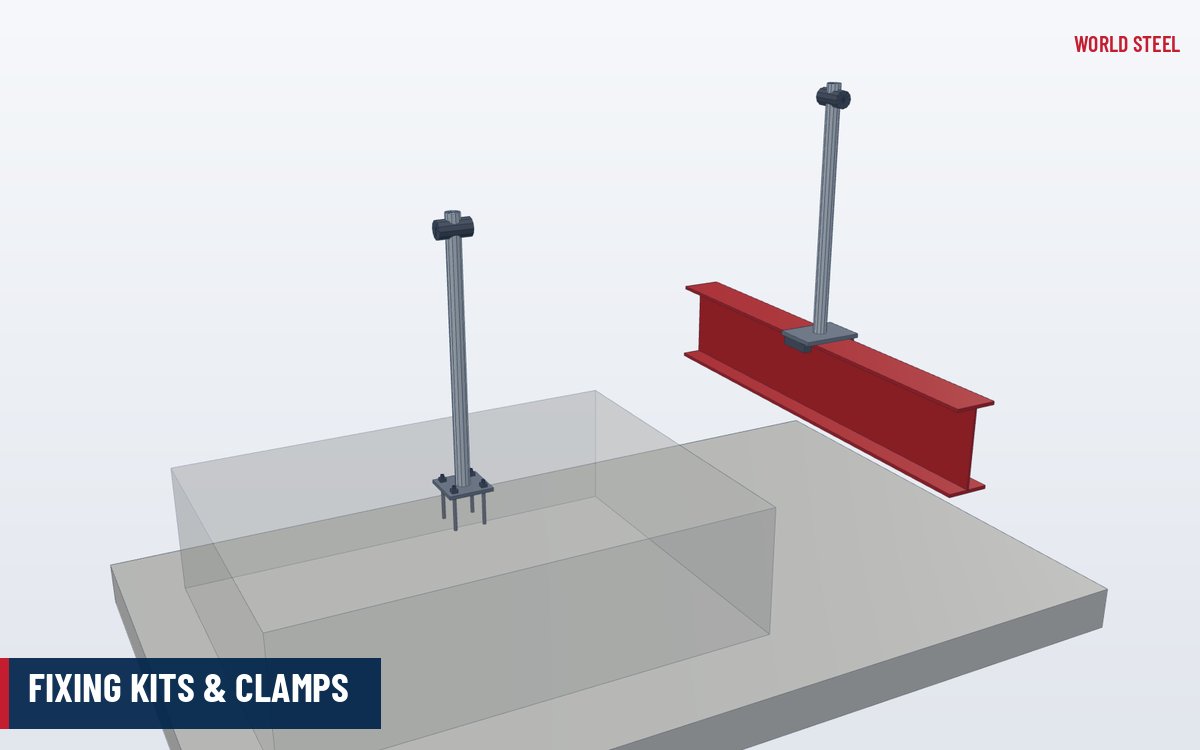
| Base-plated stanchion | Welded base plate bolted to beam flange or slab | Steel platforms and concrete decks |
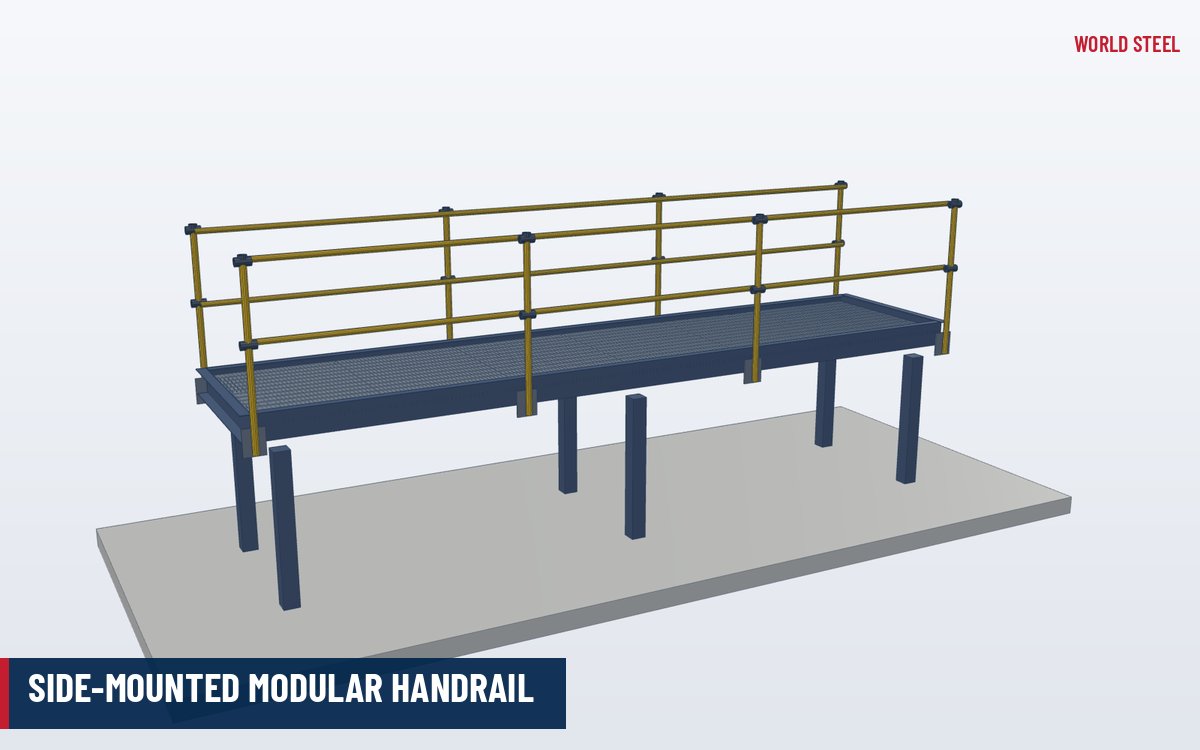
| Side-mounted stanchion | Bracket or cleat bolted to beam web or stringer | Keeping walkway width clear |
| Removable socket stanchion | Stanchion drops into a cast-in or welded socket | Loading bays, lifting openings, maintenance access |
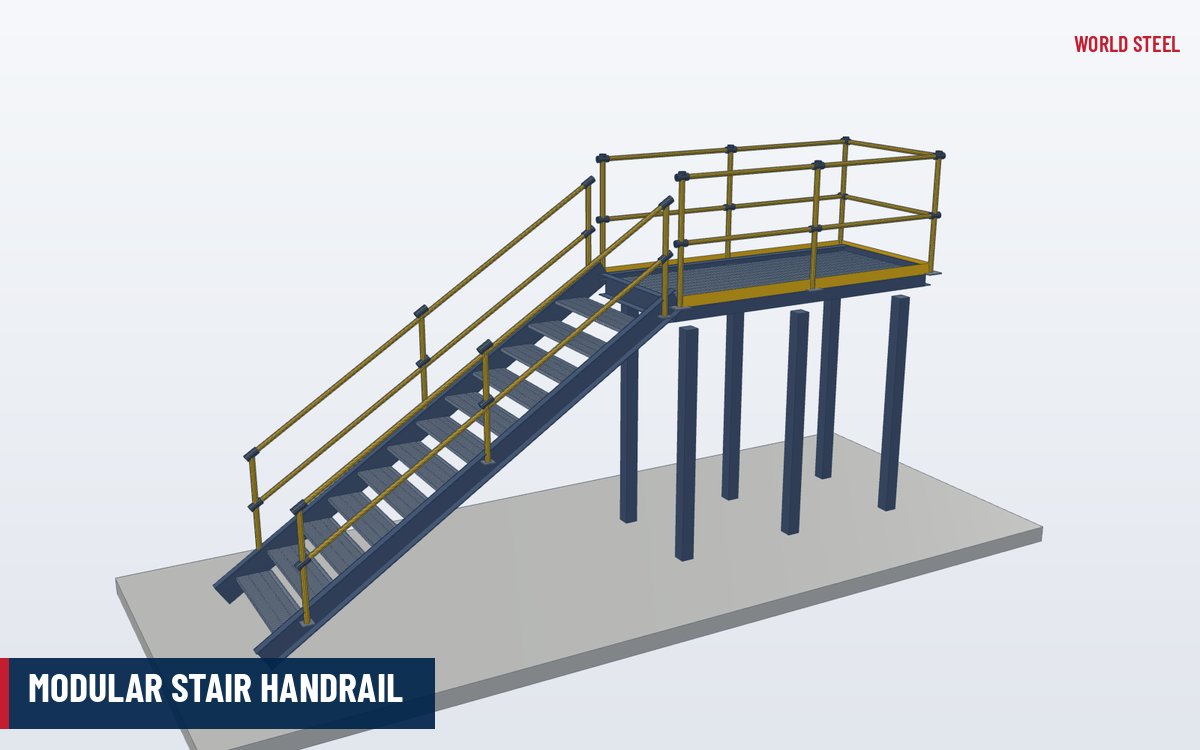
| Raked stanchion | Ball fittings angled to the stair pitch | Stairs and ramps |
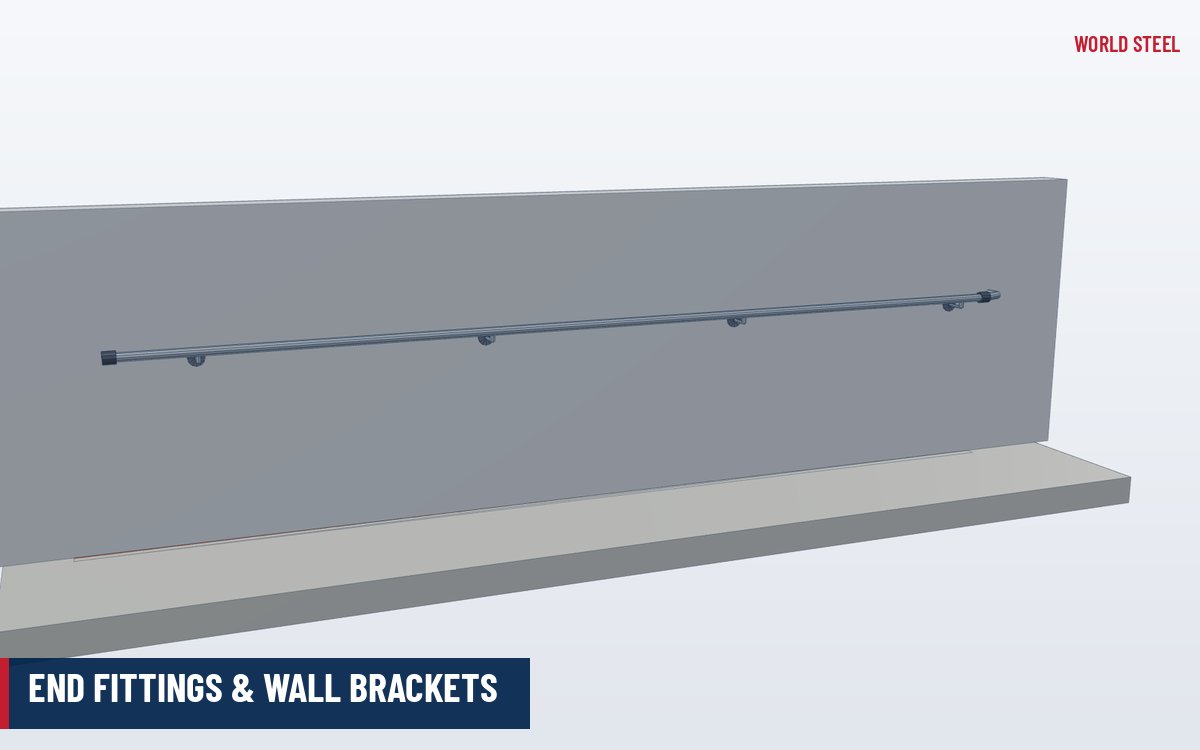
Rails are normally 33.7 mm or 42.4 mm OD tube, matched to the bore of the ball fitting; stanchions are typically solid bar or heavy-wall tube. Openings at ladders are closed with chains, self-closing gates or offset access as required by the governing code, and end-of-run returns or caps prevent snagging. Toe boards are clamped or bolted to the stanchions.
Materials: galvanised steel, aluminium and stainless
The same ball-stanchion layout is supplied in three material families, so one detail can be used across a whole site and the material chosen per area:
| Material | Typical components | Where it suits |
|---|---|---|
| Mild steel, hot-dip galvanised | Steel stanchions and ball fittings, steel tube rails, galvanised after fabrication to AS/NZS 4680 / ASTM A123 / EN ISO 1461 | Industrial platforms, conveyors, mining and general plant – the most economical option |
| Aluminium | Aluminium stanchions and fittings with aluminium tube rails, mill finish or anodised | Marine structures, wastewater plants, roofs and areas where weight or corrosion matter; isolate from carbon steel supports to avoid galvanic corrosion |
| Stainless steel 304 / 316 | Stainless stanchions, fittings and tube, pickled and passivated; welded to AS/NZS 1554.6 / AWS D1.6 where welding is needed | Food, pharmaceutical, chemical and coastal areas, architectural edges |
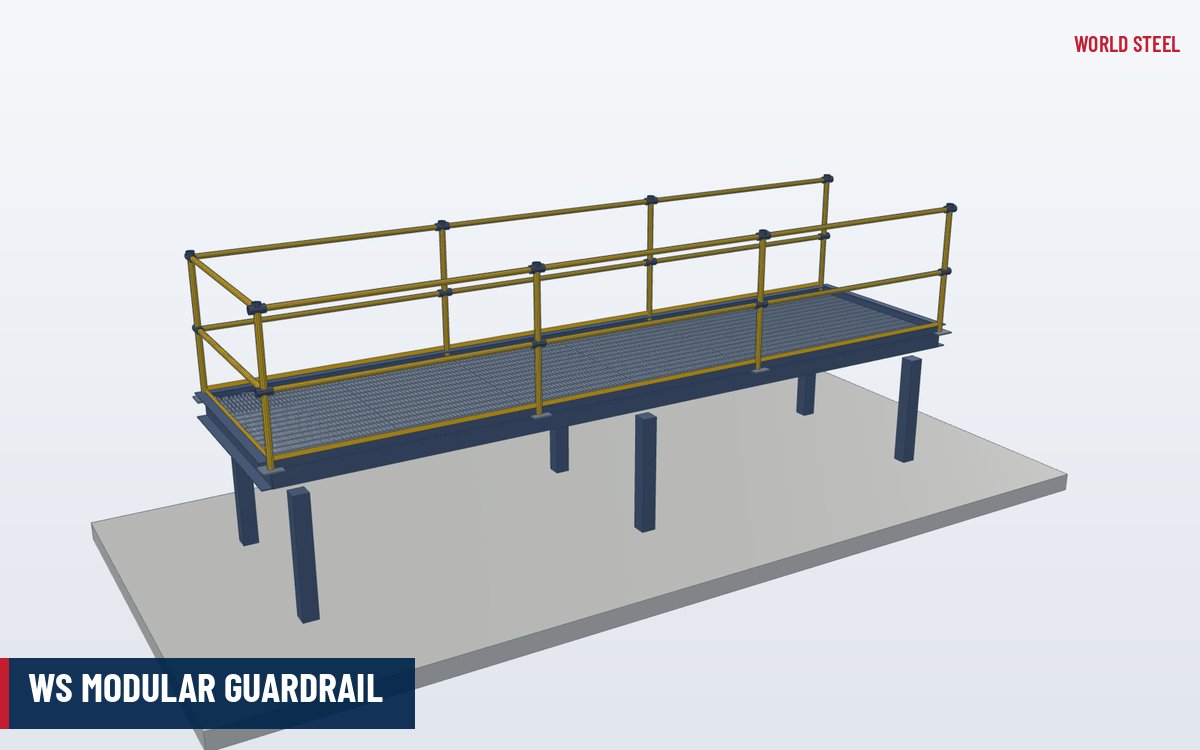
Aluminium and stainless fittings are sourced from specialist suppliers to match the tube bore; World Steel cuts, drills and assembles the runs, fabricates the base plates, brackets and sockets, and checks the system against the required loads. For curved edges, mixed infill or special geometry see custom handrail systems; for bolt-together systems without ball fittings see WS modular guardrail and the tube clamp handrail system.
Design and compliance
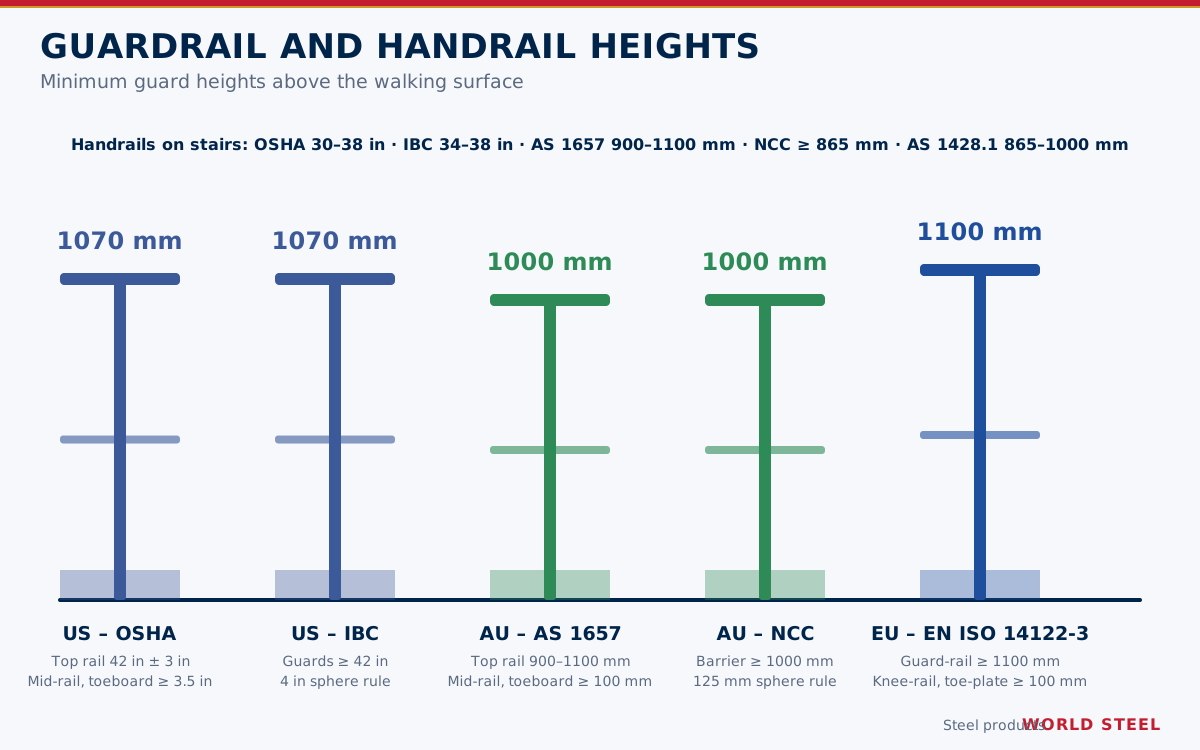
The ball positions are set so the top rail meets the governing height. Under OSHA 29 CFR 1910.29(b) the top rail is 42 in ± 3 in (1,070 mm) above the walking surface, must resist 200 lbf (890 N) within 2 in of the top edge, mid-rails must resist 150 lbf (667 N) and openings may not exceed 19 in (480 mm); a toe board of at least 3.5 in (90 mm) is required where falling objects are a hazard. Chains used at access openings must still meet the guardrail loads, so their use is checked case by case. Structural design uses the ASCE 7 guard load of 50 lb/ft plus a 200 lb concentrated load.
In Australia, AS 1657-2018 sets the top of a guardrail at 900–1100 mm above the platform, with a mid-rail and a toe board at least 100 mm high where required, and barrier actions come from AS/NZS 1170.1. In Europe, guard-rails on machinery and plant follow EN ISO 14122-3: height at least 1100 mm, at least one knee-rail, gaps of no more than 500 mm and a toe-plate of at least 100 mm. Removable stanchions must be secured against accidental lifting – a locking pin or bolt is detailed in the socket.
Stanchion spacing is the main structural variable: the top-rail load, rail section and post fixing determine the maximum spacing, and World Steel provides the calculation or works to the engineer's design. See the European standards and design loads pages for background.
Fabrication and finishing at World Steel
Ball fittings are sourced as forged or fabricated components with material traceability; stanchions are cut, drilled and welded to base plates or socket spigots on jigs so that ball heights repeat across the job. Rails are cut to the shop-drawing lengths with splice sleeves at planned locations, and bends for curved runs are made before galvanizing. Welding follows AWS D1.1, AS/NZS 1554.1 or EN ISO 3834-2 procedures.
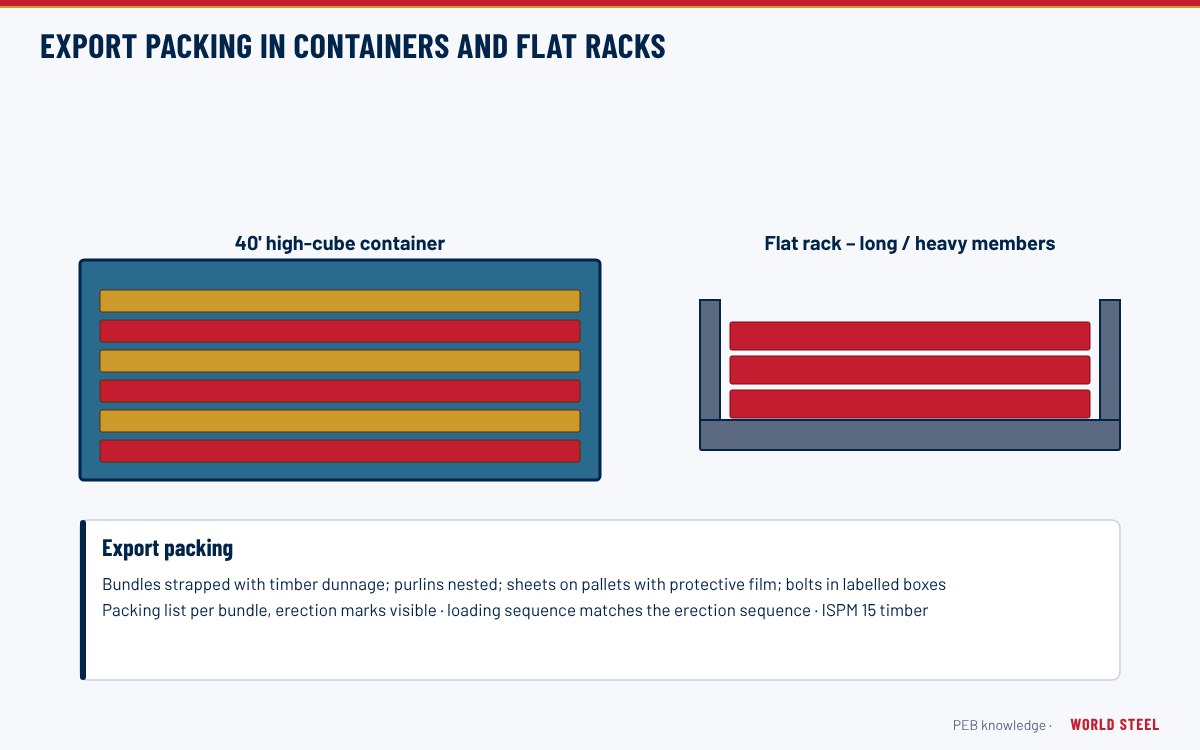
The standard finish is hot-dip galvanizing by qualified galvanizers to ASTM A123, AS/NZS 4680 or EN ISO 1461, which suits the coastal and wet environments where ball-stanchion systems are common. A duplex topcoat in safety yellow can be added. Components are bagged by stanchion type and bundled by area for export packing.
Installation and selection
- Fix stanchions first, line and level them, then thread rails through and lock the balls with grub screws or rivets as detailed.
- Allow rail splices at movement joints of the supporting structure.
- Fit end caps and returns before handover; check that removable stanchions lock in their sockets.
- Specify the code, stanchion spacing or design loads, rail OD, number of rails, mounting type and finish.
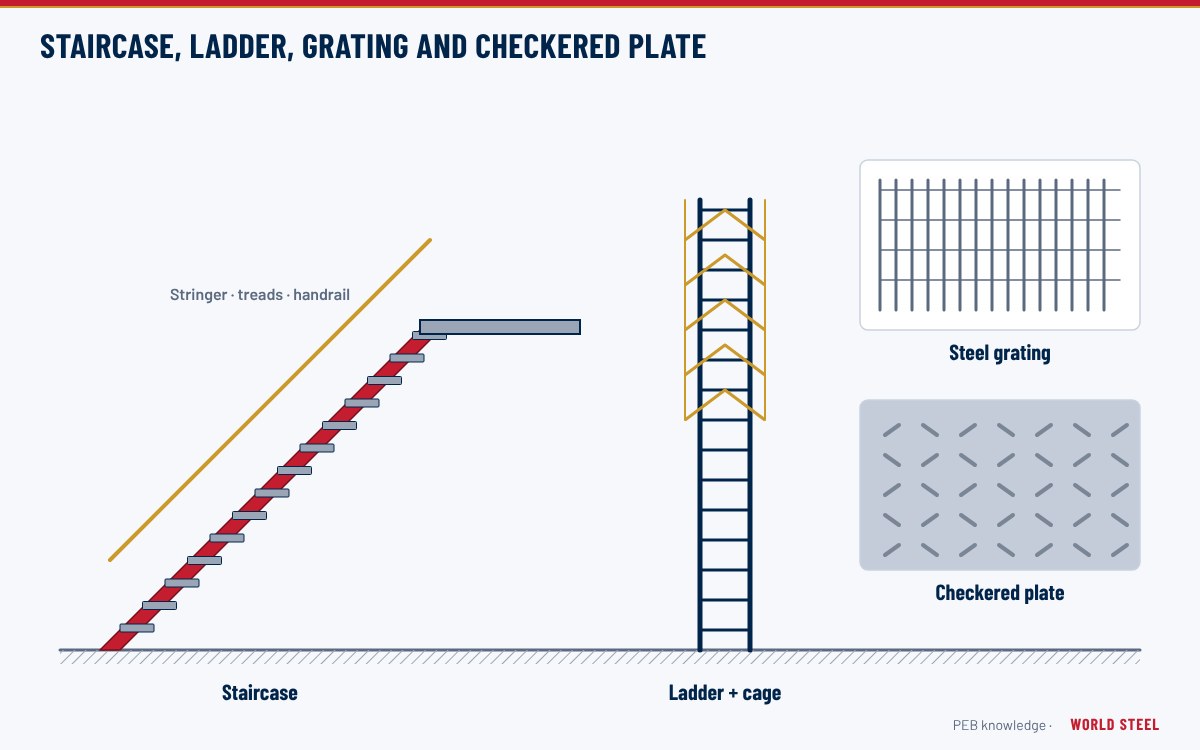
Ball-stanchion systems pair well with bar grating walkways and are often supplied together with fixed ladders on the same platform.
المعايير والمتطلبات حسب السوق
المعايير التي تصمم World Steel هذا المنتج وتصنّعه وتوثّقه وفقها – والمتطلبات الهندسية الرئيسية ومتطلبات الأحمال في كل سوق.
 الولايات المتحدة
- OSHA 29 CFR 1910.29Fall protection systems
- ASCE 7Minimum design loads – guard systems
- ANSI/NAAMM AMP 521Pipe Railing Systems Manual
- AWS D1.1Structural welding code – steel
- Top rail height
- 42 in ± 3 in (OSHA 1910.29(b))
- Rail loads
- Top 200 lbf, mid 150 lbf (OSHA 1910.29(b))
- Max opening
- 19 in (OSHA 1910.29(b))
 أستراليا / نيوزيلندا
- AS 1657-2018Fixed platforms, walkways, stairways and ladders
- AS/NZS 1170.1Imposed actions – barrier loads
- AS/NZS 5131 معتمد لدى WSCFabrication and erection of structural steelwork
- AS/NZS 4680Hot-dip galvanized coatings
- Guardrail height
- 900–1100 mm (AS 1657)
- Toe board
- ≥ 100 mm where required (AS 1657)
 أوروبا
- EN ISO 14122-3Stairs, stepladders and guard-rails
- EN 1991-1-1Imposed loads – barriers (Table 6.12)
- EN 1090-2 معتمد لدى WSCExecution of steel structures
- EN ISO 1461Hot-dip galvanized coatings
- Guard-rail height
- ≥ 1100 mm (EN ISO 14122-3)
- Rail gaps
- ≤ 500 mm (EN ISO 14122-3)
- Toe-plate
- ≥ 100 mm (EN ISO 14122-3)
ملخص للاسترشاد فقط – تسري مواصفات المشروع وإصدار المعيار المعتمد والجهة المختصة.
التشطيبات
| التشطيب | المعايير / ملاحظات |
|---|---|
| Hot-dip galvanized | ASTM A123 / A153 · AS/NZS 4680 · EN ISO 1461 |
| Duplex (HDG + safety-yellow topcoat) | ASTM A123 + topcoat · AS/NZS 4680 + AS/NZS 2312.1 · EN ISO 1461 + EN ISO 12944 |
الأسئلة المتكررة
Why choose ball stanchions over a welded guardrail?
Ball stanchions allow continuous rails with few site welds, follow curves and level changes easily and make removable sections simple. Welded guardrails are usually cheaper for straight, repetitive runs.
Can sections be removed for lifting or maintenance?
Yes. Removable stanchions drop into sockets and are secured with a locking pin or bolt so they cannot lift out accidentally.
Is a chain acceptable across a ladder opening?
It depends on the code and the authority. Under OSHA the closure must meet guardrail requirements; many projects prefer a self-closing gate. We detail whichever the engineer specifies.
What finish is recommended for coastal sites?
Hot-dip galvanizing to ASTM A123, AS/NZS 4680 or EN ISO 1461, optionally with a duplex paint topcoat for longer life and visibility.
 New Zealand
 AS/NZS 5131 CC3
 EN 1090 EXC3 · CE