 ENEnglish
 VITiếng Việt
 ZH中文
 KO한국어
 JA日本語
 FRFrançais
 ITItaliano
 PTPortuguês
 ESEspañol
 HEעברית
 ARالعربية

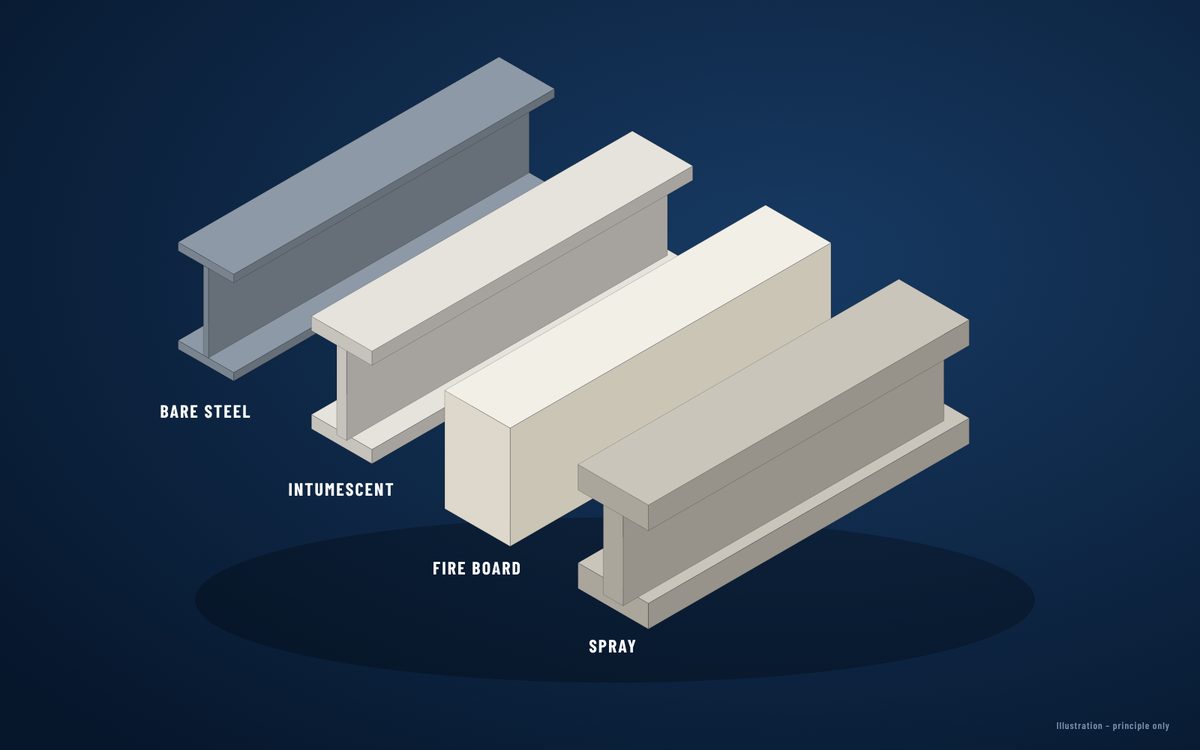
Two different principles
Intumescent coatings are thin films that expand in a fire. Cementitious fireproofing (sprayed fire-resistive materials, SFRM) is a thick layer of cement or gypsum with light aggregates that insulates from the start.
Comparison
| Criterion | Intumescent | Cementitious (SFRM) |
|---|---|---|
| Appearance | Smooth, paint-like, any colour | Textured – usually concealed |
| Typical ratings | 30–120 min (epoxy longer) | 1–4 h |
| Weight | Negligible | Adds load |
| Application | Shop or site, airless spray | Site, wet spray |
| Durability | Good with topcoat; epoxy very good | Low-density grades fragile; dense grades robust |
| Cost at long ratings | Rises steeply | Usually the lowest |
| Inspection | DFT gauges | Thickness and density (ASTM E605) |
How to choose
- Exposed, architectural steel → intumescent.
- Concealed steel above ceilings, long ratings → cementitious.
- Export steel that should arrive protected → shop-applied intumescent.
- Hydrocarbon fires → epoxy intumescent or dense cementitious systems tested for them.
Most projects combine both – and boards for columns in public areas.
FAQ
Which is cheaper?
For short ratings on heavy sections intumescent can be competitive; for long ratings on concealed steel cementitious is usually cheaper.
Besoin de l'épaisseur et du coût pour votre projet ?Envoyez la liste des éléments et les degrés de résistance au feu – nos ingénieurs préparent une proposition de protection incendie.
Demander une offrePreliminary calculations are provided for estimation purposes only. Final coating thickness and fire protection system selection must be verified against the approved product documentation, applicable project requirements and relevant engineering assessments.