ENEnglish
 VITiếng Việt
 ZH中文
 KO한국어
 JA日本語
 FRFrançais
 ITItaliano
 PTPortuguês
 ESEspañol
 HEעברית
 ARالعربية

Why coated sheet matters
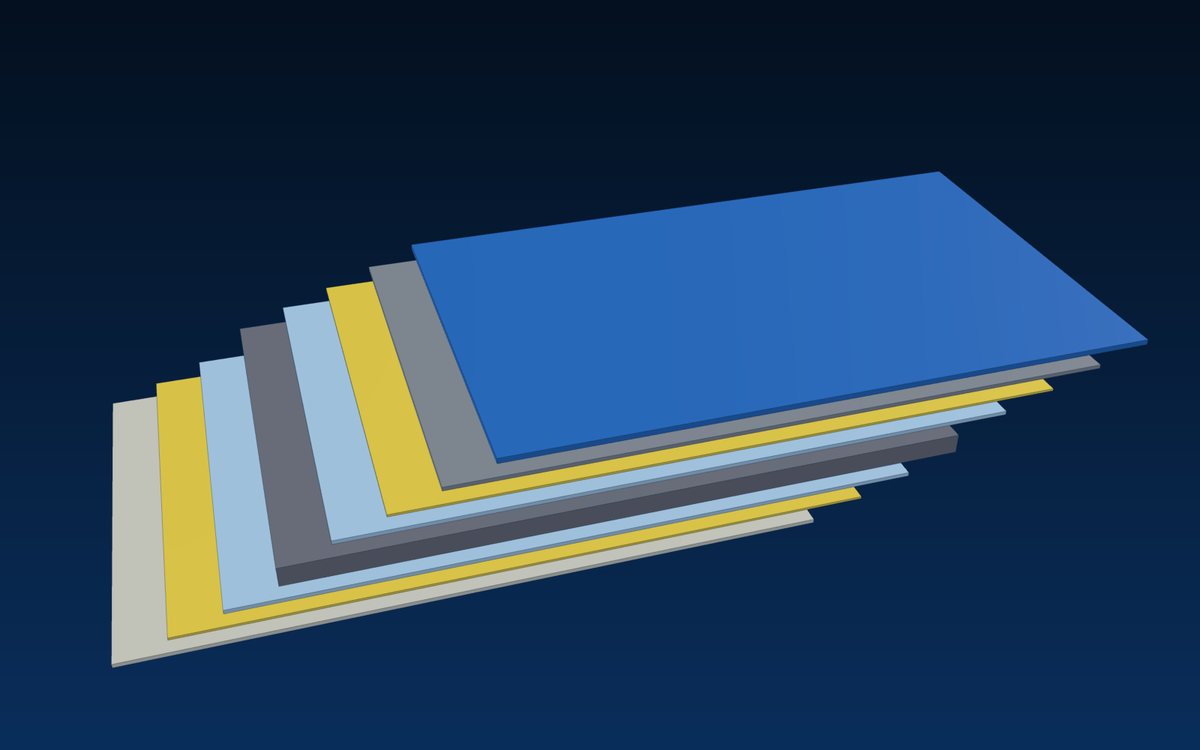
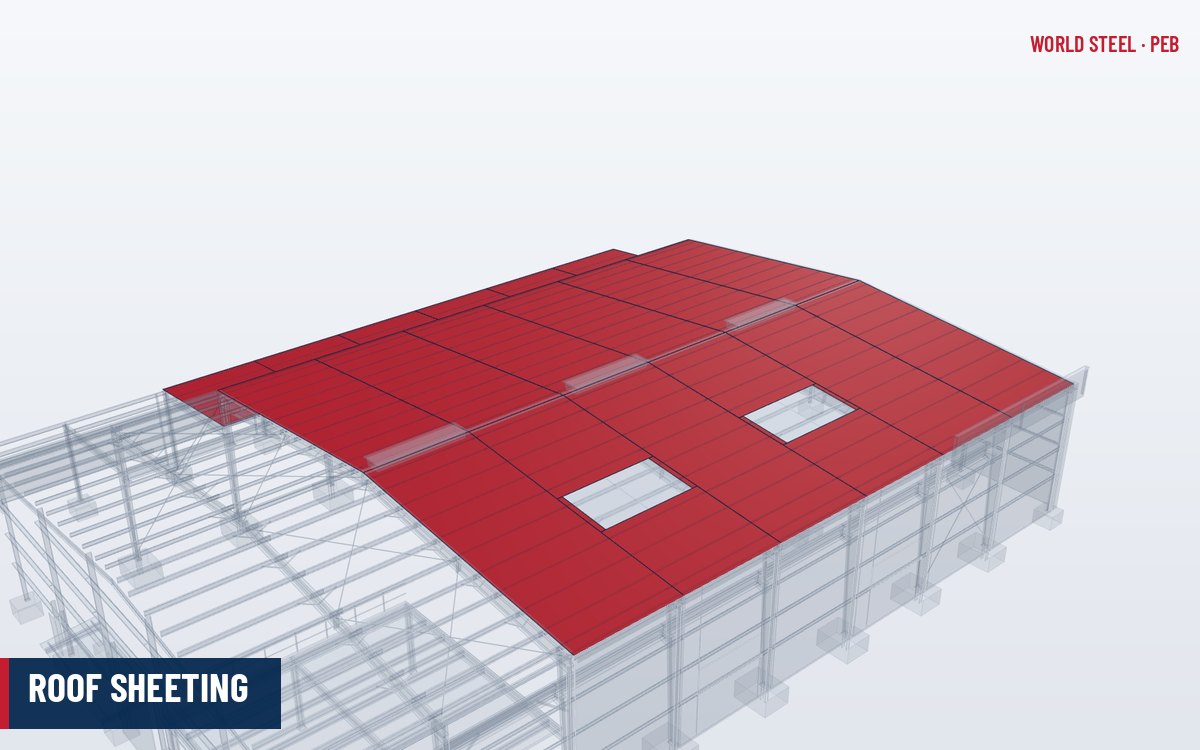
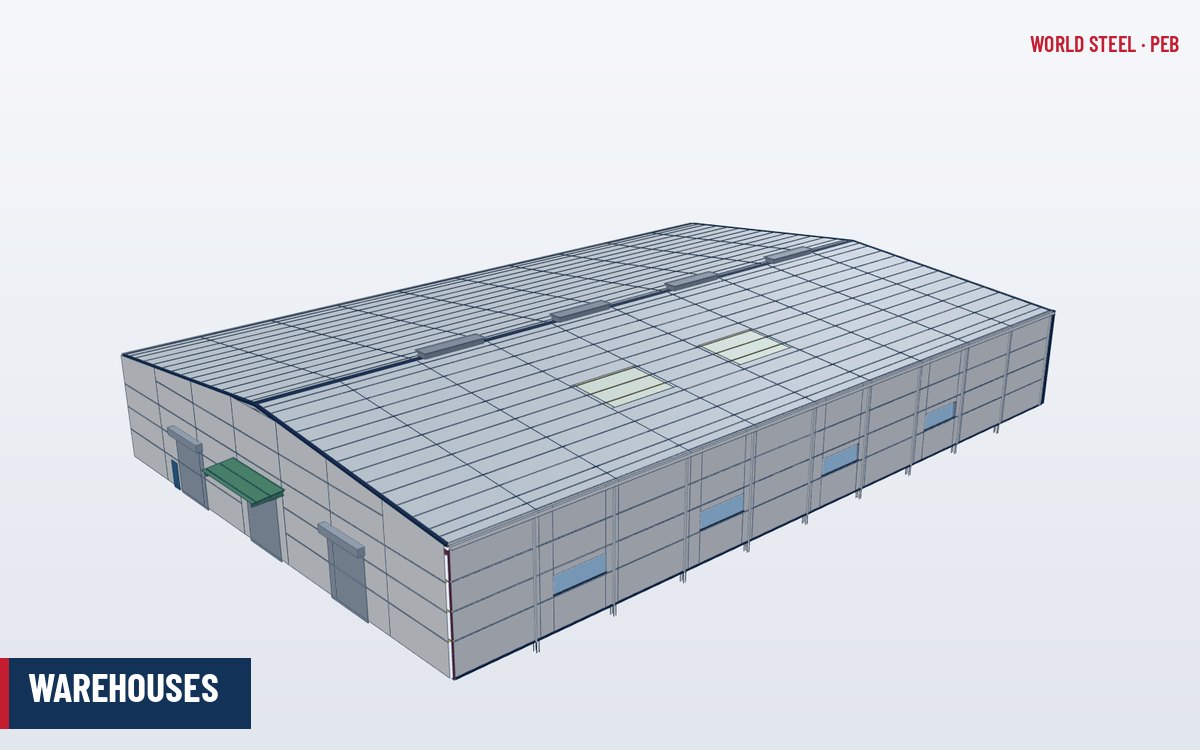
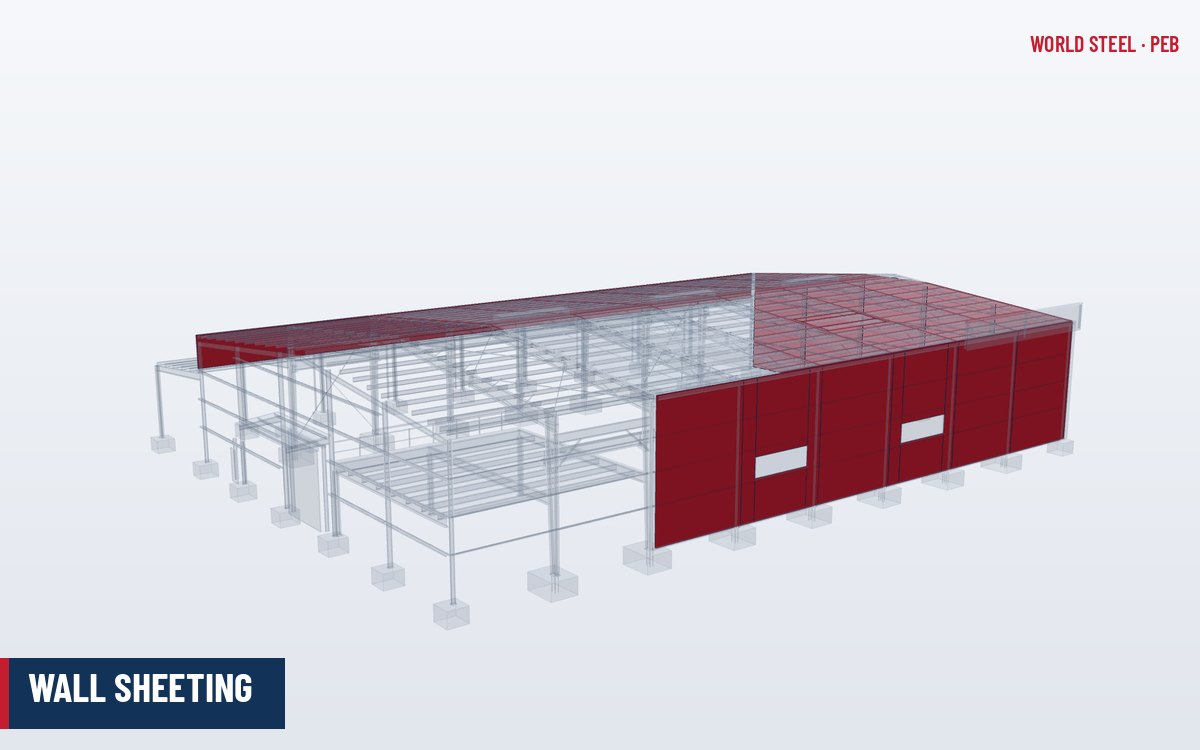
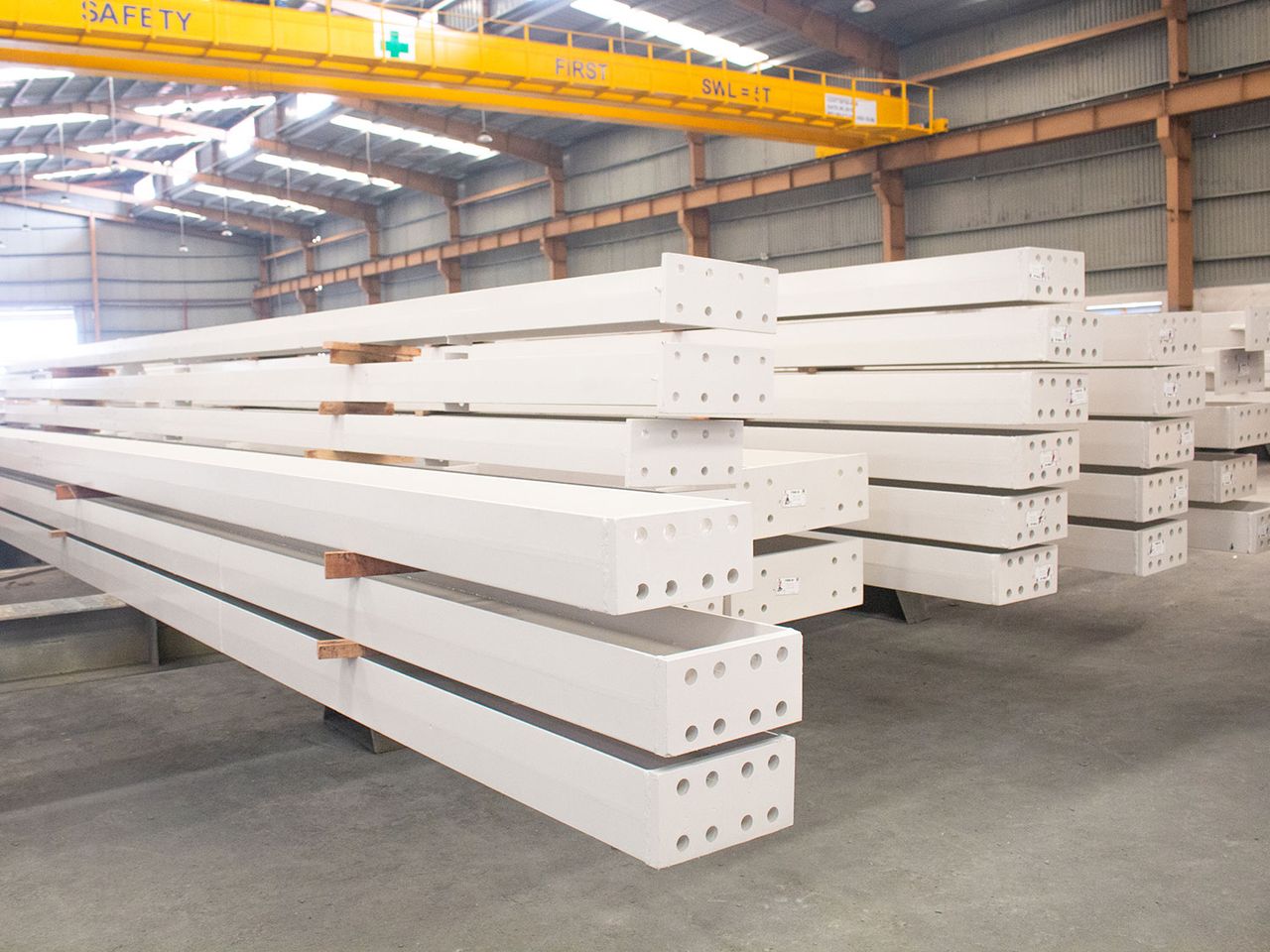
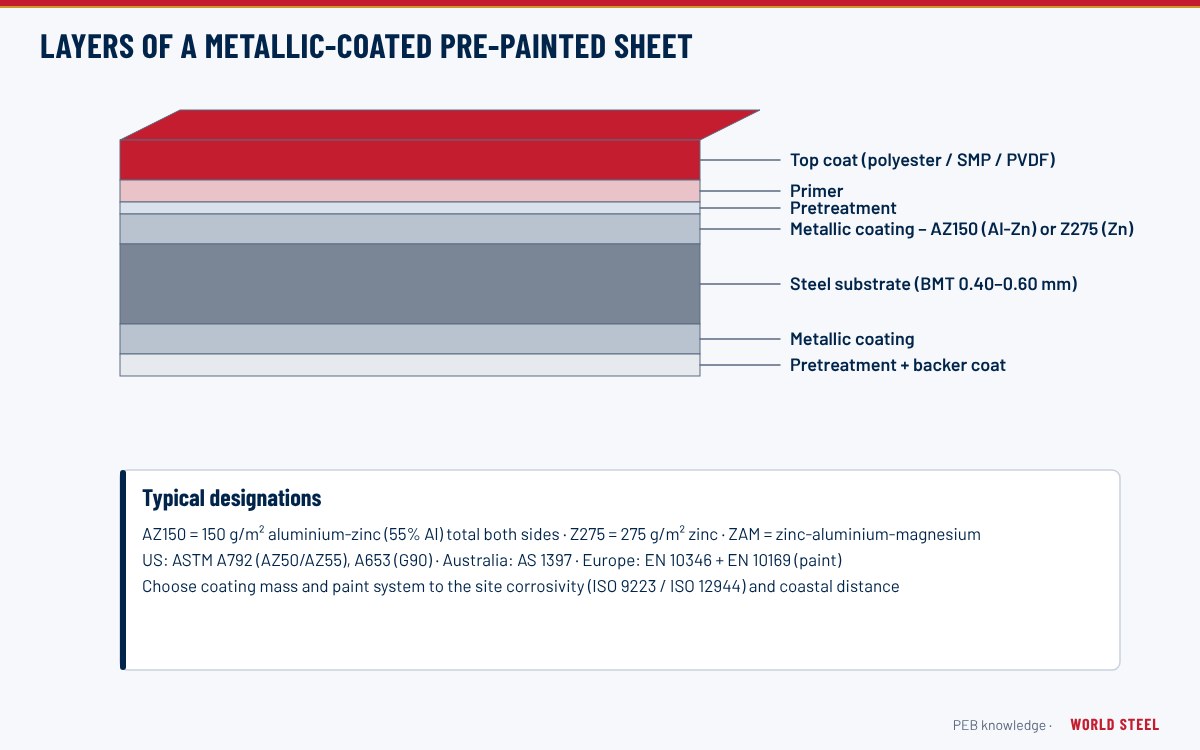
The roof and wall cladding of a pre-engineered building is made from thin high-strength steel sheet – typically 0.40–0.60 mm base metal thickness for cladding and up to about 1.0 mm for liners, gutters and some panels. At this thickness, corrosion protection depends entirely on the metallic coating applied at the mill and, for coloured sheet, on the pre-painted (coil-coated) paint system above it. Choosing the right combination for the building's environment determines how long the roof sheeting and wall sheeting will last before maintenance or replacement.
Metallic coating types
| Coating | Composition | Characteristics | Standards |
|---|---|---|---|
| Z (galvanized) | Essentially pure zinc | Sacrificial protection of cut edges; faster consumption in aggressive atmospheres | ASTM A653, AS 1397, EN 10346, JIS G3302 |
| AZ (aluminium-zinc, 55 % Al) | About 55 % Al, 43.5 % Zn, 1.5 % Si | Barrier protection from aluminium plus zinc sacrificial action; typically several times the life of an equal mass of zinc in many atmospheres | ASTM A792, AS 1397, EN 10346, JIS G3321 |
| ZAM / ZM (zinc-aluminium-magnesium) | Zinc with a few per cent Al and Mg | Dense protective corrosion products, good cut-edge and coastal performance at lower coating mass | ASTM A1046, EN 10346 (ZM), JIS G3323 |
| AM (aluminium-zinc-magnesium) | Al-Zn with added Mg | Newer coatings offering improved cut-edge protection over AZ | AS 1397 |
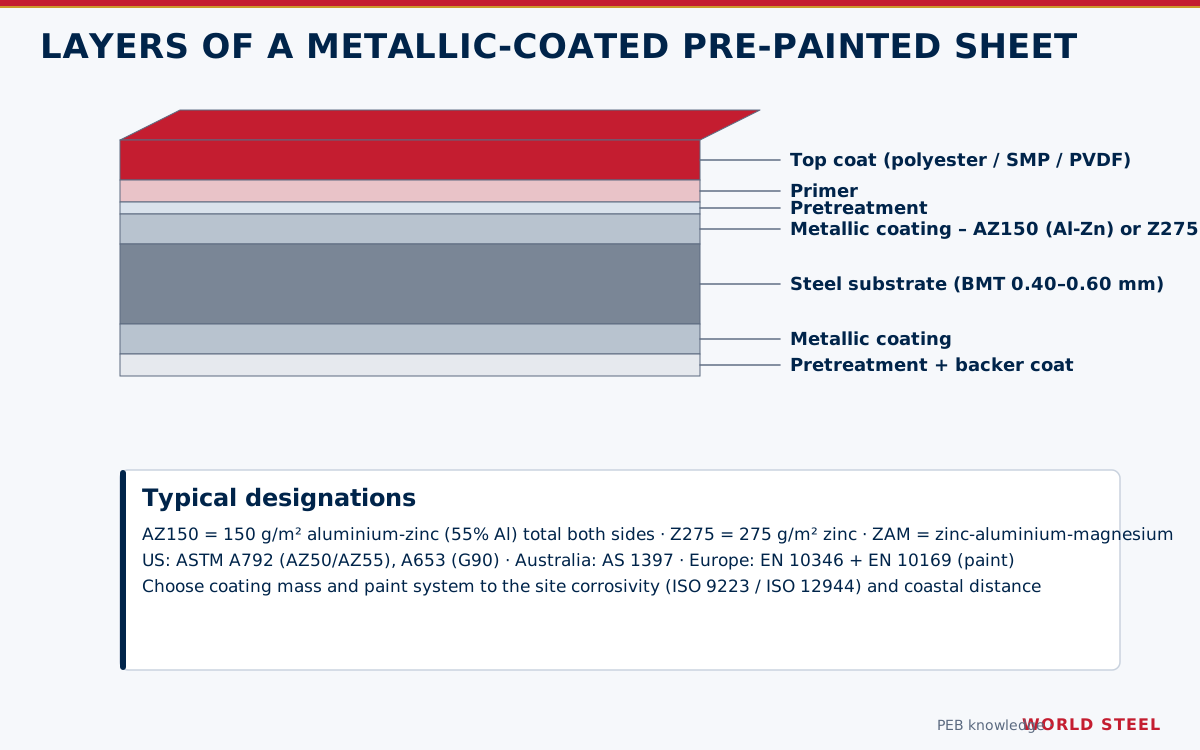
Coating mass is expressed as total grams per square metre on both sides: for example Z275 (275 g/m², equivalent to US G90), AZ150 (150 g/m², close to US AZ50) and AZ200 for more severe environments. Higher mass gives longer life but is less formable.
Pre-painted (coil-coated) systems
Pre-painted sheet is cleaned, pretreated, primed and top-coated on a continuous coil coating line, then baked. Typical systems:
- Polyester (PE): about 20 µm topcoat on 5 µm primer – economical, standard for industrial buildings.
- Silicone-modified polyester (SMP) and high-durability polyester (HDP): better gloss and colour retention.
- PVDF (fluoropolymer): highest UV and colour stability, for architectural and coastal projects.
- Backer coat: 5–10 µm on the reverse, heavier where the underside is exposed (canopies, open sheds, humid interiors).
Product standards include ASTM A755 (US), AS/NZS 2728 (Australia / NZ, classifying products by environment) and EN 10169 (Europe, with corrosion categories RC1–RC5 and UV categories RUV1–RUV4).
Selecting coating for the environment
| Environment (ISO 9223 category) | Typical selection |
|---|---|
| Rural / mild urban (C2) | AZ150 or Z275, polyester pre-paint |
| Urban-industrial, moderate coastal (C3) | AZ150 or ZAM, polyester / SMP |
| Marine, industrial (C4) | AZ200, ZAM or AM with HDP / PVDF |
| Severe marine, chemical (C5 / CX) | Specialist coatings, stainless, aluminium or FRP – manufacturer advice required |
- Avoid run-off from copper, lead or inert materials onto AZ and Z coatings; avoid contact with wet timber, concrete and soil.
- Livestock, fertiliser, swimming pool and food processing buildings need specific coatings.
- Fasteners must be equal or better in durability – see bolts and fasteners.
Paint system build-ups and coating tests
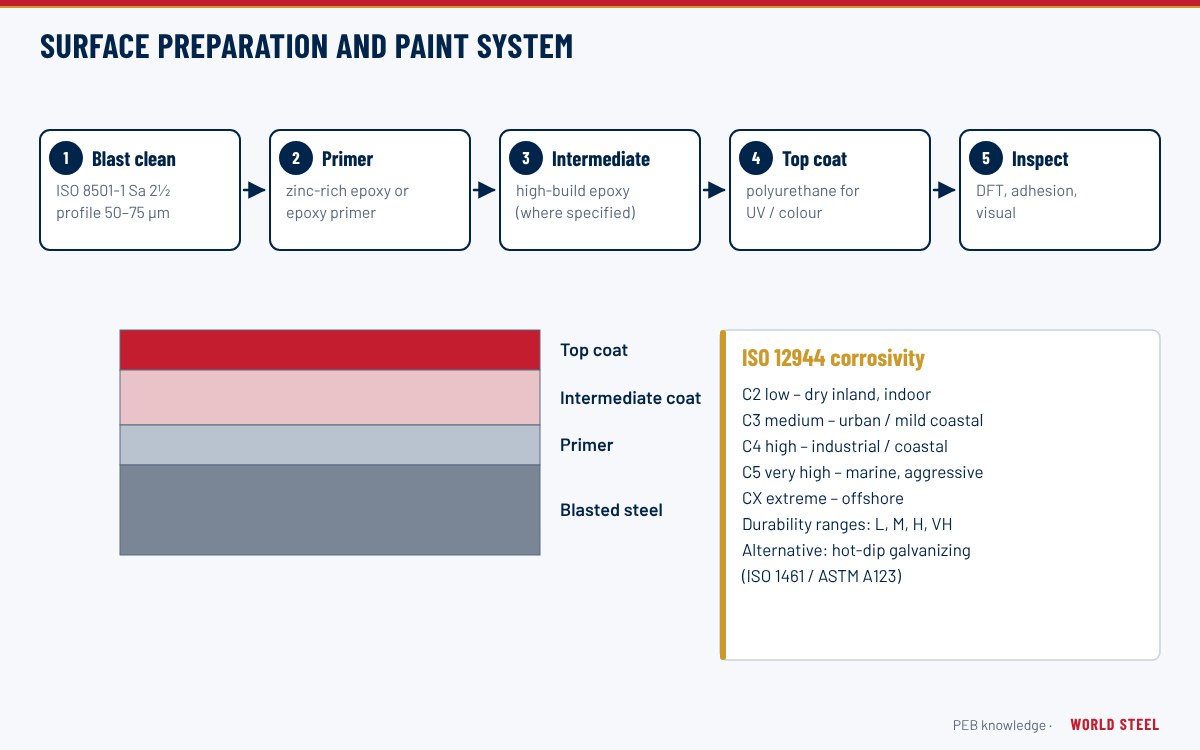
The paint system is defined by resin type, film thickness and the tests it passes. A clear specification states all three for both the exposed face and the reverse side.
| System | Typical dry film, top side | Strengths | Typical use |
|---|---|---|---|
| Regular polyester (PE) | About 20–25 µm (primer + topcoat) | Economical, good flexibility | Standard industrial roofs and walls in C2–C3 |
| Silicone-modified polyester (SMP) | About 25 µm | Better gloss and chalk resistance | High-UV regions, commercial buildings |
| High-durability polyester (HDP / SDP) | About 25–35 µm | Improved colour retention and corrosion resistance | C3–C4 sites, strong sun |
| PVDF (fluoropolymer) | About 25–35 µm, often multi-coat | Best UV and colour stability, chemical resistance | Architectural façades, coastal and industrial sites |
| Plastisol (PVC) | About 100–200 µm | Thick, tough film; good chemical and abrasion resistance | Agricultural and some aggressive interiors; limited UV and heat resistance |
Coil coatings are qualified by a family of laboratory tests. North American data sheets usually cite ASTM methods; European suppliers cite the equivalent EN 13523 parts.
| Test | ASTM method | Purpose |
|---|---|---|
| Salt spray (fog) | ASTM B117 | Resistance to blistering and undercutting from scribe lines and cut edges |
| Humidity | ASTM D2247 | Resistance to blistering and loss of adhesion in condensing humidity |
| Accelerated weathering (QUV) | ASTM G154, assessed by D2244 (colour), D523 (gloss) and D4214 (chalking) | Fade, gloss loss and chalking under UV and moisture cycles |
| Reverse impact | ASTM D2794 | Film cracking and adhesion after a falling-weight impact |
| T-bend | ASTM D4145 | Flexibility and adhesion when bent around itself (0T, 1T, 2T…) |
| Cross-hatch adhesion | ASTM D3359 | Adhesion of the paint to the substrate |
| Pencil hardness and solvent resistance | ASTM D3363 and D5402 (MEK rub) | Hardness and degree of cure |
Test results are used to compare products and control batches; they do not predict service life in years. Long-term claims should be backed by outdoor exposure data and a written warranty for the specific site distance from the coast and the industrial environment. For very aggressive sites, aluminium sheet (to ASTM B209, EN 485 / EN 1396 or AS/NZS 1734), stainless steel or GRP cladding may outlast any coated steel.
Sources and WSC supply
In Vietnam, metallic-coated and pre-painted coil is produced by several mills, including NS BlueScope Vietnam, Hoa Sen Group, Dong A, Nam Kim and Southern Steel Sheet; imported coil is also used to meet project specifications. World Steel specifies the substrate grade (e.g. G550 or S350GD), coating type and mass, and paint system in each cladding package, and supplies the matching coil-coated trims, gutters and flashings. See also paint and coating systems for structural steel.
תקנים לפי אזור
| אזור | תקן | היקף |
|---|---|---|
 United States |
ASTM A653 / A792 / A1046 | Zinc, 55 % Al-Zn and Zn-Al-Mg coated sheet |
| United States |
ASTM A755 | Metallic-coated sheet, coil-coated, for exterior building products |
 Canada |
ASTM A653 / A792 (as referenced in Canada) | Coated sheet for cladding |
 Australia / NZ |
AS 1397 | Continuous hot-dip metallic coated steel sheet and strip |
| Australia / NZ |
AS/NZS 2728 | Prefinished / prepainted sheet metal products |
 Europe |
EN 10346 | Continuously hot-dip coated steel flat products |
| Europe |
EN 10169 | Continuously organic coated (coil coated) steel flat products |
| International | ISO 9223 | Corrosivity of atmospheres – classification |
שאלות נפוצות
What is the difference between Z275 and AZ150?
Z275 is a zinc coating of 275 g/m² total; AZ150 is a 55 % aluminium-zinc coating of 150 g/m². Despite the lower mass, AZ generally lasts longer in most atmospheres because aluminium adds barrier protection.
Is ZAM better than AZ?
ZAM offers very good cut-edge and coastal performance at lower coating mass, while AZ has a long track record for roofing. The best choice depends on environment, product availability and warranty terms.
Which paint system should be used near the sea?
Coastal sites typically need a heavier metallic coating with HDP or PVDF pre-paint and a heavier backer. Manufacturers publish distance-from-coast limits for warranties.