ENEnglish
 VITiếng Việt
 ZH中文
 KO한국어
 JA日本語
 FRFrançais
 ITItaliano
 PTPortuguês
 ESEspañol
 HEעברית
 ARالعربية

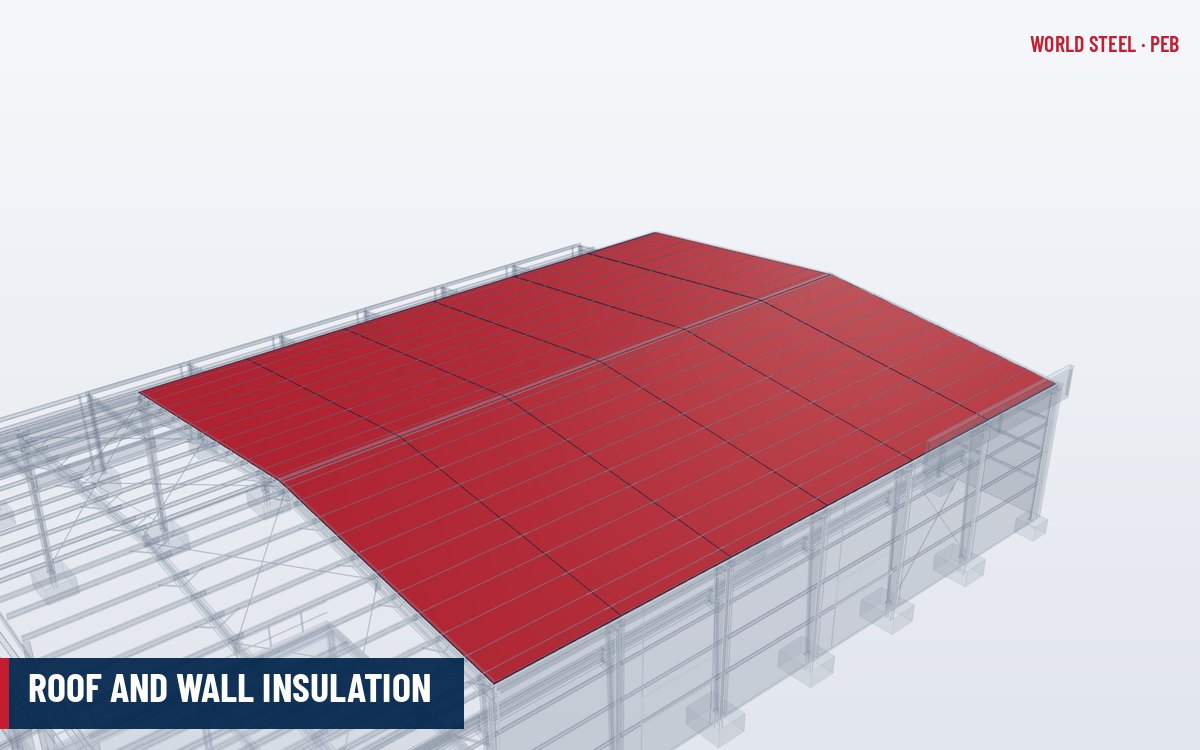
Why insulate a metal building
A single layer of steel sheet has very little thermal resistance. Insulation in the roof and walls of a pre-engineered building controls heat flow, prevents condensation forming on the underside of the sheeting, reduces rain and machinery noise, and in some buildings contributes to fire performance. Local energy codes set minimum thermal performance for conditioned buildings, and even unconditioned warehouses in hot climates benefit from a radiant barrier or blanket under the roof.
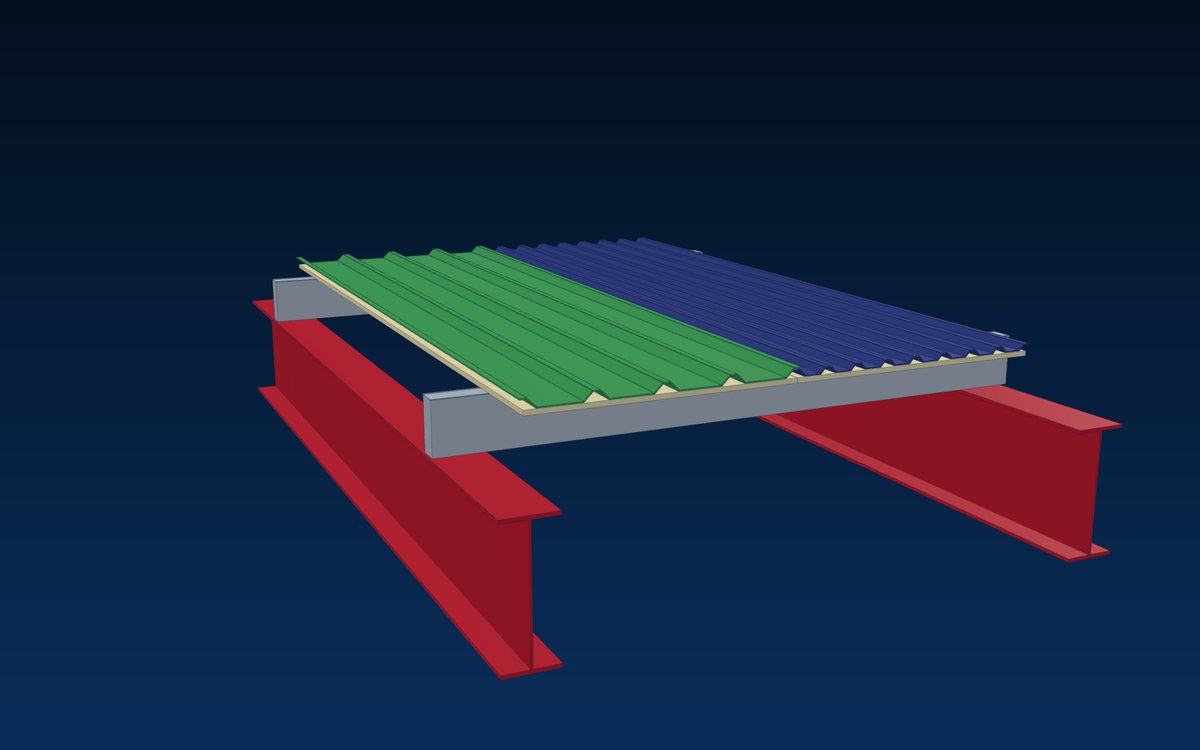
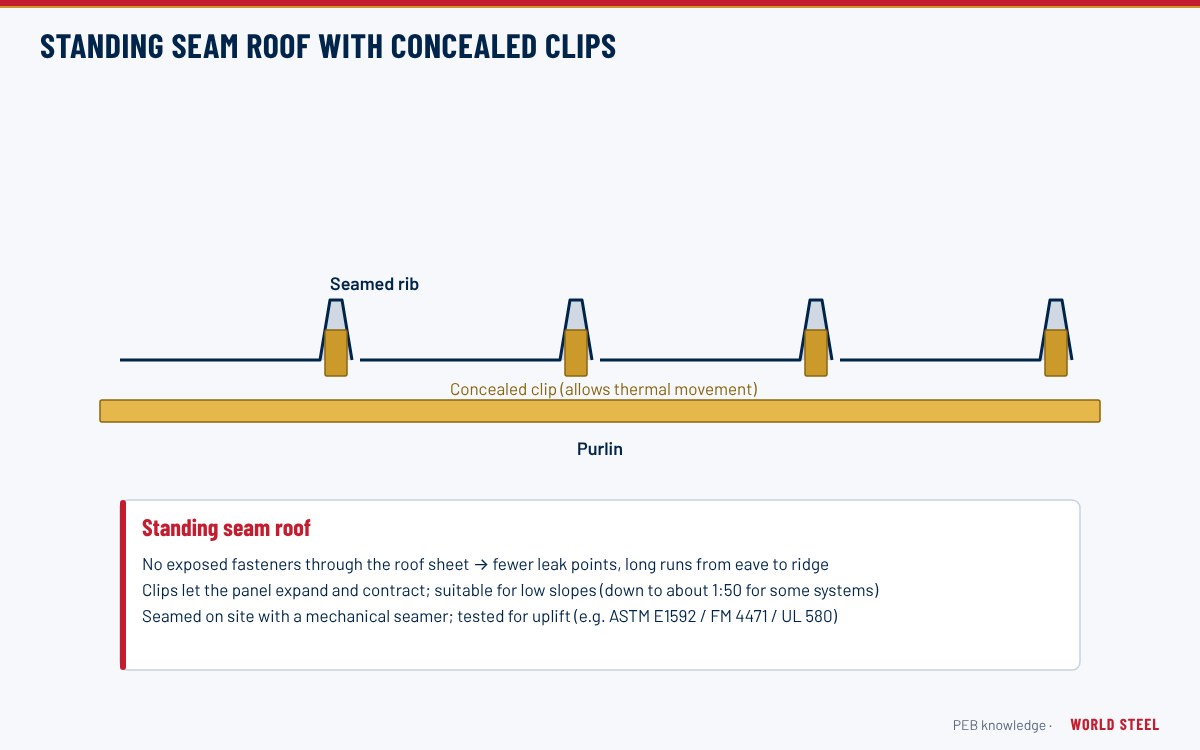
Insulation does not carry structural load, but it interacts with the structure: it is compressed between sheeting and purlins, it sets the clip height on standing seam roofs, and its weight and facing affect fixing details. Where a suspended ceiling is installed, insulation may be laid above the ceiling instead of under the sheeting, which changes where the vapour retarder must go.
Common insulation systems
| Type | Typical form | Key features |
|---|---|---|
| Glass wool blanket | Rolls 50–150 mm, faced | Light, economical, good acoustic absorption; non-combustible core |
| Rock (stone) wool | Rolls or slabs | Higher density, good fire and acoustic performance |
| Reflective foil / bubble foil | Single or double sided | Radiant barrier with low added R-value unless next to an air gap |
| PE / PU foam sheet | Laminated rolls | Moisture resistant; check fire classification |
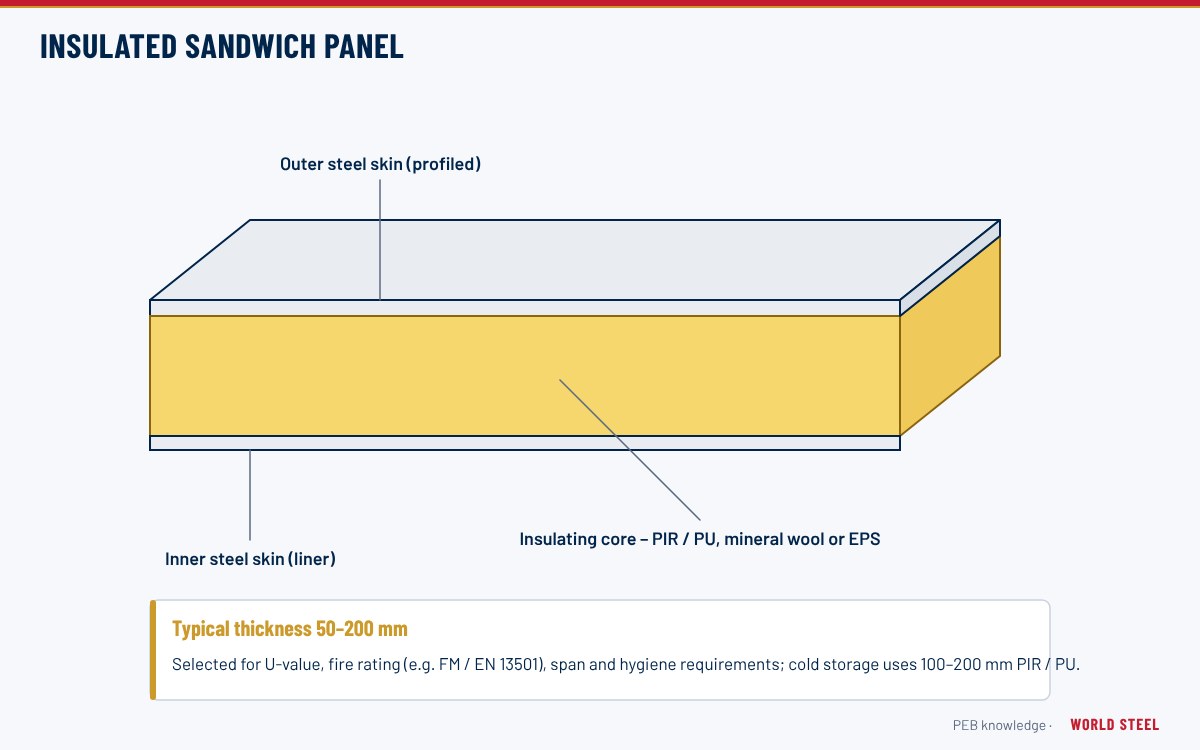
| Sandwich panel core | PIR, PUR, mineral wool, EPS | Integrated in insulated panels |
Blankets are usually laminated with a facing – reinforced aluminium foil, white polypropylene or vinyl – that serves as the vapour retarder and the visible interior finish.
| Facing | Typical construction | Use |
|---|---|---|
| Reinforced vinyl | White PVC film with scrim | Economical, visible interior finish, moderate vapour resistance |
| Polypropylene-scrim-kraft (PSK) | White polypropylene film, glass scrim, kraft paper | Durable bright finish, low vapour permeance |
| Foil-scrim-kraft (FSK) | Aluminium foil, scrim, kraft paper | Radiant barrier and high vapour resistance; good in hot climates |
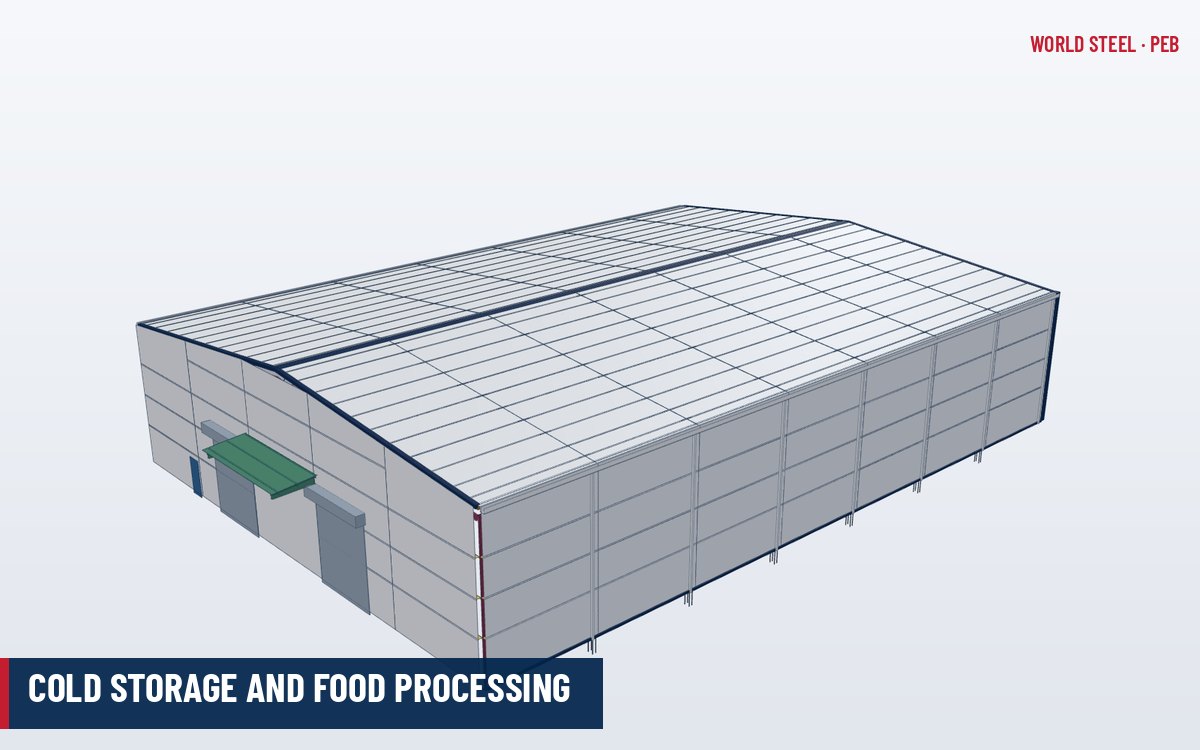
| Metallised polyester or foil laminate | Multi-layer laminate | High-humidity buildings, cold stores, exposed finishes |
Vapour permeance of the facing is measured by ASTM E96 (or EN ISO 12572). Facings with very low permeance are classed as vapour retarders; a facing is only effective if its seams, tabs and penetrations are sealed.
Thermal performance and condensation
- R-value or U-value: codes regulate the whole assembly, not just the blanket. Compression of the blanket over purlins creates thermal bridges; thermal spacer blocks, liner systems or double-layer systems reduce them.
- Vapour retarder on the warm side: in cooled buildings in hot humid climates and in heated buildings in cold climates the facing must be continuous, with taped seams and sealed penetrations.
- Anti-condensation: in unconditioned buildings with large temperature swings, insulation or anti-drip membranes stop condensate dripping from the roof.
- Energy codes: ASHRAE 90.1 and IECC (US), NECB 2020 (Canada), NCC Section J (Australia), and national rules implementing the EU Energy Performance of Buildings Directive.
| Nominal thickness | Approx. R-value (m²·K/W) | Approx. R-value (ft²·°F·h/Btu) |
|---|---|---|
| 50 mm | 1.3–1.4 | R-7 to R-8 |
| 75 mm | 1.9–2.1 | R-11 to R-12 |
| 100 mm | 2.5–2.8 | R-14 to R-16 |
| 150 mm | 3.8–4.2 | R-21 to R-24 |
These are material values only. Over purlins and girts the blanket is squeezed to a few millimetres, so the effective R-value of a simple "over-purlin" roof is much lower than the label value. Codes such as ASHRAE 90.1 (Appendix A) and NCC Section J use assembly values that account for this. Higher-performance options include thermal spacer blocks on purlins, two-layer systems, liner panel or filled-cavity systems with banding between purlins, and rigid board above a structural liner. Rock wool, typically 40–150 kg/m³ in density, has slightly higher conductivity than light glass wool but better fire resistance and acoustic damping.
Fire, acoustics and material standards
Insulation and its facing must meet the reaction-to-fire requirements of the building code: for example ASTM E84 surface burning ratings in North America, AS 1530 series tests in Australia, or EN 13501-1 classes in Europe. Insurers may require FM-approved roof assemblies. Mineral wool products in Europe are specified to EN 13162; in North America laminated blankets for metal buildings are commonly described by NAIMA 202 and ASTM C991; in Australia AS/NZS 4859.1 covers thermal insulation materials.
Glass and rock wool also absorb sound, reducing rain noise on metal roofs – important for sports halls and showrooms.
Installation
- Install safety mesh or support wire over purlins where required by local regulations or to carry the blanket.
- Roll the blanket over the purlins, slightly tensioned, with the facing on the side specified by the designer – normally the interior face.
- Overlap and tape or staple facing joints; seal around openings and penetrations.
- Fix the sheeting on top the same day to keep insulation dry; wet insulation loses performance.
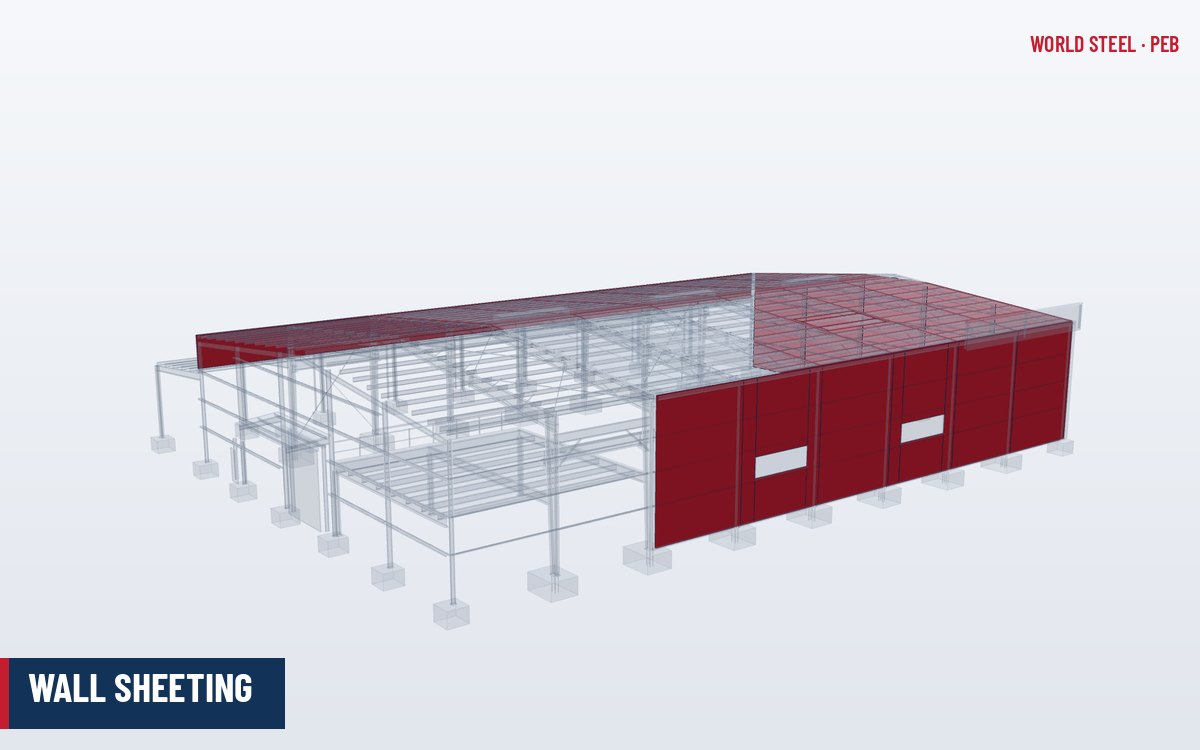
- In walls, install blanket on the girts behind the sheeting, with the facing on the inside.
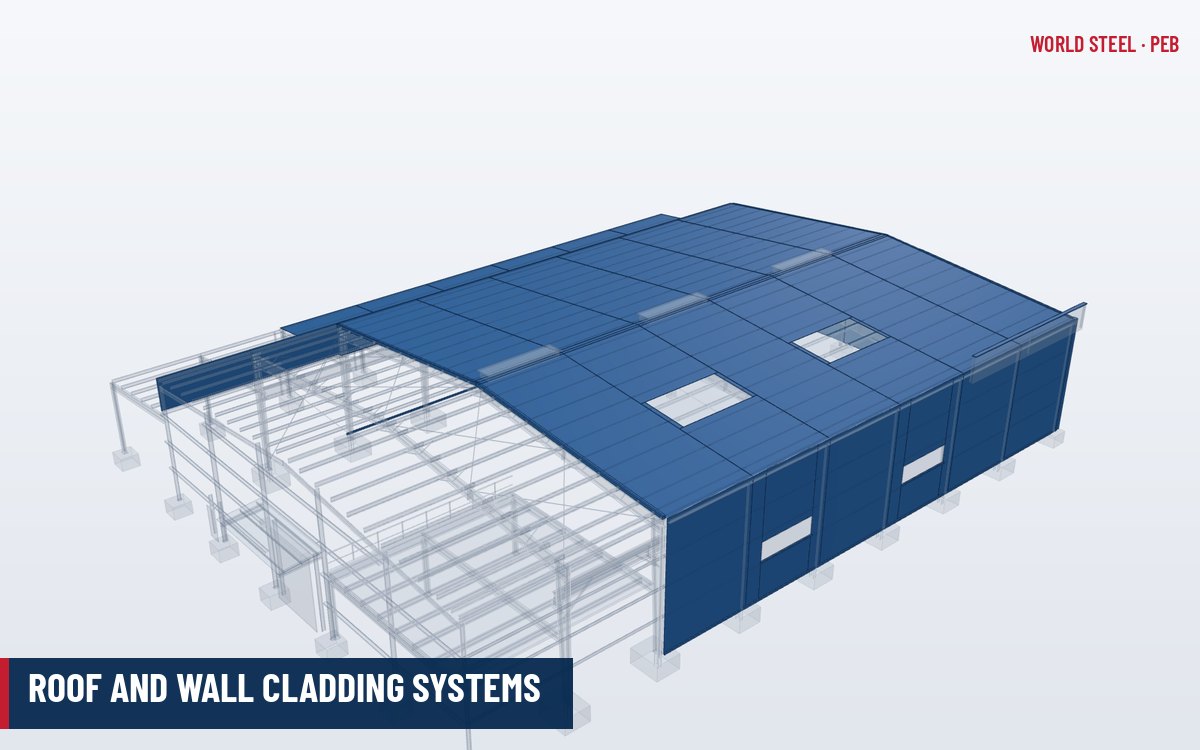
World Steel supplies insulation as part of roof and wall cladding systems, matched to sheeting and fastener lengths.
Insulation fixing accessories – double-sided tape at the eave and ridge, patch tape for facing repairs, staples or stapling clips for tabs, and support banding or mesh – are part of the sundries package and should be listed in the bill of materials so that they are not forgotten in the shipment.
Common mistakes and quality checks
- Facing seams left open – condensation forms within the insulation.
- Facing installed on the wrong side.
- Insulation left uncovered in rain.
- Screws too short for the compressed insulation thickness.
- Thickness under standing seam clips not matched to clip height.
各地区标准
| 地区 | 规范 | 范围 |
|---|---|---|
 United States |
ASHRAE 90.1 / NAIMA 202 / ASTM E84 | Energy standard, metal building insulation and surface burning |
 Canada |
NECB 2020 | National Energy Code of Canada for Buildings |
 Australia / NZ |
NCC Section J / AS/NZS 4859.1 | Energy efficiency and thermal insulation materials |
 Europe |
EN 13162 / EN 13501-1 | Mineral wool products and reaction-to-fire classification |
常见问题
Does an open warehouse need roof insulation?
Often yes. Even without air conditioning, insulation or a radiant barrier reduces heat gain and condensation dripping in humid climates.
Why does the vapour retarder face inward?
It must be on the warm, humid side to stop moisture reaching the cold sheet. In hot humid climates with cooled interiors, specialist advice is needed because the vapour drive can reverse.
Does compressing insulation over purlins matter?
Yes. Compressed areas have much lower R-value, so energy codes evaluate the full assembly and thermal spacers or liner systems may be needed.