ENEnglish
 VITiếng Việt
 ZH中文
 KO한국어
 JA日本語
 FRFrançais
 ITItaliano
 PTPortuguês
 ESEspañol
 HEעברית
 ARالعربية

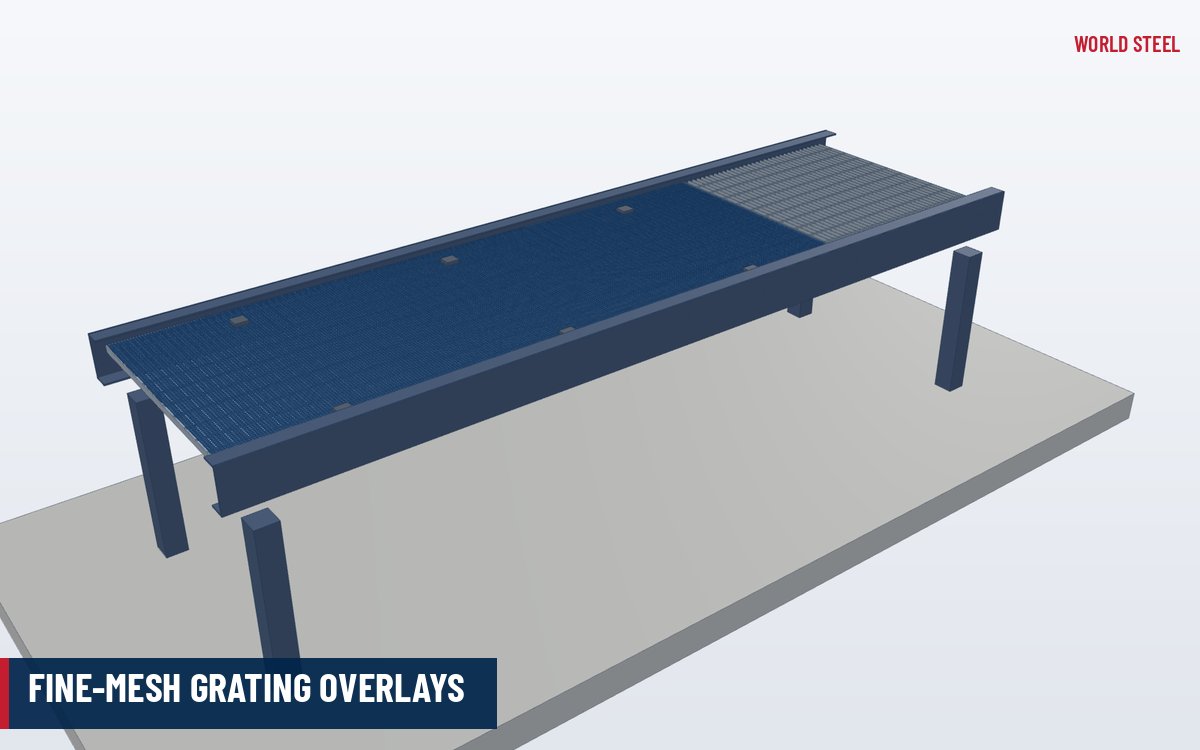
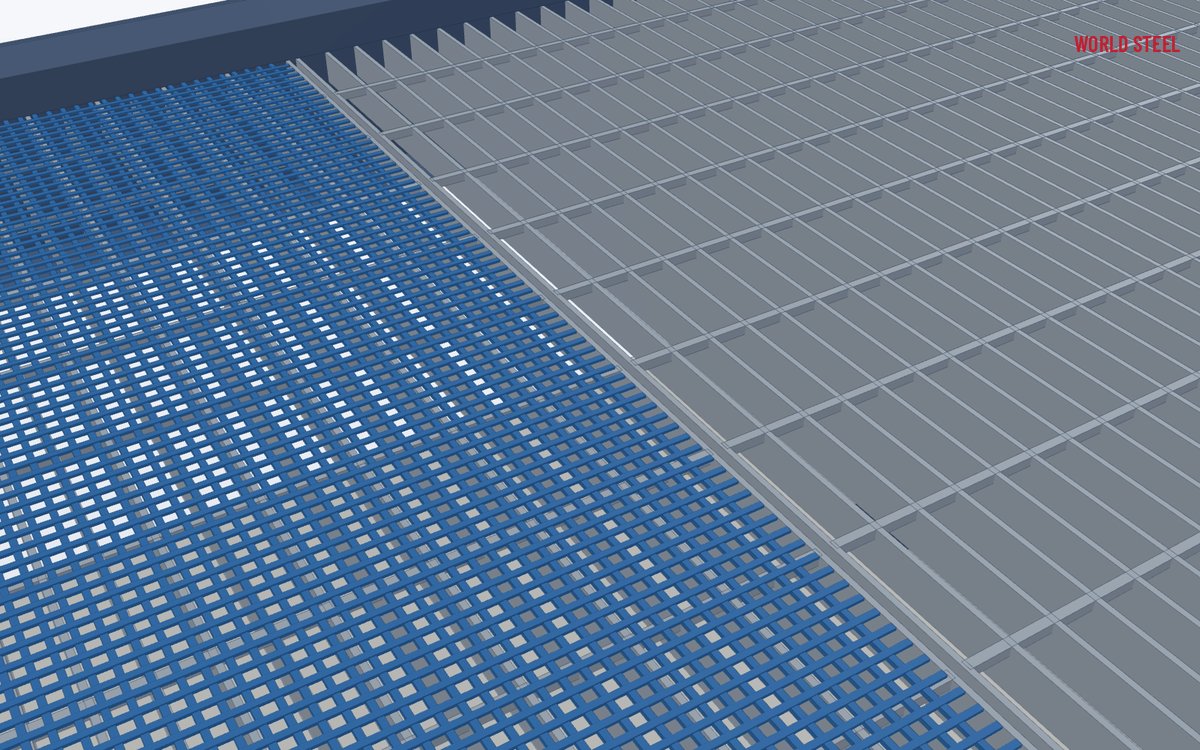
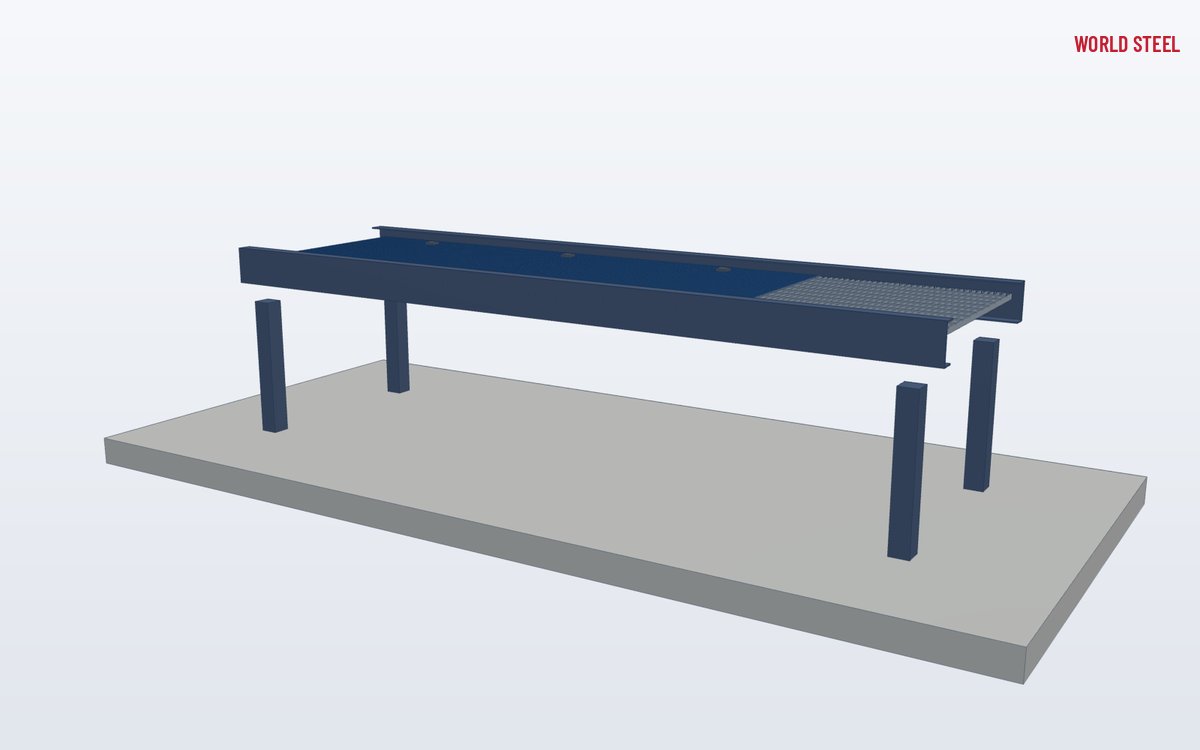
- Stops bolts, tools and debris falling through grating
- Clamped on top of existing grating – no hot work
- Opening chosen to the site dropped-object criterion
- Low-profile tapered edges to limit trip hazards
- Removable for cleaning and inspection
- Galvanised steel or stainless steel
What it is
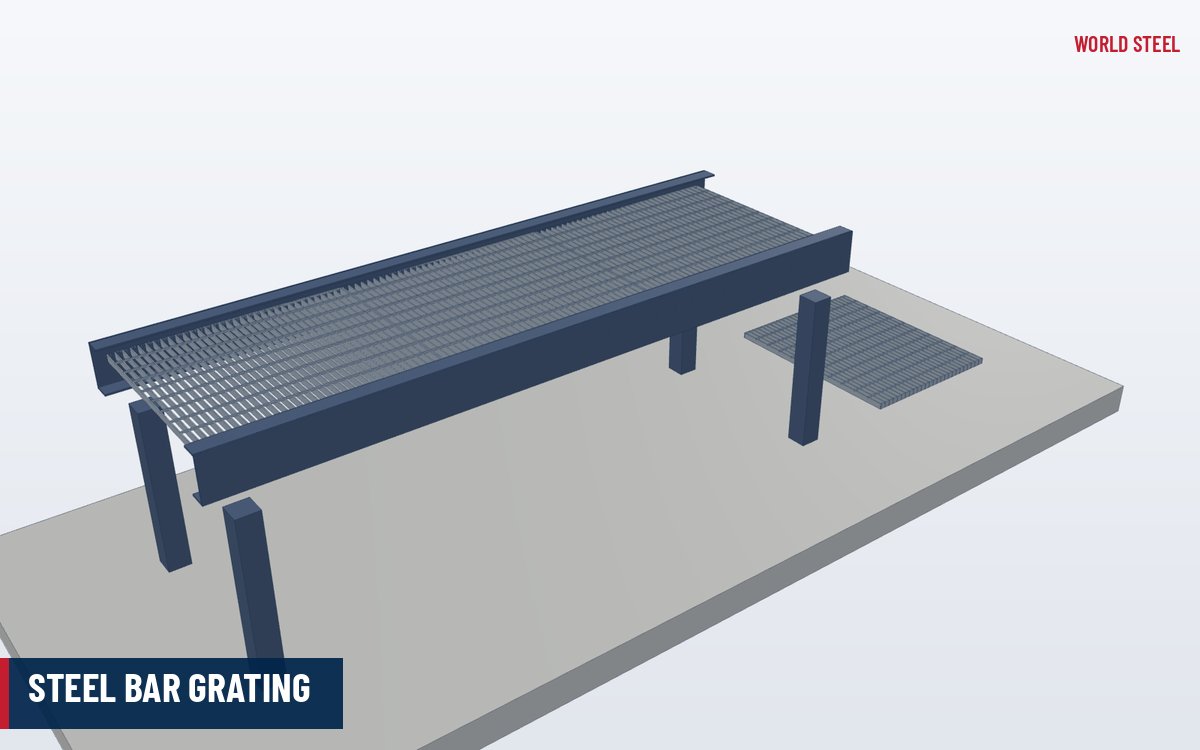
Standard steel bar grating has openings of roughly 30 × 100 mm, which suits drainage, light and ventilation but lets nuts, bolts, small tools, welding rods and process debris fall to the level below. On multi-level plant, above conveyors, or over routes where people work or pass, that is a recognised dropped-object hazard. A fine-mesh grating overlay is a panel of fine mesh or perforated sheet clamped on top of the existing grating, reducing the effective opening without removing or replacing the floor.
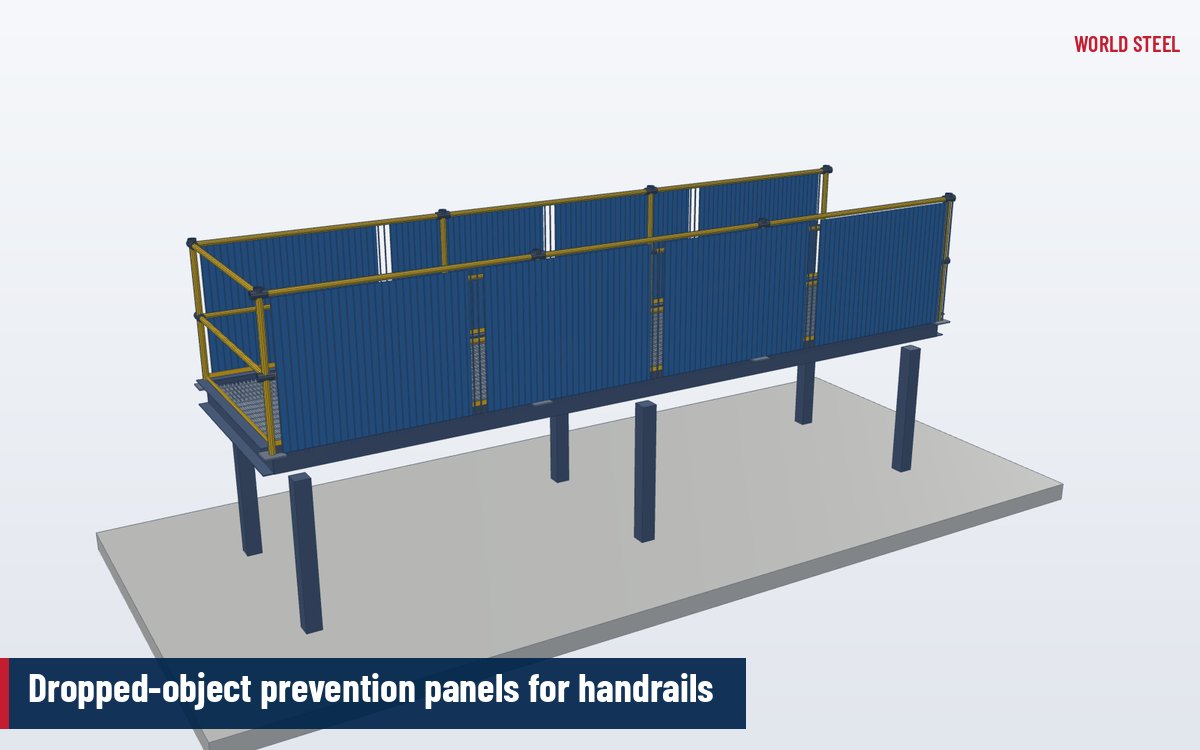
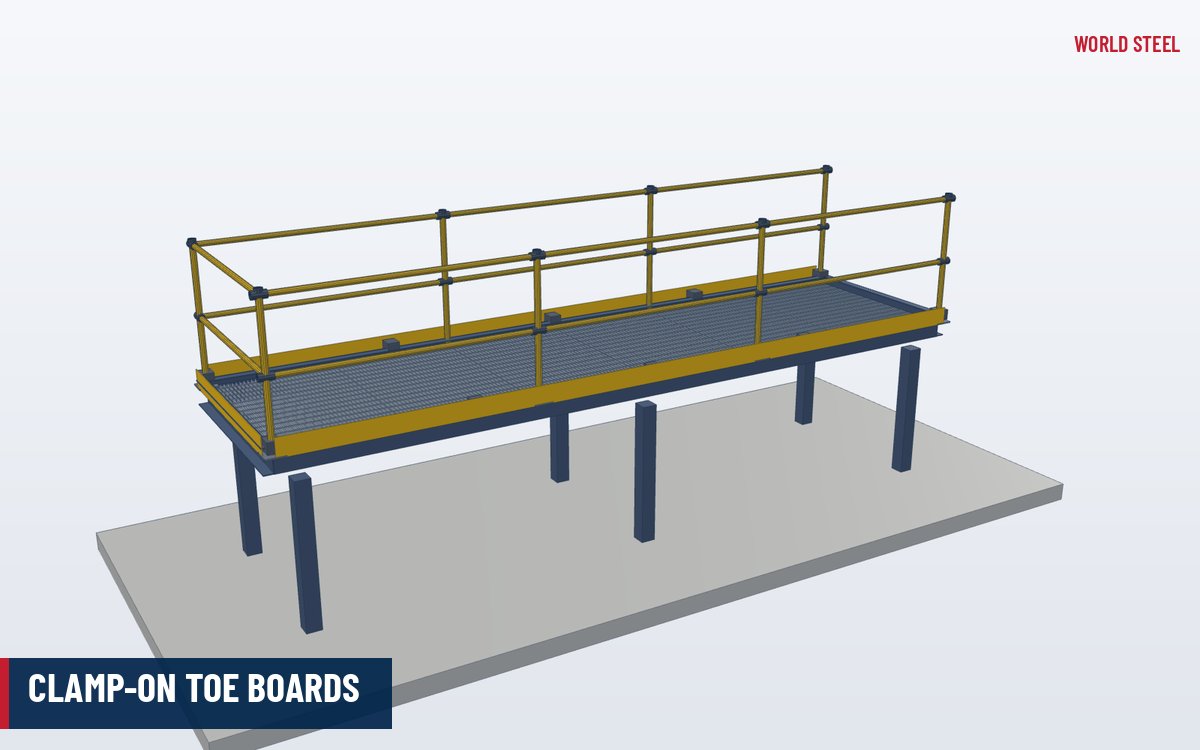
World Steel fabricates overlay panels to the existing grating layout recorded in a site survey, so panel joints follow the grating panel joints and access hatches remain operable. Panels are held down with clamps that hook under the bearing bars, so there is no welding on site. Overlays are commonly combined with handrail infill panels and clamp-on toe boards so that the floor, the edge and the barrier are all closed to the same criterion.
Types and options
| Overlay type | Description | Typical use |
|---|---|---|
| Fine welded mesh | Small-aperture welded mesh in a light frame | General walkways and platforms – keeps drainage and light |
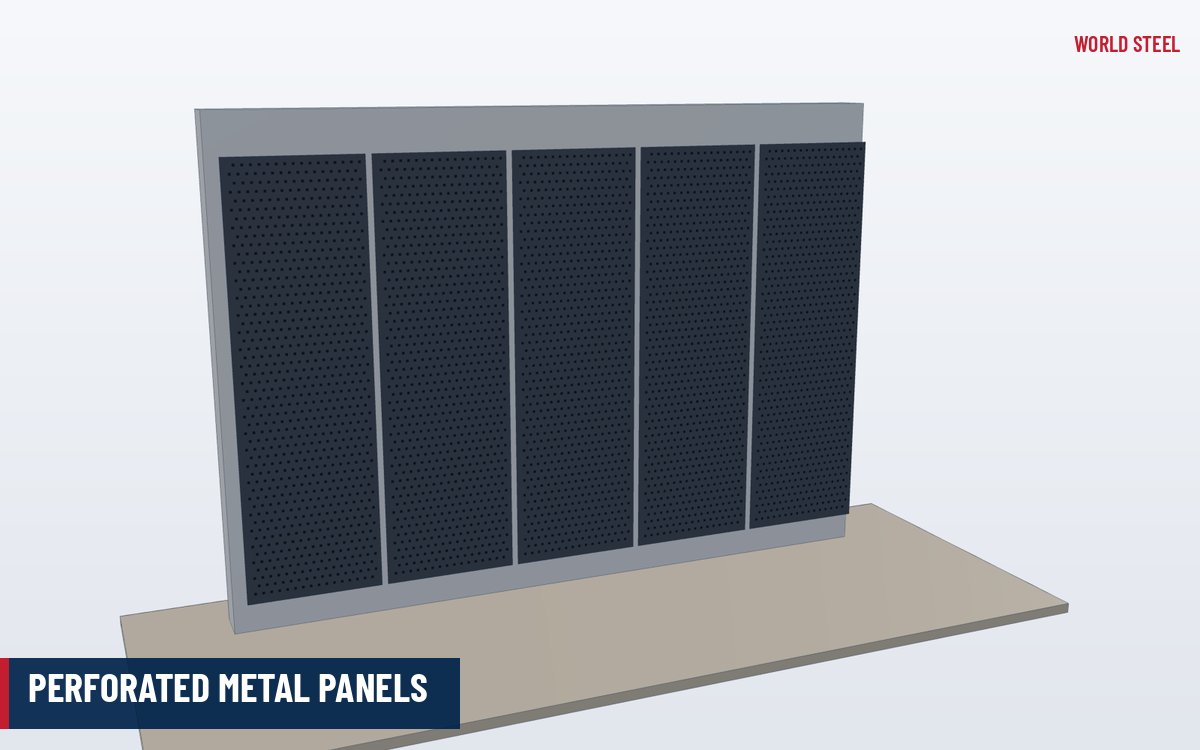
| Perforated sheet | Punched sheet, round or slotted holes, raised or embossed pattern for grip | Areas with very small objects or fine debris |
| Stainless mesh | Stainless steel 304 or 316 mesh | Corrosive, washdown or coastal areas |
| Local patch overlay | Small panel over a work zone | Around valves, pumps or maintenance points |
| Hinged overlay | Overlay hinged to a fixed panel | Over access hatches and removable grating |
The opening is not a standard size: it is chosen to the site owner's criterion, often defined by a test object or ball of a stated diameter that must not pass. Slip resistance of the top surface should also be considered – perforated sheet with a raised pattern or a grit finish can be specified where the site requires a rated surface.
Design and compliance
An overlay changes the walking surface, so three points are checked. First, trip hazards: panels are low profile, with tapered or bevelled edge strips where the overlay meets open grating. Second, slip resistance: the surface is selected to the site's requirement, with reference to AS 4586 in Australia. Third, the floor: the overlay adds a small dead load and, more importantly, can hold water, ice, dust or product that would otherwise fall through, so drainage and cleaning are considered in the layout.
Platform and walkway geometry still follows the governing code – OSHA 1910 Subpart D, AS 1657-2018 (walkway clear width at least 600 mm) or EN ISO 14122-2 (clear width at least 600 mm, preferably 800 mm). No load or test rating is claimed for the overlay; the grating beneath remains the load-carrying floor. See the gratings and access article and steel grating solutions for background.
Fabrication and finishing at World Steel
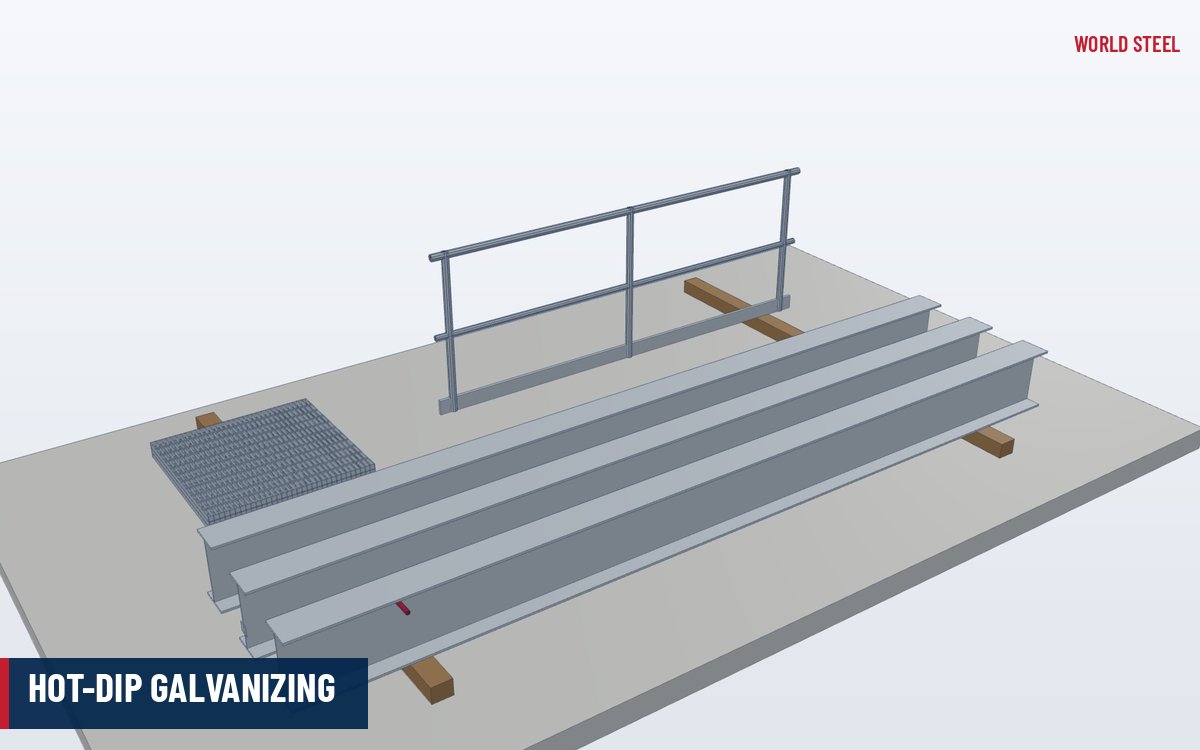
Mesh and sheet are cut to the panel schedule, framed with flat bar or folded edges and fitted with clamp hooks matched to the bearing-bar depth and pitch. Welding follows qualified procedures under AWS D1.1, AS/NZS 1554.1 or EN ISO 3834-2, and stainless items follow AWS D1.6 or AS/NZS 1554.6. Carbon steel panels are hot-dip galvanised by qualified galvanisers to AS/NZS 4680, ASTM A123 or EN ISO 1461; stainless panels are pickled and passivated. Panels are numbered to the grating layout and packed for export.
Installation and site notes
- Survey the grating: panel sizes, bearing-bar depth and pitch, hatches, penetrations and kick plates.
- Clean the grating, place the overlay and engage the clamps under the bearing bars.
- Check edges for trip lips and that hatches and removable panels still open.
- Lift overlays periodically to clean beneath them and inspect the grating.
市場別の規格と要求事項
World Steelが本製品の設計・製作・書類作成に適用する基準――および各市場における主な寸法・荷重要件。
 米国
- OSHA 29 CFR 1910 Subpart DWalking-working surfaces
- ANSI/NAAMM MBG 531Metal Bar Grating Manual
- ASTM A123Hot-dip galvanized coatings
- AWS D1.6Structural welding – stainless steel
- Typical grating
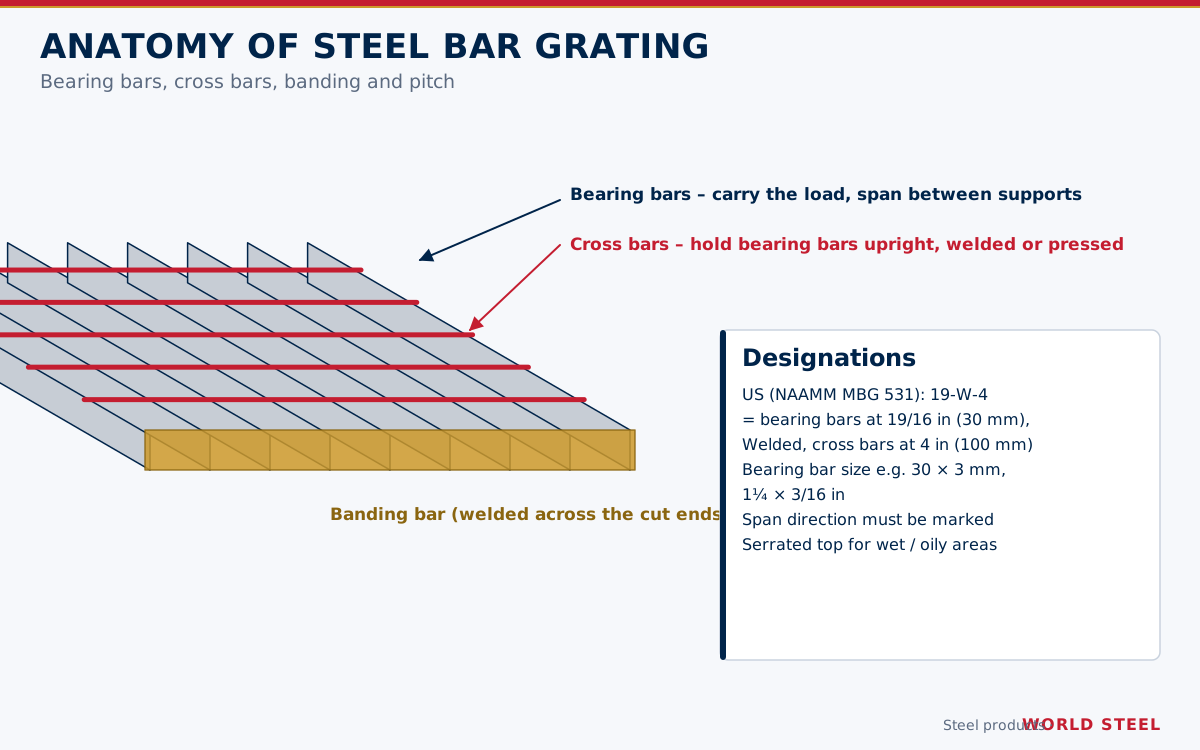
- e.g. 19-W-4 – 30 mm × 100 mm pitch (NAAMM)
- Overlay opening
- Set by the site owner's criterion
 豪州 / NZ
- AS 1657-2018Fixed platforms, walkways, stairways and ladders
- AS 4586Slip resistance of pedestrian surfaces
- Model WHS RegulationsManaging the risk of falling objects
- AS/NZS 4680Hot-dip galvanized coatings
- Walkway width
- ≥ 600 mm clear (AS 1657)
- Overlay opening
- Set by the site owner's criterion
 欧州
- EN ISO 14122-2Working platforms and walkways
- DIN 24537-1Metal gratings as floor covering
- EN ISO 1461Hot-dip galvanized coatings
- Walkway width
- ≥ 600 mm, preferably 800 mm (EN ISO 14122-2)
- Overlay opening
- Set by the site owner's criterion
参考用の概要です――プロジェクト仕様書、採用される基準の版、所轄官庁の判断が優先されます。
表面処理
| 表面処理 | 規格 / 備考 |
|---|---|
| Hot-dip galvanised | ASTM A123 · AS/NZS 4680 · EN ISO 1461 |
| Stainless steel 304 / 316 | Pickled and passivated – EN 10088 / ASTM A240 |
| Grit or raised-pattern surface | For areas with a specified slip-resistance requirement |
よくある質問
Does the overlay replace the grating?
No. The existing grating remains the load-carrying floor; the overlay only reduces the opening size on top of it.
What opening size is used?
It is chosen to the site owner's dropped-object criterion, commonly a test object or ball of stated size. We select and document a mesh or perforation to meet it.
Will it create a trip hazard?
Panels are low profile and have tapered edge strips where they meet open grating; joints follow the grating layout.
Can overlays be removed for cleaning?
Yes. The clamps release from the top so panels can be lifted for cleaning and inspection.
 Norway
 AS/NZS 5131 CC3
 EN 1090 EXC3 · CE