ENEnglish
 VITiếng Việt
 ZH中文
 KO한국어
 FRFrançais
 ITItaliano
 PTPortuguês
 ESEspañol
 HEעברית
 ARالعربية

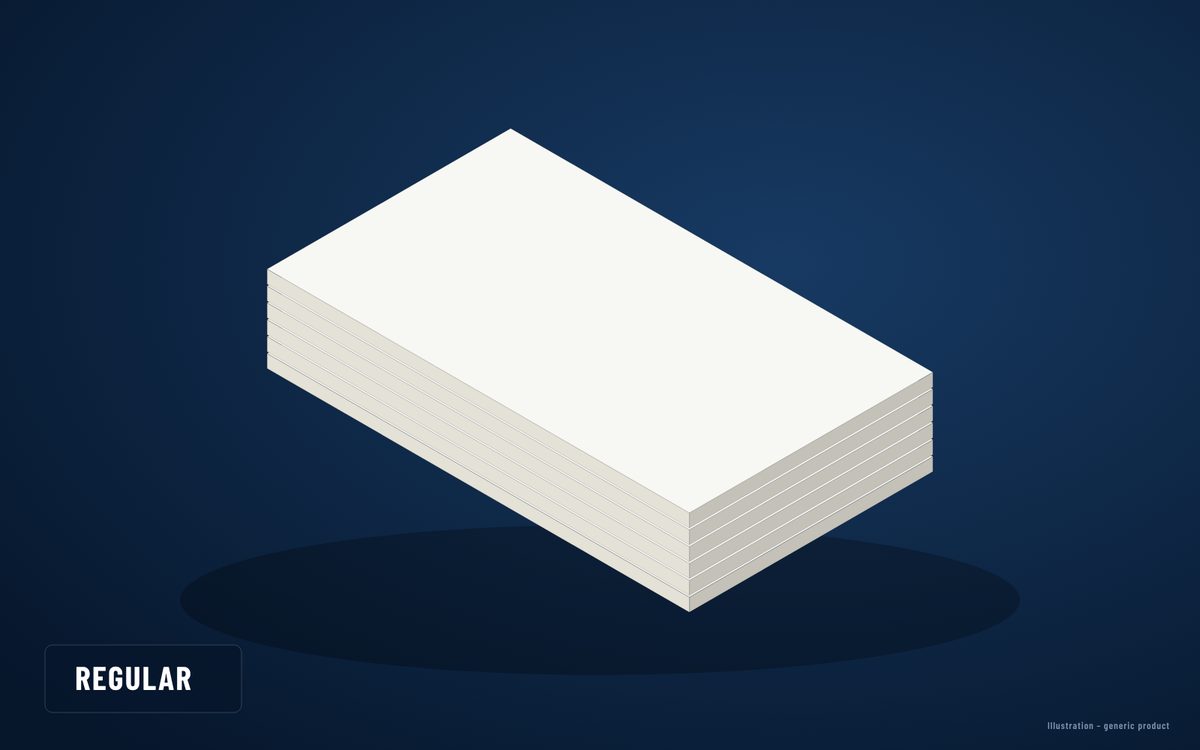 EN 520 type A
Regular
Walls and ceilings in dry interior areas.
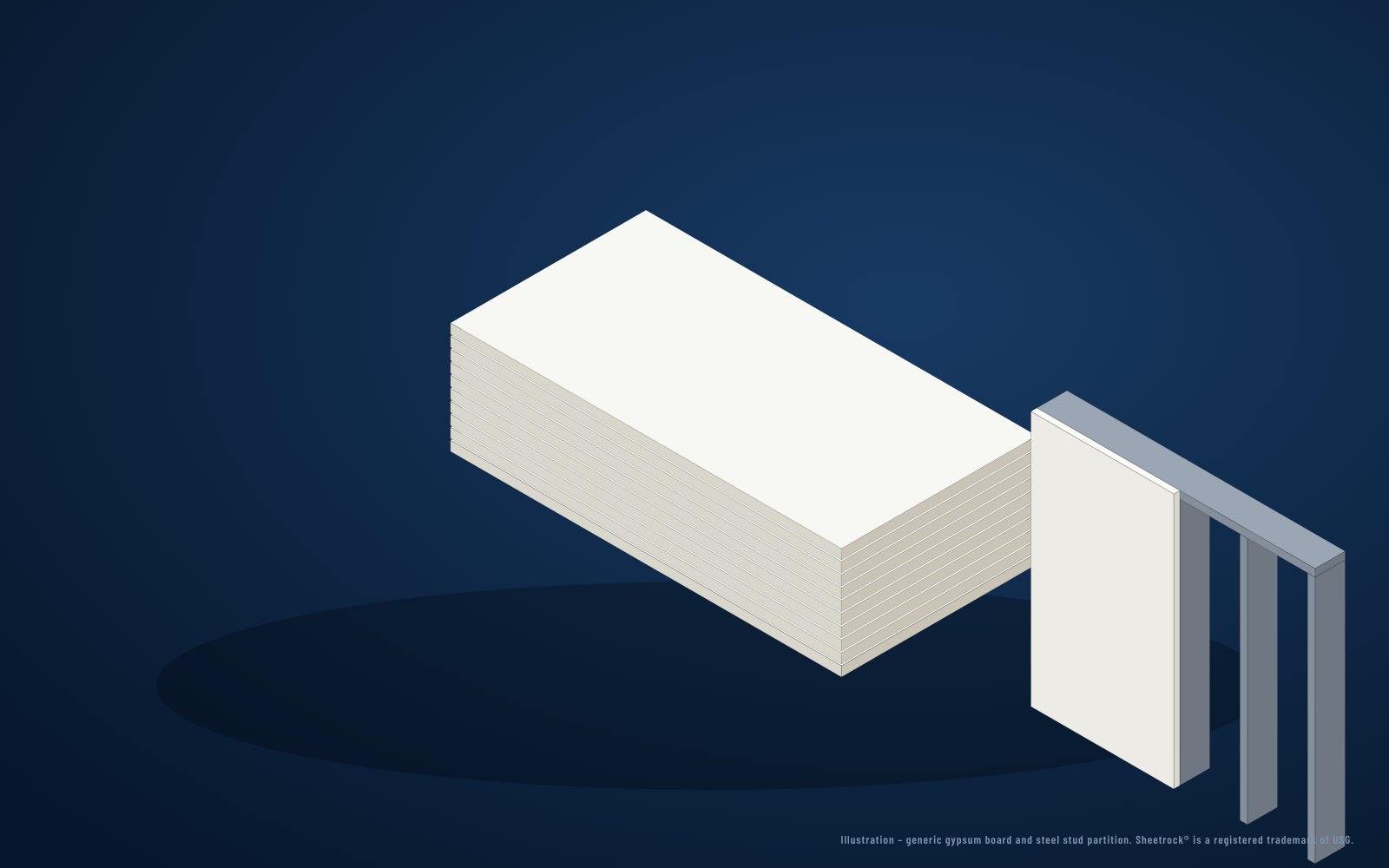
Building materials · Boards & panels
Gypsum board is the lining of modern buildings: a gypsum core between two paper or glass-mat facers, screwed to steel studs for partitions, wall linings and ceilings. Fast, dry, fire-resistant and smooth. This page explains the material, its types, the leading manufacturers, its pros and cons – and the standards and certificates you need to export it to the United States, Australia, Europe and other high-end markets.
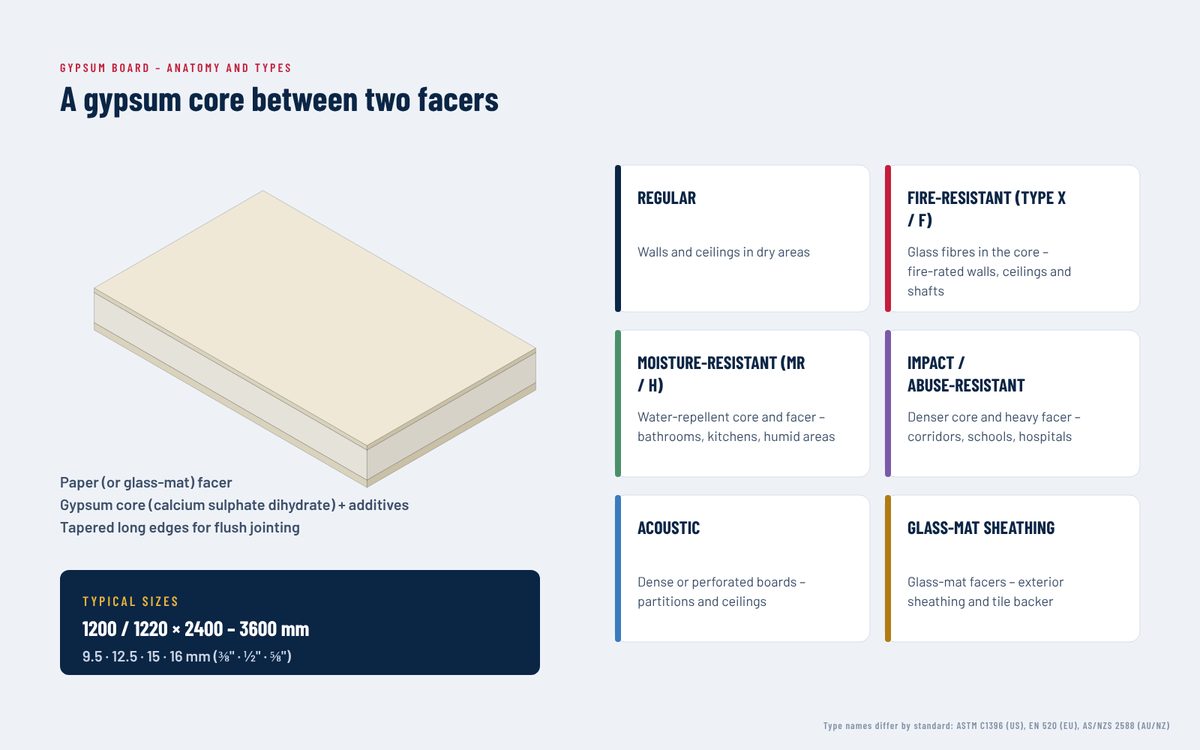
Gypsum board – also called drywall, plasterboard, wallboard or, in Vietnamese, tấm thạch cao – is a panel with a core of gypsum (calcium sulphate dihydrate) faced with heavy paper or glass mat. Boards are screwed to light steel studs or furring channels, the joints are taped and finished, and the result is a smooth wall or ceiling ready for paint – built dry, in days rather than weeks.
Sheetrock® is the registered trademark of USG Corporation for its gypsum panels. USG introduced it in the United States in the early 20th century, and the name became so familiar that many people use "sheetrock" for any gypsum board. USG has been part of the Knauf Group since 2019. World Steel supplies gypsum board to the brand and standard your project specifies.
Types
Names differ by standard – ASTM C1396 in the US, EN 520 in Europe, AS/NZS 2588 in Australia and New Zealand.
EN 520 type A
Walls and ceilings in dry interior areas.
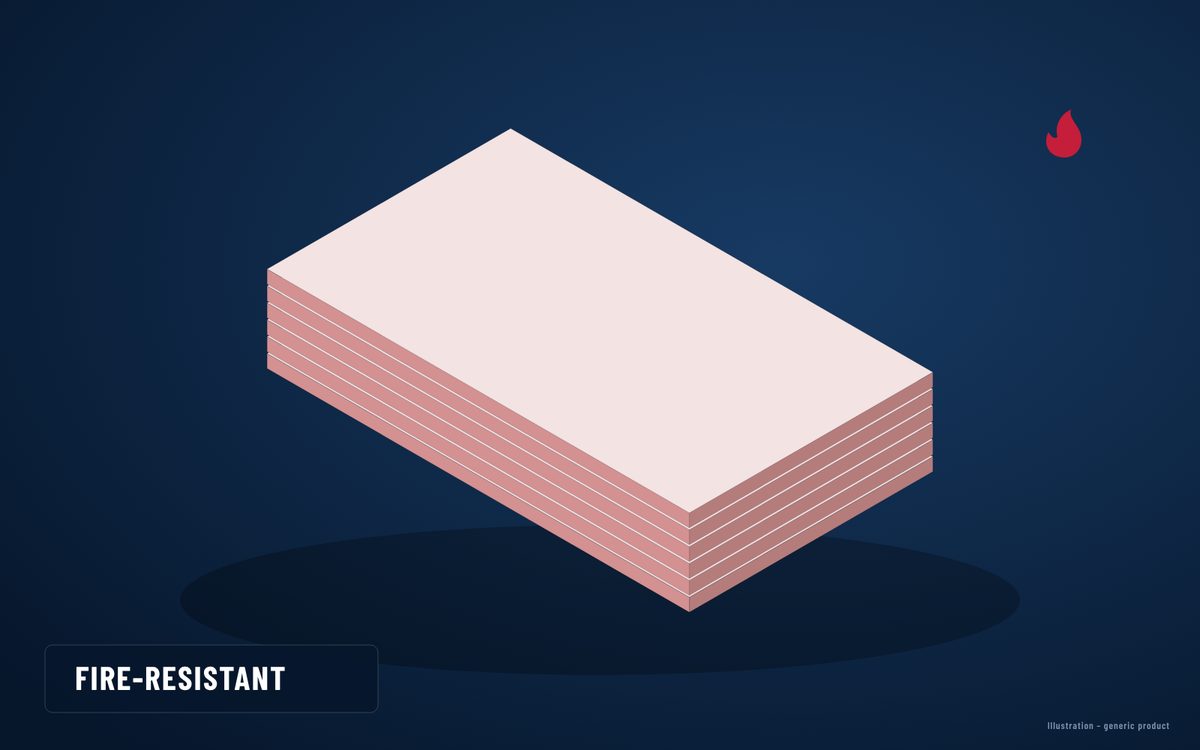 Type X · EN type F
Glass fibres keep the core together in fire – fire-rated walls, ceilings and shafts.
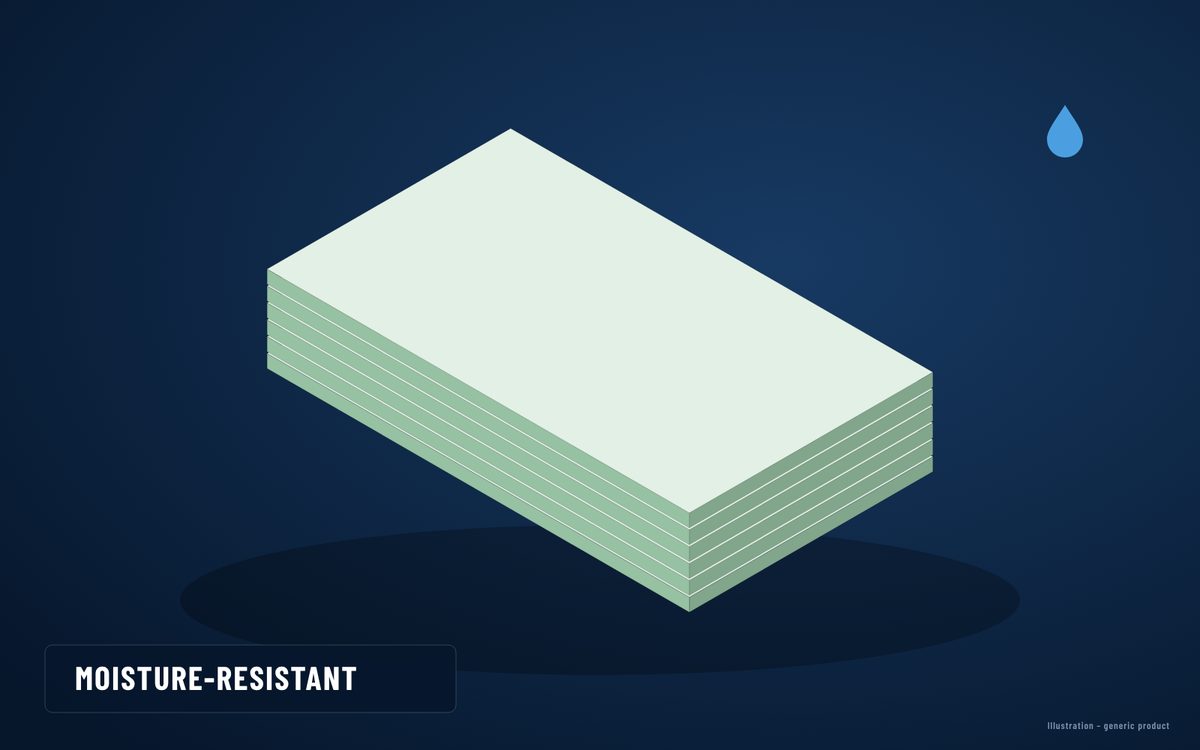 MR · EN type H
Water-repellent core and facers for bathrooms, kitchens and humid areas.
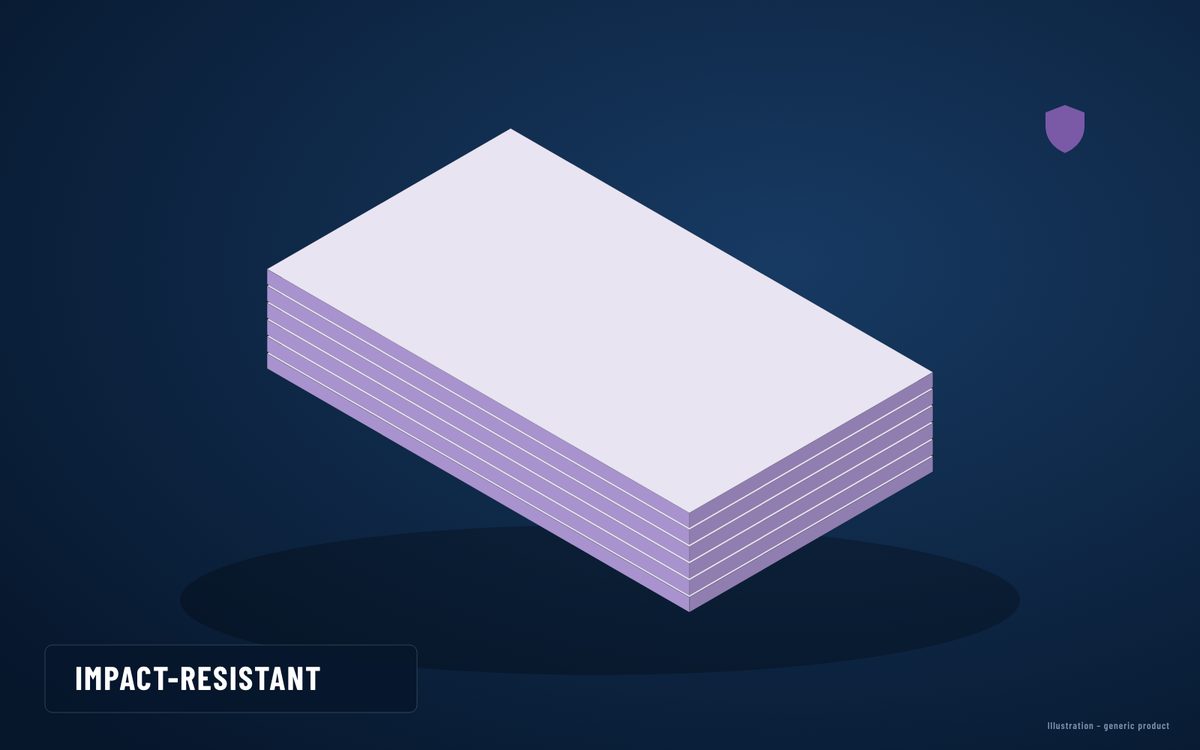 ASTM C1629 · EN type I
Dense core and strong facers for corridors, schools and hospitals.
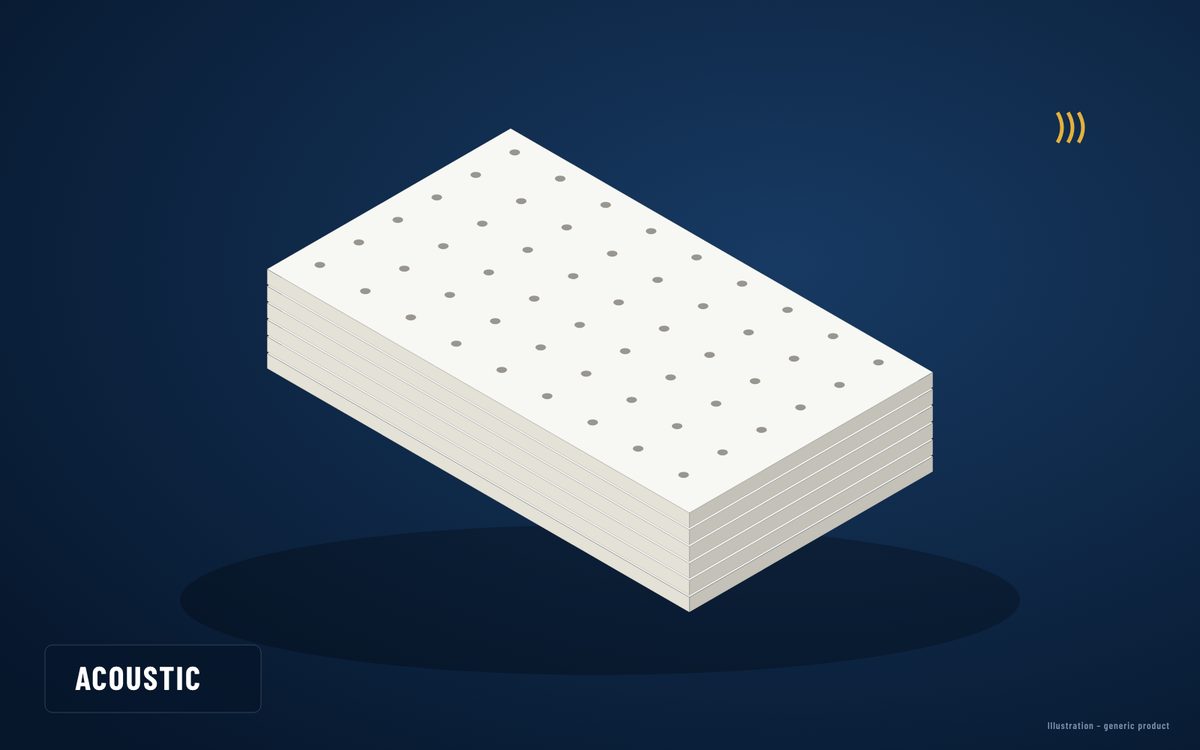 dense or perforated
Higher-density boards for sound insulation; perforated boards for sound absorption.
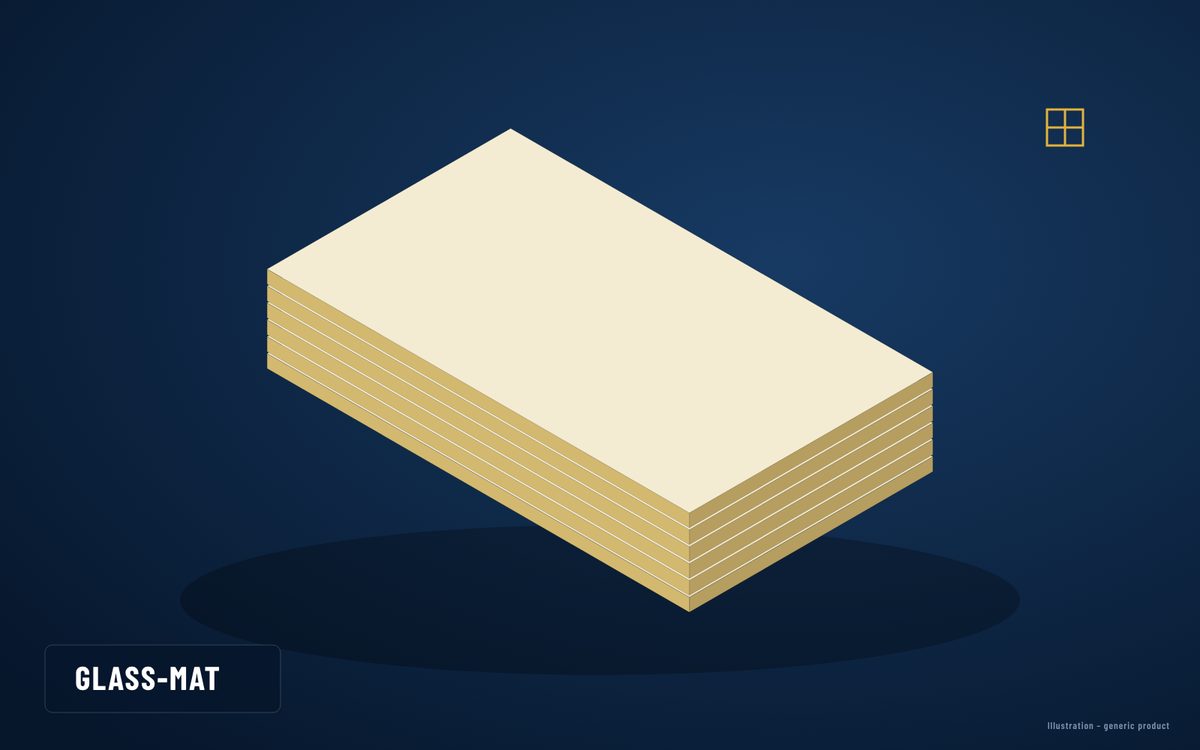 ASTM C1177 · C1658
Glass-mat facers instead of paper – exterior sheathing, shafts and mould-resistant linings.
Applications
Steel stud walls between offices, hotel rooms, apartments and classrooms.
Lining the inside of steel-framed and masonry external walls.
Flush ceilings and lay-in ceiling tiles – see our gypsum ceilings page.
Encasing steel columns and beams, fire-rated shafts and corridors.
Double-layer and staggered-stud walls with mineral wool for high sound insulation.
Interior linings of factory-built steel modules and site offices.
Codes & compliance
What buyers and authorities in high-end markets ask for – the product standard, fire evidence and market-specific rules.
 United States
 Australia & New Zealand
 Europe
 Japan & premium Asia
Summary for orientation only – the project specification, the adopted code edition and the authority having jurisdiction govern.
Leading manufacturers
Some of the best-known producers worldwide – listed for information; World Steel supplies boards to the brand and standard your project specifies.
United States · Knauf Group
The brand that gave drywall its everyday name in North America.
Germany
One of the largest gypsum board producers in the world, with plants on every continent.
France
Global gypsum and plasterboard brands across Europe, Asia and the Americas.
Belgium
Plasterboard and dry-construction systems in Europe and Latin America.
United States
A major North American wallboard producer.
United States
Paper-faced and glass-mat gypsum panels.
Japan
Japan's leading gypsum board producer.
China
Beijing New Building Materials – one of the largest gypsum board producers by capacity.
Trademarks belong to their owners. Listing a manufacturer does not imply a partnership with World Steel.
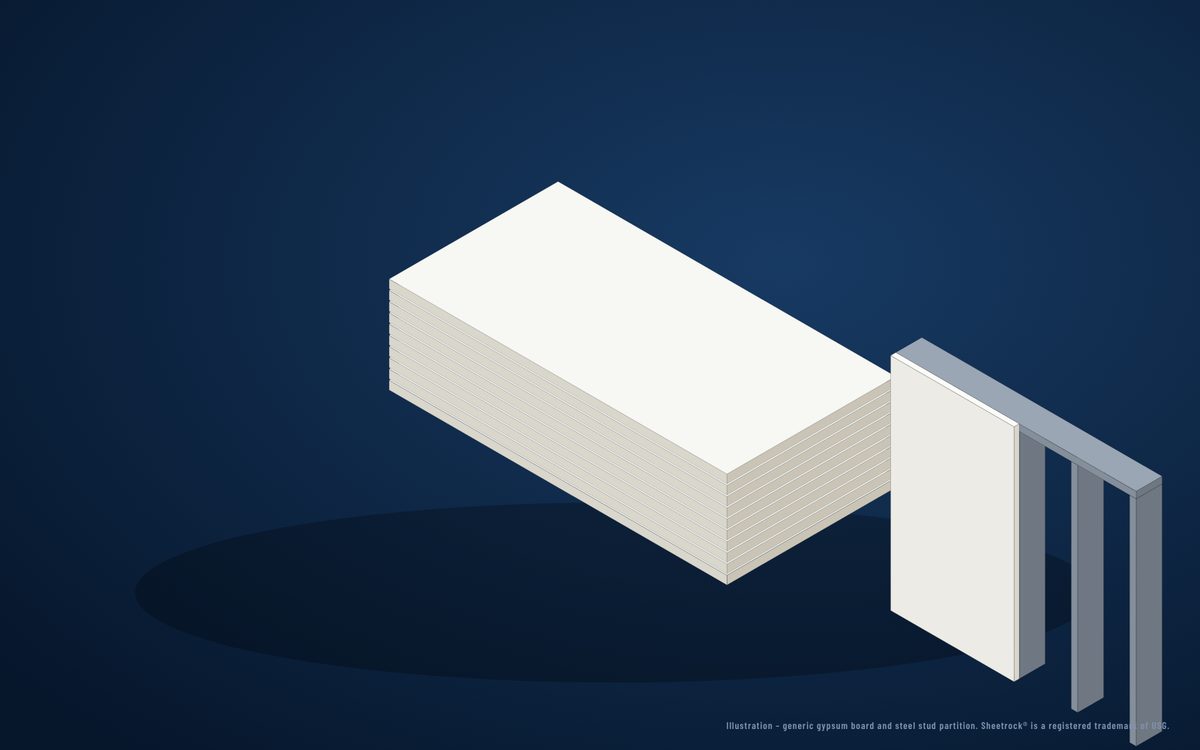
World Steel · building envelope hub
Gypsum board needs a frame – and frames are steel. World Steel supplies the light steel studs, furring channels and ceiling suspension together with the boards, the ROCKWOOL or glass wool infill and the structure itself, coordinated on one model and shipped as one package. For wet and external areas see fibre cement board; for ceilings see gypsum ceilings.
Pros and cons
Why it dominates interior construction – and where to be careful.
| Advantage | Why it matters |
|---|---|
| Fire resistance | About 21 % chemically bound water is released as steam and slows heat transfer; Type X boards achieve fire ratings in tested systems |
| Fast, dry construction | No curing time – walls and ceilings finished in days |
| Light | Far lighter than masonry – smaller loads on steel frames and floors |
| Smooth finish | Ready for paint, tiles or wallpaper after jointing |
| Acoustic performance | High sound insulation in multi-layer walls with mineral wool |
| Flexible layouts | Easy to cut, to route services and to change later |
| Cost | Economical per m² of finished wall |
| Disadvantage | What to do |
|---|---|
| Sensitive to water | Use moisture-resistant or glass-mat boards in wet areas; protect from rain on site |
| Low impact resistance | Impact-resistant boards or double layers in corridors and public areas |
| Not structural | Needs a steel stud or furring frame |
| Mould if wet | Mould-resistant boards (ASTM D3273 tested) in humid climates |
| Workmanship-dependent finish | Skilled jointing and finishing; fire ratings only as tested |
| Not for exterior exposure | Use fibre cement board or glass-mat sheathing outside |
FAQ
Sheetrock® is USG's brand name for gypsum board. Drywall, plasterboard, wallboard and gypsum board all describe the same kind of product.
A fire-resistant board under ASTM C1396 with glass fibres in the core; it is used in fire-rated wall and ceiling assemblies tested to ASTM E119 / UL 263.
Use moisture-resistant or glass-mat boards behind tiles and in humid areas – not regular board – and keep it away from standing water.
Compliance with ASTM C1396 including the 10 ppm sulphur limit, labelling per ASTM C1264 and a General Certificate of Conformity under the Drywall Safety Act, plus fire listings for rated boards.
Boards must meet AS/NZS 2588 and the NCC, and importers must be able to prove the goods are asbestos-free – Australia has zero tolerance and expects NATA-accredited testing.
Yes, together with steel studs, ceilings, insulation and the steel structure – to the brand and standard your project specifies.
Send us the wall and ceiling schedule and the standard required – we quote boards, framing and insulation with the steel.