Building trust, Assuring Success Client portal dang.victor@worldsteelgroup.com +84 902 881 833
World SteelBuilding trust, Assuring success

Integrated structural steel & fire protection solutions

Advanced fire protection solutions for structural steel

Engineered Fire Resistance. Proven Performance. Optimized Cost.

Protecting steel structures with engineered fire protection coating systems designed to meet international fire resistance requirements while optimising coating thickness, material consumption, project costs and long-term durability.

  • R30 · R60 · R90 · R120 · R180Design requirements we engineer for – each system and member is checked against its approved data.
  • International fire test standardsEN 13381-8, ASTM E119 / UL 263, AS 1530.4, BS 476, UL 1709.
  • Engineered coating thicknessDFT per member from the section factor and the manufacturer's approved loading data.
  • Factory & on-site applicationShop application with the steel, or site application by the project's applicator.
  • Quality assuranceITP, environmental records, WFT and DFT inspection, batch traceability.
  • Project-specific solutionsInternational, Hempel, Jotun or PPG systems – chosen for the specification.

Quick project inquiry

Continues to the project form below – nothing is sent until you submit it.

Fire engineering basics

Why structural steel requires fire protection

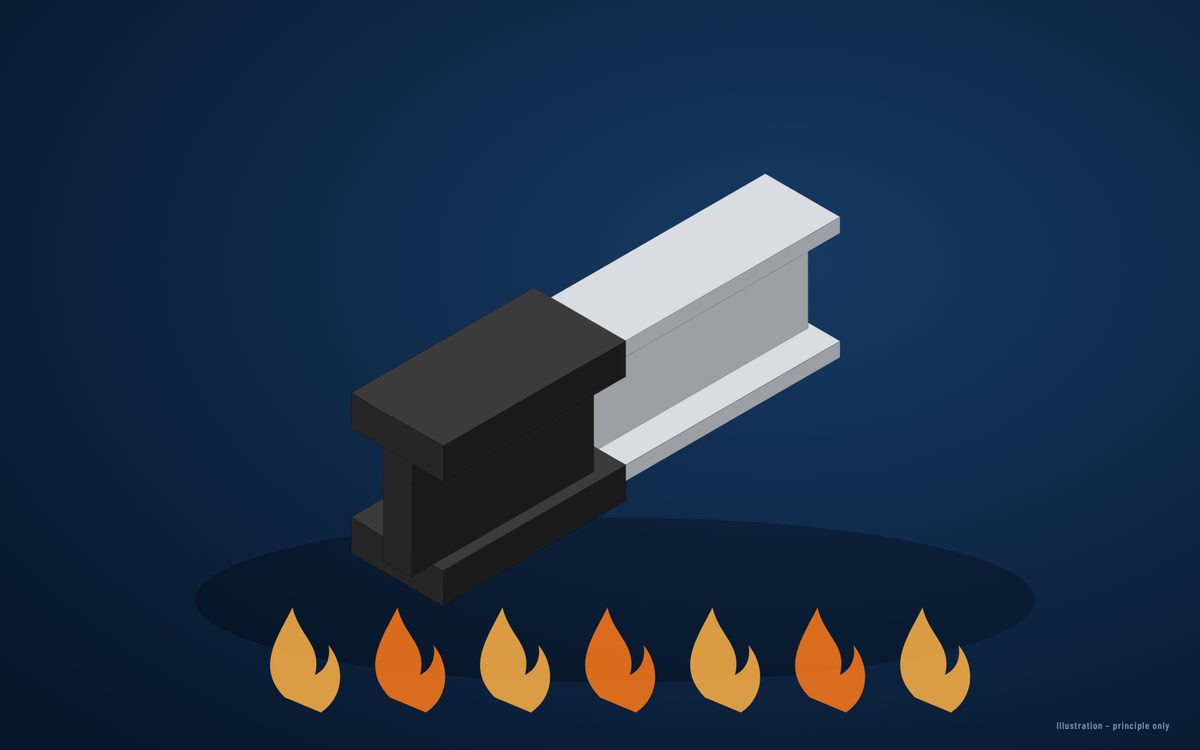
Steel is non-combustible – but like every material it loses strength and stiffness as it heats up.

In a building fire the gas temperature follows the standard fire curve (ISO 834, ASTM E119, AS 1530.4) and passes 800 °C in under 25 minutes. Unprotected steel members heat up quickly – thin, light sections fastest – and their yield strength and elastic modulus fall progressively above about 400 °C.

A member fails when it reaches its critical steel temperature: the temperature at which its reduced strength equals the load it carries in the fire. Critical temperatures are typically in the range of about 500–620 °C, depending on the load ratio and the member type, and are set by the structural fire design (EN 1993-1-2, AS 4100 Section 12, AISC 360 Appendix 4).

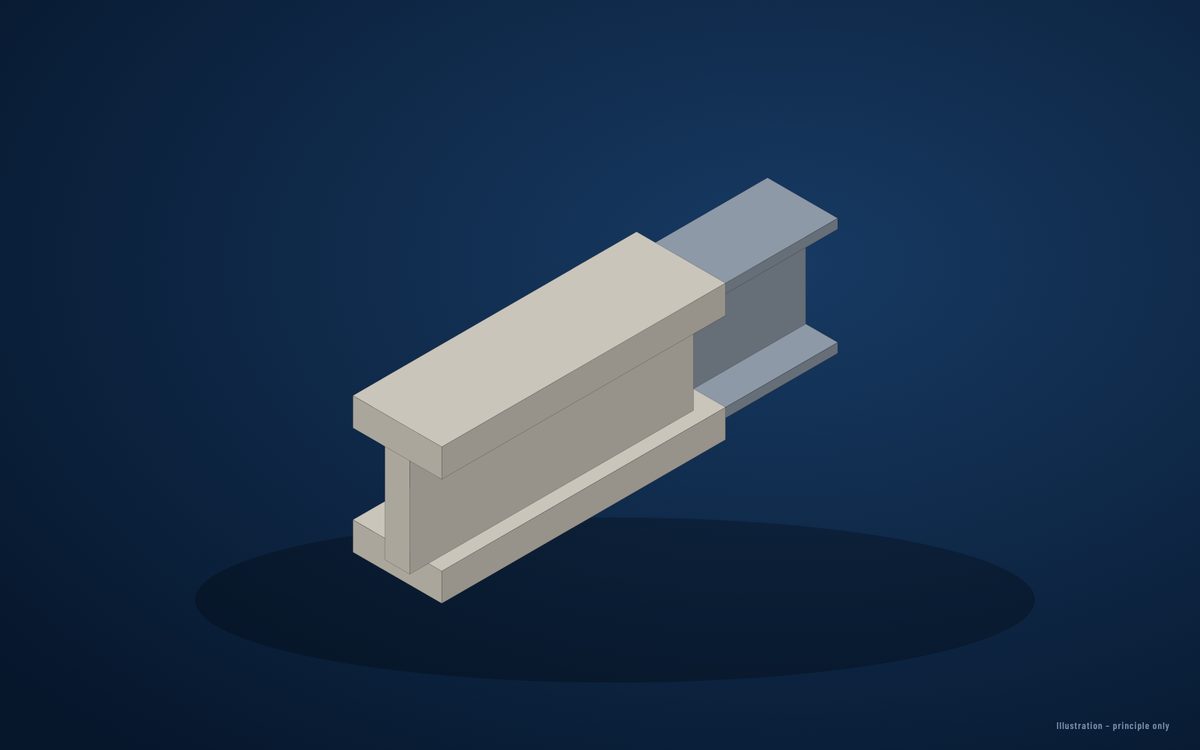
Passive fire protection insulates the steel so that it stays below its critical temperature for the period the building code requires – giving time to escape, for fire fighting and for structural stability.

Standard fire curve at 30 min
≈ 840 °C
Typical critical steel temperature
≈ 500 – 620 °C
Steel yield strength near 600 °C
≈ 47 % (EN 1993-1-2)

Gas temperature: ISO 834 standard fire curve. Steel: unprotected member, simplified heat transfer of EN 1993-1-2 §4.2.5.1 (αc = 25 W/m²K, εm = 0.7, ksh = 1). The coating graphic is illustrative – expansion and performance are product-specific.

Fire resistance performance

Engineered for different fire resistance requirements

Select a rating to see where it is typically required, how it is tested and which systems are usually considered. The required thickness always depends on the member, its critical temperature and the product's approved data.

R6060 minutes of load-bearing capacity in the standard fire test
Typical applications
Offices, schools, retail and many multi-storey buildings; the most common building requirement.
Testing & classification
EN 13381-8 / EN 13501-2 (R 60) · UL 263 (1 h) · AS 1530.4 (FRL 60/–/–) · BS 476-20/21
Systems usually considered
Thin-film intumescent – water-based or solvent-based, shop or site applied.
Technical documentation
Fire rating schedule · ETA / UL design / assessment report · loading table · ITP · DFT records
Engineering considerations
Light sections with high section factors can need several times the thickness of heavy sections for the same rating.

The required coating thickness depends on:

  • Steel section factor (Hp/A, A/V, ksm or W/D)
  • Critical steel temperature from the structural fire design
  • Fire exposure – cellulosic or hydrocarbon, 3 or 4 sides
  • The coating product and its tested section shapes
  • Approved test and assessment data accepted in the project's country

We do not publish one DFT per rating – the same rating can need 0.3 mm on a heavy column and several millimetres on a light beam.

Systems

Our fire protection coating solutions

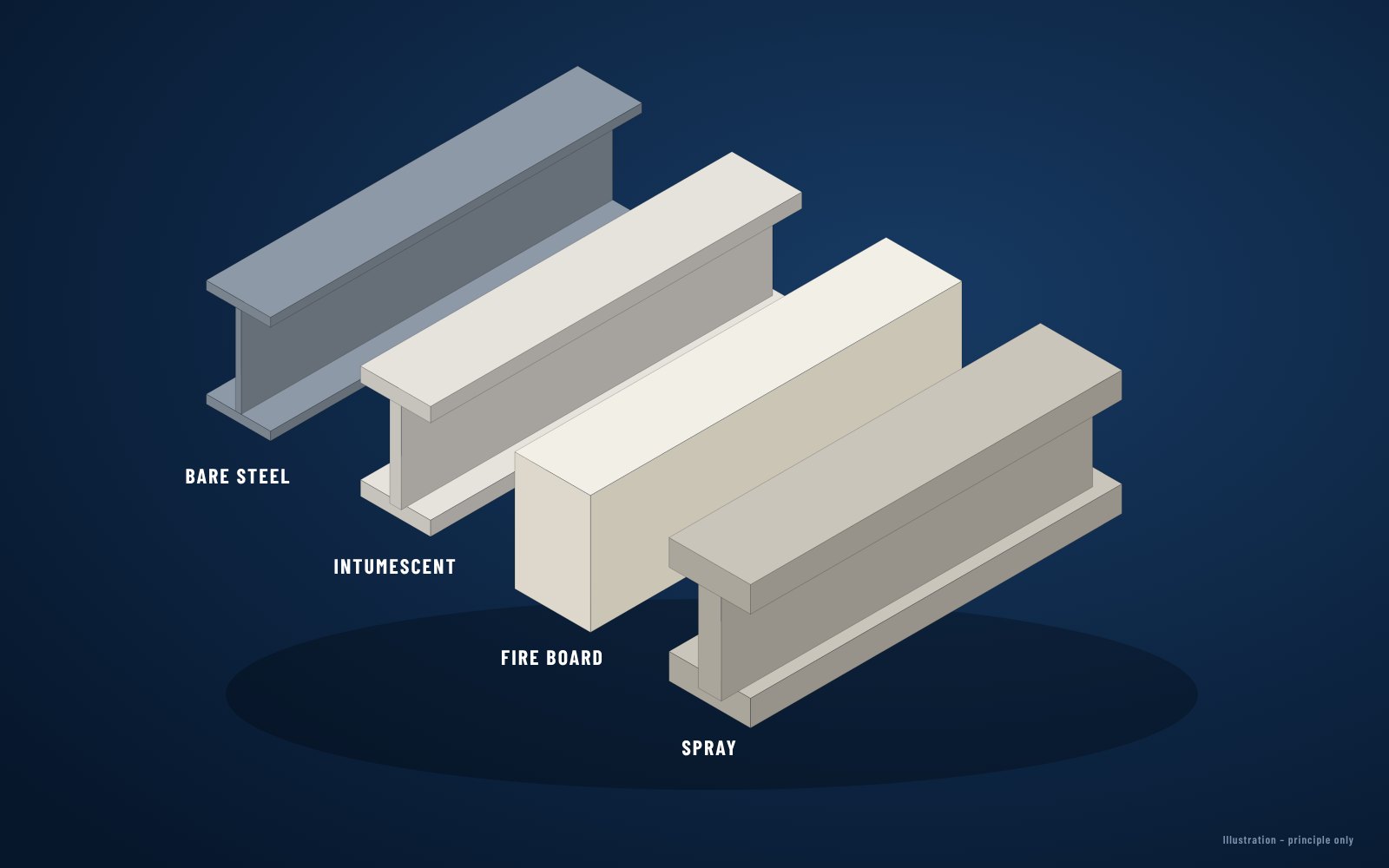
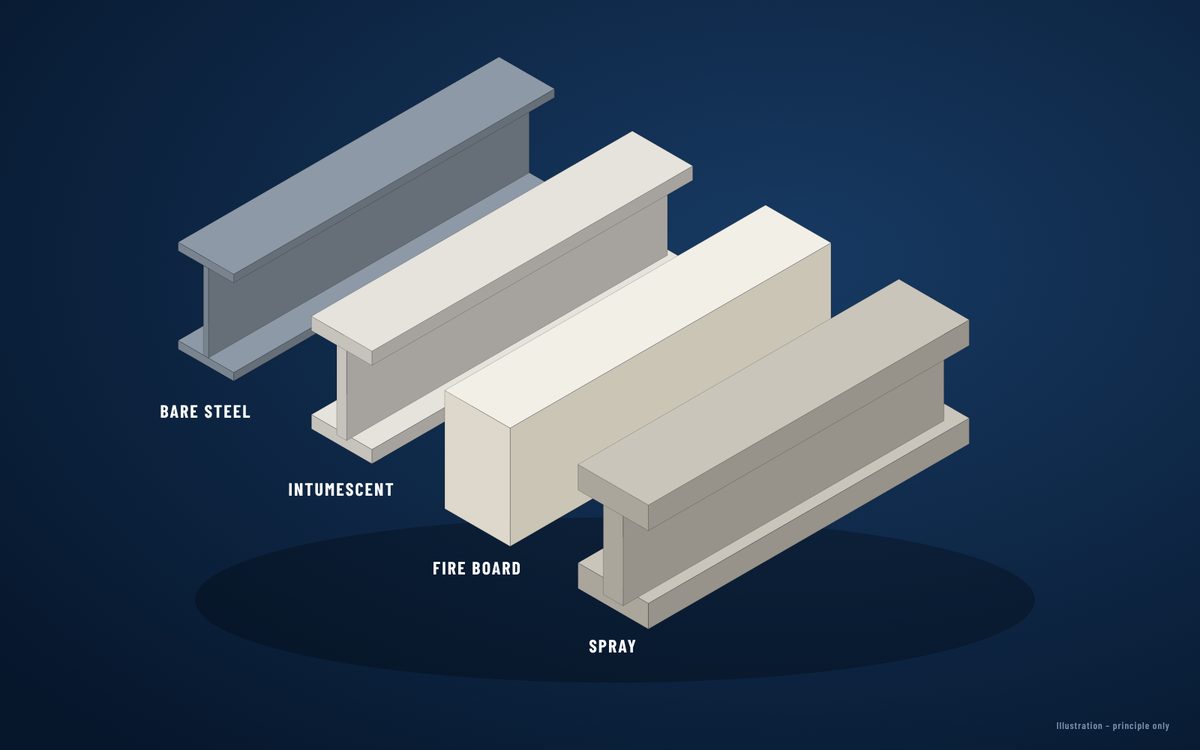
Four routes to a fire rating – chosen for the building, the exposure, the appearance and the cost. Product-specific data comes only from the manufacturer's approved documentation.

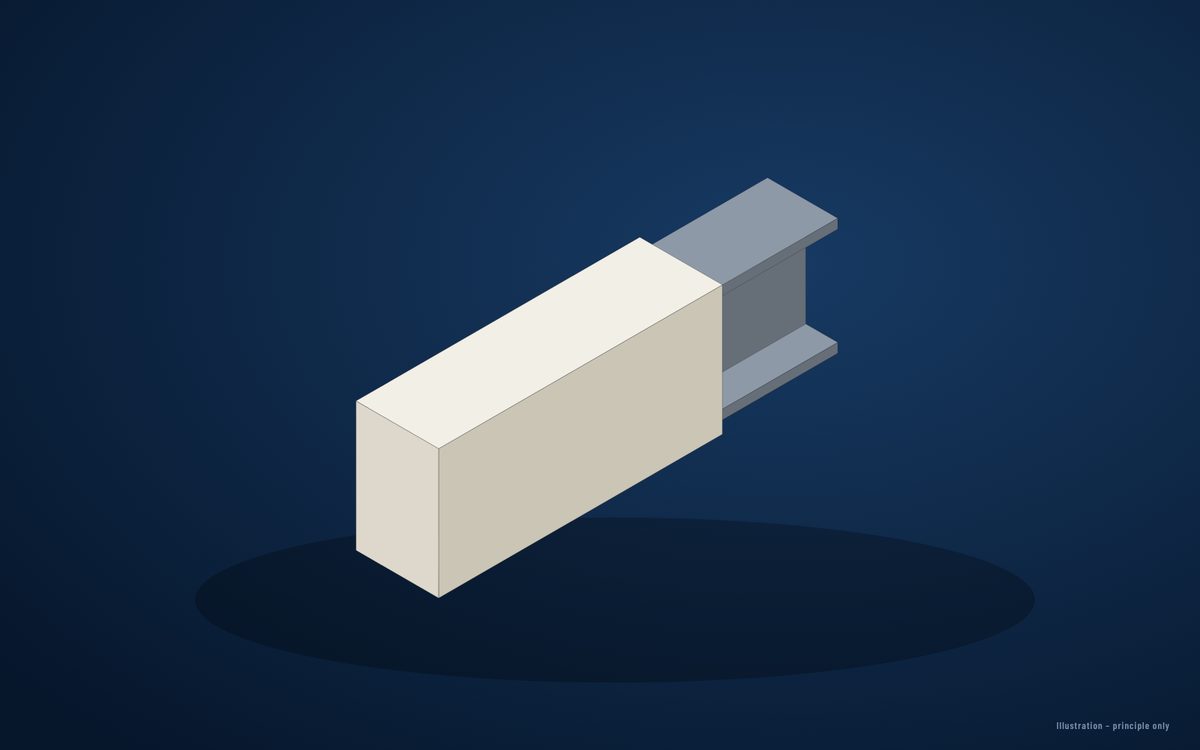
Thin-film intumescent coating (illustration)A

Cellulosic · buildings

Thin-film intumescent coating

Water-based or solvent-based acrylic coatings applied like paint over a compatible primer. In a fire they expand into an insulating char.

Typical applications: Exposed and architectural steel, offices, retail, schools, airports, warehouses

Surface appearance: Smooth, paint-like finish; steel profile stays visible; topcoat in any colour

Compatibility & certification: Primers and topcoats approved by the intumescent manufacturer for that system

  • Slim and light – no extra load
  • Shop or site application; covers connections and cellular beams
  • Low-VOC water-based grades for occupied buildings
  • Thickness and cost rise sharply at long ratings and high section factors
  • Water-based grades need dry interiors or a topcoat; humidity slows drying
  • Transport and handling damage needs touch-up
Epoxy intumescent coating (illustration)B

Cellulosic & hydrocarbon · industry

Epoxy intumescent coating

Two-component, high-solids epoxy systems – very hard and durable. Building (cellulosic) grades reach long ratings; dedicated grades are tested for hydrocarbon pool and jet fires.

Typical applications: Oil & gas, petrochemical and LNG plants, offshore, exterior and high-traffic steel; long cellulosic ratings

Surface appearance: Thick, hard film; architectural finish possible with topcoat

Compatibility & certification: Certification must match the fire scenario – a cellulosic approval does not cover hydrocarbon fire

  • Durable in C5 / exterior conditions; impact resistant
  • Fast cure – suitable for shop and module yards
  • Hydrocarbon (UL 1709) and jet-fire (ISO 22899-1) tested products
  • Higher material cost per litre; plural-component equipment
  • Mesh reinforcement required for some products and details
Cementitious fireproofing (illustration)C

Sprayed · concealed & industrial

Cementitious fireproofing

Sprayed fire-resistive materials (SFRM) – cement or gypsum binders with mineral aggregates or fibres – applied directly to steel.

Typical applications: Concealed beams and decks, long ratings, car parks, industrial and petrochemical structures (dense grades)

Surface appearance: Textured; usually hidden behind ceilings or linings

Compatibility & certification: Primer only where the spray manufacturer approves it – some products need bare steel

  • Lowest cost per m² at long ratings
  • Fast over large areas and complex shapes
  • Wet trade on site – curing time, overspray protection
  • Low-density grades are easily damaged; inspection of thickness and density (ASTM E605)
Customised fire protection systems (illustration)D

Engineered for your project

Customised fire protection systems

Mixed solutions where one system is not the best answer everywhere – for example intumescent on exposed steel, boards on columns in public areas and sprays above ceilings.

We design from:

  • Project location and the authority's accepted approvals
  • Fire resistance per element
  • Steel section factors from the member schedule
  • Environment and durability (ISO 12944 category)
  • Applicable standards and certification route
  • Budget and programme
  • Application method – factory, site or both

Compare fire protection systems

Coatings are one of eight fire protection product groups World Steel supplies for steel buildings – boards, sprays, insulation, fire-rated panels, doors and glazing, firestop and curtains. Comprehensive fire protection solutions →

Engineering-based coating thickness design

Precision engineering. Optimized coating consumption.

The required dry film thickness is not a number per rating – it is calculated member by member. Getting it right avoids both non-compliance and paying for coating that adds nothing.

Avoid excessive consumptionHeavy sections need far less coating than light ones for the same rating; one blanket thickness wastes material.
Reduce unnecessary costGrouping members by section factor and using the right critical temperature can lower the total volume.
Ensure complianceEvery thickness traces back to the product's approved loading table and certification.
Plan the projectVolumes, coats and drying time feed the fabrication and coating programme.
Support documentationThe DFT schedule becomes the inspection reference and part of the handover dossier.
MarkTypeDimensions (mm)kg/mLength mQtySidesCustom Hp mmDFT from approved data (mm)

Example rows – replace with your member schedule. Areas from plate geometry (root radii ignored) or from kg/m when given (ρ = 7850 kg/m³).

MarkA mm²Hp mmHp/A m⁻¹ksm m²/tW/D lb/ft/inCoating area m²Required DFT
Total coating area0

Preliminary calculations are provided for estimation purposes only. Final coating thickness and fire protection system selection must be verified against the approved product documentation, applicable project requirements and relevant engineering assessments.

Standards library

International fire protection standards

Fire test standards, classification standards, structural fire design codes and product approval routes are different things – a project usually needs one of each.

Fire test standardInternational

ISO 834-1

Fire-resistance tests – Elements of building construction

Defines the standard (cellulosic) time–temperature curve used by most national fire tests.

Fire test standardInternational

ISO 22899-1

Determination of the resistance to jet fires of passive fire protection materials

Jet-fire test for PFP used on oil, gas and process structures.

Fire test standardEurope

EN 1363-1 / EN 1363-2

Fire resistance tests – General requirements; alternative and additional procedures

European fire test furnace conditions; EN 1363-2 includes the hydrocarbon curve.

Fire test standardEurope

EN 13381-8

Test methods for determining the contribution to the fire resistance of structural members – Reactive protection applied to steel members

Tests and assessment of intumescent coatings; produces the data behind the loading tables.

Fire test standardEurope

EN 13381-4

… – Applied passive protection products to steel members

Tests and assessment for boards, sprays and other passive products.

Classification standardEurope

EN 13501-2

Fire classification of construction products and building elements – Classification using data from fire resistance tests

Expresses results as R 30, R 60, R 90, R 120, R 180 …

Product approvalEurope

EAD 350402-00-1106

European Assessment Document – Reactive coatings for fire protection of steel elements

Route to a European Technical Assessment (ETA) and CE marking; includes durability types X, Y, Z1, Z2.

Structural design standardEurope

EN 1993-1-2

Eurocode 3 – Design of steel structures – Structural fire design

Steel properties at elevated temperature, critical temperature and section factor rules.

Fire test standardUnited Kingdom

BS 476-20 / 21

Fire tests on building materials and structures – Methods for determination of the fire resistance of elements of construction

UK national fire tests, still referenced; EN 13381-8 data is widely accepted in the UK.

Fire test standardUnited States

ASTM E119

Standard Test Methods for Fire Tests of Building Construction and Materials

US standard fire test; ratings in hours.

Fire test standardUnited States

UL 263

Fire Tests of Building Construction and Materials

UL's equivalent test; UL listed designs give the thickness for each design and W/D.

Fire test standardUnited States

UL 1709

Rapid Rise Fire Tests of Protection Materials for Structural Steel

Hydrocarbon pool-fire test for petrochemical structures.

Structural design standardUnited States

AISC 360 Appendix 4

Structural Design for Fire Conditions

Performance-based structural fire design in the US.

Fire test standardAustralia

AS 1530.4

Methods for fire tests on building materials, components and structures – Fire-resistance tests for elements of construction

Australian fire test; results as FRL (structural adequacy/integrity/insulation).

Structural design standardAustralia

AS 4100 Section 12

Steel structures – Fire

Limiting steel temperature and exposed surface area to mass ratio (ksm).

Fire test standardEurope

EN 16623

Paints and varnishes – Reactive coatings for fire protection of metallic substrates – Definitions, requirements, characteristics and marking

Durability and performance requirements for reactive coatings; one of the test routes accepted in Singapore.

Fire test standardUnited Kingdom

BS 8202-2

Coatings for fire protection of building elements – Code of practice for the use of intumescent coating systems to metallic substrates for providing fire resistance

Durability and weathering guidance used with BS 476-21 or AS 1530.4 data, including in Singapore.

Product approvalSingapore

SCDF Fire Code · Table 11A

Singapore Fire Code – Regulated fire safety products and materials (Product Listing Scheme)

Intumescent coating systems for structural steel are regulated products: each needs a Certificate of Conformity from an accredited certification body before use in Singapore.

Listing a standard does not mean every product is certified to it – the certificate of the selected product states its test standard and scope.

Certification routes

Fire certifications for every market

World Steel supplies intumescent systems from leading manufacturers with the approval your project's authority accepts – Singapore Certificate of Conformity, UL listings, BS 476 assessments, Australian AS 1530.4 / AS 4100 assessments and European ETA / CE marking. The certificate always belongs to the product; the matrix shows what each manufacturer publishes.

Singapore CoCCertificate of Conformity under the SCDF Product Listing Scheme (PLS), issued by an accredited certification bodySCDF Fire Code · PLS
ULUL listed designs to UL 263 / ASTM E119; UL 1709 for hydrocarbon firesUL Product iQ
BS 476Assessments to BS 476-20/21; third-party certification (e.g. Certifire)UK · Middle East · Asia
AS 1530.4 / AS 4100Australian test and assessment reports, FRL to the NCCAustralia · New Zealand
EN 13381-8 / ETAEuropean Technical Assessment and CE marking under EAD 350402Europe · UK
ProductSingapore CoCULBS 476AS 1530.4 / AS 4100EN 13381-8 / ETA
InternationalInterchar 404 ?CoC confirmed per project ? ? ? ✓ETA-09/0259source
InternationalInterchar 963 ?CoC confirmed per project ? ◐BS 476-21 (product page)source ? ✓ETA-14/0043source
InternationalInterchar 1120 ?CoC confirmed per project ◐UL 263 (brochure)source ✓BS 476-20/21 · Certifiresource ◐AS 1530.4 · AS 4100source ✓ETA-20/1193source
InternationalInterchar 1160 ?CoC confirmed per project ? ? ◐AS 1530.4 · AS 4100 (product page)source ✓ETA-20/1192source
InternationalChartek 7E ?CoC confirmed per project ? ? ? ?
InternationalChartek 1709 ?CoC confirmed per project ✓ANSI/UL 1709 listedsource ? ? ✓ETA-10/0086source
InternationalChartek ONE ?CoC confirmed per project ◐UL 1709 Ed. 5source ? ? ?
HempelHempacore One 43600 ?CoC confirmed per project ? ? ◐AS 4100 – 3rd-party certified (PDS)source ✓ETA 12/0581source
HempelHempacore One FD 43601 ?CoC confirmed per project ? ✓Certifire (PDS)source ◐AS 4100 – 3rd-party certified (PDS)source ✓ETA 12/0581source
HempelHempacore AQ 48860 ?CoC confirmed per project ? ✓BS 476-21 assessment up to 90 minsource ? ✓ETA 13/1054source
JotunSteelMaster 600WF / 900WF / 1200WF ?CoC confirmed per project ? ✓Certifire CF 5631 (600WF) · CF 6140 (900WF) · CF 5243 (1200WF)source ◐AS 4100 (1200WF)source ✓ETA-22/0047 · ETA-24/0831 · ETA-22/0351source
JotunSteelMaster 60SB / 90SB (QD) ?CoC confirmed per project ? ✓Certifire CF 5170 (60SB) · BS 476-20/21 (90SB)source ? ✓ETA-22/0350 · ETA 24/0096source
JotunSteelMaster 1200HPE ?CoC confirmed per project ◐UL 263 exterior · UL 2431 I-Asource ✓Certifire CF 5857 (up to 180 min)source ◐AS 4100 (TDS) ✓ETA-21/1019source
JotunJotachar 1709 ?CoC confirmed per project ◐UL 1709 · UL 2431source ? ? ?
PPGPPG STEELGUARD 651 ?CoC confirmed per project ? ✓BS 476-20/21 assessedsource ? ✓ETA 22/0050source
PPGPPG STEELGUARD 701 / 801 ?CoC confirmed per project ? ✓BS 476-20/21 assessedsource ? ✓ETA 22/0048source
PPGPPG STEELGUARD 951 ?CoC confirmed per project ◐UL 263 · UL 2431 I-A (PDS)source ◐BS 476 (PDS)source ? ✓ETA 22/0790source
PPGPPG PITT-CHAR NX ?CoC confirmed per project ✓UL 1709 Rev. 5 · UL 2431 (UL Verify V503293)source ◐BS 476 tested (PDS)source ? ✓ETA 21/1088source

✓ = listing or certificate published by the certification body · ◐ = stated by the manufacturer (data sheet / website) – certificate supplied on request · ? = not found in public sources – ask us, the manufacturer may hold it · — = not applicable. Certificates cover specific products, ratings, section shapes and sizes; World Steel supplies the current certificate and loading table for the accepted route with every proposal.

Engineering lookup tables

Lookup tables by standard

Reference values calculated from the published formulas and tables of each standard – fire curves, steel strength at temperature, critical and limiting temperatures, section-factor conversions and rating equivalents. Coating thickness itself always comes from the selected product's approved loading table.

Time (min)ISO 834 · EN 1363-1 · BS 476-20 · AS 1530.4 (°C)ASTM E119 · UL 263 (°C)EN 1363-2 hydrocarbon (°C)
5576538948
106787041034
15739—1071
308428431098
45902—1100
609459271100
901006—1100
120104910101100
180111010521100
240115310931100

ISO 834: T = 20 + 345·log10(8t + 1). ASTM E119: published curve points (1000 °F at 5 min … 2000 °F at 4 h). EN 1363-2: T = 20 + 1080(1 − 0.325e^−0.167t − 0.675e^−2.5t). UL 1709 (rapid rise) reaches 2000 °F (1093 °C) within 5 minutes.

Value engineering

Reduce coating costs without compromising fire performance

Ten factors decide the installed cost of an intumescent system. Most of them can be engineered.

  1. Steel section factorThe biggest driver – light, thin members need much more coating. Heavier sections can reduce the total cost.
  2. Fire resistance durationR120 can need several times the DFT of R60 on the same member.
  3. Critical steel temperatureA lower load ratio gives a higher critical temperature and a thinner coating – ask the engineer to calculate it.
  4. Steel surface areaCoating is bought per litre and applied per m² – the member schedule sets both.
  5. Required DFTFrom the approved loading table, member by member.
  6. Product volume solidsLitres needed = area × DFT ÷ volume solids – high-solids products need fewer litres for the same film.
  7. Application lossesOverspray, equipment and shape losses – lower in the shop than on site.
  8. Surface preparationBlast grade and primer system required by the intumescent manufacturer.
  9. Environmental conditionsHumidity and temperature affect drying, the number of coats and the programme.
  10. Inspection requirementsDFT readings per member, hold points and third-party inspection.

Open the cost estimator Request cost optimization

Factory or site

Flexible fire protection application solutions

World Steel fabricates, blasts and paints structural steel in its own shop. Intumescent can be applied there with the steel – or on site by the project's applicator.

Painting shop at the World Steel factory
CriterionFactory applicationSite application
Environmental controlControlled temperature and humidity; steel temperature checkedExposed to weather; enclosures or heating may be needed
Application qualityMembers turned and coated in the best positionOverhead and difficult access; scaffolds or lifts
InspectionEvery member measured before dispatchInspection follows erection sequence
Project scheduleRuns in parallel with site worksAdds a trade after erection
TransportationCareful packing and supports neededNo transport risk to the coating
Coating damageHandling and erection damage at supports and connectionsMinimal
Touch-upConnections and damaged areas after erectionNot applicable
Overall costUsually lower – efficient application, fewer site hoursHigher site labour and access costs

Many export projects combine both: the full system is applied in the factory and connections, bolts and damaged areas are completed on site with the same product, by a procedure agreed in the ITP.

  1. Fabrication
  2. Blast cleaning
  3. Primer
  4. Intumescent coats
  5. Topcoat
  6. DFT inspection
  7. Packing & shipping
  8. Erection & touch-up

Quality assurance

Quality you can verify

Coating quality is controlled step by step and recorded – so the fire engineer and the authority can see that every member has the thickness it needs.

  1. 01Surface preparation inspection

    Blast cleanliness and profile checked against the primer data sheet before coating.

  2. 02Primer compatibility verification

    Primer type and thickness confirmed against the intumescent manufacturer's approved list.

  3. 03Environmental monitoring

    Air and steel temperature, relative humidity and dew point recorded before and during application.

  4. 04Coating application

    Airless spray by trained applicators following the product application guide.

  5. 05Wet film thickness monitoring

    WFT checks during application to steer each coat to the target.

  6. 06Dry film thickness inspection

    Calibrated gauges, readings per member against the DFT schedule.

  7. 07Final inspection

    Visual check, topcoat, marking and release of each lot.

  8. 08Handover documentation

    Coating report, product certificates, batch numbers and DFT records in the project dossier.

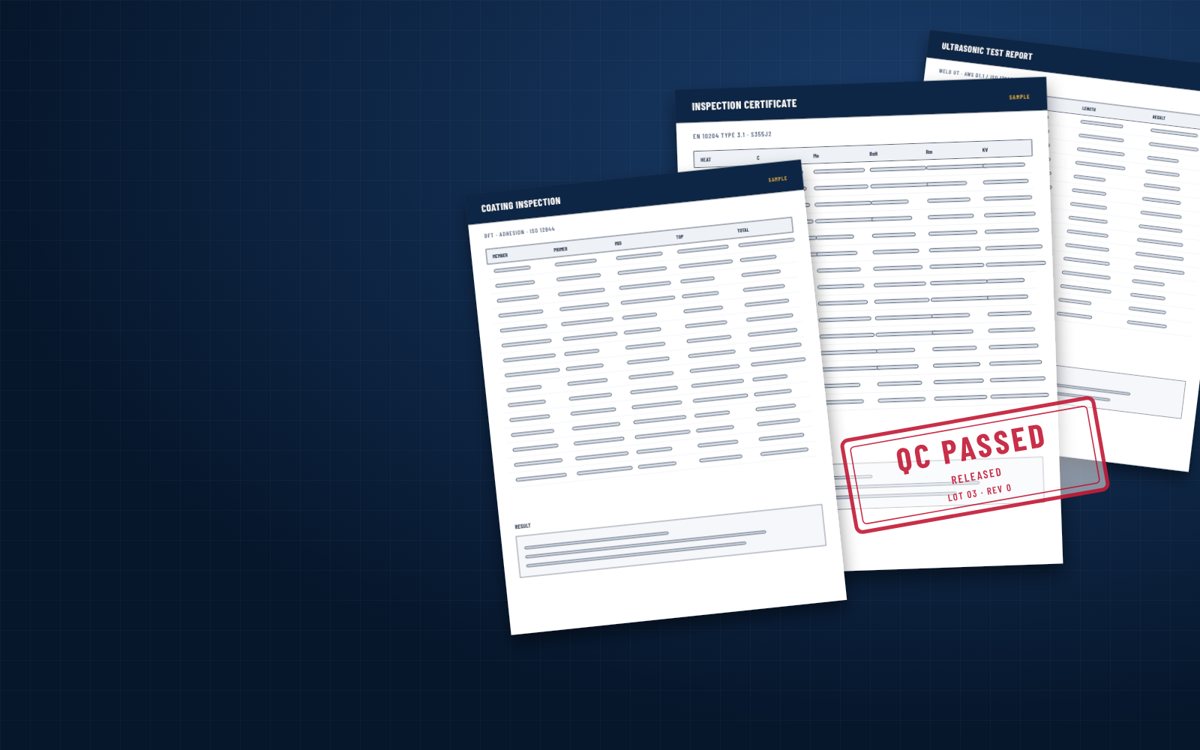
Quality documentation (illustration)

Quality records delivered

  • Inspection & test plan (ITP)
  • Surface preparation records
  • Environmental records
  • Batch traceability
  • WFT reports
  • DFT reports
  • Gauge calibration certificates
  • NCR / CAR
  • Final inspection reports

Quality control at World Steel →

Industries

Fire protection solutions across industries

Each industry brings its own fire scenario, exposure and appearance requirements.

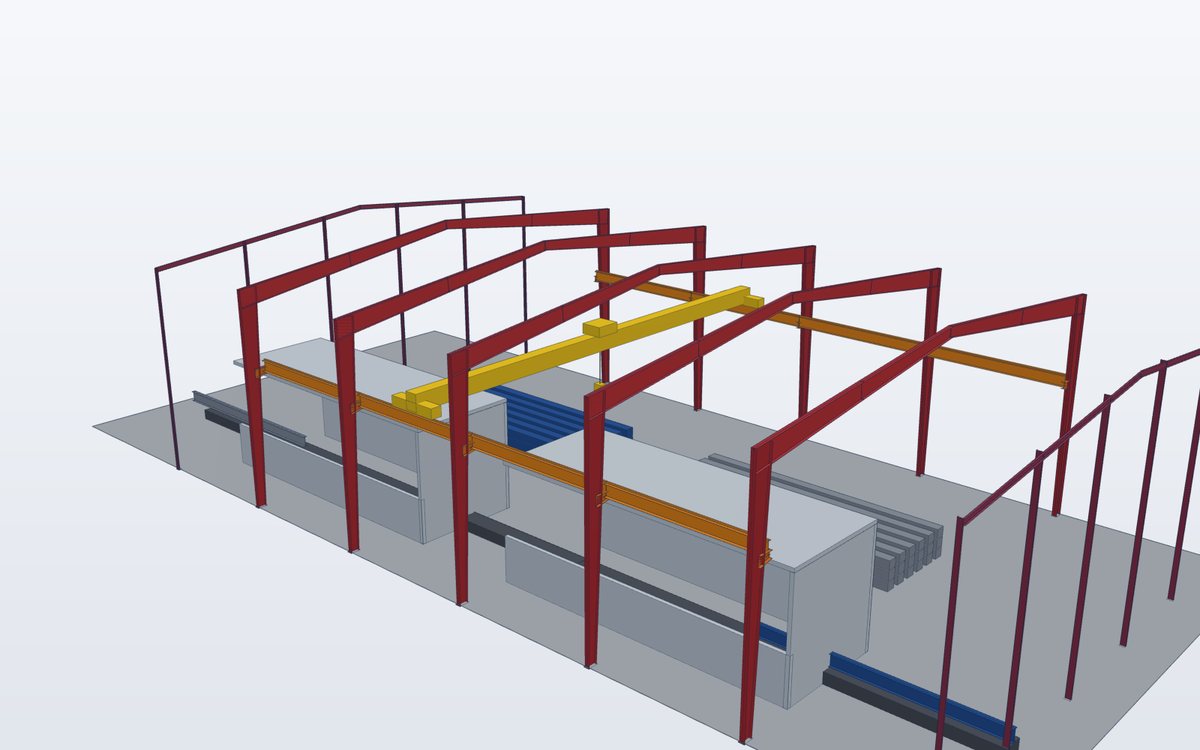
Industrial buildings

Industrial buildings

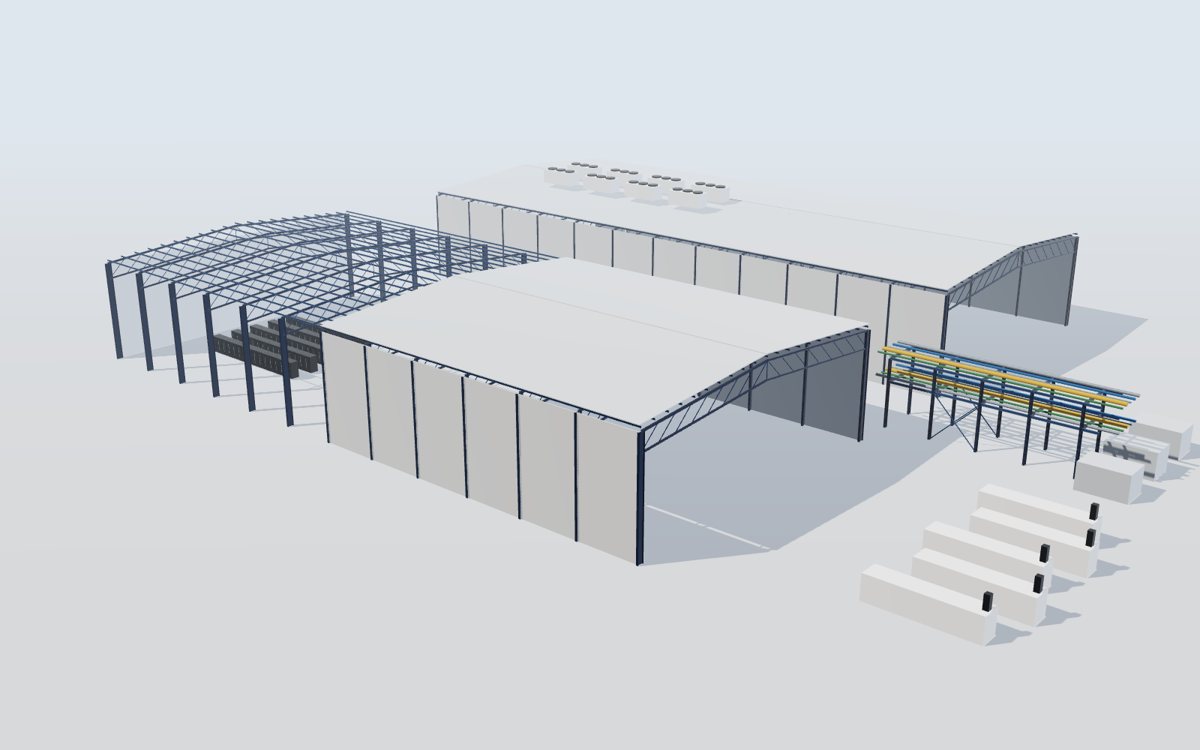
Factories and plants where escape routes, mezzanines and compartment walls need rated steel.

Typical components: Columns, rafters, crane girders, mezzanines

Standards: Local building code · EN 13381-8 / UL 263 / AS 1530.4

Steel solution →
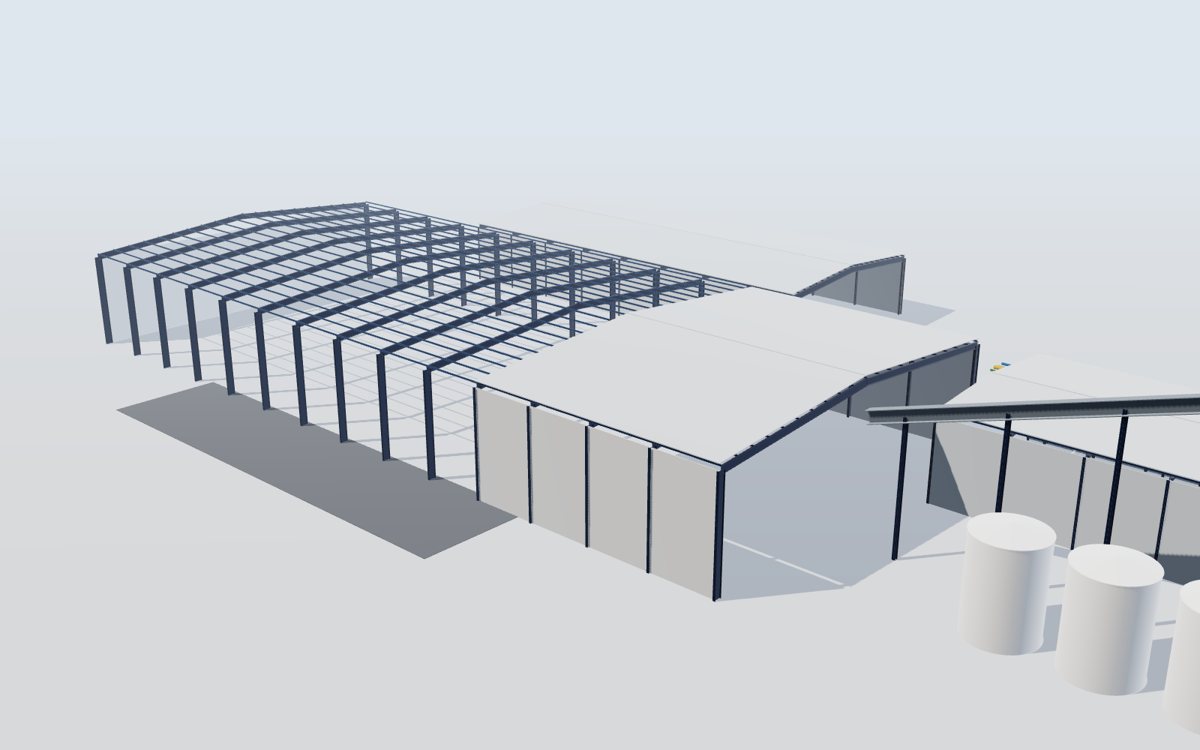
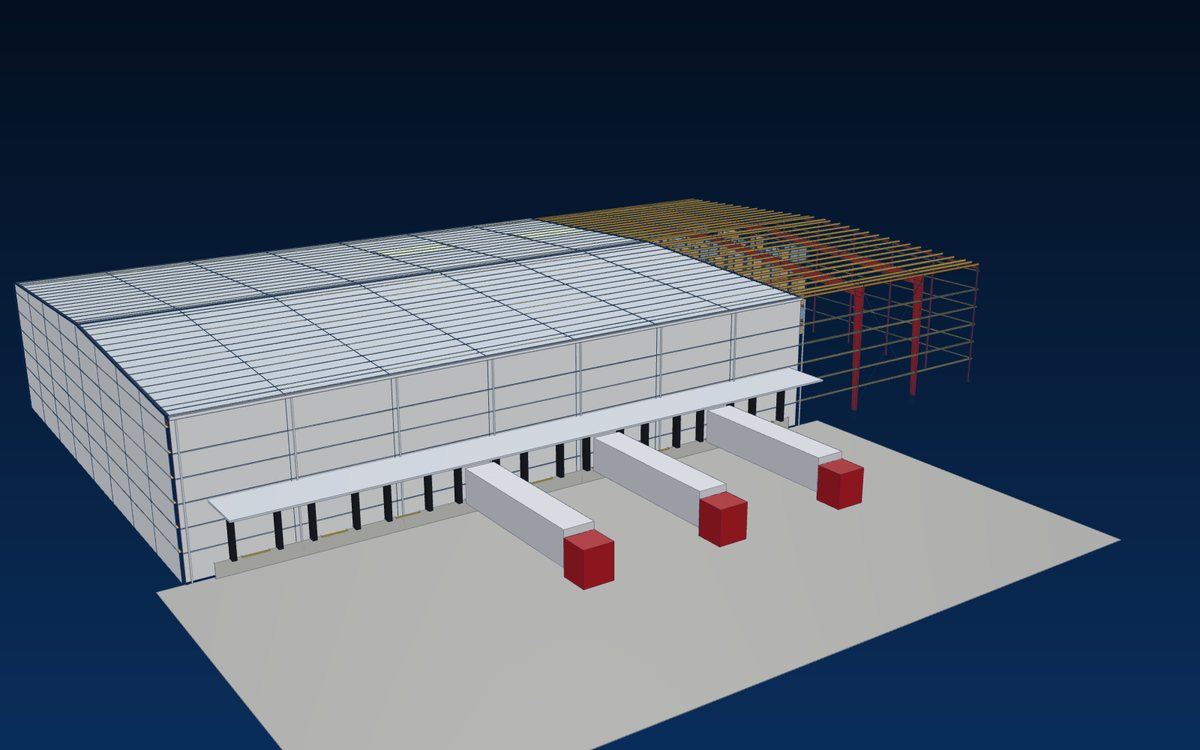
Steel warehouses

Steel warehouses

Often unrated, but columns at fire walls, racking zones and offices may need protection.

Typical components: Portal frames, columns at firewalls, mezzanines

Standards: Code and insurer requirements

Steel solution →
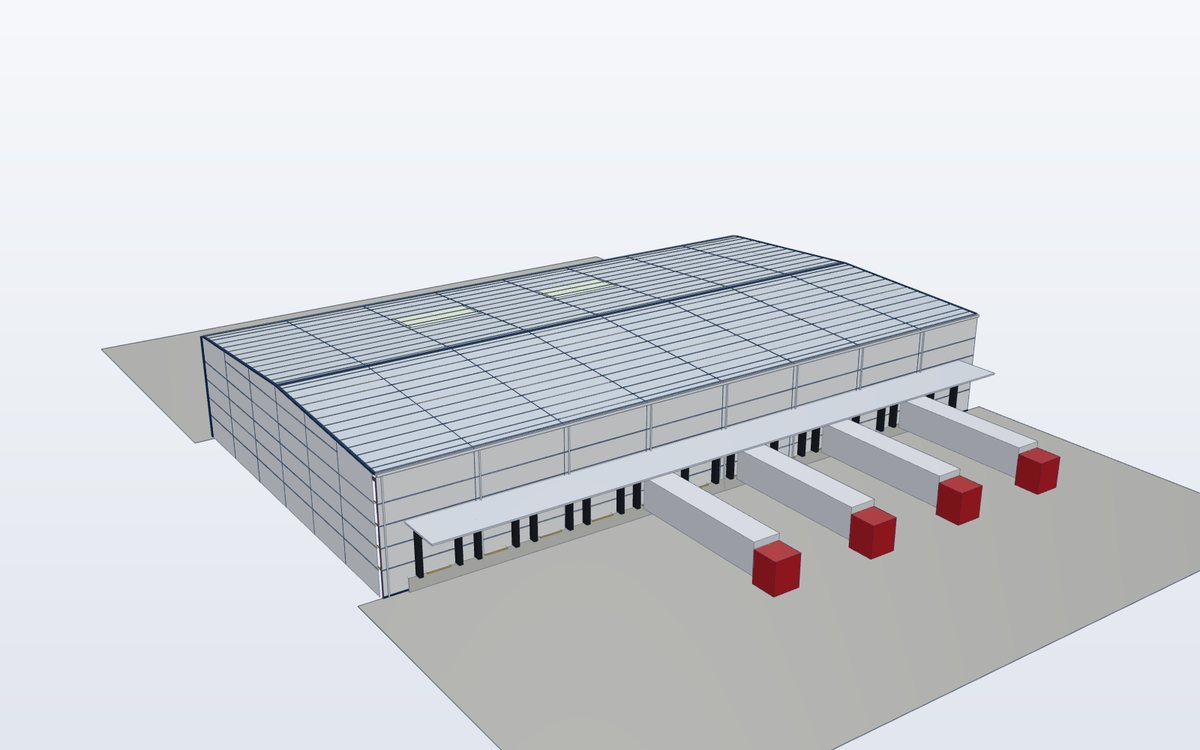
Logistics centres

Logistics centres

Large compartments with offices and mezzanines – protection targeted where it is required.

Typical components: Columns, office blocks, dock structures

Standards: Building code · insurer rules

Steel solution →
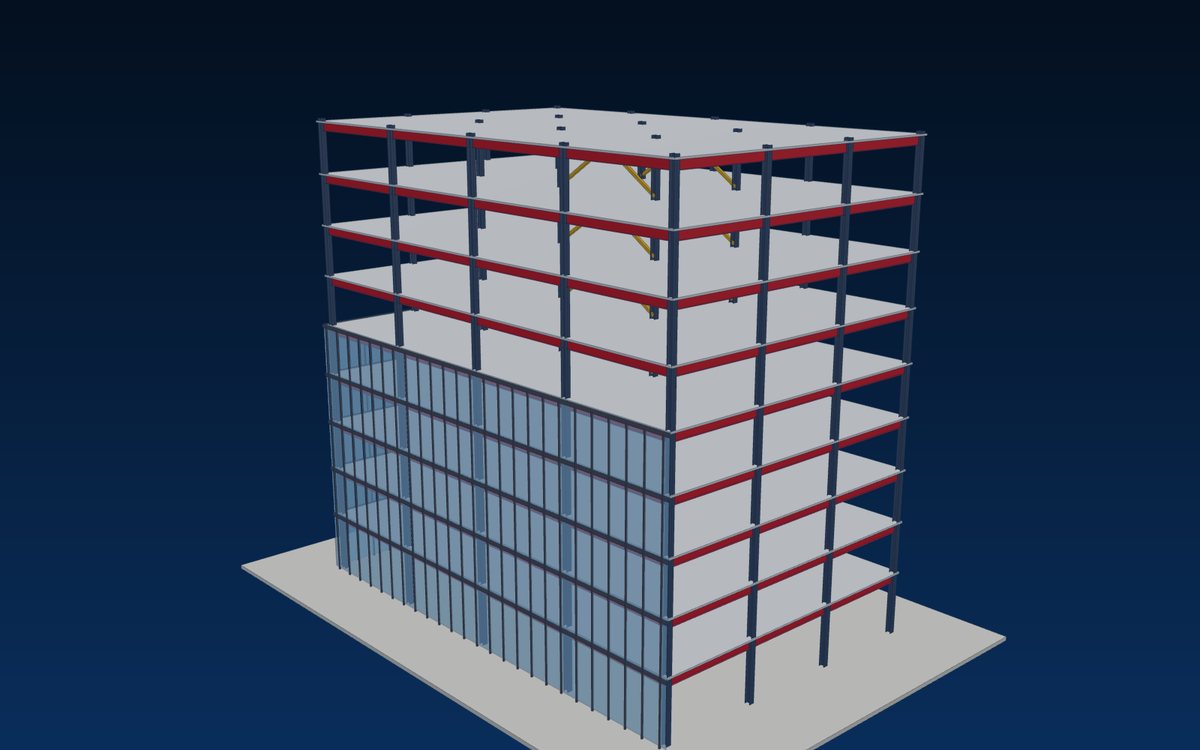
Commercial buildings

Commercial buildings

Offices and retail – typically R60 to R120 with exposed, architectural steel.

Typical components: Beams, columns, cellular beams, bracing

Standards: EN 13381-8 · UL 263 · AS 1530.4

Steel solution →
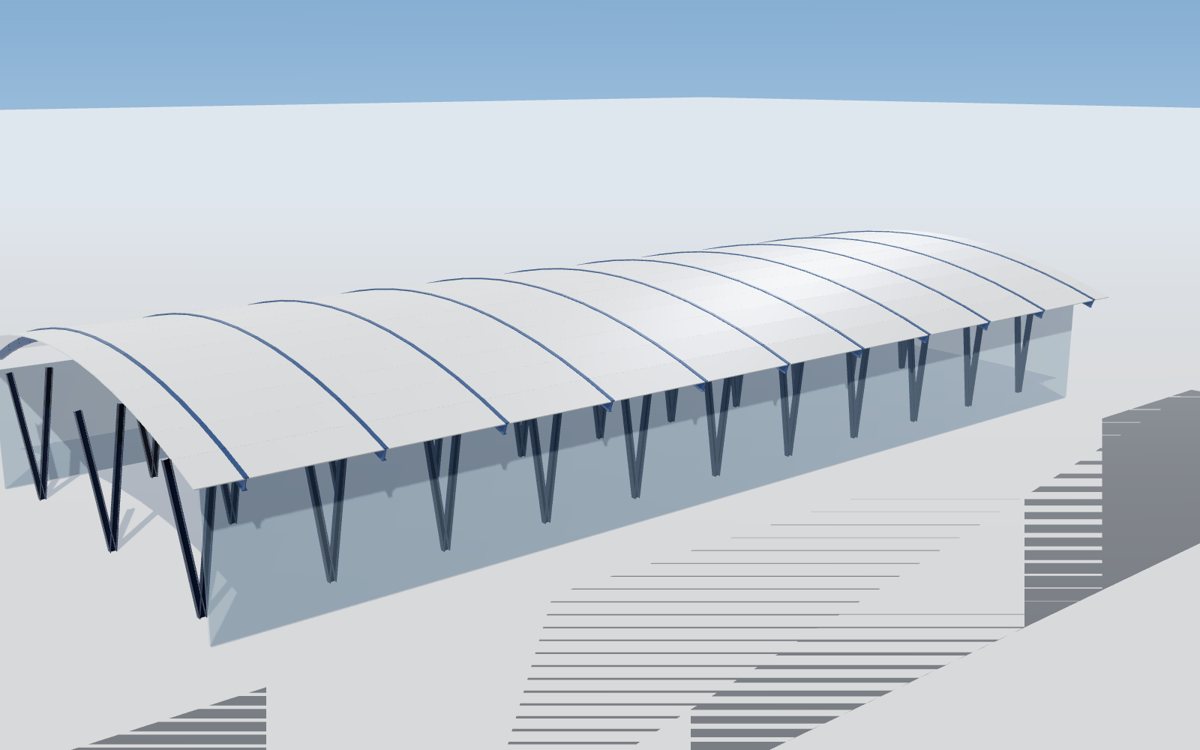
Airports

Airports

Terminals with exposed long-span steel where appearance and performance-based design matter.

Typical components: Long-span roof trusses, columns, hollow sections

Standards: Project specification · fire engineering

Steel solution →
Data centres

Data centres

Compartmentation and continuity of service drive the fire strategy.

Typical components: Frames, plant platforms, cable and pipe supports

Standards: Building code · owner standards

Steel solution →
Energy facilities

Energy facilities

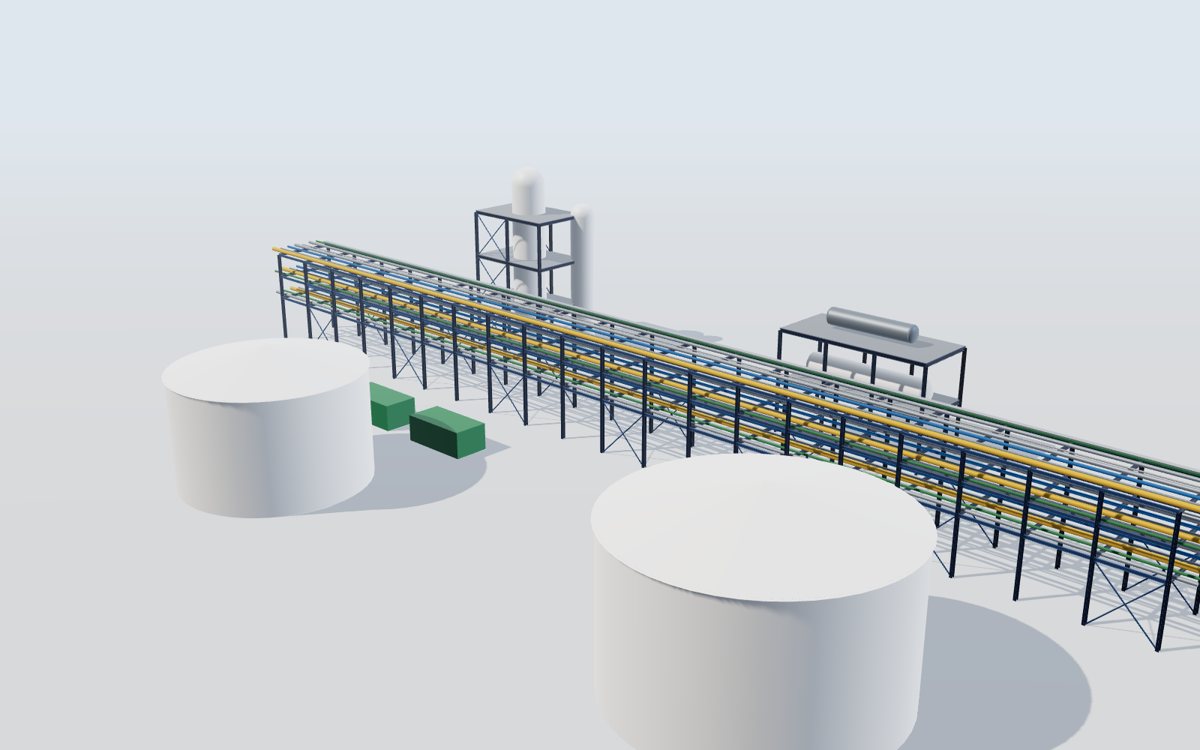
Hydrocarbon pool and jet-fire scenarios need epoxy systems tested for them.

Typical components: Pipe racks, vessel skirts, modules

Standards: UL 1709 · ISO 22899-1 · owner specs

Steel solution →
Infrastructure projects

Infrastructure projects

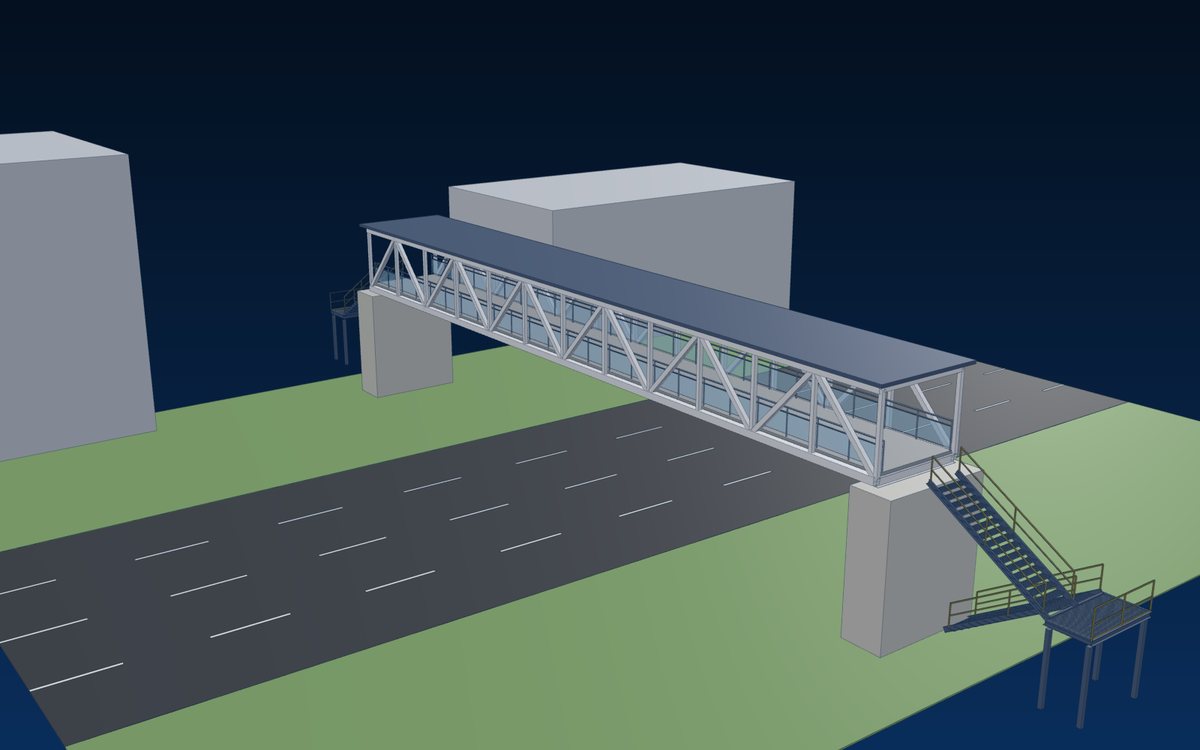
Exterior and semi-exposed steel where durability and inspection access are key.

Typical components: Bridges, stations, tunnels, walkways

Standards: Project specification

Steel solution →

Project experience

Proven solutions. Real project results.

Fire protection case studies are published here once each project and its data are verified. In the meantime, see the World Steel project portfolio.

Verified fire protection case studies will appear here. We publish only completed projects with confirmed data.

See the World Steel project portfolio

Knowledge centre

Fire protection engineering knowledge center

Practical guides for owners, engineers and contractors.

01

What is intumescent fire protection coating?

Intumescent coatings are thin, paint-like systems that swell into an insulating char in a fire and keep structural steel below its critical temperature. What they are, where they are used and what they are not.

2 min read →
02

How does intumescent paint work?

From a thin film to an insulating char: the chemistry and physics of intumescent coatings in a fire, and why expansion and performance are specific to each product.

2 min read →
03

R30, R60, R90 and R120 explained

What R30, R60, R90 and R120 mean, how they relate to FRL in Australia and hour ratings in the US, and why a higher rating does not simply mean a proportionally thicker coating.

2 min read →
04

How to calculate steel section factor (Hp/A)

The section factor Hp/A decides how fast a steel member heats up and how much fire protection it needs. Formulas for I-sections, hollow sections and boxed protection, with worked examples and the US and Australian equivalents.

2 min read →
05

How to determine intumescent coating thickness

Coating thickness is read from the product's approved loading table using the fire rating, critical temperature, section shape, exposure and section factor. The step-by-step method – and the limits you must not cross.

2 min read →
06

Intumescent vs cementitious fireproofing

Thin, decorative intumescent coatings or economical cementitious sprays? A side-by-side comparison of appearance, ratings, durability, application and cost to choose the right fireproofing.

2 min read →
07

Fire protection for steel warehouses

Do steel warehouses need fire protection? When codes and insurers require it, which members are usually protected and how to keep the cost under control in large logistics buildings.

2 min read →
08

Factory vs site application of intumescent coatings

Applying intumescent coating in the fabrication shop or on site: quality, programme, transport, damage, touch-up and cost compared – and how to combine both.

2 min read →
09

Fire protection coating cost – what drives it

Why there is no single price per square metre for intumescent coating, how to calculate litres from area, DFT and volume solids, and the levers that reduce installed cost without reducing fire performance.

2 min read →
10

International fire protection standards for structural steel

EN 13381-8, EN 13501-2, BS 476, ASTM E119, UL 263, UL 1709 and AS 1530.4 – what each standard does, and the difference between fire tests, classification, structural design and product approval.

2 min read →

FAQ

Frequently asked questions

Can you supply intumescent coatings for projects in Singapore, the US, the UK or Australia?

Yes. We select a product that holds the approval your authority accepts: a Singapore Certificate of Conformity (SCDF Product Listing Scheme), a UL listed design (UL 263 / UL 1709), a BS 476 assessment or Certifire certificate, an Australian AS 1530.4 / AS 4100 assessment, or a European ETA. The certificate and its loading table are submitted with the proposal; where a product's certificate for a market is not published, we confirm it with the manufacturer before quoting.

What is fire protection coating for structural steel?

A coating system – usually primer, intumescent basecoat and topcoat – that insulates steel in a fire so it stays below its critical temperature for the required time. Cementitious sprays and boards do the same job by other means.

How does intumescent coating work?

When heated, the coating softens and chemical reactions release gases that expand it into a thick carbon char. The char has low thermal conductivity and slows the heating of the steel. The degree of expansion is specific to each product.

What is the difference between R60 and R120?

The time in minutes for which the member must keep its load-bearing function in the standard fire test – 60 or 120 minutes. R120 usually needs a much thicker coating or a different system on the same member.

How thick should fire protection coating be?

There is no single thickness per rating. The DFT is read from the product's approved loading table for each member's section factor, critical temperature, rating and exposure – from a few tenths of a millimetre to several millimetres.

How much does intumescent coating cost per square meter?

It depends on the DFT (which depends on the member), the product, volume solids, surface preparation, location and inspection. Use the cost estimator with your own unit prices, or send us the member schedule for a priced proposal.

Can coating be applied at the factory?

Yes. World Steel can apply the system in its painting shop with the steel; connections and handling damage are completed on site with the same product.

Can coating be applied over galvanized steel?

Only with a pre-treatment and primer or tie-coat that the intumescent manufacturer approves for galvanized substrates, and within the scope of its fire test data. Check this before specifying.

Can fire protection coating be used outdoors?

Some systems are assessed for exterior exposure (for example durability type X under EAD 350402) with a specified topcoat; epoxy systems are designed for harsh exterior and offshore conditions. Water-based grades are usually for dry interiors.

What is the expected service life?

It depends on the product, its durability classification, the exposure and maintenance. Manufacturers state durability for their systems; inspect regularly and repair damage with the same system.

What international standards apply?

Typically EN 13381-8 with EN 13501-2 in Europe, UL 263 / ASTM E119 in the US, AS 1530.4 with AS 4100 in Australia, BS 476 in the UK, and UL 1709 for hydrocarbon fires. Your authority decides which approvals are accepted.

How is coating thickness inspected?

With calibrated magnetic or electronic DFT gauges on each member, at a frequency set in the ITP, and compared with the DFT schedule. Wet film checks guide the applicator during spraying.

What information is required for a quotation?

Structural drawings or a member schedule with section sizes and lengths, the fire rating per element, exposure (3 or 4 sides), critical temperatures if known, the environment, accepted standards or approvals, application location and the programme.

Download centre

Technical documents & engineering resources

Templates from World Steel and links to the manufacturers' official product information. Project-specific test and classification data is sent on request.

DocumentCategoryTypeRev. / date
Fire protection member schedule – templateMember list with section, length, quantity, exposure, rating and critical temperature – the input for a thickness design.Engineering templatesCSV · < 1 KBA 2026-10-16 Download
DFT inspection record – templatePer-member DFT readings against the schedule, with gauge and environmental data.Inspection checklistsCSV · < 1 KBA 2026-10-16 Download
Fire protection technical questionnaireThe questions we ask to engineer a fire protection solution.Technical questionnairesDOCX · 37 KBA 2026-10-16 Download
International – passive fire protection productsInterchar and Chartek ranges on the manufacturer's website.Product brochuresWeb— Open
Hempel – Hempacore rangeHempacore intumescent coatings on the manufacturer's website.Product brochuresWeb— Open
Jotun – SteelMaster productsSteelMaster intumescent coatings on the manufacturer's website.Product brochuresWeb— Open
PPG – STEELGUARD 651Product page with data sheets on the manufacturer's website.Technical data sheetsWeb— Open
Interchar 404 – ETA-09/0259 (DIBt)European Technical Assessment with the approved DFT tables, published by DIBt.Approved thickness tablesWeb— Open
Interchar 963 – ETA-14/0043 (DIBt)European Technical Assessment with the approved DFT tables, published by DIBt.Approved thickness tablesWeb— Open
Chartek 1709 – ETA-10/0086 (DIBt)European Technical Assessment with the approved DFT tables, published by DIBt.Approved thickness tablesWeb— Open
Hempacore ONE – ETA 12/0581 (ITeC)European Technical Assessment with the approved DFT tables, published by ITeC.Approved thickness tablesWeb— Open
Approved loading tables for the selected systemIssued for the selected product and the project's certification route.Approved thickness tablesOn request— Request
Fire test and classification reportsSupplied with the proposal for the accepted approval (ETA, UL design, AS 1530.4 assessment).Fire test reportsOn request— Request
Technical and safety data sheetsCurrent TDS and SDS of every component of the proposed system.Safety data sheetsOn request— Request
Coating ITP and application procedureProject-specific inspection and test plan and touch-up procedure.Application guidelinesOn request— Request

Technical proposal

Get an engineered fire protection solution for your project

Send the project data and drawings – our engineers review the fire strategy, select the system and return a technical and commercial proposal.

Contact
Project
Fire requirements
Files

PDF, Excel, Word, DWG, IFC or ZIP. Large files: add a download link in the requirements.

You receive a reference number on the next page and by e-mail.

Your steel structure deserves engineered fire protection

Protect Structural Integrity. Optimize Project Costs. Meet International Standards.

Request a quotation Talk to our engineering team Download technical questionnaire

Company
World Steel Construction JSC
Sales & technical contact
Victor Dang – Global Sales Director & COO
Office
Ho Chi Minh City, Vietnam
Factory
Hai Son Industrial Park, Tay Ninh, Vietnam
Valid certifications
IAS AC472 · AS/NZS 5131 CC3 · EN 1090 EXC3 · CE
Consultation

Next project

Planning a steel structure abroad?

Send us your drawings or IFC model – our estimating team replies with fabrication scope, schedule and delivered price.