ENEnglish
 VITiếng Việt
 ZH中文
 KO한국어
 JA日本語
 FRFrançais
 ITItaliano
 PTPortuguês
 ESEspañol
 HEעברית
 ARالعربية

 Standards by market
How the Australian system works
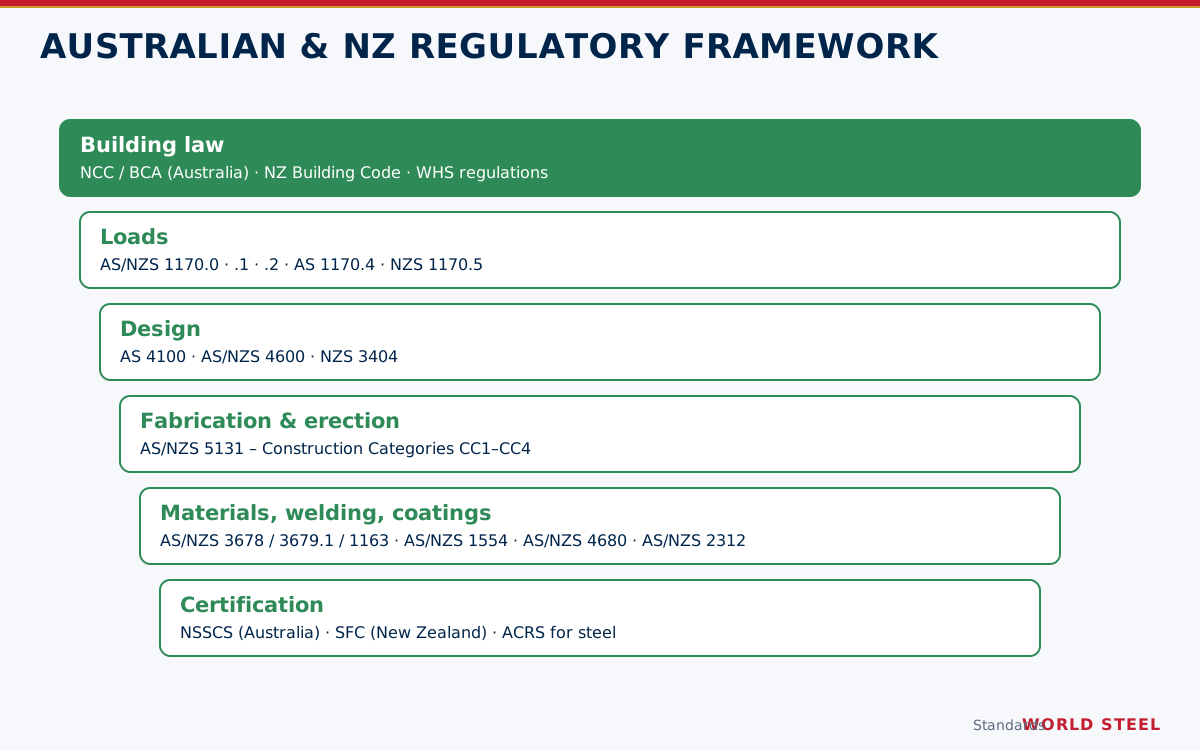
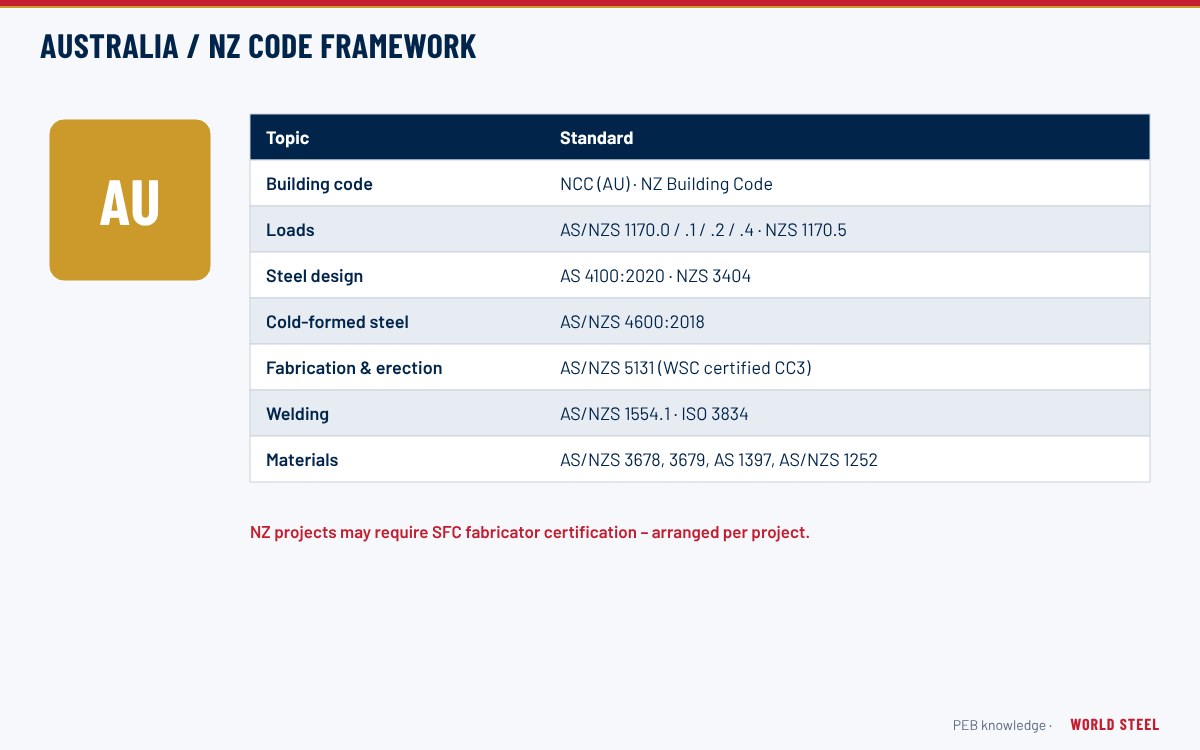
In Australia, building work is regulated by the states and territories, which give legal effect to the National Construction Code (NCC) published by the Australian Building Codes Board. Volume One of the NCC covers commercial, industrial and multi-residential buildings. It is a performance-based code: a design complies either by following the Deemed-to-Satisfy provisions, which call up Australian Standards, or through a Performance Solution justified by the designer. For steel buildings the Deemed-to-Satisfy route references the AS/NZS 1170 series for structural actions, AS 4100 for steel structures and AS/NZS 4600 for cold-formed steel. Building approval is granted by a building surveyor or certifier, who relies on the designer's certification and on evidence of compliant construction.
Workplace safety law is a separate, parallel layer. The model Work Health and Safety (WHS) laws, adopted by each jurisdiction, place duties on designers, manufacturers, suppliers and installers of structures and plant. For fixed platforms, walkways, stairways and ladders used in workplaces, AS 1657 is the standard used to demonstrate safe access, while the NCC governs stairs and balustrades in areas used by the public.
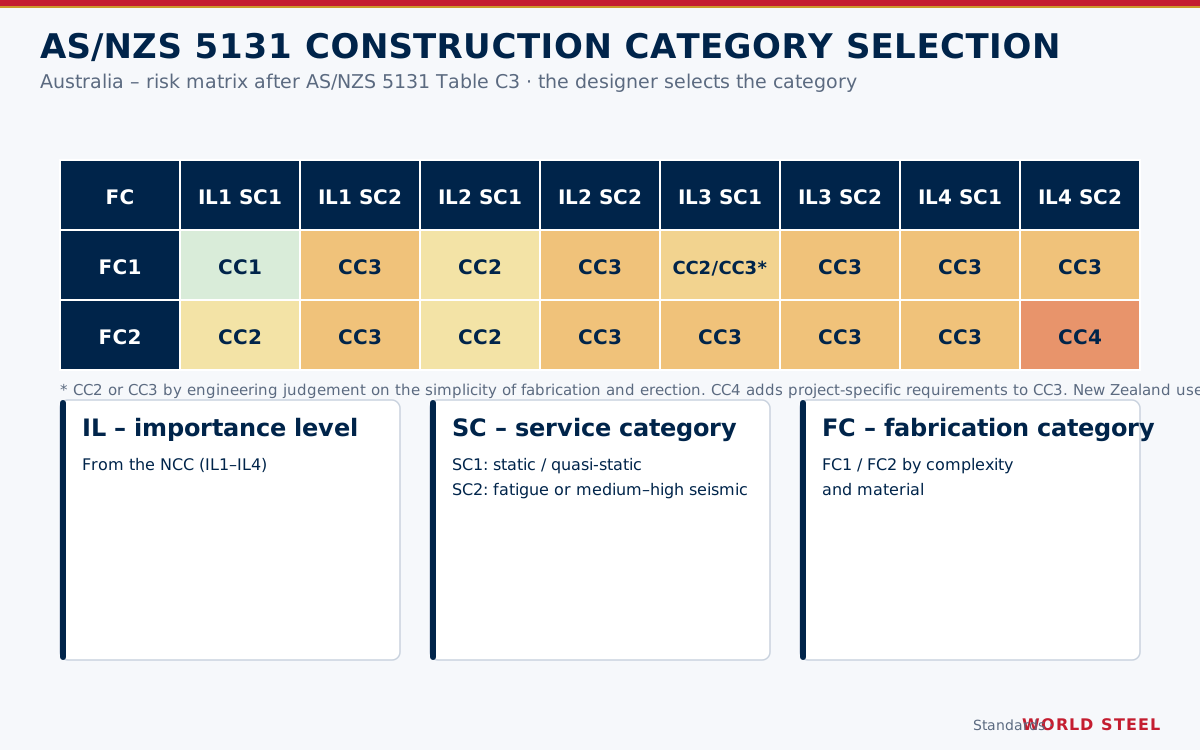
Fabrication and erection quality is defined by AS/NZS 5131 Structural steelwork – Fabrication and erection. The designer assigns a Construction Category from CC1 to CC4 based on the importance level of the structure, the service conditions (static or fatigue loading) and the fabrication complexity. The category then sets the welding category, the extent of inspection and testing, tolerances and documentation. AS/NZS 5131 also requires the fabricator to work to an inspection and test plan and to hand over records that demonstrate conformance.
Because the code itself does not name who checks the fabricator, the industry relies on third-party schemes. The National Structural Steelwork Compliance Scheme (NSSCS), administered by Steelwork Compliance Australia (SCA), certifies fabricators to AS/NZS 5131 construction categories and is widely called up in specifications. For the steel itself, ACRS (Australasian Certification Authority for Reinforcing and Structural Steels) provides independent product certification that structural steel conforms to AS/NZS 3678, AS/NZS 3679.1 and AS/NZS 1163.
New Zealand and Papua New Guinea
In New Zealand, building work requires a building consent under the Building Act. The New Zealand Building Code (NZBC) sets performance clauses – including B1 Structure, B2 Durability, D1 Access routes and F4 Safety from falling – which are met through Acceptable Solutions, Verification Methods or alternative solutions. Steel is designed to NZS 3404, with earthquake actions from NZS 1170.5, and fabricated and erected to the joint standard AS/NZS 5131 with welding to AS/NZS 1554. Producer statements are commonly used to record design and construction compliance. Many New Zealand specifications call for fabricators certified under Steel Fabrication Certification (SFC), run by Steel Construction New Zealand; where SFC is required, the certification route is agreed with World Steel for that project.
Projects in Papua New Guinea commonly specify Australian Standards; World Steel applies the same AS/NZS design, fabrication and coating basis unless the contract documents state otherwise. See the market pages for Australia, New Zealand and Papua New Guinea.
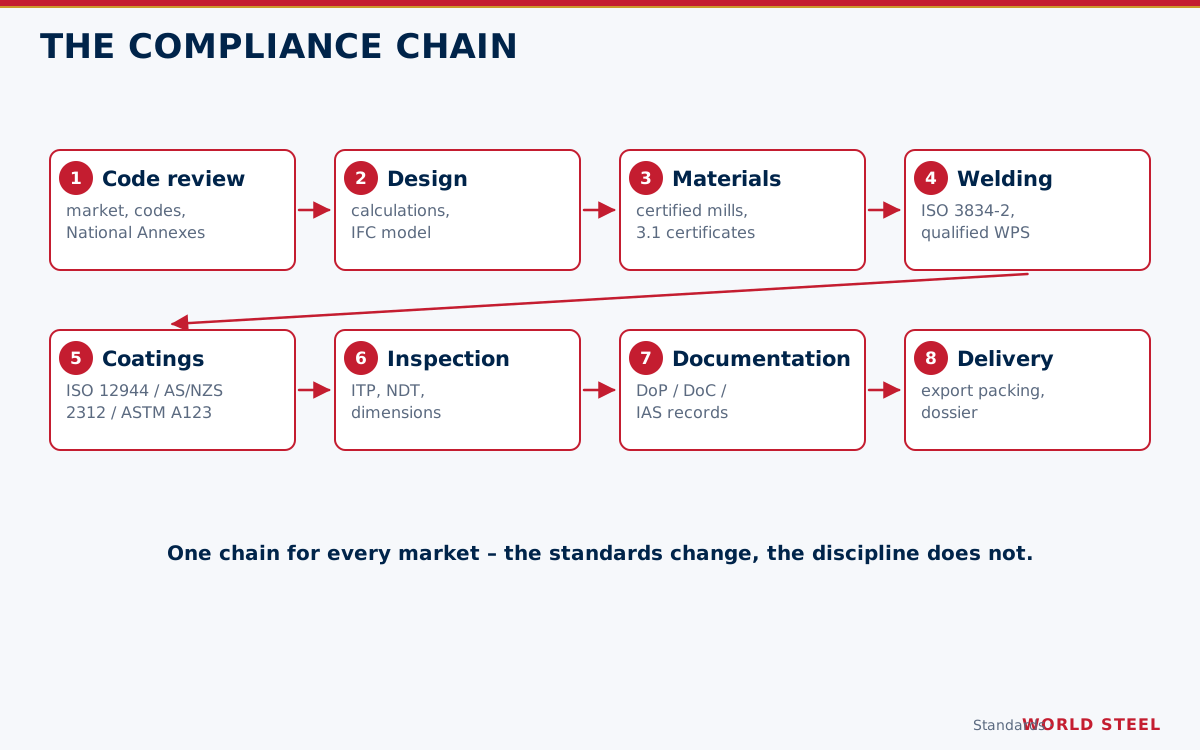
AS/NZS 5131 CC3 – how World Steel complies
World Steel is certified to AS/NZS 5131 Construction Category CC3 and holds ISO 3834-2 certification for comprehensive welding quality. CC3 is the category used for structures of higher importance or subject to fatigue loading, so the same system covers the CC2 work that makes up most industrial and commercial buildings. Certificates are supplied with every tender. Our AS/NZS 5131 CC3 guide explains every part of the standard chapter by chapter – from construction categories and welding to inspection and testing – with a checklist for assessing a fabricator.
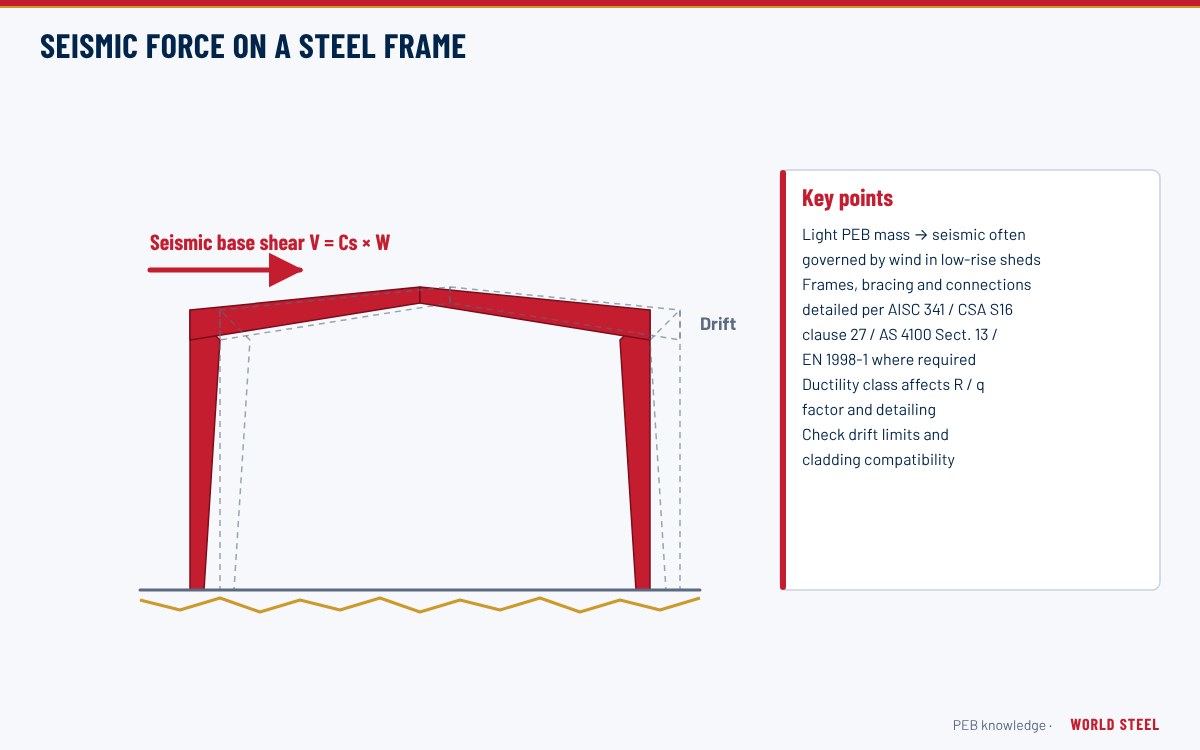
- Design – pre-engineered buildings are designed by World Steel's engineers to AS/NZS 1170, AS 4100 and AS/NZS 4600 (NZS 3404 and NZS 1170.5 in New Zealand), with certification by a locally registered engineer arranged where the project requires it. For structural steel designed by others, World Steel prepares shop drawings and IFC models from the issued drawings.
- Materials – plate to AS/NZS 3678, sections to AS/NZS 3679.1, hollow sections to AS/NZS 1163 and coated strip to AS 1397, traceable through mill certificates. ACRS-certified steel is sourced where the specification requires it.
- Welding – SAW, FCAW and GMAW to AS/NZS 1554.1 SP or GP category as the construction category requires, under qualified procedures, qualified welders and a nominated welding coordinator.
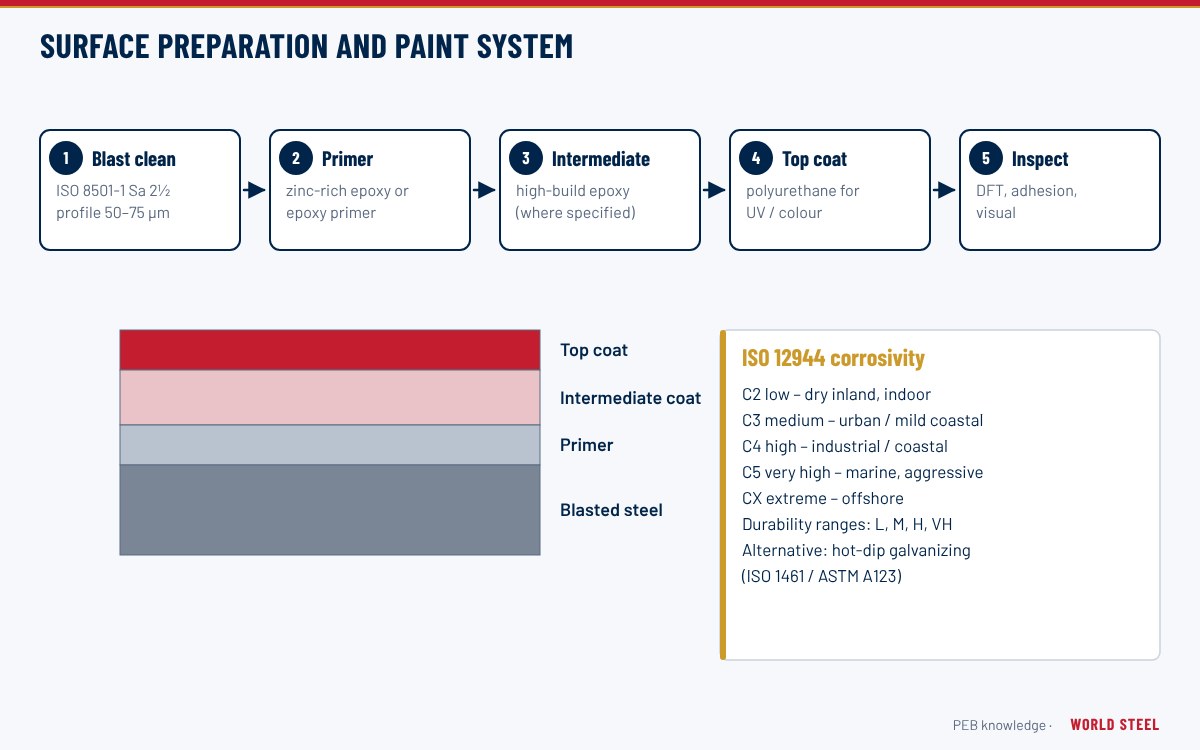
- Coatings – blast cleaning and paint systems selected to AS/NZS 2312.1 for the corrosivity category of the site; hot-dip galvanizing to AS/NZS 4680 by qualified galvanizers.
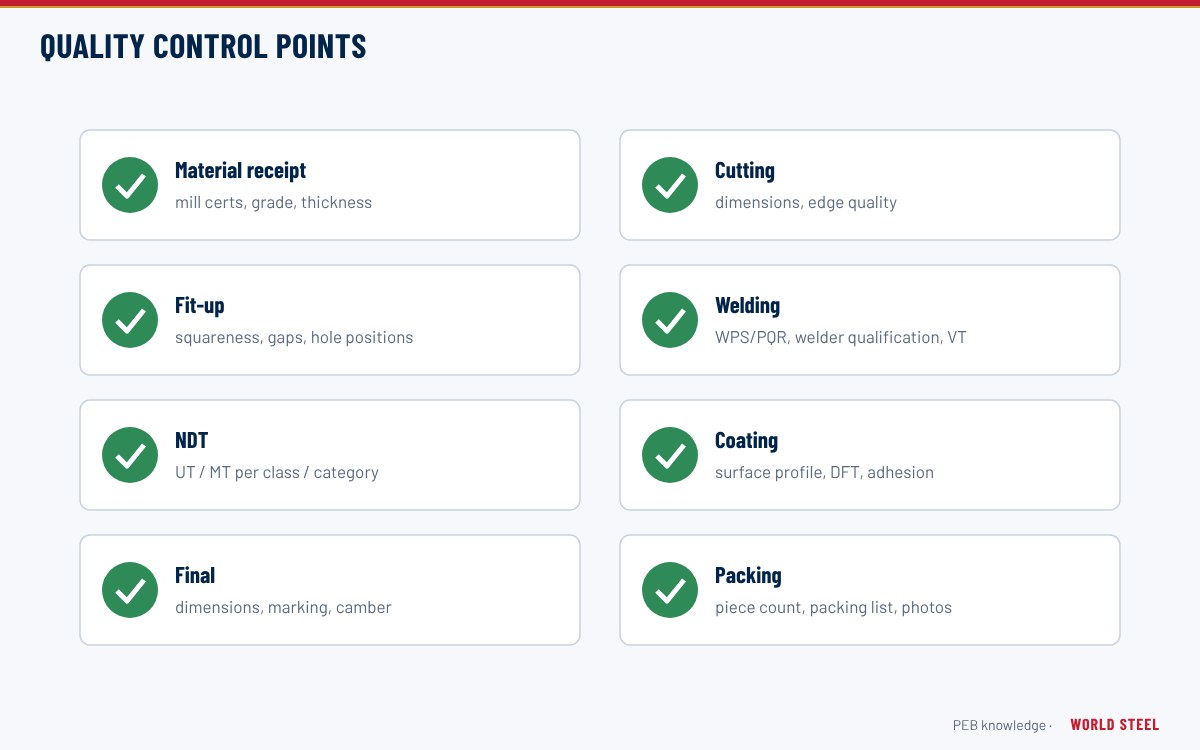
- Inspection and testing – an inspection and test plan for each project, visual inspection of all welds, NDT to the extent set by the construction category, dimensional checks to AS/NZS 5131 tolerances and coating thickness records.
Steel products and access steelwork
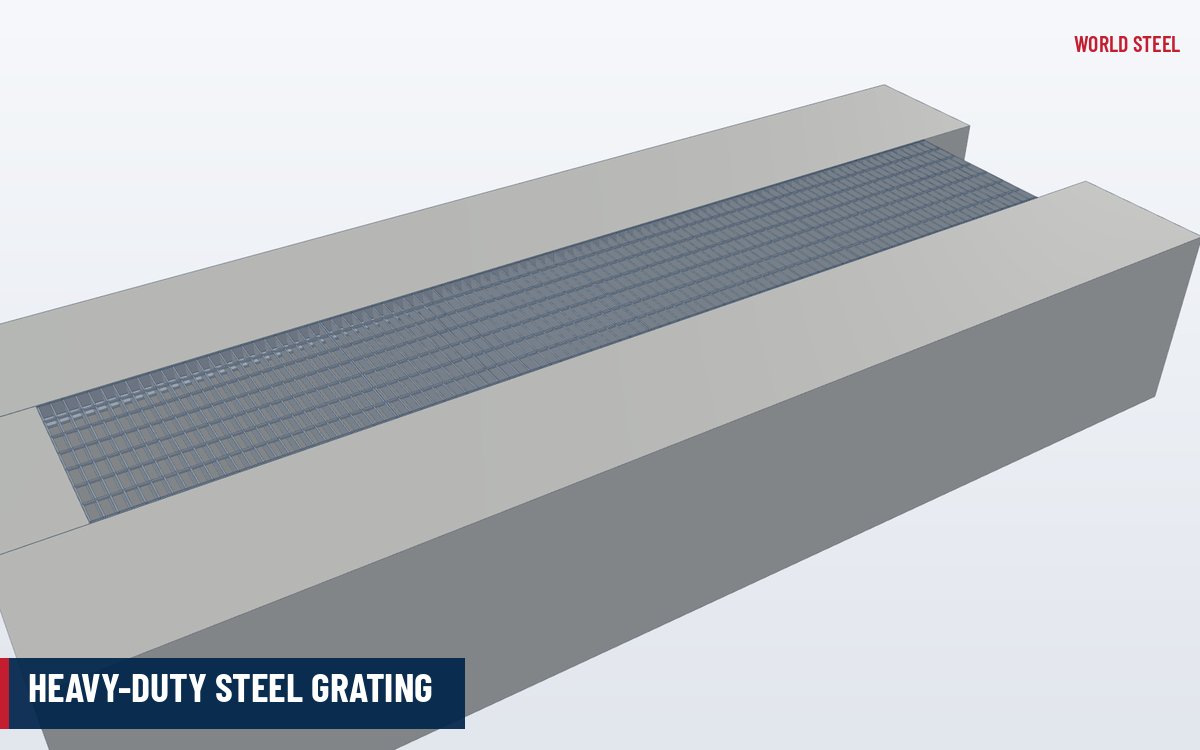
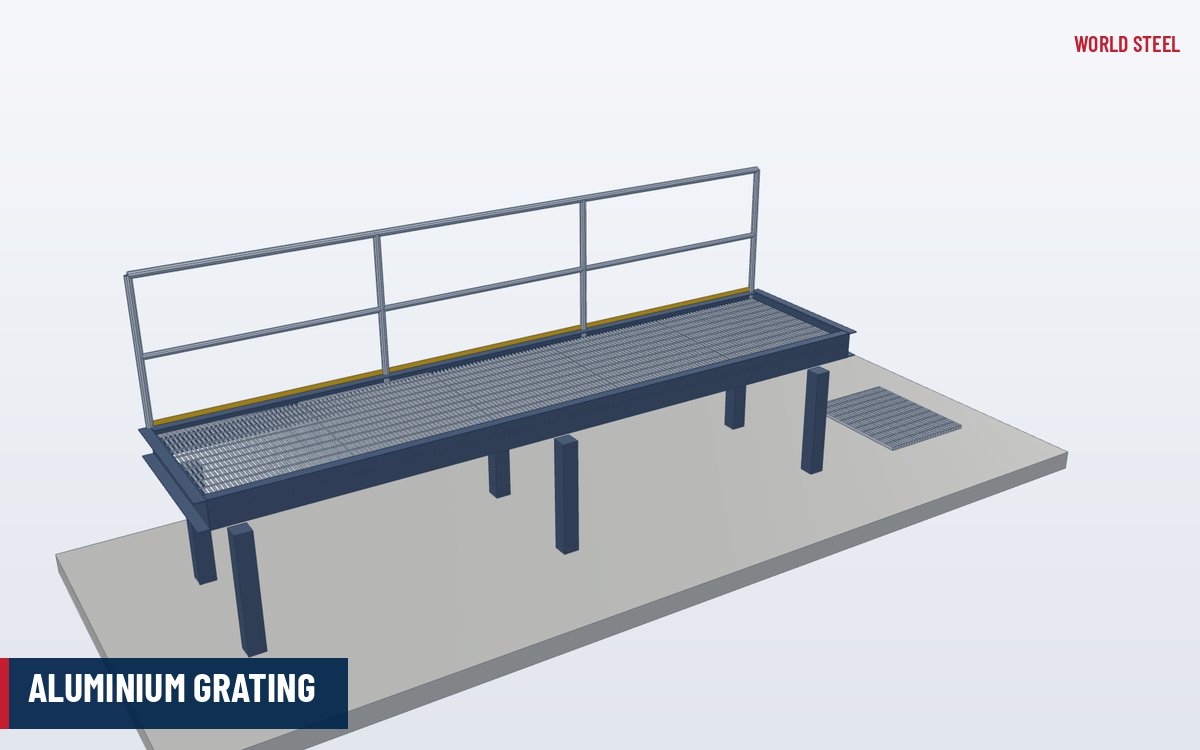
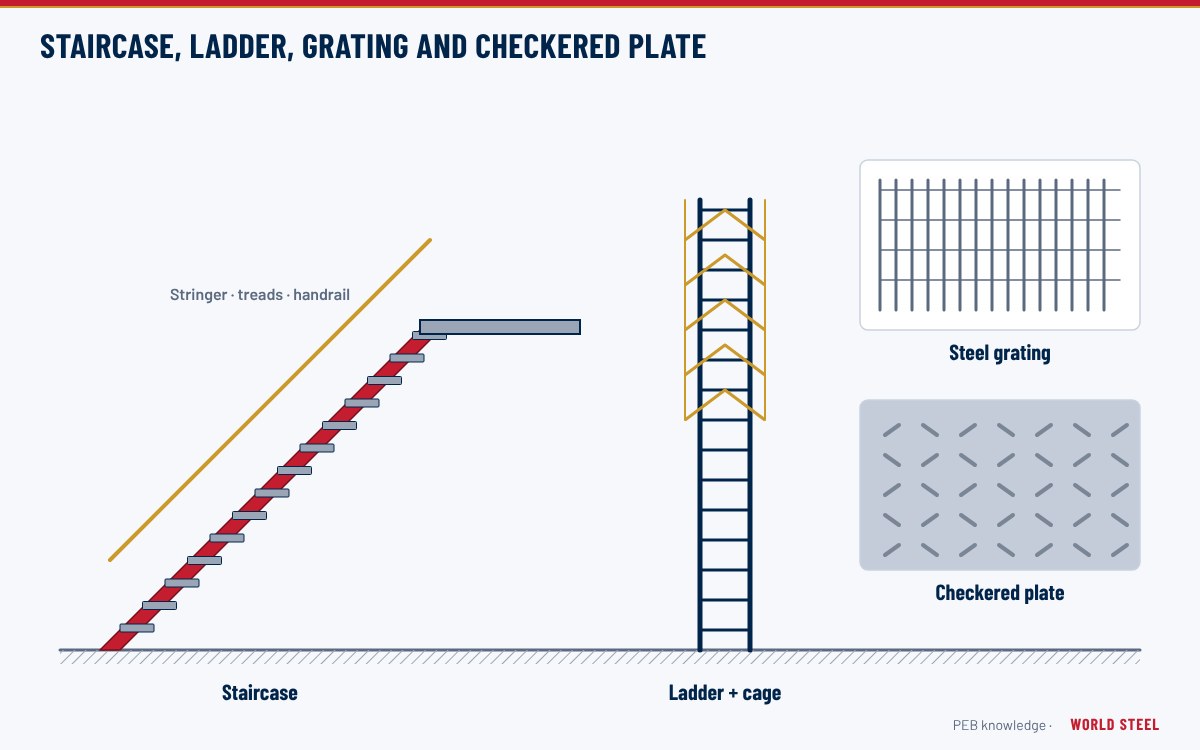
Platforms, walkways, stairs and ladders in workplaces are designed and fabricated to AS 1657; stairs and balustrades in public areas follow the NCC; and accessible routes follow AS 1428.1. Barrier loads come from AS/NZS 1170.1, gratings and covers in trafficked areas are classified under AS 3996, and walking surfaces may need a slip-resistance classification to AS 4586. In New Zealand the same items must satisfy NZBC clauses D1 and F4.
| Item | AS 1657 (workplace) | NCC Volume One (public areas) |
|---|---|---|
| Guardrail / barrier height | 900–1100 mm, with mid-rail and toeboard where required | At least 1000 mm (865 mm along stairs); openings reject a 125 mm sphere |
| Stair geometry | 20°–45°; riser 130–225 mm; going 215–355 mm | Riser 115–190 mm; going 250–355 mm |
| Walkway width | At least 600 mm clear | Set by egress requirements |
| Ladders | Rungs 250–300 mm apart | Service access only |
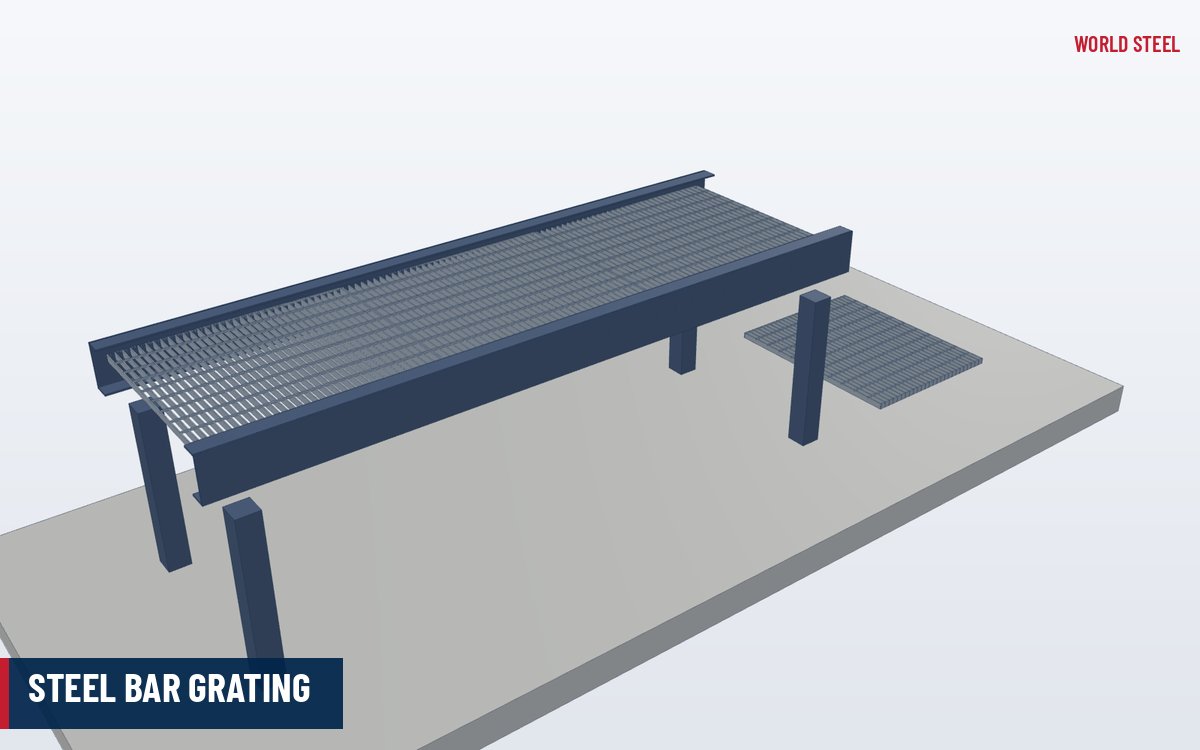
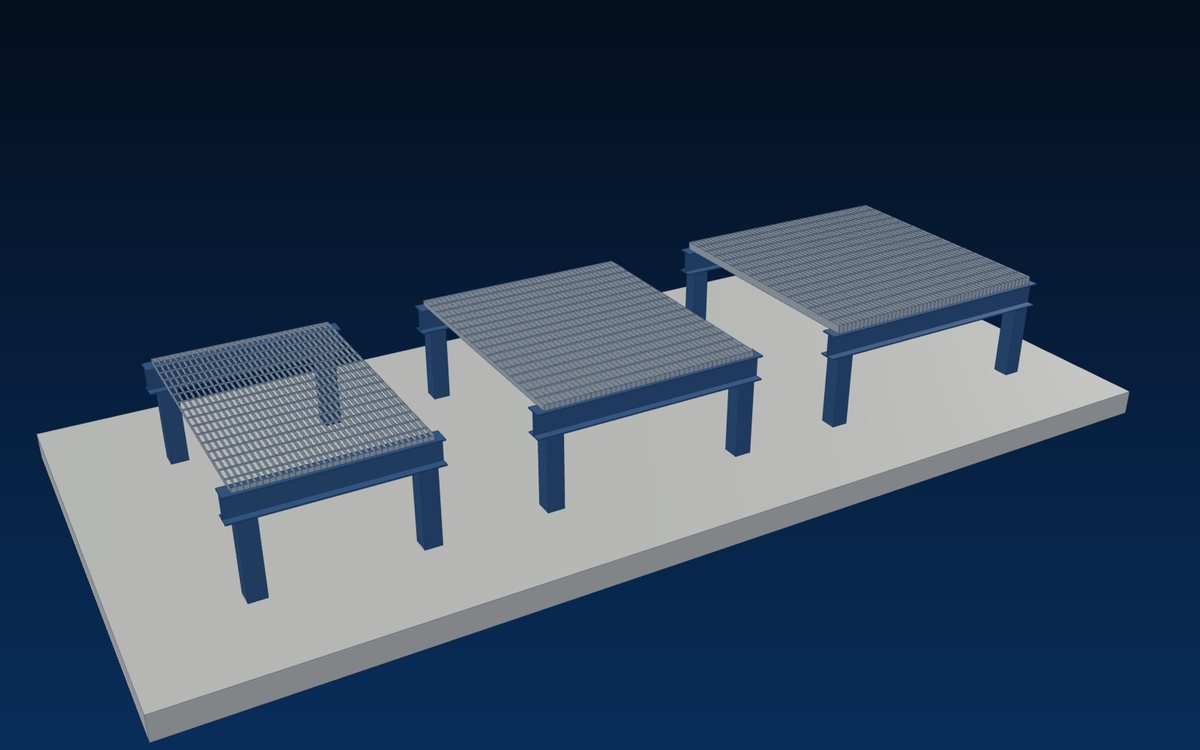
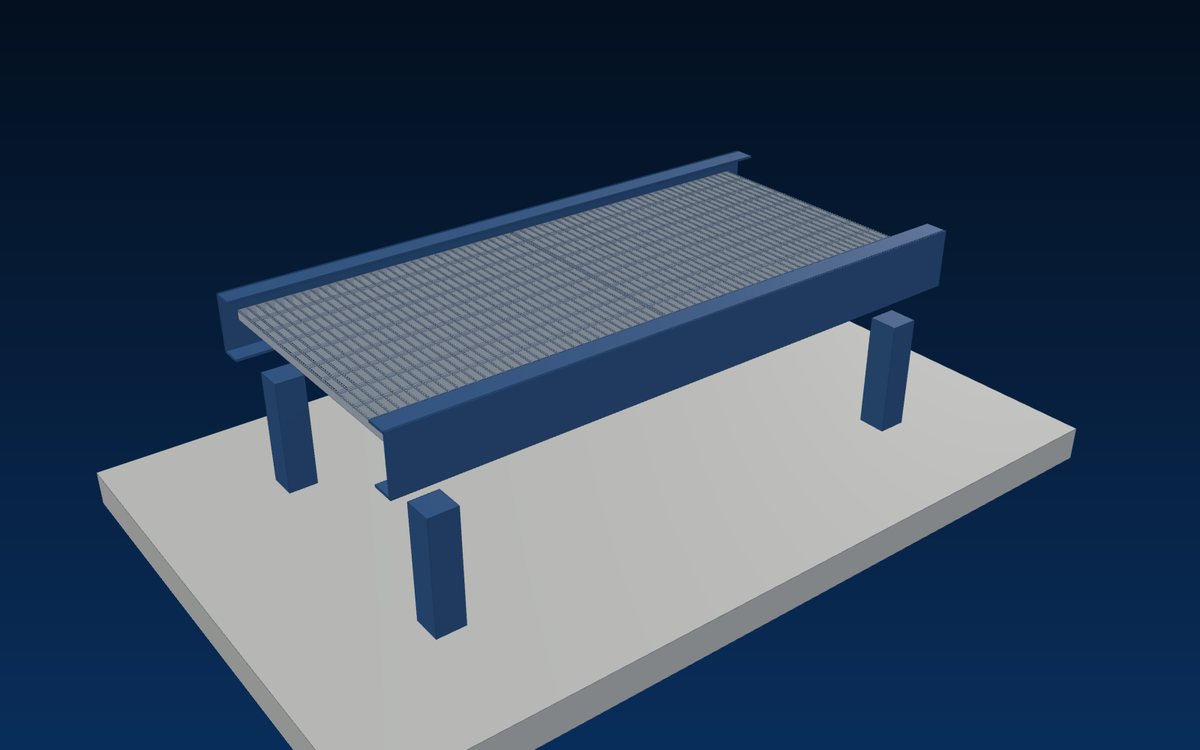
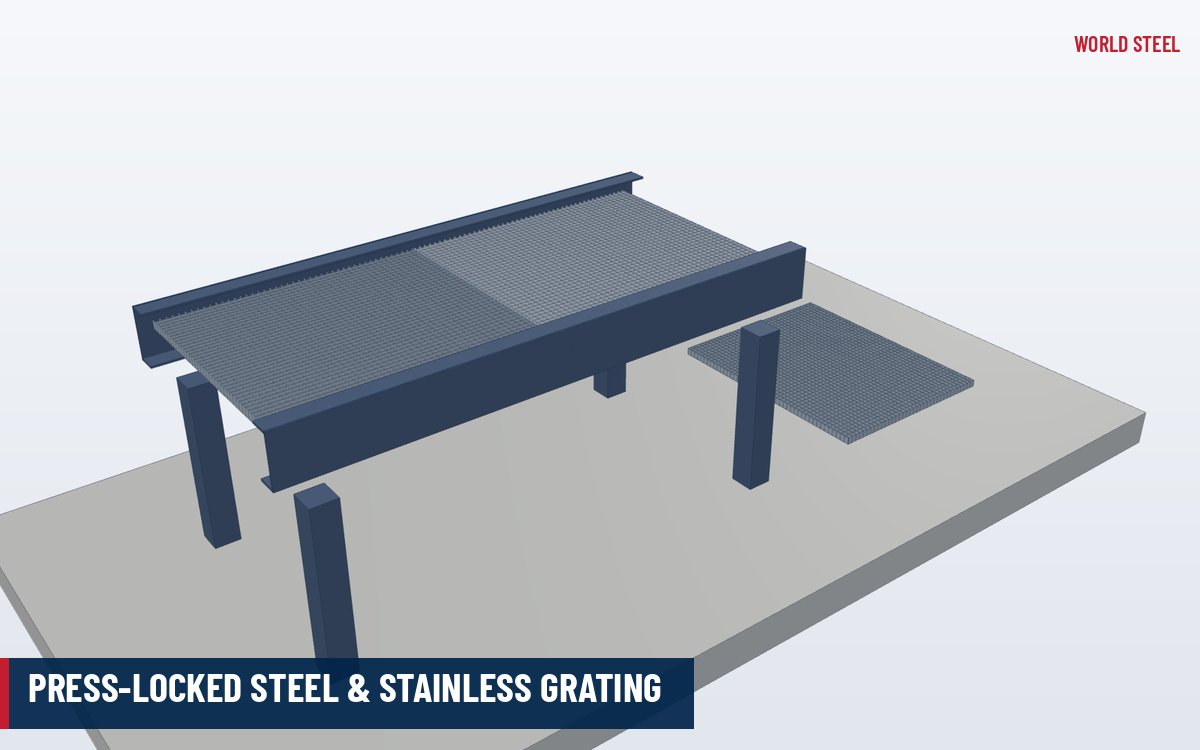
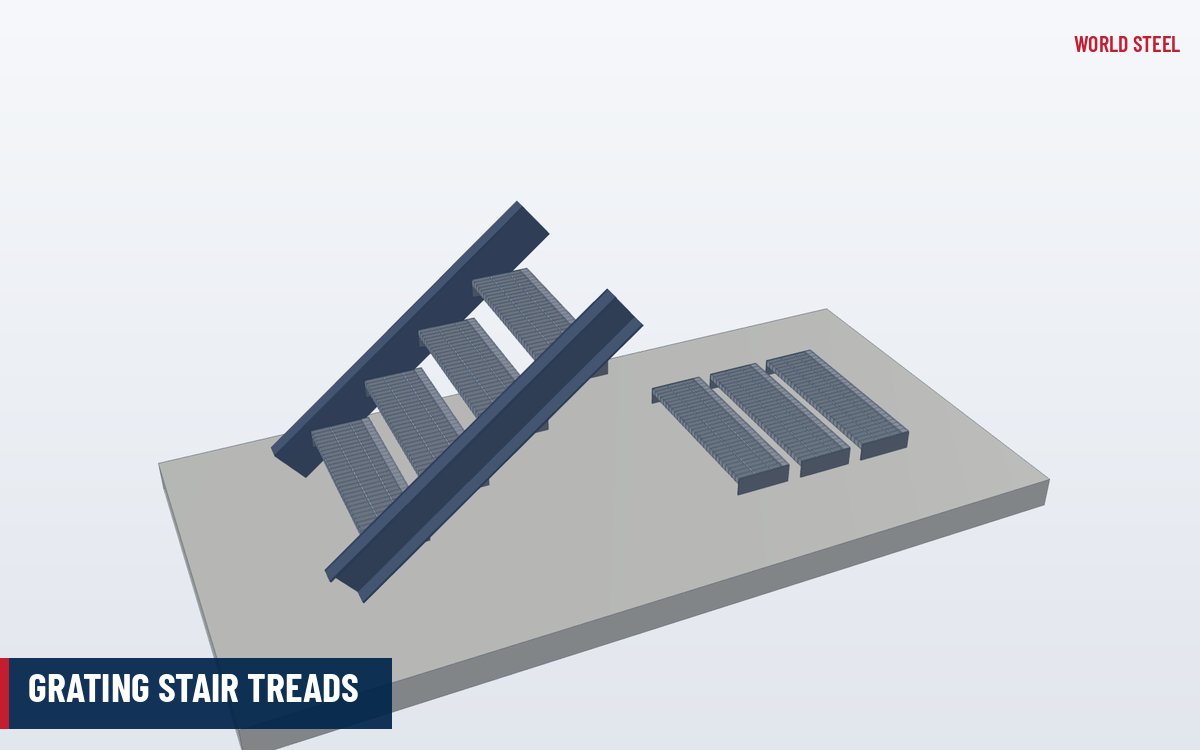
World Steel supplies access platforms and walkways, ball stanchion handrails, grating stair treads and fixed ladders fabricated and documented under the same AS/NZS 5131 system as the primary structure. More detail is in the staircases, ladders and gratings article.
Specifying World Steel in Australian and NZ tenders
- State the Construction Category for each part of the work (for example CC2 for the main building, CC3 for crane runways) and the importance level used in design.
- Require fabricator certification to AS/NZS 5131 at the specified category, and state whether NSSCS, SFC or ACRS certification is mandatory.
- Give the corrosivity category of the site and the required coating system or galvanizing to AS/NZS 4680 with the expected durability.
- For access steel, name the governing standard for each area – AS 1657, NCC, AS 1428.1 or NZBC clauses – and the required slip resistance.
- List the handover records required (ITP, weld records, material certificates, declaration of compliance).
World Steel's manufacturing and export services, together with the Australia and New Zealand metal building standards article, give more detail. For other markets, compare the US and European frameworks.
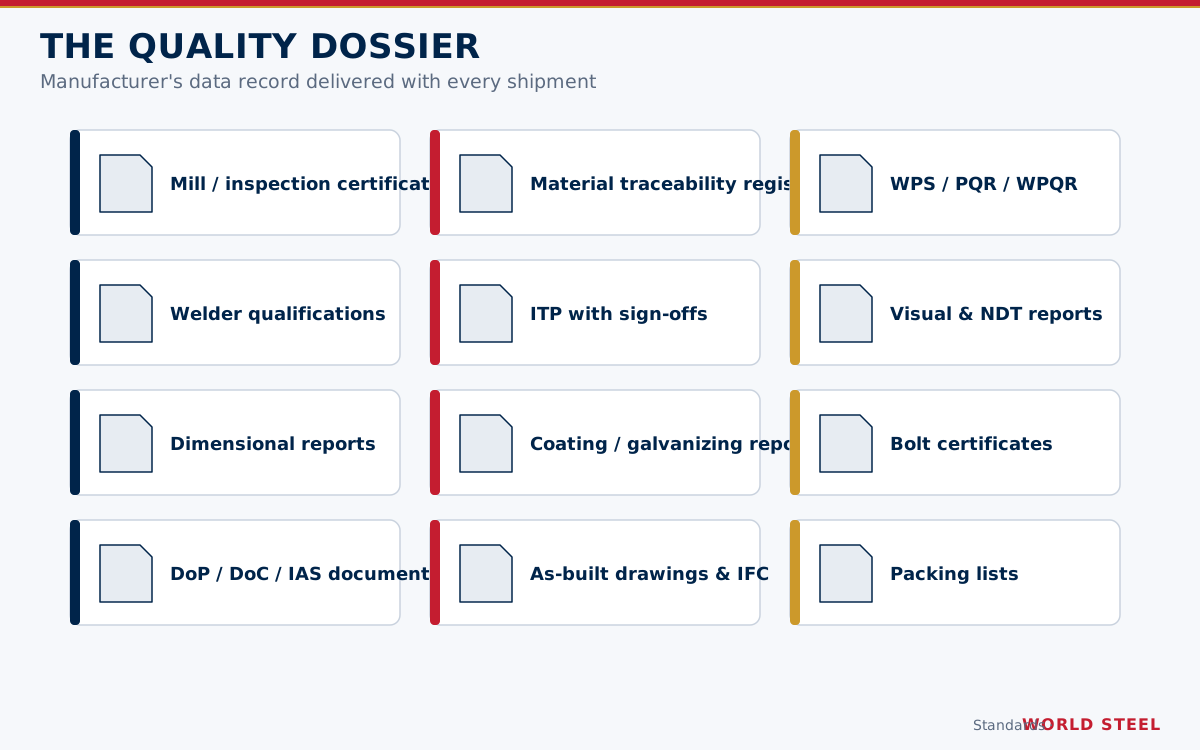
World Steel's AS/NZS 5131 certificate is BSI Benchmark BMP 827566 (JAS-ANZ accredited, valid to 31 July 2030) and its EN ISO 3834-2 certificate is Bureau Veritas INY-CER/23/1056 – copies are supplied with every tender.
 New Zealand
 Papua New Guinea
 AS/NZS 5131 CC3
 United States
 Europe