ENEnglish
 VITiếng Việt
 ZH中文
 KO한국어
 JA日本語
 FRFrançais
 ITItaliano
 PTPortuguês
 ESEspañol
 HEעברית
 ARالعربية

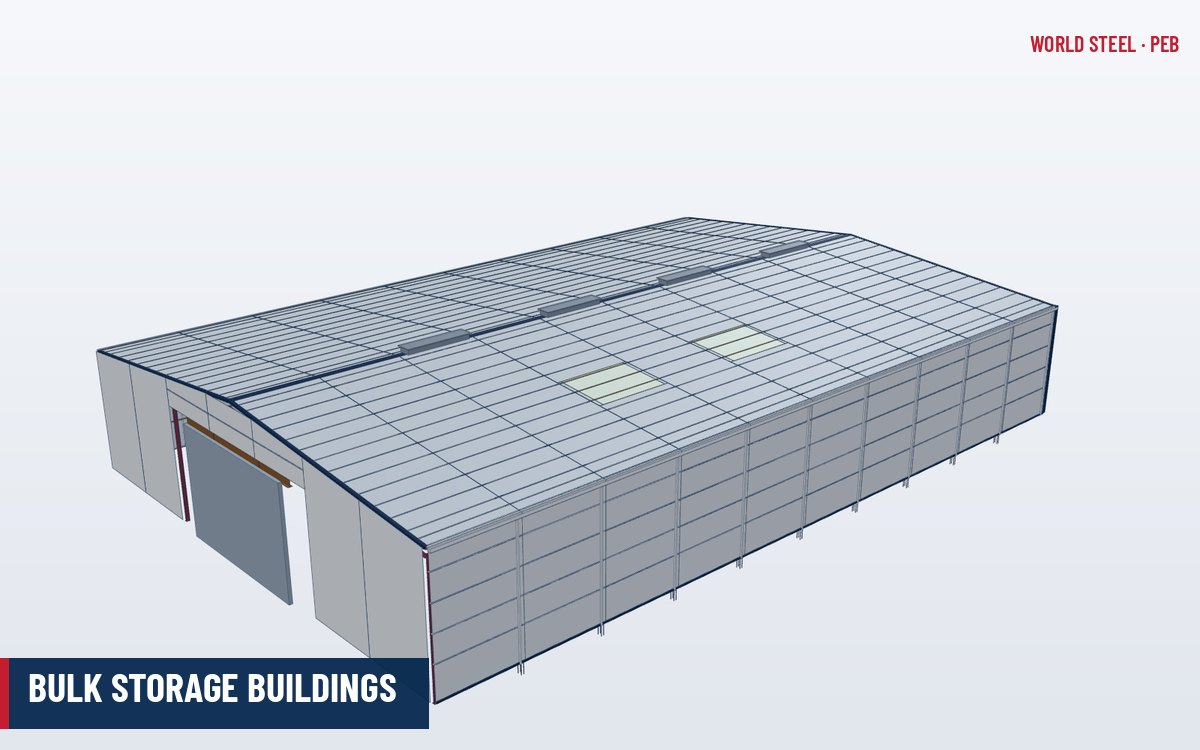
What makes bulk storage different
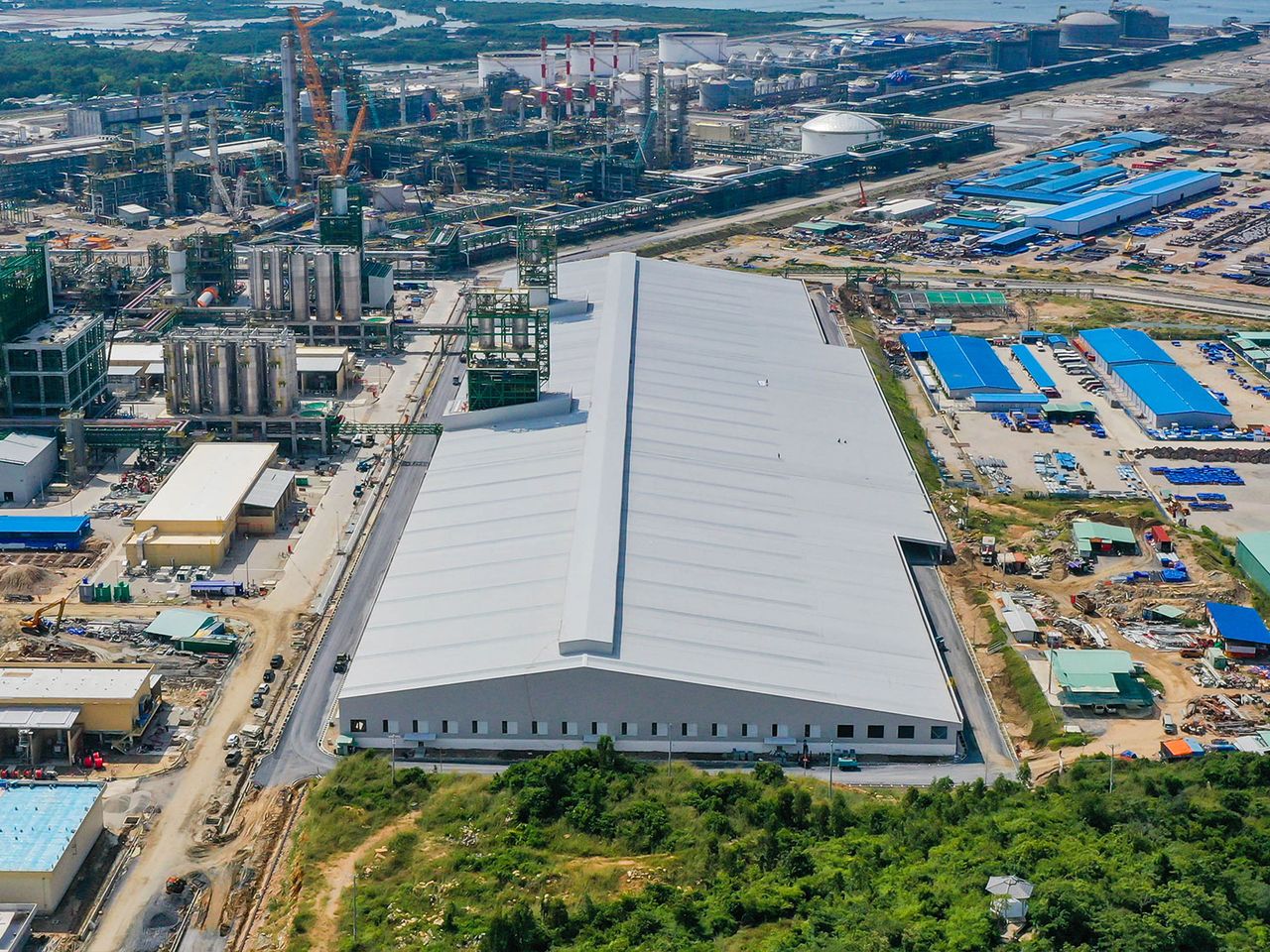
Bulk storage buildings hold loose materials in piles rather than in packages: fertilisers, grain, sugar, salt, cement clinker, gypsum, coal, wood chips, aggregates and minerals. Material is often delivered by a conveyor along the ridge and reclaimed by front-end loaders or a reclaimer, so the building needs very wide clear spans, high eaves to fit the pile, and walls that can resist the material pressing against them. Unlike a normal warehouse, where goods sit on the floor and the walls only resist wind, a bulk store's walls and frames may be loaded directly by thousands of tonnes of material. Pre-engineered steel provides the economical long-span roof, while reinforced concrete or specially designed steel walls retain the pile.
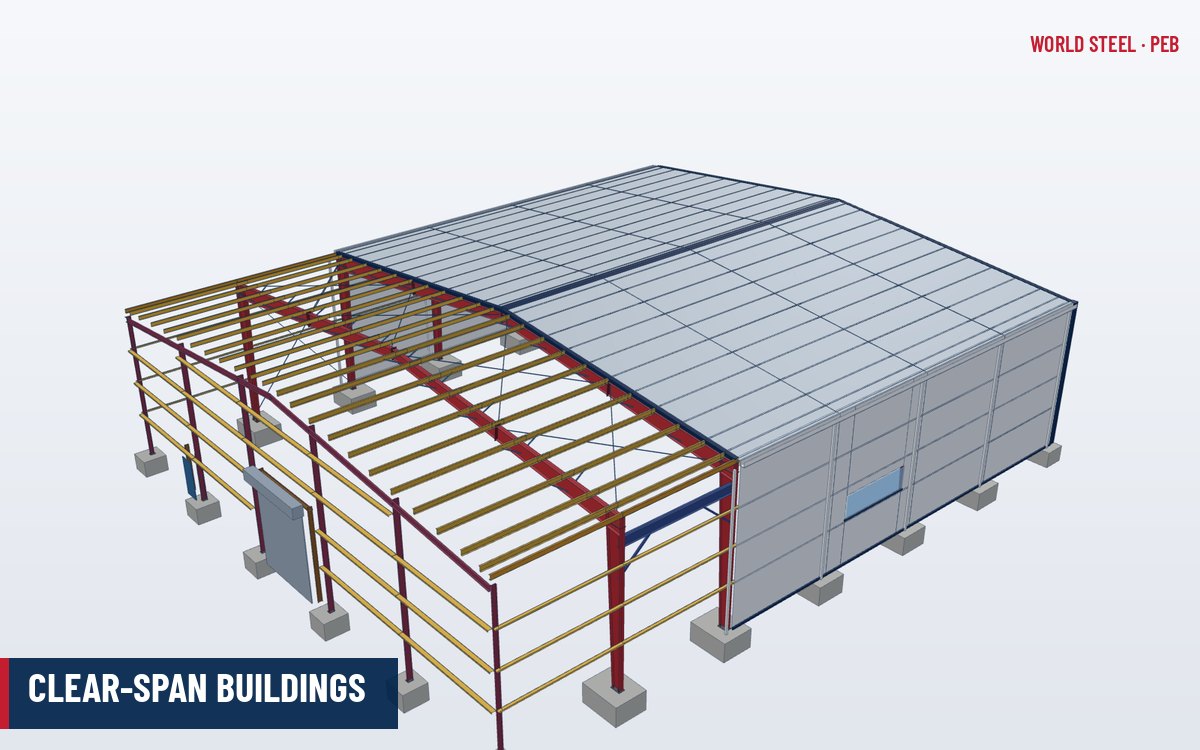
Building geometry
The cross-section is set by the shape of the stockpile. A loose material settles at its angle of repose – typically 25–40° depending on the material and moisture – so a building fed from a ridge conveyor works best with a roof slope close to that angle, minimising wasted volume. Gable roofs of 25–35° and A-frame or arched profiles are common for dedicated stores; general-purpose stores use flatter portal frames with taller push walls.
| Parameter | Typical range | Notes |
|---|---|---|
| Clear span | 30–80 m | Wider spans for reclaimer or stacker use |
| Eave height | 6–15 m | Higher for loader dumping and conveyor gallery clearance |
| Roof slope | 10–35° | Steep slopes follow the pile profile |
| Push / retaining wall height | 2–6 m | Reinforced concrete is most common |
| Ridge conveyor gallery | Full building length | Dead, live and dynamic loads on frames |
Structural design issues
- Lateral pressure – material banked against a wall applies a pressure that increases with depth, usually estimated with active or at-rest earth-pressure theory plus surcharge from loaders. Standard girts and sheeting cannot resist it; walls are either cantilevered concrete push walls independent of the steel frame, or steel frames and wall panels designed explicitly for the pressure.
- Loader impact – push walls must also take the impact and pushing force of front-end loaders; steel columns behind the wall are kept clear or protected.
- Conveyor and gallery loads – a ridge conveyor adds gallery dead load, material load, belt tension and walkway live load at the apex of every frame, plus vibration and possible unbalanced loading. Hoppers and trippers add point loads.
- Material on the roof structure – dusty materials such as cement or fertiliser can build up on purlins and gutters, which should be considered in the collateral load or controlled by housekeeping.
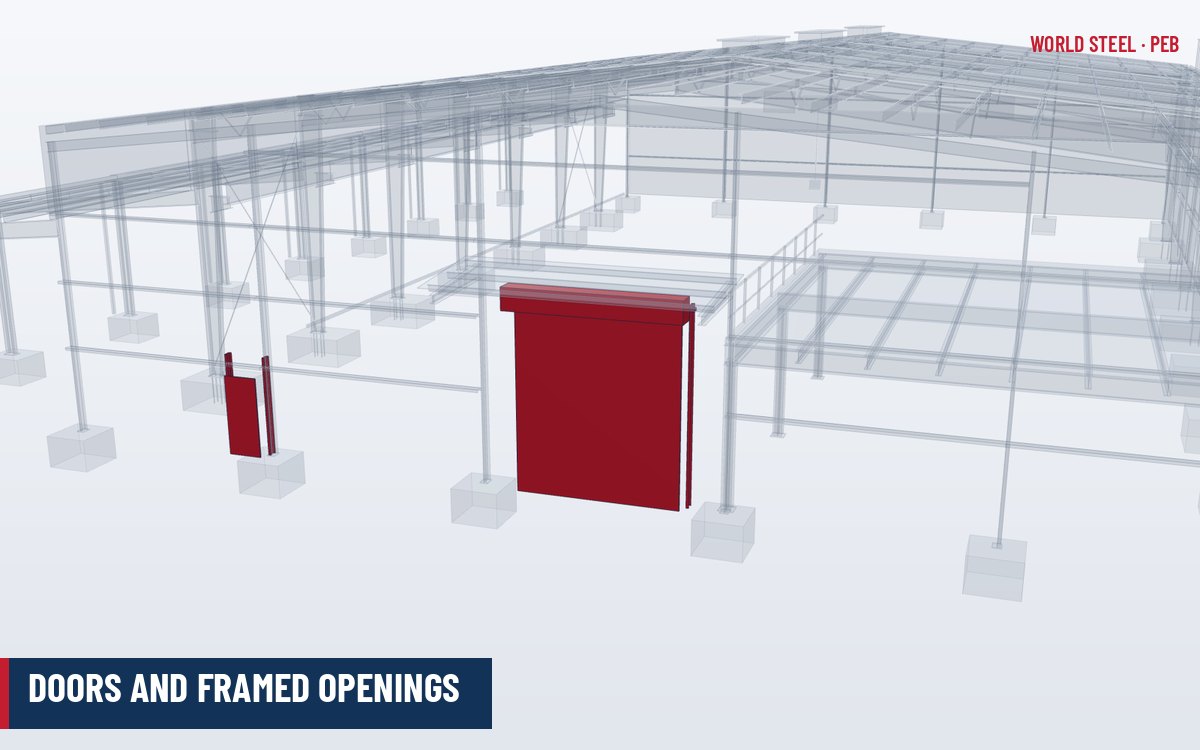
- Large openings – wide doors for trucks and loaders change internal wind pressure and need framed openings and jambs; see doors and framed openings.
Corrosion, dust and fire
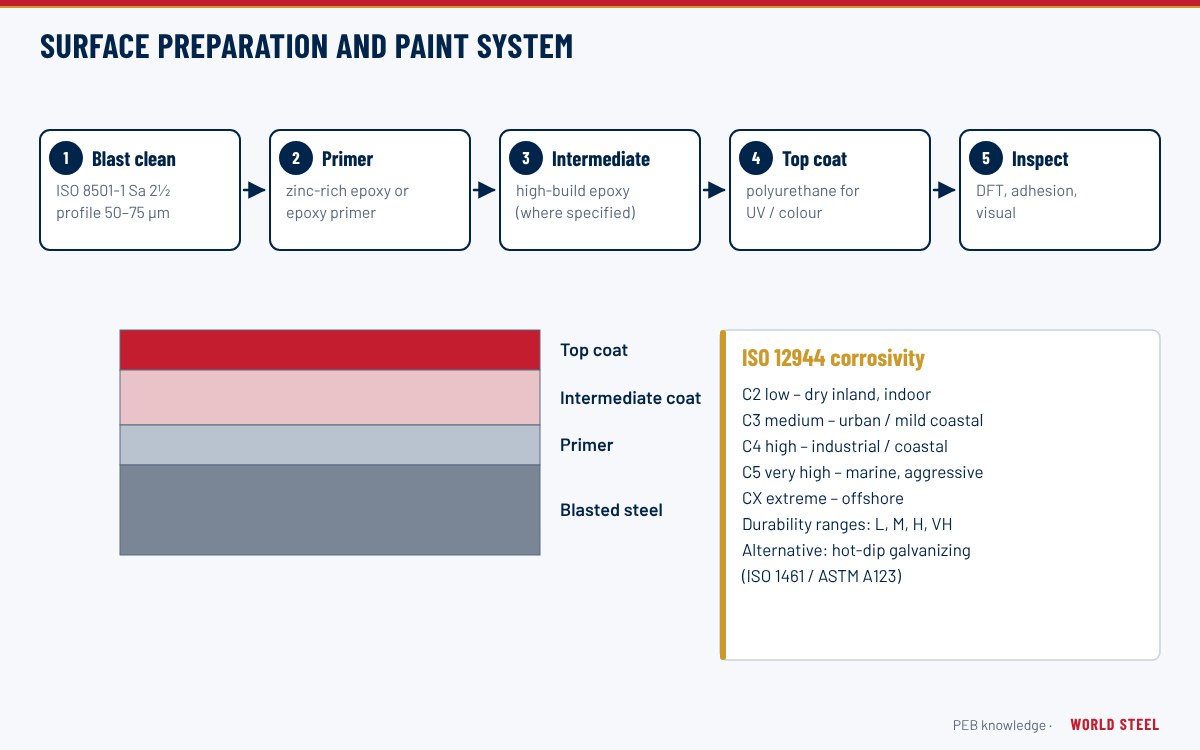
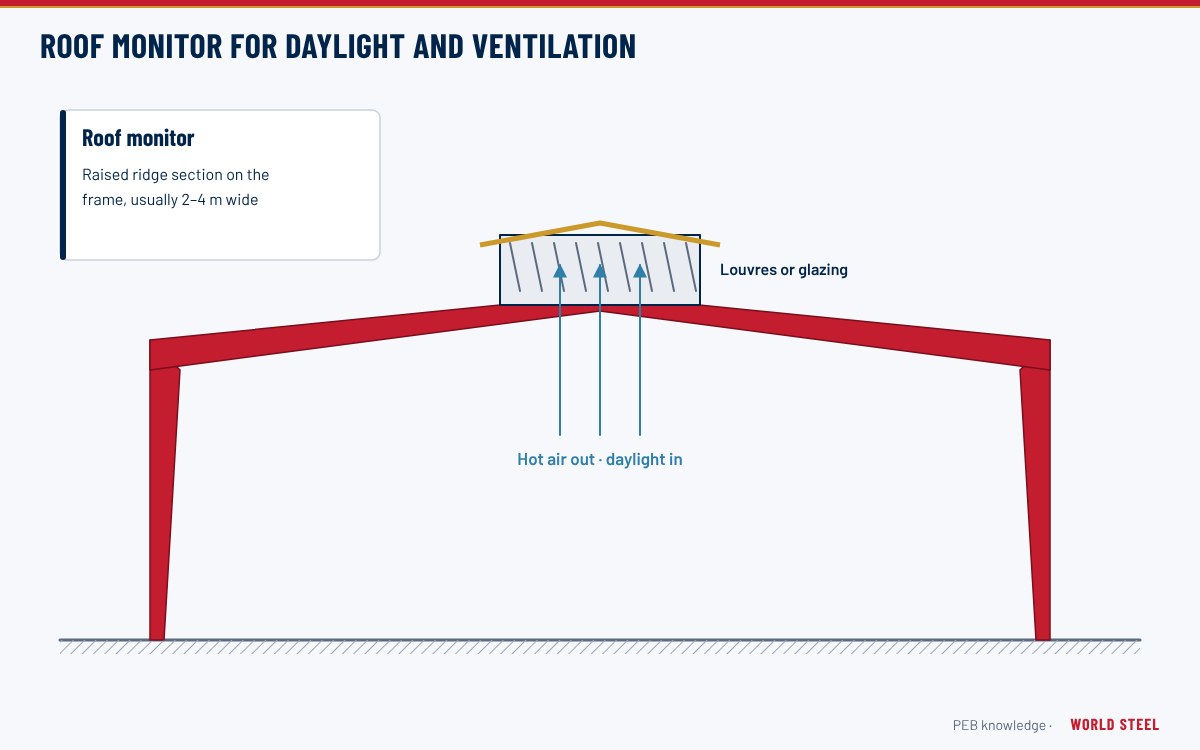
Many bulk materials are aggressive. Fertilisers such as urea, ammonium nitrate and potash, and salt, absorb moisture and form corrosive solutions on steel; these stores are commonly treated as ISO 12944-2 category C5 or CX inside. Typical measures are duplex coatings (galvanizing plus paint) or high-build epoxy systems, concrete upstands so that steel never sits in the material, stainless or coated fasteners, and roof sheeting with heavy metallic coatings or a protective liner – see paint and coating systems. Combustible dusts from grain, sugar, coal and wood demand dust control, explosion risk assessment and venting under NFPA 652/61 or ATEX rules, and ammonium nitrate stores are subject to specific fire and separation regulations. Natural ventilation through louvers and roof monitors helps control humidity and heat in the store.
World Steel bulk stores
World Steel designs and fabricates long-span bulk storage frames, conveyor galleries and supporting equipment structures, with coating systems matched to the stored product, for ports, fertiliser plants, mills and power stations in the industrial and infrastructure sectors. Concrete push walls are designed by the project civil engineer, with anchor bolts and interfaces coordinated on WSC's drawings.
地域別の規格
| 地域 | 規格 | 範囲 |
|---|---|---|
 United States |
ASCE 7-22 / NFPA 61 / NFPA 652 / NFPA 400 | Loads; agricultural and food dust; combustible dust fundamentals; hazardous materials incl. ammonium nitrate |
 Canada |
NBC 2020 / NFCC 2020 | Structural loads; fire code for storage occupancies |
 Australia / NZ |
AS/NZS 1170 / AS 3774 / AS 4100 | Actions; loads on bulk solids containers; steel structures |
 Europe |
EN 1991-4 / EN 1993-1-1 / ATEX 2014/34/EU | Actions in silos and tanks; steel design; explosive atmospheres |
| International | ISO 12944-2 / ISO 12944-5 | Corrosivity categories; protective paint systems |
よくある質問
Can bulk material be stored against the steel walls of a standard PEB?
No. Standard girts and sheeting are designed for wind only. Bulk material needs concrete push walls or wall framing designed for the lateral pressure and loader impact.
What coating is suitable for a fertiliser store?
Fertiliser stores are among the most corrosive environments; duplex galvanizing plus paint or high-build epoxy systems designed for ISO 12944 C5 or CX, with steel kept above the material on concrete upstands, are typical.
Why do many bulk stores have steep roofs?
A roof slope close to the material's angle of repose follows the shape of the pile fed from a ridge conveyor, so less building volume is wasted.